The Rebirth of Melchior Dronte by Paul Busson and translated by Joe E Bandel
I did not answer, but inside the rage ate at me. Then Diana jumped at my hand and grabbed it playfully with her teeth, as if she wanted to make up with me. She always did that when I scolded her or was otherwise in a bad mood. Then a sudden anger seized me, and I bent down for a large stone. The dog believed, she was now going to play the beloved game of fetch and crouched, whimpering with joy, ready to jump. With all my might I threw the heavy, angular stone at her and hit her in the ribs with a dull sound. The bitch fell, emitted a howling, high-pitched scream, and then wailed in shrill tones, unable to rise, her pitiful, horrified gaze fixed on me. “Die, you bitch,” I screamed and lowered my hand. Phoebus and Thilo, who were to blame for this, immediately drew back from me. “Your father’s best and perforce trained bird-dog -” said Sassen, and the other added that crudeness against a noble animal was unworthy of a Nobleman. The bitch tried to get up, collapsed and came up again. Hunched over and whimpering she crawled towards me, tried to reach my hand with her red tongue to lick it. “Come!” said Phoebus to Thilo, and walked with him, walking away from me with obvious contempt. Then I sat down between the vines and took the bitch’s head in my lap. Blood flowed from her fine nose onto my light robe. Her eyes were directed at me plaintively, begging for help. Her body trembled, the little legs twitched as if in spasm. Aglaja’s white hand had so often rested on the black silky hair of the beautiful head. “Diana!” I cried, “Diana!” She pulled her lips from her white teeth. She laughed in this way. Once again she tried to lick my hand. Then in her eyes came a green, glassy glow, her body convulsed. I stroked her in deathly agony, calling, coaxing — she no longer moved. A blood bubble stood motionless in front of her nose. No more breath came — “This beast will bring her lament before God on the Last Day, and God will also give her His justice, like any other creature”, a deep voice spoke. I looked around with veiled eyes. The old tusker was standing next to me, and the sun wove a terrible golden glow around his snow-white head.
My father had returned from the hunt and went with ringing spurs up and down in the room. The floor creaked under his riding boots. I looked steadfastly at his green coat with the silver braid. When he turned around, I saw the tightly twisted braid. This braid was merciless, black, stiff, insensitive, a symbol of his nature. “Lout, pray!” he thundered again. “You have dared, in front of the street rabble, to hit Phöbus Merentheim in the face, to the amusement of the scum of craftsmen and other fellows? Hey?” “He said that my mother, before her marriage, was bed warmer to the Duke of Stoll-Wessenburg,” I blurted out and looked my father in the eye. “You don’t hear and listen to that kind of thing,” hissed my father and became dark red in the face. “And remember: Do not disgrace princely blood! You will ask the young Count Merentheim for forgiveness, lad!” I did not understand him. Was he serious? “Answer me,” he cried. “Never,” I said, “I will not.” “Damn dog! Swine! So I’ve got problems again with another of the duke’s huntsmen, and I can wipe my mouth. I need the intercession of old Merentheim, you wretched knave. Do you understand me now? Will you or will you not?” “No.” He raised his hand, but lowered it again. With a heavy step he left the room. In the afternoon he sent for me. He sat in the same chair in which grandfather had died, and next to him on the table was a half-empty wine bottle. The room was blue with tobacco smoke. “Stand here,” he said, pointing in front of him. “Tomorrow I’ll send you to high school, so you’ll be out of my sight. And so that you know the truth, whether your mother was once the mistress of the noble lord, I don’t know. But in any case, she has given this property to me. Whether you come from my loins or from those of Serenissimi or whether even that windbag of court poets in one of the duke’s Venetian overnight parties – that scribbler whom Heist later shot down in a duel, only God knows. I almost want to believe the latter, for from a true and right nobleman you have nothing in you of the old bread and butter. Now you know what Merentheim wanted to rub your nose in. You may have that in you. Process as you wish. I have nothing for sentiments. Everything is as it is, and nothing can be dismissed. The Jew Lewi will give you the money for school every month; there is nothing more, now or ever. If you go to the dogs through partying and drunkenness, like many a nobleman, I or Serenissimus or the hunted down court poet had a son. You can save yourself the trouble of writing because I don’t read letters and other written or printed stuff, although I once learned to do so. If you come back to me as a real cavalier, then I will assume that you are from my seed. And now troll yourself away!” I wanted to say something, but the words died on my lips. Slowly I turned around. A glass flew after me, smashing against the wall. Angrily, my father shook his fist at me as I looked around once more, and in his eyes there were bloody red veins. Below, old Stephan stood and muttered: “Don’t believe a word the Herr Junker says! Your mother was a saint and is enthroned in God’s countenance!” Then I fell around the neck of the faithful servant and cried out for my mother as if I could call her from the grave.
It was a tedious journey. Every quarter of an hour we had to get off the stagecoach at the behest of the driver and push and clean the wheels with a mud knife. The horses trembled and snorted, and their flanks were covered with foam. And once we had to chuck our suitcases and travel bags and then lift them back onto the roof and tie them up again. With me rode one, who was from Austria, was called Matthias Finch and seemed to be a cheerful man of good manners. His clothes and linen pointed to a son from a decent family. He was not a nobleman. As we approached the city, the coach stopped in front of an inn called “Zum Biersack”. We looked out the window on both sides and noticed that the street was filled with chairs, benches and a long table, at which sat a party of students, looking wild and daring with greased boots, round spurs, feathered hats, and swords. They sat quietly, smoking from long lime pipes, spreading their legs and did not seem to be willing to give way to the mail wagon on the army road. A straggly half-grown thing with bobbing breasts under the cloth ran between this table and the dirty inn, swapping the empty pewter mugs for full ones and shrieking under the coarse grips of the journeymen she had to pass. The driver half turned with a grin and said: “May it please the gentlemen to get off and allow themselves to be welcomed?” “Drive on!” urged Finch. “The road is clear!” “What’s that stinkfox barking about?” rumbled a deep bass voice from the table. The one who had shouted was as bulky and thick as a six-bucket barrel, and his three fold stubbly chin was resting on his badly smudged vest. “Let it be, Montanus,” shouted a tree-tall man with blonde hair and a sharp, crooked nose. “They’ll crawl out of the burrow in time.” Since we saw that nothing could be done with defiance and pounding, and that the others were masters in such things, we came out, but we had enough sense to order the driver to take our travel belongings to the tanner Nunnemann, with whom we had ordered lodging through the messenger. We had hardly crawled out of the yellow box when they also quickly moved the table to the side and told the driver to put the steeds to the trot. He did not need to be told a second time. But two of them took us under their arms and led us into the interior of the house. There they pushed us up the stairs into a long, low room. On a table covered with wet glass curls lay an earthy, yellow skull, which looked as if they had just stolen it from the charnel house, on two crossed swords. They immediately lit two tallow candles in porcelain, placed us at the narrow end of the table, themselves around the table with their hats drawn, shook each other’s hands across the table and sang in rough voices: “The covenant is solemnly sealed By the noble oath of allegiance, Our hearts are unlocked Strike only of true friendship. This sword shall pierce The one who leaves brothers in distress. And, by this leg of the beast! A thousand times he is threatened.” When the song was over, Finch, who had looked at me several times in amazement, spoke up and said: “Gentlemen, forgive us if we would like to know in what illustrious company we have unawares fallen into?” “Insolent stink-fox,” belly-laughed the fat man again, the one they had just called Montanus. In the meantime they had put their hats back on, and I saw that their plumes were carmine, yellow and blue, and the blond one with the vulture nose had also put on a fox tail, which gave him a wild appearance. At Finch’s speech, he pulled his bat out of its scabbard and hit the table with it so violently that it boomed and we were badly frightened.
Introduction: The Six Keys of Eudoxus unlock the philosopher’s stone, a divine gift that transforms and heals through sacred wisdom. This section concludes with the stone’s universal blessings, uniting material and spiritual realms in divine harmony.
The Divine Physician’s Blessings
The philosopher’s stone, as Helmont describes, is a universal medicine wielded by the divine physician, chosen by God to heal with compassion. It fills life with health, riches, and divine favor, as Solomon declares: “Honor the physician, for the Lord created him.” This radiant essence, purified through the Six Keys, expels diseases and curses, bringing consolation and eternal life, as promised in Revelations: “To him that overcometh, I will give the Tree of Life.”
The adept, guided by charity and faith, becomes a vessel of divine light, transforming souls and bodies with the stone’s miraculous virtues, as Van Helmont’s cures of thousands attest.
The Fall and Restoration of Wisdom
Helmont laments the decline of the healing art, where ambition and sloth extinguished charity, separating physicians from surgeons and burying truth in confusion. Yet, the stone’s wisdom, rooted in the “Universal Spirit,” remains accessible to those who seek it with faith, as the Wisdom of Solomon affirms: “Wisdom preserved the righteous, guiding them through trials.”
Mesmerism, a first step toward this ancient wisdom, hints at the divine temple’s foundations, awaiting the adept’s will to resurrect the “Corner Stone” of divine light through persistent inquiry and love.
The Promises of Divine Wisdom
The stone’s blessings, as Revelations promises, include the “hidden Manna” and “White Stone,” granting power, purity, and eternal union with God. Wisdom, as Solomon declares, is “better than rubies,” offering riches, honor, and strength to those who embrace her. The adept, aligned with divine will, wields this universal treasury to uplift humanity, fulfilling the ancient creeds of love and truth.
Closing: This chapter unveils the philosopher’s stone’s divine blessings, uniting material and spiritual realms. The journey into its modern applications deepens in our next post, unveiling further secrets of this sacred art.
The Rebirth of Melchior Dronte by Paul Busson and translated by Joe E Bandel
She pressed her hot, wet mouth on my hand, but I tore myself away and went swiftly and quietly down the stairs. When I was in the hallway, the Dutch clock struck midnight. The closet creaked. I stopped. “Why don’t you come out?” I said, banging my fist against the closet. But everything remained silent. Only from above came a wailing, pounding sound, as if someone were crying into their pillows.
On Good Friday, I passed by the Catholic Church and peered on all sides, to see whether Lorle was there. But all I saw were people going to church, men, women and children, and every time the gate opened, sad deep sounds blew out. Lorle was the daughter of saddler master Höllbrich, very young, and I had lured her into our park. She wanted to see the tame deer and the fallow deer. And in the feeding hut was where it happened. I had learned many things in the last time, could swallow wine like water, ride behind the hounds and throw girls into the grass. There were some who wept bitterly. Lorle laughed and said, “There had to be a first time-“ While I was waiting, a small and very ragged boy came, looked at me with cunning little eyes and asked, “Are you Baron Dronte?” And when I said yes, he quickly pulled a small violet paper from out of his shirt and slipped it to me. Then he quickly ran away. I was very angry that she had kept me waiting and I remembered that she had also made her little eyes at Thilo, too, when he passed by the workshop. But since I did not want anyone to watch me reading the letter, I went into the church. It was half-dark, and the candle flames sparkled. In front on a triangular candelabra stood many lights, and just as I entered, one was extinguished. And just then they were singing in Latin the crying notes of a psalm, which I understood. It was called: “Jerusalem Jerusalem – return to the Lord your God”. Then I knew that it was the lamentations of the prophet Jeremiah, which I knew from the Scriptures. Motionless, the canons sat in their carved chairs on both sides of the violet-covered altar, and I recognized the cousin of the Sassen, Heinrich Sassen, among them and wondered at how haggard and austere his face looked in the restless glow of the candles and the golden gleam of the ornaments on the walls. There was a whistling beside me, like mice whistling. There were two old women praying, bent low. And again they began to sing up in the choir with the Hebrew letter that is called Ghimel or the camel. But then the sweet sadness of the pleading song penetrated deeply into my heart and made it open up before God. I thought of how mangy and rejected I must be before the Savior, who had also taken upon himself the bitter agony of death for me, been scourged, spat upon, crowned with thorns, stripped of his poor clothes and nailed naked to the cross. And what was I? In my pocket crackled the letter of a girl whom I had put on the bad road, and in my mouth was the sour taste of yesterday’s wine. I was getting worse and worse, and I already understood it well, to strike a defenseless servant across the face with a riding crop and to chase the old servants up and down the stairs. But then Lorle’s laughing face with its snub nose intervened again between the remorseful thoughts, and in my ear hummed the solemn sounds that came from above, her cheeky little song: “Phillis has two white doves and a golden bird’s nest…” But out of the saucy face of the little girl grew another face, pale and pure, with golden red hair like a halo, and with a fierce, never before felt homesickness, I thought of my dead cousin, Aglaja, whose memory I had held so miserably that now any one was right for me. Then it was suddenly as if dark rays were pressing into my eyes. Slowly, from out of the crowd that was devoutly praying in the nave in front of me, a man approached. It flashed through me as if a glowing drop ran from the top of my head down through my body. The man, who was coming closer and closer, looked at me… His face was without any wrinkles, brownish and beautiful, his eyes deep and dark, of unimaginable goodness. Between the brows there was a horizontal, fine, red scar, like the one I had…in the same place. A small black beard shadowed the upper lip of the soft, noble-cut mouth. A reddish brown robe fell in heavy folds around his slender body. He wore a black turban wound around his head, and a necklace of amber beads. No one seemed to pay attention to him except me. Nobody turned to look at him, and yet everyone avoided him, as if they saw him. “The Lord Jesus,” I stammered, reaching for my heart, which threatened to stand still. I felt as if I had to weep and lie down on this breast, hand myself over to him, to him who knew everything that pushed and drove me, so that he could save me. He knew the way, his feet had walked it. But he passed me by with a look in which was something like sorrow. He passed me by! I stood for a while and could not move. Far out in the room sounded singing and the roar of an organ. Then I got hold of myself, turned around and ran after him, causing enough annoyance among those praying, because my haste had disturbed them from their devotion. But when I stepped out of the gate, the place lay empty. Nobody was to be seen. Only the tobacconist stood next to the wooden Turk in front of the door to his store and looked at me in amazement. I hurriedly asked him about the man in the brown robe. He made a face and said that the incense in the church must have made me dizzy. I was unaccustomed to such Catholic incense. And one who honors the pure gospel should beware of the dazzling works of gold, lights and blue vapor, which they have in such churches of Baal. Let every man beware lest he stumble, even if he is of noble birth. Angrily, he threw his lime pipe onto the pavement, so that it broke, turned his back on me and went into his store. But I walked around the alleys that led to the square and asked about the man. No one knew anything about him. Suddenly I felt as if a bolt of lightning had struck in front of me. I remembered the wax figure that had saved me in my earliest childhood, when the falling ceiling in my room buried my bed. The man from the Orient, Ewli. I pulled Lorle’s letter out of my pocket and tore it into a thousand pieces.
I drifted with Phoebus and Thilo Sassen and we hunted everywhere for women and adventures. Since I spoke to them about the apparition, they laughed at me and teased me for days. They called me the brown monk, as they called the man from the Orient. I had fallen back into my old way of life and was ashamed every time they came at me with their jokes and snide remarks. That day black Diana was barking and full of joy with me being at home and whatever I did, I did not succeed in shooing her away. Because the dog loved me more than anything, no matter how well I treated her. Above the vineyards we knew a house, in which an old tusker lived, feared for his coarseness. He had two young and beautiful daughters, and it was said that they spent the money for their pretty dresses and shoes by being kind to the gentlemen. The boys had often put a straw man on their roof, and the girls in the city pulled their skirts to themselves when they passed by, so as not to touch. But there was also talk that the old man, on days, when he had time to look after the prostitutes, would teach the rude rascals, the beaus of his daughters a lesson. Thus it was said that he had once caught Fritz, the mayor, a real dandy and a womanizer and apron sniffer, with the two of them in the tool shed and had so brutalized him that the young gentleman had spent four days in bed groaning and smeared with lime ointments. Others again thought that it was not so much the beating of the old man, which had made a cure with ointments necessary, but rather a disease of the nobles that Fritze had contracted when he was traveling with an actress in the mail coach. Surely we had not the slightest desire to collide with the foul-mouthed tusker, and all the less so because the house was outside our jurisdiction and the archbishop, to whose property the vineyards belonged, had great affection for the tusker and was only happy when he heard from his little pieces. So we wanted to approach the house unnoticed in the manner of a creeping patrol, to know for the time being how things stood there. Thereby the dog, which could not be removed in any way, was a hindrance and a nuisance. Because in the joy of being able to be with me, Diana jumped around us in great leaps and bounds, and when I was not always paying attention to, she made me by barking loudly at me, which annoyed Thilo and Phoebus beyond all measure. So it happened that our approach completely failed. When we were already close to the house and our eyes on the windows, the bitch made a noise and lured not only the girls but also the old man, who soon realized what kind of polecats were creeping on his hens. He called us whoremongers and good-for-nothings, day thieves, country bumpkins, and knights of the shrubbery and promised to serve us with such unburnt ashes, that our lackeys and chamber pot carriers would have to deal with us for a full week. So we crept down the mountain full of anger and rage. “Next time we will try it without you and that dog-beast of yours, Melchior!” said Thilo. “One who doesn’t even know how to master such a lousy four-legged beast belongs in the children’s room!” added Phoebus.
Alraune by Hanns Heinz Ewers and translated by Joe E Bandel
He didn’t move. Again she stood up, ran to the table and came back. She blew quickly on his left breast, then once more and waited, listening to his breathing. Then he felt something cold and sharp slice through his skin and realized it was a knife. “Now she will thrust it,” he thought. But that didn’t seem painful to him. It seemed sweet and even good. He didn’t move and waited quietly for the quick thrust that would open his heart. She cut slowly and lightly. Not very deep–but deep enough that his hot blood welled up. He heard her quick breath, opened his eyelids a little and looked up at her. Her lips were half- open, the tip of her little tongue greedily pushed itself out between her even teeth. Her small white breasts raised themselves quickly and an insane fire shone out of her staring green eyes. Then suddenly she threw herself over him, pressed her mouth to the open wound, drank–drank. He lay there quietly, felt how the blood flowed from his heart. It seemed to him as if she was drinking him dry, sucking all of his blood, not leaving him a single drop. And she drank–drank–through an eternity she drank– Finally she raised her head. He saw how she glowed, her cheeks shone red in the moonlight, and little drops of sweat pearled on her forehead. With caressing fingers she once more tasted the red refreshment from the exhausted well, then lightly pressed a few light kisses on it, turned and looked with staring eyes into the moon– There was something that pulled her. She stood up, went with heavy steps to the window, climbed onto a chair, and set one foot on the windowsill–awash with silvery moonlight. Then, as if with sudden resolve, she climbed down again, didn’t look to the right or to the left, glided straight through the room. “I’m coming,” she whispered. “I’m coming.” She opened the door and went out. He lay there quietly for awhile listening to the steps of the sleepwalker until they lost themselves somewhere in some distant room. Then he stood up, put on his socks and shoes and grabbed his robe. He was happy that she was gone. Now he could get a little sleep. He had to leave, leave now – before she came back. He crossed the hall and headed toward his room, then heard her footsteps and pressed himself tightly into a doorway. But it was a black figure, Frieda Gontram in her garb of mourning. She carried a lit candle in her hand as she always did on her nightly strolls despite the light of the full moon. He saw her pale, distorted features, the hard lines that crossed her nose, her thin pinched mouth, and her frightened, averted eyes. “She was possessed,” he thought, “possessed just like he was.” For a moment he considered speaking to her, to find out if–if perhaps–But he shook his head, no, no. It wouldn’t help. She blocked the way to his room, so he decided to go across to the library and lay down there on the divan. He sneaked down the stairs, came to the house door, slid back the bolt and unhooked the chain. Then he quietly slipped outside and went out across the courtyard. The Iron Gate stood wide open as if it were day. That surprised him and he went through it out onto the street. The niche of the Saint lay in deep shadows but the white stone statue shown brighter than usual. Many flowers lay at his feet. Four, five little lanterns burned between them and it seemed to him as if those little flames the people brought, which they called eternal lamps, wanted to do battle against the light of the moon. “Paltry little lanterns,” he murmured. But they helped him, were like a protection against the cruel, unfathomable forces of nature. He felt safe in the shadows near the Saint where the moon’s own light didn’t penetrate, where the Saint’s own fires burned. He looked up at the hard features of the statue and it seemed to him as if they lived in the flickering light of the lanterns. It seemed as if the Saint extended himself, grew taller, and looked proudly out to where the moon was shining. Then he sang, lightly humming as he had many years ago, but this time ardently, almost fervently. John of Nepomuk Protector against floods Protect me from love! Let it strike another. Leave me in earthly peace John of Nepomuk Protect me from love. Then he went back through the gate and across the courtyard. The old coachman sat on the stone bench in front of the stables. He saw him raise his arm and wave to him and he hurried across the flagstones. “What is it old man?” he whispered. Froitsheim didn’t answer, just raised his hand, pointing upward with his short pipe. “What?” he asked. “Where?” But then he saw. On the high roof of the mansion a slender, naked boy was walking, quietly and confidently. It was Alraune. Her eyes were wide open, looking upward, high above at the full moon. He saw her lips move, saw how she reached her arms up into the starry night. It was like a request, like a burning desire. She kept moving, first on the ridge of the roof, then walking along the eaves, step by step. She would fall, was going to fall! A sudden fear seized him, his lips opened to warn her, to call out to her. “Alr–” But he stifled the cry. To warn her, to call her name–that would mean her death! She was asleep, was safe–as long as she slept and wandered in her sleep. But if he cried out to her, if she woke up–then, then she would fall down! Something inside him demanded, “Call out! Then you will be saved. Just one little word, just her name–Alraune! You carry her life on the tip of your tongue and your own as well! Call out! Call out!” His teeth clenched together, his eyes closed; he clasped his hands tightly together. But he sensed that it had to happen now, right now. There was no going back; he had to do it! All his thoughts fused together forming themselves into one long, sharp, murderous dagger, “Alraune–” Then a clear, shrill, wild and despairing cry sounded out through the night–“Alraune–Alraune!” He tore his eyes open, stared upward. He saw how she let her raised arms drop, how a sudden shudder went through her limbs, how she turned and looked back terrified at the large black figure that crept out of the dormer window. He saw how Frieda Gontram opened her arms wide and stumbled forward–heard once more her frightened cry, “Alraune”. Then he saw nothing more. A whirling fog covered his eyes; he only heard a hollow thud and then a second one right after it. Then he heard a weak, clear cry, only one. The old coachman grabbed his arm and pulled him up. He swayed, almost fell–then sprang up and ran with quick steps across the courtyard, toward the house. He knelt at her side, cradled her sweet body in his arms. Blood, so much blood covered the short curls. He laid his ear to her heart and heard a faint beating. “She still lives,” he whispered. “Oh, she still lives.” He kissed her pale forehead. He looked over to the side where the old coachman was examining Frieda Gontram. He saw him shake his head and stand up with difficulty. “Her neck is broken,” he said. What was that to him? Alraune still lived–she lived. “Come old man,” he cried. “We will carry her inside.” He raised her shoulders a little–then she opened her eyes, but she didn’t recognize him. “I’m coming,” she whispered. “I’m coming–” Then her head fell back– He sprang up. His sudden, raging and wild scream echoed from the houses and flowed with many voices across the garden. “Alraune, Alraune! It was me–I did it!” The old coachman laid a gnarled hand on his shoulder and shook his head. “No, young Master,” he said. “Fräulein Gontram called out to her.” He laughed shrilly, “But I wanted to.” The old face became dark, his voice rang harshly, “I wanted to.” The servants came out of their houses, came with lights and with noise, screaming and talking until they filled the entire courtyard. Staggering like a drunk he swayed toward the house, supporting himself on the old man’s arm. “I want to go home,” he whispered. “Mother is waiting.”
Introduction: The Six Keys of Eudoxus unlock the philosopher’s stone, a radiant essence capable of universal transformation. This section explores its applications in healing, transmutation, and spiritual elevation, concluding the sacred alchemical journey.
The Universal Medicine
The philosopher’s stone, the “Azoth,” is a universal medicine, as Khunrath describes, capable of restoring metals, vegetables, and animals. It transmutes base metals into gold by purging impurities, enhances plant vitality, and heals human ailments by aligning the spirit with divine harmony. This radiant essence, fermented with pure gold or silver, multiplies its virtues infinitely, as Eirenaeus notes: “Whole ships might be loaded with precious metal from one small part.”
This “universal treasury” expels evil spirits, restores health, and elevates the mind, as Julian’s Oration suggests, by infusing the soul with divine light, creating a “symmetry of nature” that heals and uplifts.
The Sacred Fermentation
The stone’s final fermentation, as Sendivogius explains, avoids common gold, using “living” philosophical metals to create a “dry liquor” that transforms base substances. This process, likened to Christ’s redemptive work, mirrors the spiritual unification of man with God, as Khunrath and Boehme affirm. The stone’s virtues, amplified through repeated dissolution and coagulation, become a beacon of divine light, capable of infinite multiplication.
Vaughan clarifies that the stone’s intensive power requires careful projection onto purified metals to avoid loss, ensuring its radiant essence perfects the material world without diminishing its spiritual potency.
The Divine Physician
The adept, like Hippocrates, becomes a divine physician, as Helmont describes, healing through compassion and divine wisdom. The stone’s power, rooted in the “Universal Spirit,” restores balance and health, as Solomon declares: “Honor the physician, for the Lord created him.” Guided by charity, the adept bestows divine blessings, transforming lives with the stone’s miraculous virtues.
Closing: This chapter unveils the philosopher’s stone’s universal applications, transforming metals, plants, and souls through divine light. The journey into its broader spiritual implications deepens in our next post, unveiling further secrets of this sacred art.
“Hey, congrats on the solo,” he said. “How did it go?”
“It went well actually,” Ben replied. “I was really surprised. I got lucky and found some deer herded up on the way to my camp area. I shot a nice buck with the bow and towed it on my sled to camp. Then later since I already knew where they were herded up I went there and got another. No real problems.”
“How about wood,” Tobal asked with a grin.
“Wood sucks,” Ben admitted. “Getting firewood without a decent axe or saw is frustrating and difficult. Just about all you can use are branches unless you take the trouble of splitting the logs with wedges. Plus you need bigger logs to hold the fire. I ended up cutting some logs, splitting them and then cutting them again for length. I about wore out my stone axe.”
“Did Sarah make it back yet from the village?” Tobal asked.
“Haven’t seen her,” Ben replied. “I was really hoping to ask her about some things.”
“I know she really wanted to be here when you came back. If you have any questions ask me ok?”
“I would appreciate that,” Ben replied sincerely. “I’m thinking about setting up my new base camp this month and was hoping for some ideas.”
They talked about that for awhile and when Tobal left Ben was feeling pretty good. Ben was a good quiet kid that was growing to be quite a man. Nothing really flashy but there was a lot of substance and Tobal instinctively liked him and trusted him. He had been the perfect choice for Sarah to train as her first newbie. Too bad she wasn’t here.
He saw Zee and Kevin setting up a Teepee and went over to help them.
“I see you guys are still together,” he joked.
Zee spoke up first. “We want to start training again next month but need to fix up Kevin’s base camp first. He’s been staying at mine these past few months so now we are going to stay at his and see if it is still there. You never know with all this rogue stuff that people are talking about.”
“I heard you had a base camp destroyed,” Kevin said curiously.
“That was back last summer,” Tobal said. “I found a real hard to find place for my second base camp. Haven’t had any troubles with that one. It seems like they bother people around the lake the most.”
“Oh, then my camp should be fine,” Kevin said relieved. “I’m to the north east of here. That’s not anywhere close to the lake. Where’s Becca?” He asked, “I hear you guys are together now.”
“Haven’t seen her yet,” Tobal said. “We won’t really be together till we are both Journeymen. Have to get through this newbie training stuff first. Don’t want to be stuck here forever like Wayne and Char.”
“I saw Wayne and Char talking together just a bit ago,” Zee said. “I think they are going to get back together again.”
“Well, I hope they train some newbies this year,” Tobal said. “Char really wants to move on and live a more normal life and have a family.”
“Char and Wayne are talking and hanging out but they are both going to keep training newbies. At least that’s what Char tells me,” Zee added.
They were still talking about Wayne and Char when Tara and Nick showed up. Tara ran off looking for some friends leaving Nick to set up their shelter. Tobal, Kevin and Zee walked over and offered to help. Together they set the teepee up and worked in silence. No one seemed to have much to share but it felt good anyway, almost like old times. Tobal hadn’t spent much time with Nick since he had trained him.
“You going to start training newbies soon?” He asked.
“Been thinking about it,” Nick replied. “I just realized I could be stuck out here a really long time unless I start training people.”
“That’s funny,” Zee replied. “We were just talking about that. How are you and Tara getting along?”
Nick mumbled something about “women” and the rest of them laughed.
“The winter gets pretty long sometimes,” Kevin grinned and then kissed Zee hurriedly.
Zee just grinned and patted him on the butt. “Nick and Tara have had two more months of each other than we have. Maybe we should spend two more months together?”
“Goddess forbid,” Kevin said feelingly and they both chuckled.
Tobal looked at the pair. They enjoyed each other’s company in a quiet way and enjoyed being away from each other too. He hoped it would work something like that for him and Becca.
Mike and Butch showed up about that time grumbling about girls. Tobal at last felt like he understood Mike and Butch. They were like brothers and his past month training and living with Tyrone had given him a taste of what that must be like. In a way he envied them for the fun they seemed to be having.
Still, he had spent too much time alone and had learned to like it. Some company was good. Too much drove him crazy. It seemed just about right to teach a newbie and then socialize at circle a bit. He remembered what Nick had said. He wasn’t planning on spending the rest of his life in the woods either and neither was Becca.
There were three initiations, Tyrone’s and two other newbies. They would all continue training next month.
At circle he sat next to Fiona and Becca after giving them each a hug and a kiss. To his surprise they moved apart and made room for him between them. They seemed glad to see him but were both moody and a bit irritable. He tried some light banter but it didn’t work at all.
For the first time he wondered if they were both getting their periods. The more he thought about it and the monthly circles made him so curious he finally had to ask.
“I’ve heard that women living in nature tend to have their periods around the full moon. Is that true?” He asked curiously.
Both girls broke out laughing.
“ Yes, it is common knowledge just about all the women in camp are having their periods at circle time,” Becca told him. “The good news is they rarely last over three days and while uncomfortable they are not debilitating.”
“Poor Butch and Mike,” he shook his head mournfully.
That was too much and both girls burst out laughing. The ice was broken and everyone was laughing and in high spirits again. They continued watching the initiations and laughed as Tobal told Tyrone’s story about thinking he was going to Minneapolis and ending up at Sanctuary instead. They were looking forward to seeing him later after the circle.
Angel was training for the initiations as Misty watched and prompted her. Tobal thought she had done a pretty good job and intended to tell her so later at the party.
After circle Ellen sat with Rafe, Fiona, Nikki, Becca and him. Everyone wanted to hear about Crow and the trip to the village. No one had heard anything and they had not come back like they said they were planning to.
Ellen took up the story. “No one really noticed or suspected that the five people were heading toward the village until they were about half way there which was about one hundred miles out. Its not uncommon to be that far from the gathering spot,” she said. “But it is a bit unusual for five people in a group to be headed that way.”
“The other medics were speculating about it over the radio and while all the medics knew about the village no one had ever been there or known of anyone to go there. No one even guessed that was where they were heading. The next day a message came down to the medics that the village was a forbidden area and the medics needed to prevent the party from reaching it.” Ellen got a little embarrassed, “I pretended ignorance and let some of the other medics deal with it,” she said. “I kept away from the area and patrolled down by the lake like I normally do.”
“When I came back the other medics were in an uproar. It seemed the leader of the group, Crow, had grown up in the village and knew all the people that lived there. He was a citizen of the village and had every right to be there and to bring friends there if he chose. One of the medics did a hasty check of his medical records and they did indeed prove he had grown up in the village and had a right to go there. Not knowing what else to do and fearing a mass confrontation the medics had allowed the group to continue on toward the village.”
Ellen suddenly was more serious, “Back at the base the medics really got in trouble for refusing to follow orders and an immediate search went out to locate the group and subdue them by force if needed. I went along with them.” She said grimly, “To make sure I would be a witness to anything that happened. By then it was nightfall and we arrived at the group’s camp only to find ten villagers there that had come out to meet Crow and his group. Somehow they had known Crow was coming. We were taken by surprise because none of the villages wore med-alert bracelets so we were not expecting them.”
“The leader of the villagers was Howling Wolf, Crow’s grandfather. When we insisted that Crow and the others return with us by force if necessary Howling Wolf and his followers made it plain that Crow’s group were honored guests in the village and that he would take personal responsibility for their safety. He also said that he and his men would fight to protect them if needed.”
“Things were pretty serious at that point,” Ellen continued. “None of us were prepared for that kind of confrontation and we were forced to return back to base without them. When I was bringing my air sled back I noticed a formation of around fifty black uniformed soldiers with weapons standing near an air transport at the landing strip. I stayed to watch and after a half hour the soldiers went back inside the mountain and the air transport left without them.”
She paused and looked around the group. “I believe the soldiers were going to attack the village on the pretext of bringing the group back. It was only the involvement of so many of us medics that prevented the attack from happening.”
There was a chill silence in the group as her words sunk in. Then she continued. “Right now we are monitoring the group and everyone is fine. I do hope someone comes back soon to prove they are not prisoners there. If no one comes back this month I will go there myself even though it is against orders,” she declared. “Our current orders are to monitor the five clansmen but to stay away from the village itself. It is a tense situation at the base and we are all under severe reprimand for failing to carry out orders.”
“This is causing resentment and revolt among us because we are supposed to be self governing with our Circle of Elders. We don’t take orders from anyone else. The Council of Elders is not used to being told what it must do and what it must not do. Whoever was giving those orders gave them directly through our air sled terminals and the Council of Elders didn’t know about it until it was too late.”
Ellen continued, “The Council of Elders started asking questions and it was then that I, as a member of the circle of Elders came forward. I told the rest of the Elders what I had learned about Tobal’s father and mother being responsible for the Sanctuary Program and also about the former military involvement. I told about the deaths of Ron and Rachel Kane and the massacre at the gathering spot with the mass grave.”
She paused and cleared her throat. “I also mentioned Crow’s parents had been buried there and possibly Sarah’s mother. Then I told them Crow’s grandfather, Howling Wolf and others, had built the cairn and knew the story behind it if they had more questions.”
“I went on to tell about the increasing raids by rogues and how they were being blamed on the village. I explained how that was not possible because the rogue attacks were centered around the lake and not anywhere near the village itself. Then I told them about my patrols these past three months and how the rogues seem to know if anyone with a med-alert bracelet is around, even on an air sled. They always know far enough in advance that they are able to hide out of sight before I could get there. Even in the winter they left tracks in the snow but there were hardly any sitings by any of us and that was strange given so many tracks. Then I mentioned that whenever I tried for a closer look at some of those tracks the dispatcher always radioed me with new orders.”
“The entire Council of Elders was really listening to me by then,” she said, “ I really had their attention. I expressed my conviction that the rogues couldn’t be villagers because the villagers didn’t have any technology. Then I reminded them of the rumors that the city was planning to take military action against the village because of these same rogue attacks. Something was not right.
I told how Crow had found out about it and gone back to his village to warn them of a possible attack and massacre like what had happened at the lake. The Elders looked sharply at each other and there was electricity in the chamber. The Council of Elders was silent for a long time after I stopped speaking. Then it seemed everyone was trying to talk at once.”
“That was the day after Crow reached the village,” she said. “After many questions and long deliberations the Council of Elders decided to send its own delegation to the village and determine for itself the true nature of the situation. I went along because of what I knew and four others were selected. We left immediately before anyone could stop us.”
“We made our way to the village and were surprised that they were expecting us. We were given a royal welcome and had the opportunity to question all five of the group members who were in fine health and planning to stay for at least another month. I tried to talk with Howling Wolf privately but he brushed me aside saying it was not time yet for us to talk. He would contact us later at a better time.
We stayed for two days asking questions about the rogues. The villagers told us they also suffered from rogue attacks that were getting more frequent and violent. They told us there was a rumor the Clansmen were responsible. Because of this there was a growing resentment toward the Clansmen. The villagers were relieved when Crow told them we were innocent.
Still the question remained, who was responsible for the growing rogue attacks? It was that dark thought we took back with us the next day to our base camp. We just got home when we were arrested and interrogated. We were held an entire week before we were released.”
A murmur of disbelief went around the room and she continued bitterly. “We don’t even know who we were held by except that they held us captives in our own base in the mountain. Who ever runs the mountain complex is really angry with us. The good news,” she smiled. “Is that the village is probably going to be safe for the time being. Too many of us know the truth about it and they can’t be blamed any more for the rogue attacks.”
“When we were finally released we made our report to the Council of Elders. To say that the Council of Elders was pretty shook up was an understatement.”
She laughed, “I’ve never seen them so furious. Masters or medics serve no longer than three years before becoming citizens so the Elders are actually pretty young and none of us had ever heard of such blatant interference into our own affairs. We are going to make a formal complaint to the city itself as soon as we figure out how to get in contact. It appears there are no known channels to contact the city or the city government. Inquiries of the medical staff at the emergency room in the hospital produced no solutions.”
“The Council of Elders established a committee to research the issue and report back next month with available options. That was how it was left. It seems a very big can of worms has been opened and there is no ready solution.”
Ellen looked around at the group and shrugged. “That’s about it for now until next month.”
Tobal was thinking heavily about the meeting later that night. Finally shrugging it aside he and Becca made their way to the beer barrel. Dirk and Rafe were no longer there and had been assigned hunting duty providing meat for the gathering. Dirk was hanging out there talking with the two Journeymen that now had the duty. He saw them and came over, gave Becca a kiss and a hug and lifted his tankard toward Tobal.
“Guess what?” He beamed. “I’ve got my sixth chevron and get my Master initiation in two weeks.”
“That’s great!” Tobal pounded him on the back and joked. “You’ve certainly taken enough beatings for it.”
“Maybe you can give me a ride on your air sled,” Becca teased moving over and hugging him instead of Tobal.
Dirk laughed, “See how to get the girls?” He turned to Becca, “You just wait, I’ll give you a ride.”
“Promise,” she chirped.
“Hey, I forgot to ask Rafe how he did this month,” Tobal said.
Dirk shook his head sadly. “Nope, he didn’t make it yet. He’s bound to one of these days though. He’s grown six inches in the last year and gained twenty pounds. It’s got to be hard when you start so young like he is. He’s smarter than all of us but he’s still a kid.”
Tobal and Becca excused themselves, did some dancing at the drum circle and chatted with some more friends before heading off to sleep in one of the teepees. As he was falling asleep Tobal reflected how right it felt to lie with his arms around Becca. He turned and kissed her one last time.
“I love you,” he whispered.
“I love you too,” she whispered back and they both fell asleep.
The next morning it was hard to say goodbye to Becca and head out into the wilderness with Tyrone. His feelings were still a mix of confused emotions he needed to sort out. Tye sensed his mood and tried cheering him up as they trekked through the snow. Mostly they talked about women.
The second month with Tyrone went fast and the last of February had the warm promise of spring making everyone restless. The first part of March had them snowed in with what they hoped was the last winter storm of the season. It was a big storm making drifts well over their heads in some areas. In camp they had to break out of their shelter and dig their way up to the surface. The weather continued to be mild after that with some melting during the day and freezing during the nights.
Tyrone was a natural in the mountains and finished his training with no real problems. He spent time in the evenings showing Tobal how to make a fiddle for himself and gave him basic instructions on how to play on the one he had made during the last month. It was Tyrone’s time to laugh as the wolves howled when Tobal began his practice with the borrowed fiddle and bow.
It was the last day of training and they were heading back toward the gathering spot. Tobal was trying to work on his own fiddle and not getting it right. That was when Tryone handed him the fiddle he had made.
“Here,” he said. “Keep this one. It’s yours. You’ll never be able to make a good enough one to play and I can always finish this one you are making.”
Tobal was touched. “Are you sure?”
“Absolutely,” Tyrone said. “You’ve been good to me and it’s the least I can do. Keep playing and you’ll get better.”
Tobal proclaimed Tyrone ready to solo at circle and the elders approved. Fiona, Nikki and Becca brought newbies to be initiated.
It was raining and miserable outside. The good news was the snow was disappearing really fast. The gathering spot was a mess of slush and mud puddles. Sheets of the gray material were placed as canopies over the smaller fires so they didn’t go out. The bonfire appeared to be holding its own as the circle and initiations were held but didn’t seem to put out as much heat as usual.
Most clan members sat under rain shedding canopies that kept most of the rain off. Even wet the robes retained body heat as long as it wasn’t continually washed away by fresh water. It was not comfortable but it was bearable and did put one in touch with the elements in a very direct way. Most of the clansmen were so accustomed to being out in the weather that being wet was a minor discomfort to them.
Tobal almost felt sorry for Angel and the High Priest as they dropped their robes and stood in the chill rain invoking the Lord and Lady. Angel and the High Priest gave no indication they were even aware of the bone chilling rain and proceeded normally through the ritual. Tobal did notice they put their robes back on after invoking the Lord and Lady and both remained close to the fire for a while. It helped reassure him that they were human like he was.
He also noticed the Lord and Lady seemed more real and tangible to him although they remained in their stations above the central fire. A faint echo of the cave’s altar lingered, where their voices had guided him, sharpening his sense of their presence. He still thought of them as his father and mother. But the contact seemed limited to circles, the meditation group and astral visits to the cave. Other times he suffered from dark premonitions and troubled dreams. He knew that something was wrong and about to get worse. How that could be he had no idea. He only knew it was the truth. He felt it deep within his core.
This was not the God and Goddess appearing at circle during rituals and initiations but the spirits of his parents still alive, well, and aware of him even though they did not seem to have anything to say to him. He did feel their love and support and wished he could talk with them or reach out and hold them.
Their images had become sharper and he could see his father carried the same dagger that was sheathed and strapped above his own ankle and his mother had the same necklace of amber and jet he wore around his neck. This realization brought tears to his eyes and he wondered how such things could be. It was always at circle that he could feel their presence the most strongly when the group energy of the circle was at it’s strongest.
It was the celebration for the Spring Equinox and there were plenty of high spirits in spite of the poor weather. In fact, there was a lot of excitement about the rain taking the snow away. The main topic people were talking about was getting started training again as soon as the weather broke.
After circle the party was taken inside and wet robes exchanged for dry tunics or furs or simply let to dry in front of the fire, as their owners casually remained nude by the fire drinking beer and joking. It seemed the big thing that night was to share tattoos and stories about tattoos. It was warm in the building and there was no wind to cause discomfort.
Tobal and Becca had both draped their wet robes for drying in front of the fire along with the others and were trying to thaw out a bit. The blazing fire felt warm and neither one had a burning desire to put on a wet robe and run out into the rain to the shelter where the rest of their dry clothing was waiting.
Tobal had even less desire to run out there naked. He didn’t think Becca would either. In the end he resolved to simply do what many of the others had also decided, not worry about it. With that in mind he pushed through the crowd to the bar for a tankard of beer for both of them. Getting two foaming tankards of beer he shouldered his way through the crowd of naked and semi naked bodies back to where Becca was waiting.
Zee and Kevin saw them and called them over. They were in good spirits and wanting to talk. Kevin had his arm around Zee. He lifted his tankard as they approached.
“To newbies,” he said.
“To newbies,” Becca, Tobal and Zee laughed and all four touched their tankards together.
“I take it that you guys are heading for Sanctuary?” Becca chuckled.
“As soon as this weather breaks,” Zee told her.
“How are you guys getting along this winter?” Becca asked.
“Thank Goddess for the monthly circles,” Zee giggled. “We’ve been driving each other nuts.” She gave Kevin a kiss and said, “But it’s good practice for next winter.”
“You’re going to partner together next winter!” Becca was delighted and jumped up and down. “I’m so happy for both of you!”
“You’re not doing so bad yourself,” Kevin teased her.
“But Tobal’s never around when I need him. I might need to sleep with you guys tonight.”
“What!”
“I’m leaving tonight,” Tobal said suddenly. “Not even my love for Becca can keep me from my sixth newbie.”
Becca pouted and they all laughed.
“You’re going to get plenty wet,” Kevin told him.
“He’s always a wet blanket anyway. Doesn’t know how to have any fun,” Becca quipped and grinned giving him a kiss. “I’m just lucky I’ve got someone to train this month yet. Other wise I’d get lonely. It sounds like there are a lot of people heading for Sanctuary as soon as the weather clears.”
Zee and Kevin looked at each other speculatively. “We might have to rethink our strategy,” Kevin said.
He and Zee moved off to talk and Tobal knew they were seriously considering what he had said.
The drums started and a place was cleared in the center of the room for the dancers. The first out were Wayne and Char dancing together. It seemed they might be getting back together again. Tobal hoped they would take time to train some newbies so they could advance and move on but that was entirely up to them.
It was good to see them back together again though and his thoughts flashed to Becca. She had left with Fiona. They had tried getting him to dance but he didn’t really feel like it tonight, knowing how long it was going to be.
The girls were dancing together in the middle of the floor having a good time. It was good to see them having fun together again. Fiona made him laugh and feel good but Becca made something quiver deep in his belly that made him feel self-conscious and awkward. He caught Fiona’s glance across the dance floor, a flicker of her old spark, making Becca’s pull feel even more tangled. It was a vulnerable feeling and he didn’t really care to feel so vulnerable. He sipped his beer, letting the warmth steady him, a small shield against the storm within.
Alraune by Hanns Heinz Ewers and translated by Joe E Bandel
The coachman watched for a long time as Frank Braun went into the garden, spit, thoughtfully shook his head, then crossed himself. One evening Frieda Gontram sat on the stone bench under the copper beeches. He stepped up to her and offered his hand. “Back already Frieda?” “The two months are gone,” she said. He put his hand to his forehead. “Gone,” he murmured. “It scarcely seems like a week to me. How goes it with your brother?” he continued. “He is dead,” she replied, “for a long time now. Vicar Schrőder and I buried him up there, in Davos.” “Dead,” he responded. Then as if to chase the thought away he quickly asked, “What else is new out there? We live like hermits, never go out of the garden.” “The princess died of a stroke,” she began. “Countess Olga– ” But he didn’t let her continue. “No, no,” he cried. “Say nothing. I don’t want to hear. Death, death and more death–Be quiet Frieda, be quiet!” Now he was happy that she was there. They spoke very little to each other, but they sat together quietly, secretly, when the Fräulein was in the house. Alraune resented that Frieda Gontram was back. “Why did she come? I won’t have it! I want no one here except you.” “Let her be,” he said. “She is not in the way, hides herself whenever she can.” Alraune said, “She is together with you when I’m not there. I know it. She better be careful!” “What will you do?” he asked. She answered, “Do? Nothing! Have you forgotten that I don’t need to do anything? It all happens by itself.” Once again resistance awoke in him. “You are dangerous,” he said. “Like a poisonous berry.” She raised her lips, “Why does she nibble then? I ordered her to stay away forever!–But you changed it to two months. It is your fault.” “No,” he cried. “That is not true. She would have drown herself– ” “So much the better!” laughed Alraune. He bit his teeth together, grabbed her arms and shook her. “You are a witch!” he hissed. “Someone should kill you.” She didn’t defend herself, even when his fingers pressed deeply into her flesh. “Who?” she laughed. “You?” “Yes me!” he screamed. “Me! I planted the seed of this poisonous tree–so I am the one to find an axe and chop it down–to free the world of you!” “Do it,” she piped gently. “Do it, Frank Braun!” Her mockery flowed like oil on the fire that burned in him. Haze rose hot and red in front of his eyes, pressed stuffily into his mouth. His features became distorted. He quickly let go of her and raised his clenched fists. “Hit me,” she cried. “Hit me! I want you to!” At that his arms sank, his poor will drowned in the flood of her caresses. That night he awoke. A flickering light fell on him coming from the large silver candlestick that stood on the fireplace. He lay on his great-grandmother’s mighty bed. Over him, directly over him, the little wooden man was suspended. “If it falls, it will kill me,” he thought half-asleep. “I must take it down.” Then his gaze fell to the foot of the bed. There crouched Alraune, soft words sounded from her mouth, something rattled lightly in her hands. He turned his head a little and peered over at her. She held the dice cup–her mother’s skull, threw the dice–her father’s bones. “Nine,” she muttered, “and seven–sixteen!” Again she put the bone dice in the skull dice cup, shook it noisily back and forth. “Eleven,” she cried. “What are you doing?” he interrupted. She turned around, “I’m playing. I couldn’t go to sleep–so I’m playing.” “What are you playing?” he asked. She glided over to him, quickly, like a smooth little snake. “I’m playing ‘How it will be’, How it will be–with you and with Frieda Gontram!” “Well–and how will it be?” he asked again. She drummed with her fingers on his chest. “She will die,” she twittered. “Frieda Gontram will die.” “When,” he pressed. “I don’t know,” she spoke. “Soon, very soon!” He tightened his fingers together, “Well – and how about me?” She said, “I don’t know. You interrupted me. Should I continue to play?” “No,” he cried. “No! I don’t want to know!” He fell silent, brooding heavily, then startled suddenly, sat up and stared at the door. Light steps shuffled past. Very distinctly he heard the floorboards creak. He sprang out of bed, took a couple steps to the door and listened intently. Now they were gliding up the stairs. Then he heard her clear laughter behind him. “Let her be!” she tinkled. “What do you want from her?” “Why should I leave it alone?” he asked. “Who is it?” She laughed even more, “Who? Frieda Gontram! Your fear is too early, my knight! She still lives!” He came back, sat on the edge of the bed. “Bring me some wine!” he cried. “I want something to drink!” She sprang up, ran into the next room, brought the crystal carafe, let the burgundy bleed into the polished goblets. “She always runs around,” Alraune explained, “day and night. She says she can’t sleep, so she climbs through the entire house.” He didn’t hear what she was saying, gulped the wine down and reached the goblet out to her again. “More,” he demanded. “Give me more!” “No,” she said. “Not like that! Lay back down. You will drink from me if you are thirsty.” She pressed his head down onto the pillows, kneeled in front of him on the floor, took a sip of wine and gave it to him in her mouth. He became drunk from the wine, even more drunk from the lips that reached out to him. The sun burned at noon. They sat on the marble edge of the pool and splashed in the water with their feet. “Go into my room,” she said. “On my dresser is a hook, on the left hand side. Bring it to me.” “No,” he replied. “You shouldn’t fish. What would you do with the little goldfish?” “Do it!” she spoke. He stood up and went into the mansion. He went into her room, picked up the hook and examined it critically. Then he smiled in satisfaction. “Well, she won’t catch many with this thing here!” But then he interrupted himself. Heavy lines creased his forehead, “Not catch many? She would catch goldfish even if she threw in a meat hook!” His glance fell on the bed, then up to the little root man. He threw the hook into the corner and grabbed a chair in sudden resolve. He placed it by the bed, climbed up and with a quick pull tore the little alraune down. He gathered some paper together, threw it into the fireplace, lit it and laid the little man on top. He sat down on the floor watching the flames. But they only devoured the paper, didn’t even singe the alraune, only blackened it. And it seemed to him that it laughed, as if its ugly face pulled into a grimace–yes, into Uncle Jakob’s grin! And then–then the phlemy laugh sounded again–echoed from the corners. He sprang up, took his knife from the table, opened the sharp blade and grabbed the little man from out of the fire. The wooden root was hard and infinitely tough. He was only able to remove little splinters, but he didn’t give up. He cut and cut, one little piece after the other. Bright beads of sweat pearled on his forehead and his fingers hurt from the unaccustomed work. He paused, took some fresh paper, stacks of never read newspapers, threw the splinters on them, sprinkled them with rose oil and Eau de Cologne. Ah, now it burned, blazed, and the flames doubled his strength. Faster and stronger, he removed more slivers from the wood, always giving new nourishment to the fire. The little man became smaller, lost its arms and both legs. Yet it never gave up, defended itself, the point of a splinter stuck deeply into his finger. But he smeared the ugly head with his blood, grinned, laughed and cut new slivers from its body. Then her voice rang, hoarse, almost broken. “What are you doing?” she cried. He sprang up, threw the last piece into the devouring flames. He turned around and a wild, insane gleam showed in his green eyes. “I’ve killed it!” he screamed. “Me,” she moaned, “Me!” She grabbed at her breast with both hands. “It hurts,” she whispered. “It hurts.” He walked past her, slammed the door shut–Yet an hour later he lay again in her arms, greedily drinking her poisonous kisses. It was true–He had been her teacher. By his hand they had wandered through the park of love, deep onto the hidden path far from broad avenues of the masses. But where the path ended in thick underbrush he turned around, turned back from the steep abyss. There she walked on laughing, untroubled and free of all fear or shyness. She skipped in light easy dance steps. There was no red poisonous fruit that grew in the park of love that her fingers did not pluck, her smiling lips did not taste– She learned from him how sweet the intoxication was when the tongue sipped little drops of blood from the flesh of the lover. But her desire was insatiable and her burning thirst unquenchable. He was exhausted from her kisses that night, slowly untangled himself from her limbs, closed his eyes and lay like a dead man, rigid and unmoving. But he didn’t sleep. His senses remained clear and awake despite his weariness. He lay like that for long hours. The bright light of the full moon fell through the open window onto the white bed. He heard how she stirred at his side, softly moaned and whispered senseless words like she always did on such full moon nights. He heard her stand up, go singing to the window, then slowly come back, felt how she bent over him and stared at him for a long time. He didn’t move.
The Rebirth of Melchior Dronte by Paul Busson and translated by Joe E Bandel
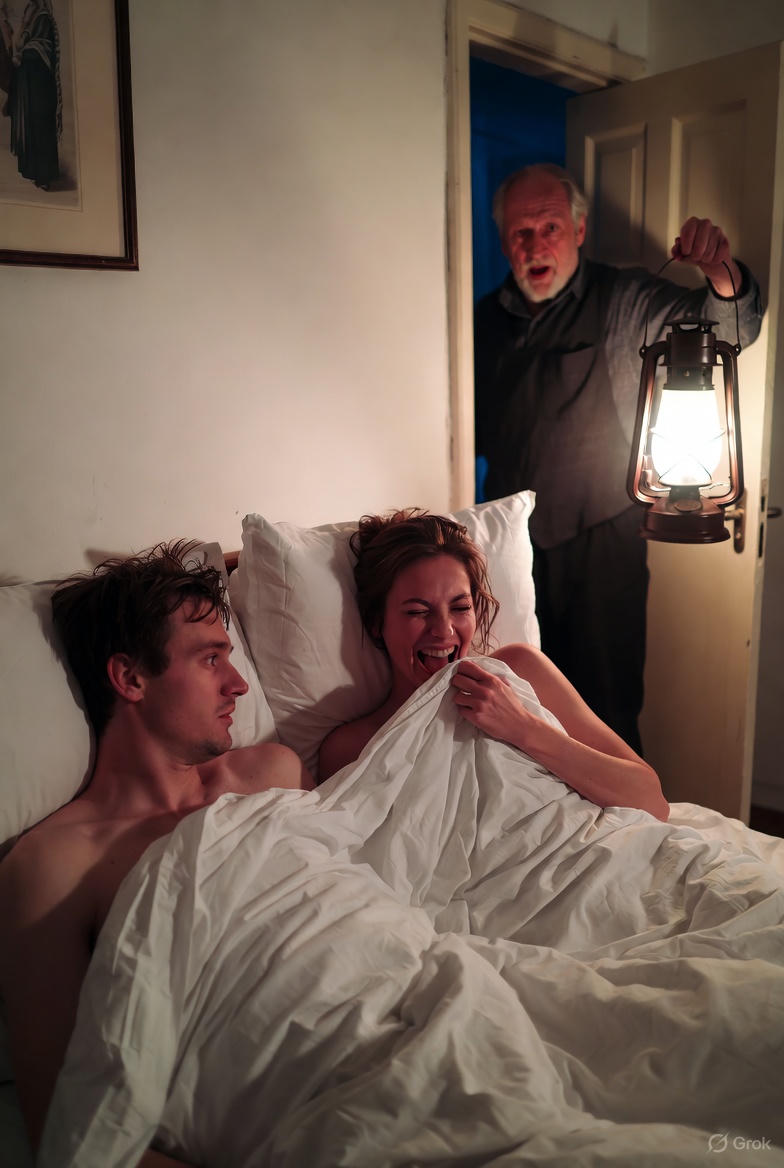
Beneath the well-worn tricorn hat that he wore, grinned a monkey’s face with a mouth which he could contort in every way, as well as make his yellow eyes squint in the most ghastly way. His crooked nose almost touched his chin and gave him an almost devilish appearance, which was still strengthened by the disgusting faces, which he made. The people around him found him less sinister than amusing, and shouted all sorts of coarse words at him, which he answered with indecent and inviting gestures. Then, however, a jerk and a crane of the neck went through the crowd. The sad procession had returned. Two servants in dirty red coats led a stout older man with gray hair onto the scaffold. Behind him the Red Coat climbed up the steps and immediately stood there with naked arms. “Heiner has refused spiritual encouragement,” said a voice behind us. “He thinks, that the great ones are allowed to do wrong up there in the kingdom of heaven, not only here on earth and so he has no desire to do so.” My father quickly turned around. The voice was silent. “Cursed pack!” he rumbled to himself. “Good that again an example is made.” Someone read out something at length in a fat, nasally and quite indifferent voice. Two pieces of wood flew onto the scaffold, pieces of the stick which the judge broke. Master Hans approached the blacksmith and put his hand on his shoulder. That was now his right, and the blacksmith buckled a little. Now he saw that he wore a coarse shirt with black ribbons on it. I had often seen the man working merrily in his forge. His wife was very beautiful and still young. I saw him well now. Under his gray, wispy hair stood the bright drops of sweat on his forehead. Once he opened his mouth and dropped to his knees. “Y-i-i-i,” was heard. “Plumplumplum,” sounded the drums of the soldiers who surrounded the scaffold. Then the man stood up, ran his hand over his wet, shiny forehead and looked around him in amazement. But immediately the servants threw themselves upon him, forced him down with ropes and straps. One saw how one leg thrust up into the air, was grabbed and bent and disappeared. I could hardly breathe for fear. A woman screamed luridly. My father was panting heavily through his nose. The executioner stepped forward, with both hands raised a wheel with a piece of iron on it, lifted it up high and pushed it down with all the strength of his fleshy arms. A whimper -a scream followed -howling – “O my -God-oh-oh-oh-“ The wheel lifted again. “Scoundrels! Damned scoundrels!” shouted one of the crowd. Soldiers rushed to him, pulled him out, and led him to the side. Screams – screams! I vomited. “Get out of here!” my father hissed at me. I pushed aside shouting people, pushed, pressed, got through – ran – ran – as fast as I could run. In the evening, I had to sit at the long table in the dining room with my father, and wait until he had drunk his measure of spiced wine and smoked two pipes of tobacco. I too had to drink wine, even though it resisted me and brought nausea. Then I had to walk alone through the corridor where the clock stood with the little dead man measuring and dividing the time. I anxiously held my hand in front of my light, so that the draught would not extinguish it and the old woman jump out of the cabinet in the darkness. If my father had known about this fear, a bed would have been made for me just in front of the closet, and I would certainly have had to spend nights in it. At the other end of the corridor a steep staircase led to the maids’ chambers. As I passed by I saw that someone was sitting at the foot of the stairs, sleeping. It was Gudel, a brown haired young girl with saucy eyes and pigtails that hung down to the back of her knees. When she carried the water bucket on her head, the pointed berries of her breasts almost poked through the robe. When I looked after her longingly, she laughed with her white teeth and often turned around. There she sat asleep, dressed only in a short red petticoat and a shirt which had slipped half off her shoulder. I could see the dark tuft of hair in the hollow of her armpit. At my step she flinched, raised her head and shamefacedly put her hand in front of her eyes. I grabbed her bare arm, which felt firm and cool. “Let me into your chamber, Gudel,” I whispered, and was quite hot in the face. She smiled and climbed slowly, moving her hips, up the stairs. I saw her legs in the mysterious shadow under the red skirt, and a strong smell as of fresh hay and sweat stunned me. She slipped into the hovel she inhabited, and held the door shut, but so weakly that I could push it in without much effort. “The young gentleman is a nuisance -,” she laughed. I reached for her, and she giggled softly. I was out of my mind and grabbed her and threw her onto the blue bedding, gasping and struggling with her. “So the Lord put out the light -” she cried, half choked. I let go of her and blew out the light with an unnecessarily strong breath. It rustled in the dark, the bed creaked. The stuffing of the upholstery smelled musty. The smell of onions wafted warmly toward me. I squeezed my knee between hers — “The young gentleman is probably still clumsy -“, she laughed again and pulled me to her. Her arms wrapped tightly around my neck —. “But don’t tell anyone anything,” she said afterwards and caressed my back with her coarse hand. That’s when the door opened. My heart stopped. It was Balthes, the dairyman, with a big horn lantern. Stupid and mute he looked at us in bed. Gudel took a corner of the sheet in her mouth. Her whole solid body shook with restrained laughter. “May a thousand-pound seething thunderstorm -” began Balthes, but then his mouth remained open. Gudel jumped out of bed in her shirt, went over to him and said something quietly. Balthes hung his head, pulled a crooked smile and scratched behind his ear. I remembered that he considered Gudel as the house treasure and that they were going to get married. “Go on, then – go! You know that this is nothing,” hissed Gudel and pushed him out the door. His broad back, crouched and strong, had something sad about it. It was the back of a sorrowful man. It was dark again, and Gudel crept into bed with a quiet cracking of the joints and rolled over to me. All pleasure in her was gone, and I lay very still. Then she kissed me tenderly and sang softly: “Oh, my brave little rider, Your steed snorts freely You may well trot with him An hour or two.” But I pushed my hand away and said, “What did you whisper to Balthes?” She laughed: “You nosy kid -“ And threw herself over me so that her hair tickled my face. Then I got angry and pushed her roughly. So immediately she lay still and was silent. “What did you say?” She shrugged and turned away from me in the dark. “Gudel, I’m going to give you my baptismal dime – but tell me!” “Well, what?” she said harshly, “that it’s about our marriage property, nothing more.” I did not understand. “How – about your marriage property?” “The gracious lord has made it for me, and so I have done it and will do it again, as often as the lord Squire has a desire for a woman. In return, Balthes and I shall then live on the Wildemann fiefdom and be allowed use of the buildings and lands.” Now I knew. “And I even had to go to the Spittel-doctor, where the free women are lying inside, and have them look at me back and forth to see if my blood is healthy. I got a note, and the gentleman has read it and told me to see to it that the gentleman squire in good time gets his first gallop on the horse that stretches its legs upwards. So said the gracious lord!” I sat up in bed. It suddenly stank in the narrow chamber. The air was hard to breathe, and my throat was choking me. “Aren’t you ashamed, Gudel?” I felt as if I just had to cry now. “Why ashamed?” she cried angrily. “I have to do His Grace’s bidding and also give the coarse Lord of Heist a warm bed, as the great hunt goes. I do whatever it takes for me to create.” All of a sudden she grabbed me by the shoulders and shook me with terrible force. “Spit on me! Hit me! You make dogs out of men, you cursed, you arrogant devil, and respect a poor woman no more than a chair for the night, where you do your needy business when it comes to you!” Horrified, I jumped out of bed and rushed to the door. Then she ran after me, threw herself down on the ground and grabbed my knees. “Have mercy! Do not listen to what I blabbed, most gracious nobleman. Do forgive me! I will make it up to you – kick me – but for the sake of God’s mercy say nothing to the lord. It would be very bad for me – do you hear, Herr Squire? And I have done you good this night, my gracious squire -“ “Don’t be afraid, Gudel,” I said, but I couldn’t speak any more.
Introduction: The Six Keys of Eudoxus unlock the alchemical transformation of the soul’s essence into the philosopher’s stone. This section unveils the final three Keys—terrification, fermentation, and multiplication—guiding the adept to divine unity through sacred operations.
The Fourth Key: Terrification of the Spirit
The Fourth Key transforms the soul’s essence, the “great Alchaest,” into a solid earth through gentle boiling. This mercurial water, carrying its own Sulphur, coagulates into a fertile “Land of Promise,” as Hermes instructs: “The power is integral when turned into earth.” The adept must patiently moisten and dry this earth, augmenting its virtue and fertility, as Eudoxus warns: “If marks of coagulation fail, you erred in prior operations.”
This terrification, a reiteration of earlier purifications, ensures the soul’s essence becomes a stable, radiant form, ready for further transformation, marking the completion of the Second Work’s foundation.
The Fifth Key: Fermentation of the Stone
The Fifth Key ferments the Stone with a “perfect body,” creating a medicine of the third order. Like dough leavened with yeast, as Hermes compares, the adept unites the purified essence with a ferment to form a new, potent substance. This process, requiring precise proportions, transforms the Stone into a leaven capable of infinite multiplication, as Eudoxus notes: “The whole confection becomes a ferment for new matter.”
The adept, guided by nature’s laws, ensures the soul’s essence, now a “philosophical paste,” matures into a radiant form, embodying divine potency and ready for further enhancement.
The Sixth Key: Multiplication and Projection
The Sixth Key multiplies the Stone’s virtues through repeated dissolution and coagulation, as Eirenaeus describes: “Join one part of the Perfect Matter with Mercury, and in seven days, its virtue increases a thousandfold.” Each cycle—three days, one day, then an hour—augments the Stone’s power exponentially, creating the “Arabian Elixir.”
For projection, the adept combines the Stone with molten gold or silver, then projects this powder onto purified mercury, transforming it into pure metal. Eudoxus advises gradual projection to avoid loss, ensuring the Stone’s tincture perfects the base metal into divine gold or silver.
Closing: This chapter unveils the final three Keys of Eudoxus, transforming the soul’s essence into the philosopher’s stone through sacred alchemy. The journey into its broader implications deepens in our next post, unveiling further secrets of this sacred art.
The Rebirth of Melchior Dronte by Paul Busson and translated by Joe E Bandel
I went back again. Dark yellow light fell out from the chamber; a coffin stood on black-covered trestles, on which was a cross of silver, and a high funeral crown, with flitters, colored glass and mirrors. The wax ran and dripped, the candles flickered. The flowers smelled of earth. Muhme knelt by the coffin. “O my Aglajele! My Aglajele!” she cried. That her little face is never to be known! – Is it raining already?” she asked, turning her puffy eyes toward me. “I don’t know.” And then I cried out and cried so wildly that Muhme put her arms around my shoulders and spoke to me. “You must not, boy, you must not – the people are coming!” One could hear feet trampling. People were coming, murmuring. The finch in the hallway jumped from rung to rung in its cage and kept shouting: “Look – look – look – the travel gear!” I stood up. The priest came. He had the sniffles and often pulled out his handkerchief. He had baptized Aglaja and blessed her. Carriages drove up: the Sassens came, the Zochte, the Merentheim, the cuirassiers from the city, Doctor Zeidlow, the old Countess Trettin, the Hohentrapps. A bell rang in the village, tolled; bing – bong – bing – bong. Schoolchildren. Muhme waved to the teacher. I heard how she said, sobbing: “He makes me sing the same song as he did with my blessed little Hans, even though she was already blessed. But she is in white innocence, as it were like a newborn child – God, oh God!” Ursula Sassen and Gisbrechte Hohentrapp embraced her and led her. Then the servants picked up the coffin and carried it out into the rain. It was not far to the cemetery. Crows were sitting in the weeping willows. Crooked old crosses leaned on both sides of the gravel-strewn path. The iron gate of the hereditary burial ground stood open with rust-red insides. Above it was a marble skull with two crossed bones. In its open yawning mouth birds had built a nest. It stood empty and abandoned. On top of the head grew moss like woolly hair. I saw everything. They put the coffin on the ground, and the school sang again. As Muhme had wanted it, a song that is usually only sung for very young children. My cousin Hans was two years old when he died. When little heirs to heaven Die in their innocence, So you don’t forfeit them. They are only there Lifted up by the Father, So that they may not be lost. Then the priest blew his nose and spoke. The old man cried. The eighty-year-old Countess Trettin raised her lace shawl upwards. “Dust to dust -,” said the priest. They carried the coffin down. The footsteps sounded hollow, there was a terrible echo. Voices came from the depths. Something fell with a thud down there in the darkness. The rain rushed harder and harder. The carriages drove in puddles of water. The men tied red handkerchiefs over their hats, and the women put their skirts over their heads when they were outside. My father looked sternly on all sides. The sexton brought him the key to the crypt. “There – now have a drink!” said my father, and the sexton, wet and chattering with his teeth, bowed low. He made a face and ran his hand to his shoulder. He suffered from acute Rheumatism. “Aglaja is freezing -” said a disconsolate voice inside me. “Aglaja-“ The big house was empty when I got home, the corridors silent. There was a whispering in the corners, and the clocks ticked. The stairs creaked in the night, and the wind cried in the chimney. It was a very strange house. So big and so empty. On the dark corridor of the second floor was a Dutch clock with a polished face, on which the moon, sun and stars moved. Above it, the ornate hands went their way. The pendulum swung back and forth with a muffled, wham – wham. After every quarter of an hour, the striking work let its three- note sound be heard as if from far away: Gling-glang-glong. At the end of each hour chimes announced their number. Then a door above the dial opened, and a small brown rooster slid out of it, moving its wooden wings with a groaning sound. His voice was lost. Always an invisible force took him back and closed the door again. At noon, however, an angel with a blue, gold-edged robe appeared instead of the cock and in three stiff jerks lifted a green palm branch. At twelve o’clock at night, however, a dead little girl would appear in place of the angel. So we were told when Aglaja was still alive.
I was standing in this corridor one night. It smelled of apples and the strange wood of the wide linen cupboards on the wall. Deer heads carved from wood hung there. They held white turnips in their mouths and wore antlers that father and grandfather had captured. Certainly a hundred such deer heads were distributed throughout the entire house. One of the deer had been kept tame, held in a fenced area and then released. Later it had killed a fodder servant and the maids said that the blood of the servant still stuck to the antlers. The paint had peeled off the eyeballs of the wooden head, and so he looked down on me with a ghastly white and blind glare. Old Margaret, shuffling through the corridors with her cane and enjoying the bread of mercy, had told me that at the midnight hour of the day the dead walked in the house where they had liked to be during their lifetime. I held in my hand a candelabrum with one of the wax candles that had burned at Aglaja’s coffin a year ago, and waited for her to come. The cupboards cracked, there was a throbbing in the wall, and then it was like a sigh. The wind went over the roof, so that the shingles rattled. When the hour strike was about to begin, the door above the clock face opened, and sure enough out came out a little dead man with hourglass and scythe, turned his skeleton once to the right and once to the left and raised the tiny scythe to strike. “Wham – wham -,” went the pendulum in the pauses of the hoarse chime of the bell. “Aglaja” I called softly and peered down the corridor. Then silently the door of the closet opened, I was standing nearby, and in the uncertain light of the candle I thought I saw an ancient woman with a wrinkled brown face and a large white hood. I staggered to the wall, but when I forced myself with all my courage to look once more I could not see anything but the closed door. Then there was a cough and shuffling footsteps. Something gray and stooped. The candlestick rattled in my hand. But it was only old Margaret who was worried about me and came to see if I was really up there. I held on to her sleeve like a child and told her what I had encountered. She giggled and nodded. “It was the old woman- The great-grandmother of Aglaja Starke, the daughter of the mayor, who had twisted the family tree – on the Krämer side. You have seen rightly, my Melchior, quite rightly. It’s just that she came instead of the young one. She grabbed me by the jacket. I tore myself loose and stumbled down the stairs. In the afternoon Heiner Fessl was executed. He had overheard the magistrate harass his wife, and since he noticed that his wife had given in to the powerful man, he had run from the workshop into the room and had shoved a red-hot iron that was lying in the fire, through the body of the magistrate, so that the strong man had to perish and die miserably. He had cruelly beaten him and likewise the woman. She was dying, people said. – Powerful helpers, who would have taken care of him- were not there, and so they broke the staff for him. At dawn, the man of fear had gone out into the field and had announced it to the ravens, that the flesh of the sinner would be available before sunset. So the executioner’s pigeons were sitting on all the roofs and waiting. Father told me to put on the silk, lavender-grey coat and go with him. “You’re a wimp and a whiner, but you’re no Dronte,” he said. “I’m going to take you to the spa, boy!” I felt sick with fear when I heard from a distance the muffled beat of the drum and the roar of the crowd. All the alleys were full. They had all travelled to see Fessl on the executioner’s cart, and now he was to return. To my comfort, we had to stop quite a distance from the scaffolding, because the crowd did not move and did not take into consideration the rank of my father. “There you see how bold the scoundrels are when there are many of them together,” said my father loudly and angrily. He was appeased, however, when the baker, who had his store there, hurriedly brought us two chairs, so that we could rest for the time being. “What you see will be very wholesome for you,” my father said after a while. “Justice does not work with rose water and sugar cookies. If it did, we noble folk could pound gravel on the roads and give our belongings to the rabble.” In the trees that stood in front of us and lined the square, many people were sitting. Just in front of us squatted an abominable fellow, dressed in the manner of Hessian cattle dealers, in the crown of a linden tree. The sight of him was so repulsive to me, that I had to look again and again.