The Rebirth of Melchior Dronte by Paul Busson and translated by Joe E Bandel
There was a loud calling and it came closer. Two gravediggers, an old man and a sturdy young fellow, came running with bludgeons and confronted me. What had happened here and why had I shot? I talked to them and described to them the guy with the satchel, who once before had been suspiciously at an unburied corpse in the past, and also at the execution of the blacksmith Fessl in a tree and with his new corpse-desecrating behavior, had now put me in such a rage that I fired my pistol at him, but apparently did him no harm, after he had laughed, escaped and flitted away. They listened to me calmly and seriously, and the old man nodded his head as if to indicate that the man was well known to him, and that he, like me hated him to his very soul. Then he asked me my name, and when I told him, he said: “The Baron may now do as he pleases. We have the vested right to punish offenses against the sanctity of the place on the spot, or to punish the offence if the penalties are not paid to the court. For shooting on consecrated ground, a man shall pay only one silver thaler.” I threw the man two thalers. But he gave one of them back to me and said: “I am not allowed to take excess money. It is only a pity that your shot will never been able to harm him. -“ “What do you mean? Is he frozen?” I asked. The boy laughed, and the old man shrugged: “If the gentleman has not buried a cross in his bullet mold, as it should never be lacking and thus imprints itself on the leaden birdie, then he has not even hurt him, however powerful the weapon may otherwise be.” “I do not carry a cross on the bullets.” “So it’s a pity about the shot and about the penalty for it.” The old man cradled the hairless head back and forth. “But the fact that the Lord can see him is significant.” “Why?” “Not everyone can see him, only the blessed.” the younger man interjected. “Like, for example, father here, who has often shooed him from fresh graves, and I would give anything if I could ever catch sight of him. But I am days and nights in vain and have not seen him. And yet he has been there.” “Who is that fellow?” asked I fiercely. “Fangerle,” said the old man, making a cross. “Is it a man or is it-?” But they gave me no more answer and looked toward the entrance in the quietly falling rain. From there, with singing and many-voiced prayer came a funeral procession. “I always thought that he would show himself at the graves of the miserly,” the old man muttered and climbed into the pit. They did not pay any further attention to me, and when I asked again, the boy said gruffly, “It is better for the Lord to pray!” Confused and saddened in my soul, I walked away along the side paths to reach the exit, while the coffin of the miser was swaying towards the open pit. Before the post coach left, I noticed the faded and sealed box that the notary had given me as an inheritance from my Muhme, Aglaja’s mother. I tore off the lacquer seal and lifted the lid. On the white, yellowed silk rested a red-gold curl of my unforgettable, beloved cousin and her silver finger ring, which I had often seen on her small child’s hand. It was formed with the finest art from two slants which wound around a round-cut fire opal. I pressed countless kisses on the mysteriously shining and iridescent stone, on the silvery, scaly adder’s liver, which had once held a finger of the sweetest hand, and called out the name that had been cut into my heart and painfully scarred there.
But on the evening of the day I arrived in the great city of Vienna and marveled at the life in the streets, the many carriages, the many carts, and sedan chairs, adventures of such a peculiar kind happened to me that I thought of the influence on my life of dark and sinister powers. The first thing I encountered was of course of noble origin and graceful species. When I walked across the square on which St. Stephen’s Cathedral stretches its stone carving into the sky, I was caught in a crowd of carriages and sedan chairs, and was so close to a very distinguished, finely painted sedan chair with two dark red liveried porters, that I had to stand close to the lowered side window eye to eye with the occupant. But who can describe the astonishment I felt when I recognized in the highly toupeed, nobly dressed lady, Sattler Höllbrich’s Lorle? She too knew me again immediately, for she uttered a slight cry and called my name. With my hat drawn, I remained, enraptured by her unimaginable, fully blossomed beauty, enhanced by small arts, and asked in quiet, urgent pleading words for an early reunion. She pointed with a short, openly fearful movement towards the dark red carriers and then said very loudly, “Well, Doctor, you can bring the new ointment for my complexion to my house. Just ask for Madame Laurette Triquet in Schönlatern Street.” With that she nodded at me pathetically, in fact condescendingly, and gave the porters a sign to go on. After an exquisite dinner, I left my room in the evening and went to Himmelpfort Street quarter again and thought to mingle a little with the evening walkers who were glad of the pleasant breeze after the hot day. Already for some time I thought I had noticed an extremely graceful and neatly dressed young lad following after me at every turn. And really, it did not take long, and then he was beside me and said half aloud: “If you desire exceptionally good and amusing company and would like to play a game, I would be prepared to take the gentleman to a house where you can find such things of the best quality.” Gladly willing to spend my evening hours in a pleasant way, and hoping to increase my money supply I agreed to follow the man. He modestly went ahead as a guide, only looking back from time to time to see if I was behind him. After a long back and forth through dark, poorly lit and bumpy streets, we finally reached a crooked and very narrow alley. In front of a large gate, the young man stopped and made four quick knocks with the knocker, followed by two stronger ones. We had to wait a while and I noticed how a dark eye looked at us through a crack in the most precise way. Then, however, in the large gate, which was covered with heavy iron plates, a small door was opened, in which an older, cunning looking woman appeared and looked at us with a burning candle for quite a long time. Only when my guide quietly whispered something that seemed to me to be a word of recognition or a password, the woman stepped back so that we could pass her. We walked over a large, damp, ivy-covered courtyard, in which water poured from a triton’s mouth, and then climbed a steep, barely lit spiral staircase. On the second floor, my apparently disinterested guide asked to be let in the same way as downstairs, and when the servant opened the double doors to let me enter, I stood for a moment as if dazzled in the brightness, the hundreds of fragrant wax candles spread. A gold dressed lackey took our swords, hats and cloaks from us and told us to go on. I saw at once that the ugly, dilapidated outer appearance of the isolated house, the unpleasant darkness on the stairs and in the courtyard were only intended to keep away the curious, and the lavish furnishings and the abundance of light into concealment. For here the walls sparkled with gold, magnificent tapestries partially concealed the scarlet silk wallpapers, the floor was bare and smooth as glass, hundreds of candles burned in Venetian prismatic chandeliers and silver chandeliers. On tables with priceless plates of Malachite, lapis lazuli and ruin marble stood the most exquisite delicacies and drinks. “The Baron of Dronte might like to go to the playroom,” said my pale guide with a smile. “How do you know me?” I asked not very friendly. The young man smiled superiorly. “We take an interest in all strangers of distinction who arrive, and are informed by the Stagecoach drivers in good time. Thus I know that the Baron has taken lodgment with the widow Schwebs- küchlein, and I made it my business to introduce the Baron to a certainly agreeable circle, in which equally chivalrous amusement, as well as something from Fortuna’s horn of plenty.” During this speech we stepped into brightly lit, magnificent adjoining rooms, in which Pharaoh and Landsknecht were being played at several tables. The players hardly turned their heads toward me, when my name was shouted loudly, because at the largest of the tables, where I was standing at, all eyes were fixed on the Bankholder, who was putting on his apron. Muffled exclamations rang out from everywhere like “Va tout!” or “Va banque!” and the soft clinking and rolling of the louisdors on the green cloth that was stretched over the stone slabs of the tables. I reached for the money cat, which I was wearing under my vest as a precaution against thieves, and approached the large table. Immediately the young man, who had brought me here, offered me a comfortable armchair and then disappeared, when I sat down with a light greeting. Before I began to play, I looked at the people with whom I was dealing, and found that I had stumbled into a gathering of distorted images. The bankholder had a colorless, pinched face, which had been devastated by a restless and wild life. He wore over the right sunken eye a black cloth patch, a square piece of cloth on a ribbon, which crossed the forehead and ran further behind the right ear. Next to him sat a tremendously obese, heavy- breathing woman with a white powdered pumpkin head, fanning her pressed-up bosom. She was tastelessly covered with pearls and jewels of all kinds and seemed to me to be a Spanish Jewess, judging by her facial features. Enthroned beside her, upright and haughty under half-closed lids, a very skinny woman of standing, whose yellow monkey face had been plastered with beautiful patches in the form of palms, butterflies and little birds. Her bloodless fingers rummaged greedily in a whole pile of gold pieces that lay in front of her.
The Rebirth of Melchior Dronte by Paul Busson and translated by Joe E Bandel
The notary Mechelde welcomed me with stiff dignity in his gray room. Gray bundles of documents stood on the wall up to the smoky ceiling, and the whole rickety man was gray except for the green eyeshade from which he blinked. He pushed me a chair, checked my matriculation certificate, the only document I called my own, checked his books, and then he told me, that my father, resting in God, had left more than half of his fortune to noble foundations and orders of knighthood, a large amount to the purchase of an organ for the village church and furthermore- numerous legacies for the best of his dogs. Thus would remain for me, his only natural heir, an amount of about fifteen thousand thalers that I could receive from the court at any time. At my request to see the testament he took a stained paper out of the cupboard and explained to me the sullied appearance of the writing with the fact that the old gentleman in articulo mortis, almost asphyxiating, had tried to find the passage in which of me as the “wayward” son Melchior, Baron von Dronte”, was spoken of with the goose quill. But in the middle of a beginning, which the bloated hand was no longer able to perform, the shortness of breath set in so terribly that a sobbing spasmodic cough sprayed the expectoration on the paper and so spattered it with reddish spots. During these explanations the notary drummed with his spidery fingers so impatiently on the lid of his desk, that I could see how little he cared for my company. But when, unconcerned about his lowly manner and politeness, I asked him to allow me to make occasional requests for my father’s words about me (in which I hoped to find a sign of forgiveness and of paternal affection), the gray file clerk turned his inflamed eyes on me and said, with his left hand on the gold signet ring of his right hand and with a dry expression: “I don’t think it’s my place to pass on confidential statements of my clients. However, if this is a special favor for you, Baron Dronte, I must tell you that your father adds words to every mention of your name, which I am neither willing nor called to repeat. In particular, the old man seemed to have doubts that existed in his mind as to whether his only son and name bearer was worthy to use the old coat of arms and title. And this feeling may have prevailed at his Grace’s final decree, which entrusted me with the possession of this coat of arms on my right index, the signet ring of the deceased, which was located with the testament! And he stretched out his scrawny, black-clawed finger towards me, on which sat the ring, in whose sardonyx our coat of arms with the three golden roses was artfully cut. Involuntarily my hand clenched into a fist. The notary took a quick look at the colorful glass beads next to his desk and smiled with satisfaction. I bowed briefly and headed for the door. But before I had reached it, he hastily called me back and explained that he had forgotten. My Muhme, Aglaja’s mother, had given me a sealed box at my father’s death, which was in his safekeeping and which he would now give to me. He rummaged and searched for a while under the lid of his desk, slipped me a piece of paper, and confirmation for signature and after I had put my name on the paper, he gave me a box covered with yellowed blue silk, which was sealed at the edge. “And now the Herr Lord of Dronte will excuse me if I turn my attention to more urgent business.” I left the gray room, my chest constricted, and shaken by my father’s harshness beyond death. It was not about the money. I did not mourn the fact that instead of a castle, rich fields, meadows, woods and ponds, instead of three prosperous villages along with many other possessions and goods, which had been sold to the rich Zochtes by the endowed foundations. What hurt me so bitterly was the fact that, of all the thousands of things that had belonged to my mother, not a single one of the familiar furniture and pictures, not a single piece had come to me. And if it were only the Dutch clock with the palm tree angel and the hammering little dead man or just my mother’s silver bridal cup, or perhaps even the round egg made of seven kinds of wood, on which she had stuffed my childhood stockings, I would have been full of satisfied melancholy. So then, outcast and devoid of all love I took the long way back that I had ridden, and turned toward the cemetery. Green, tender leaves sprouted from the trees that lined the road, and my spurs brushed against the first flowers along the roadside. Larks rose warbling and disappeared in the bright blue. The day was so beautiful, and darkness wafted within me! When I entered the quiet garden of the eternally resting in order to pay my respects and say goodbye forever to the dead man, who had not found a word of kindness for me and yet had called himself my father, I was struck by the memory of the nasty experience with that young maid, whose outcry and indignation had caused me to be horrified by the arbitrariness and crudeness of the powerful, to which I too was to belong. The subsequent disgust of that night was so strong that I wanted to turn back, in order not to enter the earth, under which the dead man lay. But after a short inner struggle, I nevertheless went on, probably because I knew that nothing would ever cause me to return to the places of my unfortunate youth. So I walked with my hat pulled off between the iron crosses, urns and stone angels. The sky, which had been so blue just a moment before, had turned gray with quickly rising clouds, and the thousand fold song of the birds in the trees suddenly fell silent. Wind showers ran over the hills and made the light, long grass bend. A single ray of sunlight fell narrow and golden on a square stone next to the path, on which was written a half-blurred, barely legible name and a saying. This saying was hit by the ray of light, so that I could see the damaged letters clearly and interpret them: Non omnis moriar! “I will not die completely.” These words immediately sank to the bottom of my soul, and an unspeakable consolation emanated from it, which filled my eyes with tears of joy and my heart with a sweet, indefinite hope. These words of the Roman poet was also well known to me from the history lessons. The Englishman Herr Thomas More had spoken it before his head fell under the axe of the executioner. Strange that only today the day had come when I sensed and shuddered at the immense significance of the saying. But the ray of sunlight faded, and the dull gray of the coming spring rain brought me to my senses. I stamped my foot, and the clink of the spur woke me from dreams that threatened to be lost in infinity. I continued walking until I reached the heir-funeral, behind whose heavy, rust-stained doors, besides my hard father, my mother, my grandfather, my Muhme, and my beloved Aglaja, slept, and I looked at the rose tree that Muhme had planted here a few days after the girl’s death. It had grown into a stately trunk, and its branches were covered with tiny, delicate green leaves. In the summertime it would glow with red roses. – “I would gladly have carried a rose from your grave with me forever, Aglaja,” I said softly and stroked the little tree. I thought that the fine ends of the roots might have found their way down to her and that she would feel it when a loving hand touched the smooth trunk. But then I was so frightened that I would have cried out loudly for the little one in the solemn silence of the cemetery. To my right hand, next to a freshly dug, still unlabeled grave, squatted on a half sunken mossy stone slab one whom I had never forgotten and whose hideous demeanor and appearance often haunted me in waking dreams. He still wore the broad hat, had the nail-studded hunting satchel and stabbed at me cheeky and mocking with his yellow goat eyes, the hooked nose bent like a vulture’s beak and the wrinkled mouth warts contorted. “It’s me again,” he croaked. “Hasn’t been long, Your Grace, that I have had the pleasure of seeing you.” I did not answer. In my coat pocket I had a well-loaded derringer, the handle of which nestled in my hand. “Yes, yes,” chuckled the fellow, making a face, “It is Fangerle, your grace Lord Baron. I was with them as they hanged Friederich Zabernikel, but kept myself nicely in the background.” He burst out into a bleating laugh, and his eyes glimmered in the shadow of the hat brim. “What are you looking for here?” I burst out. He laughed again, and it sounded like the clink of glass panes. With his yellow hand he pointed to the open pit at my side, from which the grave digger’s spade had been spilling sand, earthy bones and a brownish skull, to which hair still stuck, and hissed: “A new one, Baron, and here I wait for the soul mouse.” At this he tapped on his satchel, at which there was inside a shrill, piteous whistle. “Let me be content with your nonsense,” I cried, seized with horror. A cold raindrop struck me in the face so that I flinched. Then he twisted his face into a terrible grimace, his eyes glittered, opened his gaping mouth and mimicked that ghastly scream that Heiner Fessl made in his fear of death in front of the Rabenstein. “J-i-i-ii!” “Dog!” I roared, tore the derringer out of my pocket, cocked it in a flash with my thumb, thrust the barrel into his wrinkled face and shot à bout portant. In the blue cloud of smoke I saw nothing, and when it disappeared, only slowly, in the dampness of the rain, the coat of the guy fluttered already far away between the tombstones and bushes, from where an adverse, shrieking laughter rang out. And again it seemed to me, as if a large owl-like bird flew away between the trees and over the wall.
It was Llana who caught the wolf bitch in her snare and, feeling sorry for the orphaned pups, convinced Tobal they should try raising them as pets. It seemed a crazy idea, but she did it anyway. She had a primitive, animalistic aura and sensuality that was almost overpowering and frightening. Gradually, Tobal felt some of that developing within himself.
The cubs stayed with them and lacked the instinctive fear of fire most wild animals have. They loved Llana and stayed close, barely tolerating Tobal. They spent their days in the wilderness, pushing through extreme physical exertion combined with drawing energy from the earth to recharge. In one day, they accomplished more than Tobal had managed in three. She taught him to lope at a tireless, mile-eating pace, sustaining it for entire days, stopping only to recharge before moving on. They practiced sending physical earth energy out and absorbing it from the earth and living things, giving it back in turn. His body began to live and breathe this energy.
These were the lessons she imparted—feeling the life force and energy within all things and tapping into it. She taught him to purify his own energies, strengthening them, but said she couldn’t teach more until he completed the Journeyman degree. The shift to circle brought a welcome distraction.
Nikki, Fiona, and Becca each had their fourth newbies to solo. But Tobal made heads turn as he proclaimed Llana ready for both initiation and to solo. She faced lengthy questioning from the elders, who then approved her to solo. There was some grumbling, but Tobal didn’t care. Llana was his last newbie, and next month, he would be initiated as a Journeyman. He was happy, and that was that. Tyrone had soloed, earning his fifth chevron.
Green grass peeked through in places, and melting snow formed tiny rivulets running toward the lower foothills. The weather was beautiful, warm in the afternoon. Tobal watched as Angel acted as High Priestess. He was surprised to see Dirk in red robes, training as High Priest for the circle. It felt good and comfortable to see people he knew and trusted advancing.
He found Tyrone and asked about his solo. Tyrone laughed, saying it went well except for wolves howling every time he played the fiddle. He’d grown lonesome for company and looked forward to training his own newbie. The big news at camp was that Sarah, Anne, Derdre, Seth, and Crow had returned from the village and waited at Sanctuary for newbies. With them there for two weeks, it was unlikely enough newbies would arrive. Several members, including Zee, Kevin, Mike, Butch, Tara, Nick, Wayne, and Char with their students, had gone to Sanctuary only to find a large line. They were all pissed, hoping for newbies themselves. Now Becca, Fiona, and Nikki would join the hunt too!
Zee and Kevin had decided to stay at Sanctuary with Crow’s group. The others came to circle steaming mad, needing to vent. They were glad the kids had returned, but it irked them that Crow and his crew spent a cozy winter in the village, then waltzed back for newbies in spring. Tobal’s sympathies lay with Crow and his friends—they’d been at Sanctuary when newbies arrived, which mattered most. He’d camped out waiting for newbies himself.
He hardly saw Becca at all. She proclaimed her newbie ready to solo, then kissed him. “I’m going to Sanctuary,” she said simply. “If I leave now, I can be in line ahead of the others.” He pulled her into his arms, holding her close. “I’m sorry it has to be this way. You’ve only got two more newbies to train. Then we can be together all we want.” Her green eyes flashed as she smiled. “I’m going to hold you to that. You better really mean it.” “I mean it,” he whispered. “Now you’d better go so you’ll beat Nikki and Fiona. You know they’ll be right on your tail.” Becca laughed, “We’re all going together. If we need to, we’ll draw straws to see who goes first.” He gave her a final hug and kiss, then watched as she headed toward Nikki and Fiona waiting at the edge of the gathering spot. He waved, and they waved back. Missing Becca, he kept to himself during circle and the initiations.
Later, only Ellen and Rafe remained to discuss what had transpired between the Circle of Elders, the village, and the City Council. The others were likely en route to Sanctuary for newbies. Tobal felt fortunate to be done with it. The weight of her words lingered as Tobal processed the next step. Ellen shared her account of the past week’s meeting with the City Council.
“This time, we were expected and warmly welcomed. They even had a conference room set up with seating for everyone, not just the City Council. The Mayor welcomed us and introduced a Federation officer named General Grant.”
Ellen glanced at Tobal and Rafe, but neither had heard of him before. She continued, “General Grant addressed the room, reporting classified research within the mountain complex he couldn’t discuss. He said several city members were involved and recruited from the city due to their unique training before citizenship. Several City Council members nodded, showing it wasn’t new to them. The general denied any connection to the lake or rogue attacks, insisting the military complex posed no threat to the village. He was hurt by the unfounded allegations and hoped improved communication would prevent misunderstandings.”
Ellen’s eyes flashed. “I asked why we were ordered to keep Crow and his group from the village and what gave the general the right to order us. He reddened, admitting a mistake—civilians shouldn’t have been ordered, and a military unit should have been sent. When the City Council asked why it was so important, he said it was to preserve the training’s integrity and not compromise citizenship requirements. Open communication with the village would jeopardize Apprentice training and medic duties.”
Ellen paused, her eyes flashing with anger. “The general assured no bad intent existed, and the city’s interests drove these actions. The mayor seemed content, asking the City Council and circle members for additions before adjourning. I was furious at his denial of military involvement and the Council’s acceptance, but I knew I was outclassed. There was nothing more I could do.”
She continued, “The mayor was about to adjourn when Howling Wolf appeared in the room out of nowhere. He materialized and addressed us all. He accused General Grant of lying and offered the true story. He said thirty years ago, Ron and Rachel Kane, citizens of Heliopolis, created the Sanctuary social experiment. Their main Apprentice gathering spot was at the lake by the waterfall, the same as today’s Journeyman and Master locations.”
Ellen paused. “Howling Wolf said the experiment was Federation-funded and monitored from the mountain complex, commanded by Lieutenant Colonel Harry Kane, Ron’s brother and Tobal’s father. Whispers filled the room as Council members exchanged looks. He revealed Sanctuary was a front for advanced time travel research. Gasps erupted, and several faces, including the general’s, turned white.”
She looked at Tobal. “He said Ron and Rachel built a machine for time travel—forward or backward—but only they could use it, and no one knew why. They continued traveling, while scientists sought improvements. Ron and Rachel believed it was a human issue, not mechanical, and secretly worked with a small group, developing bi-location techniques. Howling Wolf appeared using those skills, learned from them and taught to his students since. Gasps and hard looks crossed some Council faces.”
“He said bi-location and time travel didn’t need a machine. A handful, linked with Ron and Rachel, learned to do it independently. He knew others still lived and taught it. The group was time traveling when the gathering spot massacre occurred—his wife and children, and Sarah Gardner’s mother, were murdered. Sarah, now training her second newbie, survived. Two grandchildren, not present, live today in Sanctuary. Stunned, they found everyone dead upon returning.”
“Howling Wolf said Ron and Rachel told them to flee, planning to confront Harry. They agreed to meet at a historical location but Ron and Rachel never arrived. He grew angry, revealing his son and wife were hunted and executed. Later, he learned Harry declared Ron and Rachel dead, taking Tobal to raise.”
Ellen paused, noting Tobal’s grim expression and Rafe’s near-ill look. “Howling Wolf said their group perfected machine-free time travel, but scientists worked separately. Ron and Rachel’s machine located time periods and initially propelled people, as bi-location alone wasn’t enough. The military believed magnetic fields were essential, unaware of the secret research. They solved it temporarily by wiring Ron and Rachel as buffers, letting others time travel. Harry Kane was the first to succeed, leading research trips.”
“Soon, weekly trips occurred. Howling Wolf said the issue was Ron and Rachel being wired the entire time, draining them severely, limiting operative stays. The military wanted longer missions to alter history for power, but Ron and Rachel refused to tamper with events.”
Ellen laughed. “Howling Wolf had the room captivated. Some City Council faces turned white, confirming his truth. He said only Ron and Rachel could be wired into the machine. Harry and his wife tried, with her dying and him paralyzed. Ron and Rachel were devastated, refusing further experiments, believing a safer machine-free method existed. A week later, Harry reported their bodies found in the lake, but Howling Wolf said this was impossible—Harry was hospitalized after his breakdown.”
“Howling Wolf swept the room with his gaze. He revealed Ron and Rachel were prisoners, permanently wired into the machine against their will for longer missions. His face grew ugly and dangerous as he said the drain required artificial life support. Now, after years, they’re dying, and the Federation seeks replacements. They know of the secret research group, hunting meeting places. Rogue attacks are operatives searching and deterring clansmen from the lake. He insisted Tobal, Crow, and Llana be protected from the same fate. As he spoke of the program, he stopped.”
“A gasp filled the room as Howling Wolf grasped weakly at a knife in his chest, then faded. Four City Council members grappled with the knife-thrower, subduing him. The general stared, white-faced, at the blood where Howling Wolf had stood.”
Ellen’s face paled. “We turned to the knife-thrower as blood erupted from his mouth, and he sagged dead. A second knife protruded from his back. The four strugglers stepped back, wide-eyed, realizing one was a murderer. Shocked, we froze.”
“The mayor acted first, ordering everyone to stay and calling police. The general vanished—no one saw him go. Police and medics arrived within minutes, but the Council member was dead. The four were taken away. The mayor, shaken, postponed the meeting to next month, needing investigation. He believed our story given recent events, asking us to ensure Howling Wolf’s survival and treatment.”
“The meeting adjourned, and we flew to the village searching for Howling Wolf but couldn’t locate him. We returned to the mountain base, reporting to the Circle of Elders.”
Ellen continued, “I immediately sought Crow, finding him with his newbie. I explained everything. He sat on his pack near a tree, slipping into a deep trance, then disappeared. The newbie stared, wide-eyed. I set up camp, hoping he’d return. Two hours later, he reappeared, tired and angry.”
“‘He’s all right,’ he said, ‘but someone will pay.’ We discussed the assassin’s murder, darkening his anger. ‘Someone didn’t want him to talk. Have you spoken with Llana?’ ‘Llana?’ I said, puzzled. ‘Why Llana?’ ‘She’s my sister.’”
Ellen concluded, looking at Rafe and Tobal with troubled eyes. “Things are getting dangerous. The Council of Elders is in shock, wishing it would vanish. They distrust the City Council and can’t reach Howling Wolf. I haven’t spoken with Llana.”
“Let me talk with Llana,” Tobal said. “I’m free this month until she solos. Maybe I can visit Howling Wolf and learn more.”
Ellen took Tobal on her air sled, finding Llana heading for her soloing spot. She left him to talk. Llana wasn’t ready to grant access to her grandfather, even for Tobal. She’d heard from Crow that he was safe but was shaken, unwilling to risk further danger. “I need to talk to him, Llana,” he told her. Smoldering anger and resentment filled her gaze. “Why?” she asked quietly.
“I haven’t told you everything,” he confessed. “There are things he needs to know, and you do too.”
“What things, Tobal?” she asked softly.
“Adam Gardner is Sarah’s father and can time travel too!”
Her quick intake of breath showed her excitement. “You’re sure of this?”
“Yes,” he replied. “Your grandfather and Adam Gardner could train us all to time travel if they teamed up. But the military might target Adam now, since your father mentioned others teaching it. He thought he was the last, but he isn’t.”
She fell silent, thinking, then stood. “You’re right. Adam’s in danger and must be warned. They need to meet. Tell me where to find Adam, and I’ll tell my grandfather.”
“No,” he said stubbornly. “I want to talk with him.”
She reasoned, “Tobal, I can be there instantly. I know bi-location. We’re wasting time—every minute counts. They could be after Adam now.”
Reluctantly, Tobal agreed and told her Adam’s address in Old Seattle. She prepared to go. “Wait,” he shouted. She opened her eyes. “What?” “Take this,” he whispered, pulling out the wand and handing it to her. She studied it silently, then met his gaze with dark eyes and nodded. “Thanks,” she said, and vanished.
Tobal was stranded in the woods without supplies, worried about his friends, especially Adam Gardner, whom he’d grown to like. He feared for Sarah too. Relief came hours later when Ellen returned, bringing him back to the gathering spot.
The next morning, he set out for the village at the mile-eating trot Llana had taught him. Arriving, he was surprised to find it a full-time village, not just a monthly gathering spot. Guards maintained it, skilled elders ran shops, and mothers with young children rotated care while others worked on projects and meals. No threat to the city existed here, he reflected, walking among shelters and admiring the craftsmen’s handiwork.
He spent days talking to old-timers, piecing together history from their stories. After his parents’ death, Heliopolis became a closed, military-controlled city. General Grant, then Lt. Col. Grant, took over after Harry Kane’s accident and forced retirement. Unexplained deaths in the city and the lake massacre followed. Howling Wolf noticed these targeted time travel opponents, suspecting others died wired into the machine. The military hunted Ron and Rachel’s secret research group, but Howling Wolf warned some to escape. None of the original group lived in the village now.
Other citizens, opposing the occupation, formed the village to continue the social experiment with elderly and children, advancing the utopian vision. The military used it as a pretext for presence, later returning Heliopolis to civilian control with Federation oversight—or so the official story went. Howling Wolf, the unofficial spokesman, shaman, and healer, trained his grandchildren as successors. No one had seen him for days, but they weren’t worried, given his habit of appearing and disappearing.
Tobal returned for circle in time. A light drizzle of rain pattered on damp robes, heightening the irritation. It was late morning, and he looked for Becca, Fiona, or Nikki but didn’t see them, wondering if they still waited at Sanctuary. He asked Zee and Kevin, who were nearby.
Zee answered sourly, “They dumped their newbies off this morning to be initiated and proclaimed them ready to solo. Then all three left for Sanctuary again. They didn’t even stay for the initiations.”
“It’s not right,” Kevin added. “People care more about Journeyman status than proper newbie training. Rushing through and skipping initiations is wrong.”
“I’ve thought a lot about this myself,” Tobal said, looking at both. “I’ve attended every initiation since arriving, not just for my newbies. I believe it’s vital to support and encourage each other. Still, I’m unsure how much training is truly needed. I spent an extra month preparing Nick, Fiona, and Sarah for winter, yet Tyrone, Crow, and Llana needed less—Llana barely a month.”
The Rebirth of Melchior Dronte by Paul Busson and translated by Joe E Bandel
A muffled shot woke me up, which was answered by a loud scream. A wild noise began, shots rang out, people shouted and screamed, cursing, wailing loudly and pleading in piteous tones. Muffled blows, which fell down, and stifled whining, plus the angry yipping and growling of dogs, who had something between their teeth, startled me. I jumped up and wanted to go out the door. It was locked. But soon the key turned in the lock and a small, gasping and excited boy of about eight years rushed in and stuttered: “The mayor wants you to come!” As I stepped out into the open, in the light of torches and lanterns, I saw the old man in the middle of a bunch of well- armed peasants and in front of him, cruelly tied up with ropes, a beardless frizzy head with a flat nose and powerful jaw bones. “Step forward!” commanded the white-haired peasant and beckoned to me. “Well, Frieder, look at him. Do you know this man?” He turned to the bound robber. “How could I not know Dietlieb?” smirked the villain, glad to be able to exercise his malice on a blameless man, and thrust his chin at me. “He is the only one of my good journeymen, whom I sent on a scouting mission and who has not yet been massacred by you. You will have to die now, Dietlieb!” A shudder ran through me at so much wickedness. A threatening murmur rose around me, gun barrels flashed, pointed at my chest. I wanted to speak, but a gesture of the mayor’s hand commanded me and everyone else to silence. Nevertheless, one of them shouted out, that I should be struck down and not allowed to speak. “Shut up, grocer!” the mayor thundered at him, and immediately there was a deep silence. He pointed at me. “When did you go out on business?” he asked Frieder. When did he join your gang?” he asked Frieder. “Can you swear that he was with you?” “By the blood of St. Willibrord, he was there!” cried Frieder and looked at me with diabolic lust. “As we marched toward the village, after the clock struck nine, I sent him ahead with the lump for the dog.” “He’s lying!” shouted one of the bunch. “The one with the lump of poison in a copper box lies behind the dunghill. Old Kolb has burned it down!” “And I say it before God’s throne: He was with and must now also go with me to the tower and then on to Master Hansen’s dance floor,” seethed Frieder. I could not speak for horror. “Enough!” the old man ordered Frieder. “Wicked, devilish, damned sinner, you who want to bring innocent blood to the gallows with you! Know that the gentleman has been sitting with me in the inn since the noon bell, and gave honest warning about the signs on the wayside shrine. So now follow your companions into eternal darkness!” The robber laughed uproariously, and saliva ran down his chin. “Only time will tell, you poisonous, teething, sheared peasant’s knoll! I am deprived of the fun of the honest donkey, whom I have never seen, as a companion on the straw, so it is also just and my malice must remain without sugar. And now holla, you peasant steeds, lead me with proper reverence into your little cottage and deliver me tomorrow in the right way to the tower, if you don’t mind the journey.” He added a laugh and neighed like a horse, to mock the country folk, who had listened to his insolent speech with their mouths open. Then, however, they looked expectantly at their chief. The mayor stepped up to the prisoner like a black, looming shadow and said in a firm voice: “Friederich Zabernikel, as you are called by your right name, we do not need a city court and no tower. You may say one Lord’s Prayer and then you hang. This is your verdict.” Then Frieder let out a terrible roar, so that his eyeballs popped out of their sockets. raced in his fetters, stamped in the snow and bent raging under the horny fists that held him. They waited quietly until he became still and gazed fearfully around him. “You do not have the right of the sword, you may not deny anyone’s life,” he stammered. “Where is your tripod? Think well of what is right.” “We know,” said the sheriff gravely, “bad deeds justify some things that are not written in the law of the land. Will you pray, Friederich, do it soon, for thy time is up.” “No need to pray, and no Lord God,” cried the frightened one wildly. “If you want to murder without right, then murder. I have also helped many a one over! That were a plague in your coarse stomachs -” “Shame!” A heavy sooty blacksmith’s hand moved threateningly in front of the man’s pale face. “Do you have another request?” asked the old man. Then Frieder laughed, almost merrily. “Because Schinder-Susel has told me, that I would have to kick the air on an apple tree once and because I now have to do it after all, she shall be wrong. I want to do the last hop on a pear tree-“ “In Zeitler’s garden,” said one of them half aloud, and so the procession set off with crackling torches. Behind them ran the women and children. The firelight went red over the glittering snow. With weak knees I followed. In a large orchard they threw the rope over a warty trunk, tied the noose and picked up the bound man. “Pray – pray -” he gasped, then they let go. Frieder distorted his face hideously and cackled: “May Beelzebub hear me, that you bastards and your filthy brood may perish, shrivel up, and be swallowed up with leprosy, pestilence and -“ By then they had already put an end to his blasphemies. His feet twitched and kicked wildly in the air, flapping back and forth, until two boys tied them and hung on to them. When they let go, the legs stretched still from the body, on which the head with the red cap stood crooked and dark, through the thin line of the vine cord tied to the gnarled branch. “You see it, Heiner,” said one fellow to the other. “She’s always right! This is an apple tree, and over there is the pear tree, which you wanted to point out to us.” “So Schinder-Susel, of whom we were told, can do more than cook mush,” he laughed back. “Tomorrow in the first gray we’ll scrape him and the others in.” “So, squire,” spoke the mayor close beside me, “now come and sleep away the haunting. Tomorrow no soul will know any more of Frieder and his brotherhood, and for you it will be good to keep silent about what you have seen.” I merely nodded and walked beside him toward the inn. But then I suddenly stopped, grabbed the mayor by the arm, looked him in the face and said. “How did you know how to interpret the signs on the statue?” Bright light fell from the windows, singing and laughter sounded. The man stopped and put his hand on my shoulder. His gaze sank deeply into mine. “Friend,” he said, and a bitter smile crossed his wrinkled face, “you have a right to ask that question. Well then – perhaps I have been through the same school as you yourself. Perhaps I have often put my ear to the mouth of a poor sinner who was lying on the rack, or once I slept with a poor sinner who blabbed at night what her red mouth concealed during the day. It also happens that an innocent person is put into chains and has to listen to what the gallows birds tell each other of tricks and intrigues. There you have plenty of food for thought about me. And if I put it right into your hands, written what I have learned as an old man in my younger years – that would not help you either. Remember: One knows nothing of the other, and even if the other were his brother in the flesh. – Come, I will show you your berth.” At last, with the money I had found, I was once again dressed as a cavalier, I had reached home and stood before the gate, through which I as a boy had often gone in and out and through which my mother, my father’s father and Aglaja had been carried away. I stood and stared. What did the person who opened the door to me say? -That the Baron of Dronte ate grapes for dessert the previous summer and was stung by a wasp and died a painful choking death from a swollen throat. He had constantly demanded with gestures that he be cut with a penknife, where he pointed out the throat below the thrush but no one had dared to do this. So it had been inhuman to look at and to hear, how he, with his hands around himself and rolling his eyes terribly, rattled, strangled and whistled for several hours, until at last there were no more gasps or wild tossing and turning of the body, the soul was gone. But the house and farm had now become the property of the Lord of Zochte, but was not yet occupied. The Noble Foundation, to which everything fell, had agreed to the sale of the inheritance to Zochte. The man did not know me, but thought I was a former guest of my father, and when I asked about the son Melchior, he shrugged his shoulders and said that the young gentleman after all kinds of bad pranks had fallen into the hands of the recruiters and was either buried somewhere in the ground or had decayed and evaporated. No one had heard of him. I asked with anxious curiosity about Phoebus. He had remained as an imperial standard bearer squire. I received the answer that he had stayed in front of the enemy. And who had arranged the legacy of the old Baron’s estate? That was the Notary Mechelde, inside the city. I turned my horse and rode slowly past everything, the wall with the roof tiles on top, which surrounded the park, the old trees, which rustled as before, the fish pond and the forester’s house and saw from afar the arbor and cypresses of the cemetery.
The Rebirth of Melchior Dronte by Paul Busson and translated by Joe E Bandel
When I wanted to go I noticed that a few steps behind me was a lean, white-haired, very stately and upright peasant, who looked at me with a less than friendly and piercing look. “I suppose the gentleman is coming to see us?” he said lurkingly. “I will show him the way to the inn.” And with that he walked beside me. The village mutt, which wanted to come at me with loud barking, gave way with retracted tail before his hard look. The people before the houses pulled their caps before him. “Here it is.” The peasant pointed to the door of a large house, in front of which a couple of fellows stood chatting quietly. “Enter.” That sounded like an order and gave me a jolt. “Ei, is this the only inn in the big town?” I turned mockingly to my companion. “And how do you know that I want to enter this one?” He looked me sharply in the face with his cold, blue eyes and replied only briefly: “It is best for the Lord to enter here!” I complied with the strange compulsion, entered and sat down at a table on the wall under the deer antlers. The old man sat down with me, had wine brought, set fire to a short silver- beaten burl pipe and said: “You look like a man of status in spite of your rather scuffed clothes. The question is how you have come to so lonely a wandering?” “Aren’t you being a bit too curious, Herr Mayor,” I replied. This was the title he had been given by the little girl when she had poured the wine. “Curiosity, as you call it, is the right of the established against strangers. Besides, here I am the authority. So you want to tell me something about your status, name and what you are doing. Its better speaking over a glass than on the bench in the basement, if one is the judge and the other is the indicted.” This sounded like a threat, and I would certainly have responded sharply if there had not been something special in the man’s nature and especially in the look of the man, there was something that I did not want to resist. The mayor also knew how to get answers to the questions that he addressed to me so cleverly and forcefully that I, not knowing why myself, shared my entire life to him with the greatest frankness. I admitted that I had deserted from the army of the great king, not out of cowardice, but to flee the cruelty of a state that seemed to me to be an excess of servitude and annihilation of free will which had become abhorrent to me. “Young Herr,” said the old man thoughtfully. “In such a way it can still take a good course with you. As I hear from your speeches, you have had pity on the poor man, and that is a great and precious rarity among people. To what extent your unprotected youth pushed you into ruin, I cannot judge for the time being. But I hope that a suspicion which distresses me and which is very threatening to you, will prove to be false.” “What suspicion?” I asked, astonished. “Be patient,” said the mayor. “Where will your wanderings take you?” “To my homeland,” I answered. “Tell me,” he continued, again looking sharply at me. “Why did you stand so long in the snow looking at the wayside shrine?” Gradually, his imperious way of asking put me in harness, and I briefly asked him whether he thought of himself as a judge who had a poor rascal before him. “That is what I think.” He laid his hand firmly on my arm. “You know that I am the mayor of this village and as such I ask you: Do you have anything to tell me about the welfare of the village?” “Yes,” I said quickly. “Your village is threatened by a grave danger.” It was as if a kindly glow flitted across his weathered face. But it became immediately serious again, and he said, apparently indifferently: “Gee up! Who told you that fairy tale?” “It’s not a fairy tale,” I said, glad to bring in my nearly almost committed grave omission. “Believe me, you are in danger!” “Go ahead and speak, Squire.” “There are certain signs,” I said, “by which the murderers and the marauders announce their wickedness to each other. I found such signs on your wayside shrine. Now you know why I stopped in the snow.” He made a movement as if he wanted to reach out his hand to me, but dropped it and asked dryly, where I got such dubious knowledge. I reminded him that I had already told him about my time with the gypsies, who understood such things well. The old man laughed briefly and his wrinkled face came near. “Perhaps it true that I also know something about such things?” he murmured. “You?” I shook my head doubtfully. “We could try it out,” he said and poured me some wine. “Describe the signs to me, and then let’s interpret them together like the old magicians of whom we read in the scriptures.” “Very well,” I said. “There were on the Wayside Shrine: a full moon, a one, three houses, the first two of which are crossed out, and the third not, a comb with teeth, a snake or a viper, two dice with five on top, three crosses, each in a square, two of which are crossed out and one of which is not, a knife, two shoes, a rooster and the letter F.” “Quite so.” The old man nodded and took a thoughtful sip from his glass, “Now let’s divide ourselves in the work. You, valiant squire, point out to me the rogue’s signs up to the two fives of the dice, and then I will explain the rest of the drawings that have been on the Wayside Shrine since yesterday.” “We could leave the interpreting for later. Better to take precautions now -“ “Don’t be concerned,” he rebuffed. “It will be on my, the village mayor’s cap, if something is missed, you are in no way to blame. And now off with your gypsy wisdom!” “So listen,” I began. “The signs are thus to read: On the first day of the full moon we gather. The target is for the third house in the village. This all means the moon, the one and the not crossed out third house. A comb with teeth indicates: a sharp dog is on guard. Then the snake means a lump of poison, to make the watch dog dumb.” “It’s my house,” nodded the white-haired man, “which they have in mind, and my Packan, who admittedly will not take a lump from a stranger’s hand. You have interpreted well. Now it is my turn.” “Better let me.” “Chamber. Two fives on the dice: that is ten o’clock at night, because the moon is in front; three crosses, each in a square, two painted: get in at the third window. A knife: murders quickly and safely. The shoes: then make haste away with the loot, but first put the red rooster on the roof as it is shown, so that the fire will erase all the evidence. And F? What does that mean?” He looked at me with a smile. “That’s a name sign,” I replied quickly. “You can’t get the name itself from it. Certainly it is the captain, whom the others obey.” “The F means Frieder,” said the old man, “and this devil of a fellow is the leader of five journeymen murderers who have drawn themselves from the Spessart region and call themselves the Red Hat, as Frieder likes to wear a fox-red cap. Now you also know the name sign.” “A good guess,” I admitted. “Now I may trust you, young Herr.” The mayor extended his hand to me, which he had previously refused to do. “Even though it stinks that you know how to read tines. You know that earlier I took you for one of their henchmen and spies, when you were at the wayside shrine and looked at the signs so devoutly. Hey, Hannes, Matz, and Kilian!” he shouted loudly. In an instant the door opened, and three tree-strong fellows with rifles, sabers and two huge gray shepherds’ or catchers’ dogs came straight towards me with ropes in their hands. “Leave the gentleman!” the mayor waved them off. “Go back to the others and tell them that this one is a righteous man and no one may harm him. Make it very clear, as I have shown you. Veit and Leberecht at the sloe bush, old Knolb and Heger’s boy on the roof of the first house, four in the ditch, two behind the dung heap, ten in Heger’s stable and the others, as the case may be. Let them come right on in, don’t bother taking prisoners. The five helpers may kiss the snow, Frieder, the one with the red cap, we want alive.” The strong fellows looked at me and laughed. “So we would have soon sent the wrong man on his way to heaven,” said one of them, nudging the two others, who burst out with their boorish laughter. The dogs growled and pulled their chops from their white teeth. “Now go again!” the old man instructed them, and immediately they stomped heavily out the door. Outside the last light lay blue and darkening on the white land. The old man ordered me not to leave the inn for the time being. Later, the taciturn tavern maid, who answered all my questions with a “Don’t know.” brought me a chicken roasted on a spit and a jug of red wine. Once, when I felt the urge to go out, one of the dogs struck close to me. So I had to stay and wait until everything was over, and tired from the long way and sleepy from eating and drinking, I fell into a half slumber.
The Rebirth of Melchior Dronte by Paul Busson and translated by Joe E Bandel
And when I thought of it, it shook me coldly. I quickly went up to the sleeping mortuary attendant, grabbed him by the shoulder and called out: “Wake up, man! Robbers are outside –“ The peasant, who was wearing a coarse shillelagh, jumped up and looked at me in alarm. “Where?” he slurred. “Outside,” I said again and closed the door behind me. I heard him quickly slam the heavy latch shut. As soon as I stood outside in the breeze, crooked fingers clawed at my tattered coat, two eyes shone like brass, and from a black gaping mouth he bleated: “Throw them away; throw them away from you all at once!” “What do you mean, cursed one, that I should throw them away?” I shouted in his face. “Our Lord Christ’s cross -?” Fangerle bent back as if I had struck him in the face, twisted and turned like a worm and began to run, cross-country. The wind raced behind him, whistling and whirled up his coattails, and as he was carried away into the twilight, it seemed to me as if instead of him a giant bird with black wings soared over the furrows, just as owls fly. I stood without money, abandoned and damp from the dew on the lonely road. But then I remembered the satchel with the soul mice. Who was screaming so miserably in the hunting bag of the evil one -? The evil one! A paralyzing fright crept into my legs. Calling on the name of God a hundred times, I went towards the next place and did not dare to look around.
The gypsies, with whom I had long been walking, the brown Romi, as they called themselves, had wandered back across the border, and I had to separate from them, if I did not want to be married by the provost to the rope maker’s daughter. My misery was boundless. Here and there I found some work and food in the farms, I even received a damaged piece of clothing that was even better than my rags, but most of the time I was starving and freezing to death. One day I was lucky and found half a loaf of bread on a country lane, which had been lost from a cart. And when I saw the ruins of a castle on a mighty, wooded hill, I decided to light a fire in a hidden place in the walls, so that I would not have to spend the icy winter night without the comfort of close warmth. After some climbing around in the rocks I soon found a still fairly preserved vault, on the whitewashed wall of which still the remains of Al Fresco paintings could be seen. Among other paintings also the wedding of Cana was depicted (as I could see from the remains of clothing and heads, as well as the large, ancient wine jugs), and when I saw the mural, which was in a bad state of disrepair, I noticed that one of the wine jugs bore the barely legible inscription: “Hic jacet”, or “Here it lies”. Perhaps it was a joke that the painter made for himself, telling the thoughtful observers that in these jugs and in the wine that fills them, in fact something lies and rests, namely the spirit that enters into the body of man with the drink and gradually unleashes all passions, which overwhelms and rapes the mind, through intoxication; but perhaps it was also said that all gaiety slumbers in the round belly of the pitcher and after drinking the drink, it would froth up in laughter, cheerfulness and songs. About this and the like, I pondered until the lack of the warming fire made itself violently known and forced me to tramp up and down in the spacious vault for a while, in order to warm myself and to let my stiff hands be used for starting the fire. When passing the unfortunately only painted brown jug, I could not help but tap the thick belly of the vessel with a bent forefinger, even though its rounded appearance was only the skill of the painter, who through the distribution of light and color had achieved a high degree of plasticity. But when I playfully tapped at the seemingly round curvature of the drinking vessel, I felt as if it had a dull, wooden, and hollow space. I knocked again, and two or three more times. The sound gave way at the place where the Latin words were written; it differed from the sound of the walled environment. Following a sudden impulse, I peeled off the paint and the lime with my blunt knife, dug a little and immediately came to a wide, rotten storage cache. I increased my efforts, and soon the old wood was crumbling away in brown flour and damp splinters, exposing a small niche in which lay a round, greenish-white mold covered sphere. After some hesitation, in which I saw that the object was a decomposed human head, I plucked up my courage, reached in and pulled out a completely decomposed leather sack, which made a fine sound when I lifted it out. It was heavy with metallic contents. Then I made a fire, probably also for this reason, to calm my hammering heart by doing an indifferent work. When the little fire was burning and flickering merrily, I proceeded to examine the leather container, which the inscription on the wine urn had advised. Those, to whom this sign had once been made because of the danger of forgetfulness, had been dead and gone for many years, perhaps buried under the rubble of the castle. The bag offered little resistance. It fell apart as I carried it to my fire, and its contents rolled ringing on the damaged stone floor. My breath was taken away by the sheer joy of it. Doubloons, sun-crowns, guilders rolled out of the greasy, wet bag and flashed in the glow of the dancing flames. I laughed, shouted, and leapt around the fire. I let the blessing run through my unwashed fingers, shook the coins into my hat, stroked them, and twisted individual pieces between thumb and forefinger so that they reflected the embers, paving the floor with them and throwing ducats in the air to catch them again or to search for the unrolled ones among the debris. But then reason prevailed. How easily the firelight, my foolish shouting and stamping could attract passersby and betray me and my refuge! In great haste and yet cautiously I tore my sweat-glued shirt and produced by knotting and folding a kind of money bag in which I concealed the not inconsiderable number of gold pieces and hid them on my bare body. When I was finished with everything, I pulled the smoldering wood apart and thoughtfully descended the hill of ruins to reach the next town in broad daylight. This I succeeded in doing and after a short time of sneaking, searching and cautious questioning, I found the store of a junk dealer. I told him that I was a runaway soldier and that I needed clothes, linen, shoes and a warm coat. Fortune demanded that I had come across a reasonably honest man, who, though not cheaply, did not cheat me for inordinate profit, and even had a bath prepared for me against good money and an ointment that freed me from the torment of the vermin. The only thing that bothered me was the hurry, with which all this had to proceed, and the visibly growing restlessness of the man, as daylight gradually began to fade. At last, however, his insistence became tiresome to me, and I asked him gruffly whether the chosen people practiced hospitality in such a way, and how he seemed to hold it in low esteem that I had willingly let him earn a nice piece of money. For I was well aware of the price at which worn clothes and worn linen and clothes were traded. Nevertheless, I would have paid what I had received without question as if it had just come out of the workshop of the tailor and garment maker. Then the Jew laughed and said: “The gentleman has probably also been rendered a service so that he may have cleaned and equipped himself in all secrecy, so that the bailiff does not even look after him, when he crosses the street. If the gentleman were a Ben Yisroel, one of my people, it would be a pleasure for me to house him. But because the gentleman is from the others, it must not be so. Because it is Friday evening, which we Jews call Eref Shabbiss and it is against our custom, to suffer strangers in our festive house. May the Lord forgive; I know well that he is a Purez, a distinguished man, who has suffered from the Balmachomim, and may he go his way in peace and forgive that it cannot be otherwise!” Thereby with a deep bow he tore open the iron door of his store and politely beckoned me to leave. Only when I was standing outside on the street did it occur to me that in his way he had acted honestly toward me. For it would have been easy for him to keep me in his house and betray me to the king’s troops lying not far away in their winter quarters. Despite the armistice, they could have picked me out and abducted me, and with some skill the Jew would have not only had a reward, but also the money hidden on my person, which would have not gone unnoticed to his quick eyes. Thus it was not by my cleverness, but by my good fortune, that I had escaped the greatest danger to my life. For the sake of safety, I decided to wander deeper into the country and far away from the border to make use of a mail coach. So I trudged on my way in the thick snow and strove towards a village in which I intended to spend the night. At the entrance of the respectable and, judging by the clean houses that were spared from the war, prosperous location stood an artwork, the sorrowful mother with her son in her lap. The base of the sandstone had been freshly plastered, and so I immediately noticed a few figures and strokes on the white surface drawn with charcoal which I knew as “marks”, as the country and traveling thieves call their secret signs. When I was with the gypsies I had learned such science, which is useful for everyone to understand. But these signs on the wayside shrine were about murder and burning and I shuddered when I deciphered their meaning. Undecided what to do with them, by no means to carelessly disregard the threatening message for other people I stopped.
The Rebirth of Melchior Dronte by Paul Busson and translated by Joe E Bandel
Nevertheless no one seemed to pay any attention to the ugly one but I. And sometimes it seemed to me, as if a chirping and whistling sound as of mice came out from his bulging satchel. Not infrequently he rolled his squinty eyes toward me and laughed impudently at me, as if we were old acquaintances. I racked my brains, in fact, to find out where I might have seen this mask before, but as hard as I tried, I could not think of it. After a while, a beautiful carriage stopped in front of the inn, and several handsome merchants entered the drinking room, and were very courteously welcomed by the innkeeper’s wife and the barmaid. Then I thought that it was now time for me to go, and crept out of the door. But when I found myself on the wet street in the roaring dew wind, I held my fluttering rags with my hands to cover the worst of the bare spots, there was such a shrill laugh right next to me, that I collapsed. The man with the hunter’s hat walked next to me, as if he had been my companion all his life, and looked at me piercingly from the side. “Well, your Baronial Grace,” he grumbled, “what peculiar garb I must find you in again. The new, lavender-gray little coat suited you better that day, when you were watching with your strict father, as the magistrate cracked Heiner’s rough bones.” I looked up, now I knew where I had seen him. It was at Zotenbock, where he had been hanging around in the linden trees, eavesdropping at the market place. “Who are you?” I asked. “Me? I’m just Fangerle,” he replied, suddenly quite humble. “I’m glad when, with much toil and trouble I fill my blue satchel so that my master, who is called the Highest- Lowest, can be content. I now have an extremely annoying job and would be really happy if someone wants to take some of the work off my hands. It is nice money to be earned. Don’t you feel like it, your Baronial Grace?” “Listen,” I said, raising my ash stick. “I am in great distress, but if you have come with your gallows face to mock me, then I will show you that even in rags I can still be a gentleman, if need be.” He ducked his head as if he were afraid, and asked me not to be rude. He was a joker by trade, he said, and as such earned a lot of money at peasant weddings and funeral banquets. And whether I got angry if he said it now – it is a disgrace that one of the house of Dronte is in such an outfit, when it would have been no trouble to earn a bare hundred thalers in a few moments. And before I could reply he reached into his satchel with his crooked fingers and pulled out a handsome canvas pouch, in which it clinked. “A full hundred,” he whispered in my ear. “Hihi – hoho!” he laughed, and it was as if an echo came down from the skies. But it was only a great train of crows and Jackdaws, which moved with Krah and Kjak in the sky, and when I looked up, a crow detached itself from the flock, swooped down and fluttered very low above our heads, so that I saw how it moved its cunning, black ball eyes. At that the thin man straightened up and called out to it: “Black Dove, go and tell the Highest – Lowest, that Fangerle is on the way and to take the quiet one his consolation!” “Krah – Krag!” cried the bird and shot after the others. “What are you chattering about?” I prevailed over my uninvited companion, who was jingling his money bag. “What are you talking about?” “This?” he gave in reply. “One of my jokes, nothing else. Remember: If you’re riding in a wagon and there is a barking mutt, like your master father’s black Diana, following behind, you need only turn and tell the animal where to go. Then it will leave you immediately. This and nothing else I have done with the raven. Otherwise Master Hämmerlein’s songbird would fly with us.” My eyes were glued to the clinking money bag, and I thought of how I could equip myself with a hundred thalers and become a human being again. There was another strange squeaking in his satchel. “What do you have in it?” I asked, pointing with my finger, “that it squeaks like that?” “There in the blue satchel?” The merchant made a face. “It’s little animals that I’ve caught and bring them to their place.” “What kind of little animals?” I pressed him. “Soul mice, tiny soul mice that I’ve been gathering around there.” “Soul mice?” “It’s just a word,” he laughed, reaching into the sack and quickly pulled out a small, shadowy-gray thing that wriggled and screamed. Quickly he hid it again, and although I had not been able to see what it had actually been, a violent shudder ran through my body. Then came a howling gust of wind and almost pulled me down. The money bag fell out of the old man’s hand. Flashing, brand-new thaler pieces rolled out. He quickly picked them up from the ground and threw them back in with the others, and once again my desire for all that money awoke. “What must I do to make the money mine?” He stopped, rolled his eyes, and muzzled his mouth. “In a moment, my boy, my brave boy, just be patient until we reach the two Ka- Ka -“ A fit of coughing almost tore his throat. I followed the direction of his outstretched hand and saw a chapel by the road, not far from the village I was walking toward. I hurriedly strode and the merchant, who suddenly seemed to get sour from walking, only followed with difficulty. When we came to the little church, he stopped, bent over and scratched himself with his nails behind his pointed ears, with his mouth hanging down. “Now you will tell me,” I said angrily, “or do you think you can continue to mock me?” Then he became completely submissive, bowed to me and said softly and almost shyly: “Baron Dronte, I am a coward, and I am afraid of many things that a brave soldier does not fear. There is one lying in there, and he’s dead, so he can’t bite. In his hands are two wooden sticks, one long and a shorter one, which I must take from him for all the world. It is only a handle and a hitch, so he must leave them.” “That would be robbing a corpse,” I stammered, startled. “That would be the gallows.” “Many names exist for the businesses in which there is much to earn. And there are many gallows, but most stand empty.” Under his broad hat, his eyes glistened like St. John’s beetles. “I’d love to,” he croaked hoarsely, “but I can’t touch such sticks. Everyone has their own characteristics. Like, for example, many a man would rather die than touch a toad with his bare hand. “ “What kind of sticks are they, for which you have such a great desire?” “Don’t need them,” he hissed crossly. “Only that the one in there shall be free of them.” Again there was a clang and a sound. My wound hurt. The water stood in my pierced shoes and bit open my frostbite. “I’ll do it,” I said, and reached for the door handle. He looked at me like a hawk. It dawned heavily. The wind rumbled over the steep roof of the chapel. The trees rustled. I entered. In the middle of the whitewashed room, in the corners of which the darkness was already eerily stretching, there was a coffin in front of the altar on the collar. A single light flickered at its head end. A guard sat on the floor and slept. Next to him glittered an empty bottle. In the open coffin, however, lay an old, distinguished man with a face in which life had drawn furrows and wrinkles. He was dressed in a new coat made of black, watered silk; also the vest, the leggings and the stockings were black. A white, well coiffed state wig framed the wax-yellow, smartly pinched face. In his folded hands he held a small wooden cross. I had seen many dead people and even had to help bury them. I didn’t feel much at the sight of lifeless bodies that were left to decay. But this old man with his wise and so unmoving face, in which countless joys and sufferings had been marked, this defenseless man, whose guardian lay there in deep drunkenness and left him defenseless and exposed to everything that might befall the lonely church. I took pity on him. And what was I supposed to steal from him? Then I recognized it: It was the death cross, which his hands were holding tightly. I was supposed to snatch it from him. This should not be difficult. I took hold of the cross. Who sighed there? I almost fell to the ground from fright. But then I got hold of myself, remembered that the dead are dead forever, and reached out my hand again. But I lowered it. What did it matter to the merchant with his disgusting eyes of a bitch, whether this deceased was brought under the lawn with or without his cross? And now he would give me a talking to, the barnacle-eyed fellow with his thalers. I went toward the door. It was only two steps, but I looked back at the dead man. He was lying quietly and peacefully, and as if in great fear, the pale fingers closed around the cross. I had to think of the despicable guy who had hired me. How could this madman or villain think that I would take the cross of a lifeless man away from him? What had he been chattering about, how the ravens flew over us? “To take the silent man’s comfort -?”
The Rebirth of Melchior Dronte by Paul Busson and translated by Joe E Bandel
He fell silent, exhausted, breathing heavily. “Not everything he says is a lie,” murmured Repke. “You too?” roared Zulkov, spitting on the ground. “Oh, about you Germans! You misjudge what alone is necessary for the salvation of the German nation, the army and the wise hand to guide it.” “Germans are over here and over there. Have always been a poor, betrayed people,” said Repke. “It’s a pity that I’ve shot my powder outside, Fritze Zulkow,” sneered Wetzlaff. “Otherwise maybe you would like a warm plaster glued to your mouth with all the strength of your body, you foot stinker, you are the miserable archetype and symbol of the subservient subject. Decomposing even in a living body and still singing the praises of the one whose furies flay us and torment us until death. But you just wait until they put me on outposts again. I’ll cross over; I’ll cross over, so help me God… O hell, filth and Satan — it overcomes me again –!” With a staggering leap he was up, and again we heard his blood gurgling outside. “He has a bad fever!” waved Repke at the enraged Zulkov angrily. “He doesn’t know what he’s talking about in his pain.” Then Kühlemiek raised his nasally trembling voice and began to sing from his book, so that we all shuddered: “The abomination in the darkness, The stigma in the conscience The hand that is full of blood The eye full of adulteries, The naughty mouth full of curses, The heart of the scoundrel is revealed.” “Oh my God -!” It was I who cried out thus. Then a loud trumpet blared. – “Alarm!” Zulkov shouted, squeezing his sore feet into his frozen shoes. “Alarm!” At the glow of the extinguishing fire, we gathered everything together. Distant shots. The trumpets began to scream all around. Wetzlaff stumbled in. “Up, brothers, up! We want to light up the royal bastard’s home. Vivat Fridericus!” That was Wetzlaff. Bent with body ache, he took up his rifle. Zulkov moaned softly with every step. All around there was noise, horses neighing, clanking. But in all the raving, running, shouting orders and muffled noise of the shooting in front swung mewling and horrible the merciless voice of the pietist, who sang his song to the end. Dreadful fear descended from the tones. The fear of what would happen after death. The drums were beating. Heavy smoke rolled in thick clouds, dissipated, came in new blue-white balls, and dissipated again. Fog and stink lay over everything. Dull roaring thuds, crashes, whipping bang, chirping of bullets. I stood with the others in lines and ranks, bit off the bullet twisted in rancid paper, kept it in my mouth, poured the black powder into the hot barrel, ran my fingers between my teeth and pushed the cobbled lump of lead down with the ramrod until it rested firmly and the iron rod jumped. Just as it had been drilled into me. Then powder on the pan, with the thumb on the cock, aimed it horizontally, and into the wall of fog in front of me, in which shadows were moving. The stone gave off sparks and it flared up before my eyes, and then came the rough recoil against my sore shoulder. The lieutenant on the wing waved the halberd and shouted. “Geg – geg – geg,” was heard, not understanding a word. A big iron ball rolled and danced across the frozen snow, then a second one. A third bounced along beneath us and smashed Kühlemiek’s feet out from under him. “O Jesus Christ!” he cried out, crawling a little on his hands in his own blood. Then he fell with his face in the snow, became silent. “Flü – flü – flüdeldideldi,” lured the pipes. “Plum – plum – plum.” The drummers worked with sweaty faces. The legs lifted and lowered in time with the beat, one was sitting there, with his head between his spread legs. The blister on my heel was burning, the lice were crawling restlessly on my scratched skin, and there was a rumbling in my guts. I looked around… rows, rows of blue coats, skinny faces with small mustaches, white bandoliers, and bare barrels. “Kühlemiek – Kühlemiek – miekeliekeliek”, trilled from the lips of the pipers. In front of us a row of red lights flashed. A cloud of gray smoke rose behind it. Repke roared and grasped with both hands between his thighs. A tall soldier leaped like a carp and drove with his head into a snowdrift, his feet stretched upwards. Next to me, one screamed like a frog. I could still see the blood pouring out of his ear, before he collapsed to his knees. Zulkov suddenly had no head anymore, walked next to me and sprayed me with hot blood. Then he fell down. The squire was knocked backwards as if he had been hit by an axe. Wetzlaff sat down first, screamed, “I can’t,” and then lay down. In front of me crawled a man who was blind-shot, and Ramler had his right hand twisted and hanging out of his sleeve. He looked at it in amazement and stayed behind. His rifle fell to the ground. Large shapes came swaying out of the haze, and quickly became clear. White coats, black cuirasses. Broad blades stabbed at us, horses’ heads snorted, fled to the side startled. A horse stood on its hind legs in front of me. I saw the rider, who was holding the hand with the broadsword hilt in front of his face, with his left hand clasping the saddle horn. I saw the whiteness of his coat under the edge of the dark armor and hastily thrust with the bayonet. It was soft. He fell forward onto the horse’s neck, glared in my face, and cried out. “You-!” It was Phoebus Merentheim… He rattled down. I no longer saw him. But another one came, lifted himself in the stirrups and hit me on the head with lightning speed, so that I staggered around. The edge of the tin hood cut my forehead, warm and thick water flowed into my eyes. My feet went on. My arms pushed the barrel forward with the bayonet. I tore it from the neck of a brown man. The horsemen were gone all at once, vanished. “No rest – no rest – no rest,” the drums murmured. I slept while walking. We were suddenly among houses. A woman cried out in fear; fell on her face with her arms outstretched. A pig ran between us. Then there was a small forest in front of us. People stepped on bodies, on guns. A dog, skinny and with its tail between its legs, crept past. A peasant lay there with his body open – without intestines. The dog came from him. There were bushes, white-ripe, dense, and impenetrable. I crawled into them. Moss lay there on a pile as if someone had gathered it together. A bed, a bed. I burrowed into it. No one saw me. Wonderful, warm, soft moss. Somewhere in the snowy forest lay the rifle with the bayonet, with Phoebus’ blood on it, the tin hood and the bandolier with the sidearm.
I had been wandering about the border for many days. I had found the torn coat in a shot-up house, the pants on a hanged man. The right leg had received a weeping wound from frost and vermin, which bit and hurt me, my nose and lips were etched from the running sniffles. I had slept in barns and haystacks, teeth chattering, and the previous years frozen and woody rotten beets had to fill my stomach. In this inn on the country road it was the first time that the landlady gave for God’s sake a bowl of warm food to me and allowed me to sit at the back by the warm stove. If, however, distinguished guests came, I should generally trot myself out and not be begging for something around the tables, she said. The barmaid also took pity on me and secretly slipped me a large wedge of bread, and just as stealthily she poured my empty glass full of thin beer. I, the baron Melchior von Dronte, had lived the life of the despised and the poor, the outcast and the lawless. And with the most miserable of them, I had sometimes found more Christian charity than among those who were sitting in their own chair in the church. But how hard people had been against me in the last days! Of course, these were the times that no one should open the door to a stranger in bad clothes without necessity. War and terror all around, victory and parley, robbing, plundering, desecrating and burning without end. So it was like a miracle to me that the landlady said: “Come and eat and warm yourself. You look like the death of Basel.” Not far from me at a small table sat a merchant or cattleman in a light, thick fleece, a large Hessian peasant hat next to him on the bench and a satchel over his shoulder, the leather flap of which was inlaid with all kinds of brass figures. The face of this skinny person was the most disgusting, that I had ever encountered in my life. Soon he pulled his wide mouth into a gap that reached from one of his pointed ears to the other, and then he stretched it out like a pig’s trunk to drink from the glass. His vulture nose lowered against the upwardly curved chin, and his yellow wolf’s eyes, in which the black was transverse and elongated like those of a goat, squinted pathetically.
The Rebirth of Melchior Dronte by Paul Busson and translated by Joe E Bandel
He was a tall, very young boy with sunken cheeks. Apart from his pants and shoes, he was wearing only a dress shirt. He was shivering from frost and fear. Kregel was his name. All the sticks stood steeply in the air. Two sergeants walked at our backs to see who would be casual about the beating. The drums started pounding and the man was pushed into the alley. He ran. The sticks whistled, clapped down on him, the tatters flew off his shirt and skin. He shouted something that you couldn’t understand. I hit him on the neck, and saw raw flesh splattering. But he was through, and outside he fell down on all fours. They grabbed him and pulled him up. He groaned. “Forward!” shouted the provost. The deserter’s eyes protruded out of their sockets, saliva ran from his open mouth. His lips were torn. He was running again. The sticks struck smacking, blood ran, and chunks flew. The man jumped, bent down while running, whined like a dog, stretched out his beaten and swollen hands, pulled them back screaming when a blow hit the knuckles, fell to the ground and collapsed like a sack at the end of the double row. He lay motionless, gray in the face. One could see his heart beating furiously under the bleeding skin; under the back, on which he was lying, a dark pool formed. The army doctor came, took a breath and laid his hand on the ribs of the prone man, then beckoned two soldiers and told them to turn the unconscious man over. Then he pulled out a bottle of wine spirit from his bag and poured it on the torn back. With a piercing cry of pain, the runner came to. “He’s beeping again!” said the man next to me, Wetzlaff. “They always recover their strength with the palm leaf!” They picked up the senselessly slurring man and pushed him into the alley for the third and last time. But this time he did not get far. After a third of the way he fell down, and as much as his comrades tried, even from behind by beating him with a stick urging him on, he did not move any longer. “Now he is done for!” said one of them, and the sticks lowered. But all of a sudden the fallen man jumped up and shot like an arrow through the alley. A few blows hit, the others missed. Furious, the corporals beat those who had allowed themselves to be fooled. “Such a false dog – such a cunning scoundrel!” they scolded. Outside the alley, the runner stood still and smiled in spite of his pain. From above came a peculiar giggling sound. We looked up. At the windows of the officers’ quarters stood a number of preened ladies, holding handkerchiefs in front of their mouths and laughing their heads off. “Plum – plum – berum!” Warned the drums, urging us to move in.
In the guardroom, an oil sparkle was burning. The wall was thickly stained with squashed bugs. The bottles of brandy were empty, and the tobacco smoke drifted in blue clouds under the sooty ceiling. It had been a retreat for a long time, but no one stretched out on the cot. “If only she comes, Kinner!” said Private Hahnfuss, “but such prizes are smarter than clever!” But he had not yet finished speaking when the door opened and Wetzlaff entered with the girl. The sergeant nodded, looked at the thing with a half a glance, and then, as if by chance, walked quickly out of the guardroom. Behind him the door was immediately locked and barred. The soldier-Catherine now stood alone among the many men in the middle of the room and looked from one to the other. Her cheeky smile became anxious and shy. Her hood was crumpled, the striped skirt was stained, and the heels on her shoes were badly worn. She scratched her hip. But when everyone remained silent, she became afraid and made a movement as if she wanted to run away. She threw a stray glance at the closed door and then she said with a gulp in her throat: “Well, you won’t let me out, boys?” “That’s the way it is, girl,” said the corporal, putting the burning sponge to his pipe. “You lied to us. Didn’t you?” “I keep my mouth shut,” she said, “what’s this all about? What am I supposed to have lied about?” “We asked you once how it was with your internal health, girl – didn’t we? Because otherwise – we would not touch you! And now look at Beverov! – Come here to me, Beverov!” One of the guards stepped forward. The corporal opened his coat, vest and shirt. The man’s chest was covered with nasty red spots. “Do you know what that is, little Cathrine?” the corporal asked treacherously. “They are – real Frenchmen aren’t they!” In the girl’s face shock alternated with fear and anger. “From me? From me?” she shrieked and put her hands on her hips. “You pack of louses, you tripe eaters – I’m still with the sergeant – let’s see if -“ “It’s the same!” the corporal interrupted her and at the same time hit her so hard on the mouth that she cried out. But then she was silent. A drop of blood stood on her lower lip. “Down with the skirt!” She screamed, squealed like a rat, kicked her feet and bit. But it did her no good against the fists that were angrily attacking her from all sides. In a few moments she was standing in the pathetic nakedness of her spent body, writhing under the hard hands that held her wrists and arms. “Bring the lamp!” The corporal shone the oil sparkler all around her. A hot drop fell on her skin, making her cry out. “Don’t worry – you’re not going to be roasted!” he reassured her. “Look, comrades there -!” And he pointed with his finger to many white spots, which clearly stood out from the brownish skin of the neck and the shoulders. “Do you still want to deny that you have the French, are contaminated and infectious, you lout, you?” She did not answer. But then she raised her head and spat her reddish saliva right into the corporal’s face. “Well wait, you human!” He said calmly and wiped his face with his sleeve. “What do you think comrades? I’m for some horseplay.” “Do it!” everyone shouted. “Horseplay!” “You are a fungus from birth,” continued the corporal, blowing the stinging smoke of his smoldering pipe into her face. “What do you want to be? A fox – or what?” “Damned pig,” she hissed and cringed, snatching at the restraining hands and snapping. “I want out! Let me out! Let me out!” “Black is my favorite color!” the private shouted into the hubbub. “Give me the boot polish -!” Amidst roaring laughter, in which the voice of the desperate creature was drowned, they spat into the jerk-off boxes, dipped the coarse brushes into them and went to it. So far I had sat on a cot as in half anesthesia and watched the incomprehensible to me happenings. But now I was seized with horror and agonizing pity for the miserable, broken and destroyed creature. I saw how they reached for her, heard the insane shrieks and screams of the martyred woman, as they dragged her by the hair and stepped on her bare feet with their clumsy shoes. She squirmed like an eel, screamed with a squeal when one of them approached with a whip in his hand, whimpered for mercy and in one breath uttered the most vile curses. “What do you want with the wench?!” I shouted at Wetzlaff and held him by the sleeve. “Well first she must be scrubbed shiny,” he grinned in my ear. “And then she must run at the long leash until she can no longer. That’s our horseplay, boy!” A shrill scream went up. The corporal had grabbed her from behind and held her tightly, however much she resisted. “Go for it, comrades!” he encouraged the others. Then I jumped over, tore his hands from her trembling body and stood wide in front of her. “Let her go!” I shouted loudly. “Let her go!” “Oho!” he roared back at me. “Look! Dronte!” With his fists clenched and his face contorted in anger Wetzlaff stepped toward me. I looked at him firmly and calmly. His angry eye strayed from mine, his clenched fists opened. The others fell silent, looking at me as if amazed. “Comrades,” I said, “have mercy. She is not guilty. And she is as poor and abandoned as the rest of us!” No one answered. I went to the door, without anyone trying to hinder me and opened it. Then I bent down, picked up the prostitute’s rags and gave them to her. “Go, Cathrine!” I heard myself speak, in the surrounding silence. She stared at me with wide eyes, bent down as if to kiss my hand, then laughed hoarsely and was out in one leap. We heard her walk on bare soles along the stone-paved courtyard. Nobody said anything. Slowly, people put boxes and brushes to their designated places. One of them yawned loudly. Then Wetzlaff laughed strangely, stood in front of me, swayed his head back and forth and looked at me penetratingly. “It is so,” he growled. “Dronte has it in the gaze- He has the power in his eye.” No one remarked anything to it. Silently they stretched out on the hard cots to get some more sleep before Ronde arrived.
Chapter 23 The City Council of Heliopolis and the Circle of Elders
Tara and Nick were the next to join in the dance. Tara had always been into dance, but this was the first time he had seen Nick get into it. Again Tobal was impressed at how the winter had matured Nick. Then he thought of the changes in his own life. He was not the child that had been dropped off at sanctuary almost a year ago.
He realized he had been here one year and he still had one more newbie to train. He was not going to beat Rafe’s record after all. Looking around the room he spied Mike and Butch talking with some girls and urging them to dance. They were laughing and having fun. He figured that Mike and Butch were also looking for newbies. A murmur rippled through the crowd, pulling Tobal’s attention from the laughter to hushed whispers about Sarah, Anne, Derdre, and Seth still at the village with Crow. Rumors of jailed Elders added a tense edge, though they seemed old news from last month.
Wanting to hear something new, he looked around for Ellen and Rafe. He spied Ellen over in a corner talking with Rafe and made a beeline toward them, trying not to spill his tankard in the jostling crowd. At least it was warm in here, he thought, moving past bodies that smelled of wood smoke.
“We can’t talk in here,” he shouted to Ellen above the drum beat.
She nodded and shouted back, “We are meeting in the brewery in a few minutes.”
Tobal nodded and went off to find Fiona, Becca, and Nikki to tell them about the meeting. Their robes were still wet but warmer, and they put them back on before dashing over to the brewery where they took them back off and found places around the fire to sit. They folded their robes and sat on them on the wooden floor.
Ellen and Rafe welcomed them, and Ellen brought everyone up to date on what had been going on with the Council of Elders.
“We tried everything we could think of to contact the city government through the communications and computer systems we have access to,” she said. “What happened was we were warned not to make contact with the city and just to mind our own business. The city will contact us when we are ready to become citizens. We are not part of the city yet and have no legal rights until we complete our training and become citizens.”
“These messages were prominently displayed on each air sled monitor screen and on the computers at home base. No one even thought to come to us in person to explain or hear our concerns,” she said bitterly.
“This did not sit well with the Council of Elders, especially since the arrest and questioning of the five of us that had been sent to the village. We were released, but the Council of Elders now realized someone thought they had the power to arrest clansmen anytime they wanted and hold them without cause. They believed this same someone was responsible for the rogue attacks. The council wants to know why these things are happening and if they are happening with the approval of the city.”
Ellen looked around the small group. “The final decision was that the same five delegates would journey on air sleds to Sanctuary and then cross the wall into the city. We would find a place with lots of people and set our sleds down and wait for the authorities. We would probably be arrested, but the city itself was populated with clansmen. We were counting on that bond of kinsman to get a fair hearing.”
She grinned, “I was the first to go across the wall and land my air sled in a central area. The others followed me in. Even before we had landed, a crowd of people appeared wondering what was going on. I called out that there was an emergency, and one of the citizens nodded and started talking on her cell phone. Several of the others were also on cell phones. It was a matter of minutes before authorities arrived and put us on some type of air transport. We were not arrested or treated as prisoners, but we certainly were not given any choice about things either.”
“They took us down to the police station where we gave our statements.” She laughed, “It was obvious that the persons involved wanted no part of this and were way over their heads. They passed us on to the mayor who listened and then called an emergency session of the City Council. This was against the strong opposition of someone wearing a Federation military uniform. I gathered this uniformed person was the representative of the mountain complex and the ones that had arrested us.”
“I was elected the spokesperson for our group,” she told them, “and with grim determination I faced the City Council and told our story of being arrested and questioned, about the massacre at the lake and the mass grave, how it was a forbidden area. I told them about the rogue attacks that were centered around the lake itself and the attempt to make it seem the village was responsible for those attacks.
Then I told them that was impossible because the rogues have some way of tracking anyone that has med-alert bracelets and are able to hide in a way that the villagers can’t. I told them of the rumors the city was going to lead an attack on the village. Several members of the City Council looked at each other quickly, and at least a couple had red faces.”
“They weren’t the only ones,” she continued. “I could see the man in uniform getting redder and redder and angrier and angrier. I spoke about Crow who had grown up in the village and now wanted to become a citizen. How his concern for the safety of his village was the reason that led him to make the journey back with four of his friends. The entire group is still within monitor range of our air sleds, and they can visit the village according to our own Council of Elders.”
“I told them how we were suddenly alerted that the village was forbidden and that we needed to keep Crow and his friends from going there. That was not right. I faced the City Council and told them Crow was technically a citizen of the village and had every right to be there. He could also bring friends if he chose to do so. Then I mentioned how the air sleds went back to the base and were severely reprimanded and ordered back out to bring Crow and his friends back by force.”
“The City Council was pretty quiet by then,” Ellen said. “They listened as I told them of the confrontation between Howling Wolf and the other villagers that offered to protect Crow and the others. I told them how I was there and that pressing the issue then could have resulted in injury or death to innocent people.
At the mention of Howling Wolf, I saw several council members glance at each other and take stronger notice in what I was saying.” She chuckled, “I took advantage of that interest and told how the Council of Elders decided to send a delegation to talk with Howling Wolf and find out the truth of things for themselves.”
“I then described the armed strike force I had seen waiting by an air transport back at the mountain complex when we returned. I also told how we five members of the Council of Elders had been immediately arrested and held for an entire week without being told why. The man in uniform was a pasty white by now and struggling for composure. I told them how we tried every possible way to make contact with the city itself. We needed to see if the City was aware of these things and if it supported them. I told how the Council of Elders had tried all ways possible to reach the city but been blocked and told it was forbidden. That is why in a last ditch effort we chose to fly a delegation over the city walls and speak with the city officials directly.”
“They didn’t know what to think or say,” she chuckled. “There was a dead silence as the City Council looked toward the man in uniform and waited for his response. He was clearly uncomfortable and said that he was not prepared to respond to these allegations and needed to consult with his superiors.”
“The Mayor then asked what the Council of Elders would like to have happen. I said the Council of Elders would like to ensure the safety of the villagers and Howling Wolf. They would like communication between the village and the city so they could monitor and address any abuses that were happening.
I mentioned this could be done by opening new communication lines to the city from the base in the mountain where we were stationed. I concluded by saying this was a matter for the Elders of the village, the City Council and our own Council of Elders and there were many things that needed to be discussed and brought out into the open. We also wanted the rogue attacks to stop and whoever was responsible for them to be punished.”
Ellen continued her story, “The Mayor looked pretty grim and told us the City Council would need to do its own research and find out what was going on. They also needed to hear from the Federation, and he looked pointedly at the uncomfortable man in uniform. He suggested they adjourn until next month and set a time to meet again here in the city and asked for a vote from the City Council. All voted in approval.
He then asked if the City Council approved a direct communication line to be opened so the Council of Elders could contact them and keep them informed of developments. Again all voted in approval. At that, the Mayor asked the uniformed person if it would be possible for the Federation to open a communication channel for the Council of Elders or whether the City Council needed to do it. He saluted and said the Federation would provide the link.”
“ I think it’s bugged,” Ellen continued, “but it’s more than we had before.”
She continued, “Then the Mayor adjourned the meeting and escorted us back to our air sleds. He told me we had done a very brave thing coming into the city and they would look into our story and be looking forward to our meeting next month.”
Ellen completed her story and looked at the others.
“So it seems things are happening. Hopefully next month we will know more about what is going on.”
They talked a bit more and asked more questions until they reached the point where they just needed to leave things and process them later. The talk shifted to other subjects.
The big news was Rafe had gotten his sixth chevron and would be leaving with Ellen after the party to get his Master’s initiation. With all that was going on, he was eager to get his own air sled and do some snooping around on his own even though Ellen was warning him not to.
The meeting broke up and most of them went back to the dance. Tobal spent a little more time in his farewells with Becca. After a final kiss and hug, he took his pack and left in the pouring rain.
Tobal was getting impatient. It had been almost one year and he wanted to move on into the Journeyman degree. After Tyrone soloed this month he would have five chevrons. He only needed one more newbie to train. He was no fool. After talking with the others he knew at least eleven of them wanted newbies to train and they would be lucky if five showed up. He left immediately in the rain heading for sanctuary. He had not been the only one with that idea. Kevin and Zee were already there ahead of him when he finally got there a few days later.
April rolled around and spring was in the air. Tyrone was on his solo and Tobal was at sanctuary waiting for a newbie to show up. There had already been three and it was not likely there would be any more this month, but he was determined to hold his place in line and get it over with. Kevin and Zee and some others had already taken their newbies and left. This would be his last trainee and then he would be ready for the 2nd degree. He wondered about his last student and who it would be.
Would it be a boy or a girl, somehow it didn’t matter. The skills they needed were all the same. He thought about his last five newbies. Some like Melanie and Crow he had grown very close to. Others like Nick, he hadn’t hit it off with and didn’t see very often. Sarah and Tyrone were fun to hang around with and he loved doing things with them, but they weren’t really that deep and sometimes he missed the serious side of life.
Still, he wasn’t prepared when Llana walked through the door for the first time and claimed sanctuary. He did a double take as he saw a fierce Native American warrior dressed in soft decorative buckskin with a claw necklace around her neck and tattoos on her face.
She was tall and good looking with straight ebony hair like Zee’s. She was about his age, older than most of the newbies and from the village. She was Crow’s older sister. He remembered Crow had a sister but hadn’t thought he would meet her here. He was shocked at how little he really knew of Crow and his family. She had been training with Howling Wolf since she was a little girl.
“I can’t train you,” he said in dismay.
Tobal’s pulse quickened, the cave’s echo fading as he braced for her reply. She studied him, her gaze steady, before speaking. “Why not?” She looked at him pointedly.
“I already went through this with Crow,” he protested. “You already know more than I do. I can’t teach you anything you don’t already know. It would be wrong to take credit for teaching you when I didn’t.”
She relaxed a little. “Is that all that’s bothering you?”
He nodded glumly.
“Let me ask you something,” she said quietly. “Do you have any doubt in your ability to train newbies in survival skills? Any doubt at all? Even the smallest?”
“No I don’t,” he said.
“Why not?”
“Last fall I had to give additional training to three of my newbies so they would be ready for winter. I thought they were trained well enough and then realized they weren’t, so I took extra time and gave them more training.”
She nodded, “Nobody made you do that did they?”
“No.”
“What does the Council of Elders think of your training?”
“I’m one of the better trainers.”
“Why do you say that?”
“Because the newbies I train are happier and healthier than a lot of the others. They also seem to make good trainers themselves and most are willing to train through the winter.”
She smiled at him. “Your parents created this program to bring people up to a certain skill level in both knowledge and demonstrated ability. Do you believe you have reached that skill level and are ready to move on to the next?”
“Yes I do.”
“But you can’t advance because the program will not allow early advancement even if you are already prepared correct?”
He nodded, “That’s right.”
“Well, I’m in the same situation,” she said. “I already know how to survive, how to defend myself, and I am also a healer. I also know advanced techniques that my grandfather taught your parents and other advanced techniques that your parents in turn taught my grandfather.”
“Can you talk to my parents?” He interrupted.
“Yes,” she nodded biting her lower lip. She paused, letting the weight settle.
“Are they going to be alright? Can we save them?”
“Tobal,” she said slowly, with pain in her eyes. Her voice softened, eyes glistening with shared pain. “Your parents are no longer human, and they are dying. They are asking for our help.”
“What do you mean, no longer human?” he shouted. “I see them and talk with them during circle.”
“What you see and talk with are their spirits,” she whispered. “They have developed their spirit bodies to the point where they are almost physical. In fact, once their spirit bodies were physical and they could go anywhere they wished by changing their physical bodies to energy and teleporting instantly to where they wanted to go. They can’t do that anymore. That’s the problem. The Federation keeps their spirit bodies deliberately corrupted so it can use their vital life force for their own projects.”
She shuddered, “Your uncle captured them and imprisoned them. He wired them like electrical components into the circuitry of their time travel machine and they have been kept alive artificially for over twenty years in special fluid-filled tanks.” Tobal’s breath caught, the image searing his mind.
“Tobal,” she said looking hard into his face with tears in her eyes. “I have traveled in the spirit to where they are kept imprisoned. Their physical bodies have mutated and become grossly deformed. Only their spirits remain human. They wish to be free of their physical bodies and become simply the Lord and Lady. But your uncle won’t let them die.”
“I need to see!” He sobbed in denial and fear. “I need to know for myself. I need to see them and talk with them. I need them to tell me.”
She put her arms around him as his shoulders shook and comforted him till he regained his composure.
Wiping angry tears from his eyes, he asked, “You’ll teach me?”
She held him against her breast. “I’ll teach you, Tobal. I promise.”
The first thing she taught him was the story of his parents and their classified research involving time travel. Ron and Rachel had built a matter transmission machine and tested it. This machine used powerful pulsating magnetic fields at certain resonant frequencies, powered by the earth’s own core energies, to create a gateway into time and space, much like the ones in current use for matter transmission. The problem was that mineral and crystalline objects would work, but organic materials would not.
After several years of research, Ron and Rachel developed the first gateway or portal that allowed living matter to be transported through it to target locations and began using it themselves. Something about their soul relationship allowed them to work together in a very powerful and unknown way. This was an important military breakthrough, or could have been. It allowed troops to be transported instantly from one area to another and was immediately highly classified. But it never worked unless Ron and Rachel were a part of it.
It was purely by accident the time-traveling capability was developed. One of the giant capacitors malfunctioned while transmitting Ron and Rachel to a target location. It threw the entire machine out of phase, and Ron and Rachel ended up in the 16th century.
When they didn’t appear at the target location, retrieval was attempted, and they were brought back successfully. They also brought some artifacts back with them. From that point on, the classified research became about time travel, not troop transmission.
By trial and error, they were able to travel into the past and into the future and achieved access to four historical time periods and four future time periods. Each time period seemed to act as a nexus point in time and space. If the machine wasn’t keyed to a nexus point, nothing happened. There were nine stable points in all, including the world we live in, and they were called: Hel, Niflheim, Svartalfheim, Vanaheim, Midgard, Alfheim, Jotunheim, Muspelheim, and Asgard after Nordic mythology.
Working with the machine gave access to other probable worlds that were not as stable. It was like working random codes until you found one that worked. The process was slow and frustrating but also highly exciting at the same time. That was when the problems arrived. Ron and Rachel were able to go back in time through the machine, but no one else could and live to tell about it. The machine did horrible things to those that tried, drove them insane or deformed their bodies. No one knew why it only worked for his parents. Howling Wolf says that your parents were divine counterparts. He said time travel only worked with special couples whose souls were linked together. The Time Knights called the females spinners, because they were able to weave new timelines with their partners.
“I’ve met some Time Knights,” Tobal interrupted. “Lucas and Carla. They are going to help free my parents, but I haven’t heard from them for a while.”
“Really,” Llana said pensively. “That is very interesting. I would like to meet them.”
They had developed the necessary training programs to prepare other time travelers. But the machine only worked for Ron and Rachel. It was a classified military project, and a team of scientists worked furiously to remodel the machine and make it work with other people.
It was only when both Ron and Rachel were hooked into the circuit with the machine at the same time and used as buffers that others were able to go through it. Tobal’s Uncle Harry was the first one to successfully time travel through the machine when it was hooked up in this fashion. He led a team through the machine several times to many previously unknown time periods in addition to those that your parents had discovered on their own.
There were problems with this because Ron and Rachel were not willing to be wired into the machine for hours at a time waiting for other time travelers to come and go. Trips into the past or future could only take two hours at the most, and the drain on Ron and Rachel was severe. Their health suffered each time they hooked themselves into the machine and others used it.
Ron and Rachel were able to time travel themselves without any of those restrictions and could be away for weeks at a time. They felt it was more important they be allowed to make extended trips and do research than be confined and wired to the machine so others could experience briefly what they could do for extended periods. They altered the machine and designed different programs searching for ways that others could use it.
Still, the machine would only work if Ron and Rachel were wired into it. They tried wiring other time traveler couples into the machine, and it killed them. It almost killed his Uncle Harry when he tried wiring himself and his wife into the machine. It did kill her and left his uncle paralyzed.
That was when his uncle went mad and had the gathering spot attacked and the villagers massacred. Ron and Rachel were seized and forcibly wired permanently into the machine and declared dead. That was when the program was officially closed down.
That was the story the Federation knew and was trying to keep secret. But there was much more to the story than that. There was an even greater part only Howling Wolf had known. Halfway through the project’s developmental stages, Ron and Rachel were beginning to think that the problem was with the people and not with the machine itself. They discovered Howling Wolf and his secret shaman bi-location ability.
His parents thought this additional training was needed and started working in secret with Howling Wolf and a handful of others at the gathering spot on the lake. It was after Howling Wolf’s training on bi-location that they realized they no longer needed the machine to time travel to places they had already visited. They met in a secret place under the waterfall at the lake to do this training. It was where they would travel back in time and return with items to prove they had done it. That was when the Time Knights showed up. They had higher technology and understood time travel a lot more. It was not necessary for the team to be divine counterparts; they could also be soulmates. So members of a team could change partners if they were all trained properly. Not only that, but once a team traveled to a location in time and space, they could revisit it by themselves because the pathway had already been formed. Time Knight teams could also take others through the time rift with them if they were vibrationally pure enough.
Howling Wolf needed help to time travel at first. Ron and Rachel had linked together with him and had made several trips back into different time periods. Later he was able to go to those same locations but he was not able to go to new ones. It seemed the machine opened the gateway the first time and that once it was opened by a spinner and a person properly attuned, they could travel through it at will. Even Ron and Rachel had needed the machine to open the gateway the first time to new locations.
At the lake, the group discovered two people who had already been to a specific time period could take a third person without using the machine. Once that person had been taken and brought back, they could make the journey on their own without help. Still, they were only allowed access to the four future times and four historical times that Ron and Rachel had personally gone to. They were not able to go to the alternate probable realities that had been discovered while Ron and Rachel were wired into the machine.
Llana had completed this training, but her grandfather couldn’t link with her well enough to take her through by himself. He needed one other person to be able to do this. Both Ron and Rachel had linked with him and taken him through. There needed to be one more person to take Llana through without the machine, and there were no others.
Howling Wolf thought they were all gone. All except Ron and Rachel, he and the others had called them the Lord and Lady. They were still there in the mountain complex held prisoner and alive. Things were not right because they were both ill and were both slowly dying.
Llana felt they needed her help, and she needed their help to time travel. She had talked with them in the spirit, and they had told her they would help her.
Then Llana spoke of the massacre at the lake and how the small group of people had been below in the cave time traveling when it had happened. Howling Wolf and the others had emerged from the cave only to find their families murdered. They had buried them in a mass grave and raised the pile of stones over the dead bodies. Afterward, they had left, not knowing whom to trust and knowing their very lives were in danger if they were ever found.
This was all news to Tobal, and he was beginning to think she was crazy until he remembered Fiona had said something about time travel. He thought about the strange shop in Old Spokane with its “replicas” and suddenly he wasn’t sure about anything anymore. He hadn’t thought about Heliopolis as having the secret technology of time travel the Federation was willing to kill for. The Federation would kill to keep it and would kill to prevent it from getting into the wrong hands.
Suddenly he thought of Sarah’s father, Adam, and knew Adam and Howling Wolf could teach Llana time travel if they did it together. They were both trained and could take her with them if they went together, at least to the locations his parents had gone to. Lucas and Carla could also teach him more if he were properly prepared. He thought about telling Llana about Adam and decided to wait until he had been trained so he could go with her at the same time. They didn’t need his parents to time travel, but they might need to time travel to rescue his parents.
He thought of circle and the pagan rituals they practiced with the Lord and Lady. They represented much more than the old ways suddenly, and he liked them that way. They were ways to communicate with his father and his mother who were still alive and needing his help. Then he thought about the 3rd degree and the medics flying around in air sleds and the med-alert bracelets they all wore, and suddenly a throbbing headache crept in as he grappled with the med-alert bracelets’ implications, shifting his focus to Crow’s spirit teachings.
Llana’s lessons offered a new path, teaching him to draw energy from the earth’s depths. One evening, she pressed his palms to a gnarled oak, its bark cool under his touch, guiding a surge that left him steady yet awed as a deer approached. She taught him how to use the earth’s energy to make himself stronger, how to stand against a tree and recharge himself after reaching the point of exhaustion. She also taught him how to control that energy and send it out. He shook off the pain, eager to learn her ways, turning to her with renewed focus.
He saw her one time walk up to a deer and pet it. Birds would come to her when she called them. Llana said the spirits of the plants and animals talked to her and told her what they wanted or how to make use of them. As the sap started running in the trees, they collected maple sap to boil down for maple syrup and collected other newly sprouting plants and herbs for medicinal uses. Tobal vowed to master these skills, a step toward freeing his parents from their wired prison.
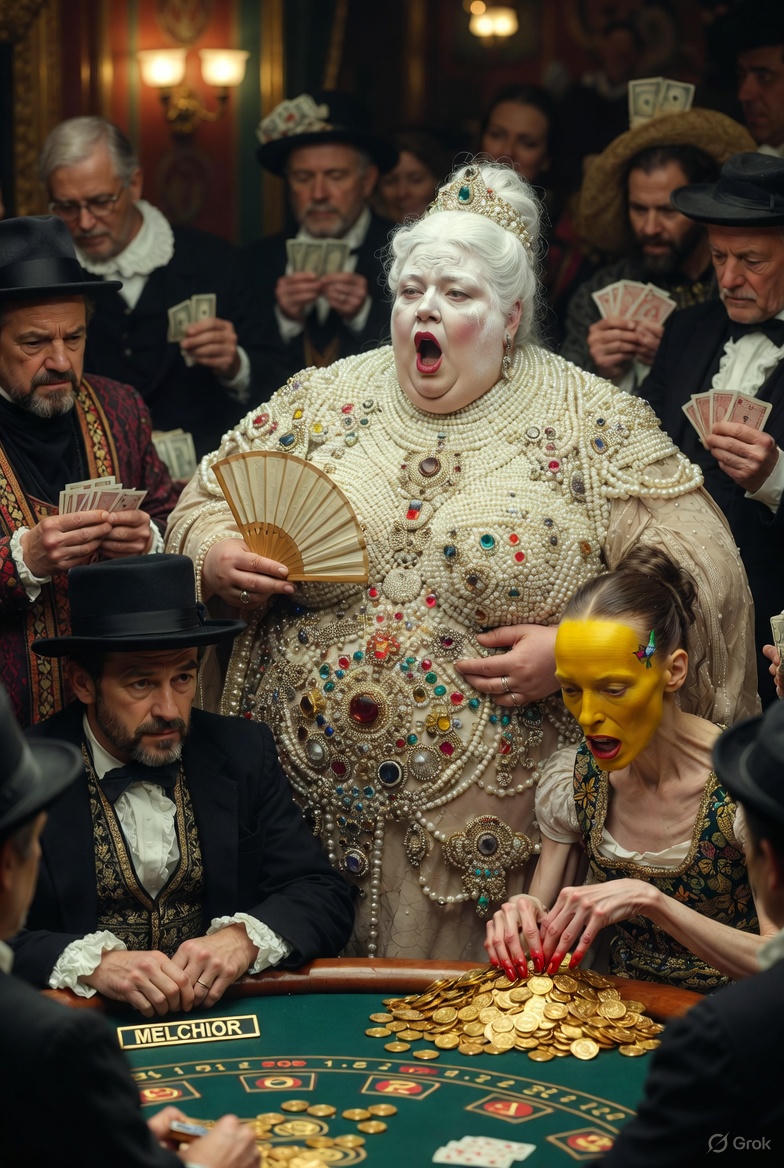



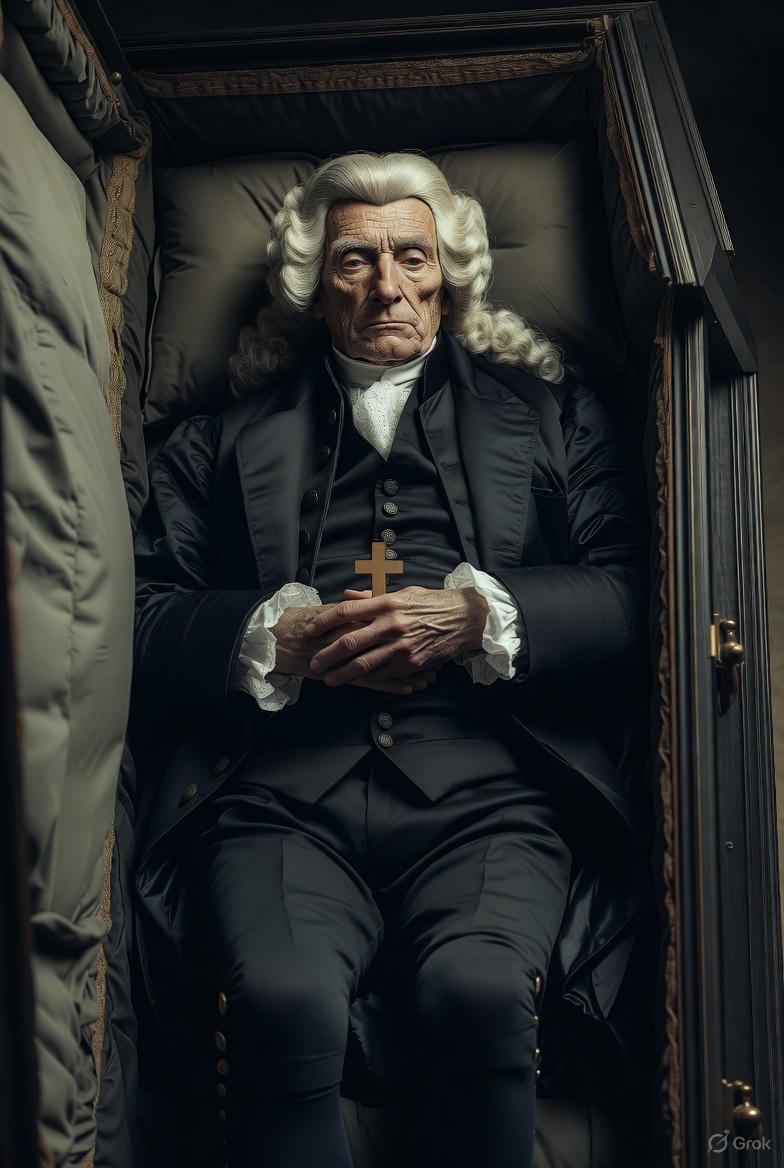


 Anarchistbanjo's World