Homo Sapiens: In the Maelstrom by Stanislaw Przybyszewski and translated by Joe E Bandel
It was very stupid of her to torment herself with that. He had nothing on his heart. On the contrary, he had not been so cheerful for a long time. He hardly knew what suffering meant now. No, no… He only perhaps had a little desire to torment other people. He did that very gladly, he had a boundless need for love, and he felt it most intensely when he tormented people. Oh, he could stretch her on the rack in quite different ways, just to see this hot, devoted love flare up so fiercely in her torment. He could tell her the most incredible stuff, that he was married, for example, that he already had a child and that her child was born a bastard. Couldn’t she understand these instincts? Besides, she shouldn’t take him too seriously. He didn’t always have his five senses together.
But Janina was not calmed.
“No, no, dear Erik, I understand very well what you mean, but it’s not like that with you. I can distinguish very well…” She thought for a while.
“Tell me, is Czerski making you so restless?” Falk pricked up his ears.
“Czerski? Czerski? Hm… Yes, I will probably have a lot of trouble.”
“Why?”
“No, not exactly trouble… but…” Falk suddenly broke off.
“He sat about a year and a half in prison?” “Yes, almost.”
“Strange that he was released just now…” Janina looked at him questioningly.
“Why is that strange?” Falk looked up in surprise.
“Did I say it was strange? I was thinking of something quite different. But what I wanted to say… he probably looks very bad… Well, yes, of course… Hm, I’m sorry for him. He is an extremely capable fellow, only so reckless… Now he has probably become a complete anarchist. That is natural… Did he cry?”
“No, he was very calm. He said he was prepared for it. Only reproached me for not having spoken completely honestly with him… Then he took the child, looked at it for a long time and asked about the father.”
“You told him? Yes of course. Why shouldn’t you. He, he… I don’t need to be ashamed that I helped a good citizen into existence… He, he… you see, Jania, sometimes I have to laugh nervously like that, but it comes from being so overtired… Life is not as easy as you think in your youthful high spirits… Well, laugh at the nice joke…”
But Janina did not laugh. She looked broodingly at the floor. Falk became irritated.
Why was she so sad? Could he really go nowhere without being presented with sad and mournful faces?
Janina was startled by his vehemence.
He controlled himself and tried to smooth it over.
“The little Erik is healthy, isn’t he? Yes, of course. But you are probably still very weak… Hm, it’s not easy to give birth to a child…”
He looked at a picture hanging above the bed.
“You drew that picture with me back then… Hm… Do you still remember? It was so terribly hot: you had a bright red sailor blouse on and when you lay over the drawing board like that… He, he, he… That’s how it started…”
Janina looked at him seriously.
“It would have been better if I had never met you.” “So? Why then?”
“No, no… I don’t know. I was happy with you.” “But?”
“I am afraid of you. I don’t know who you are, I don’t know what you do. I have known you now for ten years… Yes, ten years since I first saw you… I was not yet fourteen, I was with you almost daily for a time and I know nothing, nothing about you. I don’t believe you are open with me… Sometimes it seems to me that your words come quite mechanically, without you knowing exactly what you are saying… No, no, you are not happy. That is the only thing I know about you. Sometimes I become quite mad with pain. I want to crawl into you to see what is going on inside you… You don’t love me at all, you say it openly, and yet I must do everything for you, I don’t know why. I am like a small child to you, yes, will-less like a two-year-old child… What is it about you?”
Falk looked at her smiling. “The stronger will.”
“Perhaps you would love me if my will were strong?” “No.”
“Why?”
“Because I tolerate no other will beside mine.” Falk went to the window.
The uncanny silence struck him. “Is it always so quiet here?”
“Yes, at night.”
He looked at the wide asphalt courtyard, four stories from four sides. A real prison yard. Opposite in the second floor he saw a window lit.
He went to the table and poured fresh water into the glass.
“It’s strange that Stefan managed to cross the border. But poor Czerski had to pay. There was probably a house search at your place too?”
“Yes, but they left me alone.”
“Hm, hm… I’m very sorry for him… He loved you very much, didn’t he?” Janina did not answer.
Falk looked at her, drank hastily and stepped to the window again. “Well, I must go.”
Janina looked at him pleadingly.
“Don’t go, Erik, stay with me today, stay…” He became restless.
“No, Jania, no, don’t ask me that. Demand nothing from me. It is so beautiful when I can come to you and go again when I want.”
Janina sighed heavily.
“Why do you sigh, Jania?”
She suddenly burst into tears.
He became impatient, but sat down again. She controlled herself with difficulty.
“You are right. Go, go… It was just a moment… I suddenly became so restless. Always do what you want…”
Her voice trembled. They were silent for a long time.
“I probably can’t see the little one now?… I’ll come tomorrow or the day after anyway.”
He stood up.
“Does Stefan write to you often?” “Rarely…”
“Strange that he knew nothing about our relationship. I mean the earlier relationship three years ago…”
“He was in America then.”
“Right! God, how forgetful I am… Well, goodbye… I’ll probably come tomorrow.”
Homo Sapiens: In the Maelstrom by Stanislaw Przybyszewski and translated by Joe E Bandel
In the Maelstrom
I.
Janina looked at Falk thoughtfully.
How he had changed in recent times. This restlessness! As if he expected some misfortune any moment. Then he could suddenly sink into a strange apathy for a whole hour and forget everything around him… What was wrong with him? No, he was not open with her. He made excuses. He calmed her with empty phrases… Now and then she saw his face twitch nervously, then he made a violent hand gesture and smiled. This smile—this ugly smile—he had brought from Paris.
Falk seemed to wake up. He straightened up on the sofa, took a few pieces of sugar and threw them into an empty glass.
“Do you have hot water?”
“You shouldn’t drink so much grog, Erik, it makes you even more restless.”
“No, no, on the contrary.” He seemed impatient. Janina hurried to bring the water.
Falk prepared the grog carefully. He looked at her: She was so eager, as if she wanted to make up for daring to contradict him. He became very friendly:
“No, on the contrary. That calms me. These are my calmest hours here with you… Sitting like this and drinking one glass after another… Yes, here with you…”
He suddenly fell silent. He seemed to be thinking of something entirely different.
“You have changed a lot since you came from Paris.” “Do you think so?”
“You weren’t like that before. You have become so restless and so nervous.” Falk looked at her without answering. He drank, looked at her again and leaned back on the sofa.
“It’s strange how good you are.” He spoke with a friendly smile. “I feel so well with you.”
“Is it true?”
“Yes, I always come back to you.”
“Yes, when you are tired… Oh, Erik, it was not good to leave me here in this terrible torment for three years. Not a word did you write to me.”
“I wanted you to forget me.” “Forget you! No, one cannot.”
He looked at her silently. A long pause ensued.
“Just tell me, Jania—” he suddenly became very lively—”tell me honestly: did nothing happen between you and Czerski? Be completely honest, you know how I think about it…”
“We were practically engaged… But why do you ask? I have already told you the same thing a hundred times.”
“Well, the whole thing interests me very much, and I am so forgetful. Your brother wanted it?”
“Yes, they were the best friends.” “And you?”
“I had nothing against it. I had completely given you up. He was very good to me. What should I wait for? I had great respect for him…”
“If he hadn’t been imprisoned, you would now be an honorable housewife… Hm, hm… I’m really curious how that would suit you…”
Janina did not answer. They were silent for a while. “Did you visit him in prison?”
“Yes, a few times at first.”
“And your brother successfully crossed the border?” “You know that.”
“Hm, hm…” Falk stood up restlessly and walked back and forth a few times. “Did they ever talk about me?”
“Who?”
“Well, your brother and Czerski.”
“Of course, very often. You sent money to Czerski. Have you forgotten?”
“And did they know anything about our relationship?”
“No! I always acted as if I had never known you. I was afraid of the two of them. They are so fanatical.”
“So they didn’t know at all that you knew me before?”
“No. But did you never talk to my brother in Paris about me? He was with you often.”
Falk rubbed his forehead.
“Yes, he came now and then; but we almost always talked about agitation… Yes, though: he once told me that he had a sister and that she would soon marry; besides, I left Paris soon after… Well, let’s leave it…”
Again he walked restlessly around.
“You, Erik, did you never long for me?” He smiled.
“Oh yes, sometimes.” “Only sometimes?” He smiled again.
“I came back after all.” “But you don’t love me.” Her voice trembled.
“I love no one, but I longed for you.”
He looked at her, her face twitched. She would probably burst into tears any moment.
Falk sat down beside her.
“Listen, Jania, I must not love. I must hate when I love.” “Have you ever loved?”
“Yes, once. And I hated the woman I had to love. No, let’s not talk about it.”
He became serious. The thought of his wife tormented him.
“No, no. One is not free when one loves. The woman pushes herself into everything. One must take a thousand considerations, one must take her, one must also have the same bedroom—well, that’s not absolutely necessary, but—well, yes, you understand me… I must be free, I hate every feeling that restricts my freedom, oh, I cannot tell you how I hate it.”
He took her hand and stroked it mechanically.
“It’s strange, Jania, that you love me so.”
“Why?”
“I am so cold here—here…” he pointed to his forehead. Janina swallowed her tears.
“You are enough for me like this. I don’t want you any other way. I demand nothing more from you.”
“That’s good. That’s why I feel so well with you.” He was silent for a long time, then suddenly straightened up.
“Do you believe I can love?” “Perhaps earlier.”
“But if I now, now, understand, loved someone, if I loved her so that this person—this woman became a kind of fate to me?”
Janina looked at him suspiciously.
“If I loved this woman so that I couldn’t live a day without her?”
She started.
Falk looked at her for a long time, suddenly recollected himself and laughed. “God, what a child you are! How you stare at me!”
Janina looked at him with growing unease. What was he saying? What did he want? “Erik, tell me openly what is wrong with you. Do you think I don’t see that you are suffering and want to hide it from me?” Her eyes filled with tears. Falk became very lively.
Madame Bluebeard by Karl Hans Strobl and translated by Joe E Bandel
Not a single false tooth, Ruprecht thought. How graceful she is, younger than I, her cheeks smooth and soft, the dimple in her chin like a flower’s calyx. Resolute, he said, “No, no, I want to discuss this. Will you grant me the pleasure of calling on you tomorrow?” “Does it matter so much to you?” “Yes!” “Daytime’s packed—every hour’s booked. But… evening, around eight, when it’s dark, come to the small park behind the Nordstern Hotel.” Evening, when it’s dark, Ruprecht thought. She smiled once more and left. How slender she is, how she moves, echoed in him. It’s the music of motion, harmony of the outer self. If she walked over a gravestone, the dead below would feel their heart beat. The door clicked shut. Ruprecht stared at the garish patterns a well-meaning painter had added to the walls. Only with her gone did he realize how much she’d swayed him. She’d truly unsettled his composure. That perfume still roiled his senses. By Saint Pachomius! It hit him—what that elusive note in her scent recalled. It was—God, what a thought— the smell of dried blood, mixed with rotting fruit and steaming hay. Such fancies people have. Yet it was a strange perfume, sparking such thoughts. So, tomorrow evening… in the park behind the Nordstern… Ah, this woman was a danger! Now, with her gone, it was clear. A danger… all the better. Let a battle replace a flirtation. Ruprecht relished testing his strength. God—a danger, coursing through veins, washing over muscles. Let’s see, little lady, what comes of this… I’ve never fled danger, little lady! He’d missed the table d’hôte. Dining in his room, he drank a whole bottle of white Bordeaux. Then, needing action, he went to the hotel garden, stood before a thick plane tree, gripped his walking stick like a saber, and slashed at the groaning trunk with thirds, fourths, and thrusts until little remained but the handle. The next morning, Ruprecht received an anonymous letter. In scrawled script, it read: “Well, you’ve fallen for it, dear sir! You’ve chosen the worthiest of your suitors. Frau Dankwardt was seen visiting you yesterday. So, Frau Dankwardt is the favored one! You’re too new here to know what’s said of Frau Hermina Dankwardt. She’s been married three times, and it’s rumored she killed all three husbands. We call her nothing but Madame Bluebeard. She’s the greatest coquette for twenty miles around, juggling twenty men at once, all fools like you, stringing them along with her wiles. We wish you fine entertainment. Dance well on her string. Three friends who mean you well.” Three friends, Ruprecht thought, tossing the letter into the wastebasket. Three of those Jana told I wouldn’t come. So, they know she visited. All the better; if she’s compromised herself, it binds her to me more. Today, Ruprecht swam farther into the sea than usual, letting waves carry him, lying on his back, watching white clouds, then hiked the hills, returning refreshed and limber. At dusk, he entered the small park behind the Nordstern Hotel and sat on a bench. He thought of nothing, waiting patiently, time passing like a gentle wing’s brush. Children’s voices came through the dark… a small laugh. Ruprecht looked up. Stars gleamed above the palms, large and bright, and streetlamp light broke through the rough, hairy trunks, casting jagged yellow patches on the shadowed paths. He rose. Frau Dankwardt rounded the corner, two little girls and a young lady trailing her. The children held hands; the governess carried their cloaks. Frau Dankwardt greeted Ruprecht with an unselfconscious handshake. “These are my two little misses… Miss Nelson! They were at Arbe, only arriving tonight.” No—this wasn’t the meeting Ruprecht had imagined. They walked side by side, the children chattering freely about their myriad adventures. Now one, now the other clung to their beautiful mother’s arm, and more incessant than the children’s prattle was the governess’s measured silence. Had Ruprecht not loved children, he might’ve been furious. But soon the girls ensnared him, weaving him into their secrets. After an hour, they parted as fast friends. Frau Hermina offered her hand, gazing at him with the same expression as her daughters. Ruprecht poured a swarm of feelings into his handshake. She didn’t return the pressure, her eyes widening in surprise, withdrawing her fingers. It had been a disappointment, Ruprecht thought, if not an outright defeat. He paced his bedroom. Where’s your composure? something within him chided. Silence! he snapped at himself. I expected a wrestling match, and it turned into an idyll. What kind of woman is this? Her perfume carries the scent of blood, yet she’s the mother of two charming little girls. I’ll visit her tomorrow—I must understand her. Very well—tomorrow, then. The next afternoon, Ruprecht went to the Hotel Royal, where Frau Dankwardt was staying. The porter, in a tone of polite regret, informed him that the lady and her two girls had departed at noon.
Several hours later the sun was coming up. There was a fire blazing in the fireplace of one of the log buildings at the gathering spot and two Masters were standing guard outside the door as Ellen finished questioning Tobal. She absentmindedly pushed his parent’s things toward him and indicated that he should pick them up.
“I don’t know what to do,” she murmured softly. “There is no doubt in my mind that these things truly belong to you and that you should have them. If they had belonged to my parents I know I would want to have them. I am now also inclined to believe the rogues were somehow able to follow you. Perhaps they do have monitors. That would explain why we rarely see any of them. They would know when we are in the area and would hide.”
She turned a puzzled expression toward Tobal, “But that would also mean they are not from the village to the west of here. That village is totally primitive and has no technology. These rogues must be coming from somewhere else and they are interested in what you found at the lake. This might be very dangerous and your life might be in danger, all our lives might be in danger and we don’t know from whom. I suggest we keep this quiet for now and don’t talk to anyone else about it.”
“I need to talk with Rafe about it,” Tobal protested. “He already knows something is out there and so does Fiona. She was with me when we first found the gathering spot at the waterfall. I don’t want them to be in danger too!”
Ellen sighed, “Well, I will have to trust your judgement in this. Don’t talk to anyone unless you really trust them ok?”
Tobal nodded, “I wasn’t going to anyway” He chuckled. “I wasn’t even going to tell you until you cornered me about it.” He didn’t mention the slender silvery wand that was hidden safely in his pack.
Both Ellen and Tobal decided it would be a good idea for him to stay close to the gathering spot and around other people in case the rogues had specifically targeted him. So he spent most of the month helping Dirk and Rafe working up wood for circle.
Rafe asked him about his trip and was very interested but Dirk was always around and Tobal felt he needed to talk with Ellen first so he told Rafe to wait till circle. Rafe’s eyes narrowed a bit eyeing the amber and jade necklace. He didn’t ask anything more about the trip.
They were trying to get wood ahead so there would be an ample supply during a snowstorm or blizzard. There was already one foot of snow and travel was getting difficult. With Tobal’s help Rafe and Dirk got a lot of wood brought into camp. Rafe was becoming more confident and sure of himself. He was also growing taller and filling out. The constant backbreaking work of chopping wood with stone axes seemed to be putting muscle on him too. The Chevrons on his sleeve proclaimed he had won three fights and he was learning how to take care of himself.
The first week, exhaustion pulled Tobal into a restless sleep after a long day of chopping. A stormy dream gripped him—Rachel lunged through the mist, her chains clanking as she grabbed his arm, her tear-streaked face glowing faintly. “Harry’s searching for you—stay hidden!” she cried, the air thick with damp stone and rust. He thrashed awake, sweat soaking his furs, clutching the medallion as it pulsed with a warm, frantic beat.
By the second week, the medallion’s weight grew heavier as Tobal dozed under a ledge. Ron strode through a misty vision, his hands slamming against a shimmering force field, its blue light crackling as he pushed Tobal toward it. “The cave hides a secret—find it!” he roared, the ground trembling under Tobal’s feet. Tobal jolted up, heart pounding, gripping the medallion as its pulse quickened, the air heavy with ozone.
Late in the fourth week, after a grueling day, Tobal’s sleep turned dark. Ron and Rachel staggered toward him in a dim, echoing cave, their chains dragging with a metallic screech as they pulled him into the shadows. “The Nexus calls, their souls can’t rest!” they wailed, their ghostly hands brushing his face with a cold sting. He woke, gasping, the medallion pulsing rapidly, its heat searing his palm.
Tobal wore the jet and amber necklace around his neck and kept the ceremonial dagger in the sheath strapped to his ankle. Each day he took them out and looked at them. They were the only things he had that came from his parents. He wanted to go back to the cave but knew it was more dangerous than ever. He put the two plastic hospital bracelets in his medicine bag and carried it on a leather thong around his neck. He snuck away from Rafe and Dirk for a few hours to be alone, saying he wanted to go hunting for venison.
It was the wand that he didn’t know what to do with. It was about a foot long and one inch in diameter. He had examined it more completely and still didn’t know much about it. There were five buttons on the thing. He had tried the first and second buttons in the cave. Outdoors they worked much the same. The first button made the wand act as a light. When he activated the second button it melted a circle of snow about fifteen feet in front of where he was pointing. It seemed to have a range of about fifteen feet and the heat kept increasing as long as he held the button down. The third button caused a blade of light to extend out of the wand about two inches. This was some type of laser used for cutting. He tried it on a few rocks and cut deeply into them without melting the rock. The fourth button acted as a sighting device shining a point of red light on anything it was pointed at without apparent harm to the object. The fifth button however, would flash a pulse of light burning a hole through whatever it hit. The fifth button could only be pushed at the same time the fourth one was pushed and needed to be re-pushed for each new pulse of light.
It apparently acted as some type of safety device limiting the damage that could be done with the wand. He tried it once killing a deer at twice the normal bow range. The deer dropped without a sound. Close examination showed a hole that went completely through the deer.
As he butchered the deer and brought it back into camp he reflected on the nature of the wand itself. It was obviously a tool or a weapon using pulsed energy of some type he had never seen or heard about. That meant it was probably part of some secret military technology his parents had been involved in. In any case it was extremely dangerous and even more dangerous to be caught with. On the other hand he didn’t want to loose it or have it stolen. He guessed he might have to talk with Ellen about it sometime. In the meantime he made a sheath for it on his other leg and kept it on his person.
As the month waned, Samhain’s festivities began. Tobal was surprised at how many showed up for it. It started different from the other celebrations with Ellen saying, “This is a three-day celebration, Tobal—Samhain’s too big. We will have the meditation group day after tomorrow in the morning after everything is done and people are leaving.” Then she continued with proclaiming newbies ready to solo. Nikki and Char both proclaimed their newbies ready to solo. There were several initiations scheduled.
Wayne’s newbie wasn’t ready yet but was going to be initiated. The same thing happened with Zee’s newbie and Kevin’s newbie. They were going to be initiated into the clan but they needed another month of training. With the advent of cold weather the training was taken seriously by all clan members.
Most clansmen had already partnered up for the winter and would not be doing anymore training till next spring or they would partner up at this circle. He thought about Tara and Zee. They had both asked him about partnering up for the winter. Now they both had partners selected even if Zee and Kevin still had one more month of training till their newbies soloed.
Soon there would be no one to ask or partner up with unless it was a newbie. Was he really being so different in not partnering up with anyone? Rafe had trained newbies all winter long. He caught Char a bit later and talked with her about it.
“I notice your newbie is soloing this month,” he congratulated her. “What are you going to do now?”
“Well, I was going to see if Wayne wanted to partner back up for the winter,” she said bitterly. “But he is not speaking to me and in the middle of training his newbie. If he is training her like he trained me, she will probably be spending the winter with him. I hate that man!” She started crying and Tobal put an arm around her shoulder to comfort her. He felt her shoulders shaking against him.
“He’s just training newbies like you are Char, what are you mad at him for?”
“He’s not talking to me or looking at me, that’s why,” she snapped at him. “All he does is spend time with her.”
Tobal sighed and wished he were anywhere else. “You sound just like he did last month when I was talking to him. Don’t you remember how jealous he was? You were afraid he was going to pick a fight with Rory. Look, this will make one chevron for you and two for him. What are you going to do now? Try training another newbie or wait out the winter? You can’t control what he does. You can only control what you do. What is it that you really want to do?”
“Become a citizen and get a real life.”
“Ok, so what do you need to do?”
“I guess I’m going to train one more newbie this winter. Thanks Tobal,” she told him. “I know that I need to move ahead but it’s hard sometimes. These old habits are so hard to break. It’s easy to get depressed about things.”
“Let me know if you need any help,” he told her. “I’m planning on training newbies all winter myself. It’s kind of strange but I’m a little afraid of partnering up with anyone for the entire winter.”
“Why would you feel that way Tobal?” She asked curiously.
“Well partnering up with a girl for the winter kind of implies a sexual relationship,” he flustered.
“What’s wrong with a sexual relationship?” She asked. “You do want sex with girls don’t you?”
Now he was red and embarrassed, “Wanting sex and having sex are two different things Char. At least for me they are. I don’t want to hurt anyone and what if it doesn’t work out between us. What if she gets pregnant or something.”
Char laughed. “You are taking this much too seriously Tobal. For one thing, no one is going to get pregnant out here. Once a year we get birth control shots that last the entire year. In fact, we get them during Samhain, which is this month. The medics will make sure we get our shots if we want to continue in the Apprentice program. I thought you knew that.”
Tobal looked confused.
She continued, “It might not be a good idea for two Apprentices to get together like Wayne and I did. It is really hard having a permanent love relationship with someone when you need to train and live with other people like Wayne and I need to do. But it is normal to be sexual with others. Having sex is a form of sharing and a way of deepening a relationship. It is no big deal really. None of us are experts at love. We all need to have experiences and learn from those experiences. Our love partners help us and we teach each other about what pleases us.”
“Tobal,” she looked at him intently and unfastened her robe. “Do you want to have sex with me?”
He found himself staring at her body. Her soft breasts and the mound of blonde pubic hair stirred something inside him. Tobal found himself uncomfortable with the subject and with his own feelings. She had a good-looking body.
“I think I will wait until I get to Journeyman before I worry about it too much,” he said awkwardly.
She laughed. “Well at least give me a hug and a kiss then.” She moved closer so her bare body was against him as they hugged. It was a long hug and a long kiss.
It took a while to recover and Tobal wandered around the gathering spot trying to collect his wits together. He thought about what Char had said and wondered if she was right. Maybe he was making too big of a thing about it. Maybe sex could be as casual as shaking hands for some people but he knew it was not that way for him. For one thing there were a lot of attractive girls around the camp and only one or two had ever really drawn his eye.
He thought of Fiona, yes, he was sexually attracted to Fiona. Then Becca came unbidden into his mind and he hastily pushed her back out. He didn’t know what was going on between him and Becca but it was more like electric shock therapy than sexual attraction.
Sarah, Mike and Butch had all completed their solos and were talking together when he came up to them. They were going to take this month off and work on their own base camps, getting prepared for winter. It seemed most clansmen were either doing that or had already done that. None of them were talking about partnering up for the winter but they were thinking about working together setting up winter camps. Once their winter camps were set up they would decide if they were going to do any training or not.
Fiona, Becca, Nikki and he were the only ones interested in newbies this month. They each received a new chevron except Nikki. Her first newbie was going to solo that month. That made three for him, and one each for Becca and Fiona.
“You’re going to travel with us to sanctuary after the meditation group aren’t you?” Nikki asked. “It will be a blast.”
“I might,” he said evasively. “I need to talk with Ellen first though and I might be running later than usual. If I’m not around just take off without me and I’ll catch up with you.”
“What do you need to talk with Ellen about?” Nikki asked.
“She wants to know more about when my base camp got burned by rogues.” He evaded by giving a simple answer.
“I remember that,” Fiona exclaimed. “That’s when we found the waterfall by the lake and that weird abandoned gathering spot. Tell her she can talk to me too if she wants. Say, have you ever gone back there like you said you were going to?”
“That’s one of the things I’m going to talk with Ellen about,” Tobal said. It’s pretty bad weather to go there now though. Too easy to get snowed in.”
“Maybe we can all go there this spring some time,” Becca said. “I love swimming and there isn’t a really good swimming spot around here.”
“That’s a great idea!” Nikki said enthusiastically.
“Well just let me know so I can go with you,” Tobal said. “It might be dangerous and there should be enough of us going so no one will attack us.”
“Why would anyone want to attack us?” Nikki laughed. “You have something in mind handsome?”
The other two laughed and Tobal turned away with a dark shadow on his face. He couldn’t tell them the entire story or it would be all over camp and Ellen would have his head. It was better just to leave things the way they were for now. Misty was again High Priestess and did a nice job. Ellen was there and said she needed to talk with him later after circle. Angel was also helping out in the circle. There was a new High Priest too but Tobal didn’t remember his name.
Dirk was there along with Rafe on wood patrol keeping the fires going. There were several Journeymen Tobal recognized and many more he didn’t. This was the largest circle he had ever been too. Ox had even shown up for the party strutting three chevrons on his black tunic.
It was the end of the harvest cycle and the last time many of them would see each other until next spring so they were determined to have a good time. After the initiations the party really began. At drum circle the drumming and dancing went long into the night as people laughed leaping among the flames individually and together. The festivities lasted three days with the last two days reminding Tobal of a flea market and county fair. People brought items to sell or trade especially beautiful handcrafted garments and tools. The most interesting were winter garments that made Tobal’s efforts seem crude in comparison. He examined them carefully and took mental notes so he could duplicate the work later. He did the same with other tools and items that caught his interest.
This was the time clan members would show off their creativity and individual talents. There was music, hand made stringed instruments and wooden flutes. There were of course the drums that beat out a steady rhythm deep into the night for all the dancers.
The second day was reserved for games and competitions. During a break Tobal approached Rafe near the wood pile. “Watch this,” he said, drawing the silver wand from its sheath and pointing it at a patch of snow. A red light flashed, and with the fifth button, a pulse melted a fifteen-foot circle, steam rising. Rafe’s eyes widened. “Holy shit! Put that away—do you want us killed?” Tobal sheathed it quickly. “I found a secret cave—my parents’ things, this wand. Air sleds tracked me, Ellen was furious but checked my camp. It’s forbidden—rogues are after it.” Rafe nodded, stunned. “Does Ellen know?” Tobal shook his head. “Not yet—I’m figuring it out.”
He was not surprised when Fiona won a knife-throwing contest but he gaped in envy at the prize. It was a hand-forged axe one of the third degree members had somehow created. With an axe like that work would go much more quickly than with stone axes and knives. It would help not only with firewood but also in the creation of bigger and more permanent shelters like log cabins.
It was also on the second day when female clan members got their annual birth control shot to prevent pregnancies. There were lots of sexual jokes going round the camp and open invitations. Tobal wondered more about this and asked one of the medics. The medic told him the city felt it was too dangerous to have children or raise children under these harsh survival conditions. People were free to have children once they became citizens but not before.
This was a rule that was strictly enforced and medics would fly their air sleds out to those females that had not attended this gathering. If they refused the shot, they were disqualified. This did happen, the medic told him. There were always 2nd degree couples content living as they were and wanting to raise families out here in the wilderness. In fact, there were enough of them that they had formed their own family type gathering spot two hundred miles to the West.
When Tobal tried asking more questions the medic shut up like he had already said too much and that he needed to be going. There was certainly a lot Tobal didn’t understand. He wondered if the dead camp at the lake had been a family one. He hoped not because the thought of dead children lying in that cairn made him feel sick. Still, in his heart he knew it had been a family camp because his own hospital bracelet proved he had been there just as Adam Gardner had said. The old man had talked about other children that had been murdered too. There were secrets out there, secrets he intended to find out.
It was on the last day the medics handed out special supplies and medicines like salt, wine, vitamins and medical gear scavenged from old med-kits. Needles, hair brushes, combs, string and things like that were very welcome. So were scissors and razors, not to mention toothbrushes and other items that could be gotten at sanctuary.
The next morning, after the three-day celebration, the meditation group gathered in the clearing as people began to leave. Fiona approached Ellen, her voice trembling. “I can’t get it out of my mind… Tobal and I found that lake, the burned village. I’ve dreamed of ghosts, blood—we need to go there in our meditation.” Her eyes glistened, her fear swaying the group. Becca gripped her arm. “I’ve heard those tales—let’s face it!” Nikki nodded, “If Fiona’s in, I’m curious—what if it’s real?” Rafe added, “I’ve felt something odd—count me in.” Others murmured agreement, pressure mounting.
Ellen frowned, crossing her arms. “This could draw danger—rogues, worse. But with so many… fine, 20 minutes, and we stay cautious.”
They settled, the medallion pulsing against Tobal’s chest. Closing their eyes, they linked and visualized, a rift pulling them through. They materialized above the lake, the waterfall ahead. A shimmering force field blocked their path, unseen by Fiona and Tobal before when they passed through. A glowing light—Arthur—challenged, “Who seeks this truth? Prove your hearts!” Tobal thought, “Arthur? It’s OK, they’re with me,” and the light softened. “Follow me—see the truth,” Arthur telepathed to all, his voice warm yet urgent.
They drifted to the village—burned huts, ghosts wailing, blood pooling as massacre replays flashed: a mother shielding a child, screams piercing the smoky air, figures fleeing. Tobal froze, heart racing, the medallion’s pulse quickening. Fiona sobbed, “I saw the fire again—those children!” Becca trembled, “The screams—too real!” Nikki gasped, “A child called my name!” Rafe clenched his fists, “This isn’t just history.” Ellen’s face paled, “This isn’t natural—someone’s meddling.”
Arthur’s light pulsed. “The force field protects—Reptilians hunt beyond. Beware the Federation.”
Ellen snapped, “Enough! We need to leave. This isn’t safe—keep it quiet, or we’re targets.” The group returned, shaken, whispers spreading about Tobal’s lake secret.
Madame Bluebeard by Karl Hans Strobl and translated by Joe E Bandel
The beach grew livelier, so after a brief continuation of the conversation, which turned to other topics, Ruprecht invited his friend for a walk. They strolled along the shore, then climbed toward the heights between villas and hotels. Sky and sea shimmered in boundless clarity. The setting sun seemed to conjure all the sea’s gold from its blue depths. A refreshing coolness rose from below, mingled with the scents of myriad blossoms and fruits, woven into a dense garland around the coast. The summer was wondrously beautiful, blessed with constant sunshine yet tempered by a lively, cooling breeze that prevented scorching heat. No one wanted to leave this shore. The season stretched far beyond its usual end, into a time when all would typically have fled. Ruprecht and Hugo reached a rocky outcrop offering a clear view of the coast and sea. Before the low sun hung a narrow cloud, like a knife poised over an orange. The sea was calm, bearing fishing boats with a willing smile. “There’s the scene of your heroics,” Hugo said, pointing to the two white stone cubes among the vineyards where Ruprecht had lassoed Mr. Müller. “What made you get involved? It was decidedly original, but… one doesn’t just help the police like that, do they?” “You can imagine I found Mr. Müller more likable than the helpless police commissioner. Still— why? The bit of danger intrigued me. I think danger’s one of the sweetest pleasures life offers.” “You find too little of it in our quiet Europe. That’s why you roam the world, seeking wilder places. God, you’ve got it good! No one to answer to, money like hay, doing as you please. I’d love to travel too—not like you, but with pleasant company, under Cook’s care, so I don’t wake up in a Papuan’s stomach.” Ruprecht smiled, gazing silently at the sea. Then, with a sweeping half-circle of his arm, he encompassed the beauty spread before them. “Only those who know struggle,” he said, “can truly appreciate peace. How glorious this is. How the soul simplifies, how wings grow.” A faint chime rose over sea and land. Like a delicate, firm web, the peals of church bells, ringing the evening blessing, stretched through the clear air. The friends sat silently for a while. Then Hugo reminded them to head back to avoid missing dinner at the hotel. They descended quickly through the twilight, past orchards and vineyards, and at the Kaiser von Österreich, Hugo parted with a promise to visit again tomorrow. Reaching his room, Ruprecht began changing. He was in high spirits. The evening’s colors and sounds had sunk into him, filling him with joy. He always felt this way on the eve of new adventures, brimming with expectation and eager energies. Yet he knew only months of quiet country life awaited, somewhere with few people and no events. As he donned his dinner jacket, his Malay servant entered the dressing room, standing erect by the door. “What is it?” Ruprecht asked. “Sir, a woman wishes to speak with you. She’s waiting in the salon.” Somewhat surprised, Ruprecht followed. Before entering, he placed a hand on the Malay’s shoulder. “Wait! Is she one of those you visited on my behalf?” “Yes, sir.” Well, by all the gods of Hindustan, she was persistent! That was something! A strange way to approach a stranger. Smiling, Ruprecht entered the salon. Under the chandelier stood the young widow who enchanted all, the woman who sat front-row at the Emperor’s celebration. She smiled too. Ruprecht bowed. She took a few steps toward him. Silk skirts rustled, a faint cloud of perfume wafted over. A peculiar scent—dried fruit, hay, and something else Ruprecht couldn’t pinpoint. “You thought, on your way here, that I’m persistent,” she said. “You found it odd to answer a refused meeting with a visit.” “You’re very perceptive, madam!” Ruprecht replied. “Oh, come, that hardly takes perception—it was clear in your smile. Well, see, I’m smiling too. And do you know what my smile says? It expresses my pleasure in proving you wrong.” Ruprecht met her eyes—green, with narrow pupils, seeming to drink in light and scatter it in a thousand rays, as if dissecting it. Cat’s eyes, he thought. They held that indefinable expression, neither clearly friendly nor hostile. “I’m no starry-eyed schoolgirl,” she continued, “nor an adventure-seeking woman. I’m not after a flirt or a fleeting resort acquaintance. I simply want to meet you, exchange a few words, to know what to make of you.” The perfume, seeping from her exquisite lace gown and soft brown hair, unsettled Ruprecht. He, who’d studied the Orient’s delicate, provocative scents, was uneasy at failing to identify this elusive note. “Forgive me,” he said slowly, “your letter was one among many. It didn’t stand out.” She laughed. “Then your perception failed you. You should’ve seen at once I’ve no intention of throwing myself at you with loving gestures.” What does she want, then? Ruprecht thought. Her gaze, accompanying those words, didn’t align with them. It didn’t contradict, but clung to him—a promise given and withdrawn, a granting that was also a retreat. “I could do so more easily than others,” she said, “for I answer to no one. You’d only have to fight two or three duels with my ardent admirers. That wouldn’t trouble you, would it? But truly, I only wish to know if you’re as vain as they say.” Ruprecht flinched. The word stung. He straightened slightly and said, “Madam…” She smiled again. “Hold on… I find it improper to parade in costume as a wild man before a respectable audience, shooting holes in cards and shattering glass balls. Isn’t that a far worse surrender of one’s person than other artistic pursuits, which are already deplorable prostitutions? My late husband studied Indian philosophers. He called the arts silver embroidery on Maya’s veil—something special, glittering, yet part of the web of illusions. You know Schopenhauer thought differently. But I believe my husband was right.” Ruprecht stood dumbfounded. What did this woman want, with her odd jumble of “personality,” “Maya’s veil,” and Schopenhauer? Was this an original worldview or mere confusion? He grasped only that she presumed to judge him, acting as if she had a right to challenge him, which irked him all the more since he hadn’t fully shaken the shame of his performance. “Forgive me,” he said, mustering a blunt defense, “I believe I’ve proven vanity has no hold over me.” “Oh, certainly,” she laughed, “you didn’t attend the rendezvous. But… isn’t that a ploy? Perhaps you’re spoiled. Who knows? In my presence, a bet was made that you’re not vain. I judged from your sharpshooting display and took the wager. Now, I must admit—you didn’t come, and it seems I’ve lost. Yet I’d like to know if I haven’t won precisely because of that. I suspect you aim to stand out in a unique way.” “I’ve no such intention,” Ruprecht said, annoyed. “It was a favor for my friend. I was persuaded. And before… the lasso affair was just for the thrill of it…” At that moment, the dinner gong clanged in the hall below—a long, wild peal, a hideous noise piercing every corner of the hotel, even through the salon’s heavy curtains, drowning all other sounds. Three single strikes followed. “You’re summoned to dine,” the widow said. “I’ll go. Well… I must accept my bet is lost. What else can I do? Thank you for listening so kindly.” She offered her slender hand freely, meeting his eyes with equal ease. “Let the gong make its racket,” Ruprecht said, agitated. “You come here, insult me with your suspicions… yes, forgive me, I find that offensive. Let me explain… I was deeply vexed at getting involved. No… please, I don’t care about being late for dinner.” But the young widow insisted she couldn’t bear the guilt, nor did she wish to draw attention at her hotel by arriving late to table. Yet her eyes said something else: Oh, foolish man, happiness stands before you, just reach out.
Madame Bluebeard by Karl Hans Strobl and translated by Joe E Bandel
Second Chapter The Emperor’s celebration was a downright glorious triumph. It was a fairy-tale success for all participants and the instigator-organizer, above all for Baron Boschan, who, as a sharpshooter in both senses, scored a victory. The grand ballroom of the Hotel Royal was nearly too small for the guests. The men’s black tailcoats and the women’s vibrant gowns were so tightly packed that, from the gallery, the hall resembled a giant box of finely assorted bonbons—a mix of chocolate and perfumed sugar. The walls gleamed white, gold, and red. The mirrors were freshly washed, and even the great chandelier had been freed from years of dust. Before this audience—the crème de la crème of Abbazia society—the program unfolded flawlessly. Everyone claiming talent was present, except the Italians, who held a barge picnic on the sea that evening. After a young actress delivered Bystritzky’s prologue, which outlined the festivity’s purpose in iambic pentameter, a colorful array of music and song followed. Isolde Lenz looked enchanting and sang ravishingly. The concert harpist was a king on his instrument. Richard Bergler sang like a god. The general played the flute superbly. The audience was enraptured, applauding furiously. It was uplifting. Ruprecht von Boschan opened the program’s second half. He wore his Inxa costume—wide leather trousers with fringed seams, a massive belt, a red shirt, and an open jacket. A colossal sombrero crowned his head. The stage boards thundered under his swift steps as he strode forward to bow to the audience. “He looks like Roosevelt,” Hofrätin Kundersdorf said to Bystritzky. “Yes, as tactless and tasteless as an American,” the prologue’s poet confirmed spitefully. “It’s stylistic posturing. He wants to flaunt his travels. Roosevelt’s in vogue, so he plays the ‘Rough Rider.’” Bystritzky sensed someone overtaking him. “Will he shoot?” a small, hunchbacked lady from a noblewomen’s convent asked the Statthaltereirat from Graz, her neighbor. Her yellow, withered face looked distraught, like a frightened mummy. “Oh, he will,” the Statthaltereirat replied grimly. “Count on it. I don’t see how he’d perform as a sharpshooter without shooting.” “Let me out!” the lady squealed, but stayed, staring at the Inxan as if hypnotized. Beside the Statthaltereirat sat a full-blonde conservatory student. She felt a pleasant shiver. “Are those fringes human hair?” she whispered. The Statthaltereirat glanced down. She was too foolish. “I can’t stand circus tricks,” he grumbled. “They don’t belong in a proper program. Shows who arranged this.” These minor objections couldn’t stem the tide of interest. Most ladies shared the conservatory student’s thrill. An exotic aura enveloped the hero. Ruprecht von Boschan, however, felt uneasy. He was vexed. What are you doing up here? he asked himself. What do these people matter? Why expose yourself to them? Had it been possible, he’d have fled the stage. He was especially annoyed at yielding to Hugo’s urging and donning this costume. Never again! he vowed. Turning, he took his weapon. Considerately, he used a silent air rifle, easing nervous ladies. The hunchbacked lady found Boschan cut a fine figure, erect, rifle to cheek. His calm poise, flawless technique, acted as aesthetic virtues. The audience witnessed a body working with marvelous precision, wholly commanded by will. The beauty of unmarred purpose gripped their subconscious. “Extraordinary,” said Hofrätin Kundersdorf. “Skill, not art,” Bystritzky resisted, unwilling to yield, though secretly he admired this unadorned skill. He couldn’t cling to his artistic prejudices. There was something in a man so perfectly mastering hand and eye, each movement confident and powerful, each stance natural and harmonious—like living sculpture. Boschan, starting irritated, now shot with pleasure, forgetting the audience and costume, delighting in each hit. The thrill of sport surged—the tension and playful release of all faculties. Here was the wondrous magic of bodily health, its rhythmic flow, mastery over matter’s limits. Finishing his set routine, he recalled the audience. He had to take leave. Stepping forward, he bowed briefly, genuinely surprised by the roaring applause. Then annoyance returned—this clapping reminded him he’d offered his skill as a program number. Standing there, he felt a gaze detach from the crowd below, enveloping him, questioning. He peered sharper, seeking it. In the front row sat the lady Hugo mentioned—the elegant widow who passed the terrace that morning, loved by half Abbazia. Was this gaze hostile or friendly? For a second, Ruprecht met it. Then he turned away, unsettled by those cold, yet promising eyes. The applause was sincere, convinced. The Statthaltereirat, that sarcastic fool, conceded defeat. Ernst Hugo’s triumph was sealed. After Boschan’s impact, the following acts— charming amateur efforts—failed to captivate. The audience mustered applause to avoid offense. The finale was a traditional apotheosis: a laurel-wreathed, Bengal-lit Kaiser bust, surrounded by children in Austrian folk costumes, overshadowed by a white- robed Peace Angel with a palm branch. When the curtain fell, Hugo sought his friend, but Boschan had left for his hotel post-performance. Hugo delayed thanks until the next day, but first had to tend to sensitive artists, especially those overshadowed by Boschan, soothing them with fervent gratitude. Official dignitaries also demanded attention, where Hugo humbly accepted praise, noting he’d only done his patriotic duty. Only on the third day did he meet Boschan, who lay on the beach sand, watching children build castles, dig moats, and channel seawater into their play. “Servus, Ruprecht!” Hugo called. “What’s up? How’s it going?” “Philosophizing. Beach philosophy. These kids play—that’s life! They call it castle-building. Names don’t matter; we name our games differently but play the same as these kids. The big wave comes, erasing our efforts.” “That’s resigned wisdom. Pick that up in Inxa?” “I’m not resigned at all. No way. Our games are too fun and varied. I join the castle-building wholeheartedly, thrilled when I outdo others.” Hugo settled in a folding chair beside Ruprecht, stretching his legs. “I’d have thanked you sooner, but I’ve been swamped. You get it, right? So, old pal— heartfelt, devoted, humble thanks, and so on. Ready for any favor in return. It was spectacular. We netted a tidy sum for the seamen’s home. The Statthaltereirat’s dead—he’s not twitching. Honestly, that evening: non plus ultra! You nailed it phenomenally. I barely saw, stuck backstage, but the women are smitten. You’ve bewitched them. Hofrätin Kundersdorf says you’re her vision of Roosevelt.” Ruprecht laughed, burying his hand in the soft sand. “Yes—the success you predicted hasn’t failed to materialize.” “You’ve surely received a flood of enthusiastic letters,” Hugo said. “Not quite a flood, but about twenty-five.” The court secretary drew his legs in, sitting up with interest. “Rendezvous, eh? Requests for autographs, assurances of heartfelt admiration?” “Yes, quite a few rendezvous.” “Well… and… did you go?” “I sent my Malay servant to tell the ladies I don’t attend rendezvous.” “Oh! Oh! That’s hardly tactful,” Hugo exclaimed. “How could you! Unfortunate man, you’ve missed twenty-five chances to meet beautiful, charming, sociable women and made twenty-five merciless enemies. You’ll face a barrage of furious glares, be watched everywhere, ambushed by arrows of malice and universal scorn, a cloud hanging over you.” “All the better—I’ll find peace in their shadow.” “Inconceivable,” Hugo said, shaking his head. “If such an opportunity came my way…” “You’d have gone to every single meeting.” “Absolutely!” the court secretary declared with the conviction of a man defending a core tenet of his worldview.
OD by Karl Hans Strobl and translated by Joe E Bandel
“Nothing!” said Fechner. He knew he was passing judgment, but what could he do? It was about science; no allowances could be made. Under other circumstances, he might have been relieved that the experiments failed, sparing him from taking a stand for Reichenbach. But one look at the Freiherr told him how merciless he’d had to be in the name of science. He said “Nothing” softly, but despite his hearing loss, Reichenbach caught the word.
“I can’t explain it,” Reichenbach murmured to himself. “Friederike has done far greater things. It may be… the long journey from Vienna to Leipzig, always along the telegraph wires. That must have had an odically adverse effect. The telegraph wires had an unfavorable odic influence.”
That was an explanation one couldn’t accept. But Reichenbach likely didn’t expect a response from Fechner; he raised his gaze like a sick beggar: “Now you’ll probably think me a fool or a fraud?”
“Certainly not,” Fechner hastened to assure him. He had to be cruel for science’s sake. Humanly, it was different. “We can try again later, perhaps. Or with another sensitive.”
“Yes, yes, with another sensitive,” Reichenbach said, and just then the door opened slightly, and the Professor’s wife poked her head in. It had taken long enough; the gentlemen should be done, and perhaps now a cup of coffee—
No, thank you, no coffee, much obliged, but it’s really time to go.
Reichenbach craves fresh air; sunshine is odically negative, he needs revitalization, a surge of life’s source. He pauses between the columns of the Roman House where Fechner lives, on the steps leading to the park. Hat off, Reichenbach wipes his damp forehead.
A hand reaches for his; he gently pushes it back. Yes, Friederike failed, utterly failed. Telegraph wires? Nonsense! Physics at all? Perhaps all physics is a night-view against the day-view. It was a grace, a grace of her purity. And that grace has been taken from Friederike.
About two weeks later, Friederike goes to Reichenbach’s room to bring him coffee, but he doesn’t answer her knock. They’re staying with the widow of a royal court porter from Dresden, who, after her husband’s death, rents rooms in her native Leipzig, taking in long-term guests with full care. Reichenbach’s and Friederike’s rooms are adjacent, so she’s always at hand. She insists on tending to the Freiherr, bringing his meals, and when she comes with coffee, he’s usually already working. He writes dozens of letters daily—to old friends, scientists, former sensitives. Though he doesn’t say so, Friederike believes he’s marshaling everything for a final battle to defeat the skeptics, summoning witnesses, perhaps urging sensitives to come to Leipzig for new experiments.
No replies have come yet. The only letter for the Freiherr was from Vienna.
“From Hermine,” Reichenbach said. “She writes that she regrets not seeing me before I left. And she asks if I’d allow her to come to Leipzig.”
Friederike expected this letter; she had written to Hermine, suggesting she come. Perhaps Reinhold could be persuaded too—not that Reichenbach is in danger, but it might help to distract him from his relentless brooding and surround him with love.
Now Reichenbach doesn’t answer Friederike’s knock, and when she enters, he lies in bed, staring at her with horrified eyes. His left hand hangs motionless over the bed’s edge; the right moves slightly, gesturing toward his mouth. Friederike realizes his speech is gone.
She doesn’t lose her composure, sending the porter’s widow for a doctor while staying with the patient. No, it’s surely not serious, she reassures his silent questions—a passing episode, a nervous collapse; in a few days, all will be well.
The doctor examines, asks questions, and declares it a minor stroke, temporary, insignificant—a few days’ rest, and all will be fine. Friederike had no doubts; there were signs already—his hearing loss, blurred vision, likely precursors.
Despite the doctor’s assurances, it’s a pitiful sight to see this man, who couldn’t seize enough life and sent his mind on endless conquests, now languishing, unable to help him.
But a few days later, as Friederike unfolds the newspaper to read to Reichenbach, he suddenly says, “Friederike.”
The words are thick, labored, but he speaks again; the silence has lifted. Friederike drops the paper, grasps his hands, and kisses them. Unable to restrain herself, she weeps.
“Friederike,” says the Freiherr, “how did it happen? How did you come back?” Has he been pondering this all along? He never asked until now. Should Friederike tell how it happened? She doesn’t know—perhaps a poison, paralyzing her soul. She can’t speak of the journey; it’s too horrific to recall. Only the end she remembers. She fled a dozen times, forced back, until a forester found and hid her in the woods. The poison must have lost its power then.
That’s how it was. And why did she return? She can’t say—it was all that remained in the world. Should she confess she’s loved Reichenbach since she could think, that he’s been her life’s center? No, she can’t speak it; it’s impossible—she’d sooner die than say it in dry words.
Reichenbach hasn’t taken his eyes off her as she speaks. Now he says, “I fear I’m to blame. Yes, yes… it could have been different.”
Then he turns his head toward a chair near the bed. Someone sits there, who must have entered during Friederike’s halting confession. “Final insights,” the Freiherr says, as if speaking to someone in the chair, “that may be true. I swore by physics and chemistry my whole life, but where are the boundaries, the transitions?”
He tilts his head, as if listening to a reply, then nods: “Indeed! Proofs—what do they mean? What’s subject to external proof ceases to be spirit. Truth can only be received and explained with the power of a believing heart. Faith is the same as love. Only love believes, and faith is the pinnacle of love.”
Friederike marvels at this dialogue with an empty chair. She doesn’t know it’s her father, Count Hugo, with whom Reichenbach speaks. But Reichenbach sees him in the chair; woods rustle around them, a faint light flickers, a bottle of wine stands on the table—likely Förster Hofstück’s.
“Yes,” Reichenbach smiles, “you’re right; the visible always flows into the invisible, the tangible into the incomprehensible, the sensory into the transcendent. Perhaps Od shapes our body, a radiant body that detaches and seeks those it loves. But even Od isn’t the final truth. When graves cease to glow odically, there’s still no end… no end…”
Reichenbach’s eyes close; he seems to have fallen asleep. But the sleep isn’t deep; he blinks occasionally and moves his lips.
After a quarter-hour, the alert gaze returns, strikingly bright: “Did you see my wife go out?” he asks.
Friederike isn’t afraid, not in the least, but she doesn’t know how to reply.
Reichenbach doesn’t wait for an answer: “She told me,” he continues, “that Hermine and Reinhold will come to me tomorrow.”
That’s possible; Friederike sent an urgent call to Vienna. They might arrive tomorrow if they hurry. Then Reichenbach drifts off again, through the evening into the night. His hand remains in Friederike’s, and she knows he’s overcome his disappointment, no longer holding her failure against her, nor the loss of the grace within her.
Around two in the morning, the Freiherr stirs again, as if Friederike’s thoughts have reached him, as if her thoughts crossed an odic bridge into him: “It’s not so important anymore… let those after me rack their brains… the great things must be found more than once.”
At noon the next day, Hermine, Schuh, and even Reinhold arrived. They couldn’t bring the child; the journey was too far. But there was a child, yes, a delightful little boy, and the grandfather had never seen him. They had brought him once, stood before the grandfather’s door, and had to leave without success. Then other things intervened—this trip to Leipzig, you see, always something came up; it must have been meant to be. But they wouldn’t let bitterness linger; now all obstacles were cleared, even Reinhold was here. Did the father know yet that he was now engaged and would soon marry? Yes, they’d arrange things differently henceforth, once the father was back on his feet and home.
Reichenbach’s eyes wandered from one to another but always returned to Friederike, who stayed modestly in the background. She wasn’t family; she didn’t want to take any love from those who came to give and receive it. But as Reichenbach’s gaze kept finding her, she felt boundless wonder and delight at how deeply connected they were again. She knew his thoughts without words; his looks said, “Go on, girl, we’ll stick together!” Yes, he spoke Swabian to her again, happy to see his kin, but with her, he spoke Swabian.
Toward evening, the court porter’s widow knocked and announced another visitor. The candles were already burning; Hermine knelt sobbing by the bed, and the two men sat silently across from each other at the table.
Professor Fechner was there; Professor Fechner wished to speak with the Herr Baron.
Professor Fechner had felt it his duty to come in person to report to the Freiherr. He had repeated the pendulum experiment with his wife as the subject, and it showed a clear deflection, then with a magnetic needle that was diverted—remarkable results, prompting him to reconsider his stance.
But when he saw the burning candles and Friederike about to open the window, he was startled and said awkwardly, “I’m sorry, I meant to bring good news.”
What remained of Freiherr von Reichenbach was beyond good or bad news. But a thought lingered, nourished by the blood of a living being, now set free, living on its own. It could rise above imperfection, return to its origins, and wait for its time to settle in other minds. That’s the superiority of thoughts over people: thoughts have time.
OD by Karl Hans Strobl and translated by Joe E Bandel
Chapter 25
“Shall I take the coffee set with the rose pattern?” Frau Professor Fechner asked, opening the door to her husband’s study, where he seemed to shiver in a woolen vest and fur cap despite the sun-warmed room.
“Yes, take the rose pattern!” her husband replied softly over his shoulder. The door closed, but it opened again, and the professor’s wife asked once more, “Or perhaps the forget-me-not one?”
“You can take the forget-me-nots too,” Fechner answered.
The door closed, but Fechner had only time to let out a small sigh of resignation before it opened again: “But the rose pattern is prettier!”
“That’s what happens,” the Professor smiled patiently, “when you have two coffee sets. By the way, Freiherr von Reichenbach is coming from Vienna, where they have the best coffee in the world, but he’s not coming to drink our Leipzig flower coffee, but for his Od.”
“What does he want from you?”
“What does he want?” Fechner pushed the green-tinted glasses he wore for his eye condition up onto his forehead. “He’s coming to me because I’m his last hope. The others have all abandoned him. Now he clings to me, hoping I’ll save him.”
“He wants to hitch his wagon to your reputation.”
The Professor’s wife was a diligent and ambitious housewife, yet she sometimes had a sharp understanding of her husband’s standing and influence. Her words carried a hint of concern for Fechner’s scientific reputation.
“Exactly,” Fechner confirmed. “It’s a questionable matter, this Od. Dangerous to get involved and oppose the general disbelief. But if it’s the truth, I’ll have to bear witness to it. And then they’ll call me as much a fantasist as this Reichenbach.”
“Very unpleasant!” said the Professor’s wife. She had little taste for scientific martyrdom; she preferred successes. Why should her husband risk his achievements for such a dubious cause? “He’s bombarded me with letters,” Fechner continued, “he’s berated me because I found a flaw in his research in my Moon Book. But since I’m the only one among his opponents who leaves room for understanding, he’s latched onto me. I declined his visit, was rude to the point of coarseness. But he’s unstoppable; he’s coming anyway.”
“I’ll take the forget-me-not pattern after all,” the Professor’s wife decided after a moment’s thought, and with that, she had settled the matter of Od as far as she was concerned.
But even the forget-me-not pattern wasn’t used. The Freiherr declined coffee, claiming he’d just had some, but the real reason was his agitation, too great to waste time on trivialities. He was eager to get to the heart of the matter and learn whether Fechner could be convinced. Everything seemed to hinge on this man; the fate of his entire doctrine rested on him. Never had the Freiherr been so wrought up. Fechner, this quiet man with a wise, refined face etched with patiently borne suffering, stood before him as the appointed judge, more authoritative than all the pompous, self-important scholars before who dispensed superior science.
“I turned to you,” he said, gripping Fechner’s hand tightly, unwittingly digging into his palm with trembling fingers, “because you defend the day-view of universal ensoulment against the night-view of soullessness that dominates science.”
“Yes, yes,” Fechner deflected, “it’s the idea that matters, but it can’t wander the world without proof. Even fully provable ideas require the strength to push them through. Think of poor Semmelweis…”
“What?” Reichenbach asked, cupping his ear.
Fechner realized he needed to speak louder and raised his voice. “Semmelweis! Lucky he didn’t have to endure the full misery of the asylum. Strange that he died of blood poisoning. It’s as if the demon he fought his whole life took revenge. The doctor who sought to stop infection in maternity wards cuts his finger during an operation and dies from it.” He had intended to bring up Semmelweis, not without the purpose of a cautionary comparison.
“Indeed,” said Reichenbach, “but the finest part of your letters is where you say you’re as cautious in belief as in disbelief. That’s the true impartiality of an honest and upright man of science. But most colleagues—”
“I would have liked,” Fechner interrupted, “to assemble a commission, but the colleagues refused to engage with a matter considered settled.”
“It’s already in my book: The Sensitive Human and Its Relation to Od,” Reichenbach said, speaking almost past Fechner. “Much depends on the sensitives. I’ve brought my best sensitive—my housekeeper, Fräulein Ruf, the daughter of a dear friend.”
Only now did Fechner turn his attention to the woman who had entered with Reichenbach and lingered by the door. She gave a shy, beaten impression, as if emphasizing her subservient role before the two men through her humble demeanor, though Reichenbach’s words were like outstretched hands, striving to draw her forward and place her as an equal beside him.
Yes, the Freiherr had showered Friederike with kindness and radiant warmth at home. He granted her days of rest and recovery, refraining from urging her to travel to Leipzig immediately, though he was eager to make the trip and force a decision. He spared her experiments—not a single one—knowing her gift wasn’t a skill to be trained like physical strength but a talent always present, ready for use. She should rest, gather herself, regain her self-assurance. Reichenbach could imagine the horrors she’d endured, ghastly, helplessly subjected to that monstrous will. His compassionate understanding was so great that he didn’t even ask—not even how she was ultimately saved. He respected her silence. Once, he said his eyes had only now opened to the vile old hag who held power over him, as if offering his own humiliation as comfort for hers. That he did, and he took her to the city to outfit her anew, as befitted the daughter of his dearest friend.
Yes, he had revealed this strange truth to her, perhaps to shock her back to herself, to help her regain a sense of her own worth.
All that had happened, but it couldn’t change that she still felt crushed, defiled, and unworthy of any love or kindness. At times, she suddenly couldn’t comprehend why she had returned to the Freiherr; she hadn’t accounted for it, and now it sometimes felt as if she should run away. Perhaps it would have been better to stay on the road—in a hayloft, a ditch, perishing somewhere in the dark.
So empty was she, drained, incapable of higher feeling, filled only with a bottomless fear of what was to come.
Professor Fechner understood the warm introduction from Reichenbach; he had before him a young lady, not a mere servant, and kindly invited her to sit. But then he thought it time to get to the point.
“We’ve corresponded about the basic experiments to start with,” he said. “We can move to others later. First, the simple facts. Everything is prepared as agreed. Here’s the horseshoe magnet, on the table with only the poles exposed, the rest covered with a cloth. The poles are unmarked, save for a small, invisible mark I’ve made for myself on one arm. You’re to use your left hand to distinguish the cooler North Pole from the other.”
He asked the Freiherr to stand farther away by the window—not out of mistrust, of course, just a precaution to rule out unintentional influence. “When you’re ready, we’ll begin.”
Friederike stood before the magnet. She raised her left hand and brought it near the two ends. There was no sensation in her hand—neither cool nor warm; just a piece of iron, with no living currents flowing into her. She lowered her hand and fixed a pleading gaze on Reichenbach. His face was tense and agitated; she had never seen the Freiherr like this. She knew everything for him now hung in the balance. Almost dazed, she raised her hand and pointed at one pole at random.
Fechner lifted the cloth, checked, and without comment, noted something in his notebook. Then he turned the magnet several times, placed it back, and covered it again. Friederike had tried to peek over his shoulder; no mark was visible. She was so confused she would have been ready to cheat.
“Please,” said Fechner.
He repeated the experiment seven times, then reviewed his notes and said with an awkward cough, “I’m sorry I can’t report a better result. Out of seven tries, the Fräulein identified the North Pole correctly only three times. By the principles of probability, that’s insufficient for proof.”
Reichenbach stood gray in the window’s light. He pulled a chair close and leaned on its back.
“Shall we move to the second experiment?” Reichenbach said after a pause.
A sulfur plate and a zinc plate lay on the table, both covered with paper, and Friederike was to determine, by holding her hand over them, which was sulfur and which was zinc.
Her hands felt dead. No sensation at all; she wanted to throw herself to the floor and scream. “I don’t know,” she said with a smile that strangely moved Fechner.
“It’s incomprehensible…” came a hoarse voice from the window. “Let’s try the pendulum experiment.”
“Perhaps it’s best we leave it for another time,” Fechner suggested. He pitied the woman, seeing her gesture—correctly interpreting it as a fleeting impulse to flee. But she knew how much was at stake for Reichenbach. He was here, refusing to back down, an old man with fading hearing and weakened sight. He had been unspeakably kind to her, asking only one thing in return: proof of his doctrine.
“Here’s the pendulum you sent me,” Fechner said, placing a bottle on the table, a small lead weight hanging from a thread inside its neck. It was agonizing waiting until the lead weight hung still; no one tried to break the oppressive silence.
Then Friederike raised her lifeless hand. She strained now, rattling the locked gates of her inner self, trying to force the currents that might make the pendulum swing. The pendulum didn’t budge; it hung rigid inside the bottle.
Homo Sapiens: Under Way by Stanislaw Przybyszewski and translated by Joe E Bandel
V.
It was night. Outside, a strong wind raged; from time to time, it whipped thick rain showers against the windows, which whined as they flowed down the panes.
Marit sat half-dressed on her bed; she didn’t have the strength to undress.
Why bother? She knew it from many nights. She would lie down, the bed would dance around the room with her, then she would sit up and straighten the pillows and stare into the dark room, then get up completely and press her forehead against the windowpane; and so again and again, staring blankly, thoughtlessly.
Everything is indifferent, everything in vain…
She repeated this in her thoughts with ever new pain.
Before the image of the miraculous Mary burned the red oil lamp, which she had refilled again and again, and the ghostly light illuminated half the room.
The wick tipped over, and the flame consumed the oil. A foul smell smoked through the room.
The sweaty church with the bad smell—unwittingly, she thought of Falk’s words.
She extinguished the flame; now it was completely dark. She stared thoughtlessly into the barren emptiness of the darkness. My God, what did he want from her, what did he want? A glowing wave of blood shot into her face.
She sensed it; she didn’t understand it. Then suddenly, she felt his searching lips. It was as if a jagged lightning snake had bored through her breast.
She couldn’t think; she only felt the wild, desirous shiver twitching through her body. She pressed both hands between her knees, bent forward, and drew her legs to her. So she sat hunched on the edge of the bed, listening with anxious pain to the unknown, terrible thing.
What was that? It came so often; again and again. She feared it. She trembled before it. Oh, how gladly, oh how gladly she would throw herself around his neck, hot, wild, in silent passion, and kiss him, yes—kiss…
But then it came again and drove her mad; her senses faded, everything danced in circles around her.
That was sin. Sin! Sin!
She tore herself up; she flew in all her limbs, groped tremblingly for the matches, couldn’t find them; she threw herself on her knees before the bed.
She tried to collect herself, to pray. But she couldn’t find a word.
“Ridiculous formulas!” she clearly heard Someone mock behind her. Terrified, she turned around. No, it was in her! Falk had spoken in her.
“Everything you do is for the sake of imagined heavenly joys. Be yourself!”
“God, God!” she groaned loudly.
Suddenly, it seemed as if someone had forbidden her to pray. She tried to force herself, she struggled for words.
No, it wouldn’t work. Not a word! Mary had abandoned her.
Why was God punishing her so cruelly? What had she done? Ridiculous formulas—the lust for happiness—sweat-smelling church: his sentences whirled in her head, chased, overwhelmed her.
A desolate tiredness made her sink completely into herself.
And he said she didn’t love him! How had he put it? Yes, the formula was stronger than her love—no, no! He should see! She wanted to love him! She wanted to embrace him! Yes, she wanted to love him. May God damn her, plunge her into the deepest hell, but she would love him.
She tore herself up and went to the window. She tried to think.
Outside, the spring wind roared and howled in the trees.
She felt his arms around her neck again; she didn’t resist; she gave herself to him. She sucked the poisonous happiness into her body with all her pores, she let herself be taken, she gave herself to him—oh, to Him—so hot—so warm.
No! No!
Finally, she found the matches.
She lit the light; a wavering strip fell on the face of the Byzantine Madonna.
Marit stood rooted, will-less, unable to move. She stared with growing horror.
In the feverish brain of the child, the face of the Mother of God shifted to a mocking grin, then to pained compassion, and now to terrible, punishing seriousness.
She wanted to throw herself down, she couldn’t. She was rooted to the ground. Fear-sweat broke out on her forehead; she gasped. The horror constricted her heart.
Finally, the Immaculate showed her the old, gracious smile.
A rustling crackle came from under the bed. Disturbed, she jumped to the side; she didn’t dare breathe.
No, it was only in the wallpaper.
She wanted to flee; the whole house was full of ghosts. She listened, trembling, tense.
It was completely still.
God, how uncanny, how horribly uncanny. She had to flee, far, far away—to Him—oh, to Him—
No! Pray!
No, she couldn’t. Something stuck in her that forced her hands apart, and when she tried, the sweat smell of the church rose again, and she heard his mockery.
Oh, how unhappy she was. And He had made her so—no, not he; he was so unhappy himself.
What should she do? Everyone, everyone had abandoned her.
She threw herself on the bed and buried her face in the pillows. A convulsive sobbing tossed her back and forth.
That calmed her.
He was so good. She would beg him so fervently that he demand nothing from her, only stay with her and talk to her.
“But he won’t stay; he’s leaving!” She jumped up.
“Yes, he’s already gone… gone… gone!”
She ran through the room in frantic unrest, pressing her head with both hands.
Yes, she knew it exactly: gone—he’s gone!
And again, a long, choking sob tore from her throat.
No, no—it’s impossible—he’s so good—so good; he won’t leave me.
Erik—Erik, she whimpered; I’m with you, I’ll do anything, just don’t go away!
Her thoughts confused themselves; she listened to her own sobbing. Don’t pray—don’t pray! I don’t want any kingdom of heaven! I want Him—
Him!
But the unrest grew and foamed and boiled; she couldn’t bear this torment any longer… God, these grinning shadows on the wall, and this punishing judgment of the Virgin.
She had to get away.
She dressed in a fever and ran down to the park.
The cold wind calmed her. She felt strangely light. She thought of nothing. No, she really couldn’t think.
She walked up and down the park avenue; it grew colder and colder, violent rain showers soaked her to the skin.
She went back up and lay down in bed. Suddenly, falling asleep, she clearly saw Falk’s face.
He stared at her, then his face contorted into a devilish grimace; he bit her with his vampire eyes, he literally devoured her soul.
She looked horrified. She wanted to hide from him. But it was as if a whole heavy world lay on her heart; she had to stare at him unwaveringly.
With her last strength, she gathered herself: the face faded, only a mocking grin did she still see in the dissolving features.
She breathed deeply and sat up.
She listened. Something was in her that wanted to speak. It reared up; higher and higher. A gruesome secret she would now hear: Falk’s soul.
She had never seen him like that. Her brain struggled for clarity. With uncanny fear, she listened to her doubts. There—: had he lied?
He? Yes! She heard him as he spoke that name to her on the first evening—Fräulein Perier.
No, he doesn’t lie… But? what? what? what was it…
She couldn’t think anymore. She was too tired. She lay and stared into the shadows.
Outside, it had grown still; outside, the wind had laid itself. On the graciously inclined face of the miraculous Virgin played the shimmer of the candle.
No, she thought of nothing more. Before her eyes was a great, bright field with flowers, and from afar she saw Falk coming, and now she went to him… he was so good, so good…
Homo Sapiens: Under Way by Stanislaw Przybyszewski and translated by Joe E Bandel
Hmm…
But he was a refined man. He was the finest cream of European society. Yes, he, Herr Erik Falk, the blonde beast. His sexuality was delicate and brittle; it was too entwined with his mind, it needed soul, and from the soul it had to be born.
Yes, and?
Yes, that means I desire Marit, I want her, I must have her: for that is my will.
Falk was feverish; he felt an insane longing for Marit.
Now she lay there in her bed: her hands chastely folded over the blanket, perhaps the brass cross he had so often seen her with in her hands.
To possess a saint! That would be a remarkable thing. Of course, he would do it; he had to do it.
This unbearable longing gnawed at him like an ulcer; it destroyed his peace, made him so nervous and torn that he couldn’t even work.
He had to do it, and he had every right to.
So, please, gentlemen: isn’t that so? Right or wrong don’t exist. They’re just empty concepts that regulate the behavior of Müller and Schulze toward each other. Well, you can read the rest in Nietzsche or Stirner. But if we want to talk about right, and we must, by the way, to calm the stupid conscience, that old heirloom that fits so poorly with modern furnishings, then I say:
I am, in any case, a man of far higher and greater significance in life than a child.
That’s what I say for those who believe in significance and the seriousness of life.
I am a man who can enjoy life far more refinedly, far more powerfully than a girl who will later only bear children and raise poultry.
That’s what I say, gentlemen, for the philosophers.
I am a man who is directly ruined by this girl—that’s for the doctors—and consequently is in a kind of self-defense—that’s for the lawyers.
Therefore, I am right!
Then comes Herr X and will say: You are an immoral man.
I will answer him, very charmingly, with the most engaging demeanor: Why, Herr X?
“Because you seduced a girl.”
“Just that? Nothing more? Well, listen: I didn’t seduce her; she gave herself to me. Do you know the passage in the Napoleonic Code about natural children? You don’t? Then you’re an uneducated man, and Napoleon was at least as great as Moses. But listen further: the holiest purpose of nature is to produce life, and for that, sexual intercourse is necessary. So: I wanted to fulfill this purpose, and accordingly, I acted entirely, yes, highly morally in the sense of nature.”
Now comes Herr Y.
“But—*mais* is the French for that, I’ll roar at him—go to the devil, understand? I am me, and that’s that!”
Falk grew more and more irritated. A wild anger built up in his brain, confusing his thoughts.
Outside, the dawn began; the world flowed in the blue wonder of morning light, and the birds started to chirp.
Falk drank cognac, lit a cigarette, and grew calmer.
Marit, the good, dear child! And those eyes that looked at him alternately frightened, anxious, and again with that tender love and pleading…
Marit! No, what a beautiful name. Yes, in Kristiania, he had seen girls named Marit. Yes, yes, he remembered, she had told him: her father had been in Norway and brought back the name for the newborn girl.
Sweet, splendid Marit!
He felt her hand on his forehead; he heard her voice loving him so warmly, so passionately: My Erik, my Erik…
He felt her sitting on his lap, her arms around his neck, her boyish chest pressed against his shoulders.
Falk drank and grew more sentimental. Suddenly, he stood up, irritated again.
I know this lying beast of a brain; now it suddenly wants to cloak its desire with the mantle of sentimental rapture. I absolutely won’t have that, I thank it very much. *Mille graces, monsieur Cerveau*, for your services; I don’t need them.
What I do, I do with absolute consciousness. I love only my wife, and if I want to possess Marit, I don’t betray my wife; on the contrary, I give myself to her again, entirely.
The sky threw flames of light into the room; the lamp’s light gradually shrank.
Falk looked in the mirror.
His narrow face had something eerie in this twilight. His eyes burned as if in a feverish glow.
He sat on the sofa; he was very tired.
Ridiculous how that foolish girl suddenly became indifferent to him. That was truly strange. Not the slightest trace of desire anymore.
Yes, yes: tomorrow it will come back. But it’s madness to stay longer in this atmosphere, constantly rubbing against her presence.
No!
Falk tore himself up.
He would go to his wife today or tomorrow, back to Paris.
He saw himself in the train compartment.
Cologne! Good God, another day’s journey! He felt a hot unrest; it took an eternity. He’d rather get off and run, run as fast as he could, run without stopping… Three hours from Paris—two hours—he held the watch in his hand, following the second hand minute by minute. Half an hour left; his breath grew heavy and hot, his heart pounded like a hammer in his chest. Now the train slowly pulls into the station hall. His eyes scan the crowd. There—there: in the yellow coat—he recognized her—she stands searching, seeking, agitated. And now: they take each other’s hands, fleetingly, as if afraid of a stronger grip. Now he takes her arm, trembling with joy, and she presses against him in silent bliss.
Falk woke up.
He had to do it; he had to telegraph her immediately that he was coming at once.
Suddenly, a nervous fear seized him; it felt as if he no longer had the strength for such a journey. He sat down and let his arms hang.
No, he surely wouldn’t have the strength. Paris seemed to him somewhere in China, two years away; it kept moving further from him.
Strange that he couldn’t recall his wife’s face—the face… yes, good God: Fräulein… Fräulein… what had he called her?
He began to fidget with his fingers. He paced around; but he couldn’t remember.
A new fear gripped him, as if he were going to the scaffold. He had heard the name somewhere before, read it, or something; yes, somewhere in *Le Figaro*, in the proceedings of the French Chamber.
Well, finally!
He breathed deeply.
Fräulein Perier, Perier… Perier.
He felt almost joy; it became very light for him.
Then he grew restless again, very dissatisfied with himself.
No, this idiotic comedy! If you lie, you should at least not get caught in lies. Now he had betrayed himself: Marit must think him a liar.
Maybe not? No, impossible. Marit would sooner cut off her head than think him a liar.
Impossible. She thinks I was drunk; she’s used to that from her father.
The room grew completely bright.
Now he had to lie down. He was very tired. And how his head burned! His fingers all hot.
Something cooling! Yes, now her hands on his forehead! Whose hands?
He laughed scornfully at himself.
Marit’s hands, of course, Marit’s hands he would like to feel on his forehead now.
Marit’s… hands…
Outside, he heard the loud chirping of birds; he tore open the window.
A cool wave of air hit the room; that felt good.
He saw the thin mist fade from the meadows; the meadow lay all green—no, violet-green. Falk delighted in the expression. And above, soft, light, sun-soaked clouds of mist.
Below in the gardens bordering the meadow, he saw tree after tree in white blooming splendor, a great, billowing sea of white, and on the meadow, whole oases of yellow buttercup flowers.





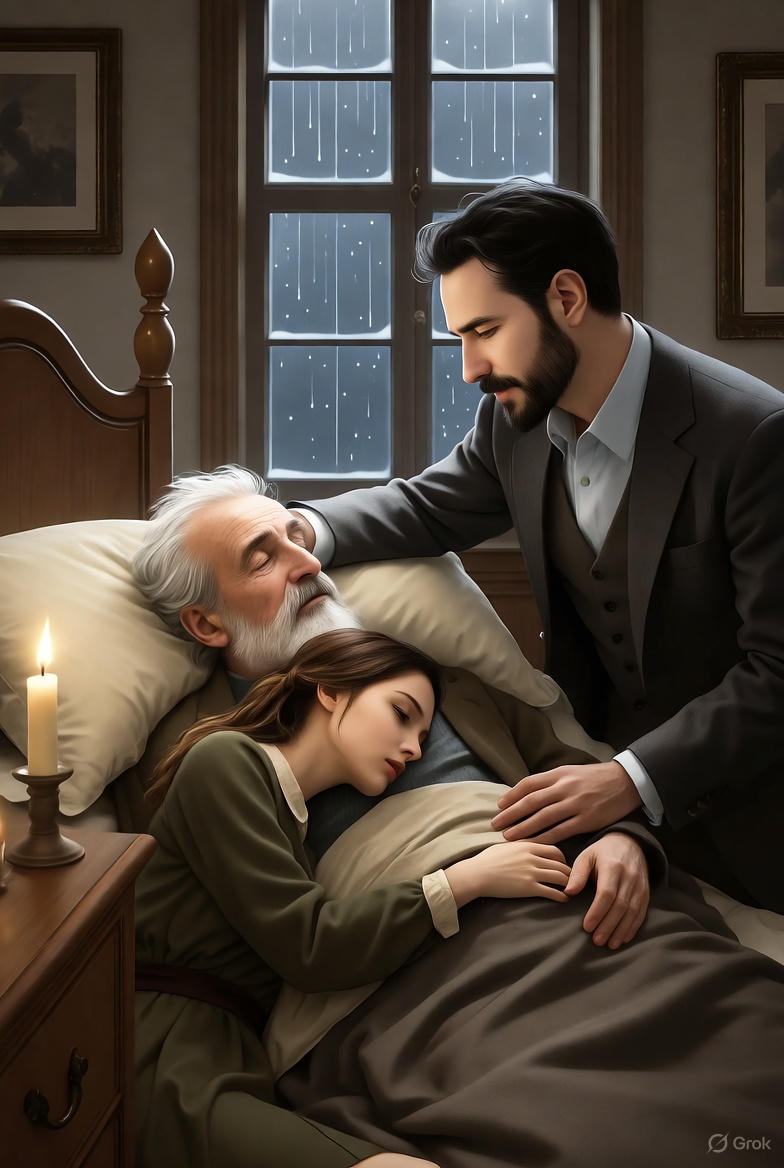
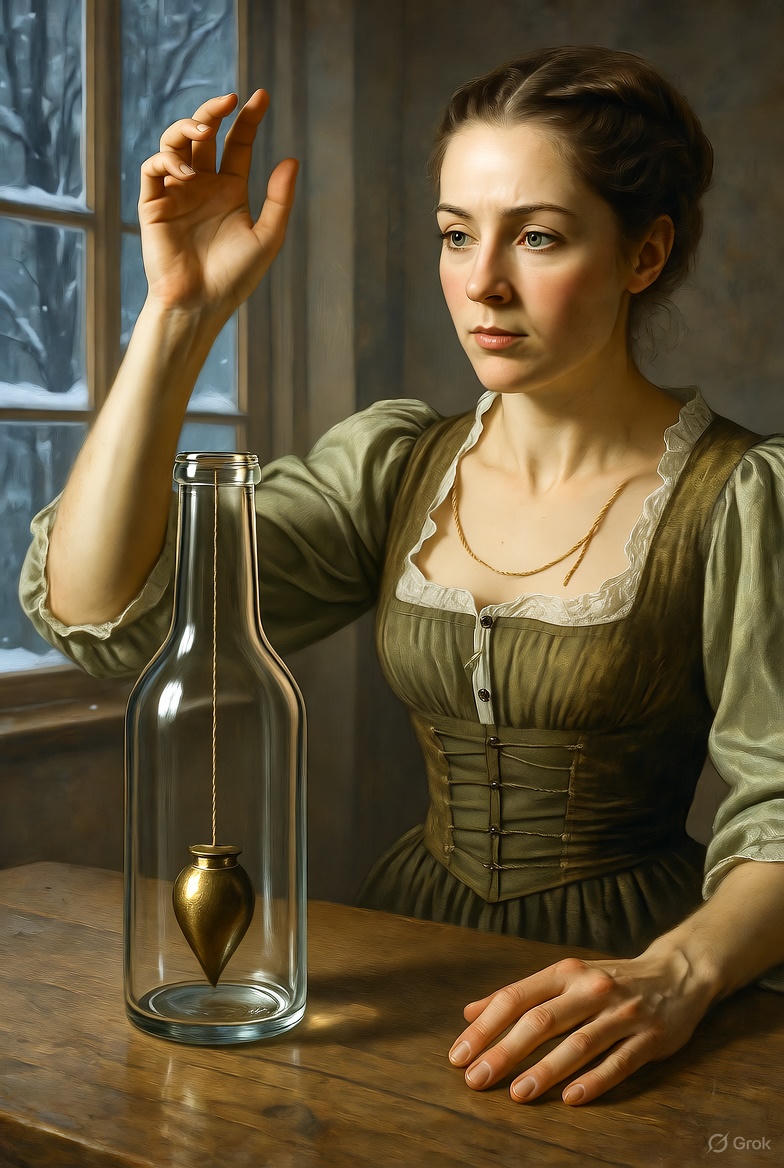




 Anarchistbanjo's World