OD by Karl Hans Strobl and translated by Joe E Bandel
Chapter 23
When little Karl Schuh was two years old and already a very independent gentleman, Frau Hermine decided it was finally time to introduce him to his grandfather.
He marched stoutly through all the rooms on his chubby legs, and if someone tried to take his hand on the street, he’d swat it away and say, “All by myself!” He climbed onto every chair and recently pulled the crocheted cover off the dresser, along with vases, clocks, glass eggs, porcelain lambs, and other knickknacks, then tried to excuse himself for the mess. He dipped his finger in stove soot, smearing the walls with wild drawings, and held hour-long conversations with himself—in short, he was such a wonder that his mother could no longer justify withholding him from his grandfather.
She had planned a visit to Kobenzl soon after settling the ugly lawsuit business, where the father now lived permanently after selling his Vienna house. But with a small child, it was a cumbersome affair, and when they might have managed, the Freiherr was traveling abroad.
It was said he had conducted experiments on sensitivity and Od in London at Lord Cowper’s house, Palmerston’s stepson, then traveled to Berlin for an extended stay. The university there had even provided him two rooms, but the Berlin scholars had been utterly dismissive, impossible to convince. They either didn’t attend his demonstrations or, when they did, sniffed, nitpicked, and criticized so much that nothing fruitful came of it.
Karl Schuh sometimes brought home newspapers with mentions of Freiherr von Reichenbach. They recalled the Freiherr who, years ago, made waves claiming to discover a new natural force called Od, asserting the boldest claims about it. He had locked his unfortunate victims in a darkroom until their eyes began to glimmer in the gloom. Science had long moved past this quirk of an otherwise distinguished man, but the Freiherr kept the learned world on edge with his fierce attacks. The fiery old gentleman lashed out like a berserker, and his polemics, flooding the public, were as notable for their lack of logic as for their excessive tone. Yet all this couldn’t gain recognition for his Od, and recently the Berlin scholars had unequivocally rejected Herr von Reichenbach and his supposed force.
Schuh brought the papers to Hermine but didn’t comment further. “Whatever may be said of the Od,” Hermine remarked, “I think it’s unnecessary to mock such honest endeavor!”
Karl Schuh shrugged.
“There might be a force, invisible rays, so to speak, carriers of the soul’s faculties in people.”
Hermine received no response to this either.
“And I find it petty and mean when they hint here that Father lost his fortune and now owns nothing but the Kobenzl castle. I’ll finally visit him in the next few days. You don’t mind, do you?”
No, Schuh had no objections. Hermine could go and take the boy. He himself would hold back; he couldn’t be expected to make the first move, having been so gravely insulted. The Freiherr would have to come first.
The Freiherr had long since returned and was hurling invectives against his adversaries from his study. Hermine planned week after week to visit her father, but something always intervened—bad weather, little Karl’s cold, a big laundry day. As a housewife and mother, she couldn’t just leave at will.
Then came that letter from Italy, from Venice. Such letters from Venice didn’t arrive often but came at intervals, so Hermine was never too long in the dark about Ottane’s fate. She now knew Ottane’s story but hadn’t initially dared to share the truth with her husband.
Schuh, when he finally learned, showed much understanding and heart. He stood on a higher plane, with a broad view of the world; his notions of morality weren’t so narrow. They had arranged things—fine, he wasn’t appointed Ottane’s judge. He only asked once, “Why don’t they marry?”
Hermine passed the question to Venice and received a reply after some weeks. Ottane felt she should no longer conceal how things stood with Max Heiland. He was at risk of going blind—or perhaps, it wasn’t clear from her letter—he was already blind, and he resisted binding Ottane to him with an indissoluble bond. As long as her heart urged her to stay with him, he accepted it as heaven’s grace, but he didn’t want her free sacrifice turned into a rigid duty.
“He’s actually a damned decent fellow,” Schuh said after reflection. “I wouldn’t have expected that from him.”
The envelope of today’s letter from Venice bore not Ottane’s handwriting but that of a stranger. An unknown wrote on behalf of Herr Max Heiland, prevented by his eye condition from writing himself. He wrote that he regrettably had a deeply sorrowful message to convey, which he received with resignation to God’s will. Fräulein Ottane von Reichenbach had died after brief, severe suffering, comforted by religion’s rites, from typhus. Unfortunately, the undersigned, a German doctor, had been called too late, after the Italian colleagues declared themselves unable to save her. A few lines were enclosed for comfort, and it was noted that notices had also gone to Freiherr von Reichenbach and Professor Semmelweis in Pest, the undersigned’s esteemed teacher, whom the dying woman had wished notified.
“So these wretched papists botched the poor thing,” Schuh said angrily. He channeled his grief into furious rage, railing against Italy, its doctors, the climate, and life there—but at bottom, he raged against fate for inflicting such incomprehensible cruelty on the person, after Hermine and his boy, he loved most.
Hermine battled her pain for two days, while little Karl cowered under the table, uncomprehending why his mother wept ceaselessly and his father cursed.
Then Hermine said, “Tomorrow I’ll go to Kobenzl to see Father. I imagined my first visit with him differently, bringing the child. But perhaps the boy will be some consolation and joy to him.”
When she and the child prepared to leave the next day, Schuh opened his wardrobe and began dressing too.
“Not going to the factory?” Hermine asked.
“No, I’m coming with you,” Schuh grumbled. He had the right to use the factory carriage but rarely did. Today, however, he’d ordered it; it waited outside, and they drove off together into the blissful summer day, full of sun and colors. For little Karl, the ride was a journey to fairyland—wonders followed one after another; he crowed endlessly with delight. Over his blond head, the parents exchanged glances; they understood each other, full of confidence. However sadly and incomprehensibly cruel some decrees were, there were consolations bringing light even to the darkest soul.
The access roads to Reisenberg were far from good, torn up by deep ruts where the carriage jolted forward, sometimes throwing their heads together with a sudden lurch. The mulberry trees the Freiherr had planted stood wild along the roadsides. There were now enough leaves for armies of silkworms to gorge themselves, but where were the silkworms, where was the careful husbandry of the estate’s model days? It was clear Reichenbach had sold the estate, and the creditor to whom it was transferred cared little for it, thinking only of further sales.
The castle itself showed Reichenbach’s neglect. It wasn’t just the subtle signs of decay but an indefinable air of cold, surly rejection that made Hermine uneasy. It no longer gazed freely and cheerfully into the landscape; it lay closed off, ill-tempered, like a sullen fortress. And the great cast-iron dog on the terrace, the Molossus from Blansko’s foundry, with its grim face, seemed now the true emblem of the house. Little Karl was transfixed by the iron beast, standing before it as if waiting for it to suddenly bark.
Meanwhile, Schuh pulled the bell at the entrance by the garden hall, now boarded up with weathered planks in the middle of summer. It took a long time before anyone came, and even then, the door opened only a narrow crack, as far as an iron chain inside allowed. One might think the woman whose head appeared in the gap had modeled her expression on the cast-iron Molossus.
“The Herr Baron isn’t home!” she grumbled with blunt certainty, without waiting for an explanation.
“Just announce us to the Herr Baron,” said Schuh, irritated by this broad face with coarse cheekbones and thick lips.
“You’ve heard he’s not home,” the woman snapped.
“Tell him his daughter Hermine is here with her husband and child.”
The woman pulled a brazen, mocking grimace that Schuh would have loved to smash with his fist. “Even if the Emperor of China were here, he’d have to turn back. The Herr Baron wants to see no one… and you least of all, got it?”
Schuh’s patience ran out. He shoved the woman in the chest and tried to wedge his foot in the door to force entry. But the chain held, and the woman, a broad, solid, heavy figure, threw herself against the intruder, pushed him back, and slammed the door shut.
There stood Schuh and Hermine, staring at each other, at a loss for words. What kind of gatekeeper had the father hired? The house was indeed a fortress, guarded by a woman with the devil in her.
“Aren’t we going to Grandfather’s?” asked little Karl, finally tearing himself from the dog.
“No, not today,” Hermine said in a choked voice. “Grandfather isn’t home.”
They went to the carriage waiting on the road. On a terrace bench overlooking the city sat an old man.
“That’s Severin,” said Hermine. Yes, Severin—he would lead them to her father, he’d muzzle that Cerberus.
Severin nodded with an enigmatic smile and rose slowly, leaning on a stick beside him.
“What kind of fury do you have at the door?” Schuh asked, still furious.
“Oh,” Severin chuckled, “she’s got hair on her teeth!”
OD by Karl Hans Strobl and translated by Joe E Bandel
“Let the old fool be. He’s bursting with envy and pride.”
“He unfortunately doesn’t burst,” snorted Semmelweis. “He complains to the ministry; he has a host of petticoats and clerical robes behind him, and that carries more weight in this blessed Austria than the most conscientious research. And what does the ministry do? They appoint me private lecturer, yes, because they can’t do otherwise, with the venia legendi for lectures on obstetrics—with practical exercises—but only on a phantom! Do you understand what that means, not on cadavers, only on a phantom?” Semmelweis broke into a bitter, angry fit of laughter.
Reichenbach shook his head. “You just need a little patience. Klein and your other enemies are old men. How long will it take before they must leave the stage? Then the path will be clear for you…”
“Patience? I’ve had more patience than I should have. Enlightenment is dawning everywhere, except in Vienna. I’ve had enough of Vienna.”
“Yes, with us…” Reichenbach mused thoughtfully. “Austria! It has always known how to suppress, destroy, or drive out its best talents. Anyone who achieves something here must brace themselves to be mocked or persecuted.” Suddenly, he realized how similar his own fate was to this man’s. They were allies in the battle against the inertia of minds.
Semmelweis clapped his broad-brimmed hat on his head. “What do I care about Austria? I’m going back to my homeland. I’m Hungarian.” He stamped toward the door. “By the way, what I meant to say… your daughter! She was my best assistant.” “Because they’ve all been like that. I’d like to take her with me to Pest; perhaps she’d be willing. She could bring much good.”
He might have thought this a kind farewell gesture to Reichenbach. But he shouldn’t have said it. Didn’t this man understand that in this house, Ottane’s misstep was buried under a tombstone of silence? Why did he drag this shameful story into the light? Should Reichenbach rejoice that his daughter had taken up this dirty, repulsive trade instead of leaving it to the women of the lower classes, who were meant for it? Should he consider it an honor that Ottane was praised for her competence? For Reichenbach, it was a barbed fire arrow; his pride was mortally wounded. As he escorted the doctor to the door, he pondered how a paternal command could put an end to this scandal.
He himself wanted nothing to do with this renegade who dragged the family’s reputation into the mud; Hermine, Hermine should deliver Ottane his order.
When he entered Hermine’s room, Hermine and Karl Schuh hastily dissolved a suspiciously intimate moment into a somewhat awkward innocence. Just what he needed—Schuh making himself at home and plotting with Hermine.
“Oh, has Paris returned you to us?” he asked mockingly. He knew, of course, that Schuh hadn’t reached Paris and that his entire venture had failed. But he wanted the satisfaction of forcing a confession of failure, and somehow his resentment had to vent.
Schuh had risen: “I’ve come back to discuss the future of your daughter Hermine with you.”
Oh, so…! So it had come to this—that this man dared to discuss Hermine’s future with him. “Do you mean,” he asked with a mocking glint, “that you are to be that future?”
Schuh had resolved to ignore insults. “Yes!” he said earnestly.
“So I should place my daughter’s future in your hands? And you presumably already have her consent?”
“Yes,” Schuh answered with calm certainty to both questions…
“Into the hands of a wandering nobody who is nothing and has nothing. A vagabond, a shoemaker’s apprentice by birth, a barber in Berlin until his twentieth year, then ran off, sniffed around at everything but knows nothing thoroughly—a scientific freebooter who turns his scant knowledge into a business?”
Schuh had grown very pale. “I know I lack thorough training; I know I’m not yet anything substantial, but you yourself have acknowledged my abilities. You drew me into your experiments and sought my opinion. And you’ve said more than once that it’s not about the credentials one holds but what one carries within. Moreover, I may inform you that I have accepted a position, and there’s a prospect of soon becoming a partner in a galvanoplastic institute.”
“Father,” Hermine adds, “you have no right to insult Herr Schuh.”
Reichenbach turns on her with clenched fists. “Silence! Unfortunate girl! And you want to throw yourself away on this hollow talker, this man who doesn’t even own a button on his coat, whom I’ve driven from my house, who wheedled money from me for his dubious ventures…?”
Schuh lowers his head. “You gave me money, that’s true. But you offered it, Herr Baron! Offered it!! And you will get it back; I give you my word!”
And now something happens that the Freiherr would never have dreamed possible. Hermine steps to the young man, places her arm around his shoulder, and says, “Your insults won’t succeed in separating us.” It’s unbelievable—Hermine dares, before his very eyes, the eyes of her father, to put her arm around the young man’s shoulders and declare that he won’t succeed in parting them. They form a kind of united front, embodying their inner bond, and Hermine even ventures to add, “I’m of age, Father; I’m thirty years old and can determine my own fate.” So he’s to lose Hermine too—the only one of his children still with him.
“Very well, very well,” says the Freiherr, momentarily shaken, “so you want to marry into a family of shoemakers, barbers, and wandering jugglers?”
“Feelings and innermost convictions are every person’s free possession.”
But the Freiherr has already regained control. “Your wild, deluded sister is already a public scandal, and you want to follow her example? Have you taken a cue from Reinhold too? This new insolence has gone to all your heads? I only regret I can’t kill you or simply lock you in a convent. I’m going out to Kobenzl now, and you’ll follow me within two days, or I’ll exercise my rights as father and householder and have the police fetch you. You won’t throw yourself away on a worthless man.”
The gray tufts of hair on either side of his imposing forehead flare like burning thorn bushes. Before the stately, broad-shouldered man stands the slim, agile Schuh, a head shorter, crouched as if to spring. At last, all restraint ends—father or not, one can’t endlessly tolerate being spat in the face. Now Schuh’s anger too breaks free, and though the Freiherr looms powerfully and confidently before him, the young man knows that if it came to a physical struggle, he wouldn’t come off worse. He would duck under his opponent and is already choosing the spots to grab him. At the very least, it’s time now to remind him of a certain letter to remind him of—a letter whose suppression was no heroic deed.
But it’s unnecessary; Hermine shows she’s her father’s daughter, matching him in stubbornness and tenacious pursuit of a goal. “You’ll have to realize, Father,” she says calmly, “that I can’t be intimidated by threats. It’s about my happiness, and if you withhold your consent, I’ll take it without it. Wouldn’t we be better off settling this in peace?”
Settle in peace—indeed, she says settle in peace, even though she hears her father is entirely against it. Reichenbach stares at the united pair, utterly baffled.
But in Karl Schuh, something entirely new emerges. He isn’t one for the grand tones of passion; his natural disposition is to blunt all violence and turn every situation into something cheerful. A sense of superiority floods him; he has the delighted certainty that Reichenbach’s power is ineffective, casting everything in a light of inner joy.
“Tell me, dear friend,” he asks gently and conciliatory, “why are you so angry with me? I wouldn’t have come to your house if you hadn’t invited me. I know you despise people, using them as long as they seem useful. You squeeze them like lemons and then discard them. But with me, you’ve encountered a lemon that won’t stand for it.”
The metaphor is bold, but it has the advantage of leaving Reichenbach speechless. A tool that rebels, a nobody who suddenly rises up.
“I think we can go,” says Schuh, since Reichenbach still offers no reply. Schuh evidently believes the matter is settled to this extent—the Freiherr now knows how things stand and that they won’t wait for his consent. He adds only, “And as for the money, for which I’ll always be grateful, please be assured it won’t be lost to you. You’ll have it back within a few days.”
Schuh has no idea where he’ll get it, but he’ll find a way, and this conviction completes his victory. He leaves, and Hermine goes with him, leaving the Freiherr in boundless astonishment at the depths and limitless possibilities of a woman’s heart.
OD by Karl Hans Strobl and translated by Joe E Bandel
“No, there’s nothing to be done with you,” sighed Reichenbach, “no more with you than with Hermine or Ottane. It clearly requires a special disposition.”
“It seems so!” said Schuh, concerned.
“You still haven’t fully grasped the importance of my experiments.” And now the Freiherr becomes solemn like a priest opening the innermost sanctuary: “It concerns, namely, a kind of rays, a radiant force, a dynamis emanating from people and things.”
“Indeed!” says Schuh, making a face like a schoolboy rascal.
“A new natural force, understand! Or rather an ancient one, but only now discovered by me. And its laws are already outlined in broad strokes before me. All people, all things emit rays, positive and negative, mostly bipolar, especially humans. They are charged with dynamis, unequally named left and right, top and bottom, front and back. And it’s like everywhere in nature—the unequally named dynamis of two people, even of the same person, attract each other; the similarly named repel. That’s why the Hofrätin finds the touch of her left with my right pleasant, the touch with my left repulsive. And vice versa. When she folds her hands or brings her fingertips together, the dynamis equalize, become similarly named, and that feels unpleasant. The sheet of paper on the fingertips is painful because it hinders the dynamis’s radiation. The water glass from the left hand or in the shade is positively charged, thus repulsive; that from the right hand or in the sunlight is negatively charged, thus cool and pleasant.”
“Aha!” says Schuh and feels compelled to offer a word of understanding. “Magnetism! Animal magnetism!”
“No,” Reichenbach shouted angrily, his face turning red, “not magnetism. Don’t talk such nonsense. You should finally understand that.”
“Dear Baron!” Schuh feels the need to intervene seriously now. “Dear Baron, I wouldn’t want to base new natural laws exclusively on the esteemed Frau Hofrätin Reißnagel.”
“She won’t be the only one, certainly not. Many people indeed drift along dimly and dully like you and Ottane and Hermine, but there must be a whole host of others with heightened sensitivity, sensible people. Where does it come from, that so many people can foresee the weather, why do some not tolerate the close proximity of many people and faint, where does the mysterious attraction between two people at first sight come from, or the equally baseless aversion to someone met for the first time? I will search; I will repeat my experiments with others, and you will see what meaning and connection emerges from it.”
“I’m afraid I won’t be able to witness your investigations,” says Schuh, “I must travel.” Yes, Schuh actually has no particular reason to be cheerful, not the slightest reason, and only the irresistible cheerfulness that seems to emanate from Reichenbach’s discovery has for a short time made him forget his dejection.
“So, you want to leave,” says Reichenbach reproachfully, “just now, when such great things are happening here? I won’t hold you back, of course, but I would have thought…”
“I must go to Brünn and Salzburg. I’ve been invited to demonstrate my gas microscope. I haven’t given up on it either; I’m working on improving it and want to have new lenses made. I don’t know how long I’ll be away.”
“Travel with God!” says Reichenbach curtly and turns away, as if dismissing a renegade and traitor.
Karl Schuh slowly descends the stairs to the music room. Ottane sits at the piano; one hand rests on the keys, the other hangs limply down; her face shows a glow and an inward listening.
“Where is Hermine?” asks Schuh.
Ottane returns from afar. “I believe Hermine is already back at her treatise on the thylli.”
“I must leave tomorrow and won’t be back for a while.”
“Yes, why? You want to leave? Must it be? You should know that the music lessons with you are Hermine’s only joy.”
“Are they? I always thought Hermine’s only joy was the thylli and the like.”
“What’s wrong with you? Why do you talk like that? What have you suddenly got against Hermine?”
Karl Schuh takes a nodding porcelain Chinese figure from the dressing table, turns it over, looks at it from underneath, and sets it back down.
“And why do you only now say you have to leave?” Ottane continues. “You haven’t mentioned a word about it until today. That’s a fine surprise. Hermine will be quite astonished.”
Ottane looks up, and Schuh realizes she wants to fetch Hermine. This wretched porcelain Chinese won’t stop nodding, and Schuh stops the annoying wobbling with his finger. “No, please, don’t fetch Hermine.”
“Don’t you want to say goodbye to her?”
“No, I don’t want to say goodbye to her. You will convey my greetings to her.”
It’s all so strange and incomprehensible, but suddenly it occurs to Ottane what Max Heiland had said about Hermine and Schuh. A suspicion, so remote and questionable, that it had completely slipped from Ottane’s memory. It’s perhaps also true that she, entirely absorbed in herself, hadn’t paid attention to anything else.
“Yes, if that’s it…” says Ottane anxiously, and suddenly she feels utterly disloyal and bad.
Schuh lowers his head; not a trace remains of his radiant mood, his boyish laughter. It’s almost unfathomable that he can stand there so serious and dejected. “Yes, you must see that. What am I supposed to do here? I am, after all, a decent person.”
Ottane’s breath catches for a moment, as if she had received a harsh blow.
“And your father wouldn’t want it. I think I know him well enough. He became a Freiherr, and if he’s to give Hermine to someone, it must be someone entirely different, not just some Herr Karl Schuh.”
He’s probably right about that, thinks Ottane; the father has his peculiarities. And when he’s not in a good mood, he puts Schuh down, speaks contemptuously of him, calls him a windbag, a drifter, and a schemer.
“But worse still,” says Schuh again, “is that Hermine herself doesn’t want it. If it were only the father—his authority doesn’t extend to dictating Hermine’s life. But Hermine herself probably has no idea.”
“I don’t know,” Ottane hesitates guiltily; she’s ashamed to know so little about her sister and not to have cared for her.
“You see, and that’s why I can’t come to your house anymore. I’m not really traveling, but I won’t come back. Should Hermine eventually notice and then let me know it’d be better if I stayed away? I don’t want it to come to that.”
“What should I tell Hermine now?” asks Ottane quietly.
“You should give her this letter. She has a right to know how things stand. Give her this letter.”
“Does anyone else know about it?” Ottane feels compelled to ask.
“I’ve spoken with Reinhold about it. And now you know. And through the letter, Hermine will know. No one else.”
“I think the father is coming,” whispers Ottane. Somewhere a door opens—yes, those are the father’s steps in the next room.
It’s a hasty farewell; Karl Schuh doesn’t want to meet Reichenbach again now, having lost all composure and unable to control himself. He must leave quickly; the Freiherr should least of all learn how things stand with him.
“Wasn’t that Schuh who just left?” asks Reichenbach. “What did he want again? He’s probably off on another art trip.”
Ottane realizes she still holds Schuh’s letter in her hand. She’s still dazed and unpracticed in secrecy, and so she makes the clumsiest move possible—she tries to slip the letter into her pocket unnoticed.
But Reichenbach did not miss the suspicious movement. “What kind of letter is that?” he asks.
“A letter?” Ottane feigns with even more suspicious nonchalance.
Reichenbach doesn’t waste much time; his mood is steeped in vinegar and gall, some of what Schuh objected to is churning within him. He approaches Ottane and takes the letter from her pocket.
“Father, it’s a letter for Hermine,” Ottane protests indignantly.
“I can see that.”
“You won’t take this letter away from Hermine.”
“I wish to know what Herr Schuh has to write to my daughter.”
But Ottane is outraged—outraged for her sister’s sake, no, perhaps even for the sake of justice and freedom. “Father… you have no right to open someone else’s letters; I find that…”
“I find… I find…” snorts Reichenbach grimly, “I find that I certainly have the right to know what’s going on in my house. I find that I don’t need to tolerate any secrets.”
For a moment, Ottane considers, come what may, snatching the letter from her father, but it’s too late—the Freiherr has already broken the seal. “Oh yes,” he says, pressing his lips together and then parting them with a snapping sound, “mm yes… so that’s it…” and as his eyes glide over the lines, he underscores Schuh’s words with various exclamations: “Now I understand… indeed… so Reinhold has known about it for some time… very nice!… so that’s why…”
Then he folds the letter together, and as Ottane reaches for it, he slips it into his breast pocket. “This is a whole conspiracy against me; Reinhold knows about it, this man didn’t think to inform me at once, and you certainly wouldn’t have told me either…”
Ottane gathers all her courage for one more attack: “Schuh acted entirely honestly. And you surely wouldn’t want to lay hands on someone else’s property.”
“What I want or don’t want, I decide myself. And I want Hermine not to receive this letter. And if it’s true that Schuh hasn’t declared himself to Hermine, then she shouldn’t learn anything about it. I derive great joy from my children, I must say. And this Schuh! Writes letters to my daughter behind my back and intends to stay away from my house. Doesn’t consider that people will ask: yes, what’s wrong with Schuh, why doesn’t he come to Freiherr von Reichenbach anymore? There must have been something! That people will poke around and gossip, of course, you don’t think of that.”
“You can’t expect him to come when he loves Hermine and sees no chance to win her, and when he also doesn’t want to deceive you.”
“He should control himself if he’s a man,” Reichenbach shouts, “and he shouldn’t bring my house into disrepute. But I will restore order, depend on it.”
Hermine will not receive this letter, and you will keep silent about it and everything Schuh told you—take my advice.”
Reichenbach leaves, slamming the doors of the music room and the next room forcefully behind him, unaware that something far more significant has shattered and fallen away than just the plaster around a doorframe.
OD by Karl Hans Strobl and translated by Joe E Bandel
“I’d like to know—what the Viennese would say,” Reichenbach quips.
“I thought,” the old count continues, ignoring the jest, “if this turns out alright for me, nothing will happen to your wife.”
“What’s supposed to happen to my wife?” Reichenbach asks.
“I’m worried about her. Her good heart puts her in danger. Don’t let your wife go to the sick. She can’t help them anyway.”
Reichenbach promises a husbandly command, and after the next glass of wine, they part. As Reichenbach climbs down from the carriage at his house, the old count calls after him: “And tell your wife I fell in the water for her sake. But next time, I’ll definitely bring back a stalactite. She’ll have to be patient till then.”
Reichenbach steps into the house, finding Reinhold loitering in the hall with a frightened face, clearly idle.
“Where’s your mother?” Reichenbach asks, eager to share his tale. He’ll ask Friederike Luise, Guess where I’ve been? She’ll be a bit shocked, scold him, but end up happy seeing his joy at their success. Then he’ll tease her that the old count is head over heels for her.
“Where’s your mother?” he asks again, three steps up the stairs, as Reinhold hasn’t answered.
Reinhold stands rigid, eyes fixed on his father’s face, wide with fear—his mother’s eyes. “Mother’s sick. She’s in bed.”
“In bed…?”
“And Peter’s gone to fetch the doctor…”
Reichenbach races up the stairs, taking three at a time.
Chapter 4
The night before Friederike Luise’s light went out, Reichenbach sat in his study, plans for the new wood-carbonization furnace spread before him, complete with changes and improvements born of past failures. One couldn’t endlessly stare into fate’s empty eye sockets; he had to force himself to turn his mind elsewhere. Sitting by the sickbed, waiting, was unbearable. Waiting for what? The inevitable, signaled clearly enough by Dr. Roskoschny’s averted gaze and head-shaking? For a man used to mastering life, gripping it with both fists, kneading his will into things, this was intolerable. Sitting at the edge of grief and despair, powerless to help, was beyond his strength.
There were the drawings and sketches—shut-off valves, serpentine heating tubes, exhaust ducts, condensers, bellows—but even as Reichenbach pulled himself together and spurred his focus, he could draw and calculate for an hour. In the second hour, his attention waned, and it rose around him like water, dissolving his limbs.
It was a green, glowing flood, like the water in the Punkva cave, and he drifted on a raft over it. He saw stones on the bottom, the play of fish, and then a face swam just below the surface—his own, of course. He had never seen himself so closely, every feature sharper than in any mirror. Yet there was something strange in the familiar, something mysterious, unsettling, fearsome. Yes, that’s how it must be, Reichenbach thought, when the veils are stripped away. Veils? he wondered immediately. Why that word?
He jolted, somehow pulled away from his blueprints by the question, feeling as if someone in the next room had spoken the word aloud.
Reichenbach listened intently, but all was silent. His head swam from the sharp odors of the fumigated house.
Next door was the children’s bedroom. The children were gone; they couldn’t stay with their sick mother—the doctor forbade it, and the old count insisted they be taken to his castle. Beyond the empty children’s room was the room where Friederike Luise fought her hopeless battle for life, the marital bedroom now overshadowed by death. Frau Paleczek was with the sick woman. She wouldn’t be kept from keeping vigil, as all the maids except Susi had fled, and even Susi couldn’t be persuaded to approach the bed. Strangely, Frau Paleczek’s heavy steps had softened, her bass voice now gentle.
Perhaps Friederike Luise had spoken in her fever, or Paleczek had said something, or someone had called for Reichenbach. He stood and went to the children’s room, Distant lightning flared silently through the night, a faint glow from the lantern above the front door creeping through the windows, just bright enough to reveal the three empty children’s beds.
Then Reichenbach saw a figure standing among the beds, a mere shadow, tall, fleeting, indistinct—but surely, yes, none other than Friederike Luise.
“How did you get here? What are you doing?” Reichenbach asked, astonished.
“I was with the children,” Friederike Luise’s voice answered softly, sadly. With the children, Reichenbach wanted to ask, but the shadow was suddenly gone. The empty beds stood there, and lightning flickered over the valley. No door had creaked, but somehow Friederike Luise must have slipped out, and if he hurried, he might catch her climbing back into her bed. A wild hope of a sudden turn for the better surged through him.
But when Reichenbach opened the door, his wife lay in her pillows, face turned to the wall, so faintly nestled he could hardly believe she’d stood before him moments ago. Frau Paleczek sat beside her, her dark face bent over a worn prayer book.
“Was my wife up?” Reichenbach asked.
Paleczek stared at him through owl-round reading glasses. “Up? Oh, Jesus, Mary, the gracious lady hasn’t stirred for two hours. I think she’s sleeping. That’s good.”
“But I saw her—” Reichenbach wanted to say. He held back, realizing exhaustion, inner brokenness, and hopeless longing had clouded his senses.
When Frau Paleczek thought the sick woman’s sleep was a good, healing one, she was mistaken. It opened a dark gate for the patient, who passed through at dawn without regaining consciousness—a rare mercy, Dr. Roskoschny said, almost a gift from heaven.
Frau Paleczek set to washing the body, though washing cholera victims was forbidden. She refused to let the body be covered with quicklime, as regulations required, and Dr. Roskoschny turned a blind eye, feeling Friederike Luise shouldn’t be lumped with the mass of other victims.
Remarkably, news of her death spread quickly among the people. Though she was buried on her death day with no pomp, her simple coffin drew an unusually large following. Usually, only a few close relatives trailed behind, hasty and timid, some even seeming relieved when the earth thudded into the grave. But people couldn’t seem to tear themselves away from Friederike Luise’s coffin. The sobbing wrapped around the coffin like a web, cloaking it in a blanket woven from the heart’s emotion. Everyone found it fitting that, after the pastor’s blessing, the old count stepped to the grave to speak.
He didn’t get far. “We’ve come to say farewell, Friederike Luise—” he began, but his voice broke, tears streamed down, he shook his head, and stepped back. Then people approached Reichenbach, shaking his hand; some gently touched the heads of the children standing meekly nearby. Most did so silently, though a few felt compelled to offer words of comfort. Reichenbach had held himself together with composure, never losing control for a moment. Everything had been strangely vivid, but now, as it was essentially over and faces kept appearing and turning away in an endless stream, a veil fell over his clarity. Many faces he didn’t recognize; others he named only after long thought. There was Mandrial, the pastor; the broad cheekbones likely belonged to the chemist Mader; the timid dog-like eyes to the tutor Futterknecht; and that wretched expression to Forester Ruf, who said something about six children…
Yes, yes, Reichenbach had heard something about it. He recalled now, in the days when Friederike Luise fought against death, something about his seven children. Six had died, and only little Friederike, the deceased’s godchild, was still alive.
Friederike Luise had likely caught the germ of the disease from Ruf’s children. Yes, that’s how things were connected—everything somehow intertwined, however incomprehensible it seemed.
Then Reichenbach climbed the stairs in his house, and someone walked beside him—the old count Hugo zu Salm, personally baptized by Maria Theresa. A little later, Reichenbach sat on the sofa in the living room, the old count beside him, the house otherwise eerily empty. There were likely three children somewhere in the house, but with Futterknecht, who ensured they stayed quiet.
The day was dreary and cool. Reichenbach shivered, saying, “Autumn’s not far now, and the doctor thinks the cholera will stop then.” It could stop now, having taken its toll.
Then a voice came, as if from deep darkness: “It was a sin… a sinful thought… you cast such things into the world, and there are indeed evil spirits around us, waiting for such thoughts. They seize them and turn them into weapons. It’s my fault.”
Reichenbach perked up, realizing the voice had been speaking for a while. “What’s your fault?” he asked.
“I shouldn’t have linked my life with hers. I shouldn’t have done it, back when I fell in the water. That thought: if I escape, nothing will happen to her. It was as if they let me go to take her instead. I’m to blame for her death. It just sprang up in me so suddenly.”
“How can you talk like that?” Reichenbach protested. “Ask the doctor—she caught it from Ruf’s children.”
“Yes, yes… but that doesn’t get to the root of it. It’s the life force that decides in the end. And I want to get to the bottom of things.” As darkness fell, the old count rose. “You’ll have to work without me for a while. Lord Rumford has invited me to England for some experiments he wants my help with. And Richter in Berlin wants to conduct a few trials together. Then I’ll study English wool-spinning. And in Strasbourg, there’s a Société Harmonique exploring Mesmerism—I’d like to look into that too. I’ve been planning it for a long time.”
OD by Karl Hans Strobl and translated by Joe E Bandel
Chapter 1
Today, great things are underway at the Princely Salm Ironworks in Blansko—decisive, momentous things.
The new gigantic wood carbonization furnace has been burning for the third day now. It is a Leviathan of a furnace; it can devour eighty cords of wood at once, and when it’s really going strong, its voice becomes a prolonged roar that echoes through the valley. It recalls the exodus of the Jews from Egypt; its signs are a gigantic smoke cloud by day and a pillar of fire by night. The smoke cloud spirals out of the chimney like a yellow-and-brown mottled Nicene serpent, then gathers itself and rolls as a sluggish monster up the valley slopes, slowly disappearing into the forests amid shivering, tormented treetops. The pillar of fire is so bright that one can still read small print quite well from a thousand paces away.
Now the second machinist, Schnuparek, stands on the threshold of the chemical laboratory. Streams of sweat have carved bright furrows into his blackened face; he looks like a Negro with a skin disease, the whites of his eyes framing a frightened gaze. He twists his cap: “Your Grace… the acid has started to flow… but the gas…!”
The old count, who has been watching a tar distillation with Director Reichenbach and the chemist Mader, turns around: “That’s fine, Schnuparek, we’re coming. Just open both valves in the meantime.”
The old count and Reichenbach leave the chemist Mader alone with the tar distillation; they walk through the carpentry shop and then through the room where the artistic cast-iron pieces are displayed—statues after the antique, all sorts of Christian items, animals and large vases, the she-wolf from the Capitol, the Florentine Molosser hound, all cast in iron, very much to the buyers’ taste and cheap, cheap. The iron comes from the ground, and the wood grows in the immeasurable princely forests.
Between a Christ on the cross and the Capitoline she-wolf, they step out into the courtyard. The ground trembles, the windows of the long building in front of them rattle, the furnace hisses and roars. From the chimney, a hellish torch glows yellow and red into the encroaching twilight.
Black and helpless, people swarm before the wrath-trembling monster; the furnace doors glow, the pungent smell of wood acid forces the breath back and bores into the lungs. At the other end, at the valves of the distillation kettle, stands the first machinist Wostahlo, a small, stout creature of the underworld. In streams, the acid gushes from the pipes into the vats.
“Excellent,” praises the old count, “what’s the matter, then? It’s going splendidly.”
“I don’t know,” hesitates the machinist, “it seems to me it’s getting weaker.”
“Already now?” says Reichenbach. “Why, though?”
The furnace raises its voice to the roar of a prehistoric beast. “Like an old saurian,” laughs the old count.
“Exactly! Because it has to give up acid!” Reichenbach can’t help but say. But he walks around the furnace, places his hand on the wall of the cooling vessel where the pipes are supposed to release their heat. He pulls it back with a cry: “The water’s boiling!”
Schnuparek comes running: “Your Grace, please—the gas…!”
“Open all registers!” Reichenbach bellows back. “Let out the gas and hydrogen!”
It’s too late; a dull bang shakes the furnace. A giant fist lifts the thick walls, supported by heavy pillars—the entire armored vault—and slams it back down onto the ground.
And now there can be no doubt any longer: the stream of acid dries up, becomes thinner, just a thread, a trickle. It must have found another way out, pouring into the interior of the furnace. Boiling steam hisses out from the joints of the cooling system; the explosions follow one another more rapidly, the masonry sways.
“To the devil!” roars Reichenbach. “To the scoop wheel! Do we all want to blow up?”
The men have lost their heads, but Reichenbach’s roar brings them back to their senses. They run, illuminated by a firelight that bursts from the shattered heating system. The explosive gas inside the furnace hurls itself against the walls, hammering with destructive fists against its prison; the demons of fire exult and jeer. God knows what the acid is doing.
“Look,” says the old count, “now the thing’s starting to glow.”
Indeed, the iron plates of the cooling system take on a red glow, slowly from the inside out; the rivets expand with a sigh. The water has evaporated; fresh air comes through the burst furnace doors, fanning the blaze ever more. A mad screeching pierces from the trembling structure.
“Water!” Reichenbach’s voice cuts through the tumult. “Quickly! Fresh water!”
A worker comes running: “Jesus Christ, sir, the scoop wheel’s done for!”
“Done for?” Reichenbach thunders at him.
“Done for! It’s not working! Someone’s messed it up.”
Now we’re really all going to blow up, thinks Reichenbach. And he grabs the old count by the arm, pulling and pushing, trying to tear him away from the hissing, howling demon that has rebelled against human control, slipped from the command of their will—away, just away from here. His mortal fear is not for his own safety but for that of his friend.
But the stocky old count has the muscle of a wrestler and the sturdiness of a bear. At Legnano, he held off the French long enough for his corps, threatened with annihilation, to cross the Etsch.
For he will not budge, and no one can move him from the spot. He braces himself against them; if Reichenbach and he were to flee, everyone would run, and the furnace would burst into pieces.
The scoop wheel is ruined; they rush with water buckets, pouring against the tide. But on the glowing walls, the water hisses into boiling steam, atomizing into scalding clouds that no one can approach. And greedily, the cracked furnace mouth sucks in air, mixing it with the flames and the gas that rattles the structure.
“Pickaxes here!” shouts the old count. “Pickaxes and wet clay!”
The heat singes hair and skin; embers from above add to the blaze. Blue flames flicker over the shingles and the roof’s timber; sticky pitch falls in burning, bubbling clumps that sear into human flesh. The chimney has shattered; tar and pitch have caught fire, setting the roof ablaze.
The old count has thrown off his coat. In shirtsleeves, he grabs a pickaxe and shows his men what he wants. He has, after all, often worked alongside them in shirtsleeves before, with apron and trowel, demonstrating tricks and techniques in molding and casting. The tool thunders heavily against the glowing boiler walls, tearing open gaps; steam surges out, the sharp point bites in all directions, and the red serpents within become visible. From the modeling workshop, they drag in troughs of wet clay. They’ve grasped what the old count intends: through the torn-open walls, shovel after shovel of heavy, damp earth is thrust, clinging to the— coils of the pipes, enveloping them layer by layer. All hands shovel, sealing the cracks and fissures of the furnace, cutting off the air supply, throttling the breath of the fire.
Hours of struggle follow, and then the danger is averted. The flames rage on, devouring wood and coal, intoxicated by gas, but they are tamed within the furnace’s interior; the broken chains are thrown over them once more.
“I think we’ve done it,” says the old count. “Now we just have to wait until the fire burns itself out.”
“It’ll take a good while yet,” says Reichenbach.
The old count washes his face and hands in a wooden tub of water and puts his coat back on. “You believe that, Reichenbach,” he smiles contentedly, “let’s head to cooler territory for a bit. And we’ve earned a glass of wine, too.”
*
They rode in a light carriage to the hunting lodge up in the valley. Midnight hung over the peaks, crowned with gleaming constellations, edged with a pale shimmer of moonlight.
“It’ll be done differently next time,” said Reichenbach after a long silence, as they passed the sawmill. “Now I’ve figured it out. The furnace needs shut-off valves and heating tubes so the fire can’t get to the wood so easily, and the gas duct should be extended thirty cords long and cooled with flowing water. This mustn’t happen again. I was a real fool. The gentlemen are always smarter coming out of a meeting than when they go in.”
“Please, Reichenbach,” replied the old count, encouraging the horse with a click of his tongue, “don’t make such a fuss about it. Everyone makes mistakes; you learn from mistakes, and trying trumps studying. It’ll all work out. The main thing is that no greater misfortune happened. How easily could someone have lost their sight in an explosion—better red-hot than blind.”
Of all the misfortunes in the world, blindness seemed to the old count the cruelest. He had come close to it himself, back when, after returning from French captivity, he was struck by an eye affliction brought on by the hardships and toils of the campaign. He knew what it meant to see a gray veil fall over the world and to have to grope along the nearest objects with a stick.
In Reichenbach’s mind, a defiant thought flared: Now more than ever! “As long as you don’t give up, it’ll be fine. I won’t let go. But it’s still a blunder. And when bad luck piles onto stupidity—”
“What do you want?” comforted the old count. “You’ve got nothing to complain about! Haven’t you built up the entire operation? The ironworks, the rolling mill, the artistic castings, the steam engines we build—the first in Austria—the enameled goods that go as far as Haiti and Singapore, all that bears the name Reichenbach. What—”would it be just a small-time operation without you? And the creosote and paraffin, the picamar, the pittacal, the eupion, and all those things you’ve teased out of the tar. That’s all nothing?”
The smell of burning incense and the glow of burning candles was completely unexpected. A dark shag carpet muffled his steps and he sneezed involuntarily as he stirred up some dust. “Antiquities and Curiosities” was not a normal shop in any sense of the term. He gazed around in awe. It was like being in a museum. The shop was large and divided into several sections, each section set up and displayed according to a historical time period.
He had been expecting to see odds and ends of junk that cluttered so many antique shops. Instead each section was divided not by year but by century. There were complete room like displays of furniture, clothing, weaponry, art, games, toys, reading materials and more. Entering into a section was like stepping into a different world.
He stepped into a display about prehistoric cavemen. There was a replica of a cave painting on a rock. The painting and rock looked like they had been hewn out of the back of a cave somewhere. There was a clay bowl and goblet, three flint knives looked sharp and fairly unused. A hand axe had been used to cut chips out of a log lying in the middle of the display. Admiring it, he picked the axe up, hefted it and gave a couple practice swings. There was a primitive energy and vitality about each item that made him instinctively want to pick it up and start using it. He just knew these items had been made to be used. As he moved through the displays, a clock on the wall began ticking erratically, its hands blurring between moments. The air thickened with a temporal tug, and the hand axe flickered, as if caught between eras. Nearby, a small etched crystal in the display pulsed faintly, its glow hinting at something ancient and alive. He felt a shiver—could this shop hold secrets of time itself?
A female figure was dressed attractively in furs and armed with a bow and quiver of hand made arrows. There was a small pack on her back and a blanket robe of rabbit fur lying on the ground beside her. She had a necklace of brightly colored bird feathers around her neck and there were price tags on each item. His jaw dropped in disbelief as he looked at a few of the price tags. There was a small fortune in this one display alone.
He realized this shop must deal in specialty replicas. Perhaps theater props. Each item was extremely well made and looked real and functional. The clothing, furniture, weapons and even the leather shoes were all obviously handcrafted. Moving to other displays he could see each item of clothing was crudely woven in the old manner, hand stitched and buttons were hand made. He would have believed he was in some type of museum but no museum carried items in such a perfect state of repair and like new condition.
He wandered for an hour looking at various displays and getting an increasingly troubled feeling that something wasn’t right. He could believe one or two displays of meticulous craftsmanship and diversity. There were re-constructionists that studied the old ways of ancient civilizations and tried duplicating them. But this was different. It was as if someone had stepped back into time and brought back these items for sale in this curious shop. Touching a flint knife, he saw a flash—a warrior wielding it in a shadowed battle, his parents’ faces flickering beside a crystalline portal. The vision faded, leaving a hum in the air, the Wild whispering of past lives.
That was absurd of course but the feeling of unease was growing more uncomfortable inside him. He couldn’t shake the feeling that these items were real and that was not possible. He felt a chill go up his spine. These items shouldn’t exist and this store shouldn’t exist. The knowledge and ability to create these things had vanished long ago. No people living today had the knowledge to make these things that were so exquisitely crafted.
This was not an ordinary shop. Dealing in replicas of this quality had to be very expensive and these items very hard to come by. Why would any person in today’s world want to use these old fashioned things or buy them? The only reason Tobal could think of was for theatrical props. In a flash of insight he wondered if Tavistock Educational had purchased theatrical costumes from this place to use at the Halloween dance. He winced and rapidly brought his mind back to the present.
He sneezed again and a blond girl about two years younger than Tobal came around the corner with a smile, wearing a spring colored dress. She was five feet four inches tall and pretty in a plain sort of way. Her eyes were a warm bright blue and danced with humor.
“Bless you!” She said brightly with a smile. “I thought I heard someone. May I help you, oh!” Her hand went to her face and covered her mouth in a startled manner. She was blushing furiously in embarrassment and backing away.
“I didn’t mean to. I’m sorry, I was just startled.”
He touched his face, relaxed and tried to grin.
“That’s all right,” the awkward moment passed.
“How can I help you?” She asked again this time a little nervously.
Tobal eyed her. She was too young to know about the medallion and the faded letter. She was younger than he was. Still his instructions had been to take them to this shop. Slowly and uncertainly he took the medallion off over his head and handed it to the girl.
“I would like to know what you can tell me about this medallion and how old it is,” he said.
She looked at it, her eyes widened and her face turned pale. She looked sharply and asked in a snappy voice.
“Are you trying to sell this?”
“No, I’m not. I’m trying to find information about it. It belonged to my parents.”
“I have to get father. I can’t talk to you about this,” she said quickly. “Make yourself at home and look around the shop a little bit more. I’ll be right back with father in a few minutes.”
Tobal watched as she stepped through a curtain behind the main counter. He heard her running up stairs into the living quarters. Suddenly he wished he had taken the medallion back before she had left. He fought down a rising panic. She seemed honest enough and it would be all right. Still he knew he should have never let it out of his hands. He didn’t know her or anyone else in this town. If anything happened it would be her word against his and unlikely that anyone would believe him.
Trying to take his mind off the medallion, Tobal wandered around other areas of the shop looking with renewed amazement at finely crafted armor, ornate weapons, muskets and pistols. Some of the metal still had hammer marks from when it was forged and beaten into shape. Leather boots and woven tapestries competed with rich clothing hand sewn from the finest silks. Oil lamps lit ornate desks covered with hand written books and crude scientific instruments whose purpose he couldn’t even begin to fathom.
Close examination of some items showed that not all of them were new. Some of the items were not only real and functional but had also been used. Some of the armor and weapons were sweat stained and scarred or repaired. He studied a Roman helmet and noticed the leather lining was soft and pliable with sweat stains on it as if it had been used recently. The bronze buckles were highly polished.
When he touched these used items he felt memories enter into his mind. Perhaps he was reminded of past lives when he had known, worn and used items such as these. Perhaps that was why they stirred such deep and powerful emotions within him and why they felt so comfortable in his hands.
He heard someone coming slowly down the stairs and headed back to the counter. The tread sounded slower and heavier and he knew it was not the girl returning. Whoever it was walked with a pronounced limp. The curtains parted and a very tall, distinguished looking gentleman with old-fashioned spectacles and long gray hair pulled back in a ponytail entered the room. Tobal stared at the spectacles. They were the kind of thing no one wore any more. Corrective surgery had long made any type of eyeglasses a thing of the past.
He wondered at the odd affectation and suppressed a smile. Anyone that owned a shop like this would have to be unusual. The man was holding Tobal’s medallion and staring at it with a peculiar look in his eye. Almost lovingly the old man’s fingers traced the outer circle and the two figures.
Tobal blurted out, his voice unsteady, “Last night—Lucas and Carla appeared. Time Knights. They said my parents built a Gaia time portal, that they’re alive, imprisoned. Harry says they drowned.” Adam listened silently, his expression unreadable, fingers pausing on the medallion.
He looked at Tobal and said softly, “Do you have anything else?”
Tobal pulled the faded letter out of his pocket and handed it over. The old man’s face paled as he looked at the broken wax seal. He carefully took the letter out of the envelope and began to read. When he was done he looked at Tobal with a new expression on his face. There was steely determination and something that looked suspiciously like newly forming tears.
The old man asked solemnly, “Do you claim the right of blood?”
Not knowing what to say, Tobal just nodded.
“Yes, I do.”
The old man smiled widely and stepping around the corner embraced Tobal in a warm hug.
“Then welcome son, welcome! You’ve come home at last!”
The old man’s name was Adam Gardner and his daughter was named Sarah. She was an only child. Her mother had died when she was an infant. She was only one year younger than Tobal. The way she pinned her hair into twin ponytails made her look younger.
Adam called Sarah down to mind the shop while the two of them went upstairs to talk. Tobal related what he knew while the old man sat quietly and listened. He was particularly interested that Tobal’s Uncle Harry had been reactivated and there was new interest in his parent’s research. He was not surprised uncle Harry had discouraged Tobal from coming to Old Seattle.
“He was right,” Adam told him. “Most of the people that knew your father and mother are dead. I think your uncle and I might be the only ones left and I never met your uncle. Your parents spoke well of him though and that was always good enough for me. It was a foolish idea coming here but I’m glad you did.”
“I owe your mother and father a lot,” he continued. “There are not many around any more that still remember what really happened. Hell,” he sighed, “I don’t know what really happened and I was there.”
“It was during the failure of phase II that I started working with Ron and Rachel. They were brilliant scientists and very much in love.” He glanced at Tobal and his eyes softened, “I’m sorry you never got to know them. I remember how excited they were when you were born. They brought you straight to the village from the hospital and showed you off. They took you everywhere they could. When they went on missions my wife, Linda, or I would baby sit you and some of the other children.”
Tobal’s head was spinning and he felt completely lost. “Wait please,” he interrupted. “What do you mean phase II, I thought there was only one project and why were there other children around if it was dangerous?”
Adam sighed heavily and shifted in his chair, “There were at least three different programs I knew about and more that I didn’t. Most of them were heavily classified Federation research. The overall focus of your parent’s research involved matter transmission from one point to another, harnessing crystals that tap into Gaia’s magnetic fields to produce free energy.”
“But that was done years ago,” Tobal said. “At least I think it was.”
“It has been done with solid crystalline objects but never with organic tissue or living things. Impurities within the cellular structure cause the collapse of the cell tissue under the stress of intense magnetic field energies. Your parents were trying to find ways to purify the human body enough so it would transform into pure energy and the back into flesh again.”
“Is that possible?” Tobal asked.
“Yes,” Adam replied quietly. “Your parents did this many times. I’ve done it as well. The entire sanctuary project was designed as the first round of purification needed to produce this effect in humans and was known as phase I. Its objective was to produce general spiritual, mental, emotional, physical health, self-esteem and competence by naturally strengthening the magnetic fields within the human body. It was very successful in producing sweeping changes physically, mentally and emotionally in a positive manner.
It was so successful the city-state of Heliopolis was forced to assume a ‘closed’ or ‘forbidden’ status under Federation supervision. Graduates of phase I were vastly superior to their peers in normal Federation society. Given a chance they would out perform or out compete others while remaining healthy and highly individualized. The main draw back from the Federation’s view was that graduates were too independent. They didn’t like taking orders from people they didn’t know or respect. Phase II tried to further purify the human body through mechanical means using high strength pulsating magnetic fields similar to how solid objects have been treated and transported in the past. This is the project that failed. Scientists exposed to these raw magnetic field energies began to experience bizarre side effects and deformities as their human genetic structure mutated. Your parents alone seemed immune to these hazards that were killing others.
That was when I became involved. I was going through phase I. A handful of us met secretly with your parents and studied natural shamanistic ways of purifying and energizing the human body. Your mother was pregnant with you and didn’t want to do anything that might cause harm to her unborn infant. She was already afraid she might have exposed you to harmful influences and genetic mutations.”
He peered at Tobal with keen interest through his spectacles.
“You seem to be healthy and normal though.”
He continued. “Howling Wolf was a local Native American shaman that had mastered the practice of bi-location, being in two places at once. He developed this ability through natural means. He was never a part of the official program and the Federation never knew about him.
Your parents met him accidentally one day in the mountains. He gave your mother herbs he said would help her pregnancy. Later they learned he was able to instantly teleport himself from one place to another. This was what your parents were interested in and didn’t involve sophisticated technology. They became his students. Training started out as a form of mental projection like remote viewing but deepened into the transport of the entire physical body. Howling Wolf was a strong influence and convinced your parents that you would be born healthy and that learning this bi-location ability would not be harmful to you. Your parents convinced Howling Wolf to teach a small group of us and we met in secret.
As our shamanism training progressed it became clear that spirit travel and bi-location could be achieved naturally and safely without the mutagenic hazards of high strength magnetic fields and super conductors.
We didn’t need the money or the machines the Federation supplied. Even more important we didn’t need the strict military supervision and control. Your parents researched the effect of Howling Wolf’s training on the human body and found ways to measure scientifically what was really happening.
They were able to duplicate his training and developed other methods that combined science and shamanism. They created a teleportation device capable of transporting Phase I graduates from one transmitter to another and back. That project was called Phase III.
Phase I graduates had no problems going through the matter transmitter even though non-graduates could not. My theory is Phase I training integrated body, mind and spirit in a way that ‘unified’ the entire personality.
Howling Wolf taught that these mysteries and natural techniques have always been known to a small group of individuals throughout history. These secrets have been taught in secret mystery schools and handed down individually through oral traditions.
This training involved the development of the non-physical body, aura or soul as it is some times called. It was the development of this non-physical body that ‘energized’ and harmonized with the physical body in a way that allowed the physical body to transform into pure energy and back again without damage to the individual cells.”
Adam glanced at Tobal before continuing, “Howling Wolf told us in ancient times this was called ‘becoming immortal or God like’. Each culture had it’s own name for it. The Taoists called it ‘developing the immortal physical body’. Jesus used this technique or something similar when he appeared in a closed room full of disciples after his supposed death. Thomas, the doubter, did not believe until he felt the holes of the nails in Jesus’ hands and feet. The ancient Greeks spoke of heroes and heroines that became immortal.”
He paused and took a sip of brandy before continuing. “ The holy men and women of the earth’s religions knew these techniques and passed them on in secret to a select few. The Gods and Goddesses of all religions were once human. After they learned these techniques they became ‘divine’ and transcended normal human life. Later they were worshipped as Gods and Goddesses.
Can you imagine the military application of such super human abilities? Imagine spies and assassins that can’t be stopped or caught. Do you understand what I am saying? Phase III was insignificant compared to Howling Wolf’s bi-location process. Your parents refused to cooperate any longer with the harmful studies because of the mutagenic effect it had on the human DNA. Several volunteers had already died horrible deaths. The Federation found out about our secret group and panicked. They sent in Special Forces and massacred our entire village hoping to kill every one of us.”
Adam’s throat caught and his voice faltered. “Many innocent lives were lost. Not just those in the sanctuary program. My wife was murdered and my two older children. Howling Wolf’s entire family was living in the village and they were murdered too. Only two of his grandchildren survived and that was because they were with us. We were at a secret meeting and had taken you, Sarah, and Howling Wolf’s two grandchildren with us. I was taking care of the four of you. The rest were in a meeting when it happened.”
“When we came back,” his voice faltered and there were tears in his eyes, “When we came back they were all dead. Your father and mother went to find your uncle. He was the Federation officer in charge of Phase III. They never came back. They took you with them. Howling Wolf’s son and daughter-in-law were hunted down and executed. The rest of us vanished. Howling Wolf took his remaining grandchildren and I took Sarah. She doesn’t know she had two older brothers.
“We went back in secret and buried our loved ones. Several times they almost caught us but we slipped through them like ghosts,” he laughed hollowly and without humor, “That’s what we were, ghosts burying ghosts.”
His fist clenched, “That’s what they were too, if we ever caught them. We wanted to stay but the children were not safe and needed protection. We waited for word from your parents but no word ever came. Howling Wolf was going to keep an eye on things and keep our secret meeting place from being discovered. We knew how to contact each other in an emergency. I was going to get money for the supplies to rescue your parents if they were still alive.”
“That’s all I know,” he said wearily sitting back in his chair. “Howling Wolf never contacted me. They must have hunted him down and killed him too. I don’t see how he could have survived.”
Adam peered at Tobal over his spectacles. “Now you tell me there is renewed interest in your parent’s research. I’ve thought about this for a long time. I’ve always wanted Sarah to go through the sanctuary program. I’m getting too old to train her myself. Knowing that you will be there makes me feel better about Sarah going. I will send her next fall after the tourist season.”
“Can you bi-locate?” Tobal asked in awe.
The old man nodded gruffly, “Howling Wolf and your parents taught me.”
“Can Sarah?”
Adam sighed and took another sip of brandy. “No she can’t. She needs to go through the sanctuary program first for the preliminary training. After that I can train her.”
“Will you train me?” Tobal asked hopefully.
Adam took a long time before answering. He bent forward and his steely eyes looked straight into Tobal’s soul. “Get through the sanctuary program first and then ask me. If it is still what you want, then I will train you. I owe your parents that much. Make sure Sarah gets through her training too.”
Tobal was overwhelmed by the information and needed some time to think. He believed the old man, but he also felt the old man was not telling the entire story. He excused himself and said he needed to go for a walk down by the park and clear his head. As he stepped outside, he noticed a shadow flitting near the shop, echoing the figure from that snowy night, stirring a flicker of unease.
The sun was high and it was almost noon when Sarah came to get him for lunch. She was shy and awkward in social situations. Tobal guessed she didn’t get around much and was surprised she was being home schooled. To be home schooled in today’s high tech society was unheard of. As they walked back to the shop for lunch he wondered how good her education really was.
Sarah and Tobal spent a lot of time together and became good friends. She was interesting to talk with and certainly knew far more about history than he did. The days crept by and early March brought heavy snows that made a mess in Old Seattle where traffic was foot traffic. Sidewalks were kept shoveled clear but the streets were left to melt on their own. Getting around on foot made travel hazardous. They spent most of the time inside the store or visiting other shops.
One day they went to New Seattle. It was like any modern city-state he had ever visited. It was lacking in personality and created to satisfy its population with passive pleasures like virtual gaming tournaments and interactive learning terminals linking people from all across the globe. Like many city-states if followed the European pattern of stacking people like sardines in limited living quarters. That was balanced with large parks, recreational areas and gardens where a person could spend time alone in nature without ever leaving the city itself.
It was Old Seattle that was a breath of fresh air to Tobal with its strange shops and residents. The entire area was filled with people that dared to be different and creative. Each person was living their own self-created reality and prospered or reduced to poverty on the merits of their vision and efforts. Old Seattle survived on the seasonal tourist trade. Still, it was surprising how much business it drew even in the slower months of winter and late spring.
There was a darker side to the city as well and they tried to steer clear of it. Drugs and prostitution had found a home in the old city along with other illegal activities not allowed within New Seattle. There were dangers that beckoned with shadowy fingers. This was an area of human predators and there was little protection from the law. Tobal realized why there were iron bars and heavy reinforced doors on most of the homes and shops.
The freedom of the old city came at a heavy price. That price was no medical or police service. It simply was not available even though one could go through the gate into New Seattle and have instant service. New Seattle did not want people living in Old Seattle and did not support its occupants. The local community united together to provide emergency service and transportation when needed. They looked out for each other through a neighborhood watch program.
Sarah and Adam lived in a fairly safe and respectable neighborhood but even she was concerned when they were followed home one snowy night by a shadowy figure they couldn’t quite make out. They never did know if it was a friend making sure they got home safely or a predator. The mysterious figure vanished into the snowy night when they reached the shop entrance.
Tobal spent a lot of time talking with Adam. One afternoon he was helping set up a new display in the shop.
“Where does all this stuff come from?” he asked. “How do you find things like this?”
The old man answered evasively. “They are just hand crafted items here on consignment. I know the people that make them and have an exclusive trade agreement with them. While I get a commission on each sale, I don’t really know the history of each piece.”
He eyed Tobal speculatively and continued, “Several times a year I take some time off to restock my supply. When I’m gone Sarah takes care of the shop for me. That’s why I’m going to miss her so much when she leaves.”
“Have you ever heard of Tavistock Educational?”
“Hmm, yes I think I have. Why?” Adam asked.
“That’s my old school. I graduated from there.” He paused and corrected himself. “I mean this spring is my graduation but I graduated early.” “Anyway”, he flushed, “last Halloween we had a costume ball and I was wondering if our theatrical department got its costumes from you. This shop reminds me of the costumes we were wearing.”
Adam Gardner eyed him shrewdly. “Your uncle must do pretty well to send you to an exclusive school like Tavistock Educational. It’s a very hard school to get into and I’ve never heard of anyone graduating early from it. I’ve heard it’s real high society, not like your parents at all.”
Tobal persisted, “Did the school get the costumes from you?”
Adam relented and said mysteriously, “Yes, they have an account with me and are one of my good customers. There are not many places that can afford high quality reproductions. I move in some pretty elite circles myself.” Then he changed the subject.
Adam also proved evasive about the medallion, especially when Tobal told him that he had seen the same image as a tattoo on Uncle Harry’s chest. Adam said there were some things he couldn’t talk about. Maybe later after Tobal completed the sanctuary program they could sit down and talk. It was just not the right time. There were some things that could only be told after he received the proper training.
“There are some things just too dangerous to talk about right now,” he told Tobal. “I haven’t been to Heliopolis in over fifteen years and they think I’m dead. I want them to keep thinking I’m dead. I don’t know if things have changed and I don’t want to endanger Sarah when she is taking the Phase I training this fall.”
“Tell you what,” he said. “ You come back here with Sarah after you’ve completed the sanctuary program and I’ll tell you everything you want to know.” He looked hard at Tobal, “Will you trust me on that?”
Tobal didn’t have much choice. “I guess I will have to,” he muttered dryly.
Soon after that the old man made arrangements for transportation to the closed city-state of Heliopolis. It was about 80 miles from the coast into the Cascades. Heliopolis lay in a sheltered valley between mountains and was hidden by hardwood trees, ringed with dense pine forests and shaded by Snowcapped Mountains.
Tobal and Adam had one last talk in private before he left. Adam told him more about Heliopolis. It did not follow the accepted rules of the Federation. Tobal was reminded he would not have the same civil rights he enjoyed now. Heliopolis was a separate sovereign nation. He needed to be very careful.
Tobal was getting a little worried until Adam reminded him that Sarah would be coming next fall and she would need his friendship and help. It was a high honor to apply for sanctuary. No one was turned away but it was so secret few people knew they could apply. It was limited to word of mouth and generations of family members that had already gone through the training themselves.
Adam had been a citizen of Heliopolis before Tobal’s parents changed everything with their research. He remembered how Heliopolis had been before it became a closed city-state. His wife and two sons were buried back there and some day he wanted to go back and visit their graves. He was bitter about it because under the current political conditions he would never be able to go back.
His older citizenship was no longer recognized and his life would be in danger if he tried. Sarah’s life would be in danger if they knew who she really was. She would come under a false identity. He hoped Sarah would be able to visit her mother’s grave. She didn’t know about her two older brothers and he needed to talk to her about them before she left. His voice faltered as he was telling Tobal these things. Tobal knew it would be very hard for Adam to share these things with Sarah.
There was not much else to say and Tobal silently gave the old man a hug. Then they went downstairs to find Sarah. As he descended, the medallion’s pulse seemed to align with a faint hum from Gaia’s crystal energy, a whisper of the journey ahead. It was almost time to go.
Later that evening, as they sat by the shop’s hearth, Tobal turned to Adam. “About Lucas and Carla—what do you know of them? The Time Knights? They mentioned a time hub, something my parents worked on. Is that tied to this place?” Adam’s gaze darkened, sipping his brandy. “I’ve heard whispers of Time Knights, guardians of temporal rifts. Your parents spoke of a hub, a portal they built with Howling Wolf’s guidance—here, in Old Seattle, hidden in the artifacts. A friend of mine, a Knight, vanished during the massacre. I helped shield it, but the Federation’s attack disrupted it. I thought it lost. If they’re alive, it might still pulse beneath us. Tread carefully—Harry’s recall could mean they’re hunting it again.”
He remained quiet but inside he was seething and planning how he was going to exchange his airbus ticket destination for Old Seattle. That’s where his parents had told him to go and that is where he was going.
Tobal Kane curled up in a dark corner of the Airbus and looked out upon a moonlit night. It was the 18th of February and the full moon cast a soft light on the snow-covered landscape far below. There were no clouds and he could see stars twinkling like diamonds in the night sky. It was one of those rare nights that you want to remember for the rest of your life and he was trying to impress the smallest details onto his soul forever. He was leaving the only home he had ever known and he was not going back.
He felt the vibration and hum of the airbus against his back and below he saw the lights of New Rome growing smaller and receding into the distance. He was lost in his thoughts. The airbus was relatively empty and he was left to himself.
It had been a simple matter to purchase his own ticket to New Seattle. There were no flights into Old Seattle and that was the closest he could get. He simply booked a flight for a few hours later than the one he was supposed to be on.
Uncle Harry hadn’t even seen him off at the airport. He had sent the driver instead and the driver dropped him off outside the terminal. Money hadn’t been a problem since he had a spending allowance and he had cautiously supplied himself with enough cash to stay for a week or two in Old Seattle if he needed to. Since he would be paying cash Uncle Harry should never find out. He thought he had enough Euros to cover any expenses that might come up.
The Euro was the global currency acceptable in all city-states around the world since the establishment of the Federation. He was carrying almost five thousand Euros and also had a credit card his uncle had given him for emergencies. As long as his expenses were reasonable his uncle had always picked up the tab. Tobal was determined to find the Antiquities shop if it still existed. He was also determined his uncle would never know about it. Nervously he touched his jacket pocket and made sure the letter was still there. He could feel the weight of the medallion around his neck.
Staring out the window into the night, Tobal thought about his parents, his mind churning with conflicting tales—Uncle Harry’s account of their mysterious death by accidental drowning in a lake, the Time Knights’ claim they were alive and imprisoned, all against his vague, unproven memories. The Wild whispered through his doubts, urging him toward Old Seattle, a gift from them that relaxed him with its calm power. He hardly remembered them at all, just those faint memories without proof they were even real. They had been mysteriously killed when he was only two years old. His parents had been working on a classified project but something had gone wrong and they never came back alive. Their bodies had been found floating in a nearby lake. The investigation had officially listed the cause of death as accidental drowning even though his uncle said his parents were both strong swimmers.
His uncle would never talk about his parents and whenever Tobal asked his uncle would change the subject. There was no one else that Tobal could ask. His uncle had known his parents and worked with them. He didn’t remember his aunt Lilly unless she was that woman he remembered swimming with Uncle Harry the day he had seen the tattoo. Uncle Harry wouldn’t talk about her either. She had been killed in the same mysterious accident that crippled his uncle.
It was all very mysterious and now he was flying into the night headed for some “Forbidden City” his parents wanted him to go to. It was the only thing they had ever asked of him. It was their dying wish and he would do just what they asked. He fingered the medallion. There was a calm power coming from it that relaxed him, especially because it was a gift from them.
The flight from New Rome to New Seattle was long and uneventful. There had been several stopovers at other city-states along the way. At last he dozed fitfully. The sky was getting lighter but the sun was still under the horizon when he woke up. It was about 5:30 in the morning when the airbus touched down at the terminal in New Seattle.
Tobal got off at the airbus terminal and asked directions at the information desk. He was only two miles from Old Seattle. After spending the night in the airbus the exercise and fresh air felt good. His clothing was warm enough as long as he kept moving. He had no luggage because his uncle had said he would be given everything needed at Heliopolis when he got there.
The first part of his trip was easy since New Seattle was essentially one huge indoor complex. This was common with city-states. The entire city-state was essentially one giant self-enclosed structure. Public transit was small-automated air cars that took passengers to any programmed address or destination. He was going to the South Gate and punched the proper location into the control screen.
“Please fasten your seat belt,” said a pleasant mechanical voice from somewhere inside the car.
Tobal complied and the car took off smoothly entering a long corridor filled with other flying traffic. In a matter of minutes his air car touched down next to the city gates and let him out. He watched as it sped away to pick up another passenger, then shrugged his shoulders and stepped through the gate into the cold air of Old Seattle.
The light mist and fog felt chill in the pre-dawn air. He turned his collar up against the wind and fastened his light jacket a little tighter. As he walked, he buttoned the top button of his collar. The icy moisture seemed to seep into his bones. There was a dusting of freshly fallen snow on the ground and it was very quiet as the sun peeked over the distant horizon. He guessed the snow would not last very long. It was already melting. While cold, it was still much warmer than his uncle’s estate.
Old Seattle differed sharply from New Seattle. He looked around curiously as he walked along an empty street. There were individual buildings on both sides as far as he could see. New Seattle had no streets. Anti-grav technology had made ground operated vehicles obsolete over twenty years ago before he had even been born. Still here in Old Seattle there was foot traffic and the streets were kept in repair for that purpose alone. The contrast between the two cities was almost overwhelming.
New Seattle was a self-contained city-state like so many others in what was now simply the Federation. Some of the older citizens called it the “New World Order” but it was not new any longer and did not seem to contain a lot of order. There were not many people still living that remembered the pre-Federation days. Each city-state was like any other with access to many of the same resources. Most people worked from their homes in private offices or lived within walking distance of the local manufacturing plants that produced the food and material products that kept the city alive.
It was hydrogen cell technology that revolutionized the world bringing cheap energy to entire communities. Almost overnight the energy problems of the world were gone. There was abundant light, heat and electricity within small communities along with the technology to become self-supporting and self-governing. Anti-grav technology completed the isolation by making the world’s ground transport structure obsolete.
All across the Federation streets and highway systems had been torn up and properties sold or allowed to go back to nature. The majority of the world’s population now lived in elaborate complexes complete with local air terminals and food processing plants. They were self-sustaining apartments in self-sustaining complexes in self-sustaining city-states. You could find anything you wanted in your own complex or order it from the Ethernet on your home computer. Hologram technology made communication and entertainment effortless. You could attend conferences, work, play games or chat with your friends through the Ethernet even if they were on the other side of the world. Advanced technology had finally reached the point where no one really needed to go anywhere.
But here in Old Seattle there were still streets. Tobal had never seen a street before. It was like entering an ancient prehistoric world. In this part of the city there were actually cobblestones that were over two hundred years old. Definitely the old city was pre-Federation. The buildings were separate from each other and built of red brick or concrete. Many of the taller skyscrapers were in a process of structural collapse or in need of repair. It was the smaller buildings built of concrete and steel that seemed immune to the sands of time. They spoke of an era when life had been different, harder and more individualistic.
Ironically it was modern technology that provided the power to support life in these ancient structures. Without the abundant heat and electricity they would have long since been abandoned. It was as if people wanted to play at living in the past while keeping the niceties of the modern world at the same time.
Tobal turned down another street and old apartments loomed up silently on either side like man made canyons. The early morning sun had not made it into these dark canyons yet and he walked in shadow. The light snow that lay on the cobblestones muffled his boots. The uneven surface made his footing treacherous and several times he almost fell.
Rounding another corner he almost stepped on a couple of crows intently fighting over a dead animal. They hardly noticed and hopped to one side before resuming their fight over the grisly remains of a rat or a cat. It was hard to tell which.
The street split in two separate directions. A battered sign said Oak Street and 30th Ave. Going left on Oak Street he headed down a street more narrow than the others. It looked like it was not used much any more, but then they all did. Looking back he saw the crows following him. They would fly a short way, stop to watch and then fly again to catch up. Every now and then one would squawk and a fight would erupt leaving loose feathers forgotten on the snow.
Old Seattle was a noted artist’s colony. It was one of the areas where societies fringe element escaped the rigid structure of modernization. Unique products, specialty shops and services both legal and illegal were offered within the little shops that lined the streets. The owners lived above the shops and owned entire buildings. Some of the signs were broken or covered in grime and unreadable. He figured 2424 Oak St. should be a few more blocks up and on the right side of the street. A couple blocks further he found it nestled between an old bakery and a barbershop.
The dilapidated three story red brick building looked worse for wear than it’s neighbors and some of the mortar between the bricks was missing. Tobal questioned the structural integrity of the entire building. A battered sign proclaimed “Antiquities and Curiosities”. The windows on all three stories were covered with wrought iron bars that looked functional as well as ornamental. They suggested what kind of neighborhood this really was and he nervously glanced around him. The crows hopped a little closer. Stepping up to the door he saw he was too early. The closed sign hanging in the window read the shop opened at 8:00. Glancing at his watch, he realized he still had almost two hours to wait.
Leaving the shop, Tobal continued down the street until he came to a small park area and watched the sun rise over the city. He brushed snow off a battered bench and sat listening to the strange early morning sounds of this old city and watching the crows. One large crow actually flew onto the bench and turned its head to look intently at him. Tobal had the eerie feeling that the bird was intelligent. After a half-hour of sitting in the small snow covered park the sun was up and he was thoroughly chilled.
Going back to the coffee and bakery shop he ordered a cup of coffee and a raspberry scone. It was warm inside and he stayed there until 8:00 listening to the locals and watching as they eyed him curiously. If anyone thought it strange to see a dark haired eighteen-year-old with a scarred face wandering the streets at this time of day they kept it to themselves.
Tobal took his time and enjoyed his breakfast. There was some foot traffic in the morning streets and most of it toward the bakery. Customers would enter; stomp their snow covered boots on the floor, hang their coats or jackets on a stand and sit down to read the local paper or talk with their neighbors. Most of them looked over fifty years old and dressed in outdated clothing. They were not a part of the modern world, as Tobal knew it. At 8:00 he paid for his coffee and scone and headed back to the shop. This time there was an “open” sign hanging in the window. In better light the shop looked like a fortress. The heavy wooden door had metal bands across it for reinforcement. It looked like it could withstand a battering ram. He tested the latch and the door opened silently inward on well-oiled hinges. A small bell rang as he entered.
Family and love are your iron roots—unbreakable bonds that fuel your wins or snap your spine. The OAK Matrix powers it: opposites (lift/sink) grind, awareness (your heart’s will) wakes, kinship (shared life) binds. Crack an orb with a gym grind or love’s push? Hell yes—tap it. This is survivalism’s core—here’s how to wield it and thrive.
What’s This About?
Love’s your dynamo—parents, spouse, kids, kin—when they’ve got your back, you’re unstoppable. Their faith, energy, lifts you—miracles flow, like Jesus healing with belief. Flip it—no support, and they drain you dry, goals crumble. Dynasties rise on this—family goals syncing with yours, a business, a legacy—support’s the juice.
No love? You’re gutted—goals cost triple, maybe your ties. Fight harder, prove it—win big, and they might flip. Space, new kin—find believers, build a second family. Alone’s a myth—someone’s got to back you, or that rose you plant wilts, stunted, alive but frail.
Why It Matters
It’s your warrior’s blood. Opposites clash—support fuels, doubt kills—and awareness wakes: you’re not solo, you’re charged by kin. Kinship’s steel—your wins bloom with theirs, their strength’s yours. I’ve felt it: gym grind, breath deep—second wind cracked an orb, her faith pushed me—won huge. No backing? Grind’s hell—love’s your edge, if you hold it.
That second wind—lifting, loving—splits the astral. That’s your bond’s forge.
How to Forge It
No drift—here’s your steel:
Flood the Ties: Gym—lift ‘til second wind cracks—breathe deep, flood sexual/bio-electric energy—charge your grit. Love hard—share goals, lean in—stack support. If an orb cracks—a surge—ride it; you’re forging power.
Crack the Void: No faith? Push—space out, find kin—new crew, same fire. Gym grind or love shove—same forge, bonds shift—prove it, they turn. Curiosity scouts—connect, grow.
Track the Lift: Log dreams—lone turns backed, you rule. Drained or flat? Up the grind—your kin’s slack. Love dreams mean you’re live—support hums.
Radiate Bonds: Live it—give space, take it—support flows both ways. Your charm’s a steel hum—others feel it, they rise. Build a rose-rich world—you lead.
Cycle Tie: Lunar full moon? Flood it—bonds peak. Solar summer? Forge high—win big. Daily noon? Grind fierce—own the love.
My Take
I’ve bled—kin doubted, drained me—‘til I hit the gym, found believers—cracked orbs, built a crew—wins stacked, love held. You’ve got this—flood it, forge it, rule it. This ain’t soft—it’s fierce roots, survival’s bloom. Love bold, warrior-backed.

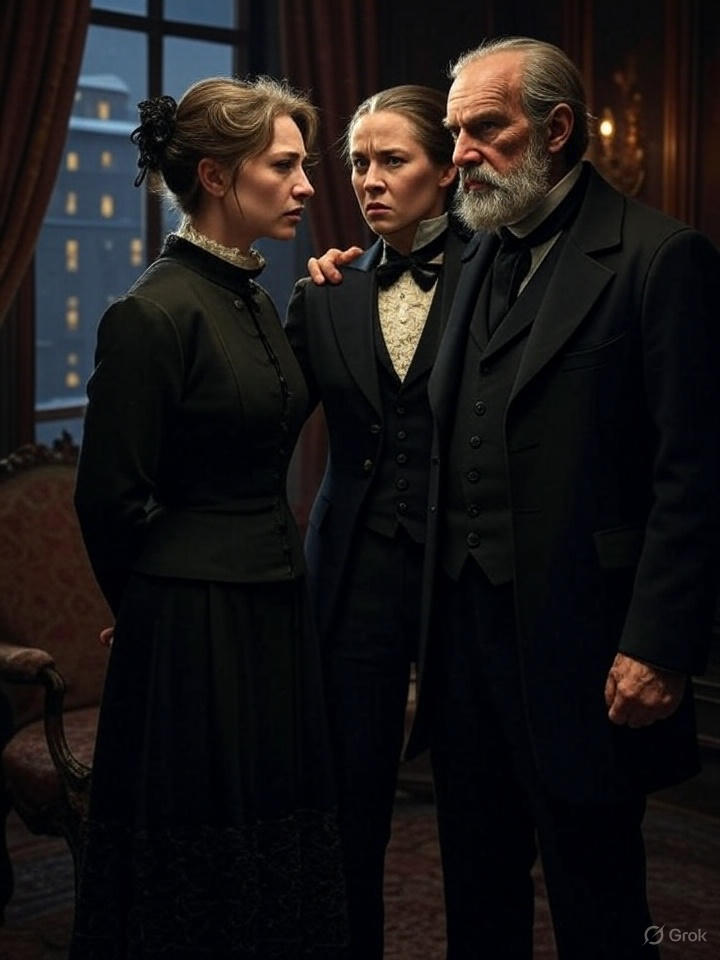





 Anarchistbanjo's World