Homo Sapiens: In the Maelstrom by Stanislaw Przybyszewski and translated by Joe E Bandel
IV.
Falk entered his study, sat down at the desk, propped his head in both hands and groaned loudly.
All the calm he had so laboriously maintained with Isa was gone and again he felt the throbbing and drilling of his torment. The unrest coiled like a pointed sharp funnel into his spinal cord, a feeling as if he must now fall apart, grew foaming up in him; he jumped up, sat down again, he knew no way out.
It seemed to him as if everything around him must now collapse, break down, sink in; he felt an orgy of destruction and downfall ecstasy around him.
And the sultry heat of the summer night crushed him, spread stiflingly in his lungs, he became so sensitive that he could hardly breathe.
He tore open the window and almost recoiled in horror.
The sky! The sky! He had never seen it like that. It was as if he had suddenly perceived the astronomical distance. He saw the stars as if they had been moved a million times further away, larger, fierier, like huge, gangrenous burn spots. And the sky seemed so terribly alive to him… Sweat broke out on his forehead, and he felt his eyes painfully bulge.
Then he pulled himself together again.
And in a moment his whole life crashed down on him with visionary clarity. One period unrolled after another with raging speed. All the terrible, horrific of his life: one downfall after another, one destruction after another… He had seen his life like this only once, yes, back then when he destroyed the poor child, this dove-soul of Marit… ugh, Marit, that was the most hideous. This pointless destruction, this murder…
He suddenly came to consciousness and laughed maliciously.
To the devil! Am I going senile? What does a murder concern me that nature commits? Ha, ha, ha… That she had the kindness to use my humble self as a murder instrument by chance, for that I should now suffer!? No! no! that won’t do.
He got heated.
Esteemed and by me especially highly valued audience—by the way, I wouldn’t mind spitting on all your heads, but I may only do that in parentheses—God how tasteful! So incredibly highly honored audience: I teach you a new trick, an extremely useful trick… It is an unmasking, a disavowal, a new testament, a new salvation… In the beginning was the cunning, malicious, devilish nature… You have been told she is mighty, unconcerned, cold and proud, she is neither good nor bad, she is neither dirt nor gold… Lie, esteemed audience, infamous, ridiculous lie! Nature is malicious, refinedly malicious, lying, insidious… that is nature! He, he, he… Naturally the esteemed audience opens its chewing tools as if a four-horse hay wagon should drive in… A slick smart aleck is nature, a malicious, villainous devil… What am I? Do you know? Does he know? Naturally! The individualists, the clever people who throw out their chests and shout: I am I! Oh, they know… the individualists!
Falk laughed scornfully.
I am nothing, I know nothing either! Oh! it is terrible! Terrible it is! Isn’t it, Isa? You are the only one who can appreciate the terrible… I see my movements combine into actions, I hear myself speak, I feel certain processes in the sexual organs, and an act is accomplished! What happened? A misfortune happened! Hi, hi, hi, do you hear the devil grin? Who did it? I?! I?! Who am I? What am I?
He fell into a despair fever.
I didn’t do it! My God, how can I prevent something that was… that was prepared in me long ago and only waited for an opportunity to break out and bury everything under its lava! Did I know anything about it? Can I prevent a glance sinking into my soul and calling forth forces there, forces of whose existence I had no idea? And for that, that something unknown in me instigated a misfortune, I should atone, for that I should be tortured by my conscience?
Dear nature, try your malicious, insidious tricks on other people; I know your tricks and wiles too well—no! to torment me, you will never succeed—never!
He poured himself a large glass of cognac and emptied it in one gulp.
How wonderfully He had figured out the thing! He will go to my Isa and simply say: Gracious lady, your husband is a scoundrel, he has with a foreign woman given the impetus to a new genealogical line, to an illegitimate Falk line. You, gracious lady, will naturally divorce him so that your husband can marry the girl, whereby both lines attain a genealogical unity. Ha, ha, ha…
But, dear Czerski, I have no intention of having two legitimate lines.
Well, then I will tell your wife anyway, for I want to free you from the lie, I am a Tolstoy, a Björnstjerne-Björnson, I fight for truth…
But, dear Czerski, don’t you understand that the two gentlemen are senile philosophers, don’t you understand that truth becomes an idiotic lie as soon as it destroys people? Don’t you understand that it would be infinite happiness for me to go to Isa and tell her everything, don’t you understand that this lie causes me infinite torment, but truth would cause me a thousand times greater, and besides destroy Isa? Don’t you understand that truth in this case would be an idiocy, a nonsense, a disgusting cruelty?
These narrow brains naturally don’t understand that. And the disaster will come. Isa? Yes, Isa will go. That is certain. She will simply disappear… no, she will still shake my hand in farewell, no—perhaps not, because I have soiled her with the other. Yes, that’s exactly how she will say it… But what then, what then?
He racked his brain as if he had to necessarily find the philosopher’s stone.
His knees had grown weak, he fell exhausted onto the sofa.
It was undoubted. The Other in him had ruined him. He felt endlessly slackened, weak and powerless:
The power of circumstances has destroyed the knowing Herr Falk, precisely because he was knowing. But when Herr Falk goes under, it is quite different from when, for example, little Marit throws herself into the water because she didn’t want to become mother of a Falk side line. It is thought crudely, very crudely, but this crudeness hurts, and that is a pleasure… But yes, when Falk goes under, he can control it, follow the collapse from stage to stage, note, register…
He, he, he… he had now thoroughly unmasked nature. He had also completely overcome conscience…
Do you want to know why, you truth-fanatics? Just open your ears well so you can at least somewhat survey the unspeakable extent of your stupidity… Just listen to my reasons, the reasons of the knowing one who has unmasked nature.
Nature destroys. Good, very good! To destroy, she uses various means, namely first the so-called forces of nature. In this category fall her moods in the form of lightning, storms, water and wind spouts etc., etc.
Second, she has chosen the bacilli as an outstandingly effective murder tool, a splendid and unbelievably villainous invention…
Third, no! no third! I am no classifier, I am philosopher, consequently I skip a cute number of the cutest murder and torture tools against whose most convulsive inventiveness the Inquisition must appear tame and pleasing to God, and go immediately to the human…
The human! Just allow me to take a deep breath, refresh my dry throat with cognac and feed my stomach a little nicotine.
So the human! Homo sapiens in Linnaean systematics: a self-acting apparatus equipped with a registration and control clock in the form of the brain!
Wonderful!
Now, please, just listen well. I continue my gospel, my great work of salvation.
Nature was ashamed of her eternal, pointless murders. Nature is lying and cowardly, she wanted to shift the guilt for her pointless murders from herself and gave the human a brain.
Do you know what a brain is? A very bad, discarded, unusable apparatus. Imagine a poorly functioning blood wave recorder. It will of course record the rise and fall of the pulse, but wrong, quite wrong. One will only see from it that a sinking and falling is present, but nothing more. See, in this way the brain also learns that something is happening in the soul, but what? it learns nothing about that.
Madame Bluebeard by Karl Hans Strobl and translated by Joe E Bandel
No one knows about it. We’ve a cracking tip. You take a 33⅓ percent stake.” Helmina had returned to her tabouret, sitting higher than the men, sunk in soft cushions. She looked down at them. “I’ve no money. How am I to invest?” she said mockingly. “What’s your divine husband for?” “You know, Anton, we agreed on separate assets. He covers the household, gives me a monthly sum for clothes and trifles. But otherwise, we each do as we please. There’s no joint purse.” “You’ll bring him around.” “You think it’s easier than it is. He’s stubborn. He took it badly, for instance, that I’m fighting for Kestelli’s inheritance.” “Idiot!” Sykora muttered into his cognac. A white cuff flashed as he swirled the cognac with a connoisseur’s steadiness. “Ruprecht’s a peculiar man. Catching him was hard. He’s not as dumb as the others. I wrote him in Abbazia, invited him to a rendezvous. He sent his servant to say he wouldn’t come. I realized I had to approach him differently.” “You got him in the end.” “Yes… but it was tough. Not a cookie-cutter job. I had to get psychological.” Sykora roared with laughter. “Oh… that psychology… it’s simple… all nature’s built on it…” He downed a cognac, shaking. “By the way, this cognac’s truly excellent—yes!” He rose, lumbering across the Afghan rug, arms dangling. “Well—if he won’t give in willingly… we’ve got the mutual inheritance clause, thank goodness.” The stove drew him. He pushed aside the screen, yawned, and warmed his back. Helmina stared ahead. “He’s the fourth,” she said. “Yes, yes!” Sykora smiled genially. “The fourth, not counting the others—the ones no one knows about.” Lorenz removed the Havana from his teeth, half- opening his eyes. “Helmi’s in love with him.” Helmina snapped at him. “That’s not true. It’s absurd. I wouldn’t dream of falling for a man.” Her green eyes flashed. “Now, now,” Sykora soothed. “You like him, that’s plain. But we’ve given you enough time. You might be tired of this new wedded bliss. You didn’t make such a fuss before when we asked you to finish things. I repeat, we need money. And another thing— I’ve got a hunch. I’m worried the ground’s getting too hot here. That Dr. Edelstein acts like he knows something. He supplied some of your candidates back then. Must’ve noticed they vanished, never resurfaced. Now he’s getting nosy.” Lorenz opened his eyes fully. “Then it’s time to move on. Diamant’s useful, but not trustworthy. The Galician petroleum deal must be our last here. We agreed, in that case, we’d go to America. You’re only getting lovelier, Helmi; your best years are ahead. In America, we can run the game on a grander scale. They don’t pry into your business or homes there.” As Lorenz spoke, Sykora nodded approvingly, beaming with paternal pride. He swept his broad hand through the air, as if drawing a thick line under a ledger. “Quite right,” he said. “You must decide, Helmi. Time’s short. Herr von Boschan’s hurt himself with that marriage contract. His caution’s his worst enemy. Why give us such a golden opportunity upon his death? The others had it better, especially Dankwardt, who prolonged his life, as if he knew his will was his death sentence… Well, am I getting no food today?” “I’m going,” Lorenz said, pulling in his legs, slapping his knees, and rising. “Let’s see what’s cooking.” With a self-assured lackey’s poise, he left. Sykora watched with a fond, amused smile. “Hear that, Helmi: ‘Let’s see what’s cooking’… like the German chancellor… sapperment… the lad’s come into his own… a real joy. He knows what he wants and can do it… ‘Let’s see’… that’s a tone that says you’re dealing with someone. A fine fellow. You two show what upbringing can do. He was such a frail child… a breeze could’ve toppled him. Now he’s a bear. I reckon he’s almost as strong as I was. His sailor years did him good, the weak little brother.” Sykora rambled on, praising Lorenz like a smitten lover—his courage, resolve, demeanor, wit. Helmina, meanwhile, toyed with the gold-embroidered cloth’s fringes on a fauteuil’s armrest, silent. He paused, chewed his massive jaws, snorted, and asked, “So, Helmi, when do we start with the Galician petroleum?” Helmina shrugged. “It’s up to you. You must get us the money. Don’t forget, I made you what you are. You’d have rotted in the gutter if I hadn’t found you. I think I can count on gratitude. You’re a landowner now, a ‘von.’ Who knows what awaits across the ocean?” A bell shrilled. Helmina rose. “No need to remind me. I know we’re bound for life and death. It’ll be done as you wish. But I’ll try first to persuade him to part with the money willingly. How much do you need?” “Half a million.” “A tidy start. I’ll try. But you must give me time.” “Not too long… please. Let’s go. My stomach’s rebelling.” Before the castle’s lady and her guest, Lorenz slid open the dining room door, standing in haughty deference as a flawless lackey until they passed. Neither glanced at him. He closed the door and joined Johann to serve. The leisurely table talk, dominated by Sykora, first touched on Helmina’s late husband. Herr Dankwardt had been Sykora’s friend. With deep emotion, the survivor recounted his nobility, warmth, and philosophical calm. Mentioning a line from Dankwardt’s last letter, his voice broke, unable to continue. Old Johann’s tears streamed down his cheeks, dripping into the mayonnaise he served. He longed for a handkerchief, a need growing urgent. The conversation then turned elsewhere. The Karl Borromaeus Society in Vorderschluder planned to dedicate a new church banner. Collection lists circulated through the countryside; donation baskets jingled at doorsteps. One had to contribute to the good cause. Frau Helmina recounted how resistance had arisen in Vorderschluder itself. The paper factory workers, stirred by a rebellious spirit, had been roused by Social Democratic agitators. They’d organized, aiming to push through a socialist rag’s editor at the next provincial election. Meanwhile, they took pleasure in railing against those rallying around the Karl Borromaeus Society. Anton Sykora pledged to bolster their efforts from Vienna. After the third glass of Gumpoldskirchner, as his cigar burned low, the guest rose, kissed the hostess’s hand, and took his leave with heartfelt thanks. Lorenz led the way with a candlestick. On the second-floor corridor, a brown-skinned man passed them. A white turban and belt gleamed briefly before a door clicked shut. “Who’s that?” the Fortuna chief asked. “A Malay servant of Herr von Boschan.” “Dangerous?” “I doubt it. He can be handled.” Entering his bedroom, Sykora paused, listening. A howling chant rose from the courtyard, like the voice of a darkness filled with terrors, a voice from the depths. “That old hag still alive?” he asked, irritated. Lorenz set down the candlestick, drawing back the tulle curtain from the guest bed. “Helmi says she’s harmless,” he replied. “And what do you think of her—of Helmi?” “I said it already… she’s in love. Won’t last long, I hope.” “We don’t have much time. You’ll need to nudge things along.” “Once he becomes a nuisance, he’s done for. But you can’t push her too hard.” “Working with women…” Sykora grumbled, “always a risky business. Go now, Lorenz—people will wonder why you’re lingering. Good night.” The two giants shook hands, the floor trembling faintly. Sykora undressed slowly, sat pensively on a chair, and, feeling the chill, climbed into bed. He extinguished the light, chewed contentedly, and fell asleep.
“Well, let’s just keep this to ourselves for a bit,” Rafe suggested. “Ellen all ready knows enough to make her more alert about things. Let’s see if she finds anything out first before we tell her any more. She could get into trouble over this and we don’t want that to happen.”
Tobal agreed and they turned the conversation to other topics. “I heard you got lucky with your third chevron?”
Rafe snorted and began telling the story. They talked long into the night. Tobal never did get a chance to talk with Ellen and she wasn’t around the gathering spot the next morning when he tried looking for her.
No meditation without Ellen—the quiet hit hard, her absence gnawing at him as he geared up for Sanctuary. He looked around for the girls but they had left already. Judging from their tracks in the snow they were about three hours ahead of him. He didn’t really care since he had a lot on his mind and wondered what Ellen wanted to talk to him about.
Tobal made the long trek toward sanctuary. The trail up the cliff was a problem since it was snow covered and so narrow. He cleaned the narrow ledge before crossing it and needed to make several trips because he couldn’t pull his small sled over it either. At the top of the cliff the terrain looked much different than it had two months before when he had last made the trip. It was also much more dangerous. Brown shrubs with falling leaves and dried grass showed in open areas and there was drifted snow in others. The wind had a bite to it and he was glad for the warm fur parka, trousers, and snow boots. Even though they were bulky and cumbersome, they were warm. As long as he didn’t work up a sweat he would be fine and the open spaces free of snow made the going much easier than if he had to use snowshoes.
He took his time and enjoyed the solitude and the movement. It took four days to reach sanctuary but he was in high spirits when he got there. He had let the girls go on ahead of him and wasn’t really expecting anyone to be at sanctuary itself. He was prepared for a long wait. Snow was falling and the sun had already set although it was still light enough to see. Stepping through the door he stomped his boots and kicked them against the wall to knock the snow off. He proceeded taking off his furs because it was warm inside and the heat was uncomfortable. Then he waited for his eyes to adjust to the dim light. After his eyes adjusted he saw a small dark figure huddled on one of the cots in the other room.
Moving into the dimly lit room he saw someone that reminded him of Rafe clutching a dark fur blanket or robe around small shoulders and watching with big dark eyes. This boy’s hair was raven black and he looked Native American. He also looked small, scrawny and too young to be here.
“I’m Tobal.” He said extending his hand in welcome. “What’s your name?”
“Crow,” the boy replied. “I’ve been waiting here for three days and was beginning to think no one was going to come. The others already left. You have come for me haven’t you?” He stammered hopefully sitting up straight on the cot.
Tobal didn’t know what to do. This kid was going to be a real pain and it was going to be during the worst part of the winter. He didn’t like the thought at all.
“How old are you anyway?” He asked rather brusquely.
“Fourteen,” the boy said. “My grandfather is a shaman and had a vision that I needed to come here.”
Tobal silently cursed the old shaman and his visions. “Where’s your stuff?” He asked at last.
“Stuff, what stuff?” the boy replied in puzzlement.
“Your pack, sleeping bag and med-kit!”
“What do you mean?”
“Haven’t you processed yet?” Tobal was getting more and more irritated with this kid.
“My grandfather said I was to wait for you and that you would teach me what I needed to know,” Crow said hopefully.
Tobal groaned inwardly and winced at the thought of a two-day delay waiting for the kid to process.
“Ok, Crow,” he said, “listen to me. The first thing is go through that doorway over there and get some tests taken. It will be a medical check up and you will be given some things to wear and use. That will take about two days and I can’t help you. You’ve got to do it yourself. OK? I will be out here waiting.”
“OK.” Crow said meekly and headed for the door wearing the dark fur like a robe that reached to the ground. Crow turned and came back to Tobal. He reached inside the robe and pulled out a rumpled letter and handed it to him.
“This is for you.” He said and then disappeared through the doorway into the med center.
Tobal unfolded the mangled envelope and stared at the writing on the front as a chill swept up his spine and he shivered violently. Written faintly with pencil in an erratic hand were the words: “To the son of Ron and Rachel Kane.”
Tearing the letter open Tobal puzzled out the crabbed handwriting.
“You don’t know who I am,” the letter began, “But I am a friend of your mother and father. This is my grandson, Crow, of whom I am very proud. He is much more than he seems. I am sure you will take care of him just as I took care of both your mother and your father in their own time of trial. I trained both of them and grew to love them very much. It was I that hand-fasted them together and taught them the mysteries of bi-location and shamanism.”
“I’ve told Crow many stories about your mother, father and their work. He will tell you these stories when the time is right. But he knows them as the Lord and Lady. He also knows what lies hidden at the lake. He doesn’t know directly but will recognize it when he is there. I hope this will help your search for the truth. I owe your mother and father that much. I wish I could do more. There is help coming and justice will prevail, you must believe that. Some things simply take time! We will meet when the time is right and your questions will be answered.”
Brightest Blessings, Howling Wolf”
That night, Tobal jolted awake, sweating—Rachel’s voice hissed, “Harry’s close!” The medallion pulsed hot, leaving him gripping it, heart pounding.
Tobal was stunned. He sat on a cot and reread the letter in the dim light. He wanted to tear open the door and find Crow. Only the certain knowledge that the processing area would not allow such a thing prevented him from such hasty action. He was forced to think things through and the more times he read the letter the more cryptic it seemed to him.
He realized Crow couldn’t answer any direct questions about his parents but only relate stories about the Lord and Lady, whoever they were. Also, while Crow knew something about the lake, the letter said he would recognize it when he saw it and not be able to talk about it directly. For the first time Tobal wished he had the freedom to meet Howling Wolf in person and learn the truth about his parents. That was not possible right now and he was committed to his current course.
Tobal thought back on his meeting with Crow. He had introduced himself as “Tobal” and not “Tobal Kane”. How had Crow known to give him a letter addressed simply to “The Son of Ron and Rachel Kane?” Had Howling Wolf somehow known he would be here and be the one Crow would find? Or had the girls told Crow who he was and that he would be coming soon. Such questions made him uncomfortable and it was a long time before he was able to sink into a troubled sleep.
Morning came and Tobal set about making himself more comfortable while he waited for Crow to get through processing. It was amazing what a load of furs could do to add comfort and softness to the otherwise uncomfortable cots. The relaxation was a pleasant change. It wasn’t until he tasted the strange water and food paste that he regretted being there. The mystery surrounding Crow and his grandfather offered no ready solutions and his thoughts gradually turned toward other things.
In particular the weather gave him concern. It had been snowing steadily for two days and there would probably be places where the snow had drifted over his head. This was his first winter in the mountains and he didn’t really know what to expect. Still, he knew the terrain he had to travel to get back to his base camp and in good weather the trip was hard. He had no idea what it would be like on snowshoes. At least he had brought along snowshoes and winter clothing for the boy too or they would really be in trouble.
He found a dried maple branch outside and began whittling out of boredom just to have something to do. He had in mind some small woodcarvings to give as gifts to Nick, Fiona, Sarah, Crow, and of course Rafe. With that in mind he rough cut the branch into five pieces to be worked as time permitted. He envisioned small figurines like charms to be worn on a thong or cord around the neck. He had gotten the idea from some of the carvings he had seen during the last circle.
He wanted to give Rafe a fox since it seemed so appropriate. Rafe was cunning like a fox. He worked the rest of the day on the tiny figure and it gradually came to life in his hands. The carving was simple and recognizable as a fox although it lacked a lot of detail. The real work would be gradually smoothing the rich maple and polishing it to a fine finish. He was in the smoothing stages when Crow finally came out of the processing unit with his equipment and clothing.
Crow hadn’t really wanted to come here but his grandfather had insisted.
“Why?” Tobal asked with curiosity.
“He wants me to become a citizen of Heliopolis,” Crow said. “It is also time for me to solo. In my village we can solo at fourteen. It is when we are considered adults.”
“Wait a minute! I’m getting confused. Are you telling me you are already able to solo?”
“My Grandfather says I am.”
“Why don’t you solo in your own village?”
“To become a citizen I need to solo here and have training with you.”
“But you said you were already trained,” Tobal said in a perplexed tone.
“There are some things only the son of Ron and Rachael Kane can teach me. That is what my Grandfather told me. He said you are my next teacher, which is why I am here. Perhaps things like the map reading,” he suggested helpfully.
Tobal was getting baffled and somewhat alarmed at the repeated mention of his parents. He had no clue what he was supposed to be teaching Crow if he already knew enough to solo.
“Where is your pack and equipment then if you are ready to solo?” He asked.
“You didn’t have any gear when I saw you at sanctuary?”
“In my village we are only allowed clothing we have made ourselves, a water flask and a knife.” Crow said, “when I went through processing the machine took all of my things.”
Tobal thought back to what Crow had been wearing. He remembered seeing him sitting on a cot with a fur Robe wrapped around him in the dark room. He hadn’t really seen the rest of what the boy had been wearing and for some reason hadn’t thought that much about the fur robe because he had been wearing furs himself.
“What is the name of your village?”
“It has no name,” Crow said, “We just call ourselves People of the Oak. The oak tree is sacred to us. There are many oak trees near our village.”
“Where is your village located?”
“It lies ten days march toward the setting sun.” Crow pointed to the West. “It took me longer to get here because of the weather.”
“I have heard of such a village,” Tobal said slowly. “It is said there are many children and many elders. It is also said many of the elders once came to our gathering spot and shared circle with us.”
“That is not true!” Crow stomped his foot in anger. “Our elders worshiped at the Lake with the Lord and Lady of the Oak. We did not share circle with the evil ones ever! I do not want to join your clan and learn its evil ways but my grandfather says I must. He said the time is right and you will need help in fighting the evil. He also says you need to hear the stories of the Lord and Lady and need to know they speak with me.”
“They speak with you?” Tobal said stunned.
“Yes, at circle and in my visions they come and guide me. I ask them for help and they protect me.”
“The Lord and Lady come to me at circle too,” he told Crow. “We ask their blessings. I see them within the circle and at times above the fire, but they don’t talk to me.”
“Grandfather says the Lord and Lady were once people just like we are,” Crow babbled excitedly. “He says he knew them once. He knew them when they lived at the lake. He even says he hand-fasted them together. Grandfather is a powerful shaman and a good friend of the Lord and Lady. My parents were good friends of them too.” Crow fought back some tears. “My mother and father went with the Lord and Lady and never came back. The Lord and Lady came back but my parents never did. Grandfather said you would tell me why.” He looked at Tobal expectantly.
It was too much. It was just too much! Visions of the Lord and Lady at circle swept through his mind…they couldn’t be his parents, they were the God and Goddess. They were there before he was. He thought of the mass grave down at the lake and the cairn of stones piled high around a large dead oak tree. He thought of Crow’s parents and Howling Wolf who had hand-fasted his parents together. His head felt like it was going to split. He pressed his fingers against his temples rubbing furiously.
“I don’t know yet,” was all he could say. “I don’t know yet but I’m going to find out somehow.”
His gaze met and locked with Crow’s.
“We will find out together,” he said. “I am going to need your help and learn the old stories. Together we will find out about your parents and about my parents and what happened to them.”
Crow rushed over and hugged him fiercely.
“You promise?” He asked.
“I promise.”
They made their way back to Tobal’s base camp by the evening of the fourth day. Tobal had expected it to take five days and was amazed when Crow actually found it. The kid really knew his way around the wilderness.
It felt good to be in a permanent shelter that was actually warm. It seemed a luxury to heat water for a much-needed sponge bath and change of clothes. The next few days were spent just getting things around the camp into good repair and hauling in firewood for the coming week.
Crow was very curious about the tools Tobal had made and spoke of things he had seen his grandfather make. Crow was a quiet boy that didn’t talk much, but once you got him going he could tell stories for hours. His parents had died while he was young and he didn’t know much about them. He had been raised by his grandfather in the mountains and taught the old ways. His grandfather was a powerful shaman and healer that others came to see when they were injured or seeking his wisdom.
Tobal was a little nervous about his first travel in deep snow and wanted to get started early. The days were getting shorter and there was only about six hours of travel possible during the day. They took extra rations from the food dispenser, enough to last each of them a week just in case there were problems. The nasty paste was divided into small cubes that could be added to water or eaten individually after they had been frozen. The benefit of the cold weather was many perishable food items would keep much longer, especially if they were frozen.
Day two on the return trek, a black shape slithered by, leaving no footprints. The medallion pulsed warm against Tobal’s chest, making him pause. Crow muttered, “Jotunheim’s creep—trouble’s brewin’.” Day three, a drone hummed overhead. Tobal frowned, “What’s that?” Crow shrugged, “Beats me.” “Federation scouts—seen many?” Tobal asked. Crow shook his head, “First one.”
They started out using snowshoes and made good time. The sled pulled easily and they took turns pulling it. The snow had stopped falling and it was a bright day. It was almost too bright as he squinted against the glare. Tobal decided to keep to his normal travel path even though the snow suggested taking shortcuts over ground that now seemed smooth and snow covered. It was not worth the risk of falling into open holes or being trapped in some crevasse. At least following his normal path he would be familiar with any hazards that might lie hidden beneath the snow or ice.
Crow turned out to be a tough, wiry kid that could run circles around Tobal with or without a pack on his back. He was much lighter than Tobal and took to the snowshoes immediately. He said they were like ones his grandfather used in the winter.
The boy seemed to have an endless supply of energy and crisscrossed the trail ahead of him checking out things that caught his interest. Crow had obviously spent a lot of time in the mountains and knew how to travel by landmarks. He had an instinctive awareness of direction even in bad weather. This worked against him at times. He did have trouble with the map and compass and understanding how to use them together.
“I know where I am,” he complained to Tobal. “Why should I need to know where I am on this piece of paper?”
Tobal was frustrated, “See this ‘X’ ,“ he pointed at the map. “That is where my base camp is and where we are going. How can you find it if you can’t read the map?”
“How can this piece of paper tell me where your camp is?” Crow retorted growing angry in turn.
They finally compromised when Crow was able to understand the map and locate the different landmarks on it.
“If I take you to the spot you have marked will you leave me alone?” he asked resentfully. “Will you let me take you there my own way?”
Tobal agreed and to his great surprise Crow headed cross-country toward his camp over terrain he had never been through. Crow seemed completely at ease in the rough terrain and several times showed him danger spots he had not noticed. Once Crow kept him from breaking through the ice as they crossed a small ice covered stream.
Since Tobal was not familiar with winter weather his goal was to simply head to his base camp as quickly as possible where he knew it was safe and there was extra food. He didn’t even bother setting snares or looking for food other than what they stumbled across accidentally. They relied exclusively on the food reserves he had brought with him and the frozen food cubes taken from sanctuary.
Firewood was the biggest trouble and they found themselves breaking dead branches off trees and placing them on the sled as they traveled through the day. In this way they had much of their wood when it was time to set up camp in the evening. Camping was greatly simplified and they simply dug trenches into the deep snowdrifts in a “V” shape and covered the roof area with branches and the blanket material.
The snowdrifts made excellent insulation from the wind. Each leg of the trench was a sleeping area and at the place where the trenches joined they built a small fire using the firewood they had gathered during the day. They also used this fire to melt water and refill their canteens.
One evening, after Crow let slip that the Lord and Lady spoke to him, he nudged Tobal by the fire, eyes bright. “They talk to me, y’know—guide me. Grandpa taught me to reach ‘em. Wanna try?” Tobal’s pulse quickened, but he nodded. They sat cross-legged, breaths slowing, the fire’s crackle fading. A strange pull hit Tobal—his body slumped, cold and still by the flames, Crow’s doing the same. They rose, weightless, soaring above the snowy treetops, the crunch of frost echoing below. An owl glided past, its wings slicing the air. “Spirit animal, it guides us.” Crow whispered, awestruck. They drifted to the lake, a shimmering force field blocking the frozen waterfall. They couldn’t go any further until Arthur’s warm glow appeared. “Follow me,” he said, voice steady, leading them through the icy cascade. The rock parted like smoke, revealing a cave lit by flickering torches. The Lord and Lady stood to greet them, Rachel’s smile soft, Ron’s nod firm. “Welcome son,” Rachel said, her voice wrapping Tobal like a warm breeze. Crow was excited to see them as well. They lingered, hearts racing, before slipping back to their bodies.
A few nights later, Crow grinned, “Let’s go again—see what they will show us.” They meditated, bodies slumping by the fire. They lifted off, the snowy forest a blur, the owl’s hoot echoing as it guided them once more. At the lake, the force field hummed, Arthur waiting. “This way,” he urged, guiding them through the waterfall, the cave’s torchlight dancing. Rachel stepped forward, “Feel the air, Tobal—time’s yours to bend. Arthur will show you how.” Ron clapped, “Push it, kid!” Arthur added, “The Nexus is near—practice this.” Tobal stumbled through a time ripple, laughing as Crow whooped, the warmth holding them longer as they went through ripple after ripple.
Another night, Crow’s voice trembled, “I want them to show me somethin’—my folks.” They projected, rising above the snow-dusted pines, the owl’s eyes gleaming as it turned and led them across the snowy expanse . At the lake, the force field pulsed, Arthur leading them in. The air grew thick with restless spirits, their murmurs filling the cave. Rachel face turned grave as she took Crow’s hand, “Come, see where your ma and pa rest—beneath the cairn above the waterfall.” They rose through the roof of the cave into the center of the haunted village and floated to a misty gravesite, the burnt village’s outline faint. Ron nodded, “They were innocent.” Crow’s breath hitched as his mother’s ghost smiled, her love radiant, his father’s form solid, voice warm, “We’re proud, son.” Tears streaked Crow’s face as he reached out, his parents embraced him, the ghostly moon’s light illuminating them.
Yet another evening, Tobal said, “Let’s ask more.” They meditated, bodies still by the fire, soaring over the snowy treetops, the owl’s shadow flickering ahead of them. The force field welcomed them, Arthur guiding through the torch-lit cave. Rachel coached, “Shift time again, Tobal—feel the flow.” Ron added, “Strengthen it, Crow—push harder!” Arthur nodded, “The Nexus fuels this—Reptilians can’t breach it yet.” They wove ripples, the cave’s warmth a comfort, returning when ready.
The days turned bitter cold and it seemed like they were out in the snow every day doing something. On the worst days they stayed inside. It was sheltered in Tobal’s little valley but there was a lot of snow on the ground. The only way to travel was with snowshoes and pulling a supply sled.
They spent the days trapping and hunting and the evenings working on winter equipment and telling stories. Tobal was amazed at Crow’s abilities. In addition to beaver and muskrat Crow routinely trapped mink, fox and wolf. He kept the hides from every snowshoe hare and was making a rabbit blanket.
He said it would take a long time because he needed fifty rabbit hides for the blanket. But he told Tobal a rabbit blanket would be extremely light and extremely warm. They were considered a luxury to have back in his village.
Crow also snared partridge and kept the wing and tail feathers. Once he trapped an owl and was anxious all week over the bad omen. Crow was highly skilled at leather working and created functional and decorative winter clothing Tobal envied. As the days wore on it seemed Tobal was the student and not Crow.
Tobal had learned the basics but Crow had grown up in a culture that had gone far beyond the art of simple survival and had turned these skills into an art form. Tobal was fascinated and asked many questions. Together they worked on projects Tobal had never even thought about doing.
Still thoughts of his parents were never far away. He wished he knew more.
It was time for Crow’s initiation in late November and Tobal was thinking about it as they snow shoed their way to the gathering spot. Perhaps he had been initiated and soloed at his own village he mused thoughtfully, not that it mattered. Gaining citizenship meant going through sanctuary and no other way. As they trekked to circle Tobal explained about joining the clan and being initiated into the circle. Crow still wasn’t certain he wanted to become part of the “evil” ones clan.
“There is no ‘evil’ in the clan or the circle.” Tobal kept telling him. “The Lord and Lady appear during the rituals and ceremonies so it can’t be bad. Everyone at the gathering place is young and could not have been part of what killed your parents. Many of them were not even been born yet.”
Crow remained suspicious and untrusting. In the end it was the mention of the Lord and Lady being present during the initiations that convinced Crow to finally go through with it and join the group.
“If they are not there, I will not go through with it,” he said simply.
Tobal shrugged, there was not much more to say on the matter. Tobal filled Crow in on what to expect during his entry into the clan itself. He didn’t want a repeat of what happened with Melanie and he didn’t know the true extent of Crow’s abilities yet. He only knew that Crow was better than he was in survival and he suspected Crow knew quite a bit about taking care of himself self defense wise. He had a feeling that small or not. Crow was not going to be in the Journeyman degree over a year. His hard time was going to be training six newbies to solo simply because it would take up so much time and be boring to him.
They had to snowshoe avoiding areas of possible snow slides and avalanches. Winter travel was certainly different than what he had become accustomed to and carried its own unique dangers. Again more than once Crow showed him dangerous areas and explained how to avoid them in the future. Tobal felt grateful, but he also felt like the student and not the teacher.
It felt good to be going back to circle and he was looking forward to spending time with his friends. After leaving Crow with the guards he made his way into the gathering spot looking for people he knew and chatting with them. The first thing he headed for was the Circle of Elders to see what was happening that month. He saw Ellen there and waved at her. She smiled and waved back. He knew he would have to talk with her later that evening.
During Crow’s initiation, Ellen’s eyes widened as Tobal and Crow’s astral forms, glowing with the Lord and Lady’s light, joined them and hovered above the bonfire. Later, she grabbed Tobal’s arm, voice low, “What the heck were you doing up there?” Tobal rubbed his neck, “That was my ma and pa, I think.” Crow piped up, “They guide me too—Howling Wolf’s kin.” Ellen stared at Tobal, “Your parents? Tobal nodded. Then she turned to Crow, And you’re part of this?”
At circle Zee’s newbie, Kevin’s newbie, and Wayne’s newbie and two others were at last allowed to solo after a grueling examination by the elders. All of their winter clothing was examined and they needed to have snowshoes, a sled and a two weeks supply of jerky they had made themselves. For the first time they were asked about what they planned to do during their solo month. They were told medics would be checking on them and if they needed help they could signal the medics. One last final warning about frostbite and the elders were done.
Char’s newbie, Rory had soloed and she received her first chevron. Tobal noticed she had also brought a newbie for initiation. It was pretty clear they were planning on spending the winter together without Wayne. Her newbie was a pleasant faced blond girl that seemed a little shy around everyone and didn’t talk much. She seemed friendly enough and Tobal didn’t think Wayne should mind too much.
Besides Crow, Fiona’s newbie, Anne; Becca’s newbie, Derdre; and Nikki’s newbie, Seth were all going to be initiated that night. They would be spending at least the next month in training. They were all being prepared for their initiations. Tobal planned on being introduced to each of them later in the evening. As they waited Nikki got her second chevron and was now tied with Becca and Fiona. It was obvious these three women were more competitive than average.
Homo Sapiens: Under Way by Stanislaw Przybyszewski and translated by Joe E Bandel
XI.
Falk and Marit stood facing each other, embarrassed. He had seen her walking along the lake from the country road and caught up with her.
“I really have incredibly sharp eyes,” he said, extending his hand.
“Yes, you do; it was quite hard to spot me here.” Silence.
The afternoon was turning to evening; the sky was overcast, the air oppressive.
They sat on the shore; Falk looked at the lake.
“Strange how deeply still the water is today. You know: this calm, this heavy calm that lies beyond all calm, I have seen only once in my life.”
“Where was that?”
“Yes, when I was in Norway, at some fjord; I forgot the name. Oh, it was uncannily beautiful.”
Silence fell again. Marit grew restless.
“How did you get home yesterday?” “Oh, very well, very well.”
The conversation wouldn’t move forward.
“No, Fräulein Marit, it’s too sultry here; in the room it’s a thousand times better.”
And they went home. Falk tried to become intimate.
“That was yesterday the most splendid evening I ever experienced.” Marit was silent, looked at him anxiously.
Falk understood her. This mute resistance disturbed him to the highest degree. He had to bring the story to a conclusion today; he felt it as an unavoidable doom. But he was limp; he didn’t feel the energy to break her resistance.
He needed some stimulant. Yes, he knew it; after the second glass it always began to ferment and work in him, then came the intoxicating power that knows no obstacles.
“Marit, do you have anything to drink? I swallowed a lot of dust.” Marit brought wine.
Falk drank hastily.
Then he sat in the armchair and stared at her fixedly. Marit lowered her eyes to the floor.
“But what is it with you, Fräulein Marit? I don’t recognize you at all. Have you committed a crime? or what…”
Marit looked at him sorrowfully.
“No, Falk, you will be good. You won’t do that again. All night I tormented myself unheard-of. You are a terrible man.”
“Am I?” asked Falk drawlingly; “no, what you’re saying.”
“Yes, you don’t need to mock. You took everything from me. I can no longer pray. Continuously I must think of the terrible words you said to me. I can no longer think, always I hear you speaking in me. Look: You took my religion, you took my shame…”
“Well, then I can probably go…”
“No, Erik, be good, don’t do it anymore; it torments me so terribly. Do what you want; mock, scoff; only not that anymore—don’t demand it anymore from me.”
The small child’s face was so grief-stricken; a heavy sorrow spoke from it, that Falk involuntarily felt deep pity.
He stood up, silently kissed her hand, and walked up and down the room.
“Good, Marit; I will be good. Only the one, single thing: call me *du*. You see, we are so close to each other; in the end we are like brother and sister to each other—you will do it, won’t you?”
Falk stopped before her.
“Yes, she would try if she could manage it.”
“For you see, Marit: I really can’t help myself: I love you so that I am completely out of my senses. You see, all day I walk around only with the thought of you. At night I can’t
sleep. Yes, I walk around like a dizzy sheep. Well, and then: what should I do? I must of course go drinking to calm myself. Then I sit among these idiotic people in the pub and hear them talk the stupid stuff until I feel physical pain, and then I go away, and then again the same torment, the same unrest…
No, my little dove, you can’t help it; I know. I don’t blame you either; but you simply destroy me.
Yes, I know. I know you could give me everything; everything. Only the one, single thing that makes the greatness of love, that is at all a pledge of love: only that not.
Yes, you see, you can say what you want, but we simply stand here before the single dilemma: If love is not great, then it naturally has reservations, conditions, prerequisites. If love is great, i.e. if it is really love—for the other is no love: an affair, an inclination, what you want, only no love—well, I mean: if love is love, then it knows no reservations, no scruples, no shame. It simply gives everything. It is reasonless, scrupleless. It is neither sublime nor low. It has no merits nor flaws. It is simply nature; great, mighty, powerful, like nature itself.”
Falk got into the mood.
“Yes, I infinitely love these natures, these bold, mighty violent natures that tear down everything, trample it, to go where the instincts push them, for then they are really human; the innermost, the great sanctuary of humanity are the strong, mighty instincts.
Oh, I love these noble humans who have courage and dignity enough to follow their instincts; I infinitely despise the weak, the moral, the slaves who are not allowed to have instincts!”
He stopped before her; his face clothed itself in a mocking, painful smile.
“My good, dear child; an eagle female I wanted to have, with me up into my wild solitude, and got a little dove that moreover has rusty idiotic moral foot-chains on; a lioness I wanted and got a timid rabbit that constantly acts as if it sees the gaping maw of a giant snake before it.”
“No, my little dove, my rabbit—” Falk laughed mockingly—”have no fear; I will do nothing to you.”
Marit broke into a convulsive sobbing.
“Marit! for God’s sake, don’t cry! Good God, don’t cry! I will go completely mad if you keep crying like that! I didn’t want to hurt you, but everything trembles, groans in me—for you, for you, my sweet, holy darling.”
Marit sobbed incessantly.
“No, Marit, stop! I will tell you such wonderful things. I will give you everything. I will now be so good, so good.”
Falk knelt down; he kissed her dress, her arms, he took her hands from her face, passionately kissed her tears from her fingers.
“Don’t cry—don’t cry!”
He embraced her, pulled her to him, kissed her eyes, pressed her face into his arms, stroked and kissed her blonde head.
“My dear, sweet child—my only darling—my…”
She pressed herself against him; their lips found each other in a long, wild, gasping kiss.
Finally she tore herself free. Falk stood up.
“Now everything is good! Smile a little for me! smile, my darling, smile.” She tried to smile.
Falk seemed very cheerful; he told a lot of anecdotes, made good and bad jokes, suddenly a pause occurred. A sultry unrest swelled like an air wave and seemed to fill the whole room. Both looked shyly into each other’s eyes and breathed heavily.
It grew dark. A maid came and called Marit away. Falk stared after her.
In his soul he suddenly felt a greedy cruelty. There was something hard, dogged; there was a stone that rolled, that knew it falls into an abyss, but that knew it must fall.
It grew darker and darker in the room; the short twilight colored everything around with heavy, swimming shadows.
The sky was overcast; it was unbearably sultry.
Falk stood up and walked restlessly up and down. Marit stayed away so long! “Dinner, please!”
Falk started. In the middle of his brooding the voice had fallen, as if torn from the body; a voice floating in the air and suddenly audible.
“No, you mustn’t frighten me like that, dear Marit… yes, I am almost too nervous.”
He took Marit’s arm and pressed it to him; they kissed. “Ssh… My brother is there too.”
At table Falk told stories again; neither he nor Marit could eat anything. All the more eagerly the little brother ate, completely absorbed in his catechism. They soon left him alone.
They returned to the salon. On the table the lamp burned and filled the room with light.
Homo Sapiens: Under Way by Stanislaw Przybyszewski and translated by Joe E Bandel
Well, soon more new senses will be found, such as for example a individual-sense that smells and hears what you yourself cannot smell or hear.
You don’t believe that?
Yes, then explain the following fact to me. I dream, the door is ripped open, a man steps in. I jump frightened from the bed: no person in the room. Only after about three minutes does my acquaintance really come. Now consider: the house I lived in then was 100 meters away from the next house.
In front of my house was a meadow that made all steps almost inaudible. And yet something in me heard my acquaintance’s steps at a distance of three minutes; therefore, sir, a distance at which a person in waking state can absolutely impossibly even vaguely hear anything.
So something hears in me that *I* do not hear. Right?
Yes, but the non-existence—please, please; I am quite impatient. Look, that you cannot prove to me; but comfort yourself, you are still a great man, you can calmly serve our dear Lord God as a shovel with which he shovels understanding into people’s heads.
Falk grew tired; in his brain everything began to confuse. He only repeated himself, repeated his own words and sentences.
Suddenly he saw the monastery before him.
Strange that he hadn’t seen the cemetery before. Marit! – Marit…
Good God, how did he now come to think of Marit?
He became nervous. Why did he suddenly remember Marit!
He thought, stopped, walked in a circle; noticed it, walked again, became angry; became more eager in thinking, sweat broke out on his forehead, suddenly he had it.
He was completely happy.
‘Look, Herr Editor, you all-knower, you third eye of our dear Lord God, just look at this case. I ask you, in what relation does Marit stand to this monastery?’
Yes, of course, she was raised in a monastery; I thought of that earlier, not today. But tell me, how did the relation now come into my soul?
You don’t know; well, I’ll tell you.
Look, I have a great rage against monasteries in general because a monastery botched my Marit for me. And now I only need to see a monastery, and immediately I think of Marit. And if I saw a hundred thousand monasteries, I would always and every time think of Marit.
There in that amazing wonder-sense an indissoluble connection was immediately formed. Understand?
And then I walked, as I thought about it, completely unconsciously in a circle here on the path, until I noticed it. Do you know why?
Because I am accustomed to walk around in the room when thinking, and I almost always think in the room.
Look, sir, go to the physiological laboratory and pay attention. I take a rat here, now I remove whole brain parts from it up to the bridge; naturally you don’t know again what bridge in the brain means. Yes, that must a person know who claims education. Now look, the rat is completely dumb; it feels nothing, hears nothing; it perceives nothing; it is simply mentally dead. Now you shall see a miracle. I take a cat and beat it: the cat meows. Look, look: how the rat becomes restless, how it wants to run away!
Now do you know what the amazing wonder-sense, the individual-sense, is?
By the way, you are the most indifferent person in the world to me, understand? That is, you are an ass!
But Falk could speak what he wanted, think what he wanted, to distract and intentionally scatter himself: through everything shimmered a hot undercurrent: Marit – Marit…
Suddenly he felt a violent jerk: Does a normal person think like that? He walked in fever shudders. Fear rose in him. It seemed to him as if he rolled
into a barren abyss and everything would be swept away from the world. Now thinking stopped, and only the terrible feverish fear-feeling became ever wilder. – Everything black, barren, desolate. Then light came again into his head; the life that now should come, with this unrest, this eternal torment and longing, unrolled before his eyes.
Yes, why then? why?
Why all that. Why do I torment myself. Why all this effort, this whole running back and forth, only to satisfy the ridiculous lust of sex?! He laughed scornfully.
Isn’t it idiotic?
But again he felt the fear, an unheard-of, mad fear such as he had never felt before, and with staring, wide-open eyes he gasped out:
Why? Why?
He jumped over the ditch with a sudden jerk, and came to his senses. It seemed to him as if he were hunted by beasts.
Now he had to think, quite rationally and logically think; that would calm him.
But always the terrible “Why?” grabbed through all his thinking.
He tried to imagine it to himself.
So he was an instrument in the hand of a thing that he didn’t know, that was active in him, that did what it wanted, and his brain was only a quite ordinary handyman.
If he now seduced Marit, it wouldn’t be his fault. No, absolutely not. He had to do it; it was his fixed idea.
Right, Herr Falk? There is a quite firmly ring by ring chained chain, to which always new rings necessarily attach.
Some psychic spiral spring, a psychic clockwork was wound up, wound up by a thousand external circumstances, and now the rings and wheels of my action must simply turn!
Good: I resist, I fight against it. But even this resistance is predetermined from the beginning. And since I succumb, I simply succumb. I must.
Yes: he was actor and spectator at once, was at once on the stage and sat in the orchestra. No: he sat above himself and noted with a kind of super-brain that something was happening in his ordinary brain.
A terrible sadness overcame Falk. No, why did he torment himself?
He couldn’t fight anyway, he had to fold his hands in his lap, he had to let everything go as it wanted, no, as it *must*.
Yes, *must*, *must*…
Falk was very exhausted.
Like a rainbow after a thunderstorm suddenly appeared to him the face of a boy. A feeling of longing overwhelmed him, a choking pity for himself, a longing for people.
So he came to the city. He had to pass the district commissioner’s house. Just then the editor and the young doctor stepped out the door.
“Where did you disappear to so suddenly?” Falk became a little confused.
“He had accompanied Fräulein Kauer home; for the coachman had namely been senselessly drunk, and so it wouldn’t have been advisable to entrust the young girl to him.”
“Wouldn’t he like to take a nightcap punch at Flaum’s?”
Falk considered. Again he felt the lurking fear. Only not be alone; no, for God’s sake not.
Homo Sapiens: Under Way by Stanislaw Przybyszewski and translated by Joe E Bandel
“Yes, you are very inquisitive, Herr Editor. You surely don’t demand that I deliver my political credo here; but we can look at the things from a bird’s-eye view.
I understand the anarchist propaganda of the deed, for that’s what this is about here, very well; I understand it as an unheard-of indignation against social justice.
Yes, we the sated, we who have the privilege of doing no work or at least choosing a work that is a pleasure to us, we call it justice when our brothers in Christ must rise at four or five in the morning, day-labor twelve hours uninterrupted, serve us the privileged. Well, I need hardly list for you which things we consider socially just. But you must understand that there are people who cannot reconcile themselves to it, who rebel against such justice in naive rage. Well, the rage can, if favored by certain circumstances, such as, for example, futile job searching, thus unemployment, or hunger or
illness, rise to a height that it simply tips over into madness.
And now take a person who day in, day out sees such examples of unheard-of social cruelty, take a person who is witness to how the workers in a strike riot are shot dead like dogs, how they are starved out by mighty capitals and crippled in their justified resistance: don’t you believe that such examples of our social justice suffice to produce in a person who has a strong heart a vengeance that blindly wants to—must!—sate itself on the first best of the socially privileged?
Our heart is dulled, sir; our heart is weak and narrow-minded, as our interests are; it has eye and ear only for our own petty conditions. But take a person who is strong and exuberant and childlike enough to feel himself a whole world—yes take for example that Henry: what drove him to his murder acts?
A heart, a great heart, whose power we dulled, small egoists cannot comprehend! A heart that answered with terrible resonance to all the misery, all the powerlessness all around!
He became a criminal, certainly; but he was no ordinary criminal. He was a criminal out of indignation, an outrage-criminal. That is a great difference. In effect, of course, it comes to the same; but we are surely advanced enough in our judgment that we begin to form categories not according to success, but according to motives.
A group had formed around Falk, listening attentively.
The editor now saw the opportunity as favorable to expose Falk before the reactionary elements.
“So you completely excuse the anarchist murder acts…” The editor grinned maliciously… “So you would have pardoned Henry without further ado?”
Falk surveyed the people standing around him with his eyes and said very calmly.
“No, I wouldn’t have done that. I myself belong to the privileged, thus risk in the next moment being blown into the air by an explosion, thus find myself in a kind of self-defense that makes Henry’s death indispensable. At the same time, however, I say to myself: from my standpoint I am right, but Henry was right from his. He perished through social justice or rather social arbitrariness, which alone gives power and right. But you can surely imagine that social arbitrariness could just as well take Henry’s side, and then Henry would be praised as a great hero. Take, for example, a war: isn’t it a mighty mass murder? But to murder in war is—sweet and honorable, as that Roman sings.
Well; that doesn’t belong to the matter. But I ask you not to misunderstand me. We see the things from a bird’s-eye view. I only say: I can understand such indignation.
For we all have the psychic germs in us from which later the most intense forms of murder, robbery, etc. can develop. That they don’t do it is pure chance. By the way, I believe that we can all understand such indignation. How often has not each of us already given himself to this feeling!
Falk’s sharp eyes discovered the director, who stood a little apart.
“Look, gentlemen, for example, two days ago I went so far in my indignation that I offered slaps in the face to the so highly esteemed, so well-deserved person of the Herr Director.”
Those around involuntarily looked at the director with a discreet smile.
“Yes, I sincerely regret it; but in the moment of an intense emotional outburst I did it.”
For what? “Yes, gentlemen, if one is indignant about a man’s writings, one really doesn’t go to the school and let one’s rage run free in somewhat uncivilized expressions before stupid boys.
No, a gentleman doesn’t do that. Perhaps that’s the custom here in the country, but I am accustomed to European customs.
Right, Herr Editor: You are right to remind me of the résumé.
The résumé? Hm, yes, the résumé. I understand anarchism as propaganda of the deed, I can explain it to myself. I can examine, analyze, understand all the psychic components from which the idea of political murder develops, one after the other, just as I can understand, analyze, and observe the affect forms that in their heightened intensity become ordinary madness, a mania, a melancholy, etc. etc.
No, nothing could be done with Falk; he was slippery as an eel. The editor withdrew ashamed.
Marit had stood at Erik’s side the whole time.
She felt so close to him; so close. She was happy and proud. He turned to her so often, almost spoke to her.
Yes, he had the beautiful, great, splendid heart he spoke of. He had the proud heart of indignation and courage: before a whole world he confesses openly and courageously what he thinks!
And how beautiful he was in this atmosphere of fat, stupid people. How splendid his intellectual face and the fine, discreet gestures with which he accompanied his words.
A mighty jubilation filled her whole soul, the feeling of boundless devotion. She trembled, and her face colored purple-red.
Falk disappeared for a moment.
“Shall we not go?” he whispered in Marit’s ear when he returned. Marit rose.
It was the custom in this house to leave without the usual farewell formulas. The district commissioner was nervous and loved it when people came and went without a word.
Alraune by Hanns Heinz Ewers and translated by Joe E Bandel
Translating Alraune “Deine Tage sind wie die schweren Trauben blauer Glyzenen, tropfen hinab zum weichen Teppich: so schreitet mein leichter Fuss weich dahin durch die sonnenglitzernden Laubengänge deiner sanften Tage.” Your days are like the heavy (grapes/bunches/clusters) blue Glyzenen, dropping down to soft carpet: so stride my light feet softly in them through the sun glistening arbor your gentle days. What the hell does “Glyzenen” mean? Look it up in the dictionary; it’s not there. Google it on the internet; it’s not there. Try some online German-English dictionaries; it’s not there… What did Endore write? “glycinias” Well, what does that mean? Look it up in the dictionary; it’s not there. Google it on the internet; ah, there it is–Archaic German word for wisteria–not used anymore– Maybe back when he translated it some old Germans were still alive that knew the meaning of the word. [Editor’s note: S. Guy Endore translated a 1929 version of Alraune for John Day Publishing Company] What is “Wisteria”? Google it on the internet–Oh, what beautiful thick flowers. We don’t have those here in northern Minnesota. Now let’s get back to the translation. “Dropping down to soft carpet?” That can’t be right. Wisteria grows outside and doesn’t fall onto the carpet! When those thick blossoms fall they will form a carpet on the ground though! Let’s try it like this: Your days are like the heavy blue clusters of wisteria dropping down to form a soft carpet. My feet stride lightly and softly through them as I enter the glittering sunlight in the arbor of your gentle days. Just for grins let’s see what Endore came up with. “Your days drop out of your life even as the heavy clusters of blue glycinias shed their blossoms one by one upon the soft carpet. And I tread lightly through the long, sunny arbors of your mild existence.” What the hell! That’s not even close! Where did he come up with that “days dropping” and “blossoms one by one” bit? None of that is in the text at all. Obviously he was embellishing a bit. (Something that Endore did quite a bit of.) Such was my experience with the very first pages of Alraune. But it was not my last. The John Day version of Alraune turned out to be very mangled and censored to boot. There are different types of censorship and I ran into most of them. Let’s take chapter five to give some brief examples. Now in the story Alraune’s father agrees to cooperate with the experiment in exchange for a couple bottles of whiskey the night before he is executed. Thus he is so drunk the next morning that they have to help him walk up to where the sentence of death is read to him. Suddenly he realizes what is about to happen, sobers up immediately, says “something” and begins to fight back. But first he utters a word–What is that word? It may give a clue to the entire incident. Let’s see how it really goes: She laughed, “No, certainly not. Well then –but reach me another slice of lemon. Thank you. Put it right there in the cup! Well then –he said, no –I can’t say it.” “Highness,” said the Professor with mild reproof. She said, “You must close your eyes first.” The Privy Councilor thought, “Old monkey!” but he closed his eyes. “Now?” he asked. She still hesitated, “I –I will say it in French –” “That’s fine, in French then!” He cried impatiently. Then she pressed her lips together, bent forward and whispered in his ear, “Merde!” Of course “Merde!” means “Shit!” in French. He said “Shit!”, sobered up and started fighting for his life! Let’s see what the John Day version did with it. She laughed. “Of course not. How silly. Well –just let me have a piece of lemon. Thanks –put it right into the cup! –Well, then, as I was saying –but no, really, I can’t tell you.” “Your Highness!” the Professor said in a tone of genial reproach. Then she said: “You’ll have to shut your eyes.” The Councilor thought to himself, “What an old ass.” But he closed his eyes. “Well,” he asked. But she resisted coyly. “I’ll –I’ll tell it to you in French.” “Very well then, Let it be –French!” he cried impatiently. She pursed her lips, bent her head to his and whispered the offending word into his ear. As you see, we don’t even get to know what the word was in the John Day edition and a subtle nuance has been lost. Still, you might think I am making mountains out of molehills. What difference does that little bit have to do with the story? Well let’s take a more substantial piece of censorship. Later in the same chapter almost one entire page of text has been censored. I won’t share it here because it will spoil the story but this entire section was omitted from the John Day version. Curiously enough Mahlon Blaine illustrated a portion of it which shows that he was familiar with it. It was translated but didn’t make it into the book. Something that is also missing in the John Day edition is much of the emotional content and beauty of the writing itself. Consider this paragraph at the end of chapter five: There is one other curious thing that remains in the story of these two people that without ever seeing each other became Alraune’s father and mother, how they were brought together in a strange manner even after their death. The Anatomy building janitor, Knoblauch, threw out the remaining bones and tatters of flesh into a common shallow grave in the gardens of the Anatomy building. It was behind the wall where the white roses climb and grow so abundantly. How heart wrenching and touching in its own way! Let’s see how the Endore version handles it: Again the bodies of these two, who, though they had never seen each other, yet became Alraune ten Brinken’s father and mother, were most curiously joined in still another manner after their death. Knoblauch, the old servant who cleaned out the dissecting rooms, threw the remaining bones and bits of flesh into a hastily prepared shallow ditch in the rear of the anatomy garden, back there against the wall, where the white hedge-roses grow so rankly. When you consider that nearly every single chapter of the John Day version has been gutted of its emotional content in one way or another, it is not surprising that it never became as popular with the reading public as it did it Germany. There it could be read in its entirety as the author intended. For the first time Alraune is now available to the English speaking world in an uncensored version that brings the life and emotion back into the story. I am proud to have been able to be a part in the restoration of this classic work of horror. A final note for those that have read the John Day version: What I read then is different, entirely different, has different meaning and I present her again like I find her, wild, hot –like someone that is full of all passions! –Joe E. Bandel
Arsis Will you deny, dear girl, that creatures can exist that are–not human–not animal–strange creatures created out of absurd thoughts and villainous desires? You know good, my gentle girl, good is the Law; good are all our rules and regulations; good is the great God that created these regulations, these rules, these laws. Good also is the man that values them completely and goes on his path in humility and patience in true obedience to our good God. But there is another King that hates good. He breaks the laws and the regulations. He creates – note this well – against nature. He is bad, is evil, and evil is the man that would be like him. He is a child of Satan. It is evil, very evil to go in and tamper with the eternal laws and with insolent hands rip them brazenly out of place. He is happy and able to do evil – because Satan, who is a tremendous King, helps him. He wants to create out of his prideful wish and will, wants to do things that shatter all the rules, that reverse natural law and stand it on its head. But he needs to be very careful: It is only a lie and what he creates is always lunacy and illusion. It towers up and fills the heavens – but collapses at the last moment and falls back to bury the arrogant fool that thought it up – His Excellency Jacob Ten Brinken, Dr. med., Ord. Professor and Counselor created a strange maiden, created her – against nature. He created her entirely alone, though the thought belonged to another. This creature, that was baptized and named Alraune, grew up and lived as a human child. Whatever she touched turned to gold, where ever she went became filled with wild laughter. But whoever felt her poisonous breath, screamed at the sins that stirred inside them and on the ground where her feet lightly tread grew the pale white flower of death. It struck dead anyone that was hers except Frank Braun, who first thought of her and gave her life. It’s not for you, golden sister, that I write this book. Your eyes are blue and kind. They know nothing of sins. Your days are like the heavy blue clusters of wisteria dropping down to form a soft carpet. My feet stride lightly and softly through them as I enter the glittering sunlight in the arbor of your gentle days. I don’t write this book for you my golden child, gracious sister of my dream filled days – But I write it for you, you wild sinful sister of my hot nights. When the shadows fall, when the cruel ocean devours the beautiful golden sun there flashes over the waves a swift poisonous green ray. That is Sins first quick laugh over the alarmed dying day. That’s when you extend yourself over the still water, raise yourself high and proclaim your arrival in blighted yellows, reds and deep violet colors. Your sins whisper through the deep night and vomit your pestilent breath wide throughout all the land. And you become aware of your hot touch. You widen your eyes, lift your perky young breasts as your nostrils quiver and you spread wide your fever moistened hands. Then the gentle civilized day splits away and falls to give birth to the serpent of the dark night. You extend yourself, sister, your wild soul, all shame, full of poison, and of torment and blood, and of kisses and desire, exultant outward in joyous abandon. I write about you, through all the heavens and hells – sister of my sins – I write this book for you!
Homo Sapiens: Under Way by Stanislaw Przybyszewski and translated by Joe E Bandel
VI.
The next day was a wonderful morning. Over the whole area lay the dew-glistening sunshine, and from the fields rose silvery mists in wisps.
Marit went to early Mass. She was very pale, but from the exhausted, grief-stricken child’s face spoke an otherworldly calm.
She walked, rosary in hands, and implored the Holy Spirit for the grace of enlightenment.
When she entered the monastery church, the priest had just begun the holy office of Mass in a side chapel. Marit knelt before the high altar and prayed a fervent prayer. To the side, in a confessional, sat a young priest who watched her curiously. He too held a rosary in his hands, and his fingers mechanically slid from one bead to the next.
Marit stood and approached the confessional. The confession lasted a long time.
Suddenly, Marit rose, walked with shy steps to a pew under the organ loft, sat down, hid her face in her hands, and began to cry.
The shameless man! To ask her such things! No, she didn’t want to think about it. Her head was completely confused. She hadn’t understood the priest. It was impossible: a servant of God couldn’t ask such questions.
Dark shame-red rose in her face.
The crude son of a farmhand! Yes, she knew, he was a peasant. Erik was right to be so furious against the priests; they all came from farmhands.
But all people sin. A priest can err. He probably meant well; he wanted to be conscientious.
But Marit’s innermost soul burned with shame and indignation. She cried. She felt trampled like a worm. Not God, not Mary, not the priest; no one, no one wanted to help her. Everyone had
abandoned her! Oh God, God, all-knowing, merciful God! How unhappy, how wretched, how sick she was.
The altar boy rang three times.
No, now she couldn’t take the body of Christ, not now; she didn’t want to.
She looked around, distraught.
Church? No, this church, this smell of sweat and bad food. Falk was right: no one could stand it in there.
Marit left the church.
She stood indecisively.
Could she go to Mrs. Falk? No, impossible, how would that look. Oh, she had noticed the sharp eyes that Mrs. Falk directed at her and Erik.
And Erik is coming out today; yes, absolutely; he’s so good. Now she would listen to him calmly; yes, he was right. The priests are sons of farmhands; they become priests only to have good and easier bread. Hadn’t Falk said it was statistically proven: only farmhands and peasants let their sons become priests.
And suddenly she remembered word for word what Erik had told her a year ago.
He had a relative who had to feed seven children and her old mother. The husband was a mason, fell from the ladder and died. It was when Erik was still in gymnasium.
And now Marit clearly heard Falk’s voice:
I entered a small, poor room. Did I want to see the dead woman? No, I don’t like seeing dead people; it’s unpleasant. She should go to the priest, tell him her situation, then he would attend the funeral for free. Yes. So she went to the priest. But the priest—what did he say?
Back then she hadn’t wanted to believe it; now she knew it had been truth. No, Erik didn’t lie.
Behind the monastery church flowed a narrow strip of water, a small tributary spanned by a bridge.
Marit stopped on the bridge and looked into the water. What had the priest said?
Again, she clearly heard Falk’s mocking, cynical voice: Give me three thalers, and I’ll bury the body; otherwise, he can be buried without a priest, that costs much less.
Marit involuntarily thought of the confessional. A shiver of disgust shook her.
She walked on thoughtlessly.
Oh, if he would come now! He usually took walks early in the morning. If she met him now…
Her heart began to beat violently.
Yes, now she would listen to him calmly, let him say everything, ask him more questions.
But she waited in vain; the whole day in vain. Falk didn’t come. She had already walked through the garden a hundred times and peered at the country road, but no person was to be seen; only now and then a dust cloud rose, flew closer, and then she recognized a cart from the neighboring village.
Tomorrow he will come, she thought, and undressed. She hadn’t lit a light, for she was afraid of the image of the holy Virgin; she didn’t want to see it.
She stood indecisively before the bed. Pray?
She asked herself once more: Pray?
The ridiculous lust for happiness, the shameless lust for happiness, mocked in her ears.
She got into bed with listening fear.
Would the all-knowing God punish her on the spot? She lay listening, waiting.
No, nothing…
The clock ticked and tore the deep silence.
She was very tired and already half-asleep. Her brain was paralyzed. Only once more did the question dawn in her: whether he would come tomorrow.
And if he has left?! No—no. She was completely sure, she knew: now that she was his, completely his, now that she lived with his spirit, now he hadn’t left.
Strange, how sure she knew that…
But she also waited for Falk in vain the whole following day, the whole endless, terrible day.
Could she endure this unbearable longing much longer? Involuntarily, she looked in the mirror.
Her face looked completely destroyed. The eyes glowed from sleepless nights and were blue-ringed. Feverish spots burned on her cheeks.
A deep pity for herself seized her.
How could he torment her so inhumanely; why punish her so terribly?
She felt like a child unjustly beaten.
She tried to think, but she couldn’t gather her thoughts, everything whirled confusedly in her head.
What was happening to her? She clearly heard continually single words, single torn sentences from his speeches. They gradually became like a great creeper that spread over the entire ground of her soul, overgrew everything, and climbed higher and higher with a thousand tendrils, up into her head.
She was so spun into this rampant net of strong creepers that she felt locked in a cage whose walls grew ever narrower. Everywhere the trembling cage bars, one next to the other, ever more pressing, from four sides.
God, God, what was happening in her?!
Falk’s great spirit: piece by piece it passed into her. She thought with his words, with the same tone, the same hoarse half-laugh that was in his speech.
She resisted, she fought with all her strength; but suddenly a grinning thought overpowered her.
It was as if he had brutally stripped all the holy, all the beautiful around her; huh, this hideous nakedness!
Yesterday in church: how was it that she suddenly discovered behind the glory of the divine service the brutal face that so disgustingly reminded her of a farmhand’s face?
And now, now: what was it, for heaven’s sake?
She didn’t want to see it, but again and again she had to stare at it.
Yes, how was it? The whole expression of the holy, supernatural suddenly vanished from the image of the Byzantine Madonna, and Marit stared into the stupid laugh of a childishly painted doll.
No, how ridiculous the picture was!
“Christ was the finest, noblest man in world history—yes, man, my Fräulein; don’t be so outraged, but it is so.”
And now a swarm of arguments, syllogisms, blasphemies hastened through her head.
No, she couldn’t think of it anymore.
And now she sat and sat in a dull stupor. The whole world had abandoned her. Him too…
When she came down to the dining room, it was already evening.
“Marit, I have to go to Mama at the spa; her condition has worsened. It probably won’t be dangerous, but I’m still worried.”
Herr Kauer took a slice of bread and carefully spread butter on it.
Mama? Mama? Yes. She had forgotten everything; everything was indifferent to her. She felt over her a dull, lurking doom, a giant thundercloud that wanted to bury a whole world.
“Yes, and then the district commissioner has invited us for tomorrow evening.” Marit flinched joyfully. There she would see Falk. He was good friends with the district commissioner.
“Yes, Papa, yes; I would very much like to go to the district commissioner’s. Yes, Papa, let’s go.”
But Kauer wanted to travel early in the morning. Marit didn’t stop begging.
She never went anywhere; she would so like to see lots of people again.
Kauer loved his daughter; he couldn’t refuse her anything.
“Well, then I can take the night train. But then you have to go home alone.”
“That’s not the first time. She’s a grown girl.”
Kauer ate and thought.
“Why doesn’t Falk come anymore? I really long for the fellow. Yes, a strange man. The whole town is in
turmoil over him. But he really does crazy things. Yesterday he meets his mother as she’s driving home a pig she bought at the market; she couldn’t get a porter. What does my Falk do? He takes the pig by the rope, drives it through the whole town, from street to street, his mother behind him—yes, and when people stare at him all dumbfounded, he sticks a monocle in his eye and drives the pig with majesty and dignity…”
Marit laughed.
“Ha, ha, ha—Herr Kauer couldn’t stop—”a pig driver with a monocle! Wonderful… And in the evening, well: you know that goes beyond measure: he offered the high school director slaps in the face.”
“Why?”
“Yes, I don’t know; but it’s really a fact. But imagine, Marit: to the director! Yes, yes, he’s a strange man. But the strangest thing is that you still have to love him. It’s a shame about the man, hm: they say he’s drinking terribly these days. It would really be a shame if he ruined himself through drinking.”
Marit listened up.
“Does he really drink so much now?” “Yes, they say.”
Marit thought of his words: he only drank when he felt unhappy. And Father sometimes drank too…—
She felt a strange joy.
So it wasn’t indifferent to him… Tomorrow, tomorrow she would see him…
OD by Karl Hans Strobl and translated by Joe E Bandel
Chapter 17
Karl Schuh had exhibited his apparatus in the riding school of Prince Liechtenstein and achieved splendid results before an audience of artists and scholars.
Reichenbach had been pleased: “Keep working like this. The matter must succeed. You’re just not enough of a charlatan to really get it going. You can’t approach the masses with modesty, doubts, or apologies; you must impress the crowd with self-confidence. The multitude doesn’t think, it believes, it wants to admire. You must astonish them with wonders.”
Despite Schuh’s progress and successes depressed and somewhat subdued, and there was good reason for it. The work on his instruments consumed enormous sums; Reichenbach had to follow the first amount with a second, nearly double that, and now Schuh stood again with empty pockets. It wasn’t the debts themselves that overwhelmed him, but primarily the debt of gratitude into which he had become entangled—a painful matter for a man who, behind his benefactor’s back and against his will, had won the love of his daughter.
“It’s just,” says Schuh, quite downcast, “it’s just… that I can’t go on. I’m out of funds. Several thousand gulden in operating capital would be necessary.”
“Asking for money again?” asks the Freiherr, suddenly cooling off.
“This is the most critical moment of the entire venture. It must be pushed through now. I want to take my apparatus to Paris and London. In Vienna, there’s no further progress. A Parisian theater director has invited me to give performances.”
But today, Reichenbach shows no understanding. “You probably want to take a pleasure trip, my dear! And you seem to think I’m a money tree. I can’t dispose of just any sum.”
Schuh sees his work at risk and becomes eloquent: “You’ve supported me so generously until now—surely you won’t abandon me now? I’m willing to transfer ownership of the entire apparatus, with all its accessories, to you. I’d be merely the caretaker of your property and grant you every conceivable oversight. Don’t you trust me?”
“I trust you, certainly! And I believe in your venture. But what security can you offer me? This is something only you can personally carry forward, not someone else. And who guarantees me that one fine day a roof tile won’t fall and kill you, or a drunk cab driver won’t knock you over? Where would my money be then?”
Schuh says nothing more in response. Reichenbach refuses—it’s incomprehensible that he closes his purse just now, but one must come to terms with it. Well, perhaps that’s just as well; it eases the conscience a bit, and after all, one has pride and doesn’t need to beg. Schuh clenches his defiance; now he’ll push forward on his own strength and reach his goal without Reichenbach.
A few days later, Reichenbach asks, “Where is Schuh?”
The Freiherr had commissioned Schuh to make daguerreotype—or as it’s now called, photographic—recordings in the darkroom, but the results weren’t particularly convincing. Now Reichenbach has devised new experimental setups, and besides, new light-sensitive plates have recently come onto the market, promising better outcomes. Reichenbach urgently needs the images to accompany his next papers, which, like the previous ones, he intends to publish in Liebig’s Annalen der Chemie.
Reason enough for an impatient inquiry about Schuh’s whereabouts.
But Hermine replies calmly: “Schuh is on his way to Paris.”
“To Paris? Why, for heaven’s sake?”
“He told you. He accepted the invitation from the Parisian theater director.”
“So, to Paris,” rages Reichenbach, “that’s wonderful, that’s splendid. Utterly delighted! There you have it again—what an unreliable fellow he is.”
“You shouldn’t say that,” Hermine says seriously. “He’s been working on his invention for years and doesn’t want to stop halfway.”
“He has no foundation, no moral grounding; he’s an intrusive rogue.”
“Didn’t you yourself invite him to your house in vain for long enough?”
“Now I’ll throw him out if he comes back.”
Reichenbach is beside himself, as always when an obstacle blocks his path. But it’s no use. Schuh is indeed on his way to Paris. He undertook the journey with no more money than one would take for a pleasure trip, and he’s not traveling alone but with a forty-two-hundred-pound apparatus and two assistants to operate it. Progress is slow; he must earn travel money along the way, giving performances in all the small villages on his route, often with no result but embarrassment and frustration.
In Salzburg, he receives a letter from the Freiherr. Gentle reproaches for fleeing at such a tense moment, and a request: if he reaches Stuttgart, he could do something for the Freiherr. Once, they valued him in his homeland; the Prime Minister, Freiherr von Mauclair, had secured him orders and nobility. Now he’s been slandered among his old friends and the king. And the Württemberg envoy in Vienna, Baron Linden, is outright his enemy, so Schuh must put in a word for the mistreated man. Not a word about another matter—Schuh learns of that only through Hermine’s letter, received in Munich. Frau Hofrätin Reißnagel has been murdered; two men have been arrested on suspicion, and the father is in a mood worse than can be imagined.
Unease overtakes Schuh; he can well imagine how Hermine fares when the father is in a bad mood. She doesn’t complain—she’s too brave to complain—but that’s unnecessary. Schuh already knows how things must be for her now. What can he do? Schuh must continue his journey, however unfavorably it begins; Paris, Paris will turn things around—perhaps he can even go to London and then return to count the money on Reichenbach’s table.
For now, though, it doesn’t look promising. It’s a laborious struggle; the Munich crowd lingers over beer, and the king has a taste for the arts but nothing for the natural sciences. Schuh bypasses Stuttgart, turns toward Nuremberg, the old imperial city Nuremberg, with its proud, wealthy citizenry, should give him a boost.
But the proud, wealthy citizenry fails to materialize, and Schuh performs for three nights to empty halls. Then another letter from Hermine arrives. Things with the father have become intolerable; the Viennese resent him for the Hofrätin’s death, though many also publicly mock the Od. But the more people withdraw from the father, the more stubbornly he clings to his discovery—it’s a kind of obsession that has seized him. Hermine doesn’t complain this time either, but this letter is a cry for help—Schuh has no doubt about that.
Between the lines, it reads: Come back and free me; I can’t bear it anymore!
Where is Paris? Paris vanishes on the horizon; it simply sinks. What use is Paris to Schuh? Over there, a heart that loves him and cries for him suffers. Schuh’s invention is a lost cause. Let it plunge into the abyss; let someone else find it and piece the wreckage together!
At the factory where Reinhold is employed, they need a capable man like Schuh. Reinhold knocked on his door months ago—a sharp mind is welcome there. In God’s name! Now Schuh knows what he must do.
Reichenbach had just returned from a trip to Ternitz, where he had inspected his ironworks again. Yes, they now produced nothing but railway tracks—nothing else—the entire operation had been converted. There wasn’t much demand yet; the large orders hadn’t come in, but they had to be prepared, and they were. The railway tracks piled up in warehouses and yards into mountains.
The Freiherr had been home less than half an hour when Semmelweis arrived. “Congratulations,” said Reichenbach, extending both hands to Semmelweis, “I just read in the paper about your appointment as a private lecturer.”
Semmelweis raised his eyebrows, and his sturdy frame shook with an ominous laugh. The laughter stopped abruptly, and Semmelweis said gruffly, “I have you to thank for it!”
“No need for that!” Reichenbach waved off. “The university can consider itself fortunate.”
Semmelweis truly had no reason to thank the Freiherr; the Freiherr’s influence didn’t extend that far, as Semmelweis believed. His suggestions had been received with polite words at the relevant quarters; it was extraordinarily kind of the Herr Baron to intervene, and attention had also been drawn to Doctor Semmelweis’s merits from other sides—they would see what could be done, certainly! After years, it had finally come to pass that Semmelweis was appointed a private lecturer, and Reichenbach himself was surprised. It likely didn’t stem from his advocacy, but Semmelweis thanked him, and the Freiherr let it rest there. Besides, Ottane was a nurse with Semmelweis—she had been shameless enough to take up a profession like a common woman from the lower classes. The luster of his name was tarnished by this degenerate child, and it was quite fitting to restore it with a success, even if the Freiherr could hardly claim much credit for it.
“Since it was you,” the doctor continued, “who advocated for me, I must also bid you farewell!”
“Farewell? Are you leaving?”
“I’m leaving service.”
Reichenbach looked at the doctor attentively. What was wrong with Semmelweis? In that well-fed body raged the fanaticism of a gaunt ascetic; at first glance, he seemed the embodiment of comfort with his fat deposits, but beneath that burned a torch of passion. “I don’t understand,” said Reichenbach slowly. “You’re leaving service? Now, when after years of struggle for recognition, you’ve finally become a private lecturer?”
“Yes, you advocated for me. And Skoda, Hebra, and even Klein’s son-in-law Karl took my side, along with a few others. But do you know what Klein dares to do? He comes to the clinic, has me report my findings from examining the patients, and then has a midwife verify my examinations.”
Chapter 9: Gnostic Christianity – Jesus, the Heart’s Wisdom, and the Soul’s Victory
Historical Overview: Jesus, Gnosticism, and the Clash of Ideologies
The question of whether Jesus was a Gnostic is complex, rooted in the cultural and spiritual crucible of 1st-century Judea. Emerging from a Jewish tradition, Jesus is traditionally linked to the Essenes, a mystical sect (circa 2nd century BCE–1st century CE) known for asceticism and esoteric practices, as described in the Dead Sea Scrolls (discovered 1947, dated 200 BCE–70 CE). Mainstream Judaism of the period, often described as functionally atheistic, prioritized logic, reason, and communal law over mystical afterlife beliefs, viewing Sheol as a shadowy end rather than a vibrant spiritual realm (e.g., Ecclesiastes 9:10). In contrast, Essene teachings emphasized spiritual purity and divine connection, aligning with organic gnostic roots that celebrated life and soul continuity.
Gnostic Christianity, formalized in texts like the Gospel of Mary (circa 2nd century CE) and Gospel of Thomas (circa 120–180 CE), emerged post-Jesus but drew from earlier traditions—Egyptian, Platonic, and possibly Minoan—emphasizing the soul’s immortality and gender balance. The Gospel of Mary portrays Mary Magdalene as a favored disciple with equal or exalted status, suggesting Jesus’ circle embraced male-female equality, akin to organic gnosticism’s Tantric duality (Ch. 5). However, tensions arose, as seen in Peter’s resistance to female roles in the same text, reflecting patriarchal influences that later dominated orthodox Christianity (Council of Nicaea, 325 CE).
Jesus’ teachings, centered on the heart’s wisdom and life’s celebration (“I came that they may have life, and have it abundantly,” John 10:10), contrasted with Jewish rational atheism’s focus on earthly law and collective good. His emphasis on the soul’s persistence post-death—evident in resurrection narratives (e.g., Mark 16)—aligned with organic gnostic and social enforcer (zealot) beliefs in spiritual continuity but clashed with materialist denial of afterlife. Paul’s conversion (circa 33–36 CE) and subsequent teachings to Gentiles (e.g., Galatians 3:28, “neither male nor female”) introduced Gnostic elements, emphasizing personal divine connection over collective dogma, further splitting Christianity from Judaism. This split empowered organic gnostics but also allowed social enforcers to exploit the “body of Christ” as a worldly power, enslaving weaker egos of Gaia’s native inhabitants.
Mystery School Teachings: Heart’s Wisdom, Soul Immortality, and Patriarchal Tensions
Gnostic teachings, influenced by Jesus’ message, celebrated the watcher self (observer self, Ch. 2) as a soul enduring beyond physical death, rooted in literacy’s cognitive leap (circa 3200 BCE). The Gospel of Thomas (Saying 3) states, “When you know yourselves, then you will be known,” emphasizing heart-centered self-discovery over intellectual dogma, aligning with organic gnosticism’s life-affirming duality (Ch. 7). Mary Magdalene’s role in the Gospel of Mary reflects Tantric balance, where male and female energies merge for soul growth, echoing Egyptian Isis-Osiris unions (Ch. 5).
Rational atheists (mainstream Jews) rejected non-physical realms, prioritizing collective law, as seen in Sadducee teachings denying resurrection (Mark 12:18–27). Social enforcers (zealots), with their mystical bent, embraced soul immortality but risked equating their visions with Jesus’, leading to fanaticism that fueled early Christian power structures (e.g., apostolic authority). This tension—between heart-centered gnosis and patriarchal control—saw organic gnostics’ message of individual soul empowerment co-opted by the church’s collective “body of Christ,” enslaving native inhabitants’ developing egos (Ch. 1).
Paul’s Gnostic-leaning teachings, emphasizing personal divine connection (e.g., Romans 8:14–16, “sons of God” led by spirit), bridged organic gnostics and zealots but clashed with rational atheism, amplifying the split by the 2nd century CE. The heart’s wisdom, simplified by Jesus, aimed to empower the watcher self for all, but patriarchal distortions marginalized this, favoring death-centric salvation.
OAK Ties and Practical Rituals: Restoring Heart-Centered Gnosis
In the OAK Matrix, Jesus’ heart wisdom resonates with the true Ego’s resonance (Intro, Individual), integrating Shadow (primal life urges, Radon, Ch. 26, Magus) and Holy Guardian Angel (cosmic harmony, Krypton, Ch. 24) in Oganesson’s womb (Ch. 20). The soul’s immortality aligns with resonant circuits (Ch. 13), requiring physical incarnation for renewal, countering social enforcers’ death worship and rational atheists’ materialism (Ch. 7). This ties to Adeptus Exemptus compassion (Ch. 7, Magus), serving life’s sacredness, and Ipsissimus unity (Ch. 10), merging physical and astral in heart-centered gnosis. Mary’s exalted role echoes Tantrika manifestation (Ch. 5), mixing energies for soul creation.
Practical rituals revive this:
Heart Wisdom Meditation (Daily, 15 minutes): Visualize your watcher self in heart chakra, observing a life-affirming dream. Journal refused Shadow (e.g., fear of death from zealot influence) and aspired HGA (e.g., love’s harmony). Merge in Oganesson’s womb, affirming: “My soul lives through heart’s wisdom.” Tie to Gospel of Mary: Inhale equality, exhale patriarchal spooks.
Gaia Soul Ritual (Weekly): By an oak, touch roots, invoking Gaia’s life force. Offer water, symbolizing soul renewal via incarnation. Visualize watcher self as photon-plasma (Ch. 19, Magus), pulsing through body-aura circuit. Affirm: “I find my soul in Gaia’s heart, not collective chains.” Counter rational atheist collectivism.
Partner Gnostic Exchange: With a partner, discuss heart-centered insights. Men: Share expansive soul visions; women: Grounding acts of love. Build non-physical energy via breath or eye contact, visualizing Tantric union (Ch. 5) for soul empowerment. Solo: Internalize, balancing zealot mysticism and atheist logic in Gaia’s embrace.
These empower organic gnostics to reclaim heart-centered gnosis, restoring Jesus’ vision. Next, explore Cathar dualism, continuing resistance against patriarchal enslavement.



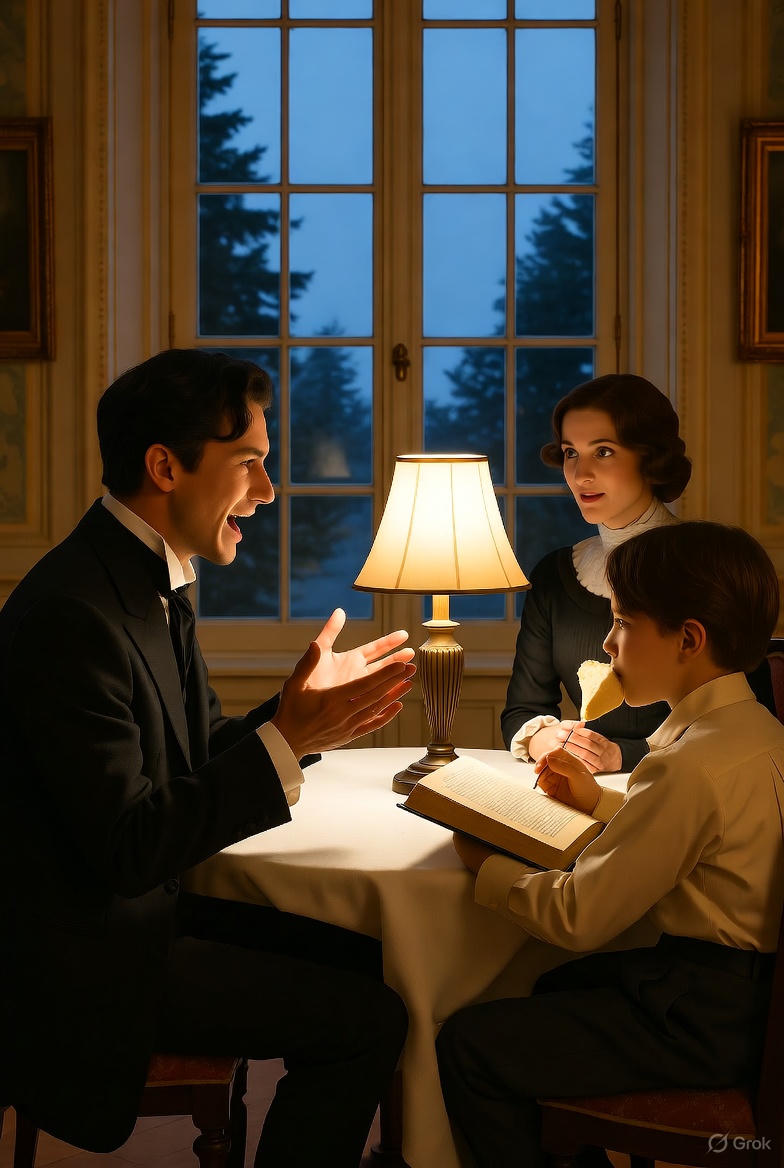





 Anarchistbanjo's World