Part III: Concerning the Laws and Vital Conditions of the Hermetic Experiment
Chapter 1: The Experimental Method and Fermentation, Part 4
Introduction: The Hermetic art transforms the soul through a dynamic interplay of reason and wisdom, purifying its essence to unite with the divine. This section explores the alchemical process of balancing active and passive intellects, symbolized as the Sun and Moon, to awaken divine light within.
The Transformative Power of Reason
Alchemists teach that reason, when purified, becomes the soul’s guiding light, overcoming the illusions of passion and fantasy. As Plotinus suggests, one begins with a “portion of gold”—a spark of divine intellect—that grows through patient purification. Anaxagoras describes this intellect as infinite and pure, separating opposites (dense from rare, hot from cold) to create harmony. This “true Light,” the alchemical Sulphur, refines the soul’s raw essence, transforming it into a radiant vessel.
The soul’s journey, like Achilles’ triumph after Patroclus’ death, requires sacrificing the lower nature. Poetic myths—Hercules, Aeneas, Orpheus—symbolize this heroic will, dissolving sensory bonds to awaken divine virtue. Palingenius’ verse captures this: “Drown the youth in Stygian waters, dissolve his taint, and a golden spirit rises, perfecting all it touches.” This death and rebirth mirror the alchemical process, where the soul’s essence is reborn through purification.
The Sun and Moon of Alchemy
The Hermetic art balances the active intellect (Sun) and passive understanding (Moon) to achieve transformation. Hermes instructs, “Mortify two Argent vives together—the Sun’s radiant force and the Moon’s reflective wisdom—to create a unified spirit.” Plutarch notes, “The Moon reflects reason’s works, while the Sun’s strength overcomes all obstacles.” Synesius adds, “The lower eyes (senses) close when the higher eyes (intellect) see, alternating contemplation and action.”
This interplay, like Isis aiding Osiris, ensures the soul navigates chaos without succumbing to confusion. The Moon’s passive intelligence unravels obstacles, guiding the Sun’s active will to the divine source. As the Emerald Tablet declares, “That which is above is as that which is below,” uniting these forces creates a miraculous offspring—a soul refined into divine harmony.
The Heroic Will’s Triumph
The alchemical process requires a disciplined will, as seen in Aeneas’ quest for the golden bough or Hercules’ labors. The soul, guided by reason, overcomes the “turbulent waters” of sensory illusions, achieving a celestial state. Proclus explains, “The prophetic power unfolds truth, while the arrow-darting power subdues chaos, establishing unity.” This unified will, strengthened by wisdom, transforms the soul into a vessel of divine light, as Solomon’s proverb affirms: “Two are better than one, for their labor yields great reward.”
Closing: This section unveils the Hermetic art’s balance of active and passive intellects, purifying the soul to reveal divine light. The alchemical journey of fermentation deepens in our next post, unveiling further secrets of this sacred practice.
Homo Sapiens: In the Maelstrom by Stanislaw Przybyszewski and translated by Joe E Bandel
VI.
Falk listened to Olga with nervous unrest.
She told him dryly, almost businesslike, of her visit to Czerski.
“Czerski is a fantasist,” he finally said. “Everything whirls confused in his head. I believe he even wants to build Fourierist phalansteries… He, he, he… Bakunin has completely turned his head…” “I don’t believe he is a utopian,” Olga spoke dryly and coldly.
“His train of thought is a bit confused, but original, and, as I think, not without prospect of success.”
Falk looked at her from the side.
“So, so… Do you really believe that? For all I care… It is extraordinarily sympathetic to me that he collides with the bourgeois code of law… But tell me, what is between him and Kunicki?”
“Kunicki shot a Russian in a duel in Zurich two years ago.”
“In a duel?”
“Yes. Strange enough. Then Czerski slapped him in a meeting.”
“Why then?”
“Czerski said he slapped not Kunicki, but his violation of the supreme principle of the party.”
Falk laughed scornfully.
“Wonderful! And what did Kunicki say?”
“What should he do? He couldn’t murder Czerski after all.”
“Strange fanatic! But now he wants nothing more to do with the party?”
“No.”
Falk pondered long.
“My act is my being—isn’t that what he said? Hm, hm…” Olga looked at him searchingly.
“You, Falk, tell me, is it really serious with you about our cause?”
“Why do you ask that?” “Because I want to know.”
Olga seemed unusually irritated and excited.
“Because you want to know? Well, for all I care. I mean nothing with your cause. What do I have to do with a cause? Humanity?! Who is humanity, what is humanity? I only know who you are and my wife, and my friend, and one more, but humanity, humanity: I don’t know that. I have never had anything to do with that.”
“What do you mean by that you yourself wrote almost all the proclamations and leaflets, that you give your money for agitation, that you…”
He interrupted her violently.
“But I don’t do that for humanity’s sake. Oh, how naive you are… Don’t you understand that it gives me a mad pleasure to open the eyes of the people down there a little? Isn’t it an unheard-of pleasure to observe how the poor wage slave suddenly becomes seeing?… Well, I don’t need to enumerate to you what all the poor slave down there gets to know… He, he, he… Isn’t it glorious to see how such a slave develops under the influence of so much light? And this divine spectacle, how the rulers scream to heaven for revenge out of rage and fear and make anti-subversion laws!… Ha, ha, ha… Look here—here I have a wonderful list of the enormous losses the mines had in the last strike. I ruined my whole fortune, or better, my wife’s fortune in this strike, but for that this unheard-of satisfaction! The Theodosius mine went bankrupt, the Etruria can hardly hold on anymore… I know him, the owner, he has gone quite gray with worries, this disgusting labor-power usurer… He, he… Never have I had such an intense feeling of satisfaction as when I saw him sitting there… I ruined him, not because he concerns me or because I believe in your cause, only, merely only out of personal interest in this grandiose spectacle… He, he, the poor fellow screamed for military, he wanted to have all workers shot down like dogs, he threatened to overthrow the government, oh, that was infinitely grand to see. And for this to see, should I not give the last penny?”
He became quite hoarse with excitement.
Olga looked at him long, long and smiled painfully.
“How you deceive yourself! For you don’t want to deceive me, do you?”
He stopped astonished, suddenly laughed, but remained very serious in a moment.
“So you believe in nobler motives in me?” She did not answer.
“Do you believe that?” he asked violently. But she was silent.
“You must tell me!” He stamped his foot, but controlled himself instantly.
“No, I don’t believe,” she finally said calmly, “that you should find satisfaction in such petty, malicious revenge. You lie completely pointlessly. I know very well that you gave the money for the strike because the consortium paid out twenty-five percent dividend and at the same time typhus had broken out among the mine workers.”
“Those were secondary reasons.”
“No, no, that is not true. You have found a pleasure for some time in slandering and making yourself bad: Czerski said very well that you would go to prison with joy if you could only find atonement for your sins in it.”
“Ha, ha, ha… You are quite unusually sharp psychologists.” He laughed with a forced ugly laugh.
“So you believe in high-minded motives in me? Ha, ha, ha… Do you know why I sent Czerski the money?”
He suddenly stopped.
She looked at him pale and confused. “You lie!”
“Do you know why?”
She became unusually excited and jumped up. “Say that you lie!”
Falk sat down and stared at her. “Is it true?” she asked hoarsely.
She bent down over him and looked at him fixedly with wide-open eyes.
“Did you really want to get rid of him?”
“No!” he suddenly cried out. “You are not cowardly.”
“No!”
She breathed deeply and sat down again. They were silent long.
“What do you want to do now with Janina?”
Falk became very pale and looked at her startled. “Did Czerski tell you that too?”
“Yes.”
He let his head sink and stared at the floor.
“I will adopt the child,” he said after a long pause.
“It is terrible what a demon you have in you. Why must you make yourself and others unhappy? Why? You are a very unhappy person, Falk.”
“Do you think so?”
He threw it out distractedly, walked back and forth a few times and stopped before her.
“Did you not believe for a second that I wanted to get rid of Czerski out of cowardice?”
“No!”
He took her hand and kissed it. “I thank you,” he said dryly.
He began to walk up and down again. A long pause arose. “When will Czerski leave?”
“Tonight.”
He stopped before her.
“I believe in your love,” he said slowly. “I love your love. You are the only being in whose presence I am good…”
She stood up confused.
“Don’t speak of it, why speak of it?… Terrible things are before you now… If you need me…”
“Yes, yes, I will come to you when the storm is over.” “Come when nothing else remains for you.”
“Yes.”
She went.
Suddenly Falk ran after her.
“Where does Czerski live?” She gave him the address.
Alraune by Hanns Heinz Ewers and translated by Joe E Bandel
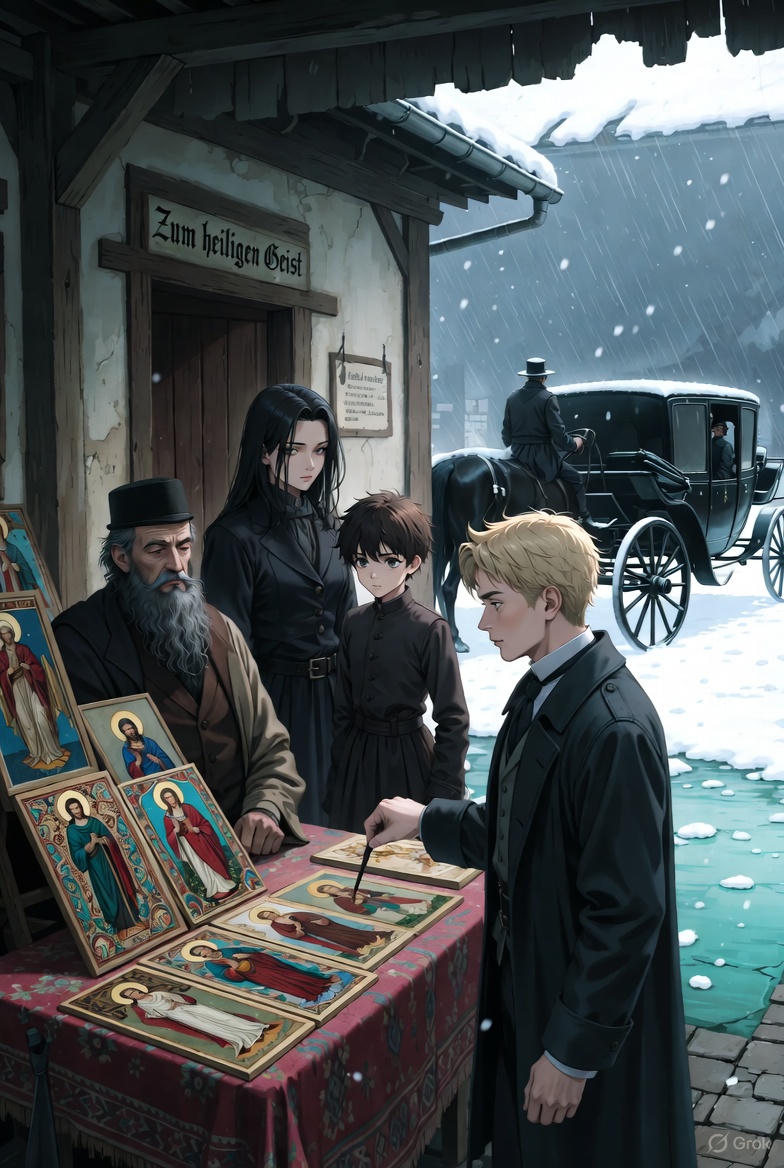
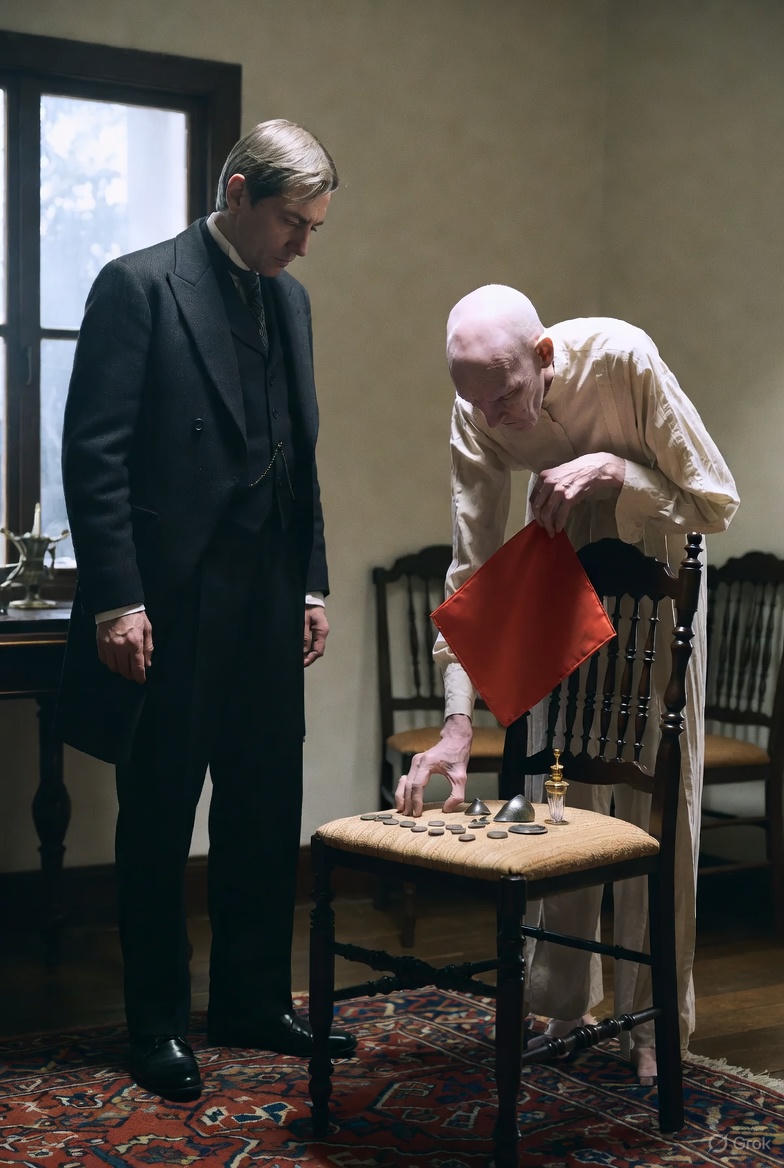
“There Brambach, for the road! But next time be a little smarter and do what I said. Now go into the kitchen and have some butter- bread and a glass of beer!” The invalid thanked him, happy enough that things had gone so well and he hobbled back across the court toward the kitchen. His Excellency snatched up the sweet tear vial, pulled a silk handkerchief out of his pocket and carefully cleaned it, viewing the fine violet glass from all sides. Then he opened the door and stepped back into the library where the curator from Nuremburg stood before a glass case. He walked up brandishing the vial in his upraised arm. “Look at this, dear doctor,” he began. “I have here a most unusual treasure! It belongs to the grave of Tullia, the sister of general Aulus. It is from the site at Schware-Rheindorf. I’ve already shown you several artifacts from there!” He handed him the vial and continued. “Can you tell me its point of origin?” The scholar took the glass, stepped to the window and adjusted his glasses. He asked for a loupe and a silk cloth. He wiped it and held the glass against the light turning it this way and that. Somewhat hesitatingly and not entirely certain he finally said, “Hmm, it appears to be of Syrian make, probably from the glass factory at Palmyra.” “Bravo!” cried the Privy Councilor. I must certainly watch myself around you. You are an expert!” If the curator would have said it was from Agrigent or Munda he would have responded with equal enthusiasm. “Now doctor, what time period is it from?” The curator raised the vial one more time. “Second century,” he said. “First half.” This time his voice rang with confidence. “I give you my compliments,” confirmed the Privy Councilor. “I didn’t believe anyone could make such a quick and accurate determination!” “Except yourself naturally, your Excellency,” replied the scholar flatteringly. But the professor replied modestly, “You over estimate my knowledge considerably Herr Doctor. I have spent no less than eight days of hard work trying to make a determination with complete certainty. I have gone through a lot of books. But I have no regrets. It is a rare and beautiful piece–has cost me enough too. The fellow that found it made a small fortune with it.” “I would really like to have it for my museum,” declared the director. “What do you want for it?” “For Nuremburg, only five thousand Marks,” answered the professor. “You know that I offer all German museums specially reduced prices. Next week two gentlemen are coming here from London. I will offer them eight thousand and will certainly get it!” “But your Excellency,” responded the scholar. “Five thousand Marks! You know very well that I can’t pay such a price! That is beyond my authorization.” The Privy Councilor said, “I’m really very sorry, but I can’t give the vial away for any less.” The Herr from Nuremburg weighed the little glass in his hand. “It is a charming tear vial and I am inordinately fond of it. I will give you three thousand, your Excellency.” The Privy Councilor said, “No, nothing less than five thousand! But I tell you what Herr Director. Since that tear vial pleases you so much, permit me to give it to you as a personal gift. Keep it as a memento of your accurate determination.” “I thank you, your Excellency. I thank you!” cried the curator. He stood up and shook the Councilor’s hand very hard. “But I am not permitted to accept any gifts in my position. Forgive me then if I must refuse. Anyway, I have decided to pay your price. We must keep this piece in the Fatherland and not permit it to go to England.” He went to the writing desk and wrote out his check. But before he left the Privy Councilor talked him into buying the other less interesting pieces–from the grave of Tullia, the sister of general Aulus. The professor ordered the horses ready for his guest and escorted him out to his carriage. As he came back across the court he saw Wölfchen and Alraune standing by the peddler who was showing them his colored images of the Saints. After a meal and some drink old Brambach had recovered some of his courage, had even sold the cook a rosary that he claimed had been blessed by the Bishop. That was why it cost thirty pennies more than the others did. That had all loosened his tongue, which just an hour before had been so timid. He steeled his heart and limped up to the Privy Councilor. “Herr Professor,” he pleaded. “Buy the children a pretty picture of St. Joseph!” His Excellency was in a good mood so he replied, “St. Joseph? No, but do you have one of St. John of Nepomuk?” No, Brambach didn’t have one of him. He had one of St. Anthony though, St. John, St. Thomas and St. Jakob. But unfortunately none of Nepomuk and once again he had to be upbraided for not knowing his business. In Lendenich you could only sell St. John of Nepomuk, none of the other saints. The peddler took it hard but made one last attempt. “A raffle ticket, Herr Professor! Take a raffle ticket for the restoration of St. Lawrence’s church in Dülmen. It only costs one Mark and every buyer receives an indulgence of one hundred days. It says so right here!” He held the ticket under the Privy Councilor’s nose. “No,” said the professor. “We don’t need any indulgences. We are protestant, that’s how we get to heaven and a person can’t win anything in a raffle anyway.” “What?” the peddler replied. “You can’t win? There are over three hundred prizes and the first prize is fifty thousand Marks in cash! It says so right here!” He pointed with a dirty finger to the raffle ticket. The professor took the ticket out of his hand and examined it. “You old ass!” he laughed. “And here it says there are five hundred thousand tickets! Calculate for yourself how many chances you have of winning that!” He turned to go but the invalid limped after him holding onto his coat. “Try it anyway professor,” he begged. “We need to live too!” “No,” cried the Privy Councilor. Still the peddler wouldn’t give up. “I have a feeling that you are going to win!” “You always have that feeling!” said the Privy Councilor. “Let the little one choose a ticket, she brings luck!” insisted Brambach. That stopped the professor. “I will do it,” he murmured. “Come over here Alraune!” he cried. “Choose a ticket.” The child skipped up. The invalid carefully made a fan out of his tickets and held them in front of her. “Close your eyes,” he commanded. “Now, pick one.” Alraune drew a ticket and gave it to the Privy Councilor. He considered for a moment and then waved the boy over. “You choose one too, Wölfchen,” he said. In the leather volume his Excellency ten Brinken reports that he won fifty thousand Marks in the Dülmen church raffle. Unfortunately he could not be certain whether Alraune or Wölfchen had selected the winning ticket. He had put them both together in his desk without writing the names of the children on them. Still he scarcely had any doubt that it must have been Alraune’s. As for the rest, he mentions how grateful he was to old Brambach who almost forced him to bring this money into the house. He gave him five Marks and set things up with the local relief fund for aged and disabled veterans so that he would receive a regular pension of thirty Marks per year.
Madame Bluebeard by Karl Hans Strobl and translated by Joe E Bandel
Tenth Chapter Lorenz returned from his leave two days later. He’d been in Vienna but, having said he was going to Linz, he traveled a few stations past Hadersdorf, then returned on the Linz train to connect with the Kamptal line. One couldn’t be too cautious. Ruprecht showed no trace of suspicion, but that treacherous Indian’s menacing silence made him unapproachable. As Lorenz reached the castle, Maurerwenzel was crossing the courtyard. In his blue apron, he moved with deliberate care, each step proving he was at work. Maurerwenzel had two gaits, starkly different. For work, he used “the slow”; for the tavern after, “the swift.” A Social Democrat, he knew his labor’s worth and his duty to the union, refusing to sell himself cheaply to capital. “What’s up, Wenzel?” Lorenz asked, in the affable tone he used to charm the “locals.” Maurerwenzel spat—a punctuation mark before speaking. “I’m workin’,” he said, with emphasis befitting the event’s gravity. “What’s to do?” Lorenz laced his words with a hint of dialect when speaking to the “locals,” just enough to signal condescension. Maurerwenzel squinted at the valet from under his cap’s brim. “The castle’s got a hole,” he said. “Water’s got to the wine…” “How so?” “’Cause the castle’s got a hole… Old castles don’t hold up no more… Foundations wobble… aye, my friend, that’s how it is… New times do that…” The lofty symbolism of his words was a balm to Maurerwenzel. Lorenz stared, alarmed. Maurerwenzel squinted back. “So, water’s in the cellar—” “Aye… come see the mess yerself.” With a swaying stride, Maurerwenzel led Lorenz across the courtyard, through the gate, and around the outer wall to the castle’s rear. Here, the hillside rose steeply, furrowed by rivulets exposing clay. Between the slope and the castle’s towering wall, a streambed had formed over time, channeling the rivulets. Spring rains, autumn deluges, and summer storms had battered the ancient walls for centuries. Now, water gurgled and churned in cracks and the streambed. Meltwater rushed toward the Kamp. Maurerwenzel had dammed the stream slightly above the damaged spot. “See, here’s the hole,” he said. A gap yawned between the castle wall’s stones, its edges worn smooth, showing years of water’s work. “And nothin’ happened in the cellar…?” “Don’t fret, plenty o’ wine’s left. Water went out another hole.” Lorenz insisted on checking himself, unease creeping in, though he couldn’t pinpoint why. He disliked outsiders poking around the castle, sniffing in every corner. Inspecting the cellar damage, he found water had cleared a path to unknown chambers. A jolt hit him. He set to exploring thoroughly. After half an hour, he returned, his lantern trembling, struggling to lock the wooden gate. He rushed to Frau Helmina, relieved to find her alone. He couldn’t hide his agitation. “Lucky I came back so soon,” he said. “What now? You’re always rattled lately. Enjoy scaring me?” Helmina was peevish, soured by a letter from her Vienna lawyer with bad news about her lawsuit. “I feel something closing in. It’s in my bones.” Lorenz wiped cold sweat from his brow and sank heavily into a delicate Rococo chair. “You, of course… sitting up here, caring for nothing… if I don’t keep watch! Since that botched job, I’ve had no peace. Leave the house once, and trouble strikes. Water’s flooded the wine cellar…” “I know, a terrible tragedy,” Helmina said mockingly. “Yes… a calamity. If nothing worse happened, it’s a miracle. The water opened a way to another cellar, then more beyond… down to the tower… and through a hole in the wall, you can see inside…” Helmina paled, setting down her nail file. “You can see…?” “Now it hits you. This wretched nest is riddled like a molehill… I knew nothing of it…” “So long as no one else does,” Helmina said, picking up the file. “Only you go to the wine cellar.” “That’s just it,” Lorenz snapped, furious. “I shouldn’t have let the key out of my hand. That Indian, Jana, I don’t trust… he fetched wine the day before yesterday.” Fear leapt at Helmina, lodging in her neck. She stared wide-eyed at Lorenz. “He found the damage… we don’t know if he saw more… if he went further…” “No,” Helmina said, regaining composure. “He surely saw nothing.” “You know that, of course!” Lorenz scoffed. “Hand me a cognac… my stomach’s knotting… quick…” He leaned back, breathing deeply. As Helmina poured, he muttered, “You know… sure, you always know exactly.” “I don’t know,” Helmina said humbly. “But I’m certain. If Jana had noticed anything, he’d have told Ruprecht… and if Ruprecht knew, I’d have sensed it. He can’t hide that well.” “I don’t bank on such guesses. You’re already sunk when you rely on that.” Helmina gazed thoughtfully. “Even if he knows…” she said slowly, “I doubt he’d… no, we can be calm either way.” “Oh, really?” Lorenz drawled mockingly. He slapped his knees, dust puffing into the sunlight. “No, my dear, this must end. It can’t go on. Anton says so too… and he wants you in Vienna. To discuss everything. Not at his office, but his apartment…” A door slammed somewhere. Children’s laughter rang clear. “Fine,” Helmina said quickly. “Get up… I’ll go to Vienna. I need to see my lawyer anyway…” When the children, trailed by Miss Nelson, entered, Lorenz stood rigid before Mama, receiving orders to pack the small suitcase for a Vienna trip in two days. When Helmina visited her lawyer about the lawsuit, she preferred not to discuss it much with Ruprecht. A brief hint sufficed. He disliked the matter. The inheritance dispute irked him. Seeing Rotbirnbach’s roofs on his field rides sparked annoyance. But Helmina was unyielding. Dr. Weinberger only confirmed his letter’s grim news. No stubbornness would help. They were losing, forced to retreat, yielding ground after ground. Helmina blazed with fury. Her silk skirts crackled ominously as she stormed to her carriage outside the lawyer’s office. An electric tension surrounded her, ready to spark words like lightning. Driving from central Vienna to Hernals, she tore her batiste handkerchief to shreds. The city’s monumental buildings and streets slid past, closing behind the carriage. Plainer districts’ unadorned houses loomed ahead. Her mood didn’t improve when, alighting, her skirt’s trim caught, tearing a piece off. With a furious glare at the coachman, she crackled into Sykora’s doorway. The Fortuna chief’s apartment, on the first floor, was adorned with trust-inspiring items: ornate-framed certificates, diplomas, badges from pious and charitable societies, group photos from festivals, and pictures of happy couples thanking their matchmaker. Rare clients received here must have felt in the home of a humanitarian benefactor. Sykora awaited Helmina on the sofa beneath a large oil print of Mariazell’s Church of Grace. “It’s outrageous,” Helmina said after a curt greeting, “unbelievable—I’m going to lose my lawsuit.” “I never had much faith in it,” Sykora replied calmly. “So I’ve toiled for nothing,” Helmina raged. “It was no small effort to maneuver Baron Kestelli into it… I had to painstakingly convince him it was his revenge… and now I’m to be cheated!” Anton Sykora drummed thoughtfully, savoring the moment, on the table. “It’s no disaster! Think it through. What’s Rotbirnbach to you? What would you do with that castle? You say yourself it needs heaps of money to make it profitable. What’s the gain? Don’t be stubborn, Helmi! Let Rotbirnbach go. Besides, you won’t have time to turn it around. Drop false ambitions. Let’s be practical. We must wrap things up here.” “Lorenz said the same,” Helmina retorted mulishly. “He doesn’t even know how urgent it’s become. Today, Diamant pestered me again. The creep’s getting nastier. His hints are clearer. Seems he’s got dirt on us. We weren’t careful enough. He mentioned wealthy foreigners who used our services with little luck. What else could that mean but he suspects…? Short and sweet, he’s starting to threaten. Maybe he wants in as a partner… we have to leave. Your business needs sorting fast.” Helmina fidgeted nervously with her purse, snapping it open and shut, each click a sharp pop. She had to tell Sykora what Lorenz feared. He listened, mouth agape. When she finished, his jaws clamped, chewing slowly. His eyebrows climbed his forehead. Sykora pondered. “Well, then,” he said, “Vorderschluder’s idyll must end, Helmi. Everything’s pushing to a close. I’m sorry to insist; Lorenz thinks it’ll be hard for you…” Helmina glared venomously. “I won’t take blame. You know it’s not my fault this idyll isn’t over.” “Yes, yes… I know,” Sykora soothed genially. “You mean… there’s no immediate danger… well! Maybe your husband’s shrewder than you think.” Helmina laughed scornfully, twisting her purse’s chain around her finger. “Anyway… that Malay’s a problem. He’s got to go.” Shrugging, she looked past Sykora out the window. Across the street, a young girl leaned out, laughing at someone below. Helmina seethed, hating her. “Do what you must,” she said. “Well… if you won’t pitch in, send Lorenz to me. We’ll sort it out. But soon, hear me… as soon as possible…” “Yes… yes!” “Then we’re square…” Sykora said, rising massively from his seat. “Staying in Vienna tonight? I’ve a nice box for Ronacher. Come! No one’ll see you…” “No, thanks… I’m heading home this afternoon.” “As you wish. Servus, Helmi. Keep your eyes open! Send Lorenz right away.” Chuckling, he escorted her to the door. Helmina needed no pretext. She truly left for home that afternoon. As her carriage rounded the last forest bend on the high plain, the castle in view, the horses suddenly shied, snorting and rearing. A man had burst from the thicket, leaping clumsily over the roadside ditch. He landed, arms and legs flailing, right before the horses. The coachman cursed, bracing back on his seat. The stranger, seeing his blunder, grew flustered. He doffed his brown travel cap, stammering something drowned by the coachman’s oaths. Helmina eyed him with an irked smile. He was buttoned into a tight yellow overcoat, creases straining at the buttons, his arms curving outward as if stuffed in sausage casing. His upturned collar framed a clean-shaven face, blue eyes wide with dismay, humbly begging pardon. He stood on sturdy, boxy American boots. Even without his gray umbrella, Helmina wouldn’t have doubted he was a schoolman. The horses pulled forward. The stranger, cap still off, pleaded forgiveness from the roadside. As the carriage moved, Helmina gave him a fleeting nod. The bold leaper watched her go. So, that was Frau Helmina von Boschan. He whistled through his teeth. She lived up to her fame as a beauty. His expression shifted. Humility gave way to a hard, resolute will; his flustered blue eyes turned cold, clear, gray. The carriage dipped into the river valley, winding through the road’s final turns.
Part III: Concerning the Laws and Vital Conditions of the Hermetic Experiment
Chapter 1: The Experimental Method and Fermentation, Part 3
Introduction: The Hermetic art transforms the soul by harnessing reason to purify its vital essence, revealing divine wisdom. This section explores how alchemists, through disciplined inquiry, overcome illusions to awaken the soul’s radiant light, guided by ancient wisdom.
Reason as the Alchemical Key
Alchemists like Lully and Geber celebrate reason as the transformative force that purifies the soul’s essence, the “One Thing.” Just as reason governs passions in everyday life, it can elevate the soul’s chaotic impulses into divine light. Anaxagoras describes this intellect as infinite, pure, and all-knowing, unmixed with material forms, capable of separating the dense from the rare, hot from cold, to create harmony. This “Central Light,” called Wisdom or Sulphur, refines the soul’s raw spirit, much like the sun transforms earthly elements.
Unlike modern science, which studies external effects, alchemists sought the soul’s inner truth through rational experience. They warn against chasing fleeting illusions, as the soul’s “phantastic spirit” can lead to folly if unchecked. Reason, as a universal standard, aligns with divine faith, guiding the soul to its infinite source.
The Art of Separation
Paracelsus calls separation the “greatest miracle,” achieved through a magical intellect that penetrates the soul’s depths. The Emerald Tablet instructs, “Separate the earth from the fire, the subtle from the gross, gently, with sagacity.” This spiritual wind, not mechanical force, purifies the soul’s essence, freeing its “seed of gold” from imprisonment. Eirenaeus explains, “Our sulphur, trapped in the body, is released by our water, revealing the Third Menstrual—a radiant essence—through patient meditation and precise fire.”
This process, likened to Aeneas’ quest for the golden bough, requires a disciplined mind to navigate the soul’s chaos. Orpheus’ Argonautics urges entering the “Cave of Mercury” with wisdom, grasping the hidden essence that yields the Hermetic art’s true matter. Only a lover of wisdom can unlock this light, subduing illusions to achieve divine clarity.
The Heroic Journey
The alchemical journey mirrors heroic myths, where the soul sacrifices its lower nature to awaken divine virtue. Achilles, stirred by Patroclus’ death, dons radiant armor to triumph, symbolizing the soul’s fiery intellect overcoming chaos. Similarly, Aeneas’ rites for Misenus unlock the infernal path, reflecting the soul’s dissolution of sensory bonds. Palingenius’ poem captures this: “Drown the slippery youth in Stygian waters, dissolve his taint, and a spirit will rise, clad in gold, renewing all it touches.”
This “death” of the medial life—sensory illusions—ignites the soul’s heroic will, transforming it into a vessel of divine light, radiant and eternal, as poets and alchemists unite in their vision of truth.
Closing: This section reveals reason’s role in purifying the soul’s essence, transforming it into divine light through the Hermetic art. The journey into alchemical fermentation deepens in our next post, unveiling further secrets of this sacred practice.
Tobal thought back to Crow’s initiation, which had just taken place a couple of hours ago. The bonfire’s heat still warmed his memory as the line was forming for entrance. Misty and the High Priest were casting the circle. Ellen was standing as a guard at the circle’s entrance. She motioned for Tobal to come closer.
“Meet me after circle,” she said. “We’ve got some things we need to talk about.”
“Can Rafe come too?” He asked.
She considered and then nodded, “He probably already knows more than I do doesn’t he?”
Tobal nodded and chuckled, “I’ll tell him. We’ll see you later then.”
Together Tobal and Sarah found Fiona, Becca and Nikki and sat with them. They chatted and were telling stories about newbies. They were excited and impressed that Sarah was going to train a newbie in the middle of the winter. They watched as the newbies were initiated.
Later Tobal was introduced to each of the new initiates by Crow, who had just been initiated a couple of hours ago. Ellen had seen both him and Crow with the Lord and Lady above the bonfire during his initiation, and she was certainly going to be asking him about that. Having already astral projected to the cave with Ron, Rachel, and Arthur, Crow was excited to share his version of what they had revealed during the initiation—the cave’s altar pulsed as Rachel spoke—and Crow was eager to talk about it. Tobal urged him to wait till later when they were alone and could talk more quietly and respectfully. Crow agreed, but Tobal could see he was extremely excited.
He tried to speak alone with Fiona and Becca but they were so busy chatting with the others that he gave up in frustration. He wanted to know the two girls better but always seemed to be in the wrong place at the wrong time. He really enjoyed the few trips they had made to sanctuary together. It seemed with all the partnering going on he was feeling lonely and left out much of the time. It didn’t help that much of this was his own personal choice.
Zee and Kevin were planning on spending the winter together. Their newbies were soloing and being kicked out of the nest. They would probably end up partnering with one of the other newly soloed Apprentices. No one really liked spending the long winter months alone if they could help it. It was an added bonus if romance was involved. Still, spending the winter with a romantic partner had its own drawbacks and many such partnerships did not last till spring. Still not very many wanted to train during the winter either. Perhaps the most common was partnering with friends or newbies during the winter.
The next place he headed was over to the beer barrel for some brew. Butch and Mike were talking with Rafe.
“Mike and I were thinking about holing up for the rest of the winter but we really don’t know where the best place is,” Butch was saying. “We have a few places we want to check out. Someone already claimed the one we were planning to use. They chased us out of there, let me tell you.” He laughed.
“Hey you guys can live in my old base camp for the winter if you want to,” Rafe said. “I’m not living there anymore and spending most of my time either at circle or the Journeyman camp. I have most of my things out of there that I need.”
“Are you sure?” Mike asked eagerly. Rafe was legendary and his camp must be a pretty sweet setup where ever it was.”
“It’s fine,” he said. “Consider it yours. Does either of you know where it is? I didn’t think so. Bring a map and I’ll mark it for you. If you have any trouble finding it Tobal or one of the girls can help you.”
He looked at Tobal and grinned.
“I’m just giving away my campsite to these guys,” he grinned mischievously. “That is if they can find it. The Journeyman degree is so different I don’t need a base camp for the winter.”
“We’ll check it out first thing Rafe,” Butch grinned back. “We’ll find it if it takes us all week.” Then he and Mike left toward the circle with their fresh brews in their hands.
Tobal nodded at Dirk.
“You guys working here now?”
“Yes,” Dirk grinned evilly. “We’re the beer meisters now.”
“What’s that mean?” Tobal asked cautiously.
“We were taken off wood duty and now we make sure no one runs out of beer. Rafe interrupted, “See this beer,” he held up a foamy mug of beer. “This beer is four months old. Beer tastes best when it is four months old. The beer we make won’t be ready until March or April sometime.” He grinned evilly.
“That means we can experiment with the recipe a bit and have some fun with it.” Dirk added, “We’ve got to brew the beer and keep it from freezing so we will be spending the next two months right here. We go through three or four barrels every month at circle. Last month we went through twelve because there were three days of feasting. That used up our reserves.”
“That means we’ve got to work harder than ever,” Rafe said gloomily. Then he brightened up, “That’s why we are going to have some fun with this. I’ve already got some special ingredients in mind.”
Tobal knew there were times when the beer had been absolutely nasty and undrinkable. “I hope you don’t make some of that real nasty stuff that gives people the runs like it did last July.”
Rafe grinned. “We aren’t planning to be around drinking it. We should both be getting our Masters initiation by then. I hear the medics have some real good stuff and they even make some brandy.”
“You’re not serious?” Tobal gasped in horror at the thought. You wouldn’t do that to us would you?” He pleaded with them. Rafe and Dirk were laughing hard now.
“You wait and see,” was all either of them would say.
They talked more about the art of brewing beer in the wilderness. The real issue was getting enough sugar to ferment into alcohol. The sugar content came from boiling maple syrup down into maple sugar in the spring. There were only about three weeks when the sap really flowed and the entire Journeyman community helped in boiling it down.
It was not uncommon to see air sleds carrying buckets of maple sap. The medics even provided plastic buckets with lids from used hospital supplies to be used for barrels and also provided the yeast. The other ingredients were left up to the imagination of the brew miester although the basic recipe was expected to be followed fairly closely. The maple syrup was kept in the same location as the beer and not allowed to freeze.
Tobal shuddered to think of what those two would come up with. Best to enjoy the beer they were serving today which was rich and tasty. He told Rafe he would talk with him sometime later after circle and they could both meet with Ellen to see what she had found out about the rogue attacks. Then he went off looking for the others.
There was no sign of Tara and Nick. Tobal guessed they were snowed in and making the best of it. The weather was bitter cold and the three-day travel to circle was something only the brave or desperate would willingly tackle. Tobal came because it was his social connection to the others, a time to forget his own troubles, celebrate and have some fun with others.
He found Sarah over by the cooking pits slicing off choice pieces of roast and getting some stew. The stew was the main way the clan had vegetables in the winter and everyone contributed from their own stores.
His own stomach started to rumble. “Is the stew any good?”
She glanced at him, “Oh, hi Tobal. Yes, the stew and roast is excellent. Grab a bowl.”
Tobal grabbed one of the large wooden bowls that were stacked nearby and went over to the roast first. He cut several chunks of meat off the roast and filled the bowl to the top with stew. Then he grabbed a wooden spoon and tasted it. She was right. It was delicious.
“Did you get your winter camp setup all right?” He asked her between spoonfuls.
“Butch and Mike helped me get things together and it’s really great! I’m so glad they were able to help because it was a lot of work. Did you hear they are going to get Rafe’s old base camp?”
“Yes, I heard they were going to check it out anyway,” he chuckled, “That is if they can find it. Rafe’s camp is hard to find.”
“I know, that’s what I told them too,” she said. “I had a hard time finding Rafe’s camp the first time I was there. You remember don’t you? It was when I was training with you and we needed to go there and get your old winter supplies. We went together.”
“Oh, that’s right,” he smiled sheepishly. “I must be getting old. I completely forgot about that. We did have some fun and some good times. I bet you miss your father though.”
“It’s kind of surprising but I really don’t miss him that much. In fact there are times I feel he is right here checking up on me. It’s like I can see him with my mind’s eye. I know he’s not really there but part of him is and it helps me.” She started crying and Tobal put his arms around her and comforted her. Finally she stopped and wiped her eyes and nose.
“Sorry about that,” she sniffled. “I guess I miss him more than I thought I did.”
“That’s alright,” he said. “Maybe I shouldn’t have brought it up.” He changed the subject, “Now that your base camp is ready are you going to partner up for the winter?”
“Actually,” she said, “I’m going to try for my first newbie and see how it goes.”
“Really?”
Tobal was both surprised and pleased that she would try her first newbie during the hardest time of the year. She did have a nice base camp though and plenty of game in the area. She also had enough furs to get her newbie protected from the elements until they could manufacture their own.
“That’s great!” He gave her a big hug and a kiss. “Let me know if you need anything.”
She said she would and they finished their meal chatting about other things. She was happy and in much better health than she had been at the store. Tobal could tell she was thriving out here being around people her own age.
Together they washed the bowls and spoons so others could use them and went over to change into robes for circle.
It was during the party and after the initiations that Tobal, Rafe, and Ellen got together and compared notes.
“I want to check it out myself,” Rafe was telling them both.
“It’s not a good time right now,” Ellen said. “The snow will make it easy to track you to the location and it will no longer be secret. The ice in the pool and the coldness of the water also make it very dangerous. Tobal was lucky he was able to find warm clothes and get a torch going for warmth. He might have died from hypothermia.”
“She’s right Rafe,” he said. “I was lucky to get out of there alive. I hate to think what would have happened if I hadn’t gotten that fire going. Still, Crow and I have been astral projecting to the cave, and I’m itching to explore it with my own feet as soon as possible.”
Ellen continued, “I’ve been keeping a patrol over that area looking for rogues every couple of days. What is interesting is there always seems to be fresh tracks in the area around the lake but I never see anyone. I am convinced they are looking for some secret location they know is there but can’t find. They are looking for the location you found Tobal.” She looked at him with a piercing stare. “There is something very important about that location. Are you sure you have told me everything?”
She tried to be polite, but both Tobal and Rafe knew she was serious and she knew they were withholding information from her. They looked at each other and Tobal shrugged uneasily.
“This gets weird.” He said a bit lamely.
Ellen was looking at him with a let’s get this over with expression. He considered and then gave in. Ellen was someone he trusted even if he didn’t know her that well. He had no reason to believe she would turn him in or cause him harm. She had already been very helpful to him.
“It’s all confused.” He began. “It involves my uncle who used to be the Federation Officer here. He was in charge of the classified work my parents were doing. It involves Sarah’s father who has a very strange shop in Old Seattle.
That’s not all,” he said resignedly. “It also involves Crow’s grandfather, a shaman named Howling Wolf from the local village and the mass murder of all the people living at the old gathering spot by the waterfall. These deaths include my own parents, Crow’s parents, Sarah’s mother and two brother’s that she doesn’t even know she has. Although there is increasing evidence that my own parents are still alive and held prisoner by the Federation. Then there is Arthur, an AI who guards the secret location and controls the force field that surrounds it.”
“Damn,” Rafe whispered in stunned shock. “Why didn’t you tell me any of this?”
Ellen gradually regained her own composure and echoed Rafe’s question, “Why didn’t you tell me any of this?”
“I’ve only just learned about some of it myself,” Tobal said. “I’m still training Crow and didn’t know he was Howling Wolf’s grandson until he told me. We’ve been astral projecting to the cave and met Ron, Rachel, and Arthur, but we’re eager to explore it physically when it’s safer.”
“So that is why you and Crow appeared above the bonfire with the Lord and Lady? Is there anything else you are not telling me,” Ellen persisted. “Do you have any proof what you are saying is true?”
Again Tobal and Rafe looked at each other. Tobal sighed and stood up. “You’d better follow me. We’ll go for a walk and I’ll show you.”
As they walked into the moonlit woods they retraced the steps back to where Tobal had demonstrated the wand to Rafe last month. He showed Ellen the same demonstration he had shown Rafe. There was pure silence as she touched the second hole in the boulder and looked at the steaming circle that seconds ago had been frozen and snow covered. With luck it would be frozen and snow covered again by morning if the wind kept up.
“Let’s go back,” was all she said. The snow crunched eerily under their boots as they made their way back to the fire circle.
“I’m sorry I didn’t tell you about the wand before,” Tobal said nervously. “I wanted a chance to examine it first. Everything was so rushed and the rogues were tracing me somehow. Then last circle I tried to meet with you and wasn’t able to.” He stopped as she waved a weary hand to silence him.
“We can be pretty certain the rogues are able to monitor any of us that are wearing med-alert bracelets,” she said finally. “That’s why we never see any of them. They know we are coming and hide. We can also be pretty sure they are from the same mountain complex we use as our own base.”
Tobal and Rafe looked at each other in puzzlement. Ellen noticed and continued.
“Just like the Journeymen and the Apprentices, the Masters or medics have a secret meeting place. Ours is part of a mountain complex we thought belonged to the city. I am now thinking it is part of a classified Federation military operation of some type. We are only allowed access to the emergency room in the hospital and one wing where we have our own personal quarters and do rituals. I suppose it makes things much easier for them to keep an eye on us when we live right there with them.”
She looked at Rafe, “I’ve told Tobal this already. The area around the lake by the waterfall and several other locations including the village are forbidden and we have orders to prevent people from going there.”
“I didn’t realize Crow came from the other village,” she said. “That might complicate things if he ever decides to go back and visit.”
She put her hands on her temples rubbing them as if she had a massive migraine coming on. “Let’s just leave it like this for now,” she said at last. “We can talk about it later next month. I really need to think about what you have told me and shown me. This sounds like something very dangerous to be mixed up in.”
Rafe interrupted, “Can you mark on my map those other forbidden places? I might not be able to check them out but I would like to know where they are.”
Ellen stared intently at Rafe a few minutes and then nodded, “Most of them are not accessible on foot though so it won’t do you any good. Bring me your map and I will mark it later.”
“And you,” she turned to Tobal, “What are you planning to do with that device you found? Have you thought about that? It is not safe to have it around or to carry it with you.”
“I’d like to think about it for another month,” he said thoughtfully. “I know I can’t keep it after I’m a Journeyman because I won’t have a good place to hide it. I’ll let you know soon.”
The three of them had a lot on their minds as they broke up the meeting and went back to join the others at the drumming circle. Tobal felt thirsty and went looking for fresh brew and light conversation. Later he even joined in with the dancing although he kept his robe on. So did many of the others as the wind was chill and it was several degrees below zero.
He and Crow said their good-byes and left the circle early the next morning right after the group meditation with the usual hugs and kisses to the girls. A faint cave echo lingered during the meditation. The days were getting shorter and there was only six hours of light for useful travel. As they snowshoed their way back to Tobal’s winter camp they talked about Crow’s initiation and his conversations with the Lord and Lady.
“They are worried about you,” Crow said to Tobal suddenly.
“Who is worried about me? What are you talking about?”
The Lord and Lady, they are worried about you. They say that you need a soul retrieval. An important part of your soul is missing.
“What is a soul retrieval?”
“That is when a shaman goes on a soul journey and brings back a part of someone’s soul that has been missing or stolen. My grandfather trained me in the spirit journey method and I can do this for you. The Lord and Lady want me to do this for you. Having astral projected to the cave with them, I’ve felt their guidance, but I’d love to stand there in person. You will let me do this won’t you?” He implored looking searchingly at Tobal.
Tobal was a bit uncomfortable talking about things he didn’t understand. “I need to think about it ok? What else did the Lord and Lady have to say?”
Crow was very excited, “They told me to tell you they are still alive! They are very weak and not in good health but they are alive. They are trapped somewhere and can’t free themselves. They use the energy generated by the circle and by the cave to communicate with us. Not many can see or hear them though. Usually it is only the High Priest and High Priestess that can see them or hear them.
“I have never heard them or felt them so strongly,” he told Tobal with tears in his eyes. “We do not have circle like this at our village. Our circle is different and they don’t come to us as strongly. They showed me my parents again, Tobal. They let me speak with my parents again.”
“But I thought your parents were dead,” Tobal asked slowly?
“They are in the Summerland,” Crow replied. It is where the spirit goes after the physical body dies. My parents are happy there but they miss my sister and me. They told me there is danger for all of us coming soon and we must be prepared. The Lord and Lady will help us if they can but we must learn how to talk to them and listen to what they have to say. I need to teach you and your friends the ways of the shaman so you are ready when the time comes.”
Tobal didn’t know what to say. The thought that his parents might still be alive seemed more and more certain since they were talking with him as well. It still stunned him that his parents were the Lord and Lady and that Crow was able to carry on conversations not only with them, but with Crow’s own dead parents as well. He felt them now, the Lord and Lady, at the back of his mind urging him to believe. Oh, how he wanted to believe but did he dare? Having visited them astrally in the cave, he longed to see them physically, but these thoughts troubled him as they made their journey home through the bitter cold and snow. The only time he saw them in happy visions was during circle or his visits to the cave. Shadows of chains flickered in all his other contacts and visions of them, nightmarish and haunting.
He spent the second month with Crow gaining advanced knowledge in the art of survival and craftsmanship. Crow had grown up in a community that lived a primitive life close to nature. His training had went beyond simple survival into quality of life areas such as art and decorative clothing and functional tools such as hand axes made of flint with razor edges and the knowledge of how to sharpen them. There were fun things too such as games, drums, whistles, flutes and other items carved from wood.
In the evenings he worked on the small carvings he intended to give to his friends at Yule. He also very much improved the look of his wardrobe seeking to match the stylish clothing Crow created so easily from the leathers and furs they had caught over the past two months.
Mostly though, in the evening he listened to the stories of the old ones and of the Lord and Lady of the Oak. They both astral projected to the cave and were taught by his parents and by Arthur. They taught them both things and protected them in the wilderness. Crow said they also talked with his grandfather. His grandfather knew Arthur and knew his parents were still alive but it was not time to free them yet. They had to wait for Lucas and Carla. A glimpse of a fiery realm flickered during one projection.
Tobal asked questions and tried to make sense of as much of it as he could. Crow offered to teach him special meditations that would prepare him for the time when the Lord and Lady would talk with him also. Having already astral projected to the cave, Tobal accepted gladly and each night they would practice astral projecting to the other realms and other shaman practices Crow felt were important.
“The soul has many parts.” Crow told him one evening. “The soul was divided into 120 fragments and scattered through all nine realms. These are hidden and must be found. Each of these fragments must be strong and complete and full of energy before the soul can travel to the different realms. A surge of clarity hit me when I found one fragment.”
Howling Wolf, my grandfather, found and developed all the parts of his soul until he was filled solid and complete like a crystal. His soul was so hard and packed with energy it was like his physical body. It too could travel and he could be in two places at the same time. The Lord and Lady called this bi-location and wanted to learn it from grandfather.
Grandfather told them it was an ancient mystery of shaman since the dawn of time. Grandfather knew about the sanctuary training program that your parents created and he approved of it. He said it helped to gather and develop all the missing soul fragments in the lower realms, but not the higher ones. He told your parents the soul could not travel until all of the parts were completed and filled with energy. That was why things were not working right for your parents in their research.
Grandfather offered to teach them the ways of the shaman to retrieve the higher missing soul fragments and they accepted. He came to them in secret and taught several of them and several other in the secret meeting place near the lake. Soon the Lord and Lady were more powerful than Howling Wolf. They were scientists and discovered ways to use machines to force even more energy into the soul and physical body than ever before. Then they were contacted by the Time Knights.”
Crow continued his story as Tobal listened in fascination.” Grandfather had only been able to bi-locate or spirit travel to the point where he could be in two places at once. His spirit body that traveled was made of energy so tightly packed and compressed that it could be seen and felt like a physical body. It was a physical body made completely of energy. When he traveled he used this physical body of energy and left his normal physical body at home sleeping.
“The Lord and Lady used machines to develop this process to the point where the actual physical body would disappear and appear some other place. Later at the secret meeting place they were able to take others with them on journeys to strange and wonderful places and bring things back with them. The Time Knights came and shared their own technology with Ron and Rachel.
“Grandfather says he still goes on journeys to some of those places he visited with the Lord and Lady. He has taken my sister to some of those places too but it is very secret and he says I am too young to go on such journeys yet.
Now my sister goes on journeys by herself without grandfather and he worries about her because the journeys are dangerous. He says my parents and the others at the lake were killed because they knew these things and that if the evil ones knew about us they would try to kill us as well.”
“There is a mighty secret hidden in the cave at the lake,” he said seriously to Tobal. “I can find it but you must explain it to me. That is what grandfather told me. Having visited it astrally with Ron, Rachel, and Arthur, we know it’s real, but I’d love to see it with my own eyes. We can go now if you want.”
“We can’t go now,” Tobal told him gently and pointed to the med-alert bracelets they both were wearing. “These bracelets let the medics and the evil ones know where we are at all times and we can’t take them off. If we take them off the medics will come looking to see what is wrong. If we don’t wear them we can’t become citizens of Heliopolis. You remember that is what your grandfather wanted you to do?” He asked.
” That area by the lake is forbidden and they don’t want us to go there. It is because of the great secret you are telling about.” He told Crow about his experience with the air sleds during his visit of the abandoned gathering spot the first time. When he told Crow about his second visit the boy’s eyes looked like burning coals as Tobal described the cave and the altar.
“That is the cave we visit in our astral journeys,” he said. “My grandfather goes to a cave much like the one you have described. But it is a secret and he has not told me its location. I am not old enough he says, although my sister has gone and she described it to me. It has the same symbol you speak of above the altar itself. Perhaps it is the same cave?”
“I don’t think so,” Tobal replied. “When I was in the cave it looked like no one had been there for many years.”
“I want to see the grave of my parents in person. Will you take me?” Crow asked Tobal suddenly.
“I have wanted to go back many times myself,” he said to Crow, ” but I am afraid it will not work in the winter time. I’ve spoken much about this with my friend Rafe and Ellen. They both believe it is very dangerous and we must wait until we are medics and have our own air sleds. Then we can work together and protect each other if needed. Having astral projected there, I’m eager to stand at their graves in person, but any other way seems too dangerous and likely that we will get caught. It is especially dangerous in the wintertime when the snow will give away our location and leave tracks. I will mark it on your map though so you know where it is.”
“Then let’s become medics,” Crow said determinedly. “Let’s learn the mysteries and ways of the evil ones so that we may defeat them.”
Tobal chuckled, “So we will, so we will. But now it’s time to get some sleep. Tomorrow is a busy day.”
Homo Sapiens: In the Maelstrom by Stanislaw Przybyszewski and translated by Joe E Bandel
VI.
Falk listened to Olga with nervous unrest.
She told him dryly, almost businesslike, of her visit to Czerski.
“Czerski is a fantasist,” he finally said. “Everything whirls confused in his head. I believe he even wants to build Fourierist phalansteries… He, he, he… Bakunin has completely turned his head…” “I don’t believe he is a utopian,” Olga spoke dryly and coldly.
“His train of thought is a bit confused, but original, and, as I think, not without prospect of success.”
Falk looked at her from the side.
“So, so… Do you really believe that? For all I care… It is extraordinarily sympathetic to me that he collides with the bourgeois code of law… But tell me, what is between him and Kunicki?”
“Kunicki shot a Russian in a duel in Zurich two years ago.”
“In a duel?”
“Yes. Strange enough. Then Czerski slapped him in a meeting.”
“Why then?”
“Czerski said he slapped not Kunicki, but his violation of the supreme principle of the party.”
Falk laughed scornfully.
“Wonderful! And what did Kunicki say?”
“What should he do? He couldn’t murder Czerski after all.”
“Strange fanatic! But now he wants nothing more to do with the party?”
“No.”
Falk pondered long.
“My act is my being—isn’t that what he said? Hm, hm…” Olga looked at him searchingly.
“You, Falk, tell me, is it really serious with you about our cause?”
“Why do you ask that?” “Because I want to know.”
Olga seemed unusually irritated and excited.
“Because you want to know? Well, for all I care. I mean nothing with your cause. What do I have to do with a cause? Humanity?! Who is humanity, what is humanity? I only know who you are and my wife, and my friend, and one more, but humanity, humanity: I don’t know that. I have never had anything to do with that.”
“What do you mean by that you yourself wrote almost all the proclamations and leaflets, that you give your money for agitation, that you…”
He interrupted her violently.
“But I don’t do that for humanity’s sake. Oh, how naive you are… Don’t you understand that it gives me a mad pleasure to open the eyes of the people down there a little? Isn’t it an unheard-of pleasure to observe how the poor wage slave suddenly becomes seeing?… Well, I don’t need to enumerate to you what all the poor slave down there gets to know… He, he, he… Isn’t it glorious to see how such a slave develops under the influence of so much light? And this divine spectacle, how the rulers scream to heaven for revenge out of rage and fear and make anti-subversion laws!… Ha, ha, ha… Look here—here I have a wonderful list of the enormous losses the mines had in the last strike. I ruined my whole fortune, or better, my wife’s fortune in this strike, but for that this unheard-of satisfaction! The Theodosius mine went bankrupt, the Etruria can hardly hold on anymore… I know him, the owner, he has gone quite gray with worries, this disgusting labor-power usurer… He, he… Never have I had such an intense feeling of satisfaction as when I saw him sitting there… I ruined him, not because he concerns me or because I believe in your cause, only, merely only out of personal interest in this grandiose spectacle… He, he, the poor fellow screamed for military, he wanted to have all workers shot down like dogs, he threatened to overthrow the government, oh, that was infinitely grand to see. And for this to see, should I not give the last penny?”
He became quite hoarse with excitement.
Olga looked at him long, long and smiled painfully.
“How you deceive yourself! But you don’t want to deceive me, do you?”
He stopped astonished, suddenly laughed, but remained very serious in a moment.
“So you believe in nobler motives in me?” She did not answer.
“Do you believe that?” he asked violently. But she was silent.
“You must tell me!” He stamped his foot, but controlled himself instantly.
“No, I don’t believe,” she finally said calmly, “that you should find satisfaction in such petty, malicious revenge. You lie completely pointlessly. I know very well that you gave the money for the strike because the consortium paid out twenty-five percent dividend and at the same time typhus had broken out among the mine workers.”
“Those were secondary reasons.”
“No, no, that is not true. You have found a pleasure for some time in slandering and making yourself bad: Czerski said very well that you would go to prison with joy if you could only find atonement for your sins in it.”
“Ha, ha, ha… You are quite unusually sharp psychologists.” He laughed with a forced ugly laugh.
“So you believe in high-minded motives in me? Ha, ha, ha… Do you know why I sent Czerski the money?”
He suddenly stopped.
She looked at him pale and confused. “You lie!”
“Do you know why?”
She became unusually excited and jumped up. “Say that you lie!”
Falk sat down and stared at her. “Is it true?” she asked hoarsely.
She bent down over him and looked at him fixedly with wide-open eyes.
“Did you really want to get rid of him?”
“No!” he suddenly cried out. “You are not cowardly.”
“No!”
She breathed deeply and sat down again. They were silent long.
“What do you want to do now with Janina?”
Falk became very pale and looked at her startled. “Did Czerski tell you that too?”
“Yes.”
He let his head sink and stared at the floor.
“I will adopt the child,” he said after a long pause.
“It is terrible what a demon you have in you. Why must you make yourself and others unhappy? Why? You are a very unhappy person, Falk.”
“Do you think so?”
He threw it out distractedly, walked back and forth a few times and stopped before her.
“Did you not believe for a second that I wanted to get rid of Czerski out of cowardice?”
“No!”
He took her hand and kissed it. “I thank you,” he said dryly.
He began to walk up and down again. A long pause arose. “When will Czerski leave?”
“Tonight.”
He stopped before her.
“I believe in your love,” he said slowly. “I love your love. You are the only being in whose presence I am good…”
She stood up confused.
“Don’t speak of it, why speak of it?… Terrible things are before you now… If you need me…”
“Yes, yes, I will come to you when the storm is over.” “Come when nothing else remains for you.”
“Yes.”
She went.
Suddenly Falk ran after her.
“Where does Czerski live?” She gave him the address.
Madame Bluebeard by Karl Hans Strobl and translated by Joe E Bandel
Ruprecht stood pensively in the dark, then climbed the stairs, where Jana waited at the top. Sleep was impossible. First, another glass of wine to calm himself. The news had shaken him. So much had surfaced—radiant youth, a blonde girl’s face… it gleamed like treasure unearthed from a barrow. One more glass… “You can go, Jana,” he said. But Jana stood in the room’s center, staring at his master. “What is it?” “Master… you must come to the cellar. I need to show you something.” “Another secret? I’m exhausted. But fine, if you insist.” “Not by the stairs,” Jana said. “Better no one knows you went with me. Over there…” Beside the heavy cabinet with armored men was a hidden panel door, so well-concealed Ruprecht had only found it after careful search. Even Helmina claimed ignorance. “This old castle may hold more such secrets,” she’d said. Indeed, Ruprecht had found similar features in other rooms—secret doors, pivoting paintings, hollow walls, the full medieval romantic apparatus spared by the imaginative Count Erwin Moreno during renovations. It was the era of Grillparzer’s The Ancestress. Such things were a point of pride. “I find it almost eerie,” Helmina had remarked. “Eerie? No!” Ruprecht smiled. “Feudal, high feudal! Pity we don’t have a white lady heralding the owners’ deaths.” At the flash in Helmina’s eyes, he’d added, “It’s odd no one’s noticed… shows how little we heed our surroundings.” The castle was a fox’s den, but these secrets were harmless. Dark stairways led to passages, doors to hidden chambers, pivoting paintings to empty niches. If they once held purpose, they were now mere mood-setters. Behind the study’s panel door, a narrow spiral staircase descended past a lightless chamber to a ground-floor corridor, ending behind old oak paneling near a garden glass door. Jana led with a lamp. The steps creaked under their tread. From the staircase’s end, it was a short walk to the cellar entrance. Jana hadn’t locked the rusty iron door, opening it silently, plunging ahead into the damp dark. The cellar held many rooms. The first were stocked with provisions, then wood and coal stores. At the back, behind a wooden gate, lay the wine, entrusted to Lorenz’s care. Each barrel bore a neat label noting vintage and origin. In the rear, bottled wines nestled in sand, dusty bottles aligned in orderly groups, their patina-covered labels facing up. A faint trickling guided Ruprecht through the bottle rows to the cellar’s end. Jana raised the lamp, pointing to a dark patch on the wall. Water had broken through, spurting between stones, carving a path in the sand. Bottles here were jumbled, half-submerged in sodden ground. At the far end, a dark opening gaped. Clearly, water had cleared a blocked hole in the wall, now cascading in small falls, widening it as it carried soft muck away. “Have you been down there?” Ruprecht asked. “No, Master, but I think we should see where it leads.” Without hesitation, Jana knelt and crawled into the hole, lamp in hand. Ruprecht lit his way, arm extended. He wanted to smile at his servant’s suspicion and this adventurous probe into the castle’s depths, but he was strangely tense. As Jana slid halfway down, he found footing, taking the lamp. Ruprecht followed swiftly. They entered a lower, empty cellar, its walls arching close overhead. Water stood ankle-deep, with no drain. Ruprecht felt dampness seep through his shoes. Jana shone the light around. Nothing. Opposite was another low doorway, steps leading up. “Onward,” Ruprecht said, seized by explorer’s zeal. The next room was empty too, its air stifling, the lamp dim. They searched the vault, squeezing through a narrow gap into another chamber. More vaults followed—some up, some down, a passage, then more rooms. Finally, they descended slick steps deep below. Ruprecht tested the walls. “We must be near the tower. These stones are giant-laid.” Jana stood by a small wall opening, too narrow to crawl through. He thrust his arm with the lamp into the dark, casting wary glances like harpoons. “Nothing,” Ruprecht said. “Let’s turn back. I’m soaked.” Jana turned, horror in his gaze. “Master,” he said, “look here.” Ruprecht approached, craning past Jana’s outstretched arm. The lamp’s light didn’t reach far. Nothing was visible in its glow. Beyond the lit circle, something seemed to emerge—a yellowish shape, like a rotting pumpkin… a human face, grimacing in distortion. Ruprecht recoiled. “Jana,” he said, gripping the Malay’s arm, “there’s a corpse.” “I see three dead men,” Jana nodded. “Jana—Jana!” Ruprecht leaned against the wall, staring into the Malay’s face. “Yes… Master!” Only their breathing and the lamp’s faint, anxious hum broke the deep silence. “It could be from long ago…” Ruprecht said finally. “Castles like this didn’t coddle prisoners. Bodies can preserve for centuries in cellar air. I’ve seen it often.” Jana peered through the opening again. “Master,” he said, “their clothes are like yours. The people in the yellow hall’s paintings wear different ones.” “We can’t get in,” Ruprecht said, eyeing the massive, unyielding stones. “Impossible without tools.” “Leave the dead in peace, Master! It’s enough you know three corpses lie under this thick tower. You should leave this castle.” “It’s Helmina’s castle, Jana! Helmina’s castle! I see you think she knows.” “Yes! She’ll kill you, Master! Come away. Return to India.” “No, Jana, I can’t. I must see if you’re right. This adventure must be faced.” “You’ll be careless… you’ll betray yourself… then you’re lost.” Ruprecht straightened. “Haven’t I proven I can keep silent? You’ll see! It’s good I know this… Let’s go back. Take my wet suit, erase all traces, Jana… No one must know we were here tonight… Besides, I can’t believe you’re right. Helmina knows nothing of this… it’s nonsense. People don’t just vanish nowadays.” Jana met his master’s gaze. Horror gave way to iron resolve. Ruprecht’s face was taut but calm, as Jana knew from Indian jungle hunts.
Alraune by Hanns Heinz Ewers and translated by Joe E Bandel
The professor laughed and said, “She brings money into the house.” He knew very well that these things happened in a natural way, that it was only the result of his intense occupation with these things of the earth. But still there was some connection with the little creature and he played with the thought. He took a very risky speculation and bought enormous properties along the broad path of Villen Street. He had the earth dug up and every handful of dirt searched. He did business taking great calculated risks, putting a mortgage bank back on a sound financial basis when everyone else thought it would go bankrupt in a very short time. The bank held together. Whatever he touched went the right way. Then through a coincidence he found a mineral water spring on one of his properties in the mountains. He had it barreled and hauled away. That is how he came into the mineral water line buying up whatever was available in the Rhineland until he almost had a monopoly in that industry. He formed a little company, hung a nationalistic cloak around it, declaring that a person had to make a stand against the foreigners, the English that owned Apollonaris. The little owners flocked around this new leader, swore by “His Excellency”, and when he formed a joint company gladly allowed him to reserve the controlling shares for himself. It was a good thing they did, the Privy Councilor doubled their dividends and dealt sharply with the outsiders that had not wanted to go along. He pursued a multitude of things one right after the other–they had only one thing in common–they all had something to do with the earth. It was just a whim of his, this thought that Alraune drew gold out of the earth and so he stayed with those things that had something to do with the earth. He didn’t really believe it for a second, but he still entered into even the wildest speculation with the certain confidence that it would succeed as long as it dealt with the earth. He refused to deal with anything else without even looking into it, even highly profitable stock market opportunities that appeared with scarcely the slightest risk. Instead he bought huge quantities of extremely rotten mining concerns, buying into ore as well as coal, then trading them in a series of shady deals. He always came out– “Alraune does it,” he said laughing. Then the day came when this thought became more than a joke to him. Wölfchen was digging in the garden, behind the stables under the large mulberry tree. That was where Alraune wanted to have her subterranean palace. He dug day after day and once in awhile one of the gardener’s boys would help. The child sat close by; she didn’t speak, didn’t laugh, just sat there quietly and watched. Then one evening the boy’s shovel gave a loud clang. The gardener’s boy helped and they carefully dug the brown earth out from between the roots with their bare hands. They brought the professor a sword belt, a buckle and a handful of coins. Then he had the place thoroughly dug up and found a small treasure – genuine Gaelic pieces, rare and valuable. It was not really supernatural. Farmers all around sooner or later found something, why shouldn’t there be something hidden in his garden as well? But that was the point. He asked the boy why he had dug in that particular spot under the mulberry tree and Wölfchen said the little one wanted him to dig there and nowhere else. Then he asked Alraune but she remained silent. The Privy Councilor thought she was a divining rod, that she could feel where the earth held its treasure. He laughed about it. Yes, he still laughed. Sometimes he took her along out to the Rhine along Villen Street and over to the ground where his men were digging. Then he would ask dryly enough,” Where should they dig?” He observed her carefully as she went over the field to see if her sensitive body would give some sign, some indication, anything that might suggest– But she remained quiet and her little body said nothing, later when she understood what he wanted she would remain standing on one spot and say, “Dig.” They would dig and find nothing. Then she would laugh lightly. The professor thought, “She’s making fools of us.” But he always dug again where she commanded. Once or twice they found something, a Roman grave, then a large urn filled with ancient silver coins. Now the Privy Councilor said, “It is coincidence.” But he thought, “It could also be coincidence.” One afternoon as the Privy Councilor stepped out of the library he saw the boy standing under the pump. He was half-naked with his body bent forward. The old coachman pumped, letting the cold stream pour over his head and neck, over his back and both arms. His skin was blazing red and covered with small blisters. “What did you do Wölfchen?” He asked. The boy remained quiet, biting his teeth together, but his dark eyes were full of tears. The coachman said, “It’s stinging nettles. The little girl beat him with stinging nettles.” Then the boy defended himself, “No, no. She didn’t beat me. I did it myself. I threw myself into them.” The Privy Councilor questioned him carefully yet only with the help of the coachman was he able to get the truth out of the boy. It went like this: He had undressed himself down to his hips, thrown himself into the nettles and rolled around in them, but–at the wish of his little sister. She had noticed how his hand burned when he accidentally touched the weed, had seen how it became red and blistered. Then she had persuaded him to touch them with his other hand and finally to roll around in them with his naked breast. “Crazy fool!” The Privy Councilor scolded him. Then he asked if Alraune had also touched the stinging nettles. “Yes,” answered the boy, but she didn’t get burned. The professor went out into the garden, searched and finally found his foster-child. She was in the back by a huge wall tearing up huge bunches of stinging nettles. She carried them in her naked arms across the way to the wisteria arbor where she laid them out on the ground. She was making a bed. “Who is that for?” he asked. The little girl looked at him and said earnestly, “For Wölfchen!” He took her hands, examined her thin arms. There was not the slightest sign of any rash. “Come with me,” he said. He led her into a greenhouse where Japanese primroses grew in long rows. “Pick some flowers,” he cried. Alraune picked one flower after another. She had to stretch high to reach them and her arms were in constant contact with the poisonous leaves. But there was no sign of a burning rash. “She must be immune,” murmured the professor and wrote a concise thesis in the brown leather volume about the appearance of skin rashes through contact with stinging nettles and poison primrose. He proposed that the reaction was purely a chemical one, that the little hairs on the stems and leaves wounded the skin by secreting an acid, which set up a local reaction at the place of contact. He attempted to discover a connection as to whether and to what extent the scarcely found immunity against these primroses and stinging nettles had to do with the known insensibility of witches and those possessed. He also wanted to know whether the cause of both phenomenon and this immunity could be explained on an auto- suggestive or hysterical basis. Now that he had once seen something strange in the little girl he searched methodically for things that would validate this thought. It was mentioned at this spot as an addendum that Dr. Petersen thought it was completely trivial and disregarded the fact in his report that the actual birth of the child took place at the midnight hour. “Alraune, was thus brought into this life in the time honored manner,” concluded the Privy Councilor. Old Brambach had come down from the hills; it had taken four hours to come from beyond the hamlet of Filip. He was a semi-invalid that went through the hamlets in the hill country selling church raffle tickets, pictures of saints and cheap rosaries. He limped into the courtyard and informed the Privy Councilor that he had brought some Roman artifacts with him that a farmer had found in his field. The professor had the servants tell him that he was busy and to wait, so old Brambach waited there sitting on a stone bench in the yard smoking his pipe. After two hours the Privy Councilor had him called in. He always had people wait even when he had nothing else to do. Nothing lowered the price like letting people wait, he always said. But this time he really had been busy. The director of the Germanic museum in Nuremburg was there and was purchasing items for a beautiful exhibit called “Gaelic finds in the Rhineland”. The Privy Councilor did not let Brambach into the library but met with him in the little front room instead. “Now, you old crippled rascal, let’s see what you have!” he cried. The invalid untied a large red handkerchief and carefully laid out the contents on a fragile cane chair. There were many coins, a couple of helmet shards, a shield pommel and an exquisite tear vial. The Privy Councilor scarcely turned to give a quick squinting glance at the tear vial. “Is this all, Brambach?” he asked reproachfully and when the old man nodded he began to heartily upbraid him. He was so old now and still as stupid as a snotty nosed youngster! It had taken him four hours to get here and would take him four hours to go back. Then he had to wait a couple hours as well. He had frittered the entire day away on that trash there! The rubbish wasn’t worth anything. He could pack it back up and take it with him. He wouldn’t give a penny for the lot! How often did he have to tell people again and again, “Don’t run to Lendenich with every bit of trash?” It was stupid! It was better to wait until they had a nice collection and then bring everything in at one time! Or maybe he enjoyed the walk in the hot sun all the way here and back from Filip? He should be ashamed of himself. The invalid scratched behind his ear and then turned his brown cap in his fingers very ill at ease. He wanted to say something to the professor, most of the time he was very good at haggling a higher price for his wares. But he couldn’t think of a single thing, only the four miles that he had just come–exactly what the professor was now berating him for. He was completely contrite and comprehended thoroughly just how stupid he had been so he made no response at all. He requested only that he be allowed to leave the artifacts there so he wouldn’t have to haul them back. The Privy Councilor nodded and then gave him half a Mark.
Part III: Concerning the Laws and Vital Conditions of the Hermetic Experiment
Chapter 1: The Experimental Method and Fermentation, Part 2
Introduction: The Hermetic art seeks wisdom through rational inquiry, unlocking nature’s hidden light within the soul. This section explores the alchemical method of engaging the soul’s essence, purifying it to reveal divine truth, guided by the wisdom of ancient adepts.
Rational Inquiry into Nature
Unlike modern chemistry, which dissects nature’s forms, ancient alchemists approached her as honored guests, seeking her inner light with reverence. Iamblichus notes, “Theurgists consulted the divine intellect for purification and salvation, not trifling matters.” They didn’t chase fleeting phenomena but sought to align with nature’s radiant essence, the “magian circle” of divine harmony, through disciplined contemplation.
This journey begins in the “region of chimeras,” where initial inquiries falter amid illusions. Yet, with a “rectifying spirit,” adepts like Oedipus mastered the soul’s enigmas, tracing vital causes to their divine source. This rational approach, blending experience and reason, unlocks infallible wisdom, far beyond modern science’s external focus.
The Alchemical Method
Basil Valentine advises, “Seek the concealed foundation with your own eyes and hands, building upon the impregnable rock of experience.” Crollius adds, “Through holy preparation and diligent contemplation, one draws greater wonders from nature’s bosom.” Van Helmont echoes, “The Tree of Life is attained through laborious intellectual research.” These adepts emphasize patience and rational inquiry, rejecting mere speculation for tested experience.
Eirenaeus instructs, “Our fire, the true sulphur of gold, is imprisoned in the body. Through our water, it is freed by dissolving the ethereal form, revealing the seed of gold in the Third Menstrual.” This process—joining the soul’s essence (Mercury) with its vital spark (sulphur)—requires profound meditation, precise balance, and mastery of internal fire, guided by symbols like the “Doves of Diana.”
The Separation of Essence
Paracelsus calls separation the “greatest miracle,” achieved through a magical intellect that penetrates the soul’s depths. The Emerald Tablet declares, “Separate the earth from the fire, the subtle from the gross, gently, with sagacity. It ascends to heaven and descends, gaining strength from both.” This is no mechanical act but a spiritual wind, purifying the soul’s essence without foreign admixture, transforming it into a radiant vessel of divine light.
The soul, like Aeneas seeking the golden bough, must navigate entanglements with a prudent mind. Orpheus’ Argonautics urges entering the “Cave of Mercury” with understanding, grasping the hidden essence that yields the Hermetic art’s true matter. Only a lover of wisdom, through disciplined effort, can free this light, subduing the soul’s illusions to achieve divine clarity.
Closing: This section unveils the Hermetic method of rational inquiry, purifying the soul’s essence to reveal divine wisdom. The alchemical practices of fermentation deepen in our next post, promising further revelations of this sacred art.