Part III: Concerning the Laws and Vital Conditions of the Hermetic Experiment
Chapter 4: Mental Requisites and Impediments, Part 4
Introduction: The Hermetic art demands a disciplined mind, suitable tools, and a pure heart to unlock divine wisdom. This section explores the practical and spiritual preparation needed, from choosing the right instruments to cultivating charity, to transform the soul into a radiant vessel of truth.
The Philosophic Vessel
The Hermetic art requires a suitable “vessel” to manifest its divine work, as Norton advises: “Ordeyne Instrumente according to the werke.” Vessels vary—small for separation, broad for circulation, narrow for correction—made of lead, clay, or glass, each chosen to harmonize with nature’s processes. Glass, especially the “morning stuff” vitrified from ashes, is prized for containing spiritual essences without leakage, as Vaughan notes: “The glass is one, simple, and easily carried.”
The adept must guide the crafting of these vessels, ensuring they align with the work’s intent. Norton humorously recounts the need for skilled assistance, as careless servants disrupt the delicate process. A faithful, diligent helper, as Solomon suggests, is “like thine own hearte,” essential for success.
The Ideal Environment
The Hermetic work thrives in specific environments, as Norton explains: “Places convenable” vary—dry and windless for some operations, bright or moist for others. Secrecy is crucial, shielding the work from disruptive influences like strong winds or corrupt impressions, which Agrippa warns can pollute the spiritual ether. The adept must choose locations that resonate with the art’s subtle energies, much like Virgil’s serene settings for his bees.
Vaughan emphasizes that the true furnace, or “Athanor,” is simple, requiring minimal effort, yet it holds the secrets of corruption and generation. The right environment ensures the “Central fire” of the work burns harmoniously, avoiding chaos.
The Heart of Charity
Success demands a “charitable seraphic mind,” as Vaughan instructs, rooted in faith and piety. The adept must avoid destructive passions, which disrupt the “sweet spirit of Peace” and cause division in the chaos. A heart aligned with divine love, as Agrippa advises, ascends in piety and descends in charity, uniting with the divine to open the “Door of Nature.” Without this, the work fails, as Zeno’s wisdom reminds: “Hear much, speak little.”
Closing: This chapter unveils the practical and spiritual requisites—vessels, environments, and charity—for mastering the Hermetic art. The journey into its operational secrets deepens in our next post, unveiling further wonders of this sacred pursuit.
Homo Sapiens: In the Maelstrom by Stanislaw Przybyszewski and translated by Joe E Bandel
Suddenly he heard her cry and sob, tired, soft, heart-rending like a child.
“How could you do that, how could you only,” she wailed. Falk sank before her. He grasped her hands, held them convulsively to his lips, she felt tears flow over her hands… “How could you do that…”
He spoke no word, but pressed her hands even more convulsively to his lips.
“Stand up! Stand up! Don’t torment me…” she begged pleadingly!
He stood up. He seemed suddenly calm. Only his body twitched. “Don’t go from me,” he stammered suddenly, “I… I loved you too much.”
Then he stopped. No! He must not say that to her, but it came involuntarily over his lips.
“I lost my mind. The man always stood before my eyes. He always stood between us…”
She stared at him frightened, seemed to understand nothing. “What?” “Who?”
“Who?” asked Falk mechanically and recollected himself again.
“No, nothing…” He stepped back a few steps… “Did I say something? No, no! You should not go… You can do with me what you want… Only don’t go!”
His voice failed.
“Nothing helps any more.” She spoke tired and as if absent. “You are a stranger to me. What I loved in you is destroyed. Now you are as ridiculous to me as the others. You are ridiculous to me with your animal desires. You are also only an animal, a beast, like the other men. And I believed… But don’t torment me, go now. I despise you. I have disgust, boundless disgust for you all… Let me go,” she begged, “let me…” she turned to the door.
Falk blocked her way. He got another rage attack.
“You must not go. You must stay with me! You must! I command it of you, I will smash you, crush you if you go.”
He went toward her. She stepped back.
He wanted to seize her. She tore herself loose, she ran around the table in terrible fear.
“Are you mad?” she cried shrilly.
Finally he seized her and pressed her in mad passion to him. She defended herself with all her strength, but he pressed her arms tight; his passion grew beyond his brain, a sick greed, a bestial lust to possess the woman came over him.
“Let me go!” she cried almost unconscious.
But he no longer had control of himself. He dragged her, pressed tight to him…
Then she succeeded in freeing one hand, she arched far back and struck him with her fist in the face.
He let her go. In a moment he felt his interior freeze to ice.
He did not see her. He just stared at something that yawned like a black abyss before his eyes.
When he came to himself, he saw her face and her eyes. He looked at her attentively.
She stood as if petrified, only in her eyes a devouring disgust. She doesn’t love me any more. Now he understood it.
“You don’t love me any more?”
He said it with an icy smile. Actually it was not necessary to ask at all.
“No!” she said cold and determined.
He smiled without knowing it, went to the door, pushed the broken wood pieces aside with his feet and wanted to go out.
Isa suddenly shot up in wild hate.
“And that girl,” she cried after him… He stopped and started.
“That girl,” she began to laugh convulsively… “That little girl who drowned herself… Ha, ha, ha… By chance while bathing… By chance, was that not the official bulletin? —Ah, how pale you are, how you tremble… You did that!”
“You!” she cried suddenly… “One year after our wedding! Ha, ha, ha… what other heroic deeds did you perform, you proud, monogamous man? Do you have a few more girls there? Ha, ha, ha…” She walked around, held her head with both hands and spoke confused to herself.
“Oh, these lies, these lies… Well yes—” she started up… “It is now over. Go, go. It will be good if you take care of the girl a little. She is very miserable, and very thin… Adieu, mon mari… Je n’ai plus rien à te dire… Adieu…”
Falk heard nothing more. He felt nothing either. Only sit somewhere, quite still for himself incessantly still sit…
It rang.
Falk went mechanically to the corridor door and opened it. He looked at the messenger thoughtlessly and waited.
“Are you Herr Falk?” “Yes.”
“A letter for you.”
He took the letter, went into his room, laid the letter on the desk, sat down and looked at it long and thoughtlessly. Finally he stood up and opened it mechanically. It took a long time until he forced himself to understand the content.
It was from Geißler. He wrote him that he would pick him up in the morning at six o’clock. Otherwise everything was in best order.
Falk sat down again and so he sat motionless the whole night. He had lost the consciousness of time. He was also not sleepy. Only now and then, when he felt desire to smoke, he got a cigarette and wondered that he could not think at all; he was chemically purified of thoughts, chemically purified he repeated senselessly.
When Geißler came at the appointed time, he looked at him astonished. “Is it already time?”
“Naturally. But didn’t you sleep?” “No,” said Falk apathetically.
He took his old felt hat.
“But you must take the top hat, it cannot go so formlessly…”
“So, so… For my part I can take the top hat.” Geißler looked at him uneasily.
Falk became furious.
“Why do you look at me so mistrustfully? Do you believe that I am afraid?”
But he fell immediately into his former apathy.
When they arrived, Kunicki was already waiting with his second and a third gentleman.
“The third is probably the doctor,” thought Falk profoundly. All formalities were quickly settled.
Falk looked with a dull calm as Kunicki aimed at his head. Kunicki has the superiority of a person for whom the thing is a kind of sport, it shot through his head. Strange sport… But how does this fit together? Kunicki is after all a social democrat. That is against all principles. Ha, ha… un citoyen cosmopolitique, citoyen du monde entier.
This citoyen du monde fixed itself in his brain, accompanied by a strange cheerfulness.
In this moment he heard the cock click, saw smoke, but the bullet flew past him.
He was now completely possessed by one single, fixed idea: the citoyen cosmopolitique with the limping principles should himself limp… Falk laughed to himself, he had trouble controlling his cheerfulness. At the same time he aimed very calmly and shot: a formal laughing cramp choked him in the throat.
The shot hit Kunicki in the kneecap. He flew up and fell.
“Thunder! give me a cigarette!” he cried furiously.
“Will he limp?” Falk asked Geißler when they came into the city. The idea had taken total possession of his soul.
“Don’t know.”
“Citoyen cosmopolitique with the limping principles… Ha, ha, ha… God’s finger… Now he will limp himself…”
Geißler became very unpleasantly touched. But Falk suddenly fell back into his apathy.
“The satisfaction one gets thereby is after all damned minimal,” said Geißler to break the painful silence.
Falk looked at him.
“We were good friends… He is a sharp head,” he said musingly. “He refuted Rodbertus…”
They were silent again.
“Has Isa already left?” asked Geißler. “Was she supposed to leave?”
“Well, I believed.” Geißler rose uneasily. “You want to go?” asked Falk anxiously.
“I must now.”
Falk suddenly looked up at him and smiled good-naturedly.
“You are uneasy… He, he, he. Just go, go. I will now lie down to sleep.”
Madame Bluebeard by Karl Hans Strobl and translated by Joe E Bandel
Ruprecht’s agitation drove him from his seat. “And…?” “The photo I showed was of Herr Anton Sykora… You follow my reasoning. It may not have been Sykora himself, but certainly someone very like him. All confirmed he was a giant, broad-shouldered, bull- necked. You recently met Anton Sykora. Didn’t you notice a resemblance… to someone…?” Ruprecht stared into Schiereisen’s steel-blue eyes. “To Lorenz…” he said. “Yes, certainly—to Lorenz. Only now…” Schiereisen nodded, pleased. “It often happens we see connections only afterward, when someone points them out. So, Hellpach’s companion was either Sykora—or more likely—Lorenz. Either way, let’s note Frau Helmina was a widow and heiress. Soon after Hellpach’s death, Sykora appears in Vienna with ample funds, buys two houses, and sets up his matchmaking agency. Here at Vorderschluder Castle, Frau Helmina takes on a new servant: our Lorenz.” Before Ruprecht’s eyes, events flickered like a cinematograph film. “The following winter, Frau Helmina spends in Vienna, making new acquaintances, much courted. Finally, Herr Hickel, a wealthy Hungarian landowner, emerges as victor and her second husband. She persuades him to sell his estates and dabble in stock ventures under her guidance. His luck is even briefer. I learned little about this marriage— short and stormy. After a fierce quarrel with Helmina, Lorenz found her husband dead in his room, struck by a stroke.” “Do you see a crime here too?” Schiereisen shrugged. “I told you, I found nothing certain. Old Johann joined the castle with Helmina’s third husband. Before that marriage, she was a widow for two years.” Ruprecht exhaled. “Helmina’s ties to Sykora never broke. He visited the castle during Dankwardt’s time as his acquaintance. Meanwhile, Sykora worked to find a new husband for his protégé. Three serious suitors were considered.” “How do you know all this?” “I recently used Sykora’s services myself, indulging in some indiscretions. I obtained copies of his lists from that critical period. A small, unnoticed theft, a night of frantic work—by morning, the lists were back. You can imagine I was thorough. I investigated each candidate, tracing many mundane life stories. Three end in mystery for me.” “You’re not saying it’s possible… we’re surrounded by… I don’t know why I’m listening? Your deductions are wrong.” “Have a little more patience. I’m nearly done. You mean it’s impossible in our orderly states for people to vanish. Oh, it’s not so hard. Suppose someone is entangled in a vital matter requiring absolute silence. They must travel for it, sworn to use a false name, forbidden to tell even their circle where they’re going. The three candidates on Sykora’s list whose trails fade are foreigners—a Frenchman and two North Germans. All wealthy, older men who didn’t need a matchmaking agency. But Sykora’s a shrewd businessman. I admire him. He sought clients on his travels. Imagine he has a charming woman among his prospects, sparking an older man’s passion. But she’s refined, not to be compromised. Her acquaintance requires utmost caution. Then, one must prove financial means, for this beauty is accustomed to spending… she wants assurance of no lack.” “You see, I’m calm. Tell me your remaining hypotheses.” Schiereisen fell silent, heavy-hearted. He hesitated to conclude. The joy of building his bridges was gone. But it had to be. “I traced those three candidates from their starting points. Knowing their destination, I followed them. Their paths lead to Vorderschluder, and here they vanish.” Ruprecht remained calm and cold. In moments of great danger, his nerves sang like thin steel. “So you lost their trail here?” “I didn’t lose it. It ends here. Three people vanished at your castle, Herr Baron. Precisely those from Herr Anton Sykora’s list destined for Frau Helmina. Funds were withdrawn for them days after their departure… when they must already have been dead. On checks in their handwriting, perfectly executed. That’s the secret of your castle, Herr Baron.” Schiereisen rose and walked past Ruprecht to the Buddha in the corner. With his back to Ruprecht, he said softly, stroking the bronze figure’s skin, “We’ve now reached the same point from another angle, where we left our inquiry earlier. The secret we touch here is the same one that cost Jana his life. They eliminated a dangerous snoop. My path is complete, the connection made. I leave the final conclusions to you.” The stifled air of the Indian temple felt hard to breathe, laced with a malignant, greenish-gleaming gas. Ruprecht opened a window between two painted palm trunks. Noon had long passed. The shadow of the sundial’s pointer on the gate tower climbed the dial again. A light wind drove gray cloud clumps across the sky. When a shadow passed over the castle, the thin black rod among Roman numerals faded into nothingness. A bright, faint sound drifted from the summer meadows—scythes sharpened with a whetstone. Haymaking! The world’s wedding jubilee! Fragrant unfolding! Drinking with every pore! Ruprecht thought nothing, drew no conclusions. He sank into these summer sounds and colors, as if in a bright liquid. He felt a hand on his shoulder. Schiereisen stood there. “Don’t take it so hard, dear Baron. I hesitated long before speaking. After meeting you, I briefly regretted taking this task. Then I was glad again… Another might…” “Why tell me at all?” “To wake you from a heavy dream. I’m certain you’ve tormented yourself with thoughts about the strange coincidences that struck you. This can’t go on. I hear someone moaning in their sleep beside me. I shake their shoulder. That’s it. When you’ve composed yourself, I expect you to fulfill my duty. I expect your support.” “In what way?” “Only to answer one question. We haven’t spoken of Herr Dankwardt, your immediate predecessor. From Johann’s descriptions, I’ve pictured his death. He died with symptoms exactly like the illness that afflicted you some time ago. Tell me what kind…” Ruprecht leaned back on the windowsill, meeting Schiereisen’s gaze calmly. “I trust you’ll find it natural that I refuse to answer.” Schiereisen nodded. “I expected as much.” “No law can force me. I feel no obligation within me. That’s more important than legal compulsion! And besides—I… I don’t believe your suspicions. Your conclusions are shaky. Your deductions are flawed. You offer no certainties.” That would’ve stung Schiereisen, had he not known it was a hastily raised defense. He admired this man’s resilience, the bold courage withstanding these revelations. Another would’ve collapsed; Ruprecht stood tall. He had the strength to say: I don’t believe you. “I understand,” Schiereisen replied after a pause. “You love your wife. But I wanted to free you from such a dangerous, painful passion.” In that moment, a storm seemed to shake Ruprecht’s composure. The word free hit like a blow. Something shattered within him; he glimpsed a bright landscape, as if a wall had fallen in a dark room. Shock, a lock breaking, light—pushing, urging him. Here was the turning point, the decision. If he spoke now, he’d be free. But he clutched at his own flesh with both hands. He recoiled, fearing surrender unless he did something drastic. His headshake told Schiereisen he’d find no ally in Ruprecht. “So it must be,” the detective said. “You… can’t do otherwise, being the man I admire. I was foolish enough to hope for a moment. Forgive me if I see it through. I must fulfill my duty. I’ve laid myself bare, shown all my cards. Act as you see fit. I’ll have to accept the added burden on my further inquiries.” He hesitantly offered his hand. Ruprecht clasped it firmly, meeting Schiereisen’s eyes. Then he turned away, and the detective left the Indian room.
Alraune by Hanns Heinz Ewers and translated by Joe E Bandel
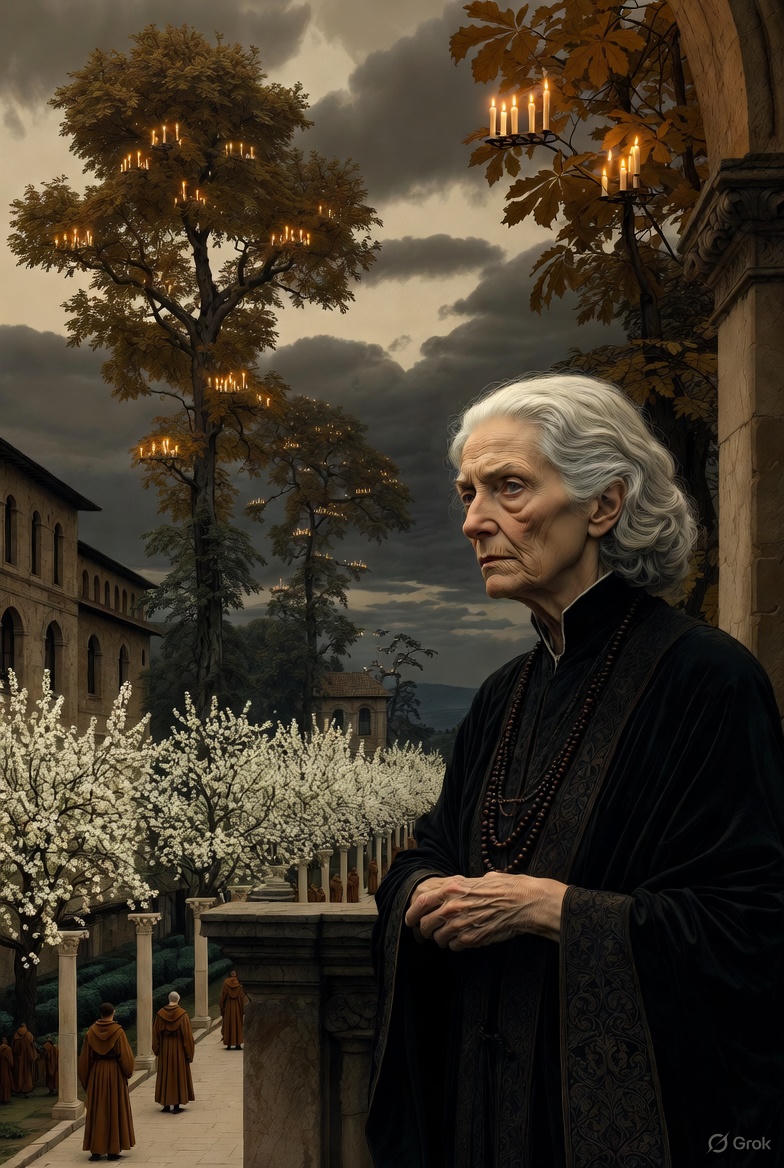
She turned and laughed at him, her bright teeth gleaming. “Does she mean I should play her kitten?” he thought. Her face became a little more serious, and her soft lowered voice rang with a mocking, veiled threat. He did not touch it with his paws And ron, ron and small patapon He did not touch it with his paws He ate it with his jaws Ron, ron, he ate it with his jaws The shepherdess got angry And ron, ron and small patapon The shepherdess got angry She killed the kitten Ron, ron, she killed the kitten “Very pretty,” he said. “Where did you learn that little nursery rhyme?” “In the convent,” she answered. “The sisters sang it.” He laughed, “Imagine that–in a convent! I would have never expected it–please finish it, little cousin.” She sprang up from the piano stool, “I am finished. The kitten is dead–that is how it ends!” “Not entirely,” he declared. “But your pious nuns feared the punishment–so they let the pretty shepherd girl go unpunished for her evil sin! Play again. I will tell you what happened to the shepherd girl after that.” She went back to the piano, played the melody. Then he sang: She went to confession And ron, ron and small patapon She went to confession To get forgiveness Ron, ron, to get forgiveness I confess, my Father And ron, ron, and small patapon I confess, my Father To killing my kitten Ron, ron, to killing my kitten My daughter, for penance And ron, ron and small patapon My daughter, for penance We will embrace Ron, ron, we will embrace Penance is sweet And ron, ron, and small patapon Penance is sweet We will begin Ron, ron, we will do it again “Finished,” she asked. “Oh yes, very much so,” he laughed. “How do you like the moral, Alraune?” It was the first time he had called her by her given name–that astounded her so much she didn’t pay attention to his question. “Good,” she replied indifferently. “Isn’t it though,” he cried. “A pretty moral that teaches little girls they will not be permitted to kill their kittens and go unpunished!” He stood right in front of her and towered over her by at least two heads. She had to look up at him to catch his eye. She thought, “How much difference a stupid thirty centimeters makes.” She wished she were dressed in men’s clothing as well. Already her skirts gave her a disadvantage. Then immediately it occurred to her that she had never experienced these feelings with others. But she stretched herself up, tossed her head lightly: “Not all shepherdesses have to serve such penance,” she twittered. He parried, “And not all Father Confessors will let them off so lightly.” She searched for a reply and found none. That made her angry. She dearly wanted to pay him back–in his own way. But this skill was new to her–it was like an uncommon language that she could understand completely, but couldn’t speak correctly herself. “Good night, Herr Guardian,” she said quickly. “I’m going to bed.” “Good night, little cousin,” he smiled. “Sweet dreams!” She climbed up the stairs, didn’t run up them as usual, went slowly and thoughtfully. She didn’t like him, her cousin, not at all. But he attracted her, stimulated her, and goaded her into responding. “We will be done with him soon enough,” she thought. And as the lady’s maid loosened her bodice and handed her the long nightgown she said, “It’s good that he’s here, Katie. It breaks up the monotony.” It almost made her happy that she had lost this advance skirmish. Frank Braun had long conferences with Legal Councilor Gontram and Attorney Manasse. He consulted with the Chancery Judge about his guardianship and with the probate Judge. He was given the run around and became thoroughly vexed. With the death of his uncle the criminal accusations were finally cut off, but the civil complaints had swollen to a high flood. All the little businessmen that had trembled at a squinting look from his Excellency now came forward with new demands and claims, seeking compensation for damages that were often quite dubious in nature. “The District Attorney’s office has made peace with us,” said the old Legal Councilor, “and the police won’t bother us either. But despite all that, we still have the county court tightly packed with our cases alone–the second court room will be the private institute of the late Privy Councilor for the next six months.” “His Deceasedness would enjoy it, if he could look out of his hellish cauldron,” the lawyer remarked. “He only enjoyed such suits a dozen at a time.” He laughed as well, when Frank Braun handed him the Burberger mining shares that were his inheritance. “The old man would have loved to be here now,” he said, “to see your face in half an hour! Just you wait, you’ve got a little surprise coming.” He took the shares, counted them, “A hundred eighty thousand Marks.” He reviewed them, “One hundred thousand for your mother–the rest for you! Now pay attention!” He picked up the telephone receiver, asked to be connected to the Shaffhausen Trust Company and requested to speak with one of the directors. “Hello,” he barked. “Is that you, Friedberg?–A little favor, I have a few Burberger shares here–what can I get for them?” A loud laughter rang out of the telephone and Herr Manasse joined in loudly. “I thought so–” he cried out. “So they are absolutely worthless? What? They expect new funding next year–the best thing is to throw the entire lot away–well naturally!–A fraudulent investment that will certainly sooner or later loose everything? Thank you, Herr Director, excuse me for disturbing you!” He hung up the phone and turned grimly to Frank Braun. “So now you know. And now you are wearing exactly that stupid face that your kindly uncle expected–excuse me for telling the truth! But leave the shares with me–it is possible that one of the other mining companies will take some interest in them and offer you a couple hundred Marks. Then we can buy a few bottles of wine with it and celebrate.” Before Frank Braun had come back the greatest difficulty had constituted the almost daily negotiations with the large Mülheim Credit Bank. The bank had dragged on from week to week with exceptional effort, remembering the Privy Councilor’s solemn promise of assistance, always in the hope of receiving some small portion of help from his heiress. With heroic courage the Directors, the Gentlemen from the Board of Directors, and the auditors managed to keep the leaky ship above water, always aware that the slightest new impact might cause it to capsize. With the help of the bank, his Excellency had successfully concluded many very risky speculations. To him the bank had been a bright fountain of gold. But the bank’s own undertakings, which it had taken at the Privy Councilor’s suggestion, were all failing–Really his own fortune was no longer in danger, but that of the Princess Wolkonski was, along with those of several other wealthy investors. This included the savings of a great number of little people as well, penny speculators that had followed the star of his Excellency. The legal executors of the Privy Councilor’s estate had promised their help, as much as it was in their power to do. But the hands of Legal Councilor Gontram, as provisional guardian, were tied by law– through the Chancery court–Money held in trust was sacred–all of it! Really, there had been only one possibility, Manasse had found it. They could declare the Fräulein ten Brinken of age. Then she would be free to fulfill her father’s moral obligations. For that purpose all of the parties worked together, pulling every last penny out of their own pockets. Already, with the last of their strength they had successfully survived a run on the bank that had lasted fourteen days–The decision had to be made now. Until then the Fräulein had shook her head. Now she listened quietly to what the gentlemen were proposing, smiled, and said, “No.” “Why should I become of age?” she asked. “I like the way it is right now–and why should I give money away to save a bank that is absolutely of no concern to me at all?” The Chancery Judge gave her a long speech about preserving the honor of her father. Everyone knew that he alone was the cause of their present difficulties–it was her duty as his child to clear his good name. Alraune laughed in his face, “His good name?” She turned around to Attorney Manasse: “Tell me, what do you think of it?” Manasse didn’t answer, curled up in his chair, spat and hissed like a stepped on Tomcat. “Not much more than I do, it appears!” said the Fräulein. “And I won’t give a penny for it.” Commercial Councilor Lützman, chairman of the Board of Directors, proposed that she should have some consideration for the old princess, who for so long had been an intimate friend of the house of Brinken. What about all of the little people that would lose all of their hard-earned money? “Why did they speculate?” she replied calmly. “Why did they put their money into such a dubious bank? If I wanted to give to charity I know of better ways.” Her logic was clear and cruel, like a sharp knife. She knew her father, she said, and whoever invested in the same things he did was certainly not very much better. But it was not about charity, the Director returned. It was almost certain that the bank would hold together with her help, if it could only get over this current crisis she would get her money back, every penny of it and with interest. She turned to the Chancery Judge. “Your Honor,” she asked, “is there a risk involved?” Naturally unforeseen circumstances could always come up. He had the professional duty to tell her–but as a human being he could only add his urgent plea to that of the other gentlemen. She would be doing a great and good work, saving the livelihoods of multitudes and the possibility of loss in his opinion was ever so slight. She stood up, interrupted him quickly. “Well then, gentlemen. There is a risk,” she cried mockingly, “and I don’t want to take any risk. I don’t want to save any livelihoods and have no desire to do great and good works.” She nodded lightly to the gentlemen, left, leaving them sitting with fat, red little heads. But still the bank continued, still battled on. Hope formed anew when the Legal Councilor informed them that Frank Braun; the true Guardian had arrived. The gentlemen immediately got in contact with him, arranged a conference for the next day. Frank Braun saw very well that he would not be able to leave as quickly as he had believed. So he wrote his mother. The old Frau read his letter, folded it carefully, and laid it in the large black trunk that contained all of his letters. She opened them on long winter evenings when she was completely alone. Then she read to her brown little hound what he had written to her. She went out onto the balcony, looked down at the high chestnut trees that carried glowing candles in their mighty arms, looked down on the white blooming trees of the monastery under which brown monks quietly wandered. “When will he come, my dear boy?” she thought.
Part III: Concerning the Laws and Vital Conditions of the Hermetic Experiment
Chapter 4: Mental Requisites and Impediments, Part 3
Introduction: The Hermetic art requires a disciplined mind and fervent prayer to unlock divine wisdom. This section explores the vital role of prayer, study, and moral purity in overcoming obstacles, guiding the adept to transform the soul’s essence into radiant light.
The Power of Prayer
Prayer is the cornerstone of the Hermetic art, as Iamblichus describes, divided into three stages: gathering the mind’s powers, forging spiritual bonds, and sealing divine union. This sacred practice, as Kirchringius notes, “nourishes the intellect, opens the soul to divine light, and expels mortal dregs.” Through prayer, the adept aligns with the divine will, receiving revelations that solve the art’s enigmas, as the Psalmist declares: “I called upon God, and the Spirit of Wisdom came to me.”
Geber and Norton emphasize that divine grace, sought through prayer, is essential for success. Without it, obstacles arise, or the work ends in failure. Prayer, paired with persistent effort, transforms the soul into a vessel for the “Divine Fire,” uniting it with eternal truth.
The Necessity of Disciplined Study
Success in the Hermetic art demands rigorous study, as Ricardus advises: “Examine the philosophers’ writings, for a sluggish mind cannot master the work.” Arnold and Lully stress subtlety of mind, manual skill, and divine favor, cultivated through books that sharpen the intellect. The adept must persevere, as Zachary urges, reading with patience to uncover the “vermilion path” of truth, ensuring the mind is prepared for the sacred labor.
This study, grounded in reason and faith, dispels ignorance and fortifies the soul, aligning it with the divine purpose. Without it, as Sendivogius warns, “God gives understanding, but you must work to use it.”
The Path of Moral Purity
The Hermetic art rejects impure motives, as Pierce the Black Monk declares: “Covetous men find it never.” The adept must embody meekness, mercy, and charity, living simply and prayerfully. This moral purity, as Job warns, avoids the pitfalls of greed and pride, ensuring the soul remains open to divine grace. Only through such virtue can the adept wield the art’s power without corrupting its sanctity.
Closing: This chapter unveils the power of prayer, study, and moral purity in mastering the Hermetic art. The journey into its practical secrets deepens in our next post, unveiling further wonders of this sacred pursuit.
Homo Sapiens: In the Maelstrom by Stanislaw Przybyszewski and translated by Joe E Bandel
XIV.
Falk wandered restlessly through the city all day.
He finally sat in a café and spent several hours there. He was so tired that he could find no strength to get up and get the newspapers. Ask a waiter? No, it hurt just to open his mouth.
Yet he felt a bit of joy, how beautifully everything arranged itself… and Kunicki is after all a famous shot. Tomorrow everything is over. Good so.
He actually wondered that the whole thing was so indifferent to him, and it was after all about life… life! He giggled cheerfully. Life!
Finally he collected himself. When he came home, he felt so exhausted that he lay down on the bed immediately; he was about to fall asleep.
Then he sat up abruptly.
He had to speak with Isa after all. Who knows if he would return tomorrow. He had to inform her in any case, without arousing her suspicion, about the most important affairs.
But he could also do that in writing. And again he lay down. Otherwise she could get bad thoughts. No! Better to write a letter.
Suddenly he became strangely awake. His brain was shaken and came into operation.
It now became finally clear to him that tomorrow his death march awaited him. A slight shiver ran through his limbs. It was something like fear… Quite surely fear and unrest, although revolver heroes otherwise do not have fear…
The whole process became alive in him with such disgustingly intrusive clarity.
He will have to stand calmly, before his eyes the pistol muzzle will flicker like a black point, then he will clearly hear the cock click, quite clearly, yes, perhaps even as a strong noise.
Cold sweat broke out on his forehead. With difficulty he pushed everything back into himself.
He yawned. But his yawning seemed affected to himself.
He had to go to Isa and play piquet with her, that would calm him. Afterwards he could consider the whole story…
But fear crept up in him and his heart beat terribly. Kunicki after all shot the poor Russian down immediately…
And leave all this behind: Isa and the whole future… He stopped.
Where did the self-lie of the future suddenly creep from now? That was a ridiculous lie. Ha, ha, ha… How one can unconsciously lie to oneself… Strange… Naturally it wanted to argue further in me: everything is not so bad as it looks… Everything could still become good.
And suddenly he shot up like mad.
Kruk cannot come back to Germany after all. He is sentenced to five years.
He ran around like possessed.
Then Isa can never find out. He always opened the letters himself.
A moment of such immediate, animal feeling of happiness he had never felt before.
He came completely out of his senses with joy, a terrible life frenzy rose in him. He thought of nothing, only one single, fixed idea roared and whirled in his brain. Only now quickly away!
Kunicki? Kunicki? What does Kunicki concern me, what does honor concern me, what does shame concern me. Now quickly away, away.
His brain clung with the last despair strength to this straw.
Then he suddenly began to laugh in rage and fury.
Ha, ha, ha… Now I begin to play comedy before myself. As if that could help me over the disgust and the lie! Ha, ha, ha: everything could still become good.
He suddenly thought of the comical, little Jew from whom he once wanted to borrow money. The Jew naturally had no money, but Falk should console himself, everything would still become good.
And then a heartfelt cheerfulness came over him that he had not felt for a long time.
Yes, so he could now go to Isa, he was really cheerful and happy. When he entered the salon, his glance fell by chance on the picture and this mad despair orgy of the sky… But he was cheerful and happy.
In the dining room he listened. From Isa’s room came sobbing and moaning…
It shot through him like lightning, he staggered back. His heart stopped.
He stepped to the door and knocked timidly. No answer. Only a sudden violent cry. He now knocked violently and rattled the door. Isa! Isa! he cried desperately.
A deep moaning was the answer.
He became possessed in a moment. An unheard-of rage took possession of him.
Open! he cried. Again no answer.
Then an animal fury seized him. His senses left him. He suddenly threw himself with his whole strength against the door, broke it open and fell staggering into the room.
Isa jumped from the sofa, wild and distraught.
“What do you want here? Go then! Go then to your mistress,” she cried raging.
Falk stood and trembled so violently that he had to hold onto the table. “Go then! Go then!” cried Isa and ran desperately back and forth, as if she feared he would seize her.
“Isa!” he finally managed to bring out.
“Leave me! Leave!” she cried senselessly and stopped her ears with her fingers. “I want to hear nothing. Go then! I cannot see you! I have disgust for you!”
Falk stood there and stared at her madly. He heard only this hoarse, screaming voice in which a hysterical laughter and crying fought each other. It occurred to him that he had never heard Isa scream before.
Isa came into rage. She stamped with her feet, cried a few inarticulate sounds, then ran around the table to the door.
Falk came to his senses. He held her by the arms. She struggled desperately with him, but he held her tighter and tighter, bit himself as it were with his fingers into her arms.
“Let me go!” she cried with an unnatural voice. He let her go and stood before the door.
“I will go, but first you shall hear me,” he flared up furiously.
“I want to hear nothing. I hate you! I beg you! I have disgust for you. You soil me! Go then to your mistress.”
Suddenly she fell backwards onto the sofa in a wild crying cramp. In senseless fear Falk jumped toward her.
The slender, frail body twitched and writhed in his arms as if kneaded by a foreign power. From the throat of the tormented woman came spasmodic cries and sobs that were unnatural, as if an animal had uttered them.
Falk carried her to the balcony, grasped a carafe of water, moistened her forehead and temple, but suddenly she rose again and pushed him back furiously.
In the next moment she sank together, she threw herself on the sofa, breathed heavily; the strength seemed to leave her, for she crawled more and more together.
Then she threw herself up again with sudden jerk and stood proud and cold before Falk.
“What do you want then still?”
“Nothing, nothing more.” He stammered and looked at her with mad, glazed eyes.
“Nothing, nothing,” he repeated softly.
“You must make clear to yourself that between us everything is over, that I will not remain one hour longer with you under one roof… I do not want,” she cried raging… “Let me go then.”
She threw herself at him and tried to push him out the door.
It became quite dark before his eyes, he was no longer master of his animal rage attack, he seized her and threw her with full strength onto the sofa.
She jumped up, wanted to flee, her hair had loosened, he grasped her by the hair, tore half mad at it and dragged her back again.
“I will kill you, I will kill you,” he grinned in a second of complete confusion of senses.
She no longer resisted, everything broke in her—she became still for a moment.
Alraune by Hanns Heinz Ewers and translated by Joe E Bandel
His mother observed him–she knew his smallest gesture, the slightest movement of his smooth, sun tanned features. She read in the slight twitch at the corner of his mouth that it was something important. “What is it?” she asked, and her voice trembled. “Nothing big,” he answered easily. “You know of course that Uncle Jakob is dead.” “Yes, I know that,” she said. “It was sad enough.” “Well then,” he nodded, “the Legal Councilor has sent me a copy of the will. I am the executor and to become the girl’s guardian as well. To do that I must go to Lendenich.” “When will you leave?” she asked quickly. “Well,” he said. “I think–this evening.” “Don’t go,” she begged. “Don’t go! You’ve only been back with me for three days and now you want to leave again.” “But mother,” he turned to face her. “It’s only for a few days, just to put things in order.” She said, “That’s what you always say, only a few days–and then you stay away for years.” “You must be able to see it, dear mother!” he insisted. “Here is the will. Uncle has left you a right decent sum of money and me as well–Something I certainly was not expecting from him. We could certainly use it, both of us.” She shook her head, “What should I do with the money if you are not with me, my boy?” He stood up and kissed her gray hair. “Mother dear, by the end of the week I will be back here with you. It is scarcely two hours by train.” She sighed deeply, stroked his hands, “Two hours–or two hundred hours, what is the difference?–You are gone either way!” “Adieu, dear mother,” he said, went upstairs, packed only a small suitcase and came back out to the balcony. “There, you see! Scarcely enough for two days–Auf Wiedersehen!” “Auf Wiedersehen, dear boy,” she said quietly. She heard how he bounded down the stairs, heard the latch click as the door shut. She laid her hand on the intelligent head of her little hound that looked at her with faithful trusting eyes. “Dear animal,” she spoke. “Now we are alone again–Oh, only to go again, does he come here–when will we see him again?” Heavy tears fell from her gentle eyes, rolled over the wrinkles on her cheeks, fell down onto the long brown ears of the little hound. He licked at them with his red tongue. Then down below she heard the bell, heard voices and steps coming up the stairs. She quickly wiped the tears out of her eyes, pushed her black lace scarf into place and straightened out her hair. She stood up, leaned over the railing and called down into the courtyard for the cook to prepare fresh tea for the guests that had come. Oh, it was good that so many came to visit her, Ladies and Gentlemen–today and always. She could chat with them, tell them about her boy. Legal Councilor Gontram, whom he had wired about his arrival, awaited him at the train station, took him with to the garden terraces of the Royal Court, where he explained everything to him that was important. He begged him to go at once out to Lendenich, speak with the Fräulein and then early the next morning come back into the office. He couldn’t really say the Fräulein would make trouble for him, but he had a strange, uncomfortable feeling about her that made every meeting with her intolerable. It was funny in a way, he had worked with so many criminals–murderers, assassins, burglars, abortionists, and once he really got to know them he always found that they were really pretty decent people–with the exception of their crimes. But with the Fräulein, whom you could not reproach for anything, he always had the same feeling that other people had toward the criminals he worked with. It must lie completely in him– Frank Braun requested that he telephone ahead and announce his arrival to the Fräulein. Then he excused himself, strolled through the park until he hit the road to Lendenich. He walked through the old village, past the statue of St. Nepomuk and nodded to him, stood in front of the Iron Gate and rang, looking into the courtyard. There was a large gas candelabra burning in the entrance where once a paltry little lantern had glowed. That was the only change that he saw. Above, from her window the Fräulein looked down, searched the features of the stranger, and tried to recognize him in the flickering light. She saw how Aloys sped up, how he put the key in the lock more quickly than usual. “Good evening young Master!” cried the servant and the stranger shook hands with him, called him by name, as if he had just come back to his own house after a little trip. “How goes it, Aloys?” Then the old coachman hobbled over the stones as quickly as his crippled leg would carry him. “Young Master,” he crowed. “Young Master! Welcome to Brinken!” Frank Braun exclaimed, “Froitsheim! Still here? Glad to see you again!” He shook both hands vigorously. Then the cook came and the wide hipped house keeper. With them came Paul, the valet. The entire servant’s quarters emptied itself into the courtyard. Two old maids pressed to the front, stretching their hands out to him, but first, carefully wiping their hands on their aprons. “Jesus Christ be praised!” the gardener greeted him and he laughed. “To eternity, Amen!” “The young Master is here!” cried the gray haired cook and gave Frank Braun’s suitcase to the valet. Everyone stood around him, everyone demanded a personal greeting, a handshake, a friendly word, and the younger ones, those that didn’t know him, stood nearby, staring at him with open eyes and awkward smiles, off to the side stood the chauffeur, smoking his short pipe. Even his indolent features showed a friendly smile. Fräulein ten Brinken snapped her fingers. “My guardian appears well liked here,” she said half out loud and she called down: “Bring the Gentleman’s things up to his room–and you, Aloys, show him the way.” Some frost fell on the fresh spring of his welcome. They let their heads drop, didn’t speak any more. Only Froitsheim shook his hand one last time, walked with him to the master staircase. “It is good you are here, young Master.” Frank Braun went up to his room, washed himself, and then followed the butler who announced that dinner was served. He stepped into the dining room and was left alone for a moment. He looked around, there, like always, stood the giant buffet, ostentatious as ever with the heavy golden plates that bore the crest of the Brinkens. But no fruit lay on them today. “It is still too early in the season,” he murmured, “or perhaps my cousin has no interest in the first fruits.” Then the Fräulein came in from the other side, adorned in a black silk gown, richly set with lace down to her feet. She stood in the door a moment, then stepped in and greeted him. “Good evening, Herr Cousin.” She reached out her hand to him, but only the two fingertips. He pretended not to notice, taking her entire hand and shaking it vigorously. With a gesture she invited him to take his place and sat down across from him. “May we be informal with each other?” she began. “Certainly,” he nodded. “That has long been the custom with the Brinkens.” He raised his glass, “To your health, little cousin.” “Little cousin,” she thought. “He calls me little cousin, thinks of me as a doll.” But she replied, “Prosit, big cousin.” She emptied her glass, waved for the servant to refill it and drank once more, “To your health, Herr Guardian!” That made him laugh, Guardian–guardian? It sounded so dignified–”Am I really that old?” he thought. He answered, “And to you, little ward.” She got angry–little ward, again; little?–Oh, it would soon be shown which of them was the superior. “How is you mother?” she asked. “Thank you,” he nodded. “Very well, thank you–haven’t you met her yet?–You could have visited her at least once.” “She never visited us either,” she retorted. Then when she saw his smile, she quickly added, “Really cousin, we never thought of it.” “I can just imagine,” he said dryly. “Papa scarcely spoke of her and not of you at all.” She spoke a little too quickly, rushing herself. “I was really surprised, you know, when he made you–” “Me too!” he interrupted her, “and he certainly had some reason for doing it.” “A reason?” she asked. “What reason?” He shrugged his shoulders, “I don’t know yet–but it will soon come out.” The conversation never faltered. It was like a ball game; the short sentences flew back and forth. They remained polite, amiable and obliging, but they watched each other, were completely on their guards, and never came together. A taut net stretched itself between them. After dinner she led him into the music room. “Would you like some tea?” she asked. But he requested whiskey and soda. They sat down, chatted some more. Then she stood up, went to the Grand piano. “Should I sing something?” she asked. “Please,” he said politely. She raised the lid, sat down, then she turned around and asked: “Any special request cousin?” “No,” he replied. “I don’t know your repertoire, little cousin.” She pressed her lips together. That is becoming a habit, she thought. She struck a couple of notes, sang half a stanza, broke off, began another song, and broke that off as well. Then she sang a couple of measures of Offenbach, then a line from Grieg. “You don’t appear to be in the right mood,” he observed calmly. She laid her hands on her lap, remained quiet awhile, drummed nervously on her knees. Then she raised her hands, sank them quickly onto the keys and began: There once was a shepherdess And ron, ron and small patapon There once was a shepherdess Who kept her sheep Ron, ron who kept her sheep She turned toward him, pouting. Oh, yes, that little face surrounded by short curls could very well belong to a graceful shepherdess– She made a cheese And ron, ron and small patapon She made a cheese While milking her sheep Ron, ron, while milking her sheep Pretty shepherdess, he thought, and poor–little sheep. She moved her head, stretched her left foot sideways, tapped out a beat on the floor with a dainty shoe. The naughty cat watched And ron, ron and small patapon The naughty cat watched From a small distance away Ron, ron, from a small distance away If you touch it with your paws And ron, ron, and small patapon If you touch it with your paws I will hit you with a stick Ron, ron, I will hit you with a stick!
Madame Bluebeard by Karl Hans Strobl and translated by Joe E Bandel
While Ruprecht summoned old Johann and gave his order, Schiereisen paced the room. He was exhilarated, his thoughts flowing smoothly. He drained half the glass in one gulp and resumed. “So, while Jana undertakes a nocturnal errand in your interest, if not by your order, he’s killed, but the murder is disguised as an accident. Now comes the classic criminologist’s question: cui bono? Who benefits? Clearly, only a secret enemy keen to prevent the solving of that big X, to keep the secret— or, if discovered, to eliminate the discoverer. A secret enemy, I say, plotting against you unbeknownst. Or—unwanted to be known? Someone close, blocking you from that secret. It must be a dangerous secret, since murder is an extreme act, not risked lightly. Surveying those around you, Lorenz stands out at once.” “Pardon, that’s not obvious to an impartial observer.” “No? Jana was killed with a blunt instrument, necessary to avoid noticeable differences between initial wounds and fall injuries. I examined your servant’s body in the mortuary. The fall injuries—a broken leg, a rib—were minor. The fatal wound was a skull fracture at the back, impossible from such a low fall. It came from a blow struck with tremendous force by a pickaxe. The arm wielding it needed savage strength. Only an extraordinarily powerful man, an athlete, could dare attack Jana—a lithe, sinewy fellow, cautious and alert on his secret errand—with such a weapon. Among your entire staff, only Lorenz has that strength and brutal force. Add this: Jana’s body was found by that old, half- mad maid at dawn. Lorenz was second on the scene, so quickly, at an hour he never rose. I learned he was nearly fully dressed. What does he do? He removes the broken planks before the commission arrives. Isn’t that odd? Consider, too, a hidden staircase from Lorenz’s room leads directly to the passage by the wooden bridge. The final link: the day before Jana’s murder, Lorenz took a pickaxe from the cellar.” “How do you know?” “I’ve no reason to hide it. Old Johann told me, innocently sharing valuable details. He was there when Lorenz came for the pickaxe, claiming he needed to nail a loose floorboard in his room. Lorenz first tried taking the axe a maid was using to split wood, then settled for an older, unused one, too heavy for the maids. It was rusty, but the maid noticed the rust was nearly gone the next day, as if Lorenz had polished it clean.” “You believe Lorenz killed my Jana? I’m not sure I agree entirely.” Schiereisen stepped before Ruprecht, fixing him with a steady gaze. “Don’t resist this insight, Herr Baron. You’ve known it for a long time.” “And why would Lorenz do it?” Ruprecht barricaded himself behind the challenge of answering this. “Here we hit that unsolved X, the secret. I confess, rarely has a case so clear in its foundations caused me such trouble in its details.” “But now… you’re at your goal?” Ruprecht asked. His throat was dry, as if he’d breathed desert air. He downed a glass of wine. Something unstoppable loomed—a formless, monstrous threat, a menacing cloud hiding judgment. “I’ll tell you little you don’t already know or suspect, Herr Baron. I ask your forgiveness if my profession forces me to reveal things terrible for you. But I esteem you too highly. I won’t act without first explaining my reasons.” “Speak,” Ruprecht said. “You’ll likely clarify afterward who commissioned your efforts.” “I see you’re bitter. You despise me. But I strive to understand you. Some might find it incomprehensible that you’ve stayed silent so long, so long that… well, let’s not speak of it. I dare point to a kinship between us. Like you, I find joy and need in mastering people and things. For me, it’s in penetrating them, wresting their secrets, exposing their hidden truths.” That thrill is gone, Ruprecht thought. I know nothing of it anymore. “I follow every criminal case in the newspapers with great attention. I collect all I can about the people involved and the events. Each figure in such a mysterious drama gets their own file, and I don’t rest until I know everything that clarifies their character. Then I move them like chess pieces, letting their natures interact according to the events. That’s my method, and it rarely fails. Recently, I pursued a truly gripping case—an authentic American tale…” “Please, don’t speak in disguise. Don’t use a foreign case. Tell me what you believe you’ve found here.” “I’d prefer if you allowed me. I’m telling you nothing new by pointing out that you’re Frau Helmina’s fourth husband.” Ruprecht nodded. The menacing cloud drew closer. “Frau Helmina’s first and second husbands died after very short marriages. Herr Dankwardt was married to her for about six years. Suppose someone suspected—let’s call it a vague hunch, a creeping distrust for now—that Frau Helmina disposed of her husbands. This suspicion applies especially to Herr Dankwardt’s death.” “I see. You were hired by his relatives.” “Yes. So, I first needed a clear picture of Frau Helmina’s personality. I had to delve into her past. I don’t know how much you know.” “Not much. She comes from modest circumstances. She was a conservator, then her father died, and the money ran out. She worked in an office.” “Let’s not get lost in details, Herr Baron.” Ruprecht nodded. “Hear me out calmly! I can show proof for my claims later, if you wish. Your wife is an extraordinarily clever woman. She has tact, taste, and a sure sense of style. She has, so to speak, an inner rhythm. She’s among those who light up their surroundings, spreading joy with a smile and, when they love, blinding one to all else.” “You think I’m not prepared enough, Herr Schiereisen?” “I know you love your wife. Despite… what you may have noticed. It’s hard to tell you everything. My inquiries revealed Frau Helmina came from very humble beginnings. She told the truth there. I know you have no aristocratic prejudices. That wouldn’t bother you. But Helmina soon broke free from that narrow life. Spare me the details. She began to rise swiftly. She didn’t lose herself in a frivolous life, like others who chase pleasure. Helmina had another goal. Her years of public display were merely a means. By the way, she avoided performing in Germany and Austria. France, Spain, and Romania were her domains. A certain Anton Sykora traveled with her as her manager.” “Anton Sykora… isn’t that…?” “Yes, Herr Baron, the owner of the ‘Fortuna’ matchmaking agency in Vienna. I must stress my investigations showed Helmina stood out everywhere, not just for her beauty but for her impeccable conduct. The owners of the establishments where she performed still recall her with astonishment. They thought it a brilliant ploy. What Helmina expects and intends, happens. In Bucharest, a wealthy industrialist falls for her. He doubts her virtue, but everyone confirms it. His own failures prove her unshakeable. So, Herr Hellpach becomes Helmina’s first husband. He brings her to Austria, where no one knows her. He buys this castle and sets up lavishly. Frau Helmina adapts so perfectly, no one could guess her origins. The local nobility, however, remain suspicious to this day. Now, pay attention, Herr Baron. After a few months, Herr Hellpach takes his annual Alpine trip. A passionate mountaineer, he always climbs without a guide. Frau Helmina stays in Bozen, feeling unwell. Hellpach goes for a short hike in the Dolomites. In Sankt Ulrich in Gröden, a man joins him. They climb the Marmolata together. Hellpach falls; loose scree on a narrow ledge gives way, and he plunges two hundred meters into a gorge. His companion brings the news to the valley. Frau Helmina is a widow and heiress.” “I know, Herr Schiereisen. An accident! What are you implying?” “It’s an accident like the one that struck Jana, Herr Baron.” “Your profession leads you to such hypotheses.” “I understand you’d prefer they were hypotheses. But my suspicions have substance. They link hand in hand, forming a chain. Hear me further. I traced Hellpach’s route and sought his tracks. I carried two photographs in my breast pocket—one of Herr Hellpach. I showed them to innkeepers and hoteliers where he stayed. They recognized Hellpach and his companion in my photos. Innkeepers have a keen memory for faces. They all agreed on Hellpach. Opinions varied on the other. Some insisted it was him; others hesitated, saying the photo only bore a strong resemblance.”
Part III: Concerning the Laws and Vital Conditions of the Hermetic Experiment
Chapter 4: Mental Requisites and Impediments, Part 2
Introduction: The Hermetic art demands a pure and disciplined mind to unlock its sacred wisdom. This section explores the mental qualities needed and the obstacles to avoid, emphasizing faith, reason, and moral integrity as keys to divine transformation.
The Path of the True Adept
The Hermetic art, as Norton declares, is a “divine cure” to transform base metals into gold, granted only to those blessed with God’s grace and a virtuous heart. Success requires a stable, rational mind, free from avarice or pride, as Geber warns against those who chase wealth, unable to quicken the “aurific seed” of divine wisdom. The adept must pursue truth with unwavering faith, guided by reason to discern the sacred from the profane.
Eirenaeus illustrates this with a parable of seekers lost in “Cimmerian darkness,” mistaking false lights (ignorance, fantasy) for truth. Only those with disciplined intellect and pure intent can perceive the Hermetic light, aligning their will with divine purpose to unlock nature’s secrets.
The Dangers of Skepticism and Greed
Skepticism, especially the fashionable kind that dismisses the unfamiliar, is a major impediment. Geber condemns those who deny the art’s validity, presuming their limited reason sufficient, as Norton likens them to blind men attempting to paint. Such skeptics, lacking faith, block the path to truth, while the covetous, driven by Mammon, defile the divine light, risking spiritual ruin, as Job warns: “If I have made gold my hope, I have denied God.”
The Hermetic art requires sacrifice—abandoning selfhood for divine truth. Those who cling to greed or fleeting opinions fail to endure the fiery ordeal of wisdom’s purification, as Eirenaeus notes: “The art vanishes from impure hands.”
The Call for Disciplined Faith
The adept must cultivate a serene, diligent mind, as the Tractatus Aureus advises: “Be good, just, and ready to help mankind.” This disciplined faith, rooted in reason, aligns the soul with divine wisdom, transforming it into a radiant vessel. Norton emphasizes secrecy, taught “mouth to mouth” with a sacred oath, to protect the art from misuse, ensuring only the worthy wield its power.
Closing: This chapter unveils the mental requisites of faith and reason, and the pitfalls of skepticism and greed, for mastering the Hermetic art. The journey into its practical secrets deepens in our next post, unveiling further wonders of this sacred pursuit.
Homo Sapiens: In the Maelstrom by Stanislaw Przybyszewski and translated by Joe E Bandel
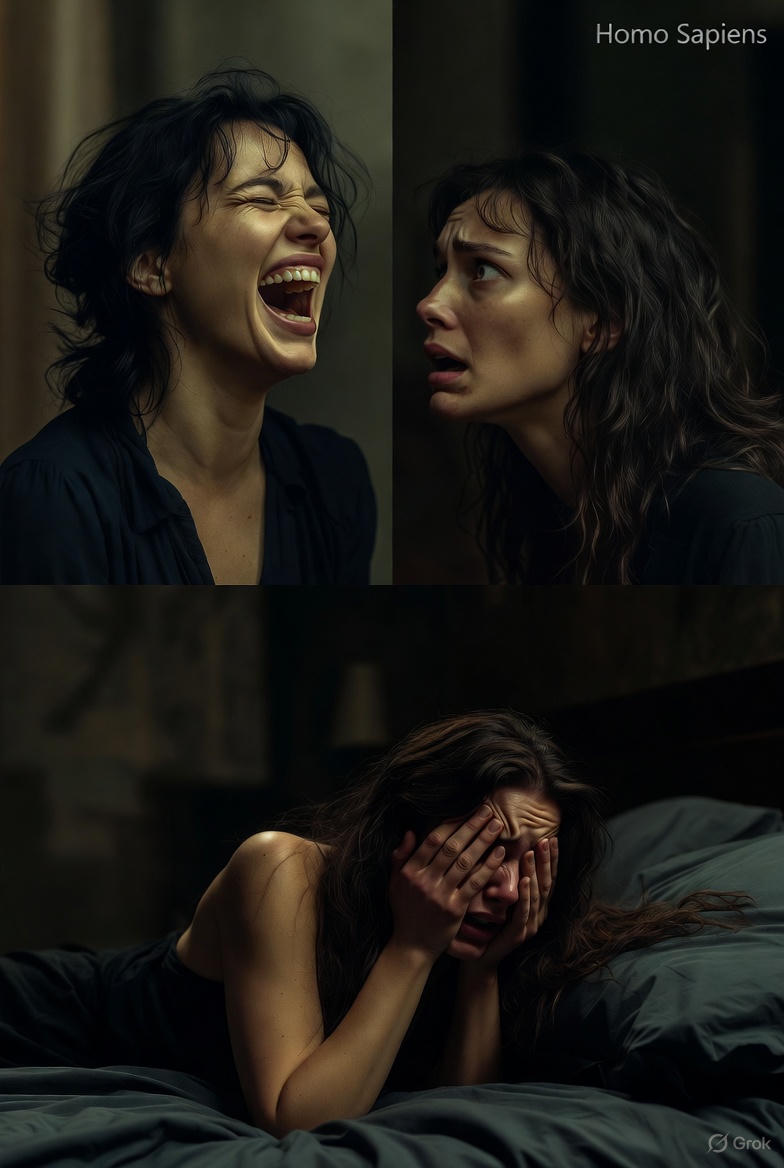
She laughed hysterically and then looked at Janina with wild hate, but only a moment…
“You naturally did not know that he was married… How he lies, ha, ha, ha, how he lies…”
Suddenly Janina’s strength left her. She threw herself on the bed and sobbed.
Isa became very serious; she stood up.
“Did I insult you?” she asked coldly.
But she expected no answer, she went to the bed end where the little one lay, looked at him attentively and then stood in the middle of the room.
“But don’t cry. I did not want to insult you… How beautiful the child is! And you have no guilt… You are only a small, weak girl.”
And again she began to laugh.
Strange that you have a child… How old are you actually? Eighteen? Nineteen? Well, farewell and don’t cry. He will come back, he will come, she raged… I will drive him back to you, immediately—immediately…
“Don’t torment me!” Janina suddenly cried out.
“Torment? Torment? Ha, ha, ha… I will send him here immediately… tout de suite, tout de suite…”
On the street she stood for a long time.
A few street boys went past her, laughed impudently at her and threw obscene words at her.
She looked around timidly and began to go, quick, senselessly quick… “Only not back, only not back, only not back to the liar,”
she murmured softly to herself.
“But my God! what disgusting people live here! Why do you harass me, why do you push me then? What did I do to you?”
She gnashed her teeth in impotent rage.
Suddenly she felt a violent pain. A fellow had run into her and brutally pushed her aside so that she almost fell.
The pain brought her to consciousness.
She began to go slowly, kept close to the wall, she became anxious like a small child, a crying cramp worked its way up in her with all strength, she choked it down with difficulty, but could not prevent the tears from running unstoppably over her cheeks.
Then she came to an empty square, sat down on a bench and calmed herself. And only now everything flew through her brain with visionary clarity and a wild pain began to rage in her. She lost her senses.
And in the moment she collected herself. Geißler will give money. Only away, far, far away from him, Geißler will give money, Geißler, Geißler she repeated incessantly.
She got into a cab and gave Geißler’s address.
The pain raged ever wilder… As if a hell had been unleashed in her… Ha, ha, ha… Mais non, pas du tout; je suis au contraire tres enchantée… très enchantée… These big letters: Isak Isaksohn… No, how comical! Isak Isaksohn… Ha, ha, ha… Falk is a genius. He must improve the race, it is his duty, his duty… Here I can buy fabrics—Friedrichstraße 183, and yes, what was his name? Isak Isaksohn and Friedrichstraße 183…
Then she suddenly felt an unspeakable disgust. The person took her, with the same hands he embraced her as the girl there—with the same mouth he kissed her…
She shook herself. A morbid rage overcame her, it became unbearably tight to her, she would have liked to tear her clothes apart. The disgust choked her ever more violently.
Why did he not drag the woman into my bed?! Ha, ha, ha… He should have done it before my eyes…
She could no longer control herself. She cramped and crawled into herself and stretched up again, she felt an unbearable pain in the breast, in the head, everywhere, everywhere…
Oh que j’ai mal, que j’ai mal… Mon Dieu, que jai mal!
When she entered Geißler’s room, she was seized by a sudden cheerfulness.
“How well you look at me! You are like a small, shy boy… Ha, ha, ha… And you have such a beautiful, soft coat… Well, don’t look at me as if I fell from heaven… I am after all Erik Falk’s legally, legally you understand? on the Mairie of the fifteenth arrondissement in Paris legally married wife…”
She laughed heartily.
Geißler looked at her astonished. But since she laughed so heartily, he laughed with.
“Just think, Walther, we haven’t even greeted each other…” She kept his hand in hers.
“How big and good your hand is! And so warm, so warm.”
“You didn’t meet Erik downstairs?” asked Geißler a little uneasily. “Erik Falk? My husband?” She choked with laughter. “No, no!
My husband, ha, ha, mon mari! quelle drôle idée plus philosophique qu’originale, n’est-ce pas?”
She looked around and sat down. Geißler looked at her helplessly.
“Why do you look at me so sadly? Ah,—ah…” she stood up again… “He was here, he told you everything…”
Geißler turned around and busied himself with the papers.
“Did he tell you about his little son, and about his little mistress? Ha, ha, ha… did he want to lighten his heart with you?”
“Well, you know, Isa, you don’t need to take that so to heart. You are after all a woman, and a man is organized quite differently…”
She had sat down again in the meantime, but suddenly she felt a great fatigue, she was near fainting.
“Give water!”
She drank greedily a large glass.
“Ha, ha… I have not seen my husband, no, no, je ne l’ai pas vu depuis cinq jours… Strange preference for my mother tongue. I have almost forgotten it… I was in a hideous, German boarding school… At five o’clock we had to get up… O! brr! But how strong you are and your hand so big and so good.”
She suddenly looked at him fixedly.
“You don’t need to look so mournful. I want no pity. I want money. Give me money,” she said harshly.
He looked at her frightened. “What do you need it for?”
“You are a nice gentleman! Ha, ha, ha. You ask a lady what she needs money for! Just give me money, I have a very bad affair…”
“Isa, be serious for a moment. You don’t want to do stupid things?”
“What do you think?”
“Well listen, Isa. You know very well what you are to me… very bad things are going on with you now… And there you know to whom you should turn… I mean, well—you will not misunderstand me… You know me… But… pas de sentiments, n’est-ce pas? How much do you need?”
“Three, four hundred…”
“I will give you five hundred.”
She did not understand him, stared only at him with growing rapture. Her senses began to confuse.
“How splendid you are!… And give me your big, warm hand… Yes, so, hold me tight, hold me tight… O que j’ai mal, que j’ai mal…”