Part III: Concerning the Laws and Vital Conditions of the Hermetic Experiment
Chapter 4: Mental Requisites and Impediments, Part 1
Introduction: The Hermetic art demands a pure and disciplined mind to transform the soul’s essence into divine light. This chapter explores the mental qualities and obstacles for those pursuing this sacred science, emphasizing wisdom, faith, and moral integrity.
The Qualities of the Adept
Geber, in his Sum of Perfection, outlines the mental requisites for mastering the Hermetic art. Success requires a sharp, searching intellect, capable of probing nature’s deepest principles with subtlety and reason. The adept must possess natural sagacity, free from fantasy or impulsiveness, to discern truth from illusion. A stable mind, grounded in rational inquiry, is essential to navigate the complexities of this sacred science.
Geber stresses that the art is not for those with weak or corrupted faculties—whether physical or mental. A soul swayed by fleeting opinions, clouded by imagination, or lacking discernment cannot achieve the divine transformation. Only those with clarity and perseverance can uncover the “true Radix,” the root of alchemical wisdom.
The Impediments of the Mind
Many obstacles hinder the pursuit of Hermetic science. Geber identifies those with “stiff necks”—lacking ingenuity or curiosity—who fail to explore nature’s depths. Others, driven by fantasy, mistake illusion for truth, their minds clouded by “fumosities.” Some are fickle, shifting beliefs without reason, unable to sustain the disciplined focus required. Worst are those who deny the art’s validity or seek it for greed, fearing to sacrifice personal gain for divine truth.
The greatest danger, as the Book of Enoch warns, lies in misusing alchemical knowledge for selfish ends. Such minds, led by “Mammon,” defile the divine light, turning sacred wisdom into sorcery. True adepts, guided by piety, reject these profane motives, ensuring the art remains a holy pursuit.
The Path of Purity and Faith
The Hermetic art demands a heart free from avarice, pride, or deceit, as Job declares: “If I have made gold my hope, I have denied the God above.” Only through faith, humility, and moral integrity can the adept align with divine wisdom. This science, as Norton’s Ordinal emphasizes, is a “singular grace” bestowed on those proven worthy, taught “mouth to mouth” with a sacred oath to protect its sanctity.
Closing: This chapter unveils the mental requisites and impediments for mastering the Hermetic art, emphasizing purity and faith. The journey into its practical secrets deepens in our next post, unveiling further wonders of this sacred pursuit.
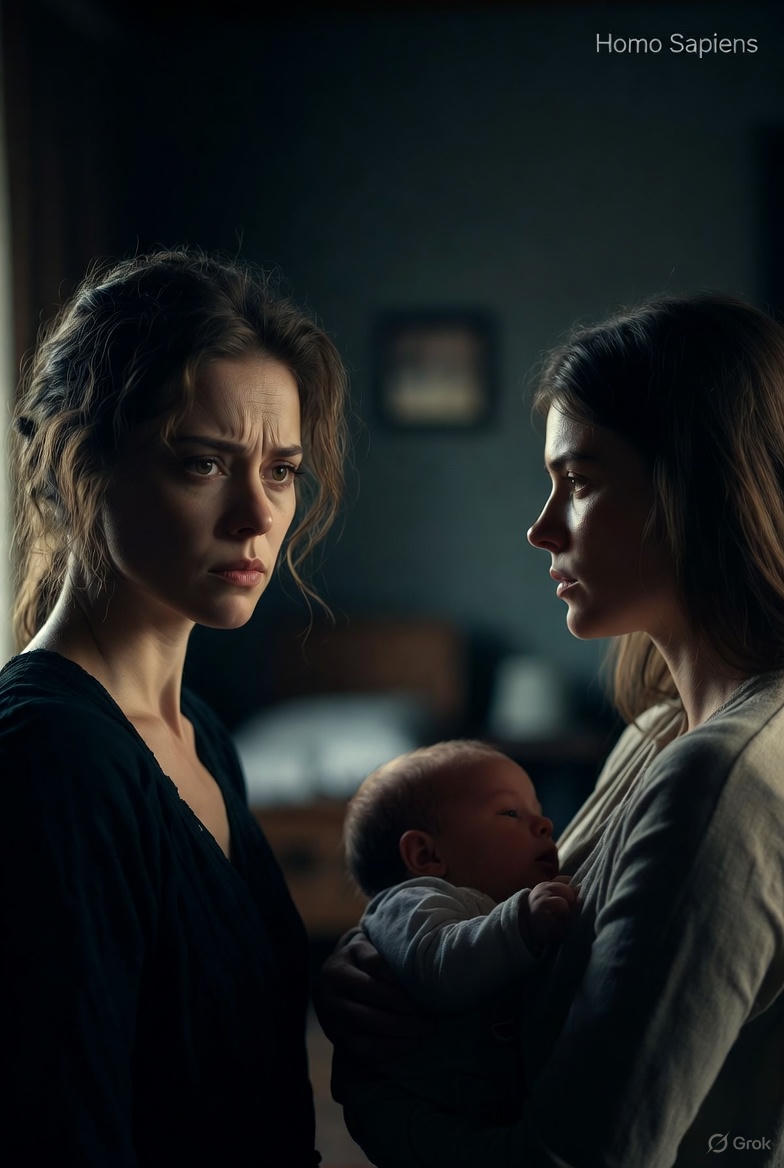
Homo Sapiens: In the Maelstrom by Stanislaw Przybyszewski and translated by Joe E Bandel
XIII.
In the early morning Falk was awakened.
A gentleman was waiting in the salon on a very important matter. “Aha!” said Falk and dressed quickly.
When he entered the salon, he saw a person who bowed stiffly and extremely ceremoniously.
“From Kunicki? Isn’t that so? Well?”
He listened impatiently and distractedly to the other’s well-set speech.
“Severe demand? Yes, naturally. Just give your address, I will send my second to you. Only for God’s sake no stiffnesses, no ceremonies. Otherwise the conditions are quite indifferent to me. Naturally shoot to unconsciousness. Only no ceremonies…”
The stranger looked at Falk strangely, bowed and went.
“That is splendid, splendid.” Falk rubbed his hands cheerfully. Then he began to walk slowly up and down in the salon.
Suddenly a hot longing for Isa seized him. To tell her everything, to take her on his hands, to press her to him, so that they would become one in the raging elan of love.
But in the next moment a picture that hung over the piano chained him.
The sky: a row of broad, glaring stripes that lay unbalanced next to each other. Broad, brutal stripes; the whole like a wild cry of despair… And a beach with a long pier. Two people on the pier: she in a white dress. One actually saw only this white dress, and this white spot in the middle of the despair orgy of the sky looked like something horribly mysterious, something that made the nerves sick with curiosity and mad horror. He sucked himself with his whole soul into this white dress: That is she, the doom, the white lightning, the dancing world in chaos.
He looked away and examined with most tense attention a wilted orchid.
So he had to find a second now—naturally Geißler. He had no other. He no longer had a single person.
He searched long for his hat, went to Isa’s bedroom, listened, went quietly around again…
Now he had to go, otherwise he would no longer find Geißler at home.
Scarcely had he gone when Isa entered his room. She had fever in the night and nightmare. She wanted to speak with him, to calm herself…
She was very astonished when she no longer found him. She stood sadly, then sat down and looked around the room.
The room suddenly seemed so strange and so uncomfortable to her. She believed she clearly felt the sick, feverish atmosphere of this room… Everything lay confused together, on the desk she saw a large, colorfully scribbled sheet of paper.
She held the sheet in her hands and looked as if sunk before her. The sheet was written from bottom to top only with one word in the most varied typefaces: Ananke.
An indefinite torment constricted her heart. It became so sultry to her. She felt a deep sadness. It seemed to her as if her whole happiness had suddenly passed.
She actually did not understand where all this depression came from? She began to distract herself with all possible thoughts, but she could not get rid of the irritating unrest.
She collected herself, went into her bedroom and dressed slowly.
Suddenly the maid came in.
“A gentleman wishes to speak with you.” She handed Isa a card: Stefan Kruk.
Isa read and read the card. But that is impossible. Hadn’t Kruk fled from Germany? He is after all sentenced to several years in prison… A growing unrest began to hunt in her head. A confusion of thoughts shot through her brain. The feeling of something unusual filled her with sudden fright. She hurried and was hardly able to finish her toilet.
When she entered the salon, she saw Kruk quite unusually pale with wild, red eyes.
Isa stopped frightened.
“What is it? What is it?” she asked stammering.
“Where is your husband?”
She heard his hoarse voice tremble violently.
“He went away. But how do you come here, how could you expose yourself to this danger?”
Kruk looked at her as if he did not know where he was, as if he had forgotten himself.
Isa recoiled frightened.
“Your husband is a scoundrel,” he cried raging. “He dishonored my sister…”
Isa heard a few more words: mistress, bastard, seducer, then she understood nothing more.
Kruk came to his senses. He saw how all blood had left her face, how her lips became blue… She swayed, he caught her.
She came to quickly.
“My husband has a child now, now… a few weeks ago with your sister? Your… sister?! Child?”
She looked at him absently and stammered incessantly the word child… then she jumped toward him.
“That is impossible! Impossible…”
She grasped her head and walked a few steps. “A child!…”
She suddenly started.
“I must see it, I must see it… It is impossible. No, no…” She ran around.
“Why don’t you say a word? Say then that it is impossible… Oh God, oh God… So look for my hat, quick, my hat… How is that only possible… Ha, ha, ha, he asked me what I would say to it… Grand Dieu, c’est impossible… How pale you are, how dark… Just come quick, quick…”
She no longer knew what she did and what she said.
Only down in the cab did she come to her senses. They spoke no word with each other.
She had the feeling of a black, cool shadow over her brain, she laughed convulsively, sank together and again a desire to laugh suddenly overcame her.
She looked at Kruk almost roguishly.
“I recognized you immediately—I saw you twice in Paris… Oh, how you have changed, and how boundlessly pale you are… Mais c’est terrible, c’est terrible!”
She looked with mad glances out the window.
Suddenly she heard the rolling of another cab behind her back, the noise deafened her, she saw nothing more and heard nothing, repeated only quite mechanically: c’est terrible!
Finally the cab stopped, and immediately behind it another cab stopped. Kruk suddenly came into an unspeakable unrest…
In the moment when Isa had stepped out of the cab, she saw two men throw themselves on Kruk.
“In the name of the law…”
Kruk drew the revolver lightning fast, but in a moment he was thrown to the ground from behind…
A crowd formed. Isa stepped hastily into the hallway.
She supported herself against the wall so as not to fall. A dizziness raged in her. She sought convulsively to fight against it. Then she looked fixedly up the shining stair rail, heard a shouting on the street and saw a few children run past.
She looked around confused.
What did she want here?… Visit Erik’s mistress? Ha, ha… Great God! Erik’s mistress…
She collected herself and stepped into the courtyard. She stopped as if spellbound.
In a window of the courtyard ground floor she saw a pale, desperate face. The girl carried a child on her arm.
The two women stared at each other.
C’est elle! Isa said to herself half-aloud. She saw how the other recoiled in highest fright.
Isa went in. She knocked.
The door was opened fearfully and only half.
“But let me in…” she almost violently pushed Janina back… “I want to do nothing to you, only the child…”
She entered Janina’s room.
“But don’t tremble so, I really want to do nothing to you…” She laughed nervously… “Mais, c’est drôle… this little girl: Erik’s mistress, ha, ha, ha… Sit down then, you are pale, you will fall… God, how thin, how miserable you are. He sucked all your blood… And the little one there is your child, Falk’s child…”
Alraune by Hanns Heinz Ewers and translated by Joe E Bandel
Intermezzo Perhaps your quiet days, my blonde little sister, will also drop like silver bells that ring softly with slumbering sins. Laburnums now throw their poisonous yellow where the pale snow of the acacias once lay. Ardent clematis show their deep blue where the devout clusters of wisteria once peacefully resounded. Sweet is the gentle game of lustful desire; yet sweeter to me are all the cruel raging passions of the nighttime. Yet even sweeter than any of these to me now is sweet sleeping sin on a hot summer afternoon. –She slumbers lightly, my gentle companion, and I dare not awaken her. She is never more beautiful than when she is sleeping like this. In the mirror my darling sin rests, near enough, resting in her thin silken shift on white linen. Your hand, little sister, falls over the edge of the bed. Your slender finger that carries my gold band is gently curling. Your transparent rosy nails glow like the first light of morning. Fanny, your black maid, manicured them. It was she that created these little marvels. And I kiss your marvelous transparent rosy nails in the mirror. Only in the mirror–in the mirror only–only with loving glances and the light touch of my lips. They will grow, if sin awakes, they will grow, become the sharp claws of a tiger, tearing my flesh– Your head rises out of the pillow, surrounded by golden locks. They fall around it lightly like flickering golden flames that awaken at the first breezes of early morning. Your little teeth smile out from your thin lips, like the milky opals in the glowing bracelet of the moon Goddess. And I kiss your golden hair, sister, and your gleaming teeth–in the mirror–only in the mirror–with the soft touch of my lips and with loving glances. For I know that if ardent sin awakes the milky opals will become mighty fangs and the golden locks become fiery vipers. Then the claws of the tigress will tear at my flesh, the sharp teeth bite dreadful, bloody wounds. Then the flaming vipers will hiss around my head, crawl into my ears, spray their venom into my brain, whisper and entice with a fairy tale of savage lust– Your silken shift has fallen down from your shoulder, your childish breasts smile there, resting, like two white newborn kittens, lifting their sweet rosy noses into the air. I look up at your gentle eyes, jeweled blue eyes that catch the light, that glow like the sapphire on the forehead of my golden Buddha figurine. Do you see, sister, how I kiss them–in the mirror? No fairy has a lighter touch. –For I know well, when she wakes up, my eternal sin, blue lightening will flash out of her eyes. It will strike my poor heart, making my blood boil and seethe, melting in ardent desire the strong chains that restrain me, till all becomes madness and then surges the entire– Then hunts, free of her chains, the raging beast. She overpowers you, sister, in furious frenzy. Your sweet childish breasts become the giant breasts of a murderous fury–now that sin has awakened–she rends in joy, bites in fury, exults in pain and bathes in pools of blood. But my glances are still silent, like the tread of nuns at the grave of a saint. Softer yet is the light touch of my lips, like the kiss of the Holy Ghost at communion that turns the bread into the body of our Lord. She should not awaken, should remain peacefully sleeping–my beautiful sin. Nothing, my love, is sweeter to me, than pure sin as you lightly sleep.
Madame Bluebeard by Karl Hans Strobl and translated by Joe E Bandel
Helmina and Gegely stepped onto the balcony alone. Below, white villas with green shutters lazed in the sun; across the tangled valleys, Dreieichen’s pilgrimage church gleamed. The land breathed calmly, steeped in strong confidence. “You’re in a foul mood today,” the poet said. “Oh… I’ve had troubles. Silly matters. Thinking about them only gives me a headache. Money issues, losses that hit me.” She leaned her arms on the balustrade, gazing at the landscape. Fritz Gegely grew feverishly aroused. Her beauty glowed, deep as a southern sea. As always, when poised to surrender to desire, he felt: Am I not a poet? The rightful owner of all beauty? “Why not confide in me?” he asked, trembling, stepping close. She looked at him, surprised. “Why should you claim special trust? I have Ruprecht to tell, if I felt the need to speak.” Gegely waved a hand, as if to erase the name just spoken. “Why hold that against me? I don’t believe you. I’m a psychologist. I see you and Ruprecht are fundamentally estranged. He’s a man of straight lines. But you’re multifaceted, vibrant, not summed up in a word.” “If I didn’t want to confide in Ruprecht… I have Hugo and the Major. Old friends. Don’t you think they’d be thrilled…?” She smiled deeply into his gaze. “Nonsense!” he snapped, angry. “Those two… do they even count? I insist I’m the only one… don’t you see? What proof do you need…? I haven’t known you as long as your other friends. But does that matter? Some wrestle a lifetime for insight. For others, it comes in a flash.” Helmina brushed her forehead. Something new stood before her. She saw her power over this man she disdained—a firm foothold, a hook for a rope. She needed time. “Be quiet,” she said hastily. “They’re coming. We’ll talk later. Tonight, in the birch grove behind the castle. I’ll see if I can trust you.” After the tour, they reunited in the tournament courtyard and dined outdoors. Old Johann had packed the car’s provision basket to the brim— enough for a week. Two bottles of champagne were included. The group’s mood didn’t quite harmonize. Each clung to a private world, sharply walled from neighbors. Hedwig was quietly, blissfully pensive, smiling to herself. Ruprecht was serious, thoughtful, his gaze resting on Hedwig, but his ease was gone. He startled occasionally, scanning for mocking or envious glances. Helmina seemed pensive too, but restless, her effort to hide it making her moodier and more demanding than usual. Fritz Gegely played his poet-Browning role poorly, flaunting his grandeur to Helmina, while Ernst Hugo watched suspiciously, unable to shake the sense they’d already reached an understanding. Only the children and the Major frolicked freely across divides. Miss Nelson sat by, slender, discreet, silent, adjusting the children’s dresses or offering a quiet admonition. The champagne was drunk. No one knew to whose honor until Ernst Hugo called, “What we love shall live!” “Not original,” Fritz Gegely said, “but always good. Let’s toast!” Hugo thought he caught a subtle wink, a fleeting spark in their eyes—an optical telegraph between Helmina and Gegely. He wanted to pull Ruprecht aside, warn him of the false friend. But he couldn’t. He had no proof beyond jealous instinct. Hugo was in poor spirits. His jubilee anthology wasn’t gaining expected acclaim, overshadowed by other works. The praise amounted to a dim flicker, not the blazing fame he’d hoped for. Somehow, this disappointment fused with his dislike of Gegely, as if he alone bore the blame. The afternoon passed lazily, marked by hammocks. Helmina and Hedwig lay in swaying nets, the men beside them. Time flowed. Toward evening, the Major suggested walking to the train station. “Watch—it’ll be fun. It’s Saturday. The husbands arrive from Vienna… You must see how eagerly they’re awaited. It might do some marriages—or life—good if spouses met only weekly.” Rosenburg station was lively. Women stood in clusters, children darted among them. The train’s distant whistle pierced the air—a mix of long trills, short, wild bursts, and shrill, breathless cries. The steam whistle raged. The train roared in with a savage howl. The waiting women smiled and nodded to each other. The Major laughed heartily. “It’s always like this,” he said. “The whistles are signals: one long, two short—Herr Meier’s coming. Three quick trills—Herr Freudenfeld’s aboard. If Herr… Kohne, say, is on, the engineer plays an opera. Each gets a quarter of wine. The wives know at once if they can rejoice. Yes, my dear, love is inventive.” Two hands met on the wheelchair’s backrest. Ruprecht’s gaze asked timidly. Hedwig smiled wistful calm into his heart. They returned home, weary from the sun and mild breeze. The children slept—Lissy on Hedwig’s shoulder, Nelly in Ruprecht’s lap. Dusk fell. “In an hour, it’ll be dark,” Helmina said. Fritz Gegely understood. They parted at the bridge. Entering her room, Helmina found Lorenz waiting in the dark. “I’m leaving tomorrow,” he said. “Already?” “Yes… I resigned, and your husband said I can go whenever, if I’ve found a better post. I wanted to smash his face. I’ll end up at him if I stay longer. The sooner I leave, the better… so tomorrow. There’s nothing left to do here. I’ll stay nearby, ready when Anton calls. I’ll fetch you then…” “You don’t trust me…? Anton wants me escorted.” “Ridiculous! But it’s better this way.” “Don’t bother, my dear. You think I won’t go with you. But I’m done here. I’m giving up Vorderschluder. New goals beckon.” In the dark, she approached the large mirror, trying to see her form in the glass, faintly lit by fading twilight. Lorenz was silent a moment. “Helmina,” he said, “you’re a sensible woman. I’ll admit, we weren’t sure you’d come. We thought you’d be foolish… I’m glad we were wrong.” He lit a lamp. If someone entered, he shouldn’t be found so intimately with Helmina in the dark. “I can’t say how Ruprecht bores me. He moons at that Hedwig’s wheelchair like a slaughtered calf. Now he compares her to me—I’m the evil spirit, she’s the bright angel. Damn it, my stomach turns watching them. Well, it won’t last long… so you’re leaving tomorrow?” “Yes.” “Then you can do me one last service tonight.” “What?” Helmina smiled sweetly. “Be my escort… oh, it’s a romantic tale, a love adventure, Lorenz! What, you’re stunned? I have a rendezvous in the birch grove. You’ll guard a private hour.” “I truly don’t know what to say,” Lorenz said. “You’re starting a new love affair. What’s wrong with that ass of a court secretary? And… it’s dangerous. If your husband finds out, he might forget his good manners and get nasty.” But Helmina cupped Lorenz’s smooth chin. “You fool! Who’s thinking of the court secretary? It’s someone else. Yes—gape all you like. Fritz Gegely, the poet, is at my feet.” “Him! I thought he was glued to his wife’s wheelchair.” “Oh? Fooled you too? God knows, you’re all so easy to dupe. No, my dear, good Fritz Gegely is an eagle in a cage. He wants out. Or rather, he’s a peacock. His life’s purpose is to strut before the world… with rustling plumage. It won’t take much effort… and he has heaps of gold. You know, I’d rather not show up empty-handed.” Lorenz sank into wide-eyed awe. “That’s outrageous… brilliant,” he muttered. “You’re a genius, Helmina! Forgive us for misjudging you. I must kiss you.” “No, don’t!” Helmina fended him off. “Why? Shame on such urges among colleagues! I’m going to dinner now. In half an hour, I’ll retire. You’ll wait for me behind the garden. And then—hunter’s luck!”
Part III: Concerning the Laws and Vital Conditions of the Hermetic Experiment
Chapter 3: The Manifestation of the First Matter, Part 6
Introduction: The Hermetic art transforms the soul’s essence, the First Matter, into divine light through faith and thought, uniting it with eternity. This section unveils the mystical journey where the soul’s spark becomes a radiant vessel of universal truth, guided by sacred wisdom.
The Power of Divine Thought
The Zohar declares, “Thought is the principle of all, initially unknown, unfolding into spirit and intelligence.” This divine thought, the First Matter, emerges from chaos into light, as Pimander instructs: “Increase yourself to immeasurable greatness, transcending time and body, to understand God.” Through faith, the soul aligns with this divine thought, becoming one with the eternal source, a radiant spark of cosmic wisdom.
This faith, not blind but vibrant, leads the soul beyond sensory limits to perceive the “Substant Unity” of all creation. The Sybil’s prophecy, “The invisible Word becomes palpable and germinates as a root,” captures this transformation, where the soul’s essence blooms into divine light through persistent effort.
The Alchemical Rebirth
The alchemical process mirrors this, dissolving the soul’s illusions to reveal its radiant core. As the adept advises, “Work faithfully to dissolve, coagulate, and refine until reason becomes a bright light, immortal and mistress of life.” This is the philosopher’s stone, the “noblest Mercury,” second only to the rational soul, born from the divine fire that transforms chaos into harmony.
The soul, purified through faith and love, becomes a vessel for the divine Word, uniting the infernal and external worlds in a radiant dance. This mirrors the cosmic rebirth, where the invisible becomes visible, as Hesiod’s Chaos births light through Love’s embrace.
The Universal Harmony
This sacred union, where thought and light converge, fulfills the Hermetic quest. The soul, now a “fountain of Universal Nature,” reflects all creation, as the Pimander reveals: “Nothing is impossible when you believe in your immortal essence.” Through this divine thought, the soul becomes eternal, harmonizing with the cosmos in a radiant symphony of love and wisdom.
Closing: This chapter unveils the First Matter’s rebirth into divine light through faith and thought. The journey into its alchemical secrets deepens in our next post, unveiling further wonders of this sacred art.
Homo Sapiens: In the Maelstrom by Stanislaw Przybyszewski and translated by Joe E Bandel
No more than the salon anarchist Herr John Henry Mackay… You all preach a peaceful overthrow, a replacement of the broken wheel by a new one while the wagon is in motion. Your whole dogma structure is quite idiotic, precisely because it is so logical, for it is based on the omnipotence of reason. But until now everything has arisen through unreason, through stupidity, through purposeless chance.”
“And you sent Czerski to make the stupidity,” Kunicki sneered.
“I hope with all my soul that he does something terribly stupid. I hope it definitely, and namely in the conviction that the few revolutionaries who were hanged, shot or executed have penetrated a thousand times deeper into the consciousness of the dissatisfied popular masses than your party with the theoretical Marx-Lassallean watered soups can ever penetrate.”
Kunicki laughed scornfully and tried to be quite pointed.
“You know, Herr Falk, after everything I have now heard from you, one could make quite peculiar thoughts about you. Just as I hear you speak now, I heard a lock-spy speak in Zurich.”
Now the moment is here, thought Falk.
“Do you believe that I am a lock-spy?” Kunicki smiled even more maliciously.
“I only emphasize the indeed very strange similarity of your speech…”
In the same moment Falk bent far over the table and slapped Kunicki with full force.
Kunicki jumped up and threw himself on Falk.
But Falk grasped his both arms and clutched them so tightly that Kunicki could not tear himself loose despite the most furious efforts.
Falk became very angry.
“We will not fight here after all. I stand entirely at your disposal if you want satisfaction. By the way, I am stronger than you, you risk very fatal beatings.”
He let him go and pushed him back.
Kunicki looked deathly pale, foam came to his lips. Then he put on his coat and went staggering out of the room without a word.
Falk sat down, Olga remained standing at the window and stared at him. Falk crept back into his brooding.
This silence lasted probably half an hour. Suddenly he stood up.
“He will surely send me a challenge?”
It was like a quiet triumph in his words.
“You wanted it. You provoked him. You forced him to it. And now you triumph over it. You find that this is easier than suicide.”
She laughed nervously and stretched out her hand.
“So you have no more strength, you want it after all. And you said that you love my love, and I believed that you would not do it for the sake of my love. You lied. You love no one.”
“I love you—” said Falk mechanically.
“No, no, you love no one. You love your pain, you love your cold, cruel curiosity, but not me.”
She came into ever greater excitement. Her lips trembled and the eyes became unnaturally wide.
“I love you!” repeated Falk tonelessly.
“Don’t lie, don’t lie anymore. You never loved me. What am I to you? Could you have lived for my sake? You said: stay with me, I need your love, but did you think for a moment that I live only for your sake? You have enough love around you, but whom do I have, what do I have, except your cold, cruel curiosity that chained you to me. Did you think of me now?”
“I always think of you,” said Falk very sadly.
She wanted to say something, but her voice broke, her face froze, and again Falk saw the tears run over the mute face. She turned quickly to the window. But in the next moment she came to him and grasped him with desperate passion by the arms.
“Do you want to die?”
He stared at her as if he had not understood her. “Do you want to die?” she repeated in frenzy. “Yes.”
“Yes?” she cried out. “Yes.”
She let her arms sink.
“I do not love you. I do not love you as I loved you… Why don’t you give me a shilling when you get millions? Are you so poor, are you really so poor…?”
She stepped back and looked at him with tormenting despair.
But in this moment Falk threw himself on his knees, grasped her dress and kissed it with long fervor.
She sank down on him, she grasped his head, she kissed him on his eyes, on his hair, on his mouth. She could not satiate herself on the head she loved so unspeakably with all the torment, with all the painful renunciation.
Suddenly she started up violently and staggered back. “You do not love me!”
Her voice was tired and broken.
Falk did not answer. He sat down, supported his head in both hands and suffered. He had never suffered so.
The impotence of his soul had now completely broken him. There was really no way out anymore. Now his soul became dull, only now and then some indifferent thought flashed up.
Olga sat down on her bed and looked at him fixedly.
He suddenly raised his eyes to her, they stared at each other an eternity, he smiled madly and lowered his eyes.
Suddenly he said, as to himself:
“I slapped him because he is only a louse.”
“You are sick, Falk. Only now do I see that your head is sick.” She looked at him with growing astonishment.
“You were always sick. You are not normal.”
“Not normal?” he asked. “Not normal? You are probably right. I often asked myself if I am not mad in the end. But my madness is different from that of other people… Yes, my head is sick. The disgust kills me…”
He sat with deeply bowed head and spoke very softly.
“The disgust for myself, the disgust for people eats at me like gangrene… I could perhaps have done something, but the senseless debaucheries ate away my will. I went and destroyed and suffered… Oh, how terribly I suffered. But I had to do it, half from a demonic incomprehensible urge. People succumbed to my suggestions… But what should I talk about it. I have talked enough… In the end it is only my vanity that speaks so… It actually pleases me that I had this power… I also repent nothing, perhaps I would start anew if I got fresh strength from somewhere.
He stood up.
“Now I will go. You did me wrong: I loved you very much.”
He bent over her hand and kissed it. The hand trembled violently. At the door he stopped.
“If it goes badly, you understand, Kunicki is a famous shot, yes, then will you now and then look in on Janina?… She was good to me… It is shameful that I had to intervene so deeply in her life…”
He looked at her and smiled strangely. “Will you do that?”
She nodded with her head.
“Well, farewell Olga, and—and… Yes, who knows, perhaps we will not see each other again.”
She stared at him speechlessly and then waved violently with her hand. “Yes, yes… I go.”
Madame Bluebeard by Karl Hans Strobl and translated by Joe E Bandel
“That’s wholly Austrian,” Ruprecht said, sketching the castle’s character for Hedwig. “You might think someone’s aloof and, despite simplicity, unapproachable, then find you can chat quite comfortably. Our great men all have a back road, bypassing the official facade.” They entered the tournament courtyard. Hedwig was lifted from the carriage and placed in her wheelchair. Maurerwenzel resumed his duty. Hedwig wished to stay in the wide, open courtyard; the castle’s stair-laden tour was not for her. Ruprecht offered to keep her company. The others departed toward the octagonal tower at the entrance, after Fritz Gegely took tender leave, pressing a kiss on Hedwig’s forehead. The carriages drove out to stable at the tavern by the courtyard. Maurerwenzel watched them enviously. Ruprecht understood the look. “You can go over too,” he said. “If you’re thirsty. Here—have a quarter of wine.” Maurerwenzel cupped his hand like a nest for a silver egg, tipped his cap, and shuffled out the gate with his “quick” gait, bound for the inn. “Shall we move to the shade?” Ruprecht asked, hands on the wheelchair’s backrest. “No, please, if it’s no trouble, let’s stay in the sun. It’s not too hot… and the breeze cools nicely. I love the sun… I feel it’s kind to me. I let it soak through me… I feel it in my limbs… like a new strength…” Ruprecht pulled the wheelchair close to the wall, where reflected rays could work, and sat beside Hedwig on a fallen stone. The vast courtyard, ringed with double arcades, lay empty before them. Hedwig reclined, basking in full sunlight, motionless. Ruprecht saw her body drink the hot light. Through half-closed eyes, a shimmering curtain of light flickered. He tried to decipher the faded wall paintings in the arcades. A brown-red hue remained, other colors long extinguished. These might once have been emblems, coats of arms, allegories— symbols of families who once pranced their horses in glittering carousels here. From the castle’s past, he gently slipped into his own. He smiled. “Do you remember, Frau Hedwig,” he said, “when we danced in the woods? It was a school outing from our gymnasium. Your girls’ school was there too… and suddenly, we paired up. Youths and maidens… to the horror of teachers and governesses…” Hedwig turned to him. “Yes… dancing’s over for me,” she said, smiling. Ruprecht fell silent, dismayed. How thoughtless, how careless he’d been. He longed to speak more of those days—how they’d climbed walls and back gardens at night, like thieves, to reach Hedwig’s courtyard, bursting into four-part song: “Why are you so far, oh my love!” The next day, stern professorial faces and a disciplinary probe for nocturnal mischief. Everything teetered… then ten hours’ detention as penance. Ten glorious hours, filled with the thrill of suffering for her, proving his heroism. They’d called her Silvia then, for its melodic flow, redolent of forest scent and soft leaf-rustle, no other name seeming to fit. A touch of Shakespeare’s winged Midsummer Night’s Dream. She’d been like a lizard—slender, agile, gleaming. “But… you’re happy,” Ruprecht said, consoling himself. “Few preserve such pure joy in life as you…” “Yes… I’m happy,” she said gratefully, offering her hand. “There’s still so much I needn’t forgo.” Ruprecht steeled his heart. “Above all, you’ve found the happiness of love… Your husband is full of gentle care…” Hedwig closed her eyes, lying still. The sun poured into her like a hot draught. The sun is clarity and truth, she thought. One shouldn’t lie in its light. “Why should I deny you the satisfaction I owe you?” she said after a pause. “You’re mistaken, Ruprecht, the world’s mistaken. I’m a burden to my husband. My frailty irks him. Yes… he masterfully plays his role before others. I know how I hurt you then. Your strong confidence looked down on the pampered prince Gegely. But I was vain… yes, let me confess…” She paused, and Ruprecht saw her fingers twitch on the wheelchair’s armrest, betraying agitation. Alarmed, he leaned to see her face, but her eyes were shut. “I hurt you. I know you loved me. I’m still happy… thinking of those times. Yet I chose Fritz Gegely. I was a foolish, vain girl. He was a poet, the gymnasium’s pride, already famous at university, destined for greatness.” “Stop, Hedwig, please… I don’t want to know more. Don’t make me unhappy…” “You needn’t be. I’m past that disappointment. Only sometimes I think it could’ve been different. I soon realized he was an aesthete—one who doesn’t take life directly but through a colored lens, feigning mood. Then one hope: a child. But you see what’s left of that. A paralyzed woman… That was the darkest night of my life. Then… things brightened: the clarity of limitation. I can’t even blame my husband for his sullenness. I’m truly a burden. But he draws benefit in his way. He plays a second Browning couple before the world. As he wears famous poets’ vests, coats, and wallets, I’m useful as a paralyzed wife. Elizabeth Barrett Browning. But I don’t complain—I’m still happy…” “Why tell me this… why?” Ruprecht groaned. “Why? I’m beyond passion’s good and evil. I’m safe from all danger.” “But I’m not, Silvia, I’m not…” Hedwig opened her eyes. Her hat shaded her brow, a blonde strand fluttering across it. “You call me Silvia… like then… I think you invented the name…” “Yes… I think I found it: it was there, flowing around you like song. I only sang it… Silvia…” A car horn blared a triad on the forest road. “The children,” Hedwig said, sitting up to greet them. She felt a faint twitch in her right foot… but surely she was mistaken. The car rolled through the courtyard gate, halting before her wheelchair. The children leapt out, rushing to Hedwig and Ruprecht. Miss Nelson followed, slim, refined, silent as ever. “Here already, you rascals?” Ruprecht teased, laughing. “Your studies today… must’ve been half- done!” Lissy and Nelly each brought a bouquet of meadow flowers, picked along the way. Lissy gave hers to Hedwig, Nelly to Papa. Hedwig and Ruprecht exchanged glances—a continuation, a symbolic close to their talk. Two tears lingered in Hedwig’s eyes. Laughing, she shook her head, pulled Lissy close, and kissed her small red mouth. Meanwhile, Helmina and her group had ventured into the castle. The castellan, a young man not yet ossified in his role, was lively enough to answer unusual questions. Ernst Hugo flaunted his style knowledge, gleaned from café art enthusiasts. He spoke of form, material, line, and ornament. The Major hunted for old locks and keys. In his spare time, he tinkered with locksmithing and was fond of gunsmithing. “Everyone’s got their hobby,” he said. “Locksmithing’s my secret passion.” And storytelling’s your creepy one, thought the court secretary, but he didn’t say it, for he and the Major were in a holy alliance against Fritz Gegely. The poet of Marie Antoinette paid little heed to his allied foes. He walked beside Helmina, speaking of spatial sense. “You see, it’s a peculiar thing… a sixth sense, so to speak. It brings exquisite delights and torments… imagine, I enter a room and instantly feel its spatial design like a physical impression. Without tape or ruler, I know at once if its proportions are balanced or left to chance. Proportions are immediate certainty to me. The harmony of the Golden Ratio is a heartfelt, if somewhat bourgeois, pleasure. Round walls make me breathless, restless, caught in a whirl. Alcoves, odd angles, slanted walls, sloping ceilings give me strangely romantic sensations. This makes old castles so fascinating, each room unique. It sours me on city tenements with their uniformity— everything cut from one mold, dull, barracks-like, lacking even basic, natural harmony.” But Helmina wasn’t listening. She gazed distractedly out the windows they passed, letting Gegely’s words flow by. Halls, corridors, vaulted rooms, and alcoved chambers followed one another—a glance into the inner courtyard, then at the verdant moat and an old, gray turret. The guide opened the door to the balcony over the Kamp valley. At that moment, the Major called him back. He’d spotted an intricate lock on a grand Renaissance cabinet. A key moved seven bolts back and forth. The fittings depicted Saint George slaying the dragon—a small marvel. The Major eagerly questioned the castellan, holding Hugo fast.
Alraune by Hanns Heinz Ewers and translated by Joe E Bandel
He searched for Alraune and took it as a good omen that no guests were there. He heard from the maid that she had dined alone and was now in her rooms so he went up there. He stepped inside at her, “Come in.” “I must speak with you,” he said. She sat at her writing desk, looked up briefly. “No,” she cried. “I don’t want to right now.” “It is very important,” he pleaded. “It is urgent.” She looked at him, lightly crossed her feet.“Not now,” she answered. “–Go down–in a half hour.” He went, took off his fur coat, sat down on the sofa and waited. He considered how he should tell her, weighed every sentence and every word. After a good hour he heard her steps. He got up, went to the door–there she stood in front of him, as an elevator boy in a tight fitting strawberry red uniform. “Ah,” he said, “that is kind of you.” “Your reward,” she laughed. “Because you have obeyed so beautifully today–now tell me, what is it?” The Privy Councilor didn’t gloss things over, he told her everything, like it was, each little detail without any embellishments. She didn’t interrupt, let him speak and confess. “It is really your fault,” he said. “I would have taken care of it all without much trouble–but I let it all go, have been so preoccupied with you, they grew like the heads of the Hydra.” “The evil Hydra”–she mocked, “and now she is giving poor, good Hercules so much trouble! By the way, it seems that this time the hero is a poisonous salamander and the monstrous Hydra is the punishing avenger.” “Certainly,” he nodded, “from the viewpoint of the people. They have their ‘justice for everyone’ and I have made my own. That is really my only crime. I believed that you would understand.” She laughed in delight, “Certainly daddy, why not? Am I reproaching you? Now tell me, what are you going to do?” He proposed his plans to her, one after the other, that they had to flee, that very night–take a little trip and see the world. Perhaps first to London, or to Paris–they could stay there until they got everything they needed. Then over the ocean, across America–to Japan–or to India–whatever they wanted, even both, there was no hurry. They had time enough, then finally to Palestine, to Greece, Italy and Spain. Where ever she wanted–there they could stay and leave again when they had enough. Finally they could buy a villa somewhere on Lake Garda or on the Riviera. Naturally it would be in the middle of a large garden. She could have her horses and her cars, even a yacht. She could fill the entire house with people if she wanted– He wasn’t stingy with his promises, painted in glowing colors all the tempting splendors that awaited her, was always finding new and more alluring reasons that she should go. Finally he stopped, asked his question, “Now child, what do you say to that? Wouldn’t you like to live like that?” She sat on the table with her slender legs dangling. “Oh yes,” she nodded. “Very much so–only–only–” “Only?”–he asked quickly, “If you wish something else–say it! I will fulfill it for you.” She laughed at him, “Well then, fulfill this for me! I would very much like to travel–only not with you!” The Privy Councilor took a step back, almost fell, grabbed onto the back of a chair. He searched for words and found none. She spoke, “With you it would be boring for me–you are tiresome to me–I want to go without you!” He laughed, attempting to persuade himself that she was joking. “But I am the one that must be leaving right away,” he said. “I must leave–tonight yet!” “Then leave,” she said quietly. “I’m staying.” He began all over again, imploring and lamenting. He told her that he needed her, like the air that he breathed. She should have compassion on him–soon he would be eighty and wouldn’t be a burden to her very much longer. Then he threatened her again, screamed that he would disinherit her, throw her out into the street without a penny. “Just try it,” she threw back at him. He spoke yet again, painting the wonderful splendors that he wanted to give her. She should be free, like no other girl, to do and have as she desired. There was no wish, no thought that he couldn’t turn into reality for her. She only had to come with–not leave him alone. She shook her head. “I like it here. I haven’t done anything–I’m staying.” She spoke quietly and calmly, never interrupted him, let him talk and make promises, start all over again. But she shook her head whenever he asked the question. Finally she sprang down from the table and went with soft steps toward the door, passing him. “It is late,” she said. “I am tired. I’m going to bed–good night daddy, happy travels.” He stepped into her way, made one last attempt, sobbed out that he was her father, that children had a duty to their parents, spoke like a pastor. She laughed at that, “So I can go to heaven!” She stood near the sofa, set down astride the arm. “How do you like my leg?” she cried suddenly and stretched her slender leg out toward him, moving it back and forth in the air. He stared at her leg, forgot what he wanted, thought no more about flight or danger, saw nothing else, felt nothing–other than her slender strawberry red boy’s leg that swung back and forth before his eyes. “I am a good child,” she tittered, “a very dear child that makes her stupid daddy very happy–kiss my leg, daddy–caress my beautiful leg daddy!” He fell heavily onto his knees, grabbed at her red leg, moved his straying fingers over her thigh and her tight calf, pressed his moist lips on the red fabric, licked slowly along it with his trembling tongue. Then she sprang up, lightly and nimbly, tugged on his ear, and patted him softly on the cheek. “Now daddy,” her voice tinkled, “have I fulfilled my duty well enough? Good night then! Happy travels–and don’t get caught–it would be very unpleasant in prison. Send me some pretty picture postcards, you hear?” She was at the door before he could get up, made a bow, short and stiff like a boy and put her right hand to her cap. “It has been an honor, your Excellency,” she cried. “And don’t make too much noise down here while you are packing–it might disturb my sleep.” He swayed towards her, saw how quickly she ran up the stairs. He heard the door open upstairs, heard the latch click and the key turn in it twice. He wanted to go after her, laid his hand on the banister. But he felt that she would not open, despite all his pleading. That door would remain closed to him even if he stood there for hours through the entire night until dawn, until–until–until the constable came to take him away. He stood there unmoving, listening to her light steps above him, back and forth through her room. Then no more. Then it was silent. He slipped out of the house, went bare headed through the heavy rain across the courtyard, stepped into the library, searched for matches, lit a couple of candles on his desk. Then he let himself fall heavily into his easy chair. “Who is she,” he whispered. “What is she? What a creature!” he muttered. He unlocked the old mahogany desk, pulled a drawer open, took out the leather bound volume and laid it in front of him. He stared at the cover, “A.T. B.”, he read, half out loud. “Alraune ten Brinken.” The game was over, totally over, he sensed that completely. And he had lost – he held no more cards in his hand. It had been his game; he alone had shuffled the cards. He had held all the trumps–and now he had lost anyway. He smiled grimly, now he had to pay the price. Pay the price? Oh yes, but in what coin? He looked at the clock–it was past twelve. The people would come with the warrant around seven o’clock at the latest–he still had over six hours. They would be very considerate, very polite–they would even bring him into custody in his own car. Then–then the battle would begin. That would not be too bad–he would defend himself through several months, dispute every move his opponents made. But finally–in the main case–he would lose anyway. Manasse had that right. Then it would be–prison–or flee–but alone, entirely alone? Without her? In that moment he felt how he hated her, but he also knew as well that he could think of nothing else any more, only her. He could run around the world aimlessly, without purpose, not seeing, not hearing anything but her bright twittering voice, her slender swinging red leg. Oh, he would starve, out there or in prison–either way. Her leg– her sweet slender boy’s leg! Oh how could he live without that red leg? The game was lost–he must pay the bill, better to pay it quickly, this very night–with the only thing of value he had left–with his life. And since it wasn’t worth anything any more, perhaps he could bring someone else down with him. That did him good, now he brooded about whom to take down with him, someone that would give him a little satisfaction to give one final last kick. He took his last will and testament out of the desk, which named Alraune as his heir, read through it, then carefully tore it into small pieces. “I must make a new one,” he whispered, “only for whom?–for whom?” There was his sister–was her son, Frank Braun, his nephew– He hesitated, him–him? Wasn’t it him that had brought this poisonous gift into his house, this strange creature that had now ruined him? He–just like the others! Oh, he should pay, even more than Alraune. “You will tempt God,” the fellow had said. “You will put a question to him, so audacious that He must answer.” Oh yes, now he had his answer! But if he inexorably had to go down, the youth should share his fate. He, Frank Braun, who had engendered this thought, given him the idea. Now he had a bright shiny weapon, her, his little daughter, Alraune ten Brinken. She would bring him as well to the point where he was today. He considered, rocked his head and grinned in satisfaction at this certain final victory. Then he wrote his will without pausing, in swift, ugly strokes. Alraune remained his heir, her alone. But he secured a legacy for his sister and another for his nephew, whom he appointed as executor and guardian of the girl until she came of age. That way he needed to come here, be near her, breathe the sultry air from her lips, and it would happen, like it had happened with all the others! Like it had with the Count and with Dr. Mohnen, like it had with Wolf Gontram, like with the chauffeur–and finally, like it had happened with he, himself, as well. He laughed out loud, made still another entry, that the university would inherit if Alraune died without an heir. That way his nephew would be shut out in any case. Then he signed the document and dated it. He took the leather bound volume, read further, wrote the early history and conscientiously brought everything up to date. He ended it with a little note to his nephew, dripping with derision. “Try your luck,” he wrote. “To bad that I won’t be there when your turn comes. I would have been very glad to see it!” He carefully blotted the wet ink, closed the book and laid it back in the drawer with the other momentos, the necklace of the Princess, the alraune of the Gontrams, the dice cup, the white card with a hole shot through it that he had taken out of the count’s vest pocket. “Mascot” was written on it. Near it lay a four leaf clover–several black drops of clotted blood still clung to it– He stepped up to the curtain and untied the silk cord. With a long scissors he cut the end off and threw it into the drawer with the others. “Mascot”, he laughed. “Luck for the house!” He searched around the walls, climbed onto a chair and with great difficulty took down a mighty iron cross from a heavy hook, laid it carefully on the divan. “Excuse me,” he grinned, “for moving you out of your place–it will only be for a short time–only for a few hours–you will have a worthy replacement!” He knotted the cord, threw it high over the hook, pulled on it, considered it, that it would hold–and he climbed for a second time onto the chair– The police found him early the next morning. The chair was pushed over; nevertheless the dead man stood on it with the tip of one toe. It appeared as if he had regretted the deed and at the last moment tried to save himself. His right eye stood wide open, squinting out toward the door and his thick blue tongue protruded out–he looked very ugly.
Part III: Concerning the Laws and Vital Conditions of the Hermetic Experiment
Chapter 3: The Manifestation of the First Matter, Part 5
Introduction: The Hermetic art transforms the soul’s essence, the First Matter, into divine light, uniting it with eternity through sacred vision. This section unveils the mystical encounter with the divine mind, revealing the soul’s path to cosmic rebirth and universal truth.
The Vision of Divine Light
Hermes’ Pimander recounts a sacred vision where the soul, freed from sensory bonds, beholds the divine mind. Pœmander, the “Mind of the Great Lord,” appears as infinite light, sweet and radiant, emerging from dark, moist chaos. This light, the First Matter, is the holy Word uniting with nature, birthing a fiery spirit that ascends, leaving earth and water renewed below. This mirrors the alchemical process, separating the subtle from the gross to reveal the soul’s eternal spark.
Pœmander declares, “I am that Light, your God, before the darkness. The Word is the Son, and the Mind is the Father—united in life.” The soul, seeing and hearing this light, becomes a vessel of divine wisdom, as Paul’s analogy of the seed illustrates: “Sown in corruption, raised in glory.”
The Cosmic Rebirth
Hesiod’s Theogony echoes this, with Chaos birthing Erebus, Night, Ether, and Day through Love’s embrace. Ovid’s Fasti describes a primal mass separating into fire, air, water, and earth, shaped by divine will into a harmonious world. This cosmic rebirth symbolizes the soul’s alchemical transformation, where the purified essence becomes a crystalline vessel of divine light, uniting the microcosm with the macrocosm.
The divine will, as the Kabalistic interpreter notes, moves the formless abyss to create matter and attraction, birthing the cosmos through love. Solomon celebrates this wisdom as an “undefiled spirit,” guiding the soul to know the universe’s mysteries and the elements’ operations.
The Soul’s Eternal Union
The soul, purified through faith and love, ascends to the “eighth sphere” of intellect, singing praises with the cosmic powers. Freed from passion and illusion, it becomes one with the eternal source, as Pœmander instructs: “Know yourself, and pass back into Life.” This union, where the soul’s light merges with divine light, fulfills the Hermetic quest, transforming it into a radiant vessel of universal harmony.
Closing: This chapter unveils the First Matter’s rebirth into divine light, a sacred vision of cosmic and spiritual unity. The journey into its alchemical secrets deepens in our next post, unveiling further wonders of this sacred art.
Homo Sapiens: In the Maelstrom by Stanislaw Przybyszewski and translated by Joe E Bandel
“Well, tell then.”
“No, no, that is terribly boring.”
Falk began to sink back into a dull brooding. Geißler looked at him astonished.
“Is something wrong with you?”
“Actually nothing, I only overcame a heavy fever attack.”
“Yes, thunder! Geißler suddenly cracked his fingers—what do you say to Grodzki?”
“Grodzki?” A violent fright shot through Falk’s limbs. “Well yes, he shot himself after all.”
“Shot?” asked Falk mechanically.
“That is a phenomenal city talk. He abducted a painter’s wife, suddenly came back, and shot himself.”
“The wife of a painter?”
“Yes. The poor fellow went mad. But this Grodzki! they say he shot himself out of fear.”
“Out of fear?” Falk came into an indescribable confusion. Out of fear?
“They say he stood shortly before a monster trial. A kind of sensational case like that of Wilde.”
Falk laughed.
“So that is why people shoot themselves. Ha, ha, ha, and I believed that their will was so strong to command over life,
ha, ha, ha…”
“They only say it so, perhaps it is only a gossip story… I don’t believe it. Was after all a phenomenal talented person. Well, you know him best. By the way, your name is often mentioned now.”
“Mine?”
“Yes, they want to bring you in connection with Grodzki.” Falk became distracted.
“Do they want that? Strange…” Geißler looked at Falk attentively.
“The illness has weakened you very much, what? You must take care of yourself… But how is Isa?”
Falk started.
“You loved her very much, didn’t you?” “To mental idiocy.”
“And so it passed?”
“Well, well; it is not quite passed.” “Not?”
Falk felt a wild joy.
“You seem to rejoice over it.”
“I arrange the affairs,” said Falk with a sudden, overbearing mood.
“What do you mean?”
“Well, if something should happen to me…”
“Don’t speak nonsense. You are sick. Should stay in bed.”
“Yes, yes, you are right.” He stood up. “You will come to us soon,” he said distractedly.
“Yes, naturally.”
When Falk stepped into the hallway, he suddenly remembered that he should speak with Geißler about the trip. But he now suddenly knew quite surely that he would not travel.
When he came to the street, he began to think about farewell visits… When one is to travel, one must make farewell visits, he thought profoundly.
The thought of the trip took possession of his brain again. But he did not want to think further about it. He suddenly felt that he would have to draw a host of conclusions from this fact, thus e.g. go up to Geißler again and such things once more, which would infallibly destroy his whole strength. He now wanted to be free from all thoughts.
And now: to Olga.
The last thought excited him again.
Where did the decision suddenly come from? So without any preparation, without any thinking? A miracle, a great miracle! Consequently will is a phenomenon? No, my you is a phenomenon.
Then he wondered that the idea of a Chinese theater had suddenly mixed into his thoughts: An actor stands on the stage, makes a foot movement and says to the audience: Now I ride… He, he, he…
His brain came into motion again. Grodzki appeared to him again.
“That is very risky after all, to commit suicide! This disgusting sniffing after the reasons…”
Meanwhile he came before Olga’s house. The eternally open restaurant had something irritating. He remembered that already as a boy the eternal lamp in the church irritated him. Ridiculous that it was never allowed to go out. Is Olga perhaps the holy Vestal who has to guard the eternal fire in the pub? Well, well, Falk… You become a little tasteless and banal…
He stepped onto the stairs, put on his gloves and adjusted his tie.
He knocked.
In Olga’s room Kunicki sat in shirt sleeves on the sofa, the coat lay over a chair back.
He shot the Russian in a duel, it shot through Falk’s brain like lightning, at the same time he remembered what was said about Grodzki’s death, and in the next thousandth of a second a decision shot up in him.
“You are hot again, dear Kunicki, as usual, as usual.”
Falk laughed with malicious friendliness. Kunicki looked at him darkly.
“Well, dear Kunicki, you look as if you wanted to introduce social harmony in the next two days.”
Falk laughed even more friendly and pressed both Olga’s hands. He looked at her beaming.
“See, see, how beautiful you look!”
“Don’t babble! I have very unpleasant things here with Kunicki. He is furious that we sent Czerski on agitation.”
“Perhaps Herr Kunicki wanted to travel?” Falk looked at him with most obliging smile. “That is a noble competition.”
Kunicki threw Falk a furious, hostile look and said excitedly:
“Your ridiculous pinpricks don’t concern me at all. But here it is about the thing. You know as well as I that Czerski is an anarchist.”
“No one knows it better than I. I spoke very long and broad with him about it.”
“So much the worse for you. You cannot take it ill if I open the committee’s eyes about you.”
“I care the devil about your committee,” Falk flared up. He fell completely out of his role. “I do what I want.”
“But we, we do not allow you that,” Kunicki cried furiously. “You destroy through Czerski our whole three-year work. You only aim to destroy our work.”
“Your work, your work?!” Falk laughed scornfully. “Have you quite forgotten what you accomplished with your work. He, he, a year and a half ago you developed a beautiful plan to me, from which it was evident that you would eliminate within two months all difficulties that stood in the way of a general strike of the mine workers. I gave the money for it, although I naturally did not believe in your dreams… But you interested me then. I needed a person who could convince me that mighty mass suggestions are still possible… You were to show me the microscopic art piece of a new crusade, only with a changed motto: l’estomac le veult… Ha, ha, ha… Interesting enough it was to see whether people still let themselves be carried away… I believed that you might be capable of it. But after a week you came back with nothing done, I even believe with considerable bodily injuries…”
“You lie,” Kunicki cried furiously, but controlled himself immediately. “You want to make me appear ridiculous. You can do that if it gives you pleasure. I gladly forgive you your childishness and in you it is doubly comical… he, he… aristocratic-aesthetic Nietzschean longing for power and greatness…”
Kunicki choked on the deliberate, insulting mocking laughter.
“Yes, yes, please, please, if it only gives you pleasure…” Falk looked at him maliciously. “No, dear Kunicki, I did not want to insult you, and I want it all the less as I see how strongly the unhappy, not to say comical role you played chokes you.”
“You are mistaken,” said Kunicki. Falk reveled in the effort Kunicki had to control himself… “I do not understand your intentions, but if you believe that a person like you can insult me…”
Falk laughed long and very heartily. “Ha, ha, ha, I understand very well that I cannot insult a person like you. That was only a little phrased in relation to the effort you have not to feel insulted… But let us come back to Czerski. Yes, see, I do not believe in social democratic salvation. I also do not believe that a party that has money in abundance, a party that founds sickness and provision funds, can accomplish anything… I also do not believe that a party that thinks of a comfortable rational solution of the social question can come into serious consideration at all.