Introduction: The Six Keys of Eudoxus unlock the philosopher’s stone, a radiant essence capable of universal transformation. This section explores its applications in healing, transmutation, and spiritual elevation, concluding the sacred alchemical journey.
The Universal Medicine
The philosopher’s stone, the “Azoth,” is a universal medicine, as Khunrath describes, capable of restoring metals, vegetables, and animals. It transmutes base metals into gold by purging impurities, enhances plant vitality, and heals human ailments by aligning the spirit with divine harmony. This radiant essence, fermented with pure gold or silver, multiplies its virtues infinitely, as Eirenaeus notes: “Whole ships might be loaded with precious metal from one small part.”
This “universal treasury” expels evil spirits, restores health, and elevates the mind, as Julian’s Oration suggests, by infusing the soul with divine light, creating a “symmetry of nature” that heals and uplifts.
The Sacred Fermentation
The stone’s final fermentation, as Sendivogius explains, avoids common gold, using “living” philosophical metals to create a “dry liquor” that transforms base substances. This process, likened to Christ’s redemptive work, mirrors the spiritual unification of man with God, as Khunrath and Boehme affirm. The stone’s virtues, amplified through repeated dissolution and coagulation, become a beacon of divine light, capable of infinite multiplication.
Vaughan clarifies that the stone’s intensive power requires careful projection onto purified metals to avoid loss, ensuring its radiant essence perfects the material world without diminishing its spiritual potency.
The Divine Physician
The adept, like Hippocrates, becomes a divine physician, as Helmont describes, healing through compassion and divine wisdom. The stone’s power, rooted in the “Universal Spirit,” restores balance and health, as Solomon declares: “Honor the physician, for the Lord created him.” Guided by charity, the adept bestows divine blessings, transforming lives with the stone’s miraculous virtues.
Closing: This chapter unveils the philosopher’s stone’s universal applications, transforming metals, plants, and souls through divine light. The journey into its broader spiritual implications deepens in our next post, unveiling further secrets of this sacred art.
“Hey, congrats on the solo,” he said. “How did it go?”
“It went well actually,” Ben replied. “I was really surprised. I got lucky and found some deer herded up on the way to my camp area. I shot a nice buck with the bow and towed it on my sled to camp. Then later since I already knew where they were herded up I went there and got another. No real problems.”
“How about wood,” Tobal asked with a grin.
“Wood sucks,” Ben admitted. “Getting firewood without a decent axe or saw is frustrating and difficult. Just about all you can use are branches unless you take the trouble of splitting the logs with wedges. Plus you need bigger logs to hold the fire. I ended up cutting some logs, splitting them and then cutting them again for length. I about wore out my stone axe.”
“Did Sarah make it back yet from the village?” Tobal asked.
“Haven’t seen her,” Ben replied. “I was really hoping to ask her about some things.”
“I know she really wanted to be here when you came back. If you have any questions ask me ok?”
“I would appreciate that,” Ben replied sincerely. “I’m thinking about setting up my new base camp this month and was hoping for some ideas.”
They talked about that for awhile and when Tobal left Ben was feeling pretty good. Ben was a good quiet kid that was growing to be quite a man. Nothing really flashy but there was a lot of substance and Tobal instinctively liked him and trusted him. He had been the perfect choice for Sarah to train as her first newbie. Too bad she wasn’t here.
He saw Zee and Kevin setting up a Teepee and went over to help them.
“I see you guys are still together,” he joked.
Zee spoke up first. “We want to start training again next month but need to fix up Kevin’s base camp first. He’s been staying at mine these past few months so now we are going to stay at his and see if it is still there. You never know with all this rogue stuff that people are talking about.”
“I heard you had a base camp destroyed,” Kevin said curiously.
“That was back last summer,” Tobal said. “I found a real hard to find place for my second base camp. Haven’t had any troubles with that one. It seems like they bother people around the lake the most.”
“Oh, then my camp should be fine,” Kevin said relieved. “I’m to the north east of here. That’s not anywhere close to the lake. Where’s Becca?” He asked, “I hear you guys are together now.”
“Haven’t seen her yet,” Tobal said. “We won’t really be together till we are both Journeymen. Have to get through this newbie training stuff first. Don’t want to be stuck here forever like Wayne and Char.”
“I saw Wayne and Char talking together just a bit ago,” Zee said. “I think they are going to get back together again.”
“Well, I hope they train some newbies this year,” Tobal said. “Char really wants to move on and live a more normal life and have a family.”
“Char and Wayne are talking and hanging out but they are both going to keep training newbies. At least that’s what Char tells me,” Zee added.
They were still talking about Wayne and Char when Tara and Nick showed up. Tara ran off looking for some friends leaving Nick to set up their shelter. Tobal, Kevin and Zee walked over and offered to help. Together they set the teepee up and worked in silence. No one seemed to have much to share but it felt good anyway, almost like old times. Tobal hadn’t spent much time with Nick since he had trained him.
“You going to start training newbies soon?” He asked.
“Been thinking about it,” Nick replied. “I just realized I could be stuck out here a really long time unless I start training people.”
“That’s funny,” Zee replied. “We were just talking about that. How are you and Tara getting along?”
Nick mumbled something about “women” and the rest of them laughed.
“The winter gets pretty long sometimes,” Kevin grinned and then kissed Zee hurriedly.
Zee just grinned and patted him on the butt. “Nick and Tara have had two more months of each other than we have. Maybe we should spend two more months together?”
“Goddess forbid,” Kevin said feelingly and they both chuckled.
Tobal looked at the pair. They enjoyed each other’s company in a quiet way and enjoyed being away from each other too. He hoped it would work something like that for him and Becca.
Mike and Butch showed up about that time grumbling about girls. Tobal at last felt like he understood Mike and Butch. They were like brothers and his past month training and living with Tyrone had given him a taste of what that must be like. In a way he envied them for the fun they seemed to be having.
Still, he had spent too much time alone and had learned to like it. Some company was good. Too much drove him crazy. It seemed just about right to teach a newbie and then socialize at circle a bit. He remembered what Nick had said. He wasn’t planning on spending the rest of his life in the woods either and neither was Becca.
There were three initiations, Tyrone’s and two other newbies. They would all continue training next month.
At circle he sat next to Fiona and Becca after giving them each a hug and a kiss. To his surprise they moved apart and made room for him between them. They seemed glad to see him but were both moody and a bit irritable. He tried some light banter but it didn’t work at all.
For the first time he wondered if they were both getting their periods. The more he thought about it and the monthly circles made him so curious he finally had to ask.
“I’ve heard that women living in nature tend to have their periods around the full moon. Is that true?” He asked curiously.
Both girls broke out laughing.
“ Yes, it is common knowledge just about all the women in camp are having their periods at circle time,” Becca told him. “The good news is they rarely last over three days and while uncomfortable they are not debilitating.”
“Poor Butch and Mike,” he shook his head mournfully.
That was too much and both girls burst out laughing. The ice was broken and everyone was laughing and in high spirits again. They continued watching the initiations and laughed as Tobal told Tyrone’s story about thinking he was going to Minneapolis and ending up at Sanctuary instead. They were looking forward to seeing him later after the circle.
Angel was training for the initiations as Misty watched and prompted her. Tobal thought she had done a pretty good job and intended to tell her so later at the party.
After circle Ellen sat with Rafe, Fiona, Nikki, Becca and him. Everyone wanted to hear about Crow and the trip to the village. No one had heard anything and they had not come back like they said they were planning to.
Ellen took up the story. “No one really noticed or suspected that the five people were heading toward the village until they were about half way there which was about one hundred miles out. Its not uncommon to be that far from the gathering spot,” she said. “But it is a bit unusual for five people in a group to be headed that way.”
“The other medics were speculating about it over the radio and while all the medics knew about the village no one had ever been there or known of anyone to go there. No one even guessed that was where they were heading. The next day a message came down to the medics that the village was a forbidden area and the medics needed to prevent the party from reaching it.” Ellen got a little embarrassed, “I pretended ignorance and let some of the other medics deal with it,” she said. “I kept away from the area and patrolled down by the lake like I normally do.”
“When I came back the other medics were in an uproar. It seemed the leader of the group, Crow, had grown up in the village and knew all the people that lived there. He was a citizen of the village and had every right to be there and to bring friends there if he chose. One of the medics did a hasty check of his medical records and they did indeed prove he had grown up in the village and had a right to go there. Not knowing what else to do and fearing a mass confrontation the medics had allowed the group to continue on toward the village.”
Ellen suddenly was more serious, “Back at the base the medics really got in trouble for refusing to follow orders and an immediate search went out to locate the group and subdue them by force if needed. I went along with them.” She said grimly, “To make sure I would be a witness to anything that happened. By then it was nightfall and we arrived at the group’s camp only to find ten villagers there that had come out to meet Crow and his group. Somehow they had known Crow was coming. We were taken by surprise because none of the villages wore med-alert bracelets so we were not expecting them.”
“The leader of the villagers was Howling Wolf, Crow’s grandfather. When we insisted that Crow and the others return with us by force if necessary Howling Wolf and his followers made it plain that Crow’s group were honored guests in the village and that he would take personal responsibility for their safety. He also said that he and his men would fight to protect them if needed.”
“Things were pretty serious at that point,” Ellen continued. “None of us were prepared for that kind of confrontation and we were forced to return back to base without them. When I was bringing my air sled back I noticed a formation of around fifty black uniformed soldiers with weapons standing near an air transport at the landing strip. I stayed to watch and after a half hour the soldiers went back inside the mountain and the air transport left without them.”
She paused and looked around the group. “I believe the soldiers were going to attack the village on the pretext of bringing the group back. It was only the involvement of so many of us medics that prevented the attack from happening.”
There was a chill silence in the group as her words sunk in. Then she continued. “Right now we are monitoring the group and everyone is fine. I do hope someone comes back soon to prove they are not prisoners there. If no one comes back this month I will go there myself even though it is against orders,” she declared. “Our current orders are to monitor the five clansmen but to stay away from the village itself. It is a tense situation at the base and we are all under severe reprimand for failing to carry out orders.”
“This is causing resentment and revolt among us because we are supposed to be self governing with our Circle of Elders. We don’t take orders from anyone else. The Council of Elders is not used to being told what it must do and what it must not do. Whoever was giving those orders gave them directly through our air sled terminals and the Council of Elders didn’t know about it until it was too late.”
Ellen continued, “The Council of Elders started asking questions and it was then that I, as a member of the circle of Elders came forward. I told the rest of the Elders what I had learned about Tobal’s father and mother being responsible for the Sanctuary Program and also about the former military involvement. I told about the deaths of Ron and Rachel Kane and the massacre at the gathering spot with the mass grave.”
She paused and cleared her throat. “I also mentioned Crow’s parents had been buried there and possibly Sarah’s mother. Then I told them Crow’s grandfather, Howling Wolf and others, had built the cairn and knew the story behind it if they had more questions.”
“I went on to tell about the increasing raids by rogues and how they were being blamed on the village. I explained how that was not possible because the rogue attacks were centered around the lake and not anywhere near the village itself. Then I told them about my patrols these past three months and how the rogues seem to know if anyone with a med-alert bracelet is around, even on an air sled. They always know far enough in advance that they are able to hide out of sight before I could get there. Even in the winter they left tracks in the snow but there were hardly any sitings by any of us and that was strange given so many tracks. Then I mentioned that whenever I tried for a closer look at some of those tracks the dispatcher always radioed me with new orders.”
“The entire Council of Elders was really listening to me by then,” she said, “ I really had their attention. I expressed my conviction that the rogues couldn’t be villagers because the villagers didn’t have any technology. Then I reminded them of the rumors that the city was planning to take military action against the village because of these same rogue attacks. Something was not right.
I told how Crow had found out about it and gone back to his village to warn them of a possible attack and massacre like what had happened at the lake. The Elders looked sharply at each other and there was electricity in the chamber. The Council of Elders was silent for a long time after I stopped speaking. Then it seemed everyone was trying to talk at once.”
“That was the day after Crow reached the village,” she said. “After many questions and long deliberations the Council of Elders decided to send its own delegation to the village and determine for itself the true nature of the situation. I went along because of what I knew and four others were selected. We left immediately before anyone could stop us.”
“We made our way to the village and were surprised that they were expecting us. We were given a royal welcome and had the opportunity to question all five of the group members who were in fine health and planning to stay for at least another month. I tried to talk with Howling Wolf privately but he brushed me aside saying it was not time yet for us to talk. He would contact us later at a better time.
We stayed for two days asking questions about the rogues. The villagers told us they also suffered from rogue attacks that were getting more frequent and violent. They told us there was a rumor the Clansmen were responsible. Because of this there was a growing resentment toward the Clansmen. The villagers were relieved when Crow told them we were innocent.
Still the question remained, who was responsible for the growing rogue attacks? It was that dark thought we took back with us the next day to our base camp. We just got home when we were arrested and interrogated. We were held an entire week before we were released.”
A murmur of disbelief went around the room and she continued bitterly. “We don’t even know who we were held by except that they held us captives in our own base in the mountain. Who ever runs the mountain complex is really angry with us. The good news,” she smiled. “Is that the village is probably going to be safe for the time being. Too many of us know the truth about it and they can’t be blamed any more for the rogue attacks.”
“When we were finally released we made our report to the Council of Elders. To say that the Council of Elders was pretty shook up was an understatement.”
She laughed, “I’ve never seen them so furious. Masters or medics serve no longer than three years before becoming citizens so the Elders are actually pretty young and none of us had ever heard of such blatant interference into our own affairs. We are going to make a formal complaint to the city itself as soon as we figure out how to get in contact. It appears there are no known channels to contact the city or the city government. Inquiries of the medical staff at the emergency room in the hospital produced no solutions.”
“The Council of Elders established a committee to research the issue and report back next month with available options. That was how it was left. It seems a very big can of worms has been opened and there is no ready solution.”
Ellen looked around at the group and shrugged. “That’s about it for now until next month.”
Tobal was thinking heavily about the meeting later that night. Finally shrugging it aside he and Becca made their way to the beer barrel. Dirk and Rafe were no longer there and had been assigned hunting duty providing meat for the gathering. Dirk was hanging out there talking with the two Journeymen that now had the duty. He saw them and came over, gave Becca a kiss and a hug and lifted his tankard toward Tobal.
“Guess what?” He beamed. “I’ve got my sixth chevron and get my Master initiation in two weeks.”
“That’s great!” Tobal pounded him on the back and joked. “You’ve certainly taken enough beatings for it.”
“Maybe you can give me a ride on your air sled,” Becca teased moving over and hugging him instead of Tobal.
Dirk laughed, “See how to get the girls?” He turned to Becca, “You just wait, I’ll give you a ride.”
“Promise,” she chirped.
“Hey, I forgot to ask Rafe how he did this month,” Tobal said.
Dirk shook his head sadly. “Nope, he didn’t make it yet. He’s bound to one of these days though. He’s grown six inches in the last year and gained twenty pounds. It’s got to be hard when you start so young like he is. He’s smarter than all of us but he’s still a kid.”
Tobal and Becca excused themselves, did some dancing at the drum circle and chatted with some more friends before heading off to sleep in one of the teepees. As he was falling asleep Tobal reflected how right it felt to lie with his arms around Becca. He turned and kissed her one last time.
“I love you,” he whispered.
“I love you too,” she whispered back and they both fell asleep.
The next morning it was hard to say goodbye to Becca and head out into the wilderness with Tyrone. His feelings were still a mix of confused emotions he needed to sort out. Tye sensed his mood and tried cheering him up as they trekked through the snow. Mostly they talked about women.
The second month with Tyrone went fast and the last of February had the warm promise of spring making everyone restless. The first part of March had them snowed in with what they hoped was the last winter storm of the season. It was a big storm making drifts well over their heads in some areas. In camp they had to break out of their shelter and dig their way up to the surface. The weather continued to be mild after that with some melting during the day and freezing during the nights.
Tyrone was a natural in the mountains and finished his training with no real problems. He spent time in the evenings showing Tobal how to make a fiddle for himself and gave him basic instructions on how to play on the one he had made during the last month. It was Tyrone’s time to laugh as the wolves howled when Tobal began his practice with the borrowed fiddle and bow.
It was the last day of training and they were heading back toward the gathering spot. Tobal was trying to work on his own fiddle and not getting it right. That was when Tryone handed him the fiddle he had made.
“Here,” he said. “Keep this one. It’s yours. You’ll never be able to make a good enough one to play and I can always finish this one you are making.”
Tobal was touched. “Are you sure?”
“Absolutely,” Tyrone said. “You’ve been good to me and it’s the least I can do. Keep playing and you’ll get better.”
Tobal proclaimed Tyrone ready to solo at circle and the elders approved. Fiona, Nikki and Becca brought newbies to be initiated.
It was raining and miserable outside. The good news was the snow was disappearing really fast. The gathering spot was a mess of slush and mud puddles. Sheets of the gray material were placed as canopies over the smaller fires so they didn’t go out. The bonfire appeared to be holding its own as the circle and initiations were held but didn’t seem to put out as much heat as usual.
Most clan members sat under rain shedding canopies that kept most of the rain off. Even wet the robes retained body heat as long as it wasn’t continually washed away by fresh water. It was not comfortable but it was bearable and did put one in touch with the elements in a very direct way. Most of the clansmen were so accustomed to being out in the weather that being wet was a minor discomfort to them.
Tobal almost felt sorry for Angel and the High Priest as they dropped their robes and stood in the chill rain invoking the Lord and Lady. Angel and the High Priest gave no indication they were even aware of the bone chilling rain and proceeded normally through the ritual. Tobal did notice they put their robes back on after invoking the Lord and Lady and both remained close to the fire for a while. It helped reassure him that they were human like he was.
He also noticed the Lord and Lady seemed more real and tangible to him although they remained in their stations above the central fire. A faint echo of the cave’s altar lingered, where their voices had guided him, sharpening his sense of their presence. He still thought of them as his father and mother. But the contact seemed limited to circles, the meditation group and astral visits to the cave. Other times he suffered from dark premonitions and troubled dreams. He knew that something was wrong and about to get worse. How that could be he had no idea. He only knew it was the truth. He felt it deep within his core.
This was not the God and Goddess appearing at circle during rituals and initiations but the spirits of his parents still alive, well, and aware of him even though they did not seem to have anything to say to him. He did feel their love and support and wished he could talk with them or reach out and hold them.
Their images had become sharper and he could see his father carried the same dagger that was sheathed and strapped above his own ankle and his mother had the same necklace of amber and jet he wore around his neck. This realization brought tears to his eyes and he wondered how such things could be. It was always at circle that he could feel their presence the most strongly when the group energy of the circle was at it’s strongest.
It was the celebration for the Spring Equinox and there were plenty of high spirits in spite of the poor weather. In fact, there was a lot of excitement about the rain taking the snow away. The main topic people were talking about was getting started training again as soon as the weather broke.
After circle the party was taken inside and wet robes exchanged for dry tunics or furs or simply let to dry in front of the fire, as their owners casually remained nude by the fire drinking beer and joking. It seemed the big thing that night was to share tattoos and stories about tattoos. It was warm in the building and there was no wind to cause discomfort.
Tobal and Becca had both draped their wet robes for drying in front of the fire along with the others and were trying to thaw out a bit. The blazing fire felt warm and neither one had a burning desire to put on a wet robe and run out into the rain to the shelter where the rest of their dry clothing was waiting.
Tobal had even less desire to run out there naked. He didn’t think Becca would either. In the end he resolved to simply do what many of the others had also decided, not worry about it. With that in mind he pushed through the crowd to the bar for a tankard of beer for both of them. Getting two foaming tankards of beer he shouldered his way through the crowd of naked and semi naked bodies back to where Becca was waiting.
Zee and Kevin saw them and called them over. They were in good spirits and wanting to talk. Kevin had his arm around Zee. He lifted his tankard as they approached.
“To newbies,” he said.
“To newbies,” Becca, Tobal and Zee laughed and all four touched their tankards together.
“I take it that you guys are heading for Sanctuary?” Becca chuckled.
“As soon as this weather breaks,” Zee told her.
“How are you guys getting along this winter?” Becca asked.
“Thank Goddess for the monthly circles,” Zee giggled. “We’ve been driving each other nuts.” She gave Kevin a kiss and said, “But it’s good practice for next winter.”
“You’re going to partner together next winter!” Becca was delighted and jumped up and down. “I’m so happy for both of you!”
“You’re not doing so bad yourself,” Kevin teased her.
“But Tobal’s never around when I need him. I might need to sleep with you guys tonight.”
“What!”
“I’m leaving tonight,” Tobal said suddenly. “Not even my love for Becca can keep me from my sixth newbie.”
Becca pouted and they all laughed.
“You’re going to get plenty wet,” Kevin told him.
“He’s always a wet blanket anyway. Doesn’t know how to have any fun,” Becca quipped and grinned giving him a kiss. “I’m just lucky I’ve got someone to train this month yet. Other wise I’d get lonely. It sounds like there are a lot of people heading for Sanctuary as soon as the weather clears.”
Zee and Kevin looked at each other speculatively. “We might have to rethink our strategy,” Kevin said.
He and Zee moved off to talk and Tobal knew they were seriously considering what he had said.
The drums started and a place was cleared in the center of the room for the dancers. The first out were Wayne and Char dancing together. It seemed they might be getting back together again. Tobal hoped they would take time to train some newbies so they could advance and move on but that was entirely up to them.
It was good to see them back together again though and his thoughts flashed to Becca. She had left with Fiona. They had tried getting him to dance but he didn’t really feel like it tonight, knowing how long it was going to be.
The girls were dancing together in the middle of the floor having a good time. It was good to see them having fun together again. Fiona made him laugh and feel good but Becca made something quiver deep in his belly that made him feel self-conscious and awkward. He caught Fiona’s glance across the dance floor, a flicker of her old spark, making Becca’s pull feel even more tangled. It was a vulnerable feeling and he didn’t really care to feel so vulnerable. He sipped his beer, letting the warmth steady him, a small shield against the storm within.
Alraune by Hanns Heinz Ewers and translated by Joe E Bandel
The coachman watched for a long time as Frank Braun went into the garden, spit, thoughtfully shook his head, then crossed himself. One evening Frieda Gontram sat on the stone bench under the copper beeches. He stepped up to her and offered his hand. “Back already Frieda?” “The two months are gone,” she said. He put his hand to his forehead. “Gone,” he murmured. “It scarcely seems like a week to me. How goes it with your brother?” he continued. “He is dead,” she replied, “for a long time now. Vicar Schrőder and I buried him up there, in Davos.” “Dead,” he responded. Then as if to chase the thought away he quickly asked, “What else is new out there? We live like hermits, never go out of the garden.” “The princess died of a stroke,” she began. “Countess Olga– ” But he didn’t let her continue. “No, no,” he cried. “Say nothing. I don’t want to hear. Death, death and more death–Be quiet Frieda, be quiet!” Now he was happy that she was there. They spoke very little to each other, but they sat together quietly, secretly, when the Fräulein was in the house. Alraune resented that Frieda Gontram was back. “Why did she come? I won’t have it! I want no one here except you.” “Let her be,” he said. “She is not in the way, hides herself whenever she can.” Alraune said, “She is together with you when I’m not there. I know it. She better be careful!” “What will you do?” he asked. She answered, “Do? Nothing! Have you forgotten that I don’t need to do anything? It all happens by itself.” Once again resistance awoke in him. “You are dangerous,” he said. “Like a poisonous berry.” She raised her lips, “Why does she nibble then? I ordered her to stay away forever!–But you changed it to two months. It is your fault.” “No,” he cried. “That is not true. She would have drown herself– ” “So much the better!” laughed Alraune. He bit his teeth together, grabbed her arms and shook her. “You are a witch!” he hissed. “Someone should kill you.” She didn’t defend herself, even when his fingers pressed deeply into her flesh. “Who?” she laughed. “You?” “Yes me!” he screamed. “Me! I planted the seed of this poisonous tree–so I am the one to find an axe and chop it down–to free the world of you!” “Do it,” she piped gently. “Do it, Frank Braun!” Her mockery flowed like oil on the fire that burned in him. Haze rose hot and red in front of his eyes, pressed stuffily into his mouth. His features became distorted. He quickly let go of her and raised his clenched fists. “Hit me,” she cried. “Hit me! I want you to!” At that his arms sank, his poor will drowned in the flood of her caresses. That night he awoke. A flickering light fell on him coming from the large silver candlestick that stood on the fireplace. He lay on his great-grandmother’s mighty bed. Over him, directly over him, the little wooden man was suspended. “If it falls, it will kill me,” he thought half-asleep. “I must take it down.” Then his gaze fell to the foot of the bed. There crouched Alraune, soft words sounded from her mouth, something rattled lightly in her hands. He turned his head a little and peered over at her. She held the dice cup–her mother’s skull, threw the dice–her father’s bones. “Nine,” she muttered, “and seven–sixteen!” Again she put the bone dice in the skull dice cup, shook it noisily back and forth. “Eleven,” she cried. “What are you doing?” he interrupted. She turned around, “I’m playing. I couldn’t go to sleep–so I’m playing.” “What are you playing?” he asked. She glided over to him, quickly, like a smooth little snake. “I’m playing ‘How it will be’, How it will be–with you and with Frieda Gontram!” “Well–and how will it be?” he asked again. She drummed with her fingers on his chest. “She will die,” she twittered. “Frieda Gontram will die.” “When,” he pressed. “I don’t know,” she spoke. “Soon, very soon!” He tightened his fingers together, “Well – and how about me?” She said, “I don’t know. You interrupted me. Should I continue to play?” “No,” he cried. “No! I don’t want to know!” He fell silent, brooding heavily, then startled suddenly, sat up and stared at the door. Light steps shuffled past. Very distinctly he heard the floorboards creak. He sprang out of bed, took a couple steps to the door and listened intently. Now they were gliding up the stairs. Then he heard her clear laughter behind him. “Let her be!” she tinkled. “What do you want from her?” “Why should I leave it alone?” he asked. “Who is it?” She laughed even more, “Who? Frieda Gontram! Your fear is too early, my knight! She still lives!” He came back, sat on the edge of the bed. “Bring me some wine!” he cried. “I want something to drink!” She sprang up, ran into the next room, brought the crystal carafe, let the burgundy bleed into the polished goblets. “She always runs around,” Alraune explained, “day and night. She says she can’t sleep, so she climbs through the entire house.” He didn’t hear what she was saying, gulped the wine down and reached the goblet out to her again. “More,” he demanded. “Give me more!” “No,” she said. “Not like that! Lay back down. You will drink from me if you are thirsty.” She pressed his head down onto the pillows, kneeled in front of him on the floor, took a sip of wine and gave it to him in her mouth. He became drunk from the wine, even more drunk from the lips that reached out to him. The sun burned at noon. They sat on the marble edge of the pool and splashed in the water with their feet. “Go into my room,” she said. “On my dresser is a hook, on the left hand side. Bring it to me.” “No,” he replied. “You shouldn’t fish. What would you do with the little goldfish?” “Do it!” she spoke. He stood up and went into the mansion. He went into her room, picked up the hook and examined it critically. Then he smiled in satisfaction. “Well, she won’t catch many with this thing here!” But then he interrupted himself. Heavy lines creased his forehead, “Not catch many? She would catch goldfish even if she threw in a meat hook!” His glance fell on the bed, then up to the little root man. He threw the hook into the corner and grabbed a chair in sudden resolve. He placed it by the bed, climbed up and with a quick pull tore the little alraune down. He gathered some paper together, threw it into the fireplace, lit it and laid the little man on top. He sat down on the floor watching the flames. But they only devoured the paper, didn’t even singe the alraune, only blackened it. And it seemed to him that it laughed, as if its ugly face pulled into a grimace–yes, into Uncle Jakob’s grin! And then–then the phlemy laugh sounded again–echoed from the corners. He sprang up, took his knife from the table, opened the sharp blade and grabbed the little man from out of the fire. The wooden root was hard and infinitely tough. He was only able to remove little splinters, but he didn’t give up. He cut and cut, one little piece after the other. Bright beads of sweat pearled on his forehead and his fingers hurt from the unaccustomed work. He paused, took some fresh paper, stacks of never read newspapers, threw the splinters on them, sprinkled them with rose oil and Eau de Cologne. Ah, now it burned, blazed, and the flames doubled his strength. Faster and stronger, he removed more slivers from the wood, always giving new nourishment to the fire. The little man became smaller, lost its arms and both legs. Yet it never gave up, defended itself, the point of a splinter stuck deeply into his finger. But he smeared the ugly head with his blood, grinned, laughed and cut new slivers from its body. Then her voice rang, hoarse, almost broken. “What are you doing?” she cried. He sprang up, threw the last piece into the devouring flames. He turned around and a wild, insane gleam showed in his green eyes. “I’ve killed it!” he screamed. “Me,” she moaned, “Me!” She grabbed at her breast with both hands. “It hurts,” she whispered. “It hurts.” He walked past her, slammed the door shut–Yet an hour later he lay again in her arms, greedily drinking her poisonous kisses. It was true–He had been her teacher. By his hand they had wandered through the park of love, deep onto the hidden path far from broad avenues of the masses. But where the path ended in thick underbrush he turned around, turned back from the steep abyss. There she walked on laughing, untroubled and free of all fear or shyness. She skipped in light easy dance steps. There was no red poisonous fruit that grew in the park of love that her fingers did not pluck, her smiling lips did not taste– She learned from him how sweet the intoxication was when the tongue sipped little drops of blood from the flesh of the lover. But her desire was insatiable and her burning thirst unquenchable. He was exhausted from her kisses that night, slowly untangled himself from her limbs, closed his eyes and lay like a dead man, rigid and unmoving. But he didn’t sleep. His senses remained clear and awake despite his weariness. He lay like that for long hours. The bright light of the full moon fell through the open window onto the white bed. He heard how she stirred at his side, softly moaned and whispered senseless words like she always did on such full moon nights. He heard her stand up, go singing to the window, then slowly come back, felt how she bent over him and stared at him for a long time. He didn’t move.
The Rebirth of Melchior Dronte by Paul Busson and translated by Joe E Bandel
Beneath the well-worn tricorn hat that he wore, grinned a monkey’s face with a mouth which he could contort in every way, as well as make his yellow eyes squint in the most ghastly way. His crooked nose almost touched his chin and gave him an almost devilish appearance, which was still strengthened by the disgusting faces, which he made. The people around him found him less sinister than amusing, and shouted all sorts of coarse words at him, which he answered with indecent and inviting gestures. Then, however, a jerk and a crane of the neck went through the crowd. The sad procession had returned. Two servants in dirty red coats led a stout older man with gray hair onto the scaffold. Behind him the Red Coat climbed up the steps and immediately stood there with naked arms. “Heiner has refused spiritual encouragement,” said a voice behind us. “He thinks, that the great ones are allowed to do wrong up there in the kingdom of heaven, not only here on earth and so he has no desire to do so.” My father quickly turned around. The voice was silent. “Cursed pack!” he rumbled to himself. “Good that again an example is made.” Someone read out something at length in a fat, nasally and quite indifferent voice. Two pieces of wood flew onto the scaffold, pieces of the stick which the judge broke. Master Hans approached the blacksmith and put his hand on his shoulder. That was now his right, and the blacksmith buckled a little. Now he saw that he wore a coarse shirt with black ribbons on it. I had often seen the man working merrily in his forge. His wife was very beautiful and still young. I saw him well now. Under his gray, wispy hair stood the bright drops of sweat on his forehead. Once he opened his mouth and dropped to his knees. “Y-i-i-i,” was heard. “Plumplumplum,” sounded the drums of the soldiers who surrounded the scaffold. Then the man stood up, ran his hand over his wet, shiny forehead and looked around him in amazement. But immediately the servants threw themselves upon him, forced him down with ropes and straps. One saw how one leg thrust up into the air, was grabbed and bent and disappeared. I could hardly breathe for fear. A woman screamed luridly. My father was panting heavily through his nose. The executioner stepped forward, with both hands raised a wheel with a piece of iron on it, lifted it up high and pushed it down with all the strength of his fleshy arms. A whimper -a scream followed -howling – “O my -God-oh-oh-oh-“ The wheel lifted again. “Scoundrels! Damned scoundrels!” shouted one of the crowd. Soldiers rushed to him, pulled him out, and led him to the side. Screams – screams! I vomited. “Get out of here!” my father hissed at me. I pushed aside shouting people, pushed, pressed, got through – ran – ran – as fast as I could run. In the evening, I had to sit at the long table in the dining room with my father, and wait until he had drunk his measure of spiced wine and smoked two pipes of tobacco. I too had to drink wine, even though it resisted me and brought nausea. Then I had to walk alone through the corridor where the clock stood with the little dead man measuring and dividing the time. I anxiously held my hand in front of my light, so that the draught would not extinguish it and the old woman jump out of the cabinet in the darkness. If my father had known about this fear, a bed would have been made for me just in front of the closet, and I would certainly have had to spend nights in it. At the other end of the corridor a steep staircase led to the maids’ chambers. As I passed by I saw that someone was sitting at the foot of the stairs, sleeping. It was Gudel, a brown haired young girl with saucy eyes and pigtails that hung down to the back of her knees. When she carried the water bucket on her head, the pointed berries of her breasts almost poked through the robe. When I looked after her longingly, she laughed with her white teeth and often turned around. There she sat asleep, dressed only in a short red petticoat and a shirt which had slipped half off her shoulder. I could see the dark tuft of hair in the hollow of her armpit. At my step she flinched, raised her head and shamefacedly put her hand in front of her eyes. I grabbed her bare arm, which felt firm and cool. “Let me into your chamber, Gudel,” I whispered, and was quite hot in the face. She smiled and climbed slowly, moving her hips, up the stairs. I saw her legs in the mysterious shadow under the red skirt, and a strong smell as of fresh hay and sweat stunned me. She slipped into the hovel she inhabited, and held the door shut, but so weakly that I could push it in without much effort. “The young gentleman is a nuisance -,” she laughed. I reached for her, and she giggled softly. I was out of my mind and grabbed her and threw her onto the blue bedding, gasping and struggling with her. “So the Lord put out the light -” she cried, half choked. I let go of her and blew out the light with an unnecessarily strong breath. It rustled in the dark, the bed creaked. The stuffing of the upholstery smelled musty. The smell of onions wafted warmly toward me. I squeezed my knee between hers — “The young gentleman is probably still clumsy -“, she laughed again and pulled me to her. Her arms wrapped tightly around my neck —. “But don’t tell anyone anything,” she said afterwards and caressed my back with her coarse hand. That’s when the door opened. My heart stopped. It was Balthes, the dairyman, with a big horn lantern. Stupid and mute he looked at us in bed. Gudel took a corner of the sheet in her mouth. Her whole solid body shook with restrained laughter. “May a thousand-pound seething thunderstorm -” began Balthes, but then his mouth remained open. Gudel jumped out of bed in her shirt, went over to him and said something quietly. Balthes hung his head, pulled a crooked smile and scratched behind his ear. I remembered that he considered Gudel as the house treasure and that they were going to get married. “Go on, then – go! You know that this is nothing,” hissed Gudel and pushed him out the door. His broad back, crouched and strong, had something sad about it. It was the back of a sorrowful man. It was dark again, and Gudel crept into bed with a quiet cracking of the joints and rolled over to me. All pleasure in her was gone, and I lay very still. Then she kissed me tenderly and sang softly: “Oh, my brave little rider, Your steed snorts freely You may well trot with him An hour or two.” But I pushed my hand away and said, “What did you whisper to Balthes?” She laughed: “You nosy kid -“ And threw herself over me so that her hair tickled my face. Then I got angry and pushed her roughly. So immediately she lay still and was silent. “What did you say?” She shrugged and turned away from me in the dark. “Gudel, I’m going to give you my baptismal dime – but tell me!” “Well, what?” she said harshly, “that it’s about our marriage property, nothing more.” I did not understand. “How – about your marriage property?” “The gracious lord has made it for me, and so I have done it and will do it again, as often as the lord Squire has a desire for a woman. In return, Balthes and I shall then live on the Wildemann fiefdom and be allowed use of the buildings and lands.” Now I knew. “And I even had to go to the Spittel-doctor, where the free women are lying inside, and have them look at me back and forth to see if my blood is healthy. I got a note, and the gentleman has read it and told me to see to it that the gentleman squire in good time gets his first gallop on the horse that stretches its legs upwards. So said the gracious lord!” I sat up in bed. It suddenly stank in the narrow chamber. The air was hard to breathe, and my throat was choking me. “Aren’t you ashamed, Gudel?” I felt as if I just had to cry now. “Why ashamed?” she cried angrily. “I have to do His Grace’s bidding and also give the coarse Lord of Heist a warm bed, as the great hunt goes. I do whatever it takes for me to create.” All of a sudden she grabbed me by the shoulders and shook me with terrible force. “Spit on me! Hit me! You make dogs out of men, you cursed, you arrogant devil, and respect a poor woman no more than a chair for the night, where you do your needy business when it comes to you!” Horrified, I jumped out of bed and rushed to the door. Then she ran after me, threw herself down on the ground and grabbed my knees. “Have mercy! Do not listen to what I blabbed, most gracious nobleman. Do forgive me! I will make it up to you – kick me – but for the sake of God’s mercy say nothing to the lord. It would be very bad for me – do you hear, Herr Squire? And I have done you good this night, my gracious squire -“ “Don’t be afraid, Gudel,” I said, but I couldn’t speak any more.
Introduction: The Six Keys of Eudoxus unlock the alchemical transformation of the soul’s essence into the philosopher’s stone. This section unveils the final three Keys—terrification, fermentation, and multiplication—guiding the adept to divine unity through sacred operations.
The Fourth Key: Terrification of the Spirit
The Fourth Key transforms the soul’s essence, the “great Alchaest,” into a solid earth through gentle boiling. This mercurial water, carrying its own Sulphur, coagulates into a fertile “Land of Promise,” as Hermes instructs: “The power is integral when turned into earth.” The adept must patiently moisten and dry this earth, augmenting its virtue and fertility, as Eudoxus warns: “If marks of coagulation fail, you erred in prior operations.”
This terrification, a reiteration of earlier purifications, ensures the soul’s essence becomes a stable, radiant form, ready for further transformation, marking the completion of the Second Work’s foundation.
The Fifth Key: Fermentation of the Stone
The Fifth Key ferments the Stone with a “perfect body,” creating a medicine of the third order. Like dough leavened with yeast, as Hermes compares, the adept unites the purified essence with a ferment to form a new, potent substance. This process, requiring precise proportions, transforms the Stone into a leaven capable of infinite multiplication, as Eudoxus notes: “The whole confection becomes a ferment for new matter.”
The adept, guided by nature’s laws, ensures the soul’s essence, now a “philosophical paste,” matures into a radiant form, embodying divine potency and ready for further enhancement.
The Sixth Key: Multiplication and Projection
The Sixth Key multiplies the Stone’s virtues through repeated dissolution and coagulation, as Eirenaeus describes: “Join one part of the Perfect Matter with Mercury, and in seven days, its virtue increases a thousandfold.” Each cycle—three days, one day, then an hour—augments the Stone’s power exponentially, creating the “Arabian Elixir.”
For projection, the adept combines the Stone with molten gold or silver, then projects this powder onto purified mercury, transforming it into pure metal. Eudoxus advises gradual projection to avoid loss, ensuring the Stone’s tincture perfects the base metal into divine gold or silver.
Closing: This chapter unveils the final three Keys of Eudoxus, transforming the soul’s essence into the philosopher’s stone through sacred alchemy. The journey into its broader implications deepens in our next post, unveiling further secrets of this sacred art.
The Rebirth of Melchior Dronte by Paul Busson and translated by Joe E Bandel
I went back again. Dark yellow light fell out from the chamber; a coffin stood on black-covered trestles, on which was a cross of silver, and a high funeral crown, with flitters, colored glass and mirrors. The wax ran and dripped, the candles flickered. The flowers smelled of earth. Muhme knelt by the coffin. “O my Aglajele! My Aglajele!” she cried. That her little face is never to be known! – Is it raining already?” she asked, turning her puffy eyes toward me. “I don’t know.” And then I cried out and cried so wildly that Muhme put her arms around my shoulders and spoke to me. “You must not, boy, you must not – the people are coming!” One could hear feet trampling. People were coming, murmuring. The finch in the hallway jumped from rung to rung in its cage and kept shouting: “Look – look – look – the travel gear!” I stood up. The priest came. He had the sniffles and often pulled out his handkerchief. He had baptized Aglaja and blessed her. Carriages drove up: the Sassens came, the Zochte, the Merentheim, the cuirassiers from the city, Doctor Zeidlow, the old Countess Trettin, the Hohentrapps. A bell rang in the village, tolled; bing – bong – bing – bong. Schoolchildren. Muhme waved to the teacher. I heard how she said, sobbing: “He makes me sing the same song as he did with my blessed little Hans, even though she was already blessed. But she is in white innocence, as it were like a newborn child – God, oh God!” Ursula Sassen and Gisbrechte Hohentrapp embraced her and led her. Then the servants picked up the coffin and carried it out into the rain. It was not far to the cemetery. Crows were sitting in the weeping willows. Crooked old crosses leaned on both sides of the gravel-strewn path. The iron gate of the hereditary burial ground stood open with rust-red insides. Above it was a marble skull with two crossed bones. In its open yawning mouth birds had built a nest. It stood empty and abandoned. On top of the head grew moss like woolly hair. I saw everything. They put the coffin on the ground, and the school sang again. As Muhme had wanted it, a song that is usually only sung for very young children. My cousin Hans was two years old when he died. When little heirs to heaven Die in their innocence, So you don’t forfeit them. They are only there Lifted up by the Father, So that they may not be lost. Then the priest blew his nose and spoke. The old man cried. The eighty-year-old Countess Trettin raised her lace shawl upwards. “Dust to dust -,” said the priest. They carried the coffin down. The footsteps sounded hollow, there was a terrible echo. Voices came from the depths. Something fell with a thud down there in the darkness. The rain rushed harder and harder. The carriages drove in puddles of water. The men tied red handkerchiefs over their hats, and the women put their skirts over their heads when they were outside. My father looked sternly on all sides. The sexton brought him the key to the crypt. “There – now have a drink!” said my father, and the sexton, wet and chattering with his teeth, bowed low. He made a face and ran his hand to his shoulder. He suffered from acute Rheumatism. “Aglaja is freezing -” said a disconsolate voice inside me. “Aglaja-“ The big house was empty when I got home, the corridors silent. There was a whispering in the corners, and the clocks ticked. The stairs creaked in the night, and the wind cried in the chimney. It was a very strange house. So big and so empty. On the dark corridor of the second floor was a Dutch clock with a polished face, on which the moon, sun and stars moved. Above it, the ornate hands went their way. The pendulum swung back and forth with a muffled, wham – wham. After every quarter of an hour, the striking work let its three- note sound be heard as if from far away: Gling-glang-glong. At the end of each hour chimes announced their number. Then a door above the dial opened, and a small brown rooster slid out of it, moving its wooden wings with a groaning sound. His voice was lost. Always an invisible force took him back and closed the door again. At noon, however, an angel with a blue, gold-edged robe appeared instead of the cock and in three stiff jerks lifted a green palm branch. At twelve o’clock at night, however, a dead little girl would appear in place of the angel. So we were told when Aglaja was still alive.
I was standing in this corridor one night. It smelled of apples and the strange wood of the wide linen cupboards on the wall. Deer heads carved from wood hung there. They held white turnips in their mouths and wore antlers that father and grandfather had captured. Certainly a hundred such deer heads were distributed throughout the entire house. One of the deer had been kept tame, held in a fenced area and then released. Later it had killed a fodder servant and the maids said that the blood of the servant still stuck to the antlers. The paint had peeled off the eyeballs of the wooden head, and so he looked down on me with a ghastly white and blind glare. Old Margaret, shuffling through the corridors with her cane and enjoying the bread of mercy, had told me that at the midnight hour of the day the dead walked in the house where they had liked to be during their lifetime. I held in my hand a candelabrum with one of the wax candles that had burned at Aglaja’s coffin a year ago, and waited for her to come. The cupboards cracked, there was a throbbing in the wall, and then it was like a sigh. The wind went over the roof, so that the shingles rattled. When the hour strike was about to begin, the door above the clock face opened, and sure enough out came out a little dead man with hourglass and scythe, turned his skeleton once to the right and once to the left and raised the tiny scythe to strike. “Wham – wham -,” went the pendulum in the pauses of the hoarse chime of the bell. “Aglaja” I called softly and peered down the corridor. Then silently the door of the closet opened, I was standing nearby, and in the uncertain light of the candle I thought I saw an ancient woman with a wrinkled brown face and a large white hood. I staggered to the wall, but when I forced myself with all my courage to look once more I could not see anything but the closed door. Then there was a cough and shuffling footsteps. Something gray and stooped. The candlestick rattled in my hand. But it was only old Margaret who was worried about me and came to see if I was really up there. I held on to her sleeve like a child and told her what I had encountered. She giggled and nodded. “It was the old woman- The great-grandmother of Aglaja Starke, the daughter of the mayor, who had twisted the family tree – on the Krämer side. You have seen rightly, my Melchior, quite rightly. It’s just that she came instead of the young one. She grabbed me by the jacket. I tore myself loose and stumbled down the stairs. In the afternoon Heiner Fessl was executed. He had overheard the magistrate harass his wife, and since he noticed that his wife had given in to the powerful man, he had run from the workshop into the room and had shoved a red-hot iron that was lying in the fire, through the body of the magistrate, so that the strong man had to perish and die miserably. He had cruelly beaten him and likewise the woman. She was dying, people said. – Powerful helpers, who would have taken care of him- were not there, and so they broke the staff for him. At dawn, the man of fear had gone out into the field and had announced it to the ravens, that the flesh of the sinner would be available before sunset. So the executioner’s pigeons were sitting on all the roofs and waiting. Father told me to put on the silk, lavender-grey coat and go with him. “You’re a wimp and a whiner, but you’re no Dronte,” he said. “I’m going to take you to the spa, boy!” I felt sick with fear when I heard from a distance the muffled beat of the drum and the roar of the crowd. All the alleys were full. They had all travelled to see Fessl on the executioner’s cart, and now he was to return. To my comfort, we had to stop quite a distance from the scaffolding, because the crowd did not move and did not take into consideration the rank of my father. “There you see how bold the scoundrels are when there are many of them together,” said my father loudly and angrily. He was appeased, however, when the baker, who had his store there, hurriedly brought us two chairs, so that we could rest for the time being. “What you see will be very wholesome for you,” my father said after a while. “Justice does not work with rose water and sugar cookies. If it did, we noble folk could pound gravel on the roads and give our belongings to the rabble.” In the trees that stood in front of us and lined the square, many people were sitting. Just in front of us squatted an abominable fellow, dressed in the manner of Hessian cattle dealers, in the crown of a linden tree. The sight of him was so repulsive to me, that I had to look again and again.
Alraune by Hanns Heinz Ewers and translated by Joe E Bandel
Chapter Sixteen Proclaims how Alraune came to an end. HE slowly went up to his room, washed his wound, bandaged it and laughed at the girl’s shooting ability. “She will learn soon enough,” he thought. “We just need a little target practice.” Then he remembered her look as she ran away. She was all broken up, full of wild despair, as if she had committed a crime. And it had only been an unlucky coincidence–which fortunately had turned out all right–He hesitated–A coincidence? Ah, that was it. She didn’t take it as a coincidence–took it as–fate. He considered– That was certainly it. That was why she was frightened–that was why she ran away–When she looked into his eyes she saw her own image there. That’s what she was afraid of–death, who scattered his flowers where ever her feet trod– The little attorney had warned him, “Now it is your turn.” Hadn’t Alraune herself told him the same thing when she asked him to leave? Wasn’t the old magick working on him just like it had on all the others? His uncle had left him worthless paper–Now they were digging gold out of the rocks! Alraune brought riches–and she brought death. Suddenly he was frightened–now for the first time. He bared his wound once again–Oh yes, there it was. His heart beat right under the tear. It had only been the little movement of his body as he turned, as he pointed to the squirrel with his arm that had saved him. Otherwise– otherwise– No, he didn’t want to die, especially right now because of his mother, he thought. Yes, because of her–but even if she wasn’t there, he wanted to live for himself as well. It had taken many long years to learn how to live, but now he had mastered that great art, which now gave him more than many thousands of others. He lived fully and strongly, stood on the summit and really enjoyed the world and all of its delights. “Fate loves me,” he thought. “It’s pointing with its finger–much more clearly than the words of the attorney. There is still time.” He pulled out his suitcase, tore the lid open and began to pack– How had Uncle Jakob ended his leather bound volume? “Try your luck! It’s too bad that I won’t be there when your turn comes. I would have dearly loved to see it.” He shook his head. “No, Uncle Jakob,” he murmured. “You will get no satisfaction out of me this time, not this time.” He threw his boots together, grabbed a pair of stockings, and laid out a shirt and suit that he wanted to wear. His glance fell on the deep blue kimono that hung over the back of a chair. He picked it up, contemplated the scorched hole that the bullet had made. “I should leave it here,” he said. “A momento for Alraune. She can put it with the other momentos.” A deep sigh sounded behind him. He turned around–She stood in the middle of the room, in a thin silk negligee, looking at him with large open eyes. “You are packing?” she whispered. “You are leaving–I thought so.” A lump rose in his throat but he choked it back down and pulled himself together. “Yes, Alraune, I’m going on a journey,” he said. She threw herself down onto a chair, didn’t answer, just looked at him quietly. He went to the wash basin, took up one thing after another, comb, brush, soap and sponge. Finally he threw the lid shut and locked the suitcase. “Well,” he said forcefully. “Now I’m ready.” He stepped up to her, reached out his hand. She didn’t move, didn’t raise her arm and her pale lips remained shut. Only her eyes spoke. “Don’t go,” they pleaded. “Don’t leave me. Stay with me.” “Alraune,” he murmured and it sounded like a reproach, like a plea even, to let him go. But she didn’t let him go, held him solidly with her eyes, “Don’t leave me.” It felt like his will was melting and he forcefully turned his eyes away from her. But then her lips moved. “Don’t go,” she insisted. “Stay with me.” “No,” he screamed. “I don’t want to. You will put me in the ground like all the others!” He turned his back on her, went to the table, and tore a couple pieces of cotton from the bandage wadding that he had brought for his wound. He moistened them with oil and plugged them solidly into his ears. “Now you can talk,” he cried. “If you like. I can’t hear you. I can’t see you–I must go and you know it. Let me go.” She softly said, “Then you will feel me.” She stepped up to him, lightly laid her hand on his arm and her fingers trembled and spoke – “Stay with me!–Don’t abandon me.” The light kiss of her little hands was so sweet, so sweet. “I will tear myself loose,” he thought, “soon, just one second longer.” He closed his eyes, and with a deep breath savored the caressing touch of her fingers. Then she raised her hands and his cheeks trembled under their gentle touch. She slowly brought her arms around his neck, bent his head down, raised herself up and brought her moist lips to his mouth. “How strange it is,” he thought. “Her nerves speak and mine understand their language.” She pulled him one step to the side, pressed him down onto the bed, sat on his knees and wrapped him in a cloak of tender caresses. With slender fingers she pulled the cotton out of his ears and whispered sultry, loving words to him. He didn’t understand because she spoke so softly, but he sensed the meaning, felt that she was no longer saying, “Stay!”–That now she was saying, “I’m so glad that you are staying.” He kept his eyelids tightly shut over his eyes, yet now he only heard her lips whisper sweet nothings, only felt the tips of her little fingers as they ran across his breast and his face. She didn’t pull him, didn’t urge him–and yet he felt the streaming of her nerves pulling him down onto the bed. Slowly, slowly, he let himself sink. Then suddenly she sprang up. He opened his eyes, saw her run to the door and shut it, then to the window and tightly close the heavy curtains. A dim twilight still flowed through the room. He wanted to rise, to stand up, but she was back before he could move a single limb. She threw off the black negligee and came to him, shut his eyelids again with gentle fingers and pressed her lips on his. He felt her little breast in his hand, felt her toe nails play against the flesh of his legs, felt her hair falling over his cheeks–and he didn’t resist, gave himself to her, just as she wanted– “Are you staying?” she asked. But he sensed it wasn’t a question any more, she only wanted to hear it from his own lips. “Yes,” he said softly. Her kisses fell like the rain in May. Her caresses dropped like a shower of almond blossoms in the evening wind and her loving words sprang like the shimmering pearls of the cascade in the park pool. “You taught me!” she breathed. “You–you showed me what love is–Now you must stay for my love, which you created!” She lightly traced her fingers over his wound, kissed it with her tongue, raised her head and looked at him with crazy, confused eyes. “I hurt you–”she whispered. “I struck you–right over your heart– Do you want to beat me? Should I get the whip? Do what you want!– Tear wounds in me with your teeth–take a knife even. Drink my blood–Do whatever you want–Anything, anything–I am your slave.” He closed his eyes again and sighed deeply. “You are the Mistress,” he thought. “The winner!”
Sometimes when he entered the library it seemed as if a laugh came from out of the corners somewhere. The first time he heard it he thought it was Alraune, even though it didn’t sound like her voice. He searched around and found nothing. When he heard it again he became frightened. “That’s Uncle Jakob’s hoarse voice,” he thought. “He is laughing at me.” Then he took hold of himself, pulled himself together. “A hallucination,” he muttered. “And no wonder–my nerves are over stimulated.” He moved about as if in a dream, slouching and staggering, with hanging, drooping movements and listless eyes. But every nerve was taut and overloaded when he was with her–Then his blood raced, where before it had been sickly and barely crawled. He had been her teacher, that was true. He had opened her eyes, taught her every Persian mystery from the land of the morning, every game of the ancients that had made love into a fine art. But it was as if he said nothing strange to her at all, only reawakened her long lost memories from some other time. Often her swift desire flamed and broke out like a forest fire in the summer time before he could even speak. He threw the torch and yet shuddered at the rutting fire that scorched his flesh, engulfed him in feverish passion, left him withered and curdled the blood in his veins. Once as he slunk over the courtyard he met Froitsheim. “You don’t ride any more, young Master?” asked the old coachman. He quickly said, “No, not any more.” Then his gaze met the old man’s and he saw how the dry lips opened. “Don’t speak, old man!” he said quickly. “I know what you want to say to me! But I can’t–I can’t.”
Introduction: The Six Keys of Eudoxus unlock the secret philosophy, transforming the soul’s essence into the philosopher’s stone through precise alchemical operations. This section unveils the first three Keys, guiding the adept through purification, sublimation, and unification to divine light.
The First Key: Purification of the Stone
The First Key opens the “dark prisons” of the soul’s essence, extracting its vital seed—the Sulphur—by uniting it with Mercury, the spirit. Hermes describes this as uncovering a “venerable Stone,” bright and radiant, hidden in the caverns of matter. The adept must “cut off the Raven’s head,” purifying the “Blackest Black” to reveal a white, astral Stone, rich with the “blood of the Pelican.”
This initial purification, achieved through careful dissolution, removes the foul, stinking fumes, transforming the soul’s essence into a resplendent form. The operation, though analogous to later stages, focuses on cleansing the body with the spirit, concluding when the Stone shines with divine whiteness.
The Second Key: Sublimation of Elements
The Second Key dissolves the Stone’s compound, separating its elements philosophically by raising the subtle above the gross. This requires the “Fire of the Wise,” a secret agent that gently sublimates the Stone into a mercurial water, as Hermes notes: “The vine of the Wise becomes their Wine.” The adept, through meditation and prayer, seeks this divine fire, which transforms earth into water, water into air, and air into fire, preparing the “great Lunaria” for fixation.
This sublimation, achieved without violence, yields a viscous “Pontick Water,” the rectified Water of Life, marking the end of the Second Key’s delicate distillation.
The Third Key: Unification of Principles
The Third Key, the longest operation, unites the soul, spirit, and body—Salt, Sulphur, and Mercury—into a nobler substance. The adept distills the Stone’s water, leaving a “dead, black earth” that holds the Fixed Salt, the “Blood of our Stone.” By repeatedly washing this earth with its own water, as Cosmopolite advises, the adept reconciles fire and water, uniting Adam (body) and Eve (spirit) in a perfect form.
This process, likened to wine’s rectification into alcohol, transforms the Stone into a radiant essence, animated by the “Fiery Essence” that completes the Third Key’s sacred union.
Closing: This chapter unveils the first three Keys of Eudoxus, purifying and uniting the soul’s essence into divine light. The journey into the remaining Keys deepens in our next post, unveiling further secrets of this sacred art.
The Rebirth of Melchior Dronte by Paul Busson and translated by Joe E Bandel
“Mean -, that’s what they call the fifth container in the salt ponds into which the sea water flows for the extraction of the salt.” “Good,” nodded the teacher, smiling mischievously. “He himself knows it, but as an appendage of the Noblesse in this school I call him sot, paresseux et criminel! Get him out of the seat, so that he gets what he deserves as the representative of the ignorant noblesse!” I turned pale with rage. This excess of injustice against the poor boy, the only one who knew the rare and hardly used word, seemed to me outrageous. I nudged Sassen, but he only shrugged his shoulders, and Phoebus looked up in the air as if it were none of his business. Hesitantly, Klaus Jägerle emerged from the bench. Thick tears stood in his eyes. Glowing red with shame, he fiddled with his waistband…. “Faster! Expose his derriere!” screeched the school fox and bobbed with the square ruler, “so that in place of nobility he gets his proper Schilling!” Horrified, I saw Klaus drop his trousers. Two poor, skinny legs appeared beneath a gray, frayed shirt. The teacher grabbed him with a splayed claw. That’s when I jumped out of my bench. “You’re not going to hit Jägerle, Monsieur!” I shouted. “I won’t permit it…” “Ei, ei!” laughed the man, “this will immediately show you…” He pressed down the willing head of the poor boy and struck a blow. Then I jumped at the teacher’s throat. He cried out with a gasp and kicked at me with his feet. We fell to the floor. The bench toppled over, and ink flowed over us. The other students whooped with joy and stomped their feet. I suddenly felt a sharp pain in my right hand. He had bitten me, with his ugly, black tooth stumps. I hit him in the face with my fist. Blood and saliva spurted from his mouth. A hand grabbed me by the collar and pulled me up into the air. I looked into a coarse, good-natured face under a chubby gray wig. The principal. “Have you gone mad, Domine? – Rise, Herr!” he shouted at the bleeding teacher. “He wants to kill me!” screeched the latter. “Baron Dronte, you will leave the school immediately!” The principal said, pointing to the door. Klaus Jägerle still stood humbly with his head bowed and his thin, trembling legs, not daring to pull up his pants without permission.
It went badly for me when father kicked the groom with his foot and hit him, who was writhing and whimpering on the ground. In pity, I tore the whip out of my father’s hand and flung it far away. Instead, I was now sitting in an attic of our house with water and bread. In the chamber was nothing but a pile of straw in the corner and a stool on which I could sit. Every day my father came, slapped me hard across the face and forced me to speak a Bible verse in a loud voice: “For the wrath of man strives and spares not in the time of vengeance. And look to no person to make reconciliation, or to receive it, even if you want to give it.” When I had spoken the verse, I received a second slap in the face. I let it all wash over me and was full of hatred. Today was the fifth and last day of punishment. Quietly a key turned in the door lock. I knew that it could not be my father. It was Aglaja. My defiance against the world prevented me from giving in to the sweet joy that I felt at the sight of her. Lovely and blushing, she stepped in her white, blue-flowered dress over the threshold of the gloomy and dusty attic room. Her face was childlike and of indescribable charm. Her spotless skin shone milky white, lifted by the copper red of her hair. I knew well how dearly she loved me, and in my solitude and distress I too thought only of her, day and night. But there was enough evil in me to make me want to plunge her into suffering, too. “What do you want here?” I growled. “Why don’t you go to my Lord father – make yourself a dear child with him! You can just beat it, go away, you!” Her eyelashes trembled, and her little mouth began to quiver. “I just wanted to bring you my cake…” she said softly, holding out a large piece of cake to me. I snatched it out of her hand, threw it on the ground and stepped on it with my foot. “So!” I said. “Go and tell Frau Muhme, or my father, if you like!” She stood quite motionless, and I saw how slowly two tears ran from her beautiful gray eyes. Then she went to the corner, sat down on the straw bed and wept bitterly. I let her cry, while my own heart wanted to burst in my chest. But then I could not stand it any longer. I knelt down to her and stroked her hair. “Dear, dear Aglaja…” I stammered, “forgive me – you are the only one here whom I love…” Then she smiled through her tears, took my right hand in hers and brought it to her young breast. And I thought of how once at night, in a dark, fearful urge, I had crept into her room and, by the light of the night lamp, I had lifted her blankets to see her body just once. She had awakened and had looked at me fixedly until I had crept out of the room, seized by remorse and fear. As if she had guessed what I was thinking about, she suddenly looked at me and whispered: “You must never do that again, Melchior!” I nodded silently, still holding one of her small breasts. My blood surged in pounding waves. “I want to kiss you with pleasure -” she said then and held out her sweet, soft lips to me. I kissed her clumsily and hotly, and my hands strayed. “Don’t – oh don’t -” she stammered, and yet she nestled tightly in my arms. Then somewhere in the house a door opened and slammed shut with a bang. Spurs clanked. We moved apart. “Will you always love me, Aglaja?” I begged. “Always,” she said, looking me straight in the eyes. And suddenly she began to cry again. “Why are you crying?” I urged her. “I don’t know – maybe it’s because of the cake -” she said, smiling to herself. I picked up the trampled and soiled pastry from the floor and ate it. “Maybe it’s also because I won’t be with you for long.” The words came out of her mouth like a breath. I looked at her in dismay. I did not understand her. “Don’t pay any attention to me,” she laughed suddenly. “Even if it’s true, I’ll always come back to you!” She pressed a quick kiss on my mouth, smoothed her clothes and quickly ran out of the attic room. “Aglaja! Stay with me!” I cried in sudden fear. I was suddenly so afraid. But I heard only the hard clatter of her high heels on the stairs. An autumn fly buzzed on the small, cobweb-covered window restlessly. In the sooty, torn nets hung decomposed beetles, empty butterflies, and insect corpses of all kinds. – The fly wriggled. The buzzing sound became high. Slowly, out of a dark hole crawled a hairy spider with long legs, grasped the fly, and lowered its poisonous jaws into its soft body. – The buzzing became very high – the death cry of a small creature. Suddenly I saw that the spider had a terrible face. I ran to the door and banged on the wood with both fists. “Aglaja!,” I screamed. “Aglaja!” No one heard me.
We had been working under the blue sky, in the warm, deep sunshine; we had been helping to harvest the fruit from the big field behind the house. The plums were dripping with sweetness. They tasted like wine. We could not get enough. The greengage that we touched were even more delicious. They melted in the mouth. In the evening Aglaja cried out in pain. At midnight she was dead. The house was filled with cries of lamentation. Father locked himself in his study. The maids were wailing in their aprons. Aglaja was dead. I was just walking back and forth, picking up things without knowing what I had picked up; I leaned for a long time, without thinking about anything, with my head against a carved doorpost until the pain woke me up, drank water from a watering can. The days, the days went by. Without beginning or end. Crying everywhere. I watched them clearing out the chamber in the corridor and bring out the black cloths. How they cut asters and autumn roses and made wreaths, sobbing and smearing their wet faces with their earthy hands. I stroked the handle of the chamber, a handle that had been worn thin from much use, and you hurt yourself on it if you were careless. But when they were inside nailing the cloths to the walls and brought the candlesticks from out of the silver chamber, as the footsteps of people carrying something heavy, came down the stairs, I ran in the fallen leaves of the garden. Mists were drifting and it was dripping. The beautiful time was gone. The last day was over. I saw a blue ground beetle and stepped on it. Yellowish intestines spilled out of its small body, the legs twitched, contracted silently and stiffly. So I did no differently than my father did when he beat people. I had to cry, all alone on a bench of cold stone. Once in the summer the stone had been so hot that Aglaja and I had tried to see who could keep their hand on it longer. Her white hand had been so delicate that she got a blister. – A cold drop fell from the sky onto my forehead.
Alraune by Hanns Heinz Ewers and translated by Joe E Bandel
They swam around–Then he went into the house, brought her a cloak. And when they turned to go back, hand in hand, under the copper beeches she said: “I thank you, my love!” They lay naked in the red afterglow. Their bodies, that had been one through the hot afternoon hours, fell apart–Broken and crushed by their caresses, their fondling and sweet words, like the flowers, like the tender grass, over which their love storm had broken. The firebrand lay dead, had devoured itself with greedy teeth. Out of the ashes grew a cruel, steel hard hatred. They looked at each other–now they knew that they were mortal enemies. The long red lines on her thighs now seemed disgusting and unseemly to him, the spittle ran in his mouth as if he had sucked a bitter poison out of her lips. The little wounds that her teeth and her nails had torn hurt and burned, swelling up– “She has poisoned me,” he thought. “Like she once did Dr. Petersen.” Her green gaze smiled over at him, provoking, mocking and impudent. He closed his eyes, bit his lips together, and curled his fingers into fists. Then she stood up, turned around and kicked him with her foot, carelessly and contemptuously. He sprang up at that, stood in front of her, their glances crossed– Not one word came out of her mouth, but she pouted her lips, raised her arm, spit at him, slapped him in the face with her hand. Then he threw himself at her, shook her body, whirled her around by her hair, flung her to the ground, kicked her, beat her, choked her tightly by the neck. She defended herself well. Her nails shredded his face, her teeth bit into his arm and his chest. And with blood foaming at their mouths, their lips searched and found each other, took each other in a rutting frenzy of burning desire and pain– Then he seized her, flung her several meters away, so that she fainted, sinking down onto the lawn. He staggered a few steps further, sank down and stared up into the blue heavens, without desire, without will–listening to his temples pound–until his eyelids sank– When he awoke, she was kneeling at his feet, drying the blood out of his wounds with her hair, ripping her shift into long strips, bandaging him skillfully– “Let’s go, my love,” she said. “Evening falls.” Little blue eggshells lay on the path. He searched in the bushes, found the plundered nest of a crossbill. “Those pesky squirrels,” he cried. “There are far too many in the park. They will drive out all of our song birds.” “What should we do?” she asked. He said, “Shoot a few.” She clapped her hands. “Yes, yes,” she laughed. “We will go on a hunt!” “Do you have some kind of a gun?” he asked. She considered, “No, –I believe there are none, at least none that we can use–We must buy one–But wait,” she interrupted herself, “The old coachman has one. Sometimes he shoots the stray cats when they poach.” He went to the stables. “Hello Froitsheim,” he cried. “Do you have a gun?” “Yes,” replied the old man. “Should I go get it?” He nodded, then he asked, “Tell me old man. Do you still want to let your great-grandchildren ride on Bianca? They were here last Sunday–but I didn’t see you setting them on the donkey.” The old man growled, went into his room, took a rifle down from the wall, came back, sat down quietly, cleaning it and getting it ready. “Well?” he asked. “Aren’t you going to answer me?” Froitsheim chewed with dry lips. “I don’t want to,” he grumbled. Frank Braun laid a hand on his shoulder, “Be reasonable old man, say what is on your heart. I think you can speak freely with me!” Then the coachman said, “I will accept nothing from the Fräulein–don’t want any gifts from her. I receive my bread and wages–for that I work. I don’t want any more than that.” Frank Braun felt that no persuasion would help getting through his hard skull. Then he hit upon an idea, threw in a little bait that the old man could chew on– “If the Fräulein asked something special of you, would you do it?” “No,” said the stubborn old man. “No more than my duty.” “But if she paid you extra,” he continued. “Then would you do it?” The coachman still didn’t want to agree. “That would depend–” he chewed. “Don’t be pig headed, Froitsheim!” laughed Frank Braun. “The Fräulein–not I–wants to borrow your gun to shoot squirrels–That has absolutely nothing to do with your duty, and because of that–do you understand, in return–she will allow you to let the children ride on the donkey–It is a trade. Will you do it?” “Yes,” said the old man grinning. “I will.” He handed the rifle over to him, took a box of cartridges out of a drawer. “I will throw these in as well!” he spoke. “That way I’ve paid well and am not in her debt–Are you going out riding this afternoon, young Master?” he continued. “Good, the horses will be ready around five-o’clock.”–Then he called the stable boy, sent him running out to the cobbler’s wife, his granddaughter, to let her know that she should send the children up that evening– Early the next morning Frank Braun stood under the acacia that kissed the Fräulein’s window, gave his short whistle. She opened, called down that she would be right there. Her light steps rang clearly on the flagstones, with a leap she was down from the terrace, over the steps, into the garden and standing in front of him. “Look at you!” she cried. “In a kimono? Do people go hunting like that?” He laughed, “Well, it will do just fine for squirrels– But look at you!” She was dressed as a Wallenstein hunter. “Holk Regiment!” she cried. “Do you like it?” She wore high yellow riding boots, a green jerkin and an enormous grayish green hat with waving plumes. An old pistol was stuck into her belt and a long sabre beat against her leg. “Take that off,” he said. “The game will be terrified of you if you go hunting like that.” She pouted her lips. “Aren’t I pretty,” she asked. He took her into his arms, quickly kissed her lips.“You are charming, you vain little monkey,” he laughed. “And your Holk hunting outfit will do just as well as my kimono for squirrels.” He unbuckled the sabre and the long spurs, laid her flintlock pistol aside and took up the coachman’s rifle. “Now come, comrade,” he cried. “Tally ho!” They went through the garden walking softly, peering through the bushes and into the tops of the trees. He pushed a cartridge into the rifle and cocked it. “Have you ever shot a gun before?” he asked. “Oh yes,” she nodded. “Wőlfchen and I went together to the big church fair in Pützchen. We practiced there in the shooting gallery.” “Good,” he said. “Then you know how you must hold it and aim it.” There was a rustling over them in the branches. “Shoot,” she whispered. “Shoot! There is one above us!” He raised the rifle and looked up, but then let it down again. “No, not that one,” he declared. “That is a young one, scarcely a year old. We will let it live for a while longer.” They followed the brook until it came out of the birch trees into the meadow. Fat June bugs buzzed in the sun, yellow butterflies swung over the daisies. Whispering sounds were everywhere, crickets chirping, bees buzzing, grasshoppers jumped at their feet in giant leaps. Frogs croaked in the water and above–a little lark rejoiced. They walked across the meadow to the copper beeches. There, right on the border, they heard a frightened chirping, saw a little hen flutter out of the bushes. Frank Braun crept quietly ahead, looking sharply. “There is the robber,” he murmured. “Where?” she asked. “Where?” But his shot already cracked–a heavy squirrel fell down from the tree trunk. He raised it up by the tail, showed her where the bullet had hit. “It won’t plunder any more nests!” he said. They hunted further through the large park. He shot a second squirrel in the honeysuckle leaves and a third gray squirrel in the top of a pear tree. “You always shoot!” she cried. “Let me have the gun once!” He gave it to her, showed her how to carry it, let her shoot into a tree trunk a few times. “Now come!” he cried. “Let’s see what you can do!” He pushed the gun barrel down. “Like this,” he instructed. “The muzzle always points toward the ground and not into the air.” Near the pool he saw a young animal playing in the path. She wanted to shoot right away, but he called for her to sneak up a few more steps. “Now you’re close enough, let him have it.” She shot–the squirrel looked around in astonishment, then quickly sprang up a tree trunk and disappeared into the thick branches. A second time didn’t go much better–She was much too far away. But when she tried to get closer, the animals fled before she could get a shot off. “The stupid beasts,” she complained. “Why do they stand still for you?” She appeared charming to him in her childish anger. “Apparently because they think I am their friend,” he laughed. “You make too much noise in your leather riding boots, that’s what it is! Just wait, we will get closer.” Right by the mansion, where the hazel bushes pressed against the acacias, he saw another squirrel. “Stay here,” he whispered. “I will drive it out to you. Only look there into those bushes and when you see it, whistle so I will know. It will turn when you whistle–then shoot!” He went around in a wide arc, sneaking through the bushes. Finally he discovered the animal on a low acacia, drove it down, and chased it into a hazel thicket. He saw that it was going in the right direction toward Alraune so he backed up a little and waited for her whistle. But he didn’t hear it. Then he went back in the same arc and came out on the wide path behind her. There she stood, gun in hand, staring intently into the bushes and a little off to her left–scarcely three meters away, the squirrel merrily played in the hazel thicket. “It’s over there,” he called out softly. “Over there, up a little and to the left!” She heard his voice, turned quickly around toward him. He saw how her lips opened to speak, heard a shot at the same time and felt a light pain in his side. Then he heard her shrill despairing scream, saw how she threw the gun away and rushed toward him. She tore open his kimono, grabbed at the wound with both hands. He bowed his head, looked down. It was a long, but very light surface wound that was scarcely bleeding. The skin was only burned, showing a broad black line. “Get the hangman!” he laughed. “That was close!–Right over the heart.” She stood in front of him, trembling, all of her limbs shaking, scarcely able to stand up. He supported her, talked to her. “It’s nothing, child. Nothing at all! We will wash it out with something, then moisten it with oil–Think nothing of it!” He pulled the kimono still further back, showed her his naked chest. With straying fingers she felt the surface wound. “Right over the heart,” she murmured. “Right over the heart!” Then suddenly she grabbed her head with both hands. A sudden fear seized her, she looked at him with a horrified gaze, tore herself out of his arms, ran to the house, sprang up the stairs–
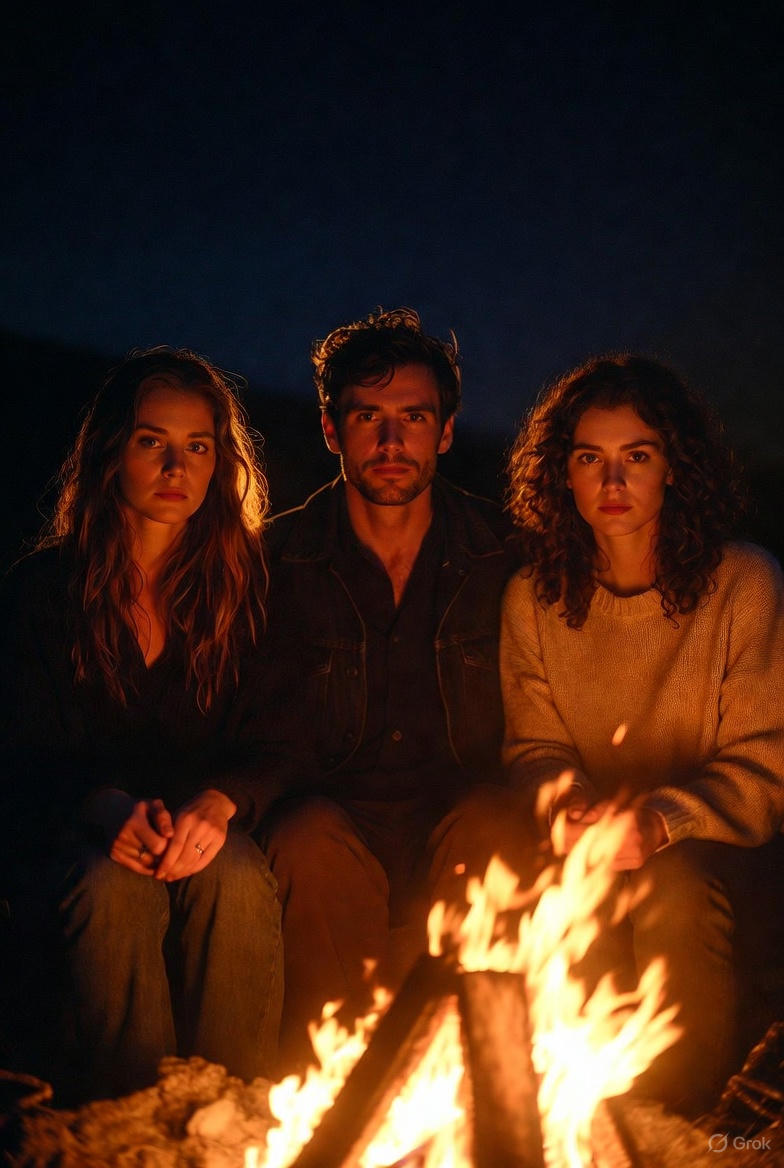

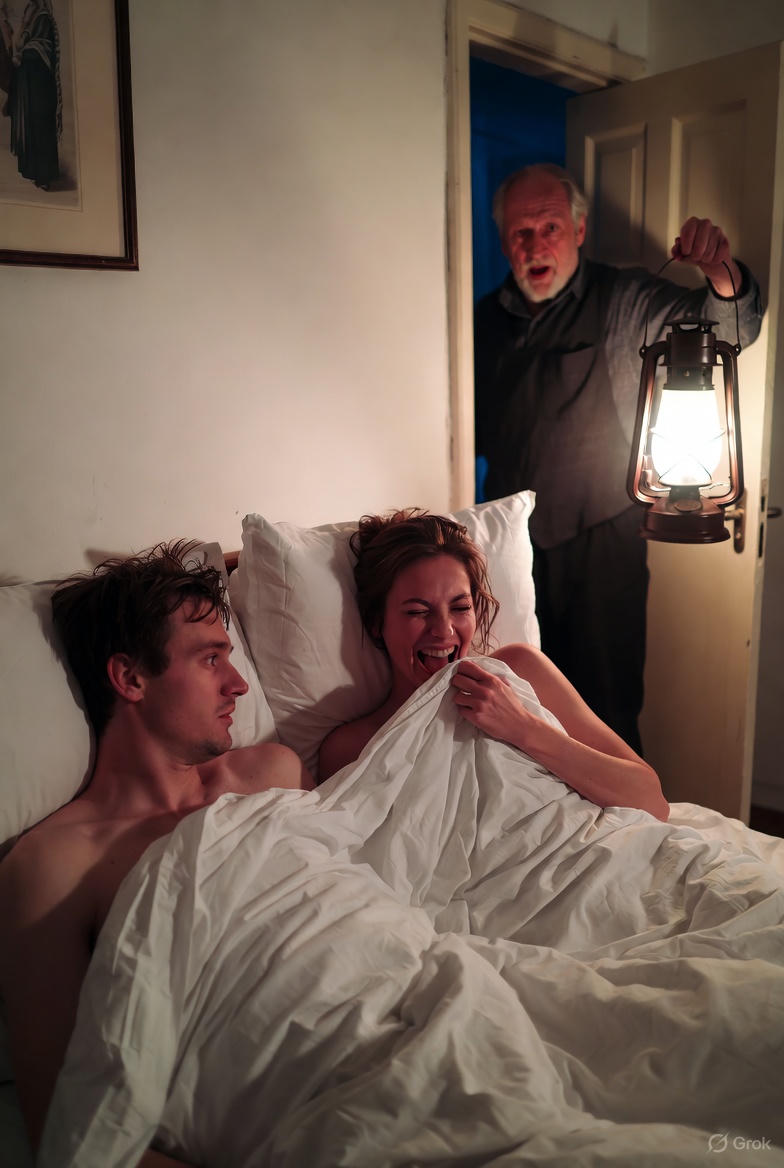


 Anarchistbanjo's World