The Rebirth of Melchior Dronte by Paul Busson and translated by Joe E Bandel
I assured the spiritual gentleman most eagerly that I had seen the aforementioned man from afar several times in my life, but that I had never spoken a word to him. The priest looked at me and shook his head. “So the experience is now again a miracle and in need of some explanation. Namely, when the old woman and the tailor went their way with the brushwood and I was alone with the stranger in the brown robe and eye to eye with him, I felt the natural desire to learn from him something about his origin and the destination of his journey. Moreover, there was in his look and in the truly noble features of his face such a strong attraction that it was impossible for me to keep my eyes off him. That he was from the Orient, I recognized easily by his appearance. And since I had once learned the Arabic language years ago, I dared to use this language and the solemn greeting ‘Salem aleikum!’, that is: Peace be with you!” And in this tongue the stranger exceedingly kindly and sweetly gave this beautiful blessing back to me and added: “When the sun sets for the third time, a man will appear in this place who is looking for me. Call him your guest!” And when I agreed to this, moved by a peculiar emotion, and added the question of where I should direct the newcomer, he only answered: “To the big house at the end of the forest.” With that he bowed his head with a beautiful gesture and went to the forest, from which Nenin had fetched her brushwood. But no sooner had the first bushes covered him, when it occurred to me that there could be many of them, especially if locks are also included. And then I ran after him, in order to get more details out of him. But no matter how I searched and called, I could find no trace of him. Certainly he had gone his way with quicker steps than I had suspected, and disappeared from my sight. I also confess that this experience had upset me so much that I can no longer say today how long I stood in thought while he walked away from me. This makes it easy to explain his disappearance without the assumption of a supernatural event. After these words, silence descended upon us, and we sat for a long time, each occupied with his own thoughts. That which I would have liked to say, I had to keep to myself. Nothing could have moved me to reveal to another, even if he might be as worthy and as trustworthy as this priest, the dark and hidden ways of my life. And that is what I would have had to explain to him, even casually, my inexplicable connection to Ewli. But was there an explanation at all? Was it not rather that by the last appearance of the miracle man everything had only become more confused and unclear? Unless, and this thought seized me with penetrating force, that the friend of my childhood, now that old age had taken me in its weary arms, considered that the time had come to reveal himself to me. Then, of course the appearance at the baker’s, the broken wagon wheel, the Arabic-speaking priest were clear, even if unusual signposts to that place, to the “great house”, where at last the inexplicable and incomprehensible things in my life would find an explanation of some kind. “Well – in any case, it is good not to forget the arts practiced in younger years,” my host interrupted my thoughts. “And so I am glad that for once in this life I have unexpectedly and strangely used my knowledge of Arabic! “I wish, reverend Herr, that I had been in your place, and skilled in the same language, to be able to speak with Ewli.” Hastily, the clergyman put the pipe down on the table and looked me in the face with an almost frightened look and repeated: “Ewli? How do you come up with that word?” I saw that now, after all, I had to share somewhat of the role that the man from the East had played in my life, and I told him in short words about the incident in my earliest childhood, with the little wax man under the glass and the collapsing ceiling above my shell bed, and how the figurine disappeared in this accident and was never found and how he was always called “The Oriental or Ewli” without my knowing what this last word meant. The priest drummed his fingers on the table, shook his head several times as if to deny a thought that was trying to emerge, and at last he only managed to utter only one word: “Mysterium!” “Whether the word Ewli implies a name or a characteristic I do not know. It comes from my grandfather, who brought the rarity back from the lakeside city of Venice and held it in high esteem. When I was a child, there was –“ With great, hitherto unseen vivacity, my host interrupted me: “So listen then, Baron Dronte, how divine providence often intervenes in human life and how, according to the will of the Most High, people must find each other and have to communicate with each other, that no coincidence, as it is called, could ever bring to light. Today, when I made the necessary arrangements for your reception, I was called to a dying man, named Milan Bogdan, a very elderly cottager, who had been an Austrian soldier and who had been given his severance pay and had come here many years ago with this and a few guilders he had saved. He stayed, got married and had a small sprite which he had obtained, perhaps from the eternal gardens of God. This old Croatian imperial soldier was a good and righteous man and, moreover, a good Catholic Christian, in whom it was my pleasure to visit not only for the sake of his faith, but also for his diligence and his peaceableness. He has been lying for a long time, and as often as the barber has drained the water from him, it rises to his heart again and brings danger of death. That’s why Bogdan had already received the last sacraments two days ago with much devotion. And so I was surprised that he hurriedly asked for me today. But I went to him without hesitation, and when I saw that he had sent his old wife and his two sons out of the room I said that this was not necessary, since he had a clean account with the good Lord and that a new confession was certainly not necessary. But he fiercely insisted on his will, and so they left him alone with me, and I sat down at his bedside. “What else is troubling you, dear son?” I asked. “Nothing is distressing me – nothing, reverend,” he said with a heavy heart. “My sins are forgiven. And yet I cannot sleep quietly in God’s bosom until a pious and learned man explains to me an event that happened to me when I was a soldier and which I think about now more than ever.” So I challenged him to talk unabashedly, and then he explained something to me, which I share with you, Baron Dronte, as something that is not under the seal of confession and, above all, a strange fact, especially for you. Bogdan was thus abducted as a young infantryman in a battalion on the Turkish border during a skirmish on the Sow, as the river flowing into the Danube is called, by wild Bashibozuks. In Turkish captivity he had to do hard work in a treadmill that irrigated the fields of a mountain. Apart from the work, he was not badly off, and was allowed to move freely in the small town of his imprisonment. Thus he met a young Turk of great beauty, but with a mark between his eyebrows, who took very kindly care of the poor prisoner and did him a lot of good without any reward. But as it often happens in the unsanitary regions there, Bogdan came down with the heavy misery or blood dysentery so that he became more miserable and weaker and could no longer eat any food. The young Turk cared for him faithfully and showed a lot of sorrow, often asking Bogdan whether he could be allowed to grant him a wish. And when it came to the last and Bogdan could hardly speak any more for weakness, he smiled and said to the Turk: “As bad as I am, brother, I could be helped if I could drink from the colored glass that stands on my mother’s table, from the plum brandy which is in our cellar in Zagreb.” Then the Turk went out the door. Bogdan became weaker and weaker, and he gave his soul to God. When not an hour had passed, the Turk entered the door again and carried in his hand the glass painted with colorful flowers which Bogdan’s mother had filled with strong plum brandy and held it to the lips of the sick man. He drank and fell into a deep sleep. When he awoke, he asked for his savior. But no one seemed to know anything about him. In his dilemma he called Hodja, the Mohammedan priest, and told him what had happened to him and how strange it was that the Turk had traveled so many miles there and back in an hour. Then Hodja said: “Know that your friend was an Ewli. One who has died and came back. Good to you, that you have a guide through the kingdom of Death!” Bogdan recovered and in an exchange of prisoners came back to his homeland. And there his mother told him that on the day of his recovery, a stranger knocked on her door and asked for the colored glass and brandy. And without understanding she gave him both, and after a short time there was another knock at the window, the stranger stood and pushed the empty glass back to her and spoke: “Rejoice, mother, your son returns!” And so it happened. – This, Baron Dronte, is what the dying soldier told me this afternoon and asked me if it was a sin that in the hour of his death he had thought so much on Ewli, his face and the red mark between his eyebrows. I replied that he should rather turn his thoughts to the Lord Jesus. He was doing this with all his might, was Bogdan’s answer, but the face of the Lord Jesus in his thoughts without his intervention took on the features of Ewli. I saw that the poor man was in agony of conscience, and yet he could not master this image. I comforted him and said that it was up to the Lord and Savior alone to decide in which form he would show himself to him. Then Bogdan smiled and said that it was now easy for him to go and that nothing could rob him of the hope of a further life.
The Rebirth of Melchior Dronte by Paul Busson and translated by Joe E Bandel
“Never again -,” he groaned, leaning on his brother. “Terrible — I had – already crossed the – threshold.” “What’s the matter with you, Eusebius?” “The hunchback -” he cried out. “Two heads – two children’s heads -.” And without consciousness he collapsed, saved from a heavy fall by his brother’s arm. He looked at me helplessly, spat bloody sputum and stammered: “Enough, Lord – enough! Have mercy!” I pressed a large gift into his hand. His poor, gaunt face beamed with joy for a moment, and then he held out the gold to the fainting man and shouted: “Look here, Eusebius – look here!” He let go of the body of the brother, who twitched softly, gently let it slide to the ground and pointed to the gap in the wall of the tent. “It took a lot out of him this time,” he whispered. “The day is already coming up. – Was the Lord pleased?” Full of compassion for these poor people, inwardly stirred in my innermost being, and yet with a bright glow of supersensible hope in my chest, I walked through the gray, rain-soaked morning towards the awakening city. For a long time I lived quietly and absorbed only in the memory of happy days in a small, secluded place and thought to end my life there. One morning, however, in front of the baker’s shop, a casserole appeared which became of great importance for me. A foreign artisan, who had wanted to buy bread, was accused by the baker of trying to cheat him with fake money, amidst a large crowd of curious people. The poor fellow, well acquainted with the cruel punishments that were set for such misdemeanors, fought back with all his might, when he saw me coming, cried out with a loud voice: “Lord, help me! Protect me!” The people, all of whom knew me and had come to me for the insignificant good deeds I had done to one person and another, but especially to the children, held affection for me, made room for me, and some of them said: “That’s right! The Lord Baron shall decide whether it is a gold piece or merely a bad penny, which the lad has put on the baker’s table.” I looked at the gold piece. It was a Turkish Zechine like the five I had kept from the treasure in the ruin. The curly writing on the coin appeared not only to the baker, but also to the other people as so nonsensical that they ignored the weight of the gold, but took it as a false ducat and the fellow for a bag cutter. When the people were enlightened and we weighed the piece on the baker’s gold scales, and for greater certainty tested it against a stone the poor wandering cloth shearer still had a number of silver and copper coins change in addition for his bread. I asked him how he had come into possession of the coins, which were certainly an extremely rare type of coin. And then I received an answer, which completely and forever destroyed my hitherto quiet life like a fiery bolt of lightning. A nearby stranger had given him the money, said the lad, and told him to go to this place, where he would learn more. Half-starved, he was trudging along the street, when a handsome man with a black cloth around his forehead, had come towards him. He denied trying to cheat anyone and had gotten the money from him. Breathlessly I asked whether he had been dressed like some kind of monk. But the lad remembered only a black headscarf and the beautiful, dark eyes of the mild benevolent man. He had turned around and looked after the stranger, but he had completely disappeared from the long, straight road. This information, together with the certainty that the mysterious man from the Orient was not even three days journey from here and had shown himself in the flesh, excited me to such an extent that I ordered a special mail coach for the next day, to possibly follow his trail, until I would be face to face with him and find answers to all the questions that had occupied me for many years, indeed all my life. When I gathered together money for the journey, I also got hold of the Turkish zechins. I was amazed and frightened. There were only four left. A strange feeling came over me, a search for a memory. But it sank again, and a new mystery remained. The next day I was already riding merrily along in the coach and with changed horses had reached the large forest, late in the afternoon, through which the road led to the village, not far from the place where the honest cloth shearer had come to his golden zechine. But just as we passed the village and the coach driver was merrily singing the “Jäger aus Kurpfalz” on his horn, the wheel broke and the poor musician was torn off the seat by the reins wrapped around his left hand by the falling horse to such an extent that he could only rise with a groan and with a pained face explained that he needed to put cold compresses on his sore shoulder before he could hold the reins again. Also the fallen bay, who had skinned his knee, needed rest and treatment. If the coach didn’t want to become a wreck between the village and the town both people and animals needed to be treated. Indecisively, I stood in the midst of the astounded village youth by the badly battered coach, when an old woman came up to me and said: “Your quarters are ready, as we were told, and also the postman can get a bed and a bite to eat. There is room for the nags in the reverend gentleman’s stable!” I was very surprised at this reception and asked who had announced me and whether the whole thing wasn’t a misunderstanding? There was certainly an inn in the village where one could stay if necessary. “No, Herr,” the woman continued and went ahead of me as a guide without further ado. “We have no inn here, and strangers of repute whom chance brings here, are accustomed to stay in the parsonage, which is in the vicarage, which is built on a large scale and contains enough furnished rooms. The preparations for the lord, however, have been ordered by the Reverend. Nothing else is known to me, other than that the parish priest, who is currently with a dying man, instructed me to keep a watchful eye on the road and not to miss the announced guest.” In the meantime we had arrived at the stately house next to the church, and I stepped through the door, above which hung, on iron chains, the bones of extinct animals on iron chains, into a hallway paved with gray bricks, and from there into a vaulted, white-painted room, in the middle of which stood a large table with leather chairs. On the wall was a rack with many books, among which I noticed the works of Paracelsus. On top of them were stuffed birds of a rare kind, as the storm sometimes brings them here from foreign zones, and all kinds of minerals and fossilized ammonium horns. On the simple desk by the window was enthroned the figure of a woman holding a child in her arms, and in my opinion was as much the mother of our Lord and Savior as a pagan goddess. Above a black painted prayer stool hung with arms outstretched, the face of a silent suffering person, the Savior on the cross. After a while the old woman put a brass lamp on the table and the room was filled with a friendly yellow light, the priest entered almost at the same time. He was a tall man with gray hair and a face, from which smart and thoughtful eyes peered out. Friendly, he offered me his hand, looked at me attentively and asked me to be his guest at the table. After the meal he wanted to solve for me the riddle that the knowledge of my arrival had thrown me into. Also the mail coach driver had already been accommodated and the carriage was at the blacksmith’s, and the horses, were safe in the stable. Immediately, the table was set and the food was served, which consisted of a larded pike in cream. We drank a light currant wine with it. When we were finished with the meal the priest asked if he might be allowed to smoke tobacco, and lit a pipe. I must confess that, in spite of the inner calm I had learned to regard everything that happened as an unchangeable providence, and a great curiosity seized me, in which way the clergyman could have been informed of my imminent arrival, and I requested him to enlighten me about this strange matter, after my name and state had been pronounced. “It is indeed, as you say, strange- worthy enough,” he replied and blew blue smoke in great clouds away from himself. “Three days ago I went down the village street according to my habit to pray my breviary. A couple of people who came toward me astonished me so much at the sight of them, that I stopped and let them approach. I knew the woman. It was eighty year old Nenin, who, in spite of her old age and her weakness at this time of the day, gathered together a large bundle of brushwood. It had always been a sight, to see the weak old woman, who was still active in such a way, swaying under her load. And not infrequently, I had unceremoniously asked some loitering, partying lad to take the burden from the poor woman and carry it home. This time, however, she came without the usual piggyback and seemed to me upright, almost as if rejuvenated next to her companion, who, as she said, had voluntarily taken the burden from her and loaded it effortlessly on his shoulders. The man, however, with whom she went, had in any case an appearance that would astonish anyone in this country. Namely he wore-“ “A brown robe and a black headscarf or a turban of such color and amber beads around his neck –“, I finished, quivering with expectation. The priest looked at me without astonishment and said: “So then the following miracle partially dissolves into nothing. I say partially, for it remains wonderful that neither the old woman nor the tailor who happened to come from the field, who loaded the bundle of brushwood onto his handcart and drove Nenin home with it, seemed to see anything special or conspicuous in the man dressed so strangely. Through later questions I became convinced that the two people had not even been aware of the unusual costume. But the other thing, namely that this man informed me of your arrival and predicted it for today is now explained by the fact that you obviously know him and have certainly spoken to him of your journey.”
The Rebirth of Melchior Dronte by Paul Busson and translated by Joe E Bandel
Only one thing stood firm in my heart: the certainty that I would see Zephyrine again. She and Aglaja, because they were one and the same creature of God, destined for me and taken from me again and again for the unknown purposes of eternal powers. During the day I had stayed in my inn room and had answered every disturbance with the indication of indisposition and the need for rest. In the course of the night, as the hand approached the eleventh hour, I left the house and took the long way to the pleasure grove. The weather was damp and mild, and the spring wind rattled under the roof tiles and made the weather vanes creak. The path was dry. A long train of dark clouds chased across the bright moon, like strange, stretched out running animal shapes. Once or twice I was stopped by roundabouts or police check points and was forced to show my papers and to arrange my answers to the questions in such a way that it could be inferred that I was on a secret love affair, which would be unthinkable for a gentleman. In such a way, which caused me enough displeasure, it was possible for me to get through and even in the Egyptian darkness under the lanterns blown out by the storm, ask for further directions from the public. For it was not at all easy for me in such great darkness, which was illuminated only at times by the crescent moon, to find the way to the Lustwäldchen. There I went astray a few times between the shapeless tents and booths, which in the powerful darkness looked completely different than in broad daylight. But the Magus and his brother seemed to have attentively been on the lookout for me, because when I, after looking around in vain tried to go in another direction, a man suddenly stepped up to me, whom I recognized as the harlequin, grabbed my wrist and said softly and quickly: “Come, Baron – we have been waiting for a long time.” He led me between the darkened wagons and the canvas tents to a large booth, from the crevices of which a very dim, bluish light penetrated, opened a slit somewhere on the wall and gently pushed me in front of him. The next moment I was standing on the small stage behind the lowered curtain. In the background still hung the cemetery scene with the crosses and tombstones from the performance. The sides of the stage were closed with dark curtains, so that I found myself in a square of moving walls. A few oil lamps made of blue glass gave a weak but immensely pleasant and cold light, in which one saw quite well after some habituation. I sat down at the invitation of the brother in a reasonably comfortable chair that had been placed for me. A copper basin with weakly glowing coals stood before me. The brother approached me and whispered: “Don’t speak to him when he comes. -Have you brought the property of the person you wish to see?” After some persuasion, I took the silver ring with the fire opal out of my vest pocket and put it into his hand, and he went to one of the side curtains, in the folds of which he disappeared. Immediately he placed a bowl with grains in it next to the coal fire and a small three-legged stool. Then the curtain opposite me moved violently, and the magus appeared. He was clothed in a dark, wide robe and wore around his head a white cloth, as I had already seen in old pictures. His face was pale gray and decayed, his eyes half closed. He did not seem to see me and walked with his hands stretched out in front of him like a blind man towards the ember pan. His brother came quickly behind him, guided him with his hands and pushed him down on the stool. Motionless the magician remained seated. The brother took one of his hands hanging down, opened, as it seemed to me, the closed fingers, and put the ring in his hand, which immediately closed again. Then he pushed up a similar stool for himself and scattered grains from the copper bowl over the crackling and smoldering coals. Immediately a blue, pleasantly fragrant smoke rose up with a similar fragrance as that precious incense, used by the Catholic Church on high feast days. Immobile and without any sign of attention, the magus sat in front of me and slightly behind him the brother, on whose haggard and hollow-cheeked face the traces of progressed pulmonary addiction were easily recognizable as the seal of an early death. I turned my attention to the other again and now saw that his eyes were directed at me with a fixed, lusterless look. At the same time a swelling, melodic humming and ringing began and I discovered that the brother had a Jew’s harp between his teeth and was playing it with the index finger of the right hand keeping the tongue of the instrument in a constant buzz. The Magus sat there for the time being in unchanged posture. Slowly, however, his head sank crookedly against his right shoulder, and his mouth opened. The hand that held the ring began to twitch softly. Thus we sat for some time in the blue light, and the hum and whisper of the music rose and fell. Suddenly, however, I noticed between the open lips of the motionless magus something that looked like the end of a bluish-white, luminous cloth, which gradually began to emerge. Moreover, it began to throb and knock behind my chair, and this sound momentarily continued with even greater force into the wooden floor, to then rise again into the chair, so that I had to listen several times to the short, sharp blows with the greatest clarity at my back and involuntarily looked around. But there was no one behind or beside me, although the knocking continued with undiminished strength. The white tissue came out of the mouth of the sleeper almost to his chest and then disappeared just as quickly as it had come, and the knocking ceased with a crashing blow in the left armrest of my armchair. In the deep silence the brother reached past the magus once again into the incense bowl on the floor and sprinkled grains on the coals. Something cold touched my cheek unexpectedly and stroked my forehead. I reached out quickly, but grabbed the empty air. But on the Magus’s shoulder a large snow-white hand appeared, with its flat fingers shaped almost like a glove. But then it stretched in an excessively long, arm-like gesture over his head, sank down, and lay quietly for a while like a third arm on his knee, until everything faded away in a few moments and became invisible. However, the sleeper now began to become restless, swayed back and forth with his upper body and let a quiet, wailing singsong be heard, whose words I could not understand. It began to knock again very strongly against the floor and then against my chair, and an empty stool, which stood at the curtain and which I had overlooked so far, did four or five frog-like leaps towards me, then turned around, stayed for a while with its three legs stretched out in the air, and then began to turn slowly in circles on the seat board. I suspected that strong magnetic fluids were now active, which had been obviously lying in deep slumber at the beginning. But at the same time the trembling melody of the player strengthened and accelerated, and the so far rocking motions of the magus changed into violent and convulsive twitching, which seemed very uncanny, all the more so because the newly nourished fragrant smoke intensified and the two persons opposite me appeared quite shadowy and unreal. Then it seemed to me as if a folded, shimmering piece of white cloth was lying there next to the charcoal basin, which had not been there before. It moved in its center in an incomprehensible way, as if a very small child or an animal were covered by the linen and caused it to rise. But quickly the strange cloth or the luminous mist grew in height, became taller and narrower and seemed to want to take on the shape of a human being. I looked in the utmost expectation straining to see and believed to perceive the folds of a garment and limbs. It was a human figure that arose before me. And all at once, as if paralyzed by joyful fright, I saw the completely pale and almost transparent beloved face of Zephyrine, her eyes were fixed on me – but then something grew out of the delicate head, from fine threads – glittering and shining – Aglajas’ crown of the dead – I wanted to jump up, to wrap my arms around the woman that I so ardently longed for – But before my eyes veils were laid, my feet were stuck in leaden shoes, my heart stood still. Everything had disappeared. I saw only the raw stage floor, the smoky, sweet smoke, the magus, who had fallen from the stool with his eyeballs twisted and lay in convulsions. The music fell silent. Feet thumped on the flooring. The brother hurriedly pulled the magus up, ran his cloth-wrapped hand into his mouth and pulled out his tongue. With a wild gasp the magician opened his eyes, looked around him and heaved a sigh. “Wake up, Eusebius!” cried the brother, shaking him gently. “Wake up! Wake up!” The magus looked first at him, then at me, and then let his gaze go in circles, as if he first had to think about where he was. He shuddered violently, grabbed his forehead with his hand, stared at me and gurgled: “Two–two there were–two–“ The other hurriedly fetched a tin cup and a bottle, poured a dark, strong-smelling wine into the vessel and held it to the brother’s lips. He drank in greedy gulps, put it down, and drank again. I discovered that my cheeks were wet with tears. After a long effort, aided by his assistant, the necromancer stood up and walked swaying toward me. His face was slack and covered with sweat. “The ring –” he stammered. I took the silver jewel and kept it with me. “Why two?” He stretched out his hand toward me. It was trembling violently. “Why two, Herr?” I nodded and said softly, “There were two, and yet there is only one.”
The Rebirth of Melchior Dronte by Paul Busson and translated by Joe E Bandel
The performance, which began with a few rough slaps for the harlequin, was as I had much expected with the magician, dressed as on the figurehead. With his beard hung around his neck he performed a series of quite artful sleight-of- hand and card tricks, baked an omelet in a hat, which a fat citizen hesitantly offered, fetched endless ribbons, white barnyard rabbits and a glass jar with floating little fishes from it and finally crushed a golden watch in a mortar, only to find it unharmed in the purse of an embarrassed giggling girl. Then he moved on to the more difficult arts and tore off the heads of a white dove and a black dove and healed them in the twinkling of an eye, so that the black bird had a white head, and the white bird now had a black head. But this showpiece produced such a violent nausea in me that I wanted to get up and leave the room. But since I would have had to fight my way through the crowded rows of people sitting and would have had to make everyone get up, I closed my eyes for a while until I felt that the discomfort was subsiding. When I looked up again, through murmurs of applause and the admiration of the spectators, I saw the well-done picture of a moonlit cemetery on the stage. A slender, beardless man, wrapped in a black cloak, walked up and down between the grave crosses and told in his soliloquy, that a ghost often appeared here, and that he wanted to find out who the evil doer was that was certainly behind the appearance of such spirits. Behind the stage the midnight hour was signaled by twelve tinkling bells, and after the fading of the last stroke, which was followed by an artificially generated whirring of the wind, a being wrapped in white shrouds floated between the crosses and approached the man. This man seemed to be frightened at first, but then he swiftly drew his sword and stabbed the ghost. One saw clearly, how the flashing blade went through the body of the ghost, without doing him any harm. But now the boastful one threw the sword away and fled, whereupon the white creature performed a triumphant dance and the curtain rushed down. The performance was over, and the audience departed highly satisfied. I also stood up and approached the stage. My guess was correct. The invulnerable apparition was a mirror image, through a slanting glass plate, in front of which, lying on a kind of platform, an actor made the ghost, whose image was thrown onto the stage. The glass plate was made of three equal pieces, set together, and the two dark, vertical stripes of shadow, which had been visible on the stage during the performance, had immediately led me to this assumption. I now thought of leaving and noticed that there was no one left in the audience but me. But nevertheless I was not alone. Inaudibly a person had crept up to me, probably unaware of my intentions, and even though I faced him so unexpectedly, I recognized in him the sleight of hand magician in a robe as well as the cemetery fencer. I apologized and told him that I only had a scientific interest in how it was done and was fully satisfied with it. In no case was it my intention, to retell what I had discovered, which by the way had been known to me for a long time, to impair his success. “The gentleman is obviously a connoisseur,” the man said very politely and bowed. “Perhaps I have the honor of seeing a master of white magic before me?” “Not this one,” I replied. “I only wanted to know whether the excellent effect produced by the phantom was created with the help of large concave mirrors or with the sloping glass plate. Glass plates of such size are, as far as I know very precious and, as I understand it, are made only in Venice” “I see that the gentleman is excellently instructed,” replied the magician. “The three plates are our most valuable possessions and require a great deal of caution when traveling.” I thanked him with a few words and went toward the curtain, in front of which the harlequin was once again making noise and shouting. “If, however, the gentleman wished to make use of my actual art,” said the other, falteringly, and made a gesture with his hand toward the ground on which we were standing. A foreboding seized me. “What you see here,” said the other, “serves only the curiosity of the uneducated people and the acquisition of the bare necessities of life. For the deeply initiated, I am the necromancer Magister Eusebius Wohlgast from Ödenburg, and I have indeed already been honored with the name of the Hungarian Dr. Faust. I would have to be very wrong, if the wishes of the gentleman, whose outward appearance already announces the deepest and unhealed sorrow, not to offer the most glowing reunion with a beloved person who had been torn from him by cruel death.” I laughed bitterly. “You think I am more simple-minded than I am, Herr Magus Wohlgast,” I returned. “With the smoke of poisonous herbs, which completely cloud the clear mind, and with a hidden laterna magica, one can show gullible people what they wish to see.” The man shook his head with a smile and replied gently and modestly: “People of my standing, who live in moving wagons, must put up with being counted among the great crowd of wandering jugglers and swindlers. To dispel this suspicion, I expressly declare to you that I do not claim any salary if you want to accept my services in this respect. It is entirely up to you whether or not you want to give me a reward after the work is done, or under the impression of having been duped, to refrain from such. I also know very well in whose service I put my art, and remain unconcerned about profit, as much as I have to reckon with a net income. Incidentally, I recently enjoyed the extremely high honor of receiving such a request from His Imperial Roman Majesty in the rooms of the Masonic Lodge “To the Three Fires”. Although His Majesty, as a result of a very gripping apparition which moved him to the other world, was frightened and had to spend a few days in bed until his insulted mind had calmed down again. I was granted a very handsome reward. It may serve as a testimony to you that neither His Majesty nor the noble gentlemen present regarded me as an impostor, but rather left the temple of the Freemasons very moved and in silence. Yes, it was even said to protect me from the persecution that Her Majesty the Empress ordered to be instituted against me, when she discovered through an informant gentleman the cause of the illness of her husband.” Contradictory feelings stirred in me. The man seemed to me to be honest and sure of his rare abilities. But my distrust could not be eliminated so quickly. “Whom or whose spirit did you make appear before His Majesty?” I asked. “To speak of that to anyone, even a trustworthy cavalier, I am neither permitted, nor is it in my habits,” he declined. “I would also decline to communicate with third persons about apparitions which might come to the Lord if my most humble services were to be called upon.” My desire to experience this man’s art grew at his words and I spoke: “If it would be possible for you to call back a person, who has departed from this life and is very dear to me, I would be more than grateful to you.” He made a dismissive movement. “That is left to the discretion of the Lord, who is, in spite of all the negligence of his exterior caused by his grief, is a distinguished nobleman.” “So how should I behave, and when should this summoning go ahead?” I asked quickly, because two people had already entered the tent and forced us to speak quietly. “I ask the Lord to be here in three days, half an hour before midnight. On the day when the work is to take place, the Lord must abstain absolutely from all food and drink, with the exception of pure water. Then a purification of the body and fresh, clean clothes are needed. In addition, an object should be brought that was the property of the deceased person, if possible, something that was worn on the body. Strictest secrecy against anyone, whoever it may be, is a commandment, the non-observance of which makes all in vain.” “I have understood and will observe all this,” I said. “Nothing else is required?” “Nothing more for the gentleman.” “And you?” “I, my lord, must fast from today, a full three days, fast. My brother and our assistant will hold the performance here. I must prepare myself in solitude until the hour of the invocation.” I looked at him doubtfully, but the place was so filled to such an extent that further conversation was not possible. The Hungarian Magus did not pay any further attention to me, but walked right away toward the curtain. I saw him speaking some hasty words with the colorfully dressed harlequin, who nodded seriously. “So in three days -” I said in passing. “Around midnight,” he replied, and disappeared into the crowd in front of the booth. When I deliberately passed by after a while, the harlequin had disappeared, and the man, who until then had attracted the public with his multicolored costume, was now standing in the robe in front of the entrance and invited the audience to enter. In deep thought, I started on my way home to my inn. God himself had annealed my soul in the furnace of pain. I felt it deeply in the loneliness of the day, on which I prepared myself fasting for the evening with the Magus. How different my whole being had become since that hour, when my beloved had slipped away into the realm of shadows. The old irascibility which had still sometimes flashed up in me, the arrogance, of which I often enough made myself guilty, the addiction to the pleasures of the table and diversions of various kinds, the tendency to lust – all this had fallen away from me and seemed to me void and stale. The glamour, with which life presents itself to a man, was extinguished for me under the gray dust of transience.
“If I had to say where I thought the problem was, I’d say it was in having us train six newbies before moving on. We could probably get by with training four or five instead.”
Then Tobal grinned at Zee and Kevin. “Still, that’s because we are good trainers. There are some people out here that still struggle to survive after two years. I would hate to train with them. I guess the bottom line is if you can survive out here for a year you must know what you are doing.”
“You have always done a good job training newbies,” Zee told him. “No one has ever complained about your training.”
“I don’t think anyone has ever complained about Becca, Fiona or Nikki either,” he reminded her. “I guess the best thing is to trust the Council of Elders to make these decisions for us.” He looked at Zee, “I have heard you are the most thorough trainer out here. You teach things many of us don’t even think about.”
She blushed and looked pleased. “Thank you Tobal. That was a very nice thing to say.”
Kevin nodded and gave her a squeeze. “We’d better get going. I want to get out of this rain.”
They laughed and with a final wave headed toward one of the shelters. Sarah’s, Anne’s, Derdre’s, Seth’s and Crow’s newbies were all going to be initiated along with Zee’s, Kevin’s, Fiona’s, Becca’s and Nikki’s. That was ten initiations and it was going to be a long night Tobal thought as he watched and listened to the Council of Elders.
Crow had proclaimed his newbie ready to solo but the Elders had not approved demanding one more month of training. Crow was pretty upset at this and it took quite a while before he was calmed down. He felt he was being picked on because he was so young and from the village. Tobal felt Crow had gotten a bad break and sympathized with him. Still it was true. No one else really knew him yet.
At circle Llana made quite an impression with her wolf cubs. She strolled in with the two cubs trailing at her heels. Tobal had not even been sure she would show up or that he would get his chevron. He hadn’t seen her since she had left to give her grandfather the message. The cubs were nervous and kept very close to her. He was glad to see her for several different reasons.
Tobal was officially recognized and given his 6th chevron along with the secret location where he was to be initiated into the 2nd degree in two weeks during the new moon. As soon as he could he moved over to where Llana was tying the cubs to a tree and kneeled down to scratch one of the pups behind the ears and smiled as it recognized him.
“Is your grandfather ok?” He asked.
She smiled, “Hi Tobal” and gave him a kiss and a hug. “Grandfather is doing fine. He was very excited to hear about Adam Gardener, Sarah’s father, and agreed that Adam was in serious danger so he left right away to talk with him.”
Then her face got very serious. “Someone broke into the store while they were talking and they needed to teleport out to escape. Neither one of them has been back to the store since. That was how close it was. They didn’t see who it was but they are assuming it was some of General Grant’s men. They also believe it is too dangerous to go back.”
She looked at him. “I gave your wand to grandfather since I thought he might need it. I hope that is ok?”
Tobal nodded, “I couldn’t take it with me to the Journeyman place anyway. It would not be safe there. Someone might discover it.”
“Tobal,” she said. “There has been a change in my plans. Grandfather and Adam have agreed to train both Crow and me in time travel to the locations that are open to us. We feel it is better to have four of us able to time travel than just two in case something happens to one of us.”
He swallowed a bitter lump in his throat. “That means you are going to quit the program?”
She nodded quietly. “We’re counting on you to stay in the program. I can meet you once or twice a month and continue your training so you will be ready to time travel as soon as possible. Without med-alert bracelets we will have much more freedom to come and go and meet with people.”
“How soon will that be,” he said in despair. “How soon will I be able to time travel?”
She sensed his disappointment and put her right hand gently on his shoulder. “You have learned a lot,” she told him quietly. “But there is still a lot to learn. Perhaps by the time you are a medic you will be ready. The ability to teleport is the key to the entire process. When you have learned how to do that you will be ready. In the meantime you will continue within the program itself. As Ron and Rachel’s son they will be watching you in the hopes that you will have the same abilities that your parents did. They will allow you to have as much training as possible before they attempt to use you. It is almost certain you will be chosen to be trained for Federation time travel.”
“Do I need to join those people?”
“We need to know exactly where your parents are kept if we are going to help them,” she reminded him. “We will also need someone on the inside that knows their way around. Crow is going to start training a group to teleport and time travel at the village. I am going to be working with you and your group.”
“Your group?” He asked puzzled.
“Yes, your group,” she smiled. “You didn’t think you were going to be doing this alone did you?”
“Well, kind of,” he admitted.
“As you continue through the training you will meet people you trust and become friends with,” she told him. “ Some of them will be chosen to continue on within the time travel program. If you and I also teach them the teleportation process in secret they will test well enough to be chosen. Your group can then infiltrate the organization.”
“How long will all of this take,” he said in despair. “My parents are dying!”
“Your parents have been dying for twenty years,” she said softly. “ They will stay alive as long as they know we are coming. They have told me that. We will need between one and two years to get your group trained and ready. That means you will all be medics by then.”
“When will I be able to talk with my parents like you and Crow do? I mean when I’m not at circle or astral projecting to the cave I can’t reach them.”
“That should start happening soon,” she told him. “Your coming initiation should assist in that process. In the meantime keep practicing your meditations and astral projection exercises. And remember, you can talk to your parents and learn from them already. Ask them what you should do.”
“You said we will continue meeting each month,” Tobal said. “When and where will we meet next?”
“Let’s meet in the morning three days after every circle at your base camp,” she decided. “That will work for starters. Later we can find a better location if we want to.”
They left it at that and he noticed Llana and the wolf cubs were gone shortly after that. She didn’t stay for circle or to talk with any of the others. He realized she had come just to talk with him and to make sure he got his sixth chevron.
Even with ten initiations there was a shortage of newbies and Tobal noticed that several clansmen including Tyrone, Mike and Butch were not at circle. They were presumably waiting at sanctuary for more newbies and had been waiting the entire month. Tempers were flaring around the newbie situation.
Mike was angry and so were Tara and Nick who decided to just stay together for the month. Wayne and Char didn’t really care and were back together. There were five other clansmen really angry about the newbie situation. It had reached the point where four Apprentices simply left for the coast. That was more than the monthly one or two that normally elected to drop out of the program.
Tobal had been doing some heavy thinking about the newbie situation and realized that most of the problems were because Nikki, Fiona, Becca and himself had all trained newbies within a month and created a bottleneck situation with the newbies. They were getting their training too fast. There had been a problem when Rafe was training newbies one a month but this was far worse since Rafe was just one person. Now there were several people training that fast. Tobal decided to talk to Ellen about it after circle that evening.
Angel was High Priestess for the circle and Tobal noticed Dirk was acting High Priest for the first time. He was closely monitored by the old High Priest but went through the entire ritual himself. Tobal thought he had done a good job. He could feel the Lord and Lady during each of the initiations but was not able to contact them. It seemed they were focused entirely on the initiates for some reason.
The ten initiations took a long time and he missed chatting with Becca and the others. He did sit beside Ellen though and asked her about making all the training two months long for everyone.
She turned an amused eye toward him, “The Council of Elders has already discussed that in depth. We decided if a newbie is properly trained and ready to solo we have no right to prevent them. If some people can do the training within a month they have the right to do so. If some trainers are motivated to move through the ranks more quickly than others they should be allowed to do that also.”
“But what about all the bad feelings among the clansmen?” He asked. “What about the shortage of newbies?”
Ellen sighed, “Fiona, Becca and Nikki are the only ones left that are training newbies that quickly. They are trying to get their last newbies right now. No one else is trying to train that fast and the problem will go away when they become Journeymen. It is not right to punish them for being good trainers. We did not punish you or Rafe.”
“All in all,” she continued. “It is an effective system and we are inclined to keep things the way they are.”
Tobal nodded and changed the subject as Rafe sat down and joined them at one of the pauses between initiations.
“So what has been happening with the City Council this past month?”
“Not much,” Ellen replied. “Last month’s meeting was cancelled. The mayor contacted us and said they were not ready for a meeting yet. The mayor had dark circles under his eyes and looked a lot older than I remembered. This must be pretty hard on him.”
Tobal changed the subject. “Rafe, you have an air sled now?”
Rafe was wearing his red Master’s robe for the first time to circle. “It’s over there.” He pointed to a location slightly outside of the gathering spot. “I’m still not sure how fast it will go.” He chuckled and glanced at Ellen.
She looked at Rafe with a concerned look. “It’s not a toy Rafe. There have been several air sled deaths.”
He pouted, “I’m just kidding. Don’t take me so serious. Besides,” he continued glumly, “They watch us like a hawk. I can’t get away with anything.”
He brightened a bit. “But I am going to check out some of those forbidden areas that are marked on this map though. Maybe I will have something interesting to add by next month.”
Tobal had almost forgotten the map of forbidden locations Rafe had gotten from Ellen several months ago. Without an air sled Rafe had not been able to check any of them out.
Ellen protested, “Rafe, I don’t really think you should be doing things like that right now. Things are getting dangerous and we don’t really know what we are up against.”
“Checking out these forbidden locations is one way of finding out what we are up against,” was Rafe’s stubborn reply.
“I’ve got an idea,” Tobal said suddenly.
Then he explained the situation with Crow and Llana and how Crow was going to take one group and start training them to teleport and be time travelers while Llana’s group would remain within the system but receive the same training.
“Count me in,” Rafe said.
“Me too,” was Ellen’s reply.
“Good,” said Tobal. “I will tell Llana to start meeting with each of you and training you in what you need to know. She won’t be wearing a med-alert bracelet anymore and can meet you just about anywhere you decide. She won’t show up on any of the monitors.”
He looked at Rafe. “You could even take her by air sled and drop her off at some of those forbidden locations and let her check them out. Then she could teleport out with the information about the area. I think she can only teleport to a place she has been before but once she knows where it is she would be able to go back when ever she wanted.”
Ellen and Rafe looked at Tobal and at each other and nodded. It seemed like a fairly good plan. They would be waiting for Llana to contact them. In the meantime Tobal would set things up with Llana and get his Journeyman initiation.
Both Ellen and Rafe said they were going to be at his Journeyman initiation. He had almost forgotten about it. The secret location turned out to be a cave. Tobal hadn’t realized there were so many caves in the area. He scouted the area ahead of time looking for trails that led into it. He found a safe hiding spot for the things that belonged to his parents and left them in a bundle to pick up later after his initiation.
Finally satisfied that he knew where he was supposed to go he went into the camp itself. No one had said anything about coming early and the late spring weather made travelling a bit uncertain. He felt it was better to show up early than to show up late. It was only a few hours early and they would be expecting him.
He decided the best course of action was to stay on the path and make no sudden moves remembering what had happened with Fiona. It turned out he didn’t need to be so cautious. Turning a corner in the path were two guards standing in the middle of the path as a roadblock. They had a small fire going and there was a lived in occupied look that made Tobal suspect this camp was always guarded.
They greeted him warmly and one guard remained on the trail while he was escorted to a chamber and told to wait. After about an hour of silence someone came for him and again his guide was female. This time it was a girl Tobal knew as Lea dressed in a black robe and hood that covered her honey colored hair.
“Do you seek the Light and Wisdom of our secret circle,” she asked as she approached him in the darkness.
“Yes, I do.”
“There is no Light for you here. In the Apprentice degree you have received all of our light. What you need now is more darkness so the Light within you can shine forth more brightly. That is how you will attain the wisdom of our circle. Will you permit me to be your guide into the darkness?” She asked.
Tobal was surprised and a little shaken by this and wondered what he was getting himself into but he remembered Rafe and knew it couldn’t be too bad.
“I will permit you to be my guide,” he told her.
“You must leave everything behind if you are to enter this degree,” she told him. Then she told him to strip completely. She fastened a large blindfold around his eyes so he couldn’t see anything and taking his left hand led him further into the cave. In the other hand she carried a burning torch. Tobal sensed the light from the torch but couldn’t see anything through the fabric of the blindfold. His guide led him for some way and then stopped. A bundle of clothing was pressed into his hands and he was told to dress himself.
“Are you willing to receive the darkness,” she asked him?
“Yes.”
“What are the two passwords into our sacred circle, she asked.
“Perfect love and perfect trust,” he replied.
“No, in this degree these are reversed. In this degree you must have perfect trust to find perfect love. In this degree we study the duality of opposites inherent in all of nature. Think upon these things as you wait on my return.”
She told him to sit down where he was and took his blind fold off. As his eyes adjusted to the glare of the torch she told him it was very important he stay where he was because the cave was large and he could get lost or killed if he wandered away in the darkness without knowing where he was going. She was going to go and see if things were ready for the initiation. In the meantime he was to quietly meditate and prepare himself.
She turned and left him sitting in the darkness. As he watched the torch grew smaller in the distance and then disappeared altogether as she turned a corner. He had never experienced such total darkness and it was unnerving. For a moment he fought the impulse to get up and run after her remembering what had happened with Fiona. In the darkness the rock and earthy feeling of the cave seemed to close in on him and press against his ribs making it hard to breathe.
There was a sound in the darkness behind him and a bolt of panic and fear tried to tear itself loose and gain control over him. It took a massive effort of will to fight the feelings back. He began concentrating on his breathing and centering as Crow had taught him. He deliberately pulled the earth energy up from the ground and from all around him and encircled himself with it and called on the Lord and Lady to be there with him.
In the blackness of the cave he began to see glowing lights and couldn’t tell if he was seeing them with his physical eyes or in his mind’s eye. There simply was not any way of knowing if they were figments of his imagination or if they were real. He wanted to believe they were real but whenever he tried to focus and look at them directly they would disappear. This continued for some time.
He could feel his heart beating and pulsing in his throat and arms and in his heart itself. It was a slow steady rhythm that seemed to comfort and protect him. It seemed like hours had passed and he wondered if he had been forgotten but was not particularly worried. He had found his center and surrounded himself with protection. Then he heard someone coming and saw the faint gleams of light from the torch.
The light blinded his eyes as Lea came up to him and told him they were ready. She handed a second torch to him and lit it.
“You carry your own light into our circle.” She told him. “In the Apprentice degree there were two passwords. What were they?”
“Perfect love and perfect trust.” He replied.
“And what are the passwords into the Journeyman degree?”
“Perfect trust and perfect love.” He replied.
“Remember these passwords.” She said. “You will need them to gain entry into our sacred circle.”
As Tobal was led deeper into the cave it opened into an enormous cavern. Torches had been placed around at various points for lighting and there was no large fire in the center of the cave. The smoke from the torches rose and lost itself high in the vaulted ceiling finding escape through some hidden airway. Four small fires marked the four quarters of the circle at a smooth and level spot in the cavern floor.
A circle had been formed by dark hooded figures standing silently waiting for him. The High Priest and High Priestess were dressed in red robes with large hoods that hid their faces. Looking at them, Tobal couldn’t make out who they were. The hooded figures around the circle looked eerie in the flickering torchlight. He was halted at the edge of the circle.
Lea pulled him forward. “An Apprentice is among us proven by the elements of nature and of the earth. He wishes to join his light with our own so our community might be more illumined and our wisdom grow. He further wishes to follow the ancient craft and learn the ways of our sacred circle.”
The High Priest came over and stood in front of Tobal staring intently into his eyes.
“I must remind you that this is not a matter to be lightly taken. Your immortal soul will be deeply committed to the path of the Lord and Lady. Do you desire to have your destiny joined with theirs?”
“I do.”
“Do you seek the way that reaches beyond life and death? Will you serve the Lord and reverence the Lady? Will you keep secret from the unworthy that which we show you?”
Tobal replied affirmatively to each of these questions in turn.
“So be it. Child of Earth enter the path of darkness.” Stepping back he motioned for Tobal to walk in front of him into the circle. But his guide quickly restrained him.
“You can’t enter our sacred circle unpurified.” She said. Then taking a bowl of water from the High Priest she sprinkled him with it.
“I purify you with water.”
She waved the torch over him, in front of him and behind him.
“I purify you with fire.”
Then the High Priest stepped forward once more.
“There are two passwords that will allow you to enter our sacred circle. What are they?”
Tobal replied, “Perfect trust and perfect love.”
“Then lead us with your light into the greater darkness.” Said the High Priest. “Show us the way.”
Tobal’s guide tugged him widdershins toward the North quarter and Tobal led the silent party to the small fire signifying the North quarter. He stood silently before the fire wondering what to do for several minutes as they bowed respectfully and waited. The cave’s chill seeped into his bones, stirring echoes of the altar’s glow from his astral visits, a faint reassurance in the void. Then he felt his guide nudging him toward the west and he led the party to the quarter of the circle representing west and water. As before they remained standing silent before the watchtower with bowed heads. Again his guide nudged him forward toward the south.
After paying homage to the watchtower of the south Tobal led them to the Watchtower of the East where the process was repeated. Then Tobal was nudged by his guide to continue widdershins until they arrived at the entrance path into the circle itself. The High Priest roared out in anger.
“Seize Him!”
Taking his knife the High Priest pressed it against Tobal’s chest and cried out in anger.
“We trusted you and you have only led us in a large circle. We have arrived back at the beginning. Why have you done this to us?”
Tobal had no answer to give and his guide remained silent.
The Rebirth of Melchior Dronte by Paul Busson and translated by Joe E Bandel
“Enter and make the sacrifice, of concealing your own pain, so that the dying may fall asleep without a soul martyr.” I felt a burning pain that took my breath, clenched my teeth and went slowly into the next room. Through the veil of tears that, despite all my intentions, inexorably ran from my eyes, I saw a small table, with a bloodstained sheet that covered, something lying there, the mere outlines of which sent horror through my nerves. Then I stepped up to the bed and knelt down. Zephyrine opened her eyes with great effort. Her face was white as snow; her lips were torn by her own teeth. I grasped her hand, light and cool as a rose petal, and pressed it to my heart. Then she smiled. Whispering, her lips moved. “It -is- a – little – son – as I – asked for it – from heaven – and for me a little vixen -a little Aglaja- Later may I see the children – ?” The doctor, who was standing on the other side of the bed beckoned to me, “Yes.” “Certainly, dearest -as soon as you are asleep,” I said, thinking that my heart must burst. But suddenly fear entered her gaze. She tried to straighten up, but fell back powerlessly. “Or – must- I- die?” “Zephyrine!” I cried and covered her hand with kisses. “Don’t talk like that -you sin. Everything is fine. Only you must sleep, rest and gain new strength after what you have suffered.” “I – have suffered it – gladly – for you-and for me,” she smiled. “I am so -joyful- that I -may- stay -with- you.” Her hand pulled -me- closer- with a strange strength. “But I want- your face – to stay – close – to – me.” I drew as close to her as I could. Her tired eyes suddenly widened, fastened on me with an expression of thirsty desire, held me tightly – her gaze remained staring deep into my eyes. I sat like that for a long time. Then someone stepped behind me and touched my arm. It was the doctor. “You have held your own, poor Herr Baron. She crossed over easily and blissfully.” And only then I saw that on Zephyrine’s angelic face was the holy radiance of eternity. I could not cry, could not think. Aglaja lay before me. White and beautiful, as I carried her image in my heart. Was the bell still ringing? Or was it the raging blood that hummed in my ears? “Do you feel strong enough to look at the cause of death?” the doctor pulled me out of my brooding. It was all so indifferent now that she was dead. But the sight that now came to me was so terrible that it forced a sobbing cry from me. I drew back and barely felt it when my head hit the door jamb. A small well-formed torso lay there. And this small body carried on the shoulders two necks, and on the necks sat two heads. One of them had fine, dark hair, the other one golden red curls. “Moreover, this strange monster was a true hermaphrodite, man and woman at the same time -“ I fought back, ran past the crying midwife into the other room, threw myself over the table, and a dry sob choked my throat. The doctor sat down silently next to me and waited. When I had regained my composure I told him about the drops that that wretch had talked us into and which I had left undestroyed in recklessness. Doctor Hosp thought for a long time and then said: “I remember having heard once, that an Italian doctor had succeeded by certain poisons to produce monstrous deformities of the fruit in pregnant women. But it seems to me not very credible, that such interventions in the most secret workshop of nature -“ A terrible thought rose in me. Without caring any more about the doctor, without listening to his anxious questions about what I was going to do next. I tore open the door of the weapons cabinet, took out a double barreled pistol, tore my hat and coat from the hook and rushed out into the snowfall. Just as I stepped out of the garden, a carriage drove slowly by. I shouted to the driver to take me to the Fassl house as fast as the horses could run. He looked at me stupidly. I took several gold pieces, pressed them into his hand. He pulled his hat, the blow worked. The whip whistled, the horses leaped out. When I came to, I was standing in the half-dark hallway of the house. Someone was rubbing me over the face with a wet sponge that smelled of lavender vinegar. Only one word droned in my head, “- Gone -“ “Yes, Herr, you must believe me,” said a stolid woman. “Thank God that the crook is gone. Already two months ago he left in the night and fog, and his things have been taken away by the court.” I heard something else about a young girl who had died after a forbidden operation that Postremo had performed. Gone! I let out a maniacal laugh. I was taken to the waiting carriage, and I left. The snow swirled, the wind whistled through the open windows. The houses moved with night-blind windows. She was dead, she was dead! Never again —. I was only an empty shell, clothes draped on a soulless body. I ate now and then, fell asleep on chairs, and found myself dressed in bed. My eyes were inflamed, my clothes, which I never changed, unclean and damaged. I did not know the time of neither day, felt neither heat nor cold and let my people do as they pleased. Sometimes burning longing ate at me, and I ran restlessly through the rooms and the garden sobbing, calling Zephyrine’s name, calling her Aglaja, too, to lure her back. For days I sat at her grave, until the gravediggers kindly reminded me that the gates were closed. And to my consolation they showed me the corner where the unconsecrated ground was, a little under which lay my wife’s favorite dog, Amando. Amando, who had come to her last resting place, would not leave, had refused food and drink and had died of grief and hunger. When I began to feel the healing effect of time, I sent for a notary public and gave the house and garden, along with a sufficient sum to a foundation for crippled children, who from birth had to carry miserable and deformed bodies from birth. I myself moved into the large inn “Golden Lamb” and made my departure from the city, where everything pained me; since I was reminded by everything and everyone, that just a short while ago Zephyrine’s eyes had rested on it. From her I had kept only a little tuft of her hair and the silver ring with the fire opal, which first Aglaja and then she had worn. Her fingers had been as slender and fine as those of my cousin. The little curl of Zephyrine’s, however, mixed so much with Aglaja’s in Muhme’s pale blue box, that one could no longer distinguish and separate them. I wanted to go to a foreign country. Just far away from here. When I walked haphazardly through the streets I often noticed that I bumped into people and they looked at me strangely. Ordinary people in their unconcerned way probably pointed at their own foreheads and laughed. All this did not touch me in any way. So, wandering aimlessly outside the city, I came to a place called Lustwäldchen. There it was taken care of that the attention of the people remained active. Nobody cared about my behavior, which, even unconscious to myself, was certainly conspicuous enough by nervous twitches in the face and other consequences of my mental suffering. Here there were various booths and huts, dancing bears, cake bakers, fortune tellers, canvas theaters, plus vendors and all kinds of market criers. Boys and girls frolicked together in a circle on blue and white or yellow and red painted wooden horses to the sound of music. I passed tents from which came the false cries of trumpets and the sound of drums. A sword swallower in tinsel trousers stood with his neck bent back in a circle of gawkers, and next to him dirty hands were fishing pickles out of a barrel. And in the midst of the swarm I saw – like an unreal apparition – Laurette on the arm of a tall, lean man with a brown face. She wanted to pour out with laughter at the crude and mean jokes of a buffoon, who pulled off his pants on a podium and showed a hairy devil’s butt. Two southern servants in dark livery stood behind the couple. Laurette did not see me. I walked on, ignoring the fatigue of my feet, and then stopped in front of a large booth on which a painting on canvas captivated me. In front of a smoking fire stood an old wizard with pointed cap, and a ribbon with the signs of the zodiac slung around his shoulder and hips. His left hand was buried in his white beard; the right held a small staff toward the smoke, in which a figure wrapped in a white veil, with closed eyes appeared dimly. Under this not completely artless image, but nevertheless in screaming colors, the following was written to read: “The famous necromancer, magician and magister of the seven liberal arts Arkadius Chrysopompus from Ödenburg, called the Hungarian Doctor Faust.” A colorful harlequin, who just a moment ago was playing the tinkling sounds of a Savoyard lyre was now sounding a brass horn, inviting the audience with all kinds of joking, contorted gestures and loud shouting to visit the performance that was about to begin. Two grenadiers in white coats, who had colorfully dressed, busty girls on their arms, were the first to enter. Then went a few citizens with their wives and some young people of both sexes went up the three steps, paid a pittance and pushed their way through the red curtain, which the crier lifted. For some reason I followed and soon sat in the midst of the people on a bench in front of the small, dimly lit stage.
The Rebirth of Malchior Dronte by Paul Busson and translated by Joe E Bandel
In an intemperate fury, unable to speak a word, I pointed at the devastation. The gnome spat at the maltreated flowers and struck at them with his foot. “This is for you and la putana – you understand me?” he shouted. “O Dio, Dio! I am ruined. You have caused me to lose twenty thousand ducats!” “You bawdy dog!” I snorted at him and raised my hand again. He quickly drew his lancet from his pocket and flashed it in the sun. “Next time it will not be good for your arm,” he threatened. “Pay attention! You will not have any fun with me! But take a seat, my Herr of Dronte! “ I sat down and listened in mute rage to the whining conversation he was now starting. It was a vile outrage that he had been accused of playing matchmaker of the girl to Count Korony. Have I never heard of King David’s virgin bedfellows? Was it unknown to me that in England Doctor Graham discovered a rejuvenation cure for old men, who are treated with virgins in the same bed, so that the withered body can be renewed by the youthful aura of the girls? And did I not know that for such a curative every conceivable precaution is taken, so that the honor of the girl remains unharmed! Who could dare to confuse such a medically proven healing method with the shameful expression “matchmaking”? And who finally would give him the twenty thousand ducats that I had deprived him of by kidnapping Zephyrine. Hey? I answered him with great self-control, that his efforts were in vain. I was gladly prepared to pay him compensation of five hundred gold pieces. The money exceeded my assets by a significant amount. He rolled his eyes, wrung his hands and renewed his attempts. He began to haggle, and when he realized that his efforts were in vain, he declared himself satisfied with a sum of one thousand ducats. That was his last word. With a heavy heart I went into the house and fetched the money, the loss of which hit me hard. But for Zephyrine’s peace of mind, this sacrifice was not too great. When I went back to him with two hundred ducats and a bill of exchange for my banker, he had placed a small crystal flask on the table, in which there was an oily clear liquid. “Here’s the money -,” I said, pushing the gold rolls and the paper toward him. He sniffed them most carefully and shoved everything into the pockets of his coat. “And now -!” I said, pointing to the path that led to the garden door. “Wait! Wait!” he cackled and pointed to the vial. “A little
how do you say? – Gift. Give every day’ three drops to the Mother, and you will have a bello ragazzo – a son – and also, se volete, a little girl -“ I pointed again. “Va bene,” he murmured. “Addio, Barone!.” Slowly he shuffled down the path, his hump dragging like a snail its house. I followed him slowly, until the garden door had closed behind him and the furious barking of the dogs in the kennel had slowly died away. Through the bushes of the fence, however, I could clearly see how he with a grisly grimace, his lips moving in inaudible words, shook both fists against our house. When I returned, the flask was still on the table. I made a movement to throw it in the bushes. But then I took it in my hand, pulled out the glass stopper and smelled it. Again, the smell of bitter almonds that seemed to cling to everything that was in its vicinity. I didn’t smash the shiny thing against a stone, did not pour its oily contents onto the earth. Some curiosity drove me to take it with me and to tell Zephyrine about it. “Three drops a day, and a son is sure for us,” said the villain. And, if we want, a girl, too!” I tried to laugh. “Do you wish so much for a son, my dear?” breathed Zephyrine, and a fine blush passed over her pale, poor face. “Oh, yes,” escaped me, as I took her in my arms. What did I care about the money? Everything I had, I would have given for her, the only one, and with pleasure I would have, like countless ones in the shadow of life earn bread for her and me with my hands. The flowers had long since faded, red and yellow leaves danced from the trees, and the icy Boreas drove the first flakes against the windows of the parlor where Zephyrine lay in pain. Fever had set in during the night; the quickly summoned midwife shook her head and said: “The woman does not please me at all; a doctor must come and come quickly! She is also too weak to get down on the chair.” There was only one competent doctor in the vicinity, the white-haired Doctor Anselm Hosp, and I hurriedly sent for him. While I waited in the next room and covered my ears to not hear the shrieking cries and the confused moaning of my wife, my hope for a good outcome darkened more and more. The pain and labor had lasted for days; the poor body of Zephyrine was terribly distended, and convulsions passed over it. There was no doubt that an obstacle stood in the way of the simple and natural course of the birth, the nature of which even the wise woman could not discern. Then I noticed that the odor of bitter almonds, which I detested still lingered in the house. Zephyrine, to whom I had given the vial with the drops of Postremos right after the ugly scene in the garden, claimed at that time to have knocked it over and broken the crystal vial, which is why the smell of almonds would not go away. Why did the thought of the gift of the hunchback suddenly seem so frightening? The old doctor came with a big black bag in which instruments clinked. This sharp clinking went through my marrow and legs. I stepped quietly with him to the bed of the woman in labor and was startled when I saw the distorted, dilapidated, face of my Zephyrine covered with cold sweat, in which her large, bright eyes wandered and flickered. Sharp dark red spots stood out from the bloodless cheeks. “You -” she sighed barely audibly. I stepped close to her and whispered: “Dearest, confess the truth – have you tasted of the hunchback’s potion?” A faint smile flitted across her suffering face. “Only three drops -every day-“ “Why did you do it?” I snapped at her. “Why did you tell a lie, when I asked for the poisoner’s bottle?” “You -wanted- a- son- so – badly.” Like a breath, the words came to me. Then an expression of agony came into the wide-open eyes, the body stretched, the hands reached for the knotted cloths that had been tied to the bedposts for support. And how she cried out -! The doctor made a brief examination and then beckoned me into the next room. “Baron,” said the doctor, “I am sorry to have to tell you that it is a case of displacement of the child and therefore the necessity of sectio caesarea has occurred.” I staggered back. “A Caesarean section?” I stammered. The doctor looked down at the floor. “This bloody procedure, which, properly performed, is usually survived by strong and healthy women, but in our case, because of the terrible weakness of the Baroness and especially in the case of the high fever, the cause of which must be an external poisoning of the blood, it is a dangerous and uncertain operation. I cannot conceal this from you. Besides, I must operate immediately and only with the help of the midwife, although a second doctor would normally be necessary. But I don’t dare wait any longer until a carriage can go to the city and back.” I felt as if I had been struck hard on the forehead. What, Zephyrine in mortal danger? That wasn’t possible. That was nonsensical. What would become of me? Where was the meaning of life? Had the man from the Orient, whom I thought of every day with great gratitude, with his appearance in the Greeks’ alley brought the highest happiness of my life, so that I would now lose it so cruelly and be pushed into the abyss of nameless pain? No, that could not be, that was impossible. If she died, I would die too. A cry of the most terrible pain tore me out of my contemplations. I wanted to follow the doctor into my wife’s room, but he beckoned me sternly and resolutely to go outside and await the outcome of his terrible undertaking. I let myself fall down on a chair, bare of all will and looked dully into the flakes outside. A bell called with a deep sound in the sinking glow of the autumn day, and a dog began to howl. I recognized him by the voice. His name was Amando and he was Zephyrine’s favorite. This high, drawn howl made me almost insane and increased my fear, since I was well aware of the foreboding of loyal animals. In between came sobbing sounds, suppressed cries from the next room. I heard the doctor groaning in some strenuous activity, giving half-loud orders, hearing the plaintive exclamations of the midwife, the clinking of vessels and metallic things, the splashing of water and the moving of chairs. Terrible things were going on in there. Then a woman cried out. But it was not Zephyrine who screamed. It was the wailing midwife. Why did she scream? Clearly was to be heard, as the doctor rebuked her in an angry, suppressed voice. I held on to the back of my heavy chair, my whole body shaking. Then it was quiet inside, dead quiet. The doctor stepped out and looked around confusedly. In the light of the wax candles that I had lit, I noticed that his face was dripping. His hands showed reddish marks. Wordlessly I looked at his mouth. “You need inner strength,” he said slowly, and a solemn glow spread over his face.
The Rebirth of Melchior Dronte by Paul Busson and translated by Joe E Bandel
“I won’t leave you — again,” I affirmed, drunk with happiness. “I knew you would come,” she whispered softly. She clung to my shoulders with her small hands and repeated the words that she had scribbled in a flying hurry on the piece of paper I had taken from the gambling house. “Save me! Save me! Take me with you!” This unexpected and scarcely hoped for turn of my adventure filled me with the deepest delight. I was immediately ready to do anything she might ask. “So you are in danger?” I asked. She quickly nodded her head several times and once again nestled her tender body against me again pleadingly. For a short moment I thought of the severe punishments with which the Empress’ courts used to deal with kidnappers. It had been said that a nobleman who had kidnapped the wife of a distinguished courtier and special favorite and fled with her to his estate, was seized and taken to the dungeons of Spielberg, where he was forced to stand with up to half of his body in liquid filth, with an iron pear filled with pepper in his mouth, gnawed on by rats, and had perished in the most horrible way. But the sweetness of a happiness, which already stunned me in the mere expectation, stifled any fear, indeed any deliberation in me. After a credible excuse, which the girl told to the old gray woman, and after my assurance, supported by a new shower of gold, that it was only a short walk, the woman, who did not seem to be at all inclined toward the doctor, let us go out the door, and we climbed down the stairs, both of us worried about an unpleasant encounter. We strode swiftly, Zephyrine under the cover of a cloak and a thick veil, down the street and unnoticed by my housemates, reached the quarters in Himmelpfort Street. There I learned everything I needed to know about the poor child. She was a four-year-old orphan, when Postremo took her in under the pretext of charity. During her childhood she was treated well and even received a very careful education. But this was not out of philanthropy, as had recently come out. A few months ago, when Zephyrine had reached the age of sixteen, Postremo told her that now the time had come for her to prove her gratitude to him and at the same time to establish her own happiness. That mummy-like Count Johann Nepomuk Korony, whom I had seen at the gaming table at that time had agreed to pay his, Postremos, considerable debts, if Zephyrine would be his mistress in return, so that his almost completed life might once more be renewed. Moreover, the monster hoped that the untouched girl would, through her devotion be exposed to a certain genteel disease from him without being seized by it herself. Postremo had explained all this to the unfortunate child with cynical sincerity, and her tears and entreaties had only succeeded in doing one thing, that he once again made the attempt to improve his situation at the Pharaoh’s table. On that gruesome and for me nevertheless so happy evening, this last hope of the completely ruined gambler collapsed and now he was holding the girl more than ever under seclusion, probably because he trusted that she would do everything to save herself. My appearance had taken place at the most extreme hour. For that suspicious person with whom I had seen him in the Greek coffee house was none other than the valet of Count Korony, and there was no doubt that the miserable Postremo was making the final preparations for his and the count’s crime. The poor child was in the greatest fear, for she was well aware that the doctor was a master in the preparation of anesthetic medicines, which were able to eliminate all free will. For days, she had eaten only the most meager food, so as not to fall victim to the demonic arts of her jailer, but still she saw the horrible moment inexorably approaching, which would put her in the grip of the spider-fingered lecherous old man. While she told me, almost crying, of the agonies of the last days and of her almost collapsing hope for my help, I sent my servant to fetch a meal, to get him out of the house. For I knew that this child was my own and that only death could separate us. Every moment of happiness that lay ahead of me was too precious to miss. It was clear to both of us without many words that we had always been destined for each other, and it cost the lovely and pure girl neither bridal tears nor difficult resolutions, to become completely mine. A holy and irresistible desire drove us to become one body and one soul, and neither of us could think of binding the eternity of our love by vows. We felt no shame in front of each other. Everything was as it had to be and fulfilled according to eternal laws. When I held the young, naked body in my arms for the first time and guarded the sleep of the dearest of all creatures, I was suddenly seized by an inexplicable sensation which carried me away: first I was overcome by great fear, as if we were threatened by lambent flames. Then I heard a clock strike in the infinite distance. The smell of apples and foreign wood was around me, and as if by themselves my lips formed the word: Aglaja! Everything had turned out perfectly. With money I had managed to get the most necessary papers, and in a small village not far from the capital our wedding ceremony had taken place, so that I no longer had anything to fear from the spies of the morals commission and probably also from Postremo. I had soon acknowledged my lodging, given the servant some money and dismissed him and for a little money I purchased a little house in Grinzing, hidden in the bushes and trees, which I furnished with the help of skilled and understanding craftsmen. Unclouded sunny days passed over us, and that unhappy time that soon follows the excess of happiness and is well known to all married couples, was spared us. It was as if each day brought us closer and more ardently together. Often it happened to me that I called Zephyrine “Aglaja” in times of the highest emotion. But this peculiarity seemed to neither hurt nor astonish her, although I often told her of my dead, beloved cousin and of her resemblance to the girl who had been taken from me so early. Once she said: “I am yours under all the names you want to give me.” She also shared with Aglaja a great love of flowers and animals. We had the garden full of rose bushes in all colors, the glowing scent of the red, the tartness of the white and the delicate yellow blossoms. On all the flower beds a riot of colors, and a sea of flowers balmy fragrances wafted over us. Young animals played around us, dogs and cats, birds twittered in the branches, and nimble lizards glided over the gravel of the paths. Very soon after the completed establishment of the house Zephyrine felt like a mother. Heavy-bodied and pale, she sat in our favorite place between dense, flower-bearing bushes. “It will be a boy with dark hair like his Father,” I joked. “No, I carry a little vixen of the female gender under my heart,” she smiled back. “And she shall be called Aglaja.” I kissed her and looked into her gray, gold-spotted eyes, at the bottom of which there was still hidden something fearful. Carefully I moved the pillow in the back of the delicate woman and thought to myself how happy I would be when she had her difficult hour behind her. Then I saw a namelessly horrified expression on her face, and her gaze was fixed on something behind me. The dogs thrashed furiously in the kennel. I turned around immediately. Behind me stood the hunchbacked doctor with the thick black eyebrows and the upturned nose. An unpleasant pungent smell of bitter almonds suddenly overpowered the scent of flowers. With a grasp I seized the shapeless figure at the chest and shook it back and forth. “Scoundrel!” I gritted between my teeth. “Have I got you now? You can’t escape me alive-“ The hunchback turned blue-red and gasped something I did not understand. The woman let out a loud scream, and when I looked around, she was in a deep swoon. At that moment I felt a burning sting on my right wrist. My hand, which still held the coat of the hunchback, was suddenly paralyzed, the fingers came loose, and the whole arm sank down dead at my side, dull and heavy. Horrified, I saw how the man indifferently wiped away a drop of blood from the flashing lancet with which he had stabbed me and put it back in the pocket of his coat. “Oh it doesn’t matter!” he laughed. “Unapiccola para- lisi! Doesn’t last long – five minutes! You don’t attack me, I won’t attack you!” He pulled a small can out of his vest and held it under the nose of his daughter. Zephyrine sneezed violently and immediately regained consciousness. “Grandfather -,” she said, as a shudder came over her. “Si, si, lo zio!” he feigned. “Il padre, if you will, Zephyrine! Haven’t you expected me, Signore?” he addressed me. “O cattivo, cattivo! What have you done? Eh?” “I did not expect you here!” I told him. “For the time being, I’ll keep my wife away from the sight of you and bring her to the house, and then I am at your disposal.” He sat down on one of the chairs with a mischievous laugh. My stunned arm had already recovered from the effect of the poisonous sting, so that I could support the wavering woman and bring her into the house. In front of the front door she was overcome by violent vomiting, and only after a while was I was able to put her to bed in our bedroom. Sobbing, she begged me not to expose myself to any more danger. Despite his crippled body Postremo was one of the most dangerous and determined people. I reassured her as well as I could, and went to my room where I picked up a pistol with a live round, and then determined, went to the garden. When I arrived at our favorite spot in the rose bushes, which was no longer an undiscovered refuge, the ugly monkey was sitting there and bared his yellow teeth. A lot of the beautiful roses lay torn off, torn apart and trampled on the ground.
The Rebirth of Melchior Dronte by Paul Busson and translated by Joe E Bandel
The accursed bird intervened with a wild laughter between them. “Apollonius sees through you.” Laurette let out a small reproachful sigh. “You’ve always been a lover of youth and innocence, Baron Dronte.” “That remark touches something in me that is unforgettable and valuable enough to shine like a bright star for my entire life.” “Oh – you are gallant!” She offered me her hand to kiss, and stood up, excited and glowing, as it seemed to me. I rose and resolved to leave her now- constrained by conflicting and peace less feelings. “How will I fare?” I addressed the bird once again. “Since I did not succeed in winning your friendship -?” “Off with his head! Off with his head!” the beast screamed shrilly and looked at me with devilish joy. I paid no more attention to the parrot and left. Laurette accompanied me to the yellow room. The curtain had hardly been drawn when I perceived a sudden pallor in her, and just in time I was able to save her from falling by taking her in my arms. I laid her quickly on a small sofa and looked around. On a table stood a golden flask. I pulled the stopper and rubbed the strongly scented essence on her temples. She slowly opened her eyes. “The abominable one frightened me so”, she flirted and wrapped her arms around my neck. Gently, I pulled free. “I am a captive,” she lamented softly, “the satanic beast guards me better than humans have been able to do. Do you hear how it screams and beats with its wings? That is the signal for the paid maid to come in and look after me. But she is not here, I sent her to him with a note — we are alone -.” Again her soft arms wrapped around my neck, and before I knew it her hot red lips were sucking at my mouth. Lorle-poor Lorle-, I thought, and then the most burning longing for Zephyrine, whom I hoped to find in the hunchbacked doctor’s house. Tenderly I loosened her arms and looked into her eyes: “Forget me, Lorle,” I admonished softly. “Don’t put your happiness at risk for the sake of a fleeting minute.” A flame flashed in her eyes. “I thank you for your concern for me,” she said harshly. “Now I know that you love another. And that I am nothing to you anymore!” “Lorle -!” I stammered. “Go! Go!” she said, and tears stood in her eyes. “Why are you trying to lie?” Then I walked slowly through the yellow room and closed the door between me and the sobbing woman. I passionately pursued my research. The house “Zum Fassel” was soon found, but it seemed foolish to enter Doctor Postremo’s apartment under any pretext. I certainly would not have succeeded in entering his mansion with the fair Zephyrine in his presence, and even if this could have happened by chance, not a word between us would have remained unheard. That the doctor must have had a bad memory of me from the gambling house was another factor. It was therefore necessary to find a time in which either the doctor was away from home and the niece was in the apartment, or hope for the luck to see Zephyrine on one of her exits. But although I spent all my time on such scouting, and opened the door of the spacious house, which was inhabited by many people, neither the one nor the other opportunity presented itself. Then something happened to me, which newly shook me and tormented me with puzzling questions and, strange as it sounds, at the same time filled me with confidence. I was walking through the nearby Greeks alley, to take a quick meal in an inn. Groups of Greek and Turkish merchants were plying their business on the street, according to the custom of the Orient transplanted here, and it sometimes took patience to get through the obstacle of those eagerly talking and absorbed in their trade. Just now I was about to look for a way through such a crowd of people, when I saw an apparition at the end of the narrow alley, which put me in great excitement. A man with a black turban, his bright eyes fixed on me, and seemed to want to meet me. I saw clearly his pure features, the amber necklace around his neck, the reddish-brown robe. This time I had to get close to him. I forcefully made my way through the astonished merchants, and I had to take my eyes off the man in the robe for only a second and when I looked in that direction again, he had disappeared, as he had every time I was close to reaching him. I hurried as fast as I could to the exit of the narrow alley, but it was in vain. Neither to the right nor to the left, my eyes saw nothing but indifferent people who slowly or quickly made their way. Desperate and with the feeling that the sight of the unusual man meant something important and decisive, which must be imminent, I came up with the idea of the Levant merchants who had just been pushed aside, in the hope that a person living in Vienna, who walked along in oriental costume, must be known to them. So I went back the way I came and spoke to an old Turk with a good-natured face and a long white beard, who, despite the warmth, was wearing a precious coat, trimmed with sable fur, and seemed to be very respectable, judging by the behavior of the bystanders. With polite words, I asked him to forgive me for the nuisance, and immediately added my inquiry about the man who had disappeared from me. The Turk touched his forehead and mouth with his right hand and replied to me in fairly good German exceedingly politely that he did not know this man and that he had never seen him. At the same time his eyes were fixed with a strange expression on the small red scar, which I owed to the fall of broken glass, when I, still a child, escaped the collapsing ceiling of my room, and said with a peculiar expression of reverence: “You, Lord, who bear the mark of Ewli, ask questions of me?” I did not understand what he meant, and described the turban and the robe of the stranger. “It is the clothing of the Halveti dervishes”, said the Turk, bowing to me. “Grant me your goodwill, Effendi!” He stepped back, and I saw the others pestering him with questions, to which he answered quietly. What he said seemed to have been about me, because when I passed through the crowd once more, they all bowed to me and voluntarily formed a kind of trellis, through which I strode half ashamedly. I took a simple meal in a restaurant with uneasy feelings and thoughts of the stranger, whom I could not approach. Then I wanted to return to my post opposite the house “Zum Fassel”. On the way I passed by the Greek coffeehouse and involuntarily took a quick glance through the windows. There I saw to my joyful astonishment the hunchbacked figure of Doctor Postremo. He was sitting bent over a Backgammon board, on which the stones were jumbled, and talked with waving hands to a mockingly smiling, black-haired and yellow-skinned man with long, crooked nose, whose behavior had obviously infuriated him. I stopped and noticed that the stones were immediately again in position and a new game began. Thus the house had still another exit, which had escaped my attention and which the Italian used. Now or never I had to dare. I quickly entered the building and asked the first person who met me on the dark stairs, for the doctor’s apartment. Sullenly I was given the information that it was located on the second floor. I effortlessly found the door with the name and a bell pull, with the figure of a yellow hand pointing to it. Just as I reached out my fingers for it, a shadowy gray woman came scurrying up the stairs, slipped past me and inserted a key into the door lock. When she entered and looked at me questioningly, I quickly pushed past her and said: “Don’t be alarmed, good woman. I must speak to the Demoiselle Zephyrine at once -.” At the same time I pressed a prepared number of imperial ducats into her withered hand. That seemed to do the trick. The ugly hag grinned and pulled me through a gloomy corridor into a half-dark chamber, which, like the whole apartment was filled with the smell of bitter almonds. “Wait here!” she hissed and scurried out. Not without uneasiness and expecting an ambush I let my eyes wander around the eerie room. In one corner stood two human, gruesomely bent over skeletons, where one could see that the curved spine and the arched shoulder blades during life had formed a hunchback, like the one Postremo himself had on his back. Perhaps he had wanted to study his own mutated limb structure. On a rack, whose green curtain was only half drawn, blue, brown and yellowish organs floated in large glass vessels in clear liquid. A dried brain lay like the core of a giant nut on a table, whose top was formed from some type of polished rock that was unknown to me. Gray, greenish blue and rose-colored snake-like figures with white angular spots in them and dark red, sharply bordered sections – was this colored marble? I ran my fingers over the greasy, egg-round slab and suddenly realized with disgust that here was the smoothed cut surface of a fossilized corpse before me, as they knew how to make in Bologna. In a glass box at the window sat a completely twisted, misshapen chameleon, which I at first thought was dead, until it slowly turned its protruding eye on me and turned its gray color into a dirty red. Then a curtain rustled in the background. A white figure stood motionless, with half-closed eyes. “Zephyrine!” I enfolded her in my arms, and sung a thousand tender words into her little ear, drank in the heady scent of her hair and covered her white face with kisses.
The Rebirth of Melchior Dronte by Paul Busson and translated by Joe E Bandel
I looked around the distinguished room in which I was kept waiting, and looked closely at the only picture, a man with olive-brown, finely chiseled features, dark, sad eyes, of rather unattractive facial formation, wearing a canary yellow uniform with red lapels and under the coat, which was open, a black breastplate. Then the maid reappeared, lifted the curtain and asked me to enter with a curtsy. I entered a boudoir entirely in gleaming gold with precious furniture and a brocade-covered resting bed, on which Laurette half sat, half lay. She smilingly held her hand out to me from a cloud of lace and thin silk, smiling, and I was again struck anew by the unusual charm that her pretty, rosy face radiated under the artful coiffure. But while I stared at her, not at all to her displeasure, enraptured, that disgusting, shrill laughter sounded close to us, and only then I noticed a chubby, bald-headed parrot of gray color, from whose crooked beak came the laughter. If my whole mind had not been filled with the image of that sweet child’s face and the reddish-gold hair, I would hardly have felt at ease in the presence of this blossomed woman, who had stirred my first emotions of love. I felt that I could not have restrained myself for long, and all the more so because Laurette, with consummate art, soon showed me a part of her perfectly beautiful breast, soon the noble shape of a leg or the curve of her classic arm. Nevertheless, I could not resist the desire to remind the distinguished lady of those days, when she was still called Lorle and had kissed me in the honeysuckle arbor behind her father’s house. But she slipped away from me in a playful mastery of the conversation, and thus forced me to respect the boundaries she wished to keep. Yes, when I, fired by my blissful memories, dared to touch her bare arm with my hand, she struck me on my fingers and pointed with peculiar, even serious, significance at the parrot, who was entertaining himself by wiping his beak on the silver perch. “Take care, my all too friendly cavalier, beware of this bird,” she said softly, as if she were afraid that the ruffled beast might be listening. “Apollonius does not like it when one caresses me in his presence. Besides, my little finger tells me, dear Baron, that you have not come to court me, but that you have called on my willingness to serve you in some other way.” “I cannot deny it,” I replied, somewhat affected, although it seems unclear to me from where you, my dear Laurette, have received such wisdom.” “Ei!” she laughed, “Don’t I have my soothsayer and at the same time protector and guardian next to me?” and less loudly she added: “It can be called a true good fortune, that the good Apollonius is becoming somewhat hard of hearing and is no longer able to overhear all that is spoken.” The fact that she lowered her voice seemed indeed to disgust the bird. He rolled his ball-eyes, stepped from one foot to the other, and struck the cage bar with his beak, so that it rang. “Louder!” he cried. “You see?” said Laurette, glancing shyly at him. “He’s in a bad mood today.” “He looks like an old Hebrew, your Apollonius,” I said aloud. “It is believed that animals of his species live to be over a hundred years old.” “Hihihi! Hehehe! I’m an animal?” cried the bird. “A hundred years! Imbecile!” “What do you mean, he speaks French?” I turned to the beautiful one. “He speaks all languages,” whispered Laurette. “Take care! He guards me, tells everything to the Spanish envoy – whose mistress I am,” she added hesitantly, her cheeks flushing slightly. “But Apollonius also bears witness to events and is able to see into the future.” Now I knew who the pimp was to whom she owed her well-being, and so naturally a faint feeling of jealousy would have arisen at this discovery. Not being of a jealous nature, I felt nothing of the kind. Nevertheless, I felt sadness and remorse that this once pure and benign child through my fault had been taken from the peaceful and safe shelter of her parents’ home to the glittering and uncertain splendor of a life based only on lust. At the same time, however, I clearly recognized that her restraint towards me was not due to gratitude towards a present friend and lover, but rather the fear of the treacherous gossip of the feathered fowl to which she obviously attributed intellect and human-like malice. That through such thoughts the extremely ugly, bald- headed animal became even more repugnant and hated by me than already at the first sight, is understandable. I was tempted to interact with the chattering bird. Or at least to check in every way, to what extent Laurette’s description about his intelligence was justified. How could this small, round bird’s head, behind these rigid, rolling eyes be anything different from that of other animals? The repeating and coincidentally making sense of learned words and randomly putting together learned words might be suitable to cause strange, astonishing effects. But I could not and did not believe in a human-like thinking ability. The only thing I understood was Laurette’s caution to speak softly, so that the hard-of-hearing bird would not parrot them back at inopportune times. I myself had heard a story, in which a starling, also a talking animal, had betrayed his mistress by singing in front of her husband in the most melting tones the first name of a young gentleman, who had been suspected for a long time of being the favored lover of the housewife. Without waiting for Laurette’s warm gesture, I turned to the parrot, looked at him and said: “Well, Apollonius, if you are really so clever as you are, tell me who won the most money the day before yesterday at the Pharaoh’s?” The bird ruffled its feathers, twisted its eyeballs in a ghastly way, chuckled a few times, and then cackled: “Defunctus” – the dead one. I looked at him, unable to speak a word. “I beg you, Melchior, let him go,” said Laurette quickly and quietly, and in her gaze there was fear. Then she said loudly, “Baron, don’t tease Apollonius, or he’ll tell me the nastiest things that deprive me of sleep at night. “It was I who won, infernal beast!” I cried, and pulled myself together. The gray one laughed and said with his head bent forward, eyeing me maliciously: “Donum grati defunctil”-a gift from the grateful dead. “Why don’t you turn the collar on such vicious vermin?” I angrily prodded. “Give him some peach pits and get some peace with it.” She shook her head. “He eats no poison, fair Herr! Little killer! Little murderer!” chuckled Apollonius and flapped his wings. “Perhaps you have murdered yourself, chewy, disgraceful beast!” I screamed and shook my fist at him. “Perhaps you are a soul damned by God and must now repent in the form of an animal!” There came a heavy, almost human sigh from the bar, a groan from a tortured chest. The parrot looked at me with a fearful and horribly desolate look, and hung its head. Slowly he pulled the nictitating skin over his eyes, and with an inner tremor I looked – by God in heaven! -, I saw two tears dripped from the eyes of the animal. But this lasted only a moment, because immediately after that he stared at me with such appalling insolence that I became hot and cold and my rising of pity quickly disappeared. But when I saw the troubled face of the beautiful Laurette, I thought how naughty and disturbing for her peace my behavior must have seemed to her, and to rectify my mistake, I decided to turn the matter into a joke. I bowed therefore with ironic politeness before the animal and said in a cheerful tone: “Do not be angry with me, venerable Apollonius, I did not mean to offend your wisdom. I am now converted and no longer doubt in your wonderful gift to see the past and the future. Would it not be possible to make friends with you, king of all parrots?” The feathered one shook with laughter, clucked his beak and whistled. Then he moved his head quite distinctly, after human style, violently denying, back and forth. “So we can’t be friends?” I continued and winked at Laurette. “I would have liked to ask a question – about a hunchback I’m looking for -.” My question was for Laurette, of course, and I was about to explain myself further, when it came buzzing from the bar: “Dottore Postremo.” “What do you want with him?” said Laurette, in astonishment. “Do you know him?” I asked, unable to conceal my excitement. A deep blush passed over her face. “As it happens –” she replied sheepishly. “What is it about him?” “He’s an Italian doctor — a lot of women go to see him who wish to remove the unpleasant consequences of a few pleasant hours. He has a reputation, and the courts have often dealt with him. But nothing could ever be proved. – But you must not think, Baron, that I might -“ I laughed politely, “How could I, beautiful Laurette?” “He is said, by the way, to have a very beautiful foster- daughter or niece,” she went on, looking at me lurkingly. “A girl who has hardly blossomed. He lives in the house called Zum Fassel.” She lowered her eyes and looked at me from under her lids. “Be careful! The man is capable of anything!” “You are mistaken, Laurette,” I lied. “It’s not a question of adventures.”





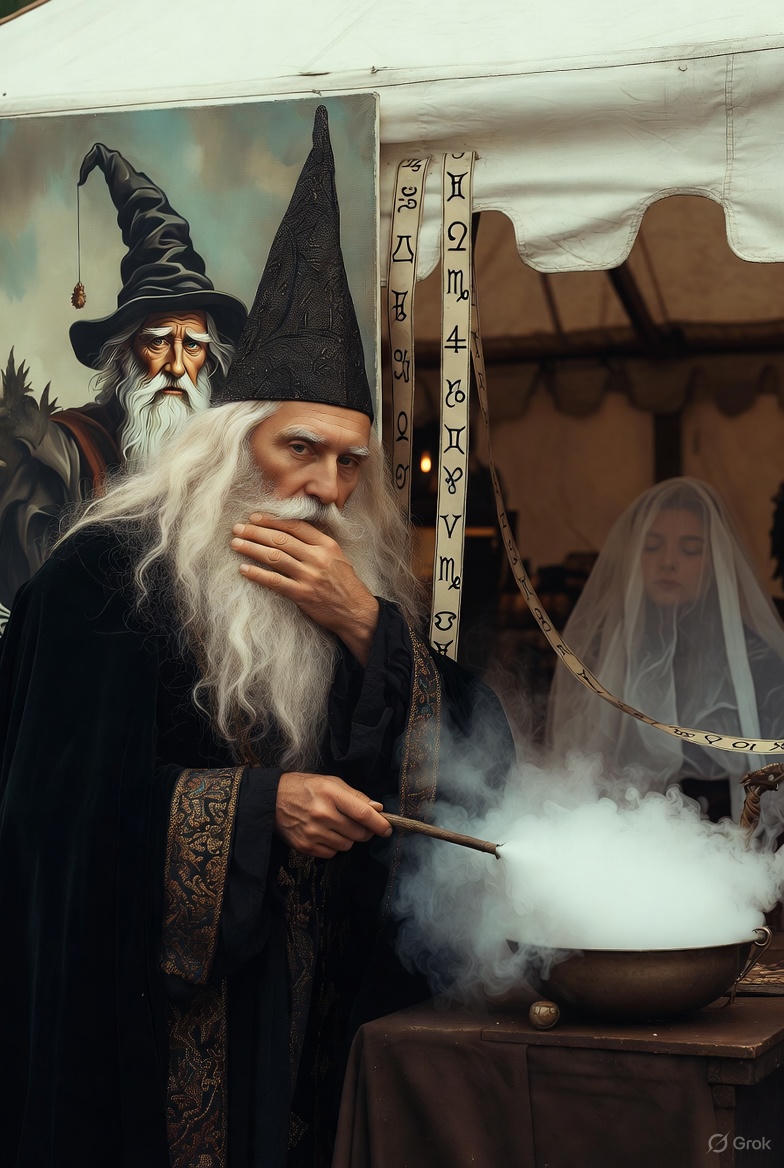
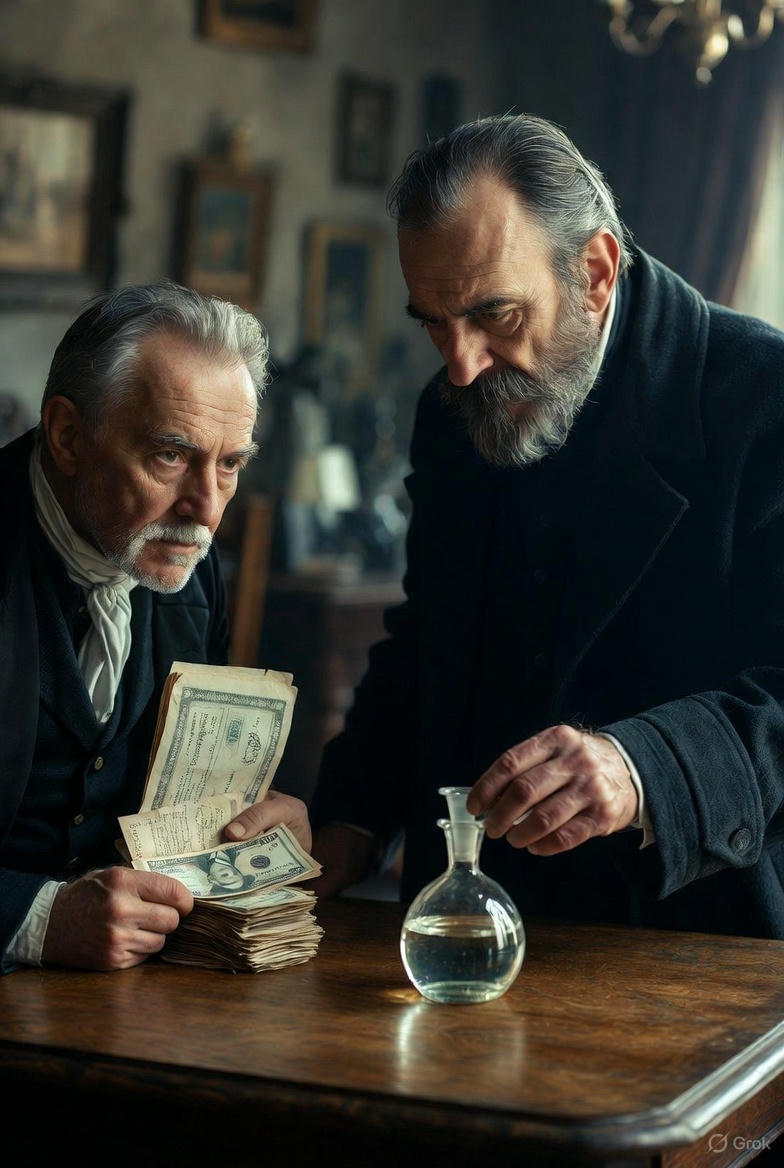
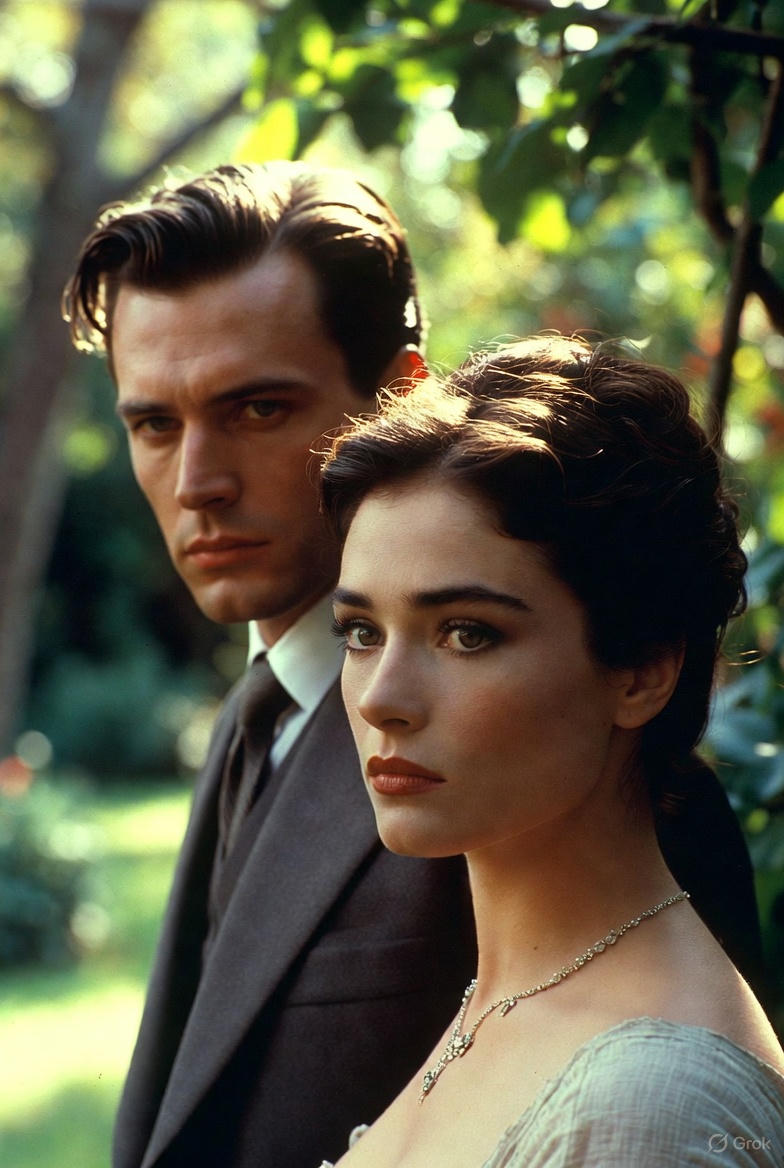


 Anarchistbanjo's World