Feeds:
Posts
Comments

Archive for September, 2025

Chapter 85: Learn Your False Responses – Breaking Free from Self-Deception for Unified Growth

Have you ever caught yourself smiling and saying “I’m fine” when turmoil rages inside, or abandoning a promising project just as success nears, wondering why these “false responses” sabotage your path, turning potential victories into self-inflicted defeats? What if “miracles” of wholeness emerged from recognizing these protective lies—rationalizations like fearing rejection in love or staying in toxic situations “for the kids”—as dividers that fragment your senses, emotions, and actions, leading to stress and stagnation, where owning failures as internal prompts redirection over external blame? In this unmasking of false responses, we expose them as barriers to goals: never finishing starts, grass-greener illusions, or avoidance mechanisms that block integrated living, urging us to accept body and emotions as true signals while questioning mental deceptions. This isn’t self-criticism; it’s empowered unity, where confronting false narratives aligns what we feel with what we do, fostering mental-emotional-physical harmony for authentic progress.

This self-unity pursuit subtly reflects a balanced dynamic: The expansive truth of senses and feelings (outward, generative authenticity like branches expressing innate form) aligns seamlessly with the grounding challenge of mental rationalizations (inward, stabilizing scrutiny like roots confronting soil barriers), creating harmony without division. Like an oak tree, whose growth halts when false “protections” (overgrown vines) smother true extension but thrives upon pruning (recognition and release), miracles of clarity arise from integrated self. In this chapter, we’ll dismantle these insights into liberating truths, covering false responses’ nature, examples of sabotage, protective mechanisms, divided self’s stress, owning internal causes, and redirecting from brick walls, all linked to your OAK Matrix as lower emotional/sensory truths (body feels) resonating with mental discernment (rational scrutiny). By the end, you’ll have tools to spot deceptions, own your blocks, and turn false responses into “superhuman” authenticity, transforming fragmented efforts into purposeful unity. Let’s expose your illusions and uncover how recognition unlocks miracle-level wholeness.

False Responses’ Nature: Hidden Self-Defeaters We Overlook

False responses are mismatches between feelings and actions—your text defines them as feeling one way yet acting another, often unconsciously, blocking awareness and change.

Why miraculous to identify? They lurk in blind spots, derailing us; recognition builds defenses. Common trait: Deceptive; non-integrated.

Dynamic balance: Responses’ inward mismatch (stabilizing deception) aligns with recognition’s outward exposure (generative correction), blending hidden with healed.

In OAK: This lower mental illusions integrate with heart’s unity for authentic flow.

Empowerment: Observe daily “I’m fine” moments—note the inner-outer gap as starting insight.

Examples of Sabotage: Patterns That Trip Us Near the Finish

Common false responses sabotage success—your text lists never completing starts, grass-greener wandering, or rejection-fear avoiding dates, causing repeated falls before goals.

Why superhuman to break? They rationalize avoidance, preventing closure. Common: Pre-victory stumbles; non-committal.

Dynamic: Sabotage’s inward rationalization (stabilizing lie) aligns with breakthrough’s outward push (generative finish), fusing excuse with execution.

In OAK: Solar plexus patterns resonate with root persistence for completed momentum.

Practical: Track an unfinished task—probe the false “reason” for abandonment.

Protective Mechanisms: Shields That Become Prisons

False responses often protect from discomfort—your text examples staying in unloving relationships “for the kids” or dead-end jobs fearing unemployment, trading safety for stagnation.

Why miraculous to dismantle? They mask unpleasant truths but breed long-term harm. Common: Fear-based; non-confrontational.

Dynamic: Mechanisms’ stabilizing shield (grounding in avoidance) aligns with freedom’s outward release (generative owning), blending protection with progress.

In OAK: Emotional fears integrate with mental clarity for liberated choices.

Empowerment: Identify a “protective” habit—weigh its cost vs. benefit for honest reassessment.

Divided Self’s Stress: When False Responses Fragment Us

False responses split our wholeness—your text warns they divide feelings from actions, leading to stress, mental/emotional illness, as integrated bodies strive for function but get blocked.

Why superhuman to unify? It restores harmony, reducing inner conflict. Common: Fragmented; non-holistic.

Dynamic: Division’s inward fracture (stabilizing stress) aligns with unity’s outward integration (generative healing), fusing split with synthesis.

In OAK: Root sensory body resonates with heart/emotional wholeness for stress-free flow.

Practical: Feel a “division” (e.g., suppressed emotion)—journal to bridge feeling and action.

Owning Internal Causes: Path to Accountability and Change

When goals fail, own internal actions—your text contrasts easy external blame (rationalizing obstacles) with hard self-accountability, recognizing wrong doing or unreadiness as true causes.

Why miraculous? It empowers redirection over victimhood. Common: Self-caused; non-blaming.

Dynamic: Owning’s inward accountability (stabilizing truth) aligns with change’s outward path (generative pivot), blending admission with advancement.

In OAK: Solar plexus ownership integrates with third-eye self-truth for empowered owning.

Empowerment: For a failure, list internal factors—plan adjustments without external excuses.

Redirecting from Brick Walls: When Effort Hits Misalignment

Brick walls signal wrong directions—your text advises viewing them as mental limits (false responses blocking understanding), urging pivot since senses/emotions are true, but interpretations may err.

Why superhuman? It turns dead ends into new routes, accepting body/emotions as valid. Common: Misaligned; non-persistent in error.

Dynamic: Walls’ inward block (stabilizing signal) aligns with redirection’s outward turn (generative course), fusing halt with headway.

In OAK: Mental misinterpretations resonate with sensory/emotional truths for aligned navigation.

Practical: Hit a “wall”—affirm senses/feelings, reframe mental lie for fresh direction.

Shared Traits: Deceptive Divisions, Protective Lies, and Owned Redirections

These elements unite: False nature, sabotage examples, protective mechanisms, divided stress, internal owning, wall redirections—your text ties them to unrecognized blocks frustrating goals, where confronting deceptions unifies self for progress.

Why? Lies divide; truth integrates. Dynamic: Deceptions’ inward split (grounding in false) aligns with recognition’s outward unity (generative true), merging mask with mastery.

In OAK: Lower centers (body/emotions) resonate with higher unity for miracle authenticity.

Empowerment: Spot false patterns—apply traits for holistic integration.

Cultivating Recognition: Training for False Response Awareness

Recognition is trainable: Probe ruts, own causes, pivot paths—your text implies awareness eases change, building defenses against blind spots.

Why? Unseen hinders; seen empowers. Dynamic: Cultivation’s stabilizing probe (grounding in self) aligns with change’s outward defenses (generative barriers), fusing insight with integrity.

In OAK: Third-eye (recognition) integrates with solar plexus (owning).

Practical: Weekly “false check”—question a response’s truth for habitual awareness.

Practical Applications: Unmasking False Responses Daily

Make unity miracles truthful:

  • Response Journal: Note a “false” act (male path: generative pivot; female path: stabilizing own). Reflect dynamic: Grounding deception + outward truth.
  • Partner True Share: Discuss a “protective lie” with someone (men: outward confront; women: grounding integrate). Explore seamless integration. Alone? Affirm, “False and true align in me.”
  • Own Ritual: Visualize split self; affirm internal cause (e.g., “I own this block”). Act: Redirect a wall, noting unity.
  • Integration Exercise: Weekly, align feeling/action in one area—observe reduced stress.

These awaken power, emphasizing seamless dynamic over division.

Conclusion: Unlock Miracles Through Recognized Truth

You cannot change what you do not recognize—false responses, sabotage patterns, protective lies, divided stress, internal owning, wall redirections—expose deceptions for unified progress. A balanced dynamic unites grounding with expansion, turning splits into superhuman wholeness. Like an oak pruning illusions for true form, embrace this for authentic living.

This isn’t hidden—it’s revealed. Recognize today, own boldly, and feel the miracle. Your life awaits—unified, empowered, and genuinely yours.

Read Full Post »

OD by Karl Hans Strobl and translated by Joe E Bandel

Chapter 6

The lord of Reisenberg Castle had been ennobled.

His king, the King of Württemberg, had lifted him from plain citizenry to the rank of baron. His youthful attempt to flee to Tahiti, for which he’d been imprisoned at Hohenasperg, was forgiven and forgotten. He’d been awarded the Royal Württemberg Crown Order, named an honorary citizen of Stuttgart, and now, back home, his contributions to science, especially its practical applications, were deemed so great that he could rightly be made Baron von Reichenbach.

The newly minted baron occasionally said it meant nothing to him, just something for others, but perhaps it was why he hosted this grand gathering today. This wasn’t openly declared or even hinted at, yet the guests likely thought as much when they arrived, one by one, and saw the new baronial crest carved in stone above the castle entrance.

Reisenberg Castle was originally a Jesuit country house, later acquired by Count Kobenzl, whose name gradually became tied to both hill and castle among the people. Now the old count’s crest above the entrance had been chipped away and in its place, the Reichenbach crest had been set.

“Is Reichenbach a Rosicrucian?” Professor Schrötter asks, pausing with Court Councillor Reißnagel before the door.

“Why?” the Councillor’s wife wonders.

“Don’t you see the cross with roses on the crossbars in his crest?”

“Rosicrucian—what’s that?” the Councillor’s wife asks, a slender, delicate lady with translucent pale cheeks and ever-dreamy, searching eyes.

“Rosicrucians?” her husband explains leisurely. “They’re an order, a society. They’re said to possess remarkable secrets.”

“If Reichenbach has a secret,” Professor Schrötter smiles, “it’s how to make money.”

Reißnagel chuckles. “Think so, my dear friend? It’s not that simple with the earning. He earns plenty, sure, but he’s got passions that devour money. And is the Ternitz ironworks really so profitable? You know, Reichenbach does me the honor of asking my advice now and then—on business matters, of course, not science…” He chuckles again. The Councillor’s wife hasn’t taken her eyes off the crest. “And the star in the bottom right, with arrows shooting out?”

“Those must be the meteorites, the shooting stars,” Professor Schrötter says after some thought, “that Reichenbach deals with.”

“Are the Hungarian ones included too?” Reißnagel chuckles. The councillor chuckles, and then the two men laugh in shared malicious glee.

“How’s it really going with that?” the councillor asks then, as they finally enter the garden hall and hand their coats to the servants. “What does science say about it?”

“Well, the matter has turned into a thorough embarrassment. Reichenbach has misfired once. The so-called meteorite fall in Hungary has become a fiasco for him. He calculated three hundred fifty thousand million little stones and claimed that our mountains, in part, so to speak, fell from the sky. To the Neptunian and Plutonian mountain formations, he added the Jovian ones, as he calls them. And it turned out that his Hungarian meteorites are ordinary bean ores, which have nothing to do with the sky and occur in masses on Earth. But against the opinion of the Court Mineral Cabinet, he sticks to his view. He has a thick skull.”

“Yes, he does,” the councillor confirms. “He’s a strange man altogether. A clear head, that you have to admit, but sometimes his imagination plays a trick on him. Imagination is something for poets and such folk, but not for officials, and certainly not for scholars.” And then, with a meaningful glance at his wife, he adds: “Too much imagination and enthusiasm is not for us ordinary mortals anyway.” Yes, imagination certainly holds no power over Councillor Reißnagel; his head looks like a well-ordered registry, everything filed by shelf numbers in compartments, and his rounded little belly guarantees the thoroughly earthly direction of his life philosophy.

“There are so many people here,” the Councillor’s wife says anxiously. “I should’ve stayed home.” She doesn’t handle such crowds of bodies well; a disagreeable feeling rises from the haze, a mix of human breath and various odors making her restless. She can’t quite express it, but it’s anything but comfortable.

Then the rising waves of social bustle separate them. There are indeed many people in the cheerful garden hall and adjoining rooms, and Schrötter spots Reichenbach’s famous guest, Professor Liebig—he must go greet him.

To Councillor Reißnagel and his wife joins their house doctor, the young Dr. Eisenstein. He kisses the gracious lady’s hand and inquires about her health. “That’s another of Reichenbach’s passions,” the councillor says. “Inviting so many people. He thinks he has to emulate Baron Jacquin, who for thirty or forty years gathered everyone in Vienna with name or reputation. But the heathen money that costs!” With that, he takes a plate from the servant appearing before him, scoops goose liver pâté from the silver dish, and secures a glass of wine on the nearby console table. “Who’s that young man over there talking to Ottane?”

Dr. Eisenstein can provide the answer. The young man with the laughing face, the lion’s mane, and the audacious tie is, of course, a painter, the painter Max Heiland, of whom so much is said nowadays, a genius, everyone wants to have themselves painted by him, a rat catcher after whom the women run, it is said that the noblest ladies are happy to be allowed to pose for him.

For geniuses, Councillor Reißnagel has only a contemptuous growl. “They may make money, but it’s all just hocus-pocus; geniuses are only a nuisance for a decent official, an unreliable element that one can’t trust. Genius and revolution, that somehow go together.” But then his small eyes sparkle with a cold, amused light: “Aha, the host! And of course with Therese Dommayer!” He wipes his mouth, swallows the Nussberger—by the way, a splendid Nussberger—and steers eagerly toward Reichenbach and the actress.

“You haven’t given me an answer yet, gracious lady!” says Dr. Eisenstein, leading the councillor’s wife apparently casually from the garden hall onto the terrace.

Beneath the terrace, the forest mountains slope in wonderful lines down to the plain, and below lies the city with its thousands of lights in the soft darkness of the summer evening. City and river and mountains, peacefully merging, an intimate clinging together of human existence and landscape. But the young doctor isn’t interested in the landscape; he has spotted Hermine’s light blue dress outside. Was it an unfavorable coincidence or deliberate evasion that Hermine has always slipped away from his approach until now?

“I had another attack yesterday,” the councillor’s wife complains. “I almost sent for you. It was the same as always—first raging headaches, everything becomes so loud and glaring and stupefying, smells, lights, pressing in on me from all sides, hostile and threatening, then a twilight where I lose consciousness. When I came to, I was sitting on the bench in the garden. I don’t know how I got there.”

“We should try the magnetic cure after all,” the doctor says distractedly, searching with his eyes for the light blue dress he had just seen over there next to the large iron dog from the Blansko foundry.

“Oh, my husband won’t hear of it,” sighs Frau Pauline. “He thinks nothing of magnetic cures and says my whole illness is nothing but imagination.”

Meanwhile, Reichenbach has led the plump, always cheerful Therese Dommayer to the buffet and piled a mountain of sweets on her plate. Although Therese Dommayer is a great tragedienne, the greatest since time immemorial, in everyday life she has a great fondness for sweets. She saves the grand tones for the stage; her daily life is closer to a bright laugh, a silvery chime—it would be nice if this bell-like laughter could be heard more often, as much as possible.

“It’s quite nice in your city house too, dear Baron,” she says, “but out here, you first realize what a poor dog one is if you’re always stuck in the city. How divine nature is! We theater folk—good heavens, sometimes one wishes the devil would take the whole thing. She blinked slyly up at Reichenbach and then made a wistfully swelling face. “Oh yes, you rich folks have it good.”

A scent rose from her bare shoulders, Reichenbach bent slightly embarrassed over her: “Aren’t you richer than anyone else? Rich in your art! Rich in the admiration of your contemporaries!”

She swatted at Reichenbach with her hand and replied, chewing with full cheeks: “Contemporaries, you’re right, dear Baron, contemporaries! That’s just it. How long does the whole glory last? A few years. Then it’s over, especially for a woman. And then it goes: the mime’s posterity weaves no wreaths. Sometimes one has a longing: to be away from the world-famous stages, married, have a good husband, have children.” She tilted her head in an inimitable, flowing melancholy.

Councillor Reißnagel arrived at that moment very uninvited, no, he was not welcome at all. He wore his oiliest smile on his face, and his belly broadly pushed the air before him. He had to express his most submissive congratulations orally to the host for his elevation to baronial rank and for this illustrious company today, which in no way fell short of that of the late Baron Jacquin, indeed, on the contrary, through the presence of an artist like the divine Dommayer, gave a consecration often missed at Jacquin’s.

Therese nodded and calmly shoved a piece of cake into her mouth.

One could not say otherwise, the councillor continued, than that a lucky star hovered over this house, a downright Napoleonic lucky star. And if now, moreover, this process—this somewhat protracted and certainly costly process with the Salm heirs—should also come to a satisfactory conclusion…

“You know, of course,” Reichenbach interrupted, “that I won the first lawsuit…”

Read Full Post »

Chapter 84: You Cannot Change What You Do Not Recognize – Unveiling Blind Spots for Transformative Growth

Have you ever poured endless effort into a job, relationship, or habit, only to hit repeated walls—frustration mounting as success eludes you—until a moment of revelation exposes hidden limitations like learning disabilities or health issues, turning self-sabotage into self-awareness and redirecting your path toward strengths that truly work? What if “miracles” of breakthrough arose from confronting those unseen blind spots, evaluating life’s “red flags” like poor results from high effort, and shifting focus from failures to what yields rewards, where recognizing unrealistic expectations or one-sided dynamics frees you to build from positions of power? In this awakening to self-defeating behaviors, we explore the invisibility of most barriers—stemming from blind spots like auditory processing issues, memory challenges, or unaddressed health problems—as shared in a personal story of vocational evaluations at 40 revealing disabilities from a head injury, fine motor deficits, and personality traits clashing with jobs. This isn’t defeatist admission; it’s empowered pivot, urging honest assessments via tests, friends, and experts to discard dead wood, embrace what thrives, and ensure mutual effort in relationships, where continued same actions yield same results unless changed.

This recognition journey subtly reflects a balanced dynamic: The expansive pursuit of self-improvement (outward, generative redirection like branches pruning weak growth to reach fuller sun) aligns seamlessly with the grounding illumination of blind spots (inward, stabilizing revelation like roots sensing hidden obstacles in soil), creating harmony without self-deception. Like an oak tree, whose vitality depends on acknowledging unseen underground threats (unrecognized limits) to fortify and flourish above (rewarding strengths), miracles of renewal emerge from honest evaluation. In this chapter, we’ll uncover these truths into liberating insights, covering invisible barriers, personal revelations of disabilities, health awakenings, red flags in effort-results, and focusing on what works, all linked to your OAK Matrix as third-eye self-awareness (blind spot revelation) resonating with solar plexus resolve (adaptive change). By the end, you’ll have tools to audit your life, confront limitations, and turn recognition into “superhuman” redirection, transforming stalled patterns into purposeful momentum. Let’s shine light on your shadows and discover how awareness unlocks miracle-level change.

Invisible Barriers: Unaware Self-Defeating Behaviors

Most self-sabotaging habits escape notice—your text emphasizes if we recognized them, defenses would be easier; they lurk in blind spots, derailing progress unknowingly.

Why miraculous to uncover? It shifts blame to actionable insight, preventing repeated failures. Common trait: Subconscious; non-obvious.

Dynamic balance: Barriers’ inward concealment (stabilizing unawareness) aligns with recognition’s outward exposure (generative defense), blending hidden with healed.

In OAK: This lower mental shadows integrate with third-eye clarity for illuminated growth.

Empowerment: List recurring frustrations—probe for unseen patterns as starting awareness.

Personal Revelations: Discovering Disabilities and Strengths

Evaluations can reveal lifelong hurdles—your text shares turning to Vocational Rehab at 40, uncovering auditory learning disability (trouble processing verbal overload), short-term memory loss from teen head injury (holding four items vs. five), and low fine motor skills (80%), explaining job mismatches despite genius IQ, photographic visual memory, communication prowess, mechanical aptitude, out-of-box thinking, and people skills.

Why superhuman? It reframes “stupid” appearances (forgetting instructions, slow work) as addressable, highlighting strengths for pivot. Common: Late discovery; non-defining.

Dynamic: Revelations’ inward diagnosis (stabilizing understanding) aligns with strengths’ outward leverage (generative redirection), fusing limitation with liberation.

In OAK: Root physical challenges resonate with mental gifts for balanced self-view.

Practical: Seek an evaluation (e.g., skills test)—map disabilities to strengths for empowered strategy.

Health Awakenings: Recognizing Unseen Physical Limits

Unaddressed health issues mimic “normal” struggles—your text recounts discovering high blood pressure and severe sleep apnea in middle age, requiring lifelong medication and CPAP, assuming others faced similar without realizing personal toll.

Why miraculous? Awareness enables management, preventing escalation. Common: Assumed universality; non-unique denial.

Dynamic: Health’s inward denial (stabilizing assumption) aligns with awakening’s outward treatment (generative care), blending blindness with betterment.

In OAK: Root vitality integrates with heart self-compassion for holistic healing.

Empowerment: Track unexplained symptoms—consult experts for health blind spot revelations.

Red Flags in Effort-Results: When High Input Yields Low Output

Tremendous effort with poor returns signals misalignment—your text warns against persisting in wrong directions (e.g., one-sided relationships lacking mutual work), urging evaluation of rewards and pivot if insufficient.

Why superhuman? It halts waste, redirecting to fruitful paths. Common: Mismatched expectations; non-rewarding.

Dynamic: Flags’ inward alert (stabilizing evaluation) aligns with pivot’s outward shift (generative focus), fusing warning with wisdom.

In OAK: Solar plexus effort resonates with mental discernment for result optimization.

Practical: Audit a high-effort area—if low gain, question direction and adjust.

Focusing on What Works: Pruning Dead Wood for Strength

Let go of non-working elements, amplify successes—your text advises taking what thrives and expanding it, tackling old issues from refreshed positions, ensuring relationships have reciprocal effort.

Why miraculous? It compounds positives, avoiding failure cycles. Common: Strength-based; non-clinging.

Dynamic: Focus’s outward expansion (generative growth) aligns with pruning’s inward release (stabilizing cut), blending build with abandon.

In OAK: Heart-level mutualism integrates with solar plexus resolve for prosperous paths.

Empowerment: Inventory “working” vs. “dead” aspects—nurture the former, release the latter.

Shared Traits: Unseen Limits, Revelatory Pivots, and Rewarding Redirection

These elements converge: Invisible barriers, disability revelations, health awakenings, effort red flags, work-focus—your text unites them in unrecognized self-sabotage, where awareness enables change, pruning failures for thriving gains.

Why? Denial stalls; recognition renews. Dynamic: Limits’ inward shadows (grounding in blind) aligns with redirection’s outward light (generative paths), merging discovery with destiny.

In OAK: Lower chakras (physical/emotional) resonate with higher unity for miracle awareness.

Empowerment: Spot self-defeating signs—apply traits for holistic pivot.

Cultivating Recognition: Training for Blind Spot Illumination

Recognition is trainable: Seek evaluations, second opinions, reflect on results—your text implies assuming “normal” hinders, but honest audits reveal limitations for empowered redirection.

Why? Ignorance sabotages; insight empowers. Dynamic: Cultivation’s stabilizing audit (grounding in self) aligns with change’s outward pivot (generative paths), fusing reflection with renewal.

In OAK: Third-eye (awareness) integrates with solar plexus (effort).

Practical: Monthly life review—consult friends/experts for blind spot feedback.

Practical Applications: Illuminating Blind Spots Daily

Make awareness miracles insightful:

  • Spot Journal: Note a “barrier” (male path: generative pivot; female path: stabilizing audit). Reflect dynamic: Grounding limit + outward strength.
  • Partner Insight Share: Discuss a “blind spot” with someone (men: outward prune; women: grounding reveal). Explore seamless integration. Alone? Affirm, “Shadow and light align in me.”
  • Reveal Ritual: Visualize unseen issue; seek “test” (e.g., journal symptoms). Act: Address a limitation, noting empowerment.
  • Pivot Exercise: Weekly, evaluate effort-yield—redirect low ones for gain boost.

These awaken power, emphasizing seamless dynamic over denial.

Conclusion: Unlock Miracles Through Recognized Change

You cannot change what you do not recognize—invisible barriers, revelations, awakenings, red flags, work-focus—expose self-sabotage for pivots to strengths and rewards. A balanced dynamic unites grounding with expansion, turning blind spots into superhuman sight. Like an oak sensing hidden rot to reinforce vigor, embrace this for awakened living.

This isn’t ignored—it’s illuminated. Recognize today, pivot boldly, and feel the miracle. Your life awaits—aware, redirected, and triumphantly yours.

Read Full Post »

Chapter 83: Being True to Yourself – The Power of Inner Integrity and Spiritual Awakening

Have you ever felt the weight of living a divided life—presenting one face to the world while hiding another—building invisible stress until a breaking point forces you to choose authenticity over pretense, unlocking a profound sense of peace and purpose? What if “miracles” of self-acceptance and empowerment arose from confronting that inner conflict, as in a teenager’s crisis of conscience leading to a lifelong vow of honesty, where aligning with your “Master Within” replaces external pressures with the guiding voice of your heart? In this personal testament to being true to yourself, we trace a journey from a religiously strict upbringing fostering a split existence—lying and stealing in secret while excelling in church—to a traumatic night of spiritual conversion at 14, vowing integrity and discovering internal authority over external dogma, as taught by Rosicrucians. This isn’t mere confession; it’s empowered rebirth, where conscience’s “still small voice” becomes your compass, fostering a clean slate and unshakeable self-respect through 36 years of fidelity to one’s core.

This authenticity pursuit subtly reflects a balanced dynamic: The expansive call of spiritual truth (outward, generative awakening like branches unfurling toward light’s revelation) aligns seamlessly with the grounding anchor of conscience (inward, stabilizing integrity like roots delving into self’s soil for nourishment), creating harmony without duplicity. Like an oak tree, whose true form emerges from shedding weak layers (divided facades) to stand in singular strength (unified essence), miracles of peace arise from inner alignment. In this chapter, we’ll illuminate this path into transformative truths, covering the stress of divided living, crisis and conversion, the vow’s enduring power, and internal authority’s guidance, all linked to your OAK Matrix as heart-level conscience (inner voice) resonating with solar plexus resolve (true self). By the end, you’ll have tools to audit your authenticity, heed your conscience, and turn inner conflicts into “superhuman” integrity, transforming hidden struggles into purposeful wholeness. Let’s honor your core and uncover how being true unlocks miracle-level empowerment.

The Stress of Divided Living: High Standards and Hidden Selves

A split existence breeds mounting tension—your text recounts a religious home with unattainably high standards, leading to dual personas: dutiful at home, rebellious (lying, stealing) elsewhere, manageable but increasingly stressful.

Why miraculous to resolve? It highlights how inauthenticity erodes peace, as in munching stolen candy during confirmation class while shining as the star student. Common trait: Facade-maintained; non-sustainable.

Dynamic balance: Division’s inward conflict (stabilizing pressure) aligns with unity’s outward call (generative authenticity), blending strain with summons.

In OAK: This emotional split integrates with heart’s wholeness for eventual harmony.

Empowerment: Identify a “split” in your life (e.g., work vs. home self)—note the stress as cue for alignment.

Crisis and Conversion: The Breaking Point of Self-Standards

When personal standards clash with actions, crisis ensues—your text describes a traumatic night at 14, where self-loathing overrode divine forgiveness, demanding change to “feel good about myself.”

Why superhuman? It catalyzes “born again” rebirth, vowing truth amid darkness. Common: Conscience-driven; non-external.

Dynamic: Crisis’s inward turmoil (stabilizing rock bottom) aligns with conversion’s outward vow (generative renewal), fusing pain with purpose.

In OAK: Solar plexus crisis resonates with third-eye awakening for transformative shift.

Practical: Recall a personal low—use as pivot for a small vow of truth, feeling the relief.

The Vow’s Enduring Power: Integrity as Lifelong Anchor

A solemn pledge to honesty transforms—your text shares vowing never to lie or steal again, maintaining a clean conscience for 36 years, proving it’s “not always easy but…most powerful.”

Why miraculous? It restores self-respect, turning stress into strength. Common: Conviction-held; non-compromised.

Dynamic: Vow’s stabilizing commitment (grounding in integrity) aligns with life’s outward flow (generative true living), blending resolve with reward.

In OAK: Root-level habits integrate with heart’s moral peace for sustained empowerment.

Empowerment: Make a micro-vow (e.g., daily honesty act)—track its anchoring effect over time.

Internal Authority: The “Master Within” and Conscience’s Voice

Rosicrucians reveal God/Cosmic speaks through heart and conscience—your text introduces this as “Master Within,” favoring internal over external authority for guidance.

Why superhuman? It empowers self-reliance, as in early exposure shifting from dogma to inner truth. Common: Voice-heeded; non-blind.

Dynamic: Internal’s inward whisper (stabilizing authority) aligns with authority’s outward living (generative path), fusing intuition with independence.

In OAK: Third-eye inner voice resonates with heart’s spiritual connection for guided authenticity.

Practical: Quietly listen for conscience “nudges”—act on one for authority practice.

Shared Traits: Inner Conflict, Transformative Vows, and Authentic Guidance

These elements unite: Divided stress, crisis conversion, enduring vows, internal authority—your text ties them to authenticity’s journey, from split lives to unified true self.

Why? Facades erode; truth liberates. Dynamic: Conflict’s inward division (grounding in crisis) aligns with authenticity’s outward embrace (generative wholeness), merging struggle with serenity.

In OAK: Lower emotional tensions resonate with higher unity for miracle integrity.

Empowerment: Spot inauthentic patterns—apply traits for holistic realignment.

Cultivating True Self: Training for Inner Fidelity

Authenticity is cultivable: Heed conscience, make vows, embrace authority—your text implies crisis avoidance through proactive truth, building lifelong power.

Why? Duplicity weakens; fidelity empowers. Dynamic: Cultivation’s stabilizing vows (grounding in commitment) aligns with self’s outward expression (generative living), fusing pledge with purpose.

In OAK: Solar plexus (resolve) integrates with heart (conscience).

Practical: Weekly self-audit—adjust one “split” toward truth for habitual fidelity.

Practical Applications: Embracing True Self Daily

Make integrity miracles genuine:

  • Conscience Journal: Note a “split” moment (male path: generative vow; female path: stabilizing voice). Reflect dynamic: Grounding crisis + outward truth.
  • Partner Truth Share: Discuss a “conversion” story with someone (men: outward pledge; women: grounding authority). Explore seamless integration. Alone? Affirm, “Division and unity align in me.”
  • Vow Ritual: Visualize past facade; pledge truth (e.g., affirm inner standards). Act: Follow a conscience nudge, noting peace.
  • Authority Exercise: Weekly, reject external pressure—choose inner guidance for empowerment.

These awaken power, emphasizing seamless dynamic over split.

Conclusion: Unlock Miracles Through True Alignment

Being true to yourself—divided stress, crisis conversion, enduring vows, internal authority—frees from facades, forging conscience-clean power. A balanced dynamic unites grounding with expansion, turning conflicts into superhuman wholeness. Like an oak shedding bark for authentic core, embrace this for liberated living.

This isn’t hidden—it’s chosen. Honor your truth today, vow boldly, and feel the miracle. Your life awaits—authentic, empowered, and wholly yours.

Read Full Post »

OD by Karl Hans Strobl and translated by Joe E Bandel

Chapter 5

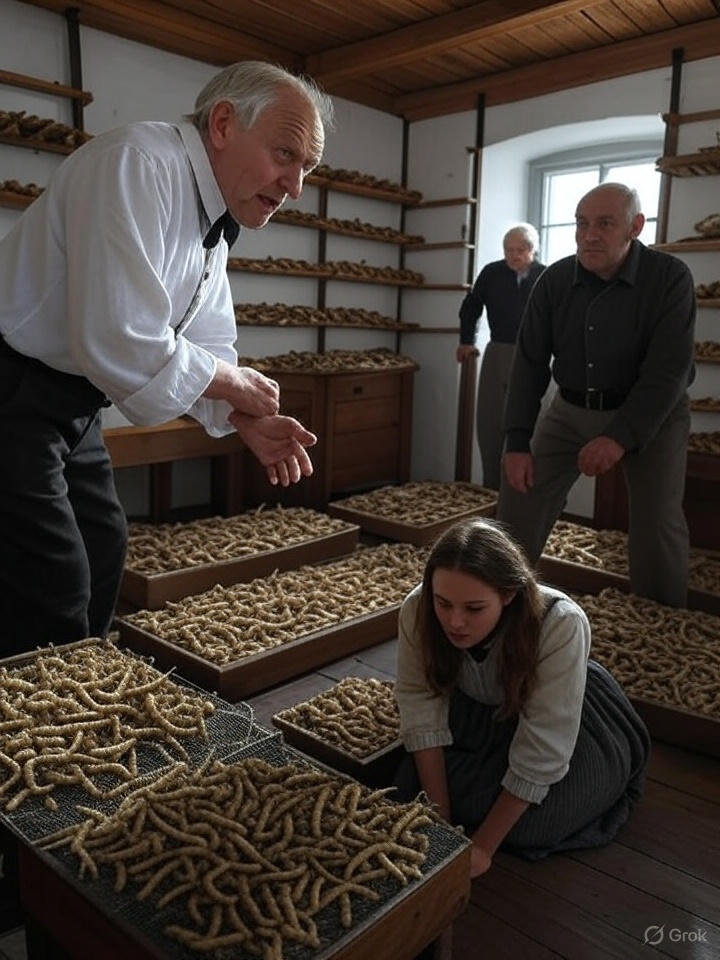
Silkworms are a tricky bunch. They need warmth, but not too much, fresh air but no drafts. They’re more delicate than you’d imagine, and above all, stubborn—they’ll only eat mulberry leaves. But mulberry trees don’t grow around Vienna like limes, birches, or chestnuts. You have to bring the leaves from afar, which raises costs, and the worms don’t seem to like leaves that aren’t freshly picked.

Even if you refresh the leaves with water, dry them, and do everything humanly possible, one day, for no clear reason, the silkworms stop eating. Something suddenly doesn’t suit them. They stop feeding and shrink into empty husks, or they swell, grow grotesquely fat, and burst, dissolving into mush. It happens alarmingly fast—in a few days, not a single worm is left alive.

Reichenbach has endured three such mass die-offs of his silkworms. But you can’t leave anything untried, so he starts a fourth time.

“You know,” Reichenbach said to his famous guest, the chemist Liebig, “you mustn’t shy away from personal sacrifices to launch an industry. Imagine if we succeed, if we can produce the silk we need—how much wealth that’d bring to the land.”

Liebig paused. “Maybe the critters don’t take to your Viennese climate. Maybe they’re just homesick. Your wine thrives better here, anyway. And frankly, you should stick to chemistry—that’s your field.”

Liebig was headed to the naturalists’ convention in Graz and had accepted Reichenbach’s invitation to be his guest, using his city apartment on Bäckergasse, his carriage, and one of his lackeys. Today, though, he’d come to Reisenberg for the feast Reichenbach was hosting. He arrived early that afternoon so his host could show him the estate. Count Kolowrat had wanted to appoint Liebig to the university, and Reichenbach hinted the idea was his, claiming he’d moved heaven and earth to secure the scholar to win for Vienna. The negotiations fell through, but the friendship forged then endured.

And because of this friendship, Liebig felt obliged to speak plainly about what struck him during the tour. “Look,” he said, “a man shouldn’t want too much at once. Or if he does, it should all stem from one center. But you’re scattering your strength—estates here and in Gutenbrunn, in Galicia, ironworks in Ternitz and Gaya, and now this silkworm business. Why not stick to your true field and build there? Why let others reap the fruits of your groundwork? Sell, who apprenticed with you, started tar distillation in Offenbach, and Hofmann found the tar base kyanol there. That’s a big deal you let slip away.”

“It’ll be no less big,” Reichenbach insisted, “if I succeed in founding a local silk industry. Once these trees grow and the worms get fresh leaves…”

They walked the road from Sievering to Reichenbach’s castle, known locally as Kobenzl, a road he’d lined with mulberry trees on both sides. But for now, the delicate fodder saplings were mere twigs, pitiful brooms, and if the worms had to get their food from elsewhere, countless generations might still perish.

Liebig saw that Reichenbach was one of those people who can’t pass a wall without wanting to bash through it, learning only from their own failures. But it was regrettable, deeply regrettable, to see him stray so far from his true calling.

Before the castle, Reichenbach excused himself, asking the baron to stroll in the garden or sit in the library until he’d changed.

But after leaving Liebig, he didn’t go straight to his dressing room. Instead, he wanted to quickly check the silkworm room. A double door sealed it from the hall to shield the delicate creatures from drafts. As he opened the first door, he heard someone weeping inside.

Indeed, there sat Friederike on the floor, sobbing bitterly.

It was a large, bright room with whitewashed walls, lined with wide wooden racks stacked with wire trays for the silkworms. And amid the racks, fifteen-year-old Friederike sat on the floor, crying wretchedly.

Lost in grief, she didn’t hear Reichenbach approach, wholly surrendered to her tears, as if she’d dissolve into a stream. She started when she heard his voice: “Now, now, little one, why such crying?”

When Reichenbach spoke to the child, he always slipped back into his native Swabian dialect, which he usually suppressed with great effort. But despite the kindness in his words, Friederike pressed her hands tighter to her face, tears flowing even more freely. The little Friederike, whom Frau Friederike Luise had once christened, had grown into a lanky, angular girl. Everything about her was sharp-edged, but her brown hair, in contrast to her otherwise plain frame, hung in two heavy braids down her back.

“Come now, little one! What’s so terrible?” Reichenbach asked again.

Finally, sobbing with heaving shoulders, she stammered, “They… won’t… eat… anymore!”

What, the silkworms wouldn’t eat again? Reichenbach stepped to one of the racks and saw that, indeed, the same thing that had happened before was starting again. The wretched, spoiled, delicate little beasts had stopped feeding. They lay still, no longer crawling, motionless on the wire mesh. Some had half-raised their bodies, as if rearing up in a desperate spasm before freezing in place. A nudge with his finger toppled them. A few showed faint signs of life, but most were already free of hunger’s cares. Just last evening, even this morning, they’d nibbled at the leaves, and now, inexplicably suddenness and for unfathomable reasons, the great dying had come over them again. The entire colony was clearly on the verge of collapse.

“Yes, yes,” Reichenbach said mournfully, “they won’t eat anymore.” But as the child sobbed harder, he steadied himself, giving his voice a brighter, comforting tone: “Nothing to be done. These critters just don’t like it here. No one’s to blame… least of all you.”

Little Friederike Ruf had begged to care for the silkworms, wanting to do something, especially something she knew Reichenbach cared about. She could be trusted with the task—no one had been more diligent, more attentive, kept the racks cleaner. If disaster had struck again, Friederike bore the least blame; she’d overlooked nothing and surely rejoiced more than anyone in their thriving.

Now she lifted her hands from her face and rose to her knees. A delicate, clever child’s face emerged. Tears still streamed from her eyes, her lips trembled, but she looked up at Reichenbach with gratitude and trust.

“You can’t let your spirits sink,” Reichenbach continued confidently. “One day we’ll succeed, figure out what’s wrong. Now, you must pick out the dead worms, and we’ll see if we can save the rest.”

He stroked the child’s wavy crown, and from the touch, joy flowed into her young, yearning soul. Yes, now she could laugh again and spring to her feet. Reichenbach wasn’t even out the door before she began clearing away the worms ravaged by the plague.

At the end of the hall, where the stairs rose to the upper floor, Reichenbach paused before a door and, after a brief hesitation, entered.

The corner room had two windows. One was draped with vine leaves over a curved iron grille; in the bright light of the other stood a long table with books and plant specimens.

Hermine was still bent over the microscope.

“It’s time to get dressed,” Reichenbach urged. “Our guests will arrive soon.”

“Yes, Father.”

“Maybe you could sing something today.”

“I think,” Hermine said timidly, “my voice isn’t quite right today.”

“Not right? What nonsense is that? Are you a theater princess? Theater princesses can afford to be ‘out of voice’—it always sounds interesting. You don’t need to make yourself interesting. If you sing poorly, people will say, ‘Well, she’s a botanist, it’s not her field, but for a woman devoted to science, she sings remarkably well.’ And if you sing well, they’ll say, ‘She’s a botanist too, and the late Baron Jacquin called her his most gifted student, and she’s already made a name for herself in the scientific world with her discoveries about plant anatomy. It’s remarkable that she sings so well too. Besides, you really do sing well—why else did I spend so much on your lessons if you’re suddenly not going to sing? So you’ll sing, and that’s that. I’ve already sent Severin with the carriage for Meisenbiegl.”

“Yes, Father!”

From the door, he added, “Oh—and one more thing. Dr. Eisenstein will be here today. He’s an ambitious young man, a capable doctor, you can’t deny him that. He’s got all sorts of unusual, new ideas; he’ll make something of himself. But he’s too eager for you and has hinted he’ll soon ask me a certain question. I don’t like it, and it shouldn’t suit you either. You have other plans, other goals—you’ve already turned down professors, councillors, barons, counts, and rich factory owners. So if he gets any ideas, make it clear his suit won’t find a warm welcome, not from you, not from me. Let him spare himself the trouble. I hope you understand.”

“Yes, Father!” Hermine said softly.

Read Full Post »

Chapter 82: Confronting Fear – Transforming Terror into Empowered Action

Have you ever felt your heart race in the face of danger—a sudden roar in the dark or a child’s cry—freezing in place or instinctively leaping to safety, wondering if fear is a paralyzing foe or a vital ally that, when trained, propels you toward survival and growth? What if “miracles” of courage emerged from embracing fear as a natural emotion signaling peril, responding not with paralysis but trained reflexes, where confronting personal terrors over a lifetime builds resilience, turning weaknesses like acrophobia or intimacy dread into conquered strengths? In this confrontation with fear, we explore its healthy role as an alert, dual responses (freeze or bolt, as in lion hunts), training’s autopilot in terror (military/martial arts examples), real-life rescues (casino baby save), and lifelong empowerment through facing fears like heights or water. This isn’t denial of dread; it’s empowered mastery, where body reverts to habit when mind numbs, fostering a lifetime of rewarding victories.

This fear confrontation subtly reflects a balanced dynamic: The expansive surge of instinctive response (outward, generative bolt like branches whipping in storm to evade breakage) aligns seamlessly with the grounding anchor of training (inward, stabilizing reflexes like roots gripping earth amid quake), creating harmony without immobilization. Like an oak tree, whose fear-like alertness to threats (unreasoning winds) triggers adaptive actions (deepening hold for endurance), miracles of bravery arise from confronted energy. In this chapter, we’ll empower these insights into fearless truths, covering fear’s natural signal, dual responses, training’s autopilot, real-life examples, and lifelong confronting, all linked to your OAK Matrix as lower emotional alerts (fear surges) resonating with solar plexus grit (trained will). By the end, you’ll have tools to face fears, build reflexes, and turn terror into “superhuman” empowerment, transforming frozen moments into purposeful leaps. Let’s stare down your shadows and uncover how confronting fear unlocks miracle-level resilience.

Fear as Natural Signal: Healthy Alert to Danger

Fear is an innate, beneficial emotion—your text frames it as a warning of threats, prompting awareness without inherent wrongness.

Why miraculous? It heightens survival instincts, like extra senses flagging peril. Common trait: Protective; non-judgmental.

Dynamic balance: Fear’s inward alarm (stabilizing caution) aligns with response’s outward readiness (generative evasion), blending vigilance with vitality.

In OAK: This lower emotional instinct fuels root survival for proactive alertness.

Empowerment: Note a fear trigger—view it as a helpful signal, reducing self-criticism.

Dual Responses: Freeze or Bolt in Terror

Fear elicits two reactions—your text illustrates with a lion’s roar: prey freezes (death) or bolts (chance to live), highlighting action over paralysis.

Why superhuman? Bolting defies instinctual stun, preserving life. Common: Fight-or-flight variant; survival-based.

Dynamic: Freeze’s inward contraction (stabilizing shock) contrasts with bolt’s outward burst (generative escape), urging choice for balance.

In OAK: Emotional fear integrates with solar plexus action for decisive leaps.

Practical: Simulate a “roar” (e.g., loud noise)—practice bolting response for readiness.

Training’s Autopilot: Body Reverts When Mind Freezes

In terror, training takes over—your text shares martial arts embedding subconscious reflexes, as in jumping to fighting stance at a beaver’s slap, or military conditioning overriding numb brains.

Why miraculous? It enables function amid panic, turning vulnerability into strength. Common: Habitual; non-conscious.

Dynamic: Training’s inward embedding (stabilizing reflexes) aligns with autopilot’s outward execution (generative survival), fusing preparation with performance.

In OAK: Root physicality resonates with lower mental conditioning for fearless flow.

Empowerment: Train a skill (e.g., self-defense move)—test in surprise scenarios for autopilot trust.

Real-Life Examples: Instinctive Rescues and Responses

Fear responses play out vividly—your text recounts a co-worker diving to save a drowning baby while the mother froze screaming, showcasing trained action vs. paralysis.

Why superhuman? It saves lives when instinct kicks in. Common: High-stakes; non-overthought.

Dynamic: Examples’ inward terror (stabilizing freeze/dive) aligns with outcome’s outward impact (generative save), blending reaction with result.

In OAK: Emotional surge integrates with heart compassion for heroic harmony.

Practical: Recall a personal fear moment—analyze response, train for better next time.

Lifelong Confronting: Turning Fears into Conquered Strengths

Confront fears for empowerment—your text advocates facing personal terrors like heights (roof-climbing), water (learning to swim), or intimacy, as lifetime work yielding rewards.

Why miraculous? It diminishes harm’s hold, building joy in mastery. Common: Gradual; non-avoidant.

Dynamic: Confronting’s outward challenge (generative facing) aligns with growth’s inward release (stabilizing freedom), fusing dread with development.

In OAK: Solar plexus grit resonates with emotional centers for resilient evolution.

Empowerment: List a fear—take small steps (e.g., edge of pool for water fear), track progress.

Shared Traits: Natural Alerts, Trained Responses, and Empowered Mastery

These elements unite: Fear signals, dual reactions, autopilot training, real examples, lifelong work—your text ties them to fear’s role in survival, where confronting loosens grips without paralysis.

Why? Freezing dooms; action liberates. Dynamic: Fear’s inward intensity (grounding in alert) aligns with response’s outward will (generative mastery), merging signal with strength.

In OAK: Lower chakras (instinct) resonate with higher unity for fear miracles.

Empowerment: Spot paralyzing fears—apply traits for proactive conquering.

Cultivating Fear Mastery: Training for Reflexive Courage

Mastery is trainable: Train responses, confront gradually—your text implies building habits to function in numb states, turning fear into ally.

Why? Paralysis hinders; preparation empowers. Dynamic: Cultivation’s stabilizing training (grounding in reflexes) aligns with mastery’s outward facing (generative courage), fusing readiness with resolve.

In OAK: Solar plexus (will) integrates with emotional (fear).

Practical: Weekly fear drill—simulate scenarios, build habitual boldness.

Practical Applications: Confronting Fear Daily

Make resilience miracles bold:

  • Signal Journal: Note a fear alert (male path: generative bolt; female path: stabilizing train). Reflect dynamic: Grounding terror + outward action.
  • Partner Fear Share: Discuss a “freeze/bolt” story with someone (men: outward confront; women: grounding reflex). Explore seamless integration. Alone? Affirm, “Alert and response align in me.”
  • Reflex Ritual: Visualize roar; practice stance (e.g., martial pose). Act: Face a small fear, noting training kick-in.
  • Mastery Exercise: Weekly, confront a terror (e.g., call for intimacy)—observe loosened hold.

These awaken power, emphasizing seamless dynamic over freeze.

Conclusion: Unlock Miracles Through Fear’s Embrace

Confronting fear—natural signals, dual responses, trained autopilot, real rescues, lifelong mastery—turns terror into empowered action, loosening harm’s grip. A balanced dynamic unites grounding with expansion, transforming alerts into superhuman courage. Like an oak roaring back at storms through rooted strength, embrace this for fearless living.

This isn’t avoidance—it’s alliance. Confront boldly today, train resolutely, and feel the miracle. Your life awaits—alert, responsive, and unconquerable.

Read Full Post »

Chapter 81: Change Attitude by Changing Behavior – Igniting New Pathways Through Action

Have you ever found yourself mired in a negative mindset—emotions swirling chaotically, thoughts clouded by unrealistic expectations—wishing for a mental reset, only to discover that shifting your actions sparks profound transformation, forging fresh neural paths like a robot programmed by movement rather than code? What if “miracles” of renewed positivity arose from recognizing attitude as the unified blend of body, mind, and spirit meeting reality, where raw physical activity breaks emotional ruts, burns new brain circuits, and turns frustration into joy without needing to hit rock bottom? In this revelation on attitude change, we explore how positive, realistic expectations foster uplifting attitudes, while negativity stems from misalignment; using robot programming metaphors, infant neural development examples, and the power of trying new physical things to create pathways that work, bypassing mental/emotional stalls. This isn’t passive wishing; it’s active evolution, where “hitting bottom” forces change but proactive experiences offer a gentler, exhilarating route to satisfaction and growth.

This behavioral shift subtly reflects a balanced dynamic: The expansive thrust of new actions (outward, generative exploration like branches venturing into uncharted air) aligns seamlessly with the grounding formation of neural paths (inward, stabilizing circuitry like roots etching deeper channels through soil), creating harmony without stagnation. Like an oak tree, whose attitude toward survival embodies resilient adaptation—physically responding to winds and rains to forge stronger structures (unified growth)—miracles of positivity emerge from movement-driven change. In this chapter, we’ll activate these ideas into invigorating truths, covering attitude as unified self, realistic expectations, mental/emotional ruts, robot programming metaphors, infant neural examples, raw activity’s power, and proactive joy, all linked to your OAK Matrix as solar plexus determination (behavioral will) resonating with lower mental/emotional centers (attitude blend). By the end, you’ll have tools to spot ruts, ignite physical changes, and turn behavioral shifts into “superhuman” positivity, transforming stuck states into vibrant evolution. Let’s move your mindset and uncover how behavior unlocks miracle-level attitude.

Attitude as Unified Self: Emotions, Thoughts, and Reality’s Meeting

Attitude merges emotions and thinking with physical reality—your text defines it as the completeness of body, mind, and spirit at once, reflecting true intelligence and life will.

Why miraculous? It mirrors our holistic state, guiding responses to expectations. Common trait: Personal reflection; non-fragmented.

Dynamic balance: Attitude’s inward unity (stabilizing blend) aligns with reality’s outward encounter (generative interface), blending inner world with external.

In OAK: This heart-level integration (unified self) fuels solar plexus expression for authentic vibe.

Empowerment: Assess your current attitude—trace to emotion-thought-reality mix for awareness.

Realistic Expectations: Foundation for Positive Attitudes

Positive attitudes stem from realistic, optimistic expectations—your text contrasts this with unrealistic/negative ones breeding negativity.

Why superhuman? It aligns inner hopes with outer truths, sustaining joy. Common: Grounded optimism; non-delusional.

Dynamic: Expectations’ stabilizing realism (grounding in possibility) aligns with positivity’s outward flow (generative outlook), fusing practicality with uplift.

In OAK: Mental-level clarity resonates with emotional centers for balanced vibe.

Practical: Set a daily expectation—ensure realism, note attitude improvement.

Mental/Emotional Ruts: When Misalignment Clouds Judgment

Stuck attitudes arise from wrong thinking or emotional clouds—your text notes frustration when mind/emotions discord with reality, halting function.

Why miraculous to escape? It reveals action as the key breakout. Common: Frustrated stall; non-productive.

Dynamic: Ruts’ inward blockage (stabilizing discord) aligns with change’s outward breakthrough (generative reset), blending recognition with release.

In OAK: Lower mental/emotional traps integrate with solar plexus action for freed flow.

Empowerment: Identify a rut—acknowledge misalignment as cue for behavioral shift.

Robot Programming Metaphors: Action vs. Mental Planning

Two robot programming ways illustrate change: line-by-line code (mental pre-thinking) vs. physical sensor-guided movement (recording actions for replay)—your text equates the latter to breaking ruts via doing.

Why superhuman? Physical “programming” creates pathways when mental fails. Common: Movement-led; non-theoretical.

Dynamic: Metaphor’s inward code (stabilizing plan) aligns with action’s outward recording (generative path), fusing thought with embodiment.

In OAK: Mental programming resonates with root physicality for adaptive mastery.

Practical: For a task, skip overthinking—physically start, let momentum build pathways.

Infant Neural Examples: Movement Forging Brain Circuits

Newborns develop control via parental play moving limbs—your text explains this fires nerves, creating pathways for conscious use; physical precedes intent.

Why miraculous? It shows action builds capacity, even in blanks slates. Common: Experiential; non-innate.

Dynamic: Infant’s inward firing (stabilizing circuits) aligns with movement’s outward play (generative learning), blending creation with control.

In OAK: Root neural grounding integrates with higher mental for developmental joy.

Empowerment: Mimic with a new skill—physically practice first, watch control emerge.

Raw Physical Activity: Burning New Pathways Without Bottom

Raw action forges neural paths sans hitting bottom—your text advocates trying new physical things for growth, avoiding forced crises for change.

Why superhuman? It preempts lows, turning exploration into excitement. Common: Proactive doing; non-crisis.

Dynamic: Activity’s outward novelty (generative experience) aligns with pathways’ inward burn (stabilizing neural), fusing adventure with adaptation.

In OAK: Solar plexus grit resonates with mental centers for fresh circuits.

Practical: In a slump, try a new activity (e.g., dance)—feel attitude lift from pathways.

Proactive Joy: Healthy Growth Through New Skills and Satisfaction

Healthy individuals delight in physical novelties—your text notes learning skills brings ongoing enjoyment, bypassing bottom-hitting for voluntary evolution.

Why miraculous? It sustains satisfaction via accumulation. Common: Joyful learning; non-stagnant.

Dynamic: Joy’s inward contentment (stabilizing fulfillment) aligns with proactivity’s outward skills (generative expansion), blending pleasure with progress.

In OAK: Heart joy integrates with root action for lifelong vibrancy.

Empowerment: Schedule weekly “new thing”—track growing satisfaction.

Shared Traits: Unified Reflection, Action Breakthroughs, and Neural Evolution

These facets converge: Unified attitude, realistic foundations, rut escapes, programming metaphors, neural examples, raw activity, proactive joy—your text ties them to behavior changing attitude via physical forging.

Why? Mental stalls hinder; actions empower. Dynamic: Attitude’s inward mix (grounding in self) aligns with behavior’s outward change (generative paths), merging emotion-thought with evolution.

In OAK: Lower centers (emotions) resonate with higher unity for attitude miracles.

Empowerment: Spot negative attitudes—apply traits for behavioral resets.

Cultivating Attitude Change: Training for Physical Ignition

Change is trainable: Physically act when stuck, build habits—your text implies “fake it” creates real pathways, avoiding bottom for proactive growth.

Why? Passivity clouds; activity clears. Dynamic: Cultivation’s stabilizing fake (grounding in start) aligns with change’s outward make (generative real), fusing simulation with shift.

In OAK: Solar plexus (behavior) integrates with emotional/mental (attitude).

Practical: Daily rut-check—ignite with action, cultivate till natural.

Practical Applications: Igniting Attitude Daily

Make pathway miracles active:

  • Pathway Journal: Note an attitude (male path: generative action; female path: stabilizing reflection). Reflect dynamic: Grounding rut + outward breakthrough.
  • Partner Change Share: Discuss a “behavior shift” with someone (men: outward forge; women: grounding neural). Explore seamless integration. Alone? Affirm, “Emotion and action align in me.”
  • Ignition Ritual: Visualize rut; physically move (e.g., swing arms like infant). Act: Try a new skill, noting neural spark.
  • Growth Exercise: Weekly, “fake” positivity via action—observe real attitude change.

These awaken power, emphasizing seamless dynamic over stall.

Conclusion: Unlock Miracles Through Behavioral Ignition

Change attitude by changing behavior—unified reflection, realistic foundations, rut escapes, programming metaphors, neural forging, raw activity, proactive joy—transforms negativity via physical pathways. A balanced dynamic unites grounding with expansion, turning ruts into superhuman positivity. Like an oak forging strength through storm-movements, embrace this for uplifted living.

This isn’t thought—it’s done. Act on attitude today, forge boldly, and feel the ignition. Your miraculous life awaits—positive, pathwayed, and profoundly renewed.

Read Full Post »

by Karl Hans Strobl and translated by Joe E Bandel

Reichenbach grabs his coat and goes. The chief accountant thinks, thank God he’s leaving—I’d have had to get harsh otherwise; that damned know-it-all attitude can go to the devil, thinking he knows everything better.

Outside, the carriage waits. Reichenbach climbs in, and Johann tries to mount the coachbox, a pitiful struggle for his brittle bones. One leg barely makes the step, but lifting the second won’t do. Stiff, stiff joints, trembling knees—Johann pushes off the ground, hopping, hopping, but it’s a wretched, futile effort.

“Wait,” Reichenbach says, jumping from the carriage. “Get in! I’ll drive.”

The old man’s bright eyes widen in disbelief, his weary head shaking—how could this be? Get in? Then old Johann would sit on the blue cloth cushions, and the Herr General Director would take the coachbox. You can’t upend the order of the world—no, that won’t do.

“Shut up!” Reichenbach growls. “No arguing! Get in, and that’s that!”

No one defies the Herr General Director. The unthinkable happens: old Johann must sit in the carriage like a lord, while Reichenbach climbs onto the coachbox, taking reins and whip as if he were the driver.

Johann feels uneasy, but Reichenbach revels in wild inner joy, chuckling like a gleeful child. Yes, now old Johann rides like a lord, and let them at the castle see it and stew in their green and blue annoyance.

Sure enough, as he swings the carriage into the castle courtyard, someone at the prince’s study window starts back, stung by the odd spectacle.

Reichenbach carries his mocking, delighted grin into the study, flashing it at the two young men awaiting him.

First, Reichenbach learns that the stranger young man is Herr Lawyer Dr. Josef Promintzer, Dr. Promintzer from Vienna, successor to the old, somewhat complacent princely syndic Dr. Gradwohl, now retired.

“I’ve summoned you,” the prince says after the men take seats around the large diplomatic desk, “to discuss the balance sheet.”

“In the presence of the syndic?” Reichenbach asks.

“Indeed,” the young prince replies measuredly, recovering from the jab. He understands what Reichenbach means—that this used to be a matter of trust between his late father and Reichenbach, needing no lawyer’s involvement.

The men sit around the diplomatic desk, where the balance sheet and books, fetched by the prince yesterday, lie. The prince is a young, well-built man, slightly gaunt and stooped, with a stern, guarded, haughty face, almost entirely his mother’s. The new lawyer, by contrast, is a plump man with a short neck and a piggish snout. He wears owl-like glasses, like those Frau Paleczek, God rest her soul, used for reading. His breathing whistles through his nose, and a thick watch chain across his blue vest sways with his belly’s rise and fall.

A judicial air fills the prince’s study, the books and papers on the desk like evidence of a crime.

“It’s about this matter,” Dr. Promintzer begins namely, that certain things aren’t clear to His Princely Grace.”

Aha, Reichenbach thinks, those dubious entries I fought the chief accountant over, and instantly he’s ready to defend the accountant tooth and nail to the bitter end.

“Namely…” the prince continues, “the sugar factory. There’s a contract with my late father, the deceased old count—”

“Unfortunately, one might say!” Dr. Promintzer interjects.

“Stating the sugar factory must source its beets exclusively from the princely estate office at a fixed price.”

“We’ve talked about this several times, I believe,” Reichenbach grumbles. “Why throw money elsewhere?”

“Well,” the prince says haltingly, brow furrowed as if recalling a poorly learned lesson, “in bad years, with a poor beet harvest, the estate office can’t supply enough…”

“I find that irrational,” Promintzer cuts in quickly. “In good years, the factory could get beets cheaper elsewhere, but the estate office sticks to its price.”

“So what?” Reichenbach retorts. “We’ve gone over this ten times. It all ends up in the same pocket. Factory or estate office—it’s six of one, half a dozen of the other.”

“The contract with my late father, the deceased old count—” the prince says.

“Hm,” Dr. Promintzer interrupts, his eyes vanishing behind the glint of his glasses. “You shouldn’t defend this irrational operation, Herr General Director, when you’re profiting forty percent from the estate office—a remarkably high share, one must say.”

Reichenbach turns dark red. The urge flashes through him to grab Dr. Promintzer by his watch chain and knock the glasses off his piggish snout with two slaps. But then he tells himself slaps are poor arguments, and you only strike a man so swiftly and directly if he’s meant to fall—or has already fallen.

“Well, well,” he says slowly, leaning back until his chair creaks. “So you think my share’s too high, do you?”

Promintzer shrugs, and the prince says, “In general…” laying his hand on a document, “the last contract with my late father, the deceased old count… before, you had twenty-five percent generally… in the last contract, your share rose to thirty-three percent… my late father, in his final days…” The prince tilts his head to his shoulder, his face deeply mournful.

“His Princely Grace,” the lawyer chimes in, “His Princely Grace believes the contract must be revised, and the general power of attorney needs amending as well.”

Business is business, and matters of honor shouldn’t mix with it. It’s wise to hear where this is going. They talk around it for a while, and it becomes ever clearer to Reichenbach that there’s a point where pride demands no further haggling over petty details. They want cuts, even now, to last year’s profits.

“You forget,” Reichenbach says, his chair creaking again as he leans back, “that this is largely my work.” He gestures at the papers on the desk, but his motion sweeps wider, encompassing forests and smoking chimneys, blast furnaces and ore mines, offices and laboratories.

Promintzer snorts sharply through his nose, seeing he has the man where he wants him. “All due respect,” he says deliberately, “your inventions and discoveries, Herr General Director! But, hand on heart, creosote, paraffin, and so forth—everyone knows it was really the chemist Mader—”

Reichenbach slams the armrests of his chair and half-rises. He keeps hold of the armrests—it’s better not to let go. “That, Herr Doctor,” he says, “is despicable, a low blow…”

He doesn’t look at the lawyer or the prince but at the suit of armor by the desk. It’s better to fix on the armor, where one of their warlike ancestors stood, perhaps that Niklas Salm who saved Vienna from the Turks.

“Strong words!” Promintzer smirks. “Strong words!”

Reichenbach could make a grand exit now. He could say, “I request my dismissal,” or “I’ll find my justice,” or “We’ll meet again at Philippi,” or something like that. But he says none of it. It’s enough that he made that grand gesture over the desk, sweeping toward the forests and smokestacks. He regrets it—enough is enough. So he simply says, “Good day!” and walks out.

“You’ll see, he’ll slap us with a lawsuit,” Promintzer smirks.

“Do you think so?” the prince asks, surprised and a bit unsatisfied with the outcome.

“I’m certain,” Promintzer says, his thick watch chain swaying on his gleefully heaving belly. Dr. Josef Promintzer is a lawyer, and lawyers, after all, thrive on people suing each other.

Reichenbach descends the stairs, thinking, the last time. Oddly, he doesn’t think of Dr. Promintzer or the young prince, but of the prince’s mother, that stiff-backed, angular, bony former convent lady who her son so resembles.

In the courtyard, Forester Ruf stands, also summoned for an audience. His hat’s sweep catches Reichenbach’s eye, slowing his step. “Do you know what just happened, Ruf?” he asks.

“What, Herr General Director?”

Reichenbach kicks the air. “No more General Director. I’ve fallen from grace.”

“Good heavens, Herr General Director!”

“No dramatic scenes, Ruf! I saw this coming a long time ago. Now I’m in otium cum dignitate—to put it so you understand, Ruf, I’m my own master now. At Reisenberg near Vienna. And if you ever get fed up here, Ruf, you know—I can always use capable people.”

Read Full Post »

Chapter 80: Free Will and Physical Actions – Navigating Predestination Through Effort and Insight

Have you ever grappled with the age-old riddle of destiny—feeling like a puppet to unseen forces one moment, then sensing your choices carve profound paths the next—wondering if true freedom lies in bridging astral previews with willful physical deeds? What if “miracles” of self-determination emerged from understanding free will’s nuances: societal constraints tempering individual desires, astral events preceding physical ones per “As above, so below,” lucid dreams enabling preemptive changes, and resonant energy from bodily actions altering outcomes, where injecting effort early shifts fates before they solidify? In this contemplation of free will versus predestination, we weigh arguments from history’s thinkers, exploring four factors: collective will’s limits, astral-physical precedence, lucid interventions (as in dream-saved accidents), and physical activity’s power to reshape astral circuits, akin to electronics’ capacitance-inductance dynamics. This isn’t fatalistic surrender; it’s empowered interplay, where waiting too long locks events, but timely will injects transformative energy.

This destiny navigation subtly reflects a balanced dynamic: The expansive force of free will (outward, generative choice like branches defying wind to shape growth) aligns seamlessly with the grounding pull of predestination (inward, stabilizing structure like roots accepting soil’s limits yet drawing from depths), creating harmony without resignation. Like an oak tree, whose form defies storms through adaptive will (unyielding effort) while rooted in earth’s preordained nutrients (astral blueprints), miracles of agency arise from timely intervention. In this chapter, we’ll unravel these enigmas into liberating truths, covering the free will debate, societal constraints, astral precedence, lucid alterations, and physical energy’s reshaping power, all linked to your OAK Matrix as third-eye foresight (astral glimpses) resonating with solar plexus will (determined actions). By the end, you’ll have tools to sense astral signals, exert willful changes, and turn predestined hints into “superhuman” self-carving, transforming fatalistic doubts into purposeful mastery. Let’s probe your potential and uncover how free will unlocks miracle-level destiny.

The Free Will Debate: Eternal Questions and Evolving Truths

Does free will exist, or are we bound by preordained fate?—your text notes great minds have debated this endlessly, with strong cases on both sides, yet time edges us closer to clarity without final answers.

Why miraculous? It invites ongoing inquiry, balancing determinism’s comfort with autonomy’s thrill. Common trait: Nuanced; non-absolute.

Dynamic balance: Debate’s inward reflection (stabilizing inquiry) aligns with truth’s outward evolution (generative approximation), blending contemplation with progress.

In OAK: This crown-level philosophy (cosmic questions) fuels third-eye discernment for personal insights.

Empowerment: Journal a “fated vs. free” moment—seek patterns for evolving understanding.

Societal Constraints: Collective Will vs. Individual Freedom

Human collective and social structures overpower individuals—your text likens it to soldiers facing restrictions, where free will must align socially or face consequences, tying choice to accountability.

Why superhuman to navigate? It demands wise rebellion or adaptation, avoiding unwinnable fights. Common: Consequence-linked; non-isolated.

Dynamic: Society’s inward limits (stabilizing norms) aligns with will’s outward defiance (generative pursuit), fusing acceptance with assertion.

In OAK: Heart-level collective resonates with solar plexus independence for balanced agency.

Practical: Evaluate a “restricted” desire—choose actions accepting consequences for empowered alignment.

Astral Precedence: “As Above, So Below” and Precognitive Dreams

Astral events precede physical ones—your text affirms the Hermetic axiom “As above, so below,” evidenced by precognitive dreams forecasting significant occurrences, showing destiny forms etherically first.

Why miraculous? It previews outcomes, allowing intervention before manifestation. Common: Lag time; non-simultaneous.

Dynamic: Astral’s inward blueprint (stabilizing potential) aligns with physical’s outward unfolding (generative reality), blending preview with playout.

In OAK: Third-eye astral visions integrate with root physicality for timely foresight.

Empowerment: Recall a “foretelling” dream—use as cue to prepare or alter waking actions.

Lucid Alterations: Willful Changes in Dreams and Reality

Lucid dreaming proves astral shifts alter physical fates—your text shares examples: willfully avoiding a dream accident mirrored real-life evasion, or dragging a stuck body to freedom, overcoming resistance through determination.

Why superhuman? It exerts free will against astral “force,” changing outcomes preemptively. Common: Effortful; non-passive.

Dynamic: Lucid’s inward will (stabilizing intent) aligns with alteration’s outward impact (generative change), fusing dream work with waking wins.

In OAK: Third-eye lucidity resonates with solar plexus determination for destiny redirection.

Practical: Practice lucid techniques (e.g., reality checks)—in dreams, exert will on obstacles for real-world parallels.

Physical Energy’s Reshaping: Injecting Effort to Alter Circuits

Physical actions influence astral destiny via energy generation—your text uses resonant circuit metaphor: physical (capacitive, storing energy) changes affect astral (inductive), where hard effort injects force to shift pre-events, but delay makes it impossible.

Why miraculous? It empowers change before fixation, turning “fate” into malleable. Common: Timely injection; non-late.

Dynamic: Physical’s outward activity (generative energy) aligns with astral’s inward precedence (stabilizing blueprint), blending deed with design.

In OAK: Root physicality integrates with third-eye astral for circuit-like reshaping.

Empowerment: In a “stuck” situation, amp physical effort (e.g., exercise for clarity)—note shifted outcomes.

Shared Traits: Will’s Limits, Astral-Physical Link, and Timely Intervention

These factors unite: Societal bounds, astral precedence, lucid will, physical reshaping—your text ties them to free will’s reality, where consequences, resistance, and timing define agency.

Why? Predestination hints; will intervenes. Dynamic: Limits’ inward constraints (grounding in factors) aligns with intervention’s outward exertion (generative freedom), merging acceptance with alteration.

In OAK: Lower chakras (physical) resonate with higher unity for will miracles.

Empowerment: Spot “fated” patterns—apply factors for proactive carving.

Cultivating Free Will: Training for Astral-Physical Mastery

Free will is cultivable: Sense astral signals, exert lucid changes, inject physical energy—your text implies early action alters outcomes, avoiding late locks.

Why? Passivity fixes fate; timeliness empowers. Dynamic: Cultivation’s stabilizing awareness (grounding in signals) aligns with mastery’s outward will (generative shifts), fusing perception with power.

In OAK: Third-eye (astral) integrates with solar plexus (will).

Practical: Daily dream journal—link to waking actions, build timely interventions.

Practical Applications: Carving Free Will Daily

Make agency miracles deliberate:

  • Signal Journal: Note a “precog” hunch (male path: generative intervention; female path: stabilizing awareness). Reflect dynamic: Grounding astral + outward physical.
  • Partner Will Share: Discuss a “fate shift” with someone (men: outward exertion; women: grounding lucid). Explore seamless integration. Alone? Affirm, “Preview and will align in me.”
  • Energy Ritual: Visualize astral resistance; inject effort (e.g., affirm change in meditation). Act: Alter a “locked” habit physically, noting freedom.
  • Timing Exercise: Weekly, sense a “lag”—act preemptively for outcome tweak.

These awaken power, emphasizing seamless dynamic over resignation.

Conclusion: Unlock Miracles Through Willful Destiny

Free will and physical actions—societal limits, astral precedence, lucid shifts, energy reshaping—debate predestination but affirm timely intervention carves paths. A balanced dynamic unites grounding with expansion, turning hints into superhuman agency. Like an oak altering course through willed growth, embrace this for liberated living.

This isn’t predetermined—it’s chosen. Sense signals today, act willfully boldly, and feel the shift. Your miraculous life awaits—free, intervened, and self-carved.Chapter 80: Free Will and Physical Actions – Navigating Predestination Through Effort and Insight.

Read Full Post »

Chapter 79: Turn Emotions into Actions – Transforming Feelings into Productive Momentum

Have you ever been stuck in an emotional quagmire—anger simmering, apathy dragging you down—wishing for a switch to flip your mood, only to discover that shifting your actions ignites real change, propelling you forward with “fake it till you make it” grit until breakthroughs feel genuine? What if “miracles” of resilience arose from viewing emotions not as tyrants but as fuel, channeling their raw energy through physical habits and autopilot training, where tough times yield to determined deeds like chopping wood to burn off fury or running to reclaim control? In this guide to turning emotions into actions, we emphasize action’s supremacy over feeling shifts: physical movement breaks ruts, as experts and military prove with psyched-up routines and trained responses; good habits sustain progress amid chaos, while bad ones stall into depression. This isn’t suppressing emotions; it’s harnessing them as allies, converting anger to determination, and building routines that comfort and accumulate, as in daily posts becoming a life’s anchor of steady joy.

This action-oriented transformation subtly reflects a balanced dynamic: The expansive intensity of emotions (outward, generative fuel like wind whipping branches into motion) aligns seamlessly with the grounding force of habits (inward, stabilizing routines like roots converting storm energy into firm hold), creating harmony without overwhelm. Like an oak tree, whose vitality surges in response to environmental “emotions” (unreasoning winds) yet thrives through adaptive actions (deepening roots for stability), miracles of momentum emerge from directed effort. In this chapter, we’ll energize these concepts into motivational truths, covering action’s power over feelings, physical breakthroughs for ruts, channeling emotional fuel, habit’s sustaining role, and personal examples, all linked to your OAK Matrix as lower emotional surges (unruly feelings) resonating with solar plexus grit (determined actions). By the end, you’ll have tools to fake momentum till it’s real, build constructive habits, and turn emotional barriers into “superhuman” progress, transforming inner turmoil into purposeful drive. Let’s activate your energy and explore how emotions-into-actions unlocks miracle-level resilience.

Action’s Power: More Impactful Than Feeling Shifts

Changing behaviors trumps altering emotions—your text asserts physical action as the key to escaping ruts, with “fake it till you make it” building genuine momentum.

Why miraculous? It bypasses emotional blocks, creating change externally to influence internally. Common trait: Proactive doing; non-waiting for mood fixes.

Dynamic balance: Action’s outward initiation (generative shift) aligns with emotions’ inward persistence (stabilizing fuel), blending movement with matter.

In OAK: This solar plexus intent (directed deeds) fuels lower emotional release for liberated flow.

Empowerment: In a low mood, commit to one action (e.g., a walk)—note the emotional uplift.

Physical Breakthroughs: Jump-Starting Through Tough Times

Experts and military harness action for psyche-ups—your text cites running to stages or autopilot training, proving body overrides brain shutdowns in crises.

Why superhuman? It sustains performance when feelings falter, turning inertia into instinct. Common: Trained response; non-reliant on motivation.

Dynamic: Physicality’s inward autopilot (stabilizing habit) aligns with breakthrough’s outward surge (generative escape), fusing routine with renewal.

In OAK: Root-level training integrates with emotional centers for resilient momentum.

Practical: Before a challenge, do a quick physical ritual (e.g., jumps)—feel the psyche-up.

Channeling Emotional Fuel: Converting Energy into Positive Deeds

Physical activity tames unruly emotions—your text advises using anger for wood-chopping or runs, transforming it into grit rather than depression.

Why miraculous? It repurposes “fuel” productively, preventing destructive slides. Common: Directed outlet; non-suppression.

Dynamic: Emotions’ expansive rawness (generative power) aligns with action’s inward channeling (stabilizing control), blending intensity with intention.

In OAK: Lower emotional force resonates with solar plexus determination for constructive use.

Empowerment: Feel a strong emotion—redirect it (e.g., frustration into cleaning) for empowered release.

Habit’s Sustaining Role: Good Routines vs. Bad Stalls

Habits carry us through—your text contrasts constructive ones (like daily teeth-brushing for comfort) with bad ones leading to standstill and depression; struggles demand continued effort.

Why superhuman? Good habits autopilot progress; bad ones cripple. Common: Accumulative; barrier-breaking.

Dynamic: Habits’ stabilizing patterns (grounding in routine) align with progress’s outward breakthroughs (generative goals), fusing consistency with conquest.

In OAK: Root habits integrate with solar plexus effort for enduring drive.

Practical: Build one good habit (e.g., daily journaling)—prune a bad one for momentum gain.

Personal Examples: From Bursts to Comforting Routines

In life, habits evolve from energized bursts to steady comfort—your text shares daily internet posts becoming easier than skipping, providing relaxation and progress even on bad days.

Why miraculous? It turns stress into solace, making every day “good” via accumulation. Common: Habitual comfort; non-extreme.

Dynamic: Examples’ inward evolution (stabilizing routine) aligns with life’s outward continuity (generative posts), blending adaptation with achievement.

In OAK: Solar plexus grit resonates with heart’s contentment for joyful persistence.

Empowerment: Reflect on a personal “burst to habit”—replicate in another area for sustained joy.

Shared Traits: Action Supremacy, Emotional Fuel, and Habitual Momentum

These elements unite: Action over feelings, physical psyche-ups, channeling fuel, sustaining habits, life examples—your text ties them to breakthrough ruts via directed energy and routines.

Why? Inaction stalls; action transforms. Dynamic: Emotions’ inward fuel (grounding in matter) aligns with actions’ outward momentum (generative progress), merging intensity with impact.

In OAK: Lower chakras (emotions) resonate with higher unity for action miracles.

Empowerment: Spot emotional ruts—apply traits for resilient transformation.

Cultivating Action Transformation: Training for Habitual Drive

Transformation is trainable: Fake momentum, channel emotions, build habits—your text implies turning barriers into breakthroughs via persistent deeds.

Why? Passivity depresses; action empowers. Dynamic: Cultivation’s stabilizing training (grounding in habits) aligns with transformation’s outward grit (generative breakthroughs), fusing preparation with power.

In OAK: Solar plexus (actions) integrates with emotional centers (fuel).

Practical: Weekly, “fake” an action in a rut—build till habitual for automatic drive.

Practical Applications: Turning Emotions into Actions Daily

Make momentum miracles dynamic:

  • Fuel Journal: Note an emotion (male path: generative channeling; female path: stabilizing habit). Reflect dynamic: Grounding feeling + outward deed.
  • Partner Action Share: Discuss an “emotional action” with someone (men: outward grit; women: grounding routine). Explore seamless integration. Alone? Affirm, “Fuel and focus align in me.”
  • Momentum Ritual: Visualize rut; act physically (e.g., run for release). Act: Redirect anger to a task, noting determination.
  • Habit Exercise: Weekly, build a routine (e.g., morning stretch)—observe comfort in stress.

These awaken power, emphasizing seamless dynamic over inertia.

Conclusion: Unlock Miracles Through Actioned Emotions

Turn emotions into actions—powerful shifts, physical breakthroughs, fueled channeling, sustaining habits, life routines—conquer ruts via directed energy and grit. A balanced dynamic unites grounding with expansion, turning turmoil into superhuman momentum. Like an oak turning winds into deeper roots, embrace this for driven living.

This isn’t waiting—it’s doing. Act on emotions today, habit boldly, and feel the breakthrough. Your miraculous life awaits—gritty, habitual, and triumphantly yours.

Read Full Post »

« Newer Posts - Older Posts »