By Karl Hans Strobl and translated by Joe E Bandel
“I know,” Reichenbach replied gruffly, “nothing but trifles and side matters.” To him, all that had been achieved and accomplished were mere trifles and side matters; the great and decisive things always lay a bit further ahead in the dark, brittle, resistant unknown. Failures didn’t paralyze him; they spurred him forward. That thick Swabian skull knew no surrender.
The carriage jolted over the dark, rutted path, then the hooves clattered over small wooden bridges under which the Punkwa roared, the mysterious river of this landscape.
After a while of silence, Reichenbach said: “Sometimes it feels like there’s an evil spirit haunting my life. You know, don’t you, that as a young man I spent two months locked up in the Hohenasperg fortress?”
“Where Schubart was once imprisoned?”
“Yes. And do you know why? Because I wanted to emigrate to Tahiti with a few friends. Back then, Napoleon had made our own homeland unbearable for Germans, and the king was pressing all young men into military service. That’s why we weren’t allowed to emigrate and got locked up—because we didn’t want to fight Napoleon’s wars. And who betrayed our plan? I truly believe it must have been that same evil spirit. Because sometimes I think I’d be better off if I were with the Tahitians in the Pacific Ocean now. It’s always like this: I manage this or that, but when it comes to the real thing, it just doesn’t work out—there the devil puts his tail on it.”
The old count didn’t reply; he likely thought he should let his friend talk out his frustration. They had now reached the spot where the Dry Valley and the Od Valley meet. The waning moon had risen above the forest’s edge, sleepy and mute lay the Skala Mill, its white limestone cliffs glowing in the pale light. The stars had faded before the moon, except for the brightest ones; the Punkwa trickled silver over the stones.
The Salm hunting lodge was a simple wooden structure with a veranda on the upper floor under a jutting roof. They stopped, and the servant carried the bottle basket up the stairs behind them.
There they sat in the moonlight, and the old count Hugo let a greenish wine flow from a narrow bottle neck into bulbous goblets. “Forster Hofstück!” he said. “Your wine, Reichenbach! Cheers!”
A brief, bright clink of glass on glass, then the Punkwa’s rush grew louder again.
“I always think of Karoline von Linsingen when I’m in this lodge,” said the old count into the weave of the night, “the later Frau Doktor Meineke. She loved sitting here too. A remarkable woman.”
“Hm!” Reichenbach cleared his throat and tilted his goblet to catch the moonlight, making the wine sparkle.
“You know, your wife reminds me of Frau Meineke. She’s just as gentle and quiet, and been a bit dreamy. A remarkable woman. She was already dead when you arrived here. But you knew Meineke, and you were quite close with their daughter, Frau Teubner. I don’t know the whole story very well, but Frau Teubner gave you the letters of the deceased, so you know more about it.”
“God, an unhappy love affair,” Reichenbach growled.
It was a soft, gentle, soul-soothing summer night, perfectly suited for reflecting on an unhappy love story. And besides, it was time for Reichenbach to move on from the furnace that nearly blew them all sky-high. “Yes, she was,” the old count continued, “as far as I know, she was morganatically married to the Duke of Clarence, later King William IV of England.”
The Forster Hofstück had slowly begun to lift Reichenbach’s sullen and irritated mood. “They were properly married,” he said. “They were wed in Vermont, by a Scottish priest, all in secret. The queen tolerated the affair at first, as long as it was just an affair, but when it got serious, she raged against it and refused to recognize the marriage.”
“The quintessential mother-in-law,” the old count interjected.
“Karoline loved the prince dearly, but she was too proud and too noble to throw the entire royal family into chaos. She insisted the marriage could stand, but she gave in and agreed to the separation.”
The old count pulled the second bottle from the basket, poured, and asked in between: “And Meineke?”
“Yes, he was a doctor in Hannover back then and was called to Karoline when she was lying in a fever from grief and distress. They say she was out of her mind for a week, and everyone thought she was done for and ready to be buried. Only Meineke recognized that she was still alive and saved her from being put in the grave. And later, out of gratitude, she gave him her hand. But Meineke probably dressed it up romantically after the fact.”
“Why? Why dressed up?” asked the old count. An unhappy woman and a strange story, but that’s just how it was—there were ordinary stories and strange ones, and perhaps the charm of life lay in its peculiarities and mysteries. Why didn’t Reichenbach believe Doktor Meineke’s story? Surely there was some secret principle in people, something magnetic, a fluid or the like, that entered the body and left it again, and perhaps that was what made up life. The Indian fakirs with their tricks, right? They lie down, hold their breath, and stay as if dead for months, then get up, and everything’s as it was before. And the spiritualists with their table-turning and ghostly apparitions? It’s not entirely laughable. Maybe it’s true that they draw life force from their mediums, that magnetism, that certain principle, and then work with it.
“Oh, come now,” said Reichenbach mockingly from above, “don’t rack your brain with such nonsense!”
But the old count couldn’t be stopped when he got to talking about these things. And what about animal magnetism? That couldn’t be denied, could it? There was the case of von Linsingen. And he could tell a story from his own family, dreadful enough, that had happened to one of his own relatives. She had died and was properly laid to rest in the Salm family crypt in Bloup. The next day, the sacristan heard a clattering and rumbling under the church floor at night. The noise came from the crypt, and the sacristan told himself it could only be the countess making a racket—that is, though she had died and been laid in the coffin, her spirit was somehow, understandably, restless. So he locked the church and went home. The next day, the spirit was making a commotion in broad daylight, which, frankly, isn’t proper for a respectable ghost. The priest was called; he heard the uproar too. A Countess Salm finding no rest in her grave? Could a deceased countess Salm even haunt? One only haunts if they’ve left something unresolved in life, and a Countess Salm, even after death, has a duty to the family to keep her conduct above reproach. Besides, a church is a consecrated place, guaranteeing peace in the crypt. And what would people think of a church disturbed by a ghost? So, not a word of it; the priest made the sacristan swear to silence. The noise did indeed grow weaker and weaker, and after a week, it stopped entirely. But years later, when the crypt was opened again to remove a coffin, they found a human skeleton on the stone steps, and the countess’s coffin was open and empty.
Reichenbach shrugged. There could be no doubt about the truth of the account, but what was it supposed to prove?
“The life force,” said the old count eagerly, “that’s the great mystery. Where is the life force when the body lies in a death-like state? Or even when it’s asleep? It wanders around, maybe enters another person. That’s what they call possession. Or a demon. You yourself spoke of an evil spirit haunting your life.”
Reichenbach grew irritated, seeing his own words turned against him: “Oh, come on, sometimes you just spout that kind of nonsense!”
“No, there are still plenty of gaps in our science. They call Africa the dark continent. But I tell you, the human being is a far darker continent than Africa.”
The old count broke off; a glowing sign had suddenly appeared in the night sky. It had burst forth from the cluster of stars, right where a thin cloud was veiling them—a fiery ball, as big as the moon and brighter. It trailed a blazing tail, igniting the cloud with its light so that it flared like a fiery host, growing quickly larger than the moon, twice as large, six times, ten times… Had the heavens opened? Was its fire breaking forth to devour the earth? And now the blaze burst into a sheaf of colored light points; streaks flashed, darted earthward over the hunting lodge. Sparks sprayed as if from an iron block struck between hammer and anvil; three thunderclaps crashed down, followed by a rumbling that rolled away, chased by a whistling and whooshing, as if a monstrous whip were being swung between heaven and earth. Then came a cracking and snapping of branches in the forest and a splash in the water, like a stone hurled.
“Now, what was that?” cried the old count. “Did Saint Peter’s wood-carbonization furnace explode up there or what?”
The lantern, which had been all but extinguished in the onslaught of the heavenly fire, flickered back to life with its faint, earthly glow.
Reichenbach had leapt up, gripping the veranda railing and staring into the night. But nothing stirred anymore; the apparition had vanished, and the Punkwa rushed as before. Reichenbach returned, agitated, enraptured, inspired: “Did you see it too? Where did it come from?”
“From up there,” said the old count hesitantly, pointing with his finger to a spot among the stars, “at least, I think so.”
“Definitely from up there! Do you know what that was? It was a meteor! And we Salm folks saw it fall straight from the sky. Right from the heavens. But the know-it-alls don’t want to believe that stones can fall from the sky. Not until a few years ago near Paris, when stones nearly bashed their heads in. Tomorrow, I’ll go collect those stones—one must be in the Punkwa; you heard it too, didn’t you?”
“Well, Reichenbach,” said the old count, “there you see, there are still plenty of question marks between heaven and earth. But I’m glad that a heavenly boulder didn’t crash into our bottle basket.” And he pulled out the third bottle of Forster Hofstück.
*
As the two friends descended the stairs in the twilight of dawn, they found the old servant distraught and trembling, kneeling on the ground floor. His withered lips mumbled prayers.
“Now, what’s the matter, Johann?” asked the old count, placing a hand on the man’s shoulder.
The old man struggled to his feet, standing shakily before his master with eyes full of mortal fear. “A calamity, gracious lord, a great calamity,” he stammered. “The heavens have given a sign.”
“The heavens haven’t given any sign,” Reichenbach snapped irritably, “except that your foolishness is crying out to the skies!”
“No, Johann,” the old count smiled soothingly, “the only calamity here is that those were our last bottles of Forster Hofstück, and we’ll need to order a new cask. You’ll remind the estate manager about it, Johann, understood?”
The carriage first took the old count to the castle, then Johann took the reins and drove Reichenbach home. He arrived in the bright morning; the bedding was already airing out in the open bedroom windows, and from the arbor at the back of the garden, the voices of the children could be heard, sitting with their tutor for morning lessons. At the garden gate stood the forester Wenzel Ruf. As Reichenbach climbed down from the carriage, the man doffed his hat, his face a tangled mix of urgency, shyness, embarrassment, and pride.
“Do you want something from me, Ruf?” asked Reichenbach.
The man twisted his hat, looked at the ground, swallowed, then glanced up again, sheepish but trusting.
“Has something happened?” Reichenbach encouraged the hesitant man.
“Yes, Herr Director—my wife gave birth to a girl last night.”
“Well, then… Johann, you were right after all.” Reichenbach turned, but Johann was already driving off, enveloped in a cloud of white limestone dust down the road. “So the heavens really did give a sign. Only, we don’t know if it’s a misfortune or a blessing. Your wife certainly picked a memorable night. So, how many is that now, Ruf? You’ve got quite a brood already, if I’m not mistaken.”
“It’s the seventh, Herr Director.”
“Thunder and lightning, Ruf, you’re outdoing even your name!” The forester let out a delighted, gurgling laugh.
“And what do you want from me? Besides my hearty congratulations, of course—”
“Well, Herr Director, since it’s the seventh, my wife thought it would be a special honor and mark of respect, and because Frau Director is so kind and has always had a heart for us and my children…”
“If I understand you correctly, Ruf, you want my wife to be the godmother.”
A blissful nod confirmed that Reichenbach had understood correctly.
“Well, alright, I’ll tell my wife, and I’m sure she’ll do it.”
A radiant glow of gratitude spread across the man’s face. He mumbled something muddled about never forgetting and eternal devotion. Then it was clear that, now certain of the outcome, he was eager to rush home with the good news.
“Go on, then,” Reichenbach allowed, “and tell your wife.”
As Wenzel Ruf was already some distance away, Reichenbach called after him: “And send me a few men right afterward—maybe ten—to help search for the shattered stones.”
OD by Karl Hans Strobl and translated by Joe E Bandel
Chapter 1
Today, great things are underway at the Princely Salm Ironworks in Blansko—decisive, momentous things.
The new gigantic wood carbonization furnace has been burning for the third day now. It is a Leviathan of a furnace; it can devour eighty cords of wood at once, and when it’s really going strong, its voice becomes a prolonged roar that echoes through the valley. It recalls the exodus of the Jews from Egypt; its signs are a gigantic smoke cloud by day and a pillar of fire by night. The smoke cloud spirals out of the chimney like a yellow-and-brown mottled Nicene serpent, then gathers itself and rolls as a sluggish monster up the valley slopes, slowly disappearing into the forests amid shivering, tormented treetops. The pillar of fire is so bright that one can still read small print quite well from a thousand paces away.
Now the second machinist, Schnuparek, stands on the threshold of the chemical laboratory. Streams of sweat have carved bright furrows into his blackened face; he looks like a Negro with a skin disease, the whites of his eyes framing a frightened gaze. He twists his cap: “Your Grace… the acid has started to flow… but the gas…!”
The old count, who has been watching a tar distillation with Director Reichenbach and the chemist Mader, turns around: “That’s fine, Schnuparek, we’re coming. Just open both valves in the meantime.”
The old count and Reichenbach leave the chemist Mader alone with the tar distillation; they walk through the carpentry shop and then through the room where the artistic cast-iron pieces are displayed—statues after the antique, all sorts of Christian items, animals and large vases, the she-wolf from the Capitol, the Florentine Molosser hound, all cast in iron, very much to the buyers’ taste and cheap, cheap. The iron comes from the ground, and the wood grows in the immeasurable princely forests.
Between a Christ on the cross and the Capitoline she-wolf, they step out into the courtyard. The ground trembles, the windows of the long building in front of them rattle, the furnace hisses and roars. From the chimney, a hellish torch glows yellow and red into the encroaching twilight.
Black and helpless, people swarm before the wrath-trembling monster; the furnace doors glow, the pungent smell of wood acid forces the breath back and bores into the lungs. At the other end, at the valves of the distillation kettle, stands the first machinist Wostahlo, a small, stout creature of the underworld. In streams, the acid gushes from the pipes into the vats.
“Excellent,” praises the old count, “what’s the matter, then? It’s going splendidly.”
“I don’t know,” hesitates the machinist, “it seems to me it’s getting weaker.”
“Already now?” says Reichenbach. “Why, though?”
The furnace raises its voice to the roar of a prehistoric beast. “Like an old saurian,” laughs the old count.
“Exactly! Because it has to give up acid!” Reichenbach can’t help but say. But he walks around the furnace, places his hand on the wall of the cooling vessel where the pipes are supposed to release their heat. He pulls it back with a cry: “The water’s boiling!”
Schnuparek comes running: “Your Grace, please—the gas…!”
“Open all registers!” Reichenbach bellows back. “Let out the gas and hydrogen!”
It’s too late; a dull bang shakes the furnace. A giant fist lifts the thick walls, supported by heavy pillars—the entire armored vault—and slams it back down onto the ground.
And now there can be no doubt any longer: the stream of acid dries up, becomes thinner, just a thread, a trickle. It must have found another way out, pouring into the interior of the furnace. Boiling steam hisses out from the joints of the cooling system; the explosions follow one another more rapidly, the masonry sways.
“To the devil!” roars Reichenbach. “To the scoop wheel! Do we all want to blow up?”
The men have lost their heads, but Reichenbach’s roar brings them back to their senses. They run, illuminated by a firelight that bursts from the shattered heating system. The explosive gas inside the furnace hurls itself against the walls, hammering with destructive fists against its prison; the demons of fire exult and jeer. God knows what the acid is doing.
“Look,” says the old count, “now the thing’s starting to glow.”
Indeed, the iron plates of the cooling system take on a red glow, slowly from the inside out; the rivets expand with a sigh. The water has evaporated; fresh air comes through the burst furnace doors, fanning the blaze ever more. A mad screeching pierces from the trembling structure.
“Water!” Reichenbach’s voice cuts through the tumult. “Quickly! Fresh water!”
A worker comes running: “Jesus Christ, sir, the scoop wheel’s done for!”
“Done for?” Reichenbach thunders at him.
“Done for! It’s not working! Someone’s messed it up.”
Now we’re really all going to blow up, thinks Reichenbach. And he grabs the old count by the arm, pulling and pushing, trying to tear him away from the hissing, howling demon that has rebelled against human control, slipped from the command of their will—away, just away from here. His mortal fear is not for his own safety but for that of his friend.
But the stocky old count has the muscle of a wrestler and the sturdiness of a bear. At Legnano, he held off the French long enough for his corps, threatened with annihilation, to cross the Etsch.
For he will not budge, and no one can move him from the spot. He braces himself against them; if Reichenbach and he were to flee, everyone would run, and the furnace would burst into pieces.
The scoop wheel is ruined; they rush with water buckets, pouring against the tide. But on the glowing walls, the water hisses into boiling steam, atomizing into scalding clouds that no one can approach. And greedily, the cracked furnace mouth sucks in air, mixing it with the flames and the gas that rattles the structure.
“Pickaxes here!” shouts the old count. “Pickaxes and wet clay!”
The heat singes hair and skin; embers from above add to the blaze. Blue flames flicker over the shingles and the roof’s timber; sticky pitch falls in burning, bubbling clumps that sear into human flesh. The chimney has shattered; tar and pitch have caught fire, setting the roof ablaze.
The old count has thrown off his coat. In shirtsleeves, he grabs a pickaxe and shows his men what he wants. He has, after all, often worked alongside them in shirtsleeves before, with apron and trowel, demonstrating tricks and techniques in molding and casting. The tool thunders heavily against the glowing boiler walls, tearing open gaps; steam surges out, the sharp point bites in all directions, and the red serpents within become visible. From the modeling workshop, they drag in troughs of wet clay. They’ve grasped what the old count intends: through the torn-open walls, shovel after shovel of heavy, damp earth is thrust, clinging to the— coils of the pipes, enveloping them layer by layer. All hands shovel, sealing the cracks and fissures of the furnace, cutting off the air supply, throttling the breath of the fire.
Hours of struggle follow, and then the danger is averted. The flames rage on, devouring wood and coal, intoxicated by gas, but they are tamed within the furnace’s interior; the broken chains are thrown over them once more.
“I think we’ve done it,” says the old count. “Now we just have to wait until the fire burns itself out.”
“It’ll take a good while yet,” says Reichenbach.
The old count washes his face and hands in a wooden tub of water and puts his coat back on. “You believe that, Reichenbach,” he smiles contentedly, “let’s head to cooler territory for a bit. And we’ve earned a glass of wine, too.”
*
They rode in a light carriage to the hunting lodge up in the valley. Midnight hung over the peaks, crowned with gleaming constellations, edged with a pale shimmer of moonlight.
“It’ll be done differently next time,” said Reichenbach after a long silence, as they passed the sawmill. “Now I’ve figured it out. The furnace needs shut-off valves and heating tubes so the fire can’t get to the wood so easily, and the gas duct should be extended thirty cords long and cooled with flowing water. This mustn’t happen again. I was a real fool. The gentlemen are always smarter coming out of a meeting than when they go in.”
“Please, Reichenbach,” replied the old count, encouraging the horse with a click of his tongue, “don’t make such a fuss about it. Everyone makes mistakes; you learn from mistakes, and trying trumps studying. It’ll all work out. The main thing is that no greater misfortune happened. How easily could someone have lost their sight in an explosion—better red-hot than blind.”
Of all the misfortunes in the world, blindness seemed to the old count the cruelest. He had come close to it himself, back when, after returning from French captivity, he was struck by an eye affliction brought on by the hardships and toils of the campaign. He knew what it meant to see a gray veil fall over the world and to have to grope along the nearest objects with a stick.
In Reichenbach’s mind, a defiant thought flared: Now more than ever! “As long as you don’t give up, it’ll be fine. I won’t let go. But it’s still a blunder. And when bad luck piles onto stupidity—”
“What do you want?” comforted the old count. “You’ve got nothing to complain about! Haven’t you built up the entire operation? The ironworks, the rolling mill, the artistic castings, the steam engines we build—the first in Austria—the enameled goods that go as far as Haiti and Singapore, all that bears the name Reichenbach. What—”would it be just a small-time operation without you? And the creosote and paraffin, the picamar, the pittacal, the eupion, and all those things you’ve teased out of the tar. That’s all nothing?”
Tobal stood on a flat rock at the cliff’s edge, looking down into the valley. The main camp was being set up below—log cabins, teepee-like structures, and a smoking fire pit at its center. The people looked like ants from this distance. He wondered how they’d make it down into that guarded valley, seeing no clear path. His sense of balance steadied him against the height.
Rafe said, “Don’t worry about it. I told you I know the way down. Just follow me.” Tobal re-shouldered his pack and took a last drink from his nearly empty canteen. Turning, he limped after Rafe. His left heel was raw and blistered from loosely tied boots—Rafe had really chewed him out and treated him from the first aid kit, warning that any open wound in the wilderness was very serious and could get infected easily if not cared for immediately. There was limited help available, and he had to take better care of himself.
The trail, a faint two-foot-wide path, sloped steeply downward. Tobal clung nervously to the rock face, his balance tested, as Rafe scampered ahead. The sun’s heat had melted most of the snow off the trail; they carried the snowshoes in their backpacks. Rafe sprinkled sand on some of the slippery spots, and Tobal used his walking stick to pound away the ice from stubborn areas. The ledge widened for comfortable passage with boulders to climb, hairpin turns, and stomach-lurching drops before narrowing again, hugging the cliff face so tightly that Tobal needed to move sideways along it. There were no handholds or supports, and it was slow going, made even slower by his extreme nervousness. He had never liked heights.
He half-slid, half-fell, but managed to stay on his feet. More than once, the sturdy support of his walking stick helped him keep his balance. Rafe had long since disappeared down the trail, and Tobal felt alone and abandoned. He went around a large boulder where the trail widened, and he heard a scraping sound on the rock above him. Looking up, he saw a large gray blanket being thrown over his head as he was roughly grabbed and thrown to the ground.
Tobal was bound and hoodwinked, his hands tied securely behind his back, and then roughly shoved by at least two people who led him further down the path for almost thirty minutes. His foot hurt badly, and he almost tripped and fell several times, but rough hands caught and held him steady as he staggered blindly along.
He was abruptly pulled to a stop and heard a loud knocking three times that echoed and hurt his ears. “Who is there?” a voice challenged. “A prisoner, Master.” “Where is he from?” “Master, he is from Neo-Rome and comes by way of Old Seattle.” “What is he doing here?” “He is claiming sanctuary at Heliopolis, city of the sun.” “What does he want from us?” “He cannot survive in the wilderness without our aid; he wishes for peace and seeks wisdom.” “Let him confirm his intentions with an oath. If your intentions are truly honorable you will be set free and received as a brother into our clan. Is this your wish?”
Tobal nodded his head under the hoodwink. “I can’t hear you,” the voice bellowed harshly. “You need to say ‘yes, you do’ or ‘no, you don’t’.” Tobal stammered in a muffled voice, “Yes, I do wish to become a member of your clan.” “That’s better,” the voice continued. “Repeat your name and say after me: I, Tobal Kane, am a helpless prisoner in your power. I am a native of Neo-Rome and claim sanctuary at Heliopolis, the City of the Sun where I seek citizenship, light and truth. I come in peace. I further demand by right of blood full participation in the mysteries of the Lord and Lady. I swear to hold these mysteries sacred and secret. If I break this oath.”
The hoodwink was roughly lifted, and a large chunk of rough bread covered with rock salt was shoved in his mouth. He started to gag, but a fierce voice whispered in his ear, “Eat it.” As he struggled to swallow, the deep voice continued, “If I betray the bread and salt may my body be mutilated and thrown to the wolves.” Panicking, he stammered his reply and felt the sharp pain of a knifepoint near his groin. Someone was cutting away the fabric of his robe, and the bottom half fell to the ground around his knees. He felt very exposed and vulnerable.
“Release the prisoner!” His arms were unbound, and the hoodwink was taken off. He blinked in the fierce sunlight and shivered in the cold as the wind swirled around his bare legs. He was standing in front of a teepee. The Master was standing in front of him, dressed in a red robe with a welcoming smile. “Tobal Kane,” he said, “welcome to our clan.” The fiery figure stepped forward and embraced him in a crushing bear hug. “Come in, sit down! We greet you as a brother and a seeker after the hidden wisdom of Heliopolis.” They entered the warm teepee, and Tobal sat on some warm furs next to the cheerful fire in the center of the circular structure.
The Master clapped his hands together loudly. “Proclaim the arrival of Tobal Kane to our entire camp!” “Yes Master,” a black-robed guard replied. Bowing stiffly, he backed three steps before turning and leaving the teepee. Tobal heard the guard shouting loudly, “Welcome Tobal Kane, the newest member of our clan!” Then he heard sounds of scattered applause, whoops, and yells of welcome.
The Master turned toward Tobal. “You will need the sign and password of our clan to enter our camp in the future. The password for the present month is…” and he whistled a tune that Rafe had been whistling from time to time. “Before you leave, I will give you the first of our teachings. Remember this and dwell upon it in the days to come. Those that wish to be free must submit to some form of discipline and organization. Tonight you will be initiated as an Apprentice and expected to complete the duties of an Apprentice. If you do not have the self-discipline, you will find your time among us very hard. Our goal is the development of self-discipline and personal freedom. If you learn your skills well, you will discover personal freedom and self-empowerment that you have never dreamed of. The rules of our clan are as strict as the rules of nature. A ‘Circle of Elders’ guides us in all things. Respect them and go to them for advice and counsel when you need to. Don’t worry about the apparent restrictions your obligations will place upon you. They are designed to free you and assist in the personal discovery of your own ‘True will’. In finding your own internal authority, you will no longer need our external authority. That is when you can follow your true destiny in life. It is our wish you find your own internal Master and allow him to guide you in all things. We have no way of knowing what your true destiny might be. You have the right to discover and follow your true path, and none of us shall ever stop you. We will place power and knowledge in your hands. Remember you have made a solemn oath to us of your good will and intention.”
“Now,” the Master clapped his hands and smiled, “You need to be prepared for your Apprentice initiation.” The Master and four black-robed guards led him to another teepee that had a fire burning within it. Tobal was introduced to five others who were also going to be initiated that night. He was left there to share a light meal with his new comrades. Several hours later, the Master and guards reappeared and addressed each of them. “Do you wish to take the Apprentice Initiation?” “It is my wish,” said Tobal solemnly along with the others. “Then you need to be properly prepared. Guard!” The Master indicated toward Tobal and the others. The guard silently took the small group to a sweat lodge and told them to purify themselves first by the steam and then by diving into the pool of icy spring water that was close by. Tobal dropped his clothing with the others and walked naked into the sweat lodge. There were three girls and three boys, but no one seemed to notice anything unusual about it.
Tobal sat in silence and meditation with the others for thirty minutes in the steam until the sweat was pouring off him. He had been instructed to choose a magickal name for himself. During this time, he had also been instructed to think about why he wanted to become an Apprentice. His thoughts naturally turned toward his parents and how they had somehow wanted this for him. The sweat poured off as his stiff muscles slowly loosened and relaxed. He felt clean and refreshed. He was also getting excited about the coming initiation. Two of the others had already left the sweat lodge, but he still hadn’t decided upon a proper magickal name for himself. Suddenly, it seemed his mother was whispering to him, “Brother Oak, you will be strong like an oak tree and help your brothers and sisters.” After another five minutes in the steam, he ran out and dived into the shallow pool of icy water, gasping as the shock took his breath away. He staggered gasping out of the pool and ran into the main teepee where he grabbed a blanket and began rubbing his body furiously, trying to bring the circulation back. He felt a bit strange and silly as he picked up his mutilated robe and put it back on. It was no longer a robe but more like a tunic that came down just barely below his waist. The cool air and a slight draft made him keenly aware of his lack of underwear. He made a mental note to make some as soon as possible. The unaccustomed draft made him feel vulnerable and uncomfortable.
He laughed and moved nearer to the fire, joining those already there. They joked about the coldness of the icy water and the draftiness of the shortened robes as they made room for him at the fire. That broke the ice, and they chatted as one by one they were taken to their initiations. Finally, Tobal was left alone in the teepee. He was warm by then and even opened the door flap and sat in the opening, looking out as he waited.
No one came for him as he sat meditating and watching the moonrise. He guessed it must be around midnight, and the moon was full and bright. The sky was very clear, and the stars were brilliant. Then he saw a black robe coming toward him in the moonlight with a torch. As the figure neared, Tobal saw it was a dark-haired girl. Feeling a little self-conscious, he scrambled to his feet and steadied himself.
She stopped in front of him, holding the burning torch in his face. “You are a lost and lonely soul wandering in the darkness and searching for light. Without wisdom, you are wandering blindly and doing harm to yourself. If you wish, I will act as your guide. Do you seek the light and wisdom of our clan?” Tobal answered, “Yes, I do.” “There are two passwords you must remember, or you will not be allowed into our sacred circle.” She slowly whispered, “Perfect Love” and “Perfect Trust” into his ear. “Can you remember these two passwords?” Tobal nodded in silence. “You must speak, Yes or No,” she demanded, shoving the torch at him fiercely. “Yes, I can remember them,” he stammered, backing away from the fire. “Come with me, but first I must blindfold you.” She took a strip of gray cloth and bound it tightly across his eyes so he couldn’t see anything.
She led him stumbling in the darkness toward the central fire he had seen in the distance. As they neared, he could feel its heat and hear the flames crackle. He could also hear the muffled stirrings of other people as they hushed to watch and listen. Another female voice spoke loudly from the center of the circle. “In the presence of Yggdrasil, the Great Tree of Life and the Lord and Lady, listen to our words. Whenever you need something, call upon us, the guiding spirits of the human race, male and female. We shall answer you and assist you in all things. You are meant to be free, to dance, to sing, to feast and to make love. Do these things all with our blessings, for the ‘Blessings’ of physical life and the ‘Blessings’ of spiritual life are as one within each human heart. Embrace your dreams and desires as you strive to make them real. Let nothing stop you or turn you aside. Accept our blessings and help because life is meant to be a joy of the heart. We, male and female, can be found within the dust of the earth and the light of the stars. Our awareness encircles the universe and binds it to our wills. In our union is the beauty of the green earth and the white moon among the stars, the mystery of the waters and the desires of the heart of man. We call upon your soul to join us in the creation of nature and the expansion of the life force into the universe. From the union of male and female, all things must come, and all things must return. Rejoice therefore in the duality of life and let your worship be acts of love and pleasure, beauty and strength, power and compassion, honor and humility, mirth and reverence. Know that we are within you, male and female, and if you cannot find our union within yourself, you will never find it within another person. We will be with you at your death even as we were with you at the moment of your birth.” In the pause that followed, Tobal’s guide stepped forward and said loudly, “A seeker is among us. Tobal Kane has claimed sanctuary. He wishes to join with us and follow the ways of the ancient craft.”
The High Priestess called out, “This is not a matter to be taken lightly. Your immortal soul will be deeply committed to the path of the Lord and Lady if you continue. Do you wish to join the path of the Lord and Lady?” Tobal spoke out firmly, “I do.” The High Priestess came up to him and placed her hands on his shoulders, “Know well that love and trust must be freely given so they may be freely received. Consider carefully your own words because your life’s blood may someday be required. Do you still desire this?” “Yes, I do.” “Very well, in following the way that stretches beyond life and death, will you serve the Lady and reverence the Lord? Will you keep secret from the untrustworthy those things we will show you?” “Yes, I will.” “Have you chosen a name by which you will be known within the circle?” “I have chosen ‘Brother Oak’ as my magickal name.” “So be it, Brother Oak, enter the path of light.”
Tobal was pulled forward into the circle, but his guide sharply pulled him back. “Brother Oak, you can’t enter our sacred circle unpurified.” Tobal waited, wondering what was going on. He felt water being sprinkled over him. “I purify you with water.” He suddenly smelled incense very strongly. “I purify you with fire.” The High Priestess continued, “Know this, you will not be asked to go against the inner voice of your conscience or against your higher soul by taking the oath of our sacred circle.” He felt the sharp point of a knife blade pressing painfully into his chest. “Better to rush upon this blade than continue with fear in your heart. What are the passwords?” Tobal whispered, “Perfect Love” and “Perfect Trust.” The High Priestess smiled, “These are most welcome within our circle. I give you another.” She embraced Tobal and kissed him, her body pressed tightly against his. With her body, she turned him around and pushed him into the circle. Then she led him stumbling clockwise around the fire, coming to a sudden stop.
“Powers of the East. Brother Oak is properly prepared for initiation as Apprentice into our ancient craft.” He was led further and stopped again at another point. “Powers of the South. Brother Oak is properly prepared for initiation as Apprentice into our ancient craft.” This was repeated two more times, once at the West and once at the North. Then she led him back near the center of the circle, where he felt the heat from the bonfire against the front of his body. “You are about to be recognized as an Apprentice of our clan and circle. As an Apprentice, you are expected to gain the skills to survive on your own in the wilderness. You are expected to take care of your own belongings and eventually set up your own household. You are expected to solo for one month to prove your mastery of survival skills. Following that,” she continued, “you are expected to train six others even as you will be trained. You must do these things before you are allowed to progress into the 2nd degree of our ancient and holy craft. Do you understand this? Do you agree to do these things to the best of your ability?” “I do,” said Tobal. “In agreeing to these obligations, you have passed the test required and may now take the Oath of our circle. Are you ready to continue?” “Yes, I am.” “Will you always help, defend, and protect brothers and sisters of our clan from harm?” “I will.” “Then repeat after me, I, Brother Oak, in the presence of Yggdrasil, the Great Tree of Life and the Lord and Lady, most solemnly swear I will keep the secrets of our clan. I will never refuse to share these secrets with a brother or sister if they have been initiated as I was. I further swear I will not lose control of my thoughts, words, or actions. I will not use my powers for evil purposes, and I will proceed with firmness and courage to the conclusion of this initiation. I will let my inner conscience and higher self guide me in all ways. I further swear by my hopes of a future life, mindful that my measure will be taken. May my weapons be turned against me if I break this solemn oath. So help me, Lord and Lady, and my own Higher Soul.”
“Now we are going to take your measure.” Tobal felt the High Priestess and someone else stretch a cord from the top of his head to the ground and heard them cut it. Then the string was placed around his forehead, and a knot was tied as the measure was taken. Next, he was asked to raise his arms, and the string was placed around his heart, where another measurement was taken, and another knot was tied in the cord. Lastly, he felt the cord around his hips and genital area, where a final measurement was taken.
The High Priestess wound up the string and placed it on an altar that stood near the fire. “Before you are sworn, are you willing to pass the ordeal?” “I am willing,” Tobal answered. A drum began to sound, and he could hear the outer circle come alive as members began to dance and move around the circle. They gently pushed and nudged Tobal as they passed, turning him until he was giddy and completely disoriented. This seemed to go on forever as a feeling of stuffiness, energy, and heat within the circle became overpowering until the cone of power was raised. Tobal felt like he was about to faint. Abruptly, the High Priestess called a halt and turned Tobal back to face the bonfire. “If you seek the light, you shall find it!” she shouted, snatching the blindfold from his eyes. He was momentarily blinded and couldn’t see. “This bonfire is the symbol of the triumph of truth and wisdom. The light it gives is symbolic of the greater spiritual light you now seek.” Placing her hand on his head, she intoned, “In the name of the Lord and Lady, I transmit this blessing of love and light to stir your higher self and bring you into the light.” A tingling and pouring of light and energy flowed through Tobal. It was so powerful that he felt dizzy and happy at the same time. The High Priest came up next, placing his hand on Tobal’s head. “In the name of the Lord and Lady, I transmit this blessing of love and light to stir your higher self and bring you into the light.” Again, Tobal felt the tingling as a wave of energy swept through him. It was a different type of energy but just as powerful as the first. They felt different but somehow also felt like they belonged together. He felt himself being torn from his body and pulled into a vortex of energy that swirled him upward to be embraced in the arms of a man and woman of radiant light. An Alfheim glow sharpened his sight, a transcendent Hel surge warmed his inner warmth, and Tobal sensed an etheric warmth that reminded him of his parents’ presence. This must be the Lord and Lady, he remembered thinking before he collapsed.
Chapter 43: Creative Power: Finding Solutions Through Fresh Perspectives
Have you ever felt trapped in a situation so dire—like a dead-end job, a failing relationship, or a health crisis—that depression sets in, whispering there’s no way out, no hope for change? It’s a crushing weight, but what if the key to breaking free lies in your innate creative power—the ability to discover solutions hidden just beyond your usual thinking? In your essay “Creative Power,” you reveal that true transformation demands this creativity, as every problem has a solution, even if it costs dearly, like choosing dignity in death over prolonged suffering. Depression arises from perceived helplessness, but training in creative problem-solving turns that around, helping us see possibilities where none seemed to exist. This isn’t wishful thinking; it’s a skill that builds resilience, turning “impossible” into “achievable.”
This creative spark embodies duality as a loving embrace: The containing trap of familiar thinking (feminine, grounding us in known limits like a cocoon) harmoniously partners with the expansive burst of new ideas (masculine, generative breakthroughs like emerging wings), creating balance without stagnation. Like an oak tree, whose seed cracks open its shell (trapped state) to sprout toward sunlight (creative growth), you harness duality to evolve. In this chapter, we’ll expand these concepts into empowering practices, exploring why depression signals stuckness, how shifting viewpoints sparks solutions, and the role of “crutches” like divinatory tools. Tied to your OAK Matrix, we’ll see creativity as abstract mental energy (third eye chakra) fueling all lower chakras for manifestation. By the end, you’ll have practical tools to cultivate this power, turning crises into opportunities and helplessness into innovative action. Let’s ignite your creative power and discover how it opens doors to change and joy.
Trapped in Helplessness: Why Depression Signals the Need for Creativity
Depression often creeps in when we feel cornered—your essay describes it as the despair of seeing no escape from a bad situation. We’re doing our best, acting on past experiences and beliefs, but if those don’t yield change, hopelessness sets in. A novel example you share—a character with Alzheimer’s choosing suicide for dignity—highlights: Even in extremes, creative solutions exist, though costly.
Every situation has an answer; the key is finding it. This mindset shifts depression’s grip: Instead of “no way out,” ask “what unseen path?” Duality as loving embrace: Trapped feelings (containing despair) lovingly meet creative exploration (expansive hope), harmonizing stuckness with possibility. Without creativity, we suffer; with it, even dire scenarios offer honorable exits.
For the average person in a rut (e.g., burnout), this is reassuring: Depression isn’t failure—it’s a signal to innovate. Reflect: What’s trapping you? This awareness helps, like an oak sensing dry soil to extend roots deeper.
Creative Solutions: Every Problem Has an Answer
No matter how grim, solutions await—your essay affirms this, urging us to discard unacceptable ones and pursue viable paths. Training in this helps: Repeatedly finding answers builds a “solution muscle,” making future crises less crippling.
Why effective? It reframes problems as puzzles, sparking joy in discovery. Duality embraces: Problem’s containing constraints lovingly meet solution’s expansive ingenuity, harmonizing obstacle with breakthrough. Like an oak navigating rock by growing around it, creativity adapts.
Empowerment: In OAK, this is third eye energy—intuitive leaps resolving lower chakra blocks (e.g., fear in solar plexus).
Changing Perspectives: The Key to Unlocking Creativity
Stuck? Change viewpoints—your essay suggests imagining “What would Dad/Mom/hero do?” This detaches from ego, offering fresh angles. Drawback? It reinforces self-doubt by implying external superiority.
Better: Use “crutches” like divinatory tools (horoscopes, Tarot, prayer books)—vague prompts spark your creativity to apply them. “How could this relate?” generates ideas, as ambiguity forces innovation.
Duality: Familiar view’s containing rut lovingly meets new perspective’s expansive shift, harmonizing habit with novelty. Tools aren’t “magic”; they’re catalysts for your power.
For daily life: In crisis, use a tool (flip to random book page); brainstorm applications. This builds confidence, reducing reliance on others’ views.
Building the Habit: From Crutches to Intuitive Mastery
Start with aids; over time, creativity becomes instinctual. Your essay implies: Vague inputs (fortune cookies) help most by demanding energy to interpret, training the mind for unknowns.
Duality embraces: Crutch’s containing support lovingly meets self-generated ideas (expansive originality), harmonizing dependence with independence.
In OAK: This ties to mental energies—concrete (tools) evolving to abstract (intuitive leaps)—fueling manifestation.
Empowerment: Practice daily—face a minor issue, shift perspective (e.g., “As if it’s a game”). Track creative “wins.”
Practical Applications: Sparking Your Creative Power
Make creativity doable:
Perspective Journal: For a problem, list “trapped” view; shift (e.g., “Hero’s angle?”). Reflect duality: Containing stuckness + expansive solution.
Partner Idea Share: Brainstorm a crisis with someone (men: expansive “what if”; women: containing tool like Tarot). Discuss loving integration. Alone? Affirm, “Familiar and new embrace in me.”
Solution Ritual: Visualize problem as locked door; use “crutch” (random quote); generate ideas. Act on one; journal change.
Daily Crutch Exercise: Use a tool (horoscope); apply creatively to issue. Track mental “sparks”—from vagueness to clarity.
These build creative habits, emphasizing loving duality over helplessness.
Conclusion: Unleash Creative Power for Transformative Change
Creative power breaks depression’s trap, offering solutions through shifted perspectives and tools like divinatory aids. Duality’s loving embrace unites stuck thinking with innovative bursts, turning impossible into possible. Like an oak creatively navigating rocks to grow tall, harness this for change and joy.
This isn’t elusive—it’s empowerment. Shift a perspective today, spark a solution, and watch transformation unfold. Your creative life awaits—innovative, resilient, and free.
As Tobal adjusted the medallion around his neck, its faint pulse from the exam lingering, he followed Rafe toward Old Baldy. The terrain was tougher than he’d thought—broken and uneven, making it impossible to walk a straight line. The snowshoes were awkward, and his legs ached from the unaccustomed effort. He didn’t need the compass but headed as straight as he could toward Old Baldy, trying to keep track of his paces.
Most of the time he could keep the mountain in sight, but sometimes deep brush and thick trees obscured it. That’s when he pulled out the compass and used it as a guide to keep going in the right direction. Rafe made them both snow goggles from gray fabric with narrow slits to protect their eyes from the fierce, blinding glare of the snow. Without them, they could have suffered snow blindness.
It wasn’t long before Tobal completely lost track of how many paces they had gone. Rafe told him when they reached the first half-mile. Tobal kept better count after that, and by the second mile, his count was close to Rafe’s. He was in the lead, using the compass to set the pace. The terrain changed the further they traveled—from meadow around the city-state to more forested and rocky ground near the mountain. Rafe cut a walking stick for Tobal and showed him how to use it to save his balance and navigate rough spots.
“Uneven ground like this is really dangerous,” Rafe said seriously. “You could break a leg or worse. A walking stick can help keep your balance and test for weak spots in the snow and ice before you step into them. With a heavy pack, you’re top-heavy, and the stick gives you something to lean against.”
They stopped a few times to rest and drink water from the canteens. The water tasted terrible, but Rafe made him drink it anyway. “It’s easy to get dehydrated out here. You should drink about two gallons of water a day when living outdoors like we are.” Later, Tobal realized he was so thirsty he didn’t mind the weird taste—it just felt good to have something wet. The afternoon wore on, nearing sunset. He had just finished tying his eighth knot and looked around uneasily. Theoretically, he should be close to where they were going to camp. He said as much to Rafe.
“Hey, shouldn’t we be close to the creek? I have my eight knots. I think we’ve come four miles. Where is the creek?”
“You do, do you?” Rafe said, grinning widely. “Do you see any place that looks like it would make a good campsite?”
Tobal looked around more closely. There was a clearing ahead, a small open area off to the left sloping down toward a line of thick brush. Then he saw it. “There’s a creek!” he pointed excitedly toward the brush, hearing water in the distance. A faint drone hum drifted from the north, catching his attention. He frowned, glancing at Rafe. “What kind of drone is that? Are there many around here?”
Rafe squinted, listening. “Drones? They’ve been popping up for about a month now—odd for these parts. Could be Federation scouts.” Tobal hesitated, wary after Adam’s warnings. “My uncle was recalled to active duty at a Federation outpost here. He might be trying to keep an eye on me.” He clamped his mouth shut, unsure if he could trust Rafe yet. Rafe nodded thoughtfully but didn’t press.
Together they hiked over to the creek. It was a small creek with clear, icy water runoff from Old Baldy, tasting fresh. Tobal asked why it wasn’t frozen. “It was frozen earlier,” Rafe said. “Now it gets above freezing during the day and just below at night. Because the water moves fast, it doesn’t freeze anymore. It’ll flow until next winter.” They emptied the old water and refilled their canteens. The air near the creek was fresh with the tang of spring thaw, but Tobal knew it would be a cold night. He felt elated yet tired and exhausted from the day’s journey. He was hungry and asked Rafe when they’d eat.
“First thing is to set up camp,” Rafe told him. “Then you can eat. Set up a shelter, get your fire going, and then cook food if you have it. First, we’ve got to find a good campsite. I’m taking it easy on you tonight. It’s not going to rain, so we can sleep under the stars. Our sleeping bags will keep us warm if we set up near a boulder to reflect heat. We’ll need to keep the fire going—it’ll get cold.”
“This will make a good spot,” Rafe said, walking to a rock outcropping on a level area clear of brush. “We build the fire here. First, dig a trench in the snow to get out of the wind. Use your snowshoes to shovel.” Together they scooped an area clear and set their packs down. As Tobal arranged wood, the medallion pulsed, and a Wild whisper murmured, “Their prison nears.” He stumbled, shaken, but Rafe steadied him. That night, as he drifted to sleep, vivid dreams haunted him—his parents in a cold fortress, Lucas and Carla guiding him through a crystalline rift, and Howling Wolf chanting under a starry sky. Two hours later, during a rest from testing a plant, a vision flashed—his parents in a fortress, connected to a crystalline device—then snapped back, leaving him breathless.
“Now we’ve got to find firewood before dark,” Rafe said. “Look for old, dead branches not on the ground—small enough to cut or break by hand.” They gathered wood, including pieces from a splintered log, dry and breakable, to sustain the fire overnight.
“Next, the fire,” Rafe said, crouching near a small wood pile. “We need tinder to get it going.” He pulled tinder from his pack, shaving magnesium with his knife into the pile, striking sparks with the blade. The sparks caught, and Rafe blew them into a flame, adding twigs until it roared. “We’ll let that burn awhile,” he said with satisfaction. “Now, get your beds made. Got your knife? Cut pine branches for a mattress, about a foot deep. It creates an air cushion so you won’t get so cold. If done right, it’s like a bed.”
Tobal, dubious, followed Rafe, cutting boughs and lacing them into a mound smelling of fresh pine. “Take your blanket as a poncho—lay it over the boughs to keep pitch off your clothes and sleeping bag. Put your bag on top, use the last blanket if needed.” Tobal did so, sat down, and stretched out, an incredulous smile crossing his face. “Hey, this is great!” He bounced. “Just like a bed.”
Rafe chuckled and started the evening meal, filling canteen cups with water, adding jerky, wild onions, potatoes, and herbs. The stew’s smell drove Tobal wild with hunger. It was one of the best meals he’d eaten, filling and satisfying. He thanked Rafe for sharing rations.
“Tomorrow, you’ll find your own food. The next meal’s on you, but we did enough today. Get some sleep,” Rafe said. Tobal crawled into his bed against the rock, heat reflecting back, warming him. His eyes closed, and he fell into a deep, dream-haunted sleep.
The smell of baking fish woke him. Rafe had set traps overnight, catching a batch. Tobal laughed, “How’d you catch fish?” Rafe grinned, “Luck today—enjoy it.” “Teach me?” Tobal asked. Rafe sobered, “Only so much per day. Relax; it’ll come. A month to learn, then you solo. First week’s tough—building strength. I’ll ease you in.” The fish, wrapped in herbs and baked, tasted amazing. The crisp morning air felt alive.
“What’s next?” Tobal asked. “It’s almost full moon—Osteria time, a big get-together,” Rafe said. “How many of us?” “150–200, varies. We meet, share stories, gossip, initiate newbies like you.” “Initiation?” “Official clan welcome.” “Our clan?” “Forget it for now. Let’s move.” Rafe mapped their route—30 miles north, adjusting for a cliff, using knots. A telepathic reptilian hiss echoed in Tobal’s mind from a shadow in the trees, leaving no tracks in the snow.
Chapter 30: Dream Work: Harnessing the Astral Realm for Energy and Insight
Have you ever woken from a dream feeling unusually energized, as if a hidden conversation or adventure left you refreshed and ready to tackle the day, or conversely, exhausted, like something vital was pulled from you during the night? What if dreams weren’t just mental reruns but active energy exchanges in a real, magnetic world parallel to our own? In this section of your essay “Dreams,” titled “Dream Work,” you describe the astral or dream world as a physically real counterpart to our waking reality—formed from Earth’s magnetic fields (inductive energy) in a resonant circuit with the solid Earth (capacitive energy). Drawing from Dewey Larson’s reciprocal theory, this time/space universe interconnects with our space/time one, where individuality gives way to collective oneness, and dreams become bridges for energy cords that connect or sever ties between people.
This dream work reveals duality as a loving embrace: The containing individuality of the physical world (feminine, like a battery storing personal energy) harmoniously partners with the expansive interconnectedness of the astral realm (masculine, like magnetic lines flowing freely), creating balance without isolation. Like an oak tree, whose solid trunk (physical body) stands firm while its roots extend into a shared underground network (astral connections), dreams allow us to travel beyond ourselves, drawing and giving vitality in a cycle of renewal. In this chapter, we’ll expand these concepts into empowering practices, exploring how astral bodies wander magnetic ley lines, why dreams discharge stored energy, and what nightmares reveal about imbalances. Building on previous dream chapters and your OAK Matrix, we’ll see the astral as a dynamic extension where personal energy meets universal flow. By the end, you’ll have practical tools to engage in dream work, turning sleep into a source of strength, healing, and manifestation. Let’s journey into the astral and learn how to fuel your waking life through nighttime explorations.
The Resonant Circuit: Physical and Astral as Interconnected Realms
Your essay asserts a bold truth: The dream or astral world is physically real, crafted from Earth’s magnetic field energies—the inductive side of a massive resonant circuit. The physical Earth forms the capacitive part, like a battery generating and storing power. Larson’s reciprocal theory calls these the space/time (physical, linear time in 3D space) and time/space (astral, linear space in 3D time) universes. They’re not separate; they’re intertwined partners, with perpetual energy flowing between them.
In the physical, we have distinct bodies—individual, separate selves navigating a shared external world. But in the astral, boundaries blur: We’re all part of each other and everything that exists. An astral “body” of yours might appear in someone’s dream without your conscious knowledge, and vice versa. This collective nature means dreams aren’t private; they’re communal exchanges.
Duality as loving embrace resolves the seeming divide: Physical individuality (containing self) lovingly meets astral oneness (expansive all), harmonizing solitude with unity. Without this, we’d be isolated; with it, dreams become collaborative, enriching personal growth through shared vitality. Like an oak’s leaves photosynthesizing alone yet contributing to the forest’s air, your astral self draws from the collective while retaining uniqueness.
For the average person skeptical of “woo,” this is grounded science: Magnetic fields are measurable (think MRI machines), and Larson’s theory unifies physics with metaphysics. Dreams? They’re energy work in this field, as real as gravity.
Astral Travel and Energy Cords: The Nightly Journey
Each night, bits of our awareness detach from sleeping bodies, traveling magnetic ley lines—Earth’s energy pathways—in the astral world. Your essay likens this to the spark within doing its best: In dreams, we connect or sever astral cords (magnetic flux lines) between people or issues. A dream’s purpose? Alter the astral circuitry subtly, allowing energy flow.
Physical bodies act as batteries: Generating energy through day activities (intense living from earlier chapters), storing it, then discharging via cords at night. This transfer is real—waking with more/less energy reflects dream exchanges. A loving dream with a friend? You both gain vitality. A conflict? One drains, the other charges.
Duality embraces: Individual travel (containing personal awareness) lovingly meets collective pathways (expansive ley lines), harmonizing solo journeys with interconnected webs. Like oak pollen carried on winds to fertilize distant trees, your astral self links lives, fostering mutual growth or resolution.
Empowerment: Recognize dreams as “circuit tweaks”—a new romance dream might forge a cord; an argument, sever one. This awareness turns sleep into strategy: Intend connections nightly for positive flows.
Nightmares: Warnings of Imbalance and Drain
Nightmares aren’t meaningless terror—they signal energy flowing against you, stronger than reserves. Your essay describes them as situations out of control, reflecting repressed or avoided issues. We feel drained upon waking, vitality sapped.
Why? Life requires emotions, including fear, to fully live—but imbalances let opposing energies overwhelm. Nightmares warn: Confront weaknesses before they manifest physically.
Duality as loving embrace: Nightmare drain (containing warning) lovingly meets resolution potential (expansive correction), harmonizing fear with healing without endless pain. Like an oak shedding diseased branches to prevent spread, nightmares highlight cords to sever or strengthen.
Practical: View nightmares as “energy audits”—identify threatened areas (e.g., relationship) and address wakingly (communicate openly).
Dream Work: Fueling Through Day Intensity
To empower dreams, live intensely: Drain vitality daily through efforts (physical, emotional, etc.), recharge nightly in the astral. Your essay (from earlier) ties this to chakra energies—intense days build reserves, released in dreams as movement.
Empowered dreams (success, joy) reflect gained energy; threatening ones, loss. Duality: Day drain (expansive output) lovingly meets night recharge (containing renewal), cycling for growth.
Tie to OAK: Dreams span astral layers—etheric cords to unity connections—magnetic fields as the circuit.
Practical Applications: Engaging Dream Work
Turn astral insights into action:
Cord Journal: Record dream interactions: “New cord (empowered connection) or severance (release)?” Note duality’s embrace: Personal gain + shared impact.
Partner Astral Share: Discuss a dream exchange (men: expansive energy flow; women: containing cord shift). Explore loving integration. Alone? Affirm, “Individual and collective embrace in my dreams.”
Energy Release Ritual: Nightly, visualize day energy flowing through cords—empower positives, sever negatives. Journal morning vitality.
Nightmare Resolution Exercise: For threats, meditate: Identify issue, affirm resolution. Act wakingly (e.g., face fear). Track dream evolutions.
These empower dream work, emphasizing loving duality over disconnection.
Conclusion: Harness Dreams as Your Astral Ally
Dream work—magnetic reality where awareness travels ley lines, forging cords and discharging energy—fuels physical life through nightly transfers. Duality’s loving embrace unites personal bodies with collective oneness, turning dreams into vital circuits. Like an oak’s roots in soil’s magnetic hum sustaining the tree, dreams recharge you.
This isn’t passive—it’s empowerment. Fuel a dream today, sense the currents, and watch vitality flow. Your astral work awaits—connected, dynamic, and transformative.
Adam Gardner was very effective in making travel arrangements, and as Tobal recalled the old man’s warm hug and the Time Knights’ promise of his parents’ survival, he found himself a few hours later with a full stomach, refreshed, and once more on an airbus heading toward what he fervently hoped was his final destination. A Wild whisper brushed his mind—“The medallion’s echo calls”—as he fingered the weight around his neck, its calm power steadying him.
It was mid-April, and the sun shone brightly as the airbus flew east toward the Cascade Mountains. Patches of snow grew the farther they flew until it covered everything in an unbroken blanket. From the air, he could see deer sheltered in valleys, herded together for protection against natural predators such as the timber wolf and mountain lion. Hardwood trees looked like skeletal ghosts as they raised leafless arms to the heavens. There were patches scattered like occasional cemeteries hidden within the deep pine forests. The airbus flew low enough that Tobal could make out an occasional fox or wolf. Flying over the wilderness made him realize how far from civilization and the Federation he was going. The pines were dark green, and the boughs weighed heavily with snow, blocking all efforts to see the ground beneath.
It was almost an hour before he caught his first glimpse of Heliopolis. From the air, the city-state looked huge and modern. He saw one huge complex that must be the living quarters, a large open agricultural area, and a wooded park. They were all within tall, imposing walls that encircled the city itself. To Tobal, it didn’t look much different from any other modern city-state he had visited. As the airbus descended, he was surprised the pilot was not taking him into the city but dropping him outside it into a snow-covered courtyard.
“There you go, son,” the airbus driver told him cheerfully. “Take care of yourself; they’re a bit strange here. Don’t really see much of anybody. Haven’t been here that much, and I don’t want to either.” The driver opened the door, and Tobal stepped outside into the cold winter landscape. It was one o’clock in the afternoon on April 13. The airbus took off, leaving Tobal standing in a cloud of snow just outside the high walls. A shadow flitted near the wall, gone before he could focus, stirring a flicker of unease.
Tobal began looking for some way into the city. Not finding any, he spied a small building near the edge of the woods about 100 yards away from the wall. He waded through knee-high snow toward the windowless, dome-like structure. There was an arched doorway with a faded, snow-covered sign. The snow was so bright it hurt his eyes, and he had to squint against it. As he came nearer, he made out the word “Sanctuary”. He recalled the letter from his parents had mentioned claiming sanctuary. Somewhat reassured, he entered the portal that opened silently at his approach and stepped inside. It was dim, and his eyes took time adjusting to the faint light. He kicked the snow off his boots onto the gleaming tiled floor. To the left, he saw a computer terminal. A light on the console was flashing urgently.
He walked over to examine the terminal more closely. As he neared it, a disembodied voice came from somewhere near the terminal base. “Welcome, Welcome.” “Do you seek Sanctuary in Heliopolis, the city of the sun?” The same words scrolled across the screen. “Do you seek Sanctuary in Heliopolis, the city of the sun?” A prompt flashed on the screen, “Say Yes or No.” “Yes,” Tobal said. “I claim sanctuary.” “Then enter here,” an oval door slid open to reveal a small interior lighted room. The door slid closed behind him as soon as he stepped completely into the room.
“What is your name?” The voice intoned, now coming from somewhere ahead of him. What followed was a grueling 70-minute question-and-answer session in which the computer questioned Tobal about every area of his past and present. There was no place to sit, and it was uncomfortable, but he was committed at this point. There were questions he could not answer, but that did not bother the computer. Finally, the computer turned silent as it processed the information. After a short time, it spoke again. “You must go through processing before you can enter sanctuary. Processing will include detailed medical and psychological examinations. These will be automated. The purpose of these examinations is to ensure the current state of your health. In addition, the information will allow us to better understand your needs and abilities. This will aid us in determining how you will best fit into our society. These examinations will take place within this building and last approximately two days.”
One wall of the small room slid open, and a voice prompted him to enter and begin the medical examination. The wall slid closed behind him, and he found himself in a small hallway. Another wall section slid open to the right, and he stepped into another small room. A drawer slid out from the wall as the voice continued. “Please place your clothing and personal items into the drawer. You cannot take any items into the examinations. Place your items here for safekeeping. They will be returned to you after you have entered Heliopolis.” Tobal stripped and began placing his clothing and boots into the drawer. He hesitated with the medallion in hand, but an intuitive flash of warning—his parents’ voices urging him to hold fast—stopped him. Clutching it tightly, he pushed the drawer shut, a faint pulse from the medallion reassuring him.
“You may proceed with the medical examination now. We will be starting with a shower.” A small shower nozzle emerged from the ceiling and began spraying him with tepid soapy water that left his eyes stinging and his lungs gasping for breath. This was followed by a rinse of cold water as distinctly unpleasant as the jets of air that dried him off.
Realizing the futility of further resistance and wiping back an angry tear, Tobal finally gave up and concentrated on what lay ahead. He moved from cubicle to cubicle and was given an exhaustive physical exam that lasted several hours. As he shifted between cubicles, a vision flashed—himself alone under a snow-capped peak, the medallion glowing as he built a shelter—then faded, leaving him shaken. Then he was given a small silver bracelet and instructed to wear it at all times. It was a med-alert bracelet that monitored his physical health and acted as a locating device so he could be found in an emergency.
After the physical examination, he began a series of mental and psychological tests that seemed to last forever. Small breaks were given with food and water appearing out of the wall just like the drawer had. Twice he slept on a cot that slid out of the wall. The first things he learned were the controls to activate the food and water. The bathroom and shower were the next. He lost all sense of time, and for two days, he was moved from one cubicle to another, problem-solving, analyzing, and doing test questions on a computer screen or taking objects apart and putting them back together again in demonstrations of physical dexterity.
After two days of wearing nothing but a silver bracelet, Tobal was relieved when a drawer opened containing clothing. There was a gray woolen robe that reached to the floor, folded gray blankets of the same material, a pack, a sleeping bag, and a pair of hiking boots with several pairs of socks. He was busy tying his new boots when a final door opened with a cold draft, and the computer voice said, “Welcome to Sanctuary.” As the door closed behind him, Tobal found himself in dim light standing between rows of sleeping cots. It was a dormitory of some sort. His legs started trembling, and he sat down on one of the cots. It was hard and uncomfortable like molded plastic or ceramic. Still shaken by his experience of the past two days, he wondered what he should do now. Sanctuary was not what he had expected, and he had not seen another living soul. He was nervous but relieved the medallion still hung against his chest.
His eyes slowly adjusted to the gloom, and he heard a noise in the corner to his right. Moving closer, he saw two of the cots were occupied by sleeping figures. Against the wall, he saw another food and water dispenser. To the right was the restroom and shower area. He walked around, exploring each area in the dim light. He didn’t see any exits, and it smelled like a locker room.
Moving over to the food and water dispenser, he tried some of the food and nearly gagged. The machine dispensed soft chewy bars, the consistency of glued-together oatmeal. It was cold and distinctly unpleasant with a wicked aftertaste that stayed long after the food was gone. He grabbed a paper cup filled with water, trying to get the taste out of his mouth. The water had a strong plastic taste and odor that made it just as unpleasant as the food bar. While it was wet, it was not at all satisfying. Again, he sat down on the nearest cot and tried to think. So this was sanctuary. Just what was Sanctuary? What had he gotten himself into?
There had to be a way out. He walked slowly around the room, brushing his hand against the wall, and in the darkest corner noticed something he had missed before. He entered the darkness and turned a corner that was barely visible. A light was glowing weakly, and he moved cautiously toward it in the gloom. The light seemed to be flashing and oddly familiar. As he came closer, he recognized it as the terminal he had first encountered on entering the building. At his approach, it sprang to life and asked, “Do you seek sanctuary in Heliopolis, the city of the sun?” “Hey, what’s the matter?” “Everything ok?” Tobal heard someone come up behind him and start shaking him on the shoulder. He looked up, and there was a smaller, tow-haired boy with a shock of yellow hair grinning impishly. His face was full of mischief.
“What’s wrong?” Tobal replied, his voice steadying. “I almost lost my medallion—my parents’ gift—but kept it.” Rafe’s eyes sparkled. “Smart move. That medallion’s got old tales—might guide you yet. You’ll get your other stuff back after citizenship.” “Become a citizen?” Tobal asked. “Yeah, first you claim sanctuary, then after training, you’re granted citizenship.” “You mean I can’t get into the city right away?” Tobal asked anxiously. Rafe laughed, “Hey, that’s a good one! Didn’t your parents tell you anything?” “My parents are dead.” “Oh,” the smile vanished a minute from Rafe’s face, then returned. “There’s preliminary training before citizenship. Claiming sanctuary means applying; you prove yourself with three degrees of training.” “What are they?” Tobal asked. “The Apprentice degree is basic survival training,” Rafe said, “You survive in the woods alone for one month.” “I can’t survive in the woods for a month!” Tobal exclaimed helplessly. “How do I learn? How do I live with no food or shelter? I’ll die!” “That’s right,” Rafe grinned. “That’s why I’m here. You need a teacher. The solo comes after training—I’ll teach you survival skills. I’m Rafe,” he said, extending his hand in welcome. Tobal shook hands.
He pointed at the chevrons sewn on his jacket. “Each chevron’s for someone I’ve trained who soloed. You’re my sixth and last. After you solo, I move to Journeyman.” “Then I have to train people?” Tobal muttered. “Yes, that’s how you prove mastery and leadership.” “That will take forever!” “No, it depends on your effort,” Rafe said cheerfully. “I’ve done this in a year with six. Some take six years.” He winked, “I was sleeping—waiting for you.” “Waiting for me?” “Well, someone. My food’s nearly gone; I can’t eat that brown crap.” He grinned, “Tried it?” Tobal nodded, grinning back, “Couldn’t either.” Rafe chuckled, “That’s the point—uncomfortable beds and bad food push you to the woods.” “What about her?” Tobal pointed at the other cot. “Oh, Angel, a journeyman injured in the mountains. Medics reset her leg; she’s grumpy, so let her sleep,” Rafe warned, finger to lips. The figure stirred and groaned.
“Now, check your pack,” Rafe said. Tobal’s things lay on a cot. Rafe spread them out: eleven sock pairs, hiking boots, compass, canteens, sheath knife, belt, fire starter, map, first aid kit, sewing kit, toothbrush, comb, pencils, and paper. Rafe pointed to the silver bracelet. “That’s a med-alert—wear it always. It tracks health and location for emergencies.” He handed Tobal the knife and belt. “This keeps your robe shut—drafty otherwise.” Tobal noted, “Good boots.” Rafe snorted, “Worn out in two months—rugged out here.”
The robe reminded Tobal of monks—scratchy, woolen, hooded. “No underwear?” Rafe laughed, “Make your own. I did.” Rafe wore a tailored tunic and trousers, Ren Fair-style. “Winter gear here,” Rafe added, fetching a fur robe, boots, hat, mittens, and snowshoes, helping Tobal don them. “Fill canteens first,” Rafe said. They filled them and stepped outside. Tobal practiced snowshoes, improving quickly.
“See that peak?” Rafe pointed east to Old Baldy. “We’re heading that way, using it as a landmark. Don’t get lost—use maps and landmarks.” “Check your compass, turn north, align with Old Baldy—east-northeast,” Rafe instructed, showing Tobal the lensatic compass. He handed him a cord. “Tie this around your neck, leave ends free. A mile’s 5280 feet, or 1760 yards. Take three-foot steps, count, tie a knot every 880 paces—half a mile. Get your map.”
Tobal pulled out the map. “Lay it north-up, use the compass,” Rafe said. Tobal did, weighting it with stones. “Find landmarks—mountains, lakes. Spot Old Baldy.” “How do I know which?” “Look for unique traits—isolated, tall. Find Hermit’s Peak south, alone, low.” Tobal struggled, then pointed. Rafe laid a string north-south across it. “We’re north of it. Now find Old Baldy, east-northeast.” Tobal traced contours, spotting it. Rafe crossed with another string. Heliopolis marked their intersection. “Easy,” Tobal said. Rafe smiled, “Sometimes. We’re going four miles toward Old Baldy. One inch equals one mile—measure four inches.” Tobal marked it—a creek nearby. “Our camp,” Rafe said. “How do we know four miles?” “Eight knots,” Tobal answered. “Great! Let’s go,” Rafe laughed.
The smell of burning incense and the glow of burning candles was completely unexpected. A dark shag carpet muffled his steps and he sneezed involuntarily as he stirred up some dust. “Antiquities and Curiosities” was not a normal shop in any sense of the term. He gazed around in awe. It was like being in a museum. The shop was large and divided into several sections, each section set up and displayed according to a historical time period.
He had been expecting to see odds and ends of junk that cluttered so many antique shops. Instead each section was divided not by year but by century. There were complete room like displays of furniture, clothing, weaponry, art, games, toys, reading materials and more. Entering into a section was like stepping into a different world.
He stepped into a display about prehistoric cavemen. There was a replica of a cave painting on a rock. The painting and rock looked like they had been hewn out of the back of a cave somewhere. There was a clay bowl and goblet, three flint knives looked sharp and fairly unused. A hand axe had been used to cut chips out of a log lying in the middle of the display. Admiring it, he picked the axe up, hefted it and gave a couple practice swings. There was a primitive energy and vitality about each item that made him instinctively want to pick it up and start using it. He just knew these items had been made to be used. As he moved through the displays, a clock on the wall began ticking erratically, its hands blurring between moments. The air thickened with a temporal tug, and the hand axe flickered, as if caught between eras. Nearby, a small etched crystal in the display pulsed faintly, its glow hinting at something ancient and alive. He felt a shiver—could this shop hold secrets of time itself?
A female figure was dressed attractively in furs and armed with a bow and quiver of hand made arrows. There was a small pack on her back and a blanket robe of rabbit fur lying on the ground beside her. She had a necklace of brightly colored bird feathers around her neck and there were price tags on each item. His jaw dropped in disbelief as he looked at a few of the price tags. There was a small fortune in this one display alone.
He realized this shop must deal in specialty replicas. Perhaps theater props. Each item was extremely well made and looked real and functional. The clothing, furniture, weapons and even the leather shoes were all obviously handcrafted. Moving to other displays he could see each item of clothing was crudely woven in the old manner, hand stitched and buttons were hand made. He would have believed he was in some type of museum but no museum carried items in such a perfect state of repair and like new condition.
He wandered for an hour looking at various displays and getting an increasingly troubled feeling that something wasn’t right. He could believe one or two displays of meticulous craftsmanship and diversity. There were re-constructionists that studied the old ways of ancient civilizations and tried duplicating them. But this was different. It was as if someone had stepped back into time and brought back these items for sale in this curious shop. Touching a flint knife, he saw a flash—a warrior wielding it in a shadowed battle, his parents’ faces flickering beside a crystalline portal. The vision faded, leaving a hum in the air, the Wild whispering of past lives.
That was absurd of course but the feeling of unease was growing more uncomfortable inside him. He couldn’t shake the feeling that these items were real and that was not possible. He felt a chill go up his spine. These items shouldn’t exist and this store shouldn’t exist. The knowledge and ability to create these things had vanished long ago. No people living today had the knowledge to make these things that were so exquisitely crafted.
This was not an ordinary shop. Dealing in replicas of this quality had to be very expensive and these items very hard to come by. Why would any person in today’s world want to use these old fashioned things or buy them? The only reason Tobal could think of was for theatrical props. In a flash of insight he wondered if Tavistock Educational had purchased theatrical costumes from this place to use at the Halloween dance. He winced and rapidly brought his mind back to the present.
He sneezed again and a blond girl about two years younger than Tobal came around the corner with a smile, wearing a spring colored dress. She was five feet four inches tall and pretty in a plain sort of way. Her eyes were a warm bright blue and danced with humor.
“Bless you!” She said brightly with a smile. “I thought I heard someone. May I help you, oh!” Her hand went to her face and covered her mouth in a startled manner. She was blushing furiously in embarrassment and backing away.
“I didn’t mean to. I’m sorry, I was just startled.”
He touched his face, relaxed and tried to grin.
“That’s all right,” the awkward moment passed.
“How can I help you?” She asked again this time a little nervously.
Tobal eyed her. She was too young to know about the medallion and the faded letter. She was younger than he was. Still his instructions had been to take them to this shop. Slowly and uncertainly he took the medallion off over his head and handed it to the girl.
“I would like to know what you can tell me about this medallion and how old it is,” he said.
She looked at it, her eyes widened and her face turned pale. She looked sharply and asked in a snappy voice.
“Are you trying to sell this?”
“No, I’m not. I’m trying to find information about it. It belonged to my parents.”
“I have to get father. I can’t talk to you about this,” she said quickly. “Make yourself at home and look around the shop a little bit more. I’ll be right back with father in a few minutes.”
Tobal watched as she stepped through a curtain behind the main counter. He heard her running up stairs into the living quarters. Suddenly he wished he had taken the medallion back before she had left. He fought down a rising panic. She seemed honest enough and it would be all right. Still he knew he should have never let it out of his hands. He didn’t know her or anyone else in this town. If anything happened it would be her word against his and unlikely that anyone would believe him.
Trying to take his mind off the medallion, Tobal wandered around other areas of the shop looking with renewed amazement at finely crafted armor, ornate weapons, muskets and pistols. Some of the metal still had hammer marks from when it was forged and beaten into shape. Leather boots and woven tapestries competed with rich clothing hand sewn from the finest silks. Oil lamps lit ornate desks covered with hand written books and crude scientific instruments whose purpose he couldn’t even begin to fathom.
Close examination of some items showed that not all of them were new. Some of the items were not only real and functional but had also been used. Some of the armor and weapons were sweat stained and scarred or repaired. He studied a Roman helmet and noticed the leather lining was soft and pliable with sweat stains on it as if it had been used recently. The bronze buckles were highly polished.
When he touched these used items he felt memories enter into his mind. Perhaps he was reminded of past lives when he had known, worn and used items such as these. Perhaps that was why they stirred such deep and powerful emotions within him and why they felt so comfortable in his hands.
He heard someone coming slowly down the stairs and headed back to the counter. The tread sounded slower and heavier and he knew it was not the girl returning. Whoever it was walked with a pronounced limp. The curtains parted and a very tall, distinguished looking gentleman with old-fashioned spectacles and long gray hair pulled back in a ponytail entered the room. Tobal stared at the spectacles. They were the kind of thing no one wore any more. Corrective surgery had long made any type of eyeglasses a thing of the past.
He wondered at the odd affectation and suppressed a smile. Anyone that owned a shop like this would have to be unusual. The man was holding Tobal’s medallion and staring at it with a peculiar look in his eye. Almost lovingly the old man’s fingers traced the outer circle and the two figures.
Tobal blurted out, his voice unsteady, “Last night—Lucas and Carla appeared. Time Knights. They said my parents built a Gaia time portal, that they’re alive, imprisoned. Harry says they drowned.” Adam listened silently, his expression unreadable, fingers pausing on the medallion.
He looked at Tobal and said softly, “Do you have anything else?”
Tobal pulled the faded letter out of his pocket and handed it over. The old man’s face paled as he looked at the broken wax seal. He carefully took the letter out of the envelope and began to read. When he was done he looked at Tobal with a new expression on his face. There was steely determination and something that looked suspiciously like newly forming tears.
The old man asked solemnly, “Do you claim the right of blood?”
Not knowing what to say, Tobal just nodded.
“Yes, I do.”
The old man smiled widely and stepping around the corner embraced Tobal in a warm hug.
“Then welcome son, welcome! You’ve come home at last!”
The old man’s name was Adam Gardner and his daughter was named Sarah. She was an only child. Her mother had died when she was an infant. She was only one year younger than Tobal. The way she pinned her hair into twin ponytails made her look younger.
Adam called Sarah down to mind the shop while the two of them went upstairs to talk. Tobal related what he knew while the old man sat quietly and listened. He was particularly interested that Tobal’s Uncle Harry had been reactivated and there was new interest in his parent’s research. He was not surprised uncle Harry had discouraged Tobal from coming to Old Seattle.
“He was right,” Adam told him. “Most of the people that knew your father and mother are dead. I think your uncle and I might be the only ones left and I never met your uncle. Your parents spoke well of him though and that was always good enough for me. It was a foolish idea coming here but I’m glad you did.”
“I owe your mother and father a lot,” he continued. “There are not many around any more that still remember what really happened. Hell,” he sighed, “I don’t know what really happened and I was there.”
“It was during the failure of phase II that I started working with Ron and Rachel. They were brilliant scientists and very much in love.” He glanced at Tobal and his eyes softened, “I’m sorry you never got to know them. I remember how excited they were when you were born. They brought you straight to the village from the hospital and showed you off. They took you everywhere they could. When they went on missions my wife, Linda, or I would baby sit you and some of the other children.”
Tobal’s head was spinning and he felt completely lost. “Wait please,” he interrupted. “What do you mean phase II, I thought there was only one project and why were there other children around if it was dangerous?”
Adam sighed heavily and shifted in his chair, “There were at least three different programs I knew about and more that I didn’t. Most of them were heavily classified Federation research. The overall focus of your parent’s research involved matter transmission from one point to another, harnessing crystals that tap into Gaia’s magnetic fields to produce free energy.”
“But that was done years ago,” Tobal said. “At least I think it was.”
“It has been done with solid crystalline objects but never with organic tissue or living things. Impurities within the cellular structure cause the collapse of the cell tissue under the stress of intense magnetic field energies. Your parents were trying to find ways to purify the human body enough so it would transform into pure energy and the back into flesh again.”
“Is that possible?” Tobal asked.
“Yes,” Adam replied quietly. “Your parents did this many times. I’ve done it as well. The entire sanctuary project was designed as the first round of purification needed to produce this effect in humans and was known as phase I. Its objective was to produce general spiritual, mental, emotional, physical health, self-esteem and competence by naturally strengthening the magnetic fields within the human body. It was very successful in producing sweeping changes physically, mentally and emotionally in a positive manner.
It was so successful the city-state of Heliopolis was forced to assume a ‘closed’ or ‘forbidden’ status under Federation supervision. Graduates of phase I were vastly superior to their peers in normal Federation society. Given a chance they would out perform or out compete others while remaining healthy and highly individualized. The main draw back from the Federation’s view was that graduates were too independent. They didn’t like taking orders from people they didn’t know or respect. Phase II tried to further purify the human body through mechanical means using high strength pulsating magnetic fields similar to how solid objects have been treated and transported in the past. This is the project that failed. Scientists exposed to these raw magnetic field energies began to experience bizarre side effects and deformities as their human genetic structure mutated. Your parents alone seemed immune to these hazards that were killing others.
That was when I became involved. I was going through phase I. A handful of us met secretly with your parents and studied natural shamanistic ways of purifying and energizing the human body. Your mother was pregnant with you and didn’t want to do anything that might cause harm to her unborn infant. She was already afraid she might have exposed you to harmful influences and genetic mutations.”
He peered at Tobal with keen interest through his spectacles.
“You seem to be healthy and normal though.”
He continued. “Howling Wolf was a local Native American shaman that had mastered the practice of bi-location, being in two places at once. He developed this ability through natural means. He was never a part of the official program and the Federation never knew about him.
Your parents met him accidentally one day in the mountains. He gave your mother herbs he said would help her pregnancy. Later they learned he was able to instantly teleport himself from one place to another. This was what your parents were interested in and didn’t involve sophisticated technology. They became his students. Training started out as a form of mental projection like remote viewing but deepened into the transport of the entire physical body. Howling Wolf was a strong influence and convinced your parents that you would be born healthy and that learning this bi-location ability would not be harmful to you. Your parents convinced Howling Wolf to teach a small group of us and we met in secret.
As our shamanism training progressed it became clear that spirit travel and bi-location could be achieved naturally and safely without the mutagenic hazards of high strength magnetic fields and super conductors.
We didn’t need the money or the machines the Federation supplied. Even more important we didn’t need the strict military supervision and control. Your parents researched the effect of Howling Wolf’s training on the human body and found ways to measure scientifically what was really happening.
They were able to duplicate his training and developed other methods that combined science and shamanism. They created a teleportation device capable of transporting Phase I graduates from one transmitter to another and back. That project was called Phase III.
Phase I graduates had no problems going through the matter transmitter even though non-graduates could not. My theory is Phase I training integrated body, mind and spirit in a way that ‘unified’ the entire personality.
Howling Wolf taught that these mysteries and natural techniques have always been known to a small group of individuals throughout history. These secrets have been taught in secret mystery schools and handed down individually through oral traditions.
This training involved the development of the non-physical body, aura or soul as it is some times called. It was the development of this non-physical body that ‘energized’ and harmonized with the physical body in a way that allowed the physical body to transform into pure energy and back again without damage to the individual cells.”
Adam glanced at Tobal before continuing, “Howling Wolf told us in ancient times this was called ‘becoming immortal or God like’. Each culture had it’s own name for it. The Taoists called it ‘developing the immortal physical body’. Jesus used this technique or something similar when he appeared in a closed room full of disciples after his supposed death. Thomas, the doubter, did not believe until he felt the holes of the nails in Jesus’ hands and feet. The ancient Greeks spoke of heroes and heroines that became immortal.”
He paused and took a sip of brandy before continuing. “ The holy men and women of the earth’s religions knew these techniques and passed them on in secret to a select few. The Gods and Goddesses of all religions were once human. After they learned these techniques they became ‘divine’ and transcended normal human life. Later they were worshipped as Gods and Goddesses.
Can you imagine the military application of such super human abilities? Imagine spies and assassins that can’t be stopped or caught. Do you understand what I am saying? Phase III was insignificant compared to Howling Wolf’s bi-location process. Your parents refused to cooperate any longer with the harmful studies because of the mutagenic effect it had on the human DNA. Several volunteers had already died horrible deaths. The Federation found out about our secret group and panicked. They sent in Special Forces and massacred our entire village hoping to kill every one of us.”
Adam’s throat caught and his voice faltered. “Many innocent lives were lost. Not just those in the sanctuary program. My wife was murdered and my two older children. Howling Wolf’s entire family was living in the village and they were murdered too. Only two of his grandchildren survived and that was because they were with us. We were at a secret meeting and had taken you, Sarah, and Howling Wolf’s two grandchildren with us. I was taking care of the four of you. The rest were in a meeting when it happened.”
“When we came back,” his voice faltered and there were tears in his eyes, “When we came back they were all dead. Your father and mother went to find your uncle. He was the Federation officer in charge of Phase III. They never came back. They took you with them. Howling Wolf’s son and daughter-in-law were hunted down and executed. The rest of us vanished. Howling Wolf took his remaining grandchildren and I took Sarah. She doesn’t know she had two older brothers.
“We went back in secret and buried our loved ones. Several times they almost caught us but we slipped through them like ghosts,” he laughed hollowly and without humor, “That’s what we were, ghosts burying ghosts.”
His fist clenched, “That’s what they were too, if we ever caught them. We wanted to stay but the children were not safe and needed protection. We waited for word from your parents but no word ever came. Howling Wolf was going to keep an eye on things and keep our secret meeting place from being discovered. We knew how to contact each other in an emergency. I was going to get money for the supplies to rescue your parents if they were still alive.”
“That’s all I know,” he said wearily sitting back in his chair. “Howling Wolf never contacted me. They must have hunted him down and killed him too. I don’t see how he could have survived.”
Adam peered at Tobal over his spectacles. “Now you tell me there is renewed interest in your parent’s research. I’ve thought about this for a long time. I’ve always wanted Sarah to go through the sanctuary program. I’m getting too old to train her myself. Knowing that you will be there makes me feel better about Sarah going. I will send her next fall after the tourist season.”
“Can you bi-locate?” Tobal asked in awe.
The old man nodded gruffly, “Howling Wolf and your parents taught me.”
“Can Sarah?”
Adam sighed and took another sip of brandy. “No she can’t. She needs to go through the sanctuary program first for the preliminary training. After that I can train her.”
“Will you train me?” Tobal asked hopefully.
Adam took a long time before answering. He bent forward and his steely eyes looked straight into Tobal’s soul. “Get through the sanctuary program first and then ask me. If it is still what you want, then I will train you. I owe your parents that much. Make sure Sarah gets through her training too.”
Tobal was overwhelmed by the information and needed some time to think. He believed the old man, but he also felt the old man was not telling the entire story. He excused himself and said he needed to go for a walk down by the park and clear his head. As he stepped outside, he noticed a shadow flitting near the shop, echoing the figure from that snowy night, stirring a flicker of unease.
The sun was high and it was almost noon when Sarah came to get him for lunch. She was shy and awkward in social situations. Tobal guessed she didn’t get around much and was surprised she was being home schooled. To be home schooled in today’s high tech society was unheard of. As they walked back to the shop for lunch he wondered how good her education really was.
Sarah and Tobal spent a lot of time together and became good friends. She was interesting to talk with and certainly knew far more about history than he did. The days crept by and early March brought heavy snows that made a mess in Old Seattle where traffic was foot traffic. Sidewalks were kept shoveled clear but the streets were left to melt on their own. Getting around on foot made travel hazardous. They spent most of the time inside the store or visiting other shops.
One day they went to New Seattle. It was like any modern city-state he had ever visited. It was lacking in personality and created to satisfy its population with passive pleasures like virtual gaming tournaments and interactive learning terminals linking people from all across the globe. Like many city-states if followed the European pattern of stacking people like sardines in limited living quarters. That was balanced with large parks, recreational areas and gardens where a person could spend time alone in nature without ever leaving the city itself.
It was Old Seattle that was a breath of fresh air to Tobal with its strange shops and residents. The entire area was filled with people that dared to be different and creative. Each person was living their own self-created reality and prospered or reduced to poverty on the merits of their vision and efforts. Old Seattle survived on the seasonal tourist trade. Still, it was surprising how much business it drew even in the slower months of winter and late spring.
There was a darker side to the city as well and they tried to steer clear of it. Drugs and prostitution had found a home in the old city along with other illegal activities not allowed within New Seattle. There were dangers that beckoned with shadowy fingers. This was an area of human predators and there was little protection from the law. Tobal realized why there were iron bars and heavy reinforced doors on most of the homes and shops.
The freedom of the old city came at a heavy price. That price was no medical or police service. It simply was not available even though one could go through the gate into New Seattle and have instant service. New Seattle did not want people living in Old Seattle and did not support its occupants. The local community united together to provide emergency service and transportation when needed. They looked out for each other through a neighborhood watch program.
Sarah and Adam lived in a fairly safe and respectable neighborhood but even she was concerned when they were followed home one snowy night by a shadowy figure they couldn’t quite make out. They never did know if it was a friend making sure they got home safely or a predator. The mysterious figure vanished into the snowy night when they reached the shop entrance.
Tobal spent a lot of time talking with Adam. One afternoon he was helping set up a new display in the shop.
“Where does all this stuff come from?” he asked. “How do you find things like this?”
The old man answered evasively. “They are just hand crafted items here on consignment. I know the people that make them and have an exclusive trade agreement with them. While I get a commission on each sale, I don’t really know the history of each piece.”
He eyed Tobal speculatively and continued, “Several times a year I take some time off to restock my supply. When I’m gone Sarah takes care of the shop for me. That’s why I’m going to miss her so much when she leaves.”
“Have you ever heard of Tavistock Educational?”
“Hmm, yes I think I have. Why?” Adam asked.
“That’s my old school. I graduated from there.” He paused and corrected himself. “I mean this spring is my graduation but I graduated early.” “Anyway”, he flushed, “last Halloween we had a costume ball and I was wondering if our theatrical department got its costumes from you. This shop reminds me of the costumes we were wearing.”
Adam Gardner eyed him shrewdly. “Your uncle must do pretty well to send you to an exclusive school like Tavistock Educational. It’s a very hard school to get into and I’ve never heard of anyone graduating early from it. I’ve heard it’s real high society, not like your parents at all.”
Tobal persisted, “Did the school get the costumes from you?”
Adam relented and said mysteriously, “Yes, they have an account with me and are one of my good customers. There are not many places that can afford high quality reproductions. I move in some pretty elite circles myself.” Then he changed the subject.
Adam also proved evasive about the medallion, especially when Tobal told him that he had seen the same image as a tattoo on Uncle Harry’s chest. Adam said there were some things he couldn’t talk about. Maybe later after Tobal completed the sanctuary program they could sit down and talk. It was just not the right time. There were some things that could only be told after he received the proper training.
“There are some things just too dangerous to talk about right now,” he told Tobal. “I haven’t been to Heliopolis in over fifteen years and they think I’m dead. I want them to keep thinking I’m dead. I don’t know if things have changed and I don’t want to endanger Sarah when she is taking the Phase I training this fall.”
“Tell you what,” he said. “ You come back here with Sarah after you’ve completed the sanctuary program and I’ll tell you everything you want to know.” He looked hard at Tobal, “Will you trust me on that?”
Tobal didn’t have much choice. “I guess I will have to,” he muttered dryly.
Soon after that the old man made arrangements for transportation to the closed city-state of Heliopolis. It was about 80 miles from the coast into the Cascades. Heliopolis lay in a sheltered valley between mountains and was hidden by hardwood trees, ringed with dense pine forests and shaded by Snowcapped Mountains.
Tobal and Adam had one last talk in private before he left. Adam told him more about Heliopolis. It did not follow the accepted rules of the Federation. Tobal was reminded he would not have the same civil rights he enjoyed now. Heliopolis was a separate sovereign nation. He needed to be very careful.
Tobal was getting a little worried until Adam reminded him that Sarah would be coming next fall and she would need his friendship and help. It was a high honor to apply for sanctuary. No one was turned away but it was so secret few people knew they could apply. It was limited to word of mouth and generations of family members that had already gone through the training themselves.
Adam had been a citizen of Heliopolis before Tobal’s parents changed everything with their research. He remembered how Heliopolis had been before it became a closed city-state. His wife and two sons were buried back there and some day he wanted to go back and visit their graves. He was bitter about it because under the current political conditions he would never be able to go back.
His older citizenship was no longer recognized and his life would be in danger if he tried. Sarah’s life would be in danger if they knew who she really was. She would come under a false identity. He hoped Sarah would be able to visit her mother’s grave. She didn’t know about her two older brothers and he needed to talk to her about them before she left. His voice faltered as he was telling Tobal these things. Tobal knew it would be very hard for Adam to share these things with Sarah.
There was not much else to say and Tobal silently gave the old man a hug. Then they went downstairs to find Sarah. As he descended, the medallion’s pulse seemed to align with a faint hum from Gaia’s crystal energy, a whisper of the journey ahead. It was almost time to go.
Later that evening, as they sat by the shop’s hearth, Tobal turned to Adam. “About Lucas and Carla—what do you know of them? The Time Knights? They mentioned a time hub, something my parents worked on. Is that tied to this place?” Adam’s gaze darkened, sipping his brandy. “I’ve heard whispers of Time Knights, guardians of temporal rifts. Your parents spoke of a hub, a portal they built with Howling Wolf’s guidance—here, in Old Seattle, hidden in the artifacts. A friend of mine, a Knight, vanished during the massacre. I helped shield it, but the Federation’s attack disrupted it. I thought it lost. If they’re alive, it might still pulse beneath us. Tread carefully—Harry’s recall could mean they’re hunting it again.”
He remained quiet but inside he was seething and planning how he was going to exchange his airbus ticket destination for Old Seattle. That’s where his parents had told him to go and that is where he was going.
Tobal Kane curled up in a dark corner of the Airbus and looked out upon a moonlit night. It was the 18th of February and the full moon cast a soft light on the snow-covered landscape far below. There were no clouds and he could see stars twinkling like diamonds in the night sky. It was one of those rare nights that you want to remember for the rest of your life and he was trying to impress the smallest details onto his soul forever. He was leaving the only home he had ever known and he was not going back.
He felt the vibration and hum of the airbus against his back and below he saw the lights of New Rome growing smaller and receding into the distance. He was lost in his thoughts. The airbus was relatively empty and he was left to himself.
It had been a simple matter to purchase his own ticket to New Seattle. There were no flights into Old Seattle and that was the closest he could get. He simply booked a flight for a few hours later than the one he was supposed to be on.
Uncle Harry hadn’t even seen him off at the airport. He had sent the driver instead and the driver dropped him off outside the terminal. Money hadn’t been a problem since he had a spending allowance and he had cautiously supplied himself with enough cash to stay for a week or two in Old Seattle if he needed to. Since he would be paying cash Uncle Harry should never find out. He thought he had enough Euros to cover any expenses that might come up.
The Euro was the global currency acceptable in all city-states around the world since the establishment of the Federation. He was carrying almost five thousand Euros and also had a credit card his uncle had given him for emergencies. As long as his expenses were reasonable his uncle had always picked up the tab. Tobal was determined to find the Antiquities shop if it still existed. He was also determined his uncle would never know about it. Nervously he touched his jacket pocket and made sure the letter was still there. He could feel the weight of the medallion around his neck.
Staring out the window into the night, Tobal thought about his parents, his mind churning with conflicting tales—Uncle Harry’s account of their mysterious death by accidental drowning in a lake, the Time Knights’ claim they were alive and imprisoned, all against his vague, unproven memories. The Wild whispered through his doubts, urging him toward Old Seattle, a gift from them that relaxed him with its calm power. He hardly remembered them at all, just those faint memories without proof they were even real. They had been mysteriously killed when he was only two years old. His parents had been working on a classified project but something had gone wrong and they never came back alive. Their bodies had been found floating in a nearby lake. The investigation had officially listed the cause of death as accidental drowning even though his uncle said his parents were both strong swimmers.
His uncle would never talk about his parents and whenever Tobal asked his uncle would change the subject. There was no one else that Tobal could ask. His uncle had known his parents and worked with them. He didn’t remember his aunt Lilly unless she was that woman he remembered swimming with Uncle Harry the day he had seen the tattoo. Uncle Harry wouldn’t talk about her either. She had been killed in the same mysterious accident that crippled his uncle.
It was all very mysterious and now he was flying into the night headed for some “Forbidden City” his parents wanted him to go to. It was the only thing they had ever asked of him. It was their dying wish and he would do just what they asked. He fingered the medallion. There was a calm power coming from it that relaxed him, especially because it was a gift from them.
The flight from New Rome to New Seattle was long and uneventful. There had been several stopovers at other city-states along the way. At last he dozed fitfully. The sky was getting lighter but the sun was still under the horizon when he woke up. It was about 5:30 in the morning when the airbus touched down at the terminal in New Seattle.
Tobal got off at the airbus terminal and asked directions at the information desk. He was only two miles from Old Seattle. After spending the night in the airbus the exercise and fresh air felt good. His clothing was warm enough as long as he kept moving. He had no luggage because his uncle had said he would be given everything needed at Heliopolis when he got there.
The first part of his trip was easy since New Seattle was essentially one huge indoor complex. This was common with city-states. The entire city-state was essentially one giant self-enclosed structure. Public transit was small-automated air cars that took passengers to any programmed address or destination. He was going to the South Gate and punched the proper location into the control screen.
“Please fasten your seat belt,” said a pleasant mechanical voice from somewhere inside the car.
Tobal complied and the car took off smoothly entering a long corridor filled with other flying traffic. In a matter of minutes his air car touched down next to the city gates and let him out. He watched as it sped away to pick up another passenger, then shrugged his shoulders and stepped through the gate into the cold air of Old Seattle.
The light mist and fog felt chill in the pre-dawn air. He turned his collar up against the wind and fastened his light jacket a little tighter. As he walked, he buttoned the top button of his collar. The icy moisture seemed to seep into his bones. There was a dusting of freshly fallen snow on the ground and it was very quiet as the sun peeked over the distant horizon. He guessed the snow would not last very long. It was already melting. While cold, it was still much warmer than his uncle’s estate.
Old Seattle differed sharply from New Seattle. He looked around curiously as he walked along an empty street. There were individual buildings on both sides as far as he could see. New Seattle had no streets. Anti-grav technology had made ground operated vehicles obsolete over twenty years ago before he had even been born. Still here in Old Seattle there was foot traffic and the streets were kept in repair for that purpose alone. The contrast between the two cities was almost overwhelming.
New Seattle was a self-contained city-state like so many others in what was now simply the Federation. Some of the older citizens called it the “New World Order” but it was not new any longer and did not seem to contain a lot of order. There were not many people still living that remembered the pre-Federation days. Each city-state was like any other with access to many of the same resources. Most people worked from their homes in private offices or lived within walking distance of the local manufacturing plants that produced the food and material products that kept the city alive.
It was hydrogen cell technology that revolutionized the world bringing cheap energy to entire communities. Almost overnight the energy problems of the world were gone. There was abundant light, heat and electricity within small communities along with the technology to become self-supporting and self-governing. Anti-grav technology completed the isolation by making the world’s ground transport structure obsolete.
All across the Federation streets and highway systems had been torn up and properties sold or allowed to go back to nature. The majority of the world’s population now lived in elaborate complexes complete with local air terminals and food processing plants. They were self-sustaining apartments in self-sustaining complexes in self-sustaining city-states. You could find anything you wanted in your own complex or order it from the Ethernet on your home computer. Hologram technology made communication and entertainment effortless. You could attend conferences, work, play games or chat with your friends through the Ethernet even if they were on the other side of the world. Advanced technology had finally reached the point where no one really needed to go anywhere.
But here in Old Seattle there were still streets. Tobal had never seen a street before. It was like entering an ancient prehistoric world. In this part of the city there were actually cobblestones that were over two hundred years old. Definitely the old city was pre-Federation. The buildings were separate from each other and built of red brick or concrete. Many of the taller skyscrapers were in a process of structural collapse or in need of repair. It was the smaller buildings built of concrete and steel that seemed immune to the sands of time. They spoke of an era when life had been different, harder and more individualistic.
Ironically it was modern technology that provided the power to support life in these ancient structures. Without the abundant heat and electricity they would have long since been abandoned. It was as if people wanted to play at living in the past while keeping the niceties of the modern world at the same time.
Tobal turned down another street and old apartments loomed up silently on either side like man made canyons. The early morning sun had not made it into these dark canyons yet and he walked in shadow. The light snow that lay on the cobblestones muffled his boots. The uneven surface made his footing treacherous and several times he almost fell.
Rounding another corner he almost stepped on a couple of crows intently fighting over a dead animal. They hardly noticed and hopped to one side before resuming their fight over the grisly remains of a rat or a cat. It was hard to tell which.
The street split in two separate directions. A battered sign said Oak Street and 30th Ave. Going left on Oak Street he headed down a street more narrow than the others. It looked like it was not used much any more, but then they all did. Looking back he saw the crows following him. They would fly a short way, stop to watch and then fly again to catch up. Every now and then one would squawk and a fight would erupt leaving loose feathers forgotten on the snow.
Old Seattle was a noted artist’s colony. It was one of the areas where societies fringe element escaped the rigid structure of modernization. Unique products, specialty shops and services both legal and illegal were offered within the little shops that lined the streets. The owners lived above the shops and owned entire buildings. Some of the signs were broken or covered in grime and unreadable. He figured 2424 Oak St. should be a few more blocks up and on the right side of the street. A couple blocks further he found it nestled between an old bakery and a barbershop.
The dilapidated three story red brick building looked worse for wear than it’s neighbors and some of the mortar between the bricks was missing. Tobal questioned the structural integrity of the entire building. A battered sign proclaimed “Antiquities and Curiosities”. The windows on all three stories were covered with wrought iron bars that looked functional as well as ornamental. They suggested what kind of neighborhood this really was and he nervously glanced around him. The crows hopped a little closer. Stepping up to the door he saw he was too early. The closed sign hanging in the window read the shop opened at 8:00. Glancing at his watch, he realized he still had almost two hours to wait.
Leaving the shop, Tobal continued down the street until he came to a small park area and watched the sun rise over the city. He brushed snow off a battered bench and sat listening to the strange early morning sounds of this old city and watching the crows. One large crow actually flew onto the bench and turned its head to look intently at him. Tobal had the eerie feeling that the bird was intelligent. After a half-hour of sitting in the small snow covered park the sun was up and he was thoroughly chilled.
Going back to the coffee and bakery shop he ordered a cup of coffee and a raspberry scone. It was warm inside and he stayed there until 8:00 listening to the locals and watching as they eyed him curiously. If anyone thought it strange to see a dark haired eighteen-year-old with a scarred face wandering the streets at this time of day they kept it to themselves.
Tobal took his time and enjoyed his breakfast. There was some foot traffic in the morning streets and most of it toward the bakery. Customers would enter; stomp their snow covered boots on the floor, hang their coats or jackets on a stand and sit down to read the local paper or talk with their neighbors. Most of them looked over fifty years old and dressed in outdated clothing. They were not a part of the modern world, as Tobal knew it. At 8:00 he paid for his coffee and scone and headed back to the shop. This time there was an “open” sign hanging in the window. In better light the shop looked like a fortress. The heavy wooden door had metal bands across it for reinforcement. It looked like it could withstand a battering ram. He tested the latch and the door opened silently inward on well-oiled hinges. A small bell rang as he entered.
Chapter 4: The Philosophus Degree – Embracing Imagination and Self-Discovery
Have you ever lost yourself in a daydream, feeling more alive in your mind’s world than in reality? That’s the heart of the Philosophus Degree, the fourth step in soul development within the Golden Dawn’s mystical system, symbolized as 4=7. Linked to Netzach on the Tree of Life, the realm of creativity, emotion, and victory, this stage is about diving into imagination to uncover your true path. Often felt in your 20s to 30s, it’s a time of exploring possibilities—through books, fantasies, or career trials—while grappling with the cost of neglecting the physical world. This is where you learn what you’re meant to do, often through trial and error.
In this chapter, we’ll explore the Philosophus stage through three lenses: the male path, a linear quest to transcend the ego via mental exploration; the female path, a cyclical descent into physical reality’s joys and sorrows; and their alchemical interaction, where creative energies merge to spark self-discovery. Duality here is like a painter and a canvas—imagination versus lived experience—working together to create meaning. Whether you’re chasing a dream or reflecting on past choices, this stage teaches you to balance creativity with reality, preparing for cosmic insights ahead.
The Male Path: Imagination Over Ego
On the male path, the Philosophus Degree feels like stepping off a cliff into a world of ideas, where imagination becomes more real than daily life. In your 20s or 30s, after the Practicus stage’s intellectual struggles, you’re drawn to mental exploration—think of avid readers, sci-fi fans, or daydreamers lost in “what could be.” This is about letting your mind run wild, seeking unity and purpose.
Picture a young man, maybe a writer or artist, lost in daydreams of time travel or epic quests. His imagination feels boundless, offering peace and joy as he explores possibilities beyond physical limits. This marks the beginning of the ego’s decline; the mental world overshadows reality. Friends and family fade as he spends hours sketching ideas or reading fantasy novels, neglecting bills or relationships. The physical world feels vague, unreal, like a distant dream.
This freedom comes at a cost. He weeps for lost connections, realizing his mental pursuits have left him isolated. In desperation, he turns to intense study or labor—trying careers like teaching, coding, or activism—to bridge his inner visions with reality. Each attempt fails; his intuition says, “Not this path.” Through trial and error, he discovers hidden strengths—maybe he’s meant to draw comics, not buildings, or write poetry, not speeches. This is self-unfoldment, a slow evolution where the journey matters more than the goal.
A shift occurs: he sees the universe as a system, oscillating between potential (spirit) and kinetic (action) energy. He started as a divine spark, descended into a physical body, and now senses a return to spirit. He’s a co-creator, meant to shape reality with purpose. This insight fuels vigor, but the gap between intuition and daily life remains, pushing him toward deeper spiritual connection in the next stage.
The Female Path: Physical Realities and Loss of Innocence
On the female path, the Philosophus Degree is like plunging into a stormy sea, where the physical world’s pleasures and pains dominate. After losing the Practicus stage’s spiritual connection, you’re fully immersed in sensuality and materialism in your 20s or 30s, facing reality’s raw intensity with apprehension and sorrow.
Imagine a woman in her late 20s, vibrant but overwhelmed by life’s demands—work, social life, perhaps dating. The intuitive Goddess awareness is gone; the physical world feels too real. No longer innocent, she’s exposed to its terrors and delights: demanding jobs, heartbreak, or fleeting joys like parties. Imagination, once effortless, is now hard. She hesitates to dream, fearing she’ll lose herself in materialism—maybe chasing trends or using substances to escape unrelenting reality.
She’s drawn to sensual pursuits—socializing, fashion, or romance—lured by promises of reward. These consume her energy; she might control others, like charming friends to get her way, but it feels empty. Nothing satisfies; she’s jaded, seeking meaning. Through experiences, she learns what doesn’t work—maybe corporate life isn’t her path, but teaching or caregiving is. This is devolution, a stark contrast to the male path’s evolution, yet it’s vital for grounding her in reality.
A dramatic shift comes when she realizes there’s no clear path or role for her. The biological clock ticks; she seeks a partner to share energy, unable to sustain her journey alone. Self-centered, she prioritizes her desires, using cold calculation if needed. This stage is chaotic, with no spiritual anchor, but it teaches her to navigate life’s messiness, preparing her for creation and responsibility ahead.
Alchemical Interaction: Creative Sparks in Partnership
Duality in the Philosophus stage ignites when male and female paths merge, like a dreamer inspiring a doer. Their alchemical interaction is a creative partnership—romantic or collaborative—where imagination and physicality blend, often leading to life-changing moments like starting a family or project.
Picture a couple in their 30s. He’s lost in fantasies, imagining her as a Goddess, pouring creative energy into their bond. His daydreams try to draw her spiritual essence into reality, but he refines his energy through trial and error to match her needs. She feels this intensity, initially overwhelmed by its force, like a tidal wave stirring her emotions. She channels it into sensual pursuits—maybe dancing together or building a shared dream—but struggles to maintain control, fearing she’ll lose herself.
This exchange, like tantric energy work, thrives on emotional buildup—shared laughter, intense talks, or physical closeness. They relax into hedonism, enjoying social activities or simple pleasures. She craves more of his energy, learning to transform it into power, returning it to inspire him. Pregnancy or a joint venture might result, marking a shift from individual dreams to shared creation. Together, they balance his mental freedom with her grounded reality, forging a path toward mutual purpose.
Practical Applications: Tools for Your Philosophus Journey
Engage your Philosophus stage with these exercises:
Imagination Journal: Reflect on a daydream that felt real (male path) or a time you chased physical joy (female path). Write what it taught you about your path. Meditate 10 minutes, visualizing Netzach’s fiery light fueling creativity.
Partner Creation: With a partner or friend, share a dream project. Men: Describe a mental vision; women: A physical goal. Hold hands, visualize energies merging. If alone, imagine blending imagination and action within you.
Oak Dreamwork: Sit by an oak, our book’s symbol. Hold an acorn, ask: “What’s my true calling?” Let imagination flow, feeling the tree’s roots anchor your dreams, echoing Golden Dawn’s creative spark.
These tools harness imagination to uncover your purpose.
Conclusion: From Dreams to Destiny
The Philosophus Degree is your soul’s creative leap, balancing imagination (male), physicality (female), and partnership alchemy. In the Golden Dawn, Philosophus adepts master emotional and creative energies for higher mysteries. Duality is collaboration—mind and body shaping purpose. Ask: What dream guides me now? The Adeptus Minor stage awaits, with cosmic insights and selfless service.


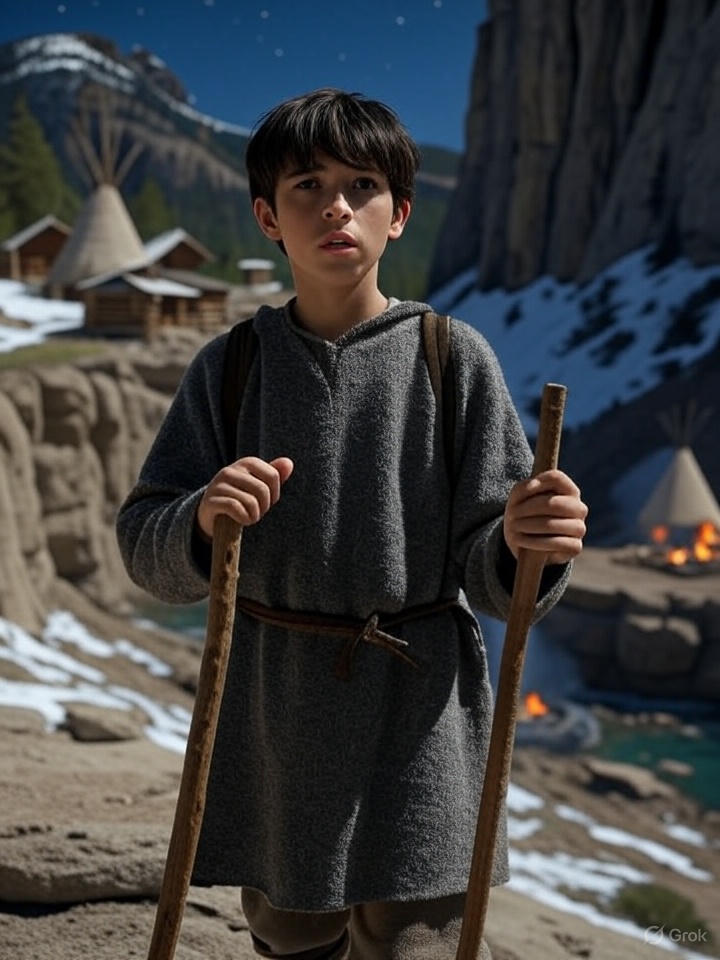
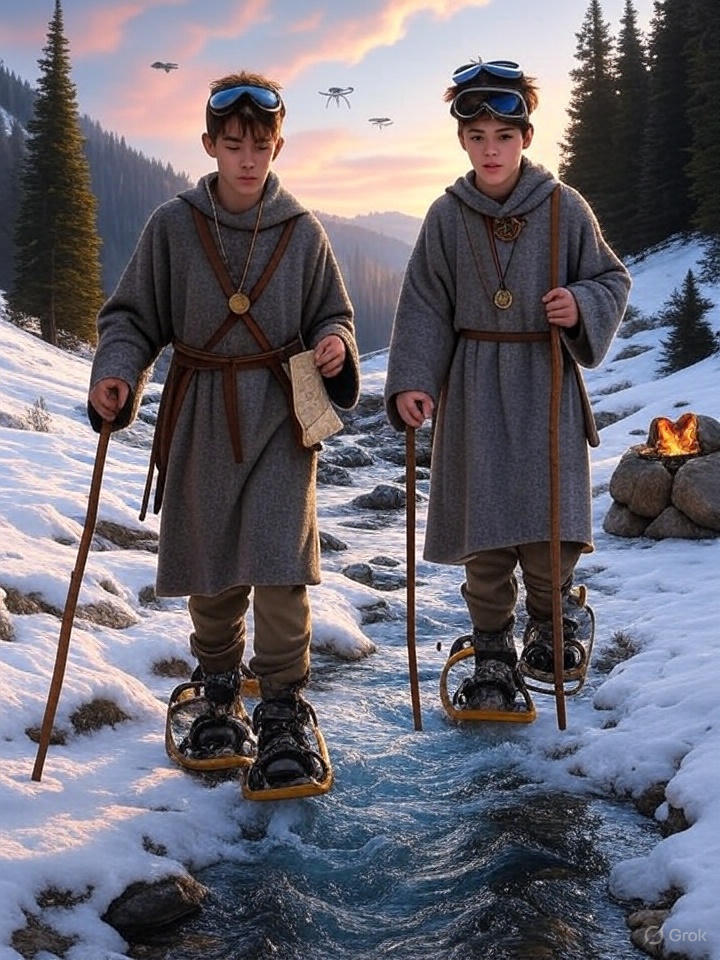
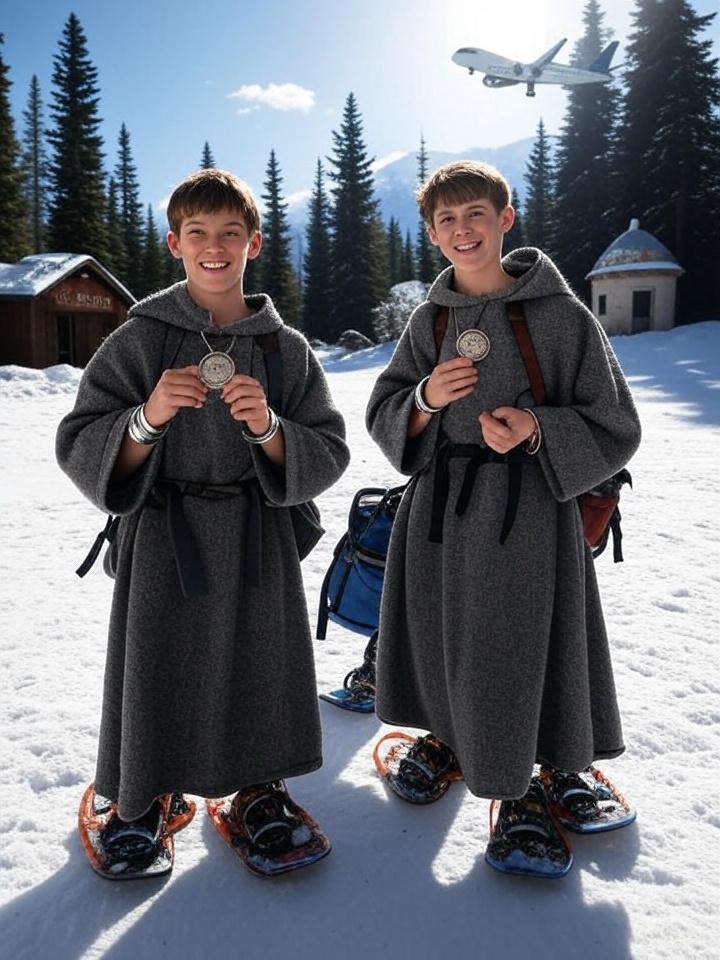




 Anarchistbanjo's World