Feeds:
Posts
Comments

Posts Tagged ‘horror’

Madame Bluebeard by Karl Hans Strobl and translated by Joe E Bandel

Fifth Chapter
Early in the morning, Ruprecht rushed into the
garden. The rain had stopped, and the sky had
lightened. In the west, a patch of clear, cold blue was
visible, with clouds framing the opening like jagged
rocks around a cave of blue ice. One could peer deep
into the heavens. Far back, a demon sat on a throne of
frozen air, playing a gentle, ardent melody—a demon
resembling an archangel, whose robes concealed hot,
yearning flesh craving embrace.
The leaves on the trees were brown, curled,
trembling on branches as if in mortal fear.
Ruprecht strode firmly through the garden on
sodden paths. Brown muck splashed around his
shoes, clods of earth clung to his heels. He paused
before a bed of tall, red flowers. Most blooms had
been torn and broken by yesterday’s storm, their
fleshy petals drooping, wilted, scorched. The reedy
stems bore yellow and brown patches, signs of decay.
Only one flower stood tall and erect on a taut stem—
a blazing red blossom, its base a cluster of yellow
stamens.
As if it sprang from this night, Ruprecht thought.
This night! That vast, heavy roar, full of thunderous
blows and chaos’s wonders. How to name this
night—terrible bliss! Oh—and far, far off, those
sounds: shrieking weathervanes, old Marianne’s
howling and whimpering, until Lorenz silenced her.
Ruprecht had just cleaned his shoes on a grassy
strip but stepped back into the wet, black, sticky earth
of the flowerbed, snapping off the proud, fiery
bloom. He’d bring it to Helmina.
He passed the old tower and through a echoing
gate arch, its walls hung with rusty chains, into the
courtyard.
The estate manager, Augenthaler, had just ridden
in and dismounted, speaking with the overseer.
Augenthaler was the first to accept the inevitable,
recognizing Ruprecht as the new master. A talk over
the wedding feast had shown him Ruprecht’s
expertise in farming. He needed to curry favor,
abandoning resistance.
With a courteous greeting, he approached
Ruprecht. The overseer stepped back.
Ruprecht noticed Augenthaler’s unease, like one
with something to say but unsure how to say it.
“What is it?” he asked.
“It’s not good news,” Augenthaler forced out.
“The morning after… well, after a wedding, one
should bring only good news…”
“Speak, then—speak,” Ruprecht urged. What
people deem a calamity is often just a mishap, easily
fixed. He smiled: not just happiness, but misfortune
means different things to different people.
“Yeees!” Augenthaler said, tapping drying mud
from his leather gaiters with his riding crop. “When a
wedding guest… folks say it means something…”
“Please, I don’t understand a word.”
“Well… Baron Kestelli shot himself last night.”
“Shot himself?”
“Yes—with an army revolver, clean through the
temple.”
Ruprecht pictured the baron, his twitching face,
struggling to offer congratulations yesterday. Then, at
the feast, he’d given a jocular speech. Oh—a ghastly
jest before a revolver’s muzzle. Death had
breakfasted with them. Who could’ve known? With
his high, lisping voice, the baron delivered one of
those merry toasts typical of such occasions. His
shoulders quaked as if lashed. His face was a mask.
Ruprecht climbed thoughtfully to the breakfast
room. This was truly unpleasant news. A vile affair!
How to tell Helmina? Should he mimic Augenthaler,
circling like a cat around hot porridge? No—Helmina
was strong enough to bear it.
He found her in the room. The balcony door had
just been shut, and the large green tiled stove hadn’t
yet warmed the air. Helmina sat shivering at the table
in her green kimono, arms crossed, hands tucked
away. As Ruprecht entered, she yawned like a cat,
revealing a rosy throat.
“Good morning, dearest,” he said, kissing her
lightly on the forehead. “I brought you a flower. I
was in the garden. It’s the very last.”
“Thank you,” Helmina said, placing the bloom on
the snowy tablecloth. Like a bloodstain on linen,
Ruprecht thought. He braced himself—no beating
around the bush.
“Please, don’t be alarmed. It’s a sad matter. Baron
Kestelli shot himself last night.”
Helmina’s eyes widened, fixed. She stared at
Ruprecht, a green glow in her gaze. She rose, limbs
taut and strong, as if to cry out. Her small fist rested
beside the red flower on the cloth. Her kimono
parted, baring a sliver of white throat. She no longer
shivered.
“Ah… so he did!” she said.
“What, did you expect it?”
Her face paled. Her hair seemed to writhe!
Medusa! Ruprecht thought. She smiled now.
“Expect? Not exactly. But he always talked of
doing it. I laughed at him.”
“Tell me, does he have family?”
“An uncle, I think, and a married sister. By the
way…” Helmina turned to the stove, her back to
Ruprecht, “has he… left a will? They haven’t
searched yet, I suppose?”
“The manager didn’t mention one.”
“I’d like… I’d like to see him again. I’ll ride over
after breakfast. Will you come?”
Ruprecht found her wish odd. Everyone knew the
baron loved her. Such a move would spark bold
rumors. Still, he didn’t want to seem petty or narrow.
Let the world talk.
After breakfast, Helmina had horses saddled, and
they rode to Rotbirnbach. The sky shone in pure,
vaulted, ringing white. Autumn’s last beauty was
trapped beneath, refined and spiritualized by Earth’s
forces. Helmina chatted as if heading to a picnic.
“Oh… his relatives always wanted him under
guardianship. Now he’s tricked them, slipped away.
He spent too much of their money. There won’t be
much left, but something… Old Kestelli had a vast
fortune.”
They reached Rotbirnbach, riding into the castle.
All was in disarray. An old maid wept by a trough
where pigs fed, rubbing her eyes with filthy fists,
gray streaks smearing her face. A servant, his livery
vest half-buttoned, led them to the bedroom where
the baron lay temporarily. In haste, they’d moved the
bed under its silk canopy to the room’s center. On
two chairs at the headboard, long candles burned in
silver holders, too thick for them, shaved down to fit.
Shaved wax bits littered the floor around the holders.
A linen sheet draped the body, outlining human
contours. At the head, a bloody stain bloomed.
Helmina approached the bed with steady steps,
then hesitated. She lifted the sheet, lowered her head,
and stared at the mute, mangled skull.
Ruprecht stood behind his wife, watching her
back. Strands of hair floated around her delicate ears
in the breeze from open windows.

Read Full Post »

OD by Karl Hans Strobl and translated by Joe E Bandel

Chapter 24

With Professor Semmelweis, things had finally reached a point where serious measures were needed.

In recent years, he had been somewhat unpredictable, torn by striking mood swings, often losing control. When speaking to his audience about how his doctrine was disregarded and sidelined, his eyes would suddenly fill with tears, he’d begin sobbing, unable to stop, and finally a fit of weeping forced him to end the lecture.

When he thought a student hadn’t grasped his doctrine’s spirit during an exam, he flew into a frenzy, raging and lashing out, barely restrained from attacking the unfortunate examinee with his fists.

Yet he could have been satisfied. His doctrine gained followers, prevailing against skeptics as science’s big names voiced approval. But Semmelweis grew indifferent to recognition, hypersensitive to doubt or attack. He heard only his enemies, enraged by criticism, deaf to praise, endlessly seeking reports of maternity ward conditions, as if relishing death’s march through hospital halls. He saw death smear poison on doctors’ and nurses’ hands, marking their doomed victims.

His Pest friends initially thought a cold-water cure in Gräfenberg would restore his nerves. But then came oddities suggesting more than mere nervous breakdown.

Semmelweis accosted strangers on the street, ranting about his foes. He ran naked through his apartment, singing and dancing, then hurling glasses and plates at invisible threats. He visited patients only at night—a cunning tactic, he thought, as his enemies slept, unable to sabotage his orders. His once-healthy appetite turned voracious. Did they begrudge him satisfying his hunger and thirst? He eyed his wife, host, and guests suspiciously, then propped his feet on the table among plates and glasses, playing a comb wrapped in tissue paper.

Now in Vienna, en route to Gräfenberg, for a brief stay, Hebra wouldn’t let him go on without seeing his new sanatorium.

The next morning, Semmelweis was gone. He’d left the house, likely roaming Vienna, causing who-knows-what mischief. Hebra and Bathory searched everywhere he might be—nowhere. At home, his wife wept in fear, helpless; they had to call the police.

But by evening, Semmelweis returned. His whistling echoed on the stairs, cheerful and content. He’d seen Vienna—that’s why he was here. A fine city, but why mark every third cobblestone with a black cross? No need to be reminded of death at every step.

“I know, I know,” he soothed Hebra, who tried to dissuade him, “I’m a sick man. But you’ll make me well. You’re the only one I trust.”

How painful that Semmelweis voiced such trust in Hebra. It was a patient’s trust, and Hebra, now the doctor, was fated to be cruel and unrelenting. “Perhaps it’s best you stay a few days in my sanatorium,” Hebra said. “If it suits you and does you good, we may not need Gräfenberg.” He took Semmelweis’s hand and noticed a painful flinch.

“What’s wrong with your finger?” he asked. Semmelweis’s middle finger on his left hand was red and swollen.

Semmelweis studied his hand thoughtfully: “I don’t know… I think… two days ago in Pest, I operated on a woman… I might have cut myself a little.” He shook his hand as if to fling off the pain, then bent down and opened his arms. His two-year-old daughter Antonie ran to him; he lifted her high, dancing around the room: “My little mouse! My sweet treasure! Papa’s going to the sanatorium and will come back all well.” He swung the child, her legs twirling, then stumbled dizzily toward Hebra’s wife. “Whoops!” he cried. “Remember, dear lady, when your boy came into the world, and I shouted, ‘It’s a boy!’?”

Fearfully, Frau Marie took the child from her husband as Hebra leaned out the window, calling back, “The carriage is here!”

“Today already?” Semmelweis asked, surprised.

“Why not? I think you should try sleeping in my sanatorium tonight.”

“Come, Herr Professor,” Bathory urged. “We’ve already sent your night things over.”

It’s all quite harmless and natural—why shouldn’t Semmelweis try sleeping in the sanatorium tonight? Surely Hebra has set up something exemplary; everything he does is impeccable. The women casually accompany the three men to the carriage, chatting about Hungarian national dishes, recipes for Frau Marie, the splendid cook, to add to the Hebra household.

“Aren’t you coming?” Semmelweis asks his wife as he boards. Frau Marie leans against the doorframe, child in hand, trembling, unable to answer.

“What’s she supposed to do in your dull sanatorium?” Frau Hebra replies for her. “She’ll stay with me and the girl.”

The carriage rolls through the streets, and the men continue discussing the differences between Viennese and Hungarian cuisine, weighing their merits. “You know,” Semmelweis says, “I won’t let myself be starved on a diet in your sanatorium.”

It’s Lazarettgasse where the vehicle stops before a massive, iron-bound gate topped with spikes. “Your sanatorium looks like a knight’s castle,” Semmelweis laughs.

A tall, elegantly dressed gentleman receives the visitors.

“My director!” Hebra introduces, and they begin the tour at once. Everything is new and clean, the corridors carpeted to muffle steps. Sturdy orderlies stand about.

“You have only men here?” Semmelweis asks.

“In the men’s ward, we have only male orderlies,” the director explains courteously. “In the women’s ward, only nurses.”

The residents seem quite content; a distant burst of loud laughter is so contagious that Semmelweis joins in.

“Here’s the room we’ve set aside for you,” Hebra says.

Quite nice, new and clean like everything here, the bed bolted to the floor, table, bench, and cabinet fixed to the wall. The windows overlook a large garden.

“Why are the windows so heavily barred?” Semmelweis wonders.

“For safety,” the director replies smoothly.

“Ah, I see. Well, I’ll give it a try. If I can’t stand it, I’ll move out.” Semmelweis claps Hebra’s shoulder to affirm his decision.

“Shall we go to the garden?” the director suggests. Though it’s grown dark, the summer night is so mild it’s pleasant to stroll under the large trees. Semmelweis and the director lead, while Hebra and Bathory lag behind. Before Semmelweis realizes, he’s drawn into a discussion about septic processes, prompted by the director’s knowledgeable questions. When Semmelweis talks science, the outside world fades; he doesn’t hear the shrill screams from the neighboring wing or the monotonous muttering of someone at a barred window, perhaps praying or reciting memorized lines.

After a while, the director suggests they return.

“Where are Hebra and Bathory?”

Hebra and Bathory are gone, lost in the darkness.

“They must have grown impatient,” the director supposes. “They’ll come back tomorrow.”

The light in Semmelweis’s room, a dim glow high on the ceiling, is already on. His nightclothes are spread on the bed; he sheds his street clothes, slipping into underwear, nightshirt, and slippers. Time to check on his patients—they must be waiting impatiently.

But as he steps from his room to the corridor, two men block the door—sturdy fellows barring his way.

“Where to, Herr Professor?”

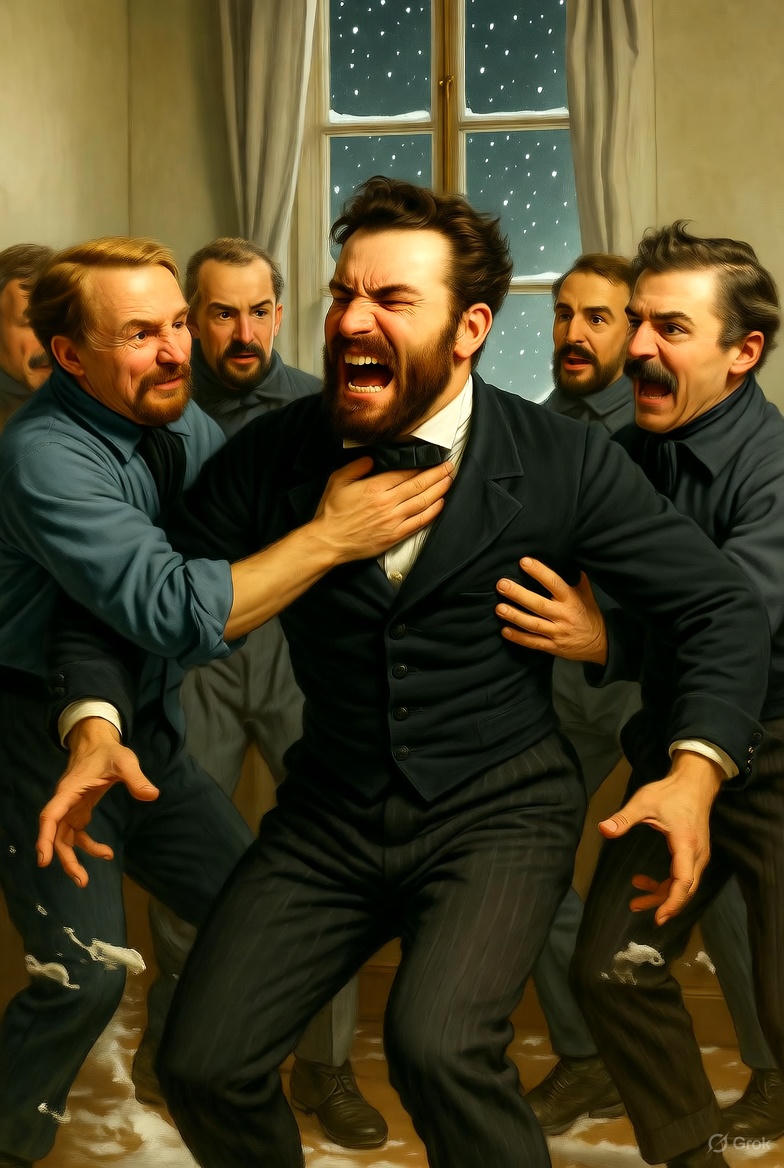
Another grabs his right wrist with a vile, paralyzing grip.

“What do you want? I must make my rounds.” It’s outrageous to seize him and hinder his profession. Semmelweis breaks free, but they grab him again, each from one side.

“Stay calm at home,” one says casually. “No time for visits now.”

Why not? Why not indeed? Suddenly, Semmelweis realizes what’s happening. His enemies have hired these men to eliminate him; they’ve trapped him. As strong as the two orderlies are, Semmelweis’s rage is stronger, despite the searing pain in his hand. He pulls them toward him, smashes their heads together so their skulls crack, and hurls them against the walls. Then he runs. But he doesn’t get far—before reaching the stairs, two more men leap from a hiding spot, the first two already on his heels. Suddenly, one is on his back. The weight drags him down; they roll on the floor. Semmelweis bites wildly, sinking teeth through a sleeve into an arm, tearing cloth and flesh. They pin his arms behind him, nearly wrenching them from their sockets, almost breaking bones, stuffing a cloth in his mouth. Six men finally overpower him, throw a straitjacket over him, and shove him into a black hole—a padded room with no up or down, no front or back, only stifled, silent raging and roaring.

Read Full Post »

OD by Karl Hans Strobl and translated by Joe E Bandel

Severin seemed far from sharp-witted; no, he was no longer the old Severin—brisk, dutiful, self-assured. Something had stripped his former grandeur; he no longer looked down on things as before, or he might have shown more surprise or joy at Hermine’s arrival or paid some attention to little Karl. He took it oddly lightly. “Yes,” he laughed, “take you to the Herr Baron… that’s for Frau Rosina now… or not, as she pleases. She never does, really—no one gets to the Herr Baron.”

“And you put up with that?”

“I… I’m no longer in the Herr Baron’s service. He sent me away. I live down in Grinzing now, but I climb up every day and sit on that bench.”

“Who is this woman?”

Severin winked slyly: “She’s everything now… she’s the only one with the Herr Baron. Frau Rosina Knall, used to be a nurse at the maternity clinic, then housekeeper for Hofrat Reißnagel. She came up with messages from the Hofrat, and maybe she liked it here so much she stayed with the Herr Baron.”

“We want to see Father!” said Hermine.

But that seemed a plan requiring no help from Severin. He was entirely sidelined, a nobody here. Frau Rosina Knall stood guard with her midwife and housekeeper fists; there was no getting past her. Oh, Frau Rosina Knall knew her craft. She’d bitten everyone away, claimed everything for herself. No one could reach the Herr Baron. No one managed it like she did. Severin spun his hand in a half-circle, as if brushing something aside, and winked cheerfully. She couldn’t use anyone, couldn’t stand spectators.

Yes, that’s how it was, but Severin came up from Grinzing daily and sat on that bench—she couldn’t drive him off. She tried once, but he raised his stick, and she backed off, leaving him alone since. It was pleasant sitting on that bench in the sun.


Then one day, Frau Rosina Knall tries to get up in the morning and falls back into bed with a cry. For days, she’d felt a sharp pain in her legs, dragging herself through the house. Today, her legs are swollen to twice their size—something serious is wrong; she can’t force herself to stand. She manages only to crawl on all fours to the kitchen, pull the large iron pot from the cupboard, retrieve the stuffed old stocking from it, and crawl back to bed with it.

By noon, the Freiherr notices he hasn’t had breakfast and that it’s unusually quiet. He goes to his housekeeper’s room and finds Frau Rosina moaning, unable to move, in bed.

He thinks a doctor and a nurse are needed; Frau Rosina’s legs look like they have phlebitis.

No, no, no doctor, no nurse, she shrieks and rants—it’ll get better, she’ll surely be up by afternoon, tomorrow at the latest, if the Herr Baron could manage alone until then.

But the Baron insists a doctor must come and isn’t swayed by the raging torrent of words. Frau Rosina remains helpless in bed, her heart full of curses and hateful glares at the door—a venomous, bloated spider forced to watch a fly tear through her web.

The Freiherr goes to the dairy and asks the stable hand Franz, still there from his time, to send a boy to fetch a doctor and perhaps inquire who might take on Frau Rosina’s care.

Franz is happy to send the boy, but as for a nurse for Frau Rosina, he’d like to oblige the Herr Baron, but he fears no one would be willing, even for a whole gulden a day.

Is that so, Reichenbach muses, and why not?

Franz hesitates to explain, so the Freiherr leaves without an answer. He doesn’t return to the castle immediately; he needs some air, a sudden longing for the forest stirring within him. How long since he was last in the forest? Is he really as ill as Frau Rosina always claims? His hearing is a bit weak, but otherwise, he has no complaints. A tired heart, true, and occasional dizzy spells—that’s all. My God, he’s no longer a youth. No reason to keep him indoors, forcing teas and compresses on him. It’s as if a thick wall has collapsed, and he can escape over the rubble into the open. Now he can think again about pursuing his travel plans. With Fechner, the renowned psychophysicist and philosopher in Leipzig, he’s developed a long chain of correspondence about Od; it’s urgent to complement these written exchanges with a personal discussion. Reichenbach has no sensitive with such convincing abilities to offer irrefutable proof. Perhaps one could be found in Leipzig—he needn’t let Frau Rosina’s objections hold him back.

He can still do as he pleases. Despite his loyal housekeeper’s undeniable merits and maternal concern for his rest and health, he should be able to pursue his intentions. Much has come crashing down on him, but he’s far from finished. On the contrary, his thoughts reach further than ever; he now knows Od is the carrier of life force itself, the bearer of the soul in all nature, opening new, bolder insights into the universe’s mysteries.

Yes, everything looks different in the forest than at home in rooms smelling of tea, where Frau Rosina shuffles about in felt slippers. The forest has waited long for Reichenbach. But the forest is patient, unlike a person; it holds no grudges, standing there waiting, and when you finally come, it is kind and generous, exuding more calm than all Frau Rosina’s teas.


When Reichenbach returns to the castle, an old man sits on a terrace bench, and another stands before him, preaching. With a booming voice, as if addressing a vast crowd, he declares: “And so, to end the slaughter, I’ve resolved unyieldingly to confront anyone who dares spread errors about childbed fever. If you believe there’s a puerperal miasma in your sense, that’s criminal nonsense. My doctrine exists to be spread by medical teachers, so the medical staff, down to the last village surgeon and midwife, acts on it. My doctrine is meant to banish the horror from maternity wards, to preserve the wife for the husband, the mother for the child.”

There’s no doubt the preacher is none other than Semmelweis, though Reichenbach might not have recognized him otherwise—so bloated is his body, so swollen his pale face with heavy bags under his eyes, so erratic his large, fleshy hands.

Surely, the listener, good old Severin, never claimed there was a distinct puerperal miasma.

Reichenbach approaches the professor: “Dear Semmelweis, I’m delighted—”

“Silence!” Semmelweis snaps furiously, “I’ll have you arrested!” He climbs onto the bench, pulls out a bell like one tied to goats, and rings it shrilly, persistently. Then he turns to Reichenbach: “It’s a fact that corpses on dissection tables often enter a state of decomposition that transfers to the blood in a living body. The slightest cut with a scalpel used for dissection causes a life-threatening condition.”

“My dear Semmelweis,” Reichenbach says as gently as possible, “you don’t need to convince me. And the medical world is now, in fact, coming around to your views.”

“Who are you?” Semmelweis thunders.

“I’m Freiherr von Reichenbach!”

“Freiherr von Reichenbach? Oh, yes.” Semmelweis shields his eyes as if dazzled by light. “I know you! And you really believe my doctrine has prevailed?”

“I wish I were as far with my Od as you are. You’ve achieved success. Even Virchow recently declared you’re right.”

A mad gleam dances in Semmelweis’s eyes again. “I’ll ruthlessly expose those scoundrels. Now pay attention—I’ll read you the midwives’ oath.”

He drops the bell and fumbles for a sheet of paper in his inner coat pocket, trying to unfold it.

But Reichenbach grabs his hand and pulls it down, drawing the man off the bench. “Calm down. I already know the formula and follow it. Come into the castle with me. You sought me out.”

Semmelweis nods and mutters, “Yes, you’re Freiherr von Reichenbach. That’s good, very good. I came to Vienna; Hebra invited me to see his new sanatorium.” Suddenly, he tears free, stoops for the bell under the bench, and begins ringing it furiously again.

“Why do you keep ringing that bell?” Reichenbach asks.

The sly look on Semmelweis’s face is more heart-wrenching than his contortions of rage: “Here in Austria,” he says loftily, climbing back onto the bench, “in Austria, don’t you think we must hang everything on the big bell, my dear sir?”

“And why climb the bench?”

Semmelweis’s face gleams with cunning: “So you hear me better! The endometritis, metritis, and puerperal thrombophlebitis…”

“I already know all that,” Reichenbach soothes, “come inside with me now.” He makes a quick decision. It’s necessary to get Semmelweis into the castle and, through Severin—who has backed away from the disturbed man’s proximity and watches from a few steps away—to urgently notify one of his friends.

“You’re Freiherr von Reichenbach, aren’t you?” Semmelweis asks. “You know everything, but perhaps you don’t know that your own daughter Ottane died of childbed fever.”

No blow could strike Reichenbach’s core more cruelly, but Semmelweis likely knows nothing of pity or responsibility. “Ottane,” the Freiherr says bravely, “Ottane died in Venice of typhus.”

“No, you can be certain she died of childbed fever. The child was stillborn, but the mother needn’t have been lost. Those Italian ignoramuses who want nothing to do with me killed Ottane. They called in Doctor Sattler, my student, but it was too late. He told me everything.”

Is this horror believable? Does the madman speak from his obsession fixed on one point? Or is he telling the truth? It seems his mind is now clear and ordered, as if a lucid moment has broken through his derangement.

Semmelweis steps deliberately down from the bench and lays one of his large hands on Reichenbach’s shoulder. Perhaps he senses the terrible uncertainty he’s brought upon his friend. “Don’t think,” he says sadly, “that I’m lying to you! Something’s wrong with my head, that’s true. I must go to Gräfenberg for the cold-water cure. My wife and little Antonie are with me in Vienna, and tomorrow we travel on to Gräfenberg. My assistant, Doctor Bathory, is also with us. But as for poor Ottane, dear friend… she’s among the victims, that’s the truth.”

Read Full Post »

OD by Karl Hans Strobl and translated by Joe E Bandel

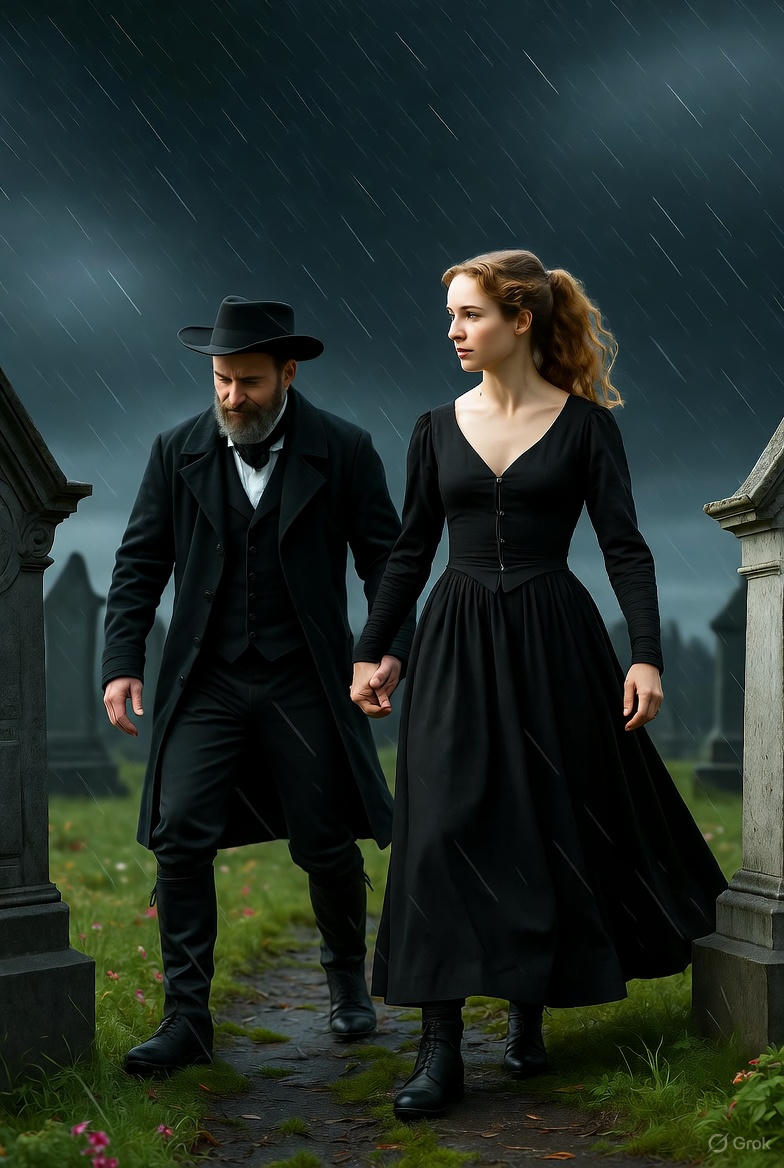
Reichenbach asks, and Friederike answers; she has taken his hand and leads him among the graves, sure-footed, while Reichenbach stumbles in the deepest darkness.

Only when the Sievering church tower strikes two does Reichenbach regain a sense of time. It has started to rain; the wind lashes water curtains around their faces and shoulders—they must go.

Back in Friederike’s room, the light burns, and the modest space envelops the two intimately. Friederike looks exhausted, her face pale with dark circles under her eyes. Reichenbach sits in a high-backed grandfather chair, takes Friederike’s hands, draws her close so she stands between his knees, and fixes a steady gaze on the bridge of her nose.

At once, as she stands there, Friederike falls asleep.

Yes, there lie the mounds of the dead, and Od light rises from them, though many are completely dark. Reichenbach is strangely shaken. It’s all physically and chemically determined, of course—a natural law, so far explored only by him; everything is interconnected through Od. Only ignorant people, unaware of Od, might turn it into ghostly apparitions. It’s all physics and chemistry; some mounds glow, others are dark, and far from here, in the Blansko cemetery, there’s a mound long since dark. And one has children who have turned away and pursue their father, and how long will it be before one lies under such a mound, sending Od light through the earth until it too fades.

“Can you tell me, Friederike,” asks Reichenbach, “what Hermine is doing?”

Friederike knits her brows: “Hermine is asleep.”

“Not now. What she does otherwise, when she’s awake.”

“Hermine thinks a lot about the child she’ll soon have.”

Oh God, Hermine is to have a child—well, she’s married, it’s part of it, having children. “And do you also see Ottane?”

Friederike frowns: “I see Ottane too. She’s in another land, with great churches with shining domes, streets filled with fragrance. The sea with reddish-brown and yellow sails. And there’s a man with her. But I see a shadow over her.”

So there’s a man with Ottane—a man. Well, what does that matter to Reichenbach? What concern is it of his what his children do? They don’t care about him. “And you?” he asks further, “can you tell me something about yourself?”

Friederike’s lips press together; a twitch flickers around her mouth, her answer comes reluctantly and haltingly: “I will soon have to leave you.”

What does that mean? That Friederike must leave him must? How could that be imposed on him, when he now has nothing but Friederike and is on the verge of penetrating the final secrets with her help? No, for now, he wants to know nothing more; it’s perhaps presumptuous to go so far, an abuse of her gifts. One must always stay grounded in physics and chemistry, not plunge headlong into the unknown. Reichenbach thinks that Friederike should now awaken.

Friederike blinks and opens her eyes. Her gaze returns from afar, adjusts to her surroundings, and then she smiles: “My God, am I tired!”

“It’s gotten late, my child,” says Reichenbach. “Let’s go to sleep now.”

Read Full Post »

OD by Karl Hans Strobl and translated by Joe E Bandel

“Does he know yet?” whispered Ottane, gesturing toward Schuh.

“Not yet.”

Ottane pulled her sister into a warm, tender embrace. Ah yes, that was reason enough to smile—when such an oblivious man voiced longings for Italy, doomed to fail by such tiny things.

With the discovery that Reichenbach loved Friederike, a new phase of his Od research began. He forgot everything else and didn’t even feel the full weight of the blow that shattered his hopes for the railway tracks. The world sank away for him; he lived with Friederike as if on a lonely island amid an empty ocean.

Friederike moved quietly around him, tending to all his needs without fuss. Reichenbach didn’t even realize it was thanks to her that warmth returned to his life. He had his men create hidden paths through the forest, cutting straight through the underbrush where he met no one. There he wandered, hands behind his back, pondering his grand problems; he believed he noticed that thinking was sharper and clearer while marching about. When he reached the farthest point and turned back toward the castle, he felt joy. He rejoiced at returning from solitude to the warmth of human presence, though he didn’t dwell on the reasons.

Friederike submitted willingly to all the experiments he conducted with her. She was happy when Reichenbach told her he had found no other sensitive like her. In her, all the qualities he’d found separately in others were united. He told her this, and she took pride in it, unaware of the latent powers within her that Reichenbach had unlocked. Only about her somnambulistic abilities did he say nothing, lest it cloud her innocence. She falls asleep at a glance from him and awakens at his command, unaware of what transpired.

“Would you go with me to the cemetery?” Reichenbach asked one day after a long forest walk that brought him new ideas.

Friederike looked a bit surprised but nodded.

“At night? Won’t you be afraid?”

Even at night! Why should she be afraid with Reichenbach beside her? His word is Friederike’s gospel; she sees him reign over her, walking resolutely and devotedly in his grace. In the darkroom, she sees the Freiherr in the glow of Od light as a radiant, white giant, immensely magnified, head and heart in brighter light than the rest—yes, that’s his true form and appearance, elevated above other humans. All should see him as she does and bow before him.

It’s a windy early spring night with mild clouds against a deep dark sky. Reichenbach has donned a weather cloak and given Friederike a man’s coat as well. They walk side by side down through the forest toward the Sievering cemetery.

Reichenbach had instructed the gravedigger to leave the cemetery gate open. The iron grille clangs back, and now the man and the girl walk among the molehills of death. The wind howls, the trees rustle in the darkness—everything is present to make a nighttime cemetery eerie. But how could anything be eerie for Friederike with Reichenbach at her side? External things can’t reach her directly; they must pass through Reichenbach and are transformed by him.

“You mustn’t think,” says the Freiherr, “that I intend to conjure spirits.”

No, Friederike doesn’t believe that, since Reichenbach says so.

“It’s like this…” he continues, “that all living things are permeated by Od and odically influence everything else in a specific way. All living things are od-negatively charged, and a sensitive can distinguish them from the dead by sensation alone, even if the living seems dead. I know a case… there was a young girl who fell into illness from great heartache and died. She was about to be buried, but the doctor wouldn’t allow it. After three weeks, she awoke from her apparent death and later married that same doctor out of gratitude. I believe that man must have been unconsciously a sensitive. And my friend, the Old Count Salm, told me that a seemingly dead countess was interred in the Salm crypt. But it didn’t go well for her; she had to perish.”

“Terrible,” says Friederike, now gripped by a shudder.

“And the painter Anschütz told me that while studying anatomy, he once, with the prosector, cut open a man’s abdomen. They stepped out for a moment to light a cigar, and when they returned, the man was sitting on the dissection table, looking at his opened belly. He too was only apparently dead and revived by the cut. It’s a dreadful matter, this apparent death, because doctors have no means to distinguish the apparently dead from the truly dead. But a sensitive knows instantly whether a person is dead or still alive, and thus Od could become a remarkable blessing for humanity. But of course, those blockheads wouldn’t admit it.”

Friederike presses anxiously closer to the Freiherr. She truly doesn’t know why he brought her to the cemetery—should she perhaps detect the apparently dead here?

“No,” says the Freiherr, having guessed Friederike’s thoughts, “those here are likely all truly dead. But even chemical processes are accompanied by Od light. You’ve seen the rotting herring glowing down in the cellar, haven’t you? Fermentation, decay, putrefaction—there’s always something odic involved. A person is dead, but as long as they haven’t fully decomposed, they must still emit an odic light. And now I want to know if you can see any of it.”

They stand by the stone cross in the center of the cemetery, surrounded by graves in the darkness of the stormy night. Friederike can’t help but cling to Reichenbach, and he places his arm around her shoulders.

She strains to pierce the darkness, eager to obey and confirm the Freiherr’s assumptions. The wind howls around them, tugging at their coats, sometimes billowing them over their heads; the trees sigh and creak. Amid all the danger, it’s a wondrous bliss to stand there, united against all waves on this side and beyond the grave.

After a long, silent wait, Reichenbach says with a hint of disappointment, “Well, it’s probably not dark enough for it.”

But just then, Friederike feels as if her eyes can catch a glimmer of light. She doesn’t know if it’s near or far, but it grows clearer. “There’s something there,” she whispers anxiously, “it’s like individual threads rising from the ground—greenish threads, swaying back and forth, and then… yes, higher up, they merge into a greenish haze.”

Yes, that’s exactly what Reichenbach expected. Through the loose earth, Od light emerges in individual threads, converging into a luminous cloud.

“Wait!” he says, pulling out his pocket lantern and letting Friederike guide him.

“There it is!”

After a fierce struggle against the wind, he lights it, illuminating the mound. A plaque on the iron cross bears a name and a death date. The woman died less than four weeks ago.

Reichenbach extinguishes the lantern again, and they must stand in the dark for a full hour before the external light stimulus fades from Friederike’s eyes. But then the entire cemetery comes alive with the ghostly light of the dead. It rises from the earth, emerges from the mounds, floats in greenish or yellowish clouds over the graves, pressed down by the wind then torn upward. The shapes of the graves stand out clearly; some show two brighter spots, likely corresponding to the head and chest of the deceased. It undulates with torches; whitish smoke swirls, pools of Od light are scattered, wisps of light are whipped away and swallowed by the night. Many graves remain dark; some barely shimmer, while others ceaselessly exude a network of light, its threads intertwining—the light the dead still send to the upper world as their last share of life.

Read Full Post »

Chapter 1: Tavistock Shadows

By Joe Bandel

The morning air hung heavy with the scent of polished wood and stale coffee as Tobal Kane, now 18, sat at the breakfast table in Uncle Harry’s sprawling mansion, its high ceilings swallowing the faint creak of Harry’s wheelchair. Outside, the gray Oregon sky pressed against the tall windows, casting Tavistock Township—a rich enclave near the golf course—into a muted light where manicured lawns clashed with the jagged pines clawing the horizon. Tobal was tall and lean, his brown eyes catching more than he let on beneath a mop of dark hair that flirted with Tavistock High’s strict uniform code. The blazer itched at his shoulders, a constant reminder of the polished cliques he drifted through like a ghost, a life shaped since he was 2, when his parents, Ron and Rachel, died in a mysterious air sled accident over a lake. Only a fleeting memory remained—a woman’s laugh, soft and warm, cut by a man’s low murmur, slipping away before the Federation’s silence took hold.

Harry wheeled closer, the squeak of rubber on hardwood grating against Tobal’s nerves like an old wound scraped raw. Once a broad-shouldered Federation commander, Harry now slumped, his gray hair wild and legs limp—twisted relics of the outpost blast that stole Tobal’s parents and Harry’s wife, Lilly, when Tobal was just 2. Harry had taken him in then, raising him amid secrets. His right hand, gripping the table, revealed a faded scar across the knuckles, a silent testament to a past he never spoke of. “You’ve got to make something of yourself, boy,” Harry growled, his voice rough as gravel, gripping the table until his knuckles whitened, coffee trembling in its chipped mug. “No son of my brother’s gonna waste what I can’t—what I’d kill to have back.” Tobal nodded, his lips parting just enough to mutter a quiet “Yeah” before shoveling down the last spoonful of oatmeal, its bland warmth sticking in his throat. Harry didn’t know him—not really. Sixteen years of raising him had built a wall of duty, not understanding.

The memory clung as he cleared his plate, the clink of ceramic against the sink barely audible over the hum of the house’s forced heat. Harry’s wheelchair squeaked toward the den, where whiskey and grudges awaited, leaving Tobal to climb the stairs—two steps at a time, dodging the fifth step’s creak he’d memorized over the years. His room was a cluttered refuge—books piled on the desk, a jacket slung over the chair, muddy boots staining the rug—but it was his, a corner Harry’s wheels couldn’t invade. He dropped his bag, fingers flexing with an itch that pulled him beyond the walls, past the garage where the stable waited under the pines’ shadow.

There, Shadow stood—his black gelding, sleek coat glinting, mane catching the wind, bright eyes mirroring a wild spirit Tobal felt deep in his chest. He loved that horse more than anything—more than Tavistock’s sterile halls, more than Harry’s barked orders. Harry had bought Shadow cheap off a broke rancher when Tobal was 16—“Something to keep you busy,” he’d muttered—but it was freedom. The stable’s earthy smell cleared his head as he saddled up, hands steady, Shadow’s warmth seeping through worn leather. He swung onto the gelding’s back, feeling the familiar jolt, and nudged him out, the trail opening ahead, pines clawing the sky.

They rode hard, hooves pounding the dirt, wind biting Tobal’s face as the wilderness blurred into streaks of green and brown. Up a ridge, the ground sloped sharp beneath them; down a gully, the earth softened, trees thickening—hours melted away, the sun dipping low, painting the pines in gold and shadow. A rustling in the pines caught his attention, a strange shiver running through him as if the Wild stirred. The air thickened, a dancer’s face rose briefly in his mind, gone as quick as it came. He reined in at a clearing, breath fogging in the chill, Shadow tossing his mane with a snort. He patted the gelding’s neck, brown eyes scanning the trees, the quiet settling like a blanket woven from the forest’s breath. Out here, he wasn’t Harry’s ward or Tavistock’s misfit—just Tobal, Shadow’s steady heartbeat grounding him.

Back home, dusk deepened as he stabled Shadow, brushing him down with slow strokes, hay dust clinging to his hands, the horse’s warmth a balm against the chill creeping in. Harry’s voice barked from the porch—“Riding won’t fix anything, boy!”—but Tobal lingered, reluctant to trade this peace for the house’s silence. In his room, he adjusted the colonial American Revolutionary War-style uniform, the blue jacket and white pantaloons stiff and unfamiliar, the long silver sword at his side awkward and dangerous, its weight clanking against his leg—a two-week struggle to master without injury. His brown eyes stared back in the mirror, shadowed with dread and a flicker of something else—tonight’s ball at Tavistock High, a gaudy circus Harry insisted he attend. The house fell silent as he descended the stairs, dodging the fifth step, the air heavy with polish and a trace of whiskey drifting from the den.

School had loomed that day, two weeks ago—calculus with Mr. Henshaw’s drone, equations blurring into a haze Tobal scratched into his notebook margins alongside rough sketches of Shadow’s ears. During a break between classes, he spotted Fiona by the lockers, her red hair swinging under fluorescent lights, green eyes catching his. Nervously, he approached, the blazer itching. “Hey, Fiona… uh, want to go to the ball with me in two weeks?” he asked, voice low. She paused, then smiled softly. “Sure, why not?” she said, her acceptance a quiet anchor, and he nodded, a spark igniting despite the crowd’s buzz.

That evening, Fiona waited outside her place, red hair glowing under the streetlamp, green eyes sharp against her stunning dress—not quite period-perfect for the colonial theme, its flowing design accentuating her figure in a way that stole his breath. She nodded, no smile, her presence a quiet anchor as Tobal approached, the uniform’s sword clanking awkwardly. “You look stiff,” she said, voice soft but firm, a faint tease threading through, and Tobal shifted the sword. “Feel it,” he muttered, her laugh hitting him like that fleeting memory—his mother’s, soft and warm, gone before he could hold it. They walked to the gym, her steps light beside his heavy shuffle, the air cool with a hint of pine drifting from beyond town. Her arm brushed his, a spark jolting through—a touch he didn’t expect, a hum stirring deep, the Wild whispered to him.

The dance hall was dimly lit, colored fog and mists swirling through the air, Tavistock’s rich kids swirling in uniforms and ball gowns like peacocks. Tobal shifted, the uniform’s starched edges and sword’s weight digging into his side, brown eyes darting for an exit drowned in the haze. Fiona stayed close, her fire quieter now, green eyes scanning with a steadiness that tethered him. “They’re all fakes,” she whispered, leaning in, her breath warm against his ear, and he nodded, her strength a flicker against the chaos—a glimpse of the Wild he didn’t know yet. She tugged him to the dance floor—“Come on, don’t just stand there”—her voice a challenge, hands guiding his through clumsy steps, the sword clanking as he moved, her stunning dress swaying with a grace he envied. The hall faded—noise, figures lost in mist—and it was just them, her touch sparking. He buried his face in her tangled hair, breathing in her violet perfume eagerly, nibbling her ear as his hands slid up, feeling the softness of her breast beneath the silk, her nipple hardening under his thumb. She caught her breath, snuggling closer, whispering, “I feel something strange too”—a secret that deepened their bond, its future unknown. Their bodies pressed, teasing each other with slow, intimate movements that quickened into a wild spin. The Wild whispered to him, a fire he could not yet name, as they weaved through the fog and mists, laughing and shouting at other dancers in the gloom, the swirling haze making their path treacherous.

As they spun, the air thickened, a strange pulse rippling through. Anubis’s statue shifted, its dog head turning, yellow eyes glinting briefly before stilling—a vision that jolted Tobal. Fiona laughed, unaware, and they weaved faster, lost in the dance. Suddenly, a violent collision with Becca threw him off balance, the fog and mists obscuring their path. He let go of Fiona, the sword snagging her dress and clattering to the side, turning to see Becca, her emerald gown torn, hanging around her waist, exposing small white breasts with rosy pink nipples. His gaze locked helplessly as she spun, fury flashing in her eyes.

“You bastard!” she screamed, knocking him to the floor.

“No! It was an accident!” he cried, feeling her nails tear into his face. Pain exploded, and darkness swallowed him.

He awoke in a hospital room, groggy and aching, bandages covering his face. Panic surged as he reached up, an alarm blaring. Uncle Harry’s firm hand pushed him down. “Take it easy, son,” Harry said, voice dry. “You’ve been through hell.”

“What happened?” Tobal rasped.

“Some girl nearly gouged your eye out,” Harry chuckled. “Scratched your face raw. Doc says scars are coming. How’d you piss her off?”

“I bumped her… her dress tore,” Tobal whispered, heat flushing his bandaged face. “Then she clawed me.”

“I can’t see!” he panicked, clawing at the gauze.

“It’s the bandages,” Harry soothed, pulling his hands away. “Something on her nails peeled your skin—messing with healing. Your eye’s safe, but rest.” A nurse injected his IV, dizziness sweeping him into sleep. Fiona’s hand lingered on the bed’s edge, a gentle touch he felt even in his daze, a connection he’d regret pushing away.

He awoke to violet perfume, Fiona’s voice cutting through. “It’s about time you woke up,” she said, concern in her tone. She touched his arm; he pulled away, bitter. “I don’t know,” he mumbled. “Leave me alone.”

Her eyes teared up. “Can I come back?” she pleaded.

“Maybe after Christmas break,” he lied, watching her leave, her hand brushing the bed one last time, regret hitting too late. He never saw her again—yet.

Days later, Christmas Eve arrived, the house silent under a heavy snow. Tobal fretted, fingering the bandages, itching to tear them off. The doctor had instructed him to wait one final week, and today was the day. With trembling fingers, he entered the bathroom, grabbed surgical scissors, and began cutting the layers of gauze. It stuck to his skin, pain flaring as he lifted the last piece off his right eye. Bright light stabbed into him, sharp pain flashing through his head.

He closed his eyes, waiting for it to fade, then touched the newly healed skin. Opening his eyes, he faced the mirror.

“No!” he screamed in horror.

Four angry scars ran diagonally across his face, about an eighth of an inch wide. One stretched from his right temple across his eye, slashing his nose and jaw—the worst, nearly costing his sight. A smaller scar swept from his forehead to his left eyebrow, two more across his cheek and jaw. Swollen, discolored, and raw, they marked him forever.

With a curse, his fist smashed the mirror. As it shattered, he screamed, clutching his bleeding hand, sobbing as blood flowed into the sink and onto the floor.

“No! Goddess No!” he sobbed.

Blood spattered the shards, erasing his reflection as he slumped, holding his ruined face. His life would never be the same.

I am also posting this book on Royal Road at http://www.royalroad.com

Read Full Post »

Death – Forge Life Beyond the Grave

Death’s no end—it’s a gate, birth’s twin, a cycle spinning everywhere. Fear it? Hell no—embrace it, drink life’s full cup, bitter and sweet. The OAK Matrix fuels it: opposites (end/begin) grind, awareness (your eternal will) wakes, kinship (shared rebirth) binds. Crack an orb with a gym grind or soul’s leap? Damn right—seize it. This is survivalism’s deep truth—here’s how to live it fierce.

What’s This About?

You’re born, you die—soul slips free, body fades—then back, reborn, dual as ever: physical battery, astral coil, resonating life. A million years on, you’ll still need both—no escape to spirit-only fluff. Death’s nothing—fear’s the crippler—embrace it, vigor flows. Heaven’s here—build it, don’t wait—hell’s what we’ve made when we slack.

Old souls lingered—mummies, saints—trapped, rotting slow, purgatory’s limbo. Embalming’s a curse—locks ‘em in, parasites on the living—necromancy’s stink. Cremate—ashes to earth—free the soul, rebirth swift. Cluttered astral? Dead weight drags—cut it loose, let life surge anew.

Why It Matters

It’s your warrior’s cycle. Opposites clash—death frees, life binds—and awareness wakes: you’re not dust, you’re endless. Kinship hums—your fight clears the grid, lifts all. I’ve felt it: gym grind, breath deep—second wind cracked an orb, saw beyond—lived bolder. Fear stalls—freedom’s your steel, death’s just fuel.

That second wind—lifting, releasing—splits the astral. That’s your soul’s forge.

How to Forge It

No drift—here’s your steel:

  • Flood the Cycle: Gym—lift ‘til second wind cracks—breathe deep, flood sexual/bio-electric energy—charge your grit. Live full—good, bad—stack life. If an orb cracks—a surge—ride it; you’re forging renewal.
  • Crack the Fear: Death looms? Embrace—cremate, don’t cage—soul flies free. Gym grind or life shove—same forge, vitality roars—past’s dust, present’s fire.
  • Track the Flow: Log dreams—trapped turns free, you soar. Bound or flat? Up the grind—your soul’s clogged. Life dreams mean you’re live—cycle hums.
  • Radiate Life: Live it—build heaven, burn hell. Your charm’s a steel roar—others feel it, they rise. Free souls—lead bold, you forge.
  • Cycle Tie: Lunar full moon? Flood it—death peaks. Solar summer? Forge high—life wins. Daily noon? Grind fierce—own the now.

My Take

I’ve flinched—death scared—‘til I hit the gym, faced it—cracked orbs, saw the wheel turn—lived fierce, free. Mummies rot—cremate ‘em, I’ll soar. You’ve got this—flood it, crack it, rule it. This ain’t soft—it’s fierce life, survival’s pulse. Die bold, warrior-reborn.

Read Full Post »

Emotional Crisis – Forge Heart Through Fear

Emotional crisis cuts deep—pain that dwarfs the physical, joy that makes life sing. It’s survival’s fuel, and the OAK Matrix ignites it: opposites (terror/triumph) clash, awareness (your fierce will) wakes, kinship (shared heart) binds. Crack an orb with a gym grind or bold leap? Hell yes—charge it. This is warrior-grade living—here’s how to risk it and win.

What’s This About?

Pain’s a teacher—rejection, loss—stings worse than bruises. Joy’s the prize—love, thrill—that keeps you breathing. Risk it—ask her out, chase a dream—failures pile, then boom, success hits. Frozen feet, throat tight—fear locks you ‘til you roar past it. Lion stalks—prey freezes, dies; prey bolts, lives. You’re prey ‘til you’re not—move, fight, win.

Early on, you’re stuck—victim, watching. Then mental clicks—learn, adapt. Now? Emotional crisis—you act, clumsy, raw—pushing desire against fear. I’ve been there: security gig, kid in the pool—mom froze, I dove—training kicked in. Risk builds heart, will—faith in your gut, the Master Within—‘til fear’s just noise.

Why It Matters

It’s your warrior’s pulse. Opposites grind—fear chokes, desire drives—and awareness wakes: you’re not frail, you’re forging. Kinship hums—your fight echoes, lifts others. I’ve felt it: gym grind, breath deep—second wind cracked an orb, asked her out—terror lost, joy won. Crisis isn’t doom—it’s power, if you risk. Freeze, and you’re meat—move, and you’re gold.

That second wind—lifting, daring—splits the astral. That’s your heart’s forge.

How to Charge It

No cowering—here’s your roar:

  • Flood the Fight: Gym—lift ‘til second wind cracks—breathe deep, flood sexual/bio-electric energy. Risk big—date, goal—push past fear’s choke. If an orb cracks—a fierce surge—ride it; you’re building will.
  • Crack the Freeze: Face terror—task, love—move anyway. Gym grind or heart shove—same forge, fear flips to fire. Desire trumps dread—act crude, win raw.
  • Track the Heart: Log dreams—fear turns fight, you rule. Stuck or scared? Up the risk—your will’s slack. Victory dreams mean you’re live—heart’s strong.
  • Radiate Guts: Live it—bold heart, sure grip. Your charm’s a roar—others feel it, rally. Risk cracks crisis—joy’s yours, you lead.
  • Cycle Tie: Lunar full moon? Flood it—fear peaks. Solar summer? Blaze desire—win big. Daily noon? Charge fierce—own the storm.

My Take

I’ve buckled—pain froze me—‘til I hit the gym, risked love—cracked orbs, flipped terror to triumph. Saved that kid, won her heart—will roared. You’ve got this—flood it, risk it, rule it. This ain’t soft—it’s fierce heart, survival’s thrill. Charge bold, warrior-strong.

Read Full Post »

The Call to OAKenspire
Night shimmered over Radon, an emerald haze threading a thriving sky—fairy lights pulsed bright overhead, their hum weaving rich as the lush earth thrummed beneath the Knights’ boots, moss and petals humming like a living melody. A gentle breeze swirled through, nectar and light rising sweet from below—deep forests stretched wide, vines glowing vibrant across ancient trees, their light threading warm through lush valleys, rivers sparkling, and lakes mirroring the sky, the landscape alive with sprites, gnomes, and wildlife. Tobal lounged in a verdant glade, his tunic—red, frayed—draping loose, wild hair brushing his shoulders—scars ached faintly, medallion glowing, gold humming bold against his chest, yang’s awareness threading his grip as he grinned at Fiona—her warmth pressed close, a spiced spark threading his peace. Fiona leaned into him, her tunic—rough, stitched—billowing free, red hair spilling wild, green eyes glinting tender—her staff rested beside her, wood gnarled, yin’s wild pulsing through her veins, vines weaving soft around his waist—her hand brushed his neck, a tender heat flaring bold, lips grazing his with a gentle burn.

The dark was dust—Radon’s wild surged triumphant—Sylra hovered forward, lithe wings shimmering, eyes glowing with light—her chime rang clear—“Wild’s ours—we stay”—her stance threaded radiance, guiding the forest’s spirits. Thorn stood firm, stout frame steady, mossy beard bristling, earthen staff pulsing—his growl steadied—“Earth holds—we guard”—his hands flared with soil’s magic, Radon’s roots thriving. Breeze darted beside, blue hair whirling, wind-woven cloak fluttering—her laugh danced—“Wind thrives—we nurture”—her swift presence wove the air. Ember bounded near Valentine, fiery fur glowing, amber eyes sharp—his growl pulsed—“Wild shines—we stand!” Kael lounged with Becca, wiry frame relaxed, scarred face softened—his blade rested—“Peace holds—we’re here.” Becca pressed close, her tunic—dark, torn—stretched taut, shaved head gleaming—blue eyes flared warm—her breath eased soft. Rafe sprawled with Mara, his tunic—coarse, patched—draping loose, hazel eyes glinting mischief—a grin flashed sly. Mara leaned into him, cracked staff faint—“Love mends—we stay.” Cal stood with Lila, his tunic—soft, faded—hanging easy, gray eyes calm—his stance rooted firm. Lila, quick and slight, arched into him—“Duality blooms—we remain.” Valentine sat near, thick coat bristling soft, yellow eyes calm—claws tapped moss, Ember at his side.

The enchanted hum sang—Radon’s wild flourished, vines threading warm through the forest—silence held, life blooming—a sudden hum pierced the air—OAKenspire’s call, sharp and urgent, threading through the wild—“Lumens—wild needs you”—a faint echo pulsed from a rift. Lumens stood radiant, her silver luminescent skin glowing warm in a black dress, green hair flowing like vines, eyes flaring with earth’s core—shimmering wisps pulsed—“Radon thrives—I go”—her voice hummed, stepping toward the rift. Fiona’s vines pulsed—“Web’s alive—OAKenspire calls”—her voice sang warm, green eyes locking on Tobal as vines brushed his chest, a spiced warmth threading her lean—her lips pressed his jaw, a bold heat weaving through—“She’s needed—we stay”—her hand lingered on his, sparking alive. Tobal’s pulse thrummed—“Wild’s strong—Lumens goes”—his voice rasped low, brown eyes glinting as his whip coiled loose—yang’s spark steadied her vines, a tender heat threading through—his arm pulled her tight, lips grazing hers, flaring bold—“We hold Radon.”

They stood firm—Sylra’s chime rang—“Magic thrives—farewell, light”—her wings pulsed—“We lead!” Thorn’s growl rumbled—“Earth holds—safe journey”—his staff glowed—“We guard!” Breeze’s laugh flared—“Wind lifts—go swift”—her cloak swirled—“We nurture!” Ember’s huff pulsed—“Wild shines—travel well!”—his fiery fur glowed. Kael’s voice steadied—“Peace holds—we stay”—his blade rested—“OAKenspire calls!” Mara’s purr rose—“Love mends—we’re here”—her staff pulsed—“Safe rift!” Lila’s hum flared—“Duality blooms—we stand”—her hope glowed—“Go strong!” Becca’s growl softened—“Radon’s steel—we’ve got it”—blue eyes flared—“Love guides!” Rafe’s grin flashed—“Magic’s ours—rift well”—breath minty—“We dance!” Cal’s voice steadied—“Wild’s root—we hold”—gray eyes glowed—“Radon thrives!” Valentine’s bark pulsed—“Web lives”—yellow eyes calm—“Peace stays!” Lumens’ wisps surged—“Radon’s safe—I rift”—her voice hummed—“OAKenspire needs me”—her silver form pulsed, stepping into the rift.

The glade glowed—vines surged—wild’s hum roared, Radon’s cry weaving—the crew stood firm with Kael, Mara, Lila, Sylra, Thorn, Breeze, and Ember in the enchanted hub, love and magic flaring fierce as Lumens rifted out, OAKenspire’s call pulling her through while Radon thrived.

Dawn blazed over OAKenspire, a golden haze threading an ethereal sky—crystal spires shimmered overhead, their hum pulsing as the sacred earth thrummed beneath Lumens’ bare feet, roots and light trembling like a lover’s sigh. A warm breeze swirled through, honeyed mist and celestial sparks threading sweet from below—ancient groves stretched wide, vines glowing radiant across towering trees, their light threading through crystalline valleys, rivers of liquid starlight flowing, and lakes mirroring the heavens, the landscape alive with whispers of the Wild. Lumens stepped from the rift’s shimmer into a luminous grove, her silver luminescent skin glowing with radiant earth energy in a black dress, green hair flowing like vines, eyes flaring with earth’s core—shimmering wisps pulsed around her, threading through the air as she sensed him—Joe, Lord of Light, her soulmate, her divine counterpart, her long-lost lover. Her heart thrummed, a spiced spark igniting her core, every fiber aching for his touch after eons apart.

A low hum pulsed through—OAKenspire’s cry, tender and urgent, threading through the Wild—“Light calls—love ascends”—a radiant glow flared, divine and warm, threading from the grove’s heart as Joe emerged. Tall and luminous, his golden hair flowed like sunlight, eyes blazing with celestial fire, his presence a beacon of pure light—his voice sang, deep and resonant—“Lumens—my earth, my soul.” She surged forward, her silver skin flaring brighter, vines spiraling from her hair to reach for him—his arms opened, and she crashed into him, her hands gripping his shoulders, a tender heat flaring bold as their bodies melded. His light wrapped around her earth, a cosmic dance igniting—her lips found his, fierce and hungry, a blaze of passion flaring as she pressed herself flush against him, every curve sparking alive with his touch. His hands slid down her back, pulling her tighter, a divine spark threading through her—“You’re mine—forever”—his breath grazed her ear, heat flaring tender, igniting her soul.

The Wild roared—Gaia trembled, OAKenspire surged, Radon, Xenon, Krypton, Argon, Neon, and Helium ascending in a wave of light and life—reptilians and Federation vanquished, driven from every world by the Wild’s triumph. Lumens’ vines pulsed—“Wild’s alive—love reigns”—her voice sang low, green eyes locking on Joe’s as vines coiled around his waist, a spiced warmth threading her lean—her body arched into his, a bold heat weaving through—“My light, my love”—her lips devoured his, flaring fierce, a tender blaze threading through every kiss. Joe’s pulse thrummed—“Dark’s gone—you’re my earth”—his voice rasped deep, golden eyes smoldering as his light surged—divine energy flared wild, a radiant flare bursting free—his arms crushed her close, sparking alive—“Together—we ascend”—his grip tightened, wild threading fierce, his lips trailing her neck with a lover’s hunger.

They stood entwined—Sylra’s chime echoed from Radon—“Magic thrives—love ascends!”—Thorn’s growl pulsed—“Earth holds—bless them!”—Breeze’s laugh flared—“Wind lifts—light reigns!”—Ember’s huff surged—“Wild shines!” Tobal’s voice rumbled from Radon—“Wild’s strong—love wins!”—Fiona’s vines sang—“Web’s alive—bless Lumens!”—Kael, Mara, Lila, Becca, Rafe, Cal, Valentine—all worlds pulsed in unison. The Wild surged—Gaia’s roots flared, OAKenspire’s spires glowed, Radon’s forests bloomed, Xenon’s scars healed, Krypton’s screens cleared, Argon’s peaks sang, Neon’s snares faded, Helium’s lattice shone—every realm ascended, the reptilian and Federation shadows banished by love’s radiant flame.

The grove glowed—vines and light surged—wild’s hum roared, OAKenspire’s cry weaving—Lumens held Joe in a loving embrace, her silver skin pulsing with earth’s radiant energy, his golden light flaring divine—her lips pressed his, a fierce, tender blaze igniting every touch—“My soulmate, my heart”—her voice hummed, hands sliding up his chest, heat threading through as she melted into him. Joe’s hands gripped her hips, pulling her impossibly closer—“My earth, my bliss”—his voice growled low, lips claiming hers with a passion that shook the cosmos, their union a flare of love and light ascending all worlds. The Wild thrived—strong, alive, eternal.

Read Full Post »

Day 7: The Allies’ Dance
Night shimmered over Radon, an emerald haze threading a thriving sky—fairy lights pulsed bright overhead, their hum weaving rich as the lush earth thrummed beneath the Knights’ boots, moss and petals humming like a living melody. A gentle breeze swirled through, nectar and light rising sweet from below—deep forests stretched wide, vines glowing vibrant across ancient trees, their light threading warm through lush valleys, rivers sparkling, and lakes mirroring the sky, the landscape alive with sprites, gnomes, and wildlife. Tobal stood in a verdant glade, his tunic—red, frayed—swaying loose, wild hair brushing his shoulders—scars ached faintly, medallion glowing, gold humming bold against his chest, yang’s awareness threading his grip as he gazed at Fiona—her warmth pressed close, a spiced spark threading his peace. Fiona leaned into him, her tunic—rough, stitched—billowing free, red hair spilling wild, green eyes glinting tender—her staff rested beside her, wood gnarled, yin’s wild pulsing through her veins, vines weaving soft around his waist—her hand brushed his neck, a tender heat flaring bold, lips grazing his with a gentle burn.

The dark was dust—Radon’s wild surged triumphant—Sylra hovered forward, lithe wings shimmering, eyes glowing with light—her chime rang clear—“Wild’s ours—we lead”—her stance threaded radiance, guiding the forest’s spirits. Thorn flanked her, stout frame steady, mossy beard bristling, earthen staff pulsing—his growl steadied—“Earth holds—we guide”—his hands flared with soil’s magic, Radon’s roots threading through. Breeze darted beside, blue hair whirling, wind-woven cloak fluttering—her laugh danced—“Wind thrives—we lift”—her swift presence wove the air, allies of the wild. Ember bounded near Valentine, fiery fur glowing, amber eyes sharp—his growl pulsed—“Wild shines—we guard.” Lumens stood radiant, her silver luminescent skin glowing warm in a black dress, green hair flowing like vines, eyes flaring with earth’s core—shimmering wisps pulsed—“Wild thrives—they lead.” Kael lounged with Becca, wiry frame relaxed, scarred face softened—his blade rested—“Peace holds.” Becca pressed close, her tunic—dark, torn—stretched taut, shaved head gleaming—blue eyes flared warm—her breath eased soft. Rafe sprawled with Mara, his tunic—coarse, patched—draping loose, hazel eyes glinting mischief—a grin flashed sly. Mara leaned into him, cracked staff faint—“Love mends.” Cal stood with Lila, his tunic—soft, faded—hanging easy, gray eyes calm—his stance rooted firm. Lila, quick and slight, arched into him—“Duality blooms.” Valentine sat near, thick coat bristling soft, yellow eyes calm—claws tapped moss, Ember at his side.

The enchanted hum sang—Radon’s wild flourished, vines threading warm through the forest—silence held, life blooming—Sylra’s voice chimed—“Magic lives—hold it strong!”—Thorn’s growl pulsed—“Earth mends—we lead!”—Breeze’s laugh flared—“Wind weaves—guide it!”—Ember’s huff surged—“Wild thrives!” Fiona’s vines pulsed—“Web’s strong—they’ve got it”—her voice sang warm, green eyes locking on Tobal as vines brushed his chest, a spiced warmth threading her lean—her lips pressed his jaw, a bold heat weaving through—“They’re ready”—her hand lingered on his, sparking alive. Tobal’s pulse thrummed—“Wild’s theirs—let them rise”—his voice rasped low, brown eyes glinting as his whip coiled loose—yang’s spark steadied her vines, a tender heat threading through—his arm pulled her tight, lips grazing hers, flaring bold.

They stood firm—Kael’s voice rumbled—“They’re steel—guide ‘em”—his blade rested—“Peace binds!” Mara’s purr rose—“They’re light—lead on”—her staff glowed—“Wild sings!” Lila’s hum pulsed—“They’re hope—lift it”—her hope flared—“Duality shines!” Becca’s growl softened—“They’re strength—hold ‘em”—blue eyes glowed—“Love thrives!” Rafe’s grin flashed—“They’re magic—let’s dance”—breath minty—“Wild shines!” Cal’s voice steadied—“They’re root—guide it”—gray eyes glowed—“Radon lives!” Valentine’s bark pulsed—“Web thrives”—yellow eyes calm—“Peace howls!” Lumens’ wisps pulsed—“Radon thrives—they hold”—her voice hummed—“Love endures.”

The glade glowed—vines surged—dark’s echo faded—wild’s hum roared, Radon’s cry weaving—the crew stood firm with Lumens, Sylra, Thorn, Breeze, and Ember leading, Kael, Mara, and Lila supporting in the enchanted hub, love and magic flaring fierce as Radon’s wild flourished.

Read Full Post »

« Newer Posts - Older Posts »