Feeds:
Posts
Comments

Posts Tagged ‘fiction’

Homo Sapiens: Under Way by Stanislaw Przybyszewski and translated by Joe E Bandel

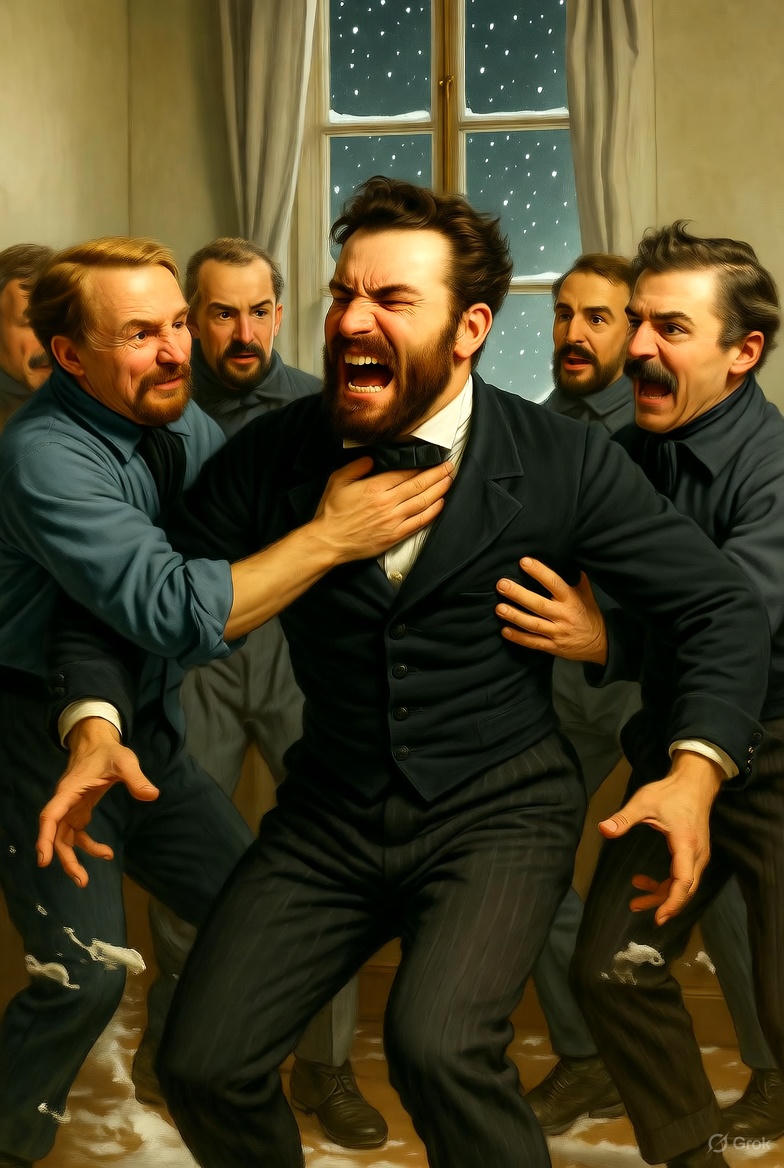
But I can imagine the astonishment of the Poles; just listen! When Bismarck expelled a few thousand Polish families from Prussia, he received the highest papal order; yes, the Order of Christ is very beautiful, and also very valuable. Now further! Hardly had the news of the insane murders subsided, which the Russians, with the approval of the Russian government, committed on the Polish Uniates in Kroze—by the way, murders that repeat themselves every day in Lithuania—when the Pope issues an encyclical to the bishops of Poland, in which he praises the great benevolence of the Tsardom with much praise—yes, please very much, it expressly states there, the Tsar is filled with the most intimate benevolence toward the Poles, he wants only their best. 

No, Reverend Father, don’t take it amiss, but I didn’t like it at all when in your last sermon you tried to prove that the Pope once again let his paternal heart for the oppressed shine in unheard-of splendor. 

That is superficial estimation; the matter hangs together quite differently. The Pope is determined by the French, with whom he sympathizes very much; yes, he is prompted by French policy to continually flirt with the Russians. In the whole encyclical, which I read very attentively, I find no paternal heart, on the contrary quite crude Vatican interests. And since I belong to the Catholic parish, it pains me deeply that church policy is so unbeautiful, yes—I want to express myself reservedly—unbeautiful, hypocritical, and uses cloaks of faith, hope, love for very earthly interests. 

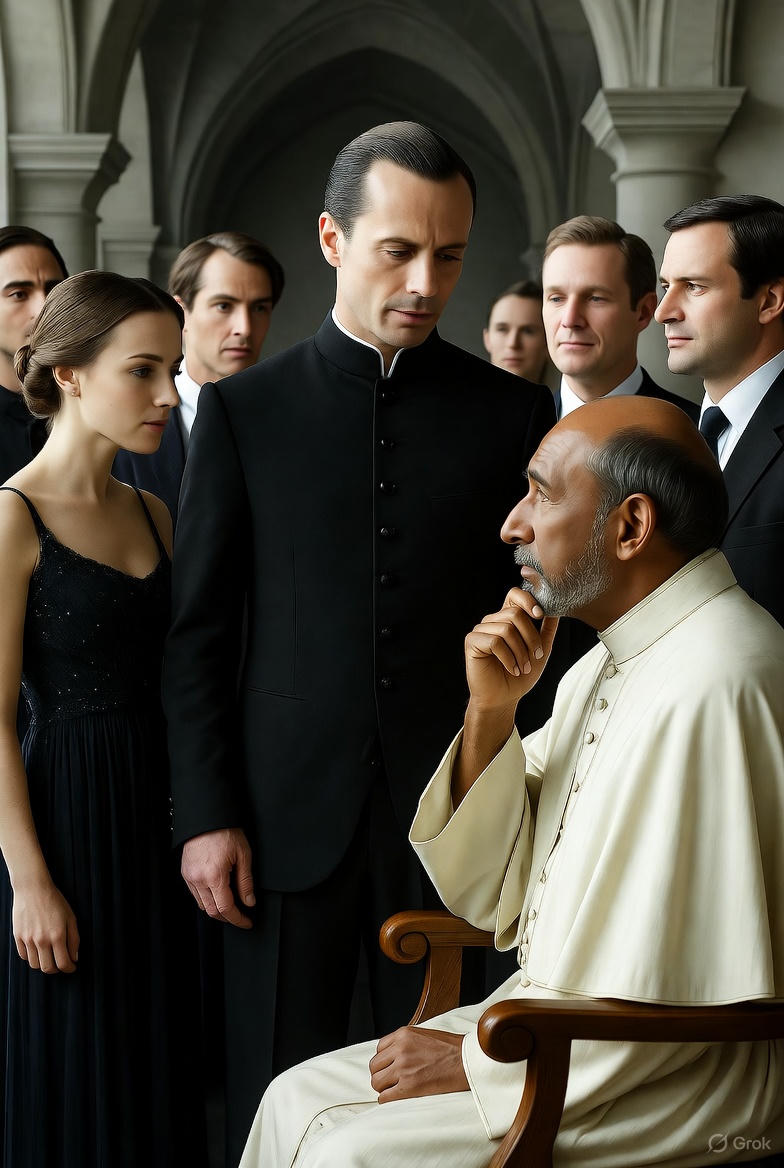
All those present looked at each other. They didn’t know what to say to it. That was really unheard-of bold, spoken in the presence of the monastery pastor. All eyes turned alternately to Falk and the pastor. 

Marit had listened with pounding heart; mouth half-open, breath catching, she sat there and awaited the explosion. 

The pastor was completely pale. 

“You know, young man: You are much too young to solve the most important church questions with your intellect, infected by the heresy of foreign lands, and even less are you entitled to mock about it.” 

Falk didn’t lose his composure for a moment. 

“Yes, Reverend Father, what you say is very beautiful. In the end, it doesn’t concern me at all what you or the Pope or the German government do; that’s completely indifferent to me. But I permit myself to doubt whether the Church has really taken out a lease on all worldly wisdom from Providence. I actually permit myself to doubt that most excellently. It has recently immortalized itself in the question of Darwinism or rather in the dispute over the evolutionary principle.”

“And then, yes: can you tell me at which council the infallibility of the Pope in matters of politics was proclaimed? 

Yes, yes; I know very well that according to tradition this kind of infallibility also exists, but I think that the papal nepotism in the Middle Ages is hardly the best recommendation for this kind of infallibility. 

By the way, this is a topic that could lead to heated discussions, and that I want to prevent at all costs; one understands each other or one doesn’t, and I don’t feel called to force any suggestions on the company.” 

It grew quiet; only the editor of the *Kreisblatt*, who had a reputation for social-democratic ideas, seemed very pleased. 

He absolutely wanted to push Falk further: the man took no leaf before his mouth; he spoke as the beak grew. 

“Yes, tell me, Herr Falk, you are an ultra-revolutionary, as I see. You now live in a monarchical state. Naturally you are not satisfied with such a condition. What do you say to a monarchical state constitution?” 

The editor was already delighted to find his ideas confirmed before the reactionary elements. 

“Hm; you know, Herr Editor, you pose a tricky question there. I was once in Helsingborg, and indeed with a friend who is an anarchist, but at the same time also a great artist. We stood on the ferry and looked at a splendid, ancient castle that Shakespeare already mentions in *Hamlet*. 

Do you know what my friend, the anarchist, said? Yes, he said that what he would now say would certainly very much surprise me, but he had to admit that such splendid works were only possible under monarchical rule. Yes, absolutely; just look at the rule of the Bourbons in France, and compare it with the rule of the first republic. Look at the second empire and the infinitely rich artistic traditions that arose in it and that can only thrive in the splendor, extravagance, and lust of a royal court. Now you have here in Prussia a Frederick William IV, in Bavaria a Maximilian and a Ludwig. Take in hand the history of art, yes the

history of refinement of taste, of ennoblement of the human race, and you will decide for yourself. 

No, I don’t want democracy; it flattens and vulgarizes humanity, makes it crude and directs it into narrow interest economics. Then the shopkeepers come to power, the tailors, tanners, and peasants, who hate everything beautiful, everything high. No, I don’t want the plebeian instincts unleashed against everything higher-bred. 

The whole society seemed suddenly reconciled with Falk. But now came the backlash. 

He sympathized nevertheless with all revolutionary ideas. Yes, he really did. He himself was not active; life interested him too little for that. He only watched and followed the development, somewhat like an astronomer in the eyepiece of his telescope follows the orbit of a star. 

Yes, he really sympathized with the Social Democrats. For he had a faith that rested on the following premises. The postulated economic equality must by no means be confused with an equality of intelligences. He was now convinced that in a future association of humanity an oligarchy of intelligences would form, which would gradually have to come to power. Then of course the course of things would begin anew; but he hoped that such a rule would be a better beginning than that of the present cultural epoch, which had begun with wild barbarism. 

The ruling class was impoverished, degenerated through inbreeding and excessive refinement. The danger of a crude, disgusting parvenu rule, the rule of money-bling and unclean hands, loomed. No, a thousand times no: that he didn’t want to live to see. Better to overthrow! He would gladly join. 

The editor recovered; he seemed satisfied. 

“Just one more question… What does Falk think of the current government?” 

“The current government is the Kaiser, and for the Kaiser he had much sympathy. Yes, really; he pleased him extraordinarily. He had recently suddenly appointed the captain of the fire brigade to chief fire marshal. And why? Because he had excellently cordoned off the palace square during a parade. The appointment had not followed

bureaucratic principles; but therein lay precisely the beauty, the arbitrariness, the great soul. In short, everything so immensely to be appreciated: No, he really had very much sympathy for the Kaiser, and he drinks to the health of the German Kaiser!” 

Those present looked at each other dumbfounded. But all rose and joined the toast. 

The social-democratically tinged editor thought he would fall under the table; but he contented himself with a meaningless grin. 

The table was cleared. 

Falk instinctively felt two burning eyes fixed on him. He looked to the side and met Marit’s gaze hanging admiringly on him. 

She lowered her eyes. 

Falk went to her. They were very close; they were pushed forward by the many people crowding out of the dining room and pressed tightly against each other. 

A warm stream flowed over Falk. 

“Erik, you are splendid… a great man…” A dark flood wave colored her face. 

Falk looked at her hotly. A glow of pride and love transfigured her features. “You are a real devil!” Herr Kauer came up. “That’s what I call speaking like a man! One of us would also like to say this and that sometimes, but we don’t dare. Just don’t spoil the girl for me; you mustn’t speak so revolutionarily to her.” Falk wanted to object. 

“Now, now,” Herr Kauer soothed, “I have unconditional trust in you; you wear your heart on your tongue. Live well for me. In a week I’m back. You mustn’t leave on me, understand?” 

Herr Kauer went. 

“Oh, how splendidly you spoke… You can’t believe…” Marit looked at Falk full of admiration. 

“Oh no, Fräulein Marit, that wasn’t spoken splendidly at all; against every one of these sentences a thousand objections could be made. But that may well be good for the gentlemen who draw their wisdom from the *Kreisblatt* and at most from some conservative newspaper that only has God and the Kaiser in its mouth. By the way, you also found what I said about the Pope well spoken?” 

Marit hurried to answer. 

“Yes certainly; she had now thought a lot, very much about all these things, and she had to give him complete right. Yes, he was right in most things, that she now saw.” 

Falk looked at her astonished. He hadn’t expected that. That was really a strange metamorphosis. 

“Why didn’t you come these whole two days? I expected you continuously and tormented myself unheard-of. Yes, I tormented myself very much, I must tell you openly.” 

“Dear, good, gracious Fräulein, you probably know that best. I simply didn’t want to disturb the peace of your conscience. Yes, and then, you know, I am very nervous and mustn’t give myself too much to the sweet torment, otherwise the string might snap.” 

Falk smiled. 

Meanwhile, the editor joined them. He couldn’t digest the toast to the German Kaiser and now wanted to lead Falk onto thin ice. 

“He would like to know how Herr Falk stood toward the anarchist murder acts. He was surely a soul-knower, a psychologist; how would he explain them?” 

Read Full Post »

OD by Karl Hans Strobl and translated by Joe E Bandel

Chapter 25

“Shall I take the coffee set with the rose pattern?” Frau Professor Fechner asked, opening the door to her husband’s study, where he seemed to shiver in a woolen vest and fur cap despite the sun-warmed room.

“Yes, take the rose pattern!” her husband replied softly over his shoulder. The door closed, but it opened again, and the professor’s wife asked once more, “Or perhaps the forget-me-not one?”

“You can take the forget-me-nots too,” Fechner answered.

The door closed, but Fechner had only time to let out a small sigh of resignation before it opened again: “But the rose pattern is prettier!”

“That’s what happens,” the Professor smiled patiently, “when you have two coffee sets. By the way, Freiherr von Reichenbach is coming from Vienna, where they have the best coffee in the world, but he’s not coming to drink our Leipzig flower coffee, but for his Od.”

“What does he want from you?”

“What does he want?” Fechner pushed the green-tinted glasses he wore for his eye condition up onto his forehead. “He’s coming to me because I’m his last hope. The others have all abandoned him. Now he clings to me, hoping I’ll save him.”

“He wants to hitch his wagon to your reputation.”

The Professor’s wife was a diligent and ambitious housewife, yet she sometimes had a sharp understanding of her husband’s standing and influence. Her words carried a hint of concern for Fechner’s scientific reputation.

“Exactly,” Fechner confirmed. “It’s a questionable matter, this Od. Dangerous to get involved and oppose the general disbelief. But if it’s the truth, I’ll have to bear witness to it. And then they’ll call me as much a fantasist as this Reichenbach.”

“Very unpleasant!” said the Professor’s wife. She had little taste for scientific martyrdom; she preferred successes. Why should her husband risk his achievements for such a dubious cause? “He’s bombarded me with letters,” Fechner continued, “he’s berated me because I found a flaw in his research in my Moon Book. But since I’m the only one among his opponents who leaves room for understanding, he’s latched onto me. I declined his visit, was rude to the point of coarseness. But he’s unstoppable; he’s coming anyway.”

“I’ll take the forget-me-not pattern after all,” the Professor’s wife decided after a moment’s thought, and with that, she had settled the matter of Od as far as she was concerned.

But even the forget-me-not pattern wasn’t used. The Freiherr declined coffee, claiming he’d just had some, but the real reason was his agitation, too great to waste time on trivialities. He was eager to get to the heart of the matter and learn whether Fechner could be convinced. Everything seemed to hinge on this man; the fate of his entire doctrine rested on him. Never had the Freiherr been so wrought up. Fechner, this quiet man with a wise, refined face etched with patiently borne suffering, stood before him as the appointed judge, more authoritative than all the pompous, self-important scholars before who dispensed superior science.

“I turned to you,” he said, gripping Fechner’s hand tightly, unwittingly digging into his palm with trembling fingers, “because you defend the day-view of universal ensoulment against the night-view of soullessness that dominates science.”

“Yes, yes,” Fechner deflected, “it’s the idea that matters, but it can’t wander the world without proof. Even fully provable ideas require the strength to push them through. Think of poor Semmelweis…”

“What?” Reichenbach asked, cupping his ear.

Fechner realized he needed to speak louder and raised his voice. “Semmelweis! Lucky he didn’t have to endure the full misery of the asylum. Strange that he died of blood poisoning. It’s as if the demon he fought his whole life took revenge. The doctor who sought to stop infection in maternity wards cuts his finger during an operation and dies from it.” He had intended to bring up Semmelweis, not without the purpose of a cautionary comparison.

“Indeed,” said Reichenbach, “but the finest part of your letters is where you say you’re as cautious in belief as in disbelief. That’s the true impartiality of an honest and upright man of science. But most colleagues—”

“I would have liked,” Fechner interrupted, “to assemble a commission, but the colleagues refused to engage with a matter considered settled.”

“It’s already in my book: The Sensitive Human and Its Relation to Od,” Reichenbach said, speaking almost past Fechner. “Much depends on the sensitives. I’ve brought my best sensitive—my housekeeper, Fräulein Ruf, the daughter of a dear friend.”

Only now did Fechner turn his attention to the woman who had entered with Reichenbach and lingered by the door. She gave a shy, beaten impression, as if emphasizing her subservient role before the two men through her humble demeanor, though Reichenbach’s words were like outstretched hands, striving to draw her forward and place her as an equal beside him.

Yes, the Freiherr had showered Friederike with kindness and radiant warmth at home. He granted her days of rest and recovery, refraining from urging her to travel to Leipzig immediately, though he was eager to make the trip and force a decision. He spared her experiments—not a single one—knowing her gift wasn’t a skill to be trained like physical strength but a talent always present, ready for use. She should rest, gather herself, regain her self-assurance. Reichenbach could imagine the horrors she’d endured, ghastly, helplessly subjected to that monstrous will. His compassionate understanding was so great that he didn’t even ask—not even how she was ultimately saved. He respected her silence. Once, he said his eyes had only now opened to the vile old hag who held power over him, as if offering his own humiliation as comfort for hers. That he did, and he took her to the city to outfit her anew, as befitted the daughter of his dearest friend.

Yes, he had revealed this strange truth to her, perhaps to shock her back to herself, to help her regain a sense of her own worth.

All that had happened, but it couldn’t change that she still felt crushed, defiled, and unworthy of any love or kindness. At times, she suddenly couldn’t comprehend why she had returned to the Freiherr; she hadn’t accounted for it, and now it sometimes felt as if she should run away. Perhaps it would have been better to stay on the road—in a hayloft, a ditch, perishing somewhere in the dark.

So empty was she, drained, incapable of higher feeling, filled only with a bottomless fear of what was to come.

Professor Fechner understood the warm introduction from Reichenbach; he had before him a young lady, not a mere servant, and kindly invited her to sit. But then he thought it time to get to the point.

“We’ve corresponded about the basic experiments to start with,” he said. “We can move to others later. First, the simple facts. Everything is prepared as agreed. Here’s the horseshoe magnet, on the table with only the poles exposed, the rest covered with a cloth. The poles are unmarked, save for a small, invisible mark I’ve made for myself on one arm. You’re to use your left hand to distinguish the cooler North Pole from the other.”

He asked the Freiherr to stand farther away by the window—not out of mistrust, of course, just a precaution to rule out unintentional influence. “When you’re ready, we’ll begin.”

Friederike stood before the magnet. She raised her left hand and brought it near the two ends. There was no sensation in her hand—neither cool nor warm; just a piece of iron, with no living currents flowing into her. She lowered her hand and fixed a pleading gaze on Reichenbach. His face was tense and agitated; she had never seen the Freiherr like this. She knew everything for him now hung in the balance. Almost dazed, she raised her hand and pointed at one pole at random.

Fechner lifted the cloth, checked, and without comment, noted something in his notebook. Then he turned the magnet several times, placed it back, and covered it again. Friederike had tried to peek over his shoulder; no mark was visible. She was so confused she would have been ready to cheat.

“Please,” said Fechner.

He repeated the experiment seven times, then reviewed his notes and said with an awkward cough, “I’m sorry I can’t report a better result. Out of seven tries, the Fräulein identified the North Pole correctly only three times. By the principles of probability, that’s insufficient for proof.”

Reichenbach stood gray in the window’s light. He pulled a chair close and leaned on its back.

“Perhaps today I’m…” Friederike smiled desperately.

“Shall we move to the second experiment?” Reichenbach said after a pause.

A sulfur plate and a zinc plate lay on the table, both covered with paper, and Friederike was to determine, by holding her hand over them, which was sulfur and which was zinc.

Her hands felt dead. No sensation at all; she wanted to throw herself to the floor and scream. “I don’t know,” she said with a smile that strangely moved Fechner.

“It’s incomprehensible…” came a hoarse voice from the window. “Let’s try the pendulum experiment.”

“Perhaps it’s best we leave it for another time,” Fechner suggested. He pitied the woman, seeing her gesture—correctly interpreting it as a fleeting impulse to flee. But she knew how much was at stake for Reichenbach. He was here, refusing to back down, an old man with fading hearing and weakened sight. He had been unspeakably kind to her, asking only one thing in return: proof of his doctrine.

“Here’s the pendulum you sent me,” Fechner said, placing a bottle on the table, a small lead weight hanging from a thread inside its neck. It was agonizing waiting until the lead weight hung still; no one tried to break the oppressive silence.

Then Friederike raised her lifeless hand. She strained now, rattling the locked gates of her inner self, trying to force the currents that might make the pendulum swing. The pendulum didn’t budge; it hung rigid inside the bottle.

Read Full Post »

OD by Karl Hans Strobl and translated by Joe E Bandel

Chapter 24

With Professor Semmelweis, things had finally reached a point where serious measures were needed.

In recent years, he had been somewhat unpredictable, torn by striking mood swings, often losing control. When speaking to his audience about how his doctrine was disregarded and sidelined, his eyes would suddenly fill with tears, he’d begin sobbing, unable to stop, and finally a fit of weeping forced him to end the lecture.

When he thought a student hadn’t grasped his doctrine’s spirit during an exam, he flew into a frenzy, raging and lashing out, barely restrained from attacking the unfortunate examinee with his fists.

Yet he could have been satisfied. His doctrine gained followers, prevailing against skeptics as science’s big names voiced approval. But Semmelweis grew indifferent to recognition, hypersensitive to doubt or attack. He heard only his enemies, enraged by criticism, deaf to praise, endlessly seeking reports of maternity ward conditions, as if relishing death’s march through hospital halls. He saw death smear poison on doctors’ and nurses’ hands, marking their doomed victims.

His Pest friends initially thought a cold-water cure in Gräfenberg would restore his nerves. But then came oddities suggesting more than mere nervous breakdown.

Semmelweis accosted strangers on the street, ranting about his foes. He ran naked through his apartment, singing and dancing, then hurling glasses and plates at invisible threats. He visited patients only at night—a cunning tactic, he thought, as his enemies slept, unable to sabotage his orders. His once-healthy appetite turned voracious. Did they begrudge him satisfying his hunger and thirst? He eyed his wife, host, and guests suspiciously, then propped his feet on the table among plates and glasses, playing a comb wrapped in tissue paper.

Now in Vienna, en route to Gräfenberg, for a brief stay, Hebra wouldn’t let him go on without seeing his new sanatorium.

The next morning, Semmelweis was gone. He’d left the house, likely roaming Vienna, causing who-knows-what mischief. Hebra and Bathory searched everywhere he might be—nowhere. At home, his wife wept in fear, helpless; they had to call the police.

But by evening, Semmelweis returned. His whistling echoed on the stairs, cheerful and content. He’d seen Vienna—that’s why he was here. A fine city, but why mark every third cobblestone with a black cross? No need to be reminded of death at every step.

“I know, I know,” he soothed Hebra, who tried to dissuade him, “I’m a sick man. But you’ll make me well. You’re the only one I trust.”

How painful that Semmelweis voiced such trust in Hebra. It was a patient’s trust, and Hebra, now the doctor, was fated to be cruel and unrelenting. “Perhaps it’s best you stay a few days in my sanatorium,” Hebra said. “If it suits you and does you good, we may not need Gräfenberg.” He took Semmelweis’s hand and noticed a painful flinch.

“What’s wrong with your finger?” he asked. Semmelweis’s middle finger on his left hand was red and swollen.

Semmelweis studied his hand thoughtfully: “I don’t know… I think… two days ago in Pest, I operated on a woman… I might have cut myself a little.” He shook his hand as if to fling off the pain, then bent down and opened his arms. His two-year-old daughter Antonie ran to him; he lifted her high, dancing around the room: “My little mouse! My sweet treasure! Papa’s going to the sanatorium and will come back all well.” He swung the child, her legs twirling, then stumbled dizzily toward Hebra’s wife. “Whoops!” he cried. “Remember, dear lady, when your boy came into the world, and I shouted, ‘It’s a boy!’?”

Fearfully, Frau Marie took the child from her husband as Hebra leaned out the window, calling back, “The carriage is here!”

“Today already?” Semmelweis asked, surprised.

“Why not? I think you should try sleeping in my sanatorium tonight.”

“Come, Herr Professor,” Bathory urged. “We’ve already sent your night things over.”

It’s all quite harmless and natural—why shouldn’t Semmelweis try sleeping in the sanatorium tonight? Surely Hebra has set up something exemplary; everything he does is impeccable. The women casually accompany the three men to the carriage, chatting about Hungarian national dishes, recipes for Frau Marie, the splendid cook, to add to the Hebra household.

“Aren’t you coming?” Semmelweis asks his wife as he boards. Frau Marie leans against the doorframe, child in hand, trembling, unable to answer.

“What’s she supposed to do in your dull sanatorium?” Frau Hebra replies for her. “She’ll stay with me and the girl.”

The carriage rolls through the streets, and the men continue discussing the differences between Viennese and Hungarian cuisine, weighing their merits. “You know,” Semmelweis says, “I won’t let myself be starved on a diet in your sanatorium.”

It’s Lazarettgasse where the vehicle stops before a massive, iron-bound gate topped with spikes. “Your sanatorium looks like a knight’s castle,” Semmelweis laughs.

A tall, elegantly dressed gentleman receives the visitors.

“My director!” Hebra introduces, and they begin the tour at once. Everything is new and clean, the corridors carpeted to muffle steps. Sturdy orderlies stand about.

“You have only men here?” Semmelweis asks.

“In the men’s ward, we have only male orderlies,” the director explains courteously. “In the women’s ward, only nurses.”

The residents seem quite content; a distant burst of loud laughter is so contagious that Semmelweis joins in.

“Here’s the room we’ve set aside for you,” Hebra says.

Quite nice, new and clean like everything here, the bed bolted to the floor, table, bench, and cabinet fixed to the wall. The windows overlook a large garden.

“Why are the windows so heavily barred?” Semmelweis wonders.

“For safety,” the director replies smoothly.

“Ah, I see. Well, I’ll give it a try. If I can’t stand it, I’ll move out.” Semmelweis claps Hebra’s shoulder to affirm his decision.

“Shall we go to the garden?” the director suggests. Though it’s grown dark, the summer night is so mild it’s pleasant to stroll under the large trees. Semmelweis and the director lead, while Hebra and Bathory lag behind. Before Semmelweis realizes, he’s drawn into a discussion about septic processes, prompted by the director’s knowledgeable questions. When Semmelweis talks science, the outside world fades; he doesn’t hear the shrill screams from the neighboring wing or the monotonous muttering of someone at a barred window, perhaps praying or reciting memorized lines.

After a while, the director suggests they return.

“Where are Hebra and Bathory?”

Hebra and Bathory are gone, lost in the darkness.

“They must have grown impatient,” the director supposes. “They’ll come back tomorrow.”

The light in Semmelweis’s room, a dim glow high on the ceiling, is already on. His nightclothes are spread on the bed; he sheds his street clothes, slipping into underwear, nightshirt, and slippers. Time to check on his patients—they must be waiting impatiently.

But as he steps from his room to the corridor, two men block the door—sturdy fellows barring his way.

“Where to, Herr Professor?”

Another grabs his right wrist with a vile, paralyzing grip.

“What do you want? I must make my rounds.” It’s outrageous to seize him and hinder his profession. Semmelweis breaks free, but they grab him again, each from one side.

“Stay calm at home,” one says casually. “No time for visits now.”

Why not? Why not indeed? Suddenly, Semmelweis realizes what’s happening. His enemies have hired these men to eliminate him; they’ve trapped him. As strong as the two orderlies are, Semmelweis’s rage is stronger, despite the searing pain in his hand. He pulls them toward him, smashes their heads together so their skulls crack, and hurls them against the walls. Then he runs. But he doesn’t get far—before reaching the stairs, two more men leap from a hiding spot, the first two already on his heels. Suddenly, one is on his back. The weight drags him down; they roll on the floor. Semmelweis bites wildly, sinking teeth through a sleeve into an arm, tearing cloth and flesh. They pin his arms behind him, nearly wrenching them from their sockets, almost breaking bones, stuffing a cloth in his mouth. Six men finally overpower him, throw a straitjacket over him, and shove him into a black hole—a padded room with no up or down, no front or back, only stifled, silent raging and roaring.

Read Full Post »

Chapter 15: The Cave

The morning mist clung to the clearing as Tobal lingered after the meditation, the Hel vision of his parents chained in a cave still burning in his mind. Sarah, Lila, and Jared had dispersed, their solos approved, while Fiona and Becca were off to Sanctuary. The lake’s call pulsed through him, a command he couldn’t ignore. He changed out of his robe, the fabric rustling as he packed dried meat and nuts into his bag, pausing to check his med-alert bracelet with a flicker of unease from the vision. Memories of last night’s circle flickered—Fiona and Becca’s gaily chatting during the initiations had left him feeling out of place, their friendship deepening while his mood soured, driving him to solitude. Misty had led as High Priestess, with Ellen in the background and Angel’s red Master robes surprising him, a testament to her recovery since that leg injury in Sanctuary.

Before leaving, he sought Rafe near the clearing’s edge, his steps quick with purpose. “This is my last chance before winter to check the lake,” Tobal said, the med-alert concern nagging him. Rafe leaned in, voice low. “I’ve been thinking about this. I’m not supposed to share Journeyman stuff, but it shouldn’t matter. We fight in a large cave where med-alert signals don’t reach—medics are always there for injuries. I tried something like this once, nearly got caught—trust your gut.”
“You can’t remove the bracelet—it’d mark you as dead, and without one, you restart training. Avoid that,” Rafe continued. Tobal nodded. “What should I do?”
“Hide in small caves or under ledges by day—air sleds can’t detect you within rock. Travel fast at night. The bracelet will seem active, and the cold will keep medics grounded. You’re not breaking rules—no one’s banned you yet, though they might once caught. Aim for midnight under the full moon, three hours max, then bolt. Should be interesting when they catch up.”
“That sounds good,” Tobal replied. “I’ll do it.” They discussed the trip briefly, Rafe’s grin lingering, before Tobal set out, his mind set on the journey ahead.

Tobal set out from the clearing, the morning sun breaking through the mist as he headed toward the lake, his pack slung tight. The rocky terrain between his path and the abandoned gathering spot loomed ahead, a maze of caves and outcroppings he’d noted before. He planned to travel by night, hiding by day as Rafe advised, the full moon’s promise guiding him. The air grew colder as he moved, his breath fogging in the chill, the moon casting jagged shadows on the rocks that made him pause, listening for rustles in the dark.

He made cold camps during the day, nestled under ledges, the furs from his pack shielding him from the biting wind. Sleep came fitfully, troubled by nightmarish images that intensified with each step closer to the waterfall—shadowy figures, chains clinking, a hum that echoed the Hel vision. By the third day, a shiver unrelated to the cold crept up his spine, a sense of being watched prickling his neck, though no air sleds appeared.

On the fourth night, midnight found him standing before the cairn in the haunted gathering spot, the moonlight bathing the stones in silver. Ghosts seemed to whisper around him, a chill settling deep. He searched the cairn without a torch, his fingers brushing offerings—trinkets, faded cloth—but found no answers. Frustration gnawed at him; the camp looked cleansed, yet an inner prompting screamed to leave. A faint hum from the stones, too low to place, teased at his mind, hinting at secrets buried deeper.

He hated the dark descent down the cliff face, but the urgency drove him. The rock chimney eased his drop, toes finding holds until he stood on the patio by the pool, an hour gone, two hours left. The air thrummed with an unnatural pulse, urging him forward.

Tobal stripped off his clothes, tucking them behind rocks on the patio, the icy air biting his skin. He kept his knife strapped to his leg and the magnesium fire starter around his neck, the weight a comfort as he braced for the pool. The waterfall’s thundering roar vibrated through the ground, a deep pulse that seemed to guide him. Stepping into the freezing water, his foot found the first step, then three more until he was waist-deep, facing the cascade. An unseen hand seemed to pull him forward.

He plunged in, swimming strongly toward the waterfall, and dove deep, fingers tracing the rock face. Three feet down, he found an opening, slipping under as the current tugged him. The rock sloped upward, and he surfaced in a silent pool, gasping, the swim frightening but manageable. Shivering, he hauled himself onto a rocky ledge, the darkness pressing in. His fingers fumbled across a pack and torch, tearing it open to find a heavy woolen robe. He slipped it on, pounding his arms to restore warmth, the fabric rough against his chilled skin.

With tinder from a pouch, he lit the torch, its flicker casting eerie shadows. The pool, just six feet across, was his only exit, and his heart raced—he had two hours to explore this lake’s secret. A low hum emanated from the walls, too faint to place, stirring memories of the Hel vision. He felt safe within the cavern, the med-alert’s signal blocked by the rock—a force field, he’d later learn, that shielded this place from the Federation and Reptilians.

Barefoot, he ventured deeper, the waterfall’s muted thunder vibrating the cave. The floor sloped sharply downward for twenty feet, then leveled into a chamber. An opening turned right, but his gaze fixed on a rough stone altar ahead, flanked by unlit torches. The emblem painted behind it—a man and woman holding hands within a circle—mirrored his parents’ medallion, stealing his breath. He lit the altar torches, their glow revealing a circle of cushions, each with personal belongings.

On impulse, he lifted a clay bowl from a cushion, spilling dust-covered items. Two plastic hospital bracelets emerged—wiping one, he read “Rachel Kane”; the other, grimy, revealed “Tobal Kane” and his birth date. Tears stung his eyes; these were his mother’s, his own from infancy. His fingers brushed a jade and amber necklace, its static crackle sending a wave of love and peace through him. He slipped it on, and the air shimmered. Two figures materialized—the Lord and Lady, their forms translucent yet solid as he reached out, his hands trembling. He embraced them, their warmth seeping into him with a faint glow, even though he could see through them.

“Mom? Dad?” he choked, his voice breaking, clinging to them as if they might vanish.
Rachel’s eyes, soft and wet, met his, her voice trembling with love. “Oh, Tobal, my sweet boy—we love you so much. We ache to have been there, to see you grow, to hold you through every tear.”
Ron’s voice cracked, thick with emotion as he gripped Tobal’s shoulder. “You’re our pride, son. We wanted to watch you become this strong, but Harry stole that from us. Free us, please—we’re fading.”
Tobal’s tears fell, his voice raw. “How? Why you? I need you here!”
Rachel’s hand, faint yet warm, brushed his cheek. “Your uncle Harry betrayed us—handed us to the Federation. They’re using us to power their time device, with Reptilian tech. It’s killing us slowly, draining our life.”
Ron’s gaze hardened, urgent. “The cave’s force field hides you from them and those lizard kin—they can’t penetrate it, so they hunt. We were training to be Time Knights, but they caught us first. There’s a plan to save us, but it’s not time yet—other pieces must align.”
Tobal’s heart pounded. “The Nexus? Where is it? How do I save you?”
Rachel’s voice softened, breaking. “Commune with us at circle, in meditation—we’ll guide you. You’ll feel when it’s right. But beware—Harry and the Federation want you for their experiments.”
They faded, leaving him trembling, the hum intensifying.

Time pressed, and he searched for his father’s pile, moving to the altar’s far side. A ceremonial dagger with “R.K.” burned into the sheath caught his eye—he swapped it for his knife, strapping it hastily. Exploring further, he found a corridor to the left, stooping to enter. Turning a corner, he gasped at a vast cavern filled with artifacts—burnished armor, bronze weapons, and an alien section with unfamiliar objects. His torchlight caught a slender silver rod on the floor; he picked it up, its wrist cord secure. Pressing the first button, a comfortable light glowed; the second unleashed a heat beam on the wall, glowing red until he stopped it, heart pounding. The beam triggered a hum, and a holographic figure shimmered—Arthur, a sentient AI.

“Hold on, Tobal,” Arthur’s warm voice broke through, his image flickering with concern. “I’ve tracked you since the altar. I’m Arthur—your guide. Call me telepathically anytime, just think my name, and I’ll appear. You’re in deep trouble.”
Tobal’s breath hitched, clutching the rod. “Trouble? Who’s after me? What’s this thing?”
Arthur’s hologram softened, urgent. “Your uncle Harry and the Federation, with their Reptilian allies. This cave’s force field blocks them, but they’re hunting you. They can’t find it, so they want you for experiments, like your parents. That rod’s tied to their tech—use it, but stay sharp.”
Before Tobal could press further, two figures teleported in—Lucas and Carla, their future-worn gear glinting. Lucas’s eyes locked on him, voice thick with worry. “Tobal, you’ve stirred the nest. That rod’s ancient—let me wake it.” Carla raised a device, and a ripple coursed through the cavern, the hum steadying. “We’ve turned back time an hour,” she said, her tone warm yet pressed. “We need to talk—your parents’ life depends on it.”

Tobal’s voice shook, stepping closer. “Who are you? Why are my parents in that device?”
Lucas’s face softened, heavy with care. “We’re Time Knights, Tobal. Your folks, Ron and Rachel, were training to join us, but they weren’t full Knights yet. Harry—your uncle—betrayed them, selling them to the Federation. The Reptilians gave them mechanical time tech, clunky and forced, while ours is organic, natural. They’re powering the device, alive but dying slow.”
Carla’s eyes glistened, urgent. “We’ve watched you through the medallion. This cave’s force field hides you from the Federation and Reptilians—they can’t penetrate it, so they hunt. There’s a plan to free Ron and Rachel, but it’s not time yet—other pieces must align first. The rod will help.”
Tobal’s throat tightened, gripping the rod. “How do I save them? Where’s the Nexus? What about Harry?”
Lucas sighed, running a hand through his hair. “The Nexus is deeper in—search when you can. Arthur will guide you, and we’ll check in. Harry’s leading the hunt with the Federation; they want your blood for their experiments. The Reptilians are pushing their tech, but it’s unstable—be careful.”
Carla squeezed his arm, voice breaking. “Commune with your parents at circle or meditation—they’ll reach you. You’ll feel when it’s time to act. Keep that rod safe—it’s your link to us.”
Arthur cut in, warm but firm. “I’ll watch you. Think my name, and I’ll show up. The Reptilians’ tech is close—get out soon. Harry’s agents are relentless.”
Tobal’s chest heaved, love and fear warring. “Thank you,” he whispered, looping the cord around his wrist. Lucas and Carla vanished, leaving him with three hours. He retraced his steps, snuffing the altar torches, and prepared a new torch and tinder by the pool. Shedding the robe, he clenched the bracelets in his mouth, dove into the black pool, and emerged outside to climb the stairs, the extra time nearly spent.

Tobal emerged from the pool, water streaming off him as he climbed the stairs, the three hours ticking down. He wasted no time sliding into his tunic and furs. He was still wet as he hastily donned his boots and grabbed his pack and equipment. He put the wand into his pack and the hospital bracelets in a leather pouch on his waist for safekeeping. He guessed it was about 3:00 a.m. and the air sleds would be looking for him anytime. A faint hum from the gold medallion pulsed, and Arthur’s voice whispered telepathically, “Tobal, they’re tracking your med-alert bracelet. Move fast.”

He headed at a dogtrot through the maze of rock and toward the edge of the lake. He hurried toward his burned out campsite planning to stop there and rest. He was halfway around the lake in the predawn light and walking normally when the first air sled appeared. He was not surprised to see the air sled drop to the ground on the beach in front of him and a medic step toward him. To his relief it was Ellen in her red medic’s tunic.

“Are you alright?” she asked sharply.
“I’m fine,” he said. “Why?”
“You’ve been appearing and disappearing from our monitors the last several days. Can I check your med-alert bracelet please?”
The way she was holding her hand out told Tobal that she was telling him and not asking. Wordlessly he took off the med-alert bracelet and handed it to her.
Immediately an alarm sounded at the air-sled and she went over to shut it off. She was on the radio a few minutes and then started to do some tests on the med-alert bracelet. It seemed to test out ok and she finally handed it back to him.
“What were you doing over by the waterfall?”
“When I soloed I came out here,” he told her, “and decided to make my base camp on the lake over there.”
He pointed to the area where his burned out camp had been.
“I spent a lot of time and work building things up,” he continued. “Then I was training Fiona and brought her out here with me. We found my entire camp destroyed and burned by rogues. I was only able to find one food cache left intact. We didn’t want to meet any more rogues and felt it was not safe to stay in the area.”
“What does that have to do with the waterfall?” Ellen interrupted.
“Everything,” said Tobal.” We headed around the lake and saw the waterfall. We decided to try finding a way up the stream and explore in that direction while I was training Fiona.”
“Did you know there is an abandoned gathering spot there?” He interrupted excitedly. “It has a huge pile of stones in the center of it too!”
He was watching carefully to see what effect the news of the cairn had upon her. He was disappointed since she didn’t seem to care either way about it.
“Anyway,” he continued, “we went up the stream and then cut cross country to where my base camp is. That’s how I originally found my base camp. That was last summer but I always wondered what really happened to my first base camp and wanted to come back here before snowfall and see if I could find anything of value the rogues might have missed. I was worried about Fiona before and didn’t want to endanger her. I thought I could come down here and check my old base camp real quick and be back in plenty of time for circle.”
“I never heard your camp had been burned out,” she said. “Did you tell anyone else?”
“I talked with Rafe about it quite a bit. He was pretty upset too and told me the lake wasn’t a good place for a base camp.”
“Rafe was right,” she said grimly. “It’s not a good place to hang around anytime, especially by the waterfall. As medics we are given explicit instructions to keep a very close eye on anyone in this area because this is where most of the rogue attacks happen. Get on and we’ll go look at your old camp.”
Hardly believing his luck, he carefully climbed on the back of her air sled and directed her to what was left of his burned out camp. Together they poked around and he showed her the remains of his teepee, smoke rack and sweat lodge. They did find a stone axe. He looked at it and recognized it as the first stone ax he had ever made. He told Ellen and she grinned. She seemed more relaxed now that his story had proven true.
“There have been other people whose camps have been destroyed,” she said. “These attacks seem to be coming more frequently and I don’t know what we are going to do about them. They are centered around this area but we have been told the rogues live in a settlement about two hundred miles west of us. That doesn’t make sense to me somehow.”
“A settlement to the west?” Tobal asked.
Ellen nodded, “It’s a village made up of people that decided to drop out of training and not be citizens. You may have heard rumors about it but only we medics know where it is. I’ve actually checked it out and there are children and old people in it. None of them wear med-alert bracelets and we don’t really know anything about them. If these raids continue I’ve heard rumors that the city might attack the village and close it down.”
“Is that what happened to the gathering spot by the waterfall?” Tobal asked, fishing for information.
“You must never mention that place to anyone,” she said sharply. “It is a forbidden area and we have been told to keep people away from it.”
“Why is it a forbidden area?” Tobal said belligerently. “I should be able to go anywhere I want. This is a wide open wilderness and no one has ever told me that certain places are off limits.”
“Well they are,” she said matter of factly. “We don’t tell people about them unless they stumble into them like you have. I don’t really know why myself,” she said. “I think is has something to do with the rogues and keeping clansmen safe from them. There are some other areas that are “off limits” because they are dangerous for people on foot.”
It was mid afternoon and Ellen said she needed to get back on patrol. She was sorry to hear Tobal had been burnt out and was going to make a note of it in her report. She advised him not to stay in the area as it might be dangerous and she recommended he get another med-alert bracelet the next time he was in sanctuary.
Tobal was in agreement and headed straight for sanctuary. He knew the route and more importantly knew a small cave where he could shelter for the night. It would give him a location where his med-alert bracelet would not give him away as he slept. Somehow that felt very important right now. He didn’t know whom he could trust. He had been very lucky Ellen had been the medic that found him.
It was dark when he turned sharply to the left and stepped along a ridge he remembered having a small cave in it. Cautiously he poked his walking stick into the opening making sure no one else was using it before crawling inside. He wrapped himself in warm furs and fell into a sleep of exhaustion with eerie dreams of his father and mother in a cave doing some type of ritual.
Before dawn the next morning he was back on the trail toward sanctuary. He was prompted by a sense of urgency and a sixth sense that told him he was being followed. It was only a half-hour later when an air sled circled and waved. He waved back and continued on. This time at a dogtrot that ate up the miles. That day two more air sleds circled overhead making certain of his destination, but none stopped him.
That night he again crawled into a small cave and slept without a fire of any kind, munching on cold jerky and rinsing it down with water from his canteen. He was making good time and with any luck at all should be at sanctuary the next evening.
The sense of being pursued stayed with him that night and all of the next day. Again he was up before dawn on the trail and again an air sled appeared, this time only fifteen minutes after he had gotten under way. They had obviously been out looking for him and wondering what was wrong with his med-alert bracelet.
Well he at least felt better with the air sleds since they were medics and not rogues. But he still didn’t waste any time getting to sanctuary. It was twilight when he finally got to the edge of the wooded area that opened onto the meadow leading to sanctuary itself. He took a few minutes to hide the things from his parents before going into sanctuary with the rest of his supplies and pack.
No one was there and he wasted no time setting his pack and clothing under one cot and stepping into the medical center as Ellen had suggested. He felt relief as the door slid shut behind him and locked. He took off his med-alert bracelet, dropped it on the floor and pounded it with the heavy hilt of the knife he had brought with him. Under the heavy pounding it broke into three pieces and he left it there. He knew the medics would be alerted when he had taken it off and then would be even more alerted when it suddenly stopped broadcasting. He was hoping one of them would be there when he came out the other end in a few hours.
Three hours later he had a new med-alert bracelet and fresh clothing and equipment. As the door slid open he cautiously stepped out into the gloom and stood still waiting for his eyes to adjust in the dark. His knife was in his hand and he knew he was not the only one in the room. He stood silently waiting for someone to make the first move.
“Tobal, is that you?” He heard Ellen’s voice coming from near one of the cots. Relief spilled through him, “Yes, is it safe?”
“For now,” she said. “Come, we’ve got some talking to do.”
He shouldered his new equipment and carried it over to the cot where he had stored the rest of his stuff. He searched under the cot and found he had been right. His things had been searched and gone through carefully while he had been in the medical chamber. He laid everything on the bed and tried to determine in the dim light if he was missing anything. Everything seemed to be there. Ellen stood silently by and watched as he sorted and repacked things. Tobal saw two other very serious Masters standing guard at the entrance.
“What’s going on?” She demanded. “We were monitoring your signal and then the alarm went off as if you were dead. Then the signal stopped completely and we came immediately to see what was wrong. The first one here saw three rogues dressed in black running out of the sanctuary building and into the woods. It was dark and they didn’t show up on the air sled monitors so we lost them. We don’t know where they are now.”
“We went inside and saw that your pack had been searched but you were not here. Then your signal showed up once more on the monitors and we figured you must be in the medical chamber so we waited for you to come out.”
“They followed me from the lake,” Tobal said. “I knew they were following me. I could feel it and hid at night. I came here as fast as I could just like you said to.”
“How could they follow you from the lake?” Ellen frowned. “They don’t have monitors like we do on our air sleds.”
“They must have some way of tracking me,” he repeated. “They would have gotten me if you hadn’t shown up when you did. It’s not safe out here anymore!”
“We’re going to take you back to the gathering spot where you and I are going to have a little chat,” Ellen whispered. “You are holding something back and I want to know what it is.”
They walked toward Ellen’s air sled and Tobal suddenly remembered his package in the woods.
“Wait here,” he shouted “I’ll be right back” and he ran into the woods to retrieve the rest of his things.
Ellen was on the air sled waiting when he ran back up and climbed on behind her. The three air sleds sped into the night toward the gathering spot.

Read Full Post »

Homo Sapiens: Under Way by Stanislaw Przybyszewski and translated by Joe E Bandel

VI.

The next day was a wonderful morning. Over the whole area lay the dew-glistening sunshine, and from the fields rose silvery mists in wisps. 

Marit went to early Mass. She was very pale, but from the exhausted, grief-stricken child’s face spoke an otherworldly calm. 

She walked, rosary in hands, and implored the Holy Spirit for the grace of enlightenment. 

When she entered the monastery church, the priest had just begun the holy office of Mass in a side chapel. Marit knelt before the high altar and prayed a fervent prayer. To the side, in a confessional, sat a young priest who watched her curiously. He too held a rosary in his hands, and his fingers mechanically slid from one bead to the next. 

Marit stood and approached the confessional. The confession lasted a long time. 

Suddenly, Marit rose, walked with shy steps to a pew under the organ loft, sat down, hid her face in her hands, and began to cry. 

The shameless man! To ask her such things! No, she didn’t want to think about it. Her head was completely confused. She hadn’t understood the priest. It was impossible: a servant of God couldn’t ask such questions. 

Dark shame-red rose in her face. 

The crude son of a farmhand! Yes, she knew, he was a peasant. Erik was right to be so furious against the priests; they all came from farmhands. 

But all people sin. A priest can err. He probably meant well; he wanted to be conscientious. 

But Marit’s innermost soul burned with shame and indignation. She cried. She felt trampled like a worm. Not God, not Mary, not the priest; no one, no one wanted to help her. Everyone had 

abandoned her! Oh God, God, all-knowing, merciful God! How unhappy, how wretched, how sick she was. 

The altar boy rang three times. 

No, now she couldn’t take the body of Christ, not now; she didn’t want to. 

She looked around, distraught. 

Church? No, this church, this smell of sweat and bad food. Falk was right: no one could stand it in there. 

Marit left the church. 

She stood indecisively. 

Could she go to Mrs. Falk? No, impossible, how would that look. Oh, she had noticed the sharp eyes that Mrs. Falk directed at her and Erik. 

And Erik is coming out today; yes, absolutely; he’s so good. Now she would listen to him calmly; yes, he was right. The priests are sons of farmhands; they become priests only to have good and easier bread. Hadn’t Falk said it was statistically proven: only farmhands and peasants let their sons become priests. 

And suddenly she remembered word for word what Erik had told her a year ago. 

He had a relative who had to feed seven children and her old mother. The husband was a mason, fell from the ladder and died. It was when Erik was still in gymnasium. 

And now Marit clearly heard Falk’s voice: 

I entered a small, poor room. Did I want to see the dead woman? No, I don’t like seeing dead people; it’s unpleasant. She should go to the priest, tell him her situation, then he would attend the funeral for free. Yes. So she went to the priest. But the priest—what did he say? 

Back then she hadn’t wanted to believe it; now she knew it had been truth. No, Erik didn’t lie. 

Behind the monastery church flowed a narrow strip of water, a small tributary spanned by a bridge. 

Marit stopped on the bridge and looked into the water. What had the priest said? 

Again, she clearly heard Falk’s mocking, cynical voice: Give me three thalers, and I’ll bury the body; otherwise, he can be buried without a priest, that costs much less. 

Marit involuntarily thought of the confessional. A shiver of disgust shook her. 

She walked on thoughtlessly. 

Oh, if he would come now! He usually took walks early in the morning. If she met him now… 

Her heart began to beat violently. 

Yes, now she would listen to him calmly, let him say everything, ask him more questions. 

But she waited in vain; the whole day in vain. Falk didn’t come. She had already walked through the garden a hundred times and peered at the country road, but no person was to be seen; only now and then a dust cloud rose, flew closer, and then she recognized a cart from the neighboring village. 

Tomorrow he will come, she thought, and undressed. She hadn’t lit a light, for she was afraid of the image of the holy Virgin; she didn’t want to see it. 

She stood indecisively before the bed. Pray? 

She asked herself once more: Pray? 

The ridiculous lust for happiness, the shameless lust for happiness, mocked in her ears. 

She got into bed with listening fear. 

Would the all-knowing God punish her on the spot? She lay listening, waiting. 

No, nothing… 

The clock ticked and tore the deep silence. 

She was very tired and already half-asleep. Her brain was paralyzed. Only once more did the question dawn in her: whether he would come tomorrow. 

And if he has left?! No—no. She was completely sure, she knew: now that she was his, completely his, now that she lived with his spirit, now he hadn’t left. 

Strange, how sure she knew that… 

But she also waited for Falk in vain the whole following day, the whole endless, terrible day. 

Could she endure this unbearable longing much longer? Involuntarily, she looked in the mirror. 

Her face looked completely destroyed. The eyes glowed from sleepless nights and were blue-ringed. Feverish spots burned on her cheeks. 

A deep pity for herself seized her. 

How could he torment her so inhumanely; why punish her so terribly? 

She felt like a child unjustly beaten. 

She tried to think, but she couldn’t gather her thoughts, everything whirled confusedly in her head. 

What was happening to her? She clearly heard continually single words, single torn sentences from his speeches. They gradually became like a great creeper that spread over the entire ground of her soul, overgrew everything, and climbed higher and higher with a thousand tendrils, up into her head. 

She was so spun into this rampant net of strong creepers that she felt locked in a cage whose walls grew ever narrower. Everywhere the trembling cage bars, one next to the other, ever more pressing, from four sides. 

God, God, what was happening in her?! 

Falk’s great spirit: piece by piece it passed into her. She thought with his words, with the same tone, the same hoarse half-laugh that was in his speech. 

She resisted, she fought with all her strength; but suddenly a grinning thought overpowered her. 

It was as if he had brutally stripped all the holy, all the beautiful around her; huh, this hideous nakedness! 

Yesterday in church: how was it that she suddenly discovered behind the glory of the divine service the brutal face that so disgustingly reminded her of a farmhand’s face? 

And now, now: what was it, for heaven’s sake? 

She didn’t want to see it, but again and again she had to stare at it. 

Yes, how was it? The whole expression of the holy, supernatural suddenly vanished from the image of the Byzantine Madonna, and Marit stared into the stupid laugh of a childishly painted doll. 

No, how ridiculous the picture was! 

“Christ was the finest, noblest man in world history—yes, man, my Fräulein; don’t be so outraged, but it is so.” 

And now a swarm of arguments, syllogisms, blasphemies hastened through her head. 

No, she couldn’t think of it anymore. 

And now she sat and sat in a dull stupor. The whole world had abandoned her. Him too… 

When she came down to the dining room, it was already evening. 

“Marit, I have to go to Mama at the spa; her condition has worsened. It probably won’t be dangerous, but I’m still worried.” 

Herr Kauer took a slice of bread and carefully spread butter on it. 

Mama? Mama? Yes. She had forgotten everything; everything was indifferent to her. She felt over her a dull, lurking doom, a giant thundercloud that wanted to bury a whole world. 

“Yes, and then the district commissioner has invited us for tomorrow evening.” Marit flinched joyfully. There she would see Falk. He was good friends with the district commissioner. 

“Yes, Papa, yes; I would very much like to go to the district commissioner’s. Yes, Papa, let’s go.” 

But Kauer wanted to travel early in the morning. Marit didn’t stop begging. 

She never went anywhere; she would so like to see lots of people again. 

Kauer loved his daughter; he couldn’t refuse her anything. 

“Well, then I can take the night train. But then you have to go home alone.” 

“That’s not the first time. She’s a grown girl.” 

Kauer ate and thought. 

“Why doesn’t Falk come anymore? I really long for the fellow. Yes, a strange man. The whole town is in 

turmoil over him. But he really does crazy things. Yesterday he meets his mother as she’s driving home a pig she bought at the market; she couldn’t get a porter. What does my Falk do? He takes the pig by the rope, drives it through the whole town, from street to street, his mother behind him—yes, and when people stare at him all dumbfounded, he sticks a monocle in his eye and drives the pig with majesty and dignity…” 

Marit laughed. 

“Ha, ha, ha—Herr Kauer couldn’t stop—”a pig driver with a monocle! Wonderful… And in the evening, well: you know that goes beyond measure: he offered the high school director slaps in the face.” 

“Why?” 

“Yes, I don’t know; but it’s really a fact. But imagine, Marit: to the director! Yes, yes, he’s a strange man. But the strangest thing is that you still have to love him. It’s a shame about the man, hm: they say he’s drinking terribly these days. It would really be a shame if he ruined himself through drinking.” 

Marit listened up. 

“Does he really drink so much now?” “Yes, they say.” 

Marit thought of his words: he only drank when he felt unhappy. And Father sometimes drank too…— 

She felt a strange joy. 

So it wasn’t indifferent to him… Tomorrow, tomorrow she would see him…

Read Full Post »

OD by Karl Hans Strobl and translated by Joe E Bandel

Are those tears in Semmelweis’s eyes? Reichenbach thought madmen couldn’t cry, and in what Semmelweis just said, there’s nothing incoherent.

Suddenly, Semmelweis wheels around, fear and rage twisting his pained face back into a grimace. “They’re coming!” he shrieks. He leaps over the bench, falls, scrambles up, and hurls himself into the bushes. He races down the hill; for a while, you hear the crack and snap of branches, then he’s gone like a wild, hunted dream figure.

If Severin weren’t standing there, bent forward, leaning on his stick with narrowed eyes, Reichenbach might believe it was all just a dream. But Severin, who witnessed it, testifies to its reality. Rubble and ruins everywhere you look, and old men stand there, unable to clear the debris and start anew, as would be needed.

Then Reichenbach recalls something is required of him. Even when you want to let your hands drop and extinguish your will, life demands something. “Severin,” he says, “Rosina has fallen ill. Would you care for me and nurse Rosina for now?”

Severin nods. Yes, he’ll care for the Freiherr and nurse Rosina. He’ll do it. And perhaps that’s what Severin has been waiting for all along, sitting on his bench before the castle.


The doctor has been and given his instructions.

Severin escorts him out and returns to the sickbed.

“Yes, that’s a nasty illness,” he says, pulling a chair to the bed and sitting at a measured distance—not too close, God forbid! He acts as if the doctor confided in him specially and filled him in.

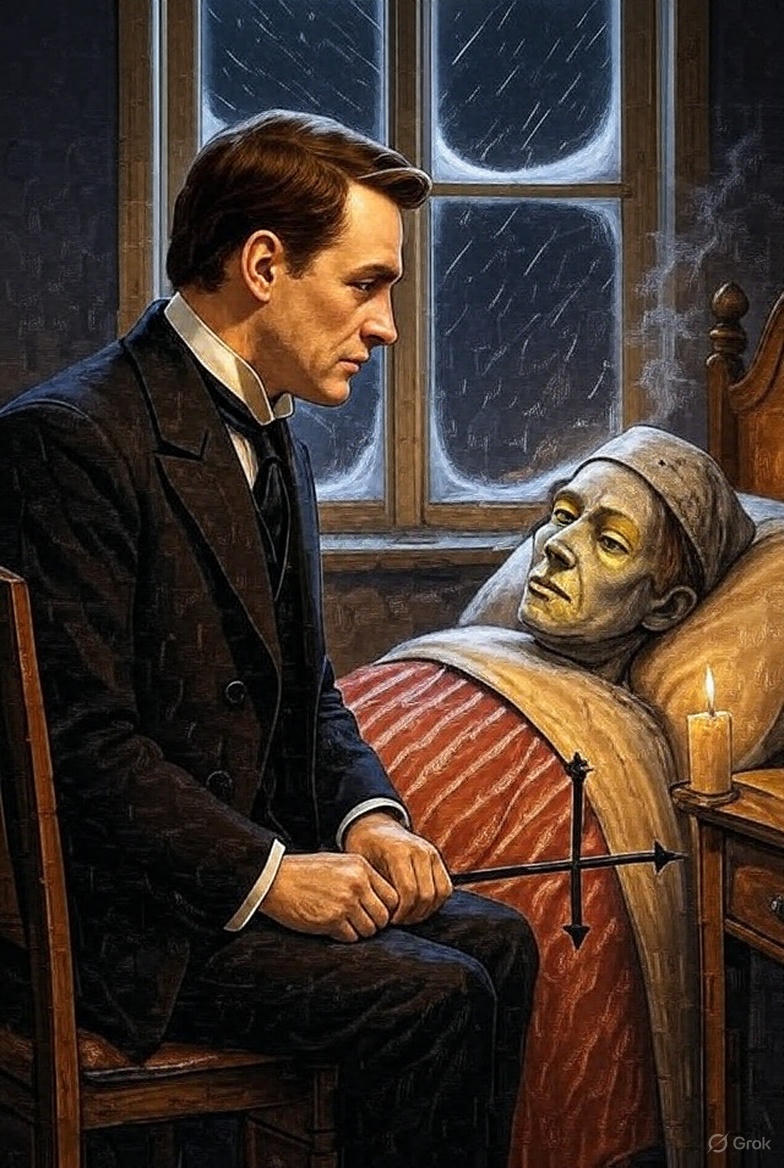
Frau Rosina lies in bed, the red-and-white striped blanket pulled to her chin, only her grayish-yellow face visible under a grimy nightcap.

“A nasty illness,” Severin repeats with relish, “very nasty. Could drag on for months. I wouldn’t want to be sick that long. When my time comes, I’ll lie down and die quick.”

“I won’t stay in bed for months,” Rosina vows grimly. She’s not supposed to move much, but she’s boiling with rage, the nightcap’s edges trembling.

“Oh, you could get up right now,” Severin says with deep satisfaction, “but then it’s over for you. My respects, obedient servant! With an illness like that, you collapse and die sudden-like. You can count on it, that’s how it is.”

“Now I’ve had enough,” Rosina snaps across, “shut your mouth for once.”

Oh, Severin has no intention of staying quiet. He finally has the floor and won’t let himself be stopped from making full use of it. Frau Rosina Knall is rendered harmless, lying in bed with her legs propped up, wrapped in thick compresses, unable to move and forced to listen to what’s said. Severin sits at a safe distance, pulls out his pipe, carefully packs it, lights it, and blows three leisurely blue smoke clouds. The old Severin is no longer a salty, shaky old man; he’s lively and sharp, puffing away like a freshly stoked locomotive.

The sound of puffing and the smell jerk Frau Rosina, who had turned her face to the wall, around: “Stop it,” she rants, “away with that pipe. You’ll stink up the whole room. The Herr Baron can’t stand pipes—he can’t stand smoking at all.”

Three new giant clouds billow into the room; thin, blue wisps of pungent smoke drift over Rosina’s bed and sink into the corners. Severin maintains his calm cheer: “I know,” he says, “when the Herr Baron comes, I’ll put the pipe away.”

“I can’t stand it either,” Rosina hisses.

Shaking his head, Severin observes the patient. Is it true you can provoke toads until they burst with bile and venom? Frau Rosina also reminds him of a simmering pot, its contents rattling the sides and lifting the lid. “Strange,” he muses, “some folks can’t stand smoking. I’m mighty fond of it. Nothing better than a pipe. Oh—what I meant to say. Things’ll change now; the Herr Baron will see people again. You can’t leave him so alone. I already mentioned that Frau Hermine came by with her husband and child recently. And we’ll need a chambermaid and a cook. I’m not one of the youngest anymore, and when you’re allowed up, you’ll need to take it easy for a long while.”

Everything Rosina built crumbles to shards. It slips through her fingers. This old fool sits by her bed puffing his pipe, and Frau Rosina lies powerless, nearly choking with rage.

“Sister’s child,” Severin returns to his main theme, “had it too. Got up too soon, and the illness came back. And she was a young, spry thing—with old women, it’s always twice as bad—”

Despite his geniality, Severin keeps a sharp eye. He notices a suspicious movement: one of the patient’s arms slides out from under the blanket, her yellow hand reaching for the nightstand where the medicine bottles stand. It’s astonishing how quickly old Severin can leap from his chair and dart out of the room. The large medicine bottle shatters with a crash against the already-closed door.

He giggles gleefully, in high spirits, as he potters through the kitchen and down the hall, lighting the lamp in the entryway. The door to Freiherr von Reichenbach’s quarters now stands open again, a lamp illuminating the path; people should know the dragon guarding him has been chained. And indeed, someone is already in the entryway, someone who lingered in the dark, not daring to venture further. It’s a shabbily dressed, gaunt woman; Severin doesn’t know who she is, a tattered bonnet shadowing her face, but he’s full of goodwill and courtesy even to such a poorly clad woman. He’s set on letting life reach the Freiherr again and sees no need to discriminate.

“Here to see the Herr Baron?” he asks kindly. “Come with me.” Without waiting for a reply, he strides ahead, knocks firmly on the study door, and when the stranger hesitates at the last moment, as if having second thoughts, he gently takes her arm and ushers her in. “Herr Baron, someone wishes to speak with you.”

Reichenbach looks up from his work, surprised by the late, odd visitor Severin has brought. But then he shoves his chair back and rises.

“Is it you?”

So it has come to pass, what Friederike saw as a distant glow in anguished, sleepless nights, amid the depths of her disgrace. There is Reichenbach’s study, the lit desk strewn with papers, and the Freiherr himself, an old man with a bald head and furrowed face, tufts of yellowish-white hair at his temples.

And Friederike is back, haggard, in tattered clothes, one might say ragged, fallen low, a shadow of her former self.

“Where have you come from?” the Freiherr asks softly.

Friederike glances nervously behind her: “From hell.”

And then the miracle happens. Reichenbach opens his arms, and Friederike may rest her head on his chest. My God, is this real—not a delusion? Is this living human closeness, refuge, and salvation? Will they not drive her from this threshold?

“You’ll stay with me now?” Reichenbach asks.

He asks if Friederike will stay. Does he not know she’s come to leave it to him whether she’s cursed and cast out or blessed and redeemed, whether she must turn to the final darkness or receive life? She clings to him, sinking, and Reichenbach must support her and lead her to the sofa. He tosses a stack of books to the floor, making room for Friederike, who sits with her hands folded in her lap—thin, wasted hands nestling together like disheveled, scattered birds.

Read Full Post »

Homo Sapiens: Under Way by Stanislaw Przybyszewski and translated by Joe E Bandel

V.

It was night. Outside, a strong wind raged; from time to time, it whipped thick rain showers against the windows, which whined as they flowed down the panes. 

Marit sat half-dressed on her bed; she didn’t have the strength to undress. 

Why bother? She knew it from many nights. She would lie down, the bed would dance around the room with her, then she would sit up and straighten the pillows and stare into the dark room, then get up completely and press her forehead against the windowpane; and so again and again, staring blankly, thoughtlessly. 

Everything is indifferent, everything in vain… 

She repeated this in her thoughts with ever new pain. 

Before the image of the miraculous Mary burned the red oil lamp, which she had refilled again and again, and the ghostly light illuminated half the room. 

The wick tipped over, and the flame consumed the oil. A foul smell smoked through the room. 

The sweaty church with the bad smell—unwittingly, she thought of Falk’s words. 

She extinguished the flame; now it was completely dark. She stared thoughtlessly into the barren emptiness of the darkness. My God, what did he want from her, what did he want? A glowing wave of blood shot into her face. 

She sensed it; she didn’t understand it. Then suddenly, she felt his searching lips. It was as if a jagged lightning snake had bored through her breast. 

She couldn’t think; she only felt the wild, desirous shiver twitching through her body. She pressed both hands between her knees, bent forward, and drew her legs to her. So she sat hunched on the edge of the bed, listening with anxious pain to the unknown, terrible thing. 

What was that? It came so often; again and again. She feared it. She trembled before it. Oh, how gladly, oh how gladly she would throw herself around his neck, hot, wild, in silent passion, and kiss him, yes—kiss… 

But then it came again and drove her mad; her senses faded, everything danced in circles around her. 

That was sin. Sin! Sin! 

She tore herself up; she flew in all her limbs, groped tremblingly for the matches, couldn’t find them; she threw herself on her knees before the bed. 

She tried to collect herself, to pray. But she couldn’t find a word. 

“Ridiculous formulas!” she clearly heard Someone mock behind her. Terrified, she turned around. No, it was in her! Falk had spoken in her. 

“Everything you do is for the sake of imagined heavenly joys. Be yourself!” 

“God, God!” she groaned loudly. 

Suddenly, it seemed as if someone had forbidden her to pray. She tried to force herself, she struggled for words. 

No, it wouldn’t work. Not a word! Mary had abandoned her. 

Why was God punishing her so cruelly? What had she done? Ridiculous formulas—the lust for happiness—sweat-smelling church: his sentences whirled in her head, chased, overwhelmed her. 

A desolate tiredness made her sink completely into herself. 

And he said she didn’t love him! How had he put it? Yes, the formula was stronger than her love—no, no! He should see! She wanted to love him! She wanted to embrace him! Yes, she wanted to love him. May God damn her, plunge her into the deepest hell, but she would love him. 

She tore herself up and went to the window. She tried to think. 

Outside, the spring wind roared and howled in the trees. 

She felt his arms around her neck again; she didn’t resist; she gave herself to him. She sucked the poisonous happiness into her body with all her pores, she let herself be taken, she gave herself to him—oh, to Him—so hot—so warm. 

No! No! 

Finally, she found the matches. 

She lit the light; a wavering strip fell on the face of the Byzantine Madonna. 

Marit stood rooted, will-less, unable to move. She stared with growing horror. 

In the feverish brain of the child, the face of the Mother of God shifted to a mocking grin, then to pained compassion, and now to terrible, punishing seriousness. 

She wanted to throw herself down, she couldn’t. She was rooted to the ground. Fear-sweat broke out on her forehead; she gasped. The horror constricted her heart. 

Finally, the Immaculate showed her the old, gracious smile. 

A rustling crackle came from under the bed. Disturbed, she jumped to the side; she didn’t dare breathe. 

No, it was only in the wallpaper. 

She wanted to flee; the whole house was full of ghosts. She listened, trembling, tense. 

It was completely still. 

God, how uncanny, how horribly uncanny. She had to flee, far, far away—to Him—oh, to Him— 

No! Pray! 

No, she couldn’t. Something stuck in her that forced her hands apart, and when she tried, the sweat smell of the church rose again, and she heard his mockery. 

Oh, how unhappy she was. And He had made her so—no, not he; he was so unhappy himself. 

What should she do? Everyone, everyone had abandoned her. 

She threw herself on the bed and buried her face in the pillows. A convulsive sobbing tossed her back and forth. 

That calmed her. 

He was so good. She would beg him so fervently that he demand nothing from her, only stay with her and talk to her. 

“But he won’t stay; he’s leaving!” She jumped up. 

“Yes, he’s already gone… gone… gone!” 

She ran through the room in frantic unrest, pressing her head with both hands. 

Yes, she knew it exactly: gone—he’s gone! 

And again, a long, choking sob tore from her throat. 

No, no—it’s impossible—he’s so good—so good; he won’t leave me. 

Erik—Erik, she whimpered; I’m with you, I’ll do anything, just don’t go away! 

Her thoughts confused themselves; she listened to her own sobbing. Don’t pray—don’t pray! I don’t want any kingdom of heaven! I want Him— 

Him! 

But the unrest grew and foamed and boiled; she couldn’t bear this torment any longer… God, these grinning shadows on the wall, and this punishing judgment of the Virgin. 

She had to get away. 

She dressed in a fever and ran down to the park. 

The cold wind calmed her. She felt strangely light. She thought of nothing. No, she really couldn’t think. 

She walked up and down the park avenue; it grew colder and colder, violent rain showers soaked her to the skin. 

She went back up and lay down in bed. Suddenly, falling asleep, she clearly saw Falk’s face. 

He stared at her, then his face contorted into a devilish grimace; he bit her with his vampire eyes, he literally devoured her soul. 

She looked horrified. She wanted to hide from him. But it was as if a whole heavy world lay on her heart; she had to stare at him unwaveringly. 

With her last strength, she gathered herself: the face faded, only a mocking grin did she still see in the dissolving features. 

She breathed deeply and sat up. 

She listened. Something was in her that wanted to speak. It reared up; higher and higher. A gruesome secret she would now hear: Falk’s soul. 

She had never seen him like that. Her brain struggled for clarity. With uncanny fear, she listened to her doubts. There—: had he lied? 

He? Yes! She heard him as he spoke that name to her on the first evening—Fräulein Perier. 

No, he doesn’t lie… But? what? what? what was it… 

She couldn’t think anymore. She was too tired. She lay and stared into the shadows. 

Outside, it had grown still; outside, the wind had laid itself. On the graciously inclined face of the miraculous Virgin played the shimmer of the candle. 

No, she thought of nothing more. Before her eyes was a great, bright field with flowers, and from afar she saw Falk coming, and now she went to him… he was so good, so good…

Read Full Post »

OD by Karl Hans Strobl and translated by Joe E Bandel

Severin seemed far from sharp-witted; no, he was no longer the old Severin—brisk, dutiful, self-assured. Something had stripped his former grandeur; he no longer looked down on things as before, or he might have shown more surprise or joy at Hermine’s arrival or paid some attention to little Karl. He took it oddly lightly. “Yes,” he laughed, “take you to the Herr Baron… that’s for Frau Rosina now… or not, as she pleases. She never does, really—no one gets to the Herr Baron.”

“And you put up with that?”

“I… I’m no longer in the Herr Baron’s service. He sent me away. I live down in Grinzing now, but I climb up every day and sit on that bench.”

“Who is this woman?”

Severin winked slyly: “She’s everything now… she’s the only one with the Herr Baron. Frau Rosina Knall, used to be a nurse at the maternity clinic, then housekeeper for Hofrat Reißnagel. She came up with messages from the Hofrat, and maybe she liked it here so much she stayed with the Herr Baron.”

“We want to see Father!” said Hermine.

But that seemed a plan requiring no help from Severin. He was entirely sidelined, a nobody here. Frau Rosina Knall stood guard with her midwife and housekeeper fists; there was no getting past her. Oh, Frau Rosina Knall knew her craft. She’d bitten everyone away, claimed everything for herself. No one could reach the Herr Baron. No one managed it like she did. Severin spun his hand in a half-circle, as if brushing something aside, and winked cheerfully. She couldn’t use anyone, couldn’t stand spectators.

Yes, that’s how it was, but Severin came up from Grinzing daily and sat on that bench—she couldn’t drive him off. She tried once, but he raised his stick, and she backed off, leaving him alone since. It was pleasant sitting on that bench in the sun.


Then one day, Frau Rosina Knall tries to get up in the morning and falls back into bed with a cry. For days, she’d felt a sharp pain in her legs, dragging herself through the house. Today, her legs are swollen to twice their size—something serious is wrong; she can’t force herself to stand. She manages only to crawl on all fours to the kitchen, pull the large iron pot from the cupboard, retrieve the stuffed old stocking from it, and crawl back to bed with it.

By noon, the Freiherr notices he hasn’t had breakfast and that it’s unusually quiet. He goes to his housekeeper’s room and finds Frau Rosina moaning, unable to move, in bed.

He thinks a doctor and a nurse are needed; Frau Rosina’s legs look like they have phlebitis.

No, no, no doctor, no nurse, she shrieks and rants—it’ll get better, she’ll surely be up by afternoon, tomorrow at the latest, if the Herr Baron could manage alone until then.

But the Baron insists a doctor must come and isn’t swayed by the raging torrent of words. Frau Rosina remains helpless in bed, her heart full of curses and hateful glares at the door—a venomous, bloated spider forced to watch a fly tear through her web.

The Freiherr goes to the dairy and asks the stable hand Franz, still there from his time, to send a boy to fetch a doctor and perhaps inquire who might take on Frau Rosina’s care.

Franz is happy to send the boy, but as for a nurse for Frau Rosina, he’d like to oblige the Herr Baron, but he fears no one would be willing, even for a whole gulden a day.

Is that so, Reichenbach muses, and why not?

Franz hesitates to explain, so the Freiherr leaves without an answer. He doesn’t return to the castle immediately; he needs some air, a sudden longing for the forest stirring within him. How long since he was last in the forest? Is he really as ill as Frau Rosina always claims? His hearing is a bit weak, but otherwise, he has no complaints. A tired heart, true, and occasional dizzy spells—that’s all. My God, he’s no longer a youth. No reason to keep him indoors, forcing teas and compresses on him. It’s as if a thick wall has collapsed, and he can escape over the rubble into the open. Now he can think again about pursuing his travel plans. With Fechner, the renowned psychophysicist and philosopher in Leipzig, he’s developed a long chain of correspondence about Od; it’s urgent to complement these written exchanges with a personal discussion. Reichenbach has no sensitive with such convincing abilities to offer irrefutable proof. Perhaps one could be found in Leipzig—he needn’t let Frau Rosina’s objections hold him back.

He can still do as he pleases. Despite his loyal housekeeper’s undeniable merits and maternal concern for his rest and health, he should be able to pursue his intentions. Much has come crashing down on him, but he’s far from finished. On the contrary, his thoughts reach further than ever; he now knows Od is the carrier of life force itself, the bearer of the soul in all nature, opening new, bolder insights into the universe’s mysteries.

Yes, everything looks different in the forest than at home in rooms smelling of tea, where Frau Rosina shuffles about in felt slippers. The forest has waited long for Reichenbach. But the forest is patient, unlike a person; it holds no grudges, standing there waiting, and when you finally come, it is kind and generous, exuding more calm than all Frau Rosina’s teas.


When Reichenbach returns to the castle, an old man sits on a terrace bench, and another stands before him, preaching. With a booming voice, as if addressing a vast crowd, he declares: “And so, to end the slaughter, I’ve resolved unyieldingly to confront anyone who dares spread errors about childbed fever. If you believe there’s a puerperal miasma in your sense, that’s criminal nonsense. My doctrine exists to be spread by medical teachers, so the medical staff, down to the last village surgeon and midwife, acts on it. My doctrine is meant to banish the horror from maternity wards, to preserve the wife for the husband, the mother for the child.”

There’s no doubt the preacher is none other than Semmelweis, though Reichenbach might not have recognized him otherwise—so bloated is his body, so swollen his pale face with heavy bags under his eyes, so erratic his large, fleshy hands.

Surely, the listener, good old Severin, never claimed there was a distinct puerperal miasma.

Reichenbach approaches the professor: “Dear Semmelweis, I’m delighted—”

“Silence!” Semmelweis snaps furiously, “I’ll have you arrested!” He climbs onto the bench, pulls out a bell like one tied to goats, and rings it shrilly, persistently. Then he turns to Reichenbach: “It’s a fact that corpses on dissection tables often enter a state of decomposition that transfers to the blood in a living body. The slightest cut with a scalpel used for dissection causes a life-threatening condition.”

“My dear Semmelweis,” Reichenbach says as gently as possible, “you don’t need to convince me. And the medical world is now, in fact, coming around to your views.”

“Who are you?” Semmelweis thunders.

“I’m Freiherr von Reichenbach!”

“Freiherr von Reichenbach? Oh, yes.” Semmelweis shields his eyes as if dazzled by light. “I know you! And you really believe my doctrine has prevailed?”

“I wish I were as far with my Od as you are. You’ve achieved success. Even Virchow recently declared you’re right.”

A mad gleam dances in Semmelweis’s eyes again. “I’ll ruthlessly expose those scoundrels. Now pay attention—I’ll read you the midwives’ oath.”

He drops the bell and fumbles for a sheet of paper in his inner coat pocket, trying to unfold it.

But Reichenbach grabs his hand and pulls it down, drawing the man off the bench. “Calm down. I already know the formula and follow it. Come into the castle with me. You sought me out.”

Semmelweis nods and mutters, “Yes, you’re Freiherr von Reichenbach. That’s good, very good. I came to Vienna; Hebra invited me to see his new sanatorium.” Suddenly, he tears free, stoops for the bell under the bench, and begins ringing it furiously again.

“Why do you keep ringing that bell?” Reichenbach asks.

The sly look on Semmelweis’s face is more heart-wrenching than his contortions of rage: “Here in Austria,” he says loftily, climbing back onto the bench, “in Austria, don’t you think we must hang everything on the big bell, my dear sir?”

“And why climb the bench?”

Semmelweis’s face gleams with cunning: “So you hear me better! The endometritis, metritis, and puerperal thrombophlebitis…”

“I already know all that,” Reichenbach soothes, “come inside with me now.” He makes a quick decision. It’s necessary to get Semmelweis into the castle and, through Severin—who has backed away from the disturbed man’s proximity and watches from a few steps away—to urgently notify one of his friends.

“You’re Freiherr von Reichenbach, aren’t you?” Semmelweis asks. “You know everything, but perhaps you don’t know that your own daughter Ottane died of childbed fever.”

No blow could strike Reichenbach’s core more cruelly, but Semmelweis likely knows nothing of pity or responsibility. “Ottane,” the Freiherr says bravely, “Ottane died in Venice of typhus.”

“No, you can be certain she died of childbed fever. The child was stillborn, but the mother needn’t have been lost. Those Italian ignoramuses who want nothing to do with me killed Ottane. They called in Doctor Sattler, my student, but it was too late. He told me everything.”

Is this horror believable? Does the madman speak from his obsession fixed on one point? Or is he telling the truth? It seems his mind is now clear and ordered, as if a lucid moment has broken through his derangement.

Semmelweis steps deliberately down from the bench and lays one of his large hands on Reichenbach’s shoulder. Perhaps he senses the terrible uncertainty he’s brought upon his friend. “Don’t think,” he says sadly, “that I’m lying to you! Something’s wrong with my head, that’s true. I must go to Gräfenberg for the cold-water cure. My wife and little Antonie are with me in Vienna, and tomorrow we travel on to Gräfenberg. My assistant, Doctor Bathory, is also with us. But as for poor Ottane, dear friend… she’s among the victims, that’s the truth.”

Read Full Post »

Homo Sapiens: Under Way by Stanislaw Przybyszewski and translated by Joe E Bandel

IV.

Falk sprang up. He had fallen asleep on the sofa, fully dressed. The daylight, filtered through the garden’s tree shadows, gnawed at his sleep-deprived face, giving it the expression of great, quiet sadness. 

His mother stood before him, trying to slide a pillow under his head. 

“God, what a terrible dream I had!” 

“But, dear child, you’re completely ruining yourself if you stay up all night.” 

“No, on the contrary, Mama, I slept very well. I was just so tired that I fell asleep right where I sat. Certain natures can do that excellently. I heard of a mailman who slept while walking and lived to 90. By the way, Mama; I’ll be traveling in a few days; it’s of great importance that I get to Paris as quickly as possible.” 

His mother couldn’t understand. Why had he come at all? This long journey just to stay a few days?! His wife could surely live a few weeks without him. Couldn’t he grant his old mother the joy and stay at least two more weeks? 

Yes, he’d love to; Mama knew exactly how much he loved her, but he couldn’t possibly stay longer, he… 

At that moment, there was a knock at the door. Marit entered, confused. 

She greeted his mother by kissing her arm. Falk extended his hand with a ceremonial bow. 

Marit grew even more confused. 

“Mrs. Falk mustn’t mind her disturbing so early, but she had come to early Mass with Papa, and Papa had something to do in town.” 

Mrs. Falk apologized ten times that nothing was cleared away yet, but Erik, the lazybones, had slept until now. 

“Imagine,” Mrs. Falk continued, “he fell asleep right here in the dining room instead of properly going to bed. By the way, it’s very good you’ve come, Marit; you must help me keep Erik here. He absolutely wants to leave.” 

Marit looked up, horrified. 

“What? You’re leaving already?” 

“Yes, he absolutely had to. He had to start working a bit; he couldn’t do anything here.” 

Marit sat as if frozen, looking at Falk with wide, frightened eyes. “Besides, there was no point in him sitting around idle; life here was so narrow, so unbearably narrow… Yes, Mama, dear Mama, you mustn’t take it badly, but I’m used to the vastness, greatness, freedom of the big city. I can’t stand people here staring at me and gawking. And then this narrowness, this narrowness.” 

Marit sat thoughtfully; it seemed as if she heard nothing. 

“Yes, yes, she had to go now; Herr Falk would surely come for a farewell visit.” 

But she couldn’t go: Mrs. Falk set the table and brought coffee. 

Falk and Marit sat across from each other. Mrs. Falk let her wise gray eyes shift from her son to the girl. 

Falk brooded. Suddenly, he fixed his eyes on Marit and examined her closely. 

“It’s strange, you have such a remarkable resemblance to a girl I met in Kristiania.” 

Falk spoke completely dryly, in a reporting tone. 

“She was terribly sweet, and around her forehead was a flood of red-blonde hair; it looked like the Nordic spring sun.” 

“By the way, you look quite worn out, Fräulein Marit. It’s strange that you can’t be happy at all; it’s probably your religion that considers joy a sin?” 

Falk emphasized “your” mockingly. 

“No, no: Mama needn’t be so outraged, he only said it in passing.” 

Silence fell again. 

Mrs. Falk spoke of her late husband, tears coming to her eyes. 

Marit stood up. 

“She had to go now. She couldn’t wait for Papa; with him, five minutes always lasted an eternity, and now that Mama was at the spa, she had a lot to do.” 

Falk stood up too. 

“Would he be allowed to accompany her? A walk would do him good, and it was indifferent whether he went toward Johannisthal or with Marit to Elbsfeld.” 

“Yes, if it pleased him…” 

They walked silently side by side for a long time. 

Falk had pulled his hat low over his eyes, kept his hands carelessly in his pockets, and seemed deep in thought about something. 

And again, Marit looked up at him again and again, but he seemed determined not to see it. 

“Is it really true that you want to leave?” 

Falk looked at her as if he hadn’t understood, with a cold, tired gaze. 

“Oh! Leave? Of course, yes, absolutely. What am I supposed to do here? Don’t think it’s a pleasure to torment myself near you; I’ve had enough of that. Yes, I want to leave; maybe today. Besides, everything’s indifferent; and I’ll probably do whatever comes to mind.” 

Two large tears ran down Marit’s cheeks. 

“He mustn’t do that. Everything he said to her about love was a lie. A person who loves couldn’t do that.” 

“But for heaven’s sake, tell me, what do you want from me? Yes, just tell me: you know very well that you could give me the greatest happiness if I could just kiss you; you won’t allow that. I want to talk to you about something stirring in me; I can’t do that either. So what—what?” 

Marit cried. 

“You said I mustn’t love you, that you can’t give me anything! Didn’t you say you couldn’t possibly take love from me?” 

“God, I explained to you why I said that. Besides, even if there were obstacles, don’t you understand the infinite happiness of the moment?” 

Marit looked at him, astonished. 

“What do you want—what do you want from me? Speak completely openly.” “What do I want? What do I want? Well! Do I know?” 

“Yes, you want to ruin me! You want to plunge me into unhappiness, then leave—isn’t that right?” 

“Ruin? Unhappiness? The English want happiness… Ridiculous, disgusting, this satiated happiness of Müller and Schulze! Can’t you understand that the highest happiness lies in a second? That it’s disgusting to wallow in eternal happiness? What do I want from you? Two, three hours of happiness, then away, far away! Happiness is shy; you dishonor it, make it indecent if you enjoy it too long.” 

“God, don’t torment me so terribly. I can’t bear it. Do you want me to be destroyed?” 

“No, I don’t want that. Let’s not talk about it anymore. It’s madness that I have to circle around this one thought; I don’t want that anymore. I don’t want to say anything more. I want to be good to you, completely good. You just mustn’t cry. No, you mustn’t.” 

Falk was completely desperate; deep pity choked him. 

“Yes, yes, don’t cry; I’ll be good and reasonable and very cheerful. Shall I tell you something very beautiful?” 

“Yes, he should; she loved to hear him.” A while passed. 

“Well; I had a strange dream today. You know, when my father was still alive, we had a small estate right on the Russian border; right behind our barn stood the Russian border guard. So it happened that a farmhand had stolen grain. My father was a wild, strict man. He beat me mercilessly. I didn’t really get better from it; on the contrary, I hated him as only a child’s soul can hate. 

But my father had discovered the theft and the thief. All the farmhands were called from the village and the guilty one stood before my father. 

‘Did you steal?’ 

‘Yes,’ answered the farmhand defiantly. 

‘Do you want to go to prison or receive thirty lashes?’ 

Without a sound, the farmhand lay on the ground, and the execution began. 

‘Hit hard, or you’ll be whipped yourself,’ my father shouted to the coachman. 

And the coachman struck with the strong, oxhide whip as hard as he could. 

‘Now you strike!’ he called to an idiotic farmhand, whose broad face contorted into a contented grin. 

A blow so powerful, so terribly powerful… but my God, don’t be so terribly outraged, my Fräulein; so far, everything’s in order… 

So a terrible blow whistled onto the body of the unfortunate man. He jumped up, bared his teeth, and lay down again. 

The surrounding farmhands burst into loud laughter, in bright joy: The farmhand did well! Yes, he has the strength of a Goliath! 

Another blow, then two, three, four, five… 

I screamed, I raged in my hiding place. I scratched the ground with my fingers. I stuffed my ears full of dirt so I wouldn’t hear. Yes, yes, as a child, you’re so foolishly compassionate. 

The execution was over. The farmhand rose and fell again; he couldn’t walk. Around him, the human cattle broke into bright laughter. 

But the farmhand had incredible willpower; he rose anyway and dragged himself out of the yard. 

My father was satisfied and sat down to breakfast. I remember, he ate a lot and well. I wanted to jump on him like a wildcat, tear him apart. But understandably, I didn’t. 

That night, our farm burned at all four corners. I jumped out of bed and rejoiced over it as I never rejoiced in my life. Now my father was punished! 

The stable doors were torn open, the cattle were brought out… 

At that moment, my mother entered the room, and the dream ended.” 

Marit was completely shaken. 

“Did that really happen like that, or was it all just a dream?” 

“Well, that’s irrelevant. The interesting thing is only the work of the sleeping individual consciousness. In the moment when my mother opened the door, the non-sleeping consciousness unrolled the whole memory with incredible speed. There’s nothing remarkable about that, by the way. Hippolyte Taine tells of a man who, during a faint that lasted only two seconds, lived through a life of fifty years.” 

Marit couldn’t understand that. 

“It’s not necessary for you to understand it either. *Rassurez-vous*: I don’t understand it either… Now other impressions joined the original memory, and all that wove itself into a dream.” 

Marit wasn’t satisfied; Falk should explain it more closely. 

“No, Fräulein Marit, you won’t get any wiser from it. You just have to admit that the soul is something entirely different from what it reflected in the crude, uneducated brains of the Church Fathers. Just listen further. 

Yes, for example, the fact that the farmhand’s body writhed and jerked in my dream probably came from another impression. You know I studied natural sciences? Yes, back then I worked in the physiological laboratory and vivisected a ton of frogs and rabbits. I had to do it, and I always anesthetized the animals. But once I took a live frog, nailed it to a board, and opened the chest and abdominal cavity. The frog jerked so violently that it slid up the nails to the nail heads. Then I cut out its heart—” 

“You don’t want to hear that? Well, let’s talk about something else. Am I cruel? No, absolutely not. But it would be foolish to project human pain consciousness onto an animal psyche, or to measure my feelings with the pain scale of crude farmhands who watched the inhuman execution of one of their brothers with heartfelt joy.” 

Now both were silent. 

They came to a small grove that sloped down to the lake. 

It was hot, and across in the forest, noon shimmered and quivered. Everything blurred in the sucking heat. The lake lay limp and still; a oppressive calm lay over the whole area. 

“Wouldn’t she like to sit down a bit? He absolutely wouldn’t bother her. He’d sit at a respectable distance.” 

He lay long in the moss; she sat three steps away on a stone, nervously playing with her parasol. 

Suddenly, he sat up. 

“Why do you actually go to church? Don’t you have enough pride not to go where all the rabble goes, where it smells bad and the lust for happiness reveals itself so openly and shamelessly in prayers to the Almighty Lord?” 

Marit thought of how once she had fainted from the bad smell and sweat of all those people, how they carried her to the sacristy and a disgusting man ripped open her corset there so she could come to—oh, how abominable that was! But she stayed silent. 

“Don’t you understand that there’s something deeply coarsening in that?” 

“No, she didn’t understand that, and didn’t want to. Religion was her only happiness, her only refuge.” 

“Oh so…” Falk drawled… “Very good, very good.” 

Falk seemed terribly tired. He lay back down long in the moss and closed his eyes. 

Shadows of the bushes played on his face; there was a line of strange suffering. 

Marit thought. 

He was a terrible man. The image of the sweat-smelling church grew stronger and stronger in her. A disgust overcame her that grew and grew. She didn’t understand. Was he right? Yes, and then the eternal mumbling of prayers! She didn’t dare think further. God, God, what would he make of her! 

The line of suffering on Falk’s face grew clearer and clearer. Now she wanted to throw herself on his heart and smooth the horrible fold of suffering with her hand. 

How she wanted to see him happy, so happy, so happy… Tears trembled in Marit’s eyes. 

“My God, Falk!…” but she got no further. Falk sat up, astonished. 

She looked ashamed at the ground and struggled with her tears; one rolled down after another. 

Falk moved closer to her. 

She seemed about to stand up suddenly. 

“No, for God’s sake, she needn’t be afraid of him; absolutely not. If he wanted something, it had to be given to him voluntarily and with joy. No, he took nothing himself. No, no, he had not the slightest intention of touching her. She could be completely calm.” 

He stared at the lake and the shimmering noon heat across in the forest. Marit tried to resume the conversation. 

“Why had he actually been so mean to her yesterday?” “Mean? No, what was she saying…” 

Falk yawned. 

“Mean? Absolutely not; only sad was he. He loved her. He wanted her to live in his spirit, become a part of him. But on the contrary: everything he despised, what he considered low and stupid, that she revered. Everything he wanted to tell her, she couldn’t hear. He, the free one, the master, could of course not calmly watch the woman he loved so unspeakably live in such wretched, lowly slavery. He, who was God and supreme law to himself, would get completely sick if he saw every one of her actions predetermined by some formula… 

Yes, that spoils, destroys you for me,” he said excitedly. “You detach yourself completely from my mind. Give alms, and I know without further ado, you do it because it stands in your law book: ‘Be merciful, so that you may enter the kingdom of heaven.’ Visit a sick person, I know again that some formula promises you something beautiful for it. You’re compensated for everything, paid for everything. Don’t you feel the lowness, the meanness of this way of acting? Everything only for the sake of reward; everything for the sake of the ridiculous, imagined joys you expect in the kingdom of heaven. Disgusting!” 

Marit grew completely pale. Falk flew into a rage. 

“Do something because you must, not because you should! Throw away what doesn’t please you! Be yourself, only you, you, the splendid, wonderful Marit… Yes, yes, yes! Forever yes! You say you love me, and a stupid formula is enough to break your most splendid, mightiest instincts. And afterward, you pray ten rosaries to the Virgin Mary that she saved your soul from the claws of evil. That should be love? That? That love that can be broken by a stupid formula?” 

Falk laughed with wild scorn. 

Marit sat mute, trembling in all her limbs. 

“Yes, answer me then! That should be love? Answer then, what you understand by love!” 

Marit was silent. 

“Marit, answer me! I don’t want to torment you, no. I love you to madness. I’m sick for you! Yes, I know you love me, yes. I know it; nothing do I know more surely…” 

Falk moved quite close to her; he embraced her. 

“No, for God’s sake! Falk, Erik, no. Don’t torment me so terribly!” 

“Ah pardon! A thousand pardons. Yes, yes, I forgot myself again. God yes, it’s indifferent anyway. It shall never happen again… Shall we go?” 

Falk yawned affectedly. 

Marit walked at his side, torn by pain. She struggled in vain to master it. 

“Yes, yes; everything is completely indifferent,” she repeated in her thoughts. 

“Now goodbye!” Falk extended his hand. They had reached the garden gate. 

Marit flinched. 

He mustn’t leave, it screamed in her; for heaven’s sake, not leave! She grabbed his hand. 

“You’re not leaving, Falk? No? You mustn’t leave! Do what you want, but don’t leave.” 

Her lips trembled; she could no longer control herself. “Don’t leave! You’ll make me unhappy otherwise!” Her voice broke. 

Falk looked at her coldly and harshly. 

“Yes, I don’t know that. That depends on circumstances. In any case, you’ll hear from me before I leave.” 

He said a short goodbye and went.

Read Full Post »

OD by Karl Hans Strobl and translated by Joe E Bandel

Chapter 23

When little Karl Schuh was two years old and already a very independent gentleman, Frau Hermine decided it was finally time to introduce him to his grandfather.

He marched stoutly through all the rooms on his chubby legs, and if someone tried to take his hand on the street, he’d swat it away and say, “All by myself!” He climbed onto every chair and recently pulled the crocheted cover off the dresser, along with vases, clocks, glass eggs, porcelain lambs, and other knickknacks, then tried to excuse himself for the mess. He dipped his finger in stove soot, smearing the walls with wild drawings, and held hour-long conversations with himself—in short, he was such a wonder that his mother could no longer justify withholding him from his grandfather.

She had planned a visit to Kobenzl soon after settling the ugly lawsuit business, where the father now lived permanently after selling his Vienna house. But with a small child, it was a cumbersome affair, and when they might have managed, the Freiherr was traveling abroad.

It was said he had conducted experiments on sensitivity and Od in London at Lord Cowper’s house, Palmerston’s stepson, then traveled to Berlin for an extended stay. The university there had even provided him two rooms, but the Berlin scholars had been utterly dismissive, impossible to convince. They either didn’t attend his demonstrations or, when they did, sniffed, nitpicked, and criticized so much that nothing fruitful came of it.

Karl Schuh sometimes brought home newspapers with mentions of Freiherr von Reichenbach. They recalled the Freiherr who, years ago, made waves claiming to discover a new natural force called Od, asserting the boldest claims about it. He had locked his unfortunate victims in a darkroom until their eyes began to glimmer in the gloom. Science had long moved past this quirk of an otherwise distinguished man, but the Freiherr kept the learned world on edge with his fierce attacks. The fiery old gentleman lashed out like a berserker, and his polemics, flooding the public, were as notable for their lack of logic as for their excessive tone. Yet all this couldn’t gain recognition for his Od, and recently the Berlin scholars had unequivocally rejected Herr von Reichenbach and his supposed force.

Schuh brought the papers to Hermine but didn’t comment further. “Whatever may be said of the Od,” Hermine remarked, “I think it’s unnecessary to mock such honest endeavor!”

Karl Schuh shrugged.

“There might be a force, invisible rays, so to speak, carriers of the soul’s faculties in people.”

Hermine received no response to this either.

“And I find it petty and mean when they hint here that Father lost his fortune and now owns nothing but the Kobenzl castle. I’ll finally visit him in the next few days. You don’t mind, do you?”

No, Schuh had no objections. Hermine could go and take the boy. He himself would hold back; he couldn’t be expected to make the first move, having been so gravely insulted. The Freiherr would have to come first.

The Freiherr had long since returned and was hurling invectives against his adversaries from his study. Hermine planned week after week to visit her father, but something always intervened—bad weather, little Karl’s cold, a big laundry day. As a housewife and mother, she couldn’t just leave at will.

Then came that letter from Italy, from Venice. Such letters from Venice didn’t arrive often but came at intervals, so Hermine was never too long in the dark about Ottane’s fate. She now knew Ottane’s story but hadn’t initially dared to share the truth with her husband.

Schuh, when he finally learned, showed much understanding and heart. He stood on a higher plane, with a broad view of the world; his notions of morality weren’t so narrow. They had arranged things—fine, he wasn’t appointed Ottane’s judge. He only asked once, “Why don’t they marry?”

Hermine passed the question to Venice and received a reply after some weeks. Ottane felt she should no longer conceal how things stood with Max Heiland. He was at risk of going blind—or perhaps, it wasn’t clear from her letter—he was already blind, and he resisted binding Ottane to him with an indissoluble bond. As long as her heart urged her to stay with him, he accepted it as heaven’s grace, but he didn’t want her free sacrifice turned into a rigid duty.

“He’s actually a damned decent fellow,” Schuh said after reflection. “I wouldn’t have expected that from him.”

The envelope of today’s letter from Venice bore not Ottane’s handwriting but that of a stranger. An unknown wrote on behalf of Herr Max Heiland, prevented by his eye condition from writing himself. He wrote that he regrettably had a deeply sorrowful message to convey, which he received with resignation to God’s will. Fräulein Ottane von Reichenbach had died after brief, severe suffering, comforted by religion’s rites, from typhus. Unfortunately, the undersigned, a German doctor, had been called too late, after the Italian colleagues declared themselves unable to save her. A few lines were enclosed for comfort, and it was noted that notices had also gone to Freiherr von Reichenbach and Professor Semmelweis in Pest, the undersigned’s esteemed teacher, whom the dying woman had wished notified.

“So these wretched papists botched the poor thing,” Schuh said angrily. He channeled his grief into furious rage, railing against Italy, its doctors, the climate, and life there—but at bottom, he raged against fate for inflicting such incomprehensible cruelty on the person, after Hermine and his boy, he loved most.

Hermine battled her pain for two days, while little Karl cowered under the table, uncomprehending why his mother wept ceaselessly and his father cursed.

Then Hermine said, “Tomorrow I’ll go to Kobenzl to see Father. I imagined my first visit with him differently, bringing the child. But perhaps the boy will be some consolation and joy to him.”

When she and the child prepared to leave the next day, Schuh opened his wardrobe and began dressing too.

“Not going to the factory?” Hermine asked.

“No, I’m coming with you,” Schuh grumbled. He had the right to use the factory carriage but rarely did. Today, however, he’d ordered it; it waited outside, and they drove off together into the blissful summer day, full of sun and colors. For little Karl, the ride was a journey to fairyland—wonders followed one after another; he crowed endlessly with delight. Over his blond head, the parents exchanged glances; they understood each other, full of confidence. However sadly and incomprehensibly cruel some decrees were, there were consolations bringing light even to the darkest soul.

The access roads to Reisenberg were far from good, torn up by deep ruts where the carriage jolted forward, sometimes throwing their heads together with a sudden lurch. The mulberry trees the Freiherr had planted stood wild along the roadsides. There were now enough leaves for armies of silkworms to gorge themselves, but where were the silkworms, where was the careful husbandry of the estate’s model days? It was clear Reichenbach had sold the estate, and the creditor to whom it was transferred cared little for it, thinking only of further sales.

The castle itself showed Reichenbach’s neglect. It wasn’t just the subtle signs of decay but an indefinable air of cold, surly rejection that made Hermine uneasy. It no longer gazed freely and cheerfully into the landscape; it lay closed off, ill-tempered, like a sullen fortress. And the great cast-iron dog on the terrace, the Molossus from Blansko’s foundry, with its grim face, seemed now the true emblem of the house. Little Karl was transfixed by the iron beast, standing before it as if waiting for it to suddenly bark.

Meanwhile, Schuh pulled the bell at the entrance by the garden hall, now boarded up with weathered planks in the middle of summer. It took a long time before anyone came, and even then, the door opened only a narrow crack, as far as an iron chain inside allowed. One might think the woman whose head appeared in the gap had modeled her expression on the cast-iron Molossus.

“The Herr Baron isn’t home!” she grumbled with blunt certainty, without waiting for an explanation.

“Just announce us to the Herr Baron,” said Schuh, irritated by this broad face with coarse cheekbones and thick lips.

“You’ve heard he’s not home,” the woman snapped.

“Tell him his daughter Hermine is here with her husband and child.”

The woman pulled a brazen, mocking grimace that Schuh would have loved to smash with his fist. “Even if the Emperor of China were here, he’d have to turn back. The Herr Baron wants to see no one… and you least of all, got it?”

Schuh’s patience ran out. He shoved the woman in the chest and tried to wedge his foot in the door to force entry. But the chain held, and the woman, a broad, solid, heavy figure, threw herself against the intruder, pushed him back, and slammed the door shut.

There stood Schuh and Hermine, staring at each other, at a loss for words. What kind of gatekeeper had the father hired? The house was indeed a fortress, guarded by a woman with the devil in her.

“Aren’t we going to Grandfather’s?” asked little Karl, finally tearing himself from the dog.

“No, not today,” Hermine said in a choked voice. “Grandfather isn’t home.”

They went to the carriage waiting on the road. On a terrace bench overlooking the city sat an old man.

“That’s Severin,” said Hermine. Yes, Severin—he would lead them to her father, he’d muzzle that Cerberus.

Severin nodded with an enigmatic smile and rose slowly, leaning on a stick beside him.

“What kind of fury do you have at the door?” Schuh asked, still furious.

“Oh,” Severin chuckled, “she’s got hair on her teeth!”

“Take us to Father,” Hermine pleaded.

Read Full Post »

« Newer Posts - Older Posts »