Homo Sapiens: In the Maelstrom by Stanislaw Przybyszewski and translated by Joe E Bandel
VIII
In the hallway he suddenly remembered that he had met a spy earlier. He lit a match, looked around everywhere, but he could discover no one.
Perhaps he had been mistaken, or, yes—perhaps a persecution mania was beginning to develop… He felt cold shivers run down his back. That was probably the fever again.
He walked and walked without knowing where he actually wanted to go. He thought.
Home? What for? To see people who tormented him through their love? No! He wanted no more love. That was repugnant to him. He could not see that. Everything came only from being loved. He had the cursed little pity for the few people who loved him. His heart was narrow, his interests were petty and yet he was born for something great. That is why his other, his great soul now took revenge, which kissed Czerski’s hand in ecstasy, naturally only to shame the small Falk.
But he did not let himself be shamed. What should he actually be ashamed of? Ha, ha, ha…
Then a dull, sick melancholy befell him, he stopped and looked thoughtfully at the ground.
A new life? No, he no longer had the strength for that; it would probably not be better than it is now. No, no; better that it ended.
Isa? Isa? Between him and her stood her past life: the other who separated them was always there…
He groaned.
And how much happiness she could have given him!
No, nonsense! Ridiculous that he sought a reason in that. He was simply falling apart. His psychic constitution was not calculated for all these experiences, it was too fine and crumbled under all this brutality.
What did he actually want in life anymore?
His art? He, he… I was an artist… I had to create because I had to. And I created. But suddenly in the middle of writing the idea overcomes me, what for? I see the people before me, I see the whole world that I let arise and I suddenly find all that so terribly ridiculous. And I ask you, dear Czerski, how can one create then?! For that one needs faith too, and perhaps another faith, the faith in posterity…
He laughed loudly.
Oh, he would gladly give the whole posterity together with the whole present to the first best servant for his bit of animal happiness, yes the whole world, the coming and the past and a piece more…
Humanity? To make it happy? But then one must also make it knowing at the same time… Why not rather let humans return to the animal: the knowing human cannot become happy.
A splendid reply! I should have answered that to Czerski. He stopped again.
What did he say? He had written to Stefan?
A paralyzing fright shot through his limbs. Written to Stefan… He had not understood it at first, he only heard the words… He now felt an unheard-of desire to go to Czerski and smash him with his fists, to twist his neck.
But in the next moment he had forgotten his rage. Only a feeling of trembling fear whipped the blood back into his heart. He breathed heavily and became very weak.
He walked on, but something heavy weighed on his chest as if a world had fallen down on him.
So it could by God not go on. That would destroy him completely. And he had to live, he had to become happy for Isa’s sake.
A strange energy poured into his brain. He began to walk with large steps and thought of her glory—yes, sun-like glory… Oh, if he had lived millions of years, they would still have shrunk into the second in which he looked into her eyes for the first time, so he would have spread over the whole world, so he would still have crept into this one glance, the one long glance of her love…
He, he—that was thought very beautifully, very beautifully… He started.
The disgusting picture rose in him again: she in a foreign embrace…
He crouched anxiously. Only that not, no, no!
He caught himself beginning to whistle a street melody. He had to become calm.
Yes, quite calm.
Right! A cigarette. Naturally, naturally. He stopped.
What time could it be now? Well, not yet half past ten. Yes, then… he lit the cigarette deliberately—then I could perhaps go to Olga… Chat a bit about humanity, about ideals… She is so good, and I need so much goodness…
Suddenly a strange idea fixed itself in his brain. He felt surrounded by detectives, perhaps in the next moment he would be arrested…
His fear grew foaming, he was so dazed by it that he could not think. He suddenly became so certain. The certainty that he would be arrested in the next moment brought him to despair.
He looked cautiously in all directions. It was dark on the street, he could not see well. There suddenly: not far from him stood a man. Falk trembled, but collected himself immediately and began to consider. Naturally it was a detective, only how should he get rid of him? He turned around, walked past him and looked at him sharply. The other seemed not to notice Falk and walked on.
Falk laughs scornfully.
This ridiculous trick! naturally only to lull me into security and suddenly appear in the decisive moment.
What should he do now?
Get into a cab? But what would that help?
He entered a restaurant, ordered beer and took a newspaper in front of him.
Immediately after him a man entered, sat down opposite him and observed him, as it seemed to Falk, with a strange impudence.
Falk looked away from his newspaper a few times, but each time their eyes met.
It was unbearable. A wild despair seized him, he threw the newspaper away, sat down broadly and began to examine the stranger scornfully.
Suddenly his heart stopped.
The stranger rose and walked toward him. Falk jumped up.
But the person doesn’t look like a spy at all. He is quite anxious and humble, it shot through his head.
“I have the honor to speak with Herr Falk?”
“Do you want to arrest me? Then not here, come to the street.”
Falk trembled and supported himself on the table.
The stranger looked at him astonished. Their eyes met in a long, questioning glance.
“I did not understand you,” the stranger finally said. Falk came to his senses and rubbed his forehead.
“Are you following me?”
“No! I met you by chance, quite by chance, I live nearby. I did seek you though, I wanted to speak with you.”
Was the man lying, did he want to lure him into a trap?
“So you have no direct arrest warrant? Well, if you want to speak with me, come to me.” Falk laughed scornfully. “I am not in the mood for such conversations now. Isn’t that so? You want something about my participation in the strike? He, he, come to me, then we will talk about it…”
Falk had to sit down, his heart beat so violently, his head was bursting full of blood.
The stranger looked at him with growing astonishment, but Falk stood up, paid and went.
On the street he breathed a sigh of relief. The whole scene suddenly seemed to him a few years distant in his thoughts. It seemed to him as if he had survived a danger…
He, he—that was strange, but everything in life is strange. What is not strange? he asked with a sick smile. He felt his facial muscles distort. What is not strange? Ha, ha, ha… The fear the man had of me. Naturally it was no spy. Absolutely no spy. Perhaps a person I saw somewhere once in society, with whom I even drank brotherhood; perhaps I told him that he was the most splendid person on earth, perhaps I told him that he was my only friend, the first person I met in my life.
Falk laughed long, almost convulsively.
To whom have I not said that? Is there a single person to whom I have not said that?
Ha, ha, ha; now the fellow will run around the whole city and tell that he met Falk in a quite neglected state, Falk was quite confused and spoke crazy talk… Ha, ha, ha…
He suddenly remembered that he wanted to go to Olga. He was quite nearby.
Alraune by Hanns Heinz Ewers and translated by Joe E Bandel
It wasn’t long before she received her deserved punishment for denying her good mother. By the next day Alraune had already told all the students about her mother’s cheese shop and it cost a lot of effort to again win back the respect which she lost throughout the Institute. But things were much worse for Alraune’s schoolmates then they were for the instructors. There was not one student in the entire school that had not suffered because of her. Strangely enough it appeared that every new bit of mischief seemed to make her even more popular. She made a point to sacrifice everyone that appeared to stand against her until they were all on her side. She was more popular than any of the other girls. Fräulein Becker reported some of the worst cases to the Privy Councilor and they were mentioned in the leather volume. Blanche de Banville had just returned from vacation with her parents in Picardy. The hot-blooded fourteen-year-old had fallen head over heels in love with her cousin who was the same age as she was. She wrote to him from Spa as well and he answered, addressing her letters B.d.B., hold at post office until claimed by addressee. Then he must have found something better to do with his time, in any case no more letters came. Both Alraune and little Louison knew about her secret. Naturally Blanche was very unhappy and cried through entire nights. Louison sat with her and tried to comfort her. But Alraune declared that it was wrong to console her, her cousin had been unfaithful and betrayed her. Now Blanche needed to die of unrequited love. That was the only way to repay her false lover and make things right. Then for the rest of his life he would be tormented by the furies. She knew several famous stories where it had been like that. Blanche was agreeable to the dying part but it did not go well. Food always tasted good to her despite her great pain. That’s when Alraune declared that if Blanche couldn’t die of a broken heart she must find some other way to bring it about. She recommended a dagger or a pistol–but they didn’t have either one. Blanche could not be persuaded to jump out the window, push a hatpin into her heart or hang herself. She just wanted to swallow something, nothing else. Soon Alraune had some new advice. There was a bottle of Lysol in Mlle. de Vynteelen’s medicine chest–Louison must steal it. Unfortunately there was only a little bit left in the bottle so Louison had to scratch the phosphorus heads off a couple boxes of matches as well. Blanche wrote several farewell letters, one to her parents, the principal and her traitorous lover. Then she drank the Lysol and swallowed the matchheads–They both tasted horrible enough. Just to be certain Alraune had her swallow three packets of needles–She herself, by the way, was not present at this suicide attempt. She had gone to her room under the pretence of being a lookout after Blanche had sworn on the crucifix to follow her instructions exactly. That evening little Louison sat on the bed with her friend. Crying miserably she handed over first the Lysol, then the match heads and finally the packets of needles. Blanche became very ill from these threefold poisons and was soon writhing and screaming in pain. Louison screamed with her and their screams roared through the entire house. Then she ran out of the room and fetched the Head Mistress and the teachers yelling that Blanche was dying. Blanche de Banville did not die. A capable doctor quickly gave her an effective emetic that brought the Lysol, phosphorus and needle packets back up again. Still, one of the needle packets had opened up in her stomach and a half dozen needles had gotten loose. They wandered through her body and in the course of her life came out again in all kinds of places painfully reminding the little suicide of her first love. Blanche lay in bed sick for a long time and had a lot of pain. It appeared that she had been punished enough. Everyone sympathized with her, was good to her and granted her slightest wish. She wished for nothing else but that her two friends that had helped her, Alraune and little Louison, not be punished. She pleaded and begged for so long that the principal finally promised. That was why Alraune was not thrown out of the school. Then it was Hilde Aldekerk’s turn. She loved the Berlin style cakes that were sold in the German confectionery at Place Royal. She claimed she could eat twenty. Alraune bet that she couldn’t polish off thirty. Whoever lost the bet had to pay for the cakes. Hilde Aldekerk won–but she got so sick that she had to stay in bed fourteen days. “Glutton,” said Alraune ten Brinken. “It serves you right!” From that point on the only thing all the little girls called fat, round Hilda was “Glutton”. She howled about it for awhile but then got used to her new nickname and finally became one of Alraune’s most faithful companions, just like Blanche de Banville. Fräulein Becker reported that Alraune had only one time been seriously punished at the school and strangely enough, unjustly. On a full moon night the French teacher stumbled out of her room terrified. She woke the entire household with her screams and yelled that a white ghost was sitting on the balustrade of her balcony. No one would go into her room until they finally woke up the porter who armed himself with a club and went inside. The ghost turned out to be Alraune who was sitting there in her white night gown and staring with wide-open eyes into the moon. She could not say how she got there. The principal took the playing ghost as a very bad prank. Only much later did it come out that the girl had been seen on several different occasions sleep walking under the influence of the full moon. Interestingly enough Alraune accepted this unjust punishment–to copy a chapter out of “Tèlèmaque”–without protest and conscientiously carried it out on a free afternoon. She would have most certainly rebelled and resisted any just punishment. Fräulein Becker concluded, “I fear that your Excellency will not experience much joy from your daughter in the future.” The Privy Councilor replied, “That might well be, but up to now I believe that I am very well satisfied with her.” He did not let Alraune come home for vacation the last two years. Instead he permitted her to travel with her school friends, once to Scotland with Maude McPherson, then with Blanche to her parents in Paris and finally with the two Rodenburgs to their family estate in Münster. He didn’t have any reports from these episodes in Alraune’s life and could only imagine how she occupied herself during these vacations. It was a satisfaction to him to think of how this creature he had created extended her influence outward in ever expanding circles. In the newspaper he read that during the summer in which Alraune was at Boltenhagen the green and white colors of the old Count Rodenberg did exceedingly well at the track and his stud brought in a considerable winnings. He also learned that Mlle. de Vynteelen had received an unexpected inheritance that placed her in the position of needing to close the school so she didn’t take any new students and only kept her old students until they graduated. He attributed both of these things to the presence of Alraune and was half convinced that she brought gold into the other houses she had stayed at, the convent in Nancy, at Reverend McPherson in Edinburgh and the home of the Banvilles on Haussmann Boulevarde. She had made good threefold on her little deviltries. He felt that all these people ought to feel gratitude to his child, this strange girl that went abroad out into the world bringing gifts and strewing roses upon the life paths of all those that had the fortune to meet her. He laughed as it occurred to him that those roses also had sharp thorns capable on inflicting many beautiful wounds as well. “By the way,” he asked Fräulein Becker. “How are things going with your dear mother?” “Why thank you for asking, your Excellency,” she answered. “Mother can’t complain. Her business has grown considerably better during the last few years!” “Really,” said the Privy Councilor and he gave orders that all cheeses, the Emmenthall, Roquefort, Chester and old Höllander, from now on were to be purchased from Frau Becker on Münster Street.
Madame Bluebeard by Karl Hans Strobl and translated by Joe E Bandel
Rotrehl sat by, marveling at the professor’s insatiable curiosity. Like all city folk, he pried into things that weren’t his business. After Johann left, Rotrehl muttered toward the window, “The air’s bad at that castle. I told him, Herr von Boschan, I told him.” Outside, the castle glowed in the evening sun, a thin blood-red cloud drifting over the old tower. Beyond, an apple-green, silken sky shimmered, alive with spring’s voices. When Rotrehl tried to steer conversation to skull measurements and facial features after such visits, he had little luck. Schiereisen gave distracted replies and soon retreated upstairs. Annoyed, Rotrehl locked his door and read late into the night in his French cookbook under Napoleon’s stern, commanding gaze. A week had passed since Schiereisen’s first encounter with Ruprecht. He hadn’t yet visited the castle, forging hooks and sharpening arrows, waiting to fill his quiver. Herr von Boschan, returning from a tenant farm, rode slowly through the woods. Spring stormed the world, unstoppable. All was steeped in blissful yearning. The sky kissed the earth, and the wide earth pressed toward it, longing. Ruprecht’s horse was tamed earth-force. He felt one with the land through it, clasping this young, vibrant world between his thighs. He was lord and victor, a wild zest for life singing in his heart. This battle with a demon was glorious. Compared to past exploits, what matched this drama he was part of? To be with a woman who—if Jana was right— sought his life, and to conquer her repeatedly. A woman who—if Jana was right—was a criminal, as mysterious as the castle hiding corpses in its tower. Life triumphing over horror and danger. Strength enthroned, towering, fate-mastering. The wondrous thrill of daily victory. Ruprecht wouldn’t follow Jana or dwell on his reasons. He’d only heeded him by taking a separate bedroom, feigning a nervousness he didn’t feel. Lately, though, his joyous victories sometimes yielded to deep despondency. A lethargy crept into his limbs, settling in. It slunk from the dark, ugly, like a premonition of grave illness. A vile unease stole his confidence. His head throbbed with heavy drilling, as if his skull had softened, a thumb pressing at its crown. His scalp tightened, like over a swelling. At the crown, he felt twitching, burning, as if the skin might peel away, hair and all. Mornings, he felt especially weak and listless. These were bodily states, but he refused to yield. His will broke free, and by day’s end, he banished the gloom. He wouldn’t let his triumph dim. He grew free and strong again. Today’s forest ride had restored his freedom. Bending under the last trees’ branches at the wood’s edge, he saw Rotrehl’s house to his right. That’s where the yellow-overcoat man lived. He hadn’t come to the castle. Perhaps the forest invitation seemed too casual—scholars could be oddly formal at the wrong times, clueless when etiquette mattered. Maybe Herr Schiereisen from Vienna awaited a renewed offer. Fine, he’d get one now. Ruprecht rode along the forest edge to Rotrehl’s house, dismounted, and tied his horse to the garden fence. He passed through budding blooms. Smiling, he read above the door: “Jérome Rotrehl, Violin- Maker.” It was like a blessing, a creed one entered under. On the ground-floor door, he read “Jérome Rotrehl” again. The host was determined to impress his identity on visitors. Voices came from within. Perhaps his tenant was there. Ruprecht knocked. It wasn’t Schiereisen inside, but Rauß, the village ruffian everyone feared. “What do you want, Herr von Boschan?” Rotrehl asked with measured courtesy. He disliked recalling how he’d once spoken too freely about Frau Helmina Dankwardt to Ruprecht, unaware he was her suitor or would be. It felt like a trick played on him, proof of human deceit. “Doesn’t Herr Schiereisen from Vienna live here?” Ruprecht asked. Rauß sat by the window, puffing a Sunday cigar, its end splayed like a broom. He glared at the baron, sullen and hostile, sprawling wider to show he wouldn’t rise for him. With grave demeanor, Rotrehl extended an arm upward, a gesture fit for commanding an army. “Upstairs,” he said, “first floor… you’ll find him home.” Ruprecht climbed the creaking, worn stairs into deep gloom. A door opened above, light spilling down. “My God, it’s you, Herr von Boschan?” Schiereisen said, bowing. “I looked out… saw a horse tied below… wondered who—then you!” Ruprecht reached the top, shaking the scholar’s hand. “I was passing by today and thought I’d check if you got home safe that night…” Schiereisen grabbed Ruprecht’s arm, pulling him into the front room. “This way, please,” he said. “I sleep in there—it’s a mess… The maid hasn’t been yet; Sundays, she’s late… Can’t mind too much, right? Come in. It’s nicer here, with your castle in full… splendor.” Schiereisen’s excitement was clear. He darted about, searching for his coat—he was in shirtsleeves—missing it, though it lay on a chair in plain sight, flung there when he saw Ruprecht. “Pardon me,” he said, “I was just dressing. I’m so surprised… an honor…” Ruprecht stood at the window, looking out. “It’s charming up here. If this house edged closer, I’d worry you could peek into our rooms.” Schiereisen snatched his coat, hurrying into it. His fluster eased, feeling he’d regained propriety’s shore. A worldly man isn’t fazed by a bit of informality, Ruprecht thought, amused. Schiereisen wasn’t worldly. “Yes, I’m quite content,” the scholar said. “I’ll likely stay all summer. My host’s a fine fellow.” “Jérome Rotrehl, Vorderschluder’s Krampulljon! You know he’s an old acquaintance? He was my first guide to local affairs, laid the foundation for my knowledge here.” “We get on well. He’s open… heartfelt… But please, pardon, Herr von Boschan, won’t you sit?” With a sweep, Schiereisen pulled two chairs forward. One had a wobbly back; the other’s straw seat gaped, sprouting prickly spikes. New dismay followed. “Well…” he said, with a horrified smile, “it’s a bit… rustic here…” “Let it be, Herr Schiereisen… tell me, why haven’t you visited the castle yet?” Schiereisen tucked his cuffs into his coat sleeves, adjusting them. “My God,” he said hesitantly, “I don’t know… I reproached myself afterward. I was too forward. One can’t just… It was kind of you to invite me. But when you’re practically ambushed… in the woods, at night, by a total stranger… I didn’t want to seem pushy.” “I figured as much. So, I’m here to renew my invitation.” A halo of delight shone around Schiereisen’s head. “Oh, Herr von Boschan, you’re too gracious. I shan’t fail to take advantage of your kindness…” “Your studies intrigue me,” Ruprecht said. “I’d love to learn from you. This region… I’ve grown fond of it. I’ve traveled widely, but here, one can find a home. It reminds me of Upper Austria, where I spent my youth. Then I left. Now I’ve rooted here again. Everything’s so open, heartfelt, like a face hiding no thoughts. Every stone’s dear to me. I’m wooing this land, wanting to know it deeply. So far, I’ve been consumed with my new role as a farmer, catching up on what I forgot since my student days. You can imagine, traveling far, each mile costs a bit of learning. Now, I’d like to explore this land’s past. It’s like with a beloved woman—you want to know her roots, her ties.” Schiereisen shot Ruprecht a quick, sharp glance. Wasn’t this comparison striking? What did it mean? Was he mistaken, or did a shadow cross Ruprecht’s face—a cloud of disappointment, hidden pain? Warmth rose in Schiereisen. He was glad he’d already cleared this man in his mind. This splendid, upright man had won his affection. If tormented by suspicions, they hadn’t yet surfaced into conscious light. But now wasn’t the time for reflection—the scholar had work to do. “Of course!” he said calmly. “It’ll be an honor to serve you. I’ve had some successes. This area has geographic names undeniably Celtic. The Kamp, for one… farther north, there’s the enigmatic Thaya. Near Rosenburg, a stream joins the Kamp, called Taffa! What does that mean? Then there’s Gars, another such name…” “You know what?” Ruprecht cut in. “Tell me at my place… Come now. Have a spoonful of soup… then rummage in Herr Dankwardt’s library as much as you like…”
Madame Bluebeard by Karl Hans Strobl and translated by Joe E Bandel
The stranger turned, striding in the opposite direction. The plain’s rolling waves stretched before him. Fields lay in patches of black and dirty snow- gray. Winter crops showed green in sheltered spots. The air was potent, the earth pulsing with urge. Over narrow field paths, wet earth clumping on his boots, the sausage-skinned man marched toward his goal. At last, Sankt Leonhard am Horner Wald’s tower rose over a ridge. Three or four houses clustered near the church; the village’s other farms scattered across the plain. Dark woods filled the hollows. As fitting, the houses by the church were two inns and a large general store stocking every farmstead need. Entering Alois Fürst’s tavern-room, the stranger found carters by the stove, discussing weather. Talk halted as they scrutinized him. Finally, Mathes Dreiseidel von Vorderschluder, pointing with his pipe stem, said to his neighbor, “That’s the daft professor livin’ with us.” “A professor?” others whispered hoarsely. “He can’t wait for summer.” “He ain’t no summer guest. He’s doin’ studies round here.” “Oh… is that so?” They fell silent, eyeing the professor, who’d shed his sausage coat and sat at a nearby table. Thick blue smoke curled from their pipes. Mathes Dreiseidel drained his glass, rapping the table for another quart. “Say, then,” the Wegschaid carter, who drove twice weekly through Sankt Leonhard to Gars, resumed, “our roads are a mess. I tell ye, some folk meddle in everything. Big mouths get their way. Look at our roads—they ain’t built for all’s best, but for them loudmouths. Roads take big detours. Why? ‘Cause someone’s got a tavern there. I name no names. Anyone crossing the Wolfshofen land knows who I mean.” “Aye… true enough,” others agreed. The Idolsberg bergmaster added, “Plenty to fix round here. Couldn’t the gentry build a road from Rosenburg to Wegschaid? I’ve studied the Kamp valley close. Two blasts, no more. It’d profit them too. Now they float logs from Rosenburg. Half’s lost—twenty percent gone. What arrives is half- rotted.” “Pardon, gentlemen,” the stranger cut in. “You mention the Kamp. Do you know why the river’s called that?” Mathes Dreiseidel nudged the Idolsberg bergmaster. He grunted, catching the hint. Those studies. But what to say to such a daft question? The Wegschaid carter spoke, slipping into High German. “Well, since the Herr asks, I must say we don’t rightly know. The river’s always been called that. It’s marked Kamp on maps too.” “That’s so,” the bergmaster growled. The professor pressed on. “Haven’t you heard older folk call the river something else? Idolsberg’s an intriguing name too. There’s a wealth of ancient names here.” “Nah!” the carters said. The Wegschaid carter, once a waiter at Graz’s Golden Elephant, added, “No! No memory of it remains.” “Hm!” the professor grunted, then continued, “By the way, you’re quite right about what you said earlier. The Kamp valley needs a road. It’d boost traffic tremendously.” “Aye, but that Rosenburger does naught. Always off in Africa,” grumbled a farmer. “There are other landowners. Rotbirnbach has a stake, too. And Herr von Boschan in Vorderschluder, most of all. He’s said to be a capable man.” The farmers exchanged glances. “Herr von Boschan’s only been in Vorderschluder a few months,” said the Idolsberg bergmaster. “If he lasts longer, he might do somethin’.” “What do you mean? Is he strapped for cash?” A brief silence followed. The Wegschaid carter, eager to show his worldliness, spoke up. “Well, money’s no issue, but folks say he won’t last long, ‘cause none of Frau von Boschan’s husbands ever do.” The professor smiled. “Yes, I recall now. I was told. He’s her third husband.” “Pardon! Beggin’ yer pardon! He’s the fourth.” “Right, the fourth. Yes, yes! And the last, if I’m not mistaken, was a certain Herr Sangwart.” “Dankwardt, his name was. A right kind gentleman, but knew nothin’ ‘bout farmin’. Always buried in books.” The Wegschaid carter shared what he knew of Herr Dankwardt. The others cloaked themselves in smoke and silence. The professor dipped his bucket of questions into the carter’s well of eloquence. Evening fell. A red sky peered through the windows. The Idolsberg bergmaster, first to stir, decided it was time to head home. He tapped out his pipe, spat on the floor, and stood. Mathes Dreiseidel offered the professor a seat on his cart. They rolled into the dusk. Dreiseidel smoked on the driver’s bench; the professor, jostled on straw in the back, jotted notes in a red book as best he could. At Achenwald, he tapped the farmer’s shoulder. “Thanks kindly, Herr Dreiseidel,” he said. “I’ll cut through the woods—much shorter.” “Know the paths? It’s pitch dark.” “When you roam as much as I do, you’re prepared. Got my pocket lantern.” He climbed down. “So, thanks again. Next time, you ride my cart.” Dreiseidel clattered off, the night swallowing the rumble. The professor stood alone in the dark. He carefully drew his folding lantern from its oilcloth case, snapped it open, and fitted a candle. A match flared, and after some effort, the bent wick caught. He plunged into the woods. On the narrow path, the light danced in wild leaps ahead. With sure steps, the stranger followed, his gait confident, springy. He mulled over today’s haul from the Wegschaider’s well. After a while, he looked up, startled. A light flickered toward him through the trees. He stepped aside. A man approached in a short hunting jacket and high boots. A jolt of joy shot through the professor. By God, it was none other than Herr von Boschan. The professor stepped back onto the path, shoulders slumped, trudging with a despairing air. Facing Boschan, he raised his lantern. “Excuse me,” he said. Boschan lifted his lantern, revealing a distressed, pitiful face. “Pardon, good sir,” the professor said again. “Can you tell me if I’m on the right path?” “Where are you headed?” Boschan asked, amused. What was this man in his yellow overcoat doing in the pitch-black woods? “I think I’m lost. I’m new here, don’t know my way yet.” “Where do you live?” “With Rotrehl, the violin-maker. They told me this wood path cuts a good distance.” “You’re on the right track. Keep going, take the left at every fork, then left down at the forest’s edge.” “That’s a relief. I’m not familiar yet, as I said… always left! Thank you kindly, sir! Allow me— Schiereisen… from Vienna!” Ruprecht bowed briefly. “Boschan.” Schiereisen’s wide mouth gaped. “What, Herr von Boschan? An honor and pleasure… truly. Since arriving, I’ve hoped to make your acquaintance… and now chance brings us together at night in the woods… ha… ha! Quite something, no? I’m here for studies. This area’s remarkably interesting; I suspect—” He’s liable to lecture me here, Ruprecht thought, cutting in. “I knew at once you were a professor,” he said, smiling. “Not quite! I’m more a private scholar, researching for pleasure. I haven’t sold out to the state. Once you’re dubbed professor, free inquiry’s done. Look at our dear Austria’s state of affairs. What do you say? I’d rather forgo titles and honors, stay independent. I can do and write as I please… no one’s leash on me. I’m working on a study of Central European culture, and your region—” “Pardon,” Ruprecht said, a touch impatient, “my wife’s expecting me. I was delayed at a quarry…” Schiereisen laid a hand on Ruprecht’s arm. “One more word, Herr von Boschan… I’ll let you go… I’m thrilled to meet you… There’s a bit of self-interest, too. I heard your predecessor, Herr Dankwardt, had a vast library and loved books. It’s only natural some might… I mean, he likely took interest in this land’s prehistory, and I could find valuable resources. Amateurs often stumble on books scholars seek in vain. If you’d…” “It’d be my pleasure to host you. The library’s at your disposal.” The lantern-lit talk on the narrow forest path ended. They shook hands and parted. Schiereisen’s candle had burned low. He paused after a few steps to adjust it, whistling softly with a smile. His lantern’s Marienglas crackled in the heat. Then he strode briskly to reach home. That evening, he wrote to Herr Peter Franz von Zaugg, Section Councilor in the Railway Ministry: “Dear Sir, It is with sincere satisfaction that I report, after a relatively short stay, some not insignificant successes. I have diligently gathered material. You will understand that this case, which you kindly entrusted to me, presents considerable challenges. I reserve a full account for later. Today, I wish only to note that a fortunate chance introduced me to Herr von Boschan. I have secured unobtrusive, harmless access to the castle, and rest assured, I will seize every opportunity to advance my goal. I hope soon to provide you and your esteemed wife with clarity on the dark, mysterious circumstances surrounding your late brother-in-law’s fate and, should your suspicions prove founded, to ensure justice for a heinous crime. With utmost respect, Your devoted, Josef Tängler.”
Alraune by Hanns Heinz Ewers and translated by Joe E Bandel
Chapter Seven Shares the things that occurred when Alraune was a young girl. FROM the time she was eight years old until she was twelve Alraune ten Brinken was raised in the Sacré Couer convent in Nancy. From then until her seventeenth birthday she lived at Mlle. de Vynteelen’s finishing school for young ladies on Du Marteau Avenue in Spa. During this time she went to the ten Brinken home twice a year to spend her vacations. At first the Privy Councilor tried to have her taught at home. He hired a girl to teach the child, then a tutor and soon after that another one. But even with the best intentions in a short time they all despaired of ever teaching her anything. It was simply not going to happen. It was not something they could point out. She was not wild or unruly. She just never answered and there was nothing that could break through her stubborn silence. She just sat there quiet and still, staring straight ahead and blinking with half-open eyes. You could scarcely tell if she was even listening. She would pick up the slate in her hand but she would not move it, not up, down, or to make a letter–If she did use it, it was to draw some strange animal with ten legs or a face with three eyes and two noses. What she learned at all she learned before the Privy Councilor sent her to the convent, before her separation from Wölfchen. This same boy that failed miserably in every class in school and looked down with contempt on any schoolwork had an unending patience with his sister at home. She had him write long rows of numbers, write out his name and her name hundreds of times and she enjoyed it when he made a mistake, when his dirty little fingers cramped up on him. It was for this purpose that she would take up the slate, the pencil or the writing quill. She would learn a number, a word or its opposite, grasp it quickly, write it down, and then let the boy copy it for hours. She always found something to correct, there, that stroke was not right. She played the teacher–so she learned. Then one day the principal came out to complain to the Privy Councilor about the pathetic performance of his foster son. Wölfchen was especially weak in the sciences. Alraune heard this and from then on played school with him, controlled him, made him study till dark, listened to him recite his lessons and made him learn. She would put him in his room, close the door and not let him come out until he had finished off his homework. She acted as if she knew everything already and would not tolerate any doubt of her superiority. She learned very easily and quickly. She did not want to show any weakness in front of the boy so she took up one book after another grasping its contents and moving on to the next in a wild and chaotic manner without tying them together. This went on until the youth would come to her when he didn’t know something. He would ask her to explain it to him because she must surely know it. Then she would put him off, scold him and tell him to think it over. That gave her some time to search in her books. If she couldn’t find the answer she would run off to the Privy Councilor and ask him. Then she would come back to the boy and ask if the answer had occurred to him yet. If it hadn’t she would finally give him the answer. The professor noticed the game and it amused him. He would have never even considered placing the girl out of the home if the princess hadn’t kept pressuring him again and again. The princess had always been a good Catholic and it seemed as if she became more devout with every Kilo of fat that she put on. She was insistent that her Godchild must be brought up in a convent. The Privy Councilor had been her financial advisor for several years now and invested her millions almost as if they were his own. He thought it prudent to go along with her on this point. So Alraune went to the Sacré Couer convent in Nancy. There were several exceptionally short entries in the Privy Councilor’s hand during this period and several long reports from the Mother Superior. The professor grinned as he filed them, especially the first ones that praised the girl and the extraordinary progress she was making. He knew his convents and knew very well that a person could not learn anything of this world among these pious sisters. He enjoyed how the first letters filled with the praise that all the parents received very soon took a different tone. The Mother Superior reported more and more urgently on various cruelties and these complaints always had the same basis. It was not the behavior of the girl herself, not her performance in giving presentations. It was always about the influence she exerted on her schoolmates. “It is entirely true,” writes the Reverend Mother, “that the child herself never tortures animals. At least she has never been caught at it–But it is equally true that all the little cruelties committed by the other girls originate in her head. First there was little Mary, a well-behaved and obedient child that was caught in the convent garden blowing up frogs with hollow grass stems. When she was called to account for her actions she confessed that Alraune had given her the idea. We didn’t want to believe it at first and thought it was much more likely that she was trying to shift the blame away from herself. But very soon after that two different girls were discovered sprinkling salt on some large slugs so that they writhed in agony as they slowly dissolved into slime. Now slugs are also God’s creatures and again these two children declared that Alraune had pushed them into it. I then questioned her myself and the child admitted everything and went on to explain that she had once heard that about slugs and wanted to see if it was really true. As for the blowing up of frogs, she said that it sounded so beautiful when you smashed a blown up frog with a stone. Of course she would never do it herself because some of the crushed frog might squirt onto her hands. When I asked whether she understood that she had done wrong she declared No, she had not done anything wrong and what the other children did had nothing at all to do with her.” At this place in the report in parentheses the Privy Councilor wrote, “She is absolutely correct!” “Despite being punished,” the letter continues, “a short time later we had several other deplorable cases that we determined must have originated from Alraune. For example, Clara Maasen of Düren, a girl several years older than Alraune, she has been in our care for four years now and never given the slightest cause for complaint. She took a mole and poked its eyes out with a red-hot knitting needle. She was so upset over what she had done that she spent the next few days extremely agitated and bursting into tears for no reason at all. She only calmed down again after she had received absolution during her next confession. Alraune explained that moles creep around in the dark earth and it doesn’t matter if they can see or not. Then we found very ingeniously constructed bird traps in the garden. Thank God no little birds had been caught in them yet. No one would tell us where she had gotten the idea. Only under the threat of severe punishment did some girls finally admit that Alraune had enticed them into doing it and at the same time threatened to do something to them if they told on her. Unfortunately this unholy influence of the child on her schoolmates has now grown to the point where we can scarcely find out the truth anymore. Helene Petiot was caught at recess carefully cutting the wings off of flies, ripping their legs off and throwing them alive onto an anthill. The little girl said that she had come up with the idea herself and stuck with her story in front of His Reverence, swearing that Alraune had nothing to do with it. Her cousin Ninon lied just as stubbornly yesterday after she had tied a tin pot to the tail of our good old cat and almost drove it insane. Nevertheless we are convinced that Alraune had her hand in that game as well.” The Mother Superior then wrote further that she had called a conference together and everyone had concluded the best thing was to respectfully beg his Excellency to take his daughter away from the convent and come as soon as possible to get her. The Privy Councilor answered that he very much regretted the incidents but must beg them to keep the child a little while longer at the convent. “The more difficult the work, the greater the reward.” He had no doubt that the patience and piety of the sisters would be successful in clearing the weeds out of the heart of his child and turn it into a beautiful garden of the Lord. The reason he did this was to see if the influence of this sensitive child was stronger than the discipline of the convent and all the efforts of the pious sisters. He knew very well that the cheap Sacré Couer convent did not draw from the best families and that it was very happy to count the daughter of his Excellency as one of its students. He was not mistaken. The Reverend Mother replied that with God’s help they would try once more. All the sisters had declared themselves willing to include a special plea for Alraune in their evening prayers. In generosity the Privy Councilor sent them a hundred Marks for their charities. During the next vacation the professor carefully observed the little girl. He knew the Gontram family from the Great-grandfather down and knew that they all took in a great love for animals with their mother’s milk. He felt that her influence on this much older boy would at last meet its match, become powerless against this innermost feeling of unlimited goodness. Yet he caught Wölfchen Gontram one afternoon down by the little pond under the trumpet tree. He was kneeling on the ground. In front of him sat a large frog on a stone. The youth had lit a cigarette and shoved it in the wide mouth and deep down its throat. The frog smoked in deathly fear, swallowing the smoke, pulling it down into its belly. It inhaled more and more but couldn’t push it back out so it became larger and larger.
Alraune by Hanns Heinz Ewers and translated by Joe E Bandel
“There Brambach, for the road! But next time be a little smarter and do what I said. Now go into the kitchen and have some butter- bread and a glass of beer!” The invalid thanked him, happy enough that things had gone so well and he hobbled back across the court toward the kitchen. His Excellency snatched up the sweet tear vial, pulled a silk handkerchief out of his pocket and carefully cleaned it, viewing the fine violet glass from all sides. Then he opened the door and stepped back into the library where the curator from Nuremburg stood before a glass case. He walked up brandishing the vial in his upraised arm. “Look at this, dear doctor,” he began. “I have here a most unusual treasure! It belongs to the grave of Tullia, the sister of general Aulus. It is from the site at Schware-Rheindorf. I’ve already shown you several artifacts from there!” He handed him the vial and continued. “Can you tell me its point of origin?” The scholar took the glass, stepped to the window and adjusted his glasses. He asked for a loupe and a silk cloth. He wiped it and held the glass against the light turning it this way and that. Somewhat hesitatingly and not entirely certain he finally said, “Hmm, it appears to be of Syrian make, probably from the glass factory at Palmyra.” “Bravo!” cried the Privy Councilor. I must certainly watch myself around you. You are an expert!” If the curator would have said it was from Agrigent or Munda he would have responded with equal enthusiasm. “Now doctor, what time period is it from?” The curator raised the vial one more time. “Second century,” he said. “First half.” This time his voice rang with confidence. “I give you my compliments,” confirmed the Privy Councilor. “I didn’t believe anyone could make such a quick and accurate determination!” “Except yourself naturally, your Excellency,” replied the scholar flatteringly. But the professor replied modestly, “You over estimate my knowledge considerably Herr Doctor. I have spent no less than eight days of hard work trying to make a determination with complete certainty. I have gone through a lot of books. But I have no regrets. It is a rare and beautiful piece–has cost me enough too. The fellow that found it made a small fortune with it.” “I would really like to have it for my museum,” declared the director. “What do you want for it?” “For Nuremburg, only five thousand Marks,” answered the professor. “You know that I offer all German museums specially reduced prices. Next week two gentlemen are coming here from London. I will offer them eight thousand and will certainly get it!” “But your Excellency,” responded the scholar. “Five thousand Marks! You know very well that I can’t pay such a price! That is beyond my authorization.” The Privy Councilor said, “I’m really very sorry, but I can’t give the vial away for any less.” The Herr from Nuremburg weighed the little glass in his hand. “It is a charming tear vial and I am inordinately fond of it. I will give you three thousand, your Excellency.” The Privy Councilor said, “No, nothing less than five thousand! But I tell you what Herr Director. Since that tear vial pleases you so much, permit me to give it to you as a personal gift. Keep it as a memento of your accurate determination.” “I thank you, your Excellency. I thank you!” cried the curator. He stood up and shook the Councilor’s hand very hard. “But I am not permitted to accept any gifts in my position. Forgive me then if I must refuse. Anyway, I have decided to pay your price. We must keep this piece in the Fatherland and not permit it to go to England.” He went to the writing desk and wrote out his check. But before he left the Privy Councilor talked him into buying the other less interesting pieces–from the grave of Tullia, the sister of general Aulus. The professor ordered the horses ready for his guest and escorted him out to his carriage. As he came back across the court he saw Wölfchen and Alraune standing by the peddler who was showing them his colored images of the Saints. After a meal and some drink old Brambach had recovered some of his courage, had even sold the cook a rosary that he claimed had been blessed by the Bishop. That was why it cost thirty pennies more than the others did. That had all loosened his tongue, which just an hour before had been so timid. He steeled his heart and limped up to the Privy Councilor. “Herr Professor,” he pleaded. “Buy the children a pretty picture of St. Joseph!” His Excellency was in a good mood so he replied, “St. Joseph? No, but do you have one of St. John of Nepomuk?” No, Brambach didn’t have one of him. He had one of St. Anthony though, St. John, St. Thomas and St. Jakob. But unfortunately none of Nepomuk and once again he had to be upbraided for not knowing his business. In Lendenich you could only sell St. John of Nepomuk, none of the other saints. The peddler took it hard but made one last attempt. “A raffle ticket, Herr Professor! Take a raffle ticket for the restoration of St. Lawrence’s church in Dülmen. It only costs one Mark and every buyer receives an indulgence of one hundred days. It says so right here!” He held the ticket under the Privy Councilor’s nose. “No,” said the professor. “We don’t need any indulgences. We are protestant, that’s how we get to heaven and a person can’t win anything in a raffle anyway.” “What?” the peddler replied. “You can’t win? There are over three hundred prizes and the first prize is fifty thousand Marks in cash! It says so right here!” He pointed with a dirty finger to the raffle ticket. The professor took the ticket out of his hand and examined it. “You old ass!” he laughed. “And here it says there are five hundred thousand tickets! Calculate for yourself how many chances you have of winning that!” He turned to go but the invalid limped after him holding onto his coat. “Try it anyway professor,” he begged. “We need to live too!” “No,” cried the Privy Councilor. Still the peddler wouldn’t give up. “I have a feeling that you are going to win!” “You always have that feeling!” said the Privy Councilor. “Let the little one choose a ticket, she brings luck!” insisted Brambach. That stopped the professor. “I will do it,” he murmured. “Come over here Alraune!” he cried. “Choose a ticket.” The child skipped up. The invalid carefully made a fan out of his tickets and held them in front of her. “Close your eyes,” he commanded. “Now, pick one.” Alraune drew a ticket and gave it to the Privy Councilor. He considered for a moment and then waved the boy over. “You choose one too, Wölfchen,” he said. In the leather volume his Excellency ten Brinken reports that he won fifty thousand Marks in the Dülmen church raffle. Unfortunately he could not be certain whether Alraune or Wölfchen had selected the winning ticket. He had put them both together in his desk without writing the names of the children on them. Still he scarcely had any doubt that it must have been Alraune’s. As for the rest, he mentions how grateful he was to old Brambach who almost forced him to bring this money into the house. He gave him five Marks and set things up with the local relief fund for aged and disabled veterans so that he would receive a regular pension of thirty Marks per year.
Madame Bluebeard by Karl Hans Strobl and translated by Joe E Bandel
Tenth Chapter Lorenz returned from his leave two days later. He’d been in Vienna but, having said he was going to Linz, he traveled a few stations past Hadersdorf, then returned on the Linz train to connect with the Kamptal line. One couldn’t be too cautious. Ruprecht showed no trace of suspicion, but that treacherous Indian’s menacing silence made him unapproachable. As Lorenz reached the castle, Maurerwenzel was crossing the courtyard. In his blue apron, he moved with deliberate care, each step proving he was at work. Maurerwenzel had two gaits, starkly different. For work, he used “the slow”; for the tavern after, “the swift.” A Social Democrat, he knew his labor’s worth and his duty to the union, refusing to sell himself cheaply to capital. “What’s up, Wenzel?” Lorenz asked, in the affable tone he used to charm the “locals.” Maurerwenzel spat—a punctuation mark before speaking. “I’m workin’,” he said, with emphasis befitting the event’s gravity. “What’s to do?” Lorenz laced his words with a hint of dialect when speaking to the “locals,” just enough to signal condescension. Maurerwenzel squinted at the valet from under his cap’s brim. “The castle’s got a hole,” he said. “Water’s got to the wine…” “How so?” “’Cause the castle’s got a hole… Old castles don’t hold up no more… Foundations wobble… aye, my friend, that’s how it is… New times do that…” The lofty symbolism of his words was a balm to Maurerwenzel. Lorenz stared, alarmed. Maurerwenzel squinted back. “So, water’s in the cellar—” “Aye… come see the mess yerself.” With a swaying stride, Maurerwenzel led Lorenz across the courtyard, through the gate, and around the outer wall to the castle’s rear. Here, the hillside rose steeply, furrowed by rivulets exposing clay. Between the slope and the castle’s towering wall, a streambed had formed over time, channeling the rivulets. Spring rains, autumn deluges, and summer storms had battered the ancient walls for centuries. Now, water gurgled and churned in cracks and the streambed. Meltwater rushed toward the Kamp. Maurerwenzel had dammed the stream slightly above the damaged spot. “See, here’s the hole,” he said. A gap yawned between the castle wall’s stones, its edges worn smooth, showing years of water’s work. “And nothin’ happened in the cellar…?” “Don’t fret, plenty o’ wine’s left. Water went out another hole.” Lorenz insisted on checking himself, unease creeping in, though he couldn’t pinpoint why. He disliked outsiders poking around the castle, sniffing in every corner. Inspecting the cellar damage, he found water had cleared a path to unknown chambers. A jolt hit him. He set to exploring thoroughly. After half an hour, he returned, his lantern trembling, struggling to lock the wooden gate. He rushed to Frau Helmina, relieved to find her alone. He couldn’t hide his agitation. “Lucky I came back so soon,” he said. “What now? You’re always rattled lately. Enjoy scaring me?” Helmina was peevish, soured by a letter from her Vienna lawyer with bad news about her lawsuit. “I feel something closing in. It’s in my bones.” Lorenz wiped cold sweat from his brow and sank heavily into a delicate Rococo chair. “You, of course… sitting up here, caring for nothing… if I don’t keep watch! Since that botched job, I’ve had no peace. Leave the house once, and trouble strikes. Water’s flooded the wine cellar…” “I know, a terrible tragedy,” Helmina said mockingly. “Yes… a calamity. If nothing worse happened, it’s a miracle. The water opened a way to another cellar, then more beyond… down to the tower… and through a hole in the wall, you can see inside…” Helmina paled, setting down her nail file. “You can see…?” “Now it hits you. This wretched nest is riddled like a molehill… I knew nothing of it…” “So long as no one else does,” Helmina said, picking up the file. “Only you go to the wine cellar.” “That’s just it,” Lorenz snapped, furious. “I shouldn’t have let the key out of my hand. That Indian, Jana, I don’t trust… he fetched wine the day before yesterday.” Fear leapt at Helmina, lodging in her neck. She stared wide-eyed at Lorenz. “He found the damage… we don’t know if he saw more… if he went further…” “No,” Helmina said, regaining composure. “He surely saw nothing.” “You know that, of course!” Lorenz scoffed. “Hand me a cognac… my stomach’s knotting… quick…” He leaned back, breathing deeply. As Helmina poured, he muttered, “You know… sure, you always know exactly.” “I don’t know,” Helmina said humbly. “But I’m certain. If Jana had noticed anything, he’d have told Ruprecht… and if Ruprecht knew, I’d have sensed it. He can’t hide that well.” “I don’t bank on such guesses. You’re already sunk when you rely on that.” Helmina gazed thoughtfully. “Even if he knows…” she said slowly, “I doubt he’d… no, we can be calm either way.” “Oh, really?” Lorenz drawled mockingly. He slapped his knees, dust puffing into the sunlight. “No, my dear, this must end. It can’t go on. Anton says so too… and he wants you in Vienna. To discuss everything. Not at his office, but his apartment…” A door slammed somewhere. Children’s laughter rang clear. “Fine,” Helmina said quickly. “Get up… I’ll go to Vienna. I need to see my lawyer anyway…” When the children, trailed by Miss Nelson, entered, Lorenz stood rigid before Mama, receiving orders to pack the small suitcase for a Vienna trip in two days. When Helmina visited her lawyer about the lawsuit, she preferred not to discuss it much with Ruprecht. A brief hint sufficed. He disliked the matter. The inheritance dispute irked him. Seeing Rotbirnbach’s roofs on his field rides sparked annoyance. But Helmina was unyielding. Dr. Weinberger only confirmed his letter’s grim news. No stubbornness would help. They were losing, forced to retreat, yielding ground after ground. Helmina blazed with fury. Her silk skirts crackled ominously as she stormed to her carriage outside the lawyer’s office. An electric tension surrounded her, ready to spark words like lightning. Driving from central Vienna to Hernals, she tore her batiste handkerchief to shreds. The city’s monumental buildings and streets slid past, closing behind the carriage. Plainer districts’ unadorned houses loomed ahead. Her mood didn’t improve when, alighting, her skirt’s trim caught, tearing a piece off. With a furious glare at the coachman, she crackled into Sykora’s doorway. The Fortuna chief’s apartment, on the first floor, was adorned with trust-inspiring items: ornate-framed certificates, diplomas, badges from pious and charitable societies, group photos from festivals, and pictures of happy couples thanking their matchmaker. Rare clients received here must have felt in the home of a humanitarian benefactor. Sykora awaited Helmina on the sofa beneath a large oil print of Mariazell’s Church of Grace. “It’s outrageous,” Helmina said after a curt greeting, “unbelievable—I’m going to lose my lawsuit.” “I never had much faith in it,” Sykora replied calmly. “So I’ve toiled for nothing,” Helmina raged. “It was no small effort to maneuver Baron Kestelli into it… I had to painstakingly convince him it was his revenge… and now I’m to be cheated!” Anton Sykora drummed thoughtfully, savoring the moment, on the table. “It’s no disaster! Think it through. What’s Rotbirnbach to you? What would you do with that castle? You say yourself it needs heaps of money to make it profitable. What’s the gain? Don’t be stubborn, Helmi! Let Rotbirnbach go. Besides, you won’t have time to turn it around. Drop false ambitions. Let’s be practical. We must wrap things up here.” “Lorenz said the same,” Helmina retorted mulishly. “He doesn’t even know how urgent it’s become. Today, Diamant pestered me again. The creep’s getting nastier. His hints are clearer. Seems he’s got dirt on us. We weren’t careful enough. He mentioned wealthy foreigners who used our services with little luck. What else could that mean but he suspects…? Short and sweet, he’s starting to threaten. Maybe he wants in as a partner… we have to leave. Your business needs sorting fast.” Helmina fidgeted nervously with her purse, snapping it open and shut, each click a sharp pop. She had to tell Sykora what Lorenz feared. He listened, mouth agape. When she finished, his jaws clamped, chewing slowly. His eyebrows climbed his forehead. Sykora pondered. “Well, then,” he said, “Vorderschluder’s idyll must end, Helmi. Everything’s pushing to a close. I’m sorry to insist; Lorenz thinks it’ll be hard for you…” Helmina glared venomously. “I won’t take blame. You know it’s not my fault this idyll isn’t over.” “Yes, yes… I know,” Sykora soothed genially. “You mean… there’s no immediate danger… well! Maybe your husband’s shrewder than you think.” Helmina laughed scornfully, twisting her purse’s chain around her finger. “Anyway… that Malay’s a problem. He’s got to go.” Shrugging, she looked past Sykora out the window. Across the street, a young girl leaned out, laughing at someone below. Helmina seethed, hating her. “Do what you must,” she said. “Well… if you won’t pitch in, send Lorenz to me. We’ll sort it out. But soon, hear me… as soon as possible…” “Yes… yes!” “Then we’re square…” Sykora said, rising massively from his seat. “Staying in Vienna tonight? I’ve a nice box for Ronacher. Come! No one’ll see you…” “No, thanks… I’m heading home this afternoon.” “As you wish. Servus, Helmi. Keep your eyes open! Send Lorenz right away.” Chuckling, he escorted her to the door. Helmina needed no pretext. She truly left for home that afternoon. As her carriage rounded the last forest bend on the high plain, the castle in view, the horses suddenly shied, snorting and rearing. A man had burst from the thicket, leaping clumsily over the roadside ditch. He landed, arms and legs flailing, right before the horses. The coachman cursed, bracing back on his seat. The stranger, seeing his blunder, grew flustered. He doffed his brown travel cap, stammering something drowned by the coachman’s oaths. Helmina eyed him with an irked smile. He was buttoned into a tight yellow overcoat, creases straining at the buttons, his arms curving outward as if stuffed in sausage casing. His upturned collar framed a clean-shaven face, blue eyes wide with dismay, humbly begging pardon. He stood on sturdy, boxy American boots. Even without his gray umbrella, Helmina wouldn’t have doubted he was a schoolman. The horses pulled forward. The stranger, cap still off, pleaded forgiveness from the roadside. As the carriage moved, Helmina gave him a fleeting nod. The bold leaper watched her go. So, that was Frau Helmina von Boschan. He whistled through his teeth. She lived up to her fame as a beauty. His expression shifted. Humility gave way to a hard, resolute will; his flustered blue eyes turned cold, clear, gray. The carriage dipped into the river valley, winding through the road’s final turns.
Tobal thought back to Crow’s initiation, which had just taken place a couple of hours ago. The bonfire’s heat still warmed his memory as the line was forming for entrance. Misty and the High Priest were casting the circle. Ellen was standing as a guard at the circle’s entrance. She motioned for Tobal to come closer.
“Meet me after circle,” she said. “We’ve got some things we need to talk about.”
“Can Rafe come too?” He asked.
She considered and then nodded, “He probably already knows more than I do doesn’t he?”
Tobal nodded and chuckled, “I’ll tell him. We’ll see you later then.”
Together Tobal and Sarah found Fiona, Becca and Nikki and sat with them. They chatted and were telling stories about newbies. They were excited and impressed that Sarah was going to train a newbie in the middle of the winter. They watched as the newbies were initiated.
Later Tobal was introduced to each of the new initiates by Crow, who had just been initiated a couple of hours ago. Ellen had seen both him and Crow with the Lord and Lady above the bonfire during his initiation, and she was certainly going to be asking him about that. Having already astral projected to the cave with Ron, Rachel, and Arthur, Crow was excited to share his version of what they had revealed during the initiation—the cave’s altar pulsed as Rachel spoke—and Crow was eager to talk about it. Tobal urged him to wait till later when they were alone and could talk more quietly and respectfully. Crow agreed, but Tobal could see he was extremely excited.
He tried to speak alone with Fiona and Becca but they were so busy chatting with the others that he gave up in frustration. He wanted to know the two girls better but always seemed to be in the wrong place at the wrong time. He really enjoyed the few trips they had made to sanctuary together. It seemed with all the partnering going on he was feeling lonely and left out much of the time. It didn’t help that much of this was his own personal choice.
Zee and Kevin were planning on spending the winter together. Their newbies were soloing and being kicked out of the nest. They would probably end up partnering with one of the other newly soloed Apprentices. No one really liked spending the long winter months alone if they could help it. It was an added bonus if romance was involved. Still, spending the winter with a romantic partner had its own drawbacks and many such partnerships did not last till spring. Still not very many wanted to train during the winter either. Perhaps the most common was partnering with friends or newbies during the winter.
The next place he headed was over to the beer barrel for some brew. Butch and Mike were talking with Rafe.
“Mike and I were thinking about holing up for the rest of the winter but we really don’t know where the best place is,” Butch was saying. “We have a few places we want to check out. Someone already claimed the one we were planning to use. They chased us out of there, let me tell you.” He laughed.
“Hey you guys can live in my old base camp for the winter if you want to,” Rafe said. “I’m not living there anymore and spending most of my time either at circle or the Journeyman camp. I have most of my things out of there that I need.”
“Are you sure?” Mike asked eagerly. Rafe was legendary and his camp must be a pretty sweet setup where ever it was.”
“It’s fine,” he said. “Consider it yours. Does either of you know where it is? I didn’t think so. Bring a map and I’ll mark it for you. If you have any trouble finding it Tobal or one of the girls can help you.”
He looked at Tobal and grinned.
“I’m just giving away my campsite to these guys,” he grinned mischievously. “That is if they can find it. The Journeyman degree is so different I don’t need a base camp for the winter.”
“We’ll check it out first thing Rafe,” Butch grinned back. “We’ll find it if it takes us all week.” Then he and Mike left toward the circle with their fresh brews in their hands.
Tobal nodded at Dirk.
“You guys working here now?”
“Yes,” Dirk grinned evilly. “We’re the beer meisters now.”
“What’s that mean?” Tobal asked cautiously.
“We were taken off wood duty and now we make sure no one runs out of beer. Rafe interrupted, “See this beer,” he held up a foamy mug of beer. “This beer is four months old. Beer tastes best when it is four months old. The beer we make won’t be ready until March or April sometime.” He grinned evilly.
“That means we can experiment with the recipe a bit and have some fun with it.” Dirk added, “We’ve got to brew the beer and keep it from freezing so we will be spending the next two months right here. We go through three or four barrels every month at circle. Last month we went through twelve because there were three days of feasting. That used up our reserves.”
“That means we’ve got to work harder than ever,” Rafe said gloomily. Then he brightened up, “That’s why we are going to have some fun with this. I’ve already got some special ingredients in mind.”
Tobal knew there were times when the beer had been absolutely nasty and undrinkable. “I hope you don’t make some of that real nasty stuff that gives people the runs like it did last July.”
Rafe grinned. “We aren’t planning to be around drinking it. We should both be getting our Masters initiation by then. I hear the medics have some real good stuff and they even make some brandy.”
“You’re not serious?” Tobal gasped in horror at the thought. You wouldn’t do that to us would you?” He pleaded with them. Rafe and Dirk were laughing hard now.
“You wait and see,” was all either of them would say.
They talked more about the art of brewing beer in the wilderness. The real issue was getting enough sugar to ferment into alcohol. The sugar content came from boiling maple syrup down into maple sugar in the spring. There were only about three weeks when the sap really flowed and the entire Journeyman community helped in boiling it down.
It was not uncommon to see air sleds carrying buckets of maple sap. The medics even provided plastic buckets with lids from used hospital supplies to be used for barrels and also provided the yeast. The other ingredients were left up to the imagination of the brew miester although the basic recipe was expected to be followed fairly closely. The maple syrup was kept in the same location as the beer and not allowed to freeze.
Tobal shuddered to think of what those two would come up with. Best to enjoy the beer they were serving today which was rich and tasty. He told Rafe he would talk with him sometime later after circle and they could both meet with Ellen to see what she had found out about the rogue attacks. Then he went off looking for the others.
There was no sign of Tara and Nick. Tobal guessed they were snowed in and making the best of it. The weather was bitter cold and the three-day travel to circle was something only the brave or desperate would willingly tackle. Tobal came because it was his social connection to the others, a time to forget his own troubles, celebrate and have some fun with others.
He found Sarah over by the cooking pits slicing off choice pieces of roast and getting some stew. The stew was the main way the clan had vegetables in the winter and everyone contributed from their own stores.
His own stomach started to rumble. “Is the stew any good?”
She glanced at him, “Oh, hi Tobal. Yes, the stew and roast is excellent. Grab a bowl.”
Tobal grabbed one of the large wooden bowls that were stacked nearby and went over to the roast first. He cut several chunks of meat off the roast and filled the bowl to the top with stew. Then he grabbed a wooden spoon and tasted it. She was right. It was delicious.
“Did you get your winter camp setup all right?” He asked her between spoonfuls.
“Butch and Mike helped me get things together and it’s really great! I’m so glad they were able to help because it was a lot of work. Did you hear they are going to get Rafe’s old base camp?”
“Yes, I heard they were going to check it out anyway,” he chuckled, “That is if they can find it. Rafe’s camp is hard to find.”
“I know, that’s what I told them too,” she said. “I had a hard time finding Rafe’s camp the first time I was there. You remember don’t you? It was when I was training with you and we needed to go there and get your old winter supplies. We went together.”
“Oh, that’s right,” he smiled sheepishly. “I must be getting old. I completely forgot about that. We did have some fun and some good times. I bet you miss your father though.”
“It’s kind of surprising but I really don’t miss him that much. In fact there are times I feel he is right here checking up on me. It’s like I can see him with my mind’s eye. I know he’s not really there but part of him is and it helps me.” She started crying and Tobal put his arms around her and comforted her. Finally she stopped and wiped her eyes and nose.
“Sorry about that,” she sniffled. “I guess I miss him more than I thought I did.”
“That’s alright,” he said. “Maybe I shouldn’t have brought it up.” He changed the subject, “Now that your base camp is ready are you going to partner up for the winter?”
“Actually,” she said, “I’m going to try for my first newbie and see how it goes.”
“Really?”
Tobal was both surprised and pleased that she would try her first newbie during the hardest time of the year. She did have a nice base camp though and plenty of game in the area. She also had enough furs to get her newbie protected from the elements until they could manufacture their own.
“That’s great!” He gave her a big hug and a kiss. “Let me know if you need anything.”
She said she would and they finished their meal chatting about other things. She was happy and in much better health than she had been at the store. Tobal could tell she was thriving out here being around people her own age.
Together they washed the bowls and spoons so others could use them and went over to change into robes for circle.
It was during the party and after the initiations that Tobal, Rafe, and Ellen got together and compared notes.
“I want to check it out myself,” Rafe was telling them both.
“It’s not a good time right now,” Ellen said. “The snow will make it easy to track you to the location and it will no longer be secret. The ice in the pool and the coldness of the water also make it very dangerous. Tobal was lucky he was able to find warm clothes and get a torch going for warmth. He might have died from hypothermia.”
“She’s right Rafe,” he said. “I was lucky to get out of there alive. I hate to think what would have happened if I hadn’t gotten that fire going. Still, Crow and I have been astral projecting to the cave, and I’m itching to explore it with my own feet as soon as possible.”
Ellen continued, “I’ve been keeping a patrol over that area looking for rogues every couple of days. What is interesting is there always seems to be fresh tracks in the area around the lake but I never see anyone. I am convinced they are looking for some secret location they know is there but can’t find. They are looking for the location you found Tobal.” She looked at him with a piercing stare. “There is something very important about that location. Are you sure you have told me everything?”
She tried to be polite, but both Tobal and Rafe knew she was serious and she knew they were withholding information from her. They looked at each other and Tobal shrugged uneasily.
“This gets weird.” He said a bit lamely.
Ellen was looking at him with a let’s get this over with expression. He considered and then gave in. Ellen was someone he trusted even if he didn’t know her that well. He had no reason to believe she would turn him in or cause him harm. She had already been very helpful to him.
“It’s all confused.” He began. “It involves my uncle who used to be the Federation Officer here. He was in charge of the classified work my parents were doing. It involves Sarah’s father who has a very strange shop in Old Seattle.
That’s not all,” he said resignedly. “It also involves Crow’s grandfather, a shaman named Howling Wolf from the local village and the mass murder of all the people living at the old gathering spot by the waterfall. These deaths include my own parents, Crow’s parents, Sarah’s mother and two brother’s that she doesn’t even know she has. Although there is increasing evidence that my own parents are still alive and held prisoner by the Federation. Then there is Arthur, an AI who guards the secret location and controls the force field that surrounds it.”
“Damn,” Rafe whispered in stunned shock. “Why didn’t you tell me any of this?”
Ellen gradually regained her own composure and echoed Rafe’s question, “Why didn’t you tell me any of this?”
“I’ve only just learned about some of it myself,” Tobal said. “I’m still training Crow and didn’t know he was Howling Wolf’s grandson until he told me. We’ve been astral projecting to the cave and met Ron, Rachel, and Arthur, but we’re eager to explore it physically when it’s safer.”
“So that is why you and Crow appeared above the bonfire with the Lord and Lady? Is there anything else you are not telling me,” Ellen persisted. “Do you have any proof what you are saying is true?”
Again Tobal and Rafe looked at each other. Tobal sighed and stood up. “You’d better follow me. We’ll go for a walk and I’ll show you.”
As they walked into the moonlit woods they retraced the steps back to where Tobal had demonstrated the wand to Rafe last month. He showed Ellen the same demonstration he had shown Rafe. There was pure silence as she touched the second hole in the boulder and looked at the steaming circle that seconds ago had been frozen and snow covered. With luck it would be frozen and snow covered again by morning if the wind kept up.
“Let’s go back,” was all she said. The snow crunched eerily under their boots as they made their way back to the fire circle.
“I’m sorry I didn’t tell you about the wand before,” Tobal said nervously. “I wanted a chance to examine it first. Everything was so rushed and the rogues were tracing me somehow. Then last circle I tried to meet with you and wasn’t able to.” He stopped as she waved a weary hand to silence him.
“We can be pretty certain the rogues are able to monitor any of us that are wearing med-alert bracelets,” she said finally. “That’s why we never see any of them. They know we are coming and hide. We can also be pretty sure they are from the same mountain complex we use as our own base.”
Tobal and Rafe looked at each other in puzzlement. Ellen noticed and continued.
“Just like the Journeymen and the Apprentices, the Masters or medics have a secret meeting place. Ours is part of a mountain complex we thought belonged to the city. I am now thinking it is part of a classified Federation military operation of some type. We are only allowed access to the emergency room in the hospital and one wing where we have our own personal quarters and do rituals. I suppose it makes things much easier for them to keep an eye on us when we live right there with them.”
She looked at Rafe, “I’ve told Tobal this already. The area around the lake by the waterfall and several other locations including the village are forbidden and we have orders to prevent people from going there.”
“I didn’t realize Crow came from the other village,” she said. “That might complicate things if he ever decides to go back and visit.”
She put her hands on her temples rubbing them as if she had a massive migraine coming on. “Let’s just leave it like this for now,” she said at last. “We can talk about it later next month. I really need to think about what you have told me and shown me. This sounds like something very dangerous to be mixed up in.”
Rafe interrupted, “Can you mark on my map those other forbidden places? I might not be able to check them out but I would like to know where they are.”
Ellen stared intently at Rafe a few minutes and then nodded, “Most of them are not accessible on foot though so it won’t do you any good. Bring me your map and I will mark it later.”
“And you,” she turned to Tobal, “What are you planning to do with that device you found? Have you thought about that? It is not safe to have it around or to carry it with you.”
“I’d like to think about it for another month,” he said thoughtfully. “I know I can’t keep it after I’m a Journeyman because I won’t have a good place to hide it. I’ll let you know soon.”
The three of them had a lot on their minds as they broke up the meeting and went back to join the others at the drumming circle. Tobal felt thirsty and went looking for fresh brew and light conversation. Later he even joined in with the dancing although he kept his robe on. So did many of the others as the wind was chill and it was several degrees below zero.
He and Crow said their good-byes and left the circle early the next morning right after the group meditation with the usual hugs and kisses to the girls. A faint cave echo lingered during the meditation. The days were getting shorter and there was only six hours of light for useful travel. As they snowshoed their way back to Tobal’s winter camp they talked about Crow’s initiation and his conversations with the Lord and Lady.
“They are worried about you,” Crow said to Tobal suddenly.
“Who is worried about me? What are you talking about?”
The Lord and Lady, they are worried about you. They say that you need a soul retrieval. An important part of your soul is missing.
“What is a soul retrieval?”
“That is when a shaman goes on a soul journey and brings back a part of someone’s soul that has been missing or stolen. My grandfather trained me in the spirit journey method and I can do this for you. The Lord and Lady want me to do this for you. Having astral projected to the cave with them, I’ve felt their guidance, but I’d love to stand there in person. You will let me do this won’t you?” He implored looking searchingly at Tobal.
Tobal was a bit uncomfortable talking about things he didn’t understand. “I need to think about it ok? What else did the Lord and Lady have to say?”
Crow was very excited, “They told me to tell you they are still alive! They are very weak and not in good health but they are alive. They are trapped somewhere and can’t free themselves. They use the energy generated by the circle and by the cave to communicate with us. Not many can see or hear them though. Usually it is only the High Priest and High Priestess that can see them or hear them.
“I have never heard them or felt them so strongly,” he told Tobal with tears in his eyes. “We do not have circle like this at our village. Our circle is different and they don’t come to us as strongly. They showed me my parents again, Tobal. They let me speak with my parents again.”
“But I thought your parents were dead,” Tobal asked slowly?
“They are in the Summerland,” Crow replied. It is where the spirit goes after the physical body dies. My parents are happy there but they miss my sister and me. They told me there is danger for all of us coming soon and we must be prepared. The Lord and Lady will help us if they can but we must learn how to talk to them and listen to what they have to say. I need to teach you and your friends the ways of the shaman so you are ready when the time comes.”
Tobal didn’t know what to say. The thought that his parents might still be alive seemed more and more certain since they were talking with him as well. It still stunned him that his parents were the Lord and Lady and that Crow was able to carry on conversations not only with them, but with Crow’s own dead parents as well. He felt them now, the Lord and Lady, at the back of his mind urging him to believe. Oh, how he wanted to believe but did he dare? Having visited them astrally in the cave, he longed to see them physically, but these thoughts troubled him as they made their journey home through the bitter cold and snow. The only time he saw them in happy visions was during circle or his visits to the cave. Shadows of chains flickered in all his other contacts and visions of them, nightmarish and haunting.
He spent the second month with Crow gaining advanced knowledge in the art of survival and craftsmanship. Crow had grown up in a community that lived a primitive life close to nature. His training had went beyond simple survival into quality of life areas such as art and decorative clothing and functional tools such as hand axes made of flint with razor edges and the knowledge of how to sharpen them. There were fun things too such as games, drums, whistles, flutes and other items carved from wood.
In the evenings he worked on the small carvings he intended to give to his friends at Yule. He also very much improved the look of his wardrobe seeking to match the stylish clothing Crow created so easily from the leathers and furs they had caught over the past two months.
Mostly though, in the evening he listened to the stories of the old ones and of the Lord and Lady of the Oak. They both astral projected to the cave and were taught by his parents and by Arthur. They taught them both things and protected them in the wilderness. Crow said they also talked with his grandfather. His grandfather knew Arthur and knew his parents were still alive but it was not time to free them yet. They had to wait for Lucas and Carla. A glimpse of a fiery realm flickered during one projection.
Tobal asked questions and tried to make sense of as much of it as he could. Crow offered to teach him special meditations that would prepare him for the time when the Lord and Lady would talk with him also. Having already astral projected to the cave, Tobal accepted gladly and each night they would practice astral projecting to the other realms and other shaman practices Crow felt were important.
“The soul has many parts.” Crow told him one evening. “The soul was divided into 120 fragments and scattered through all nine realms. These are hidden and must be found. Each of these fragments must be strong and complete and full of energy before the soul can travel to the different realms. A surge of clarity hit me when I found one fragment.”
Howling Wolf, my grandfather, found and developed all the parts of his soul until he was filled solid and complete like a crystal. His soul was so hard and packed with energy it was like his physical body. It too could travel and he could be in two places at the same time. The Lord and Lady called this bi-location and wanted to learn it from grandfather.
Grandfather told them it was an ancient mystery of shaman since the dawn of time. Grandfather knew about the sanctuary training program that your parents created and he approved of it. He said it helped to gather and develop all the missing soul fragments in the lower realms, but not the higher ones. He told your parents the soul could not travel until all of the parts were completed and filled with energy. That was why things were not working right for your parents in their research.
Grandfather offered to teach them the ways of the shaman to retrieve the higher missing soul fragments and they accepted. He came to them in secret and taught several of them and several other in the secret meeting place near the lake. Soon the Lord and Lady were more powerful than Howling Wolf. They were scientists and discovered ways to use machines to force even more energy into the soul and physical body than ever before. Then they were contacted by the Time Knights.”
Crow continued his story as Tobal listened in fascination.” Grandfather had only been able to bi-locate or spirit travel to the point where he could be in two places at once. His spirit body that traveled was made of energy so tightly packed and compressed that it could be seen and felt like a physical body. It was a physical body made completely of energy. When he traveled he used this physical body of energy and left his normal physical body at home sleeping.
“The Lord and Lady used machines to develop this process to the point where the actual physical body would disappear and appear some other place. Later at the secret meeting place they were able to take others with them on journeys to strange and wonderful places and bring things back with them. The Time Knights came and shared their own technology with Ron and Rachel.
“Grandfather says he still goes on journeys to some of those places he visited with the Lord and Lady. He has taken my sister to some of those places too but it is very secret and he says I am too young to go on such journeys yet.
Now my sister goes on journeys by herself without grandfather and he worries about her because the journeys are dangerous. He says my parents and the others at the lake were killed because they knew these things and that if the evil ones knew about us they would try to kill us as well.”
“There is a mighty secret hidden in the cave at the lake,” he said seriously to Tobal. “I can find it but you must explain it to me. That is what grandfather told me. Having visited it astrally with Ron, Rachel, and Arthur, we know it’s real, but I’d love to see it with my own eyes. We can go now if you want.”
“We can’t go now,” Tobal told him gently and pointed to the med-alert bracelets they both were wearing. “These bracelets let the medics and the evil ones know where we are at all times and we can’t take them off. If we take them off the medics will come looking to see what is wrong. If we don’t wear them we can’t become citizens of Heliopolis. You remember that is what your grandfather wanted you to do?” He asked.
” That area by the lake is forbidden and they don’t want us to go there. It is because of the great secret you are telling about.” He told Crow about his experience with the air sleds during his visit of the abandoned gathering spot the first time. When he told Crow about his second visit the boy’s eyes looked like burning coals as Tobal described the cave and the altar.
“That is the cave we visit in our astral journeys,” he said. “My grandfather goes to a cave much like the one you have described. But it is a secret and he has not told me its location. I am not old enough he says, although my sister has gone and she described it to me. It has the same symbol you speak of above the altar itself. Perhaps it is the same cave?”
“I don’t think so,” Tobal replied. “When I was in the cave it looked like no one had been there for many years.”
“I want to see the grave of my parents in person. Will you take me?” Crow asked Tobal suddenly.
“I have wanted to go back many times myself,” he said to Crow, ” but I am afraid it will not work in the winter time. I’ve spoken much about this with my friend Rafe and Ellen. They both believe it is very dangerous and we must wait until we are medics and have our own air sleds. Then we can work together and protect each other if needed. Having astral projected there, I’m eager to stand at their graves in person, but any other way seems too dangerous and likely that we will get caught. It is especially dangerous in the wintertime when the snow will give away our location and leave tracks. I will mark it on your map though so you know where it is.”
“Then let’s become medics,” Crow said determinedly. “Let’s learn the mysteries and ways of the evil ones so that we may defeat them.”
Tobal chuckled, “So we will, so we will. But now it’s time to get some sleep. Tomorrow is a busy day.”
Madame Bluebeard by Karl Hans Strobl and translated by Joe E Bandel
Ruprecht stood pensively in the dark, then climbed the stairs, where Jana waited at the top. Sleep was impossible. First, another glass of wine to calm himself. The news had shaken him. So much had surfaced—radiant youth, a blonde girl’s face… it gleamed like treasure unearthed from a barrow. One more glass… “You can go, Jana,” he said. But Jana stood in the room’s center, staring at his master. “What is it?” “Master… you must come to the cellar. I need to show you something.” “Another secret? I’m exhausted. But fine, if you insist.” “Not by the stairs,” Jana said. “Better no one knows you went with me. Over there…” Beside the heavy cabinet with armored men was a hidden panel door, so well-concealed Ruprecht had only found it after careful search. Even Helmina claimed ignorance. “This old castle may hold more such secrets,” she’d said. Indeed, Ruprecht had found similar features in other rooms—secret doors, pivoting paintings, hollow walls, the full medieval romantic apparatus spared by the imaginative Count Erwin Moreno during renovations. It was the era of Grillparzer’s The Ancestress. Such things were a point of pride. “I find it almost eerie,” Helmina had remarked. “Eerie? No!” Ruprecht smiled. “Feudal, high feudal! Pity we don’t have a white lady heralding the owners’ deaths.” At the flash in Helmina’s eyes, he’d added, “It’s odd no one’s noticed… shows how little we heed our surroundings.” The castle was a fox’s den, but these secrets were harmless. Dark stairways led to passages, doors to hidden chambers, pivoting paintings to empty niches. If they once held purpose, they were now mere mood-setters. Behind the study’s panel door, a narrow spiral staircase descended past a lightless chamber to a ground-floor corridor, ending behind old oak paneling near a garden glass door. Jana led with a lamp. The steps creaked under their tread. From the staircase’s end, it was a short walk to the cellar entrance. Jana hadn’t locked the rusty iron door, opening it silently, plunging ahead into the damp dark. The cellar held many rooms. The first were stocked with provisions, then wood and coal stores. At the back, behind a wooden gate, lay the wine, entrusted to Lorenz’s care. Each barrel bore a neat label noting vintage and origin. In the rear, bottled wines nestled in sand, dusty bottles aligned in orderly groups, their patina-covered labels facing up. A faint trickling guided Ruprecht through the bottle rows to the cellar’s end. Jana raised the lamp, pointing to a dark patch on the wall. Water had broken through, spurting between stones, carving a path in the sand. Bottles here were jumbled, half-submerged in sodden ground. At the far end, a dark opening gaped. Clearly, water had cleared a blocked hole in the wall, now cascading in small falls, widening it as it carried soft muck away. “Have you been down there?” Ruprecht asked. “No, Master, but I think we should see where it leads.” Without hesitation, Jana knelt and crawled into the hole, lamp in hand. Ruprecht lit his way, arm extended. He wanted to smile at his servant’s suspicion and this adventurous probe into the castle’s depths, but he was strangely tense. As Jana slid halfway down, he found footing, taking the lamp. Ruprecht followed swiftly. They entered a lower, empty cellar, its walls arching close overhead. Water stood ankle-deep, with no drain. Ruprecht felt dampness seep through his shoes. Jana shone the light around. Nothing. Opposite was another low doorway, steps leading up. “Onward,” Ruprecht said, seized by explorer’s zeal. The next room was empty too, its air stifling, the lamp dim. They searched the vault, squeezing through a narrow gap into another chamber. More vaults followed—some up, some down, a passage, then more rooms. Finally, they descended slick steps deep below. Ruprecht tested the walls. “We must be near the tower. These stones are giant-laid.” Jana stood by a small wall opening, too narrow to crawl through. He thrust his arm with the lamp into the dark, casting wary glances like harpoons. “Nothing,” Ruprecht said. “Let’s turn back. I’m soaked.” Jana turned, horror in his gaze. “Master,” he said, “look here.” Ruprecht approached, craning past Jana’s outstretched arm. The lamp’s light didn’t reach far. Nothing was visible in its glow. Beyond the lit circle, something seemed to emerge—a yellowish shape, like a rotting pumpkin… a human face, grimacing in distortion. Ruprecht recoiled. “Jana,” he said, gripping the Malay’s arm, “there’s a corpse.” “I see three dead men,” Jana nodded. “Jana—Jana!” Ruprecht leaned against the wall, staring into the Malay’s face. “Yes… Master!” Only their breathing and the lamp’s faint, anxious hum broke the deep silence. “It could be from long ago…” Ruprecht said finally. “Castles like this didn’t coddle prisoners. Bodies can preserve for centuries in cellar air. I’ve seen it often.” Jana peered through the opening again. “Master,” he said, “their clothes are like yours. The people in the yellow hall’s paintings wear different ones.” “We can’t get in,” Ruprecht said, eyeing the massive, unyielding stones. “Impossible without tools.” “Leave the dead in peace, Master! It’s enough you know three corpses lie under this thick tower. You should leave this castle.” “It’s Helmina’s castle, Jana! Helmina’s castle! I see you think she knows.” “Yes! She’ll kill you, Master! Come away. Return to India.” “No, Jana, I can’t. I must see if you’re right. This adventure must be faced.” “You’ll be careless… you’ll betray yourself… then you’re lost.” Ruprecht straightened. “Haven’t I proven I can keep silent? You’ll see! It’s good I know this… Let’s go back. Take my wet suit, erase all traces, Jana… No one must know we were here tonight… Besides, I can’t believe you’re right. Helmina knows nothing of this… it’s nonsense. People don’t just vanish nowadays.” Jana met his master’s gaze. Horror gave way to iron resolve. Ruprecht’s face was taut but calm, as Jana knew from Indian jungle hunts.
Alraune by Hanns Heinz Ewers and translated by Joe E Bandel
The professor laughed and said, “She brings money into the house.” He knew very well that these things happened in a natural way, that it was only the result of his intense occupation with these things of the earth. But still there was some connection with the little creature and he played with the thought. He took a very risky speculation and bought enormous properties along the broad path of Villen Street. He had the earth dug up and every handful of dirt searched. He did business taking great calculated risks, putting a mortgage bank back on a sound financial basis when everyone else thought it would go bankrupt in a very short time. The bank held together. Whatever he touched went the right way. Then through a coincidence he found a mineral water spring on one of his properties in the mountains. He had it barreled and hauled away. That is how he came into the mineral water line buying up whatever was available in the Rhineland until he almost had a monopoly in that industry. He formed a little company, hung a nationalistic cloak around it, declaring that a person had to make a stand against the foreigners, the English that owned Apollonaris. The little owners flocked around this new leader, swore by “His Excellency”, and when he formed a joint company gladly allowed him to reserve the controlling shares for himself. It was a good thing they did, the Privy Councilor doubled their dividends and dealt sharply with the outsiders that had not wanted to go along. He pursued a multitude of things one right after the other–they had only one thing in common–they all had something to do with the earth. It was just a whim of his, this thought that Alraune drew gold out of the earth and so he stayed with those things that had something to do with the earth. He didn’t really believe it for a second, but he still entered into even the wildest speculation with the certain confidence that it would succeed as long as it dealt with the earth. He refused to deal with anything else without even looking into it, even highly profitable stock market opportunities that appeared with scarcely the slightest risk. Instead he bought huge quantities of extremely rotten mining concerns, buying into ore as well as coal, then trading them in a series of shady deals. He always came out– “Alraune does it,” he said laughing. Then the day came when this thought became more than a joke to him. Wölfchen was digging in the garden, behind the stables under the large mulberry tree. That was where Alraune wanted to have her subterranean palace. He dug day after day and once in awhile one of the gardener’s boys would help. The child sat close by; she didn’t speak, didn’t laugh, just sat there quietly and watched. Then one evening the boy’s shovel gave a loud clang. The gardener’s boy helped and they carefully dug the brown earth out from between the roots with their bare hands. They brought the professor a sword belt, a buckle and a handful of coins. Then he had the place thoroughly dug up and found a small treasure – genuine Gaelic pieces, rare and valuable. It was not really supernatural. Farmers all around sooner or later found something, why shouldn’t there be something hidden in his garden as well? But that was the point. He asked the boy why he had dug in that particular spot under the mulberry tree and Wölfchen said the little one wanted him to dig there and nowhere else. Then he asked Alraune but she remained silent. The Privy Councilor thought she was a divining rod, that she could feel where the earth held its treasure. He laughed about it. Yes, he still laughed. Sometimes he took her along out to the Rhine along Villen Street and over to the ground where his men were digging. Then he would ask dryly enough,” Where should they dig?” He observed her carefully as she went over the field to see if her sensitive body would give some sign, some indication, anything that might suggest– But she remained quiet and her little body said nothing, later when she understood what he wanted she would remain standing on one spot and say, “Dig.” They would dig and find nothing. Then she would laugh lightly. The professor thought, “She’s making fools of us.” But he always dug again where she commanded. Once or twice they found something, a Roman grave, then a large urn filled with ancient silver coins. Now the Privy Councilor said, “It is coincidence.” But he thought, “It could also be coincidence.” One afternoon as the Privy Councilor stepped out of the library he saw the boy standing under the pump. He was half-naked with his body bent forward. The old coachman pumped, letting the cold stream pour over his head and neck, over his back and both arms. His skin was blazing red and covered with small blisters. “What did you do Wölfchen?” He asked. The boy remained quiet, biting his teeth together, but his dark eyes were full of tears. The coachman said, “It’s stinging nettles. The little girl beat him with stinging nettles.” Then the boy defended himself, “No, no. She didn’t beat me. I did it myself. I threw myself into them.” The Privy Councilor questioned him carefully yet only with the help of the coachman was he able to get the truth out of the boy. It went like this: He had undressed himself down to his hips, thrown himself into the nettles and rolled around in them, but–at the wish of his little sister. She had noticed how his hand burned when he accidentally touched the weed, had seen how it became red and blistered. Then she had persuaded him to touch them with his other hand and finally to roll around in them with his naked breast. “Crazy fool!” The Privy Councilor scolded him. Then he asked if Alraune had also touched the stinging nettles. “Yes,” answered the boy, but she didn’t get burned. The professor went out into the garden, searched and finally found his foster-child. She was in the back by a huge wall tearing up huge bunches of stinging nettles. She carried them in her naked arms across the way to the wisteria arbor where she laid them out on the ground. She was making a bed. “Who is that for?” he asked. The little girl looked at him and said earnestly, “For Wölfchen!” He took her hands, examined her thin arms. There was not the slightest sign of any rash. “Come with me,” he said. He led her into a greenhouse where Japanese primroses grew in long rows. “Pick some flowers,” he cried. Alraune picked one flower after another. She had to stretch high to reach them and her arms were in constant contact with the poisonous leaves. But there was no sign of a burning rash. “She must be immune,” murmured the professor and wrote a concise thesis in the brown leather volume about the appearance of skin rashes through contact with stinging nettles and poison primrose. He proposed that the reaction was purely a chemical one, that the little hairs on the stems and leaves wounded the skin by secreting an acid, which set up a local reaction at the place of contact. He attempted to discover a connection as to whether and to what extent the scarcely found immunity against these primroses and stinging nettles had to do with the known insensibility of witches and those possessed. He also wanted to know whether the cause of both phenomenon and this immunity could be explained on an auto- suggestive or hysterical basis. Now that he had once seen something strange in the little girl he searched methodically for things that would validate this thought. It was mentioned at this spot as an addendum that Dr. Petersen thought it was completely trivial and disregarded the fact in his report that the actual birth of the child took place at the midnight hour. “Alraune, was thus brought into this life in the time honored manner,” concluded the Privy Councilor. Old Brambach had come down from the hills; it had taken four hours to come from beyond the hamlet of Filip. He was a semi-invalid that went through the hamlets in the hill country selling church raffle tickets, pictures of saints and cheap rosaries. He limped into the courtyard and informed the Privy Councilor that he had brought some Roman artifacts with him that a farmer had found in his field. The professor had the servants tell him that he was busy and to wait, so old Brambach waited there sitting on a stone bench in the yard smoking his pipe. After two hours the Privy Councilor had him called in. He always had people wait even when he had nothing else to do. Nothing lowered the price like letting people wait, he always said. But this time he really had been busy. The director of the Germanic museum in Nuremburg was there and was purchasing items for a beautiful exhibit called “Gaelic finds in the Rhineland”. The Privy Councilor did not let Brambach into the library but met with him in the little front room instead. “Now, you old crippled rascal, let’s see what you have!” he cried. The invalid untied a large red handkerchief and carefully laid out the contents on a fragile cane chair. There were many coins, a couple of helmet shards, a shield pommel and an exquisite tear vial. The Privy Councilor scarcely turned to give a quick squinting glance at the tear vial. “Is this all, Brambach?” he asked reproachfully and when the old man nodded he began to heartily upbraid him. He was so old now and still as stupid as a snotty nosed youngster! It had taken him four hours to get here and would take him four hours to go back. Then he had to wait a couple hours as well. He had frittered the entire day away on that trash there! The rubbish wasn’t worth anything. He could pack it back up and take it with him. He wouldn’t give a penny for the lot! How often did he have to tell people again and again, “Don’t run to Lendenich with every bit of trash?” It was stupid! It was better to wait until they had a nice collection and then bring everything in at one time! Or maybe he enjoyed the walk in the hot sun all the way here and back from Filip? He should be ashamed of himself. The invalid scratched behind his ear and then turned his brown cap in his fingers very ill at ease. He wanted to say something to the professor, most of the time he was very good at haggling a higher price for his wares. But he couldn’t think of a single thing, only the four miles that he had just come–exactly what the professor was now berating him for. He was completely contrite and comprehended thoroughly just how stupid he had been so he made no response at all. He requested only that he be allowed to leave the artifacts there so he wouldn’t have to haul them back. The Privy Councilor nodded and then gave him half a Mark.

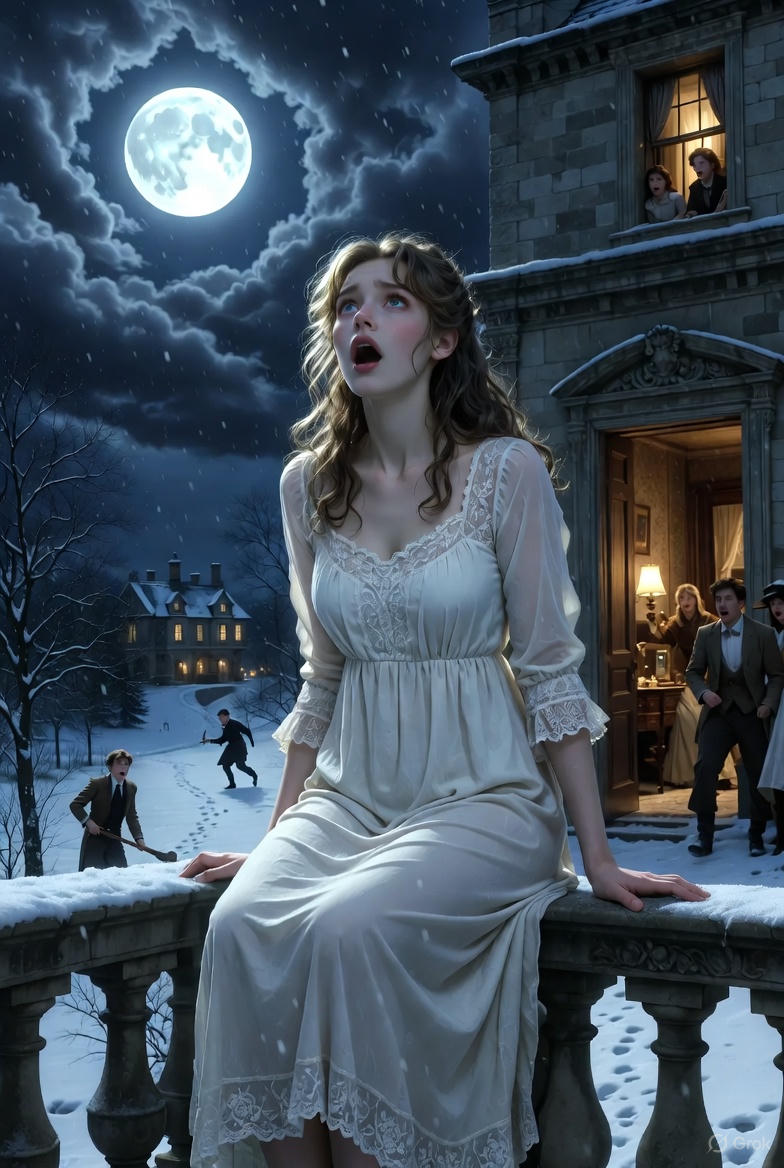


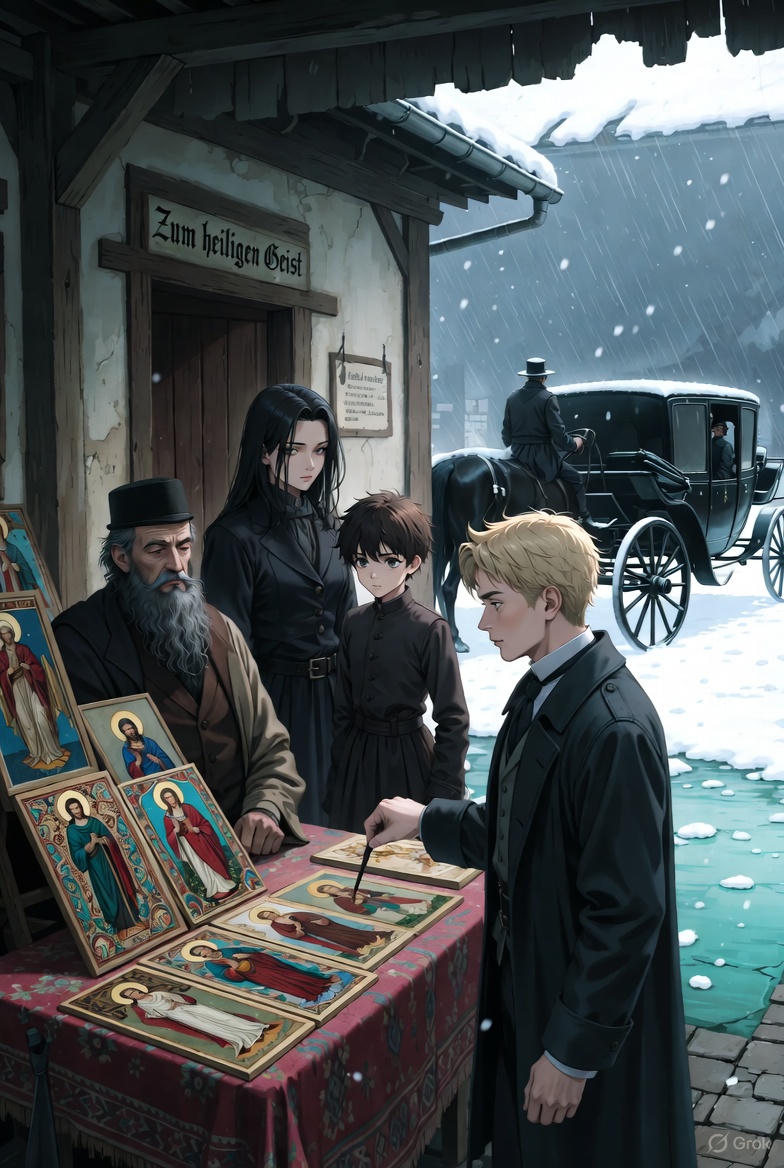



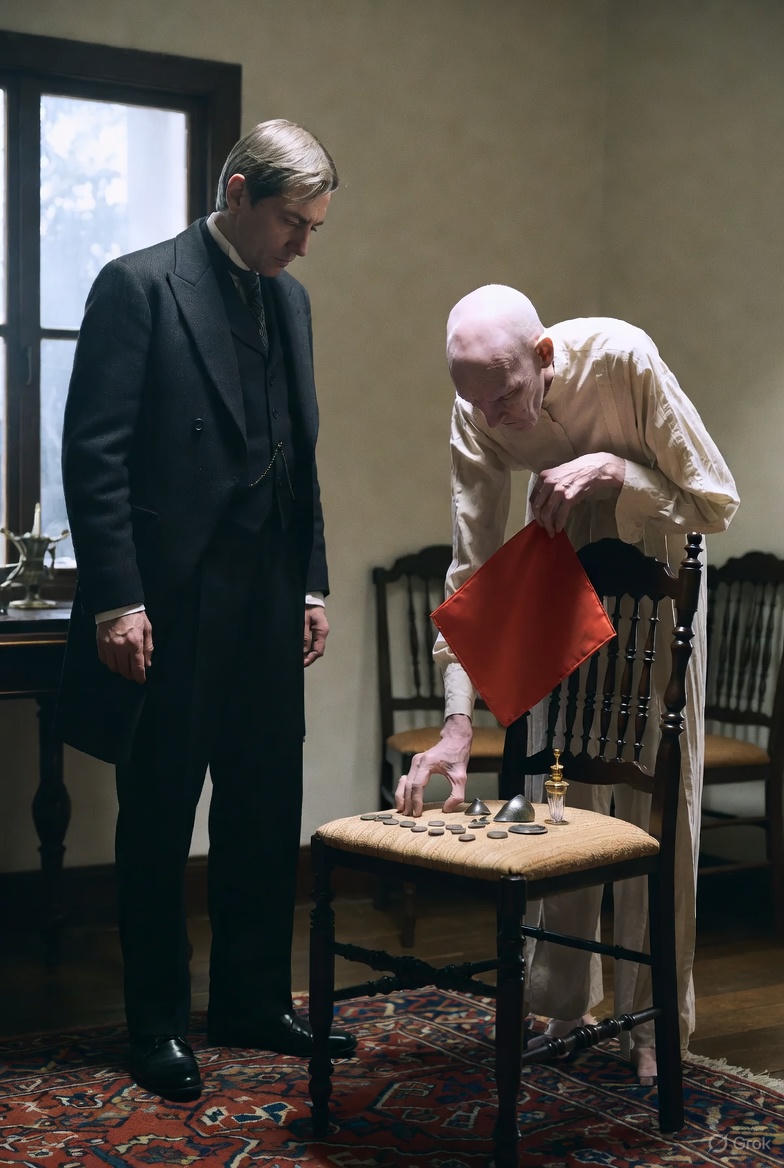


 Anarchistbanjo's World