Alraune by Hanns Heinz Ewers and translated by Joe E Bandel
Chapter Twelve Gives an account of how Frank Braun stepped into Alraune’s world. FRANK Braun had come back to his mother’s house, somewhere from one of his aimless journeys, from Cashmir in Asia or from Bolivian Chaco. Or perhaps is was from the West Indies where he had played revolutionary in some mad republic, or from the South Seas, where he had dreamed fairytales with the slender daughters of a dying race. He came back from somewhere. Slowly he walked through his mother’s house, up the white staircase upon whose walls was pressed frame upon frame, old engravings and modern etchings, through his mother’s wide rooms in which the spring sun fell through yellow curtains. There his ancestors hung, many Brinkens with sharp and clever faces, people that knew where they stood in the world. There was his great-grandfather and great-grandmother–good portraits from the time of the Emperor, then one of his beautiful grandmother–sixteen years old, in the earlier dress of Queen Victoria. His father and mother hung there and his own portraits as well. There was one of him as a child with a large ball in his hands and long blonde child locks that fell over his shoulders. The other was of him as a youth, in the black velvet dress of a page, reading in a thick, ancient tome. In the next room were the copies. They came from everywhere, from the Dresden Gallery, the Cassel and Braunshweig galleries, from the Palazzo Pitti, the Prado and from the Reich Museum. There were many Dutch masters, Rembrandt, Frans Hals, Ostade, Murillo, Titian, Velasquez and Veronese. All were a little darkened with age, but they glowed reddish gold in the sunlight that broke through the curtains. He went further, through the room where the modernists hung. There were several good paintings and some not as good. But not one of them was bad and there were no sweet ones. All around stood old furniture, most of it mahogany–Empire, Directoire or Biedermeir. There was none of oak but several simpler, modern pieces were scattered in between. There was no defined style, simply one after another as the years had brought them. Yet there was a quiet, pervasive harmony that transformed everything that stood there and made it belong. He climbed up to the floor that his mother had given him. Everything was exactly as he had left it the last time he had departed– two years ago. No paperweight had been moved, no chair was out of place. Yes, his mother always watched to see that the maids were careful and respectful–despite all the cleaning and dusting. Here, much more than anywhere else in the house, ruled a chaotic throng of innumerable, abstruse things. They were on the floors and on the walls. Five continents contributed strange and bizarre things to this room that were unique to them only. There were large masks, savage wooden devil deities from the Bismarck Archipelago, Chinese and Annamite flags and many weapons from all regions of the world. Then there were hunting trophies, stuffed animals, Jaguar and tiger skins, huge turtle shells, snakes and crocodiles. There were colorful drums from Luzon, long necked stringed instruments from Raj Putana and crude castings from Albania. On one wall hung a mighty, reddish brown fisherman’s net. It hung down from the ceiling and contained giant star fish, sea urchins, swords from swordfish, silver shimmering tarpon scales, mighty ocean spiders, strange deep-sea fish, mussels and snails. The furniture was covered with old brocade and over it was thrown delicate silk garments from India, colorful Spanish jackets and mandarin cloaks with large golden dragons. There were many gods as well, silver and gold Buddhas of all sizes, Indian bas-reliefs of Shiva, Krishna and Genesha along with the absurd, obscene stone idols of the Tchan tribes. In between, where ever there was a free space on the wall, hung framed glass enclosed images, an impudent Rops, a savage Goya, small drawings by Jean Callots, Crűikshank, Hogarth and assorted colorful cruelties drawn on sheets of paper out of Cambodia and Mysore. Many moderns hung nearby bearing the artist’s name and a dedication. There was furniture of all styles from all cultures, thickly populated with bronzes, porcelains and unending bric-a-brac. All these things were Frank Braun. His bullet killed the polar bear on whose white pelt he now stood. He, himself, had caught the mighty blue shark whose powerful jaws hung there in the net with its three rows of teeth. He took these poisoned arrows and this spear from the savage Buca tribe. A Manchu priest gave him this foolish idol and this tall silver priest’s clothes hanger. Single handedly he had stole this black thunderstone out of the forest temple of the Houdon–Badagri, drank with his own lips out of this Bombita in a Mate blood-brother ritual with the chief of the Toba Indians on the swampy banks of the Pilcomayo. For this curved sword he had given his best hunting rifle to a Malay sultan in North Borneo and for this other long executioner’s sword, his little pocket chess game to the Vice Regent of Shantung. These wonderful Indian carpets were presented to him by the Maharaja of Vigatpuri, whose life he had saved during an elephant hunt and this earthen eight armed Durga, begrimed with the blood of animals and people, he had received from the High Priest of the dreaded Kalis of Kalighat– His life lay in these rooms, every mussel, every colored rag, reminded him of long past memories. There lay his opium pipes, over there the large mescal can that had been hammered together out of Mexican silver dollars. Near it was the small tightly locked container of snake venom from Ceylon and a golden arm band–with two magnificent cat’s eyes–it had once been given to him by an eternally laughing child in Birma. He had paid many kisses for them– Scattered around on the floor, piled on top of each other, stood and lay crates and trunks–twenty-one of them. They contained his new treasures–none had been opened yet. “Where can I put it all?” he laughed. A long Persian spear stretched through the air across the large double window. A very large, snow white Cockatoo sat on it. It was a Macassar bird from South Africa with a high flamingo red crest. “Good morning Peter!” Frank Braun greeted him. “Atja Tuwan!” answered the bird. He climbed solemnly over the spear and down to his stand. From there he clambered onto a chair and down to the floor, came with bowed stately strides up to him, climbed up onto his shoulder, spread out his proud crest and flung his wings out wide like the Prussian eagle. “Atja, Tuwan! Atja, Tuwan!” he cried. The white bird stretched out his neck and Frank Braun scratched it. “How’s it going, little Peter?–Are you happy that I’m back again?” Frank Braun climbed halfway down the staircase, stepped out onto the large covered balcony where his mother was drinking tea. Below, in the garden, the mighty chestnut trees glowed like candles, further back, in the monastery garden, lay an ocean of brilliant snow- white flowers. Brown robed Franciscans wandered under the laughing trees. “There is Father Barnabas!” he cried. His mother put her glasses on and looked, “No,” she answered. “That is Father Cyprian.” A green amazon squatted on the iron railing of the balcony and as soon as he set the Cockatoo down, the cheeky little parrot came rushing up to it. It looked comical enough, walking sideways, like a shuffling Galatian peddler. “All right,” he screamed. “All right–Lorita real di España e di Portugal!–Anna Mari-i-i-i-i-a!” He pecked at the large bird, which just raised his crest and softly said, “cockatoo”. “Still saucy as ever, Phylax?” Frank Braun asked. “Every day he gets saucier,” laughed his mother. “Nothing is safe from him anymore. He would love to chew up the entire house.” She dipped a piece of sugar in her tea and gave it to the bird on a silver spoon. “Has Peter learned anything,” he asked. “Nothing at all,” she replied. He only speaks his soft, “’Cockatoo’, along with some scraps of Malay.” “Unfortunately you don’t understand any of that,” he laughed. His mother said, “No, but I understand my green Phylax much better. He loves to talk, all day long, in all the languages of the world– always something new. Sometimes I lock him up in the closet, just to get a half hour of peace.” She took the amazon, who was at that moment strolling across the middle of the table and attacking the butter, and set the struggling bird back up on the railing. Her brown hound came up, stood on its hind legs and rested its little head on her knee. “Yes, you are here too,” she said. “Would you like some tea?” She poured tea and milk into a little red saucer, broke off some white bread and a piece of sugar, putting them in it as well. Frank Braun looked down into the wide garden. Two round hedgehogs were playing on the lawn and nibbling at the young shoots. They must be ancient–he, himself, had once brought them out of the forest, from a school picnic. The male was named Wotan and the female, Tobias Meier. But perhaps these were their grandchildren or great-grandchildren–then he saw the little mound near the white, blooming magnolia bush. There he had once buried his black poodle. Two large yuccas grew there now, in the summer they would bloom with hundreds of white, resounding bells. But now, for spring, his mother had planted many colorful primroses there. Ivy and other wild vines crawled up the high walls of the house, all the way up to the roof. There, twittering and making noise were the sparrows. “The thrush has her nest over there, can you see?” asked his mother. She pointed down to the wooden trellis that led from the courtyard into the garden. The round nest lay half-hidden in ivy. He had to search before he finally found it. “It already has three little eggs,” he said. “No, there are four,” his mother corrected him. “She laid the fourth one this morning.” “Yes, four,” he nodded “Now I can see all of them. It is beautiful here mother.” She sighed and laid her old hand on his. “Oh yes, my boy–it is beautiful–if only I wasn’t so lonely all the time.” “Lonely,” he asked. “Don’t you have as many visitors as you used to?” She said, “Oh yes, they come every day, many young people. They look after this old lady. They come to tea and to dinner. Everyone knows how happy I am when someone comes to visit me. But you see, my boy, they are still strangers–you aren’t.” “Well now I’m here,” he said and changed the subject, described the various curiosities that he had brought back with him, asked her if she wanted to be there when he unpacked. Then the girl came up bringing the mail that had just arrived. He tore his letters open and glanced fleetingly at them. He paused, looked at one more closely. It was a letter from Legal Councilor Gontram that briefly communicated what had happened at his uncle’s house. There was also a copy of the will and his expressed wish that Frank Braun travel over as soon as possible to put the affairs in order. He, the Legal Councilor, had been court ordered to act as temporary executor. Now that he, Frank Braun, was once more back in Europe he begged him to take up his obligation.
Alraune by Hanns Heinz Ewers and translated by Joe E Bandel
Intermezzo Perhaps your quiet days, my blonde little sister, will also drop like silver bells that ring softly with slumbering sins. Laburnums now throw their poisonous yellow where the pale snow of the acacias once lay. Ardent clematis show their deep blue where the devout clusters of wisteria once peacefully resounded. Sweet is the gentle game of lustful desire; yet sweeter to me are all the cruel raging passions of the nighttime. Yet even sweeter than any of these to me now is sweet sleeping sin on a hot summer afternoon. –She slumbers lightly, my gentle companion, and I dare not awaken her. She is never more beautiful than when she is sleeping like this. In the mirror my darling sin rests, near enough, resting in her thin silken shift on white linen. Your hand, little sister, falls over the edge of the bed. Your slender finger that carries my gold band is gently curling. Your transparent rosy nails glow like the first light of morning. Fanny, your black maid, manicured them. It was she that created these little marvels. And I kiss your marvelous transparent rosy nails in the mirror. Only in the mirror–in the mirror only–only with loving glances and the light touch of my lips. They will grow, if sin awakes, they will grow, become the sharp claws of a tiger, tearing my flesh– Your head rises out of the pillow, surrounded by golden locks. They fall around it lightly like flickering golden flames that awaken at the first breezes of early morning. Your little teeth smile out from your thin lips, like the milky opals in the glowing bracelet of the moon Goddess. And I kiss your golden hair, sister, and your gleaming teeth–in the mirror–only in the mirror–with the soft touch of my lips and with loving glances. For I know that if ardent sin awakes the milky opals will become mighty fangs and the golden locks become fiery vipers. Then the claws of the tigress will tear at my flesh, the sharp teeth bite dreadful, bloody wounds. Then the flaming vipers will hiss around my head, crawl into my ears, spray their venom into my brain, whisper and entice with a fairy tale of savage lust– Your silken shift has fallen down from your shoulder, your childish breasts smile there, resting, like two white newborn kittens, lifting their sweet rosy noses into the air. I look up at your gentle eyes, jeweled blue eyes that catch the light, that glow like the sapphire on the forehead of my golden Buddha figurine. Do you see, sister, how I kiss them–in the mirror? No fairy has a lighter touch. –For I know well, when she wakes up, my eternal sin, blue lightening will flash out of her eyes. It will strike my poor heart, making my blood boil and seethe, melting in ardent desire the strong chains that restrain me, till all becomes madness and then surges the entire– Then hunts, free of her chains, the raging beast. She overpowers you, sister, in furious frenzy. Your sweet childish breasts become the giant breasts of a murderous fury–now that sin has awakened–she rends in joy, bites in fury, exults in pain and bathes in pools of blood. But my glances are still silent, like the tread of nuns at the grave of a saint. Softer yet is the light touch of my lips, like the kiss of the Holy Ghost at communion that turns the bread into the body of our Lord. She should not awaken, should remain peacefully sleeping–my beautiful sin. Nothing, my love, is sweeter to me, than pure sin as you lightly sleep.
Madame Bluebeard by Karl Hans Strobl and translated by Joe E Bandel
“That’s wholly Austrian,” Ruprecht said, sketching the castle’s character for Hedwig. “You might think someone’s aloof and, despite simplicity, unapproachable, then find you can chat quite comfortably. Our great men all have a back road, bypassing the official facade.” They entered the tournament courtyard. Hedwig was lifted from the carriage and placed in her wheelchair. Maurerwenzel resumed his duty. Hedwig wished to stay in the wide, open courtyard; the castle’s stair-laden tour was not for her. Ruprecht offered to keep her company. The others departed toward the octagonal tower at the entrance, after Fritz Gegely took tender leave, pressing a kiss on Hedwig’s forehead. The carriages drove out to stable at the tavern by the courtyard. Maurerwenzel watched them enviously. Ruprecht understood the look. “You can go over too,” he said. “If you’re thirsty. Here—have a quarter of wine.” Maurerwenzel cupped his hand like a nest for a silver egg, tipped his cap, and shuffled out the gate with his “quick” gait, bound for the inn. “Shall we move to the shade?” Ruprecht asked, hands on the wheelchair’s backrest. “No, please, if it’s no trouble, let’s stay in the sun. It’s not too hot… and the breeze cools nicely. I love the sun… I feel it’s kind to me. I let it soak through me… I feel it in my limbs… like a new strength…” Ruprecht pulled the wheelchair close to the wall, where reflected rays could work, and sat beside Hedwig on a fallen stone. The vast courtyard, ringed with double arcades, lay empty before them. Hedwig reclined, basking in full sunlight, motionless. Ruprecht saw her body drink the hot light. Through half-closed eyes, a shimmering curtain of light flickered. He tried to decipher the faded wall paintings in the arcades. A brown-red hue remained, other colors long extinguished. These might once have been emblems, coats of arms, allegories— symbols of families who once pranced their horses in glittering carousels here. From the castle’s past, he gently slipped into his own. He smiled. “Do you remember, Frau Hedwig,” he said, “when we danced in the woods? It was a school outing from our gymnasium. Your girls’ school was there too… and suddenly, we paired up. Youths and maidens… to the horror of teachers and governesses…” Hedwig turned to him. “Yes… dancing’s over for me,” she said, smiling. Ruprecht fell silent, dismayed. How thoughtless, how careless he’d been. He longed to speak more of those days—how they’d climbed walls and back gardens at night, like thieves, to reach Hedwig’s courtyard, bursting into four-part song: “Why are you so far, oh my love!” The next day, stern professorial faces and a disciplinary probe for nocturnal mischief. Everything teetered… then ten hours’ detention as penance. Ten glorious hours, filled with the thrill of suffering for her, proving his heroism. They’d called her Silvia then, for its melodic flow, redolent of forest scent and soft leaf-rustle, no other name seeming to fit. A touch of Shakespeare’s winged Midsummer Night’s Dream. She’d been like a lizard—slender, agile, gleaming. “But… you’re happy,” Ruprecht said, consoling himself. “Few preserve such pure joy in life as you…” “Yes… I’m happy,” she said gratefully, offering her hand. “There’s still so much I needn’t forgo.” Ruprecht steeled his heart. “Above all, you’ve found the happiness of love… Your husband is full of gentle care…” Hedwig closed her eyes, lying still. The sun poured into her like a hot draught. The sun is clarity and truth, she thought. One shouldn’t lie in its light. “Why should I deny you the satisfaction I owe you?” she said after a pause. “You’re mistaken, Ruprecht, the world’s mistaken. I’m a burden to my husband. My frailty irks him. Yes… he masterfully plays his role before others. I know how I hurt you then. Your strong confidence looked down on the pampered prince Gegely. But I was vain… yes, let me confess…” She paused, and Ruprecht saw her fingers twitch on the wheelchair’s armrest, betraying agitation. Alarmed, he leaned to see her face, but her eyes were shut. “I hurt you. I know you loved me. I’m still happy… thinking of those times. Yet I chose Fritz Gegely. I was a foolish, vain girl. He was a poet, the gymnasium’s pride, already famous at university, destined for greatness.” “Stop, Hedwig, please… I don’t want to know more. Don’t make me unhappy…” “You needn’t be. I’m past that disappointment. Only sometimes I think it could’ve been different. I soon realized he was an aesthete—one who doesn’t take life directly but through a colored lens, feigning mood. Then one hope: a child. But you see what’s left of that. A paralyzed woman… That was the darkest night of my life. Then… things brightened: the clarity of limitation. I can’t even blame my husband for his sullenness. I’m truly a burden. But he draws benefit in his way. He plays a second Browning couple before the world. As he wears famous poets’ vests, coats, and wallets, I’m useful as a paralyzed wife. Elizabeth Barrett Browning. But I don’t complain—I’m still happy…” “Why tell me this… why?” Ruprecht groaned. “Why? I’m beyond passion’s good and evil. I’m safe from all danger.” “But I’m not, Silvia, I’m not…” Hedwig opened her eyes. Her hat shaded her brow, a blonde strand fluttering across it. “You call me Silvia… like then… I think you invented the name…” “Yes… I think I found it: it was there, flowing around you like song. I only sang it… Silvia…” A car horn blared a triad on the forest road. “The children,” Hedwig said, sitting up to greet them. She felt a faint twitch in her right foot… but surely she was mistaken. The car rolled through the courtyard gate, halting before her wheelchair. The children leapt out, rushing to Hedwig and Ruprecht. Miss Nelson followed, slim, refined, silent as ever. “Here already, you rascals?” Ruprecht teased, laughing. “Your studies today… must’ve been half- done!” Lissy and Nelly each brought a bouquet of meadow flowers, picked along the way. Lissy gave hers to Hedwig, Nelly to Papa. Hedwig and Ruprecht exchanged glances—a continuation, a symbolic close to their talk. Two tears lingered in Hedwig’s eyes. Laughing, she shook her head, pulled Lissy close, and kissed her small red mouth. Meanwhile, Helmina and her group had ventured into the castle. The castellan, a young man not yet ossified in his role, was lively enough to answer unusual questions. Ernst Hugo flaunted his style knowledge, gleaned from café art enthusiasts. He spoke of form, material, line, and ornament. The Major hunted for old locks and keys. In his spare time, he tinkered with locksmithing and was fond of gunsmithing. “Everyone’s got their hobby,” he said. “Locksmithing’s my secret passion.” And storytelling’s your creepy one, thought the court secretary, but he didn’t say it, for he and the Major were in a holy alliance against Fritz Gegely. The poet of Marie Antoinette paid little heed to his allied foes. He walked beside Helmina, speaking of spatial sense. “You see, it’s a peculiar thing… a sixth sense, so to speak. It brings exquisite delights and torments… imagine, I enter a room and instantly feel its spatial design like a physical impression. Without tape or ruler, I know at once if its proportions are balanced or left to chance. Proportions are immediate certainty to me. The harmony of the Golden Ratio is a heartfelt, if somewhat bourgeois, pleasure. Round walls make me breathless, restless, caught in a whirl. Alcoves, odd angles, slanted walls, sloping ceilings give me strangely romantic sensations. This makes old castles so fascinating, each room unique. It sours me on city tenements with their uniformity— everything cut from one mold, dull, barracks-like, lacking even basic, natural harmony.” But Helmina wasn’t listening. She gazed distractedly out the windows they passed, letting Gegely’s words flow by. Halls, corridors, vaulted rooms, and alcoved chambers followed one another—a glance into the inner courtyard, then at the verdant moat and an old, gray turret. The guide opened the door to the balcony over the Kamp valley. At that moment, the Major called him back. He’d spotted an intricate lock on a grand Renaissance cabinet. A key moved seven bolts back and forth. The fittings depicted Saint George slaying the dragon—a small marvel. The Major eagerly questioned the castellan, holding Hugo fast.
Alraune by Hanns Heinz Ewers and translated by Joe E Bandel
He searched for Alraune and took it as a good omen that no guests were there. He heard from the maid that she had dined alone and was now in her rooms so he went up there. He stepped inside at her, “Come in.” “I must speak with you,” he said. She sat at her writing desk, looked up briefly. “No,” she cried. “I don’t want to right now.” “It is very important,” he pleaded. “It is urgent.” She looked at him, lightly crossed her feet.“Not now,” she answered. “–Go down–in a half hour.” He went, took off his fur coat, sat down on the sofa and waited. He considered how he should tell her, weighed every sentence and every word. After a good hour he heard her steps. He got up, went to the door–there she stood in front of him, as an elevator boy in a tight fitting strawberry red uniform. “Ah,” he said, “that is kind of you.” “Your reward,” she laughed. “Because you have obeyed so beautifully today–now tell me, what is it?” The Privy Councilor didn’t gloss things over, he told her everything, like it was, each little detail without any embellishments. She didn’t interrupt, let him speak and confess. “It is really your fault,” he said. “I would have taken care of it all without much trouble–but I let it all go, have been so preoccupied with you, they grew like the heads of the Hydra.” “The evil Hydra”–she mocked, “and now she is giving poor, good Hercules so much trouble! By the way, it seems that this time the hero is a poisonous salamander and the monstrous Hydra is the punishing avenger.” “Certainly,” he nodded, “from the viewpoint of the people. They have their ‘justice for everyone’ and I have made my own. That is really my only crime. I believed that you would understand.” She laughed in delight, “Certainly daddy, why not? Am I reproaching you? Now tell me, what are you going to do?” He proposed his plans to her, one after the other, that they had to flee, that very night–take a little trip and see the world. Perhaps first to London, or to Paris–they could stay there until they got everything they needed. Then over the ocean, across America–to Japan–or to India–whatever they wanted, even both, there was no hurry. They had time enough, then finally to Palestine, to Greece, Italy and Spain. Where ever she wanted–there they could stay and leave again when they had enough. Finally they could buy a villa somewhere on Lake Garda or on the Riviera. Naturally it would be in the middle of a large garden. She could have her horses and her cars, even a yacht. She could fill the entire house with people if she wanted– He wasn’t stingy with his promises, painted in glowing colors all the tempting splendors that awaited her, was always finding new and more alluring reasons that she should go. Finally he stopped, asked his question, “Now child, what do you say to that? Wouldn’t you like to live like that?” She sat on the table with her slender legs dangling. “Oh yes,” she nodded. “Very much so–only–only–” “Only?”–he asked quickly, “If you wish something else–say it! I will fulfill it for you.” She laughed at him, “Well then, fulfill this for me! I would very much like to travel–only not with you!” The Privy Councilor took a step back, almost fell, grabbed onto the back of a chair. He searched for words and found none. She spoke, “With you it would be boring for me–you are tiresome to me–I want to go without you!” He laughed, attempting to persuade himself that she was joking. “But I am the one that must be leaving right away,” he said. “I must leave–tonight yet!” “Then leave,” she said quietly. “I’m staying.” He began all over again, imploring and lamenting. He told her that he needed her, like the air that he breathed. She should have compassion on him–soon he would be eighty and wouldn’t be a burden to her very much longer. Then he threatened her again, screamed that he would disinherit her, throw her out into the street without a penny. “Just try it,” she threw back at him. He spoke yet again, painting the wonderful splendors that he wanted to give her. She should be free, like no other girl, to do and have as she desired. There was no wish, no thought that he couldn’t turn into reality for her. She only had to come with–not leave him alone. She shook her head. “I like it here. I haven’t done anything–I’m staying.” She spoke quietly and calmly, never interrupted him, let him talk and make promises, start all over again. But she shook her head whenever he asked the question. Finally she sprang down from the table and went with soft steps toward the door, passing him. “It is late,” she said. “I am tired. I’m going to bed–good night daddy, happy travels.” He stepped into her way, made one last attempt, sobbed out that he was her father, that children had a duty to their parents, spoke like a pastor. She laughed at that, “So I can go to heaven!” She stood near the sofa, set down astride the arm. “How do you like my leg?” she cried suddenly and stretched her slender leg out toward him, moving it back and forth in the air. He stared at her leg, forgot what he wanted, thought no more about flight or danger, saw nothing else, felt nothing–other than her slender strawberry red boy’s leg that swung back and forth before his eyes. “I am a good child,” she tittered, “a very dear child that makes her stupid daddy very happy–kiss my leg, daddy–caress my beautiful leg daddy!” He fell heavily onto his knees, grabbed at her red leg, moved his straying fingers over her thigh and her tight calf, pressed his moist lips on the red fabric, licked slowly along it with his trembling tongue. Then she sprang up, lightly and nimbly, tugged on his ear, and patted him softly on the cheek. “Now daddy,” her voice tinkled, “have I fulfilled my duty well enough? Good night then! Happy travels–and don’t get caught–it would be very unpleasant in prison. Send me some pretty picture postcards, you hear?” She was at the door before he could get up, made a bow, short and stiff like a boy and put her right hand to her cap. “It has been an honor, your Excellency,” she cried. “And don’t make too much noise down here while you are packing–it might disturb my sleep.” He swayed towards her, saw how quickly she ran up the stairs. He heard the door open upstairs, heard the latch click and the key turn in it twice. He wanted to go after her, laid his hand on the banister. But he felt that she would not open, despite all his pleading. That door would remain closed to him even if he stood there for hours through the entire night until dawn, until–until–until the constable came to take him away. He stood there unmoving, listening to her light steps above him, back and forth through her room. Then no more. Then it was silent. He slipped out of the house, went bare headed through the heavy rain across the courtyard, stepped into the library, searched for matches, lit a couple of candles on his desk. Then he let himself fall heavily into his easy chair. “Who is she,” he whispered. “What is she? What a creature!” he muttered. He unlocked the old mahogany desk, pulled a drawer open, took out the leather bound volume and laid it in front of him. He stared at the cover, “A.T. B.”, he read, half out loud. “Alraune ten Brinken.” The game was over, totally over, he sensed that completely. And he had lost – he held no more cards in his hand. It had been his game; he alone had shuffled the cards. He had held all the trumps–and now he had lost anyway. He smiled grimly, now he had to pay the price. Pay the price? Oh yes, but in what coin? He looked at the clock–it was past twelve. The people would come with the warrant around seven o’clock at the latest–he still had over six hours. They would be very considerate, very polite–they would even bring him into custody in his own car. Then–then the battle would begin. That would not be too bad–he would defend himself through several months, dispute every move his opponents made. But finally–in the main case–he would lose anyway. Manasse had that right. Then it would be–prison–or flee–but alone, entirely alone? Without her? In that moment he felt how he hated her, but he also knew as well that he could think of nothing else any more, only her. He could run around the world aimlessly, without purpose, not seeing, not hearing anything but her bright twittering voice, her slender swinging red leg. Oh, he would starve, out there or in prison–either way. Her leg– her sweet slender boy’s leg! Oh how could he live without that red leg? The game was lost–he must pay the bill, better to pay it quickly, this very night–with the only thing of value he had left–with his life. And since it wasn’t worth anything any more, perhaps he could bring someone else down with him. That did him good, now he brooded about whom to take down with him, someone that would give him a little satisfaction to give one final last kick. He took his last will and testament out of the desk, which named Alraune as his heir, read through it, then carefully tore it into small pieces. “I must make a new one,” he whispered, “only for whom?–for whom?” There was his sister–was her son, Frank Braun, his nephew– He hesitated, him–him? Wasn’t it him that had brought this poisonous gift into his house, this strange creature that had now ruined him? He–just like the others! Oh, he should pay, even more than Alraune. “You will tempt God,” the fellow had said. “You will put a question to him, so audacious that He must answer.” Oh yes, now he had his answer! But if he inexorably had to go down, the youth should share his fate. He, Frank Braun, who had engendered this thought, given him the idea. Now he had a bright shiny weapon, her, his little daughter, Alraune ten Brinken. She would bring him as well to the point where he was today. He considered, rocked his head and grinned in satisfaction at this certain final victory. Then he wrote his will without pausing, in swift, ugly strokes. Alraune remained his heir, her alone. But he secured a legacy for his sister and another for his nephew, whom he appointed as executor and guardian of the girl until she came of age. That way he needed to come here, be near her, breathe the sultry air from her lips, and it would happen, like it had happened with all the others! Like it had with the Count and with Dr. Mohnen, like it had with Wolf Gontram, like with the chauffeur–and finally, like it had happened with he, himself, as well. He laughed out loud, made still another entry, that the university would inherit if Alraune died without an heir. That way his nephew would be shut out in any case. Then he signed the document and dated it. He took the leather bound volume, read further, wrote the early history and conscientiously brought everything up to date. He ended it with a little note to his nephew, dripping with derision. “Try your luck,” he wrote. “To bad that I won’t be there when your turn comes. I would have been very glad to see it!” He carefully blotted the wet ink, closed the book and laid it back in the drawer with the other momentos, the necklace of the Princess, the alraune of the Gontrams, the dice cup, the white card with a hole shot through it that he had taken out of the count’s vest pocket. “Mascot” was written on it. Near it lay a four leaf clover–several black drops of clotted blood still clung to it– He stepped up to the curtain and untied the silk cord. With a long scissors he cut the end off and threw it into the drawer with the others. “Mascot”, he laughed. “Luck for the house!” He searched around the walls, climbed onto a chair and with great difficulty took down a mighty iron cross from a heavy hook, laid it carefully on the divan. “Excuse me,” he grinned, “for moving you out of your place–it will only be for a short time–only for a few hours–you will have a worthy replacement!” He knotted the cord, threw it high over the hook, pulled on it, considered it, that it would hold–and he climbed for a second time onto the chair– The police found him early the next morning. The chair was pushed over; nevertheless the dead man stood on it with the tip of one toe. It appeared as if he had regretted the deed and at the last moment tried to save himself. His right eye stood wide open, squinting out toward the door and his thick blue tongue protruded out–he looked very ugly.
Madame Bluebeard by Karl Hans Strobl and translated by Joe E Bandel
Fifteenth Chapter The colors of summer grew ever darker and deeper. Each day showered new gifts, every hour seemed to weave something strange. Strength pulsed everywhere in the fine fabric of existence. The farmers, unaware, lived as part of nature; city dwellers felt their weary bodies renewed, worn atoms replaced by fresh ones. But once past initial delight, they paid little heed to the splendor. Only one person remained ever grateful for each day and hour, never letting pure joy dull—Frau Hedwig. She had Maurerwenzel guide her wheelchair wherever it could go, marveling with clear eyes at the summer world. For the first time in ages, she was utterly happy. Carried along, she forgot her paralyzed limbs. So potent was summer’s joy, the hum of constant cheer. Her husband was sullen and irritable alone with her, showering her with tenderness when watched, but she didn’t mind, enduring his moods and mild kindness. Each day brought an hour that shone brightly from morning’s awakening. Every afternoon, she met Ruprecht. Among the summer society, a new alignment had formed: Helmina and Ruprecht, Gegely and Frau Hedwig, Hugo and Major Zichovic! Two beautiful women—one drawing desire and admiration, the other pity; Gegely gravitated to Helmina, Ruprecht quietly joined Hedwig. He remained calm, finding, like her, a transfiguration of twenty-four hours in their afternoon meetings. Gegely, however, unfurled his full grandeur, bestowing his graces on Vorderschluder’s small world, radiating regally, yet ensuring Helmina felt her beauty fueled such favor and light. Hugo and Zichovic were the group’s linking members, bound by rivalry for favor. Hugo fought with mocking superiority, earnestly sought but not always successful. The Major was simpler, content with quips he deemed witty. Yet he sometimes joined petty, spiteful alliances. Gegely let his shield be peppered with their barbs, as if dueling such foes wasn’t worth his effort. An excursion to Rosenburg was planned. That morning, Helmina suffered a great vexation. War rumors swirled. A risky stock speculation, launched with nervous haste and without her usual caution, had collapsed utterly—a painful loss. Recently, she’d been forced to settle, abandoning her claims under Baron Kestelli’s will. Defeat followed defeat. Worse, her confidence wavered. The sensual bond with Ruprecht was loosening. With bitter scorn, she noted he was “spiritualizing” himself at Hedwig’s wheelchair. He no longer desired her. The twilight of her reign had come. To top it, Lorenz, fresh from Vienna, pressed her. Anton Sykora sent word: she must be ready to leave with them. Staying was impossible; no hope remained. Ruprecht had evaded all danger, and now only his goodwill kept him from attacking. Herr Diamant’s advances were barely resistible. The Galician oil venture was defunct. New possibilities slumbered in a new world. Lorenz was ordered to resign and withdraw first. He was relieved, long feeling he trod quaking bog in this castle, as if he might sink any moment. His bold confidence was gone. Before departure, he stood before Ruprecht, requesting dismissal. He felt uneasy, unsure how much Ruprecht knew or if he’d let an enemy slip his grasp. But Ruprecht was elated. A fine day beckoned. He glanced at Lorenz’s uncertain face. So, he wanted out—his role was done. Fine, let him go. Ruprecht had no wish to serve the police again. “Good,” he said. “Leave when you wish. I won’t hold you. If you’ve found a better post, you needn’t serve your two weeks. You’ll need the Baroness’s permission, of course.” Lorenz felt a master above him—a fist, a whip. Oh, to throttle this man, to erase the shame of failed plots. He longed to unleash his giant strength in a furious wrestle. But he could only bow and leave. Ruprecht grabbed his gloves and bounded downstairs. Two carriages waited. They met the others at the bridge below. Hedwig turned from Saint John Nepomuk, now a dear friend, to Ruprecht. They laughed together. Ruprecht rejoiced at her rosy cheeks. Her arms no longer lifted wearily as in early days but playfully, her hands gripping firmly. He told her so. “Perhaps you’ll be fully well again,” he added, eyes gleaming with joy. She shook her head. “I no longer hope for it,” she said softly, “…nor am I sure I wish it.” They lifted her into the carriage with Ruprecht and the Major. The wheelchair was stowed behind, and Maurerwenzel climbed to the driver’s seat. He no longer minded being seen. He and Rauß had clashed. The General called his adjutant a capitalist slave; the adjutant called the General a people’s cheat living off strike funds. A duel ensued at the Hotel Bellevue, costing Maurerwenzel a tuft of hair above his right ear and a canine, but not his new conviction. The paper factory workers, back at work, watched without interfering, leaving Maurerwenzel uplifted, as if they’d wished him victory. In the second carriage sat Helmina, Fritz Gegely, and Ernst Hugo. The poet of Marie Antoinette wore a strange, sack-like coat of yellow checkered cloth, once Dostoevsky’s. His vest was Paul Verlaine’s, and the walking stick with a Moor’s head between his knees was bought as Balzac’s from a Paris junk dealer. As always, he wore his purple velvet slippers—his personal signature, preserved through all changes. Gegely ignored Ernst Hugo’s mocking glances, addressing Helmina alone with a discourse on landscape in Gottfried Keller. They drove through the wooded valley’s curves, revealing only slivers of the world, then climbed slowly to the plain, where the gaze reveled in frothy freedom. Rooftops gleamed above waves of ripening grain, church spires stood like lighthouses in a sea of fertility. It was a sunny, wind-bright day. Bedding aired on garden fences, as if the region had conspired to adorn the landscape with blue and red blankets and cushions. Ruprecht watched Hedwig’s forehead curls dance in the breeze, fluttering back under her hat brim. “Why didn’t you bring the children?” she asked. “It’s such a lovely day.” “They’ll join us with Miss Nelson after their lessons. Work before pleasure. I don’t want them forming other notions of order. A person unable to delay pleasure for serious work can’t be taken seriously.” Hedwig looked at Ruprecht. A tender gravity shone in his eyes. She was always touched when he spoke of the children. They weren’t unprotected; he loved them like a father. Yet she pitied them, sensing they lacked a mother. Helmina, in rare bursts of animal whimsy, played with them like a cat with kittens, relishing their small, warm bodies. Hedwig saw this sharply, her world shaped by maternal longing—a heavy sacrifice, recognizing such joy as unattainable after her catastrophe. She found Helmina’s ingratitude her gravest fault. So richly blessed, yet lacking life’s piety, the constant reverence with which Hedwig marveled at each hour, each sunbeam, every flower, and the horses’ lithe trot. She leaned back, gazing at the sky. It was pure blue, with white clouds trailing like paper boats set adrift by playful children on a stream. As Ruprecht and Hedwig were silent, the Major had free rein. They listened kindly, without interrupting. He regretted that war threats might force his departure soon but spoke with bold trumpet blasts of battle and victory. He hoped diplomacy would dispel the storm clouds, at least until the Emperor’s jubilee year. Then he spun anecdotes, each capped with his own booming laugh. The Rosenburg is the centerpiece of the Kamp valley. Where the Taffa stream joins the Kamp, and the river itself shifts from an eastern to a southern course, the castle stands on the tip of the high plateau. It neither towers nor defies like other German fortresses; it simply exists, unassumingly. It doesn’t soar boldly as a lookout, like Aggstein or Götzens’ robber-knight nest, Hornberg. Nor is it built around a grand hall, like the Wartburg, where the core purpose is clear. It seeks no special distinction, and despite its sprawling, picturesque charm, it boasts nothing, free of any pose. This makes it the perfect expression of its landscape’s essence, where vanity and ostentatious splendor are alien. From the Kamp valley, it looks mighty. But from the plateau, a wide road leads straight to the tournament courtyard.
Alraune by Hanns Heinz Ewers and translated by Joe E Bandel
“As you will, your Excellency,” he said. “By the way, do you know there is a rumor these days that the Műhlhelmer credit bank is going to stop payments?” “Nonsense,” he replied. “In any case I’ve scarcely put any money into it.” “You haven’t?” asked Herr Gontram, a little surprised. “For half a year now you have kept that institution on a sound financial basis with over eleven million. You did it to gain tighter control of the potash industry! I, myself, was obliged to sell Princess Wolkonski’s mines to fund the cause.” His Excellency ten Brinken nodded, “The princess–well yes–am I the princess?” The Legal Councilor rocked his head thoughtfully. “She will lose her money,” he murmured. “What’s that to me,” cried the Privy Councilor. “Anyway, we will see what can be saved.” He stood up, drummed on the writing desk with his hand. “You are right, Herr Legal Councilor. I should pay more attention to my affairs. Please expect me at the office around six- o’clock. I thank you.” He shook hands and accompanied him to the door. But he didn’t drive into the city that afternoon. Two lieutenants came to tea, he kept finding reasons for going back into the room on one pretext or another, couldn’t stand to go out of the house. He was jealous of every man Alraune spoke with, of the chair she sat on and the very carpet she walked on. He didn’t go the next day or the next. The Legal Councilor sent one messenger after another. He sent them away without an answer, disconnected his phone so he wouldn’t get any more calls. Then the Legal Councilor turned to Alraune, told her that it was very important for the Privy Councilor to come into the office. She rang for her car, sent her maid to the library to tell the Privy Councilor to get ready for a drive into the city with her. He trembled with joy. It was the first time in weeks that she had gone driving with him. He donned his fur coat, went out into the courtyard, opened the car door for her. She didn’t speak, but he was happy enough to be permitted to sit next to her. She drove directly to the office and told him to get out. “Where are you going?” he asked. “Shopping,” she answered. “Will you pick me back up?” he begged. She laughed, “I don’t know, perhaps.” He was grateful enough for the ‘perhaps’. He climbed up the stairs and opened the door on the left to the Legal Councilor’s room. “Here I am,” he said. The Legal Councilor shoved the documents at him, a huge pile of them. “Here’s the junk,” he nodded, “a pretty collection. There are a couple of old cases that for a long time appeared to be settled. They’ve taken off again. There are also a couple of new ones since the day before yesterday!” The Privy Councilor sighed. “A bit much–would you give me a report, Herr Legal Councilor?” Gontram shook his head, “Wait until Manasse comes. He knows more about them. He will be here soon. I’ve called for him. Right now he is with the Examiner in the Hamecher case.” “Hamecher?” asked the professor. “Who is that?” “The tinker,” the Legal Councilor reminded him. “The expert opinion of the doctor was very incriminating. The Public Prosecutor has ordered an investigation–there lies the summons–by the way, it appears to me that this case is the most important one right now.” The Privy Councilor took up the documents and leafed through them, one after the other. But he was restless, listened nervously at every phone ring, every step that sounded through the hallway. “I only have a little time,” he said. The Legal Councilor shrugged his shoulders and calmly lit a fresh cigar. They waited, but the attorney didn’t appear. Gontram telephoned his office, then the court, but couldn’t reach him anywhere. The professor pushed the documents to the side. “I can’t read them today,” he said. “I don’t have any interest in them.” “Perhaps you are sick, your Excellency,” opined the Legal Councilor. He ordered some wine and seltzer water. Then the Fräulein came. The Privy Councilor heard the auto drive up and stop. He immediately sprang up and grabbed his fur coat. He met her coming up the corridor. “Are you ready?” she cried. “Naturally,” he returned. “Completely.” But the Legal Councilor stepped between them. “It’s not true, Fräulein. We have not even begun. We are waiting for Attorney Manasse.” The old man exclaimed, “Nonsense! It is all entirely trivial. I’m riding back with you, child.” She looked at the Legal Councilor who spoke, “These papers appear very important to me.” “No, no,” insisted the Privy Councilor. But Alraune decided. “You will stay! Adieu, Herr Gontram,” she cried. Then she turned around and ran down the stairs. He went back into the room, stepped up to the window, watched her climb into the car and leave. Then he stayed standing there, looking out onto the street into the dusk. Herr Gontram ordered the gaslights turned on, sat quietly in his easy chair, smoked and drank his wine. They were still waiting when the office closed. One after the other, the employees left, opened their umbrellas and stepped carefully through the mud on the street. Neither spoke a word. Finally the attorney came, hurried up the stairs, tore open the door. “Good evening,” he growled, put his umbrella in a corner, pulled off his galoshes, threw his wet jacket onto the sofa. “High time, Herr Colleague,” said the Legal Councilor. “High time, yes, it is certainly high time!” he came back. He went right up to the Privy Councilor, stood right in front of him and screamed in his face. “The warrant is out!” “What warrant?” hissed the Privy Councilor. “What warrant?” mocked the attorney. “I’ve seen it with my own eyes–the Hamecher case! It will be served early tomorrow morning at the latest.” “We must stand bail,” observed the Legal Councilor carelessly. The little attorney spun around; “Don’t you think I already thought of that!–I immediately offered to stand bail–half a million– right away–denied! The mood has turned sour at the county court your Excellency. I’ve always thought it would happen some day. The judge was very cool and told me, ‘Please put your request in writing, Herr Attorney. But I fear that you will have little luck with it. Our evidence is overwhelming–and it appears that extreme care must be taken.’ Those were his exact words! Not very edifying is it?” He poured himself a full glass, emptied it in short gulps. “I can tell you more, your Excellency! I met with Attorney Meir II at court; he is our opposition in the Gerstenberg case. He also represents the municipality of Huckingen, which filed suit against you yesterday. I asked him to wait for me–then I had a long talk with him. That is the reason I am so late getting here, Herr Colleague. He talked straight with me–we are loyal to each other at county court, thank God! That’s when I learned the opposing lawyers have united, they already had a long conference the day before yesterday. A couple of newspaper reporters were there as well. One of them was sharp Dr. Landmann from the General Advertiser. You know very well, your Excellency, that you haven’t put a penny of money into that paper! The roles are well divided. I tell you–this time you won’t get out of the trap so easily!” The Privy Councilor turned to Herrn Gontram. “What do you think, Herr Legal Councilor?” “Wait,” he declared. “There will be a way out of it.” But Manasse screamed, “I tell you there is no way out of it! The noose is knotted, it will tighten–you will hang, your Excellency, if you don’t give the gallows ladder a quick shove ahead of time!” “What do you advise then,” asked the professor. “Exactly the same thing that I advised poor Dr. Mohnen, whom you have on your conscience, your Excellency! That was a meanness of you–yet what good does it do if I tell you the truth now? I advise that you liquidate everything you possibly can. By the way, we can do that without you. Pack your bags and clear out– tonight! That’s what I advise.” “They will issue a warrant,” opined the Legal Councilor. “Certainly,” cried Manasse. “But they will not give it any special urgency. I already spoke with Colleague Meir about it. He shares my opinion. It is not in the interest of the opposition to create a scandal – the authorities would be happy enough if they could avoid one as well. They only want to render you harmless, your Excellency, put an end to your doings–and for that–believe you me–they now have the means. But if you disappear, live somewhere in a foreign land, we could wrap this thing up quietly. It would cost a lot of money–but what does that matter? They would be lenient on you, even today yet. It is really in their own interests to not throw this magnificent fodder to the radical and socialistic press.” He remained quiet, waiting for an answer. His Excellency ten Brinken paced slowly back and forth across the room with heavy, dragging steps. “How long do you believe I must stay away?” he asked finally. The little attorney turned around to face him, “How long!” he barked. “What a question! For just as long as you live! You can be happy that you still have this possibility at least. It will certainly be more pleasant to spend your millions in a beautiful villa on the Riviera than to finish out your life in prison! It will come to that, I guarantee you!–By the way, the authorities themselves have opened this little door for you. They could just as easily have issued the warrant this morning. Then it would have already been carried out! Damned decent of them, but they will be disgusted and take it very badly if you don’t make use of this little door. If they must act, they will act decisively. Then your Excellency, this night will be your last night’s sleep as a free man.” The Legal Councilor said, “Travel! After hearing all that it really does seem to be the best thing.” “Oh yes,” snapped Manasse. “The best–the best all the way around, and the only thing as well, travel! Disappear–step out–never to be seen again–and take the Fräulein, your daughter, along with you–Lendenich will thank you for it and our city as well.” The Privy Councilor pricked up his ears at that. For the first time that evening a little life came into his features, penetrating through the staring apathetic mask, flickering with a light nervous restlessness. “Alraune,” he whispered. “Alraune–if she goes with–he wiped his mighty brow with his coarse hand, twice, three times. He sank down, asked for a glass of wine, and emptied it. “I believe you are right, Gentlemen,” he said. “I thank you. Now let’s get everything in order.” He took the stack of documents and handed over the top one, “The Karpen brickyards–If you please–” The attorney began calmly, objectively, gave his report. He took the next document in turn, weighed all the options, every slightest chance for a defense, and the Privy Councilor listened to him, threw a word in here and there, sometimes found a new possibility, like in the old times. With each case the professor became clearer, his reasoning better thought out. Each new danger appeared to awaken and strengthen his old resiliency. He separated out a number of cases as comparatively harmless. But there still remained more than enough to get his neck broken. He dictated a couple of letters, gave a lot of instructions, made notes to himself, outlined proposals and complaints–then he studied the time tables with the Herren, making his travel plans, giving exact instructions for the next meeting. As he left his office it was with the conviction that his affairs were in order. He took a hired car and drove back to Lendenich, confident and self-assured. It was only as the servant opened the gate for him, as he walked across the courtyard and up the steps of the mansion, it was only then that his confidence left him.
Tobal glanced over the fire and noticed the girls had left. He saw them by the food table and he went to refill his tankard with hot grog. He wondered what he was going to tell them when he ran into them again. As the celebration wound down, his thoughts drifted to darker matters. He felt like avoiding them.
Then his mind turned to the strange greeting they had given him when he had sat with them. What had been going on? What had prompted both of them to kiss him that way? He was even more interested in his own reaction to Becca when she kissed him. He knew he had done or said something wrong and didn’t know what it was. He hadn’t meant to hurt her.
Tobal in spite of himself became more curious about Becca and thought about her as he sipped the hot grog. It pleased him that both Fiona and Becca had completed their own base camps and were training some newbies during the winter months. They were both obviously very talented and competent in the art of survival.
Zee and Kevin came up to the beer barrel where he was standing and sipping his grog.
“You’ve got to try this grog.” He told them. “It’s Dirk’s special recipe!”
Dirk laughed and handed them a small bowl to sample.
“That is pretty good,” Kevin remarked. “I think I will try some instead of beer.”
“Me too,” Zee laughed.
“You guys seem like you are having a good time.” Tobal grinned. “How about some Yule Tide Carols?”
“You know any?” Kevin challenged.
“How about O’ Christmas Tree?”
They laughed and burst into a rousing chorus of “Oh, Christmas tree” that Dirk and Tobal joined in with. Soon the idea caught on and later even the drums kept time to Christmas classics that dated from old eon Christianity as well as modern Yule songs. The ancient Christian tradition of Christmas was not completely forgotten and the Lord and Lady celebrated the birth of the Christ spirit within each person’s heart as well. It was a curious mixture of old and new that stirred memories of the past and brought hope for the future.
Tobal mingled and mixed with people he only knew by sight, introducing himself and getting to know them. Later he accidentally intruded on an amorous couple as he was searching for a warm spot to sleep for the night and stumbled out in embarrassment.
It made him wonder if he was ready for a romantic relationship with anyone. The events of the past year had been so intense he had always pushed the thought away without carefully examining it. Now in the dead of winter with romantic couples all around it was rubbed in his face. He was thinking about it as he finally fell asleep.
Each night was a drum circle and dancing that went well into the morning hours and it was a luxury to sleep in and have nothing pressing to do except play games with friends. The late mornings and early afternoons were spent just doing camp cores and making everything ready for the evening’s entertainment.
The second day was bright and cold. This day was spent mainly in honor of the soloists that would be leaving in the morning and missing the rest of the celebration. There were talent shows with singing and juggling acts and other interesting demonstrations. These took place in one of the heated permanent log buildings. Everyone was expected to participate and share some skill or talent. Tobal enjoyed watching the talents of others but dreaded his turn. He didn’t know what he was going to do and didn’t feel he was that good at anything. Luckily those going to solo went first and it would take a day before it got to him.
Crow dazzled everyone with magic tricks and sleight of hand that had the audience laughing and left them wondering how he did it. Especially his final disappearing act when he simply was not there anymore leaving only some smoke. Tobal wondered if he had really disappeared but then later wondered if he had really been there at all. Perhaps he had done his entire act while his physical body lay asleep in one of the nearby teepees doing that bi-location thing.
Anne was a palm reader and kept the crowd entertained as she did private readings for anyone brave enough to hear their future. She had a corner set up with a table in the beer brewery where it was warm and quiet. There was a long line waiting to see her. He noticed Fiona, Becca, and Nikki were all waiting in line together laughing and chatting.
Seth surprised everyone by reciting long poems from memory and putting a lot of feeling into it. It seemed he had a photographic memory and could remember every word he ever read. He chose Edgar Allen Poe’s classic, “The Raven”, and “The Face on the Bar Room Floor” by D’Arcy. Tobal cheered and yelled with the rest of them. Seth really was good! Tobal was very impressed since he had trouble remembering anything at all.
When Derdre’s turn came Tobal felt himself wondering what she would do. He was really amazed when she was an artist and willing to make caricature drawings of anyone. He couldn’t resist and waited in line with a piece of paper and pencil for her to make a quick caricature sketch of himself. He was delighted with the result and couldn’t wait to show some of his friends later that evening. He never did get his own palm read. Maybe he could do that later.
Misty as High Priestess led a very special meditation and ritual for the Yule celebration and the blessings of the Lord and Lady. Tobal was wearing his mother’s jade and amber necklace and his father’s dagger. He carried the hospital bracelets with him in his medicine bag that he carried about his neck and the wand strapped to his left leg above his boot. He was wearing these things during the ritual.
His eyes were closed and he was imagining sitting on the floor of the secret cave beneath the waterfall. He was sitting in front of the central fire and had a heavy fur robe draped over his shoulders so he was warm and comfortable even outside in the dark.
He had been practicing the meditation Crow had taught him and the impressions were becoming extremely vivid when his right arm was jostled and he opened his eyes in annoyance and looked up.
A man was sitting cross-legged grinning at him. The man reached over and placed his hand on the dagger before Tobal could react.
“Hi son,” he said. “Your mom and I have been waiting a long time to get this chance to sit and talk.”
“Yes we have,” a rich melodious voice joined in from the left. “I see you have found some of our things.” She leaned forward and touched the necklace and he felt energy like electricity flow through it and fill him.
As his father touched the dagger and his mother touched the necklace they both seemed to take on a more solid appearance. They also seemed to have more strength and energy.
They were both sitting cross-legged on the ground in front of him. His father was on his right side and his mother on his left. They were dressed in the red robes of Master. Tobal drank in the sight of them, faces he had not seen in physical reality since he was two years old.
He wanted to burn this moment into his memory for eternity and always remember his parents as he was seeing them now. His mother wore her hair long and in braids. She had beautiful lips and gray eyes that twinkled at him. He saw the rise and fall of her breasts through an opening in her robe. He reached out to her and she held him tightly against her. His eyes burned and he blinked back tears.
“Are you really alive?” He blinked hardly daring to hope.
He turned to his father and gripped his hand firmly. His father had long dark curly hair and a thick beard with strong muscular arms and shoulders. Suddenly he was in his father’s arms being crushed in a loving bear hug. He felt his father’s hands on his shoulders gently pushing him away and back down on his cushion.
His father and mother looked at each other and then back at him. There was love in their eyes and humor too. They got up and stood in front of him. Suddenly they seemed taller and more powerful as the room radiated like the sun and his eyes squinted against the brightness. Their robes dropped and they stood as High Priest and High Priestess before him in nude splendor holding hands like the figures in the gold medallion.
“We are the Lord and Lady of the Oak.” They said and seemed to swirl and move like heat waves until they turned two dimensional and receded back into the life sized images painted on the cave wall above the altar. “You have our blessings always. We will talk more later.”
Tobal felt a snapping sound at the base of his neck and suddenly found himself no longer in the secret cave but in the circle at the Yule celebration ritual. Misty and the High Priest were standing in front of him with their arms extended in blessing.
Above the central fire he could see the smiling faces of his father and mother. He was elated and shaken by what had happened and wanted to talk with someone about it. Crow was probably getting ready to leave. Maybe he could find Ellen and ask her. She was supposed to know about talking to the Lord and Lady.
He noticed Angel taking part in the ritual as helper and wondered if she was going to be taking Misty’s place soon. He found an excuse to talk with her and found out she was training but it would be several months until she was ready to take Misty’s place. Serving on the ritual team was not a mandatory part of being a Master.
Only those that felt called to serve on the ritual team did so. Since the ritual positions of all three degrees were voluntary there was quite a change in the number of qualified people. She had seen Ellen around but didn’t know where she was. Tobal thanked her and moved on.
He suddenly remembered that Crow would be leaving soon and he needed to give him his present. Crow was chatting with some of the others as Tobal pulled him aside and gave him his gift and wished him well on his solo.
Tobal had finished his little carvings and it was time to give them to his friends as Christmas presents. He had carefully polished them and laced them on rawhide thongs to wear around the neck like amulets. As he gave them away he loved the looks of surprise and pleasure that lit his friends faces as they accepted the gift.
He found each of his friends and pulled them aside for a minute to quietly give them their gift. He gave Rafe the fox, Fiona got a loon, Sarah got a beaver, Ellen got an eagle and Crow got a wolf. He had made an owl for Nick but Nick was with Tara and he didn’t have anything for her.
As everyone was showing each other their gifts he noticed Becca sitting by herself and looking a little lost and lonely. Summoning up his courage he went over to where she was sitting. He looked down into her troubled green eyes and felt himself being helplessly pulled into them. Tearing his gaze away, he averted his eyes and held out the owl to her.
“Here,” he said gruffly. Then he turned around and walked away, his face contorting with the conflicting emotions he was feeling. Mostly he felt glad and happy. It was like he had finally lain to rest a demon that had been tormenting his inner soul.
He noticed Becca seemed strangely happy and had gone over to share her gift with the others and was chatting gaily. It was good to be with friends, he thought as he made his way to the beer barrel for another tankard and some light conversation with Anne, Derdre and Seth before they left.
This was the first time he was able to really catch up with what was going on in the lives of other clansmen and he took advantage of it as much as he could. The first one he really had a chance to chat with was Wayne. He seemed to have gotten over his breakup with Char and was very protective of his newbie.
Tobal noticed wryly that Wayne’s newbie was a cute brunette with an impish smile and a little girl look that made her appear more helpless than she really was. She had already soloed so he knew she was able to take care of herself. He didn’t understand why she chose to act like she couldn’t. She was very clingy with Wayne and it seemed she was going to wait out at least a few of the coldest months with him before trying to train on her own.
Wayne seemed to be taking it all in stride and was very comfortable with the situation but Tobal noticed that Char kept glancing over at her and didn’t seem too happy about the arrangement. He could feel the tension in the air and mentally reaffirmed something Rafe had told him about not getting into romantic relationships with newbies.
It seemed like it only led to problems and often the newbie didn’t have the skills to just up and leave on their own. Rafe had always told him to get the solos out of the way first and watching this thing between Wayne and Char, he found that he had to agree.
He spoke with some of the others he didn’t know very well and then went over to the drum circle and sat near the fire feeling the beat of the drums against his body. It was restful and he had many things on his mind. He didn’t really feel like dancing.
Much later he decided it was time for sleep and headed for bed. He cleared a spot for sleeping in one of the teepees and spread some furs on the floor. He put more wood on the fire in the center and pulled his clothes off. He was sliding in between his blankets when the door flap on the teepee opened with a gust of cold air and in the firelight he saw Becca slip in through the door and re-close it.
She turned toward him and in a husky voice asked, “Can I sleep here tonight?”
Wordlessly he sat up and took her pack, setting it down to one side. He helped her out of her furs and she slid under the blankets with him feeling warm and smooth against his body. Their hands stroked and explored each other gently and then with more urgency. She moaned and gasped at his touch. His body thrilled at her touch. Soundlessly their lips merged and later their bodies joined in an explosion of uncontrolled passion.
Tobal woke up to the crackle of the flames in the fire. Becca’s arm was across his chest and she was cuddled up against him. He moved a little and she smiled but didn’t wake up. He spent the next hour laying there looking at her face lying next to him. He didn’t want to wake her up. He just wanted to remember forever.
Morning came and the flames died down to the point it was getting cold in the teepee when Becca finally woke up. Seeing she was awake he took advantage and slipped out of the blankets to stir up the fire and put more wood on it.
Any other sleepers had already left for breakfast and they had the teepee to themselves. He was aware of her green eyes watching his naked body as he moved about the cold room and dived back under the blankets. She moved away from him.
“You’re cold,” she whispered. Her eyes laughing.
“Then warm me up,” he challenged and she did. They missed breakfast, but hunger pangs forced them out for lunch.
The third day of the Yule festival was sunny and bitter cold. But Tobal hardly noticed as he and Becca grabbed some food and headed over to watch the talent show. Fiona gave an impressive knife-throwing exhibition that drew applause from the crowd and also a growing respect as she hit several thrown targets while they were still in the air. As she left the stage she saw them at the back of the room and moved toward them smiling.
“It’s about time the two of you storm clouds got together,” she teased. “Now maybe the rest of us can have some fun without getting rained on.”
“Storm clouds?” Tobal asked puzzled.
“Don’t give me any of that crap,” she put her hands on her hips. “I’ve not only had to listen to you, but I’ve had to listen to her,” and she pointed at Becca who was smiling. “Whenever the two of you are within six feet of each other there is so much static electricity in the air that it makes my hair stand up and anyone else’s that’s was around you. The whole camp has been making bets on when the two of you would finally get together.”
“It wasn’t that bad was it?” He whispered to Becca.
She just nodded at him and kissed him. There were some tears in her eyes. He hoped they were tears of happiness. “Everything is all right now though.” She brushed at her eyes.
Fiona gave them both a big hug and kiss and they watched the rest of the show together.
Kevin and Zee had put together a crazy puppet show complete with a small stage. The story was about two Apprentices that partnered up for the winter and fell in love. They proclaimed undying love for each other and then later wore black tunics and fought each other all the time in a bizarre twist on the Journeyman degree until angels came in air sleds and carried them away. The crowd thought it was funny. Tobal wondered where they got the ideas though and asked them as they came off the stage.
Zee joked, “Why from you and Becca of course. Good to see you’ve finally come to your senses.”
Both Kevin and Zee congratulated them and gave them hugs. It seemed that Zee and Kevin were really happy exploring their new relationship and staying warm as possible this winter.
It was Kevin that asked, “So are you two going to partner up for the rest of the winter?”
Becca glanced first at Tobal and then at Fiona. “We are both going to keep training newbies through the winter. Right?” She looked at Tobal expectantly and his arm a squeeze.
“Uh, that’s right,” he mumbled. “Got to keep training newbies. We can partner up as Journeymen.” He knew he had given the right answer as Becca brightened and smiled widely.
They turned their attention back to the stage as Sarah sang some beautiful Celtic music she had learned from her father. Her voice and the songs were haunting and left a hush over the crowd. Tobal looked and could see tears in the eyes of some of the listeners. There was definitely love and romance in the air.
Mike and Butch took the stage next and had everyone gasping and rolling on the floor at their stand up comic routine. They were natural clowns and comedians and loved to entertain people. They concluded their act to wild applause and a break for dinner. As people broke for dinner a line formed to congratulate Mike and Butch. It seemed they had really made a hit.
Sarah came over and they all gave her a big hug and told her how beautiful her songs were. The six of them left to get some food and drink. Later they met with others and headed back to watch more of the talent show. The remainder of the evening was a lot of fun even though Tobal didn’t know many of the performers. It was almost as fun watching the antics of the audience and chatting with friends.
Mike and Butch showed up after dinner in high spirits and were looking to have some fun with the girls. Their comedy routine had made them very popular and like celebrities they were surrounded with groupies. They were party animals and liked to play with the girls at circle where it was fun and light. There were lots of girls that liked fun too and Tobal guessed neither Mike nor Butch would be sleeping alone tonight.
Becca noticed his jet and amber necklace and asked about it. He suggested they go back to the teepee where they could talk. They helped each other undress and slid into the blankets to keep warm. It was about an hour later when Becca reminded him about the necklace.
Slowly he told her the story from the beginning and showed her the necklace, the hospital bands, the ceremonial dagger and the wand. She was quiet and didn’t say very much after that.
They made love once more and fell asleep. In the morning they both agreed the sweat hut sounded like a good idea. They laughed as they sat in the steam and told stories as the sweat ran off them. They dared each other to run outside and roll in the snow and run back in. To the amazement of several onlookers they were both crazy enough to do it although their hair was frozen all most immediately once they made it out side. Once was enough and the next trip was to get their clothes. It was refreshing and did put them in a good mood.
Becca made up her mind to take the stage at the talent show. She was a surprising gymnast and did some cart wheels, headstands and handsprings that showed just how good of shape she was really in. She topped it off with a back flip that brought cheers. Then it was Tobal’s turn. In desperation Tobal painted his face and did a pantomime routine about claiming sanctuary, how bad the food and water were how it took his things and did the med-exam. He pantomimed all of it down to taking a shower without clothing much to the hoots and laughter of the crowd after they finally realized what he was doing. The newbies especially thought it was funny and everyone had a good laugh out of it. Later people came up and said how they had enjoyed it.
Next on the stage were Nick and Tara. Tara had gotten Nick as drummer and did a strip dance for the entire group to enthusiastic applause.
Tobal and Becca talked with them after the show. Nick and Tara looked happy together. They had settled for the winter at her base camp and Nick had done lots of heavy work getting things ready for the winter. Tara boasted they even had enough firewood already cut to last through the winter. Nick had made stone axes for both of them and they had worked at it till it was all done.
Nick flushed at the praise but there was a quiet glow of acceptance in knowing he had earned it. Tobal realized Nick had matured a lot in just the few months since he had worked with him and known him. Sometimes relationships did that to a person. Nick had shown his stone axes at the talent show earlier.
The celebration was not all fun and games though. Ox showed up for the Yule party, he had two chevrons and was boasting about beating Rafe, which almost got him into a fight there. Rafe was well liked and no one likes a bully, especially one that rubs things in. After a bit he stuck with some of the rowdier Journeymen and concentrated on getting drunk.
Drunken Journeymen brought their own share of problems into the camp. That week the entire camp went through the emergency beer supply and ran out. Tobal thought that might be one of the reasons people started the cold journeys back to their own base camps by the end of the fourth day.
Nikki was planning to try for another newbie. She was determined to at least try training in the wintertime and see if it suited her or not. She really didn’t look forward to spending the entire winter partnering with anyone and was trying to avoid it if she could. She liked both training and the solitude of being alone at times.
She already had two chevrons and was tied with Becca and Fiona. Having a little fun at the parties once a month was just fine for her. She wanted to be a citizen and didn’t want to waste precious months and years camping out in the woods like Wayne and Char. Tobal had noticed Nikki really seemed to not like Wayne and Char for some reason and couldn’t figure out why.
Fiona and Becca were competitive enough that they hated the thought of Nikki advancing ahead of them and someone needed to train this month’s newbies. All three girls tried talking him into going to sanctuary with them but he really felt like he needed a break. There had been too much happening and he needed some time to sort things out, especially about Becca and himself.
Late January was bitter with sub-zero temperatures. There were several cases of frostbite that needed tending at the gathering spot and the medics made a point to question everyone if they needed to be treated. Frostbite if not treated could lead to infection and the loss of a limb.
Sarah proclaimed her newbie, Ben as ready to solo. There were two others willing to solo and the elders grudgingly gave their approval after issuing strict warnings about the dangers of these extreme temperatures. Each soloist had two weeks supply of food they had prepared ahead of time and warm clothing. They felt they were ready.
Four more people had gone. They just packed up and headed west toward the coast. The medics kept track of them until they were out of range. The winter months were the ones when they lost the most people even though it was the most dangerous time of year for travel.
That month not many showed up at circle. Zee and Kevin continued staying together and didn’t show up at circle. Neither did Wayne or his soloed student. Tobal suspected they were waiting out the winter together. Char and her partner didn’t come either and it was probably because of the bitter cold this time of year. Tara and Nick were not there either. Those were just clansmen Tobal had hoped to see but didn’t.
Mike and Butch showed up in high spirits and looking to have some fun with the girls like last month. They were hoping for a little casual sex with no strings attached. Just something to release the tension of cabin fever that started to grow this time of year. Last months’ week long celebration had given the two eternal optimists much encouragement and they hoped to push their luck again. The trouble was no matter how much they tried none of the girls seemed interested.
Crow was back and talking with the others when Tobal got there. They all looked as he came over. Becca slipped into his arms and gave him a passionate kiss. His grip tightened on the tankard, voice low with shock as she whispered in his ear.
“Everyone knows,” she whispered in his ear.
“Knows what?” He said with a grin, teasing one of her stray hairs back in place.
“About the rogues, your parents, Crow’s parents, Sarah’s parents, the massacre and the possible attack on the village.”
“What!” His smile vanished.
“I told Melanie and Nikki,” she confessed. “On the way to sanctuary last month. It seemed important. They are both very concerned. But Crow has been telling everyone else since he came in this morning. He’s getting a group together to go to the village to ensure its protection.”
Crow’s voice steadied as he outlined the plan. He looked at Tobal, “Grandfather says it is good if I bring as many others as I can. He says it will help ensure the safety of the village. He says you can come if you want.”
“You have been in contact with your Grandfather about this?”
Crow nodded, “We are only planning on staying there for a month and then coming back. The main point is to show there is good will between the village and us and that we are in contact with each other when we need to be. Grandfather thinks the city needs to know this. We will all be leaving in the morning. They’d packed overnight, urgency driving them.”
Tobal couldn’t think of anything useful to say. “Can you talk to Ellen before you go?”
Alraune by Hanns Heinz Ewers and translated by Joe E Bandel
Chapter Eleven Renders to the reader the end of the Privy Councilor through Alraune. IN leap year night a storm blew in over the Rhine. Coming in from the south it seized the ice flows, pushing them downstream, piling them on top of each other and crashing them against the old toll bridge. It tore the roof off the Jesuit church, blew down ancient linden trees in the courtyard garden, loosened the moorings of the strong pontoon boat of the swimming school and dashed it to pieces on the mighty pillars of the stone bridge. The storm chased through Lendenich as well. Three chimneys tumbled down from the community center and old Hahnenwirt’s barn was destroyed. But the worst thing it did was to the house of ten Brinken. It blew out the eternal lamps that burned at the shrine of St. John of Nepomuk. That had never been seen before, not in the several hundred years that the Manor house had stood. The devout villagers quickly refilled the lamps and lit them again the next morning, but they said it portended a great misfortune and the end of the Brinken’s was certain. That night had proven that the Saint had now turned his hand away from the Lutheran house. No storm in the world could have extinguished those lamps unless he allowed it. It was an omen, that’s what the people said. But some whispered that it hadn’t been the storm winds at all. The Fräulein had been outside around midnight–she had extinguished the lamps. But it appeared as if the people were wrong in their prophecies. Large parties were held in the mansion even though it was lent. All the windows were brightly lit one night after the other. Music could be heard along with laughter and loud singing. The Fräulein demanded it. She needed distraction, she said, after her bereavement and the Privy Councilor did as she wished. He crept behind her where ever she went. It was almost as if he had taken over Wőlfchen’s role. His squinting glance sought her out when she stepped into the room and followed her when she left. She noticed how the hot blood crept through his old veins, laughed brightly and tossed her head. Her moods became more capricious and her demands became more exaggerated. The old man handled it by always demanding something in return, having her tickle his bald head or play her quick fingers up and down his arm, demanding that she sit on his lap or even kiss him. Time after time he urged her to come dressed as a boy. She came in riding clothes, in her lace clothing from the Candlemass ball, as a fisher boy with opened shirt and naked legs, or as an elevator boy in a red, tight fitting uniform that showed off her hips. She also came as a mountain climber, as Prince Orlowski, as Nerissa in a court clerk’s gown, as Piccolo in a black dress suit, as a Rococo page, or as Euphorion in tricots and blue tunic. The Privy Councilor would sit on the sofa and have her walk back and forth in front of him. His moist hands rubbed across his trousers, his legs slid back and forth on the carpet and with bated breath he would search for a way to begin– She would stand there looking at him, challenging him, and under her gaze he would back down. He searched in vain but could not find the words that would cover his disgusting desires and veil them in a cute little jacket. Laughing mockingly she would leave–as soon as the door latch clicked shut, as soon as he heard her clear laughter on the stairs–the thoughts would come to him. Then it was easy, then he knew exactly what to say, what he should have said. He often called out after her– sometimes she even came back. “Well?” she asked. But it didn’t work; again it didn’t work. “Oh, nothing,” he grumbled. That was it, his confidence had failed him. He searched around for some other victim just to convince himself that he was still master of his old skills. He found one, the little thirteen-year-old daughter of the tinsmith that had been brought to the house to repair some kettles. “Come along, little Marie,” he said. “There is something I want to give you.” He pulled her into the library. After a half hour the little one slunk past him in the hall like a sick, wild animal with wide open, staring eyes, pressing herself tightly against the wall– Triumphant, with a broad smile, the Privy Councilor stepped across the courtyard, back into the mansion. Now he was confident– but now Alraune avoided him, came up when he seemed calm but pulled back confused when his eyes flickered. “She plays–she’s playing with me!” grated the professor. Once, as she stood up from the table he grabbed her hand. He knew exactly what he wanted to say, word for word–yet forgot it instantly. He got angry at himself, even angrier at the haughty look the girl gave him. Quickly, violently, he sprang up, twisted her arm around and threw her screaming down onto the divan. She fell–but was back on her feet again before he could get to her. She laughed, laughed so shrilly and loudly that it hurt his ears. Then without a word she stepped out of the room. She stayed in her rooms, wouldn’t come out for tea, not to dinner. She was not seen for days. He pleaded at her door–said nice things to her, implored and begged. But she wouldn’t come out. He pushed letters in to her, swore and promised her more and still more, but she didn’t answer. One day after he had whimpered for hours before her door she finally opened it. “Be quiet,” she said. “It bothers me–what do you want?” He asked for forgiveness, said it had been a sudden attack, that he had lost control over his senses– She spoke quietly, “You lie!” Then he let all masks fall, told her how he desired her, how he couldn’t breathe without her around, told her that he loved her. She laughed out loud at him but agreed to negotiate and made her conditions. He still searched here and there trying to find ways to get an advantage. “Once, just once a week she should come dressed as a boy–” “No,” she cried. “Any day if I want to–or not at all if I don’t want to.” That was when he knew he had lost and from that day on he was the Fräulein’s slave, without a will of his own. He was her obedient hound, whimpering around her, eating the crumbs that she deliberately knocked off the table for him. She allowed him to run around in his own home like an old mangy animal that lived on charity–only because no one cared enough to kill it. She gave him her commands, “Purchase flowers, buy a motorboat. Invite these gentlemen on this day and these others on the next. Bring down my purse.” He obeyed and felt richly rewarded when she suddenly came down dressed as an Eton boy with a high hat and large round collar, or if she stretched out her little patent leather shoes so he could tie the silk laces. Sometimes when he was alone he would wake up. He would slowly lift his ugly head, shake it back and forth and brood about what had happened. Hadn’t he become accustomed to rule for generations? Wasn’t his will law in the house of ten Brinken? To him it was as if a tumor had swelled up in the middle of his brain and crushed his thoughts or some poisonous insect had crawled in through his ears or nose and stung him. Now it whirled around right in front of his face, mockingly buzzed in front of his eyes–why didn’t he kill it? He got half way up, struggling with resolution. “This must come to an end,” he murmured. But he forgot everything as soon as he saw her. Then his eyes opened, his ears grew sharp, listening for the rustle of her silk. Then his mighty nose sniffed the air greedily, taking in the fragrance of her body, making his old fingers tremble, making him lick the spittle from his lips with his tongue. All of his senses crept toward her, eagerly, lecherously, poisonously, filled with loathsome vices and perversions–that was the strong cord on which she held him. Herr Sebastian Gontram came out to Lendenich and found the Privy Councilor in the library. “You have got to be careful,” he said. “We are going to have a lot of trouble getting things back in order. You should be a little more concerned about it, your Excellency.” “I have no time,” answered the Privy Councilor. “That’s not good enough,” said Herr Gontram quietly. “You must have some time for this. You haven’t taken care of anything this past week, just let everything go. Be careful your Excellency, it could cost you dearly.” “Ok,” sneered the Privy Councilor. “What is it then?” “I just wrote you about it,” answered the Legal Councilor. “But it seems you don’t read my letters any more. The former director of the Wiesbaden museum has written a brochure, as you know, in which he has made all kinds of assertions. For that he was brought in front of the court. He moved to have the pieces in question examined by experts. Now the commission has examined your pieces and for the most part they have been declared forgeries. All the newspapers are full of it. The accused will certainly be acquitted.” “Let him be,” said the Privy Councilor. “That’s all right with me, your Excellency, if that is what you want!” Gontram continued, “But he has already filed a new suit against you with the District Attorney and the authorities must act on it. By the way, that is not everything, not by far. In the Gerstenberger foundry bankruptcy case the bankruptcy administrator has placed an accusation against you on the basis of several documents. You are being accused of concealing financial records, swindling and cheating. A similar accusation has been filed, as you know, by the Karpen brickworks. Finally Attorney Kramer, representing the tinsmith Hamecher, has succeeded in having the District Attorney’s office order a medical examination of his little daughter. “The child lies,” cried the professor. “She is a hysterical brat.” “All the better,” nodded the Legal Councilor. “Then your innocence will surely come out. A little more distant there is a lawsuit by the merchant Matthiesen for damages and reimbursements of fifty thousand Marks that comes with another accusation of fraud. In a new lawsuit in the case of Plutus manufacturing the opposing attorney is charging you with falsification of documents and has declared as well that he wants to take the necessary steps to bring it into criminal court. You see, your Excellency, how the cases multiply when you don’t come into the office for a long time. Scarcely a day goes by without something new being filed.” “Are you finished yet?” the Privy Councilor asked. “No,” said Herr Gontram calmly, “absolutely not. Those were only some little flowers from the beautiful bouquet that is waiting for you in the city. I advise your Excellency, insist that you come in. Don’t take these things so lightly.” But the Privy Councilor answered, “I told you already that I don’t have any time. You really shouldn’t bother me with these trifles and just leave me alone.” The Legal Councilor rose up, put his documents in his leather portfolio and closed it slowly.
Madame Bluebeard by Karl Hans Strobl and translated by Joe E Bandel
“Fritz Gegely…” he called, “and Frau Hedwig… Frau Hedwig… you… what…? Oh God… yes… I’m quite…” His voice broke free, wavering, a voice that had fallen to its knees, kissing the hem of her dress. Ruprecht dismounted, left his horse to itself, and approached the wheelchair. His hand hesitated toward Hedwig. She offered hers, forgetting Fritz Gegely. A flood of sweet, trembling harmony, a comforting tremor, something blue, warm, radiant surged through her. “Isn’t it so?” she said, smiling through tears at Ruprecht. Oh, she felt he was still as he was then. Not changed at all. And now, there was no Fritz Gegely, no Frau Helmina who played tennis so beautifully and gracefully. Their words were trivial. With her free hand, she smoothed her dress and softly repeated, “Isn’t it so?” That was enough. Ruprecht stood moved. So this is how life has rewarded you, he thought. The buoyant mischief, the blooming carefree spirit are gone, you stand in shadow, with longing in your eyes. Fritz Gegely made himself known. “We haven’t seen each other in ages!” he said with grandeur. His face was regal, gracious, like a king delighting and astonishing subjects with a sharp memory—Frederick the Great or Julius Caesar calling soldiers by name. Yet it barred familiarity. No one should think Fritz Gegely needed to court public favor, despite certain… incidents. But Ruprecht von Boschan offered his hand without reserve or pretense of impartiality. “By my faith, that’s true,” he said simply. “It’s been an eternity. You’ve become a famous man.” Gegely eyed his friend suspiciously. But Ruprecht’s innocence lay before him like a serene summer lake, unclouded. “My Marie Antoinette belongs to world literature,” the poet declared, the rustle of laurels audible around his head. “Fleeting fame means little to me. But it’s true, this time the world hasn’t embarrassed itself. I, as I said, care nothing for newspaper chatter. I never read them. Hedwig handles that for me, don’t you, dearest?” He leaned tenderly over his wife, his arm caressing and protective on her shoulders. “We’re one. It’s as if I’ve read it all. She knows what I need and shares it in summary. She even found out you’re settled in Vorderschluder. You’ve proven yourself a guardian of order here.” Ruprecht glanced at Maurerwenzel, who had slipped away earlier. The wheelchair wouldn’t roll off, but Ruprecht’s horse had grown restless. Maurerwenzel had taken its reins and now stood like Ruprecht’s groom, fearing Rauß might see him and end his repute. “Yes… sometimes you have to step in,” Ruprecht said. “You’ve thoroughly studied all sorts of boxing tricks and athletic grips,” Fritz said from his pedestal, implying: you’re mired in physical prowess, blind to the spirit’s flights. Now Frau Helmina approached with her two companions. They’d waited, hoping Ruprecht might break away. Now they could linger no longer. “Here’s my wife!” Ruprecht said. “And let me introduce Major Zichovic and Court Secretary Ernst Hugo, our schoolmate. Fritz, you recognize him?” Of course, Fritz Gegely recognized the schoolmate. But it was a cool meeting. Fritz wrapped himself tighter in his purple robes, rising higher on his pedestal. Ernst Hugo couldn’t hide his unease, despite spotting Gegely from afar and bracing himself. His armor of composure buckled under Gegely’s piercing hauteur. The anthology’s editors had dared return Gegely’s contribution—two- hundred-carat, sparkling aphorisms—with polite regrets. Ruprecht stood by Hedwig’s wheelchair again, gazing warmly at her. So, she’d been granted the joy of understanding with her beloved. Life hadn’t cheated her here. Her heart could rejoice, her love radiant in spring’s glory. A sudden fear gripped him: she might leave soon, finding Vorderschluder unappealing. He asked, “Will you stay long?” She smiled. “I hope the whole summer.” Helmina saw this smile. She instantly understood: old feelings from youth’s dawn had rekindled, sparkling bridges of past affection. Then she turned to Fritz Gegely, probing him thoroughly. “I’m delighted to meet you… a famous poet is a rarity in Vorderschluder. Our simple summer retreat gains higher consecration!” Fritz shook his laurel tree. Yes—his Marie Antoinette had made him known. But fame meant little… He warmed, stepping down from his pedestal toward Helmina. She noticed, sinking her cold probe deeper. Good, she thought. If I offered my little finger, he’d seize the whole hand. She smiled into him, feigning a thirst for intellectual treasures, attentive and understanding. They walked toward the castle. Maurerwenzel pushed the wheelchair, Ruprecht led his horse by the reins alongside. Helmina walked with Fritz Gegely, while Ernst Hugo and the Major trailed, united in annoyance at this intruder disrupting their circle. Noon bells floated broadly, golden, through the Kamp valley, a cascading stream, a sonorous echo of the river between wooded slopes. At the bridge with its twisting baroque saints, they parted. But they’d meet again, gather, with summer as their ally. Fritz Gegely nodded gracious consent. Hedwig glanced at Saint Nepomuk, wondering if he’d turn a page, and smiled gently at his stone solemnity. Her wheelchair rolled toward the village. Ernst Hugo and the Major accompanied Ruprecht and Helmina partway up the castle hill. Helmina drew the secretary close. He was still fuming. At parting, Gegely had asked about the anthology with such mocking majesty that Hugo nearly burst. “It’s a great success… we’ve earned much praise,” Hugo had said, trembling with rage. “I’m glad,” Gegely replied. “I know nothing of it; you know I don’t read papers… Literature’s a business. I hate businesses. I’ve decided not to publish for ten years. Perhaps I’ll write nothing more. I won’t make my art a market commodity.” Now Helmina asked about Gegely. “He’s an aesthetic dandy,” Hugo huffed, “a snob posing as a museum. Look at him. Every piece of his outfit’s a literary relic. He’s always had such quirks!” “He seems very wealthy,” Helmina said calmly. “Yes—he can afford it. He has no profession but self-display. His father was a major cloth manufacturer. The fortune’s immense. He denied himself nothing.” “And his wife?” Helmina asked cautiously. “My husband knew her before, didn’t he?” “Yes…” Hugo grunted. “She’s a Linz councilor’s daughter. She was Ruprecht’s youthful love. But she chose Fritz Gegely, and if she hadn’t, Ruprecht wouldn’t have the most beautiful wife…” “Oh, you!” Helmina smiled. “You always bring that up…” When Frau Hedwig and Fritz were back at the Red Ox, she braced for his displeasure. She shrank. But nothing came. Her husband moved cheerfully through the rooms, criticizing some arrangements and shrugging at the late Ox landlord’s portrait. Then he stood at the window, looking toward the castle. “Except for that fool Ernst Hugo,” he said, “the company’s quite likable.”
Alraune by Hanns Heinz Ewers and translated by Joe E Bandel
The guests pressed to the edges, those in back climbed up on chairs and tables. They watched, breathless. “I congratulate you, your Excellency,” murmured Princess Wolkonski. The Privy Councilor replied, “Thank you, your Highness. You see that our efforts have not been entirely in vain.” They changed directions, the Chevalier led his Lady diagonally across the hall, and Rosalinde opened her eyes wide, throwing quiet, astonished glances at the crowd surrounding them. “Shakespeare would kneel if he saw this Rosalinde,” declared the professor of literature. But at the next table little Manasse barked from his chair down to Legal Councilor Gontram. “Stand up and look just this once, Herr Colleague! Look at that! Your boy looks just like your departed wife–exactly like her!” The old Legal Councilor remained sitting quietly, sampling a new bottle of Urziger Auslese. “I can’t especially remember any more how she looked,” he opined indifferently. Oh, he remembered her well, but what did that have to do with other people? The couple danced, down through the hall and back. Rosalinde’s white shoulders rose and fell faster, her cheeks grew flushed–but the Chevalier smiled under his powder and remained equally graceful, equally certain, confident and nimble. Countess Olga tore the red carnations out of her hair and threw them at the couple. The Chevalier de Maupin caught one in the air, pressed it to his lips and blew her a kiss. Then all the others grabbed after colorful flowers, taking them out of vases on the tables, tearing them from clothing, loosening them from their hair, and under a shower of flowers the couple waltzed to the left around the hall carried by the sounds of “Roses of the South”. The orchestra started over and over again. The musicians, dulled and over tired from nightly playing, appeared to wake up, leaning over the balustrade of the balcony and looking down. The baton of the conductor flew faster, hotter rushed the bows of the violinists and in deep silence the untiring couple, Rosalinde and the Chevalier de Maupin, floated through a sea of roses, colors and sounds. Then the conductor stopped the music. Then it broke loose. The Baron von Platten, Colonel of the 28th cried out with his stentorian voice down from the gallery: “A cheer for the couple! A cheer for Fräulein ten Brinken! A cheer for Rosalinde!” The glasses clinked and people shouted and yelled, pressing onto the dance floor, surrounding the couple, almost crushing them. Two fraternity boys from Rhenania carried in a mighty basket full of red roses they had purchased downtown somewhere from a flower woman. A couple Hussar officers brought champagne. Alraune only sipped, but Wolf Gontram–overheated, red-hot and thirsty, guzzled the cool drink greedily, one goblet after another. Alraune pulled him away, breaking a path through the crowd. The red executioner sat in the middle of the hall. He stuck out his long neck, held out his axe to her with both hands. “I have no flowers,” he cried. “I myself am a red rose. Pluck me!” Alraune left him sitting, led her lady further, past the tables under the gallery and into the conservatory. She looked around her. It was no less full of people and all of them were waving and calling out to them. Then she saw a little door behind a heavy curtain that led out to a balcony. “Oh, this is good!” she cried. “Come with Wölfchen!” She pulled back the curtain, turned the key, and pressed down on the latch. But five coarse fingers rested on her arm. “What do you want there?” cried a harsh voice. She turned around. It was Attorney Manasse in his black hooded robe and mask. “What do you want outside?” he repeated. She shook off his ugly hand. “What is it to you?” she answered. “We just want to get a breath of fresh air.” He nodded vigorously, “That’s just what I thought, exactly why I followed you over here! But you won’t do it, will not do it!” Fräulein ten Brinken straightened up, looked at him haughtily. “And why shouldn’t I do it? Perhaps you would like to stop us?” He involuntarily sagged under her glance, but didn’t give up. “Yes, I will stop you, I will! Don’t you understand that this is madness? You are both over heated, almost drenched in sweat–and you want to go out onto the balcony where it is twelve degrees below zero?” “We are going,” insisted Alraune. “Then go,” he barked. “It doesn’t matter to me what you do Fräulein–I will only stop the boy, Wolf Gontram, him alone.” Alraune measured him from head to foot. She pulled the key out of the lock, opened the door wide. “Well then,” she said. She stepped outside onto the balcony, raised her hand and beckoned to her Rosalinde. “Will you come out into the winter night with me?” she cried. “Or will you stay inside the hall?” Wolf Gontram pushed the attorney to the side, stepped quickly through the door. Little Manasse grabbed at him, clamped tightly onto his arm. But the boy pushed him back again, silently, so that he fell awkwardly against the curtain. “Don’t go Wolf!” screamed the attorney. “Don’t go!” He looked wretched, his hoarse voice broke. But Alraune laughed out loud, “Adieu, faithful Eckart! Stay pretty in there and guard our audience!” She slammed the door in his face, stuck the key in the lock and turned it twice. The little attorney tried to see through the frosted window. He tore at the latch and in a rage stamped both feet on the floor. Then he slowly calmed himself, came out from behind the curtain and stepped back into the hall. “So it is fate,” he growled. He bit his strong, tangled teeth together, went back to his Excellency’s table, let himself fall heavily into a chair. “What’s wrong, Herr Manasse?” asked Frieda Gontram. “You look like seven days of rainy weather!” “Nothing,” he barked. “Absolutely nothing–by the way, your brother is an ass! Herr Colleague, don’t drink all of that alone! Save some of it for me!” The Legal Councilor poured his glass full. But Frieda Gontram said quite convinced, “Yes, I believe that too. He is an ass.” The two walked through the snow, leaned over the balustrade, Rosalinde and the Chevalier de Maupin. The full moon fell over the wide street, threw its sweet light on the baroque shape of the university, then the old palace of the Archbishop. It played on the wide white expanses down below, throwing fantastic shadows diagonally over the sidewalk. Wolf Gontram drank in the icy air. “That is beautiful,” he whispered, waving with his hand down at the white street where there was not the slightest sound to disturb the deep silence. But Alraune ten Brinken was looking at him, saw how his white shoulders glowed in the moonlight, saw his large deep eyes shining like opals. “You are beautiful,” she said to him. “You are more beautiful than the moonlit night.” He let go of the stone balustrade, reached out for her and embraced her. “Alraune,” he cried. “Alraune.” She endured this for a moment, then freed herself, and patted him lightly on the hand. “No,” she laughed, “No! You are Rosalinde–and I am the boy, so I will court you.” She looked around, grabbed a chair out of the corner, dragged it over, beat off the snow with her sword-cane. “Here, sit down my beautiful Fräulein. Unfortunately you are a little too tall for me! That’s better–now we are just right!” She bowed gracefully, then went down on one knee. “Rosalinde,” she chirped. “Rosalinde! Permit a knight errant to steal a kiss–” “Alraune,” he began. But she sprang up, clapped her hand over his lips. “You must say ‘Mein Herr!’” she cried. “Now then, will you permit me to steal a kiss Rosalinde?” “Yes, Mein Herr,” he stammered. Then she stepped behind him, took his head in both arms and she began, hesitated. “First the ears,” she laughed, “the right and now the left, and the cheeks, both of them–and your stupid nose that I have so often kissed. Finally–lookout Rosalinde, your beautiful mouth.” She bent lower, pressed her curly head against his shoulder under his hat. But she pulled back again. “No, no, beautiful maiden, leave your hands! They must rest quietly in your lap.” He laid his shivering hands on his knee and closed his eyes. Then she kissed him, slowly and passionately. At the end her small teeth sought his lip, bit it quickly so that heavy drops of red blood fell down onto the snow. She tore herself loose, stood in front of him, staring blankly at the moon with wide-open eyes. A sudden chill seized her, threw a shiver over her slender limbs. “I’m freezing,” she whispered. She raised one foot up and then the other. “The stupid snow is everywhere inside my dance slippers!” She pulled a slipper off and shook it out. “Put my shoes on,” he cried. “They are bigger and warmer.” He quickly slipped them off and let her step into them. “Is that better?” “Yes,” she laughed. “I feel good again. For that I will give you another kiss, Rosalinde.” And she kissed him again–and again she bit him. Then they both laughed at how the moon lit up the red stains on the white ground. “Do you love me, Wolf Gontram?” she asked. He said, “I think of nothing else but you.” She hesitated a moment, then asked again–“If I wanted it–would you jump from the balcony?” “Yes,” he said. “Even from the roof?” He nodded. “Even from the tower of the Münster Cathedral?” He nodded again. “Would you do anything for me, Wölfchen?” she asked. “Yes, Alraune,” he said, “if you loved me.” She pursed her lips, rocked her hips lightly. “I don’t know whether I love you,” she said slowly. “Would you do it even if I didn’t love you?” His gorgeous eyes that his mother had given him shone, shone fuller and deeper than they had ever done and the moon above, jealous of those eyes, hid from them, concealing itself behind the cathedral tower. “Yes,” said the boy. “Yes, even then.” She sat on his lap, wrapped her arms around his neck. “For that, Rosalinde–for that I will kiss you for a third time.” And she kissed him again, still longer and more passionately and she bit him–more wildly and deeply. But they couldn’t see the heavy drops in the snow any more because the jealous moon had hidden its silver torch. “Come,” she whispered. “Come, we must go!” They exchanged shoes, beat the snow off their clothing, opened the door and stepped back inside, slipped behind the curtain and into the hall. The arc-lamps overhead were glaring; the hot and sticky air stifled them. Wolf Gontram staggered as he let go of the curtain, grasping quickly at his chest with both hands. She noticed it. “Wölfchen?” she cried. He said, “It’s nothing, nothing at all–just a twinge! But it’s all right now.” Hand in hand they walked through the hall. Wolf Gontram didn’t come into the office the next day, never got out of bed, lay in a raging fever. He lay like that for nine days. He was often delirious, called out her name–but not once during this time did he come back to consciousness. Then he died. It was pneumonia. They buried him outside, in the new cemetery. Fräulein ten Brinken sent a large garland of full, dark roses.


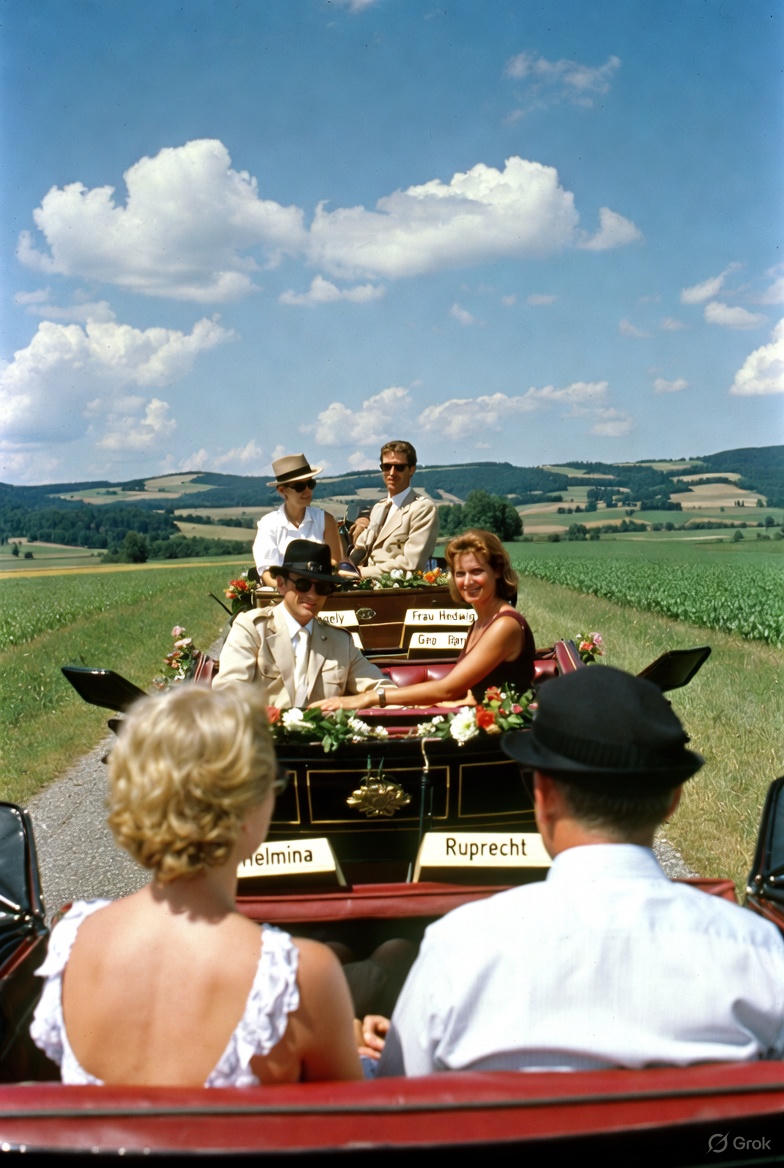





 Anarchistbanjo's World