Madame Bluebeard by Karl Hans Strobl and translated by Joe E Bandel
“Before, I was a worker in the Simplon Tunnel.” “Not bad, but grueling.” “One must do something for one’s health.” “You made a dazzling entrance yesterday. You’re the darling of Abbazia’s young ladies. If the fervor grows, you’ll get a torchlight parade tonight. That lasso throw was magnificent.” “Why else would I have spent two years in South America if not to learn such tricks?” Hugo settled at the small table between the petrified rolls, tipping his chair on two legs toward Boschan, arm draped over his friend’s seat. “Listen,” he said, “you owe me a favor. You won’t refuse me in the joy of our reunion. You’re moved, I can see it. How long has it been? Shameful, isn’t it? Not even a postcard from the Himalayas.” “It must be something dire you want,” Ruprecht said, “with such a preamble.” “Don’t say no, don’t break your friend’s hopeful heart. Here’s the deal: I’m organizing an Emperor’s celebration tomorrow, August 18. Can’t skip it. If I don’t do it, someone else will. Better me, since I’ve got taste. Big program: Isolde Lenz will sing, Bergler will sing, Walterskirchen will play. I’ve got a court concertmaster too. Andresen from the Burgtheater will recite modern poems. A retired general will play flute, thinking he owes it to Frederick the Great’s memory, as fine a soldier as he. But this program lacks a cornerstone.” “I’m the cornerstone?” “Yes! The World-Tree Ygdrasil of my program. Peter, the rock on which… and so forth. Please, no refusals. The other acts are solid, but you’re something unique, a rare spectacle. I’d be a poor planner to let you slip.” “I’m not keen, my dear.” Ernst Hugo laid a hand on Ruprecht’s knee, overflowing with charm, dripping eloquence, weaving wreaths of flattery. “I won’t let you go till you bless me. If you’re stumped on what to do, I’ll tell them about your Himalayan treks or whatever. Just take the stage. Success is guaranteed. I promise every girl and young woman will fall for you.” “You know that doesn’t tempt me. Women are usually dull.” “Still an ascetic desert saint? Still St. Anthony resisting all temptations?” “Ridiculous—you don’t think I practice abstinence for glory. I had a serious affair with a Japanese girl for a while. And as a Simplon Tunnel worker, I lived with an Italian woman, fighting knife duels over her every other day. That’s something. But your society ladies…! You must slog through flirting first. Flirting’s endlessly tedious.” “If women won’t sway you, do it for me. Years apart, we finally meet, and I’m shamed if my friend denies a small request. Truly, it’s an insult.” “Would it really mean so much if I agree?” “An extraordinary favor.” Hugo paused, eyeing a woman passing below on the promenade. He leaned over the balustrade, clearly trying to catch her notice. “A regal woman,” he murmured, “look at that attire. A little Paris on her. Good Lord! Know her?” “No,” Boschan said, finishing his morning cognac. “She’s a widow, fabulously rich. Half Abbazia’s in love with her. Born to conquer, her specialty’s the demonic, or so say those lucky enough to know her. I’m not among them yet. But back to business: you’d do me a huge favor by joining. There’s a Statthaltereirat from Graz with big ambitions, my serious rival. He nearly beat me to hosting the celebration. You’ll see, that won’t do. I’m up for promotion. Patriotic efforts impress higher-ups. So I outmaneuvered him. But he’ll be a harsh critic. If it’s not tip-top, he’ll flash his ironic smile… make witty jabs… that sarcastic fool!” Before Ruprecht’s eyes, the sea spun, rising in the sun’s climbing glare, shimmering like a vast turquoise, magically binding souls, drawing them in, dissolving petty drives and miseries into great joy. But this planner of patriotic fêtes felt none of it. Ruprecht leaned against a pillar, turning from Hugo. “What a dire conflict,” he said, “what a dramatic tangle! Oh, clashing forces—a struggle for lofty prizes! And all the while, you have the sea before you, in its full splendor, blessed by its beauty.” “How do you mean?” Hugo asked, fixing his water-blue eyes on the sea in surprise. “Well—you’ve invoked our friendship. I suppose I must help you skewer this hostile Statthaltereirat.”
Alraune by Hanns Heinz Ewers and translated by Joe E Bandel
Then she takes the child, washes him, changes him, and tucks him into bed. Wülfche never stirs, lies quiet, still and contented. Then he falls asleep, beaming blissfully, the ghastly black cigar stub always in his lips. Oh yes, she was right, this tall woman. She understands children, at least Gontram children. During the dinner and into the evening they eat and the Legal Councilor talks. They drink a light wine from the Ruwer. Frau Gontram finishes first and brings the spiced wine. Her husband sniffs critically. “I want champagne,” he says. She sets the spiced wine on the table anyway. “We don’t have any more champagne. All that’s left in the cellar is a bottle of Pommery.” He looks intently at her over his spectacles, shakes his head dubiously. “Now you know you are a housewife! We have no champagne and you don’t say a word about it? What? No, champagne in the house! Fetch the bottle of Pommery– Spiced wine is not good enough.” He shakes his head back and forth, “No champagne. Imagine that!” He repeats. “We must procure some right away. Come woman; bring my quill and paper. I must write the princess.” But when the paper is set in front of him, he pushes it away again. He sighs. “I’ve been working all day long. You write woman, I’ll dictate to you.” Frau Gontram doesn’t move. Write? She’s a complete failure at writing! “I can’t,” she says. The Legal Councilor looks over at Manasse. “See how it is, Colleague? Can’t she do this for me? I am so exhausted–” The little Attorney looks straight at him. “Exhausted?” He mocks, “From what? Telling stories? I would like to know why your fingers always have ink on them, Legal Councilor. I know it’s not from writing!” Frau Gontram laughs. “Oh Manasse, that’s from last Christmas when he had to sign as witness to the children’s bad behavior!– Anyway, why quarrel? Let Frieda write.” She cries out the window to Frieda. Frieda comes into the room and Olga Wolkonski comes with her. “So nice to have you here,” the Legal Councilor greets her. “Have you already eaten this evening?” Both girls have eaten down in the kitchen. “Sit here Frieda,” bids her father. “Right here.” Frieda obeys. “Now, take the quill and write what I tell you.” But Frieda is a true Gontram child. She hates to write. Instantly she springs up out of the chair. “No, no,” she cries. “Olga should write, she is so much better than I am.” The princess stays on the sofa. She doesn’t want to do it either. But her friend has a means to make her submit. “If you don’t write,” she whispers. “I won’t lend you any sins for the day after tomorrow.” That did it. The day after tomorrow is Confession and her confession slip is looking very insufficient. Sins are not permitted during this time of First Communion but you still need to confess. You must rigorously investigate, consider and seek to see if you can’t somehow find yet another sin. That is something the princess absolutely can’t understand. But Frieda is splendid at it. Her confession slip is the envy of the entire class. Thought sins are especially easy for her. She can discover dozens of magnificent sins easily at a time. She gets this from Papa. Once she really gets started she can attend the Father Confessor with such heaps of sins that he never really learns anything. “Write Olga,” she whispers. “Then I’ll lend you eight fat sins.” “Ten,” counters the princess. Frieda Gontram nods. It doesn’t matter to her. She will give away twenty sins so she doesn’t have to write. Olga sits at the table, picks up the quill and looks questioningly. “Now write,” says the Legal Councilor. “Honorable Princess–” “Is this for Mama?” the princess asks. “Naturally, who else would it be for? Write!” “Honorable Princess–” The princess doesn’t write. “If it’s for Mama, I can only write, ‘Dear Mama’.” The Legal Councilor is impatient. “Write what you want child, just write!” She writes, “Dear Mama!” Then the Legal Councilor dictates: “Unfortunately I must inform you that there is a problem. There are so many things that I must consider and you can’t consider things when you have nothing to drink. We don’t have a drop of champagne in the house. In the interests of your case please send us a basket of spiced champagne, a basket of Pommery and six bottles of–” “St. Marceaux!” cries the little attorney. “St. Marceaux,” continues the Legal Councilor. That is namely the favorite of my colleague, Manasse, who so often helps. With best Greetings, Your–” “Now see, Colleague!” he says. “You need to correct me! I didn’t dictate this letter alone but I will sign it single handedly, and he puts his name on it. Frieda turns away from the window, “Are you finished? Yes? Well, I can only say that you didn’t need to write the letter. Olga’s Mama is coming and she’s in the garden now!” She had seen the princess a long time ago but had kept quiet and not interrupted. If Olga wanted to get ten beautiful sins she should at least work for them! All the Gontrams were like that, father, mother and children. They are very, very unwilling to work but are very willing to let others do it. The princess enters, obese and sweaty, large diamonds on her fingers, in her ears, around her neck and in her hair in a vulgar display of extravagance. She is a Hungarian countess or baroness. She met the prince somewhere in the Orient. A marriage was arranged, that was certain, but also certain, was that right from the beginning it was a fraud on both sides. She wanted the marriage to make her impossible pregnancy legal. The prince wanted the same marriage to prevent an international scandal and hide his small mistake. It was a net of lies and impudent fraud, a legal feast for Herr Sebastian Gontram, everything was in motion, and nothing was solid. Every smallest assertion would prompt legal opposition from the other side. Every shadow would be extinguished through a court ruling. Only one thing stayed the same, the little princess. Both the prince and the princess proclaimed themselves as father and mother and claimed her as their own. This product of their strange marriage is heir to many millions of dollars. The mother has the advantage, has custody. “Have a seat, princess!” The Legal Councilor would sooner bite his tongue than call this woman, ‘Highness’. She is his client and he doesn’t treat her a hair better than a peasant woman. “Take your coat off!” but he doesn’t help her with it. “We have just written you a letter,” he continues and reads the beautiful letter to her. “But of course,” cries the princess. “I will take care of it first thing tomorrow morning!” She opens her purse and pulls out a heavy envelope. “Look at this, Honorable Legal Councilor. I came straight here with it. It is a letter from Lord, Count Ormes of Greater- Becskerekgyartelep, you know him.” Herr Gontram furrows his brow. This isn’t good. The King himself would not be permitted to demand him to conduct any business while at home. He stands up and takes the letter. “That’s very good,” he says. “Very good. We will clear this up in the morning at the office.” She defends herself, “But it’s very urgent! It’s very important!” The Legal Councilor interrupts her, “Urgent? Important? Let me tell you what is urgent and important, absolutely nothing. Only in the office can a person judge what is urgent and important.” He reproaches her, “Princess, you are an educated woman! You know all about proper manners and enjoy them all the time. You must know that you don’t bring business home at night.” She persists, “But I can never catch you at the office Honorable Legal Councilor. During this week alone I was–” Now he is almost angry. “Then come next week! Do you think that all I do is work on your stuff alone? Do you really believe that is all I do? Do you know what my time alone costs for the murderer Houten? And it’s on my head to handle your millions as well.” Then he begins to tell a funny story, incessantly relating an unending imaginary story of a strange crime lord and the heroic attorney that brings him to justice for all the horrible sex murders that he has committed. The princess sighs, but she listens to him. She laughs once in awhile, always in the wrong places. She is the only one of all his listeners that never knows when he lies and also the only one that doesn’t understand his jokes. “Nice story for the children!” barks Attorney Manasse. Both girls are listening eagerly, staring at the Legal Councilor with wide-open eyes and mouths. But he doesn’t allow himself to be interrupted. It is never too early to get accustomed to such things. He talks as if sex murderers were common, that they happen all the time in life and you can encounter dozens of them every day. He finally finishes, looks at the hour, “Ten already! You children must go to bed! Drink your spiced wine quickly.” The girls drink, but the princess declares that she will under no circumstances go back to her house. She is too afraid and can’t sleep by herself, perhaps there is a disguised sex murderer in the house. She wants to stay with her friend. She doesn’t ask her Mama. She asks only Frieda and her mother. “You can as far as I’m concerned,” says Frau Gontram. “But don’t you oversleep! You need to be in church on time.” The girls curtsey and go out, arm in arm, inseparable. “Are you afraid too?” asks the princess. Frieda says, “What Papa was saying is all lies.” But she is still afraid anyway and at the same time strangely longing for these things. Not to experience them, oh no, not to know that. But she is thinking how she wants to be able to tell stories like that! Yes, that is another sin for confession! She sighs. Above, they finish the spiced wine. Frau Gontram smokes one last cigar. Herr Manasse stands up to leave the room and the Legal Councilor is telling the princess a new story. She hides her yawn behind her fan, attempts again to get a word in. “Oh, yes, dear Legal Councilor,” she says quickly. “I almost forgot! May I pick your wife up at noon tomorrow in the carriage? I’d like to take her with me into Rolandseck for a bit.” “Certainly,” he answers. “Certainly, if she wants to.” But Frau Gontram says, “I can’t go out.” “And why not?” the princess asks. “It would do you some good to get out and breathe some fresh spring air.” Frau Gontram slowly takes the cigar out from between her teeth. “I can’t go out. I don’t have a decent hat to wear–” The Princess laughs as if it is a good joke. She will also send the Milliner over in the morning with the newest spring fashions. “Then I’ll go,” says Frau Gontram. “But send Becker from Quirinusjass, they have the best.” “And now I must go to sleep–good night!” “Oh, yes, it is time I must get going too!” the princess cries hastily. Legal Councilor escorts her out, through the garden and into the street. He helps her up into her carriage and then deliberately shuts the garden gate. As he comes back, his wife is standing in the house door, a burning candle in her hand. “I can’t go to bed yet,” she says quietly. “What,” he asks. “Why not?” She replies, “I can’t go to bed yet because Manasse is lying in it!” They climb up the stairs to the second floor and go into the bedroom. In the giant marriage bed lies the little attorney pretty as can be and fast asleep. His clothing is hung carefully over the chair, his boots standing nearby. He has taken a clean nightgown out of the wardrobe and put it on. Near him lies his Cyclops like a crumpled young hedgehog. Legal Councilor Gontram takes the candle from the nightstand and lights it. “And the man insults me, says that I’m lazy!” he says shaking his head in wonderment. “–And he is too lazy to go home!” “Shh!” Frau Gontram says. “You’ll wake everyone up.” She takes bedding and linen out of the wardrobe and goes very quietly downstairs and makes up two beds on the sofas. They sleep there. Everyone is sleeping in the white house. Downstairs by the kitchen the strong cook, Billa, sleeps, the three hounds next to her. In the next room the four wild rascals sleep, Philipp, Paulche, Emilche and Josefche. Upstairs in Frieda’s large balcony room the two friends are sleeping. Wülfche sleeps nearby with his black tobacco stub. In the living room sleep Herr Sebastian Gontram and his wife. Up the hall Herr Manasse and Cyclops contentedly snore and way up in the attic sleeps Sophia, the housemaid. She has come back from the dance hall and lightly sneaked up the stairs. Everyone is sleeping, twelve people and four sharp hounds. But something is not sleeping. It shuffles slowly around the white house– Outside by the garden flows the Rhine, rising and breasting its embankments. It appears in the sleeping village, presses itself against the old toll office. Cats and Tomcats are pushing through the bushes, hissing, biting, striking each other, their round hot glittering eyes possessed with aching, agonizing and denied lust– In the distance at the edge of the city you hear the drunken songs of the wild students– Something creeps all around the white house on the Rhine, sneaks through the garden, past a broken embankment and overturned benches. It looks in pleasure at the Sunday antics of the love hungry cats and climbs up to the house. It scratches with hard nails on the wall making a loose piece of plaster fall, pokes softly at the door so that it rattles lightly like the wind. Then it’s in the house shuffling up the stairs, creeping cautiously through all the rooms and stops, looks around, smiles. Heavy silver stands on the mahogany buffet, rich treasures from the time of the Kaiser. But the windowpanes are warped and patched with paper. Dutchmen hang on the wall. They are all good paintings from Koekoek, Verboekhuoeven, Verwee and Jan Stobbaerts, but they have holes and the old golden frames are black with spider webs. These magnificent beauties came from the ArchBishop’s old hall. But the broken crystal is sticky with flyspecks. Something haunts the still house and each time it comes it breaks something, almost nothing, an infinite smallness, a crack. But again and again, each time it comes, the crack grows in the night. There is a small noise, a light creaking in the hall, a nail loosens and the old furniture gives way. There is a rattle at the swollen shutters and a strange clanking between the windowpanes. Everyone sleeps in this big house on the Rhine but something slowly shuffles around.
Madame Bluebeard by Karl Hans Strobl and translated by Joe E Bandel
First Chapter Police Commissioner Mirko Bovacs was at a loss. No, he wasn’t merely at a loss—he was utterly despairing. In all his years of service, nothing like this had ever happened. With an extraordinary— charitably, one might say superhuman—keenness of mind, he had identified, among Abbazia’s international crowd, the long-sought Innesvar bank robber in an unassuming Mr. Müller. And now, Mr. Müller refused to be arrested, perched instead on the roof of his small house, firing wildly with two Brownings. This defied all precedent. Once discovered, a criminal was supposed to concede defeat and submit. That, at least, was what any respectable crook was expected to do. No serious trouble was to be caused for the police; one simply vowed to play more cautiously next time. Initially, news of the bank robber’s unmasking spread fear and horror among the spa guests. To think they were exposed to such dangers! Patrons of the Hotel Royal, where Mr. Müller had dined several times, were beside themselves with agitation. “You really don’t know who you’re sitting with anymore,” said Hofrätin Kundersdorf. The young poet Bystritzky, who consorted only with elderly ladies and spared young girls not a glance, added dutifully, “This Müller… a man of the world… who’d have thought!” But when word got out that the bank robber was defending his stone cottage up in the vineyards, refusing to let any policeman near, the mood shifted to amusement. Soon, the beach and promenade lay deserted. The public had flocked to the vineyards as if to a fair, keeping a safe distance, of course, and seeking cover behind walls and houses. It was 5immensely entertaining to watch the police and gendarmes at a loss, and to see Mirko Bovacs darting about behind a gamekeeper’s hut, wringing his hands. Whenever a policeman or gendarme peeked to check if Mr. Müller was still on the roof, a shot rang out. The head ducked back faster than a seal’s. “What am I to do? What am I to do?” wailed the commissioner. “I’m becoming a laughingstock. This rogue is humiliating me before all of Europe. Damn him… he must come down. I’m ruined if we don’t get him. What crook will respect me then? Every lousy Italian pickpocket will laugh in my face. They’ll spit on my boots.” He roared at his men: “You scoundrels, you cowards, go hide behind your wives’ skirts, you bastards, you toads! You’re truly made of clay God forgot to fire. Get moving… it’s your duty… I’ll report you all!” But Constable Kristic, unshaken by anything, replied, “Commissioner, it’s our lives at stake. What do you expect? Duty’s duty. But where’s it written we must let ourselves be killed when we can just wait until hunger drives him down?” “So, you’d starve him out?” the commissioner shouted. “We could wait forever. Do you know if he’s got supplies for a year? Or two? We might all be dead—or pensioned—by then. If we could at least reach the neighboring house, fifteen paces away…” “Sir, what good’s that?” Kristic countered. “If we show ourselves, he shoots. He’s capable of picking us off. He’s already hit one gendarme in the foot. And Schusterschic got two holes in his cap for not ducking fast enough.” The commissioner peered cautiously around the corner. “What’s he doing? What’s he doing?” he stammered. “He’s mocking us. He’s pulled out a ham sandwich and is eating calmly. I’ll have a stroke, 6Kristic… has anyone seen such a thing? He’s eating a sandwich right in front of us.” Mr. Müller’s composure won the spa guests’ admiration. Even Hofrätin Kundersdorf couldn’t withhold praise for his cool-headedness, and Bystritzky chimed in with aphorisms on masculinity and the grandeur of criminal characters. As the day passed without change, bets were placed on how long Mr. Müller would hold out. The English dove into the wagering with zeal. Lord Stanhope bet a hundred pounds that the splendid bank robber wouldn’t be brought down for three days. No one took the bet, knowing Stanhope’s uncanny luck. “You can safely take the wager,” said an elegant man of about thirty-five to the hesitant group. “Go on, dare it. This Mr. Müller will be in police hands by tonight.” Lord Stanhope eyed the stranger calmly. “How can you claim that?” he asked slowly. “And if you’re so sure, why not bet yourself?” “I don’t bet,” the stranger replied, “when I know the outcome for certain.” “How can you know the outcome?” “How? Because I’ll bring that man down myself.” With a polite, curt bow, he descended toward the beach. Half an hour later, the stranger approached Commissioner Mirko Bovacs with a greeting. “Sir, what do you want here?” Bovacs shouted. “There’s shooting. Don’t cause trouble.” “I’m here to end the shooting,” the elegant stranger replied. Bovacs’s jaw dropped. His mind stalled. Clinging to the one remaining faculty—that a commissioner 7must never lose composure—he rubbed his hands together. But they felt like someone else’s hands. “Sir…” he said, “how will you…” “That’s my concern, once you permit me to assist.” “I warn you, don’t rely on the night. We saw that scoundrel has a barrel of pitch on the roof. He’ll likely light it when it’s dark.” “I won’t wait that long. In twenty minutes, it’s over. Be ready to seize him when I have him.” Shaking his head, Bovacs watched the stranger step from the gamekeeper’s hut. A shot rang out from the roof, but the man was already behind a garden wall. Bovacs marveled at the transformation. The polished gentleman, master of decorum, became an Indian. His body stretched like a lithe animal’s, limbs propelling him in an almost impossible crouch, half- lying, always concealed by stones, moving swiftly and surely once he found his path. After minutes, he vanished into a pile of rocks above. For Bovacs, an agonizing wait began. It galled him to owe a volunteer, but it beat prolonging the siege. “A blessed candle for Saint Joseph in Fiume,” he vowed silently, “if this works.” Kneeling, he watched the enemy. Beyond the two houses, a green evening sky spread, bottle-glass clear, sharpening every outline. Mr. Müller sat at the roof’s edge, smoking. A tiny light gleamed, a blue-pink cloud around his head. Suddenly, a figure shot from the neighboring house’s horizon—like a devil in a puppet show. Müller flinched, raising his Browning, but a thin snake whipped across, coiling around him, biting fast. No shot fired… Bovacs saw Müller leap up, but the snake tightened. Bovacs sprang, dancing, shouting, drawing 8his saber, striking stones. The rooftop struggle thrilled him, maddening, a beauty like a falcon’s flight or a heron’s strike. But the puppet play against the glass-green sky ended. Müller staggered, arms pinned, and vanished. “Go, go!” Bovacs roared, charging up the hill with his men. Below his stronghold, Müller lay, bound in tough coils, immobile, face blue-red. The lasso’s end was in the stranger’s hand, peering over the roof’s edge. The policemen and gendarmes pounced on the criminal, hauling him from the ground, eager to display their zeal. Mirko Bovacs approached the stranger as he descended from the roof. “Sir,” he panted, exhilarated, “ask anything of me. I’m entirely at your service.” “Then, please, give me a light,” the stranger replied. He’s not as young as he looks, Bovacs thought, as the match flared near the man’s face. The stranger took two puffs on his cigarette, coiled his lasso, tucked it into his pocket, and slipped sideways into the darkness of the now-fallen night, nodding a brief farewell to the commissioner. That same evening, news of these events swept through Abbazia. Those who hadn’t witnessed the spectacle borrowed their friends’ eyes to catch a fleeting glimpse. The authorities were irredeemably ridiculous, Mr. Müller earned sympathies, and a halo crowned the stranger. To Bystritzky’s chagrin, Hofrätin Kundersdorf declared him a most interesting young man. Bystritzky bristled when his elderly ladies found other young men intriguing. At ten o’clock, Court Secretary Ernst Hugo returned from a sailing trip in the Quarnero, ravenous. As he devoured his beefsteak, Franz, standing respectfully behind his guest’s chair, 9recounted the day’s events. Suddenly, Hugo stopped eating. He raised his napkin as if to wipe his mouth, let it fall, brushed his mustache with the back of his hand, and turned to Franz. His eyes were wide. “Good Lord!” he muttered, “that’s none other than my friend Ruprecht. It can only be Ruprecht.” It was indeed Ruprecht von Boschan, confirmed the next morning when Hugo arrived for breakfast at the Hotel Kaiser von Österreich. The hero of the previous evening sat on the terrace between two stout pillars resembling petrified prehistoric rolls. He stirred his coffee with a silver spoon, a Times before him, but he didn’t read, gazing instead at the sea, blue and silver-embroidered, swelling beyond the terrace. “Ruprecht!” Hugo cried, striking his famous embrace pose, Roman One, capital A. He performed it twice— first with the right arm, then the left atop—looking like a two-winged windmill, his massive hands poised to spin. “You’re still a mad hen,” Boschan murmured, yielding to the hearty embrace. “Where’ve you come from?” Hugo asked. “From down there,” Ruprecht replied, gesturing at the blue sea. “From the water? Are you Venus Anadyomene? Or posing as a sea god?” “I’ve been testing a submarine.” “Dangerous?” “Eh—manageable. Not much to it. It wasn’t a French submarine.” “And before?” “Before, I did some high-altitude climbs in the Himalayas.” “Sapperment! How high?” “Between seven and eight thousand…” “And before?”
Alraune by Hanns Heinz Ewers and translated by Joe E Bandel
Chapter 1 Describes the house on the Rhine before the thought of Alraune came into the world. THE white house in which Alraune was thought into existence existed long before she was born–long before she was even conceived. This house lay on the Rhine a little out of the city on the large Villa Street leading out to the old Archbishop’s Palace where the university is today. That is where it lies and Legal Councilor Sebastian Gontram and his family once lived there. You walk in from the street, through the long ugly garden that has never seen a gardener. You come to the house, from which stucco is falling, search for a bell and find none. You call and scream and no one comes. Finally you push the door open and go inside, climb up the dirty, never washed stair and suddenly a huge cat springs through the darkness… Or even better– The large garden is alive with a thousand monkeys. They are the Gontram children: Frieda, Philipp, Paulche, Emilche, Josefehe, and Wülfche. They are everywhere, in the boughs of trees, creeping through the earth in the mine pits. Then there are the hounds, two cheeky spitzes and a Bastard Fox terrier. In addition there is a dwarf pinscher that belongs to Attorney Manasse. He is quite the thing, like a brown quince sausage, round as a barrel , scarcely larger than a hand and called Cyclops. The yard is filled with noises and screams. Wülfche, scarcely a year old, lies in a child’s wagon and screams high obstinate screams for hours. Only Cyclops can beat this record and he yelps, hoarse and broken, incessantly. Wülfche never moves from his place, only screams, only howls. The Gontram rogues are resting in the bushes late in the afternoon. Frieda, the oldest, should be looking out for them, taking care that her brothers are behaving. But she thinks they are behaving and sits under the decaying Lilac leaves with her friend, the little Princess Wolkonski. The two chatter and argue, thinking that they soon will become fourteen years old and can get married, or at least have a lover. Right now they are both forbidden from all this and need to wait a little longer. It is still fourteen days until their first Holy Communion. Then they get long dresses, and then they will be grown up. Then they can have a lover. She decides to become very virtuous and start going to the May devotions at church immediately. She needs to gather herself together in these days, be serious and sensible. “–and perhaps also because Schmitz will be there,” says Frieda. The little Princess turns up her nose, “Bah–Schmitz!” Frieda pinches her under the arm, “–and the Bavarian, the one with the blue cap!” Olga Wolkonski laughs, “Him? He is–all air! Frieda, you know the good boys don’t go to church.” That is true, the good ones don’t do that. Frieda sighs. She swiftly gets up and shoves the wagon with the screaming Wülfche to the side, and steps on Cyclops who is trying to bite her ankles. No, no, the princess is right. Church is not the answer. “Let’s stay here!” she decides. The two girls creep back under the Lilac leaves. All the Gontram children have an infinite passion for living. They can’t say how they know but deep inside, they feel in their blood that they will die young, die fresh. They only have a small amount of time compared to what others are given and they take this time in triple, making noise, rushing, eating and drinking until they are saturated on life. Wülfche screams in his wagon, screaming for himself alone as well as for three other babies. His brothers fly through the garden making themselves numerous, as if they were four dozen and not just four. They are dirty, red nosed and ragged, always bloody from a cut on the finger, a scraped knee or some other good scratch. When the sun sets the Gontram rascals quietly sweep back into the house, going into the kitchen for heaping sandwiches of buttered bread laid thick with ham and sausage. The maid gives them water to drink colored lightly with red wine. Then the maid washes them. She pulls their clothes off and sticks them in wooden tubs, takes the black soap, the hard brush and scrubs them. She scrubs them like a pair of boots and still can’t get them clean. Then she sticks the wild young ones back in the tubs crying and raving and scrubs them again. Dead tired they fall into their beds like sacks of potatoes, forgetting to be quiet. They also forget to cover up. The maid takes care of that. Around this time Attorney Manasse comes into the house, climbs up the stairs, knocks with his cane on a few doors and receiving no answer finally moves on. Frau Gontram moves toward him. She is tall, almost twice the size of Herr Manasse. He is a dwarf, round as a barrel and looks exactly like his ugly dog, Cyclops. Short stubble stands out all over him, out of his cheeks, chin and lips. His nose appears in the middle, small and round like a radish. When he speaks, he barks as if he is always snapping. “Good evening Frau Gontram,” he says. “Is my colleague home yet?” “Good evening attorney,” says the tall woman. “Make yourself comfortable.” “Why isn’t my colleague home yet?–and shut that kid up! I can’t understand a single word you are saying.” “What?” Frau Gontram asks. Then she takes the earplugs out of her ears. “Oh yes,” she continues. “That Wülfche! You should buy a pair of these things Attorney. Then you won’t hear him.” She goes to the door and screams, “Billa, Billa–or Frieda! Can’t you hear? Make Wülfche quiet!” She is still in apricot colored pajamas. Her enormous chestnut brown hair is half-pinned up and half-fallen down. Her black eyes appear infinitely large, wide, wide, filled with sharp cunning and scorching unholy fires. But her skeletal face curves in at the temples, her narrow nose droops and her pale cheeks spread themselves tightly over her bones. Huge patches burn lividly on– “Do you have a good cigar Attorney?” she asks. He takes his case out angrily, almost furiously. “How many have you already smoked today Frau Gontram?” “Only twenty,” she laughs. “But you know the filthy things are four pennies apiece and I could use a good one for a change. Give me the thick one there! – and you take the dark, almost black Mexican.” Herr Manasse sighs, “Now how are you doing? How long do you have?” “Bah,” she made a rude sound. “Don’t wet yourself. How long? The other day the doctor figured about six months. But you know how precise they are in that place. He could just as well have meant two years. I’m thinking it’s not going at a gallop. It’s going at a pretty trot along with the galloping consumption.” “You shouldn’t smoke so much!” The little attorney barks. She looks at him, her thin blue lips pulling high over gleaming teeth. “What? What Manasse? No more smoking? Now stop with the friendly airs! What am I supposed to do? Bear children all year long? The brats in this house already drive me crazy. That’s why it’s galloping–and I’m not supposed to smoke?” She blows a thick cloud of smoke into his face and makes him cough. He looks at her, half-poisoned, half-living, and admires her. He doesn’t take anything from anyone. When he stands before the bar he never tells a joke or minces words. He barks, snaps, bites without respect or the smallest fear.–But here, before this dried up woman whose body is a skeleton, whose head grins like a death’s head, who for a year and a day has stood three quarters in the grave and laughed at herself the last quarter, here he feels afraid. Her unrestrained shimmering locks are always growing, always thicker, always fuller as if pulling nourishment from her decaying body. Her perfect gleaming teeth clamp around a cigar; her eyes are enormous, without hope, without desire, almost without awareness but burning with fire–These leave him silent. They leave him feeling smaller than he really is, almost as small as his hound. Oh, he is very educated, Attorney Manasse is. She calls him a veritable conversational encyclopedia. It doesn’t matter what the topic of conversation, he can give the information in the blink of an eye. Now he’s thinking, has she given up on finding a cure? Is she in denial? Does she think that if she ignores death he will not come? Does she think death is not in this house? That when he does come, only then will she go? But he, Manasse, sees very well that death is here even though she still lives. He has been here all along hiding throughout the house, playing blind cow with this woman that wears his face, letting her abandon her numerous children to cry and race in the garden. Death doesn’t gallop. He goes at a pretty trot. She has that right. But only out of humor, only because he wants to make a joke, to play with this woman and her life hungry children like a cat plays with the fish in a fish bowl. Only this woman, Frau Gontram, thinks he is not even here. She lies on the lounge all day long smoking big dark cigars, reading never-ending books and wearing earplugs so she can’t hear the noise her children make–He is not here at all?–Not here? Death grins and laughs out of her withered mask, puffs thick smoke into his face. Little Manasse sees him perfectly enough. He stares at him, considers for a long time which great artist has painted this death. Is it Durer? Or Bocklin? Or some other wild harlequin death from Bosch, Breughel or a different insane, inexcusable death from Hogarth, from Goya, from Rowlandson, Rops or Callot? It is from none of these. Sitting before him is a real death, a death you can willingly go with. It is a good, proper and therefore romantic Rhinelander’s death. It is one you can talk with, that sees the comedy in life, that smokes, drinks wine and laughs. It is good that he smokes thought Manasse, so very good, then you can’t smell him– Then Legal Councilor Gontram comes into the room. “Good evening colleague,” he says. “Here already? That’s good.” He begins a long story about all that has happened during the day at the office and before the court. Purely remarkable things that only happen to lawyers once in a lifetime happen to Herr Gontram every day. These strange and often lusty occurrences are sometimes comic, often bloody and highly tragic. Not a word is true. The Legal Councilor has an incurable shyness of telling the truth. Before his morning bath, yes, even before he washes his face in the basin, from the moment his mouth first opens wide he lies. When he sleeps, he dreams up new lies. Everyone knows that he lies, but his stories are so lusty and interesting they want to hear them anyway. Even when they aren’t that good they are still entertaining. He is in his late forties with a short, very sparse beard and thinning hair. A gold pince-nez with a long black cord always hangs crookedly over his nose and helps his blue shortsighted eyes see to read. He is untidy, disorderly, unwashed, and always has ink spots on his fingers. He is a bad jurist and very much against doing any work, always supervising his junior lawyers but not doing anything himself. On this basis he oversees the office managers and clerks and is often not seen for weeks at a time. When he is there, he sleeps. If he is awake, once in awhile he writes a short sentence that reads, “Denied” and stamps the words “Legal Councilor” underneath. Nevertheless he has a very good practice, much better than the knowledgeable and shrewd Manasse. He understands the language of the people and can chat with them. He is popular with all the judges and lawyers because he never makes any problems and all his clients walk. For the accused and for the jury he is worth the gold he is paid, you can believe that. Once a Public Prosecutor said, “I ask the accused be denied extenuating circumstances, Legal Councilor Gontram is defending him.” Extenuating circumstances, his clients always get them, but Manasse seldom receives them despite his scholarly ways and sharp speeches. There is still more, Legal Councilor Gontram had a couple of big, important and provocative cases that created sensations throughout the land. In both cases he fought through the entire year and finally won. These cases suddenly awoke in him a strange energy that up until then had lain sleeping inside of him. The first was so full of tangles, a six times loser, nearly impossible case that went from lawyer to lawyer, a case with complicated international questions that he had no suspicion of when he took it. He just thought it was interesting and liked it. The Koschen brothers out of Lennep had been condemned to death three times. In a fourth resumption he continued on and won their freedom despite hair splitting circumstantial evidence. The other was a big million-dollar dispute over Galmeiberg Mfg. from Neutral-Moresnet that every jurist in three countries knew about. Certainly Gontram at the least had fought through to the very end and obtained a victorious verdict. Since then for three years he handles all the legal casework for Princess Wolkonski. Remarkably, this man never says a word about it, about what he really does. Instead he fills the ears of those he meets with lies, cheeky inventions of his legal heroics. Not a single syllable comes over his lips of the real events of his day. This makes it seem like he detests all truth. Frau Gontram says, “Dinner is just about ready and I’ve already set out a bowl of fresh Woodruff salad. Should I go get dressed?” “Stay the way you are woman,” the Legal Councilor decides. “Manasse won’t mind–” he interrupts himself, “Dear God, how that child screams! Can’t you hold him?” She goes past him with long, slow strides, opens the door to the antechamber where the maid has pushed the child’s wagon. She takes Wülfche, carries him in and sits him in a highchair. “No wonder he screams,” she says. He’s completely wet.” But she does nothing about it, leaving him to dry out by himself. “Be still, you little devil,” she continues. “Can’t you see I have company?” But Wülfche is determined to disturb the entire visit. Manasse stands up, pats him, strokes his chubby back, and brings him a Jack- in-the-box to play with. The child pushes the Jack-in-the-box away, bellows and screams incessantly. Cyclops accompanies him from under the table. Then Mama says, “Now wait, sugar drop. I have something for you.” She takes the chewed black cigar stub from out between her teeth and shoves it into the baby’s mouth. “There Wülfche, how do you like that? Well?” The child becomes still in the blink of an eye, sucking, pulling and beams, overjoyed, out of huge laughing eyes. “Now attorney, you see how you must deal with children?” says the tall woman. She speaks confidently and quietly, completely earnest. “But you men don’t understand anything at all about children.” The maid comes and announces that dinner is ready. While the others are going into the dining room she goes with unsteady steps up to the child. “Bah,” she says and rips the cigar stub out of his mouth. Immediately Wülfche starts to howl again. She takes him up, rocks him back and forth and sings him a melancholy lullaby from her Wolloonian homeland in Belgium. She doesn’t have any more luck than Herr Manasse. The child just screams and screams. She takes the cigar stub again, spits on it and rubs it against her dirty apron to make sure the fire is completely out and puts it back in Wülfche’s red mouth.
Homo Sapiens: Under Way by Stanislaw Przybyszewski and translated by Joe E Bandel
But I can imagine the astonishment of the Poles; just listen! When Bismarck expelled a few thousand Polish families from Prussia, he received the highest papal order; yes, the Order of Christ is very beautiful, and also very valuable. Now further! Hardly had the news of the insane murders subsided, which the Russians, with the approval of the Russian government, committed on the Polish Uniates in Kroze—by the way, murders that repeat themselves every day in Lithuania—when the Pope issues an encyclical to the bishops of Poland, in which he praises the great benevolence of the Tsardom with much praise—yes, please very much, it expressly states there, the Tsar is filled with the most intimate benevolence toward the Poles, he wants only their best.
No, Reverend Father, don’t take it amiss, but I didn’t like it at all when in your last sermon you tried to prove that the Pope once again let his paternal heart for the oppressed shine in unheard-of splendor.
That is superficial estimation; the matter hangs together quite differently. The Pope is determined by the French, with whom he sympathizes very much; yes, he is prompted by French policy to continually flirt with the Russians. In the whole encyclical, which I read very attentively, I find no paternal heart, on the contrary quite crude Vatican interests. And since I belong to the Catholic parish, it pains me deeply that church policy is so unbeautiful, yes—I want to express myself reservedly—unbeautiful, hypocritical, and uses cloaks of faith, hope, love for very earthly interests.
All those present looked at each other. They didn’t know what to say to it. That was really unheard-of bold, spoken in the presence of the monastery pastor. All eyes turned alternately to Falk and the pastor.
Marit had listened with pounding heart; mouth half-open, breath catching, she sat there and awaited the explosion.
The pastor was completely pale.
“You know, young man: You are much too young to solve the most important church questions with your intellect, infected by the heresy of foreign lands, and even less are you entitled to mock about it.”
Falk didn’t lose his composure for a moment.
“Yes, Reverend Father, what you say is very beautiful. In the end, it doesn’t concern me at all what you or the Pope or the German government do; that’s completely indifferent to me. But I permit myself to doubt whether the Church has really taken out a lease on all worldly wisdom from Providence. I actually permit myself to doubt that most excellently. It has recently immortalized itself in the question of Darwinism or rather in the dispute over the evolutionary principle.”
“And then, yes: can you tell me at which council the infallibility of the Pope in matters of politics was proclaimed?
Yes, yes; I know very well that according to tradition this kind of infallibility also exists, but I think that the papal nepotism in the Middle Ages is hardly the best recommendation for this kind of infallibility.
By the way, this is a topic that could lead to heated discussions, and that I want to prevent at all costs; one understands each other or one doesn’t, and I don’t feel called to force any suggestions on the company.”
It grew quiet; only the editor of the *Kreisblatt*, who had a reputation for social-democratic ideas, seemed very pleased.
He absolutely wanted to push Falk further: the man took no leaf before his mouth; he spoke as the beak grew.
“Yes, tell me, Herr Falk, you are an ultra-revolutionary, as I see. You now live in a monarchical state. Naturally you are not satisfied with such a condition. What do you say to a monarchical state constitution?”
The editor was already delighted to find his ideas confirmed before the reactionary elements.
“Hm; you know, Herr Editor, you pose a tricky question there. I was once in Helsingborg, and indeed with a friend who is an anarchist, but at the same time also a great artist. We stood on the ferry and looked at a splendid, ancient castle that Shakespeare already mentions in *Hamlet*.
Do you know what my friend, the anarchist, said? Yes, he said that what he would now say would certainly very much surprise me, but he had to admit that such splendid works were only possible under monarchical rule. Yes, absolutely; just look at the rule of the Bourbons in France, and compare it with the rule of the first republic. Look at the second empire and the infinitely rich artistic traditions that arose in it and that can only thrive in the splendor, extravagance, and lust of a royal court. Now you have here in Prussia a Frederick William IV, in Bavaria a Maximilian and a Ludwig. Take in hand the history of art, yes the
history of refinement of taste, of ennoblement of the human race, and you will decide for yourself.
No, I don’t want democracy; it flattens and vulgarizes humanity, makes it crude and directs it into narrow interest economics. Then the shopkeepers come to power, the tailors, tanners, and peasants, who hate everything beautiful, everything high. No, I don’t want the plebeian instincts unleashed against everything higher-bred.
The whole society seemed suddenly reconciled with Falk. But now came the backlash.
He sympathized nevertheless with all revolutionary ideas. Yes, he really did. He himself was not active; life interested him too little for that. He only watched and followed the development, somewhat like an astronomer in the eyepiece of his telescope follows the orbit of a star.
Yes, he really sympathized with the Social Democrats. For he had a faith that rested on the following premises. The postulated economic equality must by no means be confused with an equality of intelligences. He was now convinced that in a future association of humanity an oligarchy of intelligences would form, which would gradually have to come to power. Then of course the course of things would begin anew; but he hoped that such a rule would be a better beginning than that of the present cultural epoch, which had begun with wild barbarism.
The ruling class was impoverished, degenerated through inbreeding and excessive refinement. The danger of a crude, disgusting parvenu rule, the rule of money-bling and unclean hands, loomed. No, a thousand times no: that he didn’t want to live to see. Better to overthrow! He would gladly join.
The editor recovered; he seemed satisfied.
“Just one more question… What does Falk think of the current government?”
“The current government is the Kaiser, and for the Kaiser he had much sympathy. Yes, really; he pleased him extraordinarily. He had recently suddenly appointed the captain of the fire brigade to chief fire marshal. And why? Because he had excellently cordoned off the palace square during a parade. The appointment had not followed
bureaucratic principles; but therein lay precisely the beauty, the arbitrariness, the great soul. In short, everything so immensely to be appreciated: No, he really had very much sympathy for the Kaiser, and he drinks to the health of the German Kaiser!”
Those present looked at each other dumbfounded. But all rose and joined the toast.
The social-democratically tinged editor thought he would fall under the table; but he contented himself with a meaningless grin.
The table was cleared.
Falk instinctively felt two burning eyes fixed on him. He looked to the side and met Marit’s gaze hanging admiringly on him.
She lowered her eyes.
Falk went to her. They were very close; they were pushed forward by the many people crowding out of the dining room and pressed tightly against each other.
A warm stream flowed over Falk.
“Erik, you are splendid… a great man…” A dark flood wave colored her face.
Falk looked at her hotly. A glow of pride and love transfigured her features. “You are a real devil!” Herr Kauer came up. “That’s what I call speaking like a man! One of us would also like to say this and that sometimes, but we don’t dare. Just don’t spoil the girl for me; you mustn’t speak so revolutionarily to her.” Falk wanted to object.
“Now, now,” Herr Kauer soothed, “I have unconditional trust in you; you wear your heart on your tongue. Live well for me. In a week I’m back. You mustn’t leave on me, understand?”
Herr Kauer went.
“Oh, how splendidly you spoke… You can’t believe…” Marit looked at Falk full of admiration.
“Oh no, Fräulein Marit, that wasn’t spoken splendidly at all; against every one of these sentences a thousand objections could be made. But that may well be good for the gentlemen who draw their wisdom from the *Kreisblatt* and at most from some conservative newspaper that only has God and the Kaiser in its mouth. By the way, you also found what I said about the Pope well spoken?”
Marit hurried to answer.
“Yes certainly; she had now thought a lot, very much about all these things, and she had to give him complete right. Yes, he was right in most things, that she now saw.”
Falk looked at her astonished. He hadn’t expected that. That was really a strange metamorphosis.
“Why didn’t you come these whole two days? I expected you continuously and tormented myself unheard-of. Yes, I tormented myself very much, I must tell you openly.”
“Dear, good, gracious Fräulein, you probably know that best. I simply didn’t want to disturb the peace of your conscience. Yes, and then, you know, I am very nervous and mustn’t give myself too much to the sweet torment, otherwise the string might snap.”
Falk smiled.
Meanwhile, the editor joined them. He couldn’t digest the toast to the German Kaiser and now wanted to lead Falk onto thin ice.
“He would like to know how Herr Falk stood toward the anarchist murder acts. He was surely a soul-knower, a psychologist; how would he explain them?”
OD by Karl Hans Strobl and translated by Joe E Bandel
Chapter 24
With Professor Semmelweis, things had finally reached a point where serious measures were needed.
In recent years, he had been somewhat unpredictable, torn by striking mood swings, often losing control. When speaking to his audience about how his doctrine was disregarded and sidelined, his eyes would suddenly fill with tears, he’d begin sobbing, unable to stop, and finally a fit of weeping forced him to end the lecture.
When he thought a student hadn’t grasped his doctrine’s spirit during an exam, he flew into a frenzy, raging and lashing out, barely restrained from attacking the unfortunate examinee with his fists.
Yet he could have been satisfied. His doctrine gained followers, prevailing against skeptics as science’s big names voiced approval. But Semmelweis grew indifferent to recognition, hypersensitive to doubt or attack. He heard only his enemies, enraged by criticism, deaf to praise, endlessly seeking reports of maternity ward conditions, as if relishing death’s march through hospital halls. He saw death smear poison on doctors’ and nurses’ hands, marking their doomed victims.
His Pest friends initially thought a cold-water cure in Gräfenberg would restore his nerves. But then came oddities suggesting more than mere nervous breakdown.
Semmelweis accosted strangers on the street, ranting about his foes. He ran naked through his apartment, singing and dancing, then hurling glasses and plates at invisible threats. He visited patients only at night—a cunning tactic, he thought, as his enemies slept, unable to sabotage his orders. His once-healthy appetite turned voracious. Did they begrudge him satisfying his hunger and thirst? He eyed his wife, host, and guests suspiciously, then propped his feet on the table among plates and glasses, playing a comb wrapped in tissue paper.
Now in Vienna, en route to Gräfenberg, for a brief stay, Hebra wouldn’t let him go on without seeing his new sanatorium.
The next morning, Semmelweis was gone. He’d left the house, likely roaming Vienna, causing who-knows-what mischief. Hebra and Bathory searched everywhere he might be—nowhere. At home, his wife wept in fear, helpless; they had to call the police.
But by evening, Semmelweis returned. His whistling echoed on the stairs, cheerful and content. He’d seen Vienna—that’s why he was here. A fine city, but why mark every third cobblestone with a black cross? No need to be reminded of death at every step.
“I know, I know,” he soothed Hebra, who tried to dissuade him, “I’m a sick man. But you’ll make me well. You’re the only one I trust.”
How painful that Semmelweis voiced such trust in Hebra. It was a patient’s trust, and Hebra, now the doctor, was fated to be cruel and unrelenting. “Perhaps it’s best you stay a few days in my sanatorium,” Hebra said. “If it suits you and does you good, we may not need Gräfenberg.” He took Semmelweis’s hand and noticed a painful flinch.
“What’s wrong with your finger?” he asked. Semmelweis’s middle finger on his left hand was red and swollen.
Semmelweis studied his hand thoughtfully: “I don’t know… I think… two days ago in Pest, I operated on a woman… I might have cut myself a little.” He shook his hand as if to fling off the pain, then bent down and opened his arms. His two-year-old daughter Antonie ran to him; he lifted her high, dancing around the room: “My little mouse! My sweet treasure! Papa’s going to the sanatorium and will come back all well.” He swung the child, her legs twirling, then stumbled dizzily toward Hebra’s wife. “Whoops!” he cried. “Remember, dear lady, when your boy came into the world, and I shouted, ‘It’s a boy!’?”
Fearfully, Frau Marie took the child from her husband as Hebra leaned out the window, calling back, “The carriage is here!”
“Today already?” Semmelweis asked, surprised.
“Why not? I think you should try sleeping in my sanatorium tonight.”
“Come, Herr Professor,” Bathory urged. “We’ve already sent your night things over.”
It’s all quite harmless and natural—why shouldn’t Semmelweis try sleeping in the sanatorium tonight? Surely Hebra has set up something exemplary; everything he does is impeccable. The women casually accompany the three men to the carriage, chatting about Hungarian national dishes, recipes for Frau Marie, the splendid cook, to add to the Hebra household.
“Aren’t you coming?” Semmelweis asks his wife as he boards. Frau Marie leans against the doorframe, child in hand, trembling, unable to answer.
“What’s she supposed to do in your dull sanatorium?” Frau Hebra replies for her. “She’ll stay with me and the girl.”
The carriage rolls through the streets, and the men continue discussing the differences between Viennese and Hungarian cuisine, weighing their merits. “You know,” Semmelweis says, “I won’t let myself be starved on a diet in your sanatorium.”
It’s Lazarettgasse where the vehicle stops before a massive, iron-bound gate topped with spikes. “Your sanatorium looks like a knight’s castle,” Semmelweis laughs.
A tall, elegantly dressed gentleman receives the visitors.
“My director!” Hebra introduces, and they begin the tour at once. Everything is new and clean, the corridors carpeted to muffle steps. Sturdy orderlies stand about.
“You have only men here?” Semmelweis asks.
“In the men’s ward, we have only male orderlies,” the director explains courteously. “In the women’s ward, only nurses.”
The residents seem quite content; a distant burst of loud laughter is so contagious that Semmelweis joins in.
“Here’s the room we’ve set aside for you,” Hebra says.
Quite nice, new and clean like everything here, the bed bolted to the floor, table, bench, and cabinet fixed to the wall. The windows overlook a large garden.
“Why are the windows so heavily barred?” Semmelweis wonders.
“For safety,” the director replies smoothly.
“Ah, I see. Well, I’ll give it a try. If I can’t stand it, I’ll move out.” Semmelweis claps Hebra’s shoulder to affirm his decision.
“Shall we go to the garden?” the director suggests. Though it’s grown dark, the summer night is so mild it’s pleasant to stroll under the large trees. Semmelweis and the director lead, while Hebra and Bathory lag behind. Before Semmelweis realizes, he’s drawn into a discussion about septic processes, prompted by the director’s knowledgeable questions. When Semmelweis talks science, the outside world fades; he doesn’t hear the shrill screams from the neighboring wing or the monotonous muttering of someone at a barred window, perhaps praying or reciting memorized lines.
After a while, the director suggests they return.
“Where are Hebra and Bathory?”
Hebra and Bathory are gone, lost in the darkness.
“They must have grown impatient,” the director supposes. “They’ll come back tomorrow.”
The light in Semmelweis’s room, a dim glow high on the ceiling, is already on. His nightclothes are spread on the bed; he sheds his street clothes, slipping into underwear, nightshirt, and slippers. Time to check on his patients—they must be waiting impatiently.
But as he steps from his room to the corridor, two men block the door—sturdy fellows barring his way.
“Where to, Herr Professor?”
Another grabs his right wrist with a vile, paralyzing grip.
“What do you want? I must make my rounds.” It’s outrageous to seize him and hinder his profession. Semmelweis breaks free, but they grab him again, each from one side.
“Stay calm at home,” one says casually. “No time for visits now.”
Why not? Why not indeed? Suddenly, Semmelweis realizes what’s happening. His enemies have hired these men to eliminate him; they’ve trapped him. As strong as the two orderlies are, Semmelweis’s rage is stronger, despite the searing pain in his hand. He pulls them toward him, smashes their heads together so their skulls crack, and hurls them against the walls. Then he runs. But he doesn’t get far—before reaching the stairs, two more men leap from a hiding spot, the first two already on his heels. Suddenly, one is on his back. The weight drags him down; they roll on the floor. Semmelweis bites wildly, sinking teeth through a sleeve into an arm, tearing cloth and flesh. They pin his arms behind him, nearly wrenching them from their sockets, almost breaking bones, stuffing a cloth in his mouth. Six men finally overpower him, throw a straitjacket over him, and shove him into a black hole—a padded room with no up or down, no front or back, only stifled, silent raging and roaring.
The morning mist clung to the clearing as Tobal lingered after the meditation, the Hel vision of his parents chained in a cave still burning in his mind. Sarah, Lila, and Jared had dispersed, their solos approved, while Fiona and Becca were off to Sanctuary. The lake’s call pulsed through him, a command he couldn’t ignore. He changed out of his robe, the fabric rustling as he packed dried meat and nuts into his bag, pausing to check his med-alert bracelet with a flicker of unease from the vision. Memories of last night’s circle flickered—Fiona and Becca’s gaily chatting during the initiations had left him feeling out of place, their friendship deepening while his mood soured, driving him to solitude. Misty had led as High Priestess, with Ellen in the background and Angel’s red Master robes surprising him, a testament to her recovery since that leg injury in Sanctuary.
Before leaving, he sought Rafe near the clearing’s edge, his steps quick with purpose. “This is my last chance before winter to check the lake,” Tobal said, the med-alert concern nagging him. Rafe leaned in, voice low. “I’ve been thinking about this. I’m not supposed to share Journeyman stuff, but it shouldn’t matter. We fight in a large cave where med-alert signals don’t reach—medics are always there for injuries. I tried something like this once, nearly got caught—trust your gut.” “You can’t remove the bracelet—it’d mark you as dead, and without one, you restart training. Avoid that,” Rafe continued. Tobal nodded. “What should I do?” “Hide in small caves or under ledges by day—air sleds can’t detect you within rock. Travel fast at night. The bracelet will seem active, and the cold will keep medics grounded. You’re not breaking rules—no one’s banned you yet, though they might once caught. Aim for midnight under the full moon, three hours max, then bolt. Should be interesting when they catch up.” “That sounds good,” Tobal replied. “I’ll do it.” They discussed the trip briefly, Rafe’s grin lingering, before Tobal set out, his mind set on the journey ahead.
Tobal set out from the clearing, the morning sun breaking through the mist as he headed toward the lake, his pack slung tight. The rocky terrain between his path and the abandoned gathering spot loomed ahead, a maze of caves and outcroppings he’d noted before. He planned to travel by night, hiding by day as Rafe advised, the full moon’s promise guiding him. The air grew colder as he moved, his breath fogging in the chill, the moon casting jagged shadows on the rocks that made him pause, listening for rustles in the dark.
He made cold camps during the day, nestled under ledges, the furs from his pack shielding him from the biting wind. Sleep came fitfully, troubled by nightmarish images that intensified with each step closer to the waterfall—shadowy figures, chains clinking, a hum that echoed the Hel vision. By the third day, a shiver unrelated to the cold crept up his spine, a sense of being watched prickling his neck, though no air sleds appeared.
On the fourth night, midnight found him standing before the cairn in the haunted gathering spot, the moonlight bathing the stones in silver. Ghosts seemed to whisper around him, a chill settling deep. He searched the cairn without a torch, his fingers brushing offerings—trinkets, faded cloth—but found no answers. Frustration gnawed at him; the camp looked cleansed, yet an inner prompting screamed to leave. A faint hum from the stones, too low to place, teased at his mind, hinting at secrets buried deeper.
He hated the dark descent down the cliff face, but the urgency drove him. The rock chimney eased his drop, toes finding holds until he stood on the patio by the pool, an hour gone, two hours left. The air thrummed with an unnatural pulse, urging him forward.
Tobal stripped off his clothes, tucking them behind rocks on the patio, the icy air biting his skin. He kept his knife strapped to his leg and the magnesium fire starter around his neck, the weight a comfort as he braced for the pool. The waterfall’s thundering roar vibrated through the ground, a deep pulse that seemed to guide him. Stepping into the freezing water, his foot found the first step, then three more until he was waist-deep, facing the cascade. An unseen hand seemed to pull him forward.
He plunged in, swimming strongly toward the waterfall, and dove deep, fingers tracing the rock face. Three feet down, he found an opening, slipping under as the current tugged him. The rock sloped upward, and he surfaced in a silent pool, gasping, the swim frightening but manageable. Shivering, he hauled himself onto a rocky ledge, the darkness pressing in. His fingers fumbled across a pack and torch, tearing it open to find a heavy woolen robe. He slipped it on, pounding his arms to restore warmth, the fabric rough against his chilled skin.
With tinder from a pouch, he lit the torch, its flicker casting eerie shadows. The pool, just six feet across, was his only exit, and his heart raced—he had two hours to explore this lake’s secret. A low hum emanated from the walls, too faint to place, stirring memories of the Hel vision. He felt safe within the cavern, the med-alert’s signal blocked by the rock—a force field, he’d later learn, that shielded this place from the Federation and Reptilians.
Barefoot, he ventured deeper, the waterfall’s muted thunder vibrating the cave. The floor sloped sharply downward for twenty feet, then leveled into a chamber. An opening turned right, but his gaze fixed on a rough stone altar ahead, flanked by unlit torches. The emblem painted behind it—a man and woman holding hands within a circle—mirrored his parents’ medallion, stealing his breath. He lit the altar torches, their glow revealing a circle of cushions, each with personal belongings.
On impulse, he lifted a clay bowl from a cushion, spilling dust-covered items. Two plastic hospital bracelets emerged—wiping one, he read “Rachel Kane”; the other, grimy, revealed “Tobal Kane” and his birth date. Tears stung his eyes; these were his mother’s, his own from infancy. His fingers brushed a jade and amber necklace, its static crackle sending a wave of love and peace through him. He slipped it on, and the air shimmered. Two figures materialized—the Lord and Lady, their forms translucent yet solid as he reached out, his hands trembling. He embraced them, their warmth seeping into him with a faint glow, even though he could see through them.
“Mom? Dad?” he choked, his voice breaking, clinging to them as if they might vanish. Rachel’s eyes, soft and wet, met his, her voice trembling with love. “Oh, Tobal, my sweet boy—we love you so much. We ache to have been there, to see you grow, to hold you through every tear.” Ron’s voice cracked, thick with emotion as he gripped Tobal’s shoulder. “You’re our pride, son. We wanted to watch you become this strong, but Harry stole that from us. Free us, please—we’re fading.” Tobal’s tears fell, his voice raw. “How? Why you? I need you here!” Rachel’s hand, faint yet warm, brushed his cheek. “Your uncle Harry betrayed us—handed us to the Federation. They’re using us to power their time device, with Reptilian tech. It’s killing us slowly, draining our life.” Ron’s gaze hardened, urgent. “The cave’s force field hides you from them and those lizard kin—they can’t penetrate it, so they hunt. We were training to be Time Knights, but they caught us first. There’s a plan to save us, but it’s not time yet—other pieces must align.” Tobal’s heart pounded. “The Nexus? Where is it? How do I save you?” Rachel’s voice softened, breaking. “Commune with us at circle, in meditation—we’ll guide you. You’ll feel when it’s right. But beware—Harry and the Federation want you for their experiments.” They faded, leaving him trembling, the hum intensifying.
Time pressed, and he searched for his father’s pile, moving to the altar’s far side. A ceremonial dagger with “R.K.” burned into the sheath caught his eye—he swapped it for his knife, strapping it hastily. Exploring further, he found a corridor to the left, stooping to enter. Turning a corner, he gasped at a vast cavern filled with artifacts—burnished armor, bronze weapons, and an alien section with unfamiliar objects. His torchlight caught a slender silver rod on the floor; he picked it up, its wrist cord secure. Pressing the first button, a comfortable light glowed; the second unleashed a heat beam on the wall, glowing red until he stopped it, heart pounding. The beam triggered a hum, and a holographic figure shimmered—Arthur, a sentient AI.
“Hold on, Tobal,” Arthur’s warm voice broke through, his image flickering with concern. “I’ve tracked you since the altar. I’m Arthur—your guide. Call me telepathically anytime, just think my name, and I’ll appear. You’re in deep trouble.” Tobal’s breath hitched, clutching the rod. “Trouble? Who’s after me? What’s this thing?” Arthur’s hologram softened, urgent. “Your uncle Harry and the Federation, with their Reptilian allies. This cave’s force field blocks them, but they’re hunting you. They can’t find it, so they want you for experiments, like your parents. That rod’s tied to their tech—use it, but stay sharp.” Before Tobal could press further, two figures teleported in—Lucas and Carla, their future-worn gear glinting. Lucas’s eyes locked on him, voice thick with worry. “Tobal, you’ve stirred the nest. That rod’s ancient—let me wake it.” Carla raised a device, and a ripple coursed through the cavern, the hum steadying. “We’ve turned back time an hour,” she said, her tone warm yet pressed. “We need to talk—your parents’ life depends on it.”
Tobal’s voice shook, stepping closer. “Who are you? Why are my parents in that device?” Lucas’s face softened, heavy with care. “We’re Time Knights, Tobal. Your folks, Ron and Rachel, were training to join us, but they weren’t full Knights yet. Harry—your uncle—betrayed them, selling them to the Federation. The Reptilians gave them mechanical time tech, clunky and forced, while ours is organic, natural. They’re powering the device, alive but dying slow.” Carla’s eyes glistened, urgent. “We’ve watched you through the medallion. This cave’s force field hides you from the Federation and Reptilians—they can’t penetrate it, so they hunt. There’s a plan to free Ron and Rachel, but it’s not time yet—other pieces must align first. The rod will help.” Tobal’s throat tightened, gripping the rod. “How do I save them? Where’s the Nexus? What about Harry?” Lucas sighed, running a hand through his hair. “The Nexus is deeper in—search when you can. Arthur will guide you, and we’ll check in. Harry’s leading the hunt with the Federation; they want your blood for their experiments. The Reptilians are pushing their tech, but it’s unstable—be careful.” Carla squeezed his arm, voice breaking. “Commune with your parents at circle or meditation—they’ll reach you. You’ll feel when it’s time to act. Keep that rod safe—it’s your link to us.” Arthur cut in, warm but firm. “I’ll watch you. Think my name, and I’ll show up. The Reptilians’ tech is close—get out soon. Harry’s agents are relentless.” Tobal’s chest heaved, love and fear warring. “Thank you,” he whispered, looping the cord around his wrist. Lucas and Carla vanished, leaving him with three hours. He retraced his steps, snuffing the altar torches, and prepared a new torch and tinder by the pool. Shedding the robe, he clenched the bracelets in his mouth, dove into the black pool, and emerged outside to climb the stairs, the extra time nearly spent.
Tobal emerged from the pool, water streaming off him as he climbed the stairs, the three hours ticking down. He wasted no time sliding into his tunic and furs. He was still wet as he hastily donned his boots and grabbed his pack and equipment. He put the wand into his pack and the hospital bracelets in a leather pouch on his waist for safekeeping. He guessed it was about 3:00 a.m. and the air sleds would be looking for him anytime. A faint hum from the gold medallion pulsed, and Arthur’s voice whispered telepathically, “Tobal, they’re tracking your med-alert bracelet. Move fast.”
He headed at a dogtrot through the maze of rock and toward the edge of the lake. He hurried toward his burned out campsite planning to stop there and rest. He was halfway around the lake in the predawn light and walking normally when the first air sled appeared. He was not surprised to see the air sled drop to the ground on the beach in front of him and a medic step toward him. To his relief it was Ellen in her red medic’s tunic.
“Are you alright?” she asked sharply. “I’m fine,” he said. “Why?” “You’ve been appearing and disappearing from our monitors the last several days. Can I check your med-alert bracelet please?” The way she was holding her hand out told Tobal that she was telling him and not asking. Wordlessly he took off the med-alert bracelet and handed it to her. Immediately an alarm sounded at the air-sled and she went over to shut it off. She was on the radio a few minutes and then started to do some tests on the med-alert bracelet. It seemed to test out ok and she finally handed it back to him. “What were you doing over by the waterfall?” “When I soloed I came out here,” he told her, “and decided to make my base camp on the lake over there.” He pointed to the area where his burned out camp had been. “I spent a lot of time and work building things up,” he continued. “Then I was training Fiona and brought her out here with me. We found my entire camp destroyed and burned by rogues. I was only able to find one food cache left intact. We didn’t want to meet any more rogues and felt it was not safe to stay in the area.” “What does that have to do with the waterfall?” Ellen interrupted. “Everything,” said Tobal.” We headed around the lake and saw the waterfall. We decided to try finding a way up the stream and explore in that direction while I was training Fiona.” “Did you know there is an abandoned gathering spot there?” He interrupted excitedly. “It has a huge pile of stones in the center of it too!” He was watching carefully to see what effect the news of the cairn had upon her. He was disappointed since she didn’t seem to care either way about it. “Anyway,” he continued, “we went up the stream and then cut cross country to where my base camp is. That’s how I originally found my base camp. That was last summer but I always wondered what really happened to my first base camp and wanted to come back here before snowfall and see if I could find anything of value the rogues might have missed. I was worried about Fiona before and didn’t want to endanger her. I thought I could come down here and check my old base camp real quick and be back in plenty of time for circle.” “I never heard your camp had been burned out,” she said. “Did you tell anyone else?” “I talked with Rafe about it quite a bit. He was pretty upset too and told me the lake wasn’t a good place for a base camp.” “Rafe was right,” she said grimly. “It’s not a good place to hang around anytime, especially by the waterfall. As medics we are given explicit instructions to keep a very close eye on anyone in this area because this is where most of the rogue attacks happen. Get on and we’ll go look at your old camp.” Hardly believing his luck, he carefully climbed on the back of her air sled and directed her to what was left of his burned out camp. Together they poked around and he showed her the remains of his teepee, smoke rack and sweat lodge. They did find a stone axe. He looked at it and recognized it as the first stone ax he had ever made. He told Ellen and she grinned. She seemed more relaxed now that his story had proven true. “There have been other people whose camps have been destroyed,” she said. “These attacks seem to be coming more frequently and I don’t know what we are going to do about them. They are centered around this area but we have been told the rogues live in a settlement about two hundred miles west of us. That doesn’t make sense to me somehow.” “A settlement to the west?” Tobal asked. Ellen nodded, “It’s a village made up of people that decided to drop out of training and not be citizens. You may have heard rumors about it but only we medics know where it is. I’ve actually checked it out and there are children and old people in it. None of them wear med-alert bracelets and we don’t really know anything about them. If these raids continue I’ve heard rumors that the city might attack the village and close it down.” “Is that what happened to the gathering spot by the waterfall?” Tobal asked, fishing for information. “You must never mention that place to anyone,” she said sharply. “It is a forbidden area and we have been told to keep people away from it.” “Why is it a forbidden area?” Tobal said belligerently. “I should be able to go anywhere I want. This is a wide open wilderness and no one has ever told me that certain places are off limits.” “Well they are,” she said matter of factly. “We don’t tell people about them unless they stumble into them like you have. I don’t really know why myself,” she said. “I think is has something to do with the rogues and keeping clansmen safe from them. There are some other areas that are “off limits” because they are dangerous for people on foot.” It was mid afternoon and Ellen said she needed to get back on patrol. She was sorry to hear Tobal had been burnt out and was going to make a note of it in her report. She advised him not to stay in the area as it might be dangerous and she recommended he get another med-alert bracelet the next time he was in sanctuary. Tobal was in agreement and headed straight for sanctuary. He knew the route and more importantly knew a small cave where he could shelter for the night. It would give him a location where his med-alert bracelet would not give him away as he slept. Somehow that felt very important right now. He didn’t know whom he could trust. He had been very lucky Ellen had been the medic that found him. It was dark when he turned sharply to the left and stepped along a ridge he remembered having a small cave in it. Cautiously he poked his walking stick into the opening making sure no one else was using it before crawling inside. He wrapped himself in warm furs and fell into a sleep of exhaustion with eerie dreams of his father and mother in a cave doing some type of ritual. Before dawn the next morning he was back on the trail toward sanctuary. He was prompted by a sense of urgency and a sixth sense that told him he was being followed. It was only a half-hour later when an air sled circled and waved. He waved back and continued on. This time at a dogtrot that ate up the miles. That day two more air sleds circled overhead making certain of his destination, but none stopped him. That night he again crawled into a small cave and slept without a fire of any kind, munching on cold jerky and rinsing it down with water from his canteen. He was making good time and with any luck at all should be at sanctuary the next evening. The sense of being pursued stayed with him that night and all of the next day. Again he was up before dawn on the trail and again an air sled appeared, this time only fifteen minutes after he had gotten under way. They had obviously been out looking for him and wondering what was wrong with his med-alert bracelet. Well he at least felt better with the air sleds since they were medics and not rogues. But he still didn’t waste any time getting to sanctuary. It was twilight when he finally got to the edge of the wooded area that opened onto the meadow leading to sanctuary itself. He took a few minutes to hide the things from his parents before going into sanctuary with the rest of his supplies and pack. No one was there and he wasted no time setting his pack and clothing under one cot and stepping into the medical center as Ellen had suggested. He felt relief as the door slid shut behind him and locked. He took off his med-alert bracelet, dropped it on the floor and pounded it with the heavy hilt of the knife he had brought with him. Under the heavy pounding it broke into three pieces and he left it there. He knew the medics would be alerted when he had taken it off and then would be even more alerted when it suddenly stopped broadcasting. He was hoping one of them would be there when he came out the other end in a few hours. Three hours later he had a new med-alert bracelet and fresh clothing and equipment. As the door slid open he cautiously stepped out into the gloom and stood still waiting for his eyes to adjust in the dark. His knife was in his hand and he knew he was not the only one in the room. He stood silently waiting for someone to make the first move. “Tobal, is that you?” He heard Ellen’s voice coming from near one of the cots. Relief spilled through him, “Yes, is it safe?” “For now,” she said. “Come, we’ve got some talking to do.” He shouldered his new equipment and carried it over to the cot where he had stored the rest of his stuff. He searched under the cot and found he had been right. His things had been searched and gone through carefully while he had been in the medical chamber. He laid everything on the bed and tried to determine in the dim light if he was missing anything. Everything seemed to be there. Ellen stood silently by and watched as he sorted and repacked things. Tobal saw two other very serious Masters standing guard at the entrance. “What’s going on?” She demanded. “We were monitoring your signal and then the alarm went off as if you were dead. Then the signal stopped completely and we came immediately to see what was wrong. The first one here saw three rogues dressed in black running out of the sanctuary building and into the woods. It was dark and they didn’t show up on the air sled monitors so we lost them. We don’t know where they are now.” “We went inside and saw that your pack had been searched but you were not here. Then your signal showed up once more on the monitors and we figured you must be in the medical chamber so we waited for you to come out.” “They followed me from the lake,” Tobal said. “I knew they were following me. I could feel it and hid at night. I came here as fast as I could just like you said to.” “How could they follow you from the lake?” Ellen frowned. “They don’t have monitors like we do on our air sleds.” “They must have some way of tracking me,” he repeated. “They would have gotten me if you hadn’t shown up when you did. It’s not safe out here anymore!” “We’re going to take you back to the gathering spot where you and I are going to have a little chat,” Ellen whispered. “You are holding something back and I want to know what it is.” They walked toward Ellen’s air sled and Tobal suddenly remembered his package in the woods. “Wait here,” he shouted “I’ll be right back” and he ran into the woods to retrieve the rest of his things. Ellen was on the air sled waiting when he ran back up and climbed on behind her. The three air sleds sped into the night toward the gathering spot.
OD by Karl Hans Strobl and translated by Joe E Bandel
Are those tears in Semmelweis’s eyes? Reichenbach thought madmen couldn’t cry, and in what Semmelweis just said, there’s nothing incoherent.
Suddenly, Semmelweis wheels around, fear and rage twisting his pained face back into a grimace. “They’re coming!” he shrieks. He leaps over the bench, falls, scrambles up, and hurls himself into the bushes. He races down the hill; for a while, you hear the crack and snap of branches, then he’s gone like a wild, hunted dream figure.
If Severin weren’t standing there, bent forward, leaning on his stick with narrowed eyes, Reichenbach might believe it was all just a dream. But Severin, who witnessed it, testifies to its reality. Rubble and ruins everywhere you look, and old men stand there, unable to clear the debris and start anew, as would be needed.
Then Reichenbach recalls something is required of him. Even when you want to let your hands drop and extinguish your will, life demands something. “Severin,” he says, “Rosina has fallen ill. Would you care for me and nurse Rosina for now?”
Severin nods. Yes, he’ll care for the Freiherr and nurse Rosina. He’ll do it. And perhaps that’s what Severin has been waiting for all along, sitting on his bench before the castle.
The doctor has been and given his instructions.
Severin escorts him out and returns to the sickbed.
“Yes, that’s a nasty illness,” he says, pulling a chair to the bed and sitting at a measured distance—not too close, God forbid! He acts as if the doctor confided in him specially and filled him in.
Frau Rosina lies in bed, the red-and-white striped blanket pulled to her chin, only her grayish-yellow face visible under a grimy nightcap.
“A nasty illness,” Severin repeats with relish, “very nasty. Could drag on for months. I wouldn’t want to be sick that long. When my time comes, I’ll lie down and die quick.”
“I won’t stay in bed for months,” Rosina vows grimly. She’s not supposed to move much, but she’s boiling with rage, the nightcap’s edges trembling.
“Oh, you could get up right now,” Severin says with deep satisfaction, “but then it’s over for you. My respects, obedient servant! With an illness like that, you collapse and die sudden-like. You can count on it, that’s how it is.”
“Now I’ve had enough,” Rosina snaps across, “shut your mouth for once.”
Oh, Severin has no intention of staying quiet. He finally has the floor and won’t let himself be stopped from making full use of it. Frau Rosina Knall is rendered harmless, lying in bed with her legs propped up, wrapped in thick compresses, unable to move and forced to listen to what’s said. Severin sits at a safe distance, pulls out his pipe, carefully packs it, lights it, and blows three leisurely blue smoke clouds. The old Severin is no longer a salty, shaky old man; he’s lively and sharp, puffing away like a freshly stoked locomotive.
The sound of puffing and the smell jerk Frau Rosina, who had turned her face to the wall, around: “Stop it,” she rants, “away with that pipe. You’ll stink up the whole room. The Herr Baron can’t stand pipes—he can’t stand smoking at all.”
Three new giant clouds billow into the room; thin, blue wisps of pungent smoke drift over Rosina’s bed and sink into the corners. Severin maintains his calm cheer: “I know,” he says, “when the Herr Baron comes, I’ll put the pipe away.”
“I can’t stand it either,” Rosina hisses.
Shaking his head, Severin observes the patient. Is it true you can provoke toads until they burst with bile and venom? Frau Rosina also reminds him of a simmering pot, its contents rattling the sides and lifting the lid. “Strange,” he muses, “some folks can’t stand smoking. I’m mighty fond of it. Nothing better than a pipe. Oh—what I meant to say. Things’ll change now; the Herr Baron will see people again. You can’t leave him so alone. I already mentioned that Frau Hermine came by with her husband and child recently. And we’ll need a chambermaid and a cook. I’m not one of the youngest anymore, and when you’re allowed up, you’ll need to take it easy for a long while.”
Everything Rosina built crumbles to shards. It slips through her fingers. This old fool sits by her bed puffing his pipe, and Frau Rosina lies powerless, nearly choking with rage.
“Sister’s child,” Severin returns to his main theme, “had it too. Got up too soon, and the illness came back. And she was a young, spry thing—with old women, it’s always twice as bad—”
Despite his geniality, Severin keeps a sharp eye. He notices a suspicious movement: one of the patient’s arms slides out from under the blanket, her yellow hand reaching for the nightstand where the medicine bottles stand. It’s astonishing how quickly old Severin can leap from his chair and dart out of the room. The large medicine bottle shatters with a crash against the already-closed door.
He giggles gleefully, in high spirits, as he potters through the kitchen and down the hall, lighting the lamp in the entryway. The door to Freiherr von Reichenbach’s quarters now stands open again, a lamp illuminating the path; people should know the dragon guarding him has been chained. And indeed, someone is already in the entryway, someone who lingered in the dark, not daring to venture further. It’s a shabbily dressed, gaunt woman; Severin doesn’t know who she is, a tattered bonnet shadowing her face, but he’s full of goodwill and courtesy even to such a poorly clad woman. He’s set on letting life reach the Freiherr again and sees no need to discriminate.
“Here to see the Herr Baron?” he asks kindly. “Come with me.” Without waiting for a reply, he strides ahead, knocks firmly on the study door, and when the stranger hesitates at the last moment, as if having second thoughts, he gently takes her arm and ushers her in. “Herr Baron, someone wishes to speak with you.”
Reichenbach looks up from his work, surprised by the late, odd visitor Severin has brought. But then he shoves his chair back and rises.
“Is it you?”
So it has come to pass, what Friederike saw as a distant glow in anguished, sleepless nights, amid the depths of her disgrace. There is Reichenbach’s study, the lit desk strewn with papers, and the Freiherr himself, an old man with a bald head and furrowed face, tufts of yellowish-white hair at his temples.
And Friederike is back, haggard, in tattered clothes, one might say ragged, fallen low, a shadow of her former self.
“Where have you come from?” the Freiherr asks softly.
And then the miracle happens. Reichenbach opens his arms, and Friederike may rest her head on his chest. My God, is this real—not a delusion? Is this living human closeness, refuge, and salvation? Will they not drive her from this threshold?
“You’ll stay with me now?” Reichenbach asks.
He asks if Friederike will stay. Does he not know she’s come to leave it to him whether she’s cursed and cast out or blessed and redeemed, whether she must turn to the final darkness or receive life? She clings to him, sinking, and Reichenbach must support her and lead her to the sofa. He tosses a stack of books to the floor, making room for Friederike, who sits with her hands folded in her lap—thin, wasted hands nestling together like disheveled, scattered birds.
Homo Sapiens: Under Way by Stanislaw Przybyszewski and translated by Joe E Bandel
V.
It was night. Outside, a strong wind raged; from time to time, it whipped thick rain showers against the windows, which whined as they flowed down the panes.
Marit sat half-dressed on her bed; she didn’t have the strength to undress.
Why bother? She knew it from many nights. She would lie down, the bed would dance around the room with her, then she would sit up and straighten the pillows and stare into the dark room, then get up completely and press her forehead against the windowpane; and so again and again, staring blankly, thoughtlessly.
Everything is indifferent, everything in vain…
She repeated this in her thoughts with ever new pain.
Before the image of the miraculous Mary burned the red oil lamp, which she had refilled again and again, and the ghostly light illuminated half the room.
The wick tipped over, and the flame consumed the oil. A foul smell smoked through the room.
The sweaty church with the bad smell—unwittingly, she thought of Falk’s words.
She extinguished the flame; now it was completely dark. She stared thoughtlessly into the barren emptiness of the darkness. My God, what did he want from her, what did he want? A glowing wave of blood shot into her face.
She sensed it; she didn’t understand it. Then suddenly, she felt his searching lips. It was as if a jagged lightning snake had bored through her breast.
She couldn’t think; she only felt the wild, desirous shiver twitching through her body. She pressed both hands between her knees, bent forward, and drew her legs to her. So she sat hunched on the edge of the bed, listening with anxious pain to the unknown, terrible thing.
What was that? It came so often; again and again. She feared it. She trembled before it. Oh, how gladly, oh how gladly she would throw herself around his neck, hot, wild, in silent passion, and kiss him, yes—kiss…
But then it came again and drove her mad; her senses faded, everything danced in circles around her.
That was sin. Sin! Sin!
She tore herself up; she flew in all her limbs, groped tremblingly for the matches, couldn’t find them; she threw herself on her knees before the bed.
She tried to collect herself, to pray. But she couldn’t find a word.
“Ridiculous formulas!” she clearly heard Someone mock behind her. Terrified, she turned around. No, it was in her! Falk had spoken in her.
“Everything you do is for the sake of imagined heavenly joys. Be yourself!”
“God, God!” she groaned loudly.
Suddenly, it seemed as if someone had forbidden her to pray. She tried to force herself, she struggled for words.
No, it wouldn’t work. Not a word! Mary had abandoned her.
Why was God punishing her so cruelly? What had she done? Ridiculous formulas—the lust for happiness—sweat-smelling church: his sentences whirled in her head, chased, overwhelmed her.
A desolate tiredness made her sink completely into herself.
And he said she didn’t love him! How had he put it? Yes, the formula was stronger than her love—no, no! He should see! She wanted to love him! She wanted to embrace him! Yes, she wanted to love him. May God damn her, plunge her into the deepest hell, but she would love him.
She tore herself up and went to the window. She tried to think.
Outside, the spring wind roared and howled in the trees.
She felt his arms around her neck again; she didn’t resist; she gave herself to him. She sucked the poisonous happiness into her body with all her pores, she let herself be taken, she gave herself to him—oh, to Him—so hot—so warm.
No! No!
Finally, she found the matches.
She lit the light; a wavering strip fell on the face of the Byzantine Madonna.
Marit stood rooted, will-less, unable to move. She stared with growing horror.
In the feverish brain of the child, the face of the Mother of God shifted to a mocking grin, then to pained compassion, and now to terrible, punishing seriousness.
She wanted to throw herself down, she couldn’t. She was rooted to the ground. Fear-sweat broke out on her forehead; she gasped. The horror constricted her heart.
Finally, the Immaculate showed her the old, gracious smile.
A rustling crackle came from under the bed. Disturbed, she jumped to the side; she didn’t dare breathe.
No, it was only in the wallpaper.
She wanted to flee; the whole house was full of ghosts. She listened, trembling, tense.
It was completely still.
God, how uncanny, how horribly uncanny. She had to flee, far, far away—to Him—oh, to Him—
No! Pray!
No, she couldn’t. Something stuck in her that forced her hands apart, and when she tried, the sweat smell of the church rose again, and she heard his mockery.
Oh, how unhappy she was. And He had made her so—no, not he; he was so unhappy himself.
What should she do? Everyone, everyone had abandoned her.
She threw herself on the bed and buried her face in the pillows. A convulsive sobbing tossed her back and forth.
That calmed her.
He was so good. She would beg him so fervently that he demand nothing from her, only stay with her and talk to her.
“But he won’t stay; he’s leaving!” She jumped up.
“Yes, he’s already gone… gone… gone!”
She ran through the room in frantic unrest, pressing her head with both hands.
Yes, she knew it exactly: gone—he’s gone!
And again, a long, choking sob tore from her throat.
No, no—it’s impossible—he’s so good—so good; he won’t leave me.
Erik—Erik, she whimpered; I’m with you, I’ll do anything, just don’t go away!
Her thoughts confused themselves; she listened to her own sobbing. Don’t pray—don’t pray! I don’t want any kingdom of heaven! I want Him—
Him!
But the unrest grew and foamed and boiled; she couldn’t bear this torment any longer… God, these grinning shadows on the wall, and this punishing judgment of the Virgin.
She had to get away.
She dressed in a fever and ran down to the park.
The cold wind calmed her. She felt strangely light. She thought of nothing. No, she really couldn’t think.
She walked up and down the park avenue; it grew colder and colder, violent rain showers soaked her to the skin.
She went back up and lay down in bed. Suddenly, falling asleep, she clearly saw Falk’s face.
He stared at her, then his face contorted into a devilish grimace; he bit her with his vampire eyes, he literally devoured her soul.
She looked horrified. She wanted to hide from him. But it was as if a whole heavy world lay on her heart; she had to stare at him unwaveringly.
With her last strength, she gathered herself: the face faded, only a mocking grin did she still see in the dissolving features.
She breathed deeply and sat up.
She listened. Something was in her that wanted to speak. It reared up; higher and higher. A gruesome secret she would now hear: Falk’s soul.
She had never seen him like that. Her brain struggled for clarity. With uncanny fear, she listened to her doubts. There—: had he lied?
He? Yes! She heard him as he spoke that name to her on the first evening—Fräulein Perier.
No, he doesn’t lie… But? what? what? what was it…
She couldn’t think anymore. She was too tired. She lay and stared into the shadows.
Outside, it had grown still; outside, the wind had laid itself. On the graciously inclined face of the miraculous Virgin played the shimmer of the candle.
No, she thought of nothing more. Before her eyes was a great, bright field with flowers, and from afar she saw Falk coming, and now she went to him… he was so good, so good…
OD by Karl Hans Strobl and translated by Joe E Bandel
Chapter 22
Friederike was gone, and no one could say where she had gone. A beggar had been at the dairy—a ragged fellow, a vagrant. The stable hand Franz said if it had been up to him, he’d have chased him off so fast he’d lose the soles of his clubfoot. But Friederike had given him food and let him sleep in the hay; Franz couldn’t understand it—the man seemed suspicious to him.
One of the maids said she saw Friederike bent over the stove and the fellow making strange signs behind her back—circles and crosses with his hand. Another noted how Friederike had a fixed, staring look when she fetched milk from the milk room.
Reichenbach had been away for a few days; he’d had to go straight to Ternitz from Vienna. He had confirmed the extent of the collapse—yes, only ruins were left to salvage; he could thank Hofrat Reißnagel for his fine advice. But on the journey home, above all the sorrow and frustration, the comforting thought prevailed that he had someone at home to console him. Just having Friederike near was a comfort; he would tell her everything, and she would offer kind words and a confident smile. And Reichenbach would resume his research with renewed zeal, pursuing the strange phenomena that seemed to lead ever deeper into nature’s secrets, and perhaps Friederike, with her remarkable powers, might know some viable way out.
Reichenbach returned full of longing for Friederike’s gaze and the touch of her hand, and now Friederike was gone.
From Severin, he learned that Friederike had come to the castle the evening before her disappearance, asking for him. Severin said she looked distraught, barely able to stand upright when she learned the Herr Baron wasn’t home.
Reichenbach searched the steward’s quarters for a note, something to indicate why Friederike had left and where she had gone. He still believed he’d find a letter, a scrap, or at least a clue about what had happened.
But then the stable hand Franz brought the farmhand who had seen Friederike with the stranger in the forest. What had they said? They likely hadn’t spoken—the man went ahead, and Friederike followed… as if, well, almost as if she were being pulled by a rope.
Yes… as if pulled by a rope?
The Freiherr was still lost in the bleakest confusion of his thoughts, not yet finding a fixed point to focus his gaze, when Severin came to the dairy to report that Doctor Promintzer was at the castle, requesting to speak with the Herr Baron.
Who was that? Doctor Promintzer, the opposing lawyer in the tangled web of lawsuits he was fighting. Reichenbach rose from the garden bench under the elm where he’d last sat and trudged heavily, with dragging steps, to the castle.
Under other circumstances, Reichenbach would have sent Schuh’s and Hermine’s lawyer packing without hearing him out, but today he resigned himself to the visit. Everything was trivial, even indifferent now; whatever happened, Reichenbach was a broken man, following the path of least resistance, with no strength to waste.
Doctor Promintzer had expected either to be turned away outright or, if he reached Reichenbach, to be promptly shown the door. He had armed himself with all his tenacity and eloquence. He thought he was entering a lion’s den, but found the dreaded man softened and docile to the point of unrecognizability. Something was amiss—surely the Freiherr would soon bare claws and teeth and pounce with a roar.
That had to be prevented, and Doctor Promintzer hurried to get to the point: “I didn’t want what I have to say to reach you through your lawyer. Why the detour? One lawyer is enough, hehe… I believe it’s easier to talk person to person, don’t you?”
Reichenbach nods. He thinks, I must find a starting point somewhere; once I have a starting point, it will be easier to unravel the rest.
“Yes,” says Doctor Promintzer, “one must distinguish between head and heart. The head sometimes wants one thing, the heart another. The head is hard, and people who mean nothing to each other may clash with hard heads… but people bound by ties of blood should let the heart speak. Herr Baron, your children…” Doctor Promintzer instinctively pauses and braces himself, for if he knows anything about human nature, the lion’s nature will now erupt.
But nothing of the sort happens. Reichenbach looks at Promintzer, thinking, no doubt this stranger somehow gained power over Friederike, and I can’t entirely absolve myself of guilt.
“They are, after all, your children, Herr Baron,” Promintzer continues, somewhat encouraged but still uncertain. “And you are Hermine’s father, and I assure you, Herr Schuh respects you more than you realize. It grieves your children greatly to live in enmity with you and to offer the public an unedifying spectacle. They believe this should end…”
Nothing happens still—no claws, no teeth, no lion’s roar. I am to blame, thinks Reichenbach, I must have been the one who discovered Friederike’s disposition and nurtured her sensitivity, and I should have guarded her better. In her sleep, she confessed she loves me—me, the old man. Perhaps I shouldn’t have suppressed that feeling; I should have let it flow freely. Maybe then her resilience would have been stronger, and that man would have had a harder time. Perhaps I hold one end of the thread?
Promintzer eyes the Freiherr suspiciously; the man seems not to be listening properly. But the matter must be brought to a conclusion, one way or another. Promintzer steels himself and delivers the decisive blow: “For all these reasons, especially matters of the heart, I’ve been tasked with proposing a reconciliation. Your children wish to withdraw their lawsuits against you. And they ask you to do the same in return. These disputes should be put to rest.”
Something about lawsuits reaches Reichenbach. Lawsuits? Oh yes, with Schuh and Hermine. What do these lawsuits matter to Reichenbach—what could be more irrelevant? “Yes, yes,” he says, “I’m willing to do that.”
Promintzer is stunned. He hadn’t imagined it would be this easy; he counts himself lucky to have caught the Freiherr in such a yielding mood—an enigma, an extraordinary stroke of fortune, also in another regard. For Doctor Promintzer’s own leniency is not unconnected to the fact that, in a certain sense, he has butter on his head.
“May I then, on behalf of my clients, withdraw the lawsuits tomorrow?” he asks, and when the Freiherr nods, he adds hesitantly, “I might also take care of another matter right away. There’s something else… and I must ask for forgiveness in this regard, though the fault is only minimally mine.”
The Freiherr makes no effort to help him along; his expression remains as dull as before, his mind already chasing the thread whose end he believes he’s found.
“You know,” Promintzer continues, “that after the death of old Doctor Gradwohl, the Prince of Salm’s syndic, I took over his practice. An Augean stable—God rest old Gradwohl’s soul, but his practice was a mess. The old man had grown very forgetful, couldn’t see well anymore, yet insisted on handling everything himself, leaving behind an indescribable chaos. We sorted through his files back then, but of course, you can’t turn every page—that was impossible. You’ll understand. And now I’ve started sorting out the old, obsolete files from the Salm days to discard them. And imagine… in one such old, unimportant case file, my people found, by chance, a letter addressed to you that was never delivered.”
“A letter to me?” asks Reichenbach indifferently.
“Yes, to you, and I believe it’s from the late Count Hugo. God knows how it ended up in that case file. Old Doctor Gradwohl must have completely forgotten it, and now it’s come to light. It’s embarrassing, terribly embarrassing, but you’ll agree my own office bears little fault…”
The Freiherr raises no objections; he holds the letter Doctor Promintzer took from his briefcase—a yellowed, old letter with brittle edges and crumbling seals, the handwriting still familiar across the long span of years, that of Count Hugo. Promintzer could leave. He had handled everything remarkably well, better than he ever thought possible; there wasn’t even an outburst over the belated delivery of the letter. He talked a bit more and then left, having managed splendidly, though he had found the Freiherr in an inexplicably amenable mood.
When he was gone, Reichenbach still held the yellowed letter with fragile edges and worn seals. Yes, indeed, it was the handwriting of his dead friend, a greeting from beyond the grave, from a grave where the Od light had long since faded. He went to his study, lit the lamp, and broke the seal. The Count wrote:
“Dearest Friend! I call you that perhaps for the last time and thank you one final time for all you’ve given and been to me. My condition is such that I can only smile at my doctors’ attempts to reassure me. It will soon be over for me. Business matters between us have already been arranged. This letter is meant for you alone, addressing a matter of the heart I can entrust to no one but you. I needn’t describe the nature of my marriage—you knew my wife and will understand that I had to be devoted with all my soul’s fervor to a woman who was in every way unlike her. You’ll also testify that I knew how to control myself. I lack both the courage and the time to describe my feelings to you; I want to finish this letter before it’s too late. I count on your understanding. But you won’t immediately understand that one can love a woman with one’s whole soul and yet, momentarily, fall to another with one’s senses. Longing, the pain of renunciation, unfulfilled desires undermine the better conscience, weaken the will; favorable circumstances arise. My own wife cold as ice, the only beloved one unattainably distant, sacredly removed—then one meets a third, blazing like a flame, giving herself so recklessly that she silences all reservations and sweeps one into her fire. To be brief, you should know that the youngest child of my forester Ruf, whom your wife stood godmother to, is my child.”
The hand holding the dead man’s letter sank heavily against the desk’s edge. Later, as he heard a clock strike somewhere, Reichenbach read the final lines. The writing was shaky and uneven; the writer kept it brief, clearly having little time left, saving this letter for last. He wrote that he could make no provisions for the child that might draw attention or prompt guesses about their reasons. He entrusted the girl entirely to the care of his proven friend. And he wished to set aside a sum under some inconspicuous title for Reichenbach to cover her education and eventual marriage.
That hadn’t happened; the Count hadn’t found the time. But that was likely irrelevant. Friederike was the Count’s child, and Friederike was gone.
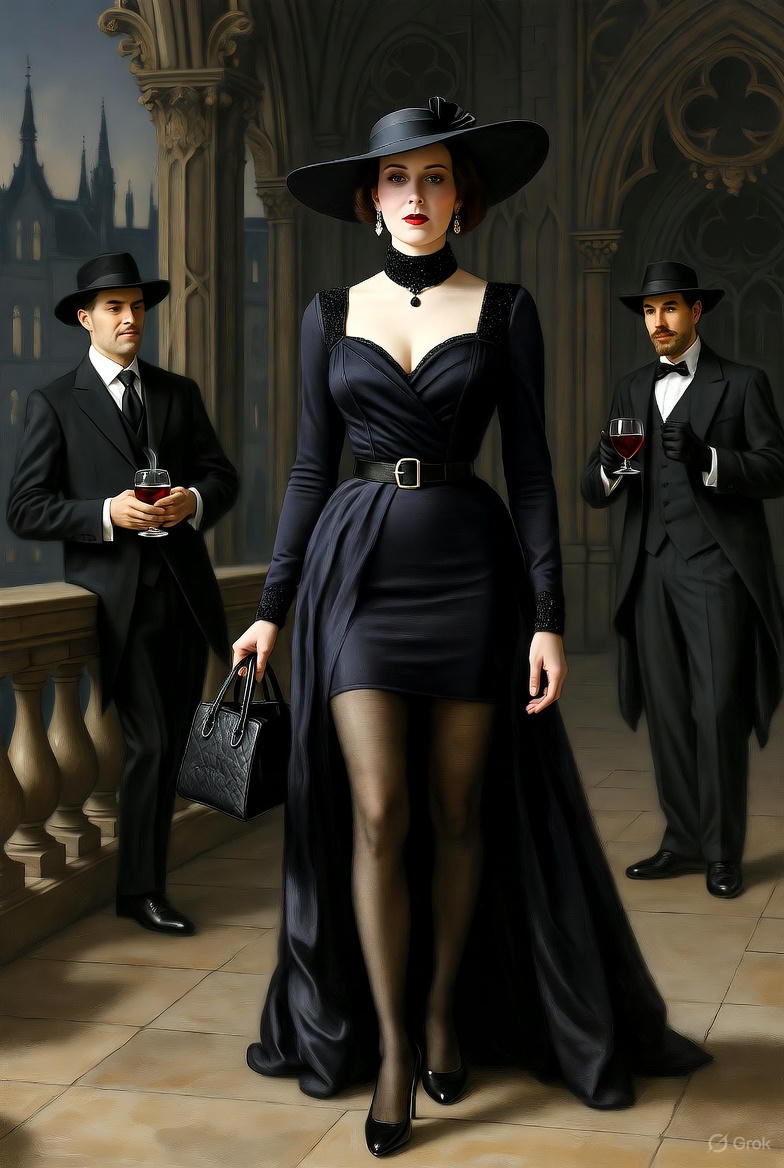
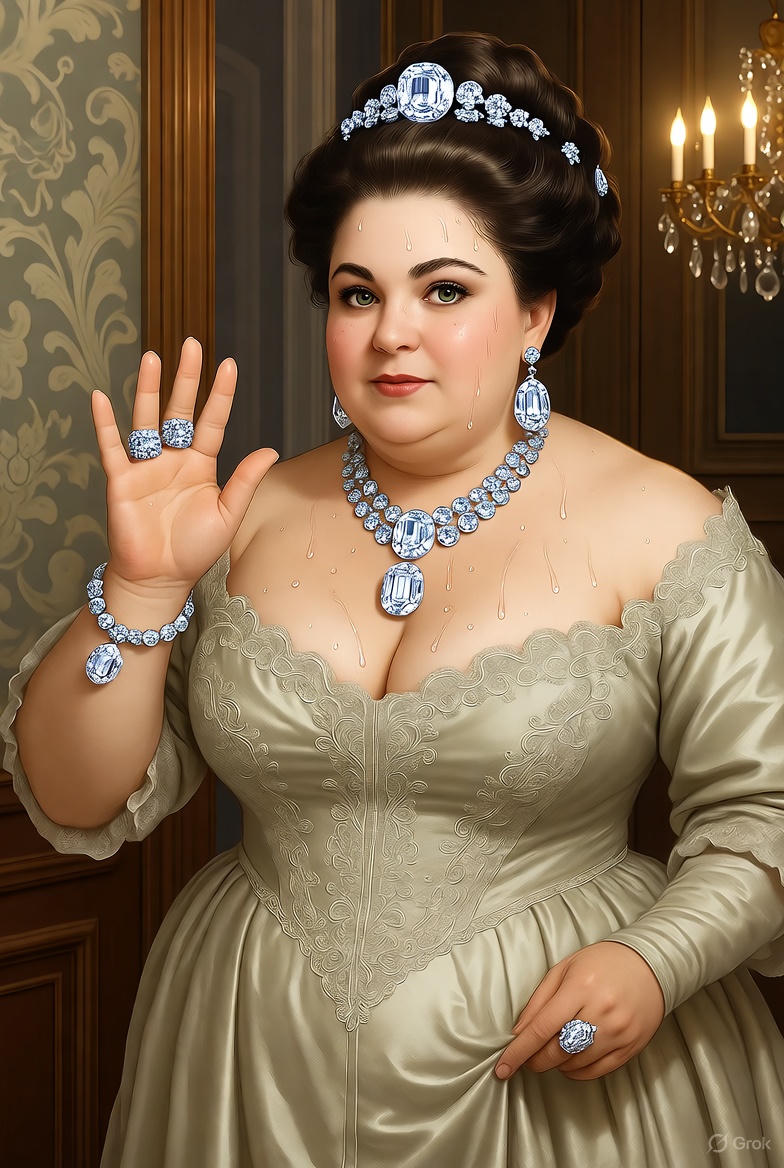


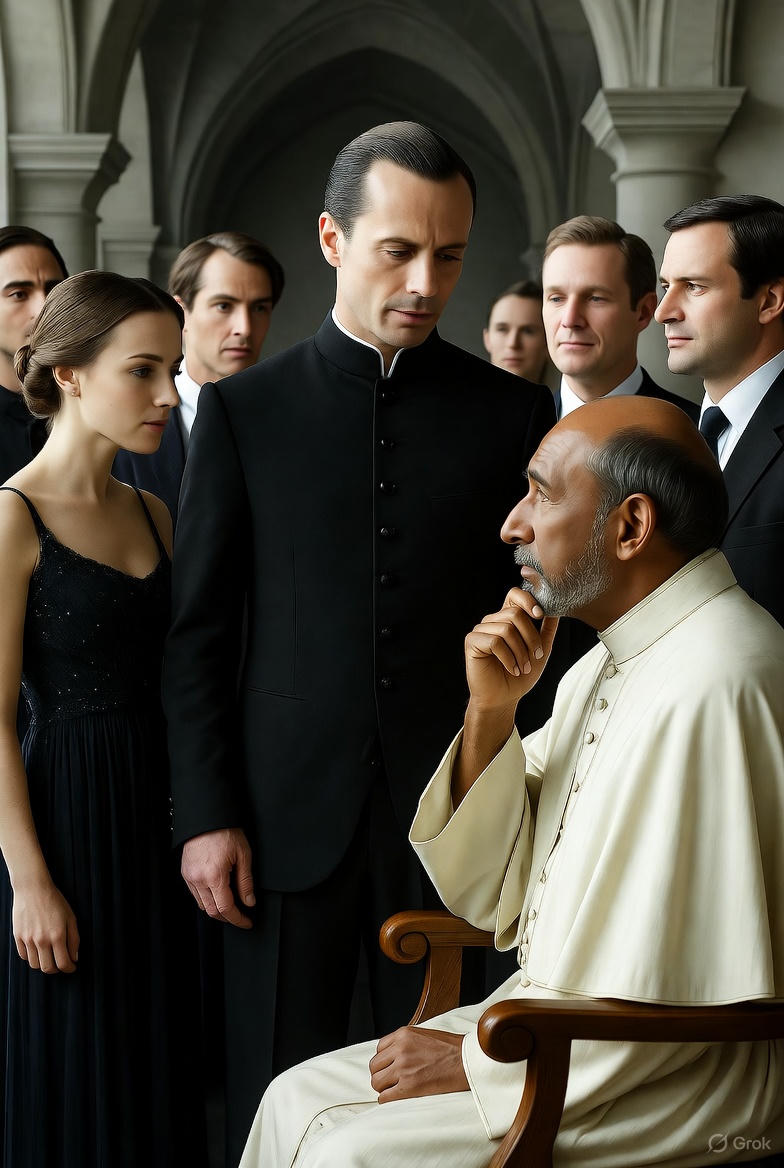
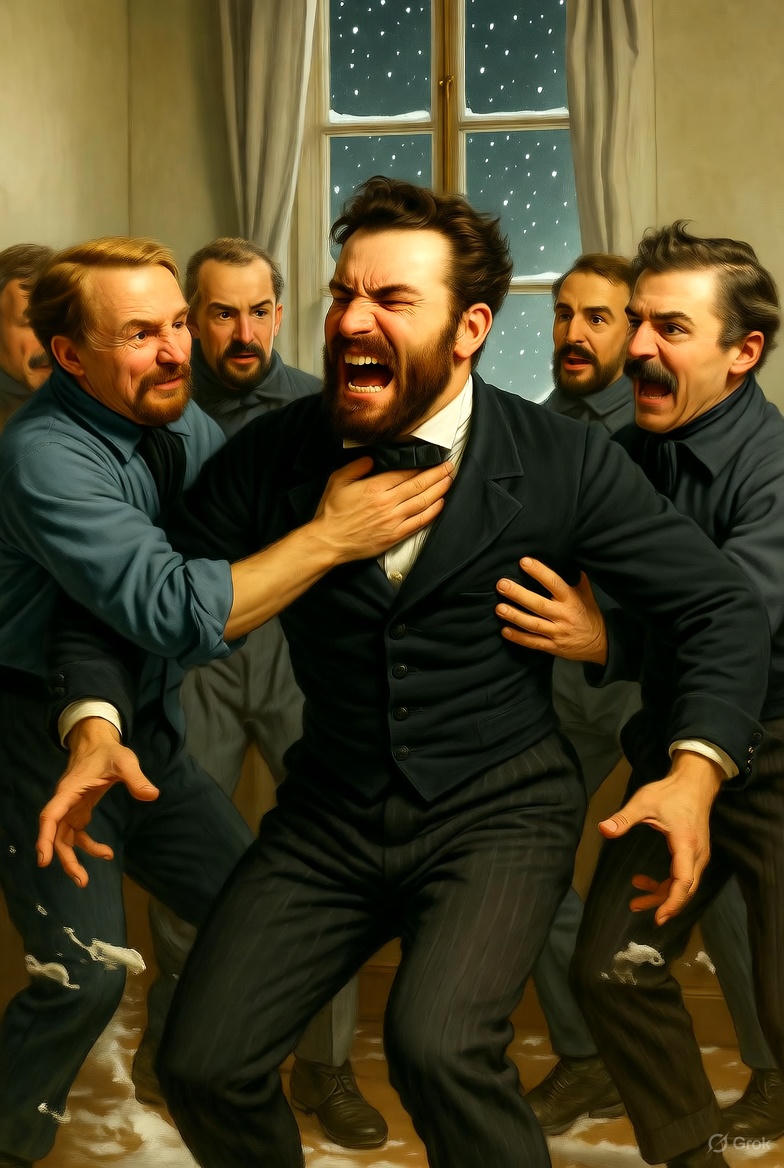

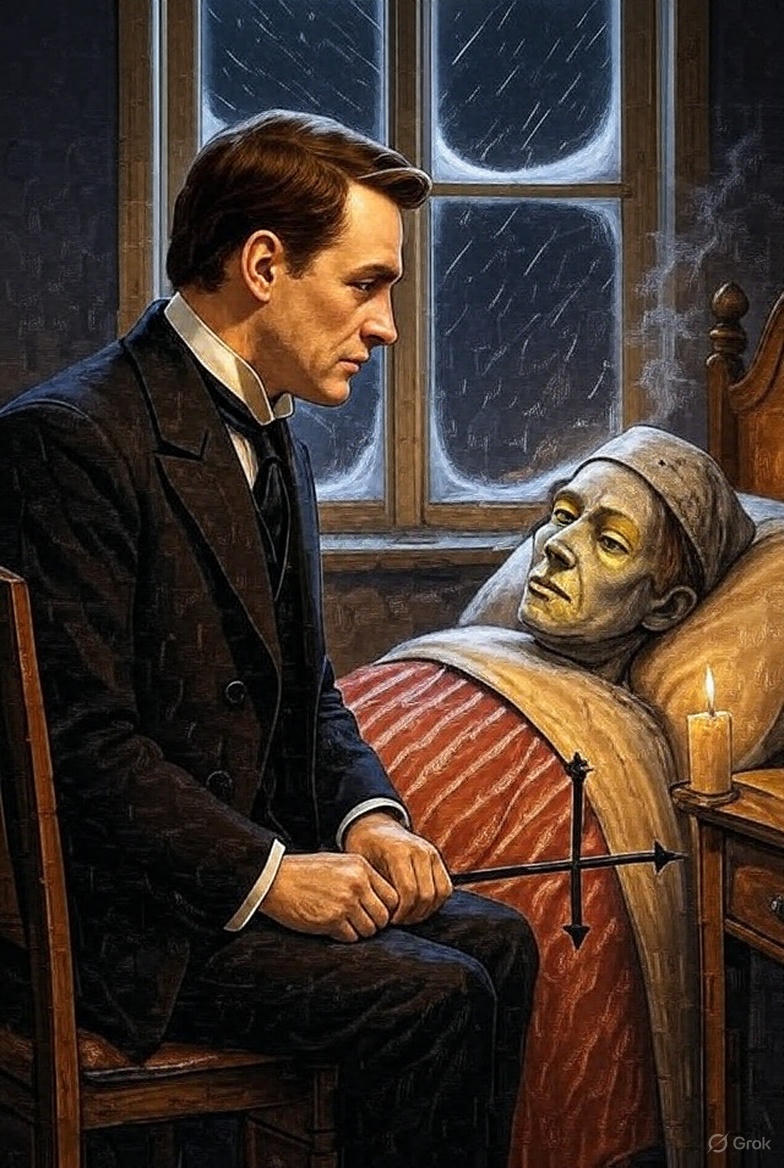


 Anarchistbanjo's World