Feeds:
Posts
Comments

Posts Tagged ‘columbo’

Homo Sapiens: Under Way by Stanislaw Przybyszewski and translated by Joe E Bandel

X.

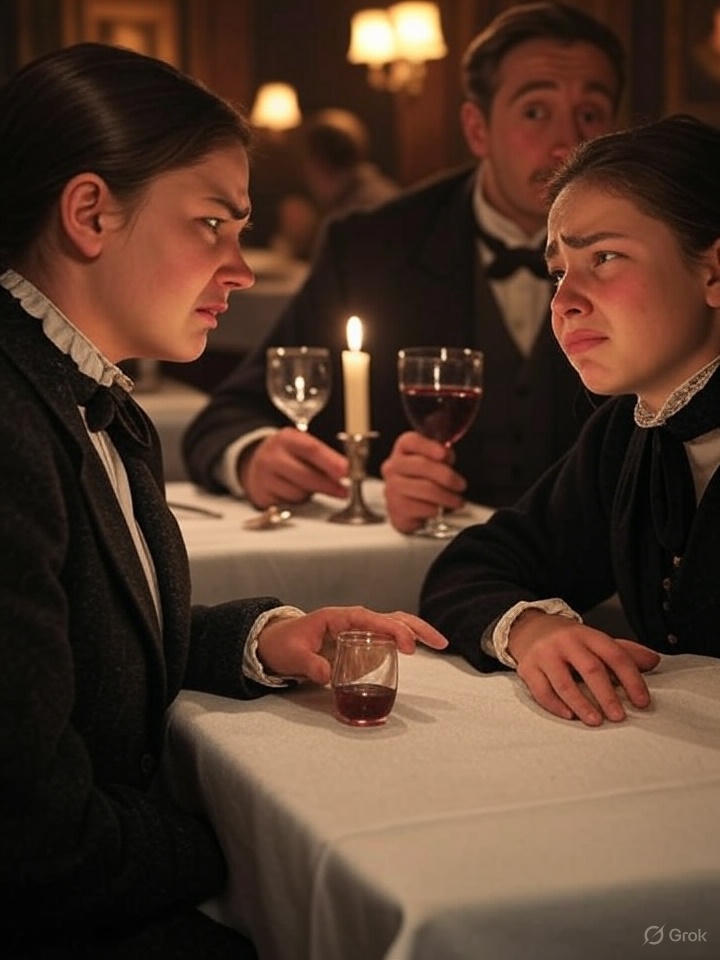
The restaurant was not closed despite the advanced hour; Flaum still had guests, and so they went in. The editor ordered wine.

“I’m very glad,” he said, “that we met again. It was terribly interesting how you performed at the district commissioner’s today. But—forgive me—you judge a bit too much in bulk and wholesale.”

“Yes indeed I did that. I often do. That’s self-evident. Every thing really has very many different sides, which—understand—not lie next to each other for convenient overview. No, sir, on the contrary. There are the most various illuminations. A thing is like a hectogon; only one surface gets full light there. And now look: the whole human judging rests on the fact that only this one surface is considered and perhaps still three or four that lie closest.”

Falk emptied the glass.

For his intellect there was no judging at all. He could say nothing certain about any thing. If he judged at all, it happened merely because he somehow had to communicate with people, and then he judged just like all other people, i.e. he proceeded from certain premises of which he knew that they counted as “given,” and drew the conclusions.

But for himself there were no premises and therefore also nothing “given”; he therefore asked the Herr Editor not to take his opinions as absolute.

The editor seemed not to understand that and drank to Falk for lack of an answer.

The young doctor listened curiously and drank very eagerly. Suddenly he got the desire to annoy the editor: Falk joked so excellently.

“What do you think, but in all seriousness, of a social future state?”

The editor winked his eyes; he noticed the malicious intent.

“What do I think of that?” said Falk. “Yes, I already developed at the district commissioner’s my opinion, which rests on ‘given’ valuations.”

“By the way, this whole state interests me only insofar as it—admittedly again only if the premises are correct, Herr Doctor—yes, only insofar as it can bring certain reforms in the field in which I am active.”

“Look, then for example the state will also create the social living conditions for artists, and then you can be convinced that many people who now à faute de mieux became artists because it is nowadays the easiest bread, will then rather become supervisory officials in some warehouse or otherwise make themselves somehow useful with four- to six-hour work time and social equality. Artists will be only those who must.”

The editor, who now scented joke behind every word of Falk’s, threw in irritably:

“You seem to hold artists in low esteem too?”

“No, really not, and precisely because there are almost no artists, or if there are any, they botch themselves immediately as soon as they have to bring their wares to market.”

“For me only he is an artist who is not otherwise able to create than under the unheard-of compulsion of a so-to-speak volcanic eruption of the soul; only he in whom everything that arises in the brain was previously glowing prepared and long, long collected in the warm depths of the unconscious—let us call it—that doesn’t write a word, not a syllable that is not like a twitching, soul-torn-out organ, filled with blood, streaming to the whole, hot, deep and uncanny, like life itself.”

“Well, such artists he probably never met?”

“Oh yes, yes! but only among the despised, the unknown, the hated and ridiculed, whom the mob declares idiots.”

Falk drank hastily.

“Yes indeed; and one of the greatest I saw go to ruin and perish. There was one, my schoolmate; he was the most beautiful

man I ever met. He was brutal and tender, fine and hard, he was granite and ebony, and always beautiful. Yes, he had the great, cruel love and the great contempt.”

Falk pondered.

“Yes, he was very strange. You know, that characterizes him: we once got the essay topic: how heroes are honored after death.

Do you know what he wrote? what would probably be the greatest honor for a hero?

“Well?”

“Yes, he wrote: the most beautiful honor he could imagine for a hero would be if a shepherd accidentally dug up the bones of the hero in question, then made a flute from the hollow bones and blew his praise on it.

Another time he wrote on the topic what benefit wars bring, that wars are a great boon for farmers, that they namely excellently manure the soil with the corpses of the fallen warriors; corpse manure is much better than superphosphate.

Yes, allow me, that is brutal; but brutal like nature itself. That is mockery; but the terrible mockery with which nature plays with us. Yes, sir: that is the sublime mocking seriousness of nature itself.”

The editor was silent, offended.

“Does Herr Falk want to joke with him? that really isn’t nice.”

“No, he doesn’t want that at all, he never joked with any person, least of all with the Herr Editor.”

“Yes, then they are only personal opinions that can apply only to one person.”

Falk felt a strange irritability that he couldn’t comprehend; but he controlled himself.

“Yes indeed; my opinions apply only to me. I am I and thus my own world.”

“Well, Herr Falk seems to have strangely high opinions of himself.”

“Yes, I have, and every person should have them. You know, there is a man in Dresden who calls himself Heinrich Pudor. In

general one holds him for a charlatan and he indeed makes himself talked about through strange quirks. For example, recently he demanded of the state attorneys that they prohibit the playing of Chopin’s music because it is arousing and sensual. But despite all the quirks there sticks in him yet a strange power.

Recently he held an exhibition of his own paintings in Munich. The paintings are supposed to be ridiculous and childish; I don’t know, I haven’t seen them. But for the exhibition he wrote a catalog in which it says: I am Heinrich Pudor! I am I! I am neither an artist nor a non-artist! I have no other attributes than only that I am I!

Look, that is well said.

No, you are mistaken, Herr Doctor: that is no excessively demanding significance. For as soon as I am human, I am precisely a significant, uncannily significant piece of nature. If I now say: Here are my paintings! however ridiculous they may be, but they are a piece of me! and presupposed that they are really generated from innermost compulsion: then they characterize me better than all good deeds I have done and will still do.

Here is a piece of my individuality; whoever is interested may look. I am I, and nothing is in me of which I need to be ashamed.”

“But that is absolute megalomania,” the doctor threw in.

“Absolutely not absolute and absolutely not relative! You as doctor should know that the so-called megalomania goes hand in hand with the loss of individuality. Only when the consciousness of my ownness is lost do I hold myself for Napoleon, Caesar etc. But even the strongest consciousness of my own I and its significance has nothing maniacal.

No, on the contrary: it educates humanity, it produces the great individuals of which our time so terribly lacks, it gives power and might and the holy criminal courage that until now has created everything mighty.

Yes, he certainly has that, Herr Editor! Only the ‘megalomaniac’ consciousness has the great energy and cruelty, the courage to destroy, without which nothing new and splendid comes about.

By the way, hm, it is indifferent whether one has it; the main thing is that one *must* have it! yes, *must*…

Again the unrest and fear rose high in Falk.

“No, it is really terribly idiotic to waste our time with stupid conversations; this empty threshing of straw. No, to the devil, let’s be merry, let’s drink! The riddles of life… hey! Herr Host! another bottle!”

And they drank. Falk was very nervous. His mood communicated itself to the others. They drank very hastily.

Soon the editor had drunk beyond measure.

“Yes, he loved Falk above all; he would consider himself happy to have him as a collaborator.”

Falk had definitely promised him to send regular reports from Paris to his *Kreisblatt*.

The doctor giggled.

“*Elbsfelder Weekly*: two columns ads, regular reports from Paris! Ha-ha-hah, where is the village Paris?”

The editor felt mortally insulted. Falk listened into himself.

An infinite longing for his wife dissolved in him. Yes! her bodily warmth, her hands and arms!

Strange how Marit had completely left him; no trace of desire. He broke up.

When he came home, it was already day. He cooled his eyes in the washbasin and opened the window. Then he wrote the following letter:

My dear, above all beloved wife!

I am drunk with my love. I am sick and wretched with longing for you. Nothing concerns me in this world except you, you, you!

You love me; tell me how you love me, you my, my everything!

And when I am with you, how will I find you, how will you be to me? Am I still to you your great, beautiful man? Why was your last letter so sad?

How everything in me groans for you! How I long for you! Tell me! am I to you what you are to me?! – The light, the life, the air: everything, everything in which alone I can live? For you see: now, now I know

sure: never have I known anything more surely: I cannot live without you! no, really not.

Only love me! Love me beyond your power; no, as much as you can. You can very, very much! Only love me, love me.

I will write a whole literature for you, just so you have something to read. I will be your clown so you have something to laugh at. I will crawl under your feet, like a slave I will serve you, the whole world I will force to its knees before you: only love me as you loved me, as you perhaps still love me. I will with absolute certainty leave here in two days… Your husband…

But when Falk had slept it off, he made five days out of the two—after which he took the letter to the post.
Read Full Post »

Homo Sapiens: Overboard by Stanislaw Przybyszewski and translated by Joe E Bandel

XIV.

The restaurant “Green Nightingale” was loud and lively. 

Iltis sat broad and dignified, as befits a great man, explaining to Mikita why women are far beneath men. He ostentatiously turned his back on a young literati sitting next to him. The day before, there had been an unpleasant scene between them because the young man remarked that Iltis’s hatred of women likely stemmed from more than just theoretical reasons. Whenever a lady appeared in their company, Iltis would start in. 

“You see,” said Iltis, “you’re young, and so is Falk. You can’t understand; but just wait until you’ve slogged through ten years of marriage with a woman—” he hissed the last word softly, out of consideration for Isa—“then you’ll see. Here comes dear old Falk with his Yuma women, Chickasaw Indians, and such scientific nonsense; but the fact remains that women are inferior creatures.” 

The Infant tried to interject, but Iltis cut him off sharply. 

“No, no!… A fact is a fact!” He puffed himself up… “Besides, one shouldn’t be petty with evidence.” 

Mikita wasn’t listening. A grief gnawed at him, a shame that whipped his blood into his brain with choking rage. 

What’s the point of going on?… It’s all over… He thought of her harshness—her… her… Yes, wasn’t that outright hatred? 

How he’d pleaded with her, crawled before her, begged for forgiveness! But she, hm… yes, that icy smile… Didn’t it say: why are you begging, why are you embarrassing me, what do I still have to do with you… 

He sighed heavily. 

“Well, you don’t seem to be taking it lightly…” Iltis winked. “But allow me, the matter can’t possibly hold up,” the Infant mused, pondering how best to present his counterarguments. Iltis grew highly indignant. 

“You mustn’t be petty. Just don’t be petty, or we’ll end up with foolish science. Shall I tell you about my experiences with scientists?” 

Why is Falk staying away, Mikita brooded; that wasn’t necessary… Ha, ha, ha, to give me a chance to win Isa back… Cheers, dear Erik; not necessary, not necessary. 

But why am I tormenting her? What do I still want from her?… Love? Can you force that? Ridiculous! Ridiculous! How could anyone love him at all, yes, love a man who’s only ridiculous? 

He looked over at Isa, who, as usual, sat a bit apart. 

But Isa didn’t look at him. She seemed very agitated. Red patches burned on her cheeks, and her eyes darted restlessly around… 

The door opened, and the blonde Neocatholic entered. 

Isa looked quickly at the door, clearly unable to control herself in that moment; she flinched. 

She smiled at the young man, but she couldn’t hide the expression of great disappointment. 

Yes, disappointment! Damn it, he wasn’t blind… that’s how people look when they’re disappointed. And that nervous, trembling hint of expectation—expectation! Who’s she expecting? Who? Foolish Mikita, don’t you know who she’s expecting?! Don’t you know why she doesn’t want to be alone with you for half an hour; don’t you know why she’s been dragging you here for three days straight! 

He laughed bitterly. 

Falk, she’s expecting Falk, heh, heh—Falk! He repeated the name, it surely gave him great pleasure; Falk was his friend, more than that! a brother; he’d surely made a great sacrifice for him, yes, surely… The fiancé who suffers from sentimental idiocies should get his bride, bring his little sheep to safety… 

“Hi! Hallo! Hoo!” he roared at Iltis—“To your health!” 

Everyone looked around in surprise; that was quite unusual for Mikita. 

Mikita pulled himself together. 

“To hell with your philosophizing… Woman—man… it’s all nonsense; everything’s nonsense… Let’s be merry! Merry!” 

Isa looked at Mikita wearily. 

Why was he shouting like that? What was wrong with him now? Who was he jealous of this time? 

How foreign that man was to her. How could she ever have loved him? No, she couldn’t take it anymore; she had to end it. Tonight! When he escorts her home—yes, tonight! 

How would she tell him? Her heart trembled. 

How would she tell him? Calmly and matter-of-factly. Was he blind, couldn’t he help her in this awkward situation? He knew now that she loved Falk. Didn’t he get it yet? She’d shown him so clearly that he meant nothing to her. 

Intrusive man! She was afraid to think it, she didn’t dare; but now, suddenly, she had thought it… She was surprised that she felt nothing about it… 

Intrusive man! Yes, she felt joy that she could think it without it being painful. 

The door creaked again. 

Now it’s him for sure, she knew it; she trembled. But it was a stranger. 

This was too awful, waiting and waiting like this among all these unpleasant people. 

She felt Mikita’s eyes fixed on her, but she avoided looking at him. 

God, how indifferent he was to her! 

What had Falk been doing these dreadful five days? 

Should she go to him? But she didn’t know where he lived. Ask Mikita? No, that wouldn’t do. 

She sank into herself. 

How could she see him? Why, for heaven’s sake, had she asked him never to see her again?… Oh God, she hadn’t known how much she loved him, how indifferent Mikita was to her, how the whole, whole world only brought her pain. 

She was senselessly desperate. 

Why was he shouting again? She glanced involuntarily at the empty bottles in front of Mikita. 

“Do you even know what love is?”—Mikita was beside himself. “Do you know what sexual pain is? Huh? Do you? Have you ever loved a woman at all?” 

Iltis made a dismissive gesture. 

“That… that…” Mikita stammered—“the woman birthed the man, that’s enough for her! The woman gives birth, and the man loves. The woman never loves, never; she’s content with giving birth…” 

“What? Women love too? What?” 

“But women commit suicide for love,” the Infant interjected, “you can read about it in the *Lokal-Anzeiger* every day.” 

“What? Suicide? Ask him, just ask him; he knows better—” Mikita pointed at Iltis, who smiled encouragingly—“women commit suicide when they’re pregnant and abandoned by their lovers!” 

Mikita slammed his fist on the table. Isa looked at him with boundless contempt. 

He was drunk again. How could she ever have loved this man? 

An awkward silence fell. Isa’s presence weighed on everyone. It was a bit inconsiderate of Mikita in her presence. 

Mikita suddenly fell silent. 

He saw it: yes, for the first time, he saw it—that look! He saw it clearly before him. 

He let his head sink. 

So clear! The look burrowed deeper and deeper into him. He saw the eye within him now, it looked at him… How did it look at him? 

If he painted it?… Three steps back… No! Into the corner of the studio—the other one… And now through the mirror… Yes, he couldn’t help it… It was contempt! Great, cold contempt! 

For Isa, it became unbearable. She felt a feverish unrest; her heart beat fast and heavy against her corset. 

She had to see Falk at all costs, he had to come eventually. He’s here every day; why doesn’t he come these days? 

The conversation picked up again. 

“Oh, leave me alone with literature; this endless chatter about poets and publishers and publisher prizes really makes one nervous—” Iltis yawned affectedly—“What do you want with Falk? He’s a good guy.” 

Isa perked up. 

She saw Mikita suddenly straighten. “What? What? Falk?” 

“Well, yes,” the Infant lectured, “Falk has talent, I’ll grant that; but it’s still developing, it needs to ripen, to ferment; you don’t know yet how he’ll turn out. He’s searching, he’s still groping…” 

“What? Falk groping?…” Mikita laughed with feigned warmth. “You’re priceless… You know, Falk’s the only one who can do something. Falk’s found the new. Yes, Falk can do what you all wish you could—Falk—Falk…” 

At that moment, Mr. Buchenzweig approached Isa. 

He assumed all this talk must bore a lady, so he wanted to entertain her. 

She looked at his smooth, plump, handsome barber’s face. What did this man want? 

Yes, Mr. Buchenzweig had the great honor of seeing the gracious Fräulein at the soirée in the presence of Mr. Falk. Mr. Falk is a remarkably interesting man, really the one who interested him most… He only came here to meet him… 

“You, Isa,” Mikita called across the table—“did you know Falk left Berlin?” 

He fixed his eyes on her intently. 

Isa flinched. She felt a sharp pain in her face, a constricting sensation in her chest… she saw Mikita’s wild, malicious, flushed face with wide eyes, then turned mechanically to Buchenzweig. 

She wanted to drink a glass of wine; it was empty. Buchenzweig eagerly ran for the waiter. 

Everything blurred before her eyes. She saw nothing. She suddenly heard someone speaking; it was Buchenzweig. But she didn’t quite understand what he wanted. She only looked at him, smiled mechanically—the wine was brought. She drank. 

“I know Mr. Halbe very well. A remarkably charming man, a great force in our time, which so lacks great talents.” 

Isa looked at him. The man suddenly repulsed her. She didn’t know why. 

“Excuse me, Mr. Buchenzweig, your company is very pleasant, but I must go home now.” 

She approached Mikita. 

“I have to go home now.” 

“Oh, really?—bored here?” She didn’t listen to him and got dressed. 

Again, she saw the repulsive barber’s face of Mr. Buchenzweig. Who did he remind her of? Yes, right, the barber who shampooed her hair. 

As they got into the cab, with Iltis gallantly assisting Isa, Mikita shouted to him: 

“Wait till I get back! We’ll have a merry night.” 

Isa shrugged. Neither spoke a word. 

She was paralyzed, unable to think. She was so tired. 

Now and then, a desolate despair hit her, then tipped back into this limp exhaustion. 

“You, Isa, my exhibition opens in Munich tomorrow.” “Oh, right…” 

The cab stopped. 

“Good night!” Mikita’s limbs twitched. “Good night.” 

“Now drive me back fast!” he roared at the driver. The driver whipped the horse, and the cab flew over the asphalt road. 

Meanwhile, Mikita writhed in a violent fit of sobbing. 

When he returned to the “Green Nightingale,” he was calm and composed. He was greeted with hearty cheers. 

Yes, Isa has weighed us all down, he thought. 

“You,” he sat next to Iltis—“if I get very drunk tonight, put me on the train to Munich tomorrow morning. Seven-thirty, remember…” 

“I know, I know; I’ve traveled that route a hundred times.”

Read Full Post »

by Stanislaw Przybyszewski and translated by Joe E Bandel

XII.

When Falk was alone on the street again, he stopped. He stood for a long time, until he suddenly noticed. 

Yes, for the first time, he felt this terrible, choking sadness. He was paralyzed. 

Never again! It didn’t fully register in his consciousness. 

He repeated it: Never again. But he couldn’t imagine it at all. 

At the corner, he stopped again. Home? 

What was he supposed to do at home? 

He saw electric light in café windows across the street. Mechanically, he went inside. 

As he looked for a seat, he recoiled sharply. He spotted Mikita in a corner. He looked terrible. Was it blood? – Yes, blood… Falk approached him. 

“Good God, what have you done?” 

Dried blood was on his cheek, and his hair was matted with blood. 

Mikita looked at him with glassy eyes. A large carafe of absinthe stood before him. 

“Ah, it’s you? Welcome, welcome, I’m delighted.” “What have you done to yourself?” 

It was disgusting. 

“Well, dear Falk, how’s love going?… How’s it going with love?… That’s the main thing… easy, right? Isa’s a dancer, a godless dancer… Ha, ha, ha…” 

Mikita laughed with repulsive cynicism. Falk felt disgust but controlled himself. 

“What have you done!” he repeated, staring at Mikita. 

“What I’ve done? Heh, heh, heh… Smashed my head a bit. A bit of blood… Good God! It draws people’s attention, and I can do my studies.” 

He pointed to the marble tabletop, completely covered with pencil sketches. 

“No, no, it’s nothing… But tell me, Falk, how far have you gotten?” 

Falk looked at him contemptuously. But suddenly, he noticed something glassy, strange, that he’d never seen before, and fear gripped him. 

“You’re a foolish ass,” he shouted at him. 

Mikita sank back after the artificial excitement, his face taking on a vacant expression, nodding mechanically. 

“I know… I know…” 

Falk’s fear grew. He sat beside him. 

“You, Mikita, you’re an idiot—what do you want from Isa, what do you want from me? Just say it openly.” 

Mikita suddenly looked at him angrily. 

“Are you trying to lie to me? Weren’t you with her all evening?” 

Falk flared up. 

“I was with her because of you… You drive people out the door and then expect them to go home quietly. You tormented her all evening with stupid, worthless jabs, and then you expect her to calmly go to her room and sleep…” 

The moral indignation wasn’t bad, Falk felt ashamed. This wretched cowardice and deceit! 

“Where were you with her, where?” 

“Where I was?… I had to calm her down because her sweet fiancé gets sentimental idiocies, and you don’t have those kinds of conversations on the street.” 

Mikita looked at him suspiciously. 

“Go on, foolish man, ask the landlord next door, then you’ll find out where I was with her—by the way, thanks a hundred times, I’m done playing mediator in your quarrels. I’m done explaining and excusing the splendid emotional and intellectual qualities of her future husband to your bride…” 

Mikita stared at him wide-eyed. “You did that?” 

“I wouldn’t say it otherwise.” 

That’s vile! That’s vile! Falk repeated to himself inwardly… Why, though? Because I’m calming him? That’s supposed to be vile?… Heh, heh, let them be happy, I won’t see her anymore. 

Falk’s eyes flickered. He grabbed Falk’s hand and squeezed it so hard that Falk could have screamed in pain. 

“You… You, Falk…” Mikita stammered… “I… I thank—” his voice broke. 

Never had Falk felt such an awkward sensation; he could have slapped himself, but… he was making him happy. At the same time, he felt a dull hatred. He saw Mikita as something inferior… Good God! How can you walk around with that bloody cheek! 

“Wipe the blood off!” 

Mikita grew embarrassed. He felt ashamed and looked at Falk helplessly. Then he went to the washroom and cleaned himself. 

Falk shuddered. Disgusting; now he involuntarily felt like a benefactor to the poor, deceived Mikita… Yes, a sort of patron, giving happiness back to the betrayed dwarf—disgusting! 

But—yes! Why should he give up his happiness for Mikita’s sake? Why? Because some piece of posthumous past, some piece of foolish conscience, some atavistic remnants of notions about having, possessing, before and after, stuck in him… He could just as well have been before Mikita, and Mikita could just as well do what he wanted to do, what he no longer wants to do… well, yes, now it’s all over… now, now… 

Mikita returned. 

“Now you look human again.” Falk felt the need to be kind to Mikita—yes, like before, like a brother… 

He tried. 

But Mikita felt a shame that flooded his mind, he could hardly look at Falk—it grew hot and cold, and disgust with himself seized him. 

“You, Falk, let’s go.” 

They walked silently side by side. Something simmered in Mikita, then it overflowed. 

“You don’t understand, Erik; you can’t comprehend… Do you know anything about her? Tell me, tell me—do you know? Nothing, nothing… three, four months I’ve been with her, and I know nothing. I threw myself into it—no, not I; I was sucked into a vortex, and now I fall and fall, not knowing where…” 

“You—You, Erik.” He clutched his arm convulsively… “You don’t know how it eats at me… This uncertainty—this… Do you understand… Sometimes it grabs me on the street, mid-step—a stab in the heart, a cramp… I lose my senses; I—I…” 

If only he knew how I’m suffering, Falk thought… To say that to me!… Ha, ha, ha. 

Suddenly, the situation seemed ridiculous to him. Wasn’t it infinitely comical that they both, like dizzy sheep, circled around one woman… He suppressed the hatred that kept rising against the man with whom he shared the same passion and pain. 

“You don’t know your bride…” 

Your bride! How unspeakably that hurt. But he wasn’t supposed to see her anymore. It suddenly became clear; now he finally understood. Never again… A chill ran through him. 

“Yes, yes… I don’t know her, I know nothing about her…” Mikita’s voice trembled—“but just, just…” 

Falk heard a suppressed sob. But he felt no pity. He grew hard. 

“You, Mikita, I feel you’re jealous of me—you have no reason to be. Yes, yes, I know you fight it with your reason, but that—that which comes from below, can’t be convinced… So you understand, your bride shouldn’t see me anymore… No, no, wait, it’s not a sacrifice. I care for your bride, but you’re mistaken if you think it’s a deeper feeling—it’s exactly the same with your bride…” 

Falk practically reveled in the word *bride*. That at least hurt. 

“No, no, I know you; I know your friendship for me—but it’ll be best if we don’t see each other for a while… Well, goodbye…” 

Mikita was speechless. “Yes, yes, goodbye—”

Mikita wanted to say something, but Falk jumped into a cab. “Where to, sir?” 

Falk mechanically named, without realizing, the street where Janina lived. 

He suddenly caught himself. 

What? How? Where did he say? How did it come to him so suddenly? 

He hadn’t consciously thought of Janina—not all day. No, not even once had he thought of her. 

What did he want from her? 

But he didn’t linger on it. It didn’t matter where he went now. And it didn’t matter whether he knew it or not… 

The Other, a thousand times more important, he didn’t know either. 

Why had he fallen in love with this woman? Why? Why was he suffering so unbearably? Because of a woman! 

Ha, ha, ha… there go the proud, tough men, despising women. 

Falk shook with laughter. 

They despise women, oh, the clever, tough men! They don’t suffer under women either. They’re so proud and so tough! Yes, even old, comical Iltis despises women… 

Falk laughed nervously, without knowing why… 

I’ve never suffered under a woman! Falk pictured Iltis. 

Because your organism is crude, dear Iltis; your sexuality is still independent of your brain, you’re like the hydromedusa that can suddenly cast off a tentacle with reproductive organs and let it seek a female without further concern. God! You’re happy, dear Iltis! But I don’t envy your happiness. I’ve never envied the beast that it can eat grass, no matter how long I starve. 

I suffer from myself, dear Iltis, I suffer from my brain’s attempt to reveal its depths, to lay bare the umbilical cord that ties me to the All, to all of nature… I suffer because I can’t become nature, because I can’t absorb the woman, who is half of what I am, into myself, because I… because… In the end, it doesn’t matter what I can or can’t do, it’s all just lies of my overeducated brain—only the fact, the fact… I suffer like I’ve never suffered before… 

He stretched out fully in the cab. Now he was never to see her again… Why? 

Because Mikita was the first, yes, perhaps also the older, and age takes precedence—and then, yes, because Mikita would suffer… 

Falk laughed scornfully. 

Yes, he had to sacrifice himself so another wouldn’t suffer. And so that another wouldn’t suffer, he had to. Didn’t Rabbi Jeshua let himself be nailed to the cross so the heavens would open for others? And he, yes he, Mr. Erik Falk, takes on another’s suffering, he is the benefactor, the great redeemer. 

Now Mikita is showered with my good deeds, he could barely stand under the heavy load… 

Disgusting! Falk spat, something he never did otherwise. 

Yes, he’d leave to keep Mikita from being unhappy. That’s the only reason! 

Of course, I’m leaving because she asked me to, but why shouldn’t I be seen as a redeemer to another? Why not? 

I could tell Mikita I’m leaving because I’m in danger, but that wouldn’t look as noble—maybe it would? Well, whatever… 

Or I could’ve said: Mikita, you’re an ass and at times not a very aesthetic gentleman. Of course, aesthetics is ridiculously laughable, but you need enough civilization in you not to smash your head in pain… 

Oh, Almighty, how I thank you that you didn’t make me like that tax collector there… 

Yes, in unguarded moments, you can think fabulously brutally. 

But what I meant to say… you see, Mikita, you have to mask it a bit… Good God, I don’t mind if you suffer; why not? I do too, but you’d have to go about it differently… So you see: you notice your bride is betraying you with your friend. Immediately, you become extremely friendly, with a certain dismissive, casual coldness. You act completely indifferent. Only on your face does one occasionally see a twitching pain. Not often, mind you, only where it’s truly fitting. That’s a matter of instinctive tact. 

In short: indifferent, cold, dismissive. Do you know what I’d do then? 

I’d be ashamed to the core, I’d feel like a poor sinner, I’d find myself ridiculous. Maybe then all these negative feelings would cool me down, sober me up… 

But like this—Yes, like this, I’m your benefactor, before whom you’re ashamed, yes, ashamed, because you so ridiculously display your jealousy, because your cheek is smeared with blood… 

Yes, I’m your benefactor, before whom you stammer words of thanks… Yes, I’m your benefactor. 

Why? 

Because you’re beneath me, because you have a slave’s brain, and because I, yes I—am a vile, cunning scoundrel. 

Why am I a scoundrel? Because I love her and she loves me. That’s why I’m a scoundrel! 

Heh, heh, little Mikita, your logic is damn foolish, outstandingly foolish. 

Doesn’t he see that Isa no longer loves him? What the devil? Is he blind? 

What does he want from a woman whose entire soul belongs to another? 

The cab turned from an asphalt road onto a cobblestone path. That was highly unpleasant to Falk. 

Well, it couldn’t take much longer. 

But why, why does she want to marry Mikita? Why? 

And then a thought shot through his head, making him spring up like a rubber ball. 

Was she his—his mistress?! 

Something stirred in his chest with fine, painful stabs, he hunched over in pain… 

“Faster, driver, faster, damn it!” 

“What’s it to me?!” he shouted. “What’s it to me, me—me?!” 

He collapsed completely. 

I won’t see her anymore. It’s better, much better. This bit of suffering will pass, then I’ll forget it… 

Where was he? Aha! 

The cab slowed, pulling close along the houses, then stopped. 

Falk got out. Now he had to wait for the night watchman. What did he want with Janina, anyway? 

Now it became clear what would happen if he went up… Of course, she’d cry because he’s so sad and tired… and then—no! He couldn’t do that, no… 

He saw Isa with her slender, delicate body and felt her kisses and her slender hand. 

No! It won’t do… 

Well, then home! Yes, home… He’d light the lamp… 

He nervously felt his pocket… 

Thank God he had matches on him… Then he’d go to bed… no! no!… Maybe fall asleep on the sofa—yes, a little morphine—yes, but tomorrow the headaches… he wouldn’t see her anymore. 

When he got home, he found a letter from his mother. 

It was a very long letter. She told him in detail that she had to sell the estate because she couldn’t manage it well after his father’s death, that the overseer had shamelessly cheated her, and that she had moved to the city. 

Then there was a long story in the letter about a Mr. Kauer, who had been so helpful and to whom she felt greatly indebted, followed by an equally long praise of Mr. Kauer’s young daughter, who was an angel of kindness and charm… 

The name Marit sounded so strange to Falk; he had only heard it in Norway… 

And finally, the main point—Falk breathed a sigh of relief. His mother explained at length why it was the main point: he absolutely had to come to her to help settle the financial affairs. He had to be there because the estate’s trustees required it… 

Well, that works out perfectly. Then I’ll go. 

He wrote a letter to his mother saying he’d leave immediately and took it straight to the mailbox.

Read Full Post »