The Rebirth of Melchior Dronte by Paul Busson and translated by Joe E Bandel
The performance, which began with a few rough slaps for the harlequin, was as I had much expected with the magician, dressed as on the figurehead. With his beard hung around his neck he performed a series of quite artful sleight-of- hand and card tricks, baked an omelet in a hat, which a fat citizen hesitantly offered, fetched endless ribbons, white barnyard rabbits and a glass jar with floating little fishes from it and finally crushed a golden watch in a mortar, only to find it unharmed in the purse of an embarrassed giggling girl. Then he moved on to the more difficult arts and tore off the heads of a white dove and a black dove and healed them in the twinkling of an eye, so that the black bird had a white head, and the white bird now had a black head. But this showpiece produced such a violent nausea in me that I wanted to get up and leave the room. But since I would have had to fight my way through the crowded rows of people sitting and would have had to make everyone get up, I closed my eyes for a while until I felt that the discomfort was subsiding. When I looked up again, through murmurs of applause and the admiration of the spectators, I saw the well-done picture of a moonlit cemetery on the stage. A slender, beardless man, wrapped in a black cloak, walked up and down between the grave crosses and told in his soliloquy, that a ghost often appeared here, and that he wanted to find out who the evil doer was that was certainly behind the appearance of such spirits. Behind the stage the midnight hour was signaled by twelve tinkling bells, and after the fading of the last stroke, which was followed by an artificially generated whirring of the wind, a being wrapped in white shrouds floated between the crosses and approached the man. This man seemed to be frightened at first, but then he swiftly drew his sword and stabbed the ghost. One saw clearly, how the flashing blade went through the body of the ghost, without doing him any harm. But now the boastful one threw the sword away and fled, whereupon the white creature performed a triumphant dance and the curtain rushed down. The performance was over, and the audience departed highly satisfied. I also stood up and approached the stage. My guess was correct. The invulnerable apparition was a mirror image, through a slanting glass plate, in front of which, lying on a kind of platform, an actor made the ghost, whose image was thrown onto the stage. The glass plate was made of three equal pieces, set together, and the two dark, vertical stripes of shadow, which had been visible on the stage during the performance, had immediately led me to this assumption. I now thought of leaving and noticed that there was no one left in the audience but me. But nevertheless I was not alone. Inaudibly a person had crept up to me, probably unaware of my intentions, and even though I faced him so unexpectedly, I recognized in him the sleight of hand magician in a robe as well as the cemetery fencer. I apologized and told him that I only had a scientific interest in how it was done and was fully satisfied with it. In no case was it my intention, to retell what I had discovered, which by the way had been known to me for a long time, to impair his success. “The gentleman is obviously a connoisseur,” the man said very politely and bowed. “Perhaps I have the honor of seeing a master of white magic before me?” “Not this one,” I replied. “I only wanted to know whether the excellent effect produced by the phantom was created with the help of large concave mirrors or with the sloping glass plate. Glass plates of such size are, as far as I know very precious and, as I understand it, are made only in Venice” “I see that the gentleman is excellently instructed,” replied the magician. “The three plates are our most valuable possessions and require a great deal of caution when traveling.” I thanked him with a few words and went toward the curtain, in front of which the harlequin was once again making noise and shouting. “If, however, the gentleman wished to make use of my actual art,” said the other, falteringly, and made a gesture with his hand toward the ground on which we were standing. A foreboding seized me. “What you see here,” said the other, “serves only the curiosity of the uneducated people and the acquisition of the bare necessities of life. For the deeply initiated, I am the necromancer Magister Eusebius Wohlgast from Ödenburg, and I have indeed already been honored with the name of the Hungarian Dr. Faust. I would have to be very wrong, if the wishes of the gentleman, whose outward appearance already announces the deepest and unhealed sorrow, not to offer the most glowing reunion with a beloved person who had been torn from him by cruel death.” I laughed bitterly. “You think I am more simple-minded than I am, Herr Magus Wohlgast,” I returned. “With the smoke of poisonous herbs, which completely cloud the clear mind, and with a hidden laterna magica, one can show gullible people what they wish to see.” The man shook his head with a smile and replied gently and modestly: “People of my standing, who live in moving wagons, must put up with being counted among the great crowd of wandering jugglers and swindlers. To dispel this suspicion, I expressly declare to you that I do not claim any salary if you want to accept my services in this respect. It is entirely up to you whether or not you want to give me a reward after the work is done, or under the impression of having been duped, to refrain from such. I also know very well in whose service I put my art, and remain unconcerned about profit, as much as I have to reckon with a net income. Incidentally, I recently enjoyed the extremely high honor of receiving such a request from His Imperial Roman Majesty in the rooms of the Masonic Lodge “To the Three Fires”. Although His Majesty, as a result of a very gripping apparition which moved him to the other world, was frightened and had to spend a few days in bed until his insulted mind had calmed down again. I was granted a very handsome reward. It may serve as a testimony to you that neither His Majesty nor the noble gentlemen present regarded me as an impostor, but rather left the temple of the Freemasons very moved and in silence. Yes, it was even said to protect me from the persecution that Her Majesty the Empress ordered to be instituted against me, when she discovered through an informant gentleman the cause of the illness of her husband.” Contradictory feelings stirred in me. The man seemed to me to be honest and sure of his rare abilities. But my distrust could not be eliminated so quickly. “Whom or whose spirit did you make appear before His Majesty?” I asked. “To speak of that to anyone, even a trustworthy cavalier, I am neither permitted, nor is it in my habits,” he declined. “I would also decline to communicate with third persons about apparitions which might come to the Lord if my most humble services were to be called upon.” My desire to experience this man’s art grew at his words and I spoke: “If it would be possible for you to call back a person, who has departed from this life and is very dear to me, I would be more than grateful to you.” He made a dismissive movement. “That is left to the discretion of the Lord, who is, in spite of all the negligence of his exterior caused by his grief, is a distinguished nobleman.” “So how should I behave, and when should this summoning go ahead?” I asked quickly, because two people had already entered the tent and forced us to speak quietly. “I ask the Lord to be here in three days, half an hour before midnight. On the day when the work is to take place, the Lord must abstain absolutely from all food and drink, with the exception of pure water. Then a purification of the body and fresh, clean clothes are needed. In addition, an object should be brought that was the property of the deceased person, if possible, something that was worn on the body. Strictest secrecy against anyone, whoever it may be, is a commandment, the non-observance of which makes all in vain.” “I have understood and will observe all this,” I said. “Nothing else is required?” “Nothing more for the gentleman.” “And you?” “I, my lord, must fast from today, a full three days, fast. My brother and our assistant will hold the performance here. I must prepare myself in solitude until the hour of the invocation.” I looked at him doubtfully, but the place was so filled to such an extent that further conversation was not possible. The Hungarian Magus did not pay any further attention to me, but walked right away toward the curtain. I saw him speaking some hasty words with the colorfully dressed harlequin, who nodded seriously. “So in three days -” I said in passing. “Around midnight,” he replied, and disappeared into the crowd in front of the booth. When I deliberately passed by after a while, the harlequin had disappeared, and the man, who until then had attracted the public with his multicolored costume, was now standing in the robe in front of the entrance and invited the audience to enter. In deep thought, I started on my way home to my inn. God himself had annealed my soul in the furnace of pain. I felt it deeply in the loneliness of the day, on which I prepared myself fasting for the evening with the Magus. How different my whole being had become since that hour, when my beloved had slipped away into the realm of shadows. The old irascibility which had still sometimes flashed up in me, the arrogance, of which I often enough made myself guilty, the addiction to the pleasures of the table and diversions of various kinds, the tendency to lust – all this had fallen away from me and seemed to me void and stale. The glamour, with which life presents itself to a man, was extinguished for me under the gray dust of transience.
“If I had to say where I thought the problem was, I’d say it was in having us train six newbies before moving on. We could probably get by with training four or five instead.”
Then Tobal grinned at Zee and Kevin. “Still, that’s because we are good trainers. There are some people out here that still struggle to survive after two years. I would hate to train with them. I guess the bottom line is if you can survive out here for a year you must know what you are doing.”
“You have always done a good job training newbies,” Zee told him. “No one has ever complained about your training.”
“I don’t think anyone has ever complained about Becca, Fiona or Nikki either,” he reminded her. “I guess the best thing is to trust the Council of Elders to make these decisions for us.” He looked at Zee, “I have heard you are the most thorough trainer out here. You teach things many of us don’t even think about.”
She blushed and looked pleased. “Thank you Tobal. That was a very nice thing to say.”
Kevin nodded and gave her a squeeze. “We’d better get going. I want to get out of this rain.”
They laughed and with a final wave headed toward one of the shelters. Sarah’s, Anne’s, Derdre’s, Seth’s and Crow’s newbies were all going to be initiated along with Zee’s, Kevin’s, Fiona’s, Becca’s and Nikki’s. That was ten initiations and it was going to be a long night Tobal thought as he watched and listened to the Council of Elders.
Crow had proclaimed his newbie ready to solo but the Elders had not approved demanding one more month of training. Crow was pretty upset at this and it took quite a while before he was calmed down. He felt he was being picked on because he was so young and from the village. Tobal felt Crow had gotten a bad break and sympathized with him. Still it was true. No one else really knew him yet.
At circle Llana made quite an impression with her wolf cubs. She strolled in with the two cubs trailing at her heels. Tobal had not even been sure she would show up or that he would get his chevron. He hadn’t seen her since she had left to give her grandfather the message. The cubs were nervous and kept very close to her. He was glad to see her for several different reasons.
Tobal was officially recognized and given his 6th chevron along with the secret location where he was to be initiated into the 2nd degree in two weeks during the new moon. As soon as he could he moved over to where Llana was tying the cubs to a tree and kneeled down to scratch one of the pups behind the ears and smiled as it recognized him.
“Is your grandfather ok?” He asked.
She smiled, “Hi Tobal” and gave him a kiss and a hug. “Grandfather is doing fine. He was very excited to hear about Adam Gardener, Sarah’s father, and agreed that Adam was in serious danger so he left right away to talk with him.”
Then her face got very serious. “Someone broke into the store while they were talking and they needed to teleport out to escape. Neither one of them has been back to the store since. That was how close it was. They didn’t see who it was but they are assuming it was some of General Grant’s men. They also believe it is too dangerous to go back.”
She looked at him. “I gave your wand to grandfather since I thought he might need it. I hope that is ok?”
Tobal nodded, “I couldn’t take it with me to the Journeyman place anyway. It would not be safe there. Someone might discover it.”
“Tobal,” she said. “There has been a change in my plans. Grandfather and Adam have agreed to train both Crow and me in time travel to the locations that are open to us. We feel it is better to have four of us able to time travel than just two in case something happens to one of us.”
He swallowed a bitter lump in his throat. “That means you are going to quit the program?”
She nodded quietly. “We’re counting on you to stay in the program. I can meet you once or twice a month and continue your training so you will be ready to time travel as soon as possible. Without med-alert bracelets we will have much more freedom to come and go and meet with people.”
“How soon will that be,” he said in despair. “How soon will I be able to time travel?”
She sensed his disappointment and put her right hand gently on his shoulder. “You have learned a lot,” she told him quietly. “But there is still a lot to learn. Perhaps by the time you are a medic you will be ready. The ability to teleport is the key to the entire process. When you have learned how to do that you will be ready. In the meantime you will continue within the program itself. As Ron and Rachel’s son they will be watching you in the hopes that you will have the same abilities that your parents did. They will allow you to have as much training as possible before they attempt to use you. It is almost certain you will be chosen to be trained for Federation time travel.”
“Do I need to join those people?”
“We need to know exactly where your parents are kept if we are going to help them,” she reminded him. “We will also need someone on the inside that knows their way around. Crow is going to start training a group to teleport and time travel at the village. I am going to be working with you and your group.”
“Your group?” He asked puzzled.
“Yes, your group,” she smiled. “You didn’t think you were going to be doing this alone did you?”
“Well, kind of,” he admitted.
“As you continue through the training you will meet people you trust and become friends with,” she told him. “ Some of them will be chosen to continue on within the time travel program. If you and I also teach them the teleportation process in secret they will test well enough to be chosen. Your group can then infiltrate the organization.”
“How long will all of this take,” he said in despair. “My parents are dying!”
“Your parents have been dying for twenty years,” she said softly. “ They will stay alive as long as they know we are coming. They have told me that. We will need between one and two years to get your group trained and ready. That means you will all be medics by then.”
“When will I be able to talk with my parents like you and Crow do? I mean when I’m not at circle or astral projecting to the cave I can’t reach them.”
“That should start happening soon,” she told him. “Your coming initiation should assist in that process. In the meantime keep practicing your meditations and astral projection exercises. And remember, you can talk to your parents and learn from them already. Ask them what you should do.”
“You said we will continue meeting each month,” Tobal said. “When and where will we meet next?”
“Let’s meet in the morning three days after every circle at your base camp,” she decided. “That will work for starters. Later we can find a better location if we want to.”
They left it at that and he noticed Llana and the wolf cubs were gone shortly after that. She didn’t stay for circle or to talk with any of the others. He realized she had come just to talk with him and to make sure he got his sixth chevron.
Even with ten initiations there was a shortage of newbies and Tobal noticed that several clansmen including Tyrone, Mike and Butch were not at circle. They were presumably waiting at sanctuary for more newbies and had been waiting the entire month. Tempers were flaring around the newbie situation.
Mike was angry and so were Tara and Nick who decided to just stay together for the month. Wayne and Char didn’t really care and were back together. There were five other clansmen really angry about the newbie situation. It had reached the point where four Apprentices simply left for the coast. That was more than the monthly one or two that normally elected to drop out of the program.
Tobal had been doing some heavy thinking about the newbie situation and realized that most of the problems were because Nikki, Fiona, Becca and himself had all trained newbies within a month and created a bottleneck situation with the newbies. They were getting their training too fast. There had been a problem when Rafe was training newbies one a month but this was far worse since Rafe was just one person. Now there were several people training that fast. Tobal decided to talk to Ellen about it after circle that evening.
Angel was High Priestess for the circle and Tobal noticed Dirk was acting High Priest for the first time. He was closely monitored by the old High Priest but went through the entire ritual himself. Tobal thought he had done a good job. He could feel the Lord and Lady during each of the initiations but was not able to contact them. It seemed they were focused entirely on the initiates for some reason.
The ten initiations took a long time and he missed chatting with Becca and the others. He did sit beside Ellen though and asked her about making all the training two months long for everyone.
She turned an amused eye toward him, “The Council of Elders has already discussed that in depth. We decided if a newbie is properly trained and ready to solo we have no right to prevent them. If some people can do the training within a month they have the right to do so. If some trainers are motivated to move through the ranks more quickly than others they should be allowed to do that also.”
“But what about all the bad feelings among the clansmen?” He asked. “What about the shortage of newbies?”
Ellen sighed, “Fiona, Becca and Nikki are the only ones left that are training newbies that quickly. They are trying to get their last newbies right now. No one else is trying to train that fast and the problem will go away when they become Journeymen. It is not right to punish them for being good trainers. We did not punish you or Rafe.”
“All in all,” she continued. “It is an effective system and we are inclined to keep things the way they are.”
Tobal nodded and changed the subject as Rafe sat down and joined them at one of the pauses between initiations.
“So what has been happening with the City Council this past month?”
“Not much,” Ellen replied. “Last month’s meeting was cancelled. The mayor contacted us and said they were not ready for a meeting yet. The mayor had dark circles under his eyes and looked a lot older than I remembered. This must be pretty hard on him.”
Tobal changed the subject. “Rafe, you have an air sled now?”
Rafe was wearing his red Master’s robe for the first time to circle. “It’s over there.” He pointed to a location slightly outside of the gathering spot. “I’m still not sure how fast it will go.” He chuckled and glanced at Ellen.
She looked at Rafe with a concerned look. “It’s not a toy Rafe. There have been several air sled deaths.”
He pouted, “I’m just kidding. Don’t take me so serious. Besides,” he continued glumly, “They watch us like a hawk. I can’t get away with anything.”
He brightened a bit. “But I am going to check out some of those forbidden areas that are marked on this map though. Maybe I will have something interesting to add by next month.”
Tobal had almost forgotten the map of forbidden locations Rafe had gotten from Ellen several months ago. Without an air sled Rafe had not been able to check any of them out.
Ellen protested, “Rafe, I don’t really think you should be doing things like that right now. Things are getting dangerous and we don’t really know what we are up against.”
“Checking out these forbidden locations is one way of finding out what we are up against,” was Rafe’s stubborn reply.
“I’ve got an idea,” Tobal said suddenly.
Then he explained the situation with Crow and Llana and how Crow was going to take one group and start training them to teleport and be time travelers while Llana’s group would remain within the system but receive the same training.
“Count me in,” Rafe said.
“Me too,” was Ellen’s reply.
“Good,” said Tobal. “I will tell Llana to start meeting with each of you and training you in what you need to know. She won’t be wearing a med-alert bracelet anymore and can meet you just about anywhere you decide. She won’t show up on any of the monitors.”
He looked at Rafe. “You could even take her by air sled and drop her off at some of those forbidden locations and let her check them out. Then she could teleport out with the information about the area. I think she can only teleport to a place she has been before but once she knows where it is she would be able to go back when ever she wanted.”
Ellen and Rafe looked at Tobal and at each other and nodded. It seemed like a fairly good plan. They would be waiting for Llana to contact them. In the meantime Tobal would set things up with Llana and get his Journeyman initiation.
Both Ellen and Rafe said they were going to be at his Journeyman initiation. He had almost forgotten about it. The secret location turned out to be a cave. Tobal hadn’t realized there were so many caves in the area. He scouted the area ahead of time looking for trails that led into it. He found a safe hiding spot for the things that belonged to his parents and left them in a bundle to pick up later after his initiation.
Finally satisfied that he knew where he was supposed to go he went into the camp itself. No one had said anything about coming early and the late spring weather made travelling a bit uncertain. He felt it was better to show up early than to show up late. It was only a few hours early and they would be expecting him.
He decided the best course of action was to stay on the path and make no sudden moves remembering what had happened with Fiona. It turned out he didn’t need to be so cautious. Turning a corner in the path were two guards standing in the middle of the path as a roadblock. They had a small fire going and there was a lived in occupied look that made Tobal suspect this camp was always guarded.
They greeted him warmly and one guard remained on the trail while he was escorted to a chamber and told to wait. After about an hour of silence someone came for him and again his guide was female. This time it was a girl Tobal knew as Lea dressed in a black robe and hood that covered her honey colored hair.
“Do you seek the Light and Wisdom of our secret circle,” she asked as she approached him in the darkness.
“Yes, I do.”
“There is no Light for you here. In the Apprentice degree you have received all of our light. What you need now is more darkness so the Light within you can shine forth more brightly. That is how you will attain the wisdom of our circle. Will you permit me to be your guide into the darkness?” She asked.
Tobal was surprised and a little shaken by this and wondered what he was getting himself into but he remembered Rafe and knew it couldn’t be too bad.
“I will permit you to be my guide,” he told her.
“You must leave everything behind if you are to enter this degree,” she told him. Then she told him to strip completely. She fastened a large blindfold around his eyes so he couldn’t see anything and taking his left hand led him further into the cave. In the other hand she carried a burning torch. Tobal sensed the light from the torch but couldn’t see anything through the fabric of the blindfold. His guide led him for some way and then stopped. A bundle of clothing was pressed into his hands and he was told to dress himself.
“Are you willing to receive the darkness,” she asked him?
“Yes.”
“What are the two passwords into our sacred circle, she asked.
“Perfect love and perfect trust,” he replied.
“No, in this degree these are reversed. In this degree you must have perfect trust to find perfect love. In this degree we study the duality of opposites inherent in all of nature. Think upon these things as you wait on my return.”
She told him to sit down where he was and took his blind fold off. As his eyes adjusted to the glare of the torch she told him it was very important he stay where he was because the cave was large and he could get lost or killed if he wandered away in the darkness without knowing where he was going. She was going to go and see if things were ready for the initiation. In the meantime he was to quietly meditate and prepare himself.
She turned and left him sitting in the darkness. As he watched the torch grew smaller in the distance and then disappeared altogether as she turned a corner. He had never experienced such total darkness and it was unnerving. For a moment he fought the impulse to get up and run after her remembering what had happened with Fiona. In the darkness the rock and earthy feeling of the cave seemed to close in on him and press against his ribs making it hard to breathe.
There was a sound in the darkness behind him and a bolt of panic and fear tried to tear itself loose and gain control over him. It took a massive effort of will to fight the feelings back. He began concentrating on his breathing and centering as Crow had taught him. He deliberately pulled the earth energy up from the ground and from all around him and encircled himself with it and called on the Lord and Lady to be there with him.
In the blackness of the cave he began to see glowing lights and couldn’t tell if he was seeing them with his physical eyes or in his mind’s eye. There simply was not any way of knowing if they were figments of his imagination or if they were real. He wanted to believe they were real but whenever he tried to focus and look at them directly they would disappear. This continued for some time.
He could feel his heart beating and pulsing in his throat and arms and in his heart itself. It was a slow steady rhythm that seemed to comfort and protect him. It seemed like hours had passed and he wondered if he had been forgotten but was not particularly worried. He had found his center and surrounded himself with protection. Then he heard someone coming and saw the faint gleams of light from the torch.
The light blinded his eyes as Lea came up to him and told him they were ready. She handed a second torch to him and lit it.
“You carry your own light into our circle.” She told him. “In the Apprentice degree there were two passwords. What were they?”
“Perfect love and perfect trust.” He replied.
“And what are the passwords into the Journeyman degree?”
“Perfect trust and perfect love.” He replied.
“Remember these passwords.” She said. “You will need them to gain entry into our sacred circle.”
As Tobal was led deeper into the cave it opened into an enormous cavern. Torches had been placed around at various points for lighting and there was no large fire in the center of the cave. The smoke from the torches rose and lost itself high in the vaulted ceiling finding escape through some hidden airway. Four small fires marked the four quarters of the circle at a smooth and level spot in the cavern floor.
A circle had been formed by dark hooded figures standing silently waiting for him. The High Priest and High Priestess were dressed in red robes with large hoods that hid their faces. Looking at them, Tobal couldn’t make out who they were. The hooded figures around the circle looked eerie in the flickering torchlight. He was halted at the edge of the circle.
Lea pulled him forward. “An Apprentice is among us proven by the elements of nature and of the earth. He wishes to join his light with our own so our community might be more illumined and our wisdom grow. He further wishes to follow the ancient craft and learn the ways of our sacred circle.”
The High Priest came over and stood in front of Tobal staring intently into his eyes.
“I must remind you that this is not a matter to be lightly taken. Your immortal soul will be deeply committed to the path of the Lord and Lady. Do you desire to have your destiny joined with theirs?”
“I do.”
“Do you seek the way that reaches beyond life and death? Will you serve the Lord and reverence the Lady? Will you keep secret from the unworthy that which we show you?”
Tobal replied affirmatively to each of these questions in turn.
“So be it. Child of Earth enter the path of darkness.” Stepping back he motioned for Tobal to walk in front of him into the circle. But his guide quickly restrained him.
“You can’t enter our sacred circle unpurified.” She said. Then taking a bowl of water from the High Priest she sprinkled him with it.
“I purify you with water.”
She waved the torch over him, in front of him and behind him.
“I purify you with fire.”
Then the High Priest stepped forward once more.
“There are two passwords that will allow you to enter our sacred circle. What are they?”
Tobal replied, “Perfect trust and perfect love.”
“Then lead us with your light into the greater darkness.” Said the High Priest. “Show us the way.”
Tobal’s guide tugged him widdershins toward the North quarter and Tobal led the silent party to the small fire signifying the North quarter. He stood silently before the fire wondering what to do for several minutes as they bowed respectfully and waited. The cave’s chill seeped into his bones, stirring echoes of the altar’s glow from his astral visits, a faint reassurance in the void. Then he felt his guide nudging him toward the west and he led the party to the quarter of the circle representing west and water. As before they remained standing silent before the watchtower with bowed heads. Again his guide nudged him forward toward the south.
After paying homage to the watchtower of the south Tobal led them to the Watchtower of the East where the process was repeated. Then Tobal was nudged by his guide to continue widdershins until they arrived at the entrance path into the circle itself. The High Priest roared out in anger.
“Seize Him!”
Taking his knife the High Priest pressed it against Tobal’s chest and cried out in anger.
“We trusted you and you have only led us in a large circle. We have arrived back at the beginning. Why have you done this to us?”
Tobal had no answer to give and his guide remained silent.
The Rebirth of Melchior Dronte by Paul Busson and translated by Joe E Bandel
“I won’t leave you — again,” I affirmed, drunk with happiness. “I knew you would come,” she whispered softly. She clung to my shoulders with her small hands and repeated the words that she had scribbled in a flying hurry on the piece of paper I had taken from the gambling house. “Save me! Save me! Take me with you!” This unexpected and scarcely hoped for turn of my adventure filled me with the deepest delight. I was immediately ready to do anything she might ask. “So you are in danger?” I asked. She quickly nodded her head several times and once again nestled her tender body against me again pleadingly. For a short moment I thought of the severe punishments with which the Empress’ courts used to deal with kidnappers. It had been said that a nobleman who had kidnapped the wife of a distinguished courtier and special favorite and fled with her to his estate, was seized and taken to the dungeons of Spielberg, where he was forced to stand with up to half of his body in liquid filth, with an iron pear filled with pepper in his mouth, gnawed on by rats, and had perished in the most horrible way. But the sweetness of a happiness, which already stunned me in the mere expectation, stifled any fear, indeed any deliberation in me. After a credible excuse, which the girl told to the old gray woman, and after my assurance, supported by a new shower of gold, that it was only a short walk, the woman, who did not seem to be at all inclined toward the doctor, let us go out the door, and we climbed down the stairs, both of us worried about an unpleasant encounter. We strode swiftly, Zephyrine under the cover of a cloak and a thick veil, down the street and unnoticed by my housemates, reached the quarters in Himmelpfort Street. There I learned everything I needed to know about the poor child. She was a four-year-old orphan, when Postremo took her in under the pretext of charity. During her childhood she was treated well and even received a very careful education. But this was not out of philanthropy, as had recently come out. A few months ago, when Zephyrine had reached the age of sixteen, Postremo told her that now the time had come for her to prove her gratitude to him and at the same time to establish her own happiness. That mummy-like Count Johann Nepomuk Korony, whom I had seen at the gaming table at that time had agreed to pay his, Postremos, considerable debts, if Zephyrine would be his mistress in return, so that his almost completed life might once more be renewed. Moreover, the monster hoped that the untouched girl would, through her devotion be exposed to a certain genteel disease from him without being seized by it herself. Postremo had explained all this to the unfortunate child with cynical sincerity, and her tears and entreaties had only succeeded in doing one thing, that he once again made the attempt to improve his situation at the Pharaoh’s table. On that gruesome and for me nevertheless so happy evening, this last hope of the completely ruined gambler collapsed and now he was holding the girl more than ever under seclusion, probably because he trusted that she would do everything to save herself. My appearance had taken place at the most extreme hour. For that suspicious person with whom I had seen him in the Greek coffee house was none other than the valet of Count Korony, and there was no doubt that the miserable Postremo was making the final preparations for his and the count’s crime. The poor child was in the greatest fear, for she was well aware that the doctor was a master in the preparation of anesthetic medicines, which were able to eliminate all free will. For days, she had eaten only the most meager food, so as not to fall victim to the demonic arts of her jailer, but still she saw the horrible moment inexorably approaching, which would put her in the grip of the spider-fingered lecherous old man. While she told me, almost crying, of the agonies of the last days and of her almost collapsing hope for my help, I sent my servant to fetch a meal, to get him out of the house. For I knew that this child was my own and that only death could separate us. Every moment of happiness that lay ahead of me was too precious to miss. It was clear to both of us without many words that we had always been destined for each other, and it cost the lovely and pure girl neither bridal tears nor difficult resolutions, to become completely mine. A holy and irresistible desire drove us to become one body and one soul, and neither of us could think of binding the eternity of our love by vows. We felt no shame in front of each other. Everything was as it had to be and fulfilled according to eternal laws. When I held the young, naked body in my arms for the first time and guarded the sleep of the dearest of all creatures, I was suddenly seized by an inexplicable sensation which carried me away: first I was overcome by great fear, as if we were threatened by lambent flames. Then I heard a clock strike in the infinite distance. The smell of apples and foreign wood was around me, and as if by themselves my lips formed the word: Aglaja! Everything had turned out perfectly. With money I had managed to get the most necessary papers, and in a small village not far from the capital our wedding ceremony had taken place, so that I no longer had anything to fear from the spies of the morals commission and probably also from Postremo. I had soon acknowledged my lodging, given the servant some money and dismissed him and for a little money I purchased a little house in Grinzing, hidden in the bushes and trees, which I furnished with the help of skilled and understanding craftsmen. Unclouded sunny days passed over us, and that unhappy time that soon follows the excess of happiness and is well known to all married couples, was spared us. It was as if each day brought us closer and more ardently together. Often it happened to me that I called Zephyrine “Aglaja” in times of the highest emotion. But this peculiarity seemed to neither hurt nor astonish her, although I often told her of my dead, beloved cousin and of her resemblance to the girl who had been taken from me so early. Once she said: “I am yours under all the names you want to give me.” She also shared with Aglaja a great love of flowers and animals. We had the garden full of rose bushes in all colors, the glowing scent of the red, the tartness of the white and the delicate yellow blossoms. On all the flower beds a riot of colors, and a sea of flowers balmy fragrances wafted over us. Young animals played around us, dogs and cats, birds twittered in the branches, and nimble lizards glided over the gravel of the paths. Very soon after the completed establishment of the house Zephyrine felt like a mother. Heavy-bodied and pale, she sat in our favorite place between dense, flower-bearing bushes. “It will be a boy with dark hair like his Father,” I joked. “No, I carry a little vixen of the female gender under my heart,” she smiled back. “And she shall be called Aglaja.” I kissed her and looked into her gray, gold-spotted eyes, at the bottom of which there was still hidden something fearful. Carefully I moved the pillow in the back of the delicate woman and thought to myself how happy I would be when she had her difficult hour behind her. Then I saw a namelessly horrified expression on her face, and her gaze was fixed on something behind me. The dogs thrashed furiously in the kennel. I turned around immediately. Behind me stood the hunchbacked doctor with the thick black eyebrows and the upturned nose. An unpleasant pungent smell of bitter almonds suddenly overpowered the scent of flowers. With a grasp I seized the shapeless figure at the chest and shook it back and forth. “Scoundrel!” I gritted between my teeth. “Have I got you now? You can’t escape me alive-“ The hunchback turned blue-red and gasped something I did not understand. The woman let out a loud scream, and when I looked around, she was in a deep swoon. At that moment I felt a burning sting on my right wrist. My hand, which still held the coat of the hunchback, was suddenly paralyzed, the fingers came loose, and the whole arm sank down dead at my side, dull and heavy. Horrified, I saw how the man indifferently wiped away a drop of blood from the flashing lancet with which he had stabbed me and put it back in the pocket of his coat. “Oh it doesn’t matter!” he laughed. “Unapiccola para- lisi! Doesn’t last long – five minutes! You don’t attack me, I won’t attack you!” He pulled a small can out of his vest and held it under the nose of his daughter. Zephyrine sneezed violently and immediately regained consciousness. “Grandfather -,” she said, as a shudder came over her. “Si, si, lo zio!” he feigned. “Il padre, if you will, Zephyrine! Haven’t you expected me, Signore?” he addressed me. “O cattivo, cattivo! What have you done? Eh?” “I did not expect you here!” I told him. “For the time being, I’ll keep my wife away from the sight of you and bring her to the house, and then I am at your disposal.” He sat down on one of the chairs with a mischievous laugh. My stunned arm had already recovered from the effect of the poisonous sting, so that I could support the wavering woman and bring her into the house. In front of the front door she was overcome by violent vomiting, and only after a while was I was able to put her to bed in our bedroom. Sobbing, she begged me not to expose myself to any more danger. Despite his crippled body Postremo was one of the most dangerous and determined people. I reassured her as well as I could, and went to my room where I picked up a pistol with a live round, and then determined, went to the garden. When I arrived at our favorite spot in the rose bushes, which was no longer an undiscovered refuge, the ugly monkey was sitting there and bared his yellow teeth. A lot of the beautiful roses lay torn off, torn apart and trampled on the ground.
The Rebirth of Melchior Dronte by Paul Busson and translated by Joe E Bandel
I looked around the distinguished room in which I was kept waiting, and looked closely at the only picture, a man with olive-brown, finely chiseled features, dark, sad eyes, of rather unattractive facial formation, wearing a canary yellow uniform with red lapels and under the coat, which was open, a black breastplate. Then the maid reappeared, lifted the curtain and asked me to enter with a curtsy. I entered a boudoir entirely in gleaming gold with precious furniture and a brocade-covered resting bed, on which Laurette half sat, half lay. She smilingly held her hand out to me from a cloud of lace and thin silk, smiling, and I was again struck anew by the unusual charm that her pretty, rosy face radiated under the artful coiffure. But while I stared at her, not at all to her displeasure, enraptured, that disgusting, shrill laughter sounded close to us, and only then I noticed a chubby, bald-headed parrot of gray color, from whose crooked beak came the laughter. If my whole mind had not been filled with the image of that sweet child’s face and the reddish-gold hair, I would hardly have felt at ease in the presence of this blossomed woman, who had stirred my first emotions of love. I felt that I could not have restrained myself for long, and all the more so because Laurette, with consummate art, soon showed me a part of her perfectly beautiful breast, soon the noble shape of a leg or the curve of her classic arm. Nevertheless, I could not resist the desire to remind the distinguished lady of those days, when she was still called Lorle and had kissed me in the honeysuckle arbor behind her father’s house. But she slipped away from me in a playful mastery of the conversation, and thus forced me to respect the boundaries she wished to keep. Yes, when I, fired by my blissful memories, dared to touch her bare arm with my hand, she struck me on my fingers and pointed with peculiar, even serious, significance at the parrot, who was entertaining himself by wiping his beak on the silver perch. “Take care, my all too friendly cavalier, beware of this bird,” she said softly, as if she were afraid that the ruffled beast might be listening. “Apollonius does not like it when one caresses me in his presence. Besides, my little finger tells me, dear Baron, that you have not come to court me, but that you have called on my willingness to serve you in some other way.” “I cannot deny it,” I replied, somewhat affected, although it seems unclear to me from where you, my dear Laurette, have received such wisdom.” “Ei!” she laughed, “Don’t I have my soothsayer and at the same time protector and guardian next to me?” and less loudly she added: “It can be called a true good fortune, that the good Apollonius is becoming somewhat hard of hearing and is no longer able to overhear all that is spoken.” The fact that she lowered her voice seemed indeed to disgust the bird. He rolled his ball-eyes, stepped from one foot to the other, and struck the cage bar with his beak, so that it rang. “Louder!” he cried. “You see?” said Laurette, glancing shyly at him. “He’s in a bad mood today.” “He looks like an old Hebrew, your Apollonius,” I said aloud. “It is believed that animals of his species live to be over a hundred years old.” “Hihihi! Hehehe! I’m an animal?” cried the bird. “A hundred years! Imbecile!” “What do you mean, he speaks French?” I turned to the beautiful one. “He speaks all languages,” whispered Laurette. “Take care! He guards me, tells everything to the Spanish envoy – whose mistress I am,” she added hesitantly, her cheeks flushing slightly. “But Apollonius also bears witness to events and is able to see into the future.” Now I knew who the pimp was to whom she owed her well-being, and so naturally a faint feeling of jealousy would have arisen at this discovery. Not being of a jealous nature, I felt nothing of the kind. Nevertheless, I felt sadness and remorse that this once pure and benign child through my fault had been taken from the peaceful and safe shelter of her parents’ home to the glittering and uncertain splendor of a life based only on lust. At the same time, however, I clearly recognized that her restraint towards me was not due to gratitude towards a present friend and lover, but rather the fear of the treacherous gossip of the feathered fowl to which she obviously attributed intellect and human-like malice. That through such thoughts the extremely ugly, bald- headed animal became even more repugnant and hated by me than already at the first sight, is understandable. I was tempted to interact with the chattering bird. Or at least to check in every way, to what extent Laurette’s description about his intelligence was justified. How could this small, round bird’s head, behind these rigid, rolling eyes be anything different from that of other animals? The repeating and coincidentally making sense of learned words and randomly putting together learned words might be suitable to cause strange, astonishing effects. But I could not and did not believe in a human-like thinking ability. The only thing I understood was Laurette’s caution to speak softly, so that the hard-of-hearing bird would not parrot them back at inopportune times. I myself had heard a story, in which a starling, also a talking animal, had betrayed his mistress by singing in front of her husband in the most melting tones the first name of a young gentleman, who had been suspected for a long time of being the favored lover of the housewife. Without waiting for Laurette’s warm gesture, I turned to the parrot, looked at him and said: “Well, Apollonius, if you are really so clever as you are, tell me who won the most money the day before yesterday at the Pharaoh’s?” The bird ruffled its feathers, twisted its eyeballs in a ghastly way, chuckled a few times, and then cackled: “Defunctus” – the dead one. I looked at him, unable to speak a word. “I beg you, Melchior, let him go,” said Laurette quickly and quietly, and in her gaze there was fear. Then she said loudly, “Baron, don’t tease Apollonius, or he’ll tell me the nastiest things that deprive me of sleep at night. “It was I who won, infernal beast!” I cried, and pulled myself together. The gray one laughed and said with his head bent forward, eyeing me maliciously: “Donum grati defunctil”-a gift from the grateful dead. “Why don’t you turn the collar on such vicious vermin?” I angrily prodded. “Give him some peach pits and get some peace with it.” She shook her head. “He eats no poison, fair Herr! Little killer! Little murderer!” chuckled Apollonius and flapped his wings. “Perhaps you have murdered yourself, chewy, disgraceful beast!” I screamed and shook my fist at him. “Perhaps you are a soul damned by God and must now repent in the form of an animal!” There came a heavy, almost human sigh from the bar, a groan from a tortured chest. The parrot looked at me with a fearful and horribly desolate look, and hung its head. Slowly he pulled the nictitating skin over his eyes, and with an inner tremor I looked – by God in heaven! -, I saw two tears dripped from the eyes of the animal. But this lasted only a moment, because immediately after that he stared at me with such appalling insolence that I became hot and cold and my rising of pity quickly disappeared. But when I saw the troubled face of the beautiful Laurette, I thought how naughty and disturbing for her peace my behavior must have seemed to her, and to rectify my mistake, I decided to turn the matter into a joke. I bowed therefore with ironic politeness before the animal and said in a cheerful tone: “Do not be angry with me, venerable Apollonius, I did not mean to offend your wisdom. I am now converted and no longer doubt in your wonderful gift to see the past and the future. Would it not be possible to make friends with you, king of all parrots?” The feathered one shook with laughter, clucked his beak and whistled. Then he moved his head quite distinctly, after human style, violently denying, back and forth. “So we can’t be friends?” I continued and winked at Laurette. “I would have liked to ask a question – about a hunchback I’m looking for -.” My question was for Laurette, of course, and I was about to explain myself further, when it came buzzing from the bar: “Dottore Postremo.” “What do you want with him?” said Laurette, in astonishment. “Do you know him?” I asked, unable to conceal my excitement. A deep blush passed over her face. “As it happens –” she replied sheepishly. “What is it about him?” “He’s an Italian doctor — a lot of women go to see him who wish to remove the unpleasant consequences of a few pleasant hours. He has a reputation, and the courts have often dealt with him. But nothing could ever be proved. – But you must not think, Baron, that I might -“ I laughed politely, “How could I, beautiful Laurette?” “He is said, by the way, to have a very beautiful foster- daughter or niece,” she went on, looking at me lurkingly. “A girl who has hardly blossomed. He lives in the house called Zum Fassel.” She lowered her eyes and looked at me from under her lids. “Be careful! The man is capable of anything!” “You are mistaken, Laurette,” I lied. “It’s not a question of adventures.”
The Rebirth of Melchior Dronte by Paul Busson and translated by Joe E Bandel
There was a loud calling and it came closer. Two gravediggers, an old man and a sturdy young fellow, came running with bludgeons and confronted me. What had happened here and why had I shot? I talked to them and described to them the guy with the satchel, who once before had been suspiciously at an unburied corpse in the past, and also at the execution of the blacksmith Fessl in a tree and with his new corpse-desecrating behavior, had now put me in such a rage that I fired my pistol at him, but apparently did him no harm, after he had laughed, escaped and flitted away. They listened to me calmly and seriously, and the old man nodded his head as if to indicate that the man was well known to him, and that he, like me hated him to his very soul. Then he asked me my name, and when I told him, he said: “The Baron may now do as he pleases. We have the vested right to punish offenses against the sanctity of the place on the spot, or to punish the offence if the penalties are not paid to the court. For shooting on consecrated ground, a man shall pay only one silver thaler.” I threw the man two thalers. But he gave one of them back to me and said: “I am not allowed to take excess money. It is only a pity that your shot will never been able to harm him. -“ “What do you mean? Is he frozen?” I asked. The boy laughed, and the old man shrugged: “If the gentleman has not buried a cross in his bullet mold, as it should never be lacking and thus imprints itself on the leaden birdie, then he has not even hurt him, however powerful the weapon may otherwise be.” “I do not carry a cross on the bullets.” “So it’s a pity about the shot and about the penalty for it.” The old man cradled the hairless head back and forth. “But the fact that the Lord can see him is significant.” “Why?” “Not everyone can see him, only the blessed.” the younger man interjected. “Like, for example, father here, who has often shooed him from fresh graves, and I would give anything if I could ever catch sight of him. But I am days and nights in vain and have not seen him. And yet he has been there.” “Who is that fellow?” asked I fiercely. “Fangerle,” said the old man, making a cross. “Is it a man or is it-?” But they gave me no more answer and looked toward the entrance in the quietly falling rain. From there, with singing and many-voiced prayer came a funeral procession. “I always thought that he would show himself at the graves of the miserly,” the old man muttered and climbed into the pit. They did not pay any further attention to me, and when I asked again, the boy said gruffly, “It is better for the Lord to pray!” Confused and saddened in my soul, I walked away along the side paths to reach the exit, while the coffin of the miser was swaying towards the open pit. Before the post coach left, I noticed the faded and sealed box that the notary had given me as an inheritance from my Muhme, Aglaja’s mother. I tore off the lacquer seal and lifted the lid. On the white, yellowed silk rested a red-gold curl of my unforgettable, beloved cousin and her silver finger ring, which I had often seen on her small child’s hand. It was formed with the finest art from two slants which wound around a round-cut fire opal. I pressed countless kisses on the mysteriously shining and iridescent stone, on the silvery, scaly adder’s liver, which had once held a finger of the sweetest hand, and called out the name that had been cut into my heart and painfully scarred there.
But on the evening of the day I arrived in the great city of Vienna and marveled at the life in the streets, the many carriages, the many carts, and sedan chairs, adventures of such a peculiar kind happened to me that I thought of the influence on my life of dark and sinister powers. The first thing I encountered was of course of noble origin and graceful species. When I walked across the square on which St. Stephen’s Cathedral stretches its stone carving into the sky, I was caught in a crowd of carriages and sedan chairs, and was so close to a very distinguished, finely painted sedan chair with two dark red liveried porters, that I had to stand close to the lowered side window eye to eye with the occupant. But who can describe the astonishment I felt when I recognized in the highly toupeed, nobly dressed lady, Sattler Höllbrich’s Lorle? She too knew me again immediately, for she uttered a slight cry and called my name. With my hat drawn, I remained, enraptured by her unimaginable, fully blossomed beauty, enhanced by small arts, and asked in quiet, urgent pleading words for an early reunion. She pointed with a short, openly fearful movement towards the dark red carriers and then said very loudly, “Well, Doctor, you can bring the new ointment for my complexion to my house. Just ask for Madame Laurette Triquet in Schönlatern Street.” With that she nodded at me pathetically, in fact condescendingly, and gave the porters a sign to go on. After an exquisite dinner, I left my room in the evening and went to Himmelpfort Street quarter again and thought to mingle a little with the evening walkers who were glad of the pleasant breeze after the hot day. Already for some time I thought I had noticed an extremely graceful and neatly dressed young lad following after me at every turn. And really, it did not take long, and then he was beside me and said half aloud: “If you desire exceptionally good and amusing company and would like to play a game, I would be prepared to take the gentleman to a house where you can find such things of the best quality.” Gladly willing to spend my evening hours in a pleasant way, and hoping to increase my money supply I agreed to follow the man. He modestly went ahead as a guide, only looking back from time to time to see if I was behind him. After a long back and forth through dark, poorly lit and bumpy streets, we finally reached a crooked and very narrow alley. In front of a large gate, the young man stopped and made four quick knocks with the knocker, followed by two stronger ones. We had to wait a while and I noticed how a dark eye looked at us through a crack in the most precise way. Then, however, in the large gate, which was covered with heavy iron plates, a small door was opened, in which an older, cunning looking woman appeared and looked at us with a burning candle for quite a long time. Only when my guide quietly whispered something that seemed to me to be a word of recognition or a password, the woman stepped back so that we could pass her. We walked over a large, damp, ivy-covered courtyard, in which water poured from a triton’s mouth, and then climbed a steep, barely lit spiral staircase. On the second floor, my apparently disinterested guide asked to be let in the same way as downstairs, and when the servant opened the double doors to let me enter, I stood for a moment as if dazzled in the brightness, the hundreds of fragrant wax candles spread. A gold dressed lackey took our swords, hats and cloaks from us and told us to go on. I saw at once that the ugly, dilapidated outer appearance of the isolated house, the unpleasant darkness on the stairs and in the courtyard were only intended to keep away the curious, and the lavish furnishings and the abundance of light into concealment. For here the walls sparkled with gold, magnificent tapestries partially concealed the scarlet silk wallpapers, the floor was bare and smooth as glass, hundreds of candles burned in Venetian prismatic chandeliers and silver chandeliers. On tables with priceless plates of Malachite, lapis lazuli and ruin marble stood the most exquisite delicacies and drinks. “The Baron of Dronte might like to go to the playroom,” said my pale guide with a smile. “How do you know me?” I asked not very friendly. The young man smiled superiorly. “We take an interest in all strangers of distinction who arrive, and are informed by the Stagecoach drivers in good time. Thus I know that the Baron has taken lodgment with the widow Schwebs- küchlein, and I made it my business to introduce the Baron to a certainly agreeable circle, in which equally chivalrous amusement, as well as something from Fortuna’s horn of plenty.” During this speech we stepped into brightly lit, magnificent adjoining rooms, in which Pharaoh and Landsknecht were being played at several tables. The players hardly turned their heads toward me, when my name was shouted loudly, because at the largest of the tables, where I was standing at, all eyes were fixed on the Bankholder, who was putting on his apron. Muffled exclamations rang out from everywhere like “Va tout!” or “Va banque!” and the soft clinking and rolling of the louisdors on the green cloth that was stretched over the stone slabs of the tables. I reached for the money cat, which I was wearing under my vest as a precaution against thieves, and approached the large table. Immediately the young man, who had brought me here, offered me a comfortable armchair and then disappeared, when I sat down with a light greeting. Before I began to play, I looked at the people with whom I was dealing, and found that I had stumbled into a gathering of distorted images. The bankholder had a colorless, pinched face, which had been devastated by a restless and wild life. He wore over the right sunken eye a black cloth patch, a square piece of cloth on a ribbon, which crossed the forehead and ran further behind the right ear. Next to him sat a tremendously obese, heavy- breathing woman with a white powdered pumpkin head, fanning her pressed-up bosom. She was tastelessly covered with pearls and jewels of all kinds and seemed to me to be a Spanish Jewess, judging by her facial features. Enthroned beside her, upright and haughty under half-closed lids, a very skinny woman of standing, whose yellow monkey face had been plastered with beautiful patches in the form of palms, butterflies and little birds. Her bloodless fingers rummaged greedily in a whole pile of gold pieces that lay in front of her.
It was Llana who caught the wolf bitch in her snare and, feeling sorry for the orphaned pups, convinced Tobal they should try raising them as pets. It seemed a crazy idea, but she did it anyway. She had a primitive, animalistic aura and sensuality that was almost overpowering and frightening. Gradually, Tobal felt some of that developing within himself.
The cubs stayed with them and lacked the instinctive fear of fire most wild animals have. They loved Llana and stayed close, barely tolerating Tobal. They spent their days in the wilderness, pushing through extreme physical exertion combined with drawing energy from the earth to recharge. In one day, they accomplished more than Tobal had managed in three. She taught him to lope at a tireless, mile-eating pace, sustaining it for entire days, stopping only to recharge before moving on. They practiced sending physical earth energy out and absorbing it from the earth and living things, giving it back in turn. His body began to live and breathe this energy.
These were the lessons she imparted—feeling the life force and energy within all things and tapping into it. She taught him to purify his own energies, strengthening them, but said she couldn’t teach more until he completed the Journeyman degree. The shift to circle brought a welcome distraction.
Nikki, Fiona, and Becca each had their fourth newbies to solo. But Tobal made heads turn as he proclaimed Llana ready for both initiation and to solo. She faced lengthy questioning from the elders, who then approved her to solo. There was some grumbling, but Tobal didn’t care. Llana was his last newbie, and next month, he would be initiated as a Journeyman. He was happy, and that was that. Tyrone had soloed, earning his fifth chevron.
Green grass peeked through in places, and melting snow formed tiny rivulets running toward the lower foothills. The weather was beautiful, warm in the afternoon. Tobal watched as Angel acted as High Priestess. He was surprised to see Dirk in red robes, training as High Priest for the circle. It felt good and comfortable to see people he knew and trusted advancing.
He found Tyrone and asked about his solo. Tyrone laughed, saying it went well except for wolves howling every time he played the fiddle. He’d grown lonesome for company and looked forward to training his own newbie. The big news at camp was that Sarah, Anne, Derdre, Seth, and Crow had returned from the village and waited at Sanctuary for newbies. With them there for two weeks, it was unlikely enough newbies would arrive. Several members, including Zee, Kevin, Mike, Butch, Tara, Nick, Wayne, and Char with their students, had gone to Sanctuary only to find a large line. They were all pissed, hoping for newbies themselves. Now Becca, Fiona, and Nikki would join the hunt too!
Zee and Kevin had decided to stay at Sanctuary with Crow’s group. The others came to circle steaming mad, needing to vent. They were glad the kids had returned, but it irked them that Crow and his crew spent a cozy winter in the village, then waltzed back for newbies in spring. Tobal’s sympathies lay with Crow and his friends—they’d been at Sanctuary when newbies arrived, which mattered most. He’d camped out waiting for newbies himself.
He hardly saw Becca at all. She proclaimed her newbie ready to solo, then kissed him. “I’m going to Sanctuary,” she said simply. “If I leave now, I can be in line ahead of the others.” He pulled her into his arms, holding her close. “I’m sorry it has to be this way. You’ve only got two more newbies to train. Then we can be together all we want.” Her green eyes flashed as she smiled. “I’m going to hold you to that. You better really mean it.” “I mean it,” he whispered. “Now you’d better go so you’ll beat Nikki and Fiona. You know they’ll be right on your tail.” Becca laughed, “We’re all going together. If we need to, we’ll draw straws to see who goes first.” He gave her a final hug and kiss, then watched as she headed toward Nikki and Fiona waiting at the edge of the gathering spot. He waved, and they waved back. Missing Becca, he kept to himself during circle and the initiations.
Later, only Ellen and Rafe remained to discuss what had transpired between the Circle of Elders, the village, and the City Council. The others were likely en route to Sanctuary for newbies. Tobal felt fortunate to be done with it. The weight of her words lingered as Tobal processed the next step. Ellen shared her account of the past week’s meeting with the City Council.
“This time, we were expected and warmly welcomed. They even had a conference room set up with seating for everyone, not just the City Council. The Mayor welcomed us and introduced a Federation officer named General Grant.”
Ellen glanced at Tobal and Rafe, but neither had heard of him before. She continued, “General Grant addressed the room, reporting classified research within the mountain complex he couldn’t discuss. He said several city members were involved and recruited from the city due to their unique training before citizenship. Several City Council members nodded, showing it wasn’t new to them. The general denied any connection to the lake or rogue attacks, insisting the military complex posed no threat to the village. He was hurt by the unfounded allegations and hoped improved communication would prevent misunderstandings.”
Ellen’s eyes flashed. “I asked why we were ordered to keep Crow and his group from the village and what gave the general the right to order us. He reddened, admitting a mistake—civilians shouldn’t have been ordered, and a military unit should have been sent. When the City Council asked why it was so important, he said it was to preserve the training’s integrity and not compromise citizenship requirements. Open communication with the village would jeopardize Apprentice training and medic duties.”
Ellen paused, her eyes flashing with anger. “The general assured no bad intent existed, and the city’s interests drove these actions. The mayor seemed content, asking the City Council and circle members for additions before adjourning. I was furious at his denial of military involvement and the Council’s acceptance, but I knew I was outclassed. There was nothing more I could do.”
She continued, “The mayor was about to adjourn when Howling Wolf appeared in the room out of nowhere. He materialized and addressed us all. He accused General Grant of lying and offered the true story. He said thirty years ago, Ron and Rachel Kane, citizens of Heliopolis, created the Sanctuary social experiment. Their main Apprentice gathering spot was at the lake by the waterfall, the same as today’s Journeyman and Master locations.”
Ellen paused. “Howling Wolf said the experiment was Federation-funded and monitored from the mountain complex, commanded by Lieutenant Colonel Harry Kane, Ron’s brother and Tobal’s father. Whispers filled the room as Council members exchanged looks. He revealed Sanctuary was a front for advanced time travel research. Gasps erupted, and several faces, including the general’s, turned white.”
She looked at Tobal. “He said Ron and Rachel built a machine for time travel—forward or backward—but only they could use it, and no one knew why. They continued traveling, while scientists sought improvements. Ron and Rachel believed it was a human issue, not mechanical, and secretly worked with a small group, developing bi-location techniques. Howling Wolf appeared using those skills, learned from them and taught to his students since. Gasps and hard looks crossed some Council faces.”
“He said bi-location and time travel didn’t need a machine. A handful, linked with Ron and Rachel, learned to do it independently. He knew others still lived and taught it. The group was time traveling when the gathering spot massacre occurred—his wife and children, and Sarah Gardner’s mother, were murdered. Sarah, now training her second newbie, survived. Two grandchildren, not present, live today in Sanctuary. Stunned, they found everyone dead upon returning.”
“Howling Wolf said Ron and Rachel told them to flee, planning to confront Harry. They agreed to meet at a historical location but Ron and Rachel never arrived. He grew angry, revealing his son and wife were hunted and executed. Later, he learned Harry declared Ron and Rachel dead, taking Tobal to raise.”
Ellen paused, noting Tobal’s grim expression and Rafe’s near-ill look. “Howling Wolf said their group perfected machine-free time travel, but scientists worked separately. Ron and Rachel’s machine located time periods and initially propelled people, as bi-location alone wasn’t enough. The military believed magnetic fields were essential, unaware of the secret research. They solved it temporarily by wiring Ron and Rachel as buffers, letting others time travel. Harry Kane was the first to succeed, leading research trips.”
“Soon, weekly trips occurred. Howling Wolf said the issue was Ron and Rachel being wired the entire time, draining them severely, limiting operative stays. The military wanted longer missions to alter history for power, but Ron and Rachel refused to tamper with events.”
Ellen laughed. “Howling Wolf had the room captivated. Some City Council faces turned white, confirming his truth. He said only Ron and Rachel could be wired into the machine. Harry and his wife tried, with her dying and him paralyzed. Ron and Rachel were devastated, refusing further experiments, believing a safer machine-free method existed. A week later, Harry reported their bodies found in the lake, but Howling Wolf said this was impossible—Harry was hospitalized after his breakdown.”
“Howling Wolf swept the room with his gaze. He revealed Ron and Rachel were prisoners, permanently wired into the machine against their will for longer missions. His face grew ugly and dangerous as he said the drain required artificial life support. Now, after years, they’re dying, and the Federation seeks replacements. They know of the secret research group, hunting meeting places. Rogue attacks are operatives searching and deterring clansmen from the lake. He insisted Tobal, Crow, and Llana be protected from the same fate. As he spoke of the program, he stopped.”
“A gasp filled the room as Howling Wolf grasped weakly at a knife in his chest, then faded. Four City Council members grappled with the knife-thrower, subduing him. The general stared, white-faced, at the blood where Howling Wolf had stood.”
Ellen’s face paled. “We turned to the knife-thrower as blood erupted from his mouth, and he sagged dead. A second knife protruded from his back. The four strugglers stepped back, wide-eyed, realizing one was a murderer. Shocked, we froze.”
“The mayor acted first, ordering everyone to stay and calling police. The general vanished—no one saw him go. Police and medics arrived within minutes, but the Council member was dead. The four were taken away. The mayor, shaken, postponed the meeting to next month, needing investigation. He believed our story given recent events, asking us to ensure Howling Wolf’s survival and treatment.”
“The meeting adjourned, and we flew to the village searching for Howling Wolf but couldn’t locate him. We returned to the mountain base, reporting to the Circle of Elders.”
Ellen continued, “I immediately sought Crow, finding him with his newbie. I explained everything. He sat on his pack near a tree, slipping into a deep trance, then disappeared. The newbie stared, wide-eyed. I set up camp, hoping he’d return. Two hours later, he reappeared, tired and angry.”
“‘He’s all right,’ he said, ‘but someone will pay.’ We discussed the assassin’s murder, darkening his anger. ‘Someone didn’t want him to talk. Have you spoken with Llana?’ ‘Llana?’ I said, puzzled. ‘Why Llana?’ ‘She’s my sister.’”
Ellen concluded, looking at Rafe and Tobal with troubled eyes. “Things are getting dangerous. The Council of Elders is in shock, wishing it would vanish. They distrust the City Council and can’t reach Howling Wolf. I haven’t spoken with Llana.”
“Let me talk with Llana,” Tobal said. “I’m free this month until she solos. Maybe I can visit Howling Wolf and learn more.”
Ellen took Tobal on her air sled, finding Llana heading for her soloing spot. She left him to talk. Llana wasn’t ready to grant access to her grandfather, even for Tobal. She’d heard from Crow that he was safe but was shaken, unwilling to risk further danger. “I need to talk to him, Llana,” he told her. Smoldering anger and resentment filled her gaze. “Why?” she asked quietly.
“I haven’t told you everything,” he confessed. “There are things he needs to know, and you do too.”
“What things, Tobal?” she asked softly.
“Adam Gardner is Sarah’s father and can time travel too!”
Her quick intake of breath showed her excitement. “You’re sure of this?”
“Yes,” he replied. “Your grandfather and Adam Gardner could train us all to time travel if they teamed up. But the military might target Adam now, since your father mentioned others teaching it. He thought he was the last, but he isn’t.”
She fell silent, thinking, then stood. “You’re right. Adam’s in danger and must be warned. They need to meet. Tell me where to find Adam, and I’ll tell my grandfather.”
“No,” he said stubbornly. “I want to talk with him.”
She reasoned, “Tobal, I can be there instantly. I know bi-location. We’re wasting time—every minute counts. They could be after Adam now.”
Reluctantly, Tobal agreed and told her Adam’s address in Old Seattle. She prepared to go. “Wait,” he shouted. She opened her eyes. “What?” “Take this,” he whispered, pulling out the wand and handing it to her. She studied it silently, then met his gaze with dark eyes and nodded. “Thanks,” she said, and vanished.
Tobal was stranded in the woods without supplies, worried about his friends, especially Adam Gardner, whom he’d grown to like. He feared for Sarah too. Relief came hours later when Ellen returned, bringing him back to the gathering spot.
The next morning, he set out for the village at the mile-eating trot Llana had taught him. Arriving, he was surprised to find it a full-time village, not just a monthly gathering spot. Guards maintained it, skilled elders ran shops, and mothers with young children rotated care while others worked on projects and meals. No threat to the city existed here, he reflected, walking among shelters and admiring the craftsmen’s handiwork.
He spent days talking to old-timers, piecing together history from their stories. After his parents’ death, Heliopolis became a closed, military-controlled city. General Grant, then Lt. Col. Grant, took over after Harry Kane’s accident and forced retirement. Unexplained deaths in the city and the lake massacre followed. Howling Wolf noticed these targeted time travel opponents, suspecting others died wired into the machine. The military hunted Ron and Rachel’s secret research group, but Howling Wolf warned some to escape. None of the original group lived in the village now.
Other citizens, opposing the occupation, formed the village to continue the social experiment with elderly and children, advancing the utopian vision. The military used it as a pretext for presence, later returning Heliopolis to civilian control with Federation oversight—or so the official story went. Howling Wolf, the unofficial spokesman, shaman, and healer, trained his grandchildren as successors. No one had seen him for days, but they weren’t worried, given his habit of appearing and disappearing.
Tobal returned for circle in time. A light drizzle of rain pattered on damp robes, heightening the irritation. It was late morning, and he looked for Becca, Fiona, or Nikki but didn’t see them, wondering if they still waited at Sanctuary. He asked Zee and Kevin, who were nearby.
Zee answered sourly, “They dumped their newbies off this morning to be initiated and proclaimed them ready to solo. Then all three left for Sanctuary again. They didn’t even stay for the initiations.”
“It’s not right,” Kevin added. “People care more about Journeyman status than proper newbie training. Rushing through and skipping initiations is wrong.”
“I’ve thought a lot about this myself,” Tobal said, looking at both. “I’ve attended every initiation since arriving, not just for my newbies. I believe it’s vital to support and encourage each other. Still, I’m unsure how much training is truly needed. I spent an extra month preparing Nick, Fiona, and Sarah for winter, yet Tyrone, Crow, and Llana needed less—Llana barely a month.”
The Rebirth of Melchior Dronte by Paul Busson and translated by Joe E Bandel
A muffled shot woke me up, which was answered by a loud scream. A wild noise began, shots rang out, people shouted and screamed, cursing, wailing loudly and pleading in piteous tones. Muffled blows, which fell down, and stifled whining, plus the angry yipping and growling of dogs, who had something between their teeth, startled me. I jumped up and wanted to go out the door. It was locked. But soon the key turned in the lock and a small, gasping and excited boy of about eight years rushed in and stuttered: “The mayor wants you to come!” As I stepped out into the open, in the light of torches and lanterns, I saw the old man in the middle of a bunch of well- armed peasants and in front of him, cruelly tied up with ropes, a beardless frizzy head with a flat nose and powerful jaw bones. “Step forward!” commanded the white-haired peasant and beckoned to me. “Well, Frieder, look at him. Do you know this man?” He turned to the bound robber. “How could I not know Dietlieb?” smirked the villain, glad to be able to exercise his malice on a blameless man, and thrust his chin at me. “He is the only one of my good journeymen, whom I sent on a scouting mission and who has not yet been massacred by you. You will have to die now, Dietlieb!” A shudder ran through me at so much wickedness. A threatening murmur rose around me, gun barrels flashed, pointed at my chest. I wanted to speak, but a gesture of the mayor’s hand commanded me and everyone else to silence. Nevertheless, one of them shouted out, that I should be struck down and not allowed to speak. “Shut up, grocer!” the mayor thundered at him, and immediately there was a deep silence. He pointed at me. “When did you go out on business?” he asked Frieder. When did he join your gang?” he asked Frieder. “Can you swear that he was with you?” “By the blood of St. Willibrord, he was there!” cried Frieder and looked at me with diabolic lust. “As we marched toward the village, after the clock struck nine, I sent him ahead with the lump for the dog.” “He’s lying!” shouted one of the bunch. “The one with the lump of poison in a copper box lies behind the dunghill. Old Kolb has burned it down!” “And I say it before God’s throne: He was with and must now also go with me to the tower and then on to Master Hansen’s dance floor,” seethed Frieder. I could not speak for horror. “Enough!” the old man ordered Frieder. “Wicked, devilish, damned sinner, you who want to bring innocent blood to the gallows with you! Know that the gentleman has been sitting with me in the inn since the noon bell, and gave honest warning about the signs on the wayside shrine. So now follow your companions into eternal darkness!” The robber laughed uproariously, and saliva ran down his chin. “Only time will tell, you poisonous, teething, sheared peasant’s knoll! I am deprived of the fun of the honest donkey, whom I have never seen, as a companion on the straw, so it is also just and my malice must remain without sugar. And now holla, you peasant steeds, lead me with proper reverence into your little cottage and deliver me tomorrow in the right way to the tower, if you don’t mind the journey.” He added a laugh and neighed like a horse, to mock the country folk, who had listened to his insolent speech with their mouths open. Then, however, they looked expectantly at their chief. The mayor stepped up to the prisoner like a black, looming shadow and said in a firm voice: “Friederich Zabernikel, as you are called by your right name, we do not need a city court and no tower. You may say one Lord’s Prayer and then you hang. This is your verdict.” Then Frieder let out a terrible roar, so that his eyeballs popped out of their sockets. raced in his fetters, stamped in the snow and bent raging under the horny fists that held him. They waited quietly until he became still and gazed fearfully around him. “You do not have the right of the sword, you may not deny anyone’s life,” he stammered. “Where is your tripod? Think well of what is right.” “We know,” said the sheriff gravely, “bad deeds justify some things that are not written in the law of the land. Will you pray, Friederich, do it soon, for thy time is up.” “No need to pray, and no Lord God,” cried the frightened one wildly. “If you want to murder without right, then murder. I have also helped many a one over! That were a plague in your coarse stomachs -” “Shame!” A heavy sooty blacksmith’s hand moved threateningly in front of the man’s pale face. “Do you have another request?” asked the old man. Then Frieder laughed, almost merrily. “Because Schinder-Susel has told me, that I would have to kick the air on an apple tree once and because I now have to do it after all, she shall be wrong. I want to do the last hop on a pear tree-“ “In Zeitler’s garden,” said one of them half aloud, and so the procession set off with crackling torches. Behind them ran the women and children. The firelight went red over the glittering snow. With weak knees I followed. In a large orchard they threw the rope over a warty trunk, tied the noose and picked up the bound man. “Pray – pray -” he gasped, then they let go. Frieder distorted his face hideously and cackled: “May Beelzebub hear me, that you bastards and your filthy brood may perish, shrivel up, and be swallowed up with leprosy, pestilence and -“ By then they had already put an end to his blasphemies. His feet twitched and kicked wildly in the air, flapping back and forth, until two boys tied them and hung on to them. When they let go, the legs stretched still from the body, on which the head with the red cap stood crooked and dark, through the thin line of the vine cord tied to the gnarled branch. “You see it, Heiner,” said one fellow to the other. “She’s always right! This is an apple tree, and over there is the pear tree, which you wanted to point out to us.” “So Schinder-Susel, of whom we were told, can do more than cook mush,” he laughed back. “Tomorrow in the first gray we’ll scrape him and the others in.” “So, squire,” spoke the mayor close beside me, “now come and sleep away the haunting. Tomorrow no soul will know any more of Frieder and his brotherhood, and for you it will be good to keep silent about what you have seen.” I merely nodded and walked beside him toward the inn. But then I suddenly stopped, grabbed the mayor by the arm, looked him in the face and said. “How did you know how to interpret the signs on the statue?” Bright light fell from the windows, singing and laughter sounded. The man stopped and put his hand on my shoulder. His gaze sank deeply into mine. “Friend,” he said, and a bitter smile crossed his wrinkled face, “you have a right to ask that question. Well then – perhaps I have been through the same school as you yourself. Perhaps I have often put my ear to the mouth of a poor sinner who was lying on the rack, or once I slept with a poor sinner who blabbed at night what her red mouth concealed during the day. It also happens that an innocent person is put into chains and has to listen to what the gallows birds tell each other of tricks and intrigues. There you have plenty of food for thought about me. And if I put it right into your hands, written what I have learned as an old man in my younger years – that would not help you either. Remember: One knows nothing of the other, and even if the other were his brother in the flesh. – Come, I will show you your berth.” At last, with the money I had found, I was once again dressed as a cavalier, I had reached home and stood before the gate, through which I as a boy had often gone in and out and through which my mother, my father’s father and Aglaja had been carried away. I stood and stared. What did the person who opened the door to me say? -That the Baron of Dronte ate grapes for dessert the previous summer and was stung by a wasp and died a painful choking death from a swollen throat. He had constantly demanded with gestures that he be cut with a penknife, where he pointed out the throat below the thrush but no one had dared to do this. So it had been inhuman to look at and to hear, how he, with his hands around himself and rolling his eyes terribly, rattled, strangled and whistled for several hours, until at last there were no more gasps or wild tossing and turning of the body, the soul was gone. But the house and farm had now become the property of the Lord of Zochte, but was not yet occupied. The Noble Foundation, to which everything fell, had agreed to the sale of the inheritance to Zochte. The man did not know me, but thought I was a former guest of my father, and when I asked about the son Melchior, he shrugged his shoulders and said that the young gentleman after all kinds of bad pranks had fallen into the hands of the recruiters and was either buried somewhere in the ground or had decayed and evaporated. No one had heard of him. I asked with anxious curiosity about Phoebus. He had remained as an imperial standard bearer squire. I received the answer that he had stayed in front of the enemy. And who had arranged the legacy of the old Baron’s estate? That was the Notary Mechelde, inside the city. I turned my horse and rode slowly past everything, the wall with the roof tiles on top, which surrounded the park, the old trees, which rustled as before, the fish pond and the forester’s house and saw from afar the arbor and cypresses of the cemetery.
The Rebirth of Melchior Dronte by Paul Busson and translated by Joe E Bandel
When I wanted to go I noticed that a few steps behind me was a lean, white-haired, very stately and upright peasant, who looked at me with a less than friendly and piercing look. “I suppose the gentleman is coming to see us?” he said lurkingly. “I will show him the way to the inn.” And with that he walked beside me. The village mutt, which wanted to come at me with loud barking, gave way with retracted tail before his hard look. The people before the houses pulled their caps before him. “Here it is.” The peasant pointed to the door of a large house, in front of which a couple of fellows stood chatting quietly. “Enter.” That sounded like an order and gave me a jolt. “Ei, is this the only inn in the big town?” I turned mockingly to my companion. “And how do you know that I want to enter this one?” He looked me sharply in the face with his cold, blue eyes and replied only briefly: “It is best for the Lord to enter here!” I complied with the strange compulsion, entered and sat down at a table on the wall under the deer antlers. The old man sat down with me, had wine brought, set fire to a short silver- beaten burl pipe and said: “You look like a man of status in spite of your rather scuffed clothes. The question is how you have come to so lonely a wandering?” “Aren’t you being a bit too curious, Herr Mayor,” I replied. This was the title he had been given by the little girl when she had poured the wine. “Curiosity, as you call it, is the right of the established against strangers. Besides, here I am the authority. So you want to tell me something about your status, name and what you are doing. Its better speaking over a glass than on the bench in the basement, if one is the judge and the other is the indicted.” This sounded like a threat, and I would certainly have responded sharply if there had not been something special in the man’s nature and especially in the look of the man, there was something that I did not want to resist. The mayor also knew how to get answers to the questions that he addressed to me so cleverly and forcefully that I, not knowing why myself, shared my entire life to him with the greatest frankness. I admitted that I had deserted from the army of the great king, not out of cowardice, but to flee the cruelty of a state that seemed to me to be an excess of servitude and annihilation of free will which had become abhorrent to me. “Young Herr,” said the old man thoughtfully. “In such a way it can still take a good course with you. As I hear from your speeches, you have had pity on the poor man, and that is a great and precious rarity among people. To what extent your unprotected youth pushed you into ruin, I cannot judge for the time being. But I hope that a suspicion which distresses me and which is very threatening to you, will prove to be false.” “What suspicion?” I asked, astonished. “Be patient,” said the mayor. “Where will your wanderings take you?” “To my homeland,” I answered. “Tell me,” he continued, again looking sharply at me. “Why did you stand so long in the snow looking at the wayside shrine?” Gradually, his imperious way of asking put me in harness, and I briefly asked him whether he thought of himself as a judge who had a poor rascal before him. “That is what I think.” He laid his hand firmly on my arm. “You know that I am the mayor of this village and as such I ask you: Do you have anything to tell me about the welfare of the village?” “Yes,” I said quickly. “Your village is threatened by a grave danger.” It was as if a kindly glow flitted across his weathered face. But it became immediately serious again, and he said, apparently indifferently: “Gee up! Who told you that fairy tale?” “It’s not a fairy tale,” I said, glad to bring in my nearly almost committed grave omission. “Believe me, you are in danger!” “Go ahead and speak, Squire.” “There are certain signs,” I said, “by which the murderers and the marauders announce their wickedness to each other. I found such signs on your wayside shrine. Now you know why I stopped in the snow.” He made a movement as if he wanted to reach out his hand to me, but dropped it and asked dryly, where I got such dubious knowledge. I reminded him that I had already told him about my time with the gypsies, who understood such things well. The old man laughed briefly and his wrinkled face came near. “Perhaps it true that I also know something about such things?” he murmured. “You?” I shook my head doubtfully. “We could try it out,” he said and poured me some wine. “Describe the signs to me, and then let’s interpret them together like the old magicians of whom we read in the scriptures.” “Very well,” I said. “There were on the Wayside Shrine: a full moon, a one, three houses, the first two of which are crossed out, and the third not, a comb with teeth, a snake or a viper, two dice with five on top, three crosses, each in a square, two of which are crossed out and one of which is not, a knife, two shoes, a rooster and the letter F.” “Quite so.” The old man nodded and took a thoughtful sip from his glass, “Now let’s divide ourselves in the work. You, valiant squire, point out to me the rogue’s signs up to the two fives of the dice, and then I will explain the rest of the drawings that have been on the Wayside Shrine since yesterday.” “We could leave the interpreting for later. Better to take precautions now -“ “Don’t be concerned,” he rebuffed. “It will be on my, the village mayor’s cap, if something is missed, you are in no way to blame. And now off with your gypsy wisdom!” “So listen,” I began. “The signs are thus to read: On the first day of the full moon we gather. The target is for the third house in the village. This all means the moon, the one and the not crossed out third house. A comb with teeth indicates: a sharp dog is on guard. Then the snake means a lump of poison, to make the watch dog dumb.” “It’s my house,” nodded the white-haired man, “which they have in mind, and my Packan, who admittedly will not take a lump from a stranger’s hand. You have interpreted well. Now it is my turn.” “Better let me.” “Chamber. Two fives on the dice: that is ten o’clock at night, because the moon is in front; three crosses, each in a square, two painted: get in at the third window. A knife: murders quickly and safely. The shoes: then make haste away with the loot, but first put the red rooster on the roof as it is shown, so that the fire will erase all the evidence. And F? What does that mean?” He looked at me with a smile. “That’s a name sign,” I replied quickly. “You can’t get the name itself from it. Certainly it is the captain, whom the others obey.” “The F means Frieder,” said the old man, “and this devil of a fellow is the leader of five journeymen murderers who have drawn themselves from the Spessart region and call themselves the Red Hat, as Frieder likes to wear a fox-red cap. Now you also know the name sign.” “A good guess,” I admitted. “Now I may trust you, young Herr.” The mayor extended his hand to me, which he had previously refused to do. “Even though it stinks that you know how to read tines. You know that earlier I took you for one of their henchmen and spies, when you were at the wayside shrine and looked at the signs so devoutly. Hey, Hannes, Matz, and Kilian!” he shouted loudly. In an instant the door opened, and three tree-strong fellows with rifles, sabers and two huge gray shepherds’ or catchers’ dogs came straight towards me with ropes in their hands. “Leave the gentleman!” the mayor waved them off. “Go back to the others and tell them that this one is a righteous man and no one may harm him. Make it very clear, as I have shown you. Veit and Leberecht at the sloe bush, old Knolb and Heger’s boy on the roof of the first house, four in the ditch, two behind the dung heap, ten in Heger’s stable and the others, as the case may be. Let them come right on in, don’t bother taking prisoners. The five helpers may kiss the snow, Frieder, the one with the red cap, we want alive.” The strong fellows looked at me and laughed. “So we would have soon sent the wrong man on his way to heaven,” said one of them, nudging the two others, who burst out with their boorish laughter. The dogs growled and pulled their chops from their white teeth. “Now go again!” the old man instructed them, and immediately they stomped heavily out the door. Outside the last light lay blue and darkening on the white land. The old man ordered me not to leave the inn for the time being. Later, the taciturn tavern maid, who answered all my questions with a “Don’t know.” brought me a chicken roasted on a spit and a jug of red wine. Once, when I felt the urge to go out, one of the dogs struck close to me. So I had to stay and wait until everything was over, and tired from the long way and sleepy from eating and drinking, I fell into a half slumber.
The Rebirth of Melchior Dronte by Paul Busson and translated by Joe E Bandel
Nevertheless no one seemed to pay any attention to the ugly one but I. And sometimes it seemed to me, as if a chirping and whistling sound as of mice came out from his bulging satchel. Not infrequently he rolled his squinty eyes toward me and laughed impudently at me, as if we were old acquaintances. I racked my brains, in fact, to find out where I might have seen this mask before, but as hard as I tried, I could not think of it. After a while, a beautiful carriage stopped in front of the inn, and several handsome merchants entered the drinking room, and were very courteously welcomed by the innkeeper’s wife and the barmaid. Then I thought that it was now time for me to go, and crept out of the door. But when I found myself on the wet street in the roaring dew wind, I held my fluttering rags with my hands to cover the worst of the bare spots, there was such a shrill laugh right next to me, that I collapsed. The man with the hunter’s hat walked next to me, as if he had been my companion all his life, and looked at me piercingly from the side. “Well, your Baronial Grace,” he grumbled, “what peculiar garb I must find you in again. The new, lavender-gray little coat suited you better that day, when you were watching with your strict father, as the magistrate cracked Heiner’s rough bones.” I looked up, now I knew where I had seen him. It was at Zotenbock, where he had been hanging around in the linden trees, eavesdropping at the market place. “Who are you?” I asked. “Me? I’m just Fangerle,” he replied, suddenly quite humble. “I’m glad when, with much toil and trouble I fill my blue satchel so that my master, who is called the Highest- Lowest, can be content. I now have an extremely annoying job and would be really happy if someone wants to take some of the work off my hands. It is nice money to be earned. Don’t you feel like it, your Baronial Grace?” “Listen,” I said, raising my ash stick. “I am in great distress, but if you have come with your gallows face to mock me, then I will show you that even in rags I can still be a gentleman, if need be.” He ducked his head as if he were afraid, and asked me not to be rude. He was a joker by trade, he said, and as such earned a lot of money at peasant weddings and funeral banquets. And whether I got angry if he said it now – it is a disgrace that one of the house of Dronte is in such an outfit, when it would have been no trouble to earn a bare hundred thalers in a few moments. And before I could reply he reached into his satchel with his crooked fingers and pulled out a handsome canvas pouch, in which it clinked. “A full hundred,” he whispered in my ear. “Hihi – hoho!” he laughed, and it was as if an echo came down from the skies. But it was only a great train of crows and Jackdaws, which moved with Krah and Kjak in the sky, and when I looked up, a crow detached itself from the flock, swooped down and fluttered very low above our heads, so that I saw how it moved its cunning, black ball eyes. At that the thin man straightened up and called out to it: “Black Dove, go and tell the Highest – Lowest, that Fangerle is on the way and to take the quiet one his consolation!” “Krah – Krag!” cried the bird and shot after the others. “What are you chattering about?” I prevailed over my uninvited companion, who was jingling his money bag. “What are you talking about?” “This?” he gave in reply. “One of my jokes, nothing else. Remember: If you’re riding in a wagon and there is a barking mutt, like your master father’s black Diana, following behind, you need only turn and tell the animal where to go. Then it will leave you immediately. This and nothing else I have done with the raven. Otherwise Master Hämmerlein’s songbird would fly with us.” My eyes were glued to the clinking money bag, and I thought of how I could equip myself with a hundred thalers and become a human being again. There was another strange squeaking in his satchel. “What do you have in it?” I asked, pointing with my finger, “that it squeaks like that?” “There in the blue satchel?” The merchant made a face. “It’s little animals that I’ve caught and bring them to their place.” “What kind of little animals?” I pressed him. “Soul mice, tiny soul mice that I’ve been gathering around there.” “Soul mice?” “It’s just a word,” he laughed, reaching into the sack and quickly pulled out a small, shadowy-gray thing that wriggled and screamed. Quickly he hid it again, and although I had not been able to see what it had actually been, a violent shudder ran through my body. Then came a howling gust of wind and almost pulled me down. The money bag fell out of the old man’s hand. Flashing, brand-new thaler pieces rolled out. He quickly picked them up from the ground and threw them back in with the others, and once again my desire for all that money awoke. “What must I do to make the money mine?” He stopped, rolled his eyes, and muzzled his mouth. “In a moment, my boy, my brave boy, just be patient until we reach the two Ka- Ka -“ A fit of coughing almost tore his throat. I followed the direction of his outstretched hand and saw a chapel by the road, not far from the village I was walking toward. I hurriedly strode and the merchant, who suddenly seemed to get sour from walking, only followed with difficulty. When we came to the little church, he stopped, bent over and scratched himself with his nails behind his pointed ears, with his mouth hanging down. “Now you will tell me,” I said angrily, “or do you think you can continue to mock me?” Then he became completely submissive, bowed to me and said softly and almost shyly: “Baron Dronte, I am a coward, and I am afraid of many things that a brave soldier does not fear. There is one lying in there, and he’s dead, so he can’t bite. In his hands are two wooden sticks, one long and a shorter one, which I must take from him for all the world. It is only a handle and a hitch, so he must leave them.” “That would be robbing a corpse,” I stammered, startled. “That would be the gallows.” “Many names exist for the businesses in which there is much to earn. And there are many gallows, but most stand empty.” Under his broad hat, his eyes glistened like St. John’s beetles. “I’d love to,” he croaked hoarsely, “but I can’t touch such sticks. Everyone has their own characteristics. Like, for example, many a man would rather die than touch a toad with his bare hand. “ “What kind of sticks are they, for which you have such a great desire?” “Don’t need them,” he hissed crossly. “Only that the one in there shall be free of them.” Again there was a clang and a sound. My wound hurt. The water stood in my pierced shoes and bit open my frostbite. “I’ll do it,” I said, and reached for the door handle. He looked at me like a hawk. It dawned heavily. The wind rumbled over the steep roof of the chapel. The trees rustled. I entered. In the middle of the whitewashed room, in the corners of which the darkness was already eerily stretching, there was a coffin in front of the altar on the collar. A single light flickered at its head end. A guard sat on the floor and slept. Next to him glittered an empty bottle. In the open coffin, however, lay an old, distinguished man with a face in which life had drawn furrows and wrinkles. He was dressed in a new coat made of black, watered silk; also the vest, the leggings and the stockings were black. A white, well coiffed state wig framed the wax-yellow, smartly pinched face. In his folded hands he held a small wooden cross. I had seen many dead people and even had to help bury them. I didn’t feel much at the sight of lifeless bodies that were left to decay. But this old man with his wise and so unmoving face, in which countless joys and sufferings had been marked, this defenseless man, whose guardian lay there in deep drunkenness and left him defenseless and exposed to everything that might befall the lonely church. I took pity on him. And what was I supposed to steal from him? Then I recognized it: It was the death cross, which his hands were holding tightly. I was supposed to snatch it from him. This should not be difficult. I took hold of the cross. Who sighed there? I almost fell to the ground from fright. But then I got hold of myself, remembered that the dead are dead forever, and reached out my hand again. But I lowered it. What did it matter to the merchant with his disgusting eyes of a bitch, whether this deceased was brought under the lawn with or without his cross? And now he would give me a talking to, the barnacle-eyed fellow with his thalers. I went toward the door. It was only two steps, but I looked back at the dead man. He was lying quietly and peacefully, and as if in great fear, the pale fingers closed around the cross. I had to think of the despicable guy who had hired me. How could this madman or villain think that I would take the cross of a lifeless man away from him? What had he been chattering about, how the ravens flew over us? “To take the silent man’s comfort -?”
The Rebirth of Melchior Dronte by Paul Busson and translated by Joe E Bandel
He was a tall, very young boy with sunken cheeks. Apart from his pants and shoes, he was wearing only a dress shirt. He was shivering from frost and fear. Kregel was his name. All the sticks stood steeply in the air. Two sergeants walked at our backs to see who would be casual about the beating. The drums started pounding and the man was pushed into the alley. He ran. The sticks whistled, clapped down on him, the tatters flew off his shirt and skin. He shouted something that you couldn’t understand. I hit him on the neck, and saw raw flesh splattering. But he was through, and outside he fell down on all fours. They grabbed him and pulled him up. He groaned. “Forward!” shouted the provost. The deserter’s eyes protruded out of their sockets, saliva ran from his open mouth. His lips were torn. He was running again. The sticks struck smacking, blood ran, and chunks flew. The man jumped, bent down while running, whined like a dog, stretched out his beaten and swollen hands, pulled them back screaming when a blow hit the knuckles, fell to the ground and collapsed like a sack at the end of the double row. He lay motionless, gray in the face. One could see his heart beating furiously under the bleeding skin; under the back, on which he was lying, a dark pool formed. The army doctor came, took a breath and laid his hand on the ribs of the prone man, then beckoned two soldiers and told them to turn the unconscious man over. Then he pulled out a bottle of wine spirit from his bag and poured it on the torn back. With a piercing cry of pain, the runner came to. “He’s beeping again!” said the man next to me, Wetzlaff. “They always recover their strength with the palm leaf!” They picked up the senselessly slurring man and pushed him into the alley for the third and last time. But this time he did not get far. After a third of the way he fell down, and as much as his comrades tried, even from behind by beating him with a stick urging him on, he did not move any longer. “Now he is done for!” said one of them, and the sticks lowered. But all of a sudden the fallen man jumped up and shot like an arrow through the alley. A few blows hit, the others missed. Furious, the corporals beat those who had allowed themselves to be fooled. “Such a false dog – such a cunning scoundrel!” they scolded. Outside the alley, the runner stood still and smiled in spite of his pain. From above came a peculiar giggling sound. We looked up. At the windows of the officers’ quarters stood a number of preened ladies, holding handkerchiefs in front of their mouths and laughing their heads off. “Plum – plum – berum!” Warned the drums, urging us to move in.
In the guardroom, an oil sparkle was burning. The wall was thickly stained with squashed bugs. The bottles of brandy were empty, and the tobacco smoke drifted in blue clouds under the sooty ceiling. It had been a retreat for a long time, but no one stretched out on the cot. “If only she comes, Kinner!” said Private Hahnfuss, “but such prizes are smarter than clever!” But he had not yet finished speaking when the door opened and Wetzlaff entered with the girl. The sergeant nodded, looked at the thing with a half a glance, and then, as if by chance, walked quickly out of the guardroom. Behind him the door was immediately locked and barred. The soldier-Catherine now stood alone among the many men in the middle of the room and looked from one to the other. Her cheeky smile became anxious and shy. Her hood was crumpled, the striped skirt was stained, and the heels on her shoes were badly worn. She scratched her hip. But when everyone remained silent, she became afraid and made a movement as if she wanted to run away. She threw a stray glance at the closed door and then she said with a gulp in her throat: “Well, you won’t let me out, boys?” “That’s the way it is, girl,” said the corporal, putting the burning sponge to his pipe. “You lied to us. Didn’t you?” “I keep my mouth shut,” she said, “what’s this all about? What am I supposed to have lied about?” “We asked you once how it was with your internal health, girl – didn’t we? Because otherwise – we would not touch you! And now look at Beverov! – Come here to me, Beverov!” One of the guards stepped forward. The corporal opened his coat, vest and shirt. The man’s chest was covered with nasty red spots. “Do you know what that is, little Cathrine?” the corporal asked treacherously. “They are – real Frenchmen aren’t they!” In the girl’s face shock alternated with fear and anger. “From me? From me?” she shrieked and put her hands on her hips. “You pack of louses, you tripe eaters – I’m still with the sergeant – let’s see if -“ “It’s the same!” the corporal interrupted her and at the same time hit her so hard on the mouth that she cried out. But then she was silent. A drop of blood stood on her lower lip. “Down with the skirt!” She screamed, squealed like a rat, kicked her feet and bit. But it did her no good against the fists that were angrily attacking her from all sides. In a few moments she was standing in the pathetic nakedness of her spent body, writhing under the hard hands that held her wrists and arms. “Bring the lamp!” The corporal shone the oil sparkler all around her. A hot drop fell on her skin, making her cry out. “Don’t worry – you’re not going to be roasted!” he reassured her. “Look, comrades there -!” And he pointed with his finger to many white spots, which clearly stood out from the brownish skin of the neck and the shoulders. “Do you still want to deny that you have the French, are contaminated and infectious, you lout, you?” She did not answer. But then she raised her head and spat her reddish saliva right into the corporal’s face. “Well wait, you human!” He said calmly and wiped his face with his sleeve. “What do you think comrades? I’m for some horseplay.” “Do it!” everyone shouted. “Horseplay!” “You are a fungus from birth,” continued the corporal, blowing the stinging smoke of his smoldering pipe into her face. “What do you want to be? A fox – or what?” “Damned pig,” she hissed and cringed, snatching at the restraining hands and snapping. “I want out! Let me out! Let me out!” “Black is my favorite color!” the private shouted into the hubbub. “Give me the boot polish -!” Amidst roaring laughter, in which the voice of the desperate creature was drowned, they spat into the jerk-off boxes, dipped the coarse brushes into them and went to it. So far I had sat on a cot as in half anesthesia and watched the incomprehensible to me happenings. But now I was seized with horror and agonizing pity for the miserable, broken and destroyed creature. I saw how they reached for her, heard the insane shrieks and screams of the martyred woman, as they dragged her by the hair and stepped on her bare feet with their clumsy shoes. She squirmed like an eel, screamed with a squeal when one of them approached with a whip in his hand, whimpered for mercy and in one breath uttered the most vile curses. “What do you want with the wench?!” I shouted at Wetzlaff and held him by the sleeve. “Well first she must be scrubbed shiny,” he grinned in my ear. “And then she must run at the long leash until she can no longer. That’s our horseplay, boy!” A shrill scream went up. The corporal had grabbed her from behind and held her tightly, however much she resisted. “Go for it, comrades!” he encouraged the others. Then I jumped over, tore his hands from her trembling body and stood wide in front of her. “Let her go!” I shouted loudly. “Let her go!” “Oho!” he roared back at me. “Look! Dronte!” With his fists clenched and his face contorted in anger Wetzlaff stepped toward me. I looked at him firmly and calmly. His angry eye strayed from mine, his clenched fists opened. The others fell silent, looking at me as if amazed. “Comrades,” I said, “have mercy. She is not guilty. And she is as poor and abandoned as the rest of us!” No one answered. I went to the door, without anyone trying to hinder me and opened it. Then I bent down, picked up the prostitute’s rags and gave them to her. “Go, Cathrine!” I heard myself speak, in the surrounding silence. She stared at me with wide eyes, bent down as if to kiss my hand, then laughed hoarsely and was out in one leap. We heard her walk on bare soles along the stone-paved courtyard. Nobody said anything. Slowly, people put boxes and brushes to their designated places. One of them yawned loudly. Then Wetzlaff laughed strangely, stood in front of me, swayed his head back and forth and looked at me penetratingly. “It is so,” he growled. “Dronte has it in the gaze- He has the power in his eye.” No one remarked anything to it. Silently they stretched out on the hard cots to get some more sleep before Ronde arrived.


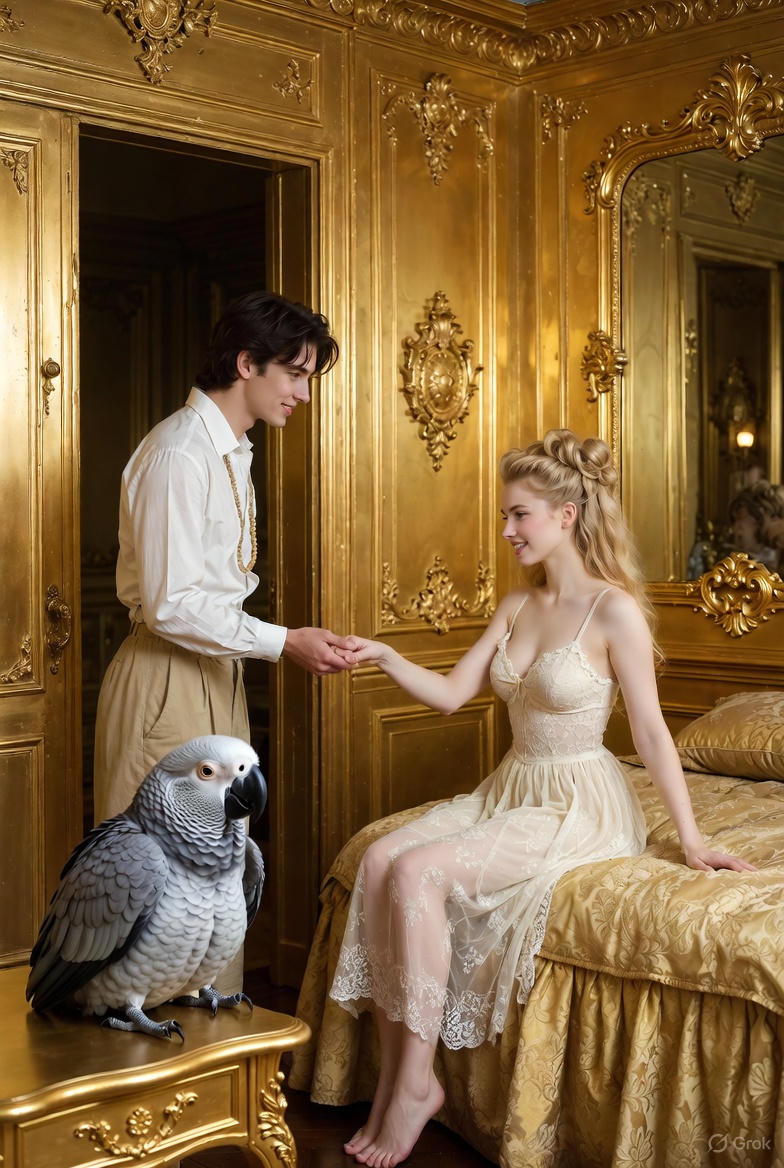
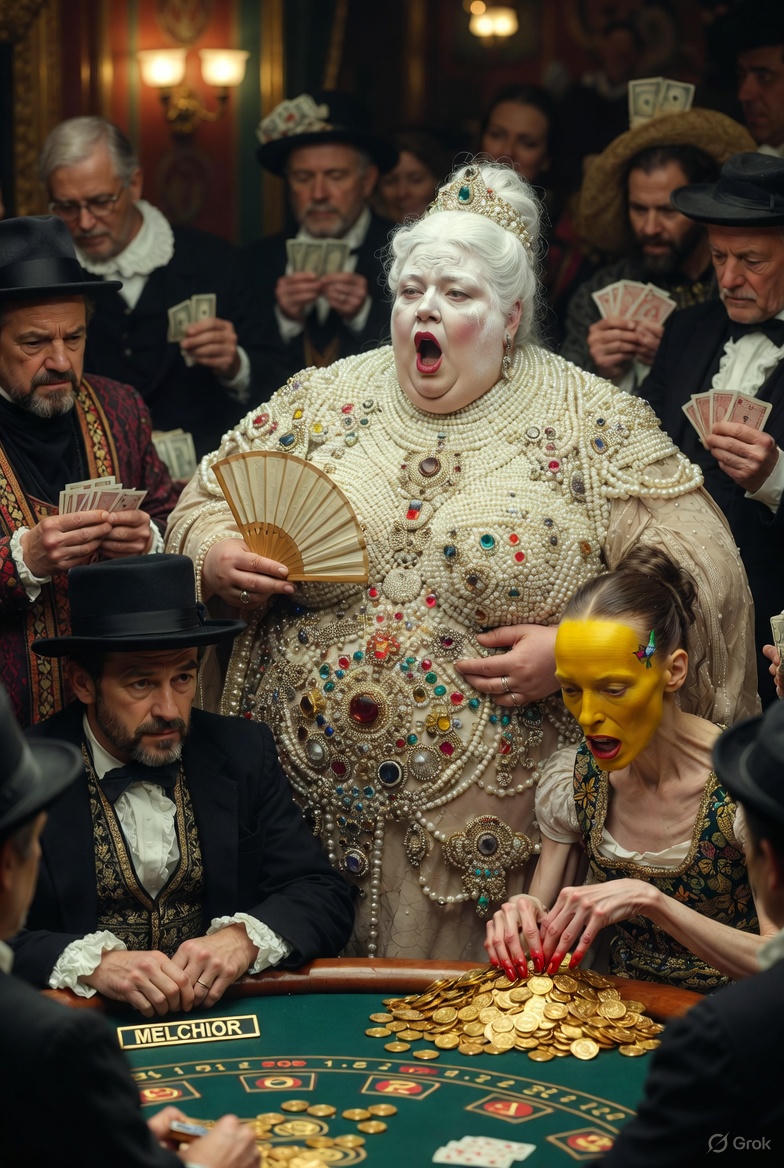




 Anarchistbanjo's World