OD by Karl Hans Strobl and translated by Joe E Bandel
Chapter 17
Karl Schuh had exhibited his apparatus in the riding school of Prince Liechtenstein and achieved splendid results before an audience of artists and scholars.
Reichenbach had been pleased: “Keep working like this. The matter must succeed. You’re just not enough of a charlatan to really get it going. You can’t approach the masses with modesty, doubts, or apologies; you must impress the crowd with self-confidence. The multitude doesn’t think, it believes, it wants to admire. You must astonish them with wonders.”
Despite Schuh’s progress and successes depressed and somewhat subdued, and there was good reason for it. The work on his instruments consumed enormous sums; Reichenbach had to follow the first amount with a second, nearly double that, and now Schuh stood again with empty pockets. It wasn’t the debts themselves that overwhelmed him, but primarily the debt of gratitude into which he had become entangled—a painful matter for a man who, behind his benefactor’s back and against his will, had won the love of his daughter.
“It’s just,” says Schuh, quite downcast, “it’s just… that I can’t go on. I’m out of funds. Several thousand gulden in operating capital would be necessary.”
“Asking for money again?” asks the Freiherr, suddenly cooling off.
“This is the most critical moment of the entire venture. It must be pushed through now. I want to take my apparatus to Paris and London. In Vienna, there’s no further progress. A Parisian theater director has invited me to give performances.”
But today, Reichenbach shows no understanding. “You probably want to take a pleasure trip, my dear! And you seem to think I’m a money tree. I can’t dispose of just any sum.”
Schuh sees his work at risk and becomes eloquent: “You’ve supported me so generously until now—surely you won’t abandon me now? I’m willing to transfer ownership of the entire apparatus, with all its accessories, to you. I’d be merely the caretaker of your property and grant you every conceivable oversight. Don’t you trust me?”
“I trust you, certainly! And I believe in your venture. But what security can you offer me? This is something only you can personally carry forward, not someone else. And who guarantees me that one fine day a roof tile won’t fall and kill you, or a drunk cab driver won’t knock you over? Where would my money be then?”
Schuh says nothing more in response. Reichenbach refuses—it’s incomprehensible that he closes his purse just now, but one must come to terms with it. Well, perhaps that’s just as well; it eases the conscience a bit, and after all, one has pride and doesn’t need to beg. Schuh clenches his defiance; now he’ll push forward on his own strength and reach his goal without Reichenbach.
A few days later, Reichenbach asks, “Where is Schuh?”
The Freiherr had commissioned Schuh to make daguerreotype—or as it’s now called, photographic—recordings in the darkroom, but the results weren’t particularly convincing. Now Reichenbach has devised new experimental setups, and besides, new light-sensitive plates have recently come onto the market, promising better outcomes. Reichenbach urgently needs the images to accompany his next papers, which, like the previous ones, he intends to publish in Liebig’s Annalen der Chemie.
Reason enough for an impatient inquiry about Schuh’s whereabouts.
But Hermine replies calmly: “Schuh is on his way to Paris.”
“To Paris? Why, for heaven’s sake?”
“He told you. He accepted the invitation from the Parisian theater director.”
“So, to Paris,” rages Reichenbach, “that’s wonderful, that’s splendid. Utterly delighted! There you have it again—what an unreliable fellow he is.”
“You shouldn’t say that,” Hermine says seriously. “He’s been working on his invention for years and doesn’t want to stop halfway.”
“He has no foundation, no moral grounding; he’s an intrusive rogue.”
“Didn’t you yourself invite him to your house in vain for long enough?”
“Now I’ll throw him out if he comes back.”
Reichenbach is beside himself, as always when an obstacle blocks his path. But it’s no use. Schuh is indeed on his way to Paris. He undertook the journey with no more money than one would take for a pleasure trip, and he’s not traveling alone but with a forty-two-hundred-pound apparatus and two assistants to operate it. Progress is slow; he must earn travel money along the way, giving performances in all the small villages on his route, often with no result but embarrassment and frustration.
In Salzburg, he receives a letter from the Freiherr. Gentle reproaches for fleeing at such a tense moment, and a request: if he reaches Stuttgart, he could do something for the Freiherr. Once, they valued him in his homeland; the Prime Minister, Freiherr von Mauclair, had secured him orders and nobility. Now he’s been slandered among his old friends and the king. And the Württemberg envoy in Vienna, Baron Linden, is outright his enemy, so Schuh must put in a word for the mistreated man. Not a word about another matter—Schuh learns of that only through Hermine’s letter, received in Munich. Frau Hofrätin Reißnagel has been murdered; two men have been arrested on suspicion, and the father is in a mood worse than can be imagined.
Unease overtakes Schuh; he can well imagine how Hermine fares when the father is in a bad mood. She doesn’t complain—she’s too brave to complain—but that’s unnecessary. Schuh already knows how things must be for her now. What can he do? Schuh must continue his journey, however unfavorably it begins; Paris, Paris will turn things around—perhaps he can even go to London and then return to count the money on Reichenbach’s table.
For now, though, it doesn’t look promising. It’s a laborious struggle; the Munich crowd lingers over beer, and the king has a taste for the arts but nothing for the natural sciences. Schuh bypasses Stuttgart, turns toward Nuremberg, the old imperial city Nuremberg, with its proud, wealthy citizenry, should give him a boost.
But the proud, wealthy citizenry fails to materialize, and Schuh performs for three nights to empty halls. Then another letter from Hermine arrives. Things with the father have become intolerable; the Viennese resent him for the Hofrätin’s death, though many also publicly mock the Od. But the more people withdraw from the father, the more stubbornly he clings to his discovery—it’s a kind of obsession that has seized him. Hermine doesn’t complain this time either, but this letter is a cry for help—Schuh has no doubt about that.
Between the lines, it reads: Come back and free me; I can’t bear it anymore!
Where is Paris? Paris vanishes on the horizon; it simply sinks. What use is Paris to Schuh? Over there, a heart that loves him and cries for him suffers. Schuh’s invention is a lost cause. Let it plunge into the abyss; let someone else find it and piece the wreckage together!
At the factory where Reinhold is employed, they need a capable man like Schuh. Reinhold knocked on his door months ago—a sharp mind is welcome there. In God’s name! Now Schuh knows what he must do.
Reichenbach had just returned from a trip to Ternitz, where he had inspected his ironworks again. Yes, they now produced nothing but railway tracks—nothing else—the entire operation had been converted. There wasn’t much demand yet; the large orders hadn’t come in, but they had to be prepared, and they were. The railway tracks piled up in warehouses and yards into mountains.
The Freiherr had been home less than half an hour when Semmelweis arrived. “Congratulations,” said Reichenbach, extending both hands to Semmelweis, “I just read in the paper about your appointment as a private lecturer.”
Semmelweis raised his eyebrows, and his sturdy frame shook with an ominous laugh. The laughter stopped abruptly, and Semmelweis said gruffly, “I have you to thank for it!”
“No need for that!” Reichenbach waved off. “The university can consider itself fortunate.”
Semmelweis truly had no reason to thank the Freiherr; the Freiherr’s influence didn’t extend that far, as Semmelweis believed. His suggestions had been received with polite words at the relevant quarters; it was extraordinarily kind of the Herr Baron to intervene, and attention had also been drawn to Doctor Semmelweis’s merits from other sides—they would see what could be done, certainly! After years, it had finally come to pass that Semmelweis was appointed a private lecturer, and Reichenbach himself was surprised. It likely didn’t stem from his advocacy, but Semmelweis thanked him, and the Freiherr let it rest there. Besides, Ottane was a nurse with Semmelweis—she had been shameless enough to take up a profession like a common woman from the lower classes. The luster of his name was tarnished by this degenerate child, and it was quite fitting to restore it with a success, even if the Freiherr could hardly claim much credit for it.
“Since it was you,” the doctor continued, “who advocated for me, I must also bid you farewell!”
“Farewell? Are you leaving?”
“I’m leaving service.”
Reichenbach looked at the doctor attentively. What was wrong with Semmelweis? In that well-fed body raged the fanaticism of a gaunt ascetic; at first glance, he seemed the embodiment of comfort with his fat deposits, but beneath that burned a torch of passion. “I don’t understand,” said Reichenbach slowly. “You’re leaving service? Now, when after years of struggle for recognition, you’ve finally become a private lecturer?”
“Yes, you advocated for me. And Skoda, Hebra, and even Klein’s son-in-law Karl took my side, along with a few others. But do you know what Klein dares to do? He comes to the clinic, has me report my findings from examining the patients, and then has a midwife verify my examinations.”
Chapter 9: Gnostic Christianity – Jesus, the Heart’s Wisdom, and the Soul’s Victory
Historical Overview: Jesus, Gnosticism, and the Clash of Ideologies
The question of whether Jesus was a Gnostic is complex, rooted in the cultural and spiritual crucible of 1st-century Judea. Emerging from a Jewish tradition, Jesus is traditionally linked to the Essenes, a mystical sect (circa 2nd century BCE–1st century CE) known for asceticism and esoteric practices, as described in the Dead Sea Scrolls (discovered 1947, dated 200 BCE–70 CE). Mainstream Judaism of the period, often described as functionally atheistic, prioritized logic, reason, and communal law over mystical afterlife beliefs, viewing Sheol as a shadowy end rather than a vibrant spiritual realm (e.g., Ecclesiastes 9:10). In contrast, Essene teachings emphasized spiritual purity and divine connection, aligning with organic gnostic roots that celebrated life and soul continuity.
Gnostic Christianity, formalized in texts like the Gospel of Mary (circa 2nd century CE) and Gospel of Thomas (circa 120–180 CE), emerged post-Jesus but drew from earlier traditions—Egyptian, Platonic, and possibly Minoan—emphasizing the soul’s immortality and gender balance. The Gospel of Mary portrays Mary Magdalene as a favored disciple with equal or exalted status, suggesting Jesus’ circle embraced male-female equality, akin to organic gnosticism’s Tantric duality (Ch. 5). However, tensions arose, as seen in Peter’s resistance to female roles in the same text, reflecting patriarchal influences that later dominated orthodox Christianity (Council of Nicaea, 325 CE).
Jesus’ teachings, centered on the heart’s wisdom and life’s celebration (“I came that they may have life, and have it abundantly,” John 10:10), contrasted with Jewish rational atheism’s focus on earthly law and collective good. His emphasis on the soul’s persistence post-death—evident in resurrection narratives (e.g., Mark 16)—aligned with organic gnostic and social enforcer (zealot) beliefs in spiritual continuity but clashed with materialist denial of afterlife. Paul’s conversion (circa 33–36 CE) and subsequent teachings to Gentiles (e.g., Galatians 3:28, “neither male nor female”) introduced Gnostic elements, emphasizing personal divine connection over collective dogma, further splitting Christianity from Judaism. This split empowered organic gnostics but also allowed social enforcers to exploit the “body of Christ” as a worldly power, enslaving weaker egos of Gaia’s native inhabitants.
Mystery School Teachings: Heart’s Wisdom, Soul Immortality, and Patriarchal Tensions
Gnostic teachings, influenced by Jesus’ message, celebrated the watcher self (observer self, Ch. 2) as a soul enduring beyond physical death, rooted in literacy’s cognitive leap (circa 3200 BCE). The Gospel of Thomas (Saying 3) states, “When you know yourselves, then you will be known,” emphasizing heart-centered self-discovery over intellectual dogma, aligning with organic gnosticism’s life-affirming duality (Ch. 7). Mary Magdalene’s role in the Gospel of Mary reflects Tantric balance, where male and female energies merge for soul growth, echoing Egyptian Isis-Osiris unions (Ch. 5).
Rational atheists (mainstream Jews) rejected non-physical realms, prioritizing collective law, as seen in Sadducee teachings denying resurrection (Mark 12:18–27). Social enforcers (zealots), with their mystical bent, embraced soul immortality but risked equating their visions with Jesus’, leading to fanaticism that fueled early Christian power structures (e.g., apostolic authority). This tension—between heart-centered gnosis and patriarchal control—saw organic gnostics’ message of individual soul empowerment co-opted by the church’s collective “body of Christ,” enslaving native inhabitants’ developing egos (Ch. 1).
Paul’s Gnostic-leaning teachings, emphasizing personal divine connection (e.g., Romans 8:14–16, “sons of God” led by spirit), bridged organic gnostics and zealots but clashed with rational atheism, amplifying the split by the 2nd century CE. The heart’s wisdom, simplified by Jesus, aimed to empower the watcher self for all, but patriarchal distortions marginalized this, favoring death-centric salvation.
OAK Ties and Practical Rituals: Restoring Heart-Centered Gnosis
In the OAK Matrix, Jesus’ heart wisdom resonates with the true Ego’s resonance (Intro, Individual), integrating Shadow (primal life urges, Radon, Ch. 26, Magus) and Holy Guardian Angel (cosmic harmony, Krypton, Ch. 24) in Oganesson’s womb (Ch. 20). The soul’s immortality aligns with resonant circuits (Ch. 13), requiring physical incarnation for renewal, countering social enforcers’ death worship and rational atheists’ materialism (Ch. 7). This ties to Adeptus Exemptus compassion (Ch. 7, Magus), serving life’s sacredness, and Ipsissimus unity (Ch. 10), merging physical and astral in heart-centered gnosis. Mary’s exalted role echoes Tantrika manifestation (Ch. 5), mixing energies for soul creation.
Practical rituals revive this:
Heart Wisdom Meditation (Daily, 15 minutes): Visualize your watcher self in heart chakra, observing a life-affirming dream. Journal refused Shadow (e.g., fear of death from zealot influence) and aspired HGA (e.g., love’s harmony). Merge in Oganesson’s womb, affirming: “My soul lives through heart’s wisdom.” Tie to Gospel of Mary: Inhale equality, exhale patriarchal spooks.
Gaia Soul Ritual (Weekly): By an oak, touch roots, invoking Gaia’s life force. Offer water, symbolizing soul renewal via incarnation. Visualize watcher self as photon-plasma (Ch. 19, Magus), pulsing through body-aura circuit. Affirm: “I find my soul in Gaia’s heart, not collective chains.” Counter rational atheist collectivism.
Partner Gnostic Exchange: With a partner, discuss heart-centered insights. Men: Share expansive soul visions; women: Grounding acts of love. Build non-physical energy via breath or eye contact, visualizing Tantric union (Ch. 5) for soul empowerment. Solo: Internalize, balancing zealot mysticism and atheist logic in Gaia’s embrace.
These empower organic gnostics to reclaim heart-centered gnosis, restoring Jesus’ vision. Next, explore Cathar dualism, continuing resistance against patriarchal enslavement.
Chapter 7: Gnostic Christianity – The Soul’s Sacred Dance with Physical Life
Historical Overview: The Gnostic Reclamation Amid Patriarchal Tensions
The emergence of Gnostic Christianity in the 1st–4th centuries CE marked a pivotal attempt to reclaim the organic gnostic legacy of life-affirming mysticism in a world increasingly dominated by patriarchal ideologies. Gnostic texts, such as the Gospel of Mary (circa 2nd century CE) and Pistis Sophia (circa 3rd century CE), postdate canonical Christianity but draw from earlier traditions—Egyptian, Platonic, and possibly Minoan—emphasizing the soul’s sacred connection to physical life through the divine feminine, Sophia. This period, following the destruction of Alexandria’s library (47 BCE) and the consolidation of patriarchal monotheisms (Zoroastrianism, Judaism, early Christianity), saw literacy’s cognitive leap solidify the watcher self, fostering soul immortality concepts but often at the expense of physical life’s sanctity.
Gnosticism arose as a counterpoint to orthodox Christianity’s focus on afterlife salvation, which aligned with social enforcers’ (traditionalists) glorification of death and merging with Source. Texts like the Gospel of Philip highlight the alchemical marriage of Christ and Sophia, symbolizing integration of physical (life) and spiritual (soul) realms through love and equality, echoing earlier goddess traditions. Meanwhile, rational atheists (materialists, akin to early Semitic intellectuals) rejected spiritual realms, emphasizing logic and collective good, as seen in Hellenistic philosophies like Stoicism (circa 300 BCE–200 CE). Organic gnostics, with their genetic-spiritual link to Gaia, integrated Shadow (primal life urges) and Holy Guardian Angel (aspired cosmic harmony), making them targets for enslavement by both groups, as evidenced in Roman persecution of Gnostic sects (e.g., Valentinians).
The Nag Hammadi library (discovered 1945, dated 4th century CE) preserved Gnostic teachings, revealing their focus on physical life as sacred for soul renewal, countering social enforcers’ asceticism and rational atheists’ materialism. However, by 325 CE, the Council of Nicaea solidified orthodox Christianity’s patriarchal framework, marginalizing Gnostic voices and reinforcing death-centric spirituality.
Mystery School Teachings: Soul, Physicality, and Gaia’s Sacredness
Gnostic Christianity reframed the soul as a watcher self, birthed by literacy’s cognitive revolution (circa 3200 BCE), requiring physical incarnation for growth, not dissolution into Source. The Gospel of Thomas (circa 2nd century CE) emphasizes living wisdom: “Whoever finds themselves is superior to the world,” tying soul development to earthly experience, not escape. Sophia’s role as divine feminine mirrored Gaia’s life-giving power, with physical bodies as resonant circuits (Ch. 13, Magus) sustaining astral awareness via bio-electric loops.
Organic gnostics, as Gaia’s native inhabitants, integrated Shadow (primal drives, Radon’s etheric urges, Ch. 26, Magus) and Holy Guardian Angel (cosmic balance, Krypton’s harmony, Ch. 24), enabling manifestation through Tantric exchanges (Ch. 5). Rational atheists, lacking spiritual connection, prioritized collective logic, akin to Stoic apathy for societal good. Social enforcers, fixated on astral ghosts (repetitive destinies, Ch. 17, Magus), glorified death, denying physicality as sinful, as in Manichaean dualism (3rd century CE) influenced by Zoroastrianism. Their attempts to enslave organic gnostics—seen in early Christian suppression of Gnostic sects—aimed to exploit their manifestation power, as Gnostics alone could “bring heaven to earth” through balanced duality.
The Gnostic vision of physical life as sacred countered both groups’ distortions, advocating soul renewal through incarnation, not escape, aligning with ancient Egyptian ka/ba reunion for akh immortality (Ch. 4).
OAK Ties and Practical Rituals: Reclaiming the Sacred Physical for Soul Growth
In the OAK Matrix, the soul’s reliance on physicality resonates with resonant circuits (Ch. 13), where body (capacitance) and aura (inductance) sustain awareness via chaos-driven leaps (Ch. 11). Organic gnostics’ integration of Shadow and HGA mirrors Oganesson’s womb containing all fragments for wholeness (Ch. 20), countering social enforcers’ death worship and rational atheists’ materialism. This ties to Ipsissimus unity (Ch. 10, Magus), where physical and astral merge in divine harmony, and Adeptus Exemptus compassion (Ch. 7), serving life’s sacredness.
Practical rituals revive this:
Sacred Life Meditation (Daily, 15 minutes): Visualize your watcher self observing a dream, rooted in Gaia’s physicality. Journal refused Shadow (e.g., physical joy denied by asceticism) and aspired HGA (e.g., life-affirming balance). Merge in Oganesson’s womb, affirming: “My soul grows through Gaia’s embrace.” Tie to Gnostic Sophia: Inhale physical vitality, exhale astral renewal.
Gaia Renewal Ritual (Weekly): By an oak, touch its roots, invoking Gaia’s sacredness. Offer water, symbolizing incarnation’s renewal. Visualize soul as photon-plasma (Ch. 19, Magus), pulsing through body-aura circuit. Affirm: “I bring heaven to earth, not escape.” Counter social enforcers’ death focus.
Partner Life Affirmation: With a partner, discuss physical life’s value. Men: Share expansive soul visions; women: Grounding acts of love. Build non-physical energy via breath or touch, visualizing Tantric union (Ch. 5) for life affirmation. Solo: Internalize, balancing rational logic and traditionalist astral focus in Gaia’s heart.
These empower organic gnostics to reclaim physical life’s sanctity, restoring Gaia’s vision. Next, explore Bogomil dualism, bridging Gnosticism to medieval resistance against patriarchal control.
OD by Karl Hans Strobl and translated by Joe E Bandel
Chapter 14
Reichenbach wrote to Schuh: “Now it’s enough; you must come. You must convince yourself of the significance of my discoveries. It would be a betrayal of science if you didn’t come. Since you don’t want to meet Hermine, come today—Hermine is busy at the Schönbrunn Palm House and will be absent all day. I’m sending Severin with the carriage.”
The carriage stood at the door. Schuh’s longing allied with Reichenbach’s wish—oh, just to be in the rooms Hermine inhabited once more, to follow the traces of her quiet, eccentric, shy life, and to speak with Ottane, to hear about Hermine.
Reichenbach received Schuh with open arms like the prodigal son. “And no more foolishness!” he said. “Let’s leave the womanizing aside. Whenever science stumbles, it’s always womanizing that trips it up.”
He paused, reconsidered, and cleared his throat awkwardly. It was good that Schuh didn’t know how little right he had to preach such things.
First, Schuh had to report. Yes, he had made great progress with his light images; now he could make two images transition into each other—he first showed one, then veiled it with a mist from which the other emerged. He had achieved far more than his predecessors, but it still wasn’t the right or final result; it depended on the optics of his device, and Schuh was in negotiations with Voigtländer for new, especially sharp, light-strong, and achromatic lenses. But there he was stuck. Such lenses cost a sum Schuh couldn’t currently raise. Yes, to realize all his plans required far greater means than he had at his disposal. In the autumn, he wanted to re-emerge with his work and then leave Vienna, perhaps to bring back some money.
Reichenbach listened thoughtfully. “How much do you need?”
“Pardon?”
“It would be a pity,” said the Freiherr, “if you couldn’t perfect your device. Money shouldn’t be an obstacle. Your cause is good; I know it, I believe in it. So, how much do you need?”
Schuh still isn’t sure if he heard correctly. It seems Reichenbach has offered him money. For now, he just stares at the Freiherr, unable to fit this novelty into his mind.
“I’ve considered it,” the Freiherr continues, “I consider it my duty to enable you to continue your work. Moreover, I am indebted to you in many ways. You’ve assisted me with my galvanoplastic and optical experiments, and besides, it’s just a favor in return.”
“I will, of course, involve you in the profits,” Schuh believes he should suggest, “if you could give me… say, three thousand gulden…”
Reichenbach dismisses this magnanimously. “Dear friend, no talk of profit-sharing! Do I want to do business with you? If you insist, you can repay me with five percent interest—I think that’s fair. And now, let’s go to dinner.”
There are only three at the table: the Freiherr, Schuh, and Reinhold, who grumpily and sullenly forces down his food. Ottane is absent, and Schuh misses her greatly. Is Reinhold supposed to tell him about Hermine now? Isn’t that mainly why he came—to get news about Hermine? But he doesn’t dare inquire about her whereabouts; he has the impression that Reichenbach, who offers no explanation for Ottane’s absence, might be uncomfortably affected by such questions. And Reichenbach himself now appears to Schuh in a different light. He is a forceful man, certainly, with his quirks—fine, he opposes an unsuitable match for his daughter and has God-knows-what ambitious plans for her, but there’s nothing to be done about that; he’s a real man, that much must be granted. This offer to Schuh is generous, showing trust and truly elevated sentiment.
After dinner, as Reichenbach and Schuh sit on the terrace in front of the garden hall with coffee, Schuh sees the Freiherr’s yellow carriage with Severin on the box beside the coachman arrive. Three ladies step out.
“My three sensitives are here,” said Reichenbach, “yes, dear friend, now you must also let yourself be shown how far I’ve come. You must give your opinion.”
Frau Hofrat Reißnagel almost didn’t recognize Schuh; she looked very ill, her eyes darting restlessly, her pale lips trembling as if shaken by inner storms. Schuh learned that the tall, lanky blonde was the wife of Police Commissioner Kowats and the short, freckled one was the schoolteacher’s wife, Pfeinreich, from Gutenbrunn.
“Let’s go to the darkroom right away,” Reichenbach suggests, “otherwise it’ll get too late.”
Schuh assumes they will now climb to Reichenbach’s study on the second floor, but no—Reichenbach leads them a few steps cellarward, then down a long, gloomy corridor to the opposite wing of the castle. A door opens silently; the Freiherr pulls back a thick loden curtain, opens a second door, parts another curtain, and pushes Schuh through a third door into complete darkness.
“Hold on to me,” Reichenbach instructs Schuh, “and follow me; the ladies are familiar here and will hold onto you. We’re only in the anteroom of the darkroom; it’s not dark enough yet.”
Schuh finds the darkness quite sufficient, but he reaches behind him, grabs a woman’s hand adorned with rings—likely the Hofrätin—and is pulled along with the entire chain pulled forward. Two doors squeak on their hinges; the heavy folds of two curtains slap him in the face.
“We’re here,” announces Reichenbach, and his voice echoes louder, as in a large room. “This is the darkroom. We have a sofa here and a table in front of it. Take a seat, Schuh; the ladies know the routine. But stay seated; you might bump into various objects standing around. What I want to show you today are light phenomena—it’s the Od light. But first, the effects of daylight must be completely erased from your eyes so you can perceive the infinitely weaker influences of the Od light. You’ll need four hours of patience.”
“Four hours!” says Schuh meekly, without implying he’s being a bit rude to the ladies.
Reichenbach immediately notices: “Aren’t you delighted to be condemned to four hours of darkness with three such charming companions? Many young people would love nothing more. Yes, I was once in a cave where the great light wonders only dawned on me after the external light had faded. See you in four hours!”
Schuh hears the door close and is alone with his three fellow captives.
“See you,” he jokes, “that’s a bit exaggerated in this darkness.” There’s nothing else to do; Schuh feels obliged to entertain the ladies.
“The soul gathers itself in such darkness,” says the police commissioner’s wife, “it reflects on its own self.” No one told Schuh that Frau Kowats is a secret poetess, but he knows it now. He thinks it might be fitting to discuss literature and brings up Bauernfeld and the theater.
After a while, he hears a suppressed yawn from his other side. “It’s really a terrible waste of time,” someone says, and it can only be Schuh’s other sofa neighbor, the schoolteacher’s wife, Pfeinreich, “if only one could darn stockings.”
Oh, Schuh can also talk about household matters—the servants, aren’t there any decent ones anymore? He enjoys switching the conversation topics and thought circles abruptly, a jack-of-all-trades in that too, soaring high with beautiful souls one moment, then grounding himself with opinions on new stoves, petroleum lamps, and the favorite dishes of the Viennese.
The Hofrätin remains silent. She sits beyond the teacher’s wife in a sofa corner and says nothing.
But then the conversation falters, and Schuh’s mental energy wanes. Four hours are long—hard to believe how long four hours can be. Schuh stands up, navigates around the table, and gropes through the room: “I’ll take a look around,” he says with a final attempt at humor.
Even in the pitch-blackest night, one can see their hand before their eyes; some glimmer of light falls even in the darkest dungeon, but here every darknesses of the world and underworld combined. Schuh feels along a wall shelf; various objects lie around—something that feels like a violin but is strung with only one string. His fingertips have become eyes; they find test tubes, plants in a corner, then his hand dips into water where something moves.
That’s the aquarium with the goldfish, he’s told. A small object slips between his fingers—a short tube with a mouthpiece, perhaps an ark pipe. Schuh puts it to his mouth and blows hard; an ear-piercing, shrill howl erupts.
“That’s the siren,” says the poetess.
“Did you see it?” asks the teacher’s wife.
“Yes, do you see something?” Schuh asks, baffled.
“Not clearly enough yet,” assures the poetess, “we still have too much external light in our eyes. But it’s like a blue flame emerging from the siren… from the moving air.”
Schuh shakes his head, though no one can see him; he must at least shake it for himself.
“My fingers are starting to glow,” says the poetess.
“Mine too,” joins the teacher’s wife.
Then the Hofrätin finally speaks. She says: “You had a birthday yesterday. You took a glass of wine in hand, and it broke on its own. It’s a bad omen.”
Who is the woman suddenly speaking about? Who took a wine glass in hand?
“No, no, don’t say such things,” the teacher’s wife exclaims. “You shouldn’t always dwell on such thoughts; you’re young and in the midst of life.” And only now does Schuh realize the Hofrätin seems to have the odd habit of speaking of herself in the third person.
Schuh has a sudden idea. He’s had enough; he sees no reason to sit in the dark with these three eccentric women for hours. He feels along the wall until his fingers find the doorframe. He gropes the entire door in vain; they are locked in the darkroom—the door has no handle on the inside.
After four hours, which stretch into four days for Schuh, Reichenbach returns. He arrives just in time to save Schuh from a fit of rage. Schuh had been considering wringing the necks of the three geese, but now, with Reichenbach’s arrival, he regains his cheerful composure.
“How are you?” asks Reichenbach.
“Honestly, terribly hungry… I don’t know if that’s an odic phenomenon too?”
Reichenbach offers no reply to this jest; he rummages in the dark and says mildly, like a disciple of Buddha: “I’d like to preface this for you, dear friend, that it’s the nobler, inner organs and the nervous system of humans that generate Od, whose manifold effects include the emission of light. But all other living beings, yes, even the lifeless things—metals, stones, wood, water—become luminous under certain conditions.” He continues rummaging and asks, “Can you see me, ladies?”
“Yes, very well,” replies the police commissioner’s wife.
“What do you see?”
“Head and chest are surrounded by a halo.”
“I also see arms and legs,” adds the teacher’s wife, “though less distinctly.”
“What color?”
“Yellowish, as always, perhaps more yellow than usual.”
“You must know, Schuh,” says Reichenbach, “that the Od light of men differs from that of women. Women glow more pea-green.”
Schuh grins in the dark; he can do so without offending Reichenbach—it’s dark enough for that. The women have it easy, making claims that can’t be verified. The agreement between them and the Freiherr is secured by many prior experiments.
“Do you also see Herr Schuh? Can you tell me what he’s doing?”
“I believe,” chirps the poetess, “I believe Herr Schuh is laughing. His Od glow trembles.”
Homo Sapiens by Stanislaw Przybyszewski and translated by Joe E Bandel
VI.
How had this idea suddenly come to him?
A woman must be at the center of the painting, alluring, seductive—and from all sides, yes, from above, from below, a thousand hands reach for her. A thousand hands scream, howl, scream for her! Lean, nervous artists’ hands; thick, fleshy stockbrokers’ hands with big rings, a thousand other hands—an orgy of yearning, lustful hands… And she with alluring, mysterious gazes…
Mikita was feverish.
Yes, he had to paint it immediately. Faster, faster, or it would slip away, and then come the wondrous thoughts…
Falk is no scoundrel! Do you understand, Mikita? Falk is no scoundrel! He shouted it clearly to himself.
But suddenly, he saw them both gazing at each other in wonder and admiration; he saw their eyes burrowing into one another and then smiling shyly.
And tonight at Iltis’s: there will surely be dancing. He hadn’t thought of that before.
Dance… Dance. Isa loves to dance. Isa is a born dancer. It’s her only passion.
He saw her once, dancing. Everything in him broke. That wild, bacchanalian surge…
That’s what should be painted—that! Dear Mr. Naturalist. That, how the soul opens and the damned foreign thing crawls out. This monstrous thing—Othello and something like it…
Disgusting nature! Why could it never be obvious to him that she loved him, had to love him; yes—him—him! He was worth something, if only as an artist.
Damned conditions! There’s Liebermann painting three stupid sheep in a potato field, or potatoes in a field, or a field with women gathering potatoes, and he gets money and the gold medal.
And I’ve painted all of humanity and a bit beyond: the inhuman—and got nothing for it.
Nothing?! Foolish Mikita! Haven’t you seen how the sweet rabble in Hamburg and Paris and, of course, Berlin rolled with laughter? Well! That’s supposed to be nothing?
And the caricature in *Fliegende Blätter*—didn’t I inspire that?
I should pay taxes?! Good God, no bread to eat, and pay taxes! Fine state of affairs! They want to seize my things for overdue obligations I supposedly owe the state? What is the state? Who is the state? What do I have to do with it?
“Are those your paintings?”
“Of course they’re mine! They’re worth forty thousand marks. Why are you laughing?”
“Why shouldn’t I laugh? Who’ll buy those things? You won’t get a penny for them.”
“Sadly, there’s nothing to seize from you.”
Well then, dear Isa, am I not the great artist? He began to paint and grinned.
But it gnawed at him, gnawed.
Strange! What’s so special about Falk? I didn’t fall off the table like little Eyolf. My spine is intact. My brain has ideas too…
“Have you written the essay, Mikita?”
“Of course I wrote it, Professor.” “Did no one help you?”
“Who would help me?”
“But I clearly see foreign influence, exerting itself in active aggression on your essay.”
“Well said, Professor, but I wrote the essay myself.”
“Mikita, don’t be stubborn, admit that Falk sewed silk patches onto your felt slippers. Where is Falk?”
But Falk was never at school on such occasions. He reported sick and wrote poems at home.
Suddenly, Mikita grew furious.
It’s shameful to think of Falk like that.
Paint me, Mr. Liebermann, this second shameful soul, how it hurls a piece of filth into one’s brain! Paint that for me, and I’ll give you all my paintings, delivered free to your door!
And Isa is dancing now—with Falk. He knows how. He felt hate.
Falk, dear Falk, where’s the woman who can resist you? Isa dances, Isa is a dancer.
“Have you ever believed in anything? Do you know what faith is?” Of course, she didn’t know.
“Do you know who you are, Isa?” No, she knew nothing.
“You’re a stranger to yourself, Isa?” She nodded.
And he, with a faith of a thousand years in his bones! Yes, yes, hence his ridiculous desire to fully possess a woman, the faith in a love that endures centuries.
He pulled himself together.
No! He won’t go to Iltis’s: no! Now he’ll see if he can’t control himself… Yes: go there and stand and watch her lying in his arms, so close…
Mikita tore open his work smock. He felt shamefully hot. To stand there and watch! Othello, with a dagger in his cloak.
And Iltis winks and says to the Infant: “Isa’s dance is getting to him.”
A painful restlessness tore at his brain. No, not again! He had to master this. Did he have reason to doubt Isa?
No! No!
So, what did he want?
His restlessness grew. The pain was unbearable.
Yes, he’ll go. He must show Isa that he’s above it now, that he’s given up doubting. Yes, be merry and dance!
You can’t do that, dear Mikita! You hop like a poodle in a fairground booth. And you’re small too, smaller than Isa.
Splendid pair! Splendid pair, those two!
Mikita had to sit down. It felt as if all his tendons had been cut with a scythe.
Damn, that hurts!
“Mikita, come here for a moment.” “What do you want, Professor?”
“Look, Mikita, it’s really outrageous of you to write such foolish nonsense as that apology. And if you’d at least written it alone, but Falk did it.”
How was it that he didn’t slap the old man? Suddenly, he stood up.
Have I gone mad? What do I want from Falk, what do I want from Isa?
He grew frightened. This was already pathological. It wasn’t the first time.
When he went from Isa to Brittany to do studies… yes, studies, how to start getting sentimental idiocies.
Funny Mikita.
Suddenly, he’d rushed onto the train, in a fit of madness, and raced to Paris, arriving at Isa’s half-crazed.
“You’re here already?” She found him terribly funny.
That he didn’t bury himself in the ground from shame! Look, Mikita—he began speaking aloud to himself—you’re an ass, a thorough ass. Love must be taken! Not doubted, not fingered and circled endlessly like a cat around hot porridge, no! Take it, seize it, proud, obvious… Yes, then it works! Conquer! Not as a gift, not as alms! No, dear Mikita, begging won’t do!
Well, they’re dancing now…
He began to sing, the only street tune he’d retained:
*Venant des noces belles, Au jardin des amours
Que les beaux jours sont courts!*
Splendid! And the drawing for it by Steinlen in *Gil Blas*. A funny clown, so brusquely dismissed by the girl. Splendid! Splendid!
*Venant des noces belles, J’étais bien fatigué.
Je vis deux colombelles, Une pastoure, ô gué!*
And there was no doubt! No, dear Mikita, how nice it would be if you didn’t have to doubt. Right, little Mikita?
Yesterday in the cab…
He stood up and paced hurriedly. Usually, she’d ask me: What’s wrong, Mikita?
Usually, she’d stroke my hand.
Usually, she’d silently lean her head on my shoulder. Yesterday, nothing! Not a word!
“Good night, Mikita!”
“Good-bye, Fräulein Isa, good-bye!”
Now he bellowed into his studio with a strong and, of course, false intonation:
Homo Sapiens by Stanislaw Przybyszewski and translated by Joe E Bandel
III.
At the “Green Nightingale,” Isa’s appearance caused quite a stir.
Falk caught sight of old Iltis, squinting his eyes, his face twisting into an unpleasant grin.
Naturally, his extravagant sexual imagination began to work. In that, he was unmatched.
Iltis immediately rushed over to Mikita. God, they’d always been such good friends.
Falk greeted him with a casual nod and sat with Isa a little apart.
He saw again around her eyes that hot, veiled glow.
It felt as if he might collapse. How hard it was to keep himself in check! But he controlled himself.
Curiously, he had to clear his throat first; he felt so strangely hoarse.
“I’ll introduce you to the company a bit.” He coughed briefly again.
“Look, that gentleman there, the fat one with the thin legs, which you unfortunately can’t see—and they’re truly worth seeing—yes, that one, staring at you with that eerie, brooding gaze, as if he senses in you some uncanny social riddle—he’s an anarchist. He also writes verses, marvelous verses: ‘We are the infantry…’ no—correct: ‘the red hussars of humanity.’ Red hussars! Splendid Prussian imagination! That man’s got drill in his bones…”
Falk laughed hoarsely.
“Yes, he’s an anarchist and an individualist. Yes, they all are, all of them, sitting there so fat and broad, individualists with that peculiar, thick, German beer-egoism.”
Something clinked on the floor. Everyone looked.
Falk laughed.
“Look, that’s an interesting young man. He’s a neo-Catholic and believes in a will-center in the world, of which we are only emanations of will. In him, energy collects in his fingertips; he has to release it to prevent further energy buildup. He manages by throwing glasses.”
The young, blond, curly-haired man looked around triumphantly. His action hadn’t caused much of a stir, so he called for a new glass.
Iltis calmed him. “Come now, child…”
“And that one—yes, the one on the left… doesn’t he have a face like a rotten apple?”
Mikita approached.
“We need to join their table, or they’ll think we’re keeping to ourselves.”
Now everyone was introduced to Isa.
Falk sat next to Isa. To his right sat a man his friends called the Infant.
The Infant was effusively friendly.
Suddenly, Falk found him repulsive. He knew the man hated him.
“Have you read the poetry book?” The Infant named a poet just rising to fame, very en vogue.
“Yes, flipped through it.”
Falk sensed instinctively that Isa was listening. He felt a violent inner tremor.
“Don’t you find it delightful?”
“Not at all. No, I find the book utterly stupid.” Falk tried to quell the foolish trembling.
“Utterly, utterly stupid. Why write these empty little poems? To sing of spring? It’s had more than enough of that endless crooning. One’s ashamed even to say the word ‘spring’…”
Mikita looked at Falk in surprise. He wasn’t used to hearing Falk speak like this in these circles.
“This whole mood-painting is so flat, so meaningless… These moods—every peasant boy, every peasant girl has them when the sluggish metabolism of winter gives way to a faster combustion process… If they were moods that revealed even a speck of the terrible, the enigmatic, that which overflows in a person; if they were moods that, however trivial otherwise, gave something of the naked life of the soul, yes—something of the unknown soul… But all these things, which a higher type of person no longer experiences because—because feeling rebels against moving in this springtime crooning…”
Falk stammered and grew confused. It felt as if he were standing at a podium, a thousand listeners around him. Then he always became foolish and spoke only banal things. The Infant tried to interrupt. But Falk had to finish.
“Look, all these feelings may have value for youths and schoolgirls, because they’re, so to speak, the substrate of mate-selection instincts…”
“But dear Falk—” the Infant seized a momentary pause as Falk tried to gather his thoughts—“you completely misunderstand the nature of art.
Art comes from ability…”
He pronounced the sentence with weight.
“Ability alone determines the value of a work of art. The poems are rhythmically perfect, they have flow and song…”
“To your health!” Iltis toasted Falk amiably. Something wasn’t right with Falk. He’d never seen him so fervent and shaky.
Falk recovered slightly.
“No, dear sir. It’s not form, not rhythm that defines art. That had meaning once, when humans first had to create artistic forms, yes—had to, from an inner drive conditioned by a thousand causes. Back then, rhythm itself had meaning, for it expressed the rhythmic interplay of muscles… in the time when rhythm was born, it was a revelation, a great deed… Today, it has only an atavistic meaning—today, it’s an empty, dead formula.
You know, these poems needed nothing more than an inherited sense of form… I don’t deny the importance of rhythm for the overall artistic effect, but there has to be something in a poem…”
Iltis toasted Falk again. It was starting to bore him.
“No, no! Not the worn-out content of spring and love and woman… No, I don’t want these ridiculous lullaby singers…”
Falk spoke passionately and urgently.
Isa didn’t listen to what he said. She only saw the man with the refined, narrow face and the burning passion in his deep eyes.
“What do I want? What do I want? I want life, life with its terrible depths, its chilling abysses… Art, for me, is the deepest instinct of life, the sacred path to the future of life, to the eternity of life, and that’s why I want great, generative thoughts that prepare a new selection, give birth to a new world, a new worldview…
Art shouldn’t consist of rhythm, flow, or song for me; it should become the will that calls new worlds, new people out of nothing…
No, no, dear sir, we need a great, idea-generating art, or it has no meaning at all…”
Falk suddenly came to his senses. Good Lord, what was he saying? Was he shouting a manifesto to the world? He caught himself checking the impression his words made on Isa.
That was too boyish!
“This kind of art you praise may have meaning for animals… You know, birds, for example, attract mates with the rhythm, the flow of their trills and such—our poets can’t do that, no, certainly not. Even schoolgirls aren’t impressed by it anymore.”
Iltis smiled slyly and winked.
Falk toasted him. He was dissatisfied with himself, but he felt her eyes, and he looked at her, so deeply, so… into the heart… That was surely a lyrical thought, but again, heat rose to his brain.
The Infant grew nervous.
“I’m truly curious what you consider art.”
“Have you seen Rops? Yes? Look, that’s art. Can you say more about life than that?”
“Of course.”
“Yes—superficially, of course… Of course for those to whom everything is obvious. Yes, obvious for Strauss and Vogt and Büchner, and… and… But the terrible, the gruesome, the great struggle of the sexes and the eternal hatred of the sexes… is that obvious? Isn’t that an uncanny mystery? Isn’t that perhaps what eternally creates, gives life, and destroys life? Isn’t that what shapes our motives, no matter how harmless they seem to the conscious mind…”
Homo Sapiens by Stanislaw Przybyszewski and translated by Joe E Bandel
Falk noticed a shy smile on her face, as if a faint sense of shame slid across it.
“You mustn’t bore Mr. Falk with that.”
A subtle streak of displeasure flashed across Mikita’s face.
She discreetly stroked his hand; Mikita’s face brightened. She knows how to handle him, Falk thought.
The room was bathed in a strange, vermilion glow. Something like a thick red, as if fine layers of red were stacked atop one another, letting the light refract through them.
Was it the light?
No, it was around the corners of her mouth—no! Fine streaks around her eyes… It vanished again, settling into a delicate hollow in her cheek muscles… no, it was intangible.
“You’re so quiet, Erik, what’s wrong?” “God, you’re beautiful!”
Falk said it deliberately with such a nuance of spontaneity that even Mikita was fooled.
“You see, Isa, the man’s honest, isn’t he?”
Strange person! That face… Isa had to keep looking at him.
“What did you do all winter?” Falk pulled himself together.
“Hung out with Iltis.” “Who’s Iltis?”
“That’s a nickname for a big guy,” Mikita explained. Isa laughed. It was an odd nickname.
“Look, Fräulein, Iltis is personally a very likable fellow, a good man, and he gets along with the young ones. Sometimes they get too wild for him, then he slips away quietly…”
“What is he?”
“He’s a sculptor. But that’s terribly secondary for him.
Well, he only interests us as a person. And as a person, he’s obsessed with the fixed idea that someone must shoot themselves on his personal suggestion. Hypnosis is his hobbyhorse. So it happened that we drank through an entire night. The esteemed public, who take us for priests of art…”
“Priests of art! Magnificent… Temple of the Muses and Clio… Ha, ha, ha.” Mikita was immensely amused.
“Yes, the public can’t imagine how often that happens with the priests of art. After such a night, the priests crave fresh air. The lesser priests dropped off along the way. Only the great Hierophant…”
“Hierophant! Iltis a Hierophant!” Mikita shook with laughter.
“So, the Hierophant and I go together. Suddenly, Iltis stops. A man is standing by the wall, ‘staring upward,’ as Schubert puts it.
‘Man!’ Iltis says with an incredible tremor in his voice. But the man doesn’t move.
Iltis practically sparks with his eyes.
‘Watch this! The man’s hypnotized,’ he whispers mysteriously to me.
‘Man!’ His voice turns menacing, taking on the tone of a hoarse trumpet that shook Jericho’s walls… ‘Here’s six marks, buy a revolver, and shoot yourself.’
The man holds out his hand.
‘A perfect hypnosis,’ Iltis murmurs to me. With an unbelievably grand gesture, he places six marks in the man’s open hand.
In that instant, the man does a leap:
‘Now I don’t have to shoot myself. Hurrah for life!’ ‘Cowardly scoundrel!’ Iltis roars after him.
Mikita and Fräulein Isa laughed heartily. Falk listened. There was a softness in that laugh—a… what did it remind him of?
“Look, if I were a minister of culture, I’d have that cowardly scoundrel appointed as a well-paid professor of psychology.”
“Do all Russians mock so beautifully?” She looked at him with large, warm eyes.
“No, Fräulein, I’m not Russian. I was only born near the Russian border. But through close contact with the Slavs, Catholic upbringing, and such fine things, you might pick up something in your character that Germans don’t usually have. Then—well, you know, you get such interesting impressions there…”
Falk began to speak of his birthplace with a warmth that stood in strange contrast to the faintly mocking tone in his voice.
“Splendid people! Out of a hundred, barely two can read, because they’re Poles and forced in school to listen to the sweet melody of a foreign language.
Yes, they absolutely want to raise Polish children into respectable German citizens, and everything respectable, as we know, must use the German language. They beat the delightful German language into the children with true Prussian vigor, and the progress is quite striking.
The children even greet with a phrase that’s supposed to be ‘Praise be to Jesus Christ.’ But the nimble Polish tongue refuses to utter such barbaric sound combinations as ‘Gelobt,’ so the greeting becomes ‘Gallop Jesus Christ, Gallop!’ Why dear Jesus Christ should gallop, the children can’t fathom, but with a German Christ, anything’s possible. The Polish one is quite different, and the Polish God, of course, only understands Polish, just as it’s well known that paradise is to be found in Poland.”
There was something in his speech that captivated her so strangely. He could say something utterly trivial, yet he said it with a nuance, an inflection… Mikita was talking too loudly.
“You know, Erik, when we were still in the gymnasium… one teacher looked remarkably like Iltis…”
Falk half-listened. While Mikita spoke, he glanced at her from time to time. Each time, their eyes met, and both smiled.
This feeling was entirely new to him. It was as if something within him tensed, gathered—a warmth, an energy… it surged and poured into his mind.
He had truly wanted to make himself interesting. Yes, truly. There was something in him that bore a desperate resemblance to intentions, yes, intentions to captivate this woman—to entertain her…
Who was this woman?
He looked again. She didn’t seem to be listening to Mikita; around her eyes, that strange glow.
How all the lines flowed into one another behind the veil.
He almost felt the urge to peel something away from her face, her eyes.
Mikita suddenly jolted mid-story. He glanced at her briefly. Her eyes were fixed on Falk. Curiosity?… Perhaps?… Maybe not…
Falk noticed Mikita’s unease and suddenly laughed:
“Yes, it was odd. That old Fränkel—truly Iltis’s double. Remember, Mikita—that Sunday. We were sleeping; I was dreaming of the chemist, Grieser, who seemed like a towering genius to me back then. He fooled us both.
Suddenly, I wake up. Someone’s knocking at the door: ‘Open up!’
In my groggy state, I think of Grieser. But it’s not Grieser’s voice.
‘Who are you?’ ‘Fränkel.’
I ignore everything, still thinking of Grieser. ‘But you’re not Grieser?’
‘I’m Fränkel. Open the door.’
‘God, stop joking. You’re not Grieser.’
I can tell it’s not Grieser’s voice, but I open the door anyway, so sleepy I can’t get my bearings.
‘You’re not Grieser?’
Suddenly, I’m awake and stumble back in shock. It was really Fränkel. Oh God! And on the table lay Strauss’s *Life of Jesus*…”
Mikita was nervous, but the memories warmed him again. It was getting rather late.
Falk felt he ought to leave, but it was impossible, physically impossible, to tear himself away from her.
“Look, Mikita, why don’t we go to the restaurant ‘At the Green Nightingale’? That’ll interest Fräulein Isa.”
Mikita wavered, but Isa agreed at once. “Yes, yes, I’d love to.”
They got ready. Falk went ahead.
Isa was to put out the lamp.
Isa and Mikita lingered a moment. “Isn’t he wonderful?”
“Oh, marvelous! But—I could never love him.” She kissed him fiercely.
Downstairs, all three climbed into a cab.
It was a bright March night.
They drove through the Tiergarten, not speaking a word.
The cab was very cramped. Falk sat opposite Isa.
This feeling he had never known. It was as if a ceaseless heat streamed into his eyes, as if his body were drawing in her… her warmth… As if she radiated a consuming desire that dissolved something in him—melted it.
His breath grew hot and short. What was it?
He’d probably drunk too much. But no!
Suddenly, their hands met.
Falk forgot Mikita was there. For a moment, he lost control.
He drew her hand to his lips and kissed it with a fervor, such fervor…
Chapter 93: What You Resist You Become – Embracing Life’s Paradoxes for Balanced Maturity and Strength
Have you ever vowed never to repeat a parent’s flaws—swearing off their strictness or habits—only to catch yourself mirroring those very traits with your own children, or swung to the opposite extreme in rebellion, like rejecting faith only to find solace in it later, revealing life’s ironic twist that we often embody what we most oppose? What if “miracles” of wisdom and resilience arose from recognizing this paradox as maturity’s forge, where truths demand their opposites for completeness—over-love stunting growth, tough love building it—and resisting one pole pulls you into it, urging balance in self-care vs. giving, as in the king’s tale where kindness led to downfall and cruelty to heroism, teaching preparation over depletion? In this embrace of life’s ironic nature, we explore resistance’s boomerang: becoming opposed parents, pendulum rebounds, truths needing opposites (e.g., beneficial horrors like Nazi medical advances), learning from painful mistakes, the finger-pointing reminder of inner good/evil, and the king’s proverb on bounty’s risks vs. preparation’s rewards. This isn’t fatalistic acceptance; it’s empowered equilibrium, where confronting resistance fosters depth, and self-preparation ensures strength to support others without self-sacrifice.
This paradoxical maturity subtly reflects a balanced dynamic: The expansive swing of resistance (outward, generative opposition like branches rebelling against wind to define shape) aligns seamlessly with the grounding integration of opposites (inward, stabilizing wholeness like roots weaving through contrasting soils for nourishment), creating harmony without extremes. Like an oak tree, whose resistance to storms forges deeper anchors (ironic strength from opposition) while balancing give and take with earth, miracles of growth emerge from embraced contradictions. In this chapter, we’ll unravel these enigmas into maturing insights, covering resistance’s irony, parental mirrors and pendulums, truths’ opposites, mistake’s painful lessons, inner good/evil capacity, and preparation’s parable, all linked to your OAK Matrix as third-eye wisdom (paradox discernment) resonating with heart-level balance (self/other care). By the end, you’ll have tools to spot resistances, integrate opposites, and turn ironic twists into “superhuman” maturity, transforming rebellions into purposeful equilibrium. Let’s confront your oppositions and uncover how paradox unlocks miracle-level depth.
Resistance’s Irony: Becoming What We Most Oppose in Maturity
Life’s twist mandates embodying resisted elements—your text highlights how maturity and experience reveal this, as we evolve through paradoxical encounters.
Why miraculous? It humbles absolutes, fostering growth via irony. Common trait: Maturing revelation; non-absolute.
Dynamic balance: Resistance’s inward denial (stabilizing opposition) aligns with becoming’s outward embrace (generative integration), blending reject with reconcile.
In OAK: This third-eye maturity fuels heart’s paradoxical harmony for evolved wholeness.
Empowerment: Identify a “resisted” trait (e.g., parental flaw)—note ironic echoes in self for awareness.
Parental Mirrors and Pendulums: Repeating or Rebelling Against Origins
Many resist parental likeness only to replicate it—your text notes vowing against treatment yet mirroring with own kids, or pendulum swings like church rejection leading to “born again” return.
Why superhuman? It breaks cycles through recognition, turning rebellion into reconciliation. Common: Stressful swing; non-escaped.
Dynamic: Mirrors’ inward repetition (stabilizing echo) aligns with pendulums’ outward swing (generative opposite), fusing inherit with invert.
In OAK: Heart familial resonates with solar plexus choice for balanced legacy.
Practical: Reflect on a “never like parent” vow—trace mirrors/swings, adjust for conscious evolution.
Truths’ Opposites: Nothing True Without Its Counterpart
No truth stands without its reverse—your text asserts paradoxes like over-love stunting independence (vs. tough love’s strength), where extremes reveal necessity of balance.
Dynamic: Truths’ expansive positive (generative one) aligns with opposites’ inward negative (stabilizing counter), blending affirm with accept.
In OAK: Third-eye truths integrate with lower emotional extremes for paradoxical wisdom.
Empowerment: Examine a “truth” (e.g., unconditional love)—explore its opposite for fuller understanding.
Mistake’s Painful Lessons: Growth from Failure and Errors
Failures forge strength—your text emphasizes learning via painful mistakes, as watching children’s errors hurts but builds resilience if allowed.
Why superhuman? It transforms pain into power, avoiding overprotection’s harm. Common: Experienced; non-avoided.
Dynamic: Mistakes’ inward pain (stabilizing lesson) aligns with growth’s outward strength (generative build), fusing fail with fortify.
In OAK: Root painful experiences resonate with solar plexus toughness for enduring maturity.
Practical: Allow a small “mistake” (self/child)—journal lesson for growth embrace.
Inner Good/Evil Capacity: The Finger-Pointing Reminder
We harbor both good and evil potentials—your text cites the finger proverb (one out, three back), with examples like condemning Hitler yet benefiting from Nazi advances (limb transplants).
Dynamic: Capacity’s inward duality (stabilizing both) aligns with reminder’s outward point (generative self-check), blending judge with judged.
In OAK: Heart self-love integrates with shadow lower centers for balanced potential.
Empowerment: In judgment, recall proverb—reflect inner capacity for empathy.
Preparation’s Parable: The Kings’ Lesson in Bounty and Balance
The kind king’s generosity led to downfall, cruel one’s hoarding to heroism—your text’s proverb shows overgiving weakens in crisis (subjects rebelled), while self-preparation supports others effectively.
Why miraculous? It inverts expectations, teaching balance in care. Common: Ironic outcome; non-extreme.
Dynamic: Parable’s inward give/take (stabilizing self) aligns with preparation’s outward support (generative others), blending bounty with boundary.
In OAK: Heart generosity resonates with root preparation for sustainable strength.
Empowerment: Assess giving—ensure self-preparation to avoid depletion in aid.
Shared Traits: Ironic Embodiments, Paradoxical Truths, and Balanced Growth
These elements unite: Resistance irony, parental mirrors, opposite truths, mistake lessons, good/evil capacity, preparation parable—your text ties them to maturity’s embrace of life’s contradictions for depth and strength.
Why? Extremes stunt; balances empower. Dynamic: Resistance’s inward oppose (grounding in one) aligns with become’s outward integrate (generative both), merging deny with destiny.
In OAK: Lower emotional swings resonate with higher unity for miracle maturity.
Empowerment: Spot resistances—apply traits for paradoxical integration.
Cultivating Paradoxical Maturity: Training for Integrated Opposites
Maturity is trainable: Embrace opposites, learn from mistakes, balance self/other—your text implies resisting one draws it, but integration resolves.
Why? Unbalanced resists; integrated becomes. Dynamic: Cultivation’s stabilizing opposite (grounding in counter) aligns with maturity’s outward embrace (generative whole), fusing resist with reconcile.
In OAK: Third-eye (paradox) integrates with heart (balance).
Practical: Weekly “opposite” exercise—explore a resisted trait’s value for maturing insight.
Practical Applications: Embracing Paradoxes Daily
Make maturity miracles integrated:
Opposite Journal: Note a “resisted” element (male path: generative embrace; female path: stabilizing lesson). Reflect dynamic: Grounding one + outward other.
Partner Paradox Share: Discuss a “pendulum swing” with someone (men: outward integrate; women: grounding balance). Explore seamless integration. Alone? Affirm, “Resist and become align in me.”
Lesson Ritual: Visualize mistake; extract strength (e.g., affirm “failure forges”). Act: Apply to a current resistance, note growth.
Balance Exercise: Weekly, balance self/other (e.g., prepare before give)—observe harmony.
These awaken power, emphasizing seamless dynamic over extreme.
Conclusion: Unlock Miracles Through Paradoxical Embrace
What you resist you become—ironic embodiments, parental pendulums, opposite truths, mistake strengths, good/evil capacities, preparation parables—matures us through life’s contradictions, balancing extremes for depth. A balanced dynamic unites grounding with expansion, turning oppositions into superhuman wholeness. Like an oak becoming storm-resistant through embraced winds, embrace this for deepened living.
This isn’t resisted—it’s integrated. Embrace opposites today, mature boldly, and feel the miracle. Your life awaits—paradoxical, balanced, and profoundly strong.
A veil rift shimmered as Tobal left Rafe’s valley, a faint tremor in the air marking his departure. Rafe explained the best way to survive in the winter was to hunt the larger animals like the deer. Each kill would provide enough food for a week or more, and in the winter, it was very important to have some food set aside for emergencies and for when the weather really got bad. Winter was also the best time for trapping animals for their fur. He would need some winter clothing before it got really cold, and this was as good a time to learn as any. He could make some things now while the furs were prime and keep them at Rafe’s camp until he needed them.
In the meantime, it was spring, and life was abundant. Flowers bloomed in the meadows, and insects flew and crawled all over. Tobal learned to make containers and drinking cups out of the green bark of birch trees, the rough texture soothing under his fingers, and boiled water in them. He used them to make teas and ointments that kept the deerflies and ticks away, the bitter taste lingering on his tongue. His skin became tanned, and his muscles hardened from constant exposure and work. He could stay outside in any weather and walk the entire day without being exhausted. By the end of the second week, Tobal was living completely on his own food. He was not only finding food but was providing food for Rafe to eat. He still had trouble cooking though—nothing he cooked tasted as good as the mouthwatering victuals Rafe provided, the salted jerky soup a savory highlight. Still, Rafe never complained. Tobal learned the importance of keeping his knife razor sharp, the edge biting into his calloused hands, both of them—keeping the one from his initiation on his belt and his old knife strapped to his right leg above his ankle just as Rafe did.
By the end of the second week, he was getting bored with the monotony of the daily grind and the constant need to keep busy. He was looking forward to something new. They moved out from Rafe’s small valley and traveled in different directions, meeting up at designated spots on the map every other day. Tobal became proficient with the map and with triangulating where he was at any given time, his intuition pulling him toward uncharted paths. He spent some evenings alone and others with Rafe. The evenings he spent with Rafe were spent creating different kinds of shelters and sleeping in them. He was amazed at how many things could be used for shelter. But they all had the bed made of soft fragrant pine boughs, and he followed the first rule of never sleeping on the ground if it could be avoided.
Leaning trees that had fallen provided shelter when combined with the gray poncho material. Two trees and his walking stick lashed between them became an impromptu tent. Lean-to shelters were easily made, and he also made a small teepee using the gray blanket material. The need for water was always present, and he never strayed too far from a good supply of it. He learned where to look for fresh water springs and waterholes. He also learned to collect rainwater with his poncho or blanket and fill his canteens and other containers. Rainwater was fresh and didn’t need to be boiled. Water from stagnant pools needed to be boiled before drinking.
He practiced continuously with the sling and his bow. He got his first deer at the end of the third week. He was really excited, even though there was too much meat. They spent two days slicing and smoking it into jerky that could be stored away to eat later. It made his pack much heavier, and he cached some carefully in a tree, marking the spot on his map so he could return to it later. Once in a while, they would see an air sled in the distance with a medic on it. They would wave, and sometimes the medic would wave back. Medics were not allowed to interfere with the Apprentice degrees unless there was an emergency, but they did keep an eye on things.
It was during the fourth and final week that Rafe asked Tobal to look at the map and decide where he was going to solo. He should also start thinking about where he was going to be training people. He recommended Tobal stay roughly within 60 miles of the gathering spot. “Where are the others?” he asked Rafe curiously. “We don’t move around too much unless we are training someone,” Rafe answered. “The Journeymen usually find a permanent spot, and no one bothers them. Many of the older Apprentices do too. That’s why we haven’t seen anyone. Still, a lot of the nicer spots have been taken, and it’s getting harder to find an area that someone has not at least passed through. We encourage the newbies to stay within 30 miles of the gathering spot so we can keep an eye on them. Since there are normally not more than seven or eight training at any given time, there is lots of space, and it’s easy to stay out of each other’s way.”
Tobal enjoyed the rugged outdoor lifestyle and the solitude. He felt a quiet confidence in his growing ability to survive and was looking forward to his own solo that was rapidly approaching. The fourth week was different than the first three. It was travel, travel, and more travel. Rafe knew where several people lived, and they set out to visit them. A shadow flickered among the trees one day—a rogue, perhaps—hinting at unseen danger. The meaning was clear: Rafe wanted Tobal to be able to go for help and find someone if it was needed. He also wanted Tobal to know who his friends were. Once, when they were going through the woods, Rafe stopped him and motioned him to be silent. He pointed at three figures in black that were going through the woods at a fast dogtrot.
“There are some people, particularly in the Journeyman degree,” Rafe said later, “that have gone off the deep end and gone rogue. These Journeymen will ambush a person, destroy his or her belongings, take their supplies, and leave them helpless. It is a real danger that must always be kept in mind. Fortunately, the rogues do not stay close to the gathering spot. They are not very good woodsmen and can barely survive on their own during the winter. That’s probably why they prey on others. Usually, they prey on other Journeymen that have set up permanent camps and take their winter supplies. It always pays to be careful. If possible, know whom you are visiting; some might make you welcome, and some camps might be dangerous. I don’t think there is any danger of being killed,” Rafe said, “but there is always the possibility of being injured and put in the hospital or something. The medics might not be able to get there in time. If you ever run across something that is not yours, leave it alone. There is no need to get anyone pissed off because you messed with their stuff.”
With that final warning, they headed back toward the gathering spot and the monthly circle celebration. Circle was different this time around, and Tobal whistled merrily as he traveled the path into camp. He didn’t see anyone on the trail, and no one tried to stop him or Rafe. Rafe seemed amused at Tobal’s whistling but didn’t say anything about it. He only whistled a few short bars at two sharp turns in the trail, and that was it. People were setting up teepees and gathering wood for the fires. There was a lot of work to do, and Tobal joined in with enthusiasm. He helped dig the roasting pits where the bigger animals were being prepared. It felt good to work alongside other clansmen and joke with them. He was grateful to contribute, and as evening came closer, he wondered what the night would bring.
Everyone was changing into robes. All clan members at circle wore robes that they kept in one of the storage buildings. A black-robed guard was handing them out. There was no reason to haul robes around all month when they were only used here. Tobal was given a long gray robe similar to the one he had gotten at sanctuary. “Just bring it back tomorrow when you’re done with it,” was all the guard told him. It turned out only four newbies were being initiated that night. Tobal made some new friends and was hanging out with them. They were all Apprentices. Zee was a raven-haired girl with shoulder-length hair and a good sense of humor. She had been one of Rafe’s students and was training her first newbie. Nicky, the newbie, had just arrived at sanctuary two weeks ago and was being initiated as Apprentice that night but would be waiting till next month before starting her solo.
Wayne was a stocky, good-natured fellow with sandy hair. He had been an Apprentice for two years and wasn’t in any hurry to make it to Journeyman. He didn’t have any student and hadn’t been training anyone for the past few months. He was more interested in being with his girlfriend, who was also an Apprentice. His girlfriend, Char, had curly brown hair and a ready smile. They were always seen together at circle. Tobal remembered both of them from last circle. It was easy to tell they were in love. A tall, lanky, sandy-haired kid was soloing the same time he was. They hit it off right away during last month’s initiation. In fact, all six that had been initiated last month were soloing this month. Kevin was more nervous about his solo than Tobal was. It made Tobal realize Rafe was a very uncommon teacher and extremely good at teaching others what they needed to know. Most soloists didn’t have the quality of training or the experience Rafe had given him. Kevin kept thinking about bad things that might happen in the woods, things that hadn’t occurred to Tobal since his first weeks of training. Many clansmen were excited about the six of them soloing, and they were given lots of support and encouragement.
Nicky kept staring at Tobal’s face; finally, she blurted out, “What happened to your face anyway?” Tobal was caught by surprise and off guard. “I was attacked by a wild animal that knocked me down. I fought it off and was really lucky,” he lied. “I almost lost the sight in this eye,” and he fingered the long scar around his right eye. Nicky said, “It makes you look kind of sexy and dangerous,” and it was her turn to blush. Rising to her feet, she crossed over to where Tobal was sitting and crouched down in front of him, putting her arms around his neck. “Very sexy,” she whispered and kissed him deeply and passionately on the lips, pulling his hand against the top of her breasts where her robe lay casually open at the top. Then she stood back up and walked toward the kitchen to refill her mug of beer. Tobal was stunned, then pleased. In this camp, there were many scars and tattoos, and each one had a story. In fact, the more scars or tattoos a person had, the more stories that went with them. Wayne was planning on getting matching tattoos with Char. They were debating what tattoos would look right and the best places to have them.
There was an awkward silence, but it passed, and everyone started talking again about the coming solo. After a while, one of the red-cloaked figures came toward their group. She was a medic named Ellen. Tobal recognized her as the High Priestess who initiated him. She asked if everyone was ready for circle. A few hours later, Tobal and the others were at the circle entrance, waiting and watching as it was cast and purified. The older members were gathered around. The central bonfire was piled high, and the smaller fires at each of the quarters burned merrily. The High Priestess and High Priest cast the circle, and Tobal watched with interest as they worked closely together.
They stood together before the stone altar that was set on the northern side of the central fire. The High Priestess handed the High Priest a bowl of water. As he held it, she put the tip of her knife into it. “I purify you spirit of water, banishing all impurities and illusion. May you be charged with the power, strength, and love of the Lord and Lady. Blessed be!” Then the High Priest put the bowl of water back on the altar and picked up a bowl of rock salt, handing it to the High Priestess. She held the bowl as he put the tip of his knife into it. “I purify you spirit of salt, banishing all impurities and evil. May you be charged with the power, strength, and love of the Lord and Lady. Blessed Be!” Then he took the bowl of consecrated salt from the High Priestess as she picked up the bowl of consecrated water. They faced each other, and he poured the salt slowly into the bowl of water and set his empty bowl down on the altar. He stayed there as the High Priestess set her bowl on the altar and began casting the circle with her knife. She started in the northwest corner of the circle directly where Tobal and the others were standing and moved deosil, walking the perimeter of the circle, saying, “May this circle be a meeting place of love, joy, and truth. Shield us against evil, protect us, and direct the power we shall raise tonight. In the name of the Lord and Lady, So mote it be.”
The High Priest joined her as they both came back to the circle entrance. With her knife, she opened a pathway for them to enter the circle. Then she and the High Priest began to admit members into the circle with a hug and kiss, spinning them clockwise into the circle. The High Priestess greeted the males, and the High Priestess greeted the females into the circle until everyone was within the circle and seated. The entry was sealed, and the High Priest took the bowl of water and started at the North signal fire behind the altar, sprinkling it with the water and salt mixture. He continued around the circle, stopping at each quarter, sprinkling the water and salt mixture, intoning, “I purify you with water.” Coming once more to the North, he continued around the circle, sprinkling each member with water and blessing him or her.
As he was doing this, a different Master in a red cloak took up a smoking smudge of sage and stopped at each quarter, waving the smoking smudge, saying, “I purify you with air.” She continued around the circle, blessing and purifying each circle member. Another Master took a flaming torch from the central bonfire and purified the circle and members with fire. Only the High Priestess and High Priest had their hoods down. The other red-cloaked figures had large hoods that covered their faces and hid their identities. Tobal only recognized Ellen as the High Priestess. A Yggdrasil root pulse trembled beneath the fire, a faint hum grounding the energy.
The High Priestess went to the East of the circle and drew an invoking pentagram of air with her knife. “Watchtowers of the East, powers of air. I call upon you to be with us tonight.” Moving along the edge of the circle to the South Quarter, she traced a matching invoking pentagram of fire in the air in front of the signal fire. “Watchtowers of the South, powers of fire. I call upon you to be with us tonight.” Moving to the west, she traced an invoking pentagram of water in front of that signal fire. “Watchtowers of the west, powers of water. I call upon you to be with us tonight.” Moving to the North, she traced an invoking pentagram of earth in front of that signal fire. “Watchtowers of the North, powers of Earth. I call upon you to be with us tonight.” Tobal suddenly felt an electrical tension that filled the circle. It was a powerful energy but also quiet and balanced. He sensed each of the four energies and wondered at their uses, a psychic flicker brushing his mind with a distant fear.
Returning to the altar in the North, the High Priestess made the sign of the cross and turned with her back facing the altar. Her robe slipped to the ground, displaying her naked body in the firelight. The High Priest with his right forefinger touched her right breast, left breast, womb, and back up to her right breast, making a downward-pointing triangle. “I invoke and call upon the eternal Lady that is deep within you and has always been within you from the birth of your physical body and from the birth of your eternal soul. Join us in peace and love within our circle and give us your blessings.” The High Priest stepped back and waited silently. The High Priestess opened her eyes, and Tobal could swear it was not the same person. Her eyes and voice took on a power and authority that filled the entire circle, a transcendent Hel surge warming his intuition.
“Let there be Love.” Slowly they traded places, and the High Priest stood with his back to the altar, and his robe slid to the ground, exposing his hard and muscled figure. The High Priestess with power and authority touched him first on the center of the forehead, then the left shoulder, the right shoulder, and back to the forehead once more, making an upward-pointing triangle. “I invoke and call upon the eternal Lord that is deep within you and has always been within you since the birth of your physical body and the birth of your immortal soul. Join us in energy and light within our circle and give us your blessings.” Then she stood back and waited. The High Priest opened his eyes and responded, spreading his arms wide in blessing.
“Let there be Light!” Tobal could feel energy filling the circle. It was charged with a type of static electricity, and he was feeling hot and stuffy, almost a little uncomfortable. He also felt the presence of the Lord and Lady within the High Priest and High Priestess and wondered at it, their Hel energy pulsing through him.
The High Priestess and the High Priest then stood side by side, facing the East, holding hands as she intoned the charge of the Lord and Lady as he first heard it during his initiation. He felt deeply stirred at the memory, and suddenly he could see and feel both the Lord and Lady leaving the High Priest and High Priestess and taking their place above the central fire. He sensed them in his mind, looking down in blessing and filling the circle with love, peace, and healing. It seemed they looked directly toward him and smiled in welcome.
Then the drums began, and members began to dance deosil around the circle. Tobal joined reluctantly at first and then with growing passion. They danced slowly and then more wildly as the energy level rose. The drums beat more rapidly, and the dancers became crazed, throwing off robes and dancing naked in the firelight. They leapt and sang in ecstasy, moving around the fire alone and as partners, losing themselves to the beat and rhythm of the drums. Tobal gave himself to the pounding rhythm and to the Lord and Lady. He was dancing for them. The drums beat faster and faster until the dancers were sweat-streaked but showed no sign of stopping. A sudden signal from the High Priestess brought complete and abrupt silence to the entire circle as everyone turned and looked at her. The tension and energy in the circle were overpowering. “Lord and Lady,” she shouted, “We ask you to send your blessings and our blessings out to those in special need this night. We especially ask you to bless and assist those that are about to solo. Be with them and guide their steps so they may return successfully to us in a month’s time. So mote it be!” “So mote it be,” the entire circle replied, and Tobal felt such a wave of energy and love wash over him that he was swept out of his body and up once more into the arms of the Lady, this time as a baby. She gazed lovingly into his eyes as his consciousness faded away.
Tobal woke as someone helped him back to the edge of the circle where his robe was lying. That wasn’t the end, though, because Nicky’s initiation began. Again, he experienced the buildup of energy, only this time it was directed at Nicky. Again, in his mind’s eye, he saw the Lord and Lady taking their place above the central fire. Later, there were people standing in relaxed bunches around fires, drinking and eating. Instinctively, he knew the circle had done some powerful magick that night, and that his solo would be blessed. As the gathering wound down, Ellen, the High Priestess, approached him. “I noticed you faint when the Lord and Lady blessed you,” she said gently. “You might be sensitive to them and want to know more. I’m holding a special meditation group tomorrow morning for those interested in studying their mysteries and shifting to other realms. You’re welcome to join if you’d like—not everyone does.” Tobal nodded, intrigued.
This was quite different from the wild party he had experienced last month. There was a feeling of joy, friendship, and goodwill as people joked and talked with each other, helping themselves to enormous quantities of food and drink. They gradually moved into small groups to quietly sit together and talk far into the night. He made a special point of welcoming Nicky into the clan. He spent time chatting with Zee and noticed Angel was back from sanctuary. She was limping slightly but otherwise seemed to be doing well. He met another Apprentice named Tara. He had noticed her dancing and made a special point to meet her. Wayne and Char were both there, laughing at some of the stories Rafe was telling. It was a good party, and he felt warm and happy when he finally made his way to bed.
That night, after the party, Tobal drifted into a Niflheim dream—his parents trapped in a rune-lit cell, whispering, “Find the shard to break the veil.” Groggily, he woke, the vision lingering. The next morning, with the fresh magical energy lingering from the previous night’s blowout, Tobal attended the meditation, joining a small group in a quiet clearing. As they closed their eyes, a powerful vision enveloped him—the Lord and Lady stood before a shimmering lake, their voices urging, “Go south, to the lake, where a fragment awaits.” The vision faded, leaving him with a clear pull toward that destination, and he set out directly on his solo adventure.
Tobal’s solo wasn’t the way he envisioned it. He left circle on the 2nd morning when everyone else was leaving. He had decided to explore some country he hadn’t visited before, seeking a place with adequate water and a potential base camp. Guided by his vision of the Lord and Lady that morning, he felt compelled to head south. His map showed a small lake about a hundred miles south, a spot he’d noticed before but now felt drawn to explore. Though it was beyond the recommended 30-mile radius, no strict rules confined him. The circle’s energy had shifted his plans, pulling him toward the lake, and it felt right. He headed east until he found a small stream feeding into it, whistling lightly as he started out. The day was bright and warm, and he kept an eye out for food, setting up a leisurely camp by the stream. Late May brought a chill to the evenings but pleasant days.
After building a shelter and gathering firewood, he roasted a rabbit caught with his sling. As it cooked, he fetched the last wood and set fish traps for morning. Earlier, he’d retrieved smoked jerky from a cache. Mixing it with greens, he made a hearty soup to pair with the rabbit—a satisfying meal enhanced by the salt he’d gotten at circle. With survival routine now second nature thanks to Rafe’s training, his mind turned to the terrain ahead. Settling under blankets, he listened to the fire’s crackle and felt its light on his face. The Lord and Lady’s protective presence filled his mind, a Hel surge warming his intuition, and he drifted into a peaceful sleep, waking only to stoke the embers.
Tobal stood on a flat rock at the cliff’s edge, looking down into the valley. The main camp was being set up below—log cabins, teepee-like structures, and a smoking fire pit at its center. The people looked like ants from this distance. He wondered how they’d make it down into that guarded valley, seeing no clear path. His sense of balance steadied him against the height.
Rafe said, “Don’t worry about it. I told you I know the way down. Just follow me.” Tobal re-shouldered his pack and took a last drink from his nearly empty canteen. Turning, he limped after Rafe. His left heel was raw and blistered from loosely tied boots—Rafe had really chewed him out and treated him from the first aid kit, warning that any open wound in the wilderness was very serious and could get infected easily if not cared for immediately. There was limited help available, and he had to take better care of himself.
The trail, a faint two-foot-wide path, sloped steeply downward. Tobal clung nervously to the rock face, his balance tested, as Rafe scampered ahead. The sun’s heat had melted most of the snow off the trail; they carried the snowshoes in their backpacks. Rafe sprinkled sand on some of the slippery spots, and Tobal used his walking stick to pound away the ice from stubborn areas. The ledge widened for comfortable passage with boulders to climb, hairpin turns, and stomach-lurching drops before narrowing again, hugging the cliff face so tightly that Tobal needed to move sideways along it. There were no handholds or supports, and it was slow going, made even slower by his extreme nervousness. He had never liked heights.
He half-slid, half-fell, but managed to stay on his feet. More than once, the sturdy support of his walking stick helped him keep his balance. Rafe had long since disappeared down the trail, and Tobal felt alone and abandoned. He went around a large boulder where the trail widened, and he heard a scraping sound on the rock above him. Looking up, he saw a large gray blanket being thrown over his head as he was roughly grabbed and thrown to the ground.
Tobal was bound and hoodwinked, his hands tied securely behind his back, and then roughly shoved by at least two people who led him further down the path for almost thirty minutes. His foot hurt badly, and he almost tripped and fell several times, but rough hands caught and held him steady as he staggered blindly along.
He was abruptly pulled to a stop and heard a loud knocking three times that echoed and hurt his ears. “Who is there?” a voice challenged. “A prisoner, Master.” “Where is he from?” “Master, he is from Neo-Rome and comes by way of Old Seattle.” “What is he doing here?” “He is claiming sanctuary at Heliopolis, city of the sun.” “What does he want from us?” “He cannot survive in the wilderness without our aid; he wishes for peace and seeks wisdom.” “Let him confirm his intentions with an oath. If your intentions are truly honorable you will be set free and received as a brother into our clan. Is this your wish?”
Tobal nodded his head under the hoodwink. “I can’t hear you,” the voice bellowed harshly. “You need to say ‘yes, you do’ or ‘no, you don’t’.” Tobal stammered in a muffled voice, “Yes, I do wish to become a member of your clan.” “That’s better,” the voice continued. “Repeat your name and say after me: I, Tobal Kane, am a helpless prisoner in your power. I am a native of Neo-Rome and claim sanctuary at Heliopolis, the City of the Sun where I seek citizenship, light and truth. I come in peace. I further demand by right of blood full participation in the mysteries of the Lord and Lady. I swear to hold these mysteries sacred and secret. If I break this oath.”
The hoodwink was roughly lifted, and a large chunk of rough bread covered with rock salt was shoved in his mouth. He started to gag, but a fierce voice whispered in his ear, “Eat it.” As he struggled to swallow, the deep voice continued, “If I betray the bread and salt may my body be mutilated and thrown to the wolves.” Panicking, he stammered his reply and felt the sharp pain of a knifepoint near his groin. Someone was cutting away the fabric of his robe, and the bottom half fell to the ground around his knees. He felt very exposed and vulnerable.
“Release the prisoner!” His arms were unbound, and the hoodwink was taken off. He blinked in the fierce sunlight and shivered in the cold as the wind swirled around his bare legs. He was standing in front of a teepee. The Master was standing in front of him, dressed in a red robe with a welcoming smile. “Tobal Kane,” he said, “welcome to our clan.” The fiery figure stepped forward and embraced him in a crushing bear hug. “Come in, sit down! We greet you as a brother and a seeker after the hidden wisdom of Heliopolis.” They entered the warm teepee, and Tobal sat on some warm furs next to the cheerful fire in the center of the circular structure.
The Master clapped his hands together loudly. “Proclaim the arrival of Tobal Kane to our entire camp!” “Yes Master,” a black-robed guard replied. Bowing stiffly, he backed three steps before turning and leaving the teepee. Tobal heard the guard shouting loudly, “Welcome Tobal Kane, the newest member of our clan!” Then he heard sounds of scattered applause, whoops, and yells of welcome.
The Master turned toward Tobal. “You will need the sign and password of our clan to enter our camp in the future. The password for the present month is…” and he whistled a tune that Rafe had been whistling from time to time. “Before you leave, I will give you the first of our teachings. Remember this and dwell upon it in the days to come. Those that wish to be free must submit to some form of discipline and organization. Tonight you will be initiated as an Apprentice and expected to complete the duties of an Apprentice. If you do not have the self-discipline, you will find your time among us very hard. Our goal is the development of self-discipline and personal freedom. If you learn your skills well, you will discover personal freedom and self-empowerment that you have never dreamed of. The rules of our clan are as strict as the rules of nature. A ‘Circle of Elders’ guides us in all things. Respect them and go to them for advice and counsel when you need to. Don’t worry about the apparent restrictions your obligations will place upon you. They are designed to free you and assist in the personal discovery of your own ‘True will’. In finding your own internal authority, you will no longer need our external authority. That is when you can follow your true destiny in life. It is our wish you find your own internal Master and allow him to guide you in all things. We have no way of knowing what your true destiny might be. You have the right to discover and follow your true path, and none of us shall ever stop you. We will place power and knowledge in your hands. Remember you have made a solemn oath to us of your good will and intention.”
“Now,” the Master clapped his hands and smiled, “You need to be prepared for your Apprentice initiation.” The Master and four black-robed guards led him to another teepee that had a fire burning within it. Tobal was introduced to five others who were also going to be initiated that night. He was left there to share a light meal with his new comrades. Several hours later, the Master and guards reappeared and addressed each of them. “Do you wish to take the Apprentice Initiation?” “It is my wish,” said Tobal solemnly along with the others. “Then you need to be properly prepared. Guard!” The Master indicated toward Tobal and the others. The guard silently took the small group to a sweat lodge and told them to purify themselves first by the steam and then by diving into the pool of icy spring water that was close by. Tobal dropped his clothing with the others and walked naked into the sweat lodge. There were three girls and three boys, but no one seemed to notice anything unusual about it.
Tobal sat in silence and meditation with the others for thirty minutes in the steam until the sweat was pouring off him. He had been instructed to choose a magickal name for himself. During this time, he had also been instructed to think about why he wanted to become an Apprentice. His thoughts naturally turned toward his parents and how they had somehow wanted this for him. The sweat poured off as his stiff muscles slowly loosened and relaxed. He felt clean and refreshed. He was also getting excited about the coming initiation. Two of the others had already left the sweat lodge, but he still hadn’t decided upon a proper magickal name for himself. Suddenly, it seemed his mother was whispering to him, “Brother Oak, you will be strong like an oak tree and help your brothers and sisters.” After another five minutes in the steam, he ran out and dived into the shallow pool of icy water, gasping as the shock took his breath away. He staggered gasping out of the pool and ran into the main teepee where he grabbed a blanket and began rubbing his body furiously, trying to bring the circulation back. He felt a bit strange and silly as he picked up his mutilated robe and put it back on. It was no longer a robe but more like a tunic that came down just barely below his waist. The cool air and a slight draft made him keenly aware of his lack of underwear. He made a mental note to make some as soon as possible. The unaccustomed draft made him feel vulnerable and uncomfortable.
He laughed and moved nearer to the fire, joining those already there. They joked about the coldness of the icy water and the draftiness of the shortened robes as they made room for him at the fire. That broke the ice, and they chatted as one by one they were taken to their initiations. Finally, Tobal was left alone in the teepee. He was warm by then and even opened the door flap and sat in the opening, looking out as he waited.
No one came for him as he sat meditating and watching the moonrise. He guessed it must be around midnight, and the moon was full and bright. The sky was very clear, and the stars were brilliant. Then he saw a black robe coming toward him in the moonlight with a torch. As the figure neared, Tobal saw it was a dark-haired girl. Feeling a little self-conscious, he scrambled to his feet and steadied himself.
She stopped in front of him, holding the burning torch in his face. “You are a lost and lonely soul wandering in the darkness and searching for light. Without wisdom, you are wandering blindly and doing harm to yourself. If you wish, I will act as your guide. Do you seek the light and wisdom of our clan?” Tobal answered, “Yes, I do.” “There are two passwords you must remember, or you will not be allowed into our sacred circle.” She slowly whispered, “Perfect Love” and “Perfect Trust” into his ear. “Can you remember these two passwords?” Tobal nodded in silence. “You must speak, Yes or No,” she demanded, shoving the torch at him fiercely. “Yes, I can remember them,” he stammered, backing away from the fire. “Come with me, but first I must blindfold you.” She took a strip of gray cloth and bound it tightly across his eyes so he couldn’t see anything.
She led him stumbling in the darkness toward the central fire he had seen in the distance. As they neared, he could feel its heat and hear the flames crackle. He could also hear the muffled stirrings of other people as they hushed to watch and listen. Another female voice spoke loudly from the center of the circle. “In the presence of Yggdrasil, the Great Tree of Life and the Lord and Lady, listen to our words. Whenever you need something, call upon us, the guiding spirits of the human race, male and female. We shall answer you and assist you in all things. You are meant to be free, to dance, to sing, to feast and to make love. Do these things all with our blessings, for the ‘Blessings’ of physical life and the ‘Blessings’ of spiritual life are as one within each human heart. Embrace your dreams and desires as you strive to make them real. Let nothing stop you or turn you aside. Accept our blessings and help because life is meant to be a joy of the heart. We, male and female, can be found within the dust of the earth and the light of the stars. Our awareness encircles the universe and binds it to our wills. In our union is the beauty of the green earth and the white moon among the stars, the mystery of the waters and the desires of the heart of man. We call upon your soul to join us in the creation of nature and the expansion of the life force into the universe. From the union of male and female, all things must come, and all things must return. Rejoice therefore in the duality of life and let your worship be acts of love and pleasure, beauty and strength, power and compassion, honor and humility, mirth and reverence. Know that we are within you, male and female, and if you cannot find our union within yourself, you will never find it within another person. We will be with you at your death even as we were with you at the moment of your birth.” In the pause that followed, Tobal’s guide stepped forward and said loudly, “A seeker is among us. Tobal Kane has claimed sanctuary. He wishes to join with us and follow the ways of the ancient craft.”
The High Priestess called out, “This is not a matter to be taken lightly. Your immortal soul will be deeply committed to the path of the Lord and Lady if you continue. Do you wish to join the path of the Lord and Lady?” Tobal spoke out firmly, “I do.” The High Priestess came up to him and placed her hands on his shoulders, “Know well that love and trust must be freely given so they may be freely received. Consider carefully your own words because your life’s blood may someday be required. Do you still desire this?” “Yes, I do.” “Very well, in following the way that stretches beyond life and death, will you serve the Lady and reverence the Lord? Will you keep secret from the untrustworthy those things we will show you?” “Yes, I will.” “Have you chosen a name by which you will be known within the circle?” “I have chosen ‘Brother Oak’ as my magickal name.” “So be it, Brother Oak, enter the path of light.”
Tobal was pulled forward into the circle, but his guide sharply pulled him back. “Brother Oak, you can’t enter our sacred circle unpurified.” Tobal waited, wondering what was going on. He felt water being sprinkled over him. “I purify you with water.” He suddenly smelled incense very strongly. “I purify you with fire.” The High Priestess continued, “Know this, you will not be asked to go against the inner voice of your conscience or against your higher soul by taking the oath of our sacred circle.” He felt the sharp point of a knife blade pressing painfully into his chest. “Better to rush upon this blade than continue with fear in your heart. What are the passwords?” Tobal whispered, “Perfect Love” and “Perfect Trust.” The High Priestess smiled, “These are most welcome within our circle. I give you another.” She embraced Tobal and kissed him, her body pressed tightly against his. With her body, she turned him around and pushed him into the circle. Then she led him stumbling clockwise around the fire, coming to a sudden stop.
“Powers of the East. Brother Oak is properly prepared for initiation as Apprentice into our ancient craft.” He was led further and stopped again at another point. “Powers of the South. Brother Oak is properly prepared for initiation as Apprentice into our ancient craft.” This was repeated two more times, once at the West and once at the North. Then she led him back near the center of the circle, where he felt the heat from the bonfire against the front of his body. “You are about to be recognized as an Apprentice of our clan and circle. As an Apprentice, you are expected to gain the skills to survive on your own in the wilderness. You are expected to take care of your own belongings and eventually set up your own household. You are expected to solo for one month to prove your mastery of survival skills. Following that,” she continued, “you are expected to train six others even as you will be trained. You must do these things before you are allowed to progress into the 2nd degree of our ancient and holy craft. Do you understand this? Do you agree to do these things to the best of your ability?” “I do,” said Tobal. “In agreeing to these obligations, you have passed the test required and may now take the Oath of our circle. Are you ready to continue?” “Yes, I am.” “Will you always help, defend, and protect brothers and sisters of our clan from harm?” “I will.” “Then repeat after me, I, Brother Oak, in the presence of Yggdrasil, the Great Tree of Life and the Lord and Lady, most solemnly swear I will keep the secrets of our clan. I will never refuse to share these secrets with a brother or sister if they have been initiated as I was. I further swear I will not lose control of my thoughts, words, or actions. I will not use my powers for evil purposes, and I will proceed with firmness and courage to the conclusion of this initiation. I will let my inner conscience and higher self guide me in all ways. I further swear by my hopes of a future life, mindful that my measure will be taken. May my weapons be turned against me if I break this solemn oath. So help me, Lord and Lady, and my own Higher Soul.”
“Now we are going to take your measure.” Tobal felt the High Priestess and someone else stretch a cord from the top of his head to the ground and heard them cut it. Then the string was placed around his forehead, and a knot was tied as the measure was taken. Next, he was asked to raise his arms, and the string was placed around his heart, where another measurement was taken, and another knot was tied in the cord. Lastly, he felt the cord around his hips and genital area, where a final measurement was taken.
The High Priestess wound up the string and placed it on an altar that stood near the fire. “Before you are sworn, are you willing to pass the ordeal?” “I am willing,” Tobal answered. A drum began to sound, and he could hear the outer circle come alive as members began to dance and move around the circle. They gently pushed and nudged Tobal as they passed, turning him until he was giddy and completely disoriented. This seemed to go on forever as a feeling of stuffiness, energy, and heat within the circle became overpowering until the cone of power was raised. Tobal felt like he was about to faint. Abruptly, the High Priestess called a halt and turned Tobal back to face the bonfire. “If you seek the light, you shall find it!” she shouted, snatching the blindfold from his eyes. He was momentarily blinded and couldn’t see. “This bonfire is the symbol of the triumph of truth and wisdom. The light it gives is symbolic of the greater spiritual light you now seek.” Placing her hand on his head, she intoned, “In the name of the Lord and Lady, I transmit this blessing of love and light to stir your higher self and bring you into the light.” A tingling and pouring of light and energy flowed through Tobal. It was so powerful that he felt dizzy and happy at the same time. The High Priest came up next, placing his hand on Tobal’s head. “In the name of the Lord and Lady, I transmit this blessing of love and light to stir your higher self and bring you into the light.” Again, Tobal felt the tingling as a wave of energy swept through him. It was a different type of energy but just as powerful as the first. They felt different but somehow also felt like they belonged together. He felt himself being torn from his body and pulled into a vortex of energy that swirled him upward to be embraced in the arms of a man and woman of radiant light. An Alfheim glow sharpened his sight, a transcendent Hel surge warmed his inner warmth, and Tobal sensed an etheric warmth that reminded him of his parents’ presence. This must be the Lord and Lady, he remembered thinking before he collapsed.



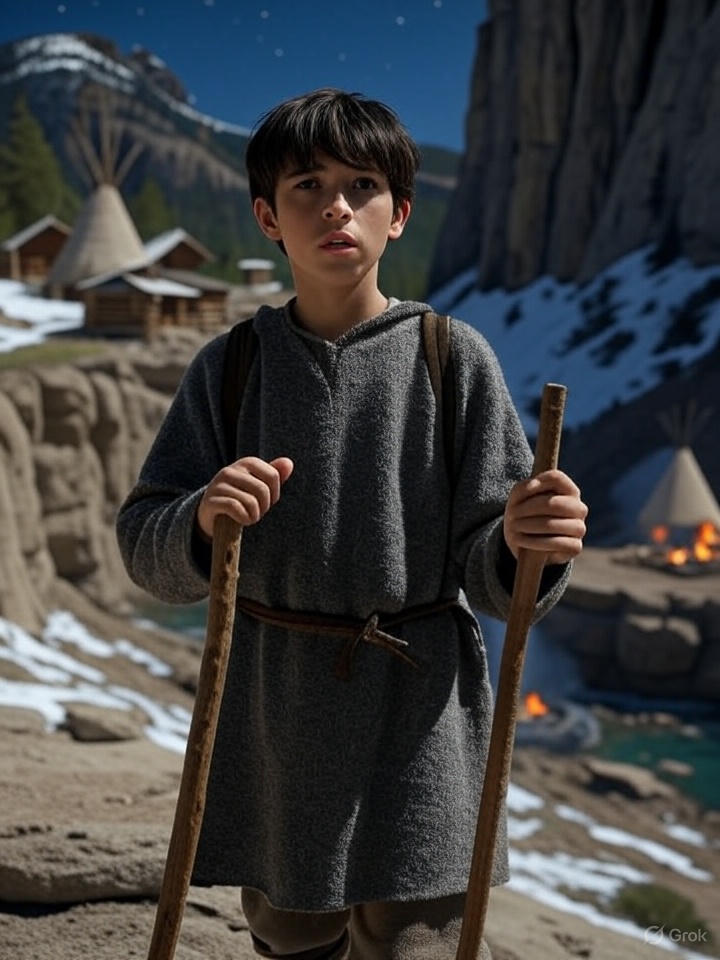


 Anarchistbanjo's World