OD by Karl Hans Strobl and translated by Joe E Bandel
Chapter 5
Silkworms are a tricky bunch. They need warmth, but not too much, fresh air but no drafts. They’re more delicate than you’d imagine, and above all, stubborn—they’ll only eat mulberry leaves. But mulberry trees don’t grow around Vienna like limes, birches, or chestnuts. You have to bring the leaves from afar, which raises costs, and the worms don’t seem to like leaves that aren’t freshly picked.
Even if you refresh the leaves with water, dry them, and do everything humanly possible, one day, for no clear reason, the silkworms stop eating. Something suddenly doesn’t suit them. They stop feeding and shrink into empty husks, or they swell, grow grotesquely fat, and burst, dissolving into mush. It happens alarmingly fast—in a few days, not a single worm is left alive.
Reichenbach has endured three such mass die-offs of his silkworms. But you can’t leave anything untried, so he starts a fourth time.
“You know,” Reichenbach said to his famous guest, the chemist Liebig, “you mustn’t shy away from personal sacrifices to launch an industry. Imagine if we succeed, if we can produce the silk we need—how much wealth that’d bring to the land.”
Liebig paused. “Maybe the critters don’t take to your Viennese climate. Maybe they’re just homesick. Your wine thrives better here, anyway. And frankly, you should stick to chemistry—that’s your field.”
Liebig was headed to the naturalists’ convention in Graz and had accepted Reichenbach’s invitation to be his guest, using his city apartment on Bäckergasse, his carriage, and one of his lackeys. Today, though, he’d come to Reisenberg for the feast Reichenbach was hosting. He arrived early that afternoon so his host could show him the estate. Count Kolowrat had wanted to appoint Liebig to the university, and Reichenbach hinted the idea was his, claiming he’d moved heaven and earth to secure the scholar to win for Vienna. The negotiations fell through, but the friendship forged then endured.
And because of this friendship, Liebig felt obliged to speak plainly about what struck him during the tour. “Look,” he said, “a man shouldn’t want too much at once. Or if he does, it should all stem from one center. But you’re scattering your strength—estates here and in Gutenbrunn, in Galicia, ironworks in Ternitz and Gaya, and now this silkworm business. Why not stick to your true field and build there? Why let others reap the fruits of your groundwork? Sell, who apprenticed with you, started tar distillation in Offenbach, and Hofmann found the tar base kyanol there. That’s a big deal you let slip away.”
“It’ll be no less big,” Reichenbach insisted, “if I succeed in founding a local silk industry. Once these trees grow and the worms get fresh leaves…”
They walked the road from Sievering to Reichenbach’s castle, known locally as Kobenzl, a road he’d lined with mulberry trees on both sides. But for now, the delicate fodder saplings were mere twigs, pitiful brooms, and if the worms had to get their food from elsewhere, countless generations might still perish.
Liebig saw that Reichenbach was one of those people who can’t pass a wall without wanting to bash through it, learning only from their own failures. But it was regrettable, deeply regrettable, to see him stray so far from his true calling.
Before the castle, Reichenbach excused himself, asking the baron to stroll in the garden or sit in the library until he’d changed.
But after leaving Liebig, he didn’t go straight to his dressing room. Instead, he wanted to quickly check the silkworm room. A double door sealed it from the hall to shield the delicate creatures from drafts. As he opened the first door, he heard someone weeping inside.
Indeed, there sat Friederike on the floor, sobbing bitterly.
It was a large, bright room with whitewashed walls, lined with wide wooden racks stacked with wire trays for the silkworms. And amid the racks, fifteen-year-old Friederike sat on the floor, crying wretchedly.
Lost in grief, she didn’t hear Reichenbach approach, wholly surrendered to her tears, as if she’d dissolve into a stream. She started when she heard his voice: “Now, now, little one, why such crying?”
When Reichenbach spoke to the child, he always slipped back into his native Swabian dialect, which he usually suppressed with great effort. But despite the kindness in his words, Friederike pressed her hands tighter to her face, tears flowing even more freely. The little Friederike, whom Frau Friederike Luise had once christened, had grown into a lanky, angular girl. Everything about her was sharp-edged, but her brown hair, in contrast to her otherwise plain frame, hung in two heavy braids down her back.
“Come now, little one! What’s so terrible?” Reichenbach asked again.
Finally, sobbing with heaving shoulders, she stammered, “They… won’t… eat… anymore!”
What, the silkworms wouldn’t eat again? Reichenbach stepped to one of the racks and saw that, indeed, the same thing that had happened before was starting again. The wretched, spoiled, delicate little beasts had stopped feeding. They lay still, no longer crawling, motionless on the wire mesh. Some had half-raised their bodies, as if rearing up in a desperate spasm before freezing in place. A nudge with his finger toppled them. A few showed faint signs of life, but most were already free of hunger’s cares. Just last evening, even this morning, they’d nibbled at the leaves, and now, inexplicably suddenness and for unfathomable reasons, the great dying had come over them again. The entire colony was clearly on the verge of collapse.
“Yes, yes,” Reichenbach said mournfully, “they won’t eat anymore.” But as the child sobbed harder, he steadied himself, giving his voice a brighter, comforting tone: “Nothing to be done. These critters just don’t like it here. No one’s to blame… least of all you.”
Little Friederike Ruf had begged to care for the silkworms, wanting to do something, especially something she knew Reichenbach cared about. She could be trusted with the task—no one had been more diligent, more attentive, kept the racks cleaner. If disaster had struck again, Friederike bore the least blame; she’d overlooked nothing and surely rejoiced more than anyone in their thriving.
Now she lifted her hands from her face and rose to her knees. A delicate, clever child’s face emerged. Tears still streamed from her eyes, her lips trembled, but she looked up at Reichenbach with gratitude and trust.
“You can’t let your spirits sink,” Reichenbach continued confidently. “One day we’ll succeed, figure out what’s wrong. Now, you must pick out the dead worms, and we’ll see if we can save the rest.”
He stroked the child’s wavy crown, and from the touch, joy flowed into her young, yearning soul. Yes, now she could laugh again and spring to her feet. Reichenbach wasn’t even out the door before she began clearing away the worms ravaged by the plague.
At the end of the hall, where the stairs rose to the upper floor, Reichenbach paused before a door and, after a brief hesitation, entered.
The corner room had two windows. One was draped with vine leaves over a curved iron grille; in the bright light of the other stood a long table with books and plant specimens.
Hermine was still bent over the microscope.
“It’s time to get dressed,” Reichenbach urged. “Our guests will arrive soon.”
“Yes, Father.”
“Maybe you could sing something today.”
“I think,” Hermine said timidly, “my voice isn’t quite right today.”
“Not right? What nonsense is that? Are you a theater princess? Theater princesses can afford to be ‘out of voice’—it always sounds interesting. You don’t need to make yourself interesting. If you sing poorly, people will say, ‘Well, she’s a botanist, it’s not her field, but for a woman devoted to science, she sings remarkably well.’ And if you sing well, they’ll say, ‘She’s a botanist too, and the late Baron Jacquin called her his most gifted student, and she’s already made a name for herself in the scientific world with her discoveries about plant anatomy. It’s remarkable that she sings so well too. Besides, you really do sing well—why else did I spend so much on your lessons if you’re suddenly not going to sing? So you’ll sing, and that’s that. I’ve already sent Severin with the carriage for Meisenbiegl.”
“Yes, Father!”
From the door, he added, “Oh—and one more thing. Dr. Eisenstein will be here today. He’s an ambitious young man, a capable doctor, you can’t deny him that. He’s got all sorts of unusual, new ideas; he’ll make something of himself. But he’s too eager for you and has hinted he’ll soon ask me a certain question. I don’t like it, and it shouldn’t suit you either. You have other plans, other goals—you’ve already turned down professors, councillors, barons, counts, and rich factory owners. So if he gets any ideas, make it clear his suit won’t find a warm welcome, not from you, not from me. Let him spare himself the trouble. I hope you understand.”
Chapter 82: Confronting Fear – Transforming Terror into Empowered Action
Have you ever felt your heart race in the face of danger—a sudden roar in the dark or a child’s cry—freezing in place or instinctively leaping to safety, wondering if fear is a paralyzing foe or a vital ally that, when trained, propels you toward survival and growth? What if “miracles” of courage emerged from embracing fear as a natural emotion signaling peril, responding not with paralysis but trained reflexes, where confronting personal terrors over a lifetime builds resilience, turning weaknesses like acrophobia or intimacy dread into conquered strengths? In this confrontation with fear, we explore its healthy role as an alert, dual responses (freeze or bolt, as in lion hunts), training’s autopilot in terror (military/martial arts examples), real-life rescues (casino baby save), and lifelong empowerment through facing fears like heights or water. This isn’t denial of dread; it’s empowered mastery, where body reverts to habit when mind numbs, fostering a lifetime of rewarding victories.
This fear confrontation subtly reflects a balanced dynamic: The expansive surge of instinctive response (outward, generative bolt like branches whipping in storm to evade breakage) aligns seamlessly with the grounding anchor of training (inward, stabilizing reflexes like roots gripping earth amid quake), creating harmony without immobilization. Like an oak tree, whose fear-like alertness to threats (unreasoning winds) triggers adaptive actions (deepening hold for endurance), miracles of bravery arise from confronted energy. In this chapter, we’ll empower these insights into fearless truths, covering fear’s natural signal, dual responses, training’s autopilot, real-life examples, and lifelong confronting, all linked to your OAK Matrix as lower emotional alerts (fear surges) resonating with solar plexus grit (trained will). By the end, you’ll have tools to face fears, build reflexes, and turn terror into “superhuman” empowerment, transforming frozen moments into purposeful leaps. Let’s stare down your shadows and uncover how confronting fear unlocks miracle-level resilience.
Fear as Natural Signal: Healthy Alert to Danger
Fear is an innate, beneficial emotion—your text frames it as a warning of threats, prompting awareness without inherent wrongness.
Why miraculous? It heightens survival instincts, like extra senses flagging peril. Common trait: Protective; non-judgmental.
Dynamic balance: Fear’s inward alarm (stabilizing caution) aligns with response’s outward readiness (generative evasion), blending vigilance with vitality.
In OAK: This lower emotional instinct fuels root survival for proactive alertness.
Empowerment: Note a fear trigger—view it as a helpful signal, reducing self-criticism.
Dual Responses: Freeze or Bolt in Terror
Fear elicits two reactions—your text illustrates with a lion’s roar: prey freezes (death) or bolts (chance to live), highlighting action over paralysis.
Dynamic: Freeze’s inward contraction (stabilizing shock) contrasts with bolt’s outward burst (generative escape), urging choice for balance.
In OAK: Emotional fear integrates with solar plexus action for decisive leaps.
Practical: Simulate a “roar” (e.g., loud noise)—practice bolting response for readiness.
Training’s Autopilot: Body Reverts When Mind Freezes
In terror, training takes over—your text shares martial arts embedding subconscious reflexes, as in jumping to fighting stance at a beaver’s slap, or military conditioning overriding numb brains.
Why miraculous? It enables function amid panic, turning vulnerability into strength. Common: Habitual; non-conscious.
Dynamic: Training’s inward embedding (stabilizing reflexes) aligns with autopilot’s outward execution (generative survival), fusing preparation with performance.
In OAK: Root physicality resonates with lower mental conditioning for fearless flow.
Empowerment: Train a skill (e.g., self-defense move)—test in surprise scenarios for autopilot trust.
Real-Life Examples: Instinctive Rescues and Responses
Fear responses play out vividly—your text recounts a co-worker diving to save a drowning baby while the mother froze screaming, showcasing trained action vs. paralysis.
Why superhuman? It saves lives when instinct kicks in. Common: High-stakes; non-overthought.
Dynamic: Examples’ inward terror (stabilizing freeze/dive) aligns with outcome’s outward impact (generative save), blending reaction with result.
In OAK: Emotional surge integrates with heart compassion for heroic harmony.
Practical: Recall a personal fear moment—analyze response, train for better next time.
Lifelong Confronting: Turning Fears into Conquered Strengths
Confront fears for empowerment—your text advocates facing personal terrors like heights (roof-climbing), water (learning to swim), or intimacy, as lifetime work yielding rewards.
Why miraculous? It diminishes harm’s hold, building joy in mastery. Common: Gradual; non-avoidant.
Dynamic: Confronting’s outward challenge (generative facing) aligns with growth’s inward release (stabilizing freedom), fusing dread with development.
In OAK: Solar plexus grit resonates with emotional centers for resilient evolution.
Empowerment: List a fear—take small steps (e.g., edge of pool for water fear), track progress.
Shared Traits: Natural Alerts, Trained Responses, and Empowered Mastery
These elements unite: Fear signals, dual reactions, autopilot training, real examples, lifelong work—your text ties them to fear’s role in survival, where confronting loosens grips without paralysis.
Why? Freezing dooms; action liberates. Dynamic: Fear’s inward intensity (grounding in alert) aligns with response’s outward will (generative mastery), merging signal with strength.
In OAK: Lower chakras (instinct) resonate with higher unity for fear miracles.
Empowerment: Spot paralyzing fears—apply traits for proactive conquering.
Cultivating Fear Mastery: Training for Reflexive Courage
Mastery is trainable: Train responses, confront gradually—your text implies building habits to function in numb states, turning fear into ally.
Why? Paralysis hinders; preparation empowers. Dynamic: Cultivation’s stabilizing training (grounding in reflexes) aligns with mastery’s outward facing (generative courage), fusing readiness with resolve.
In OAK: Solar plexus (will) integrates with emotional (fear).
Practical: Weekly fear drill—simulate scenarios, build habitual boldness.
Practical Applications: Confronting Fear Daily
Make resilience miracles bold:
Signal Journal: Note a fear alert (male path: generative bolt; female path: stabilizing train). Reflect dynamic: Grounding terror + outward action.
Partner Fear Share: Discuss a “freeze/bolt” story with someone (men: outward confront; women: grounding reflex). Explore seamless integration. Alone? Affirm, “Alert and response align in me.”
Reflex Ritual: Visualize roar; practice stance (e.g., martial pose). Act: Face a small fear, noting training kick-in.
Mastery Exercise: Weekly, confront a terror (e.g., call for intimacy)—observe loosened hold.
These awaken power, emphasizing seamless dynamic over freeze.
Conclusion: Unlock Miracles Through Fear’s Embrace
Confronting fear—natural signals, dual responses, trained autopilot, real rescues, lifelong mastery—turns terror into empowered action, loosening harm’s grip. A balanced dynamic unites grounding with expansion, transforming alerts into superhuman courage. Like an oak roaring back at storms through rooted strength, embrace this for fearless living.
This isn’t avoidance—it’s alliance. Confront boldly today, train resolutely, and feel the miracle. Your life awaits—alert, responsive, and unconquerable.
Chapter 81: Change Attitude by Changing Behavior – Igniting New Pathways Through Action
Have you ever found yourself mired in a negative mindset—emotions swirling chaotically, thoughts clouded by unrealistic expectations—wishing for a mental reset, only to discover that shifting your actions sparks profound transformation, forging fresh neural paths like a robot programmed by movement rather than code? What if “miracles” of renewed positivity arose from recognizing attitude as the unified blend of body, mind, and spirit meeting reality, where raw physical activity breaks emotional ruts, burns new brain circuits, and turns frustration into joy without needing to hit rock bottom? In this revelation on attitude change, we explore how positive, realistic expectations foster uplifting attitudes, while negativity stems from misalignment; using robot programming metaphors, infant neural development examples, and the power of trying new physical things to create pathways that work, bypassing mental/emotional stalls. This isn’t passive wishing; it’s active evolution, where “hitting bottom” forces change but proactive experiences offer a gentler, exhilarating route to satisfaction and growth.
This behavioral shift subtly reflects a balanced dynamic: The expansive thrust of new actions (outward, generative exploration like branches venturing into uncharted air) aligns seamlessly with the grounding formation of neural paths (inward, stabilizing circuitry like roots etching deeper channels through soil), creating harmony without stagnation. Like an oak tree, whose attitude toward survival embodies resilient adaptation—physically responding to winds and rains to forge stronger structures (unified growth)—miracles of positivity emerge from movement-driven change. In this chapter, we’ll activate these ideas into invigorating truths, covering attitude as unified self, realistic expectations, mental/emotional ruts, robot programming metaphors, infant neural examples, raw activity’s power, and proactive joy, all linked to your OAK Matrix as solar plexus determination (behavioral will) resonating with lower mental/emotional centers (attitude blend). By the end, you’ll have tools to spot ruts, ignite physical changes, and turn behavioral shifts into “superhuman” positivity, transforming stuck states into vibrant evolution. Let’s move your mindset and uncover how behavior unlocks miracle-level attitude.
Attitude as Unified Self: Emotions, Thoughts, and Reality’s Meeting
Attitude merges emotions and thinking with physical reality—your text defines it as the completeness of body, mind, and spirit at once, reflecting true intelligence and life will.
Why miraculous? It mirrors our holistic state, guiding responses to expectations. Common trait: Personal reflection; non-fragmented.
Dynamic balance: Attitude’s inward unity (stabilizing blend) aligns with reality’s outward encounter (generative interface), blending inner world with external.
In OAK: This heart-level integration (unified self) fuels solar plexus expression for authentic vibe.
Empowerment: Assess your current attitude—trace to emotion-thought-reality mix for awareness.
Realistic Expectations: Foundation for Positive Attitudes
Positive attitudes stem from realistic, optimistic expectations—your text contrasts this with unrealistic/negative ones breeding negativity.
Why superhuman? It aligns inner hopes with outer truths, sustaining joy. Common: Grounded optimism; non-delusional.
Dynamic: Expectations’ stabilizing realism (grounding in possibility) aligns with positivity’s outward flow (generative outlook), fusing practicality with uplift.
In OAK: Mental-level clarity resonates with emotional centers for balanced vibe.
Practical: Set a daily expectation—ensure realism, note attitude improvement.
Mental/Emotional Ruts: When Misalignment Clouds Judgment
Stuck attitudes arise from wrong thinking or emotional clouds—your text notes frustration when mind/emotions discord with reality, halting function.
Why miraculous to escape? It reveals action as the key breakout. Common: Frustrated stall; non-productive.
Dynamic: Ruts’ inward blockage (stabilizing discord) aligns with change’s outward breakthrough (generative reset), blending recognition with release.
In OAK: Lower mental/emotional traps integrate with solar plexus action for freed flow.
Empowerment: Identify a rut—acknowledge misalignment as cue for behavioral shift.
Robot Programming Metaphors: Action vs. Mental Planning
Two robot programming ways illustrate change: line-by-line code (mental pre-thinking) vs. physical sensor-guided movement (recording actions for replay)—your text equates the latter to breaking ruts via doing.
Dynamic: Metaphor’s inward code (stabilizing plan) aligns with action’s outward recording (generative path), fusing thought with embodiment.
In OAK: Mental programming resonates with root physicality for adaptive mastery.
Practical: For a task, skip overthinking—physically start, let momentum build pathways.
Infant Neural Examples: Movement Forging Brain Circuits
Newborns develop control via parental play moving limbs—your text explains this fires nerves, creating pathways for conscious use; physical precedes intent.
Why miraculous? It shows action builds capacity, even in blanks slates. Common: Experiential; non-innate.
Dynamic: Infant’s inward firing (stabilizing circuits) aligns with movement’s outward play (generative learning), blending creation with control.
In OAK: Root neural grounding integrates with higher mental for developmental joy.
Empowerment: Mimic with a new skill—physically practice first, watch control emerge.
Raw Physical Activity: Burning New Pathways Without Bottom
Raw action forges neural paths sans hitting bottom—your text advocates trying new physical things for growth, avoiding forced crises for change.
Why superhuman? It preempts lows, turning exploration into excitement. Common: Proactive doing; non-crisis.
Dynamic: Activity’s outward novelty (generative experience) aligns with pathways’ inward burn (stabilizing neural), fusing adventure with adaptation.
In OAK: Solar plexus grit resonates with mental centers for fresh circuits.
Practical: In a slump, try a new activity (e.g., dance)—feel attitude lift from pathways.
Proactive Joy: Healthy Growth Through New Skills and Satisfaction
Healthy individuals delight in physical novelties—your text notes learning skills brings ongoing enjoyment, bypassing bottom-hitting for voluntary evolution.
Why miraculous? It sustains satisfaction via accumulation. Common: Joyful learning; non-stagnant.
Dynamic: Joy’s inward contentment (stabilizing fulfillment) aligns with proactivity’s outward skills (generative expansion), blending pleasure with progress.
In OAK: Heart joy integrates with root action for lifelong vibrancy.
Shared Traits: Unified Reflection, Action Breakthroughs, and Neural Evolution
These facets converge: Unified attitude, realistic foundations, rut escapes, programming metaphors, neural examples, raw activity, proactive joy—your text ties them to behavior changing attitude via physical forging.
Why? Mental stalls hinder; actions empower. Dynamic: Attitude’s inward mix (grounding in self) aligns with behavior’s outward change (generative paths), merging emotion-thought with evolution.
In OAK: Lower centers (emotions) resonate with higher unity for attitude miracles.
Empowerment: Spot negative attitudes—apply traits for behavioral resets.
Cultivating Attitude Change: Training for Physical Ignition
Change is trainable: Physically act when stuck, build habits—your text implies “fake it” creates real pathways, avoiding bottom for proactive growth.
Why? Passivity clouds; activity clears. Dynamic: Cultivation’s stabilizing fake (grounding in start) aligns with change’s outward make (generative real), fusing simulation with shift.
In OAK: Solar plexus (behavior) integrates with emotional/mental (attitude).
Practical: Daily rut-check—ignite with action, cultivate till natural.
Partner Change Share: Discuss a “behavior shift” with someone (men: outward forge; women: grounding neural). Explore seamless integration. Alone? Affirm, “Emotion and action align in me.”
Ignition Ritual: Visualize rut; physically move (e.g., swing arms like infant). Act: Try a new skill, noting neural spark.
Growth Exercise: Weekly, “fake” positivity via action—observe real attitude change.
These awaken power, emphasizing seamless dynamic over stall.
Conclusion: Unlock Miracles Through Behavioral Ignition
Change attitude by changing behavior—unified reflection, realistic foundations, rut escapes, programming metaphors, neural forging, raw activity, proactive joy—transforms negativity via physical pathways. A balanced dynamic unites grounding with expansion, turning ruts into superhuman positivity. Like an oak forging strength through storm-movements, embrace this for uplifted living.
This isn’t thought—it’s done. Act on attitude today, forge boldly, and feel the ignition. Your miraculous life awaits—positive, pathwayed, and profoundly renewed.
by Karl Hans Strobl and translated by Joe E Bandel
Reichenbach grabs his coat and goes. The chief accountant thinks, thank God he’s leaving—I’d have had to get harsh otherwise; that damned know-it-all attitude can go to the devil, thinking he knows everything better.
Outside, the carriage waits. Reichenbach climbs in, and Johann tries to mount the coachbox, a pitiful struggle for his brittle bones. One leg barely makes the step, but lifting the second won’t do. Stiff, stiff joints, trembling knees—Johann pushes off the ground, hopping, hopping, but it’s a wretched, futile effort.
“Wait,” Reichenbach says, jumping from the carriage. “Get in! I’ll drive.”
The old man’s bright eyes widen in disbelief, his weary head shaking—how could this be? Get in? Then old Johann would sit on the blue cloth cushions, and the Herr General Director would take the coachbox. You can’t upend the order of the world—no, that won’t do.
“Shut up!” Reichenbach growls. “No arguing! Get in, and that’s that!”
No one defies the Herr General Director. The unthinkable happens: old Johann must sit in the carriage like a lord, while Reichenbach climbs onto the coachbox, taking reins and whip as if he were the driver.
Johann feels uneasy, but Reichenbach revels in wild inner joy, chuckling like a gleeful child. Yes, now old Johann rides like a lord, and let them at the castle see it and stew in their green and blue annoyance.
Sure enough, as he swings the carriage into the castle courtyard, someone at the prince’s study window starts back, stung by the odd spectacle.
Reichenbach carries his mocking, delighted grin into the study, flashing it at the two young men awaiting him.
First, Reichenbach learns that the stranger young man is Herr Lawyer Dr. Josef Promintzer, Dr. Promintzer from Vienna, successor to the old, somewhat complacent princely syndic Dr. Gradwohl, now retired.
“I’ve summoned you,” the prince says after the men take seats around the large diplomatic desk, “to discuss the balance sheet.”
“In the presence of the syndic?” Reichenbach asks.
“Indeed,” the young prince replies measuredly, recovering from the jab. He understands what Reichenbach means—that this used to be a matter of trust between his late father and Reichenbach, needing no lawyer’s involvement.
The men sit around the diplomatic desk, where the balance sheet and books, fetched by the prince yesterday, lie. The prince is a young, well-built man, slightly gaunt and stooped, with a stern, guarded, haughty face, almost entirely his mother’s. The new lawyer, by contrast, is a plump man with a short neck and a piggish snout. He wears owl-like glasses, like those Frau Paleczek, God rest her soul, used for reading. His breathing whistles through his nose, and a thick watch chain across his blue vest sways with his belly’s rise and fall.
A judicial air fills the prince’s study, the books and papers on the desk like evidence of a crime.
“It’s about this matter,” Dr. Promintzer begins namely, that certain things aren’t clear to His Princely Grace.”
Aha, Reichenbach thinks, those dubious entries I fought the chief accountant over, and instantly he’s ready to defend the accountant tooth and nail to the bitter end.
“Namely…” the prince continues, “the sugar factory. There’s a contract with my late father, the deceased old count—”
“Unfortunately, one might say!” Dr. Promintzer interjects.
“Stating the sugar factory must source its beets exclusively from the princely estate office at a fixed price.”
“We’ve talked about this several times, I believe,” Reichenbach grumbles. “Why throw money elsewhere?”
“Well,” the prince says haltingly, brow furrowed as if recalling a poorly learned lesson, “in bad years, with a poor beet harvest, the estate office can’t supply enough…”
“I find that irrational,” Promintzer cuts in quickly. “In good years, the factory could get beets cheaper elsewhere, but the estate office sticks to its price.”
“So what?” Reichenbach retorts. “We’ve gone over this ten times. It all ends up in the same pocket. Factory or estate office—it’s six of one, half a dozen of the other.”
“The contract with my late father, the deceased old count—” the prince says.
“Hm,” Dr. Promintzer interrupts, his eyes vanishing behind the glint of his glasses. “You shouldn’t defend this irrational operation, Herr General Director, when you’re profiting forty percent from the estate office—a remarkably high share, one must say.”
Reichenbach turns dark red. The urge flashes through him to grab Dr. Promintzer by his watch chain and knock the glasses off his piggish snout with two slaps. But then he tells himself slaps are poor arguments, and you only strike a man so swiftly and directly if he’s meant to fall—or has already fallen.
“Well, well,” he says slowly, leaning back until his chair creaks. “So you think my share’s too high, do you?”
Promintzer shrugs, and the prince says, “In general…” laying his hand on a document, “the last contract with my late father, the deceased old count… before, you had twenty-five percent generally… in the last contract, your share rose to thirty-three percent… my late father, in his final days…” The prince tilts his head to his shoulder, his face deeply mournful.
“His Princely Grace,” the lawyer chimes in, “His Princely Grace believes the contract must be revised, and the general power of attorney needs amending as well.”
Business is business, and matters of honor shouldn’t mix with it. It’s wise to hear where this is going. They talk around it for a while, and it becomes ever clearer to Reichenbach that there’s a point where pride demands no further haggling over petty details. They want cuts, even now, to last year’s profits.
“You forget,” Reichenbach says, his chair creaking again as he leans back, “that this is largely my work.” He gestures at the papers on the desk, but his motion sweeps wider, encompassing forests and smoking chimneys, blast furnaces and ore mines, offices and laboratories.
Promintzer snorts sharply through his nose, seeing he has the man where he wants him. “All due respect,” he says deliberately, “your inventions and discoveries, Herr General Director! But, hand on heart, creosote, paraffin, and so forth—everyone knows it was really the chemist Mader—”
Reichenbach slams the armrests of his chair and half-rises. He keeps hold of the armrests—it’s better not to let go. “That, Herr Doctor,” he says, “is despicable, a low blow…”
He doesn’t look at the lawyer or the prince but at the suit of armor by the desk. It’s better to fix on the armor, where one of their warlike ancestors stood, perhaps that Niklas Salm who saved Vienna from the Turks.
Reichenbach could make a grand exit now. He could say, “I request my dismissal,” or “I’ll find my justice,” or “We’ll meet again at Philippi,” or something like that. But he says none of it. It’s enough that he made that grand gesture over the desk, sweeping toward the forests and smokestacks. He regrets it—enough is enough. So he simply says, “Good day!” and walks out.
“You’ll see, he’ll slap us with a lawsuit,” Promintzer smirks.
“Do you think so?” the prince asks, surprised and a bit unsatisfied with the outcome.
“I’m certain,” Promintzer says, his thick watch chain swaying on his gleefully heaving belly. Dr. Josef Promintzer is a lawyer, and lawyers, after all, thrive on people suing each other.
Reichenbach descends the stairs, thinking, the last time. Oddly, he doesn’t think of Dr. Promintzer or the young prince, but of the prince’s mother, that stiff-backed, angular, bony former convent lady who her son so resembles.
In the courtyard, Forester Ruf stands, also summoned for an audience. His hat’s sweep catches Reichenbach’s eye, slowing his step. “Do you know what just happened, Ruf?” he asks.
“What, Herr General Director?”
Reichenbach kicks the air. “No more General Director. I’ve fallen from grace.”
“Good heavens, Herr General Director!”
“No dramatic scenes, Ruf! I saw this coming a long time ago. Now I’m in otium cum dignitate—to put it so you understand, Ruf, I’m my own master now. At Reisenberg near Vienna. And if you ever get fed up here, Ruf, you know—I can always use capable people.”
Chapter 80: Free Will and Physical Actions – Navigating Predestination Through Effort and Insight
Have you ever grappled with the age-old riddle of destiny—feeling like a puppet to unseen forces one moment, then sensing your choices carve profound paths the next—wondering if true freedom lies in bridging astral previews with willful physical deeds? What if “miracles” of self-determination emerged from understanding free will’s nuances: societal constraints tempering individual desires, astral events preceding physical ones per “As above, so below,” lucid dreams enabling preemptive changes, and resonant energy from bodily actions altering outcomes, where injecting effort early shifts fates before they solidify? In this contemplation of free will versus predestination, we weigh arguments from history’s thinkers, exploring four factors: collective will’s limits, astral-physical precedence, lucid interventions (as in dream-saved accidents), and physical activity’s power to reshape astral circuits, akin to electronics’ capacitance-inductance dynamics. This isn’t fatalistic surrender; it’s empowered interplay, where waiting too long locks events, but timely will injects transformative energy.
This destiny navigation subtly reflects a balanced dynamic: The expansive force of free will (outward, generative choice like branches defying wind to shape growth) aligns seamlessly with the grounding pull of predestination (inward, stabilizing structure like roots accepting soil’s limits yet drawing from depths), creating harmony without resignation. Like an oak tree, whose form defies storms through adaptive will (unyielding effort) while rooted in earth’s preordained nutrients (astral blueprints), miracles of agency arise from timely intervention. In this chapter, we’ll unravel these enigmas into liberating truths, covering the free will debate, societal constraints, astral precedence, lucid alterations, and physical energy’s reshaping power, all linked to your OAK Matrix as third-eye foresight (astral glimpses) resonating with solar plexus will (determined actions). By the end, you’ll have tools to sense astral signals, exert willful changes, and turn predestined hints into “superhuman” self-carving, transforming fatalistic doubts into purposeful mastery. Let’s probe your potential and uncover how free will unlocks miracle-level destiny.
The Free Will Debate: Eternal Questions and Evolving Truths
Does free will exist, or are we bound by preordained fate?—your text notes great minds have debated this endlessly, with strong cases on both sides, yet time edges us closer to clarity without final answers.
Why miraculous? It invites ongoing inquiry, balancing determinism’s comfort with autonomy’s thrill. Common trait: Nuanced; non-absolute.
Dynamic balance: Debate’s inward reflection (stabilizing inquiry) aligns with truth’s outward evolution (generative approximation), blending contemplation with progress.
In OAK: This crown-level philosophy (cosmic questions) fuels third-eye discernment for personal insights.
Empowerment: Journal a “fated vs. free” moment—seek patterns for evolving understanding.
Societal Constraints: Collective Will vs. Individual Freedom
Human collective and social structures overpower individuals—your text likens it to soldiers facing restrictions, where free will must align socially or face consequences, tying choice to accountability.
Why superhuman to navigate? It demands wise rebellion or adaptation, avoiding unwinnable fights. Common: Consequence-linked; non-isolated.
Dynamic: Society’s inward limits (stabilizing norms) aligns with will’s outward defiance (generative pursuit), fusing acceptance with assertion.
In OAK: Heart-level collective resonates with solar plexus independence for balanced agency.
Practical: Evaluate a “restricted” desire—choose actions accepting consequences for empowered alignment.
Astral Precedence: “As Above, So Below” and Precognitive Dreams
Astral events precede physical ones—your text affirms the Hermetic axiom “As above, so below,” evidenced by precognitive dreams forecasting significant occurrences, showing destiny forms etherically first.
Why miraculous? It previews outcomes, allowing intervention before manifestation. Common: Lag time; non-simultaneous.
Dynamic: Astral’s inward blueprint (stabilizing potential) aligns with physical’s outward unfolding (generative reality), blending preview with playout.
In OAK: Third-eye astral visions integrate with root physicality for timely foresight.
Empowerment: Recall a “foretelling” dream—use as cue to prepare or alter waking actions.
Lucid Alterations: Willful Changes in Dreams and Reality
Lucid dreaming proves astral shifts alter physical fates—your text shares examples: willfully avoiding a dream accident mirrored real-life evasion, or dragging a stuck body to freedom, overcoming resistance through determination.
Why superhuman? It exerts free will against astral “force,” changing outcomes preemptively. Common: Effortful; non-passive.
Dynamic: Lucid’s inward will (stabilizing intent) aligns with alteration’s outward impact (generative change), fusing dream work with waking wins.
In OAK: Third-eye lucidity resonates with solar plexus determination for destiny redirection.
Practical: Practice lucid techniques (e.g., reality checks)—in dreams, exert will on obstacles for real-world parallels.
Physical Energy’s Reshaping: Injecting Effort to Alter Circuits
Physical actions influence astral destiny via energy generation—your text uses resonant circuit metaphor: physical (capacitive, storing energy) changes affect astral (inductive), where hard effort injects force to shift pre-events, but delay makes it impossible.
Why miraculous? It empowers change before fixation, turning “fate” into malleable. Common: Timely injection; non-late.
Dynamic: Physical’s outward activity (generative energy) aligns with astral’s inward precedence (stabilizing blueprint), blending deed with design.
In OAK: Root physicality integrates with third-eye astral for circuit-like reshaping.
Empowerment: In a “stuck” situation, amp physical effort (e.g., exercise for clarity)—note shifted outcomes.
Shared Traits: Will’s Limits, Astral-Physical Link, and Timely Intervention
These factors unite: Societal bounds, astral precedence, lucid will, physical reshaping—your text ties them to free will’s reality, where consequences, resistance, and timing define agency.
Why? Predestination hints; will intervenes. Dynamic: Limits’ inward constraints (grounding in factors) aligns with intervention’s outward exertion (generative freedom), merging acceptance with alteration.
In OAK: Lower chakras (physical) resonate with higher unity for will miracles.
Empowerment: Spot “fated” patterns—apply factors for proactive carving.
Cultivating Free Will: Training for Astral-Physical Mastery
Free will is cultivable: Sense astral signals, exert lucid changes, inject physical energy—your text implies early action alters outcomes, avoiding late locks.
Why? Passivity fixes fate; timeliness empowers. Dynamic: Cultivation’s stabilizing awareness (grounding in signals) aligns with mastery’s outward will (generative shifts), fusing perception with power.
In OAK: Third-eye (astral) integrates with solar plexus (will).
Practical: Daily dream journal—link to waking actions, build timely interventions.
Partner Will Share: Discuss a “fate shift” with someone (men: outward exertion; women: grounding lucid). Explore seamless integration. Alone? Affirm, “Preview and will align in me.”
Energy Ritual: Visualize astral resistance; inject effort (e.g., affirm change in meditation). Act: Alter a “locked” habit physically, noting freedom.
Timing Exercise: Weekly, sense a “lag”—act preemptively for outcome tweak.
These awaken power, emphasizing seamless dynamic over resignation.
Conclusion: Unlock Miracles Through Willful Destiny
Free will and physical actions—societal limits, astral precedence, lucid shifts, energy reshaping—debate predestination but affirm timely intervention carves paths. A balanced dynamic unites grounding with expansion, turning hints into superhuman agency. Like an oak altering course through willed growth, embrace this for liberated living.
This isn’t predetermined—it’s chosen. Sense signals today, act willfully boldly, and feel the shift. Your miraculous life awaits—free, intervened, and self-carved.Chapter 80: Free Will and Physical Actions – Navigating Predestination Through Effort and Insight.
Chapter 79: Turn Emotions into Actions – Transforming Feelings into Productive Momentum
Have you ever been stuck in an emotional quagmire—anger simmering, apathy dragging you down—wishing for a switch to flip your mood, only to discover that shifting your actions ignites real change, propelling you forward with “fake it till you make it” grit until breakthroughs feel genuine? What if “miracles” of resilience arose from viewing emotions not as tyrants but as fuel, channeling their raw energy through physical habits and autopilot training, where tough times yield to determined deeds like chopping wood to burn off fury or running to reclaim control? In this guide to turning emotions into actions, we emphasize action’s supremacy over feeling shifts: physical movement breaks ruts, as experts and military prove with psyched-up routines and trained responses; good habits sustain progress amid chaos, while bad ones stall into depression. This isn’t suppressing emotions; it’s harnessing them as allies, converting anger to determination, and building routines that comfort and accumulate, as in daily posts becoming a life’s anchor of steady joy.
This action-oriented transformation subtly reflects a balanced dynamic: The expansive intensity of emotions (outward, generative fuel like wind whipping branches into motion) aligns seamlessly with the grounding force of habits (inward, stabilizing routines like roots converting storm energy into firm hold), creating harmony without overwhelm. Like an oak tree, whose vitality surges in response to environmental “emotions” (unreasoning winds) yet thrives through adaptive actions (deepening roots for stability), miracles of momentum emerge from directed effort. In this chapter, we’ll energize these concepts into motivational truths, covering action’s power over feelings, physical breakthroughs for ruts, channeling emotional fuel, habit’s sustaining role, and personal examples, all linked to your OAK Matrix as lower emotional surges (unruly feelings) resonating with solar plexus grit (determined actions). By the end, you’ll have tools to fake momentum till it’s real, build constructive habits, and turn emotional barriers into “superhuman” progress, transforming inner turmoil into purposeful drive. Let’s activate your energy and explore how emotions-into-actions unlocks miracle-level resilience.
Action’s Power: More Impactful Than Feeling Shifts
Changing behaviors trumps altering emotions—your text asserts physical action as the key to escaping ruts, with “fake it till you make it” building genuine momentum.
Why miraculous? It bypasses emotional blocks, creating change externally to influence internally. Common trait: Proactive doing; non-waiting for mood fixes.
Dynamic balance: Action’s outward initiation (generative shift) aligns with emotions’ inward persistence (stabilizing fuel), blending movement with matter.
In OAK: This solar plexus intent (directed deeds) fuels lower emotional release for liberated flow.
Empowerment: In a low mood, commit to one action (e.g., a walk)—note the emotional uplift.
Physical Breakthroughs: Jump-Starting Through Tough Times
Experts and military harness action for psyche-ups—your text cites running to stages or autopilot training, proving body overrides brain shutdowns in crises.
Why superhuman? It sustains performance when feelings falter, turning inertia into instinct. Common: Trained response; non-reliant on motivation.
Dynamic: Physicality’s inward autopilot (stabilizing habit) aligns with breakthrough’s outward surge (generative escape), fusing routine with renewal.
In OAK: Root-level training integrates with emotional centers for resilient momentum.
Practical: Before a challenge, do a quick physical ritual (e.g., jumps)—feel the psyche-up.
Channeling Emotional Fuel: Converting Energy into Positive Deeds
Physical activity tames unruly emotions—your text advises using anger for wood-chopping or runs, transforming it into grit rather than depression.
Dynamic: Emotions’ expansive rawness (generative power) aligns with action’s inward channeling (stabilizing control), blending intensity with intention.
In OAK: Lower emotional force resonates with solar plexus determination for constructive use.
Empowerment: Feel a strong emotion—redirect it (e.g., frustration into cleaning) for empowered release.
Habit’s Sustaining Role: Good Routines vs. Bad Stalls
Habits carry us through—your text contrasts constructive ones (like daily teeth-brushing for comfort) with bad ones leading to standstill and depression; struggles demand continued effort.
Why superhuman? Good habits autopilot progress; bad ones cripple. Common: Accumulative; barrier-breaking.
Dynamic: Habits’ stabilizing patterns (grounding in routine) align with progress’s outward breakthroughs (generative goals), fusing consistency with conquest.
In OAK: Root habits integrate with solar plexus effort for enduring drive.
Practical: Build one good habit (e.g., daily journaling)—prune a bad one for momentum gain.
Personal Examples: From Bursts to Comforting Routines
In life, habits evolve from energized bursts to steady comfort—your text shares daily internet posts becoming easier than skipping, providing relaxation and progress even on bad days.
Why miraculous? It turns stress into solace, making every day “good” via accumulation. Common: Habitual comfort; non-extreme.
Dynamic: Examples’ inward evolution (stabilizing routine) aligns with life’s outward continuity (generative posts), blending adaptation with achievement.
In OAK: Solar plexus grit resonates with heart’s contentment for joyful persistence.
Empowerment: Reflect on a personal “burst to habit”—replicate in another area for sustained joy.
Shared Traits: Action Supremacy, Emotional Fuel, and Habitual Momentum
These elements unite: Action over feelings, physical psyche-ups, channeling fuel, sustaining habits, life examples—your text ties them to breakthrough ruts via directed energy and routines.
Why? Inaction stalls; action transforms. Dynamic: Emotions’ inward fuel (grounding in matter) aligns with actions’ outward momentum (generative progress), merging intensity with impact.
In OAK: Lower chakras (emotions) resonate with higher unity for action miracles.
Empowerment: Spot emotional ruts—apply traits for resilient transformation.
Cultivating Action Transformation: Training for Habitual Drive
Transformation is trainable: Fake momentum, channel emotions, build habits—your text implies turning barriers into breakthroughs via persistent deeds.
Why? Passivity depresses; action empowers. Dynamic: Cultivation’s stabilizing training (grounding in habits) aligns with transformation’s outward grit (generative breakthroughs), fusing preparation with power.
In OAK: Solar plexus (actions) integrates with emotional centers (fuel).
Practical: Weekly, “fake” an action in a rut—build till habitual for automatic drive.
Practical Applications: Turning Emotions into Actions Daily
Partner Action Share: Discuss an “emotional action” with someone (men: outward grit; women: grounding routine). Explore seamless integration. Alone? Affirm, “Fuel and focus align in me.”
Momentum Ritual: Visualize rut; act physically (e.g., run for release). Act: Redirect anger to a task, noting determination.
Habit Exercise: Weekly, build a routine (e.g., morning stretch)—observe comfort in stress.
These awaken power, emphasizing seamless dynamic over inertia.
Conclusion: Unlock Miracles Through Actioned Emotions
Turn emotions into actions—powerful shifts, physical breakthroughs, fueled channeling, sustaining habits, life routines—conquer ruts via directed energy and grit. A balanced dynamic unites grounding with expansion, turning turmoil into superhuman momentum. Like an oak turning winds into deeper roots, embrace this for driven living.
This isn’t waiting—it’s doing. Act on emotions today, habit boldly, and feel the breakthrough. Your miraculous life awaits—gritty, habitual, and triumphantly yours.
The old count spoke without undue solemnity, yet Reichenbach sensed something weighty behind it, an inner shift toward something new.
“And what’ll happen here without you?” Reichenbach asked.
“It’s a blessing I have you, Reichenbach,” the old count replied, a wistful smile in his voice. “You don’t need me. It’s as good as if I were here. No task is too much.” Perhaps he truly smiled now, but it wasn’t visible.
“And tomorrow I’ll come by the factory again,” the old count added, then left.
Frau Paleczek appeared with a light and set the table, but as she brought the plates, she suddenly wailed and ran out. After a while, Susi brought the supper instead.
“Where’s Paleczek?” Reichenbach asked.
“She’s sitting in the kitchen crying,” Susi said, but then her composure broke too. She swallowed hard, abruptly sobbing, pulled her apron over her face, and ran out.
After poking at his food, Reichenbach rose and went to the children’s room. It had been fumigated with sulfur and juniper and sprayed with vinegar, still smelling sharp. The children lay in freshly made beds but weren’t asleep yet.
“Have you done your assignments for tomorrow?” Reichenbach asked, standing by Reinhold’s bed.
“Herr Futterknecht said,” Reinhold admitted hesitantly, “we don’t need to do assignments for tomorrow.”
“So!” Reichenbach said, nothing more. Then: “Good night! Sleep now.” He shook Reinhold’s hand, stroked Hermine’s forehead, and bent to kiss Ottane’s cheek.
The child flung her arms up, wrapped them around his neck, and pulled him close. “Papa,” she whispered, “I’ll always be good and love you so much.”
The painfully sweet tenderness of such clinging melted the stiffness in his limbs, and Reichenbach held Ottane close.
“I promised Mutti,” the child whispered, “and she’ll always come to me and tell me what the sky-sheep sing.”
“When did you promise Mutti?” Reichenbach asked, just as softly.
“Tonight—when she was with me.”
Tonight? Tonight? What could that mean, tonight? A sudden stab of dread seared his heart. Troubled, shaken to his core, Reichenbach tucked the blanket over Ottane and went to the next room, where the drawings for the new furnace still lay on the desk.
The furnace was built to Reichenbach’s plans and exceeded all expectations. It roared, spat, and glowed, producing nearly as much charcoal as the wood fed into it, and most importantly, showed no tendency for unexpected mischief.
Once it was running smoothly, Reichenbach decided it was time to restart the abandoned Doubrowitzer hammer mill. So he put it back into operation. Then he thought it was time to build a drilling rig. He built one, installing a drilling machine—naturally, the largest in Austria,and could bore cylinders over twelve feet in diameter.
Then Reichenbach turned to agriculture, starting, as agreed with the old count, to grow sugar beets, which naturally required a sugar factory. Since farming was foreign to him, with no innate knowledge of it, nothing became more important than beets and sugar. Some things succeeded, others failed, and years passed. Looking back on New Year’s Eve, it felt like each year had only begun the day before yesterday.
Meanwhile, the old count traveled the world, writing long letters to Reichenbach about his findings.
The old count wrote that he and Lord Rumford conducted experiments on gas expansion, especially gunpowder, nearly blowing themselves up once.
He wrote that he’d heard of Jenner’s vaccination discovery, calling it a magnificent invention, and was now vaccinating himself. He sent vaccine and needles to Reichenbach for free distribution, later adding a self-written treatise on cowpox.
Reichenbach replied that it was indeed a great invention, but the people wanted no part of it. Meanwhile, the workshop was now producing hydraulic presses, water-lifting, and conveyor machines.
The old count wrote that he was now studying the Loserdorre cattle breed disease, to be fought with iron-containing hydrochloric acid, and he sent a self-written pamphlet on it. He was also on the trail of a remedy for rabies, likely in a cyanide compound. But against cholera, no cure could be found.
Reichenbach replied that the Brno censor was a fool for banning the old count’s pamphlet. As for rabies, he begged him, for God’s sake, to be careful with sick animals. Meanwhile, he was shipping barrel hoops to Singapore, cookware to Haiti, iron stoves to Turkey, and creosote to America and Egypt. He said nothing about cholera or its treatment.
Sometimes the old count came home. His eyes had a restless glint; he laughed loudly, sat in Reichenbach’s sofa corner, smoked like a chimney, and drank heavy wine. He looked over the books, made a few tweaks to the machines, then vanished again for days. During one such visit, Forester Ruf came and said, “Can you believe, Herr Director, the old count stopped by my place today?”
“So what?” Reichenbach asked. Why shouldn’t the old count visit Ruf? He roamed the valley, dropping in on folks, asking how they were, urging them and their children to get vaccinated against smallpox. Sometimes he liked to wander the woods in shabby, tattered clothes, like a traveling journeyman, chatting with old peasant women to beg from those who didn’t know him, only to richly reward them afterward if they gave him something. Why shouldn’t he have visited Forester Ruf?
“Well, but,” Ruf said hesitantly, “you won’t believe it. He sent Schnuparek’s widow, who’s watching the child, away, and when I came in, he was crawling under the table with the girl on all fours, barking like a dog, fooling around. He brought her a big new doll, too, and when he left, I saw money tucked in the mirror frame.”
“Why shouldn’t he give you money, Ruf?” Reichenbach said. “He probably remembered being at your girl’s christening and how different things were then.”
“But I don’t know if I can keep it,” Ruf stammered, flushed with embarrassment. “It’s a whole hundred gulden. The old count must’ve made a mistake.”
“Keep it!” Reichenbach urged. Yes, great lords sometimes had such generous whims, and perhaps the old count, with his incognito wandering and gift-giving, took after a caliph who’d done similar things. But Ruf shouldn’t thank him—the old count didn’t like being reminded of his kindnesses.
The old count never stayed home long. He’d look around briefly, bring gifts for Reichenbach’s children, praise their growth, looks, and progress, discuss business and new scientific plans with Reichenbach. But Friederike Luise was never mentioned.
Then the old count went on his way again.
He wrote: He had been admitted to the Société Harmonique in Strasbourg, where new and remarkable insights into human nature were to be gained. He was increasingly convinced that hidden forces lay in the human soul—a mysterious agent, a magnetic fluid, stretching into the incomprehensible. Mesmerism was merely a casual name for it. The laws of this natural force were still little explored, and he urged Reichenbach to study it, believing his skill and persistence could greatly advance science.
Reichenbach, grappling with sugar beets and tenants, thought something irreverent. Mesmerism, he felt, was for people with too much time, and it could slide down his back. A few months later, a letter arrived: the old count had become politically suspect in Strasbourg, likely because the French government had once seized his ancestral castle in the Ardennes. Facing arrest, he chose to slip away, continuing his studies in Vienna.
Then no further news came until a thick letter arrived, addressed in a stranger’s hand with black seals. It stated that the old count Hugo zu Salm-Reifferscheidt had unexpectedly died in Vienna of a heart ailment, leaving his heirs, his father the old prince, the widow, and his son, the young count, instructed before his death to renew the general power of attorney for Herr Karl Reichenbach. The enclosed power of attorney was signed in accordance with the deceased’s wishes.
This was written not by the old prince, the widow, or the young count, but by the old princely lawyer, Dr. Gradwohl.
In the midst of a heated argument with the chief accountant over booking certain items, the door opens, and old Johann enters.
He had knocked, of course, but with the shouting as the general director defended his view, no one heard it. Old Johann hasn’t grown younger since that glorious night of the meteor fall—a parchment-stretched skeleton, cheekbones nearly piercing his skin, nose crooked over a sunken mouth, but his eyes hold a strange brightness, as if seeing things clearer than younger eyes, perhaps through them. He had accompanied the late old count on his travels, not always a restful job, judging by what Johann occasionally lets slip. At any rate, he returned to the Rajzter castle quite aged and worn, and for a while, he was allowed to rest and do nothing. But then they pulled him out again, and the young count said Johann was far from too old to do nothing but smoke his pipe and whistle to his starling. The young count, barely made prince after his grandfather’s death, brought a sharper edge to everything, tightening all that was loose.
And the young prince thought old Johann far from frail enough to eat his bread for free, still capable of sitting on the coachbox, so long as it wasn’t the wild Lipizzaners hitched up. He could still save them a second coachman.
Now old Johann announces that the carriage waits outside and that His Princely Grace requests General Director Reichenbach to Rajtzer Castle. He says “requests,” though His Princely Grace simply said: Reichenbach should come.
A veil rift shimmered as Tobal left Rafe’s valley, a faint tremor in the air marking his departure. Rafe explained the best way to survive in the winter was to hunt the larger animals like the deer. Each kill would provide enough food for a week or more, and in the winter, it was very important to have some food set aside for emergencies and for when the weather really got bad. Winter was also the best time for trapping animals for their fur. He would need some winter clothing before it got really cold, and this was as good a time to learn as any. He could make some things now while the furs were prime and keep them at Rafe’s camp until he needed them.
In the meantime, it was spring, and life was abundant. Flowers bloomed in the meadows, and insects flew and crawled all over. Tobal learned to make containers and drinking cups out of the green bark of birch trees, the rough texture soothing under his fingers, and boiled water in them. He used them to make teas and ointments that kept the deerflies and ticks away, the bitter taste lingering on his tongue. His skin became tanned, and his muscles hardened from constant exposure and work. He could stay outside in any weather and walk the entire day without being exhausted. By the end of the second week, Tobal was living completely on his own food. He was not only finding food but was providing food for Rafe to eat. He still had trouble cooking though—nothing he cooked tasted as good as the mouthwatering victuals Rafe provided, the salted jerky soup a savory highlight. Still, Rafe never complained. Tobal learned the importance of keeping his knife razor sharp, the edge biting into his calloused hands, both of them—keeping the one from his initiation on his belt and his old knife strapped to his right leg above his ankle just as Rafe did.
By the end of the second week, he was getting bored with the monotony of the daily grind and the constant need to keep busy. He was looking forward to something new. They moved out from Rafe’s small valley and traveled in different directions, meeting up at designated spots on the map every other day. Tobal became proficient with the map and with triangulating where he was at any given time, his intuition pulling him toward uncharted paths. He spent some evenings alone and others with Rafe. The evenings he spent with Rafe were spent creating different kinds of shelters and sleeping in them. He was amazed at how many things could be used for shelter. But they all had the bed made of soft fragrant pine boughs, and he followed the first rule of never sleeping on the ground if it could be avoided.
Leaning trees that had fallen provided shelter when combined with the gray poncho material. Two trees and his walking stick lashed between them became an impromptu tent. Lean-to shelters were easily made, and he also made a small teepee using the gray blanket material. The need for water was always present, and he never strayed too far from a good supply of it. He learned where to look for fresh water springs and waterholes. He also learned to collect rainwater with his poncho or blanket and fill his canteens and other containers. Rainwater was fresh and didn’t need to be boiled. Water from stagnant pools needed to be boiled before drinking.
He practiced continuously with the sling and his bow. He got his first deer at the end of the third week. He was really excited, even though there was too much meat. They spent two days slicing and smoking it into jerky that could be stored away to eat later. It made his pack much heavier, and he cached some carefully in a tree, marking the spot on his map so he could return to it later. Once in a while, they would see an air sled in the distance with a medic on it. They would wave, and sometimes the medic would wave back. Medics were not allowed to interfere with the Apprentice degrees unless there was an emergency, but they did keep an eye on things.
It was during the fourth and final week that Rafe asked Tobal to look at the map and decide where he was going to solo. He should also start thinking about where he was going to be training people. He recommended Tobal stay roughly within 60 miles of the gathering spot. “Where are the others?” he asked Rafe curiously. “We don’t move around too much unless we are training someone,” Rafe answered. “The Journeymen usually find a permanent spot, and no one bothers them. Many of the older Apprentices do too. That’s why we haven’t seen anyone. Still, a lot of the nicer spots have been taken, and it’s getting harder to find an area that someone has not at least passed through. We encourage the newbies to stay within 30 miles of the gathering spot so we can keep an eye on them. Since there are normally not more than seven or eight training at any given time, there is lots of space, and it’s easy to stay out of each other’s way.”
Tobal enjoyed the rugged outdoor lifestyle and the solitude. He felt a quiet confidence in his growing ability to survive and was looking forward to his own solo that was rapidly approaching. The fourth week was different than the first three. It was travel, travel, and more travel. Rafe knew where several people lived, and they set out to visit them. A shadow flickered among the trees one day—a rogue, perhaps—hinting at unseen danger. The meaning was clear: Rafe wanted Tobal to be able to go for help and find someone if it was needed. He also wanted Tobal to know who his friends were. Once, when they were going through the woods, Rafe stopped him and motioned him to be silent. He pointed at three figures in black that were going through the woods at a fast dogtrot.
“There are some people, particularly in the Journeyman degree,” Rafe said later, “that have gone off the deep end and gone rogue. These Journeymen will ambush a person, destroy his or her belongings, take their supplies, and leave them helpless. It is a real danger that must always be kept in mind. Fortunately, the rogues do not stay close to the gathering spot. They are not very good woodsmen and can barely survive on their own during the winter. That’s probably why they prey on others. Usually, they prey on other Journeymen that have set up permanent camps and take their winter supplies. It always pays to be careful. If possible, know whom you are visiting; some might make you welcome, and some camps might be dangerous. I don’t think there is any danger of being killed,” Rafe said, “but there is always the possibility of being injured and put in the hospital or something. The medics might not be able to get there in time. If you ever run across something that is not yours, leave it alone. There is no need to get anyone pissed off because you messed with their stuff.”
With that final warning, they headed back toward the gathering spot and the monthly circle celebration. Circle was different this time around, and Tobal whistled merrily as he traveled the path into camp. He didn’t see anyone on the trail, and no one tried to stop him or Rafe. Rafe seemed amused at Tobal’s whistling but didn’t say anything about it. He only whistled a few short bars at two sharp turns in the trail, and that was it. People were setting up teepees and gathering wood for the fires. There was a lot of work to do, and Tobal joined in with enthusiasm. He helped dig the roasting pits where the bigger animals were being prepared. It felt good to work alongside other clansmen and joke with them. He was grateful to contribute, and as evening came closer, he wondered what the night would bring.
Everyone was changing into robes. All clan members at circle wore robes that they kept in one of the storage buildings. A black-robed guard was handing them out. There was no reason to haul robes around all month when they were only used here. Tobal was given a long gray robe similar to the one he had gotten at sanctuary. “Just bring it back tomorrow when you’re done with it,” was all the guard told him. It turned out only four newbies were being initiated that night. Tobal made some new friends and was hanging out with them. They were all Apprentices. Zee was a raven-haired girl with shoulder-length hair and a good sense of humor. She had been one of Rafe’s students and was training her first newbie. Nicky, the newbie, had just arrived at sanctuary two weeks ago and was being initiated as Apprentice that night but would be waiting till next month before starting her solo.
Wayne was a stocky, good-natured fellow with sandy hair. He had been an Apprentice for two years and wasn’t in any hurry to make it to Journeyman. He didn’t have any student and hadn’t been training anyone for the past few months. He was more interested in being with his girlfriend, who was also an Apprentice. His girlfriend, Char, had curly brown hair and a ready smile. They were always seen together at circle. Tobal remembered both of them from last circle. It was easy to tell they were in love. A tall, lanky, sandy-haired kid was soloing the same time he was. They hit it off right away during last month’s initiation. In fact, all six that had been initiated last month were soloing this month. Kevin was more nervous about his solo than Tobal was. It made Tobal realize Rafe was a very uncommon teacher and extremely good at teaching others what they needed to know. Most soloists didn’t have the quality of training or the experience Rafe had given him. Kevin kept thinking about bad things that might happen in the woods, things that hadn’t occurred to Tobal since his first weeks of training. Many clansmen were excited about the six of them soloing, and they were given lots of support and encouragement.
Nicky kept staring at Tobal’s face; finally, she blurted out, “What happened to your face anyway?” Tobal was caught by surprise and off guard. “I was attacked by a wild animal that knocked me down. I fought it off and was really lucky,” he lied. “I almost lost the sight in this eye,” and he fingered the long scar around his right eye. Nicky said, “It makes you look kind of sexy and dangerous,” and it was her turn to blush. Rising to her feet, she crossed over to where Tobal was sitting and crouched down in front of him, putting her arms around his neck. “Very sexy,” she whispered and kissed him deeply and passionately on the lips, pulling his hand against the top of her breasts where her robe lay casually open at the top. Then she stood back up and walked toward the kitchen to refill her mug of beer. Tobal was stunned, then pleased. In this camp, there were many scars and tattoos, and each one had a story. In fact, the more scars or tattoos a person had, the more stories that went with them. Wayne was planning on getting matching tattoos with Char. They were debating what tattoos would look right and the best places to have them.
There was an awkward silence, but it passed, and everyone started talking again about the coming solo. After a while, one of the red-cloaked figures came toward their group. She was a medic named Ellen. Tobal recognized her as the High Priestess who initiated him. She asked if everyone was ready for circle. A few hours later, Tobal and the others were at the circle entrance, waiting and watching as it was cast and purified. The older members were gathered around. The central bonfire was piled high, and the smaller fires at each of the quarters burned merrily. The High Priestess and High Priest cast the circle, and Tobal watched with interest as they worked closely together.
They stood together before the stone altar that was set on the northern side of the central fire. The High Priestess handed the High Priest a bowl of water. As he held it, she put the tip of her knife into it. “I purify you spirit of water, banishing all impurities and illusion. May you be charged with the power, strength, and love of the Lord and Lady. Blessed be!” Then the High Priest put the bowl of water back on the altar and picked up a bowl of rock salt, handing it to the High Priestess. She held the bowl as he put the tip of his knife into it. “I purify you spirit of salt, banishing all impurities and evil. May you be charged with the power, strength, and love of the Lord and Lady. Blessed Be!” Then he took the bowl of consecrated salt from the High Priestess as she picked up the bowl of consecrated water. They faced each other, and he poured the salt slowly into the bowl of water and set his empty bowl down on the altar. He stayed there as the High Priestess set her bowl on the altar and began casting the circle with her knife. She started in the northwest corner of the circle directly where Tobal and the others were standing and moved deosil, walking the perimeter of the circle, saying, “May this circle be a meeting place of love, joy, and truth. Shield us against evil, protect us, and direct the power we shall raise tonight. In the name of the Lord and Lady, So mote it be.”
The High Priest joined her as they both came back to the circle entrance. With her knife, she opened a pathway for them to enter the circle. Then she and the High Priest began to admit members into the circle with a hug and kiss, spinning them clockwise into the circle. The High Priestess greeted the males, and the High Priestess greeted the females into the circle until everyone was within the circle and seated. The entry was sealed, and the High Priest took the bowl of water and started at the North signal fire behind the altar, sprinkling it with the water and salt mixture. He continued around the circle, stopping at each quarter, sprinkling the water and salt mixture, intoning, “I purify you with water.” Coming once more to the North, he continued around the circle, sprinkling each member with water and blessing him or her.
As he was doing this, a different Master in a red cloak took up a smoking smudge of sage and stopped at each quarter, waving the smoking smudge, saying, “I purify you with air.” She continued around the circle, blessing and purifying each circle member. Another Master took a flaming torch from the central bonfire and purified the circle and members with fire. Only the High Priestess and High Priest had their hoods down. The other red-cloaked figures had large hoods that covered their faces and hid their identities. Tobal only recognized Ellen as the High Priestess. A Yggdrasil root pulse trembled beneath the fire, a faint hum grounding the energy.
The High Priestess went to the East of the circle and drew an invoking pentagram of air with her knife. “Watchtowers of the East, powers of air. I call upon you to be with us tonight.” Moving along the edge of the circle to the South Quarter, she traced a matching invoking pentagram of fire in the air in front of the signal fire. “Watchtowers of the South, powers of fire. I call upon you to be with us tonight.” Moving to the west, she traced an invoking pentagram of water in front of that signal fire. “Watchtowers of the west, powers of water. I call upon you to be with us tonight.” Moving to the North, she traced an invoking pentagram of earth in front of that signal fire. “Watchtowers of the North, powers of Earth. I call upon you to be with us tonight.” Tobal suddenly felt an electrical tension that filled the circle. It was a powerful energy but also quiet and balanced. He sensed each of the four energies and wondered at their uses, a psychic flicker brushing his mind with a distant fear.
Returning to the altar in the North, the High Priestess made the sign of the cross and turned with her back facing the altar. Her robe slipped to the ground, displaying her naked body in the firelight. The High Priest with his right forefinger touched her right breast, left breast, womb, and back up to her right breast, making a downward-pointing triangle. “I invoke and call upon the eternal Lady that is deep within you and has always been within you from the birth of your physical body and from the birth of your eternal soul. Join us in peace and love within our circle and give us your blessings.” The High Priest stepped back and waited silently. The High Priestess opened her eyes, and Tobal could swear it was not the same person. Her eyes and voice took on a power and authority that filled the entire circle, a transcendent Hel surge warming his intuition.
“Let there be Love.” Slowly they traded places, and the High Priest stood with his back to the altar, and his robe slid to the ground, exposing his hard and muscled figure. The High Priestess with power and authority touched him first on the center of the forehead, then the left shoulder, the right shoulder, and back to the forehead once more, making an upward-pointing triangle. “I invoke and call upon the eternal Lord that is deep within you and has always been within you since the birth of your physical body and the birth of your immortal soul. Join us in energy and light within our circle and give us your blessings.” Then she stood back and waited. The High Priest opened his eyes and responded, spreading his arms wide in blessing.
“Let there be Light!” Tobal could feel energy filling the circle. It was charged with a type of static electricity, and he was feeling hot and stuffy, almost a little uncomfortable. He also felt the presence of the Lord and Lady within the High Priest and High Priestess and wondered at it, their Hel energy pulsing through him.
The High Priestess and the High Priest then stood side by side, facing the East, holding hands as she intoned the charge of the Lord and Lady as he first heard it during his initiation. He felt deeply stirred at the memory, and suddenly he could see and feel both the Lord and Lady leaving the High Priest and High Priestess and taking their place above the central fire. He sensed them in his mind, looking down in blessing and filling the circle with love, peace, and healing. It seemed they looked directly toward him and smiled in welcome.
Then the drums began, and members began to dance deosil around the circle. Tobal joined reluctantly at first and then with growing passion. They danced slowly and then more wildly as the energy level rose. The drums beat more rapidly, and the dancers became crazed, throwing off robes and dancing naked in the firelight. They leapt and sang in ecstasy, moving around the fire alone and as partners, losing themselves to the beat and rhythm of the drums. Tobal gave himself to the pounding rhythm and to the Lord and Lady. He was dancing for them. The drums beat faster and faster until the dancers were sweat-streaked but showed no sign of stopping. A sudden signal from the High Priestess brought complete and abrupt silence to the entire circle as everyone turned and looked at her. The tension and energy in the circle were overpowering. “Lord and Lady,” she shouted, “We ask you to send your blessings and our blessings out to those in special need this night. We especially ask you to bless and assist those that are about to solo. Be with them and guide their steps so they may return successfully to us in a month’s time. So mote it be!” “So mote it be,” the entire circle replied, and Tobal felt such a wave of energy and love wash over him that he was swept out of his body and up once more into the arms of the Lady, this time as a baby. She gazed lovingly into his eyes as his consciousness faded away.
Tobal woke as someone helped him back to the edge of the circle where his robe was lying. That wasn’t the end, though, because Nicky’s initiation began. Again, he experienced the buildup of energy, only this time it was directed at Nicky. Again, in his mind’s eye, he saw the Lord and Lady taking their place above the central fire. Later, there were people standing in relaxed bunches around fires, drinking and eating. Instinctively, he knew the circle had done some powerful magick that night, and that his solo would be blessed. As the gathering wound down, Ellen, the High Priestess, approached him. “I noticed you faint when the Lord and Lady blessed you,” she said gently. “You might be sensitive to them and want to know more. I’m holding a special meditation group tomorrow morning for those interested in studying their mysteries and shifting to other realms. You’re welcome to join if you’d like—not everyone does.” Tobal nodded, intrigued.
This was quite different from the wild party he had experienced last month. There was a feeling of joy, friendship, and goodwill as people joked and talked with each other, helping themselves to enormous quantities of food and drink. They gradually moved into small groups to quietly sit together and talk far into the night. He made a special point of welcoming Nicky into the clan. He spent time chatting with Zee and noticed Angel was back from sanctuary. She was limping slightly but otherwise seemed to be doing well. He met another Apprentice named Tara. He had noticed her dancing and made a special point to meet her. Wayne and Char were both there, laughing at some of the stories Rafe was telling. It was a good party, and he felt warm and happy when he finally made his way to bed.
That night, after the party, Tobal drifted into a Niflheim dream—his parents trapped in a rune-lit cell, whispering, “Find the shard to break the veil.” Groggily, he woke, the vision lingering. The next morning, with the fresh magical energy lingering from the previous night’s blowout, Tobal attended the meditation, joining a small group in a quiet clearing. As they closed their eyes, a powerful vision enveloped him—the Lord and Lady stood before a shimmering lake, their voices urging, “Go south, to the lake, where a fragment awaits.” The vision faded, leaving him with a clear pull toward that destination, and he set out directly on his solo adventure.
Tobal’s solo wasn’t the way he envisioned it. He left circle on the 2nd morning when everyone else was leaving. He had decided to explore some country he hadn’t visited before, seeking a place with adequate water and a potential base camp. Guided by his vision of the Lord and Lady that morning, he felt compelled to head south. His map showed a small lake about a hundred miles south, a spot he’d noticed before but now felt drawn to explore. Though it was beyond the recommended 30-mile radius, no strict rules confined him. The circle’s energy had shifted his plans, pulling him toward the lake, and it felt right. He headed east until he found a small stream feeding into it, whistling lightly as he started out. The day was bright and warm, and he kept an eye out for food, setting up a leisurely camp by the stream. Late May brought a chill to the evenings but pleasant days.
After building a shelter and gathering firewood, he roasted a rabbit caught with his sling. As it cooked, he fetched the last wood and set fish traps for morning. Earlier, he’d retrieved smoked jerky from a cache. Mixing it with greens, he made a hearty soup to pair with the rabbit—a satisfying meal enhanced by the salt he’d gotten at circle. With survival routine now second nature thanks to Rafe’s training, his mind turned to the terrain ahead. Settling under blankets, he listened to the fire’s crackle and felt its light on his face. The Lord and Lady’s protective presence filled his mind, a Hel surge warming his intuition, and he drifted into a peaceful sleep, waking only to stoke the embers.
Chapter 78: Emotions Can’t Reason – Harnessing Feelings as Allies, Not Masters
Have you ever been overwhelmed by a surge of anger, joy, or fear, judging yourself harshly for “wrong” feelings, only to realize emotions are wild, uncontrollable signals—like extra senses alerting you to hidden truths—while true power lies in choosing actions wisely, not suppressing the messengers? What if “miracles” of inner harmony arose from embracing emotions as personal, non-judgmental guides, directing their energy consciously to avoid destruction, where guilt over feelings fades but accountability for deeds stands firm? In this exploration of emotions’ unreasoning nature, we affirm they can’t be “right” or “wrong”—only actions count—urging us to listen for insights, channel energy via intent, and let the mind rule physical steps, as in magick where mental containment directs emotional force. This isn’t emotional denial; it’s empowered integration, where feelings provide extra-sensory input without dictating behavior, fostering alertness over impulsivity.
This emotional mastery subtly reflects a balanced dynamic: The expansive surge of feelings (outward, generative intensity like branches swaying in wind’s passion) aligns seamlessly with the grounding direction of conscious intent (inward, stabilizing control like roots channeling storm’s fury into stability), creating harmony without chaos. Like an oak tree, whose leaves quiver with environmental “emotions” (unreasoning responses) yet stands firm through reasoned structure (adaptive growth), miracles of wisdom emerge from guided energy. In this chapter, we’ll unpack these principles into insightful guidance, covering emotions as personal senses, freedom from guilt, action accountability, listening for signals, directing energy, conscious rule, inner voice integration, and unreasoning limits, all tied to your OAK Matrix as lower emotional centers (feeling surges) resonating with solar plexus intent (directed will). By the end, you’ll have tools to honor emotions, channel them productively, and turn instinctive input into “superhuman” decision-making, transforming turbulent feelings into purposeful clarity. Let’s tune into your inner signals and discover how unreasoning emotions unlock miracle-level mastery.
Emotions as Personal Senses: Uncontrollable and Intensely Individual
Emotions defy conscious control, intensely personal like hidden senses—your text portrays them as extra perceptions, rational or irrational but never “right” or “wrong,” freeing us from self-judgment.
Why miraculous? They reveal unseen truths, beyond logic’s grasp. Common trait: Non-voluntary; deeply subjective.
Dynamic balance: Emotions’ inward depth (stabilizing intuition) aligns with life’s outward stimuli (generative triggers), blending vulnerability with awareness.
In OAK: This lower emotional realm (sensory feelings) fuels third-eye discernment for holistic input.
Empowerment: Acknowledge a strong emotion without labeling—observe it as neutral data for insight.
Freedom from Guilt: No Shame in What You Feel
No one should feel guilty for emotions—your text stresses they’re not moral failings; shame arises only from unchecked actions, not inner states.
Why superhuman? It liberates energy for growth, preventing self-sabotage. Common: Non-judgmental acceptance; focus on response.
Dynamic: Guilt’s inward constriction (stabilizing repression) contrasts with freedom’s outward release (generative expression), urging compassion for balance.
In OAK: Heart-level self-forgiveness integrates with emotional centers for unburdened flow.
Practical: When shame arises over a feeling, affirm: “This is just a signal”—shift to action choice.
Accountability for Actions: Responsible Deeds, Not Feelings
We’re liable only for actions, not emotions—your text clarifies wanting harm is harmless feeling; acting on it is wrong, emphasizing control over deeds.
Why miraculous? It empowers ethical navigation, using feelings as alerts without impulsivity. Common: Intentional response; non-reactive.
Dynamic: Actions’ outward manifestation (generative impact) aligns with feelings’ inward signals (stabilizing cues), fusing awareness with agency.
In OAK: Solar plexus will (action rule) resonates with lower emotions for directed outcomes.
Empowerment: Note a intense emotion (e.g., anger)—decide a constructive action, noting empowered shift.
Listening to Emotions: Signals for Alertness and Caution
Emotions whisper warnings or affirmations—your text advises probing why we feel certain ways, as they flag “wrong” or “right” situations for vigilance.
Why superhuman? It turns reactivity into proactivity, enhancing intuition. Common: Investigative curiosity; non-dismissal.
Dynamic: Listening’s inward attunement (stabilizing probe) aligns with alertness’s outward readiness (generative caution), blending reception with response.
In OAK: Emotional centers integrate with third-eye for insightful guidance.
Practical: Journal an emotion’s “why”—use as cue for cautious next steps.
Directing Energy: Channeling Emotions for Positive Results
Emotional energy needs conscious direction—your text warns undirected force turns destructive, as in magick where mind contains and targets it.
Why miraculous? It transforms chaos into creation, yielding benefits. Common: Intent-led; non-wild.
Dynamic: Energy’s expansive surge (generative power) aligns with direction’s inward containment (stabilizing focus), fusing flow with form.
In OAK: Lower emotional force resonates with mental containment for harmonious magick.
Empowerment: Feel a strong emotion—channel it (e.g., anger into workout) for positive yield.
Conscious Rule: Mind Over Emotional Actions
The mind must govern physical deeds—your text stresses emotions lack reasoning, so trust actions to intent, not impulse, while sensitively supporting feelings.
Dynamic: Limits’ inward boundaries (stabilizing input) align with mind’s outward decisions (generative direction), blending aid with authority.
In OAK: Emotional extras resonate with mental reasoning for discerning mastery.
Practical: Before acting on feeling, pause—add reason for balanced outcome.
Shared Traits: Personal Freedom, Directed Energy, and Mindful Integration
These facets converge: Uncontrollable senses, guilt-free acceptance, action accountability, signal listening, energy channeling, conscious rule, voice integration, unreasoning aids—your text unites them in emotional-mastery harmony.
Why? Impulse destroys; integration empowers. Dynamic: Emotions’ inward matter (grounding in personal) aligns with actions’ outward control (generative deeds), merging feeling with focus.
In OAK: Lower chakras (emotions) resonate with higher unity for miracle mastery.
Empowerment: Spot emotion-action mismatches—realign for empowered harmony.
Cultivating Emotional Mastery: Training for Guided Harmony
Mastery is trainable: Listen without guilt, direct with intent, rule consciously—your text implies sensitive support turns unreasoning force into ally.
Why? Reactivity hinders; integration liberates. Dynamic: Cultivation’s stabilizing sensitivity (grounding in understanding) aligns with mastery’s outward application (generative control), fusing empathy with empowerment.
In OAK: Emotional heart integrates with solar plexus (intent).
Practical: Daily emotion check—channel one productively, build habitual alliance.
Practical Applications: Harnessing Emotions Daily
Make mastery miracles attuned:
Signal Journal: Note an emotion (male path: generative surge; female path: stabilizing sense). Reflect dynamic: Grounding feeling + outward action.
Partner Emotion Share: Discuss a feeling’s signal with someone (men: outward direction; women: grounding listen). Explore seamless integration. Alone? Affirm, “Sense and intent align in me.”
Channel Ritual: Visualize emotion energy; direct it (e.g., fear into caution). Act: Use a feeling as input for a decision, noting clarity.
Rule Exercise: Weekly, override impulse with reason—observe positive results.
These awaken power, emphasizing seamless dynamic over turmoil.
Conclusion: Unlock Miracles Through Emotional Alliance
Emotions can’t reason—personal senses, guilt-free, action-accountable, signal-alerting, energy-channeling, mind-ruled, voice-messengers, unreasoning aids—but as allies, they fuel miracles of clarity and purpose. A balanced dynamic unites grounding with expansion, turning feelings into superhuman guides. Like an oak weathering winds through flexible yet rooted response, embrace this for harmonious living.
This isn’t suppression—it’s synergy. Honor your emotions today, direct boldly, and feel the mastery. Your miraculous life awaits—alert, controlled, and profoundly felt.
Chapter 77: Success Counts for Everything! – Building Self-Esteem Through Results and Ruthless Adaptation
Have you ever poured your heart into pursuits that yielded nothing but frustration, watching self-doubt creep in, while others seem to thrive on a wave of accomplishments that fuel their joy and confidence—questioning if true happiness lies in the tangible fruits of your labor? What if “miracles” of prosperity, health, and love weren’t random gifts but earned rewards from a competent, honest life, where self-esteem surges from positive results, demanding ruthless honesty to discard failures, innovate boldly, and reject rigged external systems that drain your power? In this affirmation of success’s supremacy, we declare happiness as the byproduct of productive efforts: self-esteem from result-driven competence, objectivity to adapt when yields falter, problem-solving to uncover blocks, and independence from authorities’ double standards. This isn’t blind persistence; it’s empowered evolution, where focusing on growing successes and pruning dead wood transforms daily gains into lifelong contentment.
This success-centric path subtly reflects a balanced dynamic: The expansive innovation of trying new things (outward, generative adaptation like branches testing new directions) aligns seamlessly with the grounding objectivity of results (inward, stabilizing assessment like roots evaluating soil quality), creating harmony without stagnation. Like an oak tree, whose thriving depends on shedding weak limbs (ruthless cuts) to channel energy into fruitful growth (earned strength), miracles of esteem arise from honest yields. In this chapter, we’ll forge these principles into triumphant insights, covering earned rewards, result-based esteem, honest adaptation, problem-solving independence, and rejecting rigged systems, all linked to your OAK Matrix as solar plexus competence (focused effort) resonating with heart-level contentment (deserved joy). By the end, you’ll have tools to assess your path, amplify successes, and turn adaptive choices into “superhuman” prosperity, transforming fruitless toil into purposeful victories. Let’s claim your rewards and uncover how success unlocks miracle-level happiness.
Earned Rewards: Happiness from Competence and Honesty
Happiness, prosperity, health, and love reward a productive life—your text asserts we learn by doing successfully, with these as fruits of competence, not unearned handouts.
Why miraculous? They affirm effort’s value, sustaining long-term joy over fleeting gains. Common trait: Result-oriented; self-generated.
Dynamic balance: Competence’s inward honesty (stabilizing integrity) aligns with rewards’ outward bloom (generative abundance), blending diligence with delight.
In OAK: This heart-level fulfillment (earned love) fuels solar plexus drive for sustained prosperity.
Empowerment: List a competence—trace its rewards to reinforce the cycle.
Result-Based Esteem: Positive Yields as the Foundation
Self-esteem hinges on effort-results—your text explains positive outcomes boost esteem and happiness, while poor yields erode them; easy gains foster ingratitude without depth.
Why superhuman? It creates control and contentment, feeling equipped for anything. Common: Earned deserving; no shortcuts.
Dynamic: Results’ stabilizing feedback (grounding in reality) aligns with esteem’s outward confidence (generative control), fusing validation with vitality.
In OAK: Solar plexus effort integrates with root survival for prosperous independence.
Practical: Track a week’s efforts—celebrate yields to build esteem incrementally.
Honest Adaptation: Ruthlessly Refining for Better Yields
High esteem demands objectivity—your text urges discarding non-working elements, constantly innovating to ensure consistent results.
Why miraculous? It evolves stagnation into growth, preventing life-waste on dead ends. Common: Ruthless honesty; adaptive flexibility.
Dynamic: Adaptation’s inward objectivity (stabilizing review) aligns with innovation’s outward trials (generative improvement), blending critique with creation.
In OAK: Mental-level refinement resonates with unity’s evolving harmony.
Empowerment: Audit a routine—replace a low-yield habit with a new approach, noting esteem lift.
Problem-Solving Independence: Uncovering Blocks for Control
When results falter, solve why—your text advises recognizing misalignments with reality, persisting harder or pivoting without discarding life’s blood on failures.
Why superhuman? It regains control, turning obstacles into mastery. Common: Decisive analysis; non-defeatist.
Dynamic: Problems’ stabilizing challenges (grounding in blocks) align with solving’s outward breakthroughs (generative solutions), fusing resistance with resolve.
In OAK: Lower mental inquiry integrates with solar plexus power for empowered survival.
Practical: Face a stalled goal—brainstorm causes, test fixes for regained momentum.
Rejecting Rigged Systems: Avoiding External Traps
Many squander lives on poor yields via external obedience—your text critiques the “do as told for rewards” mindset, exposing rigged systems with double standards where authorities don’t follow their rules.
Why miraculous to reject? It frees from victimhood, focusing on self-success. Common: Honest assessment; no blind following.
Dynamic: Systems’ inward traps (stabilizing conformity) contrast with independence’s outward gains (generative wins), urging rebellion for balance.
In OAK: Throat-level deception opposed by heart’s authentic esteem.
Empowerment: Question an “authority” directive—choose self-path, observing liberated results.
Shared Traits: Earned Yields, Adaptive Honesty, and Independent Control
These principles unite: Rewards from competence, esteem from results, adaptation via honesty, solving independence, system rejection—your text ties them to daily gains, pruning dead wood for growth.
Why? Poor efforts waste; aligned success amplifies. Dynamic: Yields’ inward affirmation (grounding in esteem) aligns with control’s outward mastery (generative life), merging harvest with helm.
In OAK: Lower chakras (effort roots) resonate with higher unity for success miracles.
Empowerment: Spot fruitless areas—realign with traits for triumphant esteem.
Cultivating Success Happiness: Training for Result-Driven Joy
Success is cultivable: Assess honestly, amplify wins, cut losses—your text implies focusing on small daily gains, rejecting external rigs for personal power.
Why? Mindset traps erode; adaptive focus empowers. Dynamic: Cultivation’s stabilizing assessment (grounding in reality) aligns with happiness’s outward expansion (generative prosperity), fusing honesty with harvest.
In OAK: Solar plexus (power) integrates with heart (joy).
Practical: Weekly life audit—grow successes, prune dead wood for habitual wins.
Partner Success Share: Discuss a “rigged” trap with someone (men: outward rebellion; women: grounding solve). Explore seamless integration. Alone? Affirm, “Effort and results align in me.”
Adaptation Ritual: Visualize a block; innovate a fix (e.g., pivot a habit). Act: Amplify a small win, noting happiness surge.
Esteem Exercise: Weekly, assess a goal—intensify or replace for control boost.
These awaken power, emphasizing seamless dynamic over waste.
Conclusion: Unlock Miracles Through Earned Success
Success counts for everything—competent rewards, result-esteem, honest adaptation, independent solving, system rejection—fuels happiness via focused power and daily gains. A balanced dynamic unites grounding with expansion, turning efforts into superhuman contentment. Like an oak channeling trials into towering competence, embrace this for victorious living.
This isn’t granted—it’s earned. Assess honestly today, succeed boldly, and feel the joy. Your miraculous life awaits—competent, esteemed, and richly deserved.
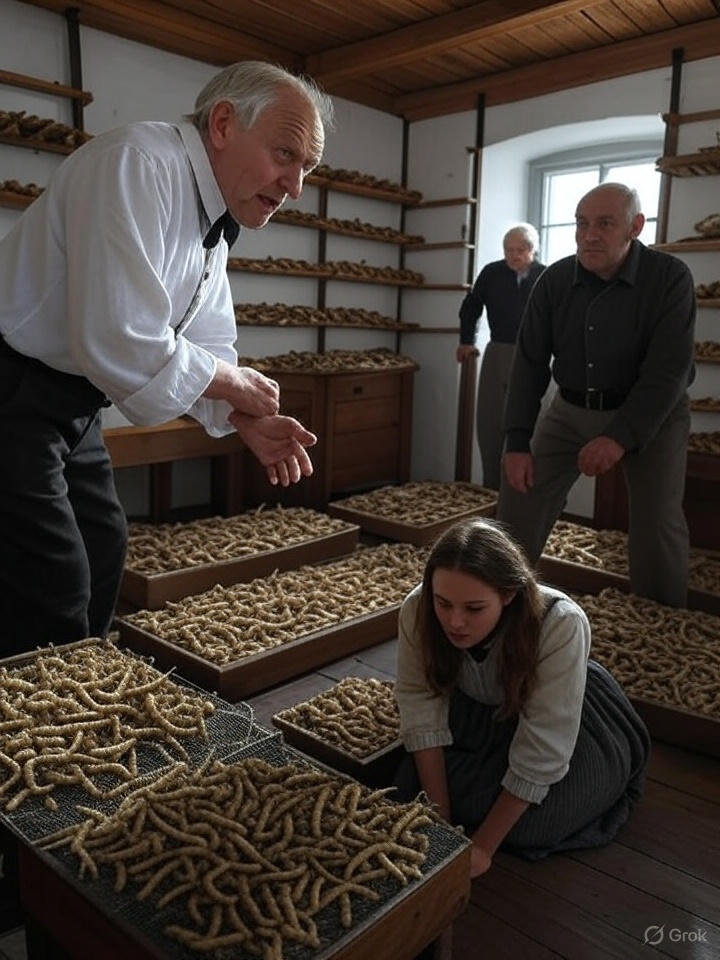





 Anarchistbanjo's World