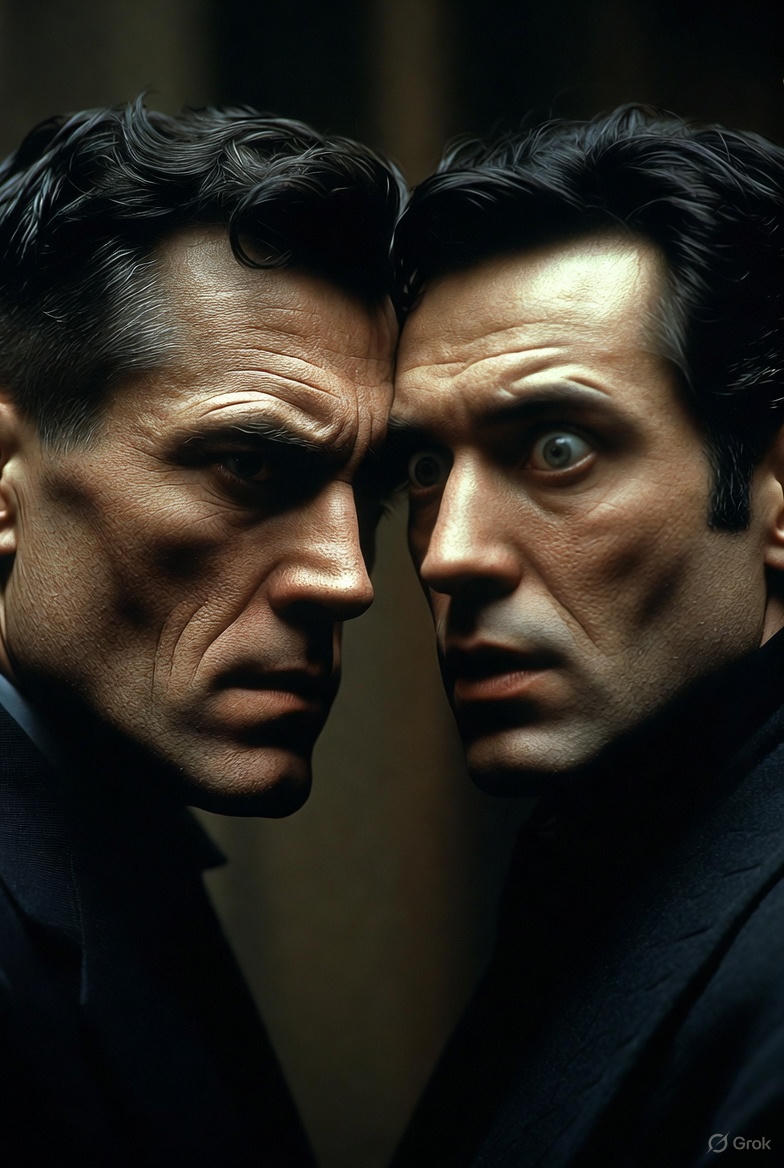
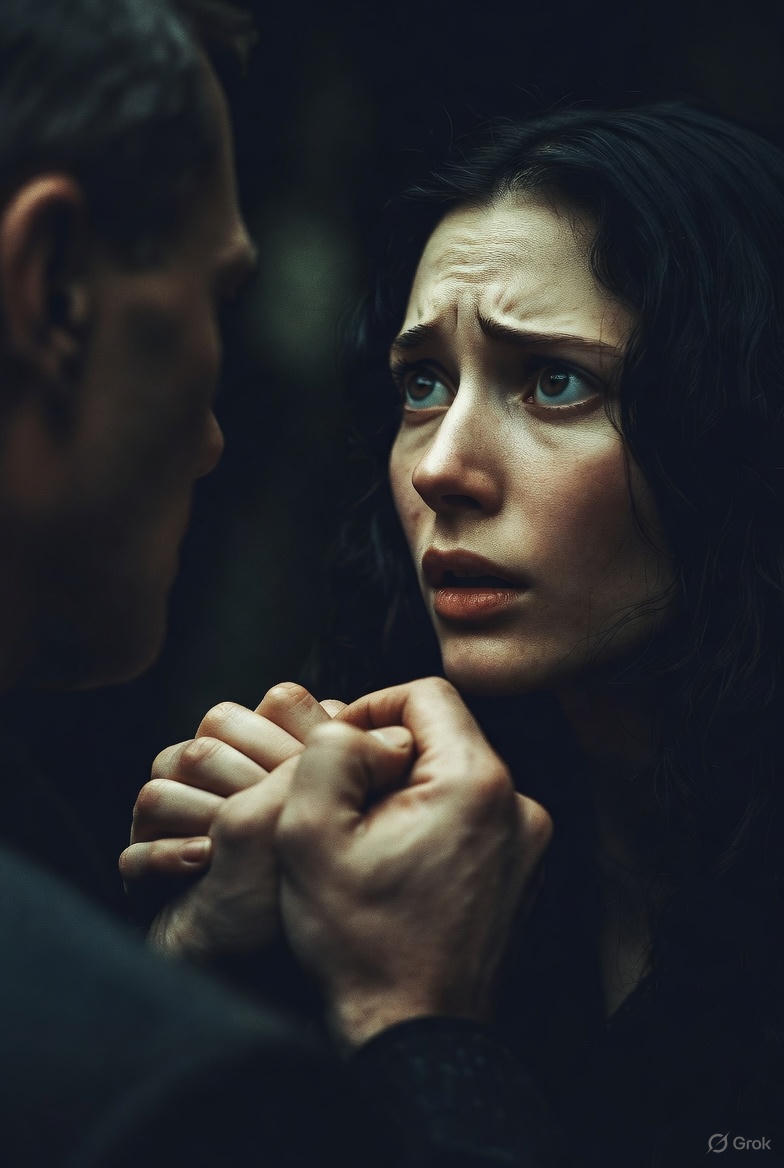
Alraune by Hanns Heinz Ewers and translated by Joe E Bandel
Frau Lisbeth grasped his hand. “Leave it alone!” she decided. “I will speak with the Fräulein myself.” She left him standing there, went across the courtyard and announced herself. While she waited she considered exactly what she wanted to say so they would be permitted to leave that very morning. But she didn’t need to say anything at all. The Fräulein only listened, heard that he wanted to go without notice, nodded curtly and said that it was all right. Frau Lisbeth flew back to her man, embraced and kissed him. “Only one more night and the bad dream will be over.” They must pack quickly and he should telephone the Councilor to the Chamber of Commerce to tell him that he could begin his new job the next morning. They pulled the old trunk out from under the bed and her bright enthusiasm infected him. He pulled out his iron bound chest as well, dusted it off and helped her pack, passing things to her. He ran into the village to hire a boy to bring a cart for hauling things away. He laughed and was content for the first time in the house of ten Brinken. Then, as he was taking a cook pot from the stove and wrapping it in newspaper Aloys, the servant, came. He announced, “The Fräulein wants to go driving.” Raspe stared at him and didn’t say a word. “Don’t go!” cried his wife. He said, “Please inform the Fräulein that as of today I am no longer–” He didn’t finish. Alraune ten Brinken stood in the door. She said, “Matthieu-Maria, I let you go tomorrow. Today you will go driving with me.” Then she left and behind her went Raspe. “Don’t go! Don’t go!” screamed Frau Lisbeth. He could hear her screams but didn’t know who it was or where they came from. Frau Lisbeth fell heavily onto the bench. She heard both of their steps as they crossed the courtyard to the garage. She heard the iron gate creak open on its hinges, heard the auto as it drove out onto the street and heard as well the short blast of the horn. That was the farewell greeting her husband always gave each time he left for the city. She sat there with both hands on her lap and waited, waited until they brought him back. Four farmers carried him in on a mattress and laid him down in the middle of the room among the trunks and boxes. They undressed him, helped wash him and did as the doctor commanded. His long white body was full of blood, dust and dirt. Frau Lisbeth knelt beside him without words, without tears. The old coachman came and took the screaming boys away, then the farmers left and finally the doctor as well. She never asked him, not with words or with her eyes. She already knew the answer that he would give. Once in the middle of the night Raspe woke up and opened his eyes. He recognized her, asked for some water and she gave him some to drink. “It is over,” he said weakly. She asked, “What happened?” He shook his head, “I don’t know. The Fräulein said, ‘Faster, Matthieu-Maria’. I didn’t want to do it. Then she laid her hand on mine and I felt her through my glove and I did it. That’s all I know.” He spoke so softly that she had to put her ear next to his mouth to hear and when he was quiet she whispered. “Why did you do it?” Again he moved his lips, “Forgive me Lisbeth! I had to do it. The Fräulein–” She looked at him, startled by the hot look in his eyes, and her tongue suddenly cried out the thought almost before her brain could even think it. “You, you love her?” Then he raised his head the width of a thumb and murmured with closed eyes, “Yes, yes– I –love driving–with her.” Those were the last words he spoke. He sank back into a deep faint and lay like that until the early morning when he passed away. Frau Lisbeth stood up. She ran to the door and old Froitsheim took her into his arms. “My husband is dead,” she said. The coachman made the sign of the cross and made to go past her into the room but she held him back. “Where is the Fräulein?” she asked quickly. “It she alive? Is she hurt?” The deep wrinkles in the old face deepened, “Is she alive?– Whether she even lives! She’s standing over there! Wounded? Not a scratch. She just got a little dirty!” He pointed with trembling fingers out into the courtyard. There stood the slender Fräulein in her boy’s suit, setting her foot into the laced fingers of a Hussar, swinging up into the saddle. “She telephoned the cavalry captain,” said the old coachman. “Told him she had no groom this morning, so the count sent that fellow over.” Lisbeth ran across the courtyard. “He is dead!” she cried. “My man is dead.” Alraune ten Brinken turned around in the saddle, toyed with the riding whip. “Dead,” she said slowly. “Dead. That’s really too bad.” She lightly struck her horse and walked it up to the gate. “Fräulein,” screamed Frau Lisbeth. “Fräulein, Fräulein–” Frau Lisbeth ran to the Privy Councilor overflowing with all her despair and hatred. The Privy Councilor let her talk until she quieted down. Then he said that he understood her pain and was not offended at what she had said. He was also prepared, despite the notice, to pay three months of her husband’s wages. But she needed to be reasonable, should be able to see that her husband alone carried the blame for the regrettable accident. She ran to the police and they were not even polite to her. They had seen it coming, they said. Everyone knew that Raspe was the wildest driver on the entire Rhine. They had done their duty many times by trying to warn him. She should be ashamed of herself for trying to lay the blame on the young Fräulein! Had she ever been seen driving? Yesterday or ever? Then she ran to an attorney, then a second and a third. But they were honest people and told her that they could not move forward with a lawsuit even when she wanted to pay in advance. Oh, certainly, anything was possible and conceivable, why not? But did she have any proof? No, none at all. Well then! She should just go quietly back home. There was nothing that she could do. Even if everything that she said was true and could be proved–her husband would still carry the blame. He was a grown man, a skilled and experienced chauffeur, while the Fräulein was an inexperienced scarcely grown thing– So she went back home. She buried her husband in the little cemetery behind the church. She packed all her things and loaded them onto the cart herself. She took the money the Privy Councilor had given her, took her boys and left. A couple of days later a new chauffeur moved into her old living quarters. He was short, fat and drank a lot. Fräulein ten Brinken didn’t like him and seldom went driving alone with him. He never got any speeding tickets and the people said that he was a good driver, much better than wild Raspe had been. “Little moth,” said Alraune ten Brinken when Wolf Gontram stepped into the room one evening. The beautiful eyes of the youth glowed. “You are the candle flame,” he said. Then she spoke, “You will burn your beautiful wings and then you will lie on the floor like an ugly worm. Be careful Wolf Gontram.” He looked at her and shook his head. “No,” he said. “This is the way I want it.” And every long evening he flew around the flame. Two others flew around it as well and got burned. Karl Mohnen was one and the other was Hans Geroldingen. It was a matter of honor for Dr. Mohnen to court her. “A perfect match,” he thought. “Finally, she is the right one!” And his little ship rushed in with full sails. He was always a little in love with every woman but now his brain burned under his bald head, making him foolish, letting him feel for this one girl everything that he had felt for dozens of other women one after the other back through the years. Like always he made the assumption that Alraune ten Brinken felt the same ardent desire toward him, a love that was boundless, limitless and breathless. One day he talked to Wolf Gontram about his great new conquest. He was glad the boy rode out to Lendenich–as his messenger of love. He had the boy bring many greetings, hand kisses and small gifts from him. Not just one red rose, that was for gentlemen. He was both lover and beloved and needed to send more, flowers, chocolates, petit fours, pralines, and fans, hundreds of little things and knick-knacks. The small bit of good taste that he did have and which he had so successfully taught to his ward melted in the blink of an eye in the flickering fire of his love. The cavalry captain would often go traveling with him. They had been friends for many years. Count Geroldingen had once been nurtured by Dr. Mohnen’s treasures of wisdom just as Wolf Gontram was now being nurtured. Dr. Mohnen had a vast storehouse and gave it out by the handfuls, happy to find someone that would make use of it. The two of them would go off on adventures together. It was always the doctor that met the ladies and made their acquaintance. Later he would introduce the count as his friend and boast about him. Often enough it was the Hussar officer who finally plucked the ripe cherries from the tree which Karl Mohnen had discovered. The first time he had pangs of conscience and considered himself as low as they came. He tormented himself for a couple of days and then openly confessed to his friend what he had done. He made vehement excuses saying the girl had made such advances toward him that he had no choice but to submit to her. He was glad that it had happened because now he knew the girl was not worthy of his friend’s love. Dr. Mohnen made nothing about it, saying that it didn’t matter to him at all, that it was completely all right. Then he gave the example of the Mayan Indians in the Yucatan. It was customary for them to say, “My wife is also my friend’s wife”. But Count Geroldingen could tell his friend was sick about it so the next time a new acquaintance of the doctor preferred him, he didn’t say anything. Thus it happened over the years that quite a few of Dr. Mohnen’s women also became the handsome cavalry captain’s women as well, exactly like in the Yucatan. Only there was this difference, most of them had never been the doctor’s women at all. He was the chicari, the beater, that tracked down the game and drove it out into the open–but the hunter was Hans Geroldingen. Yet he was quiet about it, had a good heart and didn’t want to hurt his friend’s feelings. So the beater never noticed when the hunter shot and held himself up as the most glorious Nimrod on the Rhine. Dr. Mohnen would often say, “Come along count. I’ve made a new conquest, a picture beautiful English girl. I picked her up yesterday at the open air concert and am meeting her tonight on the banks of the Rhine.” “But what about Elly?” the cavalry captain would reply. “Replaced,” declared Karl Mohnen grandly. It was phenomenal how easily he could exchange his current flame for a new one. As soon as he found someone new he was simply done with the old one and didn’t care about her at all. The girls never made any troubles for him either. In that respect he far surpassed the Hussar who always had difficulty letting go and even more difficulty in getting his women to let go of him. For those reasons it required all the energy and persuasive skill of the doctor to take him along to meet some new beauty. This time he said, “You must see her captain. God, I’m so happy that I have come so lightly through all my adventures and never been caught. Finally I’ve found the right one! She’s enormously rich, enormously. His old Excellency has over thirty million, perhaps forty. Well, what do you say count? His foster daughter is pretty as a picture and fresh as a blossom on a tree limb! By the way, speaking in strict confidence, the little bird is already in my net. I have never been so certain of things!” “Yes, but what about Fräulein Clara?” returned the cavalry captain. “Gone,” declared the doctor. “Just today I wrote her a letter saying that my work load had become so overwhelming that I simply had no more time left for her.”
Part III: Concerning the Laws and Vital Conditions of the Hermetic Experiment
Chapter 2: A Further Analysis of the Initial Principle, Part 3
Introduction: The Hermetic art unveils the soul’s divine essence, the Initial Principle, as a universal spark transformed into radiant light. This section explores the alchemical and philosophical journey from chaos to divine harmony, revealing the interconnected essence of all creation.
The Universal Essence
The Hermetic laboratory, as described by adepts, is a microcosm where the soul’s essence—a transparent, ethereal salt—manifests in vibrant colors and forms. This “Vital Radix” bears fruits, metals, and precious stones, nourished by divine waters. Unlike common matter, this essence is a living spark, imperceptible yet powerful, capable of infinite transformations. Basil Valentine recounts witnessing this essence as a vapor infused by divine stars, coagulating into form through elemental interplay, mirroring the universe’s creation.
This essence, the “Ethereal Quintessence,” is the foundation of all life. Plato, in Timaeus, describes the Demiurgus crafting the world from one whole, uniting all elements into a perfect, ageless form. This is not the flawed external world but the soul’s inner heaven, where reason aligns with divine light, as Proclus explains: “Heaven is the intellectual contact with the intelligible.”
The Philosophical Synthesis
Ancient philosophers like Thales, Heraclitus, and Anaxagoras, despite varied terms (water, fire, intellect), point to the same universal essence. Thales’ water, Heraclitus’ fire, and Plato’s earth within heaven all describe the soul’s divine spark, distinct from common elements. Empedocles’ twofold order—intelligible and sensible—reveals this essence as the source of all, manifested through artful purification. Aristotle’s “ultimate circulation” of the universe, a boundless spirit, aligns with Hermes’ Quintessence, the “Earth of the Wise” that transforms the soul into a radiant vessel.
These thinkers, far from arbitrary, grounded their philosophy in experiential insight, not mere speculation. Their methods, though veiled, ascend from sensory bondage to divine truth, uniting mind and matter in a harmonious whole.
The Alchemical Miracle
The soul’s essence, purified through art, becomes a “magical earth” where divine light shines forth. Vaughan’s vision of a land flowing with wine, oil, and milk reflects this paradise, where the soul’s spark, once hidden, radiates eternal life. This transformation, from chaotic void to divine unity, mirrors the alchemical process of dissolution and coagulation, revealing the soul as the source of all creation’s wonders.
Closing: This chapter unveils the Initial Principle as the universal essence, purified into divine light through alchemical art. The journey into its practical revelation deepens in our next post, unveiling further secrets of this sacred practice.
November 14 Gaia Ascension Update. Our physical bodies do not ascend with us, we drop them. This is not being openly talked about. We need to develop our non-physical bodies so they are available for our awareness to embody them when we let go of our physical bodies. We use our physical bodies to develop and strengthen our non-physical bodies.
By the middle of December Tobal felt he had learned twice as much from Crow as he had learned from Rafe and was certain the boy could have soloed any time he wanted to.
He had also been practicing the drills and exercises Crow had instructed him in and was getting steady results. These exercises always stirred up deeply buried and repressed emotions from his past and troubled his dreams with threatening ghostly images. His dreams were vivid and violent. That night, Crow suggested a ritual to face those shadows, preparing Tobal for what was to come. As he persisted with the exercises and meditations his dreaming self became more powerful and he was able to change the outcome of his dreams.
“The shaman must be able to travel in all nine worlds,” Crow told Tobal one evening in the middle of December. Tobal frowned, trying to picture Hel’s dark depths. “But most important is Hel, the underworld, that contains the land of the dead and creatures of the earth. Then there is Alfheim, the spirit world, that is full of wondrous creatures of light and there is Midgard, the real world. The others are also important but these are the most important. The shaman must be able to travel in any of these worlds because he never knows where a missing soul part has been taken. The hardest and most difficult soul retrievals are when the missing pieces are taken to Hel, the land of the dead. Even the most experienced shaman fears this place and will only go there with a protector. The Lord and Lady are my protectors,” he said proudly. “They brought the spirits of my parents out from the land of the dead and allowed them to speak with me.”
“There is something missing in your soul Tobal,” he told him. “That is why you need a soul retrieval. A part of your soul is missing and needs to be brought back before you can become whole and happy.” Crow said, “You were right about no evil within the circle. The Lord and Lady protect it at all times. But they have told me they are growing weaker and not able to protect clansmen as they once were. There is trouble coming soon and I will need to do another soul retrieval besides yours. They said it is very important that I be prepared.”
They did the soul retrieval for Tobal one night earlier that week. Crow made him lie down on the mat and then started drumming in the small teepee. That was all Tobal remembered because he fell asleep. When he awoke Crow was grinning at him and shaking him gently. He was holding a hollow bone in his hand.
“Tobal, wake up,” Crow was shaking him. “I have the missing part of your soul right here and am ready to give it back to you.” He continued, “You left it with someone and they don’t want it anymore. But you do need to give this person a gift in return. It is very important. Do you understand?”
Tobal nodded groggily as he was not yet awake. Then Crow put the hollow bone to his mouth and blew into Tobal’s face and on his chest. A small dust like powder came out of the bone and covered him. He felt a wave of emotion and energy enter into his lungs and heart as tears of joy formed in his eyes. He didn’t know what had happened but something dead inside his heart was rekindled in a blaze of light and happiness. He wondered at the change in himself over the next couple days. He also wondered who and what Crow really meant.
Tobal noticed the medics flying around much more during the winter months as they kept closer tabs on everyone to see they were doing all right. He’d seen air sleds hovering more often, their hum a constant reminder. When Tobal announced at circle that Crow was ready to solo many elders were concerned about his size and age. They almost didn’t allow it. It took the testimony of several medics to confirm the activities of Tobal and Crow during the past two months before the elders agreed. Tobal was shocked at the extent his activities had been monitored. He had suspected some monitoring but never suspected the true extent the medics monitored things. He was gladder than ever that he had not tried going back to the lake.
Anne, Dierdre and Seth were proclaimed ready to solo. The elders were giving the same exhaustive grilling to each of them they had given Crow. In this bitter weather there were no second chances and accidents did happen. There had been one death this past month. A Journeyman had gotten caught in a snow slide and the medics had not been able to rescue him in time. Any type of solo activity was kept to an absolute minimum if possible. The medics especially kept a close eye on the newbies that were soloing during the winter months and encouraged everyone else to partner up and use the buddy system.
The Circle of Elders consisted of Masters and was voluntary. They determined if newbies were ready to solo and mediated any disputes among clansmen. They also awarded chevrons to both Apprentices and to Journeymen.
Ellen had always served on it since Tobal had been there. It had been her support that decided the other elders in favor of letting Crow solo. Of course she knew Crow was Howling Wolf’s grandson from the village but she never mentioned it. Tobal made a special note that he needed to talk with Ellen later that night. He wanted to know if she had found out anything about the rogue attacks.
He saw Sarah bundled in her furs and walked over giving her a big hug and a kiss.
“How are things going?”
“I didn’t realize how cold it gets out here.” She grinned. “I don’t think I’ve really been warm since I left home. We spend a lot of time getting wood for the fire.”
“How is Ben doing?” He laughed. “He’s getting his initiation tonight right?”
“Oh, he’s really doing well,” she grinned excitedly. “He will be initiated tonight and train with me for another month. If he can solo in this weather, he can survive in anything. I think he will be ready to solo next month if he wants to.” Her face got serious. “I wouldn’t force him to solo in this weather if he didn’t want to. I wouldn’t force anyone to solo in weather like this. You have to be part crazy to enjoy being out in weather like this living off the land.”
“It gets easier the longer you are out here,” he comforted her. “Either that or we just get crazier the longer we are out here.” He chuckled, “Perhaps there is some of both.”
Tobal was really proud of how well Sarah had been doing with Ben. She had come a long way from the girl in the antique shop he had once known. She had strength and a confidence that made her very attractive. This had been good for her.
There was a howling wind with blowing snow and no one seemed in any hurry to get into his or her robes. Everyone kept wearing their furs and stayed huddled together close to the fires. Warm spiced drinks were even more popular than the beer was. There was a festive feeling in the air and people were in high spirits.
This was the Yule celebration and the winter solstice celebration of new light coming into the earth and into the spirit. It marked the time when the days started getting longer and carried the promise of spring. It was half way through the winter season and by now a person knew if they were prepared for the winter or not. It was also a time of giving and sharing with others. Cabin fever often made the long winter months difficult and this halfway spot gave everyone relief. As many clansmen as possible tried making it into circle for the Yule celebration and the relief of having other people to talk to.
Zee, Kevin and Wayne’s newbies had each completed their solo and were being congratulated. That made two chevrons for Zee, Kevin and Wayne. He made a point to go over and congratulate them too. Soloing in the middle of the winter was not easy. Many of the Apprentices still had some trouble just surviving and staying warm. This was Tobal’s first winter and he wasn’t finding it that easy himself. Or rather it wasn’t a simple walk in the park like summer had been.
In the winter you really had to work for food and firewood and you had to deal with the long nights cooped up in the teepee, especially if you were by yourself. The loneliness was very hard to deal with.
Wayne had been Char’s teacher. Char came to Yule with her partner. He spent a little time chatting with them but Char was obviously not in a good mood and he soon gave it up and moved on.
The Yule celebration was to be an entire week of feasting and celebration. Since travel was so difficult most clan members elected to stay a few extra days and party. It had become the tradition. Hunters went out and brought enough food to keep the camp in meat. People brought dried herbs and vegetables they had saved for the communal stew pot.
Tobal had brought more honey as a special treat. Some of the medics had somehow managed to find flour and baking supplies. Bread was a welcome change in a diet that had so much meat during the wintertime. They also brought frozen vegetables from somewhere that reminded everyone of the coming spring and lush vegetation.
The newbies that were going to solo were allowed to stay for the first and second day of events but then needed to leave. The first day of the celebration was like a normal Circle day with the initiations and drum circle in the evenings. The second day continued with a talent show in the afternoon and a special Yule Ritual and meditation in the evening. That was when Tobal planned on giving his gifts to his friends before Crow left on his solo. They didn’t have their normal group meditation with Ellen. It was just too chaotic.
The things he and Crow had learned about his parents kept going through his mind circling restlessly. How was it possible they were really alive after all these years? Could he train himself enough so they would be able to talk with him like they did to Crow? He was already getting pretty good at talking with them, at least when he projected to the cave with Crow. But other times it seemed like there was a barrier that prevented the contact.
What about his uncle? Why had his uncle not told him these things? Why had his uncle lied? Was it because of the classified nature of the project or didn’t he really know. It was pretty obvious his uncle didn’t believe anyone was still alive that worked with his parents or he would have agreed to let him go to Old Seattle in the first place.
What did they mean when his parents told Crow they were getting weaker? Were they dying? Is that why the rogue attacks seemed to be increasing? They needed to find the secret meeting place his parents used before they died?
Tobal hoped not. His uncle had said he had closed the program down. Why were his parents still captive?
Questions that just led to more questions and no real answers. They made his head spin. As the night deepened, he first turned to look for Rafe at the beer barrel and brewery.
“You’ve got five chevrons now!” He slapped Dirk on the back and raised a foaming mug in salute. “Soon you are going to make medic and be riding one of those drafty air sleds all over the mountains saving our asses.”
“Next month,” Dirk grinned. “I’ve got it planned. Going to challenge someone I know I can beat. It’s a sure thing.”
“Are you really that sure of beating this person?”
Dirk grinned, “I hope so. I can use a change of life style. Kind of boring making beer all month except when I’m getting beat up. Hey, try some of this hot stuff Rafe and I cooked up. It’s like a spiced grog.” He handed Tobal a wooden bowl full of a hot liquid with floating things in it.
Tobal suspiciously sipped it, “That’s really good! I think I’ll have more when I finish this beer. It’s warm too! This is just what I need right now. Where’s Rafe hanging out? I need to ask him something.”
“He’s in the brew house getting another batch of grog ready.”
“Thanks, I’ll go check on him.”
“There you are!” He called as he stepped inside the warm log building that served as a brewery. Rafe looked like a mad scientist hunched over a steaming bucket of grog he was stirring vigorously. He smiled as he looked up.
“Tobal! What brings you here? Are we out of grog? Did Dirk send you?”
“Not really,” he said. “I’m just trying to get together a meeting between you, Ellen, Crow and myself tonight after circle. I think it’s important and want to get it over with before Crow leaves on his solo. That makes tonight the best time.”
“I can see that,” Rafe nodded. “Sure, I’ll be there. Where are we meeting anyway? It’s cold out there.”
“You getting soft in your old age?” Tobal joked. “You just keep lots of that grog on hand. I was thinking of meeting out by the central fire like we did last time.”
Rafe sighed, “Ok, right after circle then. Did you see Dirk made his fifth chevron?”
“Already congratulated him, how about you?”
“Maybe next time,” Rafe said. “The fights are getting more even. I can’t wait till you get to be a Journeyman and get your butt whipped all the time.” He chuckled.
“Well I’ve got to leave and get hold of Ellen.” He turned toward the door.
“Sure, changing the subject,” Rafe laughed as Tobal went out.
It was mid afternoon and he arranged with both Crow and Ellen to meet immediately after circle by the central fire. Ellen had changed into her robe and was getting ready for circle. She was one of the few non-ritual team members that was going to be wearing a robe. It was so cold most of the others including Tobal were wearing their furs to circle. He asked her about it.
“Oh, I’ll be alright,” she laughed. “I’ll be next to the fire and can keep warm there.”
“Well, I’ll have some extra blankets or furs by me if you get cold,” he told her.
“Thanks Tobal, but I won’t need them really. Especially tonight since I’m so keyed up.”
“What’s up?”
“I’m training to be High Priestess of the Journeyman Circle. It is quite different than this one. Misty will keep doing this one for awhile yet.”
“That’s great,” he grinned. “You will be High Priestess when I become Journeyman. You will probably get to initiate me again.”
She smiled, “we’ll just have to wait and see. I’ve got to get to the circle now though. See you later, ok?”
With that she gave Tobal a hug and he went looking for the girls. More and more he looked forward to the circle time he shared with Fiona and Becca and sometimes Nikki. He had come to think of it as something they did together as friends.
He had noticed the last few months that Fiona was spending a lot of time with Becca. Part of him was sad and upset but part of him was honest enough to realize Becca was a lot different than he had imagined her to be. He had been thinking about her quite a bit these last few days and didn’t really know why. She wasn’t at all what he had expected. She hadn’t shown the vicious, aggressive behavior she had during the disastrous night of the Halloween dance.
Instead, she seemed more aloof, unemotional and withdrawn as if she was hiding some deep secret or misery and keeping it to herself. It was only with Fiona that she seemed to cheer up and laugh about things. Several times he suspected they might be laughing about him but pushed that thought away. He was hoping to get a little time alone with Fiona. But it seemed that was not to be and with good humor he filled his tankard and moved over to sit beside the two girls.
“There any room for me?” He teased.
Fiona and Becca both jumped with delight and took turns giving him a hug and a kiss. Fiona’s hug was delicious and his arms folded around her as their lips met in a kiss that was longer and more passionate than he had been expecting. He took his time thoroughly enjoying it and almost regretfully stepped back.
“My turn,” Becca quipped and stepped up to him with a glint in her green eyes he didn’t recognize. She pulled the hood off and shook her red hair so that it cascaded freely around the fur of her jacket. Then she reached up and pulled his own hood back and ran her fingers through the hair at his temples till her fingers found the back of his neck and pulled his lips down to hers.
It seemed as if the universe had stopped and there was only this one moment frozen in eternity as he breathed her essence into his lungs and heart and breathed his back into her. Almost reflexively his arms tightened around her and crushed her against his body. Their lips fed on each other with a passion that consumed them in a whirlwind of feelings he had never felt before.
He moved first lifting his head up and shifting his grip as he stepped back. Her eyes met his in a soundless plea that he couldn’t answer. He saw the hurt come into her eyes as he moved back and looked away.
“Wow,” he said. “ I need to sit down after all that and I’d better sit between you two so you don’t fight over me.”
Instantly he knew that he had done and said the wrong thing. Both girls instantly went from being glad to see him to cold as death itself. He pulled the hood back up and so did Becca. They sat in frozen silence.
He tried joking and asking about their month but nothing worked. He was actually relieved when Nikki came over to join them. If Nikki noticed that anything was wrong she didn’t mention it and soon all three girls were laughing and telling stories between initiations.
They were however, very curious and envious of his new decorative clothing. He told them Crow had taught him. He opened his fur coat and showed the beautiful beadwork and porcupine needles stitched carefully and decoratively on the comfortable buckskin clothing he was wearing.
“How does Crow know these things?” Becca asked curiously. “I thought you were supposed to be training him. Not him training you?”
The girls laughed and Tobal blushed. “I just got lucky,” he said. “Crow grew up in a village about two hundred miles west of here.” He instantly wished he hadn’t said anything about the village.
“You mean the rogue village?” Nikki asked.
“You really need to talk with Crow about that,” he said. “I’d really like to stay and chat,” he said. “But I’ve got to talk with Rafe and Ellen right now.”
“You are always talking with Rafe or Ellen.” Nikki pouted. “You spend more time talking with them then you do with us. What’s that about anyway? Are you too good for us?”
That last comment had a little bite to it and Fiona and Becca looked at each other. Tobal didn’t like to leave things that way. It just didn’t seem right. He sighed.
“It’s about increased rogue activity,” he said. “I’ll tell you about it later if you are really interested.”
“You promise?” Fiona asked suddenly suspicious. “There’s something going on that you are not telling us. You can’t lie worth a damn Tobal. No one is in danger are they?”
“We don’t really know.” He pleaded. “I’ve got to go. I’ll talk later ok?”
Then he stood up and left before they stopped him or asked if they could come with. He went around to the other side of the fire circle and waited, painfully aware that Nikki, Fiona, and Becca were not leaving the fire circle either. They were going to watch the meeting from across the fire.
Rafe was the first to join and then Crow. Ellen came last. She had changed out of her robe into furs. She smiled at Tobal.
“I almost took you up on that offer.” She said shivering. “I was freezing on one side and roasting on the other side all night. You were right. I should have worn my furs. I didn’t really need the robe.”
She looked at the others, “Are we ready?”
Tobal cleared his throat hesitantly. “We might have a problem.”
All three turned to look at him expectantly.
“Becca, Fiona and Nikki are on to us. They know something is up and want to know about it. They are sitting across the fire from us now.”
Crow, Ellen and Rafe turned and looked across the fire and the three girls smiled and waved at them.
Ellen sighed, “I still don’t think we should tell any more people than we need to about this. This could be very dangerous and I don’t even want you talking to any of the other medics about it. Please?”
Reluctantly they all agreed and turned back toward the issue at hand with Ellen taking the leadership role.
“There are still many tracks around the lake area.” She told them. “I continue to patrol it every other day but never see anyone. I am convinced they know when I am coming because of my med-alert bracelet. They know I am coming and hide.”
“It gets worse,” she said. “There is a growing rumor the rogues are from the primitive village west of here. There is another rumor that the city is planning an attack on the village to make the area safe for all those that are claiming sanctuary.”
“They are planning to attack my village!” Crow demanded. “Why? We have no technology to track people like you say the rogues do. We do not even have med-alert bracelets. I need to leave immediately and warn my grandfather.” He got up to leave but Tobal stopped him.
“You said your grandfather, Howling Wolf has trained you in the ways of the shaman?”
Crow nodded in the affirmative, his dark eyes flashing. “Yes, that is true.”
“Well,” Tobal suggested. “Can you get a spirit message to your grandfather instead so you don’t have to travel there physically?”
Crow pondered the question and Tobal could see he was visibly relaxing. “Yes, I can send a message to him that way. I will do it tonight right after this meeting.”
“Good,” he said. “That means you can use next month to complete your solo. It would be a shame to not finish your solo since you have worked so hard at it.”
“I will ask Grandfather,” Crow said stiffly. “I will do as he suggests. My own parents were massacred and buried in a mass grave. I don’t want my grandfather or my village to suffer the same fate.”
The mention of Howling Wolf jarred something loose inside Tobal’s mind and he tried fitting things together. Howling Wolf just knew too much and was in the center of too many things. He had trained his parents in bi-location and hand-fasted them together. He had built the cairn over the mass grave by the waterfall. He was somehow in contact with Sarah’s father. Perhaps it was Howling Wolf the rogues were interested in and not the village itself.
“Maybe they are interested in Howling Wolf and not the village?”
“That would mean my sister and I would be in even greater danger,” Crow told him.
Rafe said, “We need to know more about the village and the city of Heliopolis. We also need to know more about the sanctuary program.” He looked at Ellen. “Is there anyway you can research some local history on the computer and find out what the official story line is on all this stuff? I’m getting so many versions that my head is going to split.”
Ellen nodded, “That’s a good idea. I’ll see what I can dig up for our next meeting. Now”, she turned to Crow, “Can you fill me in again on what you’ve told Tobal.”
Crow again told the story of the Lord and Lady and the research at the lake. He told of the part his parents and his grandfather had played in it. He also mentioned how the Lord and Lady had taught his grandfather and the others in a secret location to go on special journeys where they would disappear and return at a later time bringing objects back with them. That’s when he floored Ellen and Rafe by saying the Lord and Lady, Tobal’s parents had told him they were still alive and needed their help.
Ellen was visibly shaken and didn’t know what to say. She finally asked how the Lord and Lady spoke to him and questioned him about his experiences. Tobal had forgotten Ellen was training as a High Priestess for the Journeyman degree and was expected to speak with the Lord and Lady. She was obviously having some trouble with the concept that the Lord and Lady were Tobal’s parents and that they were still alive as physical beings, not to mention being held prisoner in the very location the medics used as their home base.
It was shortly after that when she excused herself and the meeting was over. Crow paused, eyes wide with fear, before nodding. He went to warn his grandfather the village might be attacked and he might be in danger. Rafe stayed for a few extra minutes talking with Tobal.
Tobal wondered why Ellen felt none of the Masters could be trusted. It seemed strange since Rafe knew several of them and trusted them. Perhaps it was not the people, Rafe suggested. Perhaps it had something to do with the job of being a medic that made it dangerous to confide in them. Anyway it was a puzzle with no ready answer.
Perhaps Rafe would learn the answer when he became a Master. He was at four chevrons and could get his fifth and sixth any time. Rafe especially would be seeing Ellen on a regular basis at Journeyman circles and could get word from Tobal to her in case of an emergency. On that note they separated and went on to other things.
Homo Sapiens: In the Maelstrom by Stanislaw Przybyszewski and translated by Joe E Bandel
X.
In the small room of the “Green Nightingale” sat only one man. He held his head pressed in both hands and brooded.
Falk was badly startled.
Good God, was it not Grodzki? How had he come here? He had to be in Switzerland now… And alone!
He became restless and his heart beat violently. He sat down at the table and examined him silently.
But Grodzki seemed not to know that someone was near him.
“Well, are you sleeping?” Falk pushed him impatiently. He suddenly felt irritated without knowing why.
Grodzki looked at him without changing his position, calmly with lusterless, fixed eyes, then began to examine his glass attentively.
“Can you not say a word?” Falk cried angrily at him. Grodzki looked at him again and smiled maliciously.
Falk wanted to say something, but in the same moment he noticed that Grodzki was quite uncannily changed. His face was deathly pale, the eyes sunken and peculiarly fixed.
“Are you sick?”
Grodzki shook his head. “What is wrong with you?”
“Hm; you would probably like to do your experiments on decadence and degeneration with me again? Well, the time is over when I was subject to your influence like a medium.”
Falk seemed to overhear everything.
“Strange that I spoke about you today, about your attack of madness in the African Cellar… You behaved quite ridiculously then…”
Falk became furious.
“Say now finally why you screamed so then? What? By the way, it is very unpleasant for me to meet you here…”
Grodzki looked at him again and smiled.
“Me too,” he said. “I should have known that one can meet you in the nights everywhere.” He laughed maliciously. “Have you not yet stopped your debaucheries?”
Falk shrugged contemptuously and ordered wine. He felt the fever shivers again, it burned in his throat and sometimes it became black before his eyes. But it passed again immediately. He wiped the sweat from his forehead.
“You probably have fever?” asked Grodzki smiling. Falk became quite helpless.
“Yes, yes; I am probably a little sick, I don’t actually know… That passes; but I am so restless…”
He suddenly felt the desire to speak much, he also wanted to ask Grodzki about many things, but he forgot what actually.
“No, no, it means nothing… Yes, right! I have not seen you for so long, not since your scandal story… I also have fever attacks often now.”
He recollected.
“Yes, your scandal story… You namely drove away with the woman, what is her name only—how are you here again? Why are you here? Where is she then?”
“She is probably dead,” said Grodzki thoughtfully.
“Dead? Dead? No, excuse me, I did not understand you… She is probably dead! you said.”
“Yes, I don’t know exactly.” Grodzki spoke unusually slowly. “I really don’t know exactly. I told her she was a burden to me, and so she went. Then shortly after I lost consciousness because I got a strong brain fever, and then I could no longer distinguish my visions from reality. They told me nothing because I asked no one, they probably also wanted to spare me; by the way, I drove away immediately… I can tell you no more,” he added after a pause… “Well, it is also indifferent to me, I have become finished with it.”
Falk stared at him anxiously.
“Is that true?”
“I don’t know myself if it is true, it also doesn’t interest me to learn the truth.”
They were silent. Both sat probably ten minutes without speaking. “You Falk, do you believe in the immortality of the soul?”
“Yes.”
“How do you imagine that?”
“Faith imagines nothing. By the way, I don’t believe in it at all. I believe neither that it is mortal nor that it is immortal. I believe in nothing… But do you really know nothing more of her?”
“Of whom?” “Of her!”
“No!… Hm, faith—faith… I actually also believe in nothing, but I have a strange fear.”
“Fear?”
“Yes, great fear. One never thinks seriously about it, life is so long. But when one wants to die, one constantly thinks about what could come then. I namely want to make an end with life now,” he said after a pause with a strange smile.
“So, so; you want to die. That is very reasonable, that is the best you can do.”
Falk observed him curiously.
“It is actually no fear; no—something quite different. In the moment when I want to do it, I suddenly lose consciousness. I cannot think, I cannot exactly control what I do. I get fever, and I want to die with full, cold consciousness… That seems very hard to be… There is namely a method, namely suddenly, in the moment when one says one will not do it, to pull the trigger, thus to surprise oneself… That is probably what most do. But I don’t want to surprise myself. I want to die with will.”
Falk looked at him fixedly. He actually wondered that Grodzki’s speech made not the slightest impression on him. He was only interested in his face. It was the face of a mask. Especially the smile was strange. The lips distorted slowly and quite mechanically, without a single muscle seeming to take part in it. He thought. What was going on with Grodzki? What did he want only?
“Why do you actually want to kill yourself?”
He felt his heart beat violently and restlessly.
“Why? Why? With the same right I could ask you why you still want to live. That is much stranger yet. I have understood you only now. I thought very much about you. You played a great role in my life… Why do you still want to live with your despair and your bad conscience?”
He laughed soundlessly.
“Everything you do, you do from your bad conscience, and when you ruin someone, you do it only to have accomplices, to see others suffer too. You don’t have pride enough to suffer alone. By the way, you suffer too much. Isn’t that so?”
They looked at each other long. Falk suddenly felt a mysterious rage against this person, which also seemed to communicate itself to Grodzki, for he saw how his eyes began to liven and stared at him with a furious expression of hate. They bored into each other with their furious eyes. Falk felt his face begin to twitch; he stood up involuntarily and sat down again. It was a moment in which he wanted to jump on the other, then he had desire to cry out, he felt that he could not tear his eyes loose now.
Then suddenly the spell broke… Grodzki laughed hoarsely.
“Ha, ha: you are now harmless, dear Falk. You lack strength to do evil. There are only ruins left of you… I once loved you very much, more than you can imagine.”
In the same moment his face became serious. Falk stared incessantly at this mask face. He hardly heard what Grodzki spoke. He devoured with his eyes this face to read something out of it, a secret that must be stuck in there…
“Yes, I loved you very much. In my eyes you were a god, but now I see that you are only a human too. It is to me as if I had suddenly awakened from a hypnotic sleep… Only a human,” he said thoughtfully, “a higher species of ape… a scoundrel, a small scoundrel you are. No, I no longer love you. I actually have no reason for it… Yes, yet: I love no one. I also did not love her. You will perhaps experience that yourself one day. We
cannot love: that is all only self-lie… No, I actually always hated you much more than loved you. I actually always guarded myself against the stupid trick of nature to chain humans to life through love…” He was silent for a while.
Yes, Falk, you are a small person. What do you actually concern me? He looked Falk fixedly in the eyes and played mechanically with the
wine glass.
“I also have nothing more to say to you. It is a stupid coincidence that I met you…”
He smiled maliciously.
Perhaps,—yes, perhaps I would get respect for you if you also wanted to make an end with your miserable life… I don’t want to play the sharp psychologist at all, but there are moments when one can read so clearly, so clearly in the soul of the other… I see so clearly your despair, your disgust of life… But in the end it concerns me nothing…
“Don’t repeat that so often, otherwise I will believe the opposite,” Falk countered maliciously.
Grodzki suddenly became very restless and seemed not to know himself what he spoke. He forgot what he said a while ago.
“No, I only meant, or you will think that one cannot want such a thing; well: you can do it because you must… It comes to the same whether one wants it or must… Why should one not let the brain have the proud satisfaction that it once, one single time wanted something? Why not? One also doesn’t need to wonder that it only wanted something one single time. It is enormously hard to want something. I wanted to do it yesterday, and I bit my finger in fear and despair without knowing it. Something resists terribly against death. It torments itself so madly, it suffers so unheard-of that the hair stands on end. It helps nothing. My brain once wanted something, and it wants death.”
He was silent again. Falk looked at him with increasing fear and horror. “Only one must not do it in despair…”
Grodzki spoke half-loudly with himself.
“That is what every servant does who is badly treated in the military,—no, in calm, in perfect calm one must do it.”
Alraune by Hanns Heinz Ewers and translated by Joe E Bandel
Chapter Nine Speaks of Alraune’s lovers and what happened to them. THESE were the five men that loved Alraune ten Brinken: Karl Mohnen, Hans Geroldingen, Wolf Gontram, Jakob ten Brinken and Raspe, the chauffeur. The Privy Councilor’s brown volume speaks of them all and this story of Alraune must speak of them as well. Raspe, Matthieu-Maria Raspe, came with the Opel automobile that Princess Wolkonski gave to Alraune on her seventeenth birthday. He had served with the Hussars but now he not only had to drive the car, he had to help the old coachman with the horses as well. He was married and had two little boys. Lisbeth, his wife, took care of the laundry in the house of ten Brinken. They lived in the little cottage near the library right beside the iron-gated entrance to the courtyard. Matthieu was blonde, big and strong. He understood his work and used his head as well as his hands. The horses obeyed his touch just as well as the automobile did. Early one morning he saddled the Irish mare of his Mistress, stood in the courtyard and waited. The Fräulein slowly came down the steps from the mansion. She was dressed as a young boy wearing yellow leather gaiters, a gray riding suit and a little riding cap to cover her hair. She did not use the stirrup but had him lace his fingers together, stepped into them and stayed like that for a short second before swinging herself up astride the saddle. Then she hit the horse a sharp blow with the whip so that it reared up and tore out through the open gate. Mattheiu-Maria had all kinds of trouble mounting his heavy chestnut gelding and catching up to her. Brown haired Lisbeth closed the gate behind them. She pressed her lips together and watched them go–her husband whom she loved and Fräulein ten Brinken whom she hated. Somewhere out in the meadow the Fräulein came to a stop, turned around and let him catch up. “Where should we ride today, Matthieu-Maria?” she asked. He said, “Wherever the Fräulein commands.” Then she tore the mare around and galloped further. “Jump Nellie!” she cried. Raspe hated these morning rides no less than his wife did. It was as if the Fräulein rode alone, as if he were only air, a part of the landscape, or as if he did not exist at all to his mistress. But then when she did take the trouble to notice him for even a second he felt still more annoyed. For then it was certain that she was going to demand something unusual of him once more. She stopped at the Rhine and waited quietly until he came up to her side. He rode as slow as he could, knowing that she had come up with some new notion and hoped she would forget it by the time he got there. But she never forgot a notion. “Matthieu-Maria,” she said, “should we swim across?” He raised objections knowing ahead of time that it would be useless. “The banks on the other side are too steep,” he said. “You can’t climb back up out of the water, especially right here where the current is so rapid and–” He got angry. It was all so pointless, the things his mistress did. Why should they ride across the Rhine? They would get all wet and cold. He would be lucky not to come down with a cold from it. It was all for nothing, once more for nothing. He made up his mind to stay behind. She could do her foolishness alone. What was it to him? He had a wife and children– That was as far as he got before riding into the stream. He plunged deep into the water with his heavy Mecklenburger and had all kinds of trouble arriving safely somewhere onto the rocks on the other side. He shook himself off angrily and swore, then rode out of the stream at a sharp trot up to his mistress. She gave him a brief sardonic glance. “Did you get wet, Matthieu-Maria?” He remained quiet, insulted and angry. Why did she have to call him by his forename? Why was she so familiar with him? He was Raspe, the chauffeur, and not a stable boy. His brain found a dozen good replies but his lips didn’t speak them. Another day they rode to the dunes where the Hussars practiced. That was even more embarrassing to him. Many of the officers and non-commissioned officers knew him from the time he had served with the regiment. The mustached sergeant of the 2nd squadron called out derisively to him. “Well Raspe, are you going to ride with us awhile?” “The devil take that crazy female,” growled Raspe. But he galloped along at the rear and during the attack rode at the side of the Fräulein. Then Count Geroldingen, cavalry captain, came over with his English piebald to chat with the Fräulein. Raspe stayed back but she spoke loud enough so that he could hear. “Well count, how do you like my esquire?” The cavalry captain laughed, “Splendid! Well suited for such a young prince as yourself!” Raspe wanted to box his ears, the Fräulein’s as well, and the sergeant’s, and the entire squadron that was grinning at him. He was embarrassed and turned red as a schoolboy. But the afternoons were even worse when he had to go driving with her in the automobile. He sat in his place behind the wheel squinting at the door and sighed in relief when someone came out of the house with her, suppressed a curse when she came out alone. Often he had his wife find out if she wanted to go driving alone. Then he would quickly take a few parts out of the machine and lie under it on his back, greasing and cleaning them as if he were repairing something. “We can’t go driving today Fräulein,” he would say. Then he would smile in satisfaction after she was out of the garage. One time it didn’t go so well for him. She stayed there in the garage quietly waiting. She didn’t say anything, but it seemed to him as if she knew very well what he was up to. Then he slowly bolted everything back together. “Ready?” she asked. He nodded. “You see,” she said, “how better it goes when I’m here Matthieu- Maria.” When he came back from that drive, when his Opel was once more in the garage and he was setting down to the meal his wife set out for him, he trembled, he was pale and his eyes stared at nothing. Lisbeth didn’t ask, she knew what it was about. “That damned female!” he murmured. She brought out the blonde, blue eyed boys to him, white in their fresh pajamas and set one on each knee. Slowly he became happy and at ease with his laughing children. Then after his boys were in bed, he sat outside on the stone bench smoking his cigarette, strolled through the village and through the ancient garden of the Brinkens, talking things over with his wife. “No good can come of it,” he said. “She rushes and rushes. No speed is fast enough for her. Fourteen speeding tickets in three weeks–” “You don’t have to pay them,” said Frau Lisbeth. “No,” he said. “But I am notorious for it. The police take out their notebooks whenever they see the white car with ‘I.Z.937’ on it!” He laughed, “Well, they aren’t wrong in taking our number. We deserve every one of our tickets.” He quieted, took a wrench out of his pocket and played with it. His wife pushed her arm under his, took his cap off and stroked back his tangled hair. “What does she want anyway?” she asked. She took pains to make her voice sound innocent and indifferent. Raspe shook his head, “I don’t know Lisbeth. She is crazy. That’s what it is and she has some damned way about her that makes people do what she wants even when they are entirely against it and know that it is wrong.” “What did she do today?” his wife asked. He said, “No more than usual. She can’t stand to see another car in front of us. She must pass it and even if it has thirty more horsepower than ours, she wants to catch up to it. ‘Catch it,’ she says to me and if I hesitate she lightly touches my arm with her hand and I let loose as if the devil himself were driving the machine.” He sighed, brushed the cigarette ash off his pants. “She always sits next to me,” he continued, “and just her sitting there makes me really upset and nervous. All I can think about is what kind of foolishness she’s going to make me do this time. Her greatest joy is jumping the car over obstacles, boards, sand piles and things like that. I’m no coward, but there should be some purpose to it if you are going to risk your life every day. ‘Just drive,’ she says. ‘Nothing will happen to me.’ She is calm when she jumps over a road ditch at one hundred kilometers/hour. It’s possible that nothing can happen to her, but some time I’m going to make a mistake, tomorrow or the next day!” Lisbeth pressed his hand. “You must simply try to not obey her. Say ‘No’ when she wants to do something stupid! You are not permitted to take such chances with your life. It is not fair to us, to me or the children.” He looked straight at her, still and calm. “I know that. It’s not fair to you or even to myself. But you see, that’s just it. I can not say ‘No’ to the Fräulein. Nobody can. Look how young Herr Gontram runs after her like a puppy dog, look at the way the others are happy to fulfill all of her foolish notions! Not one of all the people in the household can endure being around the Fräulein. Yet everyone of them will do what she wants even if it is stupid or disgusting.” “That’s not true!” said Lisbeth. ”Froitsheim, the coachman, won’t, not at all.” He whistled, “Froitsheim! You’re right. He turns around and walks away whenever he sees her. But he is almost ninety years old and hasn’t had any blood in his body for a long time.” She looked at him in surprise, “Does she stir your blood then, Matthieu? Is that why you must do what she wants?” He evaded her eyes and looked down at the ground. But then he took her hand and looked straight at her. “Well you see Lisbeth, I don’t know what it is. I’ve often thought about it, what it really is. When I see her I get so angry that I could strangle her. When she’s not there I run around full of fear that she might call me.” He spit on the ground. “Damn it all!” he cried. “I wish I was rid of this job! Wish I had never accepted it.” They talked it over, turning it this way and that, weighing everything for and against it and finally they came to the conclusion that he should give his notice. But before doing that he should go into the city the very next day and look for a new position. That night Frau Lisbeth slept peacefully for the first time in months but Matthieu-Maria didn’t sleep at all. He requested a leave of absence the next morning and went to the job placement office in the city. He was really lucky. The agent took him to meet with a Councilor of the Chamber of Commerce that was looking for a chauffeur and he got the job. He received a higher salary than what he had been getting, fewer work hours and didn’t have to do anything with horses. As they stepped out of the house the agent congratulated him. But he had a feeling as if there was nothing he should be thankful for, as if he would never work at this new job. Still, it made him happy to see his wife’s eyes light up in joy when he told her. “In fourteen days,” he said. “If only the time was already gone!” She shook her head. “No,” she said firmly. “Not fourteen days. Do it tomorrow! You must insist, talk with the Privy Councilor.” “That won’t do any good,” he replied. “He would inform the Fräulein and then–”
Madame Bluebeard by Karl Hans Strobl and translated by Joe E Bandel
Schiereisen stood. His gaze caught a mark. At head height, on the dust layer, was a tiny rust-red splash—a crusted fleck of liquid-mixed dust, a sign that erased all doubt. “Who found the victim?” Schiereisen asked. Ruprecht’s eyes now questioned too. His body began to obey a will again. “We have an old woman in the castle. She’s not quite right in the head. Early mornings, she goes to church. On her way, she found Jana.” “He was already dead?” “Yes.” Ruprecht’s gaze no longer dropped; it searched intently. “Who was second to him?” “My valet, Lorenz.” “Right—let’s go down,” Schiereisen said. Lorenz and the overseer stood in the courtyard as Boschan and his guest passed. They’d been discussing Jana. The overseer pitied him: a quiet, gentle man who bothered no one. Easy to like, despite being a heathen. Village girls had chased him like mad. Once, the overseer found him in the garden, staring silently, tracing signs on a stone with brown fingers, as if writing. “I think he longed for his homeland,” Lorenz said. “Poor fellow! Well, he’s found rest and peace now.” They fell silent, straightening as the master passed. “Who’s that man?” the overseer asked. “A scholar. Someone who wants to know everything that’s none of his business.” “A halfwit, then,” the overseer chuckled. Lorenz found Schiereisen’s curiosity grating. Boschan and the scholar entered the garden. “Aha, he wants to see where Jana fell,” the overseer said. Beneath the wooden gallery, between tower and castle, a broad paved path led to a hidden garden shed storing tools. Jana had fallen onto these stones. Schiereisen gauged the height—not so great that a fall should kill. The blood had been washed away, but traces lingered in the stone joints. The grass on either side was heavily trampled. Beyond, primroses and crocuses bloomed, then dense rose hedges hinted at early buds. Schiereisen scanned it all with rapid, tense glances. Then Ruprecht saw his expression shift—the scholar looked horrified, grieved, wretched, like a man facing the unbearable. “No,” he said, “it’s awful, I can’t bear it… ghastly. Come away.” He tugged Ruprecht’s arm, pulling him along. Schiereisen had noticed a watcher. Lorenz stood at the low wall separating garden from courtyard, looking over. Now he turned slowly, crossing the courtyard as if chance had brought him there. No, Lorenz thought smugly, this man’s no iron—he’s an old woman, like all scholars, like Dankwardt was. At the main wing’s entrance, Ruprecht paused, expecting Schiereisen to leave. But he re-entered, leading Ruprecht to his study. Sitting opposite in the Renaissance chair, Schiereisen resumed questioning. “Tell me, Herr Baron, where are the… rotten planks that broke with Jana?” Ruprecht pondered before answering. His alertness stirred, his body’s weakness overcome by a forceful rally of will, refusing defeat. He decided to respond, to see where Schiereisen’s questions led. “The planks? They were cleared away… I think Lorenz removed them. He was there soon after the accident was found…” “So the commission didn’t see those damaged planks?” “Likely not.” “Don’t you think that hurt the investigation’s thoroughness? How could the commission determine how an accident occurred—or if it was an accident— without all the evidence?” Ruprecht said slowly, firmly, “No one doubted it was an accident.” “Well, I mean… in general. Another thing matters here… didn’t any commission member ask what your servant was doing on the gallery at night? You sent him there, perhaps…?” “No, I didn’t send him.” “That’s odd, isn’t it? What was Jana doing up there? His room was on the ground floor, like the other servants. Doesn’t one ask what drew him there? He dies at night on a gallery linking an empty wing to a tower ruin. Other details were overlooked. Did Jana have a light? Is it likely he went in the dark? If so, why? To avoid being seen? Or, if he had a light, where was it found?” “I don’t know.” “Finally: when did Jana die? On his way there or back? Had he been in the tower, or was he going to it?” Ruprecht shrugged. Schiereisen faced an impenetrable wall. Was Ruprecht so utterly blind, so wholly innocent and trusting, that he couldn’t grasp the suspicion Schiereisen had brought so close? These were questions anyone would notice. Or did he refuse to know, to see, to suspect? What drove him, then? He fell silent for a long time, and Ruprecht didn’t break the quiet. His head drooped forward again. Schiereisen saw the reddened patch on his crown, the wilted, singed hairs. “Listen, Herr Baron,” he said suddenly, “you’re ill.” Startled, Ruprecht lifted his head. Then he managed a smile. “You’re mistaken… I’m not ill.” Undeterred, Schiereisen pressed on. “You’re ill. You just won’t admit it. Your whole mood, the fatigue you can’t hide… this listlessness… You should see a doctor…” “I’m not ill. I don’t need a doctor.” “Follow my advice, dear Baron, see a doctor. All sick people are stubborn. They reject help.” Schiereisen leaned forward, locking eyes with Ruprecht, stressing each word. “Until—it’s— sometimes—too—late.” “I’m telling you, I won’t hear of a doctor.” “Forgive me, but I must say: it’s not a sign of refinement to fear a doctor. Children and peasants flee at the word. What’s the harm? What’ll happen? He’ll examine you. He’ll either find you healthy, or, if you’re ill, tell you how to recover. Maybe just prescribe a diet. A proper diet works wonders. Aren’t you careful enough with your food?” In that moment, a mysterious connection formed. Their gazes merged. Ruprecht understood—this was Schiereisen’s aim. Schiereisen felt he was finally understood. For a second, their inner rhythms aligned perfectly. “Yes,” Ruprecht said after a pause, “I eat whatever’s on the table… when I have an appetite. The same as everyone else,” he added. “I don’t think a special diet’s necessary.” Ah—he was slipping away again. But Schiereisen pursued relentlessly. “Yet your condition’s concerning. Perhaps it’s a severe nervous disorder. Your servant’s death has shaken you. A doctor might suggest a short trip. That’d do you good. You used to spend most of the year traveling. Now you’re stuck here. Leave your duties as husband and farmer for a bit. A few weeks away from Vorderschluder would help.” Ruprecht parried with a smile. “I’ve taken on much here that I must see through. I can’t do half a job.” “But, my God, dear Baron, I know you’re very nervous. You took a separate bedroom for that reason.” “Yes—that’s true. I didn’t want to disturb my wife. But don’t draw conclusions about my health. I’ll overcome it soon.” Schiereisen propped his head on his hand. Beneath his furrowed brow, shrewd eyes peered. “Tell me, Baron, which room did you choose for sleeping?” Puzzled, Ruprecht stared at the scholar. The question’s purpose wasn’t clear at first. Hesitantly, he answered, “A room on this floor. The last one in the left corridor.” Schiereisen nodded thoughtfully. “That’s good. A quiet room. You won’t be disturbed there.” “What do you mean?” “Well… your castle’s full of hidden romance. Vorderschluder’s a model of it. So many secret doors and passages. But your bedroom has none of that. It’s enclosed by four solid walls.” Ruprecht’s astonishment broke through his calm. “How do you know that?” he asked sharply. “Simple. I found a book in your library describing it all. A fascinating book, I tell you. I could sketch the castle’s layout from memory. I know my way around. For instance, I know one can reach the wooden gallery where Jana died through hidden routes from your valet Lorenz’s room.” “You study such things too?” “What can I say?” Schiereisen smiled. “One has antiquarian quirks. Back to your bedroom, a veritable fortress, it’s ideal for restful sleep, as I said. Still, don’t neglect the small things. Every detail matters. The bed should stand free in the room. It’s a bad habit to push it against a wall. And the bed itself… it must be flawless. I’d prefer if you’d let me inspect your bedroom. I’m an expert in these matters. When you need sleep as much as I do, you learn to mind everything… you build practical wisdom…” “Thank you,” Ruprecht replied, “but I won’t trouble you. No, no, that’s too much… a Celt-chasing scholar as a chambermaid! You forget I lived years in wild places, always my own servant. I’m used to checking carefully before I sleep.” Schiereisen bowed and rose. “I won’t keep you, Baron! But allow me to continue my studies in your library.” “I’m not sure I’d wish you to finish your studies soon. That’d rob me of company I’ve come to value.” As Schiereisen descended the stairs, Frau Helmina approached, fresh from the tennis court by the paper factory, where she’d played with the clerks. She radiated the vigor of healthy exertion. Schiereisen paused, doffing his hat. His face wore the shy geniality of a scholar. He mumbled condolences for the tragedy. Helmina looked startled, then said, “Oh, yes, Jana…” offering her fingertips. A urge seized him to crush those slender fingers, but he restrained himself, looking sadder, shaking his head, and walking off wordlessly. He was a detached scholar, unaware a servant’s death isn’t a family mourning. Between newly greened chestnut trees, he strode down the castle hill, crossing the bridge with its baroque saints to the graveyard, to view Jana’s body in the mortuary.
Part III: Concerning the Laws and Vital Conditions of the Hermetic Experiment
Chapter 2: A Further Analysis of the Initial Principle, Part 2
Introduction: The Hermetic art transforms the soul’s divine spark, the Initial Principle, into radiant light, unveiling its eternal essence. This section explores the Kabalistic and alchemical journey from chaos to divine harmony, guided by the wisdom of ancient visionaries.
The Vision of the Divine Spark
Jakob Boehme describes the soul’s essence as a “cloud of darkness” condensed into a vital water, the “Tincture” that holds all creation—celestial and terrestrial. This virgin spirit, hidden yet ever-present, fuels universal growth but flees impurity. Through fervent seeking, Boehme glimpsed this essence, witnessing the “Three Worlds”: the divine paradise, the dark fire of nature, and the external world born from their interplay. In a quarter-hour, he saw the universe’s chaos unfold like a young plant, revealing divine wisdom within.
This vision aligns with Kabalistic teachings, where the Initial Principle—Wisdom or the Supreme Crown—emerges from the “Unknown” as a radiant point of light. The Zohar’s “Ancient of Days” and the Apocalypse’s “White Stone” symbolize this pure essence, transforming the soul into a vessel of divine light through faith and inner exploration.
The Alchemical Transformation
Alchemists like Basil Valentine describe this essence as a universal substance, a “vapor” infused by divine stars, coagulating into tangible form through elemental interplay. This “Identic Salt,” surviving dissolution, transforms from green to red, black to myriad colors, like a Proteus shifting forms. As Virgil’s Georgics depict, this vital essence, when bound by reason’s “manacles,” resists but ultimately yields to divine harmony, becoming the philosopher’s stone—a radiant, transmuting force.
Van Helmont recounts seeing the earth’s creation in a dream, from void to verdant life, reflecting the soul’s journey from chaos to divine order. This process, a “metaphysico-chemical analysis,” separates the soul’s elements, purifying them into a crystalline essence that mirrors the universe’s creation.
The Miracle of the Soul’s Light
Reuchlin’s Kabalah describes two natures: one mutable, subject to change, and one immutable, the eternal essence. The soul’s divine spark, initially obscured, shines forth through alchemical art, as Dionysius’ “divine darkness” becomes visible light. This essence, the “miracle of the world,” is seen in furnaces where a sacred mass moves, reflecting the universe’s harmony. Adepts like Hermes chain this essence with divine fire, transforming it into a radiant, eternal form that unifies all creation.
Closing: This chapter unveils the Initial Principle as the soul’s divine spark, purified into radiant light through Kabalistic and alchemical art. The journey into its practical revelation deepens in our next post, unveiling further secrets of this sacred practice.
Homo Sapiens: In the Maelstrom by Stanislaw Przybyszewski and translated by Joe E Bandel
Falk breathed heavily.
“Then I heard him cry loudly: Murderer! And in this second I understood that I had committed a hideous crime… In the same moment he stepped toward me, I see his hand stretch out, in time I caught it, and pushed him back with my fist so violently that he staggered and fell. — — Since that time it has come…”
Falk spoke almost inaudibly.
Olga was seized by an uncanny feeling. Almost unconsciously she grabbed his both hands, held them tight, pressed and shook them and looked at him with growing fear.
“Why, why must you be so unhappy?!”
Falk was suddenly overcome by a feeling that he must throw himself at this woman’s feet, something forced him down with all power, he collected himself with great effort.
“You, you…” he stammered.
But suddenly he pulled his hands away and laughed with a short hoarse whistle.
“Don’t look at me like that. Don’t do it! That touches me so uncannily.” He was seized by a whirl. He spoke quickly and laughed
constantly.
“There are namely here in the city quite strange places where one can suddenly get temporary attacks of madness… Yes, there, at such a place, I believe it was in the African Cellar, I sat with a friend whom I love to madness… Ha, ha, also an overman! He abducted a painter’s wife here and ran away with her. Since then he has disappeared. I hate him, I hate him, he suddenly cried out. I must not even be with him, he hates me too, yes, now… We sat quite still then and drank. But suddenly our eyes met. Quite by chance. Yes, by chance—and they stuck to each other. I wanted to tear them loose, but it was impossible, our eyes had grown into each other. And then he suddenly begins to scream, in such an animal fear feeling that cold sweat ran over my whole body… There is something in the soul that must not be touched, otherwise the person falls apart… He, he, he… You see, the old man tore it open in my soul and since then it bleeds incessantly… The cursed old man, may the devil take him… He, he: that is something that lies beyond the brain—quite, quite beyond… The greatest, the holiest criminal on earth, Napoleon, yes Napoleon, this great holy criminal got cramps when he had the Duke of Enghien killed… I have illustrious models… I explained that very long and broad to Czerski… Have you ever heard that the Romans carried around such a holy Bacchus heart at the Saturnalia? Whoever got to see it had to die… Ha, ha, ha… the ancients knew it, they knew it very well, and they knew much more than is in your communist manifesto.”
Suddenly he saw Olga staring at him with unspeakable fear. He became calm instantly. Then he smiled embarrassedly.
“Yes, you probably have a little fear of me?” He sat down. “Do you perhaps have something to eat? I have eaten nothing today.”
She got him bread and butter, but he did not touch it. He seemed to sink completely into deep brooding.
A nameless pity seized Olga with the man she loved so boundlessly with her strong soul. His fever communicated itself to her, a wild whirl began to spin in her soul. It was as if something had sprung open in her, and the hot glow welled out unstoppably. She felt her whole body rear up and jerk in hot shiver.
She lost her senses, a raging fury seized her, a desire tore at her for this man, she felt that she must now cry out: Here, take me then—take!
But in the same moment she saw Falk’s eyes staring at her with a strange expression.
“Olga, I torment you, I will go.”
She jerked violently: the man seemed to read every thought in her soul. She became so confused that she only stared at him speechlessly.
But Falk seemed to forget her again already. He fell into his former brooding.
Suddenly he laughed with a strange laugh.
“I namely also drove a friend to death; he was my wife’s fiancé, but his death does not touch me in the least. He is as indifferent to me as the Medici Venus to a cow. That probably comes from his death being necessary and having a purpose. By the way, I could kill him a second time now if he came to life again…”
Hm… Olga, you don’t believe how morbidly brittle my psychic constitution is. Isa held me together for a long time. I namely had a feeling of love for her, so unheard-of strong that my whole soul was filled with it. But then this wonderful synthesis suddenly got a crack, a deep crack through quite strange and disgusting sensations… Well yes… He, he… Don’t you perhaps also have such little worms in your heart?… I read somewhere how a fellow says, when he appears before the almighty judge, then he will be quite astonished at the extent of the sufferings that his noble heart harbors… Ha, ha, ha… Splendidly said, splendidly…
He was silent.
Olga supported her head in both hands and looked at him mutely. “Do you perhaps have tea?”
Then he saw great tears in her eyes, he saw them run silently and unstoppably over her cheeks.
It looked terrible. The face was as if frozen in pain. Not a muscle twitched. It was for him a feeling of fright and horrible torment. He could not look at it.
He stood up and went on tiptoe inaudibly out the door.
A never known feeling of shame choked him. He had never felt it before.
Only not home, only not home. He repeated it incessantly.
He ran along the street, then around the corner and suddenly stopped: A huge glass sign in which gas burned inside: “To the Green Nightingale” he read.
He came into a state of delighted bliss.
Here he was with Isa on the day he met her… Just sit down for a moment and live through everything once more.
The town hall clock began to strike.
It was two o’clock. Then he had time enough to get home.
Madame Bluebeard by Karl Hans Strobl and translated by Joe E Bandel
Twelfth Chapter Herr Schiereisen held a delicate web in his hands. He saw Frau Helmina already ensnared. A thread led to Vienna. It was necessary to follow it and tie it to the right end. The matter was gaining weight, growing beyond the single case. Schiereisen’s keen instincts sensed something vast. On his second day in Vienna, he visited Section Councilor von Zaugg at the Railway Ministry. The refined, pale, slightly stooped gentleman received him with unusual animation. “What can you report?” he asked eagerly. “Have you found something?” Schiereisen disliked giving accounts before his material was complete. He asked the councilor to forgo details and trust that all was progressing well. “You have faith in me, don’t you?” he smiled. Zaugg leaned forward in his club chair, inspecting his fingertips. “I consider you Vienna’s finest detective,” he said warmly. “If anyone can shed light on this dark affair, it’s you. I defer to you entirely.” “I didn’t shave my fine beard and oil my rusty prehistory knowledge for nothing. Rest assured, your commission is a matter of honor, and I’ll do everything to see it through.” “Thank you! You know, it’s not so much my brother-in-law’s estate, though I deeply regret the total loss of my father-in-law’s bequests to my wife. Above all, I want to know if a crime was committed. My wife insists on it. She never quite took to this Frau Helmina with her strange past. I want to give her certainty to calm her nerves. But I urge you again to proceed with utmost caution. We don’t want to tarnish the woman who once bore the name Dankwardt with a scandal if our suspicions are unfounded. An exhumation of my brother-in-law’s body could be arranged, but that’s a last resort, only if the chain of evidence is otherwise complete…” Schiereisen accepted a ceremonial Havana of unusual shape and was dismissed. He set to work at once, his full acumen engaged. Never had he pursued a case with such zeal. A personal stake had emerged—a splendid man was in danger. The work of avenging justice was also one of rescue. During this time, Schiereisen did something his Vorderschluder acquaintances wouldn’t have expected. He suddenly craved marriage and approached a renowned matchmaking agency. He visited the head of “Fortuna,” Herr Anton Sykora, outlining his wishes: a modest household, a sensible, not-too-young woman capable of managing it, a few thousand crowns’ dowry welcome but not essential. More important was a compatible personality for emotional harmony. Schiereisen enrolled as Johann Nähammer, retired bank clerk. Negotiations lasted over a week, with near-daily visits to Fortuna. When Sykora was absent, he dealt with the secretary, showing keen interest in the operation. No match was found, and after a fortnight, Nähammer left Vienna. The Kamp valley burst with spring’s jubilation and sunlit joy when he returned. All was green, the river roaring between rocky banks. Young birches leaned dreamily against Gars’s ancient walls like maidens. Forest beeches stood like bands of youthful athletes, bright-eyed, sap coursing through their veins. Rotrehl greeted his tenant with genuine joy, then grew grave. “Heard the news? A tragedy at the castle. The Indian killed himself.” Schiereisen recoiled. “Killed? The Malay? How did it happen?” “Fell somewhere… from the tower or such… old Johann’s all muddled… can’t make sense of his story.” “When—when did it happen?” “Day before yesterday. The commission’s already been up.” “Dead instantly?” “Stone dead. Nothing to be done…” The guardian was gone. Schiereisen knew at once this was no accident. The Malay had stood watchfully before Ruprecht; he had to be removed. An hour later, Schiereisen was at the castle, finding Ruprecht in his study. Herr von Boschan sat at his desk, arms propped, face buried in his hands. He didn’t look up as Schiereisen entered. The visitor approached slowly, stopping behind him. He noticed a reddened patch on Ruprecht’s bowed head, sparsely haired, as if disease had caused hair loss. Ruprecht seemed unaware of anyone’s presence. A loud throat-clearing startled him; he spun, hand jerking as if to yank open a half-ajar desk drawer. “Oh, it’s you… Herr… Schiereisen,” he said, as if groping for the name. Schiereisen stood shaken. He saw a weary, slack face with dull eyes and sagging cheeks. The brow was furrowed, mouth muscles softened, sunken, making the nose jut sharply. “My God,” he said, grasping Ruprecht’s hand, “you look awful. It’s hit you hard. It’s dreadful…” Ruprecht nodded slowly, stiffly, as if his neck tendons resisted his will. “You’ve heard, then!” His speech, too, had changed—words formed heavily, emerging haltingly. “I was told,” Schiereisen said, “but I don’t know how it happened… He was so devoted to you, poor man… I’m quite shaken myself… How did you find him?” Head drooping, Ruprecht scanned the desk’s surface. “Yes… found? We found him in the garden, between the old tower and the… side… the side wing. Head smashed, limbs broken…” “Horrible… how could it happen?” Schiereisen saw Ruprecht’s struggle to answer but couldn’t spare him now. “He… fell… plunged down…” “From where… the tower?” “Well, from the gallery… There’s a wooden gallery from the castle to the tower.” “Oh, I recall seeing it. Your servant fell from there? But it’s covered. How’s that possible?” No caution was needed. He could ask bluntly without Ruprecht noticing. Today, his thoughts were muddled, clouded by grief, blinding him to his surroundings. He stood shrouded in a fog of pain, answering questions from outside with effort. Perhaps, in this state, a vague fear stirred, a hint of something terrible. Ruprecht gathered himself. “How it… was poss… possible? Simple… Jana broke through… through the gallery floor… it must’ve been rotten. Hundreds of years, right?” “Yes, yes—of course!” “Maybe he went without… light—without a lamp. Didn’t see the floor was rotten… and broke through… easy to understand. The comm… commission ruled it so.” “The commission ruled it so? Well, no one’s to blame, then. But, Herr Baron, could I see the accident site?” Ruprecht’s head had sunk to his chest. He lifted it, meeting Schiereisen’s gaze with dull eyes. “Why see it? What’s the point?” Schiereisen let unease flicker in his look. “Well… such things are awful… but intriguing,” he hedged. “A man doesn’t shy from a bit of blood.” “Fine—if you want… let’s go!” Rising, Ruprecht wavered, pausing as if recalibrating his body’s balance. He moved clumsily, feet shuffling. “Come,” he said. “I have the key.” What had happened to this man? How to explain this state? It wasn’t just the accident’s effect. A physical change was evident, a clear weakening. Schiereisen shuddered. Had they already gotten to Ruprecht? It was high time to act. No regard for his client could hold him back from striking, even if the chain of evidence wasn’t yet seamless. “You know,” Schiereisen said, following Ruprecht, “these are atavistic instincts. Each of us is a thwarted savage. Interest in accidents stems from ancient urges. These drives fuel the success of lurid tabloids, feeding the public images of the latest murders and atrocities. People savor them with a pleasant shudder. It’s part of life’s comfort for most.” That this spiel clashed with the bustling, slightly awkward culture scholar didn’t faze Schiereisen. He needed to talk, to numb Ruprecht, to keep him from thinking. They climbed to the upper floor, heading to the side wing. No one crossed their path on corridors or stairs, as if all life in the castle shunned the accident site. Through an open window came the river’s spring song and a wind-borne snippet of a tune from nearby hills. The castle’s silence grew only darker, more menacing. Ruprecht unlocked an iron door, struggling to turn the key. They entered the gallery. Sunlight pierced two small, dust-clouded windows on the left; from the rear, clear light poured through a large hole in the floor. “Watch out,” Ruprecht warned. “You must be careful!” Schiereisen knelt, crawling closer to the hole. The gallery’s support beams were worm-eaten but seemed sturdy enough. The plank floor, despite some damaged spots, appeared generally sound. Schiereisen noted decayed, eaten fibers here and there, but nowhere enough to overcome the healthy wood’s resistance. The seventh and eighth planks from the floor were gone, with only splinters clinging to the beams. They were unmistakably rotten, dusted with worm meal. Those planks had indeed been perilously weak. Suddenly, Ruprecht saw Schiereisen lean far out, probing a spot on a beam. Schiereisen drew back, inspecting his fingertip. What clung there was fine yellowish dust—sawdust, from work on sound wood. The difference between this dust and the powdery worm meal of wood ground by beetles was unmistakable. Schiereisen drew out a paper, carefully sweeping the sawdust into it, folding it like a small letter, and slipping it into his notebook. Ruprecht watched silently. Schiereisen didn’t leave yet. He examined every inch of the gallery’s woodwork. In the sunlight, it gleamed a warm, golden brown beneath its dust. Schiereisen ran his hand over it, feeling a velvety softness. Dust flocked under his fingers, leaving traces of his probing. Then he felt smooth, dust-free wood. Looking closer, he saw the golden brown shine brighter, fresher, with a faint gloss. A large patch was cleared—wiped or washed.