Madame Bluebeard by Karl Hans Strobl and translated by Joe E Bandel
Second Chapter
The Emperor’s celebration was a downright
glorious triumph. It was a fairy-tale success for all
participants and the instigator-organizer, above all for
Baron Boschan, who, as a sharpshooter in both
senses, scored a victory.
The grand ballroom of the Hotel Royal was nearly
too small for the guests. The men’s black tailcoats
and the women’s vibrant gowns were so tightly
packed that, from the gallery, the hall resembled a
giant box of finely assorted bonbons—a mix of
chocolate and perfumed sugar. The walls gleamed
white, gold, and red. The mirrors were freshly
washed, and even the great chandelier had been freed
from years of dust.
Before this audience—the crème de la crème of
Abbazia society—the program unfolded flawlessly.
Everyone claiming talent was present, except the
Italians, who held a barge picnic on the sea that
evening.
After a young actress delivered Bystritzky’s
prologue, which outlined the festivity’s purpose in
iambic pentameter, a colorful array of music and
song followed. Isolde Lenz looked enchanting and
sang ravishingly. The concert harpist was a king on
his instrument. Richard Bergler sang like a god. The
general played the flute superbly. The audience was
enraptured, applauding furiously. It was uplifting.
Ruprecht von Boschan opened the program’s
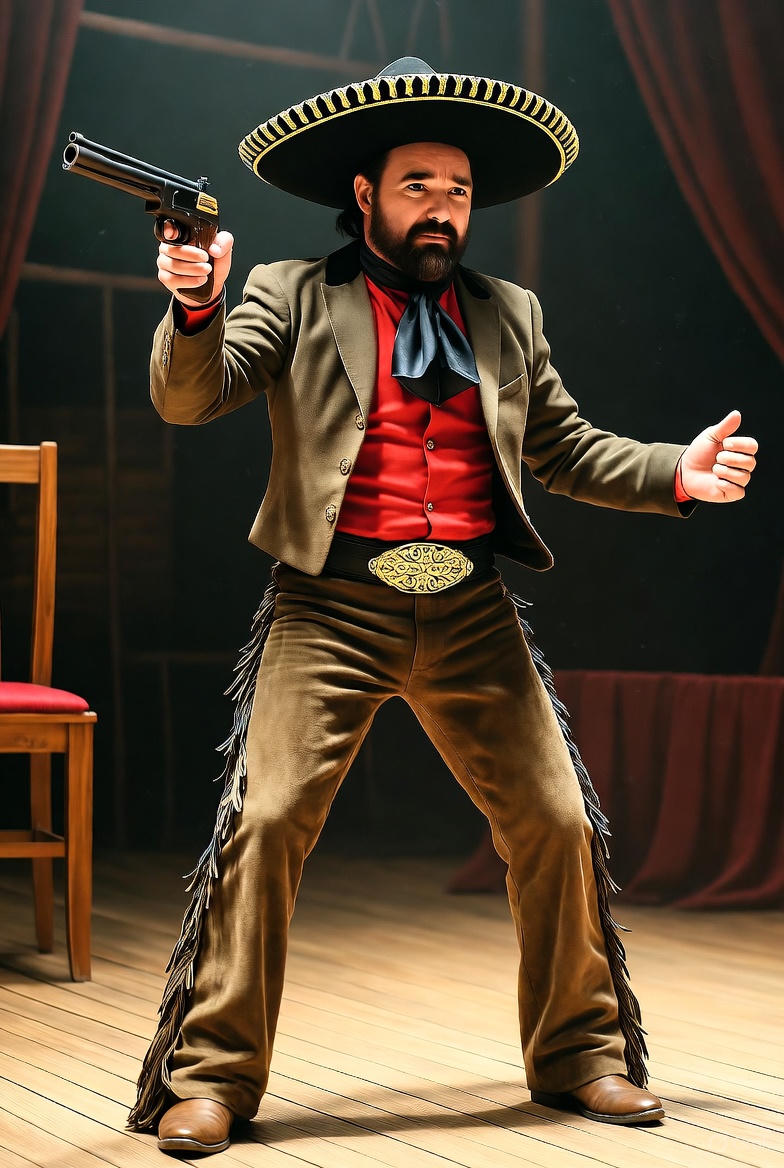
second half. He wore his Inxa costume—wide leather
trousers with fringed seams, a massive belt, a red
shirt, and an open jacket. A colossal sombrero
crowned his head. The stage boards thundered under
his swift steps as he strode forward to bow to the
audience.
“He looks like Roosevelt,” Hofrätin Kundersdorf
said to Bystritzky.
“Yes, as tactless and tasteless as an American,”
the prologue’s poet confirmed spitefully. “It’s
stylistic posturing. He wants to flaunt his travels.
Roosevelt’s in vogue, so he plays the ‘Rough
Rider.’” Bystritzky sensed someone overtaking him.
“Will he shoot?” a small, hunchbacked lady from
a noblewomen’s convent asked the Statthaltereirat
from Graz, her neighbor. Her yellow, withered face
looked distraught, like a frightened mummy.
“Oh, he will,” the Statthaltereirat replied grimly.
“Count on it. I don’t see how he’d perform as a
sharpshooter without shooting.”
“Let me out!” the lady squealed, but stayed,
staring at the Inxan as if hypnotized.
Beside the Statthaltereirat sat a full-blonde
conservatory student. She felt a pleasant shiver. “Are
those fringes human hair?” she whispered.
The Statthaltereirat glanced down. She was too
foolish. “I can’t stand circus tricks,” he grumbled.
“They don’t belong in a proper program. Shows who
arranged this.”
These minor objections couldn’t stem the tide of
interest. Most ladies shared the conservatory
student’s thrill. An exotic aura enveloped the hero.
Ruprecht von Boschan, however, felt uneasy. He
was vexed. What are you doing up here? he asked
himself. What do these people matter? Why expose
yourself to them? Had it been possible, he’d have fled
the stage. He was especially annoyed at yielding to
Hugo’s urging and donning this costume. Never
again! he vowed. Turning, he took his weapon.
Considerately, he used a silent air rifle, easing
nervous ladies. The hunchbacked lady found Boschan
cut a fine figure, erect, rifle to cheek. His calm poise,
flawless technique, acted as aesthetic virtues. The
audience witnessed a body working with marvelous
precision, wholly commanded by will. The beauty of
unmarred purpose gripped their subconscious.
“Extraordinary,” said Hofrätin Kundersdorf.
“Skill, not art,” Bystritzky resisted, unwilling to
yield, though secretly he admired this unadorned
skill. He couldn’t cling to his artistic prejudices.
There was something in a man so perfectly mastering
hand and eye, each movement confident and
powerful, each stance natural and harmonious—like
living sculpture.
Boschan, starting irritated, now shot with pleasure,
forgetting the audience and costume, delighting in
each hit. The thrill of sport surged—the tension and
playful release of all faculties. Here was the
wondrous magic of bodily health, its rhythmic flow,
mastery over matter’s limits.
Finishing his set routine, he recalled the audience.
He had to take leave. Stepping forward, he bowed
briefly, genuinely surprised by the roaring applause.
Then annoyance returned—this clapping reminded
him he’d offered his skill as a program number.
Standing there, he felt a gaze detach from the crowd
below, enveloping him, questioning. He peered
sharper, seeking it. In the front row sat the lady Hugo
mentioned—the elegant widow who passed the
terrace that morning, loved by half Abbazia.
Was this gaze hostile or friendly?
For a second, Ruprecht met it. Then he turned
away, unsettled by those cold, yet promising eyes.
The applause was sincere, convinced.
The Statthaltereirat, that sarcastic fool, conceded
defeat. Ernst Hugo’s triumph was sealed.
After Boschan’s impact, the following acts—
charming amateur efforts—failed to captivate. The
audience mustered applause to avoid offense. The
finale was a traditional apotheosis: a laurel-wreathed,
Bengal-lit Kaiser bust, surrounded by children in
Austrian folk costumes, overshadowed by a white-
robed Peace Angel with a palm branch.
When the curtain fell, Hugo sought his friend, but
Boschan had left for his hotel post-performance.
Hugo delayed thanks until the next day, but first had
to tend to sensitive artists, especially those
overshadowed by Boschan, soothing them with
fervent gratitude. Official dignitaries also demanded
attention, where Hugo humbly accepted praise,
noting he’d only done his patriotic duty. Only on the
third day did he meet Boschan, who lay on the beach
sand, watching children build castles, dig moats, and
channel seawater into their play.
“Servus, Ruprecht!” Hugo called. “What’s up?
How’s it going?”
“Philosophizing. Beach philosophy. These kids
play—that’s life! They call it castle-building. Names
don’t matter; we name our games differently but play
the same as these kids. The big wave comes, erasing
our efforts.”
“That’s resigned wisdom. Pick that up in Inxa?”
“I’m not resigned at all. No way. Our games are
too fun and varied. I join the castle-building
wholeheartedly, thrilled when I outdo others.”
Hugo settled in a folding chair beside Ruprecht,
stretching his legs. “I’d have thanked you sooner, but
I’ve been swamped. You get it, right? So, old pal—
heartfelt, devoted, humble thanks, and so on. Ready
for any favor in return. It was spectacular. We netted
a tidy sum for the seamen’s home. The
Statthaltereirat’s dead—he’s not twitching. Honestly,
that evening: non plus ultra! You nailed it
phenomenally. I barely saw, stuck backstage, but the
women are smitten. You’ve bewitched them.
Hofrätin Kundersdorf says you’re her vision of
Roosevelt.”
Ruprecht laughed, burying his hand in the soft
sand. “Yes—the success you predicted hasn’t failed
to materialize.”
“You’ve surely received a flood of enthusiastic
letters,” Hugo said.
“Not quite a flood, but about twenty-five.”
The court secretary drew his legs in, sitting up
with interest. “Rendezvous, eh? Requests for
autographs, assurances of heartfelt admiration?”
“Yes, quite a few rendezvous.”
“Well… and… did you go?”
“I sent my Malay servant to tell the ladies I don’t
attend rendezvous.”
“Oh! Oh! That’s hardly tactful,” Hugo exclaimed.
“How could you! Unfortunate man, you’ve missed
twenty-five chances to meet beautiful, charming,
sociable women and made twenty-five merciless
enemies. You’ll face a barrage of furious glares, be
watched everywhere, ambushed by arrows of malice
and universal scorn, a cloud hanging over you.”
“All the better—I’ll find peace in their shadow.”
“Inconceivable,” Hugo said, shaking his head. “If
such an opportunity came my way…”
“You’d have gone to every single meeting.”
“Absolutely!” the court secretary declared with the
conviction of a man defending a core tenet of his
worldview.


 Anarchistbanjo's World
Leave a comment