Homo Sapiens by Stansislaw Przybyszewski and translated by Joe E Bandel
Author’s Preface
Dedicated to the sculptor Gustav Vigeland
Due to various circumstances, I was compelled to tear apart what organically belongs together and to publish the three parts of *Homo Sapiens* separately. Thus, it came about that the first part appears last, but it is obvious that those who do not intend to misunderstand me from the outset will now read the *Homo Sapiens* novel series in its entirety and judge it as a whole, not as individual parts.
Chapter I.
Falk leapt up in a rage. What was it now?
He didn’t want to be disturbed in his work, especially now, when he had finally resolved to start working again.
Thank God! Not a friend. Just a postman.
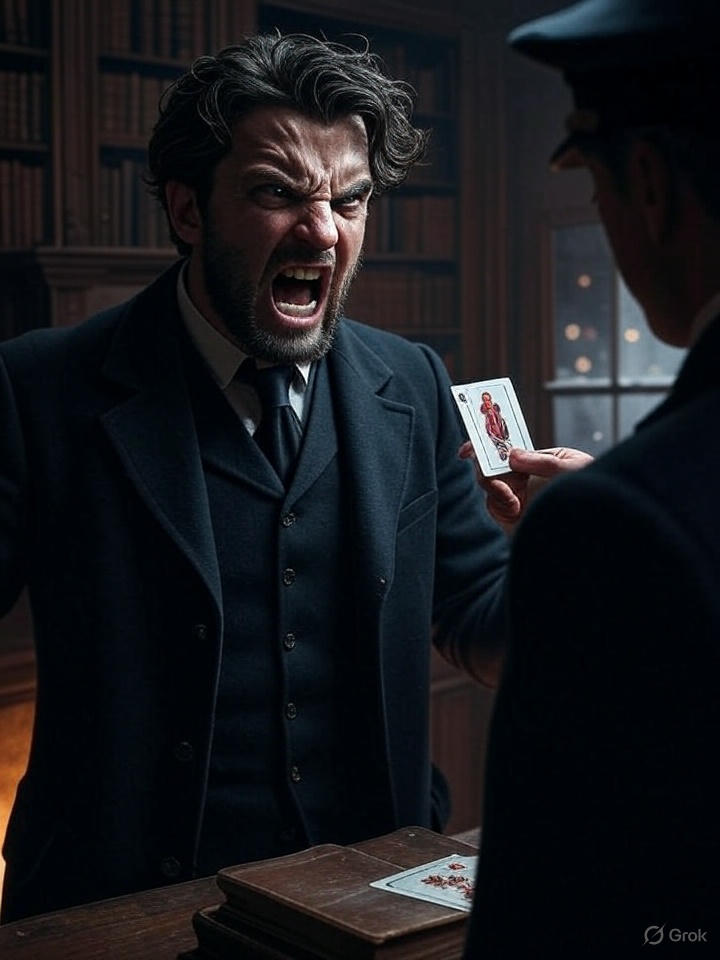
He meant to toss the card aside. It could wait. But then, suddenly: Mikita! A flush of heat surged through him.
Mikita, my dear Mikita.
He skimmed the card: “Be at home tomorrow afternoon. I’m back from Paris.”
That was probably the most he’d written in ages, since that famous essay he’d indulged in years ago.
Falk burst into hearty laughter.
That marvelous essay! That he wasn’t expelled back then… New Year’s impressions, penned in the form of a New Year’s greeting in the most extravagant phrases; every sentence two pages long.
And then—no, wasn’t that glorious? Old Fränkel… how he ranted! Well, the affair was dicey…
Falk recalled how he’d persuaded Mikita to write an apology, in which a splendid pun ran as the underlying theme: What is permitted to a Schiller shouldn’t be permitted to a student?
And then, the next day. They wrote the apology through the entire night, went to sleep in the early morning, and sent an excuse letter to Fränkel.
Falk still couldn’t fathom how they got away with it. That splendid excuse: It was obvious that one couldn’t attend school after working all night on an apology.
Twenty pages long… Now, though, he had to work.
He sat back down, but the mood for work had vanished. He tried to force himself, fishing for thoughts, chewing on his pen, even scribbling a few lines that were utterly banal: no, it wouldn’t do.
Another time, he’d surely have fallen into one of those familiar funereal moods that he had to drown in alcohol. This time, he was glad.
He leaned back in his chair.
Vividly, he saw the dreadful garret where they’d both lived during their final year at the gymnasium. Three windows in one wall, never to be opened lest the panes fly out. Every wall covered top to bottom with mold. And cold, God have mercy.
How one early morning they awoke and looked around the room in astonishment:
“Remarkably fresh air in here,” said Mikita. “Yes, remarkable.”
And it was a wonder without bounds over this strange phenomenon.
Yes, it became clear later. It was so cold that birds froze and fell from the sky.
Falk stood up. Yes, those were his fondest memories.
And that lanky fellow who always lent them books—what was his name again?
He couldn’t recall the name for a long time. Then, at last: Longinus.
A peculiar man.
Falk thought back to how Mikita had secretly gained access to Longinus’s always-locked room and taken a book he wouldn’t lend.
Suddenly, one Sunday—yes, there must have been fresh air in the room again… He woke up. A strange scene: Mikita in his shirt, key in hand, Longinus utterly outraged, trembling with rage.
“Open the door!” Longinus hissed with theatrical pathos. “Put the book back, then I’ll open it for you.”
Longinus, in a heroic pose, pacing back and forth, back and forth, in great cothurnus strides.
“Open the door!” he roared hoarsely. “Put the book back!”
Longinus was foaming. Suddenly, he approached Falk.
“You’re a fine, educated man. You can’t tolerate my rights being infringed in any way.”
Yes, Longinus always spoke in very refined and well-composed phrases.
“Well, I’m sorry, Mikita has the key.”
Now Longinus solemnly advanced to Mikita’s bed: “I deny you any form of education.”
That was the gravest insult he’d ever uttered.
“Open the door! I’ve been violated and yield the book to you.” God, how they laughed! And it was Sunday. They were supposed to be in church. They always skipped church. They were far too committed atheists.
But it was risky. The fanatical religion teacher prowled about the church…
Ha, ha, ha.
Falk recalled how he once sat in church opposite his “flame”—yes, he sat on the catafalque, wanting to appear properly graceful and intriguing, and remained through the entire endless mass in a rather uncomfortable pose, one he’d seen in a depiction of Byron at Shelley’s grave.
What a scandal that caused!
Now he tried to muster himself for work again, but he couldn’t gather his thoughts. They all flitted and buzzed in his mind around that glorious time.
He chewed absently on his pen and repeated: What a glorious time!
How they’d suddenly discovered Ibsen, how *Brand* turned their heads.
All or nothing! Yes, that became their motto.
And they sought out the dives of the poor and gathered the proletarian children around them.
Again, Falk saw himself in the garret.
Five in the morning. A clatter of wooden clogs on the stairs, as if someone were dragging a cannon upstairs.
Then the door opened, and in marched, single file: a boy, a girl—two boys—two girls, the whole room full.
All around the stove, gathered at the large oak table. “Mikita, get up! I’m insanely tired.” Mikita cursed.
He couldn’t get up. He’d worked all night on a Latin essay.
With a jolt, they both sprang up, furious and full of hatred toward each other.
The chattering of teeth in that cold!
And now: he at the stove, puffing and cursing because the wood wouldn’t catch fire, Mikita at the large milk kettle, warming it with methylated spirits.
Gradually, they softened.
The children fell upon the milk and bread like young beasts of prey—Mikita, watching from the side, beaming, happy.
And then: Children, out!
Now they looked at each other amicably as usual. Falk felt a warmth around his heart.
He’d long forgotten that. There was, God knows, a great, beautiful meaning in it.
Then, usually, shame for catching themselves in sentimentality—no, they called it aesthetics—and, finally, a quarrel.
“The *Nibelungenlied* is really just empty, foolish drivel.” Mikita knew Falk’s weak spots well.
Of course, he wouldn’t admit that. He argued with incredible zeal and sliced the breakfast bread.
Mikita was cunning. He always entangled Falk in a dispute and let him cut the bread, because Falk, in his fervor, never noticed how tedious it was.
And suddenly: Good Lord, two minutes past time. Books snatched up and off to school in a frantic gallop. He in front, Mikita limping behind. Had he cured that bunion by now?
Now Falk usually noticed he was hungry—Mikita had eaten all the bread, the splendid fellow.
Then… Falk faltered.
*Brand* transposed onto the erotic. All or nothing… He faltered again.
He had, in truth, destroyed Janina’s entire future. Hmm, why couldn’t she just let go of him? And how he had tormented her with *Brand*’s demands and *Brand*’s harshness.


 Anarchistbanjo's World
Leave a comment